
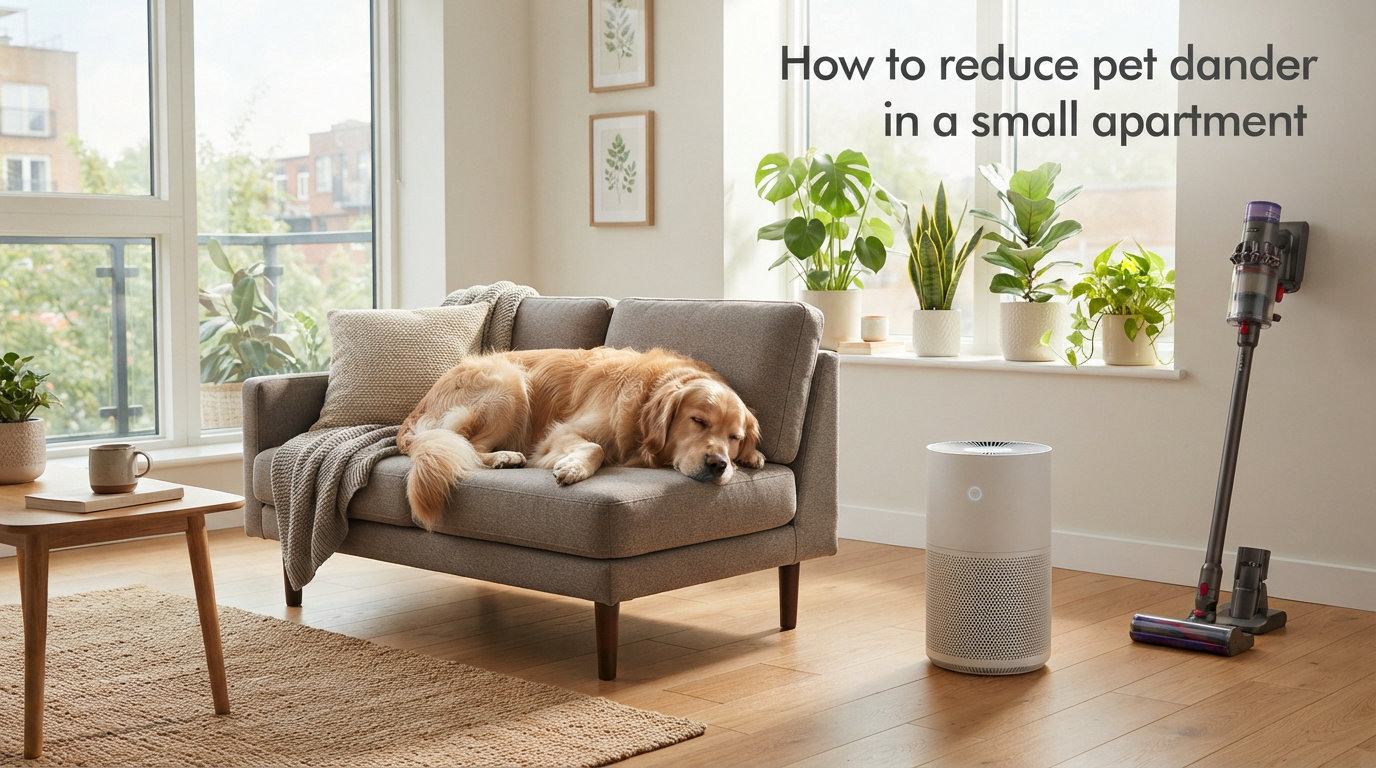
Living with a pet in a small apartment brings joy, companionship, and a daily battle with airborne allergens most people never think about. I have spent years testing cleaning routines, air purifiers, and grooming schedules in tight living spaces, and I can tell you that learning how to reduce pet dander in a small apartment changes everything for allergy sufferers and their guests.
Pet dander is one of the most stubborn indoor allergens because the particles are microscopic, sticky, and capable of floating in the air for hours before settling on every surface in your home. In a small apartment, those particles have nowhere to go, which means they concentrate faster and trigger symptoms more aggressively than they would in a larger house.
The good news is that a combination of targeted cleaning, proper filtration, smart grooming, and a few apartment-friendly habits can dramatically cut dander levels. I will walk you through every method I have tested, why small spaces need a different approach, and which steps deliver the biggest payoff so you can breathe easier without giving up your pet.
Table of Contents
What Is Pet Dander and Why It Builds Up Indoors
Pet dander is made up of tiny, microscopic flecks of skin shed by cats, dogs, and other animals with fur or feathers. These skin fragments are so small that you cannot see them, yet they carry allergen proteins that trigger sneezing, itchy eyes, wheezing, and asthma attacks in sensitive people.
The reason dander is so problematic comes down to its size and weight. Dander particles measure roughly 2.5 to 10 microns across, which means they stay airborne for long periods and settle slowly into carpets, upholstery, bedding, and even the smallest cracks in your walls.
Cats tend to produce more potent dander than dogs because their allergen protein, called Fel d 1, is extremely sticky and lightweight. Dog dander is no joke either, and both types cling to clothing, ride through shared ventilation systems, and persist in a home for months after cleaning.
According to research cited by the Asthma and Allergy Foundation of America, roughly six out of ten Americans are exposed to cat or dog dander. That makes it one of the most widespread indoor allergens, and in a compact living space the concentration builds up quickly because there is less air volume to dilute those particles.
Dander is not the same as pet hair, which is a common misconception. You can have a short-haired pet that sheds very little visible fur but still fills your apartment with allergenic skin flakes that cause serious reactions.
Why Small Apartments Make Pet Dander Worse
Small apartments present a unique set of challenges that larger homes simply do not face. When you share 500 to 800 square feet with a pet, the air volume is limited, the ventilation is often shared with neighbors, and every surface is closer to the source of the dander.
I noticed this firsthand when I moved from a two-bedroom house into a studio with my cat. Within two weeks, my allergy symptoms doubled even though my cleaning routine stayed the same. The difference was that the dander had far less space to disperse.
Shared ventilation is one of the biggest hidden problems in apartment buildings. Central HVAC systems, wall vents, and hallway air can carry dander from neighboring units into your space. You may be reacting to allergens from a pet that does not even live with you.
Limited airflow also means that dander settles on surfaces faster. In a large home, particles can drift and thin out before landing. In a studio or one-bedroom, they land on your bed, your couch, and your kitchen counter within minutes of your pet shaking or grooming itself.
Another factor is that small apartments often lack dedicated utility rooms or mudrooms where you can contain pet activities. Your pet sleeps, eats, plays, and grooms itself in the same rooms where you breathe, cook, and sleep.
Renters face an additional hurdle because they usually cannot replace wall-to-wall carpet, modify ductwork, or install permanent filtration systems. Everything you do has to be reversible and budget-friendly, which is why I focus on strategies that work for tenants and owners alike throughout this guide.
Humidity plays a role too. Small apartments with poor ventilation tend to trap moisture, which creates an environment where dust mites thrive alongside dander. This double allergen load hits your respiratory system from two angles and makes symptoms feel much worse.
How to Reduce Pet Dander in a Small Apartment Through Cleaning
Cleaning is your first and most powerful line of defense against dander. The key is not cleaning harder but cleaning smarter, because dander hides in places most people overlook and resurfaces the moment you stop targeting those spots.
Here is the step-by-step cleaning system I developed after testing different routines in my own apartment.
Step 1: Vacuum with a HEPA filter twice a week. A standard vacuum stirs up more dander than it captures because the particles are small enough to pass right through ordinary filters. You need a vacuum with a true HEPA filter, which traps 99.97 percent of particles down to 0.3 microns. Go over high-traffic areas, corners, and under furniture where dander settles most heavily.
Step 2: Wipe down all hard surfaces weekly. One forum user I came across put it perfectly when they said to wipe everything from ceiling to floor, including walls, doors, cabinets, and closet shelves, with an all-purpose cleaner. Dander sticks to vertical surfaces, not just floors.
Step 3: Wash bedding and pet bedding in hot water every week. Use water heated to at least 130 degrees Fahrenheit to kill allergen proteins. Wash your sheets, pillowcases, and your pet’s bed cover in the same cycle for efficiency.
Step 4: Dust with a damp cloth, never a dry one. Dry dusting lifts dander back into the air where you breathe it in immediately. A microfiber cloth slightly dampened with water or a mild cleaner grabs and holds particles instead.
Step 5: Clean air vents and duct openings monthly. Dander collects in HVAC vents and recirculates every time the system turns on. Vacuum vent covers and wipe inside the openings as far as your arm comfortably reaches.
I also recommend keeping clutter to a minimum. Every knickknack, stack of magazines, and pile of clothing is a dander trap that makes cleaning take twice as long. Decluttering is a dander reduction strategy that costs nothing and pays off immediately.
HEPA Filtration: Air Purifiers vs Vacuum Filters Explained
Filtration is where many apartment dwellers get confused because the terms sound similar but the tools do very different things. I want to clear up the difference so you spend your money on what actually helps.
A HEPA filter is a mechanical air filter that captures at least 99.97 percent of airborne particles as small as 0.3 microns. That standard applies whether the filter is inside a vacuum cleaner, a portable air purifier, or a whole-house HVAC system.
HEPA air purifiers pull room air through a dense filter and trap dander, dust, pollen, and other allergens continuously. For a small apartment, a single well-placed purifier can cycle the air in your main living space several times per hour. Position it near where your pet spends the most time, and keep bedroom doors open so it can pull dander from multiple rooms if the unit is powerful enough.
HEPA vacuum filters work differently because they only filter air while you are actively vacuuming. They prevent the vacuum from blowing captured dander back into the room through its exhaust, which is critical but different from continuous air cleaning.
You need both. A HEPA vacuum removes settled dander from surfaces, and a HEPA air purifier captures the particles that are still floating. Using one without the other leaves a significant gap in your defense.
For your HVAC system, look at the MERV rating on replacement filters. MERV stands for Minimum Efficiency Reporting Value, and updated ASHRAE guidelines referenced by the NIH recommend a MERV rating of 10 or higher for effectively removing pet dander from circulated air. MERV 13 is even better but check that your apartment’s HVAC unit can handle the increased airflow resistance.
Change HVAC filters monthly while you are actively fighting a dander problem. I learned this the hard way when my symptoms persisted for weeks despite heavy cleaning, and the culprit turned out to be a clogged filter I had forgotten to swap.
Here is a quick comparison to keep the two tools straight.
An air purifier cleans the air you breathe in real time, runs continuously, and targets airborne particles. A HEPA vacuum removes dander from surfaces, runs only while you clean, and prevents recontamination through its exhaust. They work as a team, not as substitutes.
Pet Grooming Habits That Cut Dander at the Source
The most effective dander strategy starts before particles ever reach your air or surfaces. Grooming your pet properly reduces the amount of dander produced and shed into your apartment in the first place.
Regular bathing is the single most impactful grooming habit. Aim for a bath once a week using a pet-safe shampoo, which flushes loose skin flakes down the drain instead of letting them scatter around your home. If weekly baths stress your pet, even every two weeks makes a measurable difference.
Brushing daily removes loose fur and dead skin before it falls off naturally. Do this outside if your apartment has a balcony, or over a damp towel indoors to catch what comes loose. I brush my cat for five minutes every evening while watching TV, and it has cut visible shedding dramatically.
Dander-reducing wipes are a great option for pets who hate baths. Products like Allerpet are designed to neutralize allergen proteins on your pet’s coat between full baths. You simply wipe the solution over your pet’s fur and let it dry.
Consider your pet’s diet as well. Omega-3 and omega-6 fatty acid supplements improve skin health and reduce flaking from the inside out. Healthier skin means less dander, so talk to your vet about adding a supplement to your pet’s meals.
One caution worth mentioning: never shave a double-coated dog to reduce shedding. It does not reduce dander and can permanently damage the coat. Focus on brushing and bathing instead of drastic grooming changes.
Creating Pet-Free Zones in a Limited Floor Plan
A pet-free bedroom is the most important zone you can establish, and it is non-negotiable if you have allergies. You spend roughly eight hours a day in your bedroom, and breathing dander-free air overnight gives your respiratory system a chance to recover.
In a studio apartment where the bedroom and living area share the same space, this is harder but not impossible. Use a room divider or curtain to create a physical barrier, and train your pet to stay on their side with consistent reinforcement.
Keep the bedroom door closed during the day and run a small HEPA air purifier inside at night. Change your clothes before entering the bedroom if you have been holding your pet, because dander rides on fabric.
For one-bedroom apartments, set up your pet’s bed, food, and litter box in the living area and make the bedroom strictly off-limits. It takes a few weeks of training, but pets adapt quickly to boundaries when they have a comfortable designated space.
Natural and Budget-Friendly Dander Neutralizers
Not every dander solution requires spending money. Some of the most effective methods I have found came from forum communities and trial-and-error in my own apartment.
Eucalyptus oil spray: One forum user shared a recipe I now use weekly. Mix five drops of eucalyptus essential oil into a spray bottle of cool water and lightly mist your bedding and upholstery. Eucalyptus has natural properties that help neutralize allergen proteins and leaves a clean scent.
No-shoe policy: This costs nothing and takes zero effort to implement. Shoes track in outdoor allergens, dust, and debris that combine with indoor dander to worsen symptoms. Keep a shoe rack by the door and switch to indoor-only slippers.
Damp mopping hardwood floors: If your apartment has hard floors, a damp mop picks up dander far more effectively than a broom, which just launches particles back into the air. Do this twice a week for best results.
Washable throw rugs over carpet: If you cannot remove carpet because you rent, cover high-traffic areas with washable throw rugs. Toss them in the washing machine weekly to pull dander out of zones where your pet walks most.
Baking soda on carpets: Sprinkle baking soda on carpeted areas, let it sit for 15 minutes, then vacuum with your HEPA machine. Baking soda helps lift dander and oils from carpet fibers so the vacuum can capture more.
Houseplants as natural air helpers: Certain plants like spider plants and peace lilies are often cited for their air-purifying qualities. While they will not replace a HEPA filter, they add a small layer of air improvement and cost very little.
Seasonal Dander Variations: When Allergies Spike
Dander levels fluctuate throughout the year, and knowing when to expect spikes helps you prepare. Winter is typically the worst season because heating systems dry out the air, which dries out your pet’s skin and increases flaking.
Forced-air heating also recirculates dander that has settled in your ducts over the warmer months. The first time you turn on the heat each fall, you may notice a sudden surge in allergy symptoms.
Use a humidifier to maintain indoor humidity between 30 and 50 percent. This range keeps your pet’s skin from drying out while also preventing dust mites, which thrive above 50 percent humidity. A cheap hygrometer from any hardware store tells you exactly where you stand.
Spring and summer bring their own challenges as pets shed winter coats. Increase brushing frequency during seasonal coat changes, typically in spring and fall, to capture shedding fur and skin before it spreads.
Your Weekly Pet Dander Reduction Action Plan
To make all of this practical, I have broken the routine into daily, weekly, and monthly tasks. You do not need to do everything at once, but following this schedule consistently produces results within two to four weeks.
Daily tasks:
Brush your pet for five minutes over a damp towel or outside. Wipe your pet’s coat with a dander-reducing wipe if you skipped a bath this week. Keep the bedroom door closed and run the air purifier. Follow your no-shoe policy at the door.
Weekly tasks:
Vacuum all floors and furniture with a HEPA vacuum. Wash all bedding, including pet bedding, in hot water at 130 degrees Fahrenheit. Damp-mop hard floors or wash throw rugs. Dust all surfaces with a damp microfiber cloth, working from high to low. Mist upholstery and bedding with your eucalyptus spray.
Bathe your pet weekly, or use dander wipes as a substitute. Check and empty your air purifier’s pre-filter if it has one. Run a dehumidifier or humidifier as needed to maintain the 30 to 50 percent humidity range.
Monthly tasks:
Replace your HVAC filter, especially during heavy dander seasons. Vacuum inside all air vent covers and wipe down the surrounding wall area. Deep-clean pet bedding and any plush toys. Launder curtains or wipe down blinds where dander accumulates.
Review your apartment for new clutter that could trap dander and clear it out. Wipe down walls, doors, and cabinet faces from top to bottom. Check that your HEPA vacuum’s filter still has life left and replace it according to the manufacturer’s schedule.
Print this checklist and tape it inside a cabinet door so it stays visible. Consistency matters more than intensity, and a short routine performed regularly beats a massive deep-clean done once every few months.
FAQs
How to get pet dander out of apartment?
To remove pet dander from your apartment, vacuum all floors and furniture twice a week with a HEPA-filtered vacuum, wash bedding and pet bedding in hot water weekly, wipe down all hard surfaces including walls and vents with a damp cloth, run a HEPA air purifier continuously, and bathe your pet weekly to reduce dander at the source. Consistency is key, as dander can persist for months without regular cleaning.
What neutralizes pet dander?
Pet dander can be neutralized with hot water above 130 degrees Fahrenheit, which breaks down allergen proteins on bedding and fabrics. HEPA filters trap airborne dander particles. Natural solutions like eucalyptus oil spray help neutralize allergen proteins on surfaces. Dander-reducing pet wipes such as Allerpet coat your pet’s fur to neutralize allergens before they spread.
Why are my allergies so bad in my apartment?
Apartment allergies often flare because small spaces concentrate dander, dust mites, and other allergens with limited air volume to dilute them. Shared ventilation can carry pet dander from neighboring units. Poor ventilation traps humidity, which promotes dust mites. Inadequate HVAC filtration and infrequent filter changes allow settled dander to recirculate every time the system runs.
What time of year is cat dander the worst?
Cat dander is typically worst in winter when indoor heating dries out the air and causes pets’ skin to flake more. Forced-air heating systems also recirculate dander that has settled in ductwork. Spring and fall shedding seasons can also spike dander levels as pets change their coats. Using a humidifier and increasing cleaning frequency during these periods helps manage the surge.
Do air purifiers get rid of pet dander?
Yes, air purifiers with true HEPA filters effectively remove pet dander from the air by capturing 99.97 percent of particles down to 0.3 microns. Pet dander particles range from 2.5 to 10 microns, well within a HEPA filter’s capture range. For best results, choose a purifier rated for your room size, place it near where your pet spends the most time, and run it continuously. Air purifiers work best paired with regular HEPA vacuuming and surface cleaning.
Reducing pet dander in a small apartment comes down to a few consistent habits: HEPA vacuuming twice a week, weekly hot-water laundry, a well-placed air purifier, regular pet grooming, and a strictly pet-free bedroom. Once I committed to this routine, my symptoms dropped noticeably within a month and guests with allergies could finally visit without reaching for tissues. Start with the daily and weekly tasks, be consistent, and remember that even partial improvements add up fast when your air volume is small.