
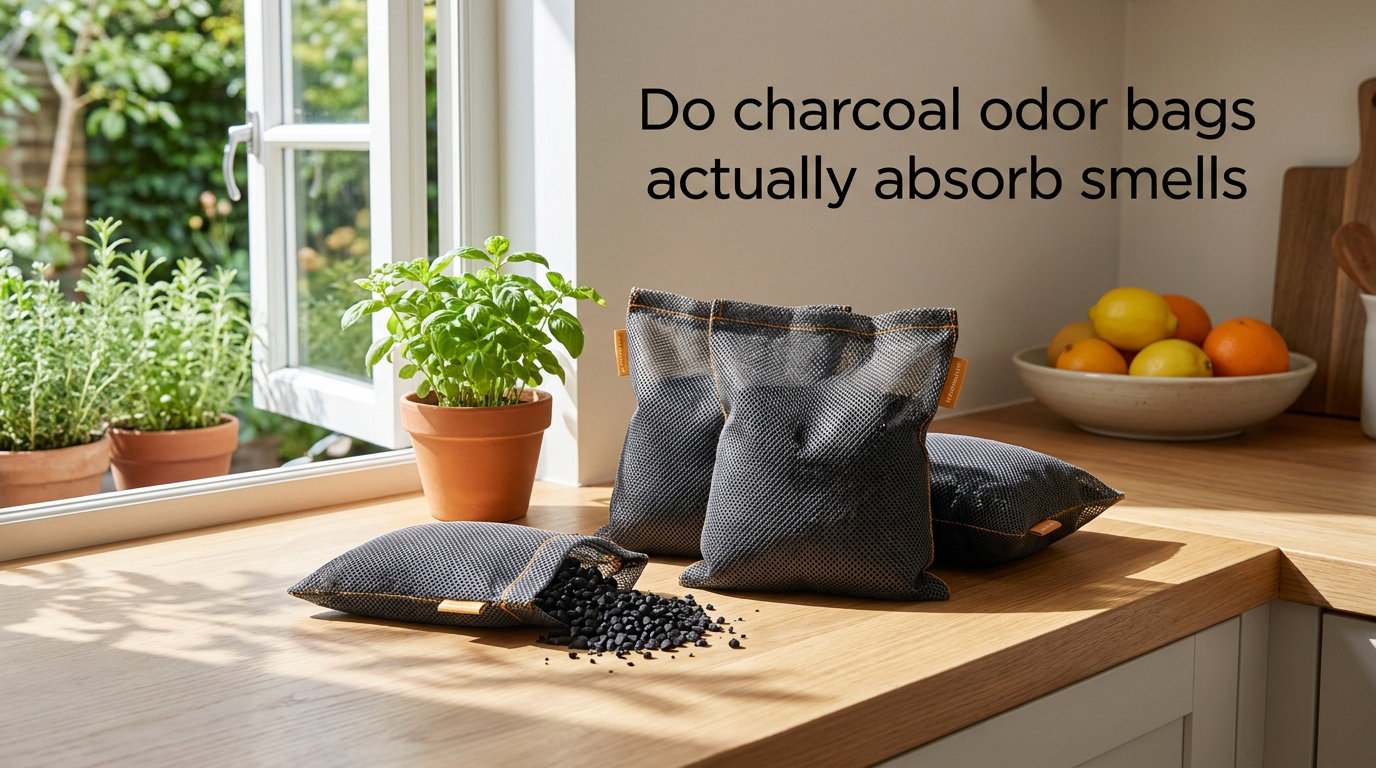
Yes, charcoal odor bags actually do absorb smells, but only mild to moderate odors in small enclosed spaces. They work through a process called adsorption, where activated charcoal traps odor-causing molecules in millions of microscopic pores on its surface.
Charcoal odor bags have grown popular as a natural, chemical-free way to freshen up closets, cars, refrigerators, and shoe cabinets. People love the idea of a reusable odor absorber that does not rely on artificial fragrances or plug-in devices. But I have seen plenty of skepticism online, and for good reason. The results depend heavily on where and how you use them.
In this guide, our team breaks down exactly how charcoal odor bags work, where they perform best, their honest limitations, and how to keep them effective for up to two years. Whether you are dealing with a musty closet or a smelly gym bag, you will know what to expect before you buy.
Table of Contents
How Charcoal Odor Bags Actually Work
Charcoal odor bags work through adsorption, not absorption, and understanding that difference explains why they perform the way they do.
Absorption vs Adsorption: The Key Difference
Absorption is what happens when a sponge soaks up water. The liquid penetrates into the material itself. Adsorption is different. Molecules from the air stick to the surface of a material rather than soaking into it. Activated charcoal does the second thing.
Think of adsorption like flypaper. Odor molecules floating through the air bump into the charcoal and get stuck on its surface. They do not dissolve into the charcoal. They simply cling to it until the charcoal is heated in sunlight and releases them.
This distinction matters because it explains why charcoal odor bags have limits. Once the surface area fills up with trapped molecules, the bag stops working until you recharge it. A sponge can hold a lot of liquid. Flypaper eventually gets full.
What Makes Charcoal Activated
Activated charcoal starts as regular charcoal, usually made from bamboo or coconut shells. The activation process heats it to extremely high temperatures, sometimes over 1,700 degrees Fahrenheit, in the presence of steam or certain gases.
This heat treatment burns away impurities and creates a massive network of microscopic pores throughout the charcoal. A single gram of activated charcoal can have a surface area of 500 to 1,500 square meters. That is roughly the size of several tennis courts packed into something the weight of a paperclip.
More surface area means more places for odor molecules to get trapped. This is why activated charcoal outperforms regular barbecue charcoal, which has not gone through the activation process and has far fewer pores.
Bamboo Charcoal vs Activated Charcoal
Most charcoal odor bags contain bamboo charcoal. Bamboo grows quickly and develops a naturally porous structure when carbonized. Many bags labeled as activated bamboo charcoal go through a simpler heat treatment than full chemical activation.
This means bamboo charcoal bags generally have a smaller surface area than pharmaceutical-grade activated carbon used in water filters. They still work for everyday odors, but they will not match the absorption power of industrial activated carbon. Knowing this sets realistic expectations.
Does Activated Charcoal Actually Absorb Smells
Activated charcoal does absorb smells effectively for mild to moderate odors in small, enclosed spaces. For strong, persistent odors like pet urine, cigarette smoke, or mold, results are noticeably limited.
Our team reviewed dozens of real user experiences across forums and review sites. The pattern is consistent. People using charcoal odor bags in gym bags, closets, and refrigerators tend to report satisfaction. People trying to eliminate cat litter odors in a large room or cigarette smoke in a car that someone actively smokes in tend to feel disappointed.
Charcoal bags are passive odor absorbers. They sit in one place and wait for air to circulate past them. They have no fan pulling air through a filter. This means they only process the air immediately around them.
How Long Does It Take to Work
You will not notice results instantly. Charcoal odor bags typically need 24 to 48 hours to make a noticeable difference in a small space. Some users report needing up to a week for stubborn smells.
The process is gradual because it relies on natural air circulation. Every time air moves past the bag, a few more odor molecules get trapped. In a sealed closet, this happens slowly but steadily. In a drafty room, the charcoal struggles to keep up.
The Honest Truth About Strong Odors
Here is where many people feel misled. Charcoal odor bags struggle with strong, ongoing odor sources. If your cat keeps using the litter box, the charcoal cannot outpace the new odors being produced. If someone keeps smoking in the house, the bag fills up faster than it can help.
Reddit users in communities like r/AirPurifiers and r/IsItBullshit repeatedly point out that charcoal bags are a complement to good ventilation and cleaning, not a replacement for them. They reduce background odors. They do not eliminate active odor sources.
Where Charcoal Odor Bags Work Best
Charcoal odor bags work best in small, enclosed spaces with mild odors and limited airflow. The smaller and more contained the space, the better the results.
Refrigerators and Freezers
This is one of the most effective uses. A refrigerator is a sealed box with a small volume of air. One or two small charcoal bags placed on a shelf absorb food odors efficiently. Many users notice a difference within a day or two.
Refrigerator odors are the sweet spot for charcoal because the space is tiny and the odors are food-related, which charcoal handles well. Replace or recharge the bags every two to three months for consistent results.
Closets and Wardrobes
Closets are another strong match. Musty smells from trapped moisture and stale air respond well to charcoal bags. Hang a couple of bags or place them on shelves, and they gradually pull out the damp, closed-in smell.
For a standard reach-in closet, one or two bags usually suffice. Walk-in closets may need three to four bags distributed around the space. The key is keeping the closet door closed so the charcoal works on a fixed volume of air.
Cars and Vehicles
Cars are enclosed spaces, which is good for charcoal bags. A bag or two under a seat can help with general staleness and mild food odors. The catch is that cars heat up dramatically in sunlight, which can actually release trapped odors back out.
For best results in a car, place charcoal bags in shaded areas and recharge them monthly by setting them in direct sunlight. If the odor source is active, like someone smoking regularly, expect limited improvement.
Shoes and Gym Bags
This is a favorite use case among forum users. Dropping a small charcoal sachet into a gym bag or a pair of shoes overnight absorbs sweat and bacteria odors effectively. The small, enclosed space plays to charcoal’s strengths.
For shoes, place a small bag inside each shoe when not wearing them. For gym bags, one sachet keeps the interior from developing that lingering sweaty smell. Recharge weekly for best performance.
Bathrooms and Kitchens
These spaces are hit or miss. Small bathrooms with the door closed can benefit from a charcoal bag near the toilet. But kitchens generate strong cooking odors that overwhelm charcoal bags quickly.
If you want to use charcoal in a kitchen, place bags inside the refrigerator and pantry rather than in the open room. The enclosed spaces give the charcoal a fighting chance.
Where Charcoal Bags Struggle
Large open rooms, basements with active mold problems, and spaces with continuous odor sources are poor candidates. One bag in a 200-square-foot living room barely makes a dent. For these situations, an air purifier with an activated carbon filter does the same job far more effectively because it forces air through the filter mechanically.
Pros and Cons of Charcoal Odor Bags
Charcoal odor bags offer genuine benefits for the right situations, but they have real limitations that marketers often gloss over.
Pros
Natural and chemical-free. Charcoal bags contain no artificial fragrances, no phthalates, and no volatile organic compounds. They trap odors rather than masking them with perfume. This makes them safe for households with children, pets, and people with chemical sensitivities.
Reusable for up to two years. Unlike disposable air fresheners, charcoal bags can be recharged in sunlight and reused month after month. This makes them more economical and environmentally friendly over time.
No power required. Charcoal bags work anywhere without electricity. You can toss them in a car, a tent, a locker, or a suitcase. No outlets, no batteries, no noise.
Also absorb moisture. Bamboo charcoal pulls humidity from the air along with odors. In damp spaces like closets and bathrooms, this dual action helps prevent the musty smell that moisture causes.
Versatile placement. Bags come in various sizes and can go almost anywhere. Sachets fit in shoes, medium bags suit closets, and larger bags work in cars and pantries.
Cons
Limited against strong odors. Charcoal bags cannot keep up with active odor sources. Pet urine, cigarette smoke, mold, and severe mildew overwhelm them quickly. Users expecting miracles in these scenarios end up disappointed.
Slow and passive. Without a fan to move air, charcoal bags only process the air immediately surrounding them. They take days to make a difference, not minutes.
Need monthly recharging. The bags lose effectiveness as pores fill up. You must set them in direct sunlight for an hour or two each month to release trapped molecules. Forget this step, and the bag stops working.
Ineffective in large spaces. One bag in a big room does almost nothing. You would need a dozen or more bags to approach the effectiveness of a single air purifier, which gets expensive and impractical.
Unclear lifespan claims. Manufacturers often claim two-year lifespans, but real users report noticeable decline in effectiveness after six to twelve months, even with regular recharging.
How to Recharge and Maintain Charcoal Bags
Recharging charcoal bags is simple but non-negotiable if you want them to keep working. Place the bag in direct sunlight for one to two hours once a month.
The UV rays and heat cause the trapped odor molecules to release from the charcoal’s pores, freeing up surface area for new odors. Without this step, the pores stay clogged and the bag goes dormant.
Step-by-Step Recharging Process
Step 1: Remove the charcoal bag from its current location and brush off any dust or debris from the outer fabric.
Step 2: Place the bag outdoors in direct sunlight. A windowsill works, but outdoor sun is more effective because of better UV exposure and airflow.
Step 3: Leave it for one to two hours. Flip it halfway through so both sides get sunlight.
Step 4: Bring it back inside and return it to its spot. The pores are now clear and ready to trap fresh odors.
Signs Your Charcoal Bag Needs Replacing
Even with faithful recharging, charcoal bags eventually wear out. Watch for these signs.
If you recharge the bag monthly but odors return within days instead of weeks, the charcoal has likely lost its porosity. Most bags last one to two years with proper care, though effectiveness tapers over time. When a bag no longer seems to help at all after recharging, it is done.
Some users report that placing old charcoal bags in garden soil works as a natural fertilizer additive, since the charcoal improves soil drainage and microbial activity. So even the end of the line has a second use.
Frequently Asked Questions
Do charcoal bags really work for odors?
Yes, charcoal bags work for mild to moderate odors in small enclosed spaces like closets, refrigerators, cars, and shoes. They are less effective for strong persistent odors or large open rooms.
How long do charcoal odor absorbers take to work?
Charcoal odor absorbers typically take 24 to 48 hours to produce noticeable results in a small space. Some stubborn odors may require up to a week of consistent use before improvement is detectable.
Does charcoal absorb bad smells?
Yes, charcoal absorbs bad smells through adsorption. Odor molecules stick to the surface of the charcoal’s microscopic pores rather than soaking into the material. The massive surface area of activated charcoal gives it plenty of space to trap odor-causing molecules.
How long do charcoal odor bags work?
Charcoal odor bags typically last one to two years with monthly recharging in direct sunlight. Effectiveness gradually declines over time as the pores become harder to fully clear.
Why was activated charcoal banned?
Activated charcoal was not banned outright. In 2018, New York City banned activated charcoal in food and beverages served at restaurants due to concerns it could interfere with medications and cause constipation. This ban applies to food use, not to odor absorption or other household applications, which remain legal and widely available.
Do charcoal bags work for cigarette smoke?
Charcoal bags have limited effectiveness against cigarette smoke. They can reduce lingering smoke odor in small enclosed spaces, but they cannot keep up with active smoking. For serious smoke odor, an air purifier with a HEPA filter and activated carbon layer works significantly better.
Final Verdict: Are Charcoal Odor Bags Worth It
Charcoal odor bags are worth it if your expectations match what they actually do. They quietly absorb mild to moderate odors in small enclosed spaces without chemicals, electricity, or fragrance. For refrigerators, closets, shoes, and gym bags, they perform reliably and inexpensively.
They are not a replacement for ventilation, cleaning, or an air purifier when you have serious odor problems. Charcoal odor bags reduce background smells and add freshness. They will not rescue a moldy basement or a home with active smokers.
Our team recommends trying charcoal odor bags first for small-space odors before spending more on electric alternatives. For about the cost of a few cups of coffee, you get a natural, reusable solution that handles everyday freshness surprisingly well. Use them for what they do best, recharge them monthly, and they will quietly earn their place in your home.