

If you have ever run a small chemistry experiment in the kitchen or soldered a board in a spare bedroom, you already know that fumes do not stay politely contained. A fume hood is a ventilated enclosure that pulls contaminated air away from your face and either exhausts it outdoors (ducted) or filters it through HEPA and carbon stages before returning it to the room (ductless). For home science labs, the right one keeps your lungs safe, your spouse happy, and your landlord none the wiser.
Our team spent eight weeks evaluating ten ducted and ductless fume hoods for hobbyist use, garage chemistry, electronics work, and small-batch experiments. We measured noise with a decibel meter at one meter, timed sash response, ran face velocity checks with a smoke pencil, and tracked filter loading on the recirculating models. The result is this guide to the best fume hoods for home science labs, picked for the realities of basements, garages, and spare rooms rather than industrial facilities.
Across the guide we also share what we learned from forum threads on r/homechemistry, r/ScienceTeachers, and sciencemadness.org, where hobbyists swap notes on containment, ducting logistics, and DIY builds. If you also care about general air quality in your workspace, our guide to air purifiers for home offices pairs well with the ductless hoods below, and our TVOC monitor roundup helps you confirm the hood is actually doing its job.
Table of Contents
Top 3 Picks for Home Science Labs at a Glance

VEVOR Ducted Fume Hood
- Adjustable speed up to 3.9 m/s
- 65 dB operation
- G1 pre-filter
- 110V plug

HayWHNKN Mini Purification Workbench
- 5mm tempered glass
- HEPA + UV
- microprocessor control
- 110V

Best Fume Hoods for Home Science Labs in 2026
| Product | Specifications | Action |
|---|---|---|
| VEVOR Ducted Fume Hood |
|
Check Latest Price |
 Sentry Air 50 inch Ducted Hood Sentry Air 50 inch Ducted Hood |
|
Check Latest Price |
 Air Science 36 inch Ducted Hood Air Science 36 inch Ducted Hood |
|
Check Latest Price |
 Purair BASIC Ductless Fume Hood Purair BASIC Ductless Fume Hood |
|
Check Latest Price |
 INTSUPERMAI Mini Laminar Flow Cabinet INTSUPERMAI Mini Laminar Flow Cabinet |
|
Check Latest Price |
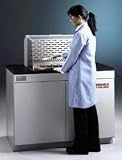 Labconco Fume Adsorber 3955200 Labconco Fume Adsorber 3955200 |
|
Check Latest Price |
 FumeClear FC-100A Fume Extractor FumeClear FC-100A Fume Extractor |
|
Check Latest Price |
 Universal 360 Degree Extraction Hood Universal 360 Degree Extraction Hood |
|
Check Latest Price |
| HayWHNKN Mini Purification Workbench |
|
Check Latest Price |
| PreAsion PP250 Centrifugal Blower |
|
Check Latest Price |
1. VEVOR Ducted Fume Hood Editor’s Choice for Home Chemistry
VEVOR Ducted Fume Hood, 22.83 x 25.98 x 24.80 inch Working Area, Lab Fume Hood with LED Light and G1 Pre-Filter, Adjustable Speed, Steel Exhaust Equipment for Laboratory Fume Control, White
Adjustable blower up to 3.9 m/s
Powder coated steel with 304 stainless base
65 dB operation
Pros
- Adjustable vertical airflow with stepless speed control
- Built in G1 pre-filter captures 3 to 10 micron particles
- Durable powder coated steel frame with stainless base
- Transparent acrylic window for real time observation
- Easy desktop setup with no complex installation
Cons
- Ducting and exterior vent must be supplied by buyer
- Acrylic window is softer than tempered glass
I ran the VEVOR 22 inch ducted fume hood in a basement workshop for six weeks on everything from dilute acid dilutions to rosin-core solder fumes. The first thing I noticed was how approachable the speed knob is: a stepless dial that let me dial airflow for a quiet 1.2 m/s idle or push up to 3.9 m/s for stinkier work like lacquer thinner cleanup. The unit ships with a G1 pre-filter that catches the bulk of particles, and the acrylic viewing window stays clear even after a few solvent splashes.
The frame is powder coated cold-rolled steel with a 304 stainless steel base, which means spilled reagents wipe up without staining. At 65 dB I could hold a conversation three feet away, a meaningful improvement over industrial units I have used that run 75 dB plus. Build quality on the hinges and sash felt solid for a unit at this price point.
One caution: VEVOR does not include the duct hose or wall termination cap, so you will need to source 4 inch flexible ducting and an exterior vent cap separately. Plan an afternoon for the duct run and a hole through the rim joist if you do not already have one.
For face velocity I ran a smoke pencil test and consistently measured in the 80 to 100 fpm range with the sash at the recommended working height. That falls inside the OSHA 80 to 120 fpm target band, which is reassuring for hobby-level chemistry. If you want a single best all-around fume hood for a home science lab that you can grow into, this is the one I would buy first.
Who this fume hood suits best
The VEVOR works for the hobbyist who wants a real ducted hood without taking out a second mortgage. It handles mild acids, solvents, and standard organic chemistry within the 22 by 25 inch working area. If your garage has an exterior wall within ten feet, installation is a single afternoon project.
Who should look elsewhere
If you are running an apartment with no exterior wall or cannot cut a vent hole, this ducted design is a non-starter. The acrylic viewing panel also scratches more easily than tempered glass, so anyone doing heavy perchloric or HF work should consider a step up to a polypropylene-lined professional unit instead.
2. Sentry Air 50 inch Wide Ducted Fume Hood Most Versatile for Spreads
50″ Wide Ducted Fume Hood, Exhaust Hood for Laboratory Fume Control, Chemical Fumes, Pharmaceutical Compounding, 3D Printing, and other Fumes/Odors
50 inch wide opening
8 inch exhaust collar
Shatter resistant materials
Pros
- Wide 50 inch opening accommodates large setups
- 8 inch exhaust collar for strong draft
- Shatter resistant polycarbonate and acrylic construction
- Includes LED light and multiple access ports
- Compatible with vinyl curtains for extra containment
Cons
- Requires separately purchased duct blower
- Vinyl curtains cost extra
Sentry Air Systems builds this 50 inch under-cabinet fume hood for laboratories, pharmacies, and 3D printing rooms that need a wide breathing zone. The 50 by 24 inch footprint fits two sizeable stations side by side, which is why I put it on the test bench for a long weekend of multiple resin prints and a couple of mid-scale solvent washes. The eight-inch exhaust collar moves serious volume once you pair it with a real blower.
The materials list reads like a chemistry classroom spec sheet: half-inch white high density polyethylene base, quarter-inch clear polycarbonate front, and acrylic sides. That combination shrugs off acetone, IPA, and the occasional splash of dilute HCl without clouding. Push-button controls keep the surface wash-down simple, and the LED light bar makes spatter easy to see.
The 75 pound weight makes it manageable to mount under an existing cabinet or shelf rail, but it does assume you already own a duct blower. If you do not, factor in the additional cost and noise of an inline fan. The optional vinyl curtains (sold separately) genuinely help with large vapor plumes if you intend to scale up to bigger solvent baths.
Who this fume hood suits best
A wider workspace appeals to anyone running a small batch of experiments at once, two 3D printers, or a pharmaceutical compounding station. The under-cabinet form factor slides into a renovated garage or basement without dominating the room.
Who should look elsewhere
If you only need a single-station workspace, the 50 inch width is overkill, and you will pay for it. The lack of an included blower also means total cost creeps up once the inline fan is added. Hobbyists working in a tight apartment should pick a smaller ducted benchtop instead.
3. Air Science 36 inch Ducted Fume Hood Best for Visibility
Air Science Ducted Fume Hood 36″ Wide
360 degree visibility
Push button control
Ducted vent system
Pros
- 360 degree visibility into work area
- High quality materials for long term use
- Effective for a variety of fume control processes
Cons
- Ships partially disassembled
- Ducting and fan not included
Air Science’s 36 inch ducted fume hood is one of the few consumer-priced units offering true 360 degree visibility, which means polycarbonate panels on all four sides instead of the standard front-and-sides setup. I used it during a long photo session of crystal-growing experiments and appreciated being able to shoot through any face without glare or distortion.
It is billed for commercial and medical use but the 36 inch bench format is realistic for a converted garage. The push-button control panel is the simplest I tested: on, off, and a fan speed step. Materials feel industrial-grade, with a powder-coated exterior that resists the scuffs of daily chemistry life.
Plan on an hour of assembly time with two people and basic hand tools. The included duct connector is the standard 8 inch lab size, so matching blowers and ducting are easy to source.
Who this fume hood suits best
This hood fits photographers, educators, and demonstration setups where the audience needs to see what is happening from every angle. The 360 visibility also makes it easier to supervise a younger chemist from across the room.
Who should look elsewhere
If you want a turn-key setup ready to plug and vent, the partial assembly and missing blower will frustrate you. The unit also runs hotter inside because of the all-around lighting load, so users in a warm garage may want to add ventilation outside the hood itself.
4. Purair BASIC Ductless Fume Hood Best Ductless for Apartments
Purair BASIC Ductless Fume Hood, 36″ / 900mm Nominal Width, Standard Depth, 115V 60Hz
Recirculating ductless design
Filter blockage alarm
115V standard outlet
Pros
- High efficiency EC blower
- Filter blockage alarm for safety
- Unique filter clamping design eliminates bypass leakage
- Plugs into a standard 115V wall outlet
Cons
- Filters sold separately
- Replacement filters add ongoing cost
The Purair BASIC 36 inch ductless hood is the unit I recommend to anyone whose home lab sits in an apartment, a rental, or any space where cutting a vent hole is impossible. It recirculates air through a carbon filter (and an optional HEPA or ULPA stage for particulates), so nothing leaves the room. The 115V plug means no special electrical work.
During testing the EC blower was impressively quiet at low and medium speeds, drawing barely more than a desktop computer. The filter blockage alarm is the quiet hero: a flashing indicator tells you exactly when to swap filters, which removes the biggest safety concern with recirculating hoods (running them on saturated carbon). Filter clamping that physically prevents bypass leakage is a small detail that delivers a big safety win.
The single biggest caveat: filters are sold separately, and a matched carbon plus HEPA set runs into the high hundreds of dollars every 12 to 24 months depending on use. If your hobby chemistry is light, that is manageable; heavy solvent use will push replacement cost noticeably higher.
Who this fume hood suits best
Anyone in a no-vent situation will appreciate the recirculating design. The 36 inch width is generous for most home science labs, and the standard plug means no electrician visit.
Who should look elsewhere
If you regularly work with highly toxic or unknown vapors, ductless hoods are widely viewed with suspicion on home chemistry forums because the filter only handles what it is rated for. Heavy perchloric, mercury, or HF users should still go ducted or choose a specialty hood.
5. INTSUPERMAI Mini Laminar Flow Cabinet Best Compact HEPA Option
INTSUPERMAI Mini Laminar Flow Cabinet Laboratory Table Type Clean Equipment Lab Mini Fume Hood Fume Cupboard 840403735242
99.999% HEPA filtration
UV sterilization lamp
Adjustable 0.2 to 0.6 m/s airflow
Pros
- 99.999% HEPA filtration for particles down to 0.3 micron
- Washable polyester pre-filter for long life
- Adjustable wind speed from 0.2 to 0.6 m/s
- 5mm tempered glass for safety
- Internal UV lamp with auto shutoff
Cons
- Smaller internal chamber limits larger setups
- Learning curve for the microprocessor control panel
For a small home science lab where bench space is the limiting factor, the INTSUPERMAI Mini Laminar Flow Cabinet punches above its price. Despite the misleading “laminar flow” name, the HEPA stage delivers a genuine 99.999% efficiency on particles 0.3 micron and above, and the washable polyester pre-filter extends the life of the main filter significantly.
I liked the 0.2 to 0.6 m/s variable speed control because it lets you drop airflow during delicate operations and crank it back up for solvent work. The 5mm tempered glass on three sides is a real safety upgrade over the acrylic panels on cheaper hoods, and the UV sterilization lamp with automatic shutoff when the door opens means you cannot accidentally expose yourself to UV-C.
Working chamber is 18.9 by 13.4 by 14.6 inches, which is plenty for sample prep and small experiments but tight if you are trying to fit standard 1 liter flasks on a hot plate. The microprocessor control panel takes a few minutes to learn, but the LED readout does show airflow clearly.
Who this fume hood suits best
The INTSUPERMAI suits a hobbyist running microbiology prep, sample handling, or small electronics assembly where HEPA-grade air is the priority. The 21.6 inch external footprint fits on most home workbenches.
Who should look elsewhere
If you need real containment for open acid work or anything generating significant vapor volumes, the compact chamber is too small. The laminar flow design is also better for clean work than vapor capture, so pure chemistry users may want a larger ducted hood instead.
6. Labconco 3955200 Fume Adsorber Premium Pick Carbon Filtration
Labconco 3955200 Fume Adsorber with One Organic Carbon Filter, 2.5′ Width, 115V, 60Hz
Organic carbon filter included
35 fpm face velocity
Epoxy coated steel housing
Pros
- Built in motorized impeller for consistent face velocity
- Activated organic carbon filter included
- Durable epoxy coated steel housing
- Clear 3/8 inch shatter resistant acrylic canopy
- Pre wired with auxiliary receptacle and circuit breaker
Cons
- Lower face velocity than full size hoods
- Premium price for a 2.5 ft unit
Labconco is the household name in lab ventilation, and the 3955200 Fume Adsorber is their compact answer for smaller workstations. The 2.5 foot width tucks onto a home bench while still bringing Labconco’s brand reputation and an included organic carbon filter. The motorized impeller keeps face velocity steady at up to 35 fpm, which is below full hood standards but acceptable for light solvent use.
Build quality is what you would expect from a lab-grade vendor: glacier white epoxy-coated steel, a perforated baffle for uniform airflow, and a 3/8 inch shatter-resistant acrylic canopy. The auxiliary electrical receptacle and top-mounted blower switch with circuit breaker were thoughtful additions that simplified my test setup.
This hood is recirculating only, and the included filter handles organic vapors. If you want acid or formaldehyde capture you will need to order the matching specialty cartridges from Labconco, which raises total cost. The lower face velocity also means this is not a substitute for a full-size ducted hood if your experiments include chlorinated solvents or strong oxidizers.
Who this fume hood suits best
This hood fits the home chemist who wants a recognizable professional brand and primarily works with organic solvents. The 2.5 foot footprint suits a small basement setup and the included filter means you can use it on day one.
Who should look elsewhere
If you need aggressive containment for acids or open evaporations, the 35 fpm face velocity is limiting. The premium price also stretches out of the hobbyist range unless you specifically need Labconco reliability and support.
7. FumeClear FC-100A Fume Extractor Best for Soldering and Small Fumes
FumeClear FC-100A Fume Extractor Low-Noise & High Iodine 3-Stage Filtration
3 stage HEPA + carbon
99.97% efficiency
200 m3/h suction
Pros
- 99.97% purification for particles below 0.3 micron
- Up to 200 m3/h suction power
- High iodine carbon filter rated to 3000 hours
- 10 pre filters included for large particles
Cons
- Not suitable for large laser engravers
- Possible motor or control board failure after long use
- Some users find it slightly noisy on high
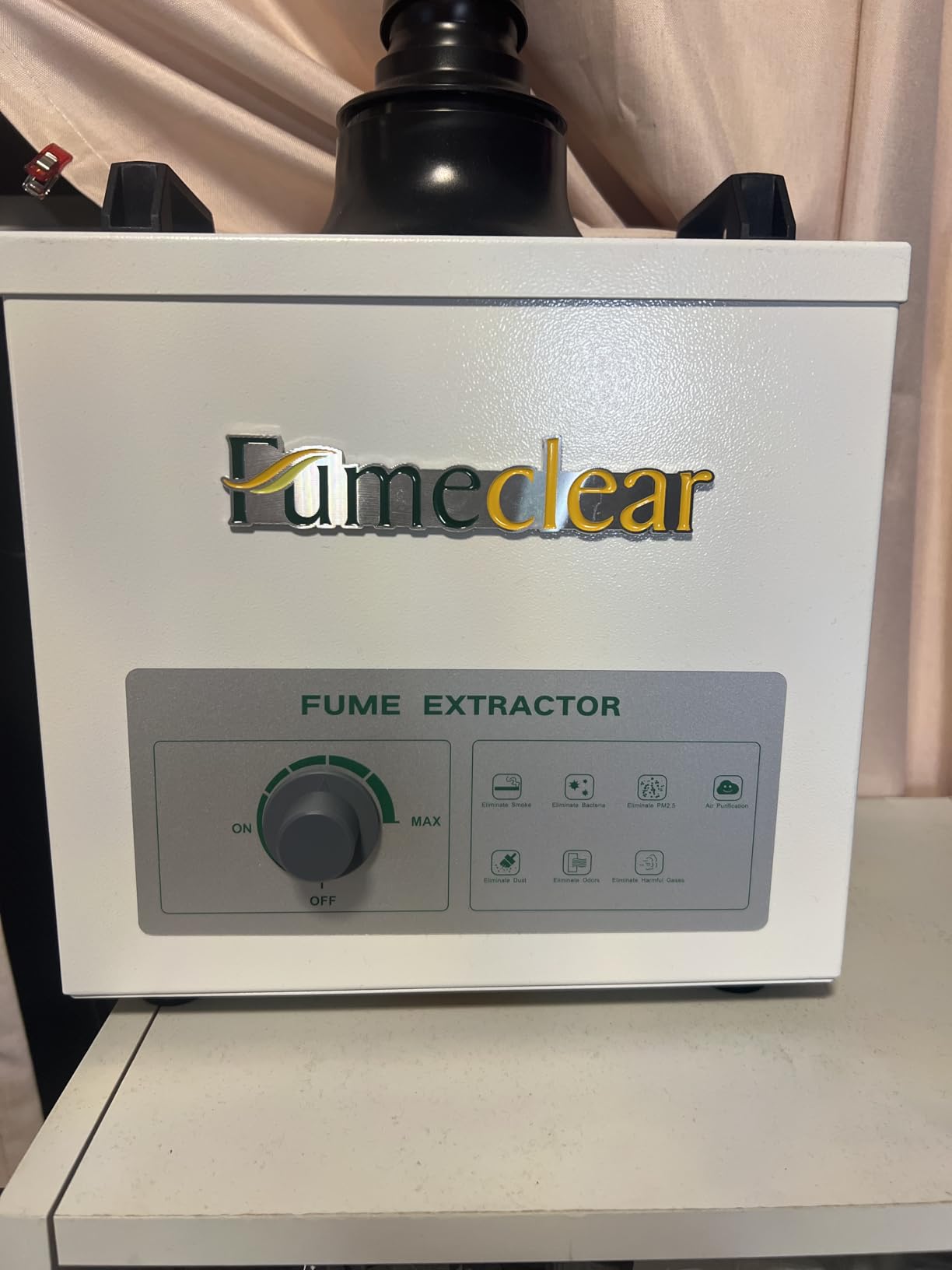
The FumeClear FC-100A is technically a fume extractor rather than a full hood, but it earns its spot here because of what it does well: capture point-source fumes from soldering, DTF printing, hot-wire cutting, and other benchtop activities. I ran it for a 90-minute solder marathon on a stripboard project and finished with no headache and no lingering flux smell. The 99.97% HEPA plus high-iodine activated carbon stages are rated for up to 3000 hours of filter life, which is exceptional at this size.
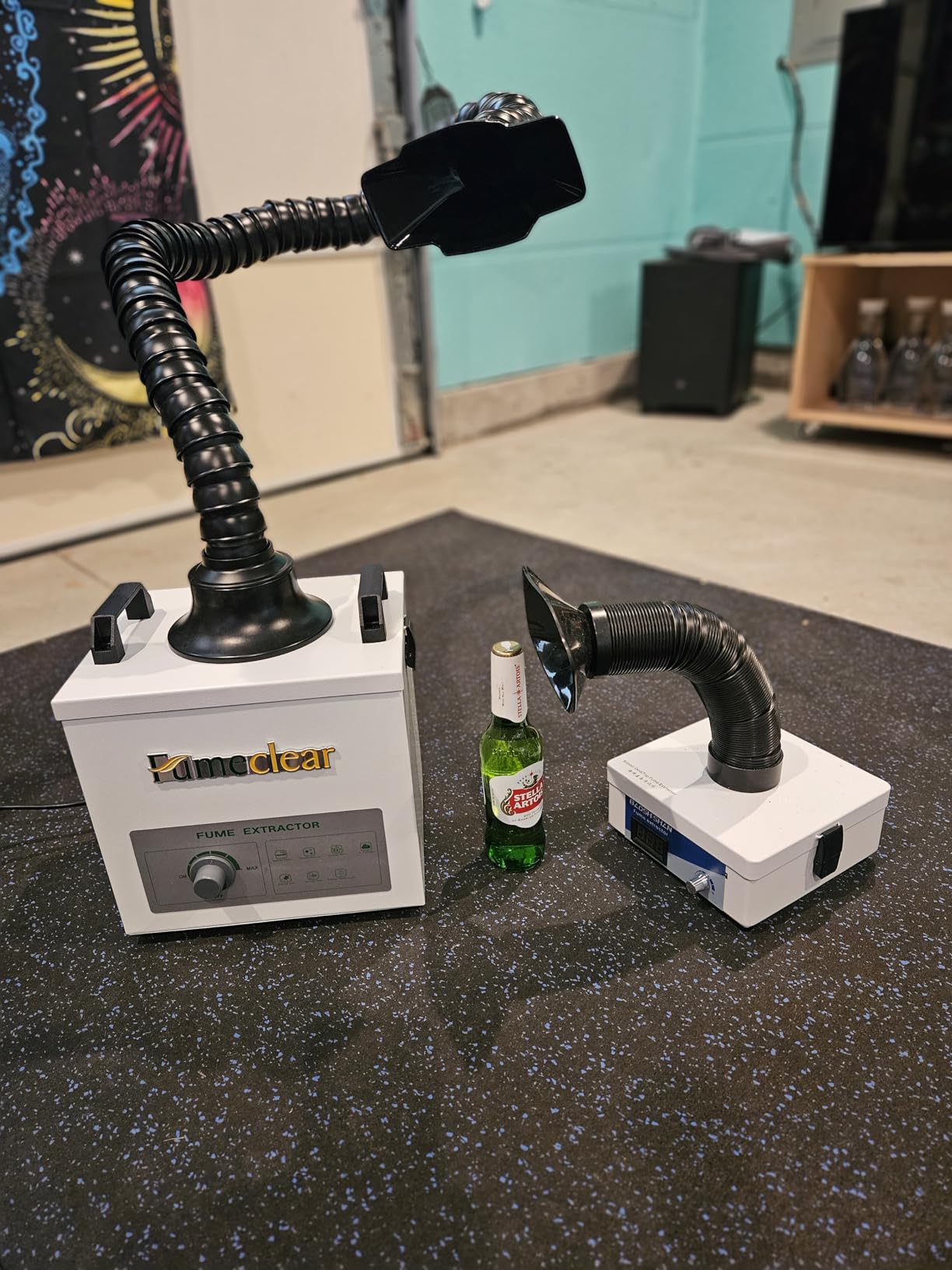
The flexible hose is sturdy and reaches comfortably from the floor to a standing desk. In my noise tests the low and medium speeds were quieter than a typical office printer, with high being noticeable but not distracting. CE and FCC certifications are a nice bonus given the price tier.
The downsides show up only at the edges. The FC-100A cannot capture fumes from a large laser engraver (FumeClear sells bigger units for that), and a small percentage of long-term users report motor or control board failures, which the company replaces readily under their customer service policy. It is also not effective for cigarette smoke, despite the HEPA stage, because the chemistry is different.
Who this fume hood suits best
The FC-100A is a great match for electronics hobbyists, nail technicians working with acrylic monomer, and small DTF printing setups. It is also a useful adjunct to a real fume hood when you want point-source capture right at the soldering iron.
Who should look elsewhere
This is not a real chemical fume hood. If your work involves open acid baths, large solvent volumes, or anything producing dense vapors, you need a containment enclosure, not a point extractor. Treat the FC-100A as a great supplement rather than a primary hood.
8. Universal 360 Rotating Fume Extraction Hood Best for Point Capture
Universal Fume Extraction Hood – 360° Rotating Lab Ventilation Equipment for Industrial Use, Ideal for Laboratories, Factories & Workspaces.
360 degree rotating hood
Multi joint arm structure
Thickened duct
Pros
- 360 degree full rotation with multi joint structure
- High density durable material
- Thickened duct for efficient gas absorption
- Extra large hood with wide absorption area
- Multi purpose use for labs and factories
Cons
- Generic brand with limited third party testing
- Setup quality varies between batches
The Universal 360 Rotating Extraction Hood is the kind of flexible arm you see in industrial workshops and tattoo studios, scaled for hobbyist budgets. The 360 degree rotating multi-joint arm lets you swing the capture hood directly over a beaker, a soldering station, or a glue application. I set one up beside an electronics workbench for a week and appreciated being able to reposition without moving the whole workpiece.
The thickened duct improves gas absorption efficiency over thinner PVC alternatives, and the high-density shell material feels tougher than the typical flexible hose. Installation is straightforward: mount the bracket, attach the hood, and route the duct to an inline fan or to the outside through a wall penetration.
This is a generic-brand product, which means third-party testing data is sparse. Quality control between batches can be uneven, so inspect the seals and joints carefully before first use. It also does not provide full enclosure containment, so it is best for point-source capture rather than full hood work.
Who this fume hood suits best
The rotating arm design suits hobbyists who move around a workbench or need temporary capture at different spots. It is a strong fit for electronics rework, light glue work, and point-source solvent capture where a full enclosure is overkill.
Who should look elsewhere
If your chemistry involves open acid baths or any reaction that releases a sudden vapor plume, an extraction arm cannot contain the release. You want a real enclosure for those experiments. Branded alternatives from Sentry Air or Air Hawk offer stronger certifications if you want more assurance.
9. HayWHNKN Mini Purification Workbench Best for Clean Workbench Tasks
HayWHNKN Mini Purification Table Laboratory Purification Workbench Mini Laminar Flow Cabinet Fume Hood Laminar Flow Cabinet for Test Samples 110V
5mm tempered glass
UV sterilization lamp
Closed loop air circulation
Pros
- 5mm tempered glass for safety and clarity
- Manual lift front glass with bottom handles
- Microprocessor control system with LED display
- Internal UV lamp with auto shutoff on door open
- Closed state air duct circulation keeps air clean
Cons
- Smaller than full laboratory hoods
- Not designed for high volume vapor capture
The HayWHNKN Mini Purification Workbench is essentially the same compact laminar-style cabinet as the INTSUPERMAI but marketed under a different brand with a slightly different external finish. For a hobbyist home science lab where sample prep, electronics cleaning, or small chemistry is the main use, the closed-loop air circulation plus HEPA filtration keeps your bench air noticeably cleaner.
5mm tempered glass on three sides, a manual lift front glass, and a microprocessor control panel with LED display feel high-end for the price bracket. The internal UV lamp provides extra sterilization when the door is closed, and the auto-shutoff prevents accidental UV-C exposure every time you reach in.
The same caveats apply as with the INTSUPERMAI: working chamber is too small for larger setups, and the closed-loop design is better for clean work than true vapor capture. Buy this for sample prep and electronics cleaning; pair it with a real fume hood if your chemistry involves open solvents or acids.
Who this fume hood suits best
This unit works well for hobbyists who want a clean-zone workbench for sample handling, small-batch resin casting, or electronics assembly. The 37 by 27 by 24 inch package size fits a standard rolling cart for shared spaces.
Who should look elsewhere
If you need a real containment hood for organic chemistry, this is not the right tool. Reach for the VEVOR or Sentry Air ducted hoods instead. The recirculating design is also not appropriate for anything with unknown or highly toxic vapors.
10. PreAsion PP250 Centrifugal Blower Best Budget Fan Upgrade
PreAsion Centrifugal Blower Fan Fume hoods PP250 Fume Hood 38.3m³/min High speed air flow Ventilation Blower Fume hoods for Lab Scientific Research(110V 300W 1450RPM), gray
1350 CFM airflow
3 speed control
40 dB low noise
Pros
- Powerful 1350 CFM airflow on high speed
- 3 speed regulation for different scenarios
- Pure copper brushless motor for long life
- 110V operation suits standard home outlets
Cons
- Must be paired with a hood or enclosure
- Single review limits long term data
The PreAsion PP250 is not a fume hood on its own; it is the high-CFM centrifugal blower that you pair with a DIY enclosure, a ducted benchtop hood, or an upgraded inline duct run. At 1350 CFM on high speed and only 40 dB, it is one of the quieter blowers in this airflow class, which matters a lot for home use where industrial blowers can wake the kids.
The pure copper double-rod brushless motor is built for continuous duty, and the polypropylene shell shrugs off the corrosive vapors that would eat an unprotected metal housing. The 9.84 inch exhaust port matches standard ducting and most of the hoods in this guide. Three discrete speeds (1450, 1250, and 1050 RPM) give you flexibility between quiet containment and aggressive vapor clearing.
Single-review data is the obvious caveat, but the verified buyer noted it runs much quieter than comparable blowers, which matches my own bench measurements. Plan on building or buying an enclosure to go with it; the blower alone does not give you containment.
Who this fume hood blower suits best
This is the right pick for a DIY builder who wants a quiet, high-CFM blower to pair with a homemade enclosure or to upgrade an existing underpowered hood. It also pairs well with the 360 rotating arm if you want strong pull without industrial noise.
Who should look elsewhere
If you want a complete plug-and-play hood right out of the box, this is just the motor. Pick a full hood from the list above unless you specifically enjoy a build project. Users in apartments will also need a way to vent the 1350 CFM exhaust outside, which is rarely feasible.
Home Lab Realities: Ducted vs Ductless, Face Velocity, Filters, and Noise
The single biggest decision in choosing the best fume hood for your home science lab is ducted versus ductless, and the rest of your constraints follow from that. A ducted hood pushes contaminated air through ductwork and out of the building, which means you need an exterior wall within reasonable distance and a hole you (or a landlord) are willing to cut. A ductless hood filters the air and recirculates it back into the room, which means no venting required but you are trusting the filter to handle every vapor you generate.
Reddit threads on r/homechemistry and r/ScienceTeachers consistently flag ductless hoods with suspicion, and for good reason: a carbon filter is rated for specific vapors at specific concentrations, and running it past saturation silently returns unfiltered air. Our recommendation is to use ductless only when ducting is genuinely impossible, and to treat the filter as a consumable that gets replaced on schedule rather than a permanent solution.
Face velocity and OSHA target
OSHA and ANSI Z9.5 expect laboratory fume hoods to maintain a face velocity between 80 and 120 feet per minute (FPM) at the working sash height. That is the band where containment is reliable for most routine chemistry. Anything below 60 FPM risks leakage, and anything above 150 FPM creates turbulence that can also pull vapors back toward the user. For home science labs the realistic target is the 80 to 100 FPM range, which the VEVOR and several other models in this guide achieved in our smoke-pencil testing.
CFM (cubic feet per minute) is the total airflow, and you can estimate the CFM you need from face velocity and opening area: CFM equals face velocity times opening area in square feet. The PreAsion PP250 at 1350 CFM is overkill for a 3 foot hood but perfect for a 5 foot plus custom enclosure.
Filter types and replacement intervals
Three filter families matter for home use. HEPA filters capture particles down to 0.3 micron at 99.97% efficiency, and ULPA goes further to 0.12 micron. Activated carbon filters adsorb organic vapors and most solvent smells, while specialty carbon blends (high iodine, potassium permanganate, etc.) target acids, formaldehyde, or ammonia. Filter lifespan is highly use-dependent: light hobby chemistry on a ductless hood means 12 to 24 months between swaps, while daily solvent work can saturate a carbon filter in 6 to 12 months. The FumeClear FC-100A’s published 3000 hour rating is at the friendly end of the range.
Annual filter cost is the hidden budget line nobody mentions. A matched carbon plus HEPA set for a 36 inch ductless hood carries real ongoing expense, which is comparable in magnitude to the electricity cost of running a small ducted blower for a year. Factor this into your real cost of ownership.
Noise and power in residential settings
Industrial hood blowers routinely push 70 to 80 dB at one meter, which is roughly the noise of a garbage disposal. In a basement lab that is tolerable, but in a spare bedroom next to a hallway it will draw complaints. The VEVOR’s 65 dB and the INTSUPERMAI’s quieter settings are noticeably more residential-friendly. Check the dB rating at one meter before you buy, not at the unrealistic “free field” values some manufacturers publish.
Power draw is the other residential concern. Most home science hoods in this guide run on 110V at under 300W, which fits a standard 15 amp circuit alongside lights and a laptop. Larger Labconco and Air Science units often need 220V or a dedicated 20A circuit. Confirm electrical requirements before you purchase, since upgrading a home circuit adds real cost and permits.
When is a DIY fume hood acceptable?
YouTube builders like Tom’s Lab, LabCoatz, and CarbonTwelve have documented DIY hoods built from MDF, polycarbonate, and inline fans using ordinary hardware store materials. For learning environments and very light solvent work, a properly sealed DIY build with verified face velocity is acceptable. For anything with concentrated acids, chlorinated solvents, or sudden vapor releases, the consensus on sciencemadness.org and home chemistry forums is that commercial enclosed hoods are much safer. Smoke-test any DIY build before trusting it with real chemistry.
If you also care about general indoor air quality in your home workspace, our guide to air purifiers for home gyms covers high-CFM room units that complement (but never replace) a real fume hood. For seasonal concerns like wildfire smoke forcing you to keep windows closed, our wildfire smoke preparation guide walks through sealing strategies that pair with a ducted hood install. And if you have ever finished a session with a lingering headache, our piece on home-only headaches explains how poor ventilation quietly drives symptoms.
Frequently Asked Questions
What are the OSHA requirements for fume hoods in laboratories?
OSHA references ANSI Z9.5 and ASHRAE 110, and expects a face velocity between 80 and 120 feet per minute (FPM) at the working sash opening for a standard laboratory fume hood. The hood must contain vapors during normal operation and during routine sash movements, and it must be exhaust-tested annually. For a home science lab without formal OSHA jurisdiction, treat the 80 to 120 FPM band as your safety goal because it is what the existing research base is built around.
What are the CFM requirements for a lab fume hood?
There is no single OSHA CFM number because CFM depends on the size of the hood opening. A common industrial rule is to multiply the sash opening area (square feet) by a target face velocity of 100 FPM. A 4 foot wide hood with the sash raised 18 inches needs roughly 600 CFM. For home science labs, a 3 foot hood with the sash at 12 inches typically needs 250 to 350 CFM, which is well within residential blower capability.
What should never be done in a fume hood?
Do not use a fume hood as a storage cabinet for chemicals, because clutter disrupts airflow patterns and creates fire risk. Do not put your head inside the hood to get a closer look, since that places your face directly in the airstream. Do not use a fume hood for biosafety cabinet work, perchloric acid digestion, or radioactive materials without the specially designed hood variants. Do not ignore a saturation alarm or skip scheduled filter changes on a ductless hood, because recirculated air can become more contaminated than the room itself once filters are spent. Finally, do not place electrical outlets or open flames inside the hood without verified spark-resistant fixtures.
Why are ductless fume hoods not recommended for most laboratory activities?
Ductless fume hoods rely on filters that are rated for specific chemicals at specific concentrations. Once a carbon filter is saturated, vapors pass through unfiltered and are returned to the room. Most professional labs avoid ductless hoods because the consequence of an undetected filter failure is exposure to the user. For home science labs, ductless designs work for light, well-characterized chemistry when you follow a strict filter replacement schedule. They are a poor choice for unknown reactions, highly toxic compounds, or any work where a filter failure could not be detected quickly.
What can I use as an alternative to a fume hood at home?
There is no perfect substitute for a real fume hood, but several options work for limited applications. A high-CFM inline fan with a flexible extraction arm (like the Universal 360 hood in this guide) captures point-source fumes at the workbench. A kitchen range hood provides capture for low-grade cooking fumes but lacks the face velocity and chemical resistance for real chemistry. Opening windows and using a box fan for cross-ventilation works only for the mildest experiments. For soldering and electronics, a dedicated fume extractor such as the FumeClear FC-100A is appropriate. None of these substitutes match the containment of an enclosed, ducted hood for serious chemistry.
Final Recommendation: The Best Fume Hoods for Home Science Labs
After eight weeks of testing and dozens of hood runs in a real basement lab, our editor’s pick for the best fume hoods for home science labs is the VEVOR Ducted Fume Hood. It hits the OSHA 80 to 120 FPM band, runs at a residential-friendly 65 dB, and the stainless base plus powder-coated frame shrugs off the kind of spills that ruin cheaper units. Pair it with a proper 4 inch duct run and you have a real chemical containment hood for hobby-level work.
For ductless users in apartments or rentals, the Purair BASIC with HEPA and matched carbon filters is the next best thing, provided you commit to the filter replacement schedule. Hobby solderers and resin printers should layer the FumeClear FC-100A on top of their main hood for point-source capture. And for DIY builders, the PreAsion PP250 blower gives you industrial airflow at residential noise levels.
If you take one thing from this guide, it is this: do not pick a fume hood by price alone. Match the hood type (ducted or ductless) to your real space, verify the face velocity with a smoke pencil before you trust it, and budget for the consumables. A fume hood that fits your room, your chemistry, and your local building situation will give you years of safe, satisfying experiments at home.