
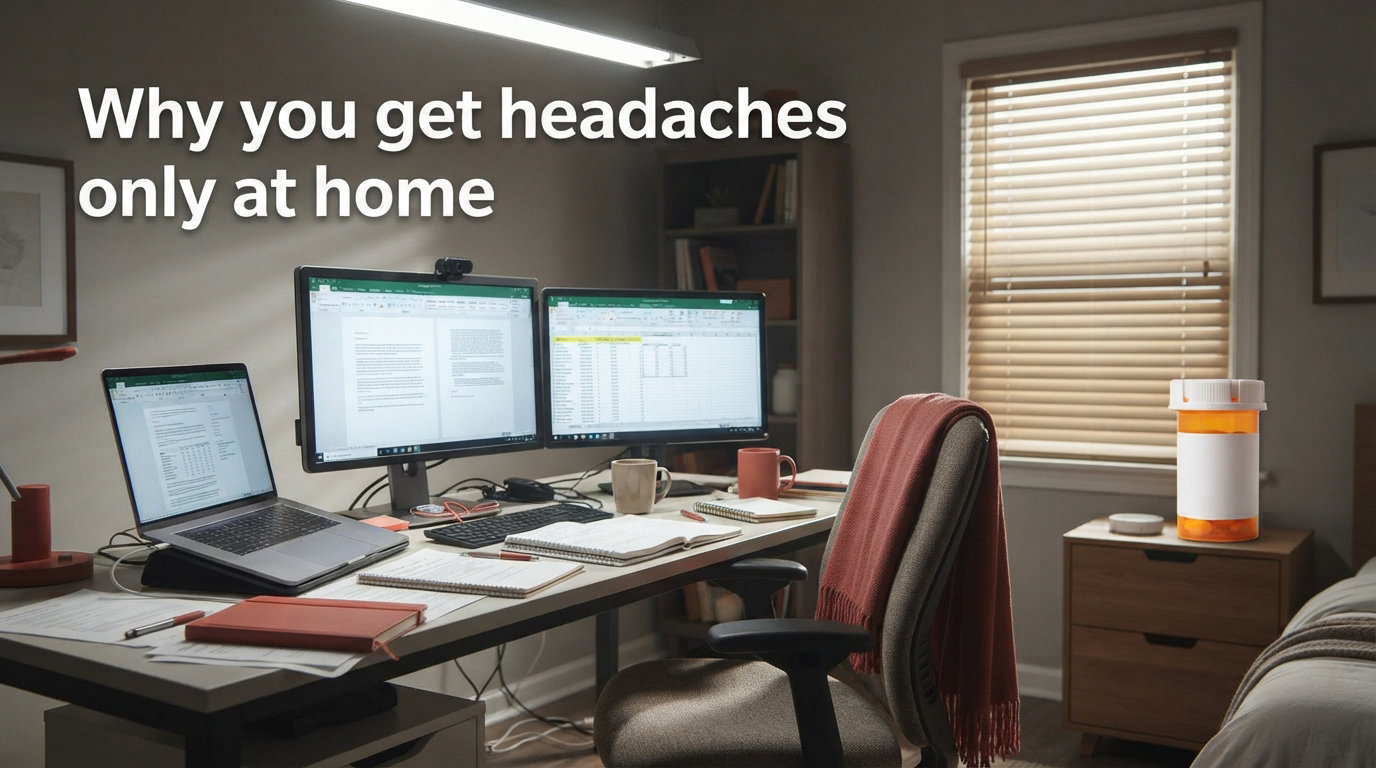
If your head starts pounding the moment you walk through your front door but feels fine at the office, the gym, or outdoors, your home environment is likely the culprit. Headaches at home are surprisingly common, and they almost always trace back to specific indoor triggers that you can identify and fix.
I have spent years researching indoor environmental health, and the pattern is consistent. People who get headaches only at home are usually reacting to poor indoor air quality, screen-related eye strain, bad posture, harsh lighting, or invisible gases building up in poorly ventilated rooms. Sometimes it is a combination of several factors hitting you at once.
In this guide, we break down every common cause of home-only headaches, explain how each trigger produces pain, and give you a practical checklist to identify and eliminate whatever is bothering you. Whether you work from home full-time or just notice your headaches line up with evenings and weekends indoors, the answers are here.
Table of Contents
Why You Get Headaches Only at Home: The Main Causes
Home headaches happen because your house concentrates triggers that simply do not exist, or exist at much lower levels, outside. When you spend hours breathing recycled air, staring at screens under artificial light, and sitting in positions that strain your neck and shoulders, your body responds with pain.
The most common home headache triggers fall into these categories:
Indoor air pollution from VOCs, mold, allergens, and inadequate ventilation
Screen time and eye strain from computers, phones, and televisions
Poor posture from non-ergonomic furniture and couch slouching
Lighting problems from flickering bulbs, glare, and dim conditions
Fragrances and chemicals from candles, plug-ins, and cleaning products
Dehydration and dry air from heating and air conditioning systems
Carbon monoxide from faulty appliances, which is a medical emergency at high levels
Stress tied to your home environment and work-from-home routines
Different triggers produce different types of headaches. Knowing the difference helps you narrow down the cause.
| Headache Type | What It Feels Like | Likely Home Trigger |
|---|---|---|
| Tension headache | Dull, squeezing band around your head | Poor posture, screen strain, stress |
| Migraine | Throbbing pain, often one-sided, with sensitivity to light and sound | Flickering lights, fragrances, VOCs, specific foods |
| Sinus headache | Pressure in cheeks, forehead, and behind eyes | Mold, dust mites, allergens, dry air |
| Eye strain headache | Aching behind the eyes, forehead pressure | Excessive screen time, poor lighting, uncorrected vision |
Indoor Air Quality and Headaches
Poor indoor air quality is the single biggest reason people develop headaches at home and nowhere else. The air inside your house can be two to five times more polluted than outdoor air, according to the EPA, because pollutants get trapped and concentrate in enclosed spaces.
When you breathe in contaminated indoor air hour after hour, your blood vessels respond by dilating and inflaming, which triggers headache pain. Let us look at the worst offenders.
Volatile Organic Compounds (VOCs) and Off-Gassing
VOCs are invisible chemicals that evaporate at room temperature from common household materials. New furniture, fresh paint, laminate flooring, carpets, pressed-wood cabinets, air fresheners, and even nail polish all release VOCs into your air through a process called off-gassing.
Formaldehyde is one of the most common and troublesome VOCs. It off-gases from particleboard, plywood, insulation, and new fabrics for months or even years after purchase. If your headaches started after moving into a new home, buying new furniture, or renovating a room, formaldehyde and other VOCs are prime suspects.
VOC exposure causes forehead pressure, dizziness, nausea, and throat irritation alongside headaches. The fix is ventilation. Open windows daily, run an air purifier with an activated carbon filter, and avoid buying pressed-wood products when solid wood alternatives are available.
Mold, Mildew, and Allergens
Mold grows in damp areas like bathrooms, basements, around windows, and behind walls where leaks go unnoticed. Even mold you cannot see can release spores and mycotoxins into your air that trigger sinus inflammation and persistent headaches.
Dust mites thrive in pillows, mattresses, bedding, and upholstered furniture. Pet dander, pollen tracked indoors, and cockroach debris add to the allergen load. If your headaches come with congestion, itchy eyes, or a scratchy throat, allergens are likely involved.
People on Reddit’s migraine forums frequently report that replacing old pillows and mattresses or adding allergy covers eliminated headaches they had suffered for months. Wash bedding weekly in hot water, use a HEPA air purifier, and check for hidden moisture problems in bathrooms and basements.
Carbon Monoxide: A Silent and Dangerous Trigger
Carbon monoxide is an odorless, colorless gas produced by gas stoves, furnaces, water heaters, fireplaces, and any fuel-burning appliance. At low levels, it causes headaches, fatigue, dizziness, and nausea. At high levels, it is lethal.
If everyone in your household has a headache at the same time, especially if it clears up when you leave the house, carbon monoxide poisoning is a possibility you must take seriously. Other warning signs include symptoms that improve when windows are open or when you spend time outdoors.
Warning: If you suspect carbon monoxide, leave your home immediately, call your gas utility or emergency services, and do not return until the source is found and repaired. Install battery-powered carbon monoxide detectors on every floor of your home, especially near sleeping areas.
Carbon monoxide detectors are inexpensive and save lives. If you do not have one in your home right now, that should be your first action item after reading this article.
High CO2 Levels and Poor Ventilation
Even without dangerous gases, simply having too little fresh air causes problems. When windows stay closed and your HVAC system recirculates the same air, carbon dioxide builds up from your own breathing. High CO2 levels cause dull headaches, drowsiness, and difficulty concentrating.
This is especially common in bedrooms and home offices with closed doors. Cracking a window for ten minutes every few hours, running exhaust fans in kitchens and bathrooms, and upgrading your HVAC filter can make a dramatic difference.
Screen Time and Eye Strain Headaches
If you work from home, your daily screen time probably doubled compared to an office environment where you walk to meetings, chat with coworkers, and take natural breaks. All those hours staring at a computer, tablet, or phone produce a specific type of headache called computer vision syndrome.
Screen use forces your eye muscles to continuously focus at a fixed distance, which fatigues them. You also blink about 66 percent less when looking at screens, leading to dry, irritated eyes that ache and burn. The blue light from screens may contribute to eye strain, though research is still mixed on its exact role.
An eye strain headache typically feels like a dull ache behind your eyes accompanied by forehead pressure. It gets worse as the day goes on and usually improves after you stop looking at screens.
Tip: Follow the 20-20-20 rule. Every 20 minutes, look at something 20 feet away for 20 seconds. Position your screen an arm’s length away with the top at or slightly below eye level. Use artificial tears if your eyes feel dry.
Adjusting your screen brightness to match room lighting, enabling night mode or blue-light filters in the evening, and getting regular eye exams also help reduce screen-related headaches at home.
Poor Posture and Muscle Tension
Your couch, dining room chair, and bed were not designed for eight hours of laptop work. When you hunch forward to see your screen, the muscles in your neck, shoulders, and upper back tighten. That tension travels up into your scalp and produces a classic tension headache that feels like a tight band squeezing your skull.
Tension headaches are the most common type of headache worldwide, and working from home has made them worse for millions of people. The problem compounds when you combine poor posture with screen strain and stress, creating a triple threat that your body cannot ignore.
Invest in a proper chair with lumbar support, set your monitor at eye level using a stand or books, keep your feet flat on the floor, and take standing breaks every 30 minutes. Simple stretches for your neck and shoulders throughout the day prevent tension from building into pain.
Household Fragrances and Cleaning Products
Scented candles, plug-in air fresheners, essential oil diffusers, laundry detergents, fabric softeners, and cleaning sprays all release fragrance chemicals into your air. For people with sensitivities or migraines, these scents are powerful triggers.
Fragrance formulas are proprietary, meaning manufacturers do not have to disclose the specific chemicals they use. Many contain known irritants and sensitizers that inflame your nasal passages and trigger headache pathways, especially in people prone to migraines.
Switch to unscented or fragrance-free versions of household products. Avoid burning candles in enclosed rooms. If you love scents, try using them in well-ventilated areas and pay attention to whether your headaches correlate with specific products.
Lighting Issues at Home
Lighting is an underappreciated headache trigger. Flickering fluorescent bulbs, harsh overhead lights, screen glare on glossy surfaces, and rooms that are too dim all force your eyes to work harder than necessary. Migraine sufferers are especially sensitive to light, and the wrong lighting can trigger an attack within minutes.
Blue-rich LED lights that mimic daylight can also disrupt your circadian rhythm when used in the evening, indirectly contributing to headaches by degrading your sleep quality.
Use warm-toned bulbs in living spaces and bedrooms, add task lighting for reading and work, reduce screen glare with matte screen protectors or adjustable blinds, and consider installing dimmer switches so you can control brightness based on the time of day.
Temperature, Humidity, and Dehydration
Indoor climate affects your body more than most people realize. Heating systems dry out the air in winter, dropping humidity below 30 percent. Air conditioning does the same in summer. Dry air dehydrates your nasal passages and sinuses, which can trigger sinus headaches and make you more susceptible to allergens.
At the same time, simply forgetting to drink water while you are at home leads to dehydration headaches. Many people drink less water at home than at work, where water coolers and routines keep them hydrated. A dehydration headache feels like a dull, throbbing ache that gets worse with movement.
Aim for indoor humidity between 30 and 50 percent. Use a humidifier in winter if your air is dry, run a dehumidifier in damp basements, and keep a water bottle visible at your desk to remind yourself to drink throughout the day.
How to Identify Which Trigger Is Causing Your Headaches
Because homes contain multiple potential triggers at once, figuring out which one affects you requires some detective work. The best approach is keeping a headache journal for two to three weeks.
Record the following each time a headache starts:
Time of day and what you were doing
Which room you were in
What you ate and drank that day
How much screen time you had
Weather and whether windows were open or closed
Pain location, type, and severity on a scale of 1 to 10
Whether anyone else in the house had a headache
After two weeks, patterns will emerge. If headaches cluster in your home office, screen strain and posture are likely. If they hit in the bedroom, check for mold, dust mites, or poor ventilation. If everyone in the house is affected simultaneously, suspect air quality or carbon monoxide and investigate immediately.
One powerful test is simply leaving your home for a full day. If your headaches disappear entirely when you are away and return when you come back, the trigger is environmental and tied to your house.
Quick Prevention Checklist
Use this checklist to tackle the most common home headache triggers:
Install carbon monoxide detectors on every floor
Replace HVAC filters every 1 to 3 months with MERV 11 or higher filters
Open windows for at least 10 minutes daily to refresh indoor air
Run a HEPA air purifier in rooms where you spend the most time
Switch to fragrance-free cleaning products and skip scented candles
Follow the 20-20-20 rule for screen breaks
Upgrade to an ergonomic chair and position your monitor at eye level
Replace old pillows and add allergy covers to mattresses
Keep indoor humidity between 30 and 50 percent
Drink water consistently throughout the day
Use warm-toned lighting and reduce screen glare
When to See a Doctor
Most home-related headaches improve once you identify and remove the trigger. But see a doctor promptly if your headaches are sudden and severe, occur with fever or stiff neck, follow a head injury, or change in pattern from what you usually experience. If you have migraines more than twice a week or headaches that do not respond to lifestyle changes, a healthcare provider can evaluate underlying causes and prescribe targeted treatment.
FAQs
Why do I get headaches only in my house?
You likely get headaches only at home because your indoor environment contains triggers that are not present elsewhere. The most common culprits are poor indoor air quality from VOCs, mold, or inadequate ventilation, eye strain from prolonged screen time, poor posture from non-ergonomic furniture, and exposure to fragrances or chemicals. Try keeping a headache journal for two weeks to identify which specific trigger affects you.
What causes headaches at home?
The most common causes of headaches at home are poor indoor air quality, excessive screen time leading to eye strain, bad posture from uncomfortable furniture, harsh or flickering lighting, fragrance chemicals from candles and cleaning products, dehydration from dry indoor air, and in serious cases, carbon monoxide from faulty appliances. Stress related to your home or work-from-home routine can also contribute.
Why does everyone in my household have a headache?
If multiple people in your home develop headaches at the same time, suspect a shared environmental trigger. The most likely causes are poor indoor air quality, high levels of VOCs from new furniture or paint, mold growth, or carbon monoxide from a faulty gas appliance. Because carbon monoxide is dangerous, install detectors immediately and have your appliances inspected if everyone has simultaneous symptoms.
What things in a house could cause headaches?
Common household headache triggers include new furniture and pressed-wood products that off-gas VOCs, mold in damp areas, dust mites in bedding, scented candles and air fresheners, cleaning chemicals, gas stoves and furnaces producing carbon monoxide, fluorescent and flickering lights, dry air from heating systems, and poor ventilation causing carbon dioxide buildup. Screens and poor posture from working at home also contribute.
Conclusion
Figuring out why you get headaches only at home takes some investigation, but the payoff is real relief. Most home headaches trace back to a manageable combination of indoor air quality, screen strain, posture, lighting, and chemical exposures that you can control.
Start with the highest-priority items. Install a carbon monoxide detector today if you do not have one. Open your windows, swap fragranced products for unscented alternatives, upgrade your air filters, and set up a proper workspace. Keep a headache journal to pinpoint your specific triggers, and do not hesitate to see a doctor if symptoms persist or worsen.
Your home should be the place where you feel your best, not the place where your head starts hurting. By understanding why you get headaches at home and taking targeted action, you can reclaim your space and your comfort.