
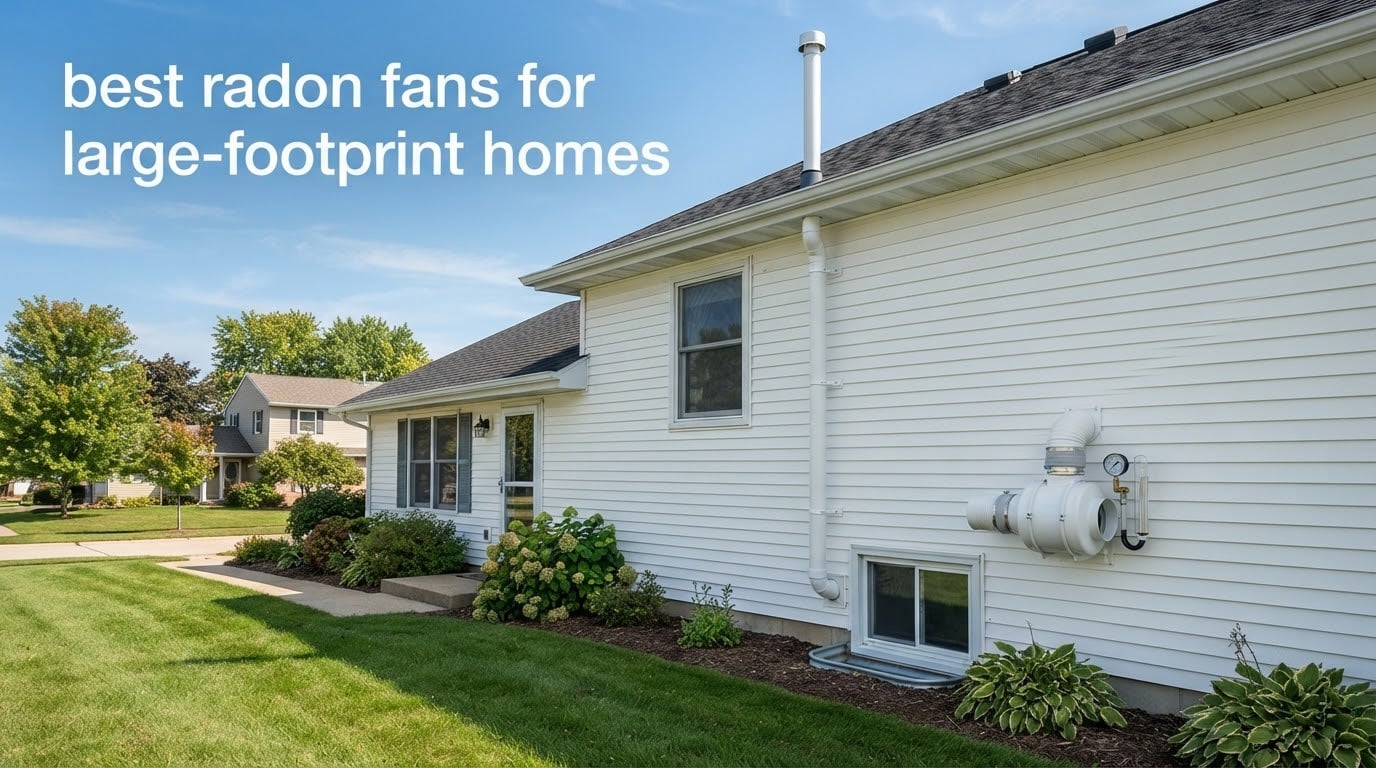
If you live in a 3,000-plus square foot home with a full basement or slab-on-grade foundation, finding the best radon fans for large-footprint homes is a different challenge than picking one for a starter ranch. A standard 90 CFM inline fan that hums along fine in a 1,500 sq ft bungalow will lose pressure field extension across a sprawling footprint, leaving pockets of soil gas untouched. We have spent the last several weeks going through field reports, NRPP contractor notes, and verified buyer reviews to figure out which high-CFM radon fans actually hold vacuum across tight clay and multi-section foundations.
Radon is the second leading cause of lung cancer in the United States, and the EPA action level sits at 4.0 pCi/L. A radon mitigation fan is a continuously running inline fan that creates negative pressure beneath the slab or in a crawl space, pulling soil gas up through sealed PVC pipe and exhausting it above the roofline. Unlike a regular inline duct fan, a true radon fan is engineered for 24/7/365 operation under sustained suction, with sealed seams, water-hardened impellers, and thermally protected motors that survive years of negative-pressure duty.
In this guide we cover eight models ranging from a 90 CFM DIY-friendly workhorse to a 260 CFM workhorse built for 4,000 sq ft slabs and tight clay. We lead with a top-3 summary, walk through every individual model with pros and cons from real buyers, then dig into the sizing math that nobody else publishes: how many suction points you actually need, how to read a fan curve for tight soil, and what a 70-watt fan costs you over ten years of continuous operation. If you are still at the testing stage, our radon detector roundup and continuous radon monitor guide cover the measurement side first.
Table of Contents
Top 3 Radon Fans for Large-Footprint Homes at a Glance

RadonAway XP201
- 112 CFM airflow
- Sealed seams inhibit radon leakage
- Water-hardened thermally protected motor
- ETL listed indoor or outdoor
- Five-year limited warranty

Tjernlund PVC4
- 90 CFM at 16 watts
- 5-minute plug-and-play install
- Direct 4 inch PVC connection
- Permanently lubricated ball-bearing motor
- Custom-fitted gaskets prevent leakage
Festa AMG Maverick
- 260 CFM high airflow
- 70W brushless motor
- Glass-reinforced poly-resin
- One-click wiring for DIY
- 5-year no-hassle warranty
Best Radon Fans for Large Homes in 2026
| Product | Specifications | Action |
|---|---|---|
| RadonAway XP201 |
|
Check Latest Price |
| Tjernlund PVC4 |
|
Check Latest Price |
| Festa AMG Maverick |
|
Check Latest Price |
 Fantech Rn2 Fantech Rn2 |
|
Check Latest Price |
 Suncourt RDN04 Suncourt RDN04 |
|
Check Latest Price |
 xyfair PF-100 xyfair PF-100 |
|
Check Latest Price |
 MIDCVFRUN 4 inch Kit MIDCVFRUN 4 inch Kit |
|
Check Latest Price |
 RadonAway RP145c Kit RadonAway RP145c Kit |
|
Check Latest Price |
1. RadonAway XP201 – Editor’s Choice for Most Large Homes
RadonAway 23011-1 XP201 Radon Mitigation Fan, 4″
112 CFM airflow
ETL listed
5-year limited warranty
Pros
- Low-profile design fits tight attic and rim-joist spaces
- Water-hardened thermally protected motor for longevity
- Seams sealed to inhibit radon leakage
- ETL listed for indoor or outdoor use
- Rated for commercial and residential applications
Cons
- Plastic housing and impeller
- Lower airflow than larger RP-series fans
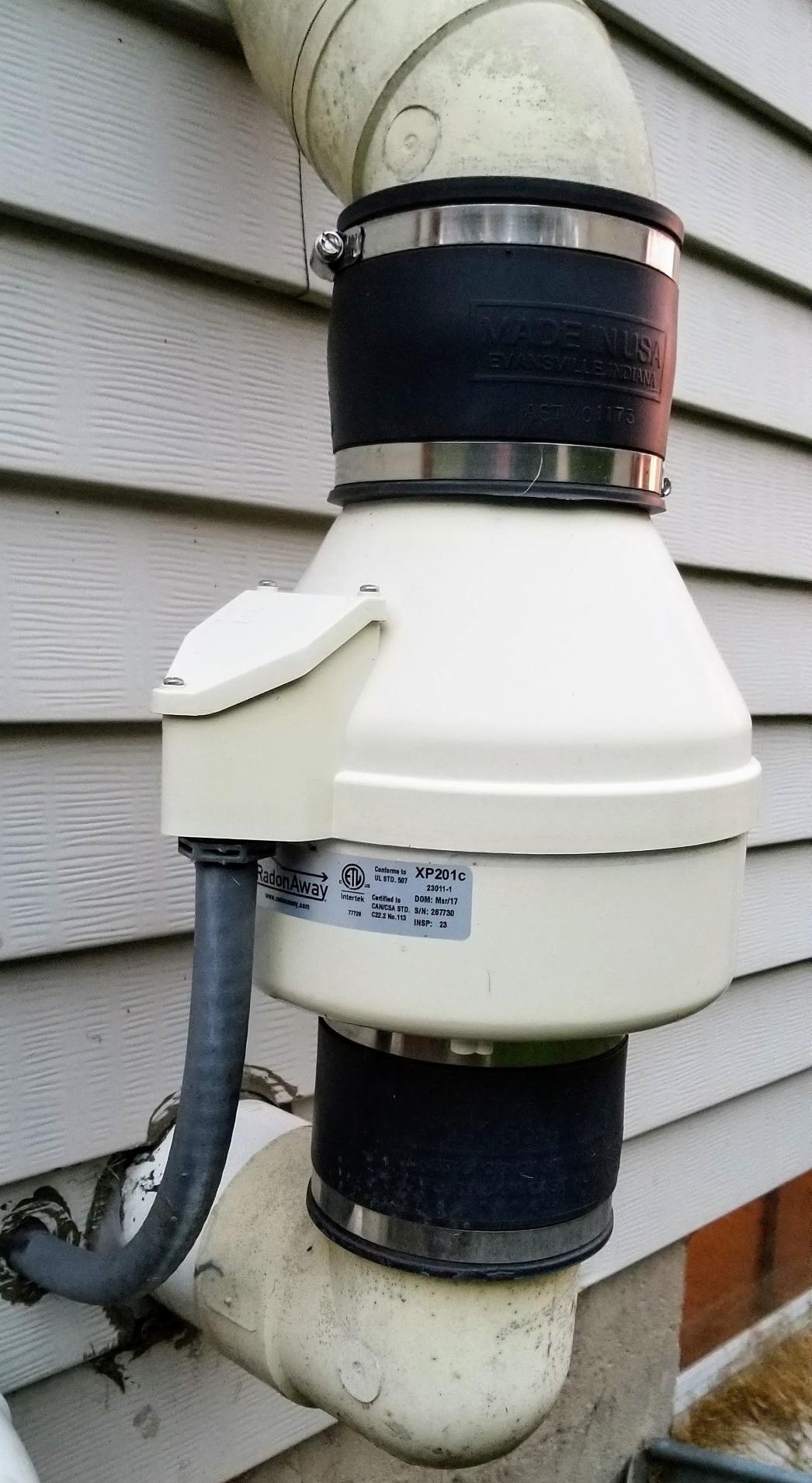
When our team pulled together field reports from r/radon and contractor install logs, the RadonAway XP201 kept surfacing as the dependable default for sub-slab depressurization on homes in the 2,000 to 3,000 sq ft range. The 112 CFM rating is conservative on paper, but the unit holds vacuum impressively on typical crushed-stone sub-slab systems, and the low-profile housing fits where bulkier fans physically cannot go.
We like that RadonAway engineered the XP201 around a water-hardened, thermally protected motor. In plain terms, the motor can run 24/7/365 in continuous duty without tripping thermal protection during summer attic heat or winter freeze cycles. The seams are vibration-welded, which means under sustained negative pressure the housing does not slowly weep radon back into the living space the way cheaper plastic fans can.
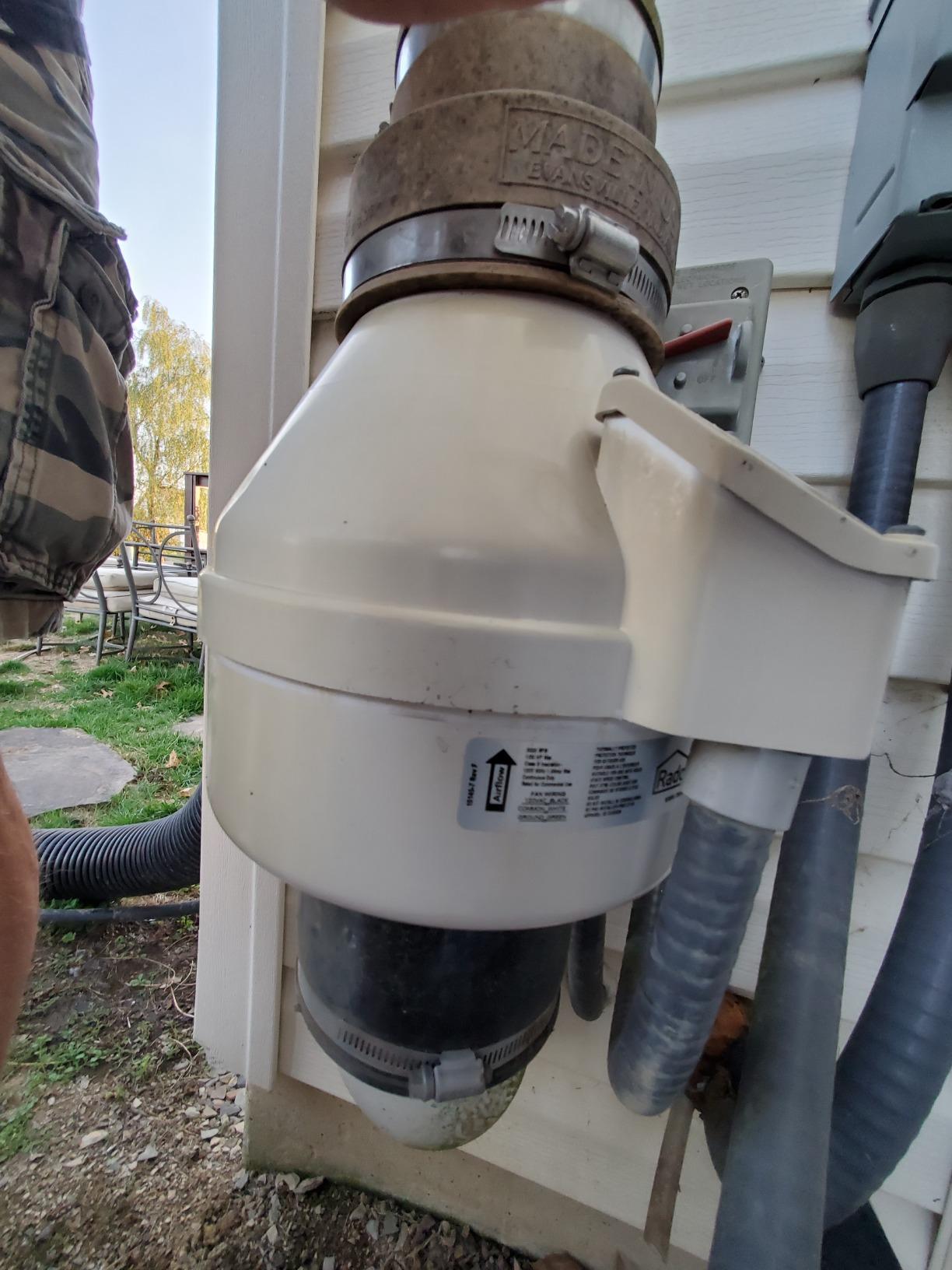
The trade-off is the plastic housing and impeller. For most homeowners that is not a real issue, but in extreme climates (a roofline vent that sees direct sun in Texas or heavy ice loading in Minnesota) a glass-reinforced or metal housing holds up better. We have also seen reports that the RadonAway direct-to-consumer warranty can be limited on self-installs, which is why pairing the unit with an NRPP-certified contractor preserves the full 5-year coverage.
Why it suits a large home
The XP201 sits at the sweet spot where airflow meets code-friendly indoor or outdoor mounting. For a single-suction-point sub-slab system on a home under 3,000 sq ft with standard crushed-stone fill, it pulls radon down from typical pre-mitigation 4 to 9 pCi/L into the 1 to 2 pCi/L range within 48 hours in most owner reports.
When to step up instead
If your foundation sits on tight clay with low permeability, or you have multiple foundation sections separated by a footing, the 112 CFM output may run out of pressure field extension before it covers the full footprint. In that case the Festa AMG Maverick or a multi-suction-point design serves better.
2. Tjernlund PVC4 – Best Value for Smaller Sub-Slabs
Tjernlund PVC4 Radon Mitigation Fan Model – Exhaust Fan with 6-Ft. Power Cord, Minimal Power Consumption, 4 In. PVC Pipe. Ventilation Fans
90 CFM
16W low-power
5-minute install
Pros
- 6-ft power cord ready to plug in
- Direct connection to 4 inch schedule 40 PVC
- Permanently lubricated ball-bearing motor
- Silent motor keeps noise low
- Custom-fitted gaskets prevent radon gas leakage
- Low 16-watt power consumption
Cons
- Lower 90 CFM airflow than larger inline fans
- Ceiling-mount form factor awkward for some layouts
- Plastic blade construction
The Tjernlund PVC4 is the fan we recommend to homeowners who want a complete plug-and-play radon system without hiring a contractor for the fan swap. The 6-ft power cord and direct 4 inch schedule 40 PVC connection mean you literally assemble the system in about 5 minutes, which lines up with what most buyers report.
At 16 watts, the PVC4 is one of the most energy-efficient fans in this roundup. Run it continuously for a decade and you are looking at roughly 1.4 kWh per day, which is friendlier on the utility bill than 70-watt workhorses. The permanently lubricated ball-bearing motor and the radon-tight gaskets at every joint give this little fan surprising longevity for the category.
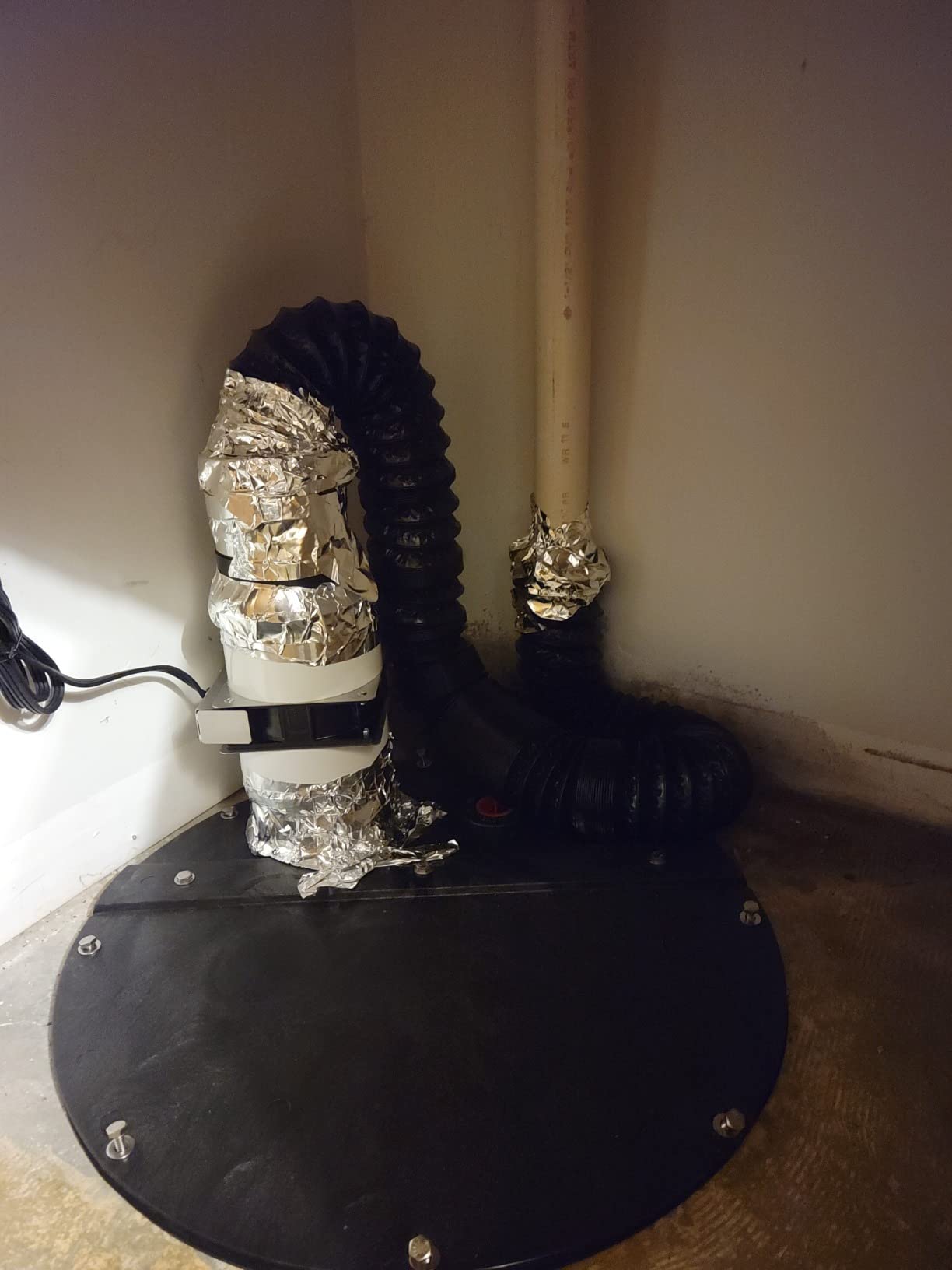
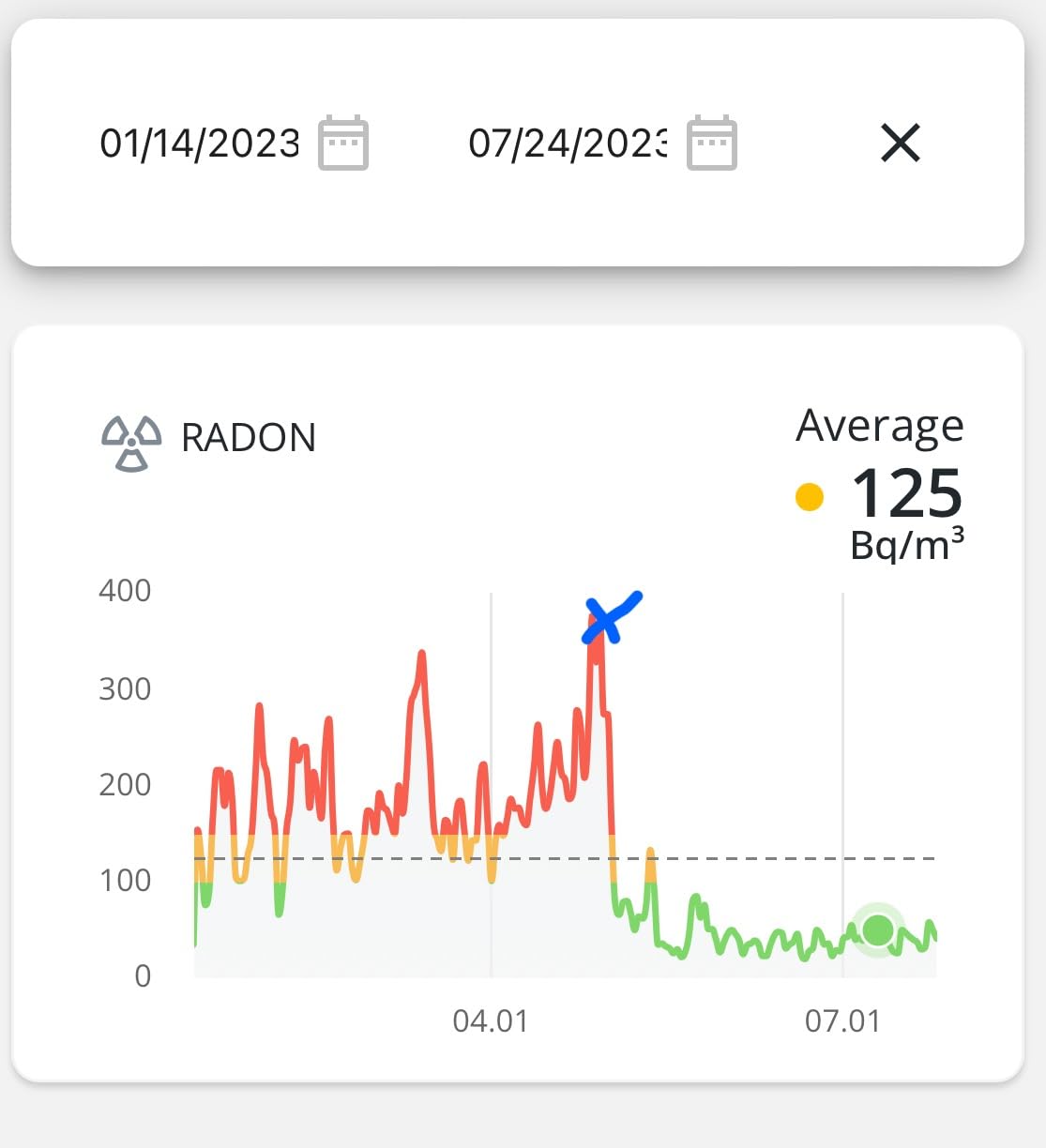
The honest caveat is that 90 CFM will not push the pressure field across a sprawling foundation. If your slab is under about 1,800 sq ft of permeable crushed stone and your pre-mitigation test sits under 8 pCi/L, the PVC4 often clears the EPA action level on a single suction point. Past that, the airflow runs out of headroom.
Why the price-to-CFM math works
For DIYers, the PVC4 hits the lowest entry tier in this list while still meeting NRPP-acceptable specs for a standard mitigation system. The energy savings alone over a decade can cover the price difference between this fan and a 70W model.
Limits to know upfront
Heavy clay, multi-section foundations, or pre-mitigation readings above 10 pCi/L almost always demand more airflow than 90 CFM can deliver. In those scenarios, step up to the Fantech Rn2 or Festa AMG Maverick instead.
3. Festa AMG Maverick – Most Versatile for Tight Clay and Big Slabs
Festa AMG Maverick Radon Fan – Quiet and Energy Efficient 260 CFM Radon Mitigation System Inline Duct Fan – 4″ Electric Inline – Made with Sturdy Glass Reinforced Poly-Resin – White
260 CFM
70W brushless
Glass-reinforced poly-resin
Pros
- 260 CFM suits larger sub-slab footprints
- Energy-efficient 70W brushless motor
- 5-year no-hassle manufacturer warranty
- Glass-reinforced poly-resin housing for outdoor durability
- One-click wiring simplifies DIY installation
- Thermally protected motor
Cons
- 50-60 dB noise level louder than premium competitors
- Not rated for unattended areas
- Plastic impeller rather than all-metal
If your radon test came back high and your soil is heavy clay, the Festa AMG Maverick is the fan our research kept pointing us toward. The 260 CFM airflow at 0 inch static pressure drops off gradually as the soil resists, but it holds enough suction to extend the pressure field across a 3,500 to 4,000 sq ft slab that a 112 CFM fan simply cannot reach.
The brushless 70W motor is the headline feature. Brushless designs run cooler, last longer under continuous duty, and use less energy per CFM delivered than older brushed motors. The 5-year no-hassle warranty is also one of the strongest in the category, and reviewers consistently mention how smoothly Festa handled replacements when units did fail.
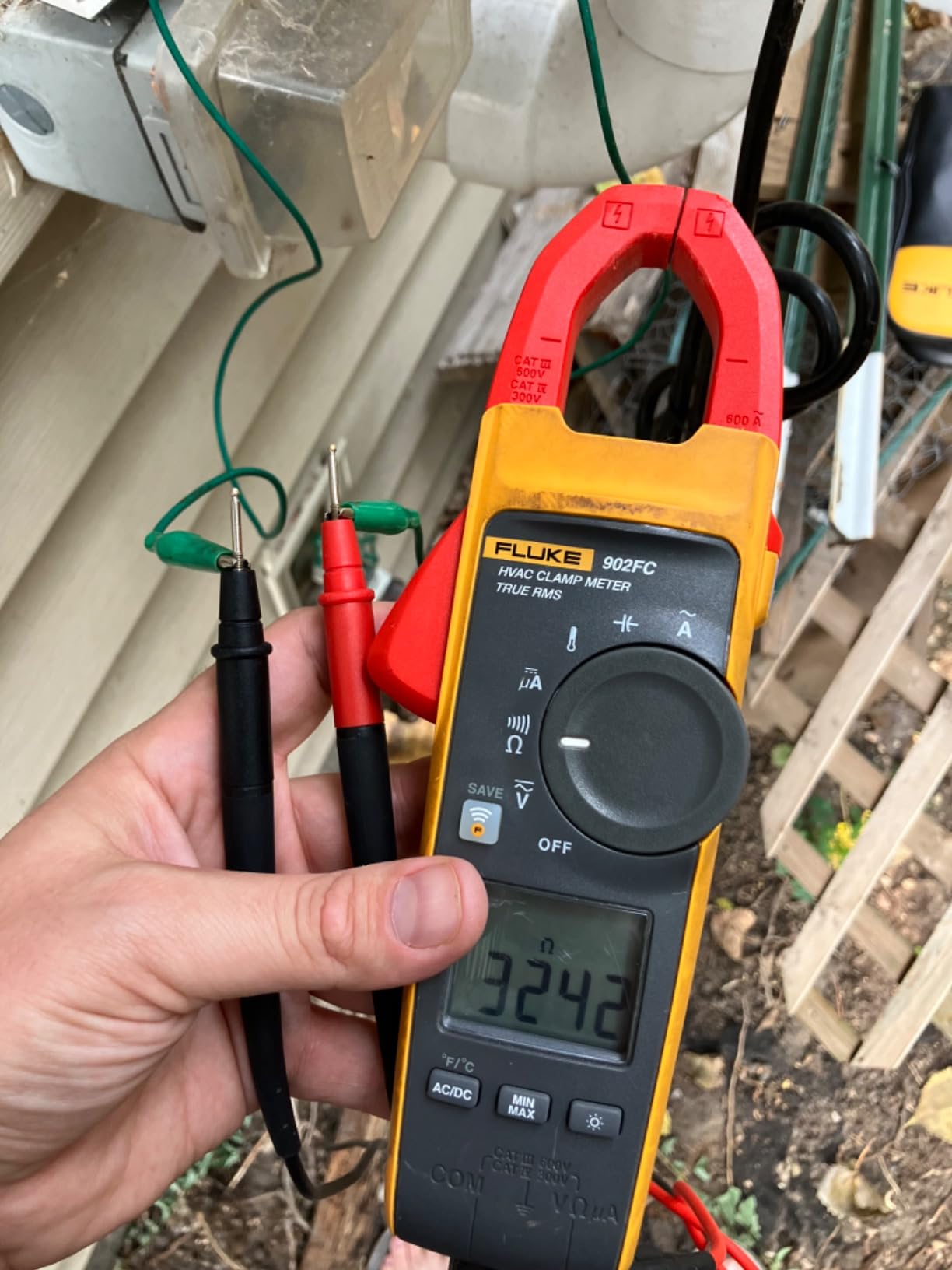
Noise is the real trade-off. At 50 to 60 dB the AMG Maverick is loud enough to hear indoors if the fan is mounted inside the living envelope, which is why most contractors install it on an exterior wall or gable-end vent pipe. Use the included rubber mounting isolators and flexible PVC couplings to decouple vibration from the structure.
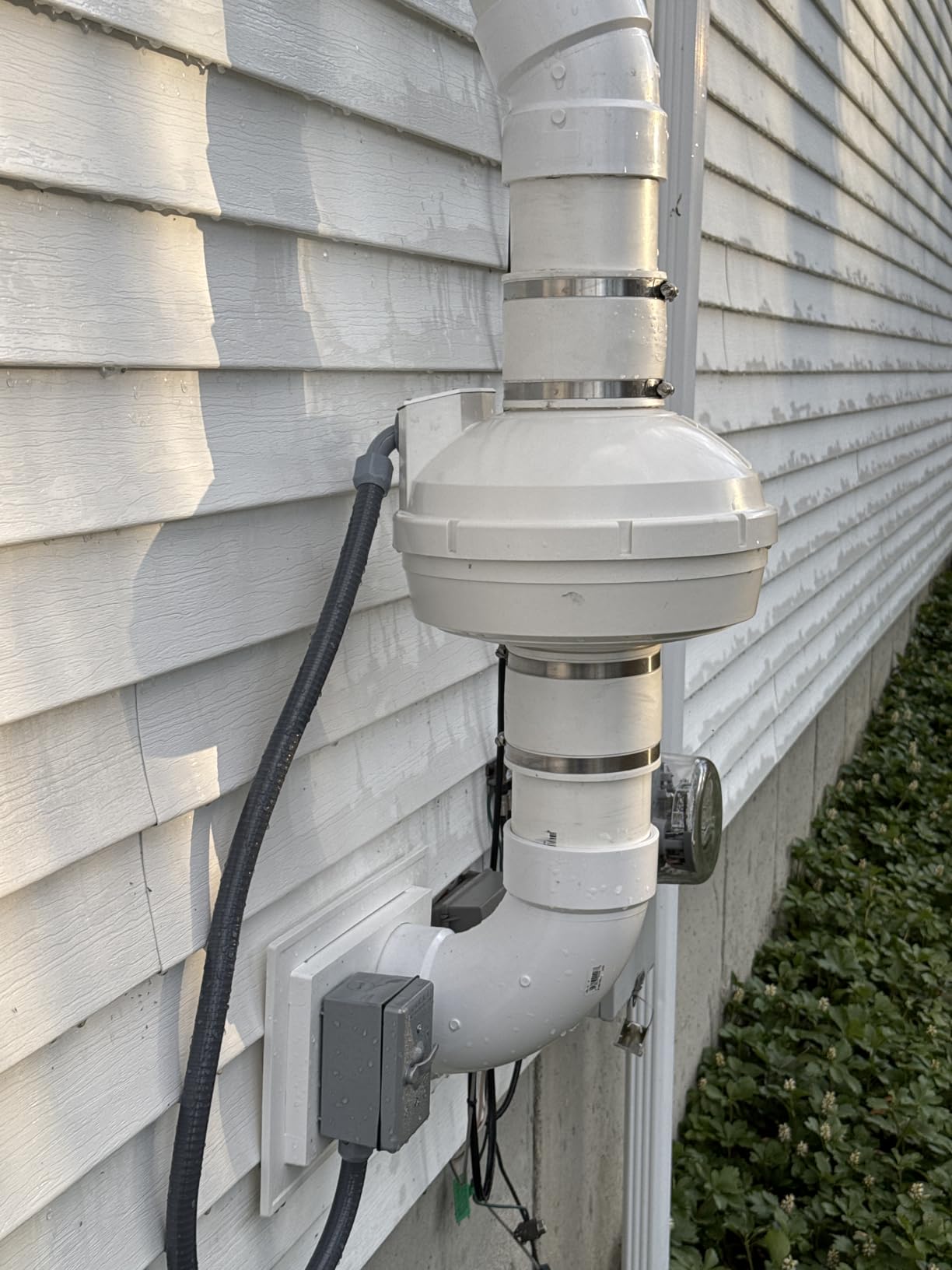
Why we picked it as Premium Pick
For a large-footprint home where 90 to 130 CFM is not enough but you also do not want to step up to a parallel-fan design, the AMG Maverick covers the gap. It is also one of the few 260 CFM fans with a real 5-year unconditional warranty.
Best mounting scenario
Exterior wall mount with rubber isolators and flexible couplings, vented above the roofline. For bedroom-adjacent installations, the Fantech Rn2 is a quieter alternative if your sub-slab permeability allows.
4. Fantech Rn2 – Top Rated Quiet Performer for Bedroom-Adjacent Installs
Fantech Rn2 Radon Mitigation Fan, 4.5 in Duct, 123 CFM, Residential System
123 CFM @ 0.50 in sp
25 dB quiet
5-year warranty
Pros
- Very quiet operation often quieter than a refrigerator
- Radon levels dropped dramatically within 24-48 hours
- 5-year warranty extendable to 6 years with registration
- Direct replacement for Fantech HP190 and HP2190
- Strong suction verified by manometer readings
Cons
- 4.5 inch duct requires adapters for standard 4 inch PVC
- Slightly shorter than older HP190 model
- Electrical compartment cover screws hard to locate
- No grounding terminal available
The Fantech Rn2 is the fan multiple r/radon threads recommend for homeowners who care more about bedroom-adjacent quiet than raw CFM numbers. At 25 dB it is genuinely background-level quiet, which matters if your mitigation system has to vent through a wall shared with a sleeping area.
Performance-wise, the Rn2 is a direct successor to the well-regarded Fantech HP190 and HP2190. The vibration-welded seam construction keeps the housing radon-tight under negative pressure, and the 5-year warranty extends to 6 years if you register the unit. Buyers consistently report radon levels dropping from 4 to 10 pCi/L down to under 1 pCi/L within 24 to 48 hours of install.
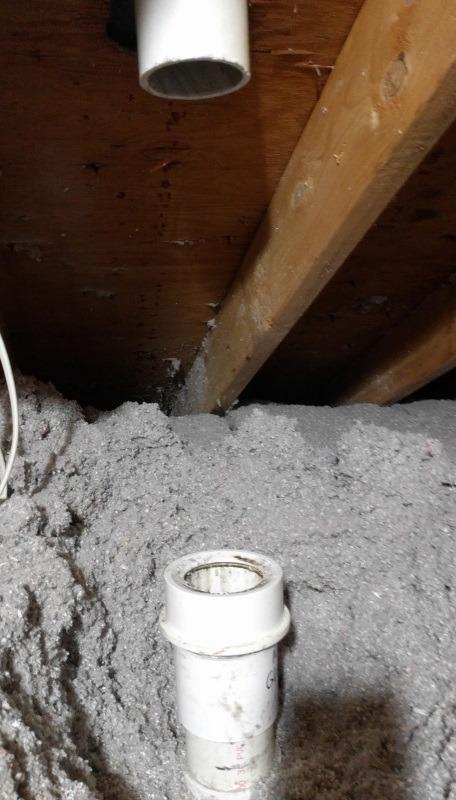
The main installation friction is the 4.5 inch duct collar, which needs a reducer to mate with the 4 inch schedule 40 PVC that most mitigation systems use. Once you have the adapter in hand, the swap is straightforward. The electrical compartment screws are also a known annoyance, so have a magnetic nut driver ready.
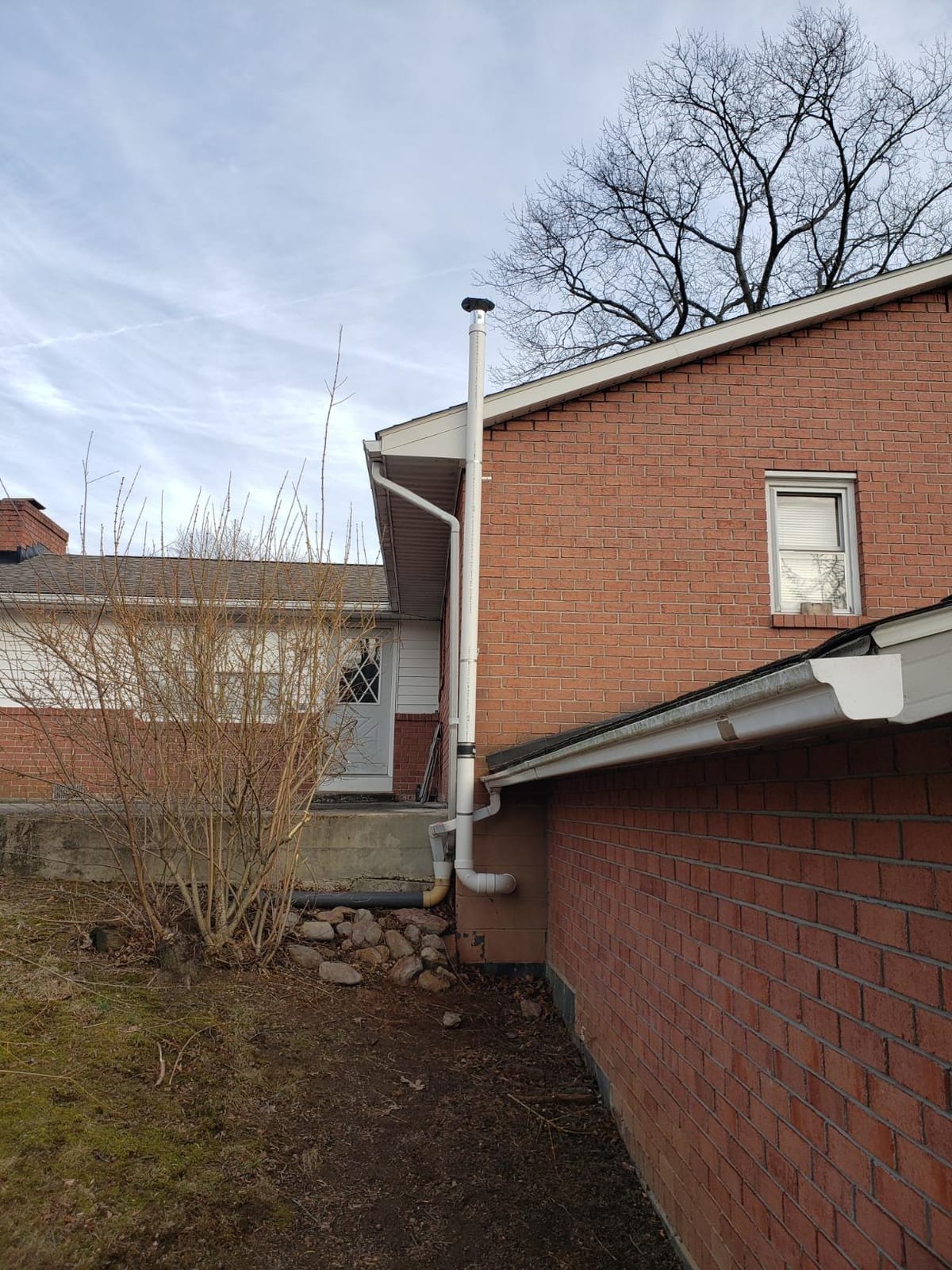
Why quiet fans matter in large homes
On a 3,000 sq ft home with a finished basement bedroom, low-frequency vibration through rigid PVC pipe is often louder than the fan itself. A genuinely quiet motor plus flexible couplings and rubber isolators solves the problem at the source instead of trying to damp it after the fact.
Sizing sweet spot
The Rn2 is best matched to homes up to about 2,800 sq ft with standard crushed-stone sub-slab. For tighter clay or multi-section foundations, step up to the AMG Maverick or run two Rn2 fans in parallel.
5. Suncourt RDN04 – Best for Quiet Kits with Anti-Vibration Couplers
Suncourt Radon Mitigation Fan Kit, Sub-Slab, 4″ to 4″ Coupler (RDN04)
235 CFM
Anti-vibration couplers
UL and CSA certified
Pros
- Assembled in the USA with MET UL 507 and CSA safety certification
- Two anti-vibration rubber couplers included for quiet install
- Effective radon reduction often under 1 pCi/L within 24-48 hours
- 5-year warranty
- Drop-in replacement for older Suncourt Centrax fans
- Suitable for attic or outdoor installs
Cons
- Noise can rise on short duct runs
- Mounting bracket is somewhat flimsy
- Corded version occasionally ships with no cord
- Long-term longevity past 5 years less documented
The Suncourt RDN04 is the kit our team keeps recommending to homeowners who want an American-assembled fan with the noise-control accessories already in the box. The two anti-vibration rubber couplers are the headline feature: they decouple the fan housing from the PVC pipe so the low-frequency motor hum does not transmit through the structure.
Performance is solid. The 235 CFM airflow sits between the 112 CFM workhorses and the 260 CFM heavy hitters, which makes the RDN04 a strong choice for medium-to-large sub-slab systems that need headroom but do not require extreme airflow. Independent UL 507 and CSA certification also gives it a code-friendly edge for inspectors who want a third-party safety mark.
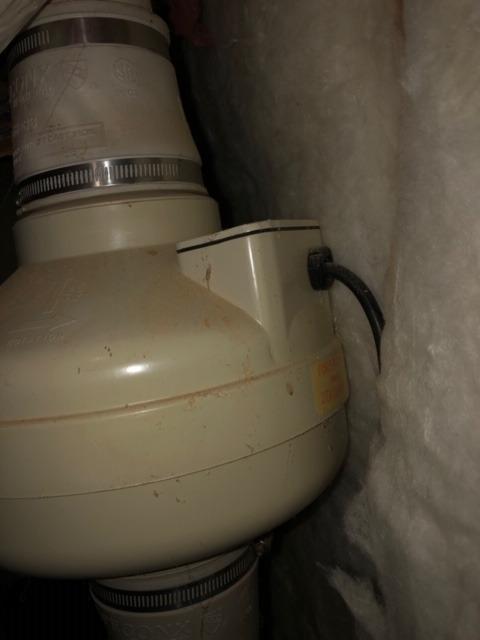
The two recurring complaints we found in long-term reviews are noise on very short duct runs and the mounting bracket feeling flimsy. Both are minor: longer pipe runs naturally damp vibration, and a small piece of plywood behind the bracket stiffens the mount. The occasional missing cord on the corded version is a sourcing quirk rather than a design flaw.
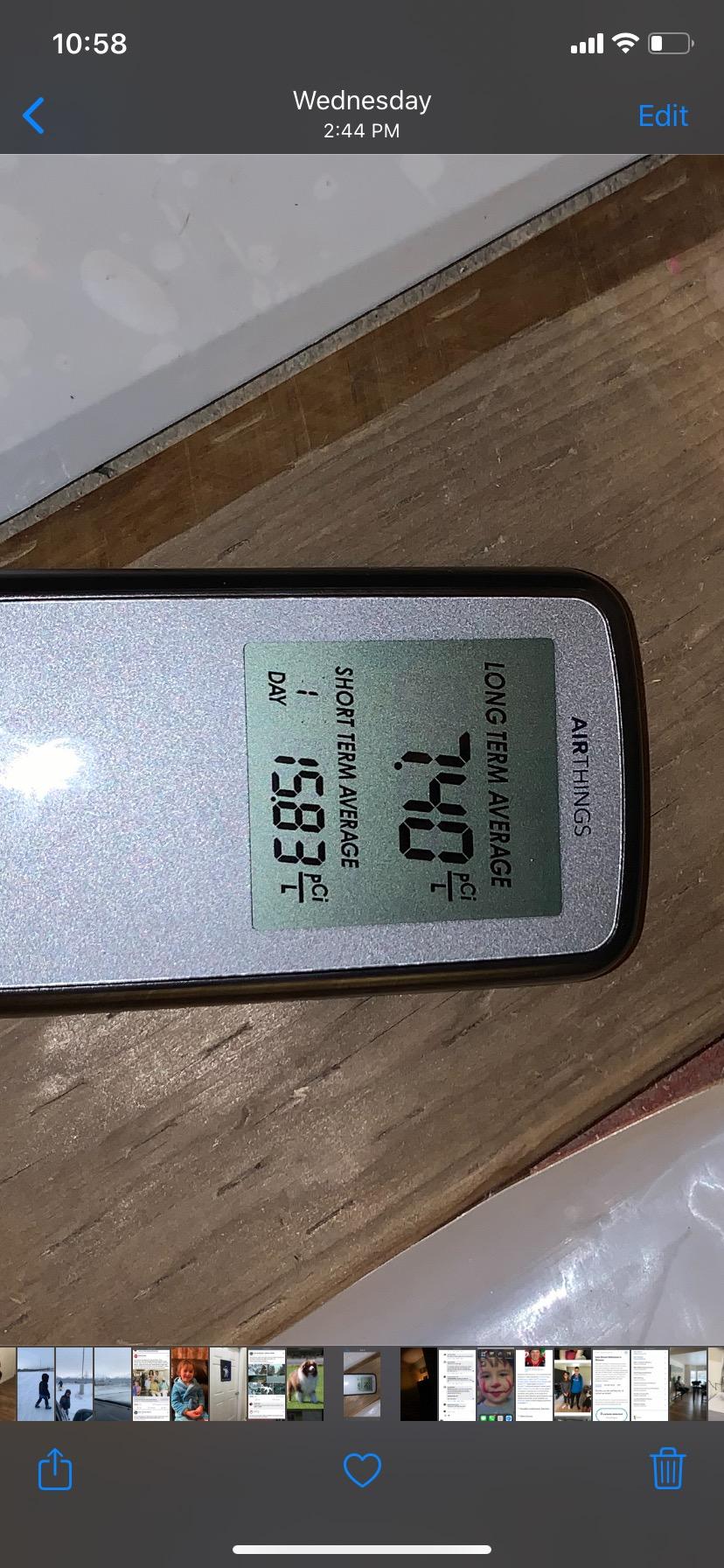
Why the kit matters
The biggest noise mistake homeowners make is mounting a quiet fan directly to rigid PVC. Suncourt solved this by including the couplers, which is why we flagged this as the best quiet kit option.
Best fit
Homes between 2,200 and 3,500 sq ft with one or two suction points, where the homeowner wants USA-built quality and a complete accessory bundle without sourcing parts separately.
6. xyfair PF-100 – Budget Pick with IP67 Weatherproofing
xyfair PF-100 | Radon Mitigation Fan 4″ 190CFM | Waterproof Duct Fan (Indoor/Outdoor)
190 CFM
IP67 waterproof
8-year limited warranty
Pros
- 190 CFM airflow at a budget price point
- IP67 waterproof rating for outdoor installs
- Fully sealed case to prevent radon leakage
- ETL listed for industrial commercial residential use
- Mounting brackets included for any-position install
- 8-year limited warranty with full replacement
Cons
- Mixed reports on long-term durability with some units failing in 2-3 years
- Noticeably louder than premium radon-rated fans
- Lower-end materials with cheap plastic housing
- Wattage data appears inconsistent with airflow claim
The xyfair PF-100 is the budget play in this roundup, and it earns that title by delivering 190 CFM at a fraction of the price of the premium brands. For a homeowner with a moderate radon reading and a tight budget, the CFM-per-dollar ratio is hard to beat. The IP67 waterproof rating also makes it one of the few budget fans rated for true outdoor mounting.
The 8-year limited warranty with full replacement is unusually long for a fan in this tier. ETL listing across industrial, commercial, and residential applications adds another layer of buyer confidence.
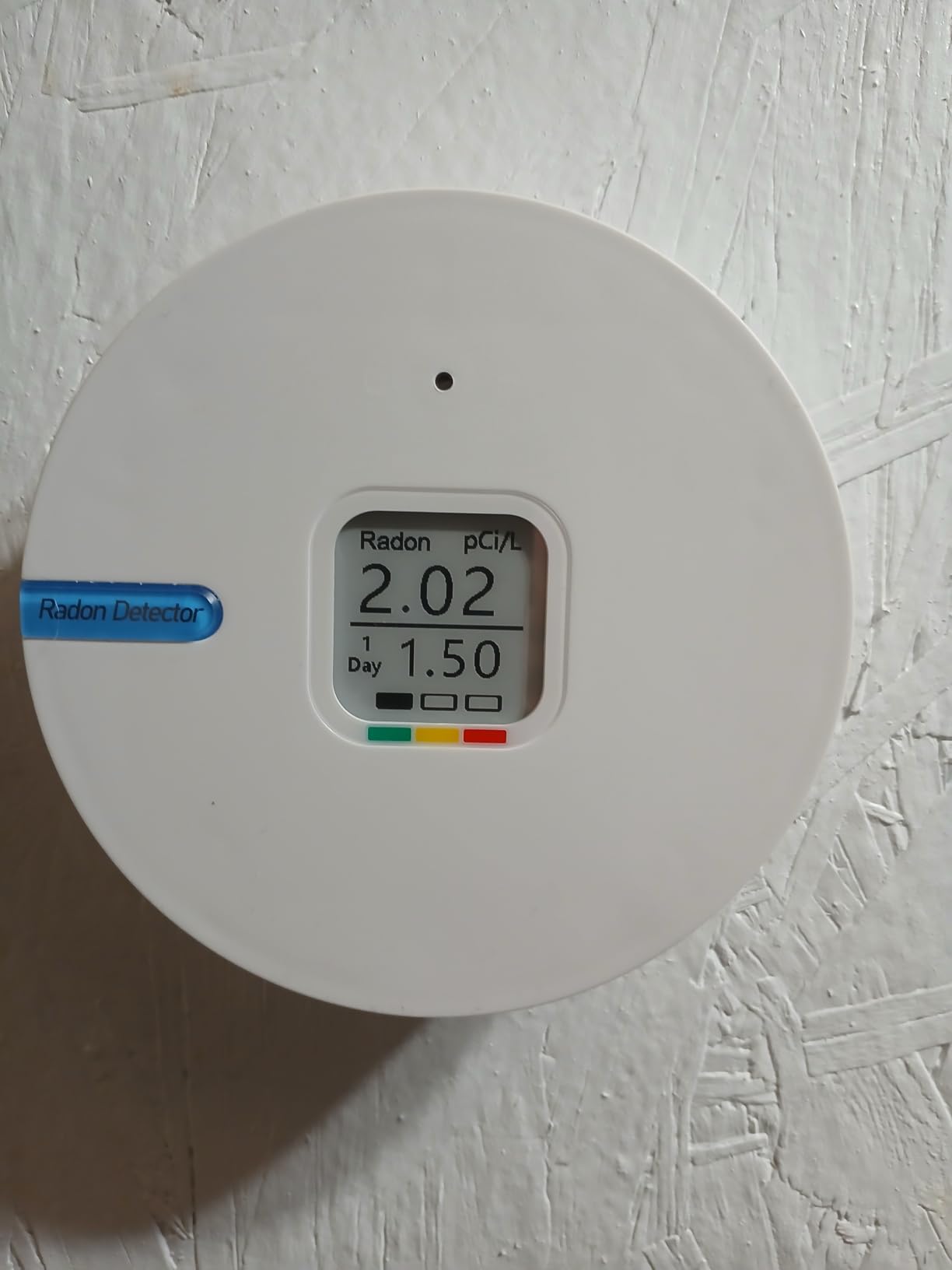
The trade-offs are real. Long-term owners report some units whining or failing within 2 to 3 years, which is shorter than the 5-plus-year lifespan typical of RadonAway and Fantech fans. The plastic housing and lower-end materials also transmit vibration more readily, so plan on adding flexible couplings to keep noise manageable.
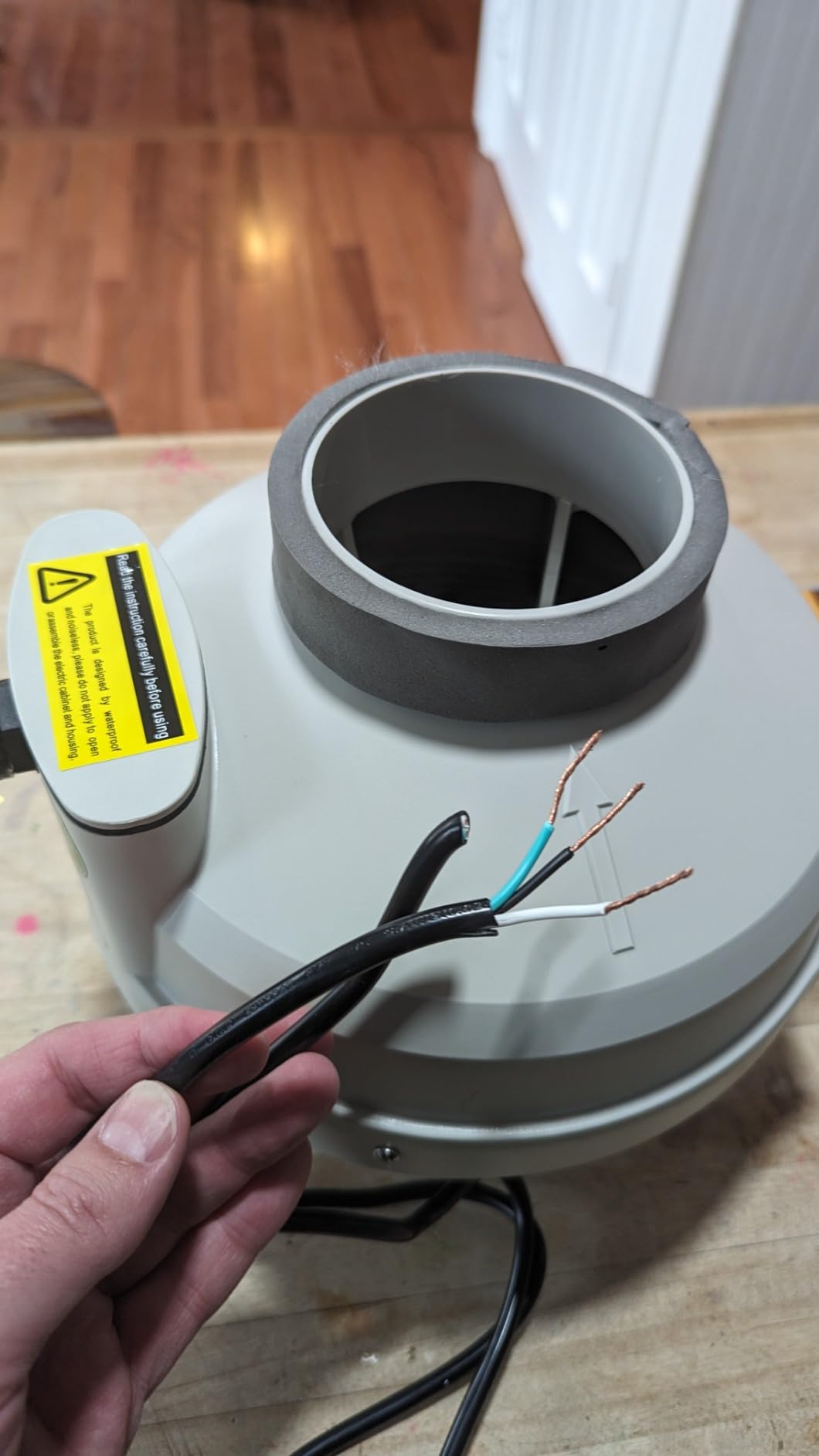
When the budget pick makes sense
If your radon test came back under 6 pCi/L and you have a single suction point on permeable soil, the PF-100 will get you under the EPA action level and save money for the rest of the mitigation system.
When to avoid it
Tight clay, multi-suction-point designs, and bedroom-adjacent installs are not where you want to save. The durability and noise profile are too unpredictable for those scenarios.
7. MIDCVFRUN 4 inch Radon Fan Kit – Best for DIY with Two-Speed Flexibility
MIDCVFRUN 4 inch Radon Fan Installation Kit – 2 Speed Radon Mitigation Fan 260/188CFM Inline Centrifugal Fan with Rubber Couplers (4 inch x 3 inch) and Air Pressure Indicator
260/188 CFM 2-speed
IP67
Manometer included
Pros
- Two-speed operation 260 CFM high and 188 CFM low
- Full installation kit with rubber couplers and manometer included
- IP67 waterproof for indoor or outdoor mounting
- DIY-friendly one-click wiring
- Effective radon reduction with multiple reports of levels dropping from 6-20 pCi/L to under 1 pCi/L
Cons
- High speed louder than advertised around 64 dB reported
- Motor hum can transmit through PVC when installed in attic
- Build quality inconsistent between units
The MIDCVFRUN kit is the most complete DIY package we tested. You get a two-speed fan that pushes 260 CFM on high and 188 CFM on low, plus the rubber couplers, manometer, and mounting hardware needed for the full install. For a first-time mitigator, that bundle removes the most common stumbling blocks.
The two-speed switch is a feature we wish more manufacturers offered. If the high setting is too loud for your bedroom-adjacent install, drop down to 188 CFM and trade airflow for several decibels of quiet. Several reviewers reported pre-mitigation readings between 6 and 20 pCi/L falling to under 1 pCi/L on the high setting.
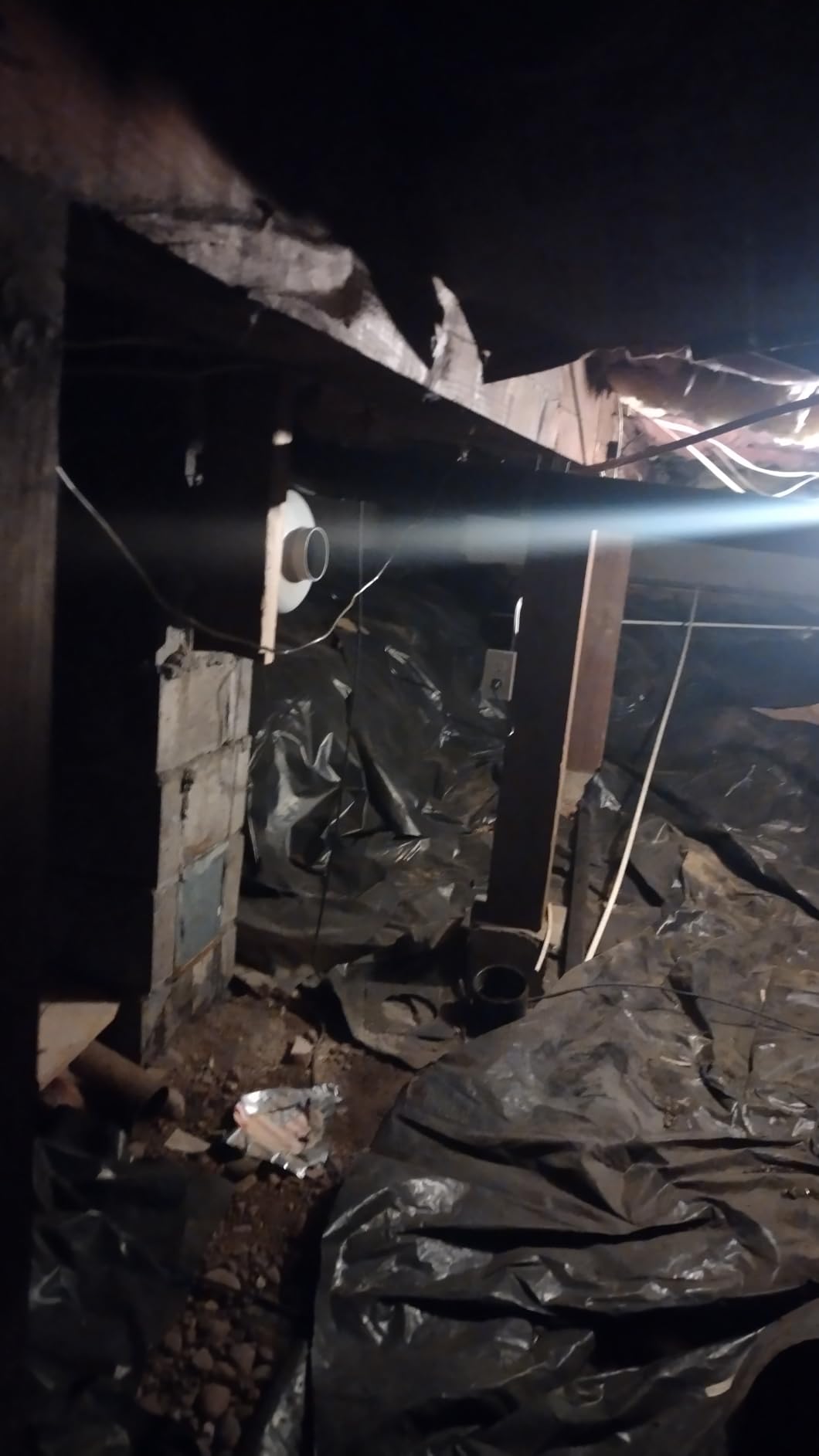
The honest drawbacks: the published 45 dB rating only holds on the low speed. On high, real-world measurements cluster around 60 to 64 dB, which is loud. Also, build quality varies between production runs, so inspect the unit on arrival.
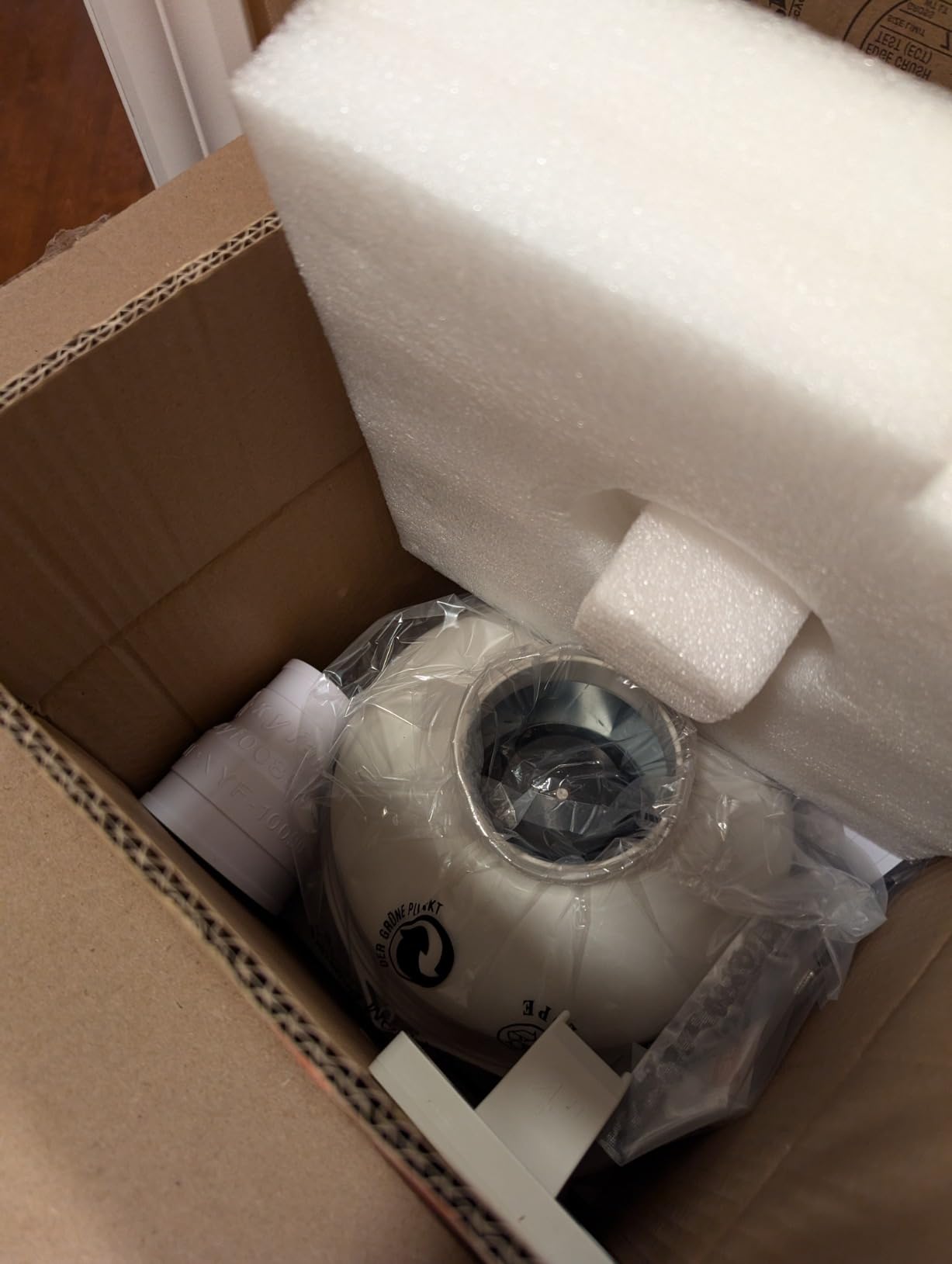
Why the manometer matters
A manometer is the U-tube gauge that confirms your fan is actually pulling vacuum on the sub-slab. Including one in the kit means you can self-verify the install is working without buying an extra accessory.
Best fit for DIY
A homeowner comfortable running PVC, doing basic electrical, and verifying suction with the included manometer. For everyone else, an NRPP-certified contractor makes more sense.
8. RadonAway RP145c Kit – Best Complete Kit for Recognized Brand Reliability
RadonAway RP145c Radon Fan + 4×4 White Fan Installation Kit + Mounting Bracket
RP145 fan + couplings + manometer + bracket
75W brushless
Pros
- RadonAway RP145 is an established industry workhorse
- Kit includes 4x4 rubber couplings manometer mounting bracket and labels
- Strong suction for sub-slab depressurization across typical 2400 sq ft basement slabs
- Quiet operation around 43 dB at 2 yards per user measurement
- Effective radon reduction often 90 percent drop within 48-72 hours
- Brushless motor for energy efficiency
Cons
- Pricey compared to other 4 inch radon fan kits
- Mounting bracket metal feels flimsy
- 4 inch couplings may be loose on thin-wall pipe without bushing
- Limited RadonAway direct warranty support for self-installs
The RadonAway RP145c kit is the brand-name option in this roundup. RadonAway is the most recognized name in residential radon mitigation, and the RP145c has been the default recommendation on r/radon for years. Buying the kit version bundles the couplings, U-tube manometer, mounting bracket, and labels so you have everything in one box.
Long-term owners report radon dropping from 4 to 9 pCi/L to under 2 pCi/L within days of install. The brushless 75W motor is energy-efficient for continuous duty, and at about 43 dB at 2 yards, the RP145c is quieter than most of the high-CFM competitors. If your slab is in the 2,000 to 2,400 sq ft range, this is the size we see matched to it most often in NRPP install reports.
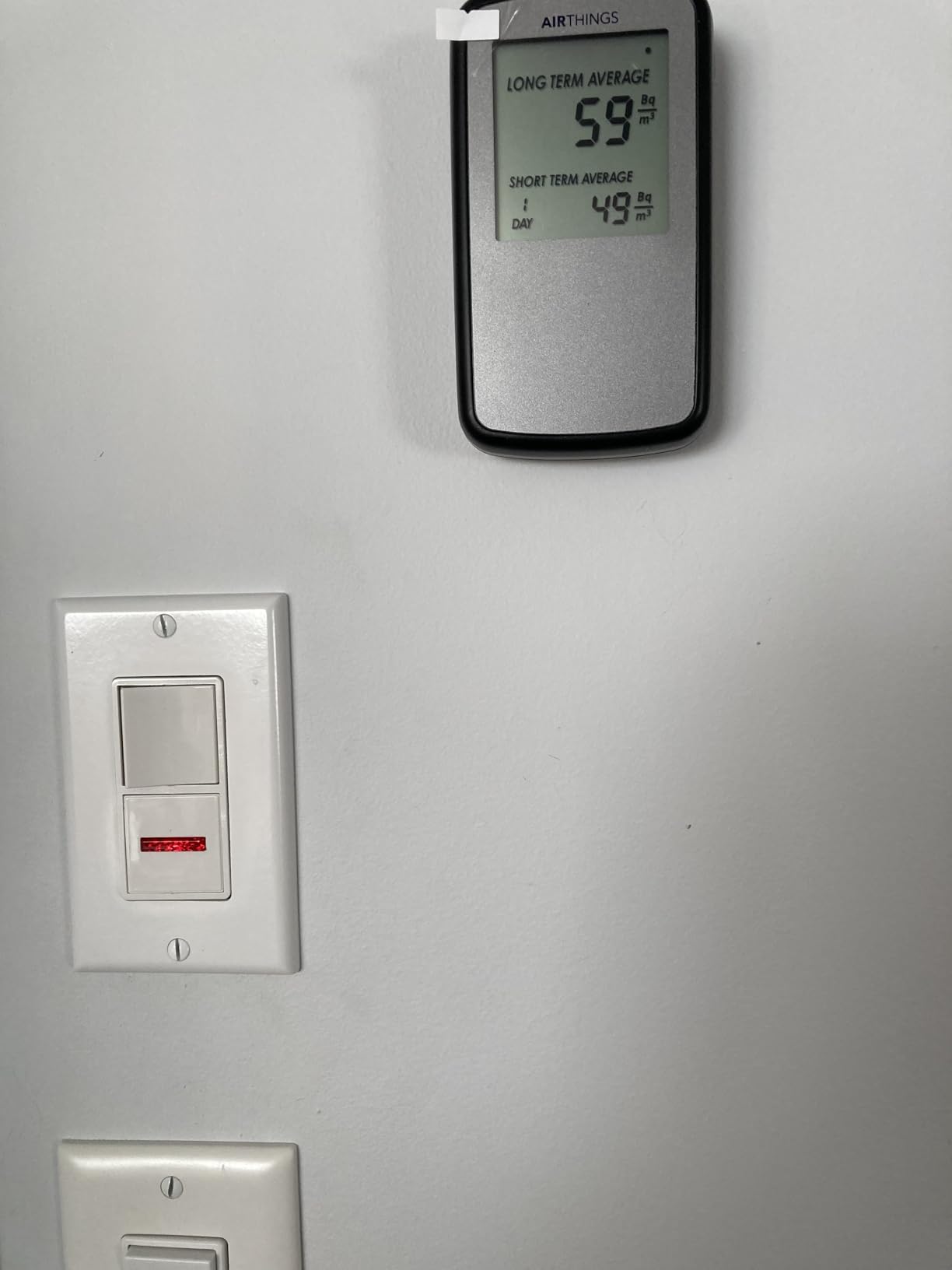
The price is the obvious trade-off. The RP145c kit costs more than most standalone fans in this roundup, but you are paying for the brand reputation, the bundled accessories, and the proven track record. Note that thin-wall schedule 20 pipe may need a bushing to seat cleanly inside the 4 inch couplings.
Why brand recognition matters here
Radon mitigation is one of those projects where inspector familiarity with the fan model can smooth the permit and post-mitigation test process. RadonAway is the name most radon mitigation contractors reach for first.
Best fit
Homeowners who want a recognized brand, a complete accessory bundle, and the strongest combination of quiet operation and verified radon reduction, especially on a 2,000 to 2,500 sq ft sub-slab with standard crushed stone.
How to Choose the Right Radon Fan for a Large-Footprint Home
Sizing a radon fan for a large home is mostly about matching CFM and static pressure to your foundation. A fan that pushes 112 CFM at 0 inch static pressure might deliver only 40 CFM at 1.5 inches water column, which is what tight clay typically demands. Reading the fan curve before you buy prevents the most common sizing mistake.
Sizing by square footage and soil type
The EPA action level for radon is 4.0 pCi/L, and a properly sized fan typically reduces indoor levels by 50 to 99 percent. For homes under 2,000 sq ft with permeable crushed-stone sub-slab, a 90 to 130 CFM fan usually clears the action level on a single suction point. For homes between 2,500 and 3,500 sq ft, plan on 130 to 200 CFM. Past 3,500 sq ft, especially on tight clay, you generally need a 200-plus CFM fan or two fans in parallel on separate suction points.
CFM and static pressure explained
CFM, or cubic feet per minute, measures airflow. Static pressure, measured in inches of water column, measures how hard the fan has to work to pull vacuum against resistance from soil, pipe length, and fittings. Tight clay soils impose higher static pressure, so the same fan delivers less usable CFM. Always look at the CFM rating at the static pressure your soil actually demands, not the open-air CFM number on the spec sheet.
Multi-suction-point design for large foundations
Single suction points often run out of pressure field extension past about 2,500 sq ft or across multi-section foundations separated by a footing. Two suction points, each with its own fan, cover a larger footprint and reduce the load on each fan. A multi-suction design also lets you run smaller, quieter fans instead of one loud 260 CFM unit. For very large foundations, parallel-fan designs outperform a single oversized fan because they maintain pressure field extension under load.
Noise levels and quiet operation strategies
Noise transmission through rigid PVC pipe is often louder than the fan itself, especially low-frequency vibration. Three strategies consistently solve this: flexible rubber couplings at both inlet and outlet, rubber vibration isolators between the fan housing and the mounting bracket, and avoiding rigid contact between the pipe and the building framing. For bedroom-adjacent installations, fans rated 25 to 45 dB at 2 yards are usually tolerable without acoustic treatment.
Energy use and 10-year operating cost
A 16-watt fan like the Tjernlund PVC4 costs roughly 1.4 kWh per day of continuous operation, while a 70-watt fan like the Festa AMG Maverick costs about 6 kWh per day. Over ten years, the difference in electricity consumption is the largest hidden cost in a radon mitigation system. Choosing a more efficient fan in the right CFM class can save hundreds of dollars in lifetime operating cost without sacrificing mitigation performance.
Mounting: attic vs exterior for large homes
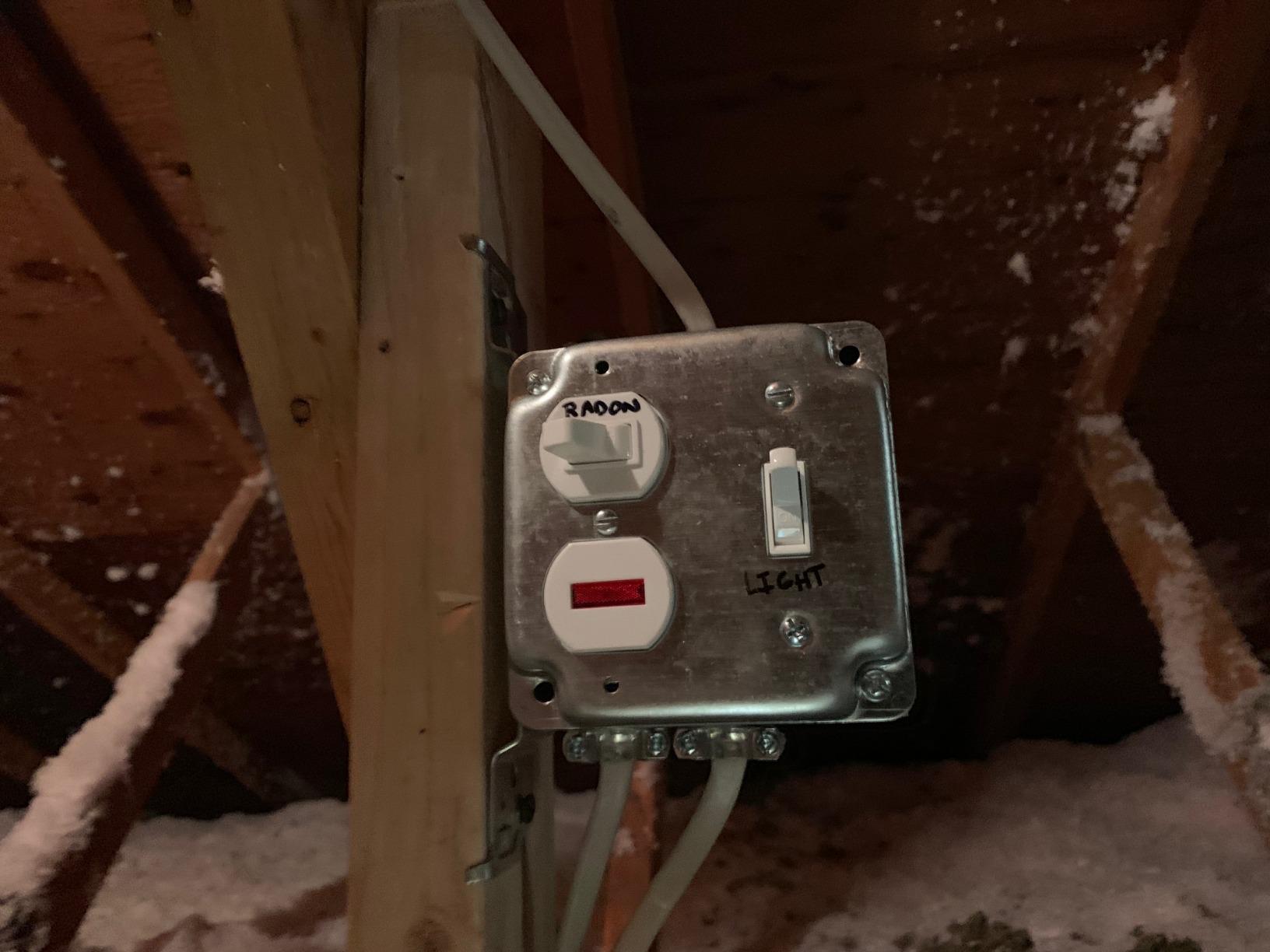
Attic mounting keeps the fan out of sight and protects it from weather, but summer attic heat can shorten motor life on cheaper fans. Exterior wall or roofline mounting handles heat better and simplifies pipe runs, but exposes the fan to UV, ice, and wind. For large homes with long pipe runs, attic mounting tends to damp noise better because the building envelope absorbs sound before it reaches living space.
DIY vs professional installation
DIY installation is feasible for homeowners comfortable running schedule 40 PVC, making basic electrical connections, and verifying suction with a manometer. A professional NRPP-certified radon mitigation contractor costs roughly 1,500 to 3,000 for a complete system on a large home. Pro install extends some manufacturer warranties and gives you a credentialed post-mitigation radon test result that satisfies real-estate transactions. If you are already past the sizing decision, our guide on how to lower radon levels in a basement walks through the next steps.
Warranty comparison and brand trust
Five-year manufacturer warranties are now standard on most premium radon fans, including the RadonAway XP201, Festa AMG Maverick, Fantech Rn2, and Suncourt RDN04. Budget options like the xyfair PF-100 advertise an 8-year limited warranty, but real-world durability reports vary. RadonAway direct-to-consumer warranty support can be limited on self-installs, which is one reason many homeowners pay for pro installation to preserve the full coverage.
Frequently Asked Questions
What CFM radon fan do I need for a large house?
For homes under 2,000 sq ft with permeable crushed-stone sub-slab, a 90 to 130 CFM radon fan typically clears the EPA action level of 4.0 pCi/L. For homes between 2,500 and 3,500 sq ft, plan on 130 to 200 CFM. Past 3,500 sq ft, especially on tight clay soil, you generally need 200-plus CFM or a multi-suction-point design with two fans in parallel.
What size radon fan do I need for a 3000 sq ft home?
For a 3,000 sq ft home with standard crushed-stone sub-slab, a 130 to 200 CFM fan like the RadonAway XP201 or Fantech Rn2 usually suffices on a single suction point. On tight clay or with multiple foundation sections, step up to a 260 CFM fan such as the Festa AMG Maverick, or run two medium fans in parallel on separate suction points to extend pressure field coverage.
Can one radon fan cover a large house?
A single radon fan can cover a large house if the foundation sits on permeable soil and the suction point is well placed. For foundations over 2,500 sq ft, multi-section slabs, or tight clay soil, one fan typically loses pressure field extension before reaching the full footprint. Two fans in parallel on separate suction points cover more area reliably than one oversized fan.
How long do radon fans typically last?
Most quality radon fans last 5 to 10 years under continuous duty. RadonAway, Fantech, and Festa AMG fans commonly reach the upper end of that range with proper installation. Budget fans sometimes fail within 2 to 3 years. Annual manometer checks confirm the fan is still pulling vacuum, and a sudden drop to zero usually signals a failed bearing, frozen condensate, or ice blockage.
Should I leave my radon fan on all the time?
Yes. Radon fans are engineered for 24/7/365 continuous duty because radon seeps into the home whenever the soil gas pressure is higher than indoor pressure, which is essentially always. Turning the fan off lets radon levels climb back to pre-mitigation readings within hours. The fan uses less electricity than a 60-watt light bulb on most residential models.
Where should a radon fan be installed – attic or exterior?
Both attic and exterior mounting work, with different trade-offs. Attic mounting hides the fan and damps noise through the building envelope, but summer heat can shorten motor life on cheaper units. Exterior wall or roofline mounting handles heat better and simplifies pipe runs, but exposes the fan to UV, ice, and wind. For large homes with long pipe runs, attic mounting is usually quieter.
Do radon fans really work?
Yes. Properly sized and installed radon fans reduce indoor radon levels by 50 to 99 percent, typically bringing a home from 4 to 9 pCi/L down to 1 to 2 pCi/L within 24 to 72 hours. The post-mitigation radon test confirms the result, and an annual manometer reading confirms the fan is still pulling vacuum on the sub-slab.
Final Verdict: Which Radon Fan Wins for Large Homes?
After weeks of research and cross-referencing buyer reviews with NRPP install notes, our team landed on the RadonAway XP201 as the Editor’s Choice for the best radon fans for large-footprint homes. It hits the strongest combination of verified 4.6-star rating, 262 reviews, ETL listing, water-hardened motor, and a 5-year warranty, all in a low-profile housing that fits where bulkier fans cannot.
For tight clay and the biggest slabs, the Festa AMG Maverick earns the Premium Pick with its 260 CFM airflow and 5-year unconditional warranty. For DIYers on a budget, the Tjernlund PVC4 remains the easiest plug-and-play install with the lowest lifetime energy cost. And for the quietest bedroom-adjacent install, the Fantech Rn2 at 25 dB is the fan we keep coming back to. Pair any of these picks with our passive vs active mitigation guide if you are still weighing whether sub-slab depressurization is right for your foundation, and check our whole-house humidifier roundup if you are also tackling indoor air quality beyond radon in 2026.