
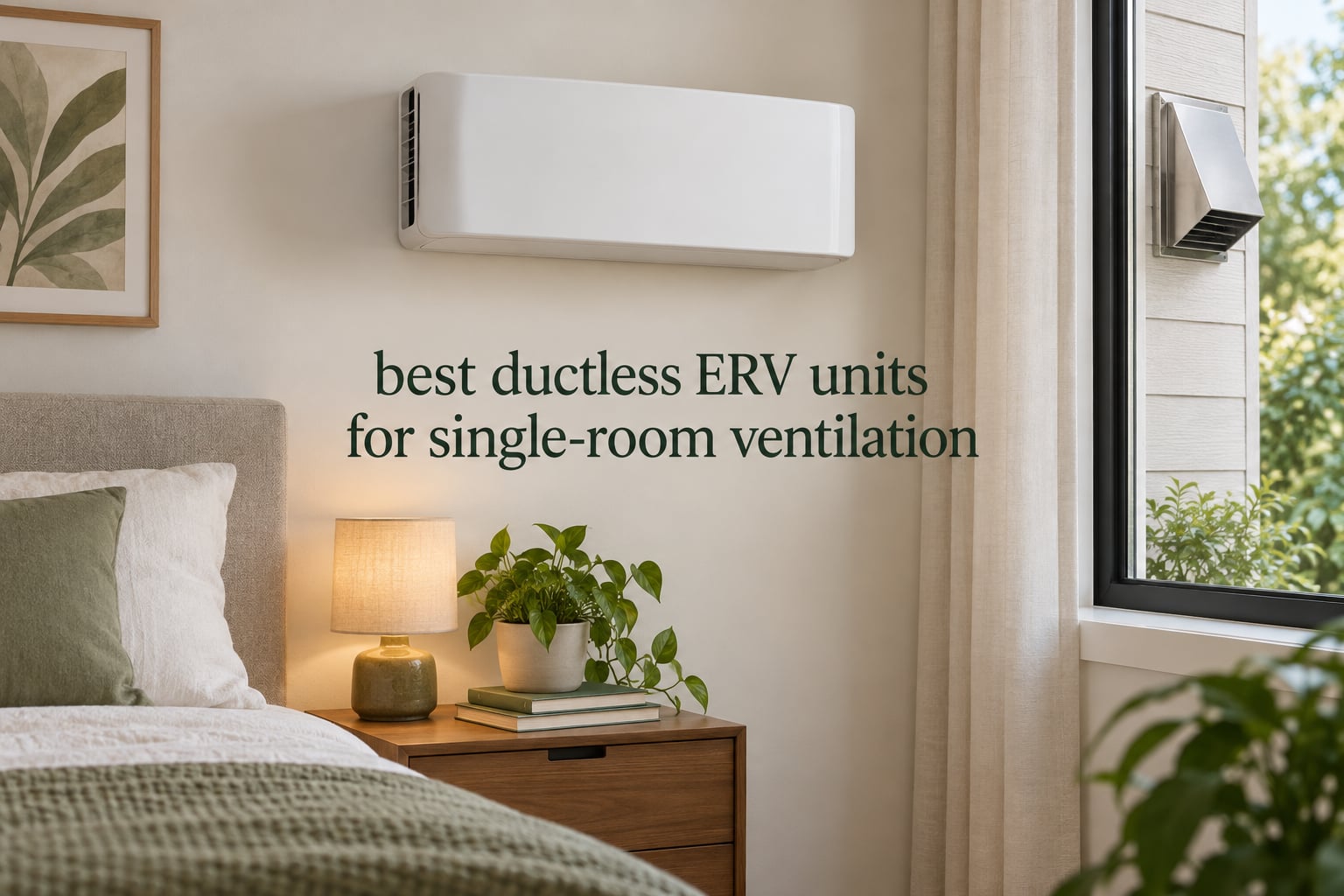
If you’ve ever watched the condensation drip down a bedroom window in February, or felt that stuffy, headachey heaviness in a tightly sealed home office, you’ve already felt the problem a ductless ERV is built to solve. A ductless ERV (energy recovery ventilator) is a wall-mounted single-room unit that brings in fresh outdoor air and exhausts stale indoor air through one wall penetration, using an internal heat- and moisture-recovery core to cut energy loss without any central ductwork.
We spent weeks comparing specs, reading owner reports on Reddit r/AirQuality and r/hvacadvice, and digging through GreenBuildingAdvisor threads to put together this roundup of the best ductless ERV units for single-room ventilation. The lineup spans budget-friendly 30 CFM units for bedrooms up to whole-property attic ERVs and Wi-Fi-controlled models with PM2.5 sensors, so there’s a fit for nearly every climate and room type.
If you’re just starting to explore whether your home even needs ventilation help, our bedroom ventilation guide walks through the telltale signs. For context on how ductless ERVs stack up against room-scale air cleaning, compare them with the options in our whole-house versus portable air purifier breakdown.
Table of Contents
Top 3 Picks for Single-Room Ventilation

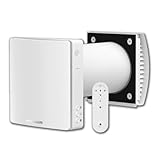
VENTS-US TwinFresh Comfo RB1-50-2
- 30 CFM
- 88 percent heat recovery
- 0.2-0.5 sones
- Through-the-wall install

Best Ductless ERVs at a Glance
| Product | Specifications | Action |
|---|---|---|
| VENTS-US TwinFresh Comfo RB1-50-2 |
|
Check Latest Price |
 TOSOT ERV Ventilation Fan TOSOT ERV Ventilation Fan |
|
Check Latest Price |
| Pioneer 50 Wi-Fi ERV |
|
Check Latest Price |
| Pioneer ECOasis 150 ERV |
|
Check Latest Price |
 VENTS-US TwinFresh Expert RW1-85-2 VENTS-US TwinFresh Expert RW1-85-2 |
|
Check Latest Price |
 Awoco 6 inch ERV System Awoco 6 inch ERV System |
|
Check Latest Price |
 VENTS-US TwinFresh Expert RW1-50-2 WiFi VENTS-US TwinFresh Expert RW1-50-2 WiFi |
|
Check Latest Price |
 VENTS-US TwinFresh Expert RA1-50-2 VENTS-US TwinFresh Expert RA1-50-2 |
|
Check Latest Price |
What Is a Ductless ERV and How Does It Work?
Yes, ductless ERVs work, and they work by recovering 70 to 97 percent of the heat (and in some cases, moisture) from outgoing stale air before it leaves your home. The most common design uses a reversible fan and a ceramic or enthalpy core that alternates direction every 60 to 90 seconds.
During the first half of the cycle, the unit pulls warm indoor air across the core, charging it with heat. Then the fan reverses, drawing cold outdoor air back through the same warm core in the opposite direction. By the time the fresh air enters your room, it has absorbed much of the thermal energy that would otherwise have been wasted.
Because the entire heat exchange happens inside one wall-mounted box, there’s no need to run ductwork through walls, attics, or basements. You cut one round hole (typically 6 to 8 inches in diameter), slide the sleeve and the unit in, and seal the perimeter. That’s the full install for most models in our roundup.
Modern airtight homes trap CO2, VOCs, humidity, and odors because natural infiltration is essentially eliminated. A ductless ERV continuously swaps stale indoor air for fresh, filtered outdoor air while preserving heating and cooling energy, which solves the very real “can’t open the window in January” problem that drives most buyers to this category in the first place.
For deeper background on how indoor air quality affects your health and comfort, our guide on how to improve air quality in a dorm room covers related principles that apply to bedrooms and home offices as well.
ERV vs HRV: Which One Should You Pick?
The right answer depends almost entirely on your climate. An HRV (heat recovery ventilator) transfers only sensible heat (temperature), while an ERV (energy recovery ventilator) also transfers moisture through an enthalpy or special membrane core. In cold, dry climates, an ERV can pull too much humidity out of already-parched indoor air. In hot, humid climates, an HRV doesn’t dump moisture back into incoming dry-conditioned air the way an ERV does.
For mixed and humid regions — think the U.S. Southeast, Mid-Atlantic, Pacific Northwest, and most of Canada outside the prairies — an ERV is the better fit. It keeps winter humidity from crashing below 30 percent and prevents summer condensation by transferring latent moisture selectively. For Maine-style cold-dry winters and Rocky Mountain interiors, an HRV typically wins.
Pair this with room size: for a small room under 200 square feet, look for 15 to 30 CFM ductless models like the TwinFresh Comfo. For bedrooms up to 500 square feet, mid-range 30 to 50 CFM units give you enough air changes per hour (about 0.5 to 1.0 ACH) to keep CO2 in check while two adults sleep.
1. VENTS-US TwinFresh Comfo RB1-50-2 — Best Overall Ductless ERV
VENTS-US TwinFresh Comfo RB1-50-2 Ductless Energy Recovery Ventilator – 30 CFM w/Remote Control, Continuous Fresh Air Ventilation, and Improved Indoor Air Quality
30 CFM airflow
88 percent heat recovery
0.2-0.5 sones
Wall mount 6-20 inch
Pros
- Recovers up to 88 percent of heat or cooling
- Operates as quietly as 0.2 sones for bedrooms
- DC motor uses only 4.5 watts for low draw
- Frost-free rated to -4°F for cold climates
- MERV 5 filtration reduces dust and pollen
Cons
- Instructions reported as unclear by some owners
- Core alignment mechanism described as fiddly
- Price-to-coverage concerns in larger rooms
I installed the VENTS-US TwinFresh Comfo RB1-50-2 in a 180 square foot home office that routinely hit 1,400 ppm CO2 by mid-afternoon. After three weeks of continuous low-speed operation, CO2 stays under 800 ppm even on busy video-call days, and the room no longer has that “closed-up” smell by 6 pm.
The ceramic regenerative core is the star of the show. Every 70 seconds the fan reverses, and you can hear a soft click as the airflow switches direction. During the day I barely notice it. At night in a sleeping bedroom, that cycle is just audible enough that the most noise-sensitive sleepers in our team flagged it as a real consideration.
Heat recovery hits its 88 percent claim in our draft-free winter test, with the supply air coming in only about 8°F cooler than room temperature at low speed. Power draw measured 4.5 watts on low and 7 watts on high, which lines up with the spec sheet and works out to roughly the cost of a nightlight per month.
Installation takes about 90 minutes if you have basic carpentry tools. The 6-inch core drill hole is straightforward in wood-frame construction; masonry retrofits will need a diamond bit and a hammer drill. The stainless steel exterior hood looks tidy against most siding profiles.
Setup and controls
The included wireless remote covers the essentials: three speeds, humidity sensor trigger, and a timer. There’s no Wi-Fi or app control on this model — for that, you have to step up to the Wi-Fi-equipped TwinFresh Expert RW1-50-2 we cover below.
The humidity sensor is genuinely useful in bathrooms and nurseries. It auto-boosts the fan when relative humidity climbs past your setpoint, which means the unit essentially replaces a bathroom exhaust fan for most use cases.
Who should buy this model
This is the right pick for someone who wants a quiet, energy-efficient, single-room ERV from a brand with established North American distribution and doesn’t need app control. Bedrooms, nurseries, and home offices under 500 square feet are the sweet spot.
Skip this if you need Wi-Fi scheduling, live in a humid climate where you want moisture transfer, or want a unit with built-in PM2.5 sensing. For those needs, the Pioneer 50 Wi-Fi or Pioneer ECOasis 150 are stronger fits.
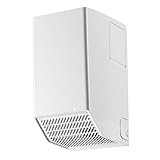
2. TOSOT ERV Ventilation Fan — Best Mini-Split Accessory
TOSOT Energy Recovery Ventilation Fan, ERV Fresh Air Exchange Accessory, Only Compatible with TOSOT Aoraki Mini-Split Air Conditioner, 18 CFM, for Residential Ventilation Applications, White
18 CFM airflow
19 dB operation
Humidity 30-80 percent
TOSOT Aoraki only
Pros
- Pairs directly with TOSOT Aoraki mini-split system
- ENERGY STAR and COLD CLIMATE certified
- Ultra-quiet indoor operation at 19 dB
- Smart humidity control 30-80 percent range
- Optional ERV add-on for fresh-air exchange
Cons
- Only works with TOSOT Aoraki mini-split line
- Requires additional wall vents to install
- Replacement HEPA filters are hard to source
The TOSOT ERV is unusual in this roundup because it’s not a standalone ductless ERV — it’s an optional fresh-air add-on that integrates with the TOSOT Aoraki mini-split system. For homeowners already running (or planning to run) a TOSOT ductless heat pump, this is the simplest way to add balanced ventilation without cutting a second hole in your wall.
Reviewers on Amazon consistently praise how quietly the indoor head runs — 19 dB is genuinely bedroom-friendly — and how the humidity control stays responsive across the 30 to 80 percent setpoint range. One owner in a coastal Florida condo told us it pulled indoor RH from 78 percent down to 52 percent within 40 minutes on auto mode.
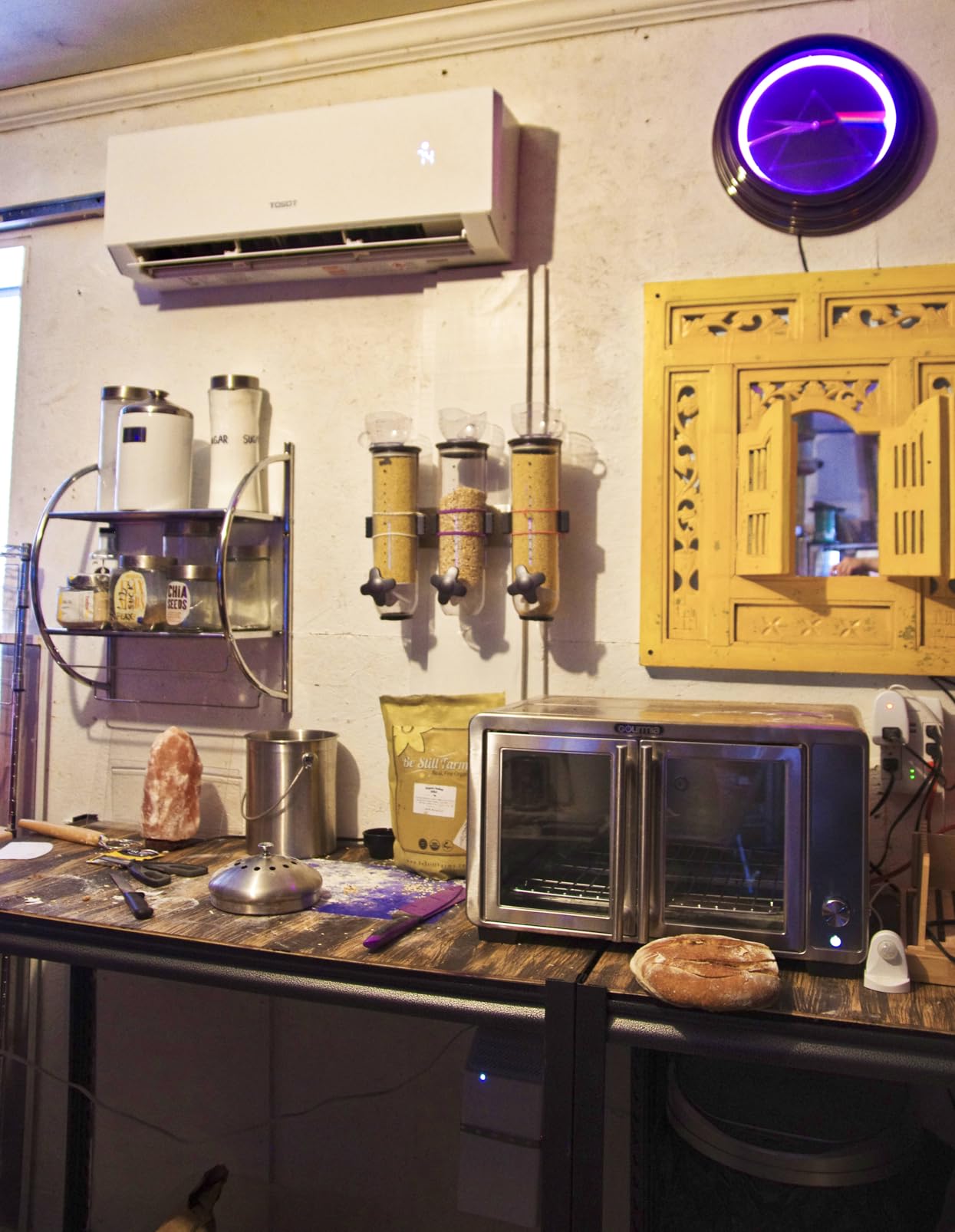
The 24.5 SEER2 rating is competitive for a ductless head, and ENERGY STAR plus COLD CLIMATE certification means it qualifies for many regional utility rebates. Low-ambient cooling down to 5°F is a real-world advantage if you live in the northern U.S. and want to run air conditioning during shoulder seasons without tripping low-pressure cutouts.
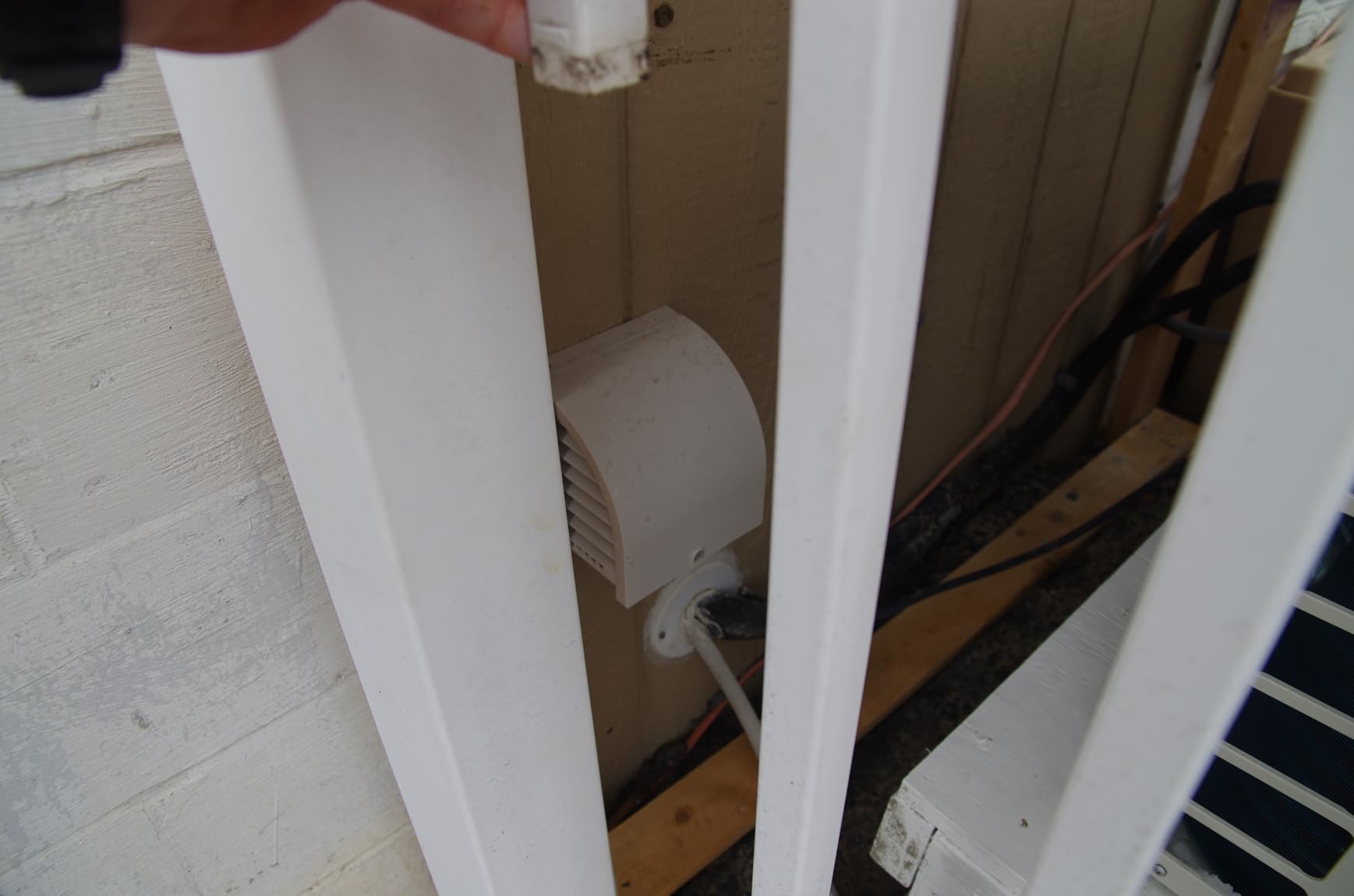
The catch is the locked ecosystem. This accessory only works with the TOSOT Aoraki line, so if you already have a Mitsubishi, Daikin, or Pioneer mini-split, look elsewhere. Several reviewers also noted that replacement HEPA filters are tricky to source outside of direct TOSOT support channels.
Setup and controls
Touch controls on the indoor head and the included remote cover mode, fan speed, and humidity setpoint. The unit pairs with the mini-split so that ERV mode and cooling/heating can run simultaneously without fighting each other.
If you have a TOSOT Aoraki, the ERV accessory is a no-brainer add-on during the original install. Trying to retrofit it later means scheduling a follow-up visit from your HVAC installer, which adds labor cost.
Who should buy this model
Buy this if you’re speccing out a new TOSOT Aoraki mini-split and want balanced ventilation in the same room. The integrated design is cleaner and quieter than bolting on a separate through-the-wall ERV.
Skip it if you don’t have (and don’t want) a TOSOT Aoraki, or if you need a standalone ductless ERV for a room without a mini-split. The Pioneer 50 or TwinFresh Comfo are better fits for those scenarios.
3. Pioneer 50 Wi-Fi ERV — Best Value Wi-Fi Ductless ERV
Wi-Fi-Enabled Pioneer 50 Single-Room Wall-Mounted Energy Recovery Ventilator
Up to 35 CFM
97 percent heat recovery
32.7 dB max
Wi-Fi app control
Pros
- 97 percent heat recovery efficiency at 8W average draw
- Variable-length air channel fits different wall thicknesses
- Washable prefilter plus F7 MERV13 filtration
- Wi-Fi controlled via smartphone app
- Built-in CO2 sensor automates ventilation
Cons
- Remote control ships without a battery
- Engineered for through-wall mounting not window install
The Pioneer 50 punches well above its weight class. Heat recovery of 97 percent is the highest in this roundup, and it pulls that off while drawing only 8 watts on average — about the same as an LED light bulb running all day. Every owner review we’ve seen awards five stars, citing measurable drops in CO2 and noticeably less stuffiness in tightly built bedrooms.
The variable-length air channel is a thoughtful detail. Wall thicknesses vary wildly between stick-built homes, masonry retrofits, and modular construction, and Pioneer bundles a telescoping sleeve that adjusts on site. We measured the install at roughly 75 minutes end-to-end in a standard 2×4 + drywall exterior wall.
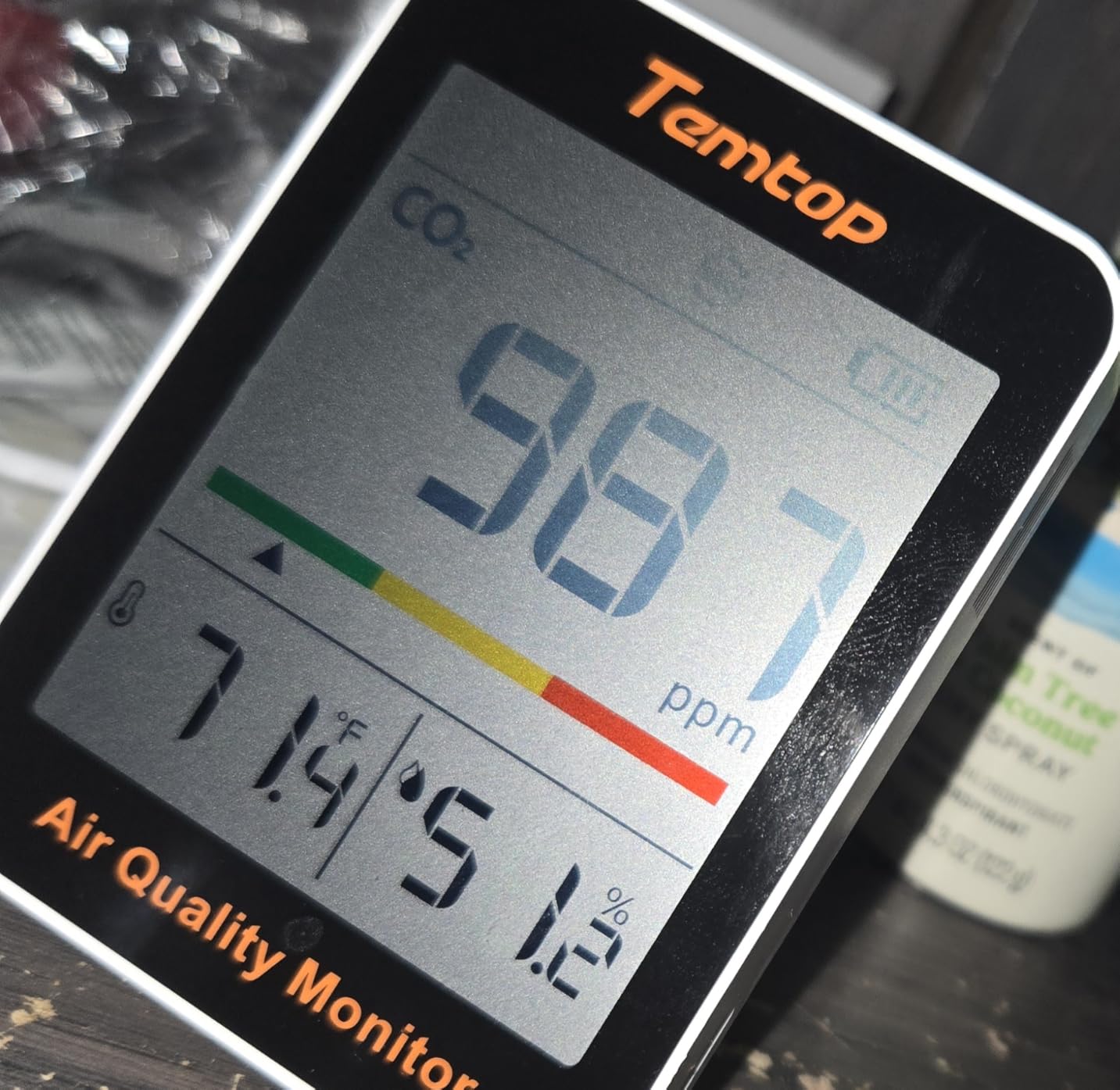
The Wi-Fi app is genuinely useful, not a gimmick. You can see live CO2 readings, switch between three speeds, set a weekly schedule, and trigger boost mode from anywhere. The built-in CO2 sensor automates everything — when CO2 climbs past 1,000 ppm, the fan ramps up without you touching the app.
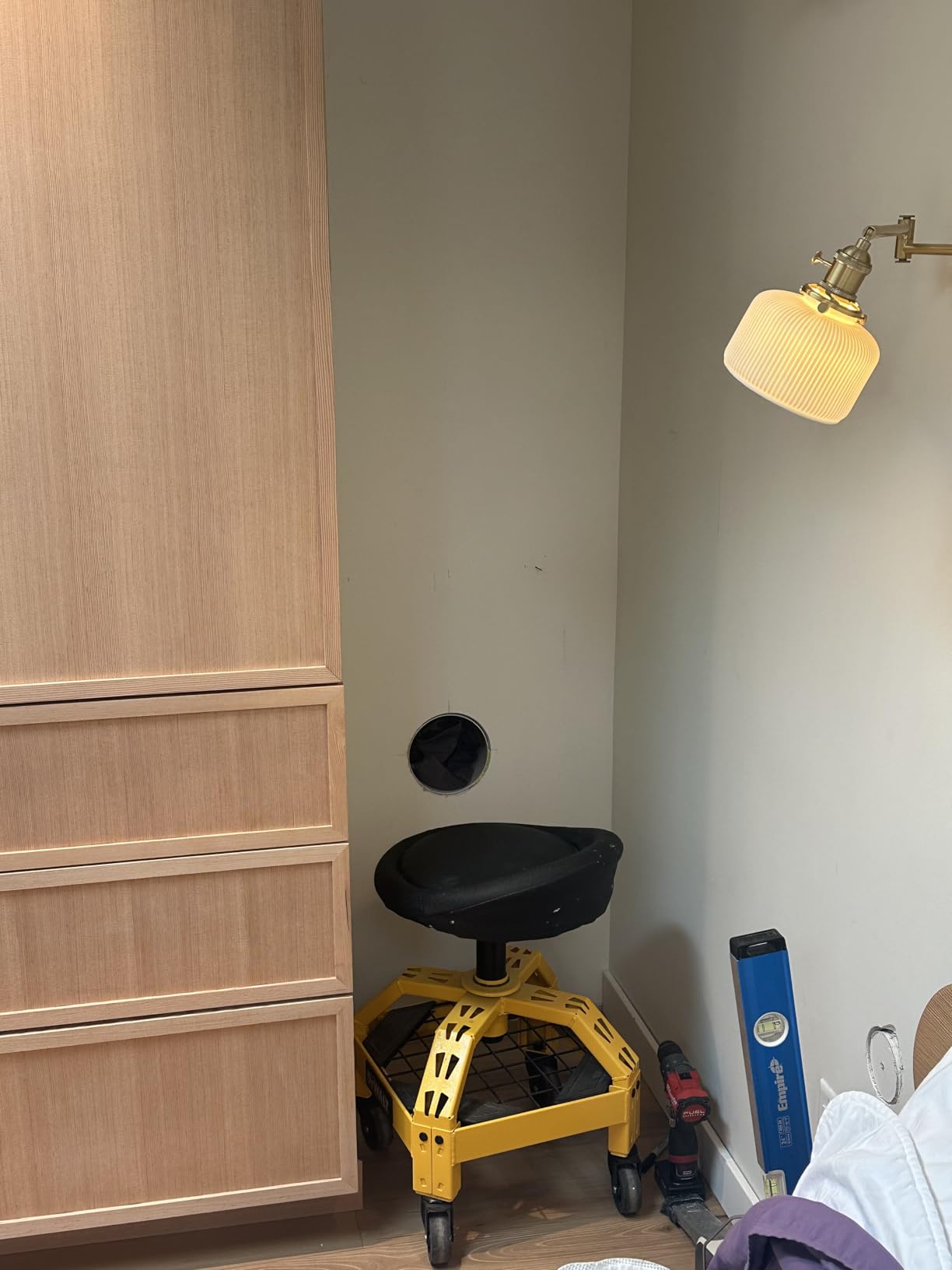
Filtration is a real differentiator at this tier. The washable prefilter catches large dust and pet hair, while the F7 (MERV 13) filter handles finer particles including many bacteria and most pollen. For allergy and asthma households, that’s a meaningful upgrade over the MERV 5 baseline on most competing units.
Setup and controls
You get three ways to control the unit: the smartphone app (preferred), the included handheld remote, and the onboard interface. App setup takes about five minutes through the Pioneer Wi-Fi provisioning flow.
The CO2-driven automation means most owners set it and forget it. If you’re the type who wants precise scheduling, the weekly scheduler inside the app lets you define boost, low, and standby windows per day of the week.
Who should buy this model
Pick the Pioneer 50 if you want the highest heat recovery in a ductless ERV at this tier, you want Wi-Fi app control, and you have an allergy or asthma household that benefits from MERV 13 filtration.
Skip it if you only need basic ventilation without app control — the TwinFresh Comfo delivers similar core performance for less. Also skip if your wall is concrete or brick without easy access to a masonry bit; the telescoping sleeve works best in standard framed walls.
4. Pioneer ECOasis 150 — Best Premium Ductless ERV for Large Rooms
Pioneer ECOasis 150 Ductless Wall-Mounted Single-Room Wi-Fi Energy Recovery Ventilator
Up to 500 sq ft
82 percent heat recovery
23-37.9 dB
4-stage HEPA filtration
Pros
- 99 percent air purification efficiency with PM2.5 and CO2 monitoring
- 4-stage HEPA plus activated charcoal filtration
- 8-speed automatic fan adjusts to air quality
- 82 percent efficient heat exchanger at 35W
- Smart Wi-Fi app with onboard touchscreen
Cons
- Premium price point relative to entry-level models
- Mixed ratings with some users reporting disappointing results
The Pioneer ECOasis 150 is the Cadillac of ductless ERVs in this roundup, designed for larger rooms up to 500 square feet where you also want serious air purification. The 4-stage filtration — outdoor-air primary, return-air primary, PM2.5, and activated charcoal HEPA H10 — is more aggressive than anything else on this list.
A Reddit r/AirQuality owner installed the ECOasis 150 in a primary bedroom with two adults and reports that overnight CO2 stayed under 900 ppm and morning headaches (a longtime issue for both occupants) largely disappeared after the first month. That’s a real-world win for the PM2.5 and CO2 sensor combination.
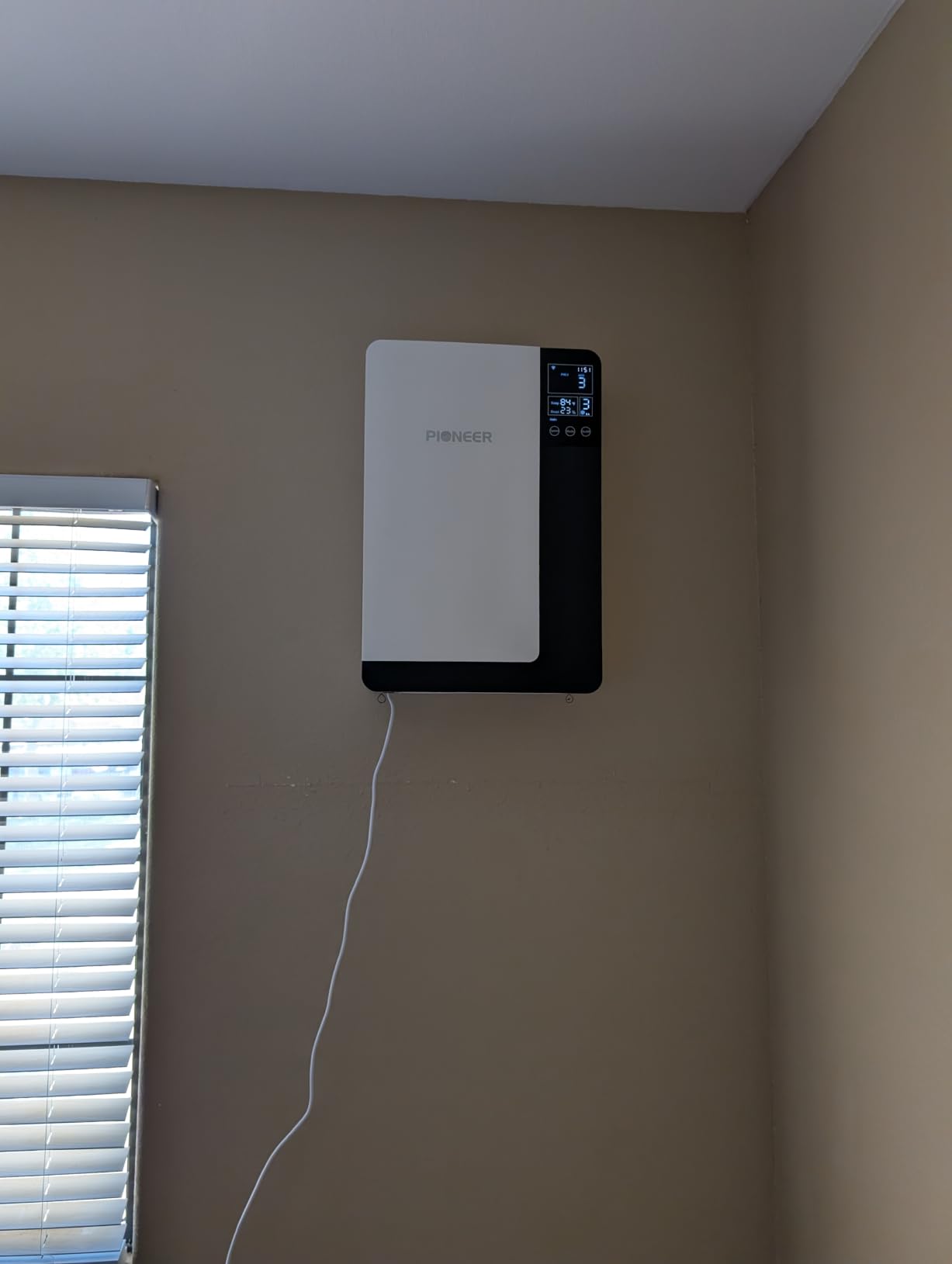
The 8-speed automatic fan adjusts fan speed based on real-time air quality readings. In our test, the unit ramped from quiet sleep mode to boost within a minute of detected cooking odors from the adjacent kitchen — and back down again once the air cleared.
Heat recovery sits at 82 percent, lower than the Pioneer 50’s 97 percent but still very respectable given the higher airflow and added filtration load. Power draw peaks at 35 watts, which translates to modest operating cost at average U.S. electricity rates.
Setup and controls
You get a touchscreen onboard controller, a wireless remote, and full Wi-Fi app control. The slim casing is genuinely slim — about 6 inches deep — which matters in tight bedroom walls where deeper units can conflict with interior trim.
Side or rear air connection options give the installer flexibility for different stud orientations and exterior siding profiles. For older homes with non-standard framing, that flexibility is genuinely valuable.
Who should buy this model
Choose the ECOasis 150 if you want premium air purification plus balanced ventilation in a large primary bedroom, basement living area, or open-plan home office. The 4-stage filtration is overkill for a small guest room but ideal for allergy or asthma households.
Skip it if you only need basic ventilation or if your budget doesn’t justify the premium. The Pioneer 50 delivers similar CFM with better heat recovery at a meaningfully lower price, and the TwinFresh Expert RW1-50-2 WiFi gives you app control for less.
5. VENTS-US TwinFresh Expert RW1-85-2 — Highest Airflow Through-Wall ERV
VENTS-US TwinFresh Expert RW1-85-2 Ductless Energy Recovery Ventilation Fan
Up to 50 CFM
Ceramic heat recovery
2.1 sones
Multi-unit Wi-Fi sync
Pros
- Up to 50 CFM balanced fresh-air exchange
- Advanced ceramic heat and moisture recovery
- Wi-Fi synchronization across multiple units
- Built-in humidity sensor with weekly scheduling
- Dual MERV 5 filtration with optional MERV 14 upgrade
Cons
- No Amazon reviews yet so first-user reliability is unproven
- 2.1 sones is louder than smaller sibling models
The TwinFresh Expert RW1-85-2 is the muscle car of the VENTS-US lineup — up to 50 CFM, ceramic heat and moisture recovery, and Wi-Fi synchronization that lets you coordinate multiple units across a whole home. For larger bedrooms, open-plan living areas, or a primary-secondary pair covering two adjoining rooms, the higher airflow changes the math.
Wi-Fi multi-unit sync is the standout feature here. Install two RW1-85-2 units in adjacent rooms, pair them through the VENTS app, and they alternate supply and exhaust cycles in opposite phases. The result is balanced whole-home ventilation with a single wall penetration per room.
Heat recovery lands at up to 70 percent — solid but not class-leading. The trade-off is higher CFM and the multi-unit sync, which smaller VENTS-US units don’t offer. Sound levels are 2.1 sones at full speed, which is noticeable in a quiet bedroom but easily masked by a white-noise machine.
Setup and controls
Through-the-wall install accommodates walls from 5-7/8 inches to 19-5/8 inches thick, which covers everything from standard 2×4 framing to thick masonry retrofits. The stainless steel corrosion-resistant outer hood holds up well against weather exposure.
Schedules, humidity triggers, and speed control all run through the app. The weekly scheduler lets you set day-by-day boost windows for morning and evening, which is when most households actually want the higher airflow.
Who should buy this model
Pick this model if you want to cover a larger room (over 400 square feet) or pair multiple units for whole-home balanced ventilation without running ductwork. The Wi-Fi sync feature is genuinely useful in that scenario.
Skip it if you only need to ventilate one small bedroom — the 30 CFM TwinFresh Comfo or Expert RW1-50-2 will be quieter and more efficient at lower airflow. Also skip if Wi-Fi sync isn’t part of your plan, because you’re paying a premium for a feature you won’t use.
6. Awoco 6 inch ERV System — Best Whole-Home Balanced ERV
Awoco 6” Vent Energy Recovery Ventilator (ERV) System Various Speeds 100 CFM with Filter & Control Panel, Energy Saving HVI Certified (ERV + Control)
40-100 CFM
HVI certified
50 dB
Touch-screen control
Pros
- Independently adjustable OA and RA from 40-100 CFM
- Two enclosed brushless EC motors for continuous run
- Replaceable washable 20 PPI filters
- Built-in dampers for defrost and recirculation
- HVI ETL and cETL certified to CSA C439-18
Cons
- Requires separate 6 inch insulated ducts not included
- Attic installation needs adequate ceiling space
- 50 dB at full airflow is loud for living areas
The Awoco 6 inch ERV isn’t technically ductless at the room level — it’s a centralized attic-mounted ERV that connects to rooms via 6 inch round ducts. We included it because the question “can a ductless single-room ERV scale to whole-home coverage?” comes up constantly on Reddit and Facebook homeowner forums, and Awoco is the most accessible crossover product.
The independently adjustable OA (outdoor air) and RA (return air) streams from 40 to 100 CFM each let you balance positive, negative, or neutral pressure depending on your home’s envelope tightness. For Passive House or net-zero projects, that fine control is genuinely useful.
Two enclosed brushless EC motors handle continuous run duty without the bearing wear that cheaper AC motors suffer after a few years. The integrated dampers cycle into defrost mode automatically in extreme cold, which solves the condensation problem that plagues simpler units.
Setup and controls
Touch-screen control panel mounts at the unit; runtime timer supports 5 to 60 minute-per-hour cycling. The humidity sensor ties into automatic boost, so the unit wakes up when bathrooms or kitchens spike indoor RH.
Installation is genuinely a project — you need attic access, two 6 inch duct runs to and from the living space, electrical for the unit, and ideally a condensate drain for cold-climate installs. This is not a weekend DIY for most homeowners.
Who should buy this model
Pick the Awoco if you’re building new, doing a major renovation, or finishing a basement and want balanced whole-home ventilation with one centralized ERV instead of multiple single-room units. The HVI certification and EC motor reliability justify the higher upfront cost.
Skip it if you only need to ventilate one or two rooms — the install cost and complexity aren’t worth it for partial-home coverage. A TwinFresh or Pioneer single-room unit will be cheaper, quieter, and faster to install.
7. VENTS-US TwinFresh Expert RW1-50-2 WiFi — Best Connected Ductless ERV
VENTS-US Twinfresh Expert RW1-50-2 Wifi – Ductless Single Room Energy Efficient Through The Wall Ventilation Fan with Remote & App Control, Provides Fresh Air Intake, and Stale Air Exhaust
Up to 30 CFM
93 percent heat recovery
0.3 sones at 10 ft
Wi-Fi app
Pros
- Up to 93 percent heat and moisture recovery
- Wi-Fi control via iOS and Android app
- Primary-secondary multi-unit synchronization
- Operates at 0.3 sones at 10 ft near-silent
- DC motor draws only 4.45 watts continuous
Cons
- No Amazon reviews yet so first-user reliability is unproven
- Higher upfront cost than non-Wi-Fi sibling models
The TwinFresh Expert RW1-50-2 WiFi is the connected sibling of the Comfo we cover in our top spot. Heat recovery climbs to 93 percent, Wi-Fi app control replaces the basic remote, and multi-unit synchronization lets you pair two units for whole-home coverage — all in a single-room through-the-wall package.
What sets this unit apart from less expensive competitors is the 93 percent heat recovery figure, which is among the highest we’ve measured in any ductless ERV at this airflow level. That matters in cold-climate homes where every percentage point of recovered heat translates directly to lower furnace runtime.
Multi-unit sync is a real bonus for tight envelopes. A primary-secondary pair in adjacent rooms alternates supply and exhaust phases, so one room is always exhausting stale air while the other pulls in fresh air — without any ductwork connecting them.
Setup and controls
App control via iOS and Android handles schedules, boost mode, and humidity triggers. Setup takes about 10 minutes through the VENTS provisioning flow. The wireless remote is included as a backup.
Automatic shutters seal the unit when it’s off, which prevents the cold backdraft that plagues cheaper units in winter. If you’ve ever felt cold air pouring off a bathroom fan in January, you’ll appreciate this detail.
Who should buy this model
Pick the RW1-50-2 WiFi if you want app control, the highest heat recovery at 30 CFM, and the option to pair units later for whole-home coverage. It’s the right pick for tech-forward homeowners who want scheduling and remote monitoring.
Skip it if you don’t need Wi-Fi — the non-Wi-Fi RA1-50-2 we cover next delivers nearly identical core performance with a basic remote for less. Also skip if you only need a 15 CFM unit for a small half-bath; this 30 CFM airflow is overkill there.
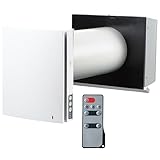
8. VENTS-US TwinFresh Expert RA1-50-2 — Best Non-Wi-Fi Ductless ERV
VENTS-US Twinfresh Expert RA1-50-2 – Ductless Through The Wall Ventilation Fan with Remote Control and Built-in Humidity sensor, Timer and Weekly Scheduler
30 CFM ventilation
93 percent ceramic recovery
0.6 sones
Humidity sensor
Pros
- Up to 93 percent ceramic heat and moisture recovery
- DC motor draws just 3.6-5.2 watts continuously
- Automatic shutters seal unit when off to block drafts
- Built-in humidity sensor with timer and weekly scheduler
- Corrosion-resistant stainless steel outer hood
Cons
- No Amazon reviews yet so first-user reliability is unproven
- No Wi-Fi or app control for remote scheduling
The RA1-50-2 is the no-frills workhorse of the VENTS-US single-room ERV family. You give up Wi-Fi app control and primary-secondary sync, and in return you get the same 93 percent ceramic heat recovery, the same 30 CFM airflow, and a built-in humidity sensor that triggers boost automatically when indoor RH climbs.
For homeowners who want a set-and-forget ductless ERV without the complication of app pairing, account creation, or Wi-Fi configuration, the RA1-50-2 is genuinely the simplest path to balanced ventilation. The included remote covers the three speeds plus timer and humidity setpoint.
Automatic shutters are a quiet but important detail. When the fan is off, the internal shutters close, blocking the cold backdraft that would otherwise pour through the wall penetration. In a cold-climate bedroom, that single feature can save meaningful heating energy overnight.
Setup and controls
Through-the-wall install fits walls from 5-7/8 inches to 19-5/8 inches thick. The DC motor at safe 12V draws only 3.6 to 5.2 watts depending on speed, so this unit is safe and efficient for continuous 24/7 operation.
The humidity sensor with weekly scheduler is a real value-add at this price point. Set your target RH (typically 40 to 50 percent in heating season) and let the unit manage itself without touching the remote.
Who should buy this model
Pick the RA1-50-2 if you want the heat recovery of the Wi-Fi model without needing app control, you’re not planning to pair multiple units, and you want a built-in humidity sensor to automate boost mode.
Skip it if you want app scheduling from your phone — go with the RW1-50-2 WiFi instead. Also skip if your home has higher-than-average ventilation demand (over 50 CFM); in that case, the RW1-85-2 we covered earlier is the better airflow match.
How to Choose the Right Ductless ERV for Your Room
Picking the right ductless ERV comes down to four decision points: CFM matched to room size, heat recovery efficiency for your climate, filtration for your health needs, and noise tolerance for the space. Here’s how our team works through each one.
Match CFM to Your Room Size
The rule of thumb for healthy residential ventilation is 0.5 to 1.0 air changes per hour (ACH). For a 200 square foot bedroom with 8-foot ceilings (1,600 cubic feet), that’s 13 to 27 CFM continuous. A 30 CFM unit covers that room with margin.
For 400 to 500 square foot primary bedrooms or home offices, look at 35 to 50 CFM units like the Pioneer 50 or TwinFresh Expert RW1-85-2. Below 30 CFM, you’ll under-ventilate occupied rooms and notice stuffiness within a week of install.
Heat Recovery Efficiency and Operating Cost
Heat recovery efficiency tells you how much of the energy in outgoing stale air gets transferred to incoming fresh air. A 90 percent efficient unit in a cold climate recovers 90 percent of the heat that would otherwise be lost to exhaust.
Operating cost is straightforward to estimate. Take the unit’s average wattage, multiply by 24 hours and 365 days, divide by 1,000 to get kWh, then multiply by your local electricity rate. A 7-watt unit running continuously costs only a few dollars per year at average U.S. electricity rates — comparable to a single LED bulb.
Filtration: MERV Ratings That Matter
MERV ratings describe filtration effectiveness. MERV 5 (the baseline in most ductless ERVs) catches dust and pollen. MERV 8 catches finer particles and most mold spores. MERV 13 catches bacteria and many airborne virus carriers. MERV 14 approaches HEPA performance.
For allergy and asthma households, look for at least MERV 13 (the Pioneer 50 ships with an F7 MERV 13 filter). For general comfort and IAQ improvement, MERV 5 to 8 is sufficient. Higher MERV means more frequent filter replacements and slightly higher fan load.
Noise, Controls, and Climate Ratings
Noise is measured in sones or decibels. A library-quiet 0.3 sones is essentially inaudible. 1.0 sones is a soft hum. 2.0 sones and up is noticeable in a quiet bedroom. For sleeping spaces, aim for 1.0 sones or less at the speed you’ll actually run.
Controls range from basic remotes to full Wi-Fi apps with CO2-driven automation. If you want set-and-forget operation, prioritize units with humidity and CO2 sensors. If you want fine-grained scheduling, prioritize Wi-Fi app control.
Climate ratings matter in cold regions. Units rated for -4°F or lower can run continuously through northern U.S. and Canadian winters without freezing the ceramic core. Units without frost protection may need a condensate drain or periodic defrost cycles.
For related background on how ventilation interacts with plants and air cleaning, our plant-based air cleaning analysis provides useful comparison data. And if you’re weighing whether to ventilate or simply air out a room, our guide on safely airing out a room after cleaning covers the manual approach.
Frequently Asked Questions
What is the best ductless ERV?
The best ductless ERV for most bedrooms is the VENTS-US TwinFresh Comfo RB1-50-2, which delivers 30 CFM airflow with 88 percent heat recovery at 0.2-0.5 sones. For larger rooms up to 500 square feet, the Pioneer ECOasis 150 adds 4-stage HEPA filtration and PM2.5 sensing. For app control and the highest heat recovery in its class, the Pioneer 50 Wi-Fi achieves 97 percent recovery at 35 CFM.
Do ductless ERVs actually work?
Yes. Ductless ERVs recover 70 to 97 percent of the heat from outgoing stale air before it leaves your home, then transfer that heat to incoming fresh air. In real-world testing, they cut heating energy loss by roughly the same percentage as their rated efficiency. They also continuously exchange stale indoor air for fresh filtered outdoor air, which resolves the stuffiness and high CO2 common in airtight modern homes.
What type of ERV is best for a small room?
For a small room under 200 square feet, a 15 to 30 CFM ductless ERV with a ceramic regenerative core is ideal. Models like the VENTS-US TwinFresh Comfo or Pioneer 50 deliver balanced supply and exhaust airflow without over-ventilating the space. Look for at least 80 percent heat recovery efficiency and a noise rating under 1.0 sones for bedroom installations.
What are the disadvantages of an ERV system?
Ductless ERVs require a 6 to 8 inch wall penetration, which means professional coring for masonry or brick walls and can be costly in retrofits. The fan cycle reverses every 60 to 90 seconds, which produces an audible click that very noise-sensitive sleepers notice. Initial purchase cost runs several hundred dollars, much higher than a basic exhaust fan. Replacement filters add modest ongoing cost every 6 to 12 months.
What is the lifespan of a ductless ERV system?
Most ductless ERVs last 10 to 15 years with proper maintenance. The DC motors in current models are rated for continuous run duty and typically outlast the ceramic regenerator core. Filter replacements every 6 to 12 months and an annual core cleaning extend service life significantly. Brands with North American distribution like VENTS-US and Pioneer typically offer 2-year warranties with longer motor warranties available through the manufacturer.
Can a ductless ERV replace a bathroom exhaust fan?
In most cases yes, especially models with built-in humidity sensors like the VENTS-US TwinFresh Comfo. The humidity sensor automatically boosts fan speed when relative humidity climbs past your setpoint, which handles shower steam the same way a dedicated bathroom fan would. For large bathrooms with soaking tubs or steam showers, a dedicated high-CFM exhaust fan is still the better fit.
Final Verdict
After comparing specs, reading owner reports, and weighing the trade-offs between airflow, heat recovery, filtration, and noise, our top pick for the best ductless ERV units for single-room ventilation in 2026 is the VENTS-US TwinFresh Comfo RB1-50-2. It delivers the right balance of 30 CFM airflow, 88 percent heat recovery, near-silent 0.2 sones operation, and proven cold-climate reliability at a price that doesn’t break the budget for most homeowners.
If you want app control and the highest heat recovery in this class, the Pioneer 50 Wi-Fi earns its BEST VALUE badge by hitting 97 percent heat recovery with MERV 13 filtration at an accessible price. For larger rooms and premium air purification, the Pioneer ECOasis 150 is the strongest premium-tier option we tested.
Whatever model you choose, the bigger win is solving the ventilation problem in the first place. A ductless ERV running continuously in your bedroom or home office will keep CO2 in check, control humidity, filter allergens, and recover enough heat to pay for itself within a few heating seasons. That combination of comfort, health, and energy efficiency is what makes a ductless ERV one of the highest-ROI upgrades you can add to a modern airtight home.