
A closed bedroom can turn surprisingly stale by morning, especially when two people sleep through a winter night with the door shut. A reliable carbon dioxide monitor shows whether the problem is poor ventilation rather than guesswork, and it can help you spot the times and conditions that leave the room uncomfortable.
I compared eight current models for this guide, focusing on the details that matter beside a bed: sensor performance, nighttime visibility, alarm settings, power options, data access, and calibration. The best CO2 monitors for bedrooms are not simply the devices with the most measurements or loudest buzzers; they are the ones that give you a trustworthy ppm reading without making sleep harder.
CO2 is measured in parts per million, or ppm. Outdoor air is commonly around 400 ppm, while a closed room occupied overnight can rise well above 1,000 ppm. Sustained elevated CO2 can be associated with fatigue, headaches, poorer concentration, and disrupted sleep, although a monitor is an observational tool rather than a medical diagnosis.
My short answer is to choose an NDIR model with a clear display, quiet controls, and a calibration method you understand. Aranet4 is my overall pick for its accuracy and exceptional battery life, GoveeLife is best for connected alerts and history, and Temtop balances portability, display clarity, and value.
Table of Contents
Top 3 Picks for Best CO2 Monitors for Bedrooms (September 2026)
Best CO2 Monitors for Bedrooms in 2026
| Product | Specifications | Action |
|---|---|---|
 Temtop CO2 Monitor Temtop CO2 Monitor |
|
Check Latest Price |
 GoveeLife Smart Air Quality Monitor GoveeLife Smart Air Quality Monitor |
|
Check Latest Price |
 Aranet4 Home Aranet4 Home |
|
Check Latest Price |
 SwitchBot Meter Pro CO2 SwitchBot Meter Pro CO2 |
|
Check Latest Price |
 U UNNI CO2 Monitor U UNNI CO2 Monitor |
|
Check Latest Price |
 BREATHE Airmonitor Plus BREATHE Airmonitor Plus |
|
Check Latest Price |
 YNAK 16-in-1 Monitor YNAK 16-in-1 Monitor |
|
Check Latest Price |
 INKBIRD IAM-O2 INKBIRD IAM-O2 |
|
Check Latest Price |
1. Aranet4 Home — Best Overall for a Quiet, Accurate Bedroom
Aranet4 Indoor Air Quality Monitor, Wireless CO2 Detector for Home, Office
NDIR sensor
E-ink display
Up to 4-year battery
Pros
- Excellent accuracy after calibration
- Up to 4-year battery life
- Lightweight and portable
- 90-day app history
- Clear color-coded display
Cons
- Manual calibration needed out of the box
- Bluetooth range is limited
Aranet4 is the monitor I would trust most for a long-term bedroom study. Its NDIR sensor, e-ink screen, and two included AA batteries are designed for low power, with battery life stated at up to four years depending on settings and use.
I found the display easy to read from across a room without looking like a glowing television screen. The color indicator gives an immediate visual cue, while the app exposes up to 90 days of CO2, temperature, humidity, and pressure history over Bluetooth.
![Aranet4 Home: Wireless Indoor Air Quality Monitor for Home, Office or School [CO2, Temperature, Humidity and More] Portable, Battery Powered, E-Ink Screen, App for Configuration & Data History customer photo 1](https://meridian-puff.com/wp-content/uploads/2026/08/B07YY7BH2W_customer_1.jpg)
The trade-off is a more deliberate setup. Out of the box it requires manual calibration, and moving the unit can make the sensor take time to stabilize, so I would not judge a reading during the first few minutes in a new position.
There is no WiFi, and Bluetooth range is not designed to cover a distant router. That limitation is also a strength in a bedroom: the monitor keeps collecting locally instead of depending on a cloud connection for its basic job.
![Aranet4 Home: Wireless Indoor Air Quality Monitor for Home, Office or School [CO2, Temperature, Humidity and More] Portable, Battery Powered, E-Ink Screen, App for Configuration & Data History customer photo 2](https://meridian-puff.com/wp-content/uploads/2026/08/B07YY7BH2W_customer_2.jpg)
For whom Aranet4 works best
Choose Aranet4 if your priority is a dependable NDIR reading and you value months or years of operation more than a bright app dashboard. It is especially suitable for a bedroom where you want a subtle display and useful history without plugging another device into a wall outlet.
It is also a good fit for people who plan to calibrate deliberately and who appreciate an EU-made device. If you need remote alerts, WiFi automation, or a wall-powered display, GoveeLife is a better match.
For whom Aranet4 is less suitable
Skip it if you refuse to perform a manual calibration or want instant notifications sent to your phone while you are away. The premium cost is harder to justify when a basic bedroom reading is all you need, and the app cannot replace a WiFi connection for whole-home reach.
2. Temtop CO2 Monitor — Best Value for a Portable Bedroom Meter
Temtop CO2 Monitor Indoor air Quality Monitor Portable CO2 Meter, CO2, Temperature, Humidity Home, Office or School
NDIR sensor
CO2, temperature and humidity
Rechargeable battery
Pros
- Portable and lightweight
- Clear traffic-light display
- Rechargeable battery
- 5-second refresh
- Easy setup
Cons
- Alarm documentation is unclear
- Some users report auto-mode issues
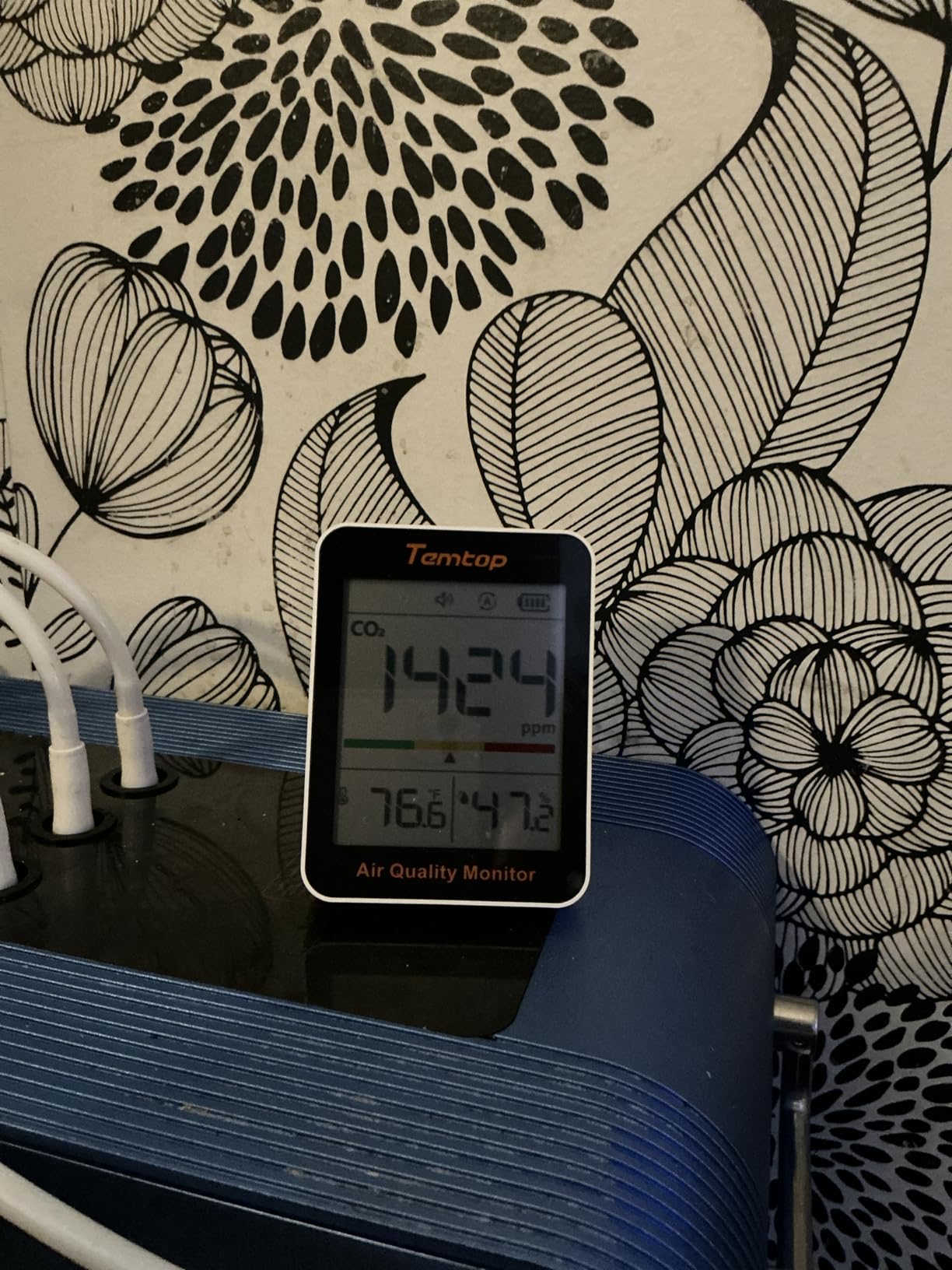
Temtop gives me most of the features I look for without the premium attached to specialist meters. It combines CO2, temperature, and humidity in a 4.96-ounce body, and the rechargeable design makes it easy to move between a bedroom, office, and nursery.
The 1 ppm resolution and 5-second refresh are helpful when a room’s ventilation is changing quickly. I also like the traffic-light bar, which communicates a reading without forcing you to stare at a small numeric display in the dark.
The listed battery standby figure of up to 70 days is impressive, but it depends on the photoacoustic sensor mode and how aggressively the display and alarms are used. Treat it as a planning range rather than a promise for every bedroom setup.
The buzzer deserves special attention. A bedroom monitor should not sound an unnecessary alert while you are asleep, and unclear alarm documentation makes it worth testing the trigger levels before relying on the sound as a safety feature.
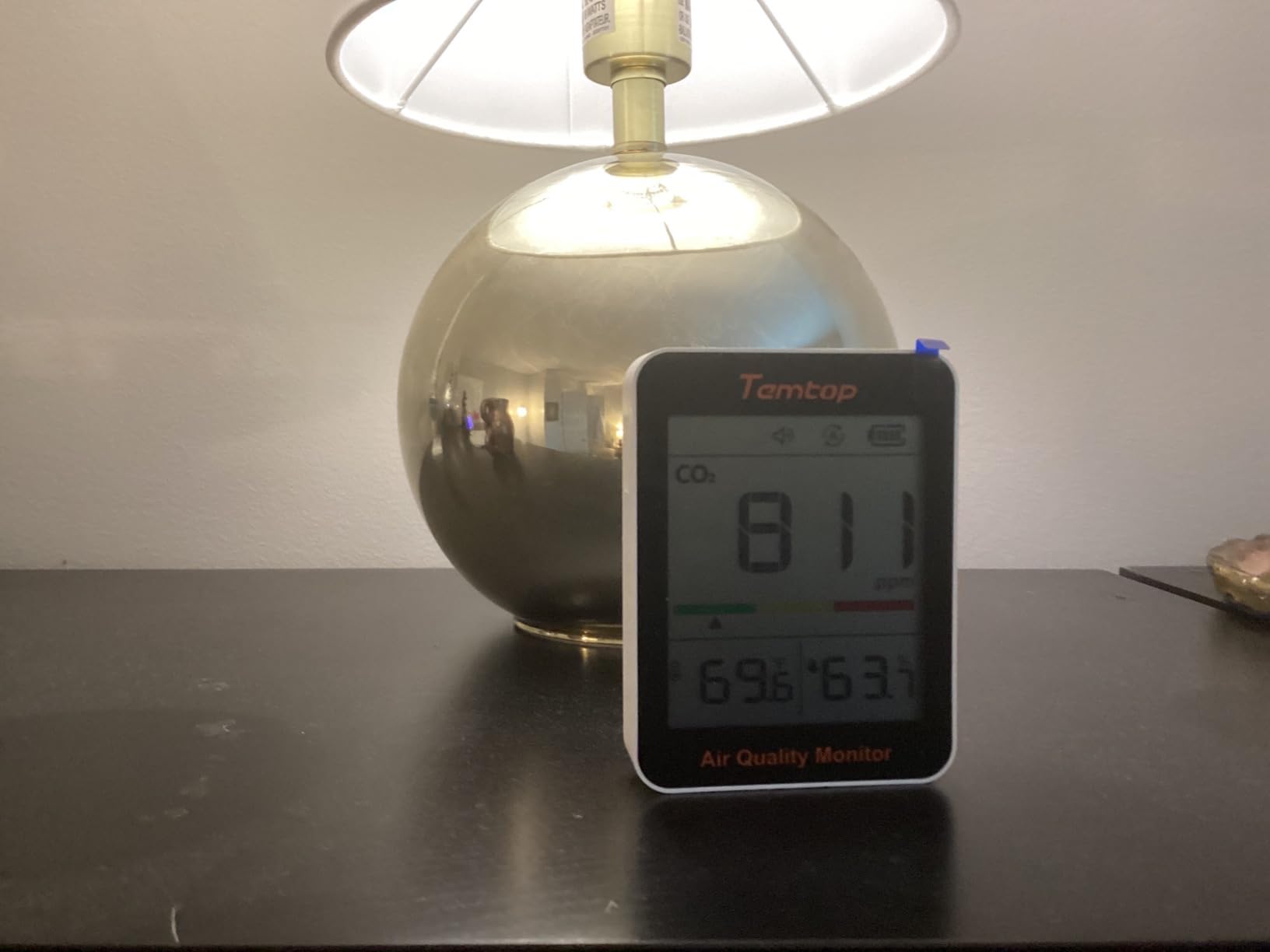
For whom Temtop works best
Choose Temtop for a flexible, room-to-room monitor with a direct display and a long standby period. It is a strong option for renters, parents, and anyone who wants to begin with accurate CO2, temperature, and humidity measurements without a large upfront commitment.
Its simple controls are an advantage if you do not need remote monitoring. The lack of app dependence also means the screen can still do the important work when your home network is unavailable.
For whom Temtop is less suitable
Look elsewhere if you need detailed history or alerts while traveling. I would also be cautious if you want a documented safety alarm, because the trigger behavior is less clearly explained in the available product information.
3. GoveeLife Smart Air Quality Monitor — Best for Connected Alerts and History
GoveeLife Smart Air Quality Monitor CO2 Detector H5140, Display & Alarm
Photoacoustic NDIR
WiFi app
CO2, temperature and humidity
Pros
- Clear 4.82-inch display
- WiFi app and historical data
- Triple alert system
- Pressure compensation
- 24/7 AC monitoring
Cons
- WiFi can be finicky at distance
- Air purifiers do not remove CO2
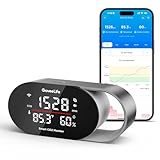
GoveeLife is the choice I would make when an app alert matters more than battery portability. It uses an SCD4x sensor based on a photoacoustic NDIR principle, updates every five seconds, and adds pressure compensation to help readings remain sensible as room conditions change.
The 4.82-inch display presents CO2, temperature, humidity, and a clock together, while the tri-color light bar provides a quick bedroom check. I would dim or disable the brightest presentation overnight because the screen is much more attention-grabbing than Aranet4’s e-ink display.
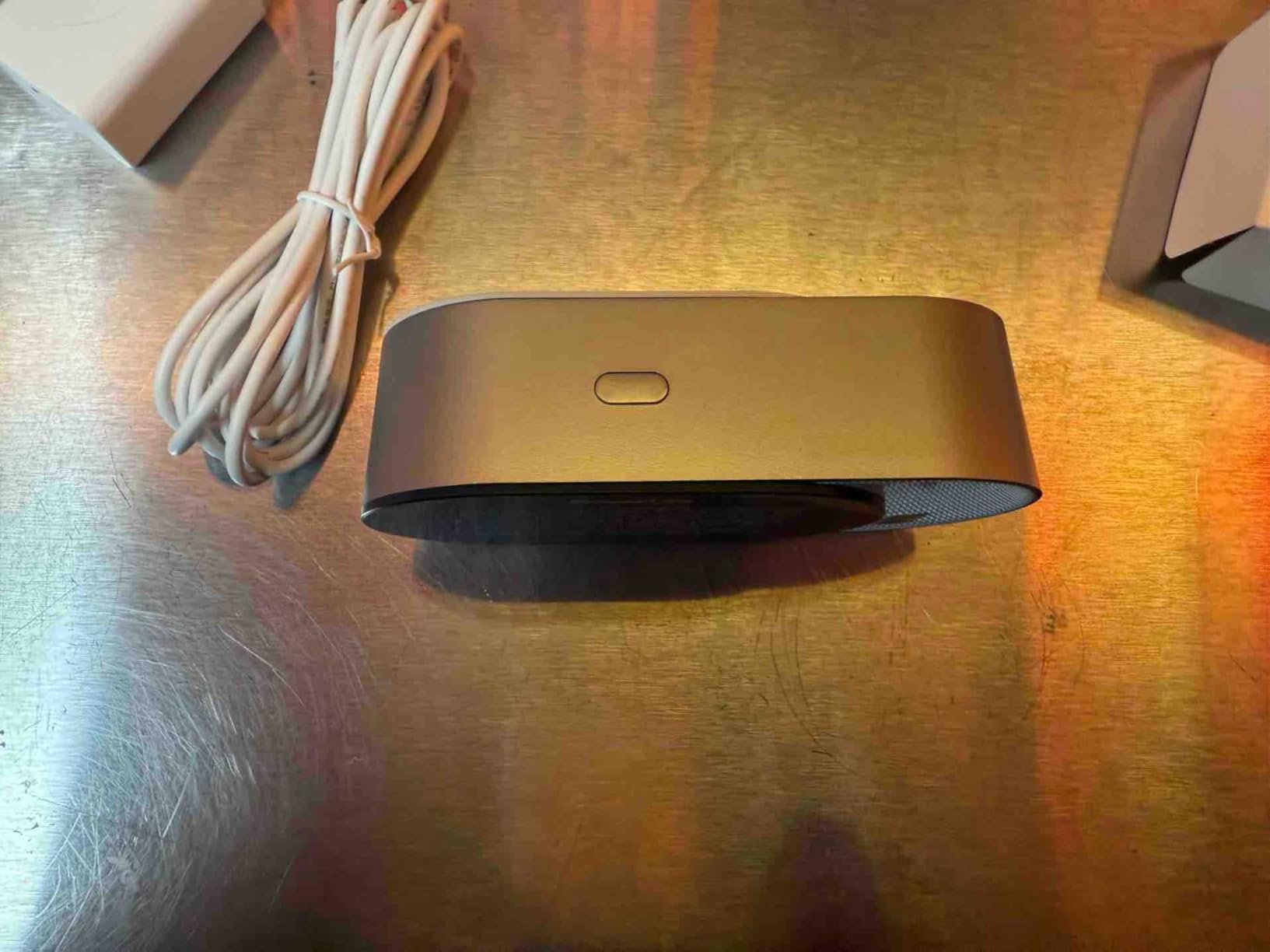
Its standout feature is the combination of a buzzer, app notification, and email alert. Historical data is available for up to two years according to the product feature list, which makes this a useful option for comparing nights after changing ventilation or sleep habits.
AC power means it stays active continuously, but the non-replaceable power setup is a reminder that the included Type-C cable and outlet placement matter. I would also keep the monitor on the same reliable WiFi band as the phone or hub you use for notifications.
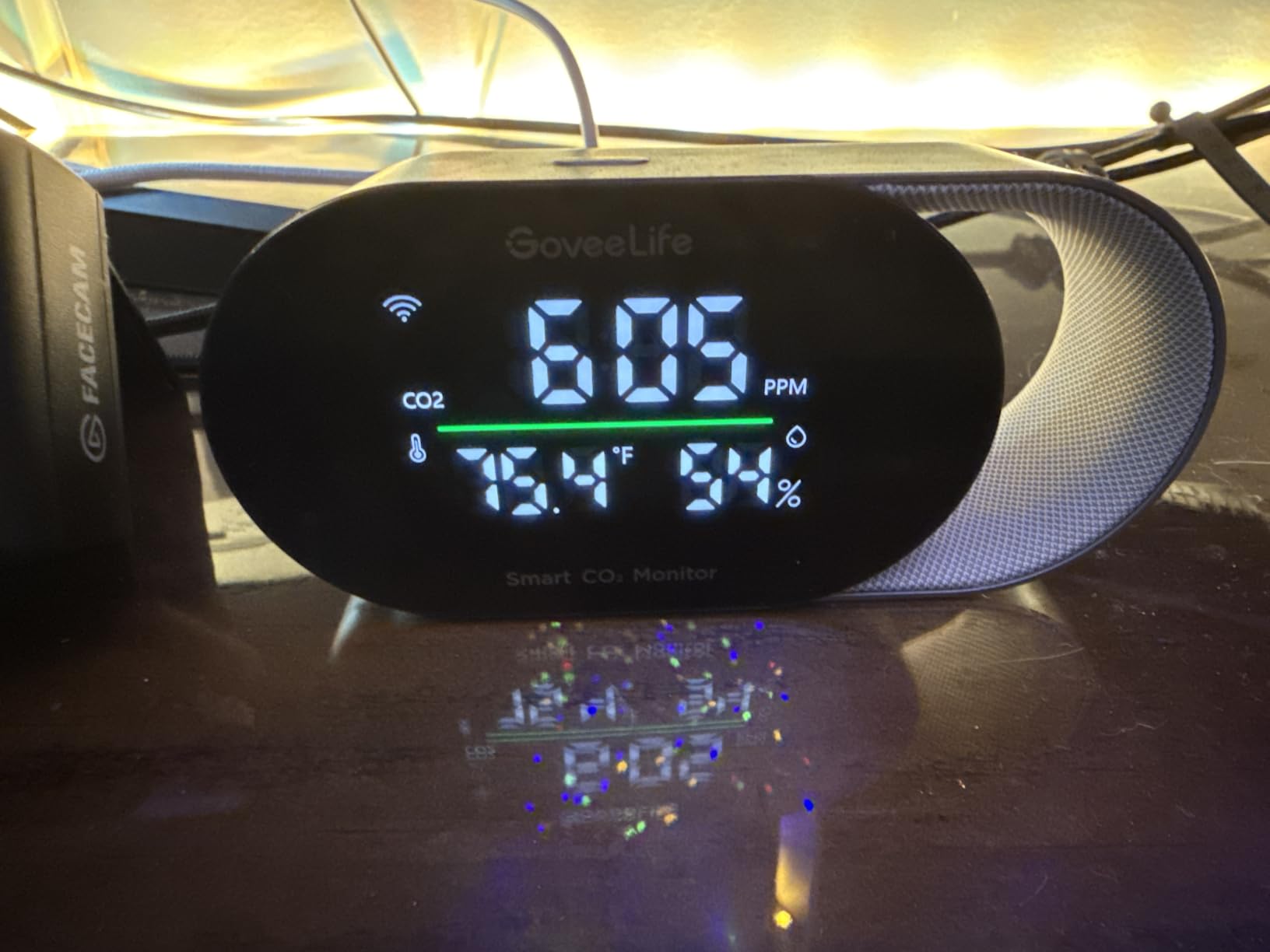
For whom GoveeLife works best
Choose GoveeLife if you want a large bedside display with remote notifications, trend history, and smart-home controls. It fits households that want to see whether a bedroom door, window, or heating schedule is affecting ventilation over time.
It is a better fit than Aranet4 for someone who does not want to interact with Bluetooth history. Just remember that app convenience cannot compensate for poor placement, so the monitor still needs breathing room and a representative location.
For whom GoveeLife is less suitable
Do not buy it expecting a purifier to solve a high CO2 reading. Purification targets particles, odors, or gases depending on the purifier, but replacing air through ventilation is what actually removes the carbon dioxide people add to a room.
4. SwitchBot Meter Pro CO2 — Best Compact Smart-Home Companion
SwitchBot CO2 Detector, Air Quality Monitor Indoor, CO2 Monitor for CO2/TEMP/Humidity, Portable Carbon Dioxide Detector for Home/Car/Office/Greenhouse
Swiss NDIR sensor
400-9000 ppm range
Up to 12-month battery
Pros
- Compact footprint
- Large 92mm display
- Fast one-second response
- Bluetooth app
- Swiss NDIR sensor
Cons
- App sync can be slow
- Hub required for full features
- Readings may freeze when plugged in
SwitchBot Meter Pro makes sense when you already use compatible smart-home hardware or simply want a small screen that does not dominate a nightstand. Its Swiss-made NDIR sensor covers 400 to 9000 ppm, and the one-second response is fast enough to show a room changing after you open a door.
The 92mm display is clear, and the device can run from a built-in battery for up to 12 months. I would place it on a table or wall mount where air can circulate, rather than behind a curtain where a high reading may reflect trapped air.
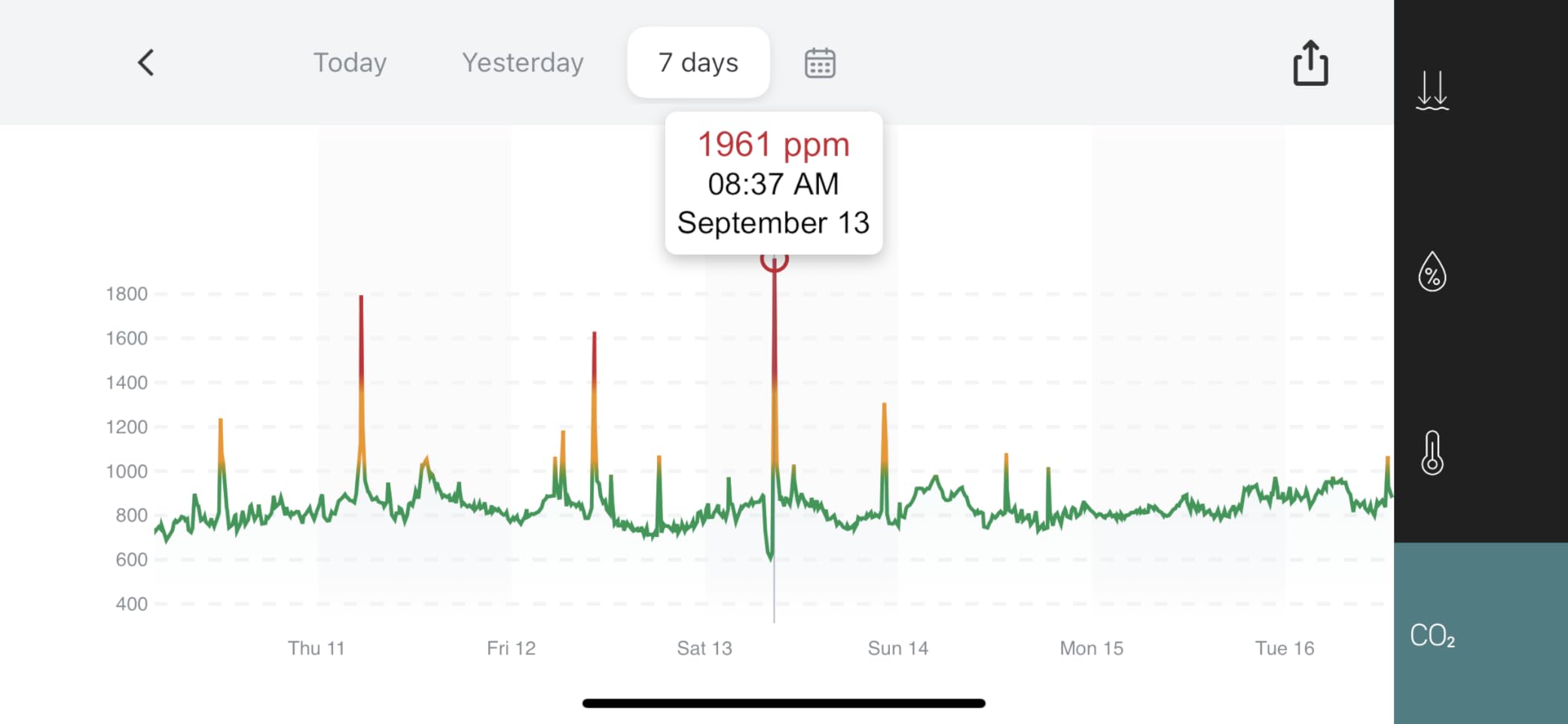
The app adds history and alerts, but full smart features require a hub. Some reviewers report that syncing can lag, and a few have seen CO2 values freeze when using AC power, so battery operation may be the safer choice if you need continuous logging.
Its CO2 accuracy specification is ±50 ppm plus 5% of the reading, which is respectable for a compact consumer device. Temperature and humidity are included, though the temperature result may not be as exact as the CO2 value according to user feedback.
For whom SwitchBot works best
Choose SwitchBot if you want a compact monitor that can sit on a nightstand, wall, or desk without feeling like laboratory equipment. The broad 9000 ppm range is also useful for diagnosing a room that is genuinely undersized or poorly ventilated.
It fits a smart-home setup more naturally if you already accept a hub-based ecosystem. For pure bedside reading, however, the extra app layer is optional rather than necessary.
For whom SwitchBot is less suitable
Pass on it if a laggy app or occasional frozen value would make you distrust the result. I would also avoid buying it only for the promise of remote features unless you already plan to add the required hub.
5. U UNNI CO2 Monitor — Best Budget Pick With a Bedroom-Friendly Display
CO2 Monitor for Home CO2 Detector, Photoacoustic Sensor
Photoacoustic sensor
400-5000 ppm range
24-hour history
Pros
- Adjustable alert volume
- Three backlight levels
- USB power with battery backup
- History chart
- Outdoor calibration praised
Cons
- Calibration can be inconvenient
- No app connectivity
- Power supply not included
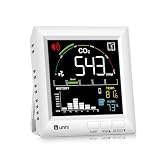
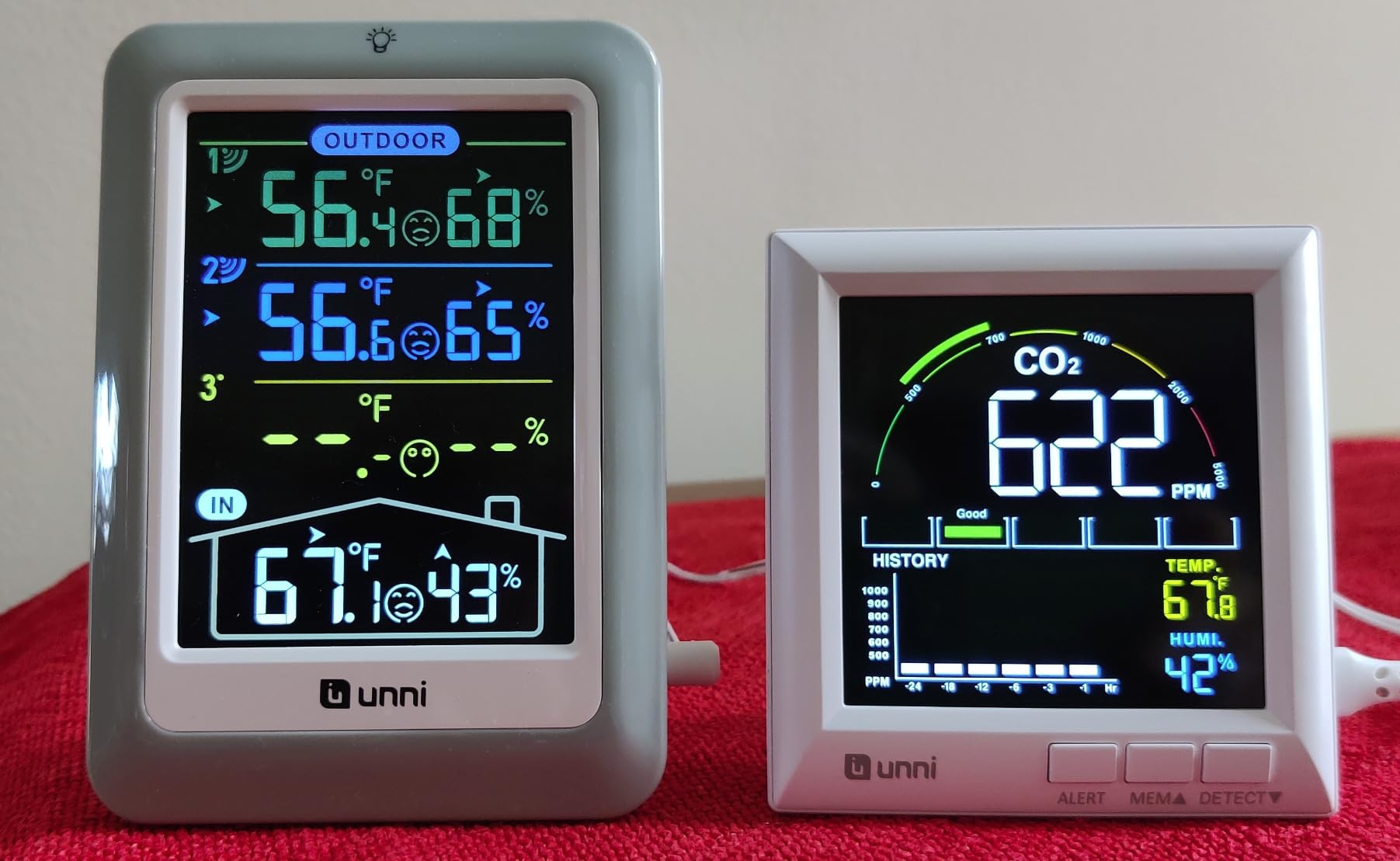
U UNNI offers a lot of practical controls for a lower-cost bedroom monitor. The Swiss-made Sensirion photoacoustic sensor measures 400 to 5000 ppm, and the unit also reports temperature, humidity, maximum and minimum values, and a 24-hour history chart.
Three backlight levels and three alert volumes are unusually useful beside a bed. I would select the lowest light setting at night and use the color display as a visual warning rather than leaving an audible alarm enabled while sleeping.
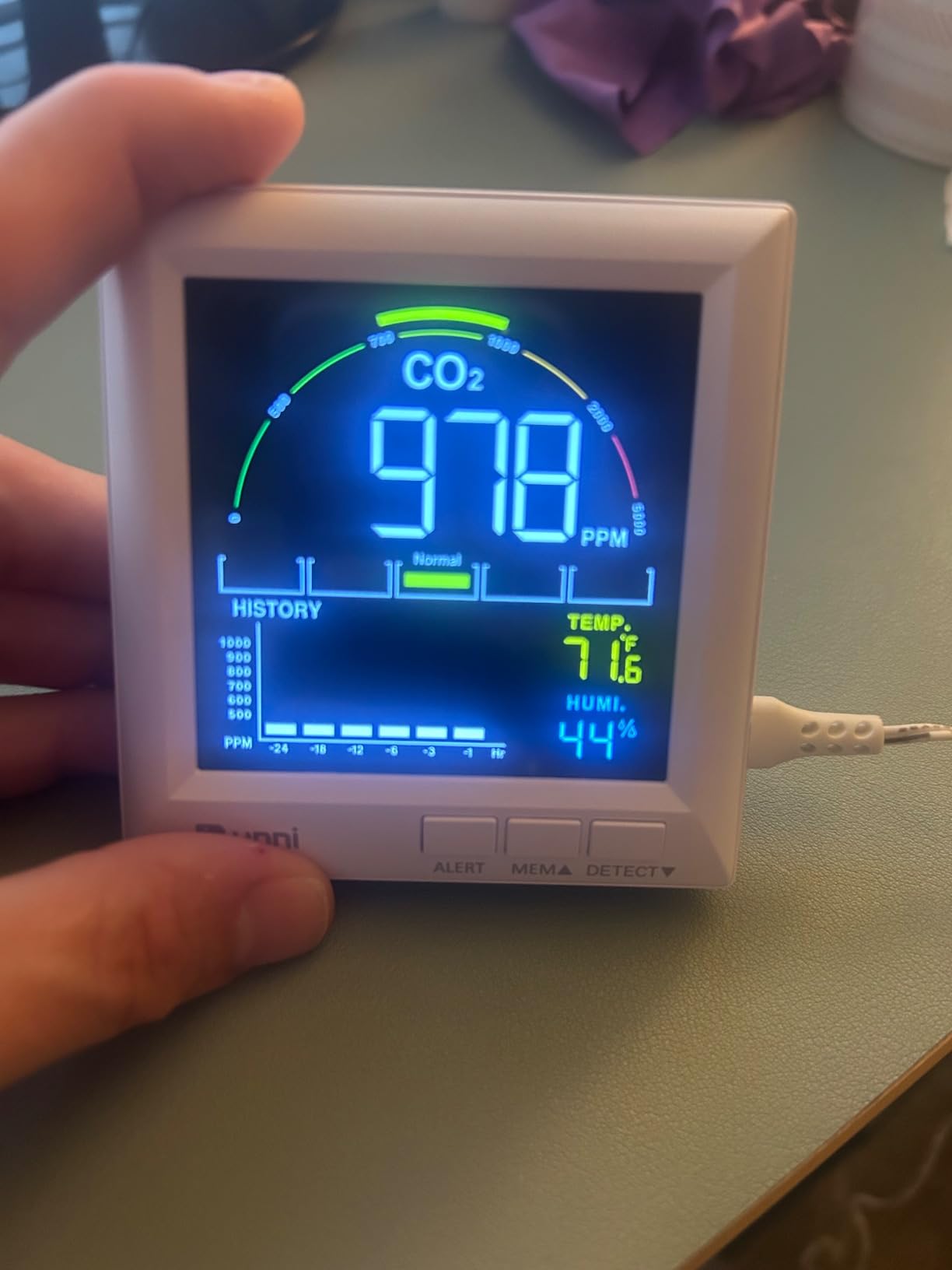
The monitor supports USB power with a battery backup, but the power supply is not included. The photoacoustic sensor is capable of good results, and reviewers specifically praised an outdoor reading near 401 ppm, but calibration remains less convenient than a plug-and-play experience.
User feedback also mentions drift over time. That does not automatically make it a poor device, but it makes periodic outdoor-air checks more important if you want a long-term record rather than a one-night experiment.
For whom U UNNI works best
Choose U UNNI for a simple, inexpensive monitor with adjustable nighttime presentation and local history. It is a sensible first device for someone testing whether a bedroom feels better after cracking a window or changing the door position.
It also works when you do not want another app account or cloud dependency. Keep the instructions for calibration nearby, and allow the sensor to settle before comparing it with another meter.
For whom U UNNI is less suitable
Do not choose it if you need phone alerts, remote access, or effortless long-term calibration. If you are sensitive to inaccurate trend data, a more established NDIR model may provide a better margin of confidence.
6. BREATHE Airmonitor Plus — Best for Full Indoor Air Diagnostics
BREATHE Airmonitor Plus Indoor Air Quality Monitor w/CO₂, PM & App. Gen 2.
NDIR CO2
CO2, PM, TVOC and HCHO
6-hour battery
Pros
- Broad pollutant coverage
- Professional NDIR sensor
- 90-day history and CSV export
- Compact body
- Real-time alerts
Cons
- Only about 6-hour battery life
- App connectivity can be problematic
- Display may be bright at night
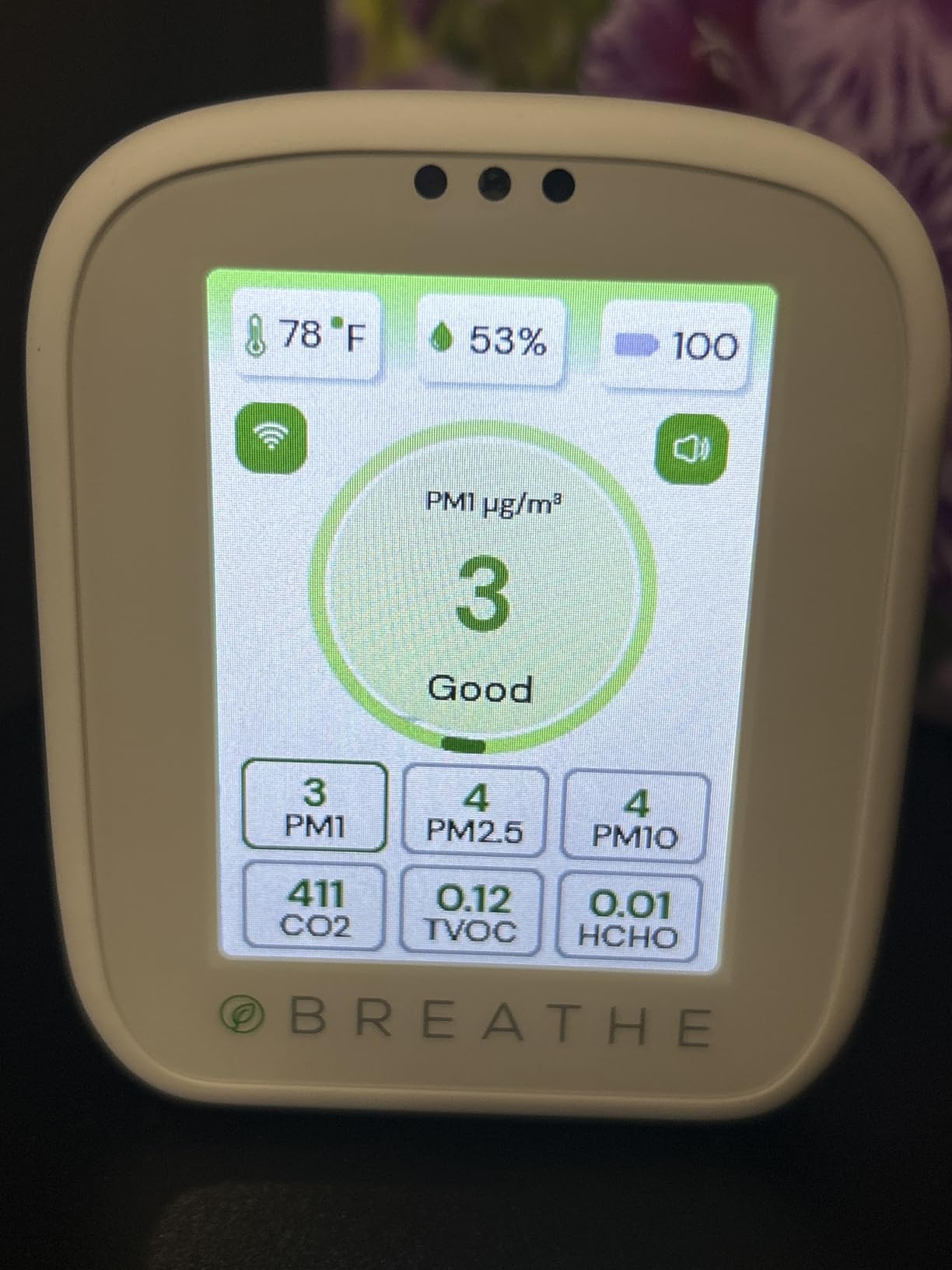
BREATHE Airmonitor Plus goes beyond CO2 by measuring PM1, PM2.5, PM10, TVOC, formaldehyde, temperature, and humidity. That makes it useful when you suspect a bedroom problem may involve more than one source, such as a closed window, new furniture, cleaning products, or outdoor smoke.
The NDIR CO2 sensor is paired with a compact, corded design, a 90-day history, and CSV export. I value export for a bedroom investigation because a single number is less informative than a night-by-night record alongside temperature, humidity, and particulate measurements.
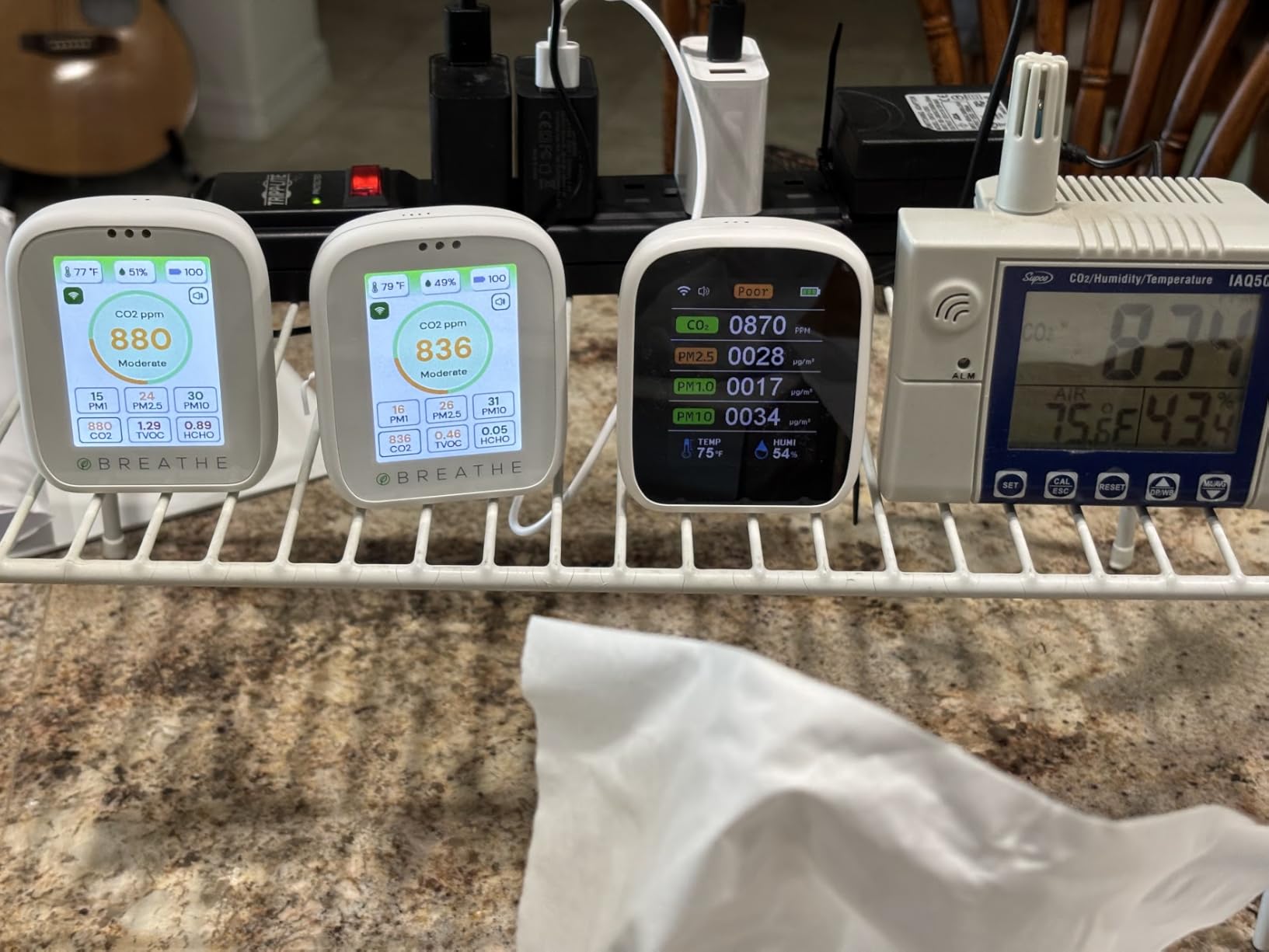
Its six-hour battery is not a true overnight power solution. I would keep it plugged in beside the bed, then use the backup only for short room checks, especially because a bright display can compete with a dark sleeping environment.
Some users report app connection problems, and automatic recalibration has produced suspiciously low CO2 readings for some owners. A calibration complaint should not be ignored: compare the device with fresh outdoor air periodically, and do not treat automatic baseline correction as proof that manual verification is unnecessary.
For whom BREATHE works best
Choose BREATHE if you want one instrument for CO2 plus particles, volatile compounds, and formaldehyde. It is a good fit for a bedroom investigation where you want to record several possible contributors and export the data for your own review.
It is less appealing if your goal is a minimal, silent, battery-powered bedside display. The extra sensors justify the larger feature set only when you will actually use the history and pollutant readings.
For whom BREATHE is less suitable
Skip it for a nursery or bedroom where an outlet failure would immediately end monitoring. I would also choose a simpler NDIR display if app reliability and an uninterrupted reading are more important than multi-pollutant coverage.
7. YNAK 16-in-1 Air Quality Monitor — Best for a Large, Information-Rich Display
16 in 1 Air Quality Monitor Indoor 7″ Real-Time CO2 Monitor, 9 AQI+7 Alerts
16-in-1 monitoring
7-inch LED screen
CO2 and air quality alerts
Pros
- Large readable display
- Comprehensive readings
- No app required for basics
- Three brightness levels
- Real-time alerts
Cons
- CO2 accuracy questioned by some users
- Limited battery backup
- Only Fahrenheit temperature
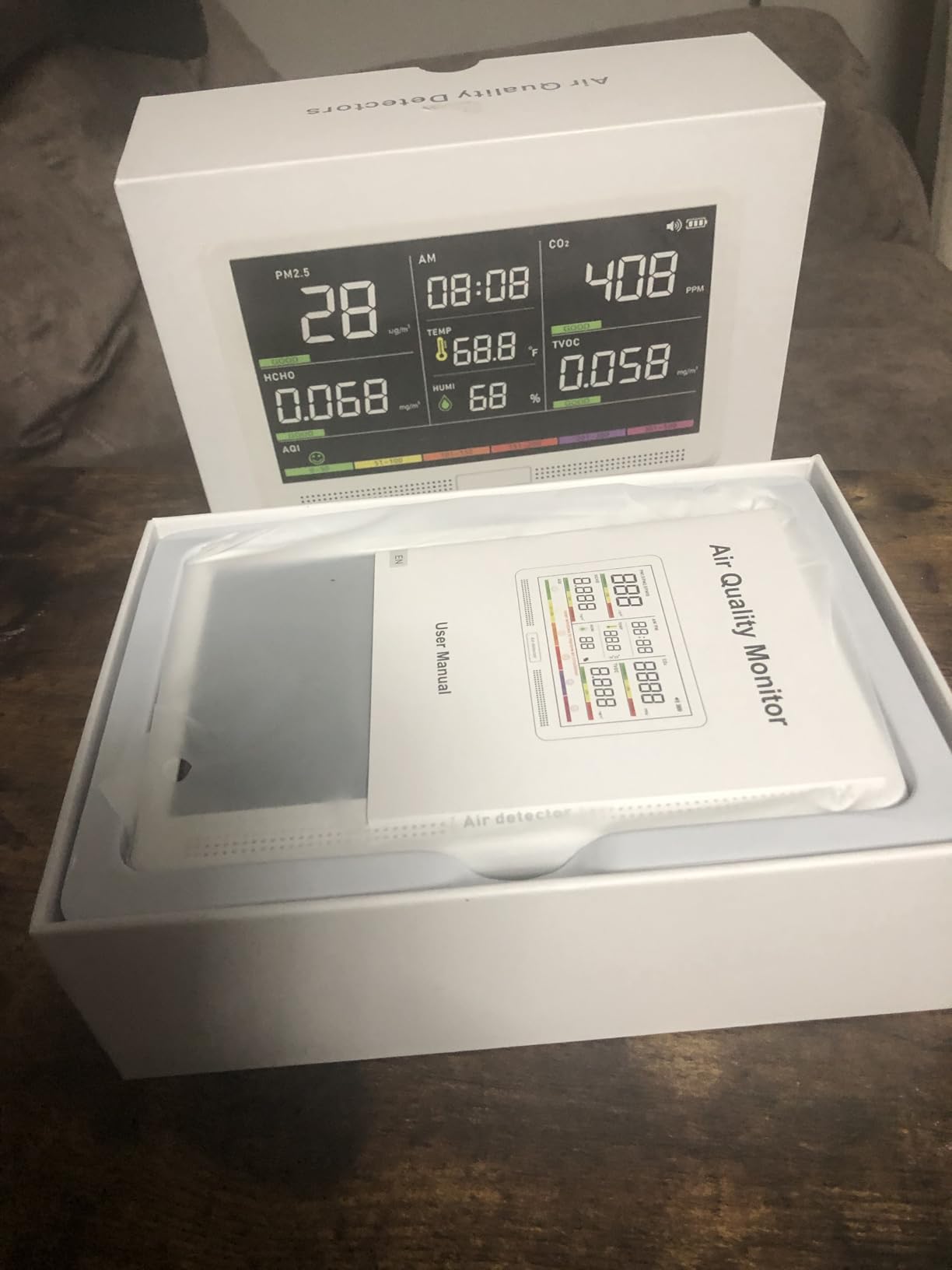
YNAK is built for people who want a lot of information in one place. Its 7-inch LED display can show CO2, PM1, PM2.5, PM10, TVOC, HCHO, temperature, humidity, AQI, time, and several alerts at a glance.
Three brightness settings and a buzzer make it practical for a room where you want the display to remain visible without using a phone. Basic operation does not require an app, which is a meaningful advantage when a WiFi account or Bluetooth pairing is the last thing you want to manage.
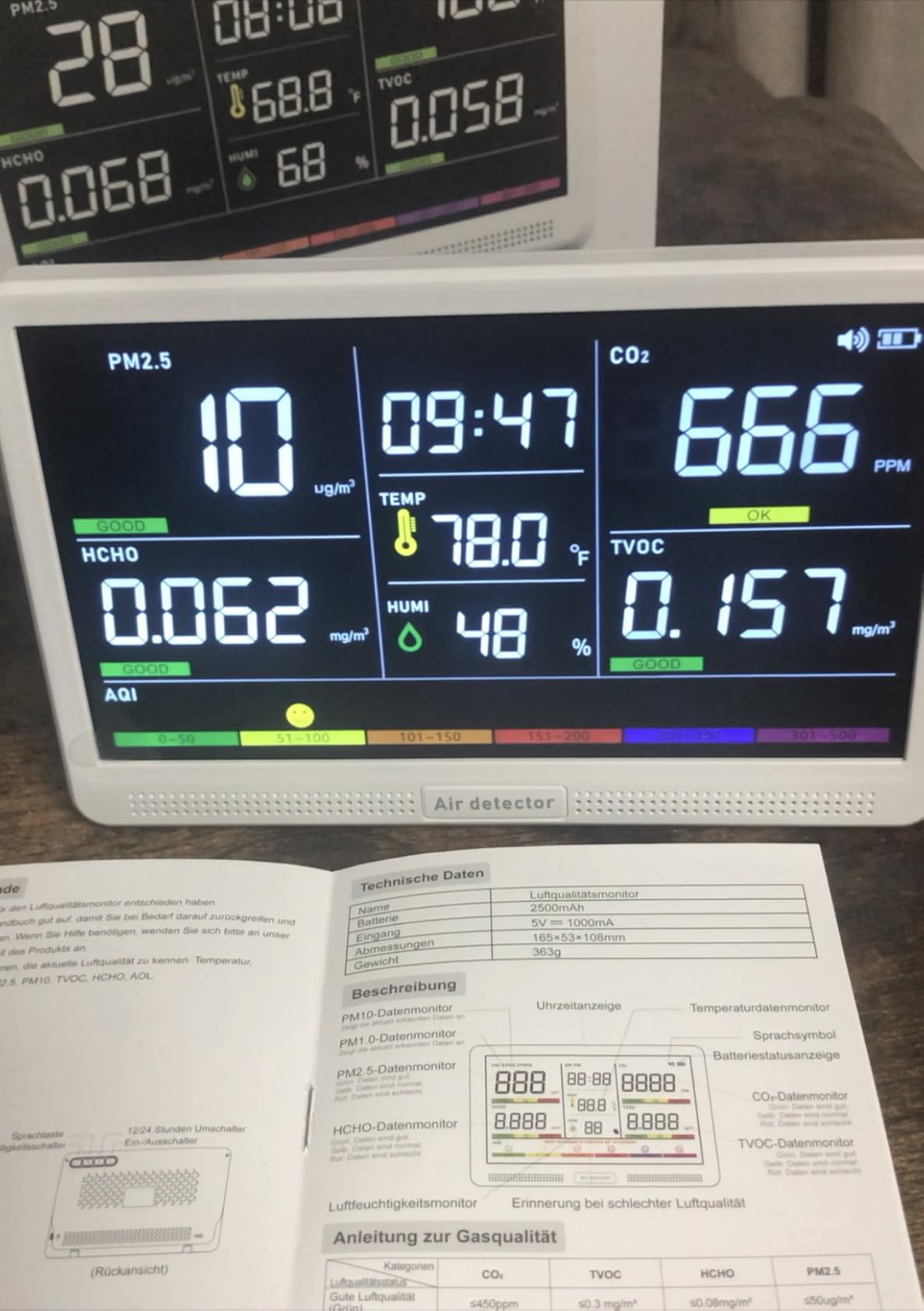
The main caution is CO2 credibility. The supplied data reports positive feedback for the display and ease of use, but some users say the CO2 result disagrees with other monitors. I would cross-check a new YNAK against outdoor air and a trusted NDIR reference before using it to guide a major ventilation change.
The temperature reading is Fahrenheit-only, and the battery backup is limited. This is therefore a corded bedside or tabletop monitor first, not a device to carry into a remote room or rely on during an outage.
For whom YNAK works best
Choose YNAK if you want a large, glanceable dashboard for a bedroom, classroom, or office and appreciate local operation without an app. Its screen can be especially helpful for households where several people need to understand the readings.
It is a good option for checking several air-quality signals at once. I would still use CO2 as the reason to ventilate, since a high particle or VOC reading should not be mistaken for a high carbon-dioxide reading.
For whom YNAK is less suitable
Skip it if you need the strongest assurance of CO2 agreement or a battery that lasts through the night. A focused NDIR monitor is the safer choice when the central question is whether your bedroom air is accumulating exhaled CO2.
8. INKBIRD IAM-O2 — Best Simple Portable NDIR Monitor
INKBIRD Indoor Air Quality Monitor Ndir CO2 Detector in Home, Room
Swedish NDIR sensor
0-9999 ppm range
3-6-month battery
Pros
- Lightweight design
- USB-C charging
- 3-6-month battery life
- Swedish NDIR sensor
- Color-coded indicator
Cons
- No logging or history
- Limited alarm functions
- Backlight drains battery
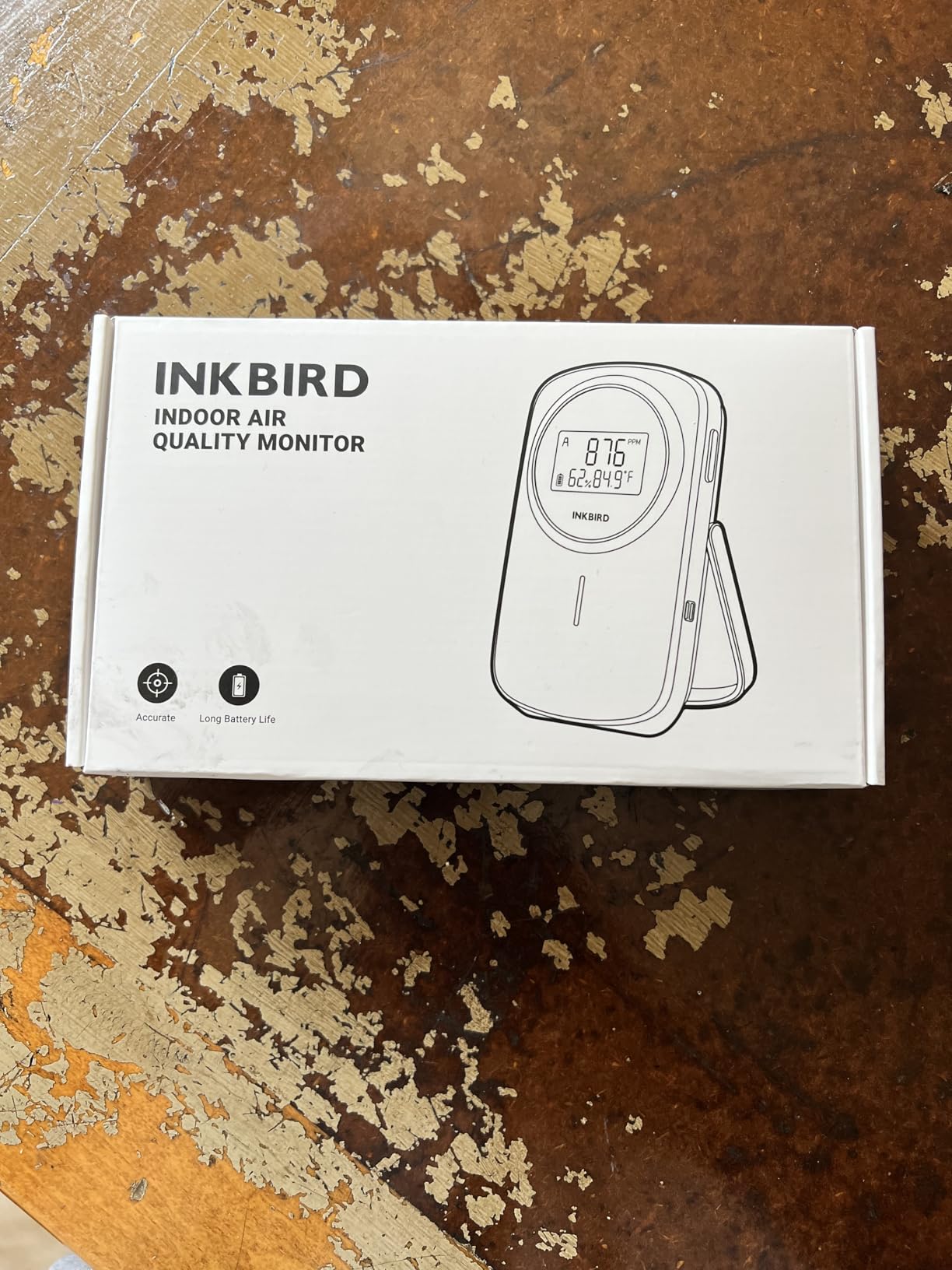
INKBIRD IAM-O2 is a focused three-in-one device: CO2, temperature, and humidity, with a Swedish NDIR sensor and a stated range from 0 to 9999 ppm. It is a good pick for someone who wants a direct reading without building a smart-home system around it.
The included lithium battery is rechargeable over USB-C, and the 3-to-6-month battery-life claim is strong for a portable monitor. I would keep the backlight off or brief because the display is one of the main drains, and I would carry it to a room rather than leave it permanently in a dark corner.
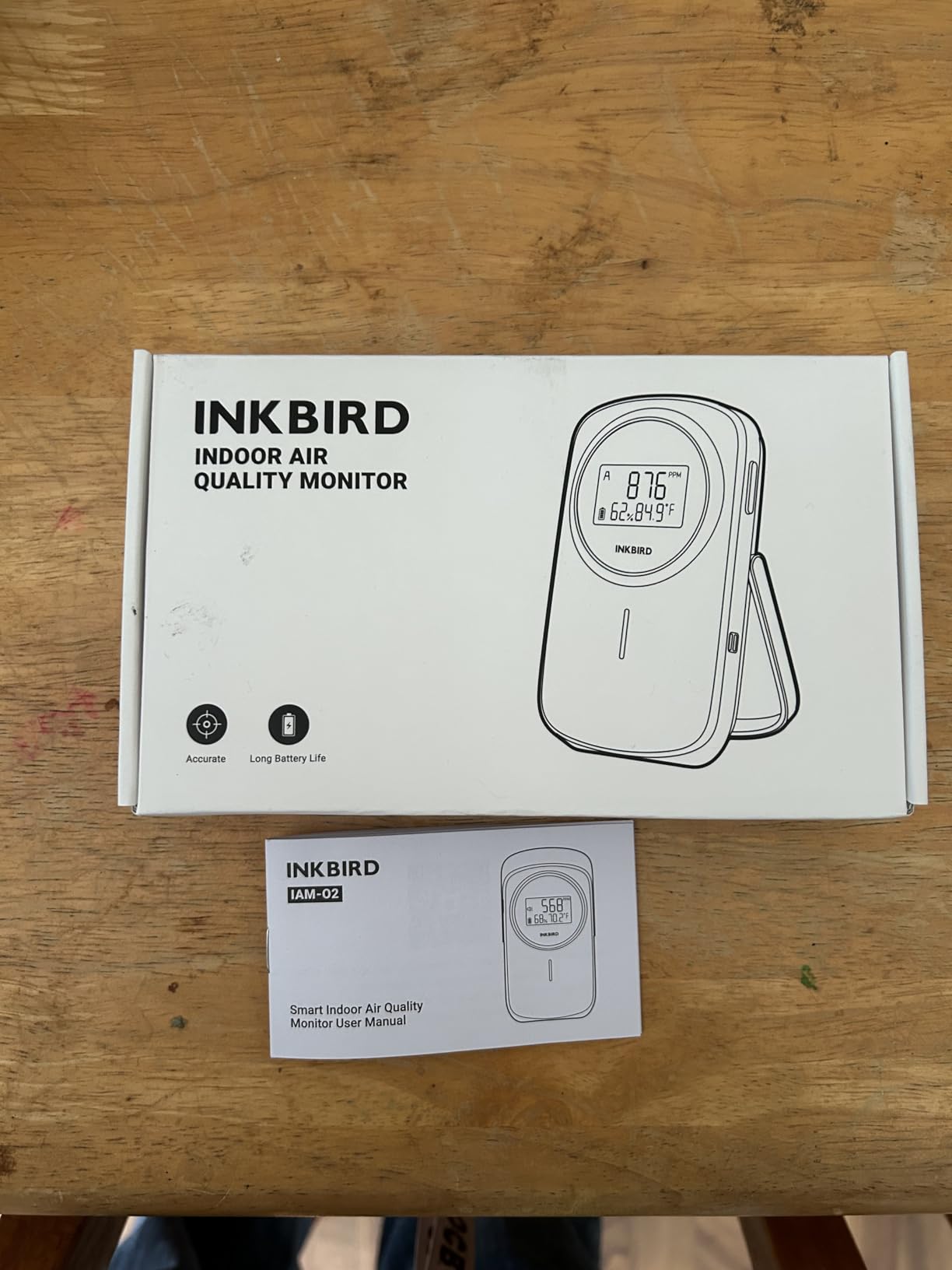
It does not log history and its alarm controls are limited. That makes it excellent for a quick bedroom check, a grow tent, an RV, or a room where you only need to know the current status.
The product data also notes reports of reliability issues after two months. That is a smaller review base than several other models here, so I would give the device a simple outdoor-air check after purchase and keep the receipt.
For whom INKBIRD works best
Choose INKBIRD for a small, basic, portable monitor with a real NDIR sensor and long battery life. It suits renters, travelers, and people who want to test several rooms without investing in a larger connected system.
It is a particularly sensible choice when you can accept checking the display manually. If you want to compare last night’s pattern, however, choose a model with stored history instead.
For whom INKBIRD is less suitable
Do not choose it for overnight trend analysis, family-wide alerts, or a bedroom where no one can look at the display. The limited alarm functionality is a deliberate trade-off, not a minor software omission.
What to Look for When Buying a CO2 Monitor for Bedrooms
The best bedroom CO2 monitor is an NDIR device with a readable, dimmable display, stable placement, and a calibration process you can repeat. Start with the sensor, then consider power, alerts, history, and whether the device can remain accurate through the season you care about.
Choose an NDIR sensor whenever possible
NDIR means non-dispersive infrared. The sensor measures how much infrared light carbon dioxide absorbs and converts that measurement into ppm; photoacoustic sensors use sound generated when CO2 absorbs modulated light, while inexpensive electrochemical or basic consumer sensors are less dependable for this job.
Sensor type matters more than a long list of extra features. A simple NDIR display can be more useful than a 16-in-1 screen whose CO2 result is difficult to trust.
Set bedroom thresholds before buying
As a practical starting point, treat readings below 800 ppm as a good bedroom target, 800 to 1000 ppm as a reason to watch ventilation, and sustained readings above 1000 ppm as a sign to increase fresh-air exchange. These are ventilation indicators, not universal medical cutoffs, and a person with symptoms should seek qualified advice rather than diagnose from a monitor.
A reading above 2000 ppm is poor indoor air and should prompt immediate fresh-air action. Higher sustained levels can cause headache, sleepiness, reduced attention, and impaired decision-making; the exact response varies with exposure time, activity, room size, and individual health.
Place the monitor where people actually breathe
Set it upright on a nightstand or shelf about breathing height, away from a window draft, exterior wall, heater, humidifier, mouth, and direct sunlight.
Leave space around the vents so the sensor samples room air rather than the air trapped in a drawer or behind bedding.
Record a baseline with the door and window in their normal sleeping positions, then repeat the test after one change at a time.
Check the peak and morning reading, not just the number shown at bedtime; overnight accumulation is the pattern that matters most.
I keep the monitor away from my head but close enough to read without getting out of bed. I also note whether the room was occupied, whether a door was open, and whether a window was cracked so the trend has context.
Match power design to your bedroom routine
Battery-powered models such as Aranet4, Temtop, SwitchBot, and INKBIRD are easier to reposition and keep away from cords. Corded models such as GoveeLife and BREATHE offer continuous operation but need an outlet and may be less appealing beside a minimalist bed.
Battery claims are not interchangeable. A stated range of 70 days, several months, or up to four years reflects different sensor, refresh, display, and connectivity choices, so use the listed operating conditions rather than comparing the headline number alone.
Prioritize sleep-friendly controls and useful history
Look for a dim or e-ink display, adjustable backlight, optional buzzer, and alerts that can be muted at night. A local history chart is helpful for a small bedroom, while Bluetooth or WiFi history is better if you want to review trends from another room or export data.
Forum users often report that buggy apps, weak connections, and proprietary data formats are more frustrating than the physical monitor. Open or exportable data can increase trust, but a simple screen that always works may be the better bedside tool.
Plan for calibration and sensor drift
Read the calibration instructions before opening the box. Automatic baseline calibration is convenient in a room that receives regular fresh air, but a bedroom that stays closed for long periods may need an outdoor-air check or manual calibration to keep the baseline honest.
Test a new monitor outside in clean air for the manufacturer-recommended stabilization period, then compare it with another trusted device if the number looks implausible. I would repeat the check periodically, especially after moving the monitor, changing altitude, or noticing a persistent offset.
Use the monitor to change ventilation, not to avoid it
Open a door or window briefly, run a safe exhaust fan if appropriate, or adjust a ventilation schedule based on the overnight pattern. An air purifier cannot remove the CO2 you exhale; filtration and gas treatment are different from exchanging room air.
Forum discussions describe people finding 1400 ppm or more in closed bedrooms and feeling better after adding fresh air. Those are useful real-world observations, not controlled trials, so I treat them as motivation to investigate and measure rather than as proof of a guaranteed sleep outcome.
My buying recommendations by use case
For most people, Aranet4 is the strongest all-around choice because its NDIR sensor, e-ink display, and long battery life fit a bedroom naturally. Choose GoveeLife when you need WiFi, app history, and alerts; choose Temtop when portability and value matter more than connectivity.
For a larger diagnostic project, BREATHE gives you the broadest pollutant and export set. For a no-frills bedside display, U UNNI or INKBIRD keeps the job focused, while SwitchBot is attractive for an existing smart-home setup and YNAK is best for a large local dashboard.
Frequently Asked Questions
What is the best CO2 monitor for home use?
For a bedroom-focused home setup, Aranet4 is the strongest all-around pick because it uses an NDIR sensor, has an easy-to-read e-ink display, and can run for up to four years on two AA batteries. GoveeLife is a better choice if WiFi alerts and app history are more important than battery life.
How do I monitor CO2 levels in a room?
Place an NDIR monitor at breathing height away from windows, heaters, sunlight, and your face. Record the baseline with your normal sleeping setup, then note bedtime, morning, and peak readings after changing ventilation one step at a time.
How do I choose the right CO2 monitor?
Choose an NDIR sensor, a display that can be dimmed, a calibration process you can repeat, and power options that fit your room. Add app alerts or data export only if you need trends, remote notifications, or a multi-pollutant investigation.
Can CO2 get too high if I sleep with my bedroom closed?
Yes. Exhaled CO2 can accumulate in a closed occupied bedroom, especially overnight, and readings may rise well above 1000 ppm. Treat sustained high readings as a prompt to improve fresh-air exchange, not as a medical diagnosis.
What is an unsafe level of CO2 in a room?
For indoor ventilation decisions, sustained readings above 1000 ppm are a reason to improve fresh-air exchange, while readings above 2000 ppm are poor and should prompt immediate fresh-air action. Personal sensitivity, exposure time, and room conditions matter, so seek qualified help for symptoms.
Final Verdict
My pick for the best CO2 monitors for bedrooms overall is Aranet4 because it combines a trusted NDIR measurement, a sleep-friendly e-ink screen, long battery life, and useful local history. Its manual calibration and limited Bluetooth range are reasonable compromises for a bedroom where reliability comes first.
Choose GoveeLife for connected alerts, Temtop for portable value, SwitchBot for a compact smart-home setup, and U UNNI or INKBIRD for simpler lower-feature monitoring. BREATHE is the right choice for a fuller indoor-air investigation, while YNAK is for someone who wants a large dashboard more than maximum confidence in every CO2 result.
Start with one good monitor, place it thoughtfully, and use its overnight pattern to test a small ventilation change. That is more useful than buying the device with the longest feature list and then ignoring the one number that tells you whether the bedroom needs fresh air in 2026.