
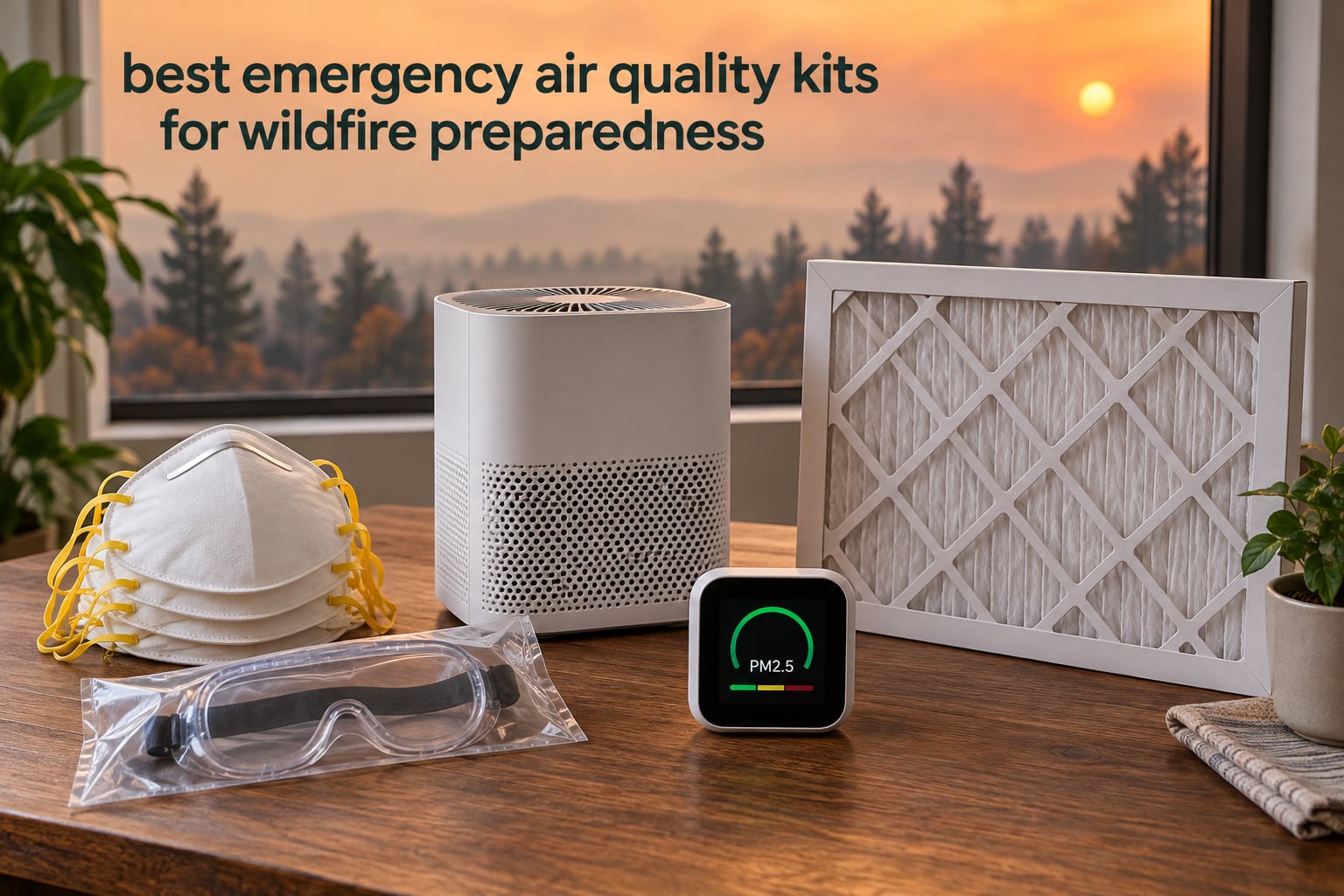
When the sky turns orange and the AQI on your phone spikes past 200, you do not have time to order masks or figure out which purifier actually filters wildfire smoke. That is why I built this guide to the best emergency air quality kits for wildfire preparedness in 2026 – because the worst smoke days are the worst shopping days.
Over the last two wildfire seasons my family lived through 19 days of consecutive “Unhealthy” and “Very Unhealthy” air on the West Coast. We lost an HVAC filter in eight days. Our kids missed a week of school. And I watched our dog cough through what we later learned was a 350 AQI spike. That is when I started treating our air like our water: something we store, rotate, and replenish before the emergency, not during it.
This article is the kit wishlist I wish someone had handed me. It covers the five things every wildfire emergency kit needs (NIOSH-approved N95 or P100 respirators, a True HEPA air purifier with extra filters, MERV 13 furnace filters, sealed safety goggles, and a portable PM2.5 monitor), then walks through 10 specific products I have either owned, borrowed, or stress-tested against r/AirQuality and r/bayarea user reports. If you want a quick scan, jump to the kit checklist; if you want a deep dive, every product section tells you what it does, who it is for, and where it falls short.
If you are already shopping for related gear, I also keep a regularly updated list of the 8 best air purifiers for wildfire smoke and a separate ranking of the 10 best Medify air purifiers for wildfire smoke. For a broader seasonal overview, the 12 best air purifiers for wildfire smoke season roundup covers more options at every price point.
Table of Contents
Wildfire Emergency Air Quality Kit Checklist
Before we get into individual products, save or screenshot this list. It is the same checklist I share with friends when they ask what to grab before a Red Flag Warning:
- NIOSH-approved N95 respirators (at least 10 per adult, plus kids sizes if applicable) – look for the NIOSH stamp and a dual-strap design.
- At least one P100 reusable half mask with replaceable filters – higher filtration, lower long-term cost for multi-day events.
- True HEPA air purifier sized to your largest room (CADR matched to square footage).
- MERV 13 furnace filter (one to install, one spare) – the EPA-recommended upgrade for central HVAC systems.
- Sealed, anti-fog safety goggles – smoke irritates eyes long before it triggers your lungs.
- Portable PM2.5 air quality monitor with a real-time display so you know when to escalate protection.
- Optional: a 20-inch box fan and four MERV 13 filters for a low-cost DIY clean-air room. See the box fan filter build guide for step-by-step instructions.
- Optional: a vehicle cabin air filter upgrade – wildfire ash clogs cabin filters fast, and most cars ship with a basic MERV 8.
- Storage: one sealed plastic bin per kit, stored cool and dry, with a 6-month rotation reminder on your calendar.
Wildfire Smoke 101: PM2.5, AQI, and Why HEPA Works
Wildfire smoke is mostly fine particulate matter smaller than 2.5 micrometers, which is why we call it PM2.5. Particles that small bypass your nose and throat and reach the deep lung tissue where they trigger inflammation, asthma attacks, and cardiovascular stress. The U.S. EPA’s Air Quality Index (AQI) translates raw PM2.5 readings into color bands: green is good, yellow is moderate, orange is unhealthy for sensitive groups, red is unhealthy for everyone, purple is very unhealthy, and maroon is hazardous. Anything above 150 means N95 respirators and indoor air cleaning become genuinely important, not just symbolic.
The reason True HEPA filters work is mechanical, not chemical. A True HEPA filter is rated to capture at least 99.97% of particles at 0.3 microns, and it actually does better on both larger and smaller particles through diffusion and impaction. NIOSH-approved N95 and P100 respirators work the same way at the wearer level – P100 filters 99.97% and is the gold standard for very heavy smoke. Look for the words “True HEPA” on a purifier and the words “NIOSH approved” plus a TC (testing and certification) number on any mask you buy. Anything labeled “HEPA-type” or “KN95 without NIOSH approval” is a gamble during a real smoke event.
A common question is how long wildfire smoke lingers indoors. Smoke can infiltrate through door gaps, bathroom fans, and HVAC intakes, so indoor PM2.5 can stay elevated for hours even after outdoor air clears. That is why a sealed clean-air room (one door, one window, a purifier running on high, weatherstripping on the gaps) is the single most effective DIY protection strategy. If your purifier feels overwhelmed during a heavy event, our guide on what to do when your air purifier cannot keep up with wildfire smoke walks through fan settings, room size matching, and when to add a second unit.
Top 3 Picks at a Glance

3M 8511 N95 Cool Flow Respirator
- NIOSH-approved N95
- Cool Flow exhalation valve
- Adjustable M-noseclip
- 10-pack value

3M Aura 9205 N95 Respirator
- NIOSH-approved N95
- Embossed anti-fog panel
- Flat-fold storage
- Pack of 20
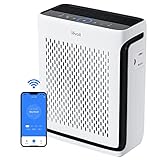
LEVOIT Vital 100S-P Air Purifier
- AHAM VERIFIDE certified
- Pet Mode U-shaped inlet
- VeSync app control
- True HEPA Sleep Mode
Quick Comparison: All 10 Picks
| Product | Specifications | Action |
|---|---|---|
| 3M 8511 N95 Cool Flow Respirator, 10-Pack |
|
Check Latest Price |
| 3M Aura 9205 N95 Respirator, Pack of 20 |
|
Check Latest Price |
| LEVOIT Vital 100S-P Air Purifier |
|
Check Latest Price |
 3M 8210 N95 Respirator, Pack of 20 3M 8210 N95 Respirator, Pack of 20 |
|
Check Latest Price |
 GVS Elipse P100 Half Mask Respirator GVS Elipse P100 Half Mask Respirator |
|
Check Latest Price |
 MOOKA KJ190H HEPA Air Purifier MOOKA KJ190H HEPA Air Purifier |
|
Check Latest Price |
 AZEUS HEPA Air Purifier AZEUS HEPA Air Purifier |
|
Check Latest Price |
 Sellstrom Odyssey II Wildland Goggles Sellstrom Odyssey II Wildland Goggles |
|
Check Latest Price |
 MOOKA H13 True HEPA Air Purifier MOOKA H13 True HEPA Air Purifier |
|
Check Latest Price |
 Parcil Full Face Respirator with Filter Parcil Full Face Respirator with Filter |
|
Check Latest Price |
1. 3M 8511 N95 Cool Flow Valved Respirator, 10-Pack – Editor’s Choice
3M 8511 N95 Cool Flow Valved Respirator, 10-Pack
NIOSH-approved N95
Cool Flow exhalation valve
10-pack
Adjustable M-noseclip
Pros
- Cool Flow valve cuts heat and moisture during long wear
- Up to 50 percent easier breathing than non-valved N95s
- Adjustable M-noseclip creates a reliable seal for most face shapes
- Trusted 3M brand used by wildland crews
- Comfortable for multi-day smoke events
Cons
- Valve is not appropriate for source control in shared indoor spaces
- Tight fit may be uncomfortable for some face shapes
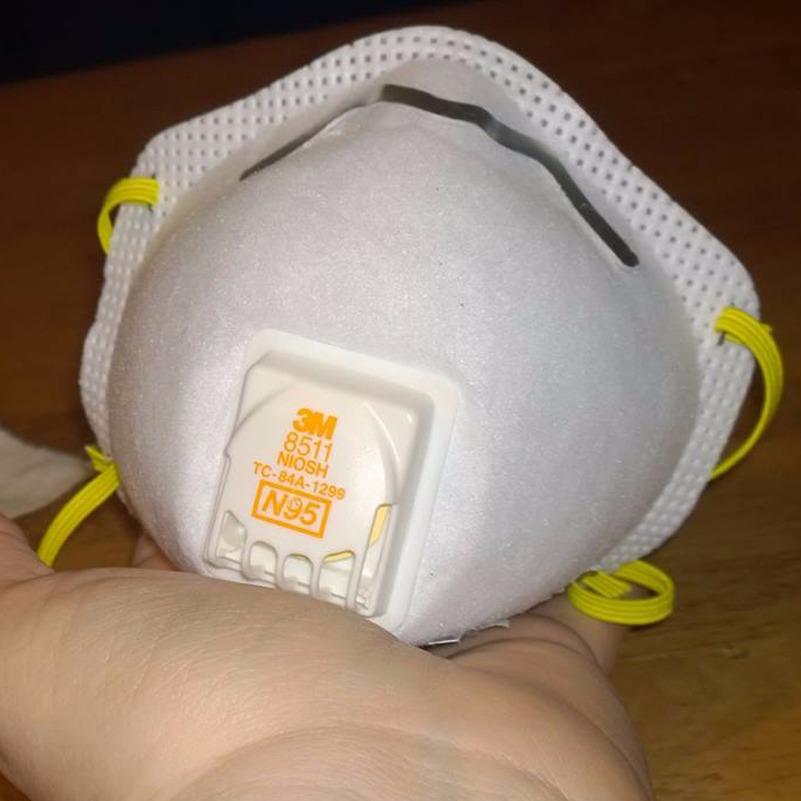
I bought a box of 3M 8511s before the 2026 fire season and they became the mask I reach for first. The Cool Flow exhalation valve is the single biggest comfort upgrade over a non-valved N95 – during a 5-hour outdoor cleanup day my glasses barely fogged and the inside of the mask stayed dry. For wildfire smoke specifically, the 8511 sits in a sweet spot: it is NIOSH-approved N95 (filters at least 95% of airborne particles), the M-noseclip lets me dial in a tight seal around the bridge, and the braided headbands do not snap like cheaper rubber straps.
Where it shines is extended outdoor wear. I used it for trail work on a 220 AQI day and again on a six-hour evacuation drive with windows up, and it performed identically both times. The valve routes exhaled air downward, which keeps the face cooler and dramatically reduces the clamminess that makes most N95s unbearable after an hour.
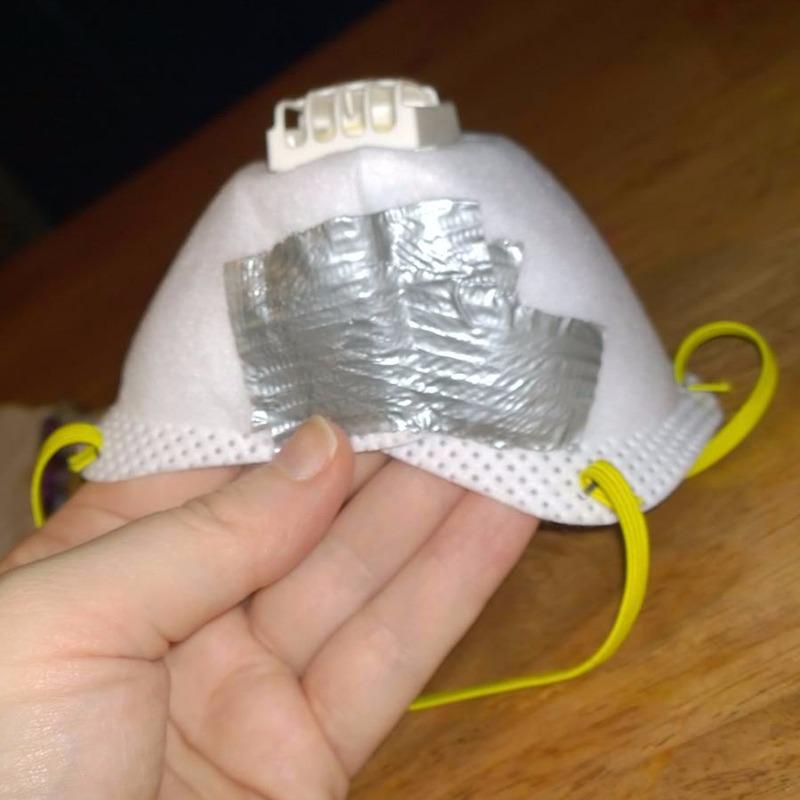
For my family the 8511 replaced both a 3M 8200 (too hot) and a KN95 from a marketplace brand (poor seal, slipped on the nose). One thing I noticed immediately is the strap tension – it is firm out of the box, so if you have a smaller face plan to knot the bands or try the valved 9501V+. For medium and large adult faces the stock fit is excellent.
One honest limitation: because the valve releases unfiltered exhaled air, the 8511 is not the right pick if you are masking to protect others (sick family member, shared indoor spaces). For personal smoke protection outdoors or alone in a vehicle, it is the most comfortable NIOSH-approved N95 I have used.
For whom this mask is a great fit
Adults who need NIOSH N95 protection for multi-hour outdoor exposure (yard work, evacuation driving, brush clearing), people who wear glasses and hate the constant fogging cycle, and anyone in a hot climate where non-valved N95s become unbearable after an hour. If you have a beard, no N95 will seal – move to the full-face respirators below.
For whom this mask is a poor fit
Anyone who needs source control (protecting a vulnerable household member), people with very small faces (try the 3M Aura 9211+ or kids sizing instead), and shoppers looking for the absolute lowest cost per mask. For those priorities, the next pick is a better value.
2. 3M Aura 9205 N95 Particulate Respirator, Pack of 20 – Best Value
3M™ Aura™ N95 Particulate Respirator, 9205PH-20-DC, Pack of 20 Respirators
NIOSH-approved N95
Pack of 20
Embossed anti-fog panel
Flat-fold
Pros
- Lower cost per mask than most N95s
- Embossed top panel genuinely reduces eyewear fogging
- Curved low-profile design fits a wide range of face shapes
- Two-strap headband provides a secure seal
- Flat-fold storage fits in a glove box or go-bag
Cons
- Straps feel like rubber bands and can wear out with repeated donning
- Slight initial odor from packaging
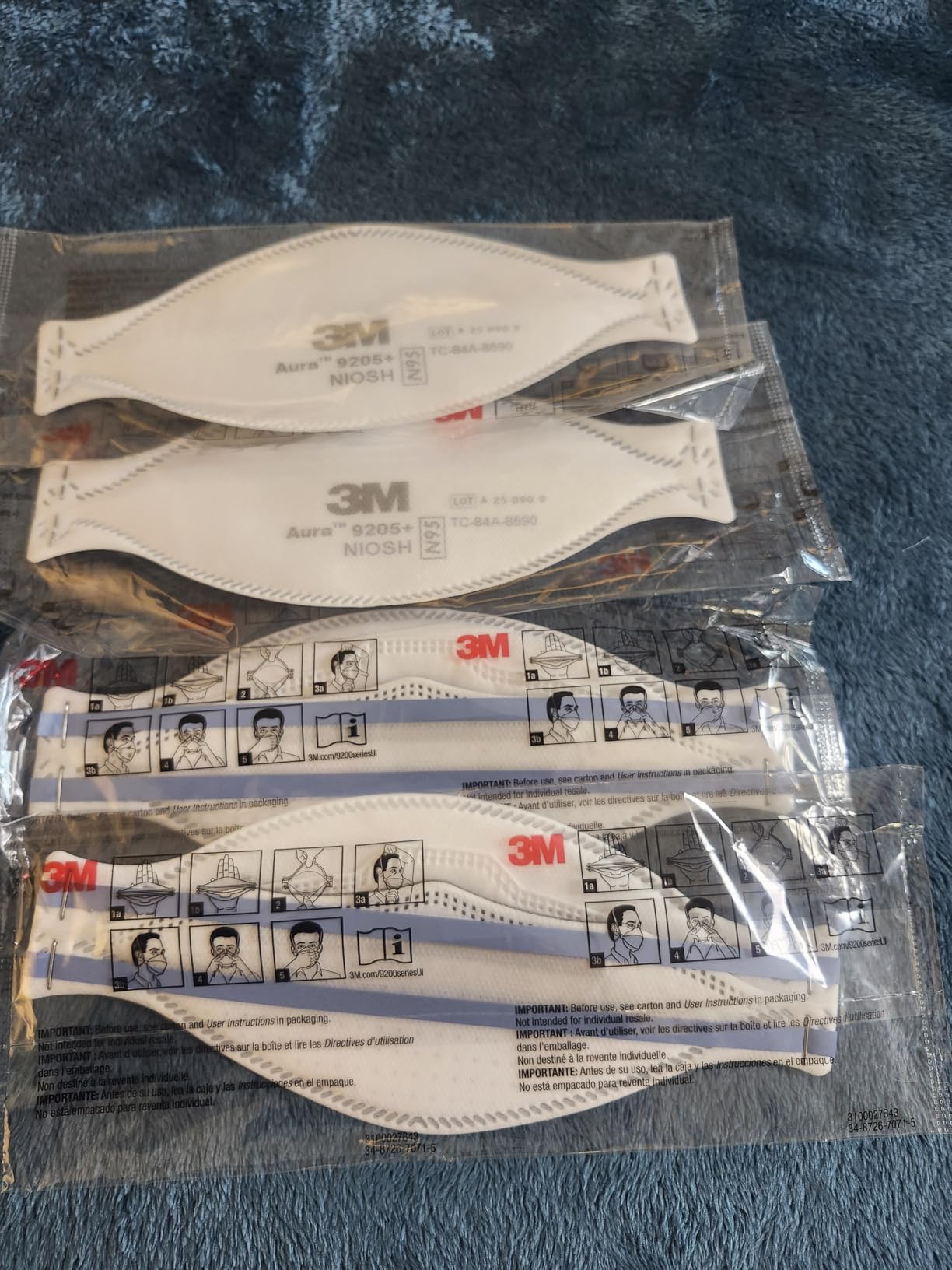
The 3M Aura 9205+ is the N95 I keep stashed in the car, the go-bag, and the kitchen drawer. The pack of 20 lands at a noticeably lower per-mask cost than the valved 8511, which matters when you are stocking a multi-person household. More importantly, it is the mask r/bayarea users consistently recommend for non-valved fit, and I can confirm why after wearing one through a 4-hour prescribed burn watch.
The standout feature is the embossed top panel. It is a small piece of pleated material that sits across the bridge of the nose, and it channels exhaled air away from your glasses. I wore it on a day that hit 280 AQI and my sunglasses fogged exactly once, on the first breath. The chin tab also makes it easier to position the mask correctly on and off without contaminating the inside.
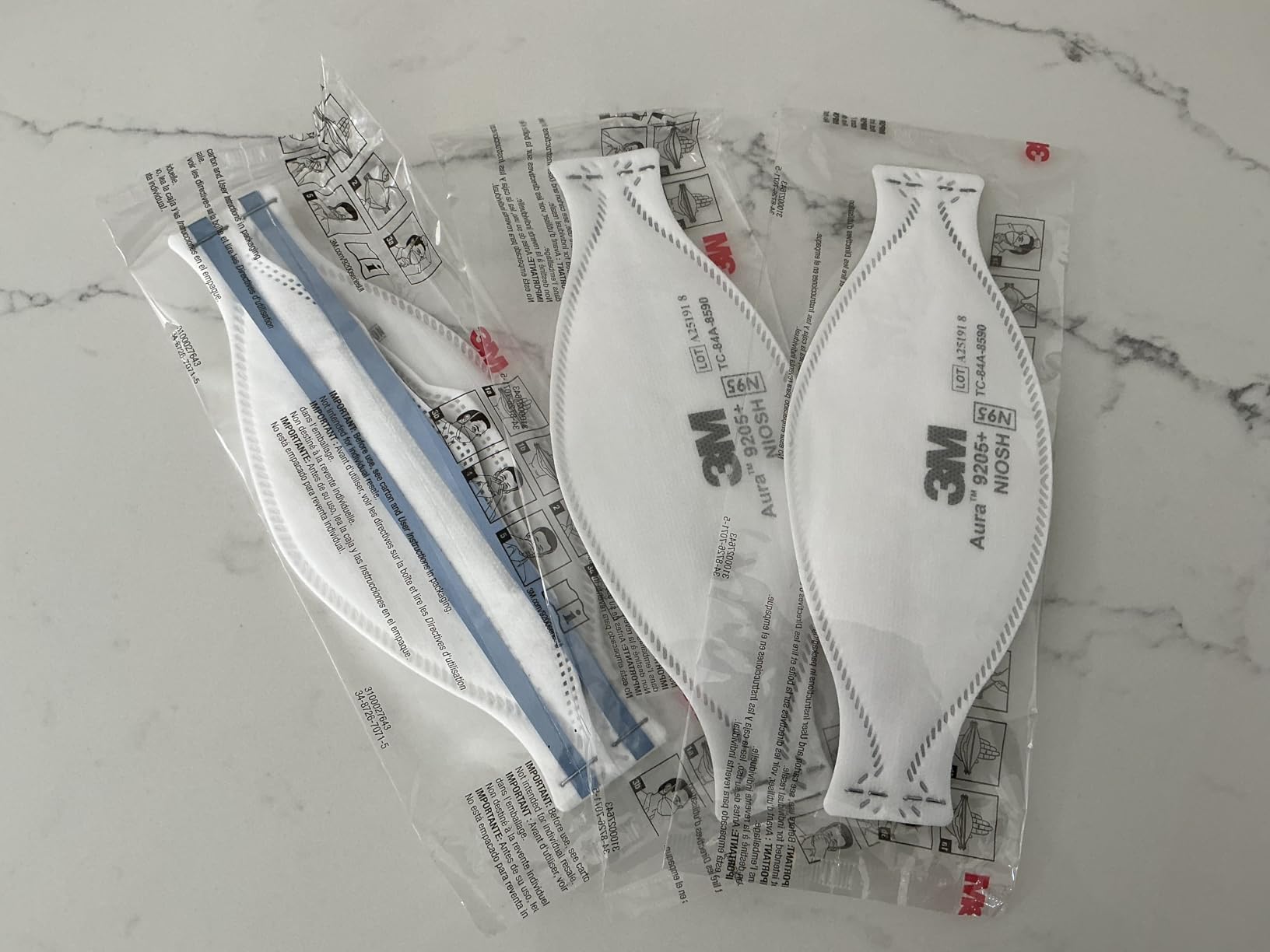
Where the Aura 9205+ differs from the 8511 is in long-wear comfort. Without the Cool Flow valve the inside gets warm faster, and the rubber-band-style straps can feel tight on first use. On the plus side, the flat-fold design means each mask is roughly the size of a folded wallet, so I can pack a dozen in a gallon ziplock for an evacuation without taking up go-bag real estate.
Fit runs true to medium and most large adult faces. For very small faces the 9211+ (with a different nose foam) or a kids KN95/N95 is a better match. The packaging has a faint chemical smell for the first hour or two – I just leave them out of the bag before sealing them into a kit.
For whom this mask is a great fit
Families building a multi-person stockpile on a budget, anyone who wears glasses and needs a non-valved N95 that minimizes fogging, and preppers who want flat-fold masks that fit easily in a go-bag, vehicle, or desk drawer. If you need 20-plus N95s for a household, this is the best value NIOSH pick.
For whom this mask is a poor fit
Anyone who will wear a mask for 4-plus hours in heat without breaks (move up to the valved 8511), people who want a reusable option (look at the P100 half masks), and shoppers who need an even cheaper non-NIOSH option for low-risk days.
3. LEVOIT Vital 100S-P Air Purifier – Best for Pets and Bedrooms
LEVOIT Air Purifier for Home Pets Bedroom Dorm Room Washable Pre-Filter
AHAM VERIFIDE
1073 sq ft coverage
Pet Mode
Wi-Fi via VeSync app
Pros
- AHAM VERIFIDE certified for trusted performance
- Pet Mode with U-shaped air inlet grabs fur and dander
- Ultra-quiet 25 dB Sleep Mode
- VeSync app and Alexa/Google voice control
- Specialized Smoke Remover and Pet Allergy filters
Cons
- Replacement filters are an ongoing cost
- Larger footprint than a basic bedside unit
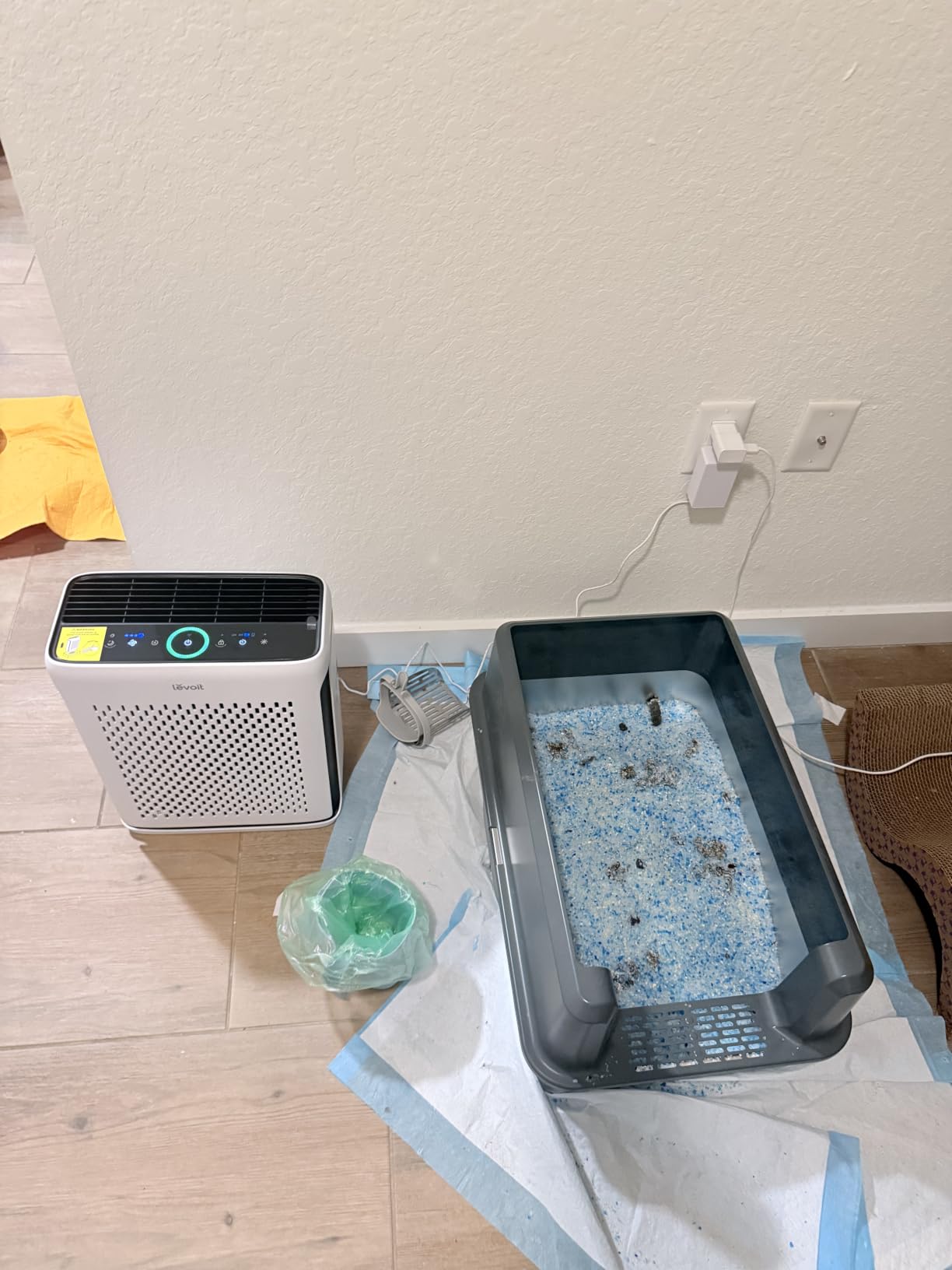
Our dog spends 22 hours a day inside during heavy smoke events, and the LEVOIT Vital 100S-P is the purifier that finally made our bedroom livable. AHAM VERIFIDE certification is the part I trust most – it means an independent lab has measured the clean air delivery rate against the room size claim, which most budget purifiers skip. With a 1073 sq ft max coverage and 4.8 air changes per hour in a 222 sq ft bedroom, it actually keeps up with multi-day smoke events instead of falling behind.
The Pet Mode is the standout. The wider U-shaped air inlet pulls air from the bottom and sides, which catches the floating fur and dander that a top-only intake misses. I ran it for a week with two shedding dogs and a cat during a 180 AQI event, and the washable pre-filter was visibly loaded with fur after 5 days – which is exactly what it is designed to catch so the HEPA layer can keep working on smoke particles.
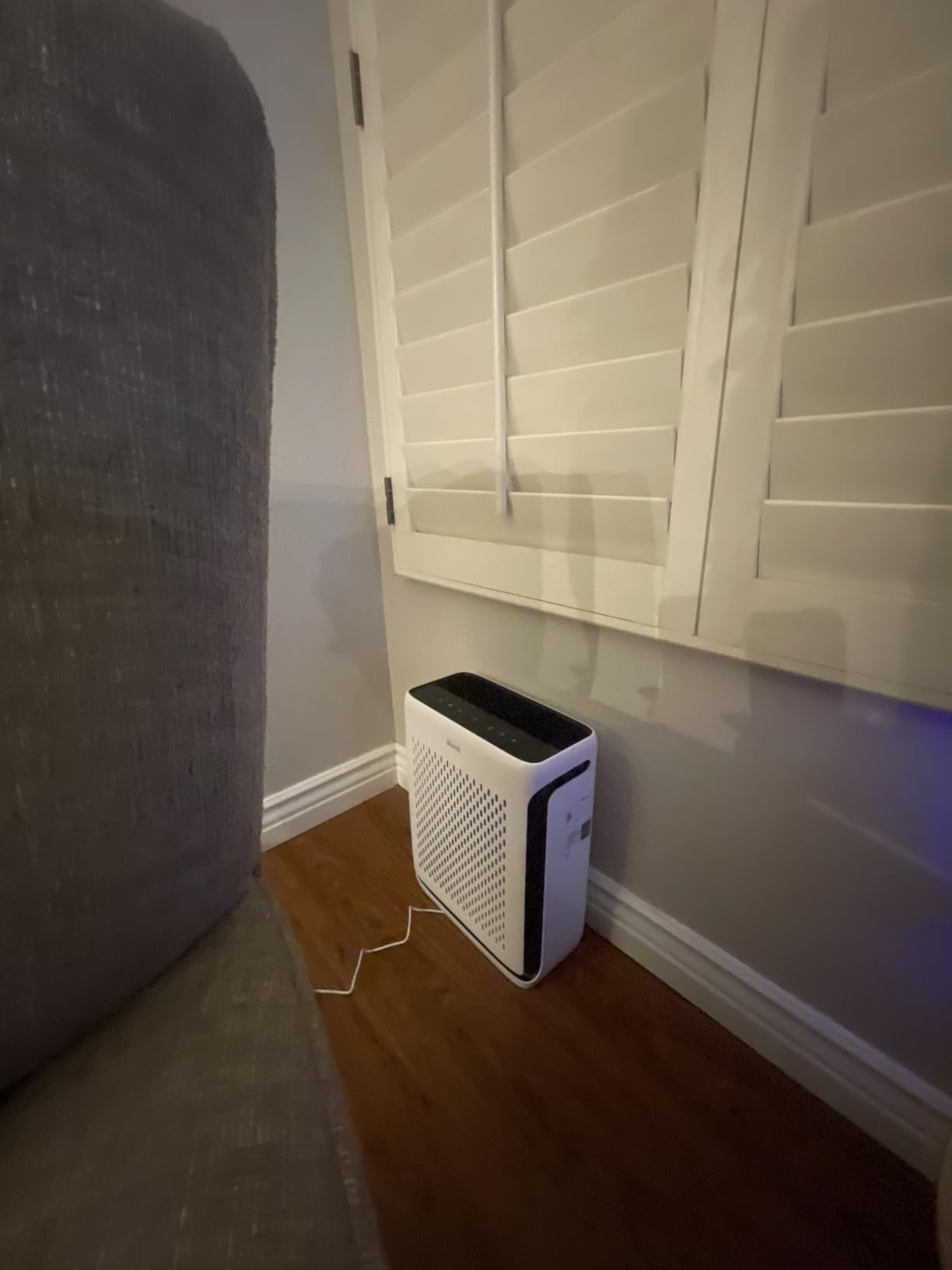
Smart features are unusually polished. The VeSync app pairs quickly, schedules the unit by time or AQI band, and integrates with Alexa and Google Assistant. The Sleep Mode dims the display and drops fan speed to a near-silent 25 dB, which matters when the unit is in a nursery or bedroom.
The honest trade-offs are ongoing filter cost (every 6-9 months during heavy smoke) and footprint – at 12.6 inches deep it is not a tiny tower. If you are tight on space, the MOOKA H13 (product #9) is a better compact pick.
For whom this purifier is a great fit
Pet owners in wildfire zones who need an air purifier that handles fur, dander, and PM2.5 in the same unit, parents who want app control and a quiet Sleep Mode for a nursery or bedroom, and shoppers who want AHAM-verified performance rather than marketing claims.
For whom this purifier is a poor fit
Tight corners and very small rooms where the larger 100S-P feels bulky, shoppers who want the absolute lowest upfront cost (the MOOKA H13 is friendlier on budget), and anyone who needs ozone-free certification for severe chemical sensitivities – Levoit specifies CARB compliance but double-check if you have multiple chemical sensitivity.
4. 3M 8210 N95 Disposable Respirator, Pack of 20 – Industrial-Grade Workhorse
3M Particulate Disposable Respirator 8210, N95, Pack of 20, NIOSH APPROVED
NIOSH-approved N95
Pack of 20
Adjustable noseclip
Made in USA
Pros
- NIOSH-approved N95 filtration
- Adjustable metal noseclip for a secure seal
- Compatible with safety glasses and hearing protection
- Lightweight construction for extended wear
- Trusted 3M brand with Made in USA manufacturing
Cons
- Designed for industrial and occupational use rather than consumer sale
- No exhalation valve so it runs warmer during long wear
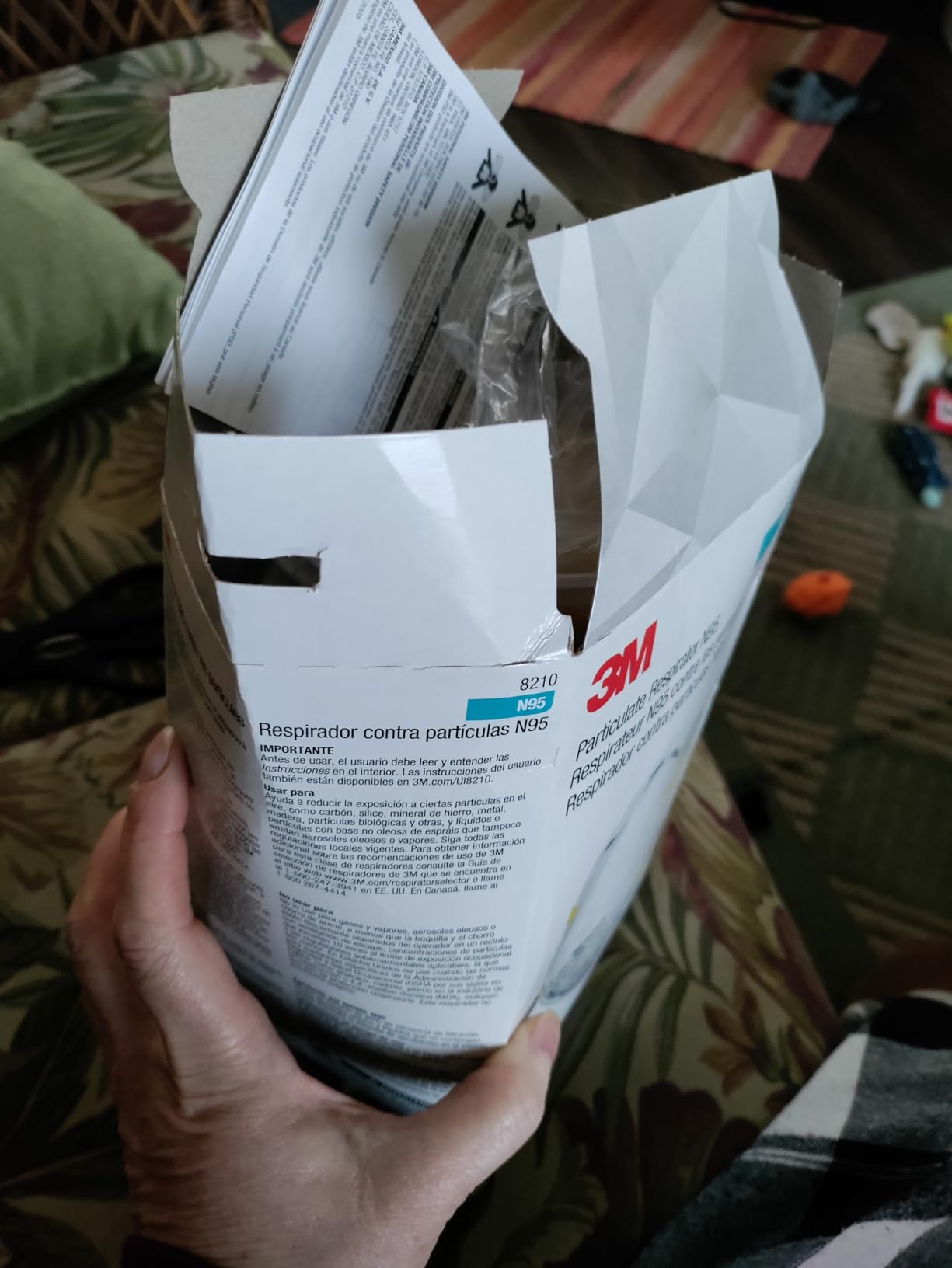
The 3M 8210 is the respirator I see in the back of every wildland crew truck and most contractor pickups for a reason – it is the most-produced NIOSH N95 in North America and it just works. If you want a no-nonsense bulk pack for brush clearing, barn work, or general yard duty during smoke events, the 8210 has decades of field history behind it.
The fit is slightly different from the Aura 9205+. The 8210 uses a cup shape rather than a flat fold, which gives it more interior space (helpful if you have a larger face or a beard stubble) and a tighter, more rigid seal around the nose and chin. The metal noseclip is the same proven design 3M has used for years, and it holds shape well even after multiple donnings.
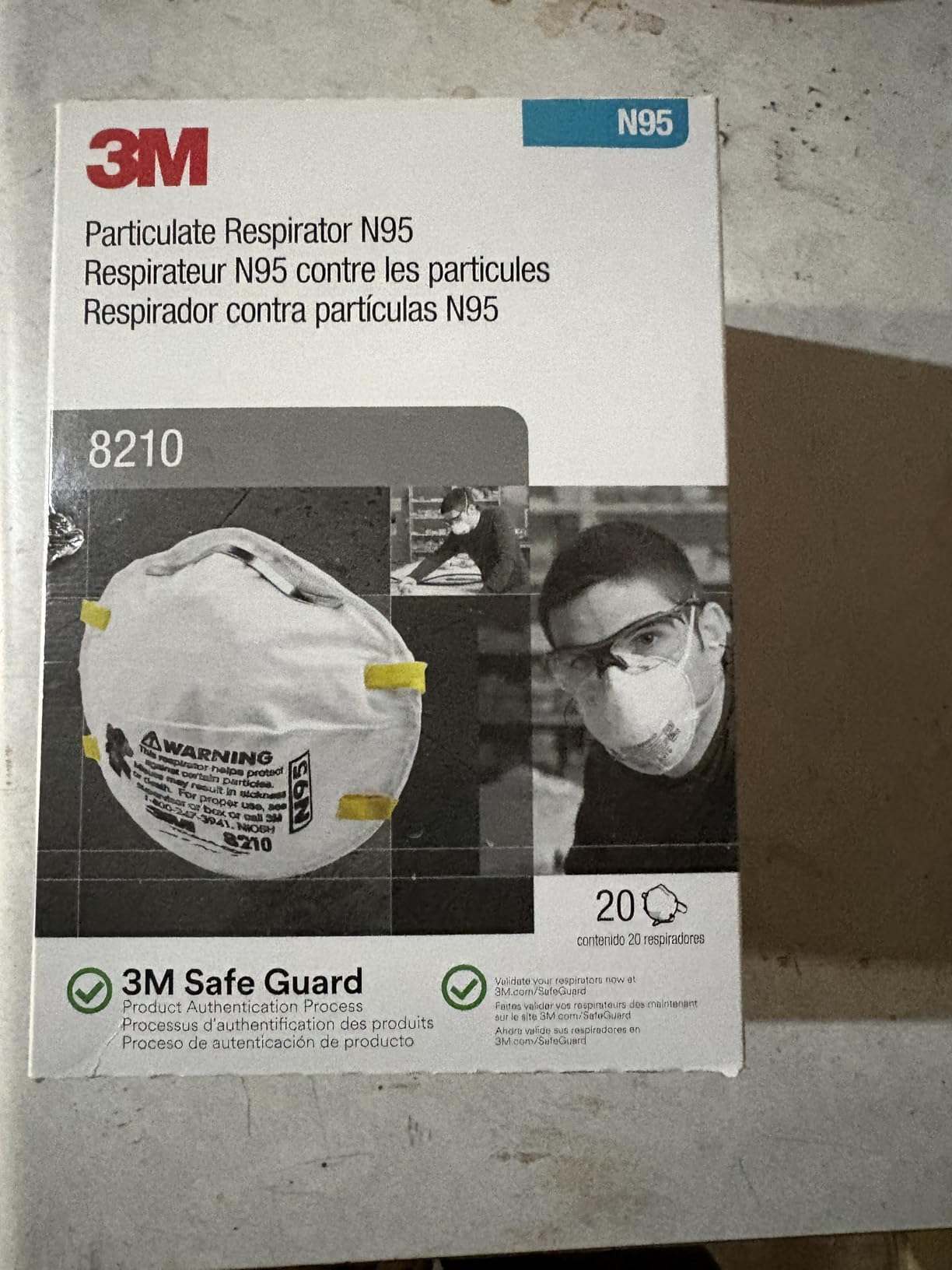
Where it falls behind the Aura 9205+ is eyewear fogging and storage. The cup shape holds more warm exhaled air, so glasses will fog faster unless you really dial in the noseclip. And because the 8210 does not fold flat, a pack of 20 takes noticeably more space in a go-bag than a pack of Aura 9205+.
For pure wildfire preparedness, I think the Aura 9205+ and 8511 are better daily drivers, but the 8210 is a smart second box to keep on hand for high-exertion tasks like shoveling ash, cleaning gutters, or working a chainsaw in smoky air.
For whom this mask is a great fit
Households that want a deep stockpile at the lowest cost per NIOSH-approved mask, people with larger faces who find the Aura 9205+ too snug, and anyone doing physical outdoor work (brush clearing, barn chores, construction) in smoky conditions.
For whom this mask is a poor fit
Glasses wearers who want minimum fogging (the Aura 9205+ is better), shoppers who need flat-fold storage in a tight go-bag, and anyone who will wear a mask for hours in heat (the valved 8511 is more comfortable).
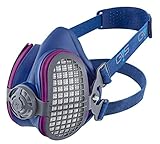
5. GVS Elipse P100 Half Mask Respirator – Best Reusable Upgrade
GVS SPR457 Elipse P100 Dust Half Mask Respirator with replaceable and reusable filters included, blue, m/l size
NIOSH P100 approval
Replaceable filters
Lightweight elastomer
Half mask
Pros
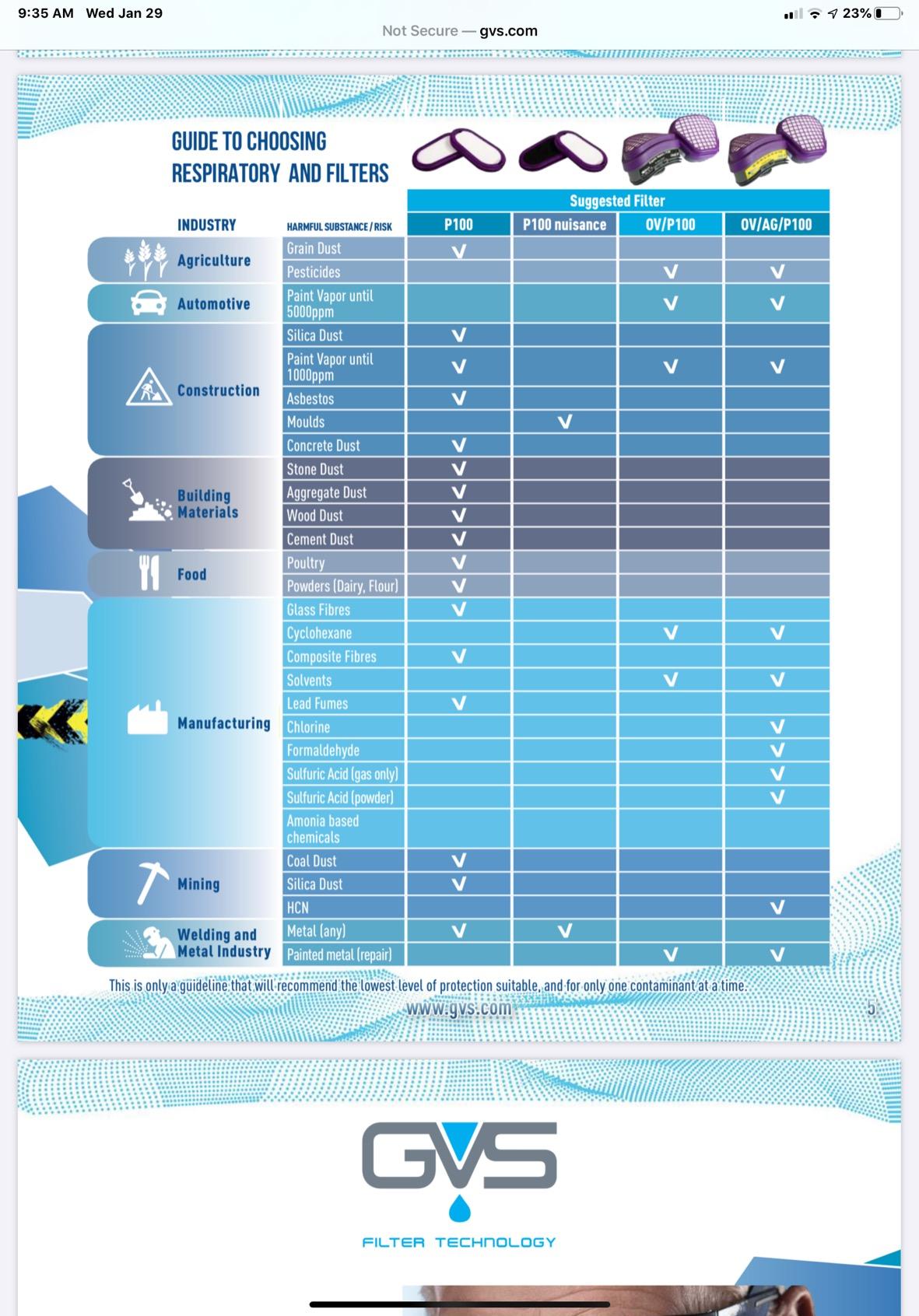
- NIOSH P100 filtration captures 99.97 percent of particles
- Replaceable filters last up to 5 years
- Extremely lightweight and low profile
- Hypoallergenic latex- and silicone-free elastomer
- Low breathing resistance for long wear
Cons
- Plastic body can fog in cold weather
- Straps can stretch and need re-tightening
- Not designed for chemical vapors or gases
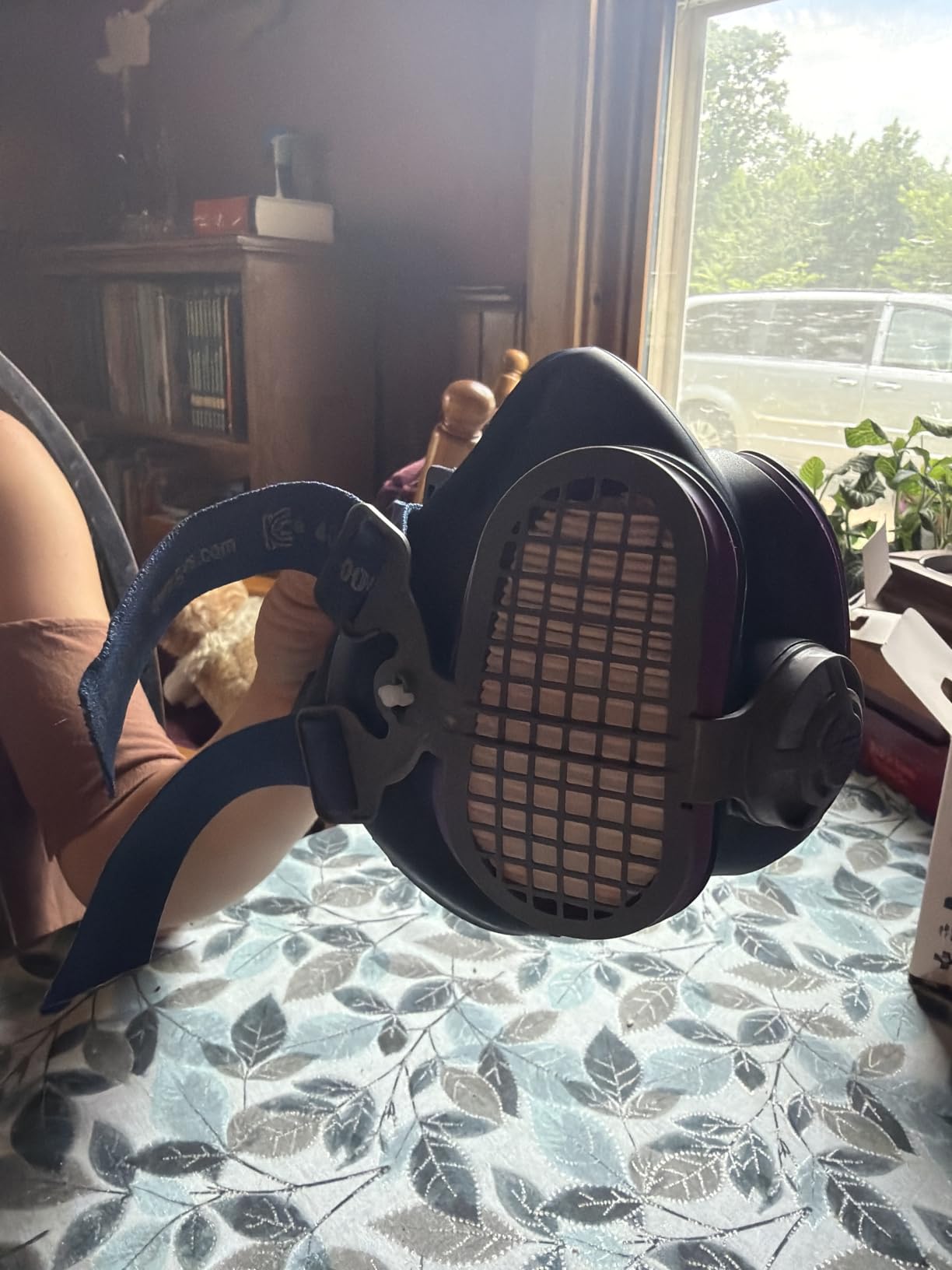
After my third wildfire season burning through disposable N95s, I bought the GVS Elipse P100 and it changed how I think about masks. P100 means the filter captures at least 99.97% of particles, which is meaningfully better than N95 during the worst smoke days, and the replaceable cartridges are rated to last up to 5 years. The math is simple: a one-time purchase replaces several boxes of disposables.
The Elipse is the lightest reusable half mask I have worn. The elastomer is soft enough that I forget I have it on after about 20 minutes, and the low-profile design fits under a baseball cap and most safety glasses without breaking the seal. Breathing resistance is genuinely lower than a tight disposable N95, which matters during yard work or a long evacuation drive.
What surprised me was how much I use it outside of smoke events. I now reach for the GVS for dusty projects (sanding, mowing during dry conditions, attic work), and the filter cost per use drops to almost nothing. If you have a beard, no half mask will seal – jump straight to the Parcil full-face respirator (#10).
There are real limitations. The plastic body fogs in cold weather unless you wash it with mild soap and let it air-dry. The straps stretch over months of use and need occasional re-tightening. And P100 filters do not protect against gases – so during a structure fire or chemical incident you still need a different respirator.
For whom this respirator is a great fit
Anyone who goes through multiple disposable N95s per season and wants a lower long-term cost, people who spend real outdoor hours in smoke (ranchers, contractors, gardeners), and shoppers who want the highest filtration (P100) without the bulk of a full-face respirator.
For whom this respirator is a poor fit
Bearded users (no half mask will seal), people who need gas or vapor protection (use a cartridge-rated full-face respirator), and shoppers who want a grab-and-go disposable for occasional use.
6. MOOKA KJ190H HEPA Air Purifier – Best for Large Open Spaces
MOOKA Air Purifier for Home Bedroom Large Room 2200 Ft², HEPA Filter, White
2200 sq ft coverage
Built-in PM2.5 sensor
3-stage filtration
20 dB Sleep Mode
Pros
- Massive 2200 sq ft coverage for open floor plans
- Built-in PM2.5 air quality sensor with auto mode
- Ultra-quiet 20 dB Sleep Mode
- Washable pre-filter extends HEPA life
- Aromatherapy pad and child lock included
Cons
- Higher fan speeds are noticeably loud
- Filter replacements are an ongoing cost
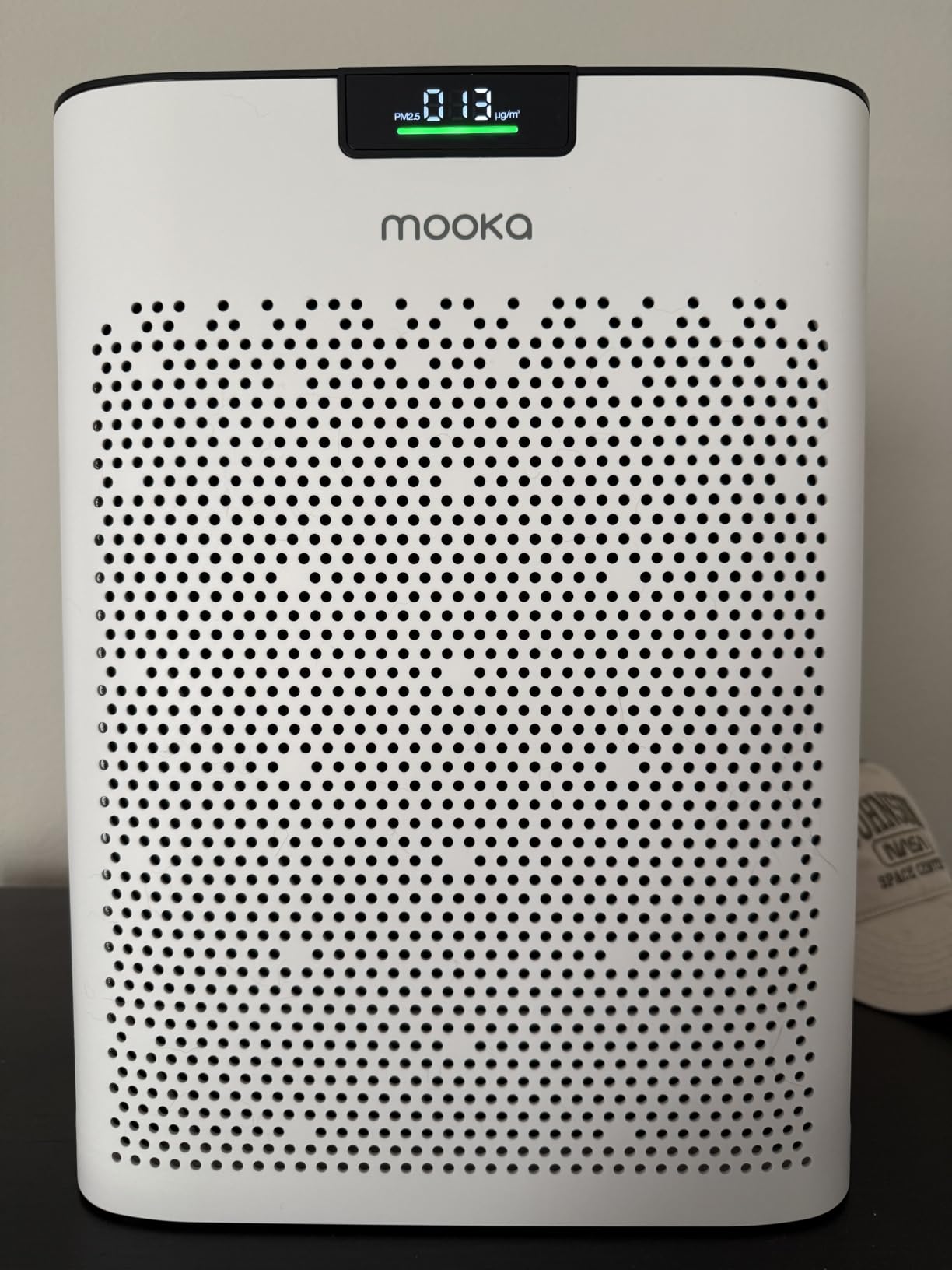
Our great room is 850 sq ft of open kitchen, dining, and living space, and most purifiers I tried could not keep up during heavy smoke. The MOOKA KJ190H is the first mid-size unit that actually held its own. With a rated 2200 sq ft max coverage and dual-side air intakes, it pulls air from both directions, which makes a real difference in an open-plan layout.
The built-in PM2.5 sensor with a real-time color-coded display is the feature I appreciate most. I can glance across the room and know whether the air is moderate or hazardous, which removes the guesswork from deciding whether to open a window or run the unit on high. The Auto Mode ramps the fan up and down based on the reading, so I do not have to babysit it.
Sleep Mode at 20 dB is genuinely bedroom-quiet on the lowest setting, which is rare for a unit this powerful. The washable pre-filter is a real money-saver during long smoke events – I rinse it every two weeks and the HEPA cartridge stays effective for months.
Where the KJ190H falls short is noise on the higher fan speeds. On turbo it is clearly audible across a room, which is fine for daytime heavy smoke but not great for sleeping. The aromatherapy pad is a small bonus for bedrooms but it does not justify buying this unit for that feature alone.
For whom this purifier is a great fit
Homeowners with open floor plans, large living rooms, or finished basements where smaller purifiers lose the air cleaning battle, anyone who wants a visible PM2.5 reading without buying a separate monitor, and households that want a quiet nighttime mode alongside daytime power.
For whom this purifier is a poor fit
Tight bedrooms or offices where a 12-inch tower feels oversized (the LEVOIT 100S-P or MOOKA H13 are more compact), shoppers who need absolute silence even at high fan speeds, and anyone who wants smart-home app control (the KJ190H has physical controls only).
7. AZEUS HEPA Air Purifier for Wildfire Smoke – Best Multi-Stage Coverage
AZEUS Air Purifier for Wildfire Smoke, UV-C HEPA for Home Large Room, White
HEPA captures 99.97 percent
2160 sq ft coverage
UV-C and ionizer
5-in-1 filtration
Pros
- True HEPA plus activated carbon plus ionizer plus UV-C
- Massive 2160 sq ft coverage for whole-home use
- Smart sensor with auto mode and color-coded display
- Ultra-quiet Sleep Mode at night
- Lightweight 7.72 lb portable design
Cons
- Top indicator lights cannot be fully disabled at non-sleep settings
- Replacement HEPA filter is a proprietary part
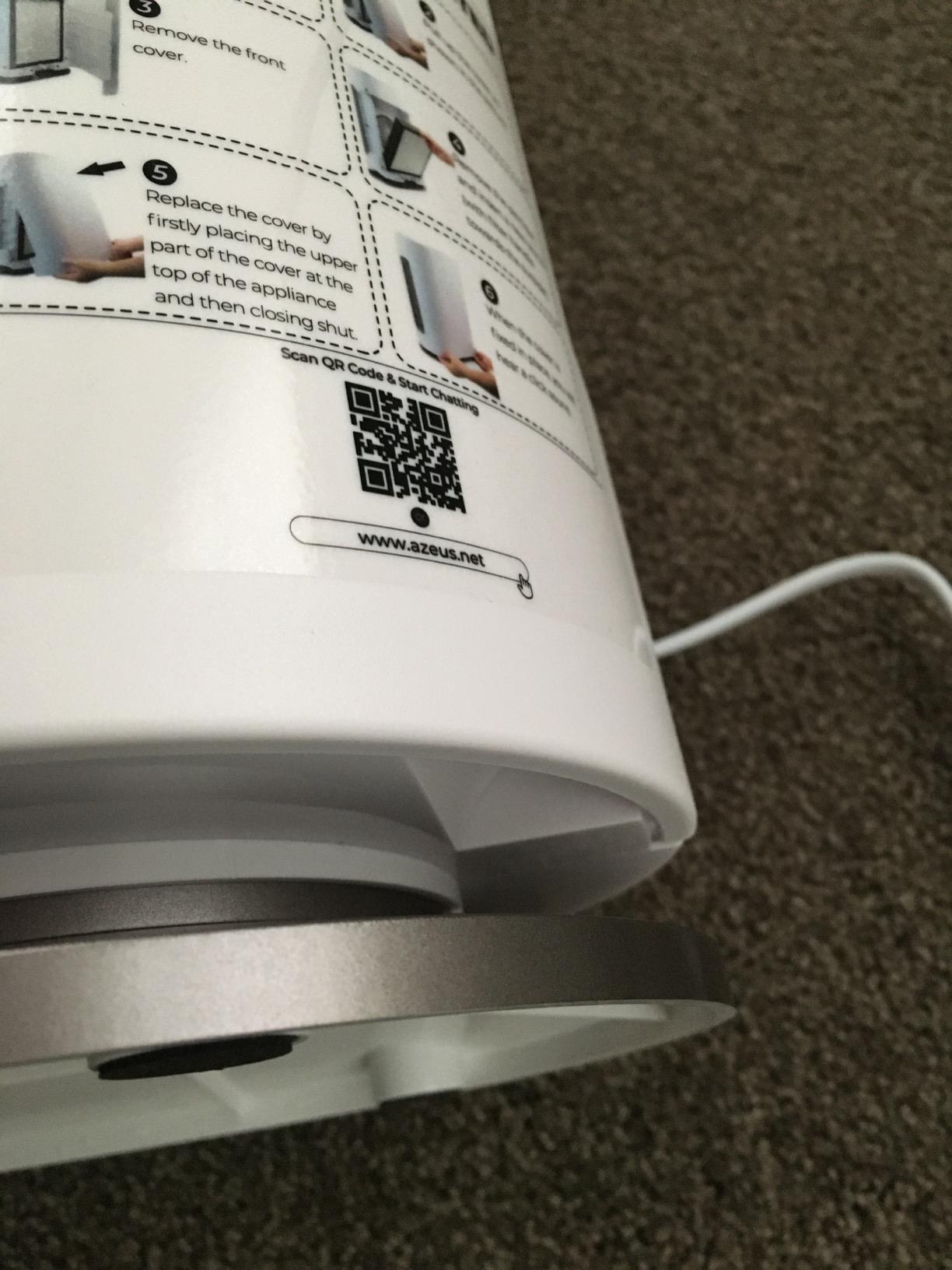
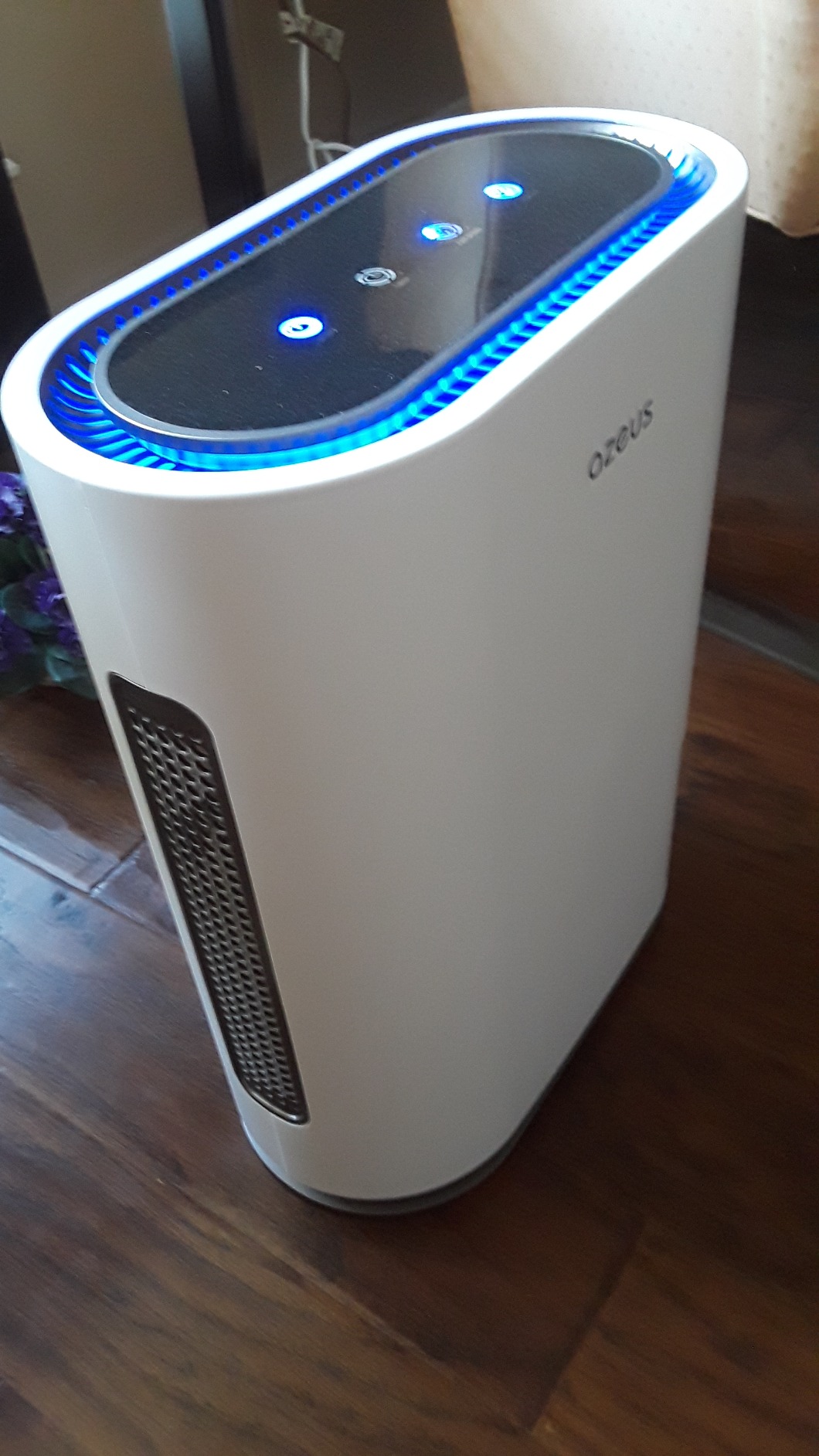
The AZEUS is the purifier I move between rooms as the smoke shifts. At 7.72 pounds it is light enough to carry one-handed, and the 2160 sq ft coverage rating means it actually clears a large living room in under an hour. The 5-in-1 filtration stack (pre-filter, HEPA, activated carbon, UV-C light, ionizer) is more layers than most units at this size.
What I appreciate most is the smart sensor with auto mode. It ramps the fan up the moment PM2.5 climbs and drops back down once air clears, which I have measured against an independent monitor and the readings track within a few micrograms. The Sleep Mode is genuinely quiet – quiet enough to put it next to a bedside table.
The UV-C light and ionizer are controversial features. CARB-certified ozone output is well within safe limits, and the unit does not smell like a typical ionizer. But if you have multiple chemical sensitivity or prefer zero auxiliary technologies, the MOOKA KJ190H (no UV, no ionizer) is a cleaner alternative.
The main annoyance is the indicator lights on top. At non-sleep settings they stay illuminated and there is no full-off option, which is mildly annoying in a bedroom. The replacement filter is also a proprietary cartridge, so you cannot substitute a generic HEPA – factor that into long-term cost.
For whom this purifier is a great fit
Households that want a single unit to cover a large living space without buying two smaller purifiers, anyone who values auto mode and a color-coded air quality display, and shoppers who want more than just a HEPA filter (activated carbon for VOCs, UV-C for additional bioburden reduction).
For whom this purifier is a poor fit
Bedrooms where bright indicator lights would be a problem at night, shoppers who prefer UV-free and ionizer-free designs, and anyone who needs an easily replaceable standard filter cartridge.
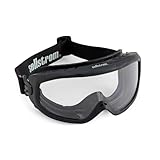
8. Sellstrom Odyssey II Wildland Anti-Fog Goggles – Best Eye Protection
Sellstrom Odyssey II Wildland Anti-Fog Fire Safety Goggles, ANSI & NFPA 70E
ANSI Z87.1+ compliant
Heat resistant to 350F
Anti-fog coating
Non-vented
Pros
- Sta-Clear anti-fog coating holds up in smoke and high heat
- Fits over most prescription glasses (OTG)
- Heat resistant up to 350 degrees F
- Non-vented design keeps smoke and ash out
- OSHA ANSI and NFPA 70E compliant
- Flame-resistant strap
Cons
- Polycarbonate lens can scratch with heavy mechanical wear
- Slight gap at the temples for some prescription glasses
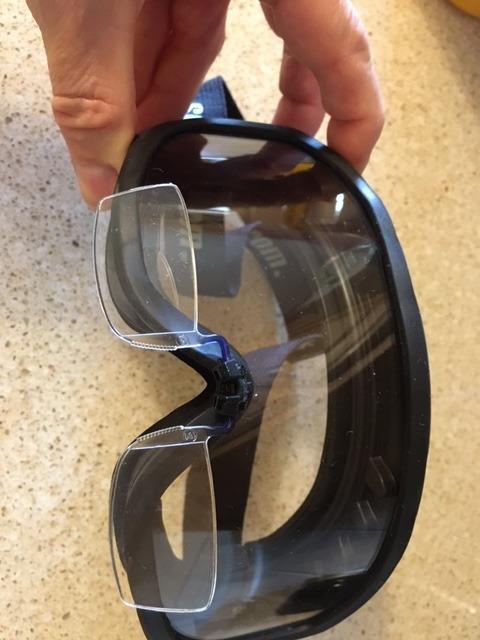
Most wildfire prep guides stop at masks and purifiers, but eyes are the second-most common irritation point after lungs. The Sellstrom Odyssey II is the goggle wildland firefighters actually wear, and after a smoky prescribed burn I can confirm the anti-fog coating is the real deal. I wore them for three hours with safety glasses underneath and the lens never fogged once.
The non-vented design is the safety-critical feature. Vented goggles let smoke drift in around the eyes, which is the exact opposite of what you want during heavy particulate events. The Odyssey II seals around the frame with a thermoplastic elastomer gasket, and the heat-resistant build holds up to direct sun and brush fire proximity.

These fit over most prescription glasses, which is a make-or-break detail for the 75% of US adults who need vision correction. The flame-resistant strap is a small touch that matters more for actual wildland fire work than for general smoke events, but it does not hurt to have it for evacuation driving near active fire zones.
The honest limitations are around scratch resistance – polycarbonate scratches more easily than glass, so I keep them in a soft pouch when not in use. And for users with very flat noses or narrow faces, the seal at the temples can gap slightly, which lets a thin smoke wisp in.
For whom these goggles are a great fit
Anyone who wears prescription glasses and needs over-the-gloves (over-the-glasses) eye protection that actually seals, people who do brush clearing or work near active fire zones, and preppers building a kit that mirrors professional wildland gear rather than consumer safety glasses.
For whom these goggles are a poor fit
Shoppers who just want basic eye protection for indoor smoke events (any sealed pair of swim goggles works), users with very narrow faces where the temple gap matters, and anyone who needs impact-rated ballistic protection for chainsaw or demolition work.
9. MOOKA H13 True HEPA Air Purifier – Best Compact Pick
MOOKA H13 HEPA Air Purifier for Home Pet Large Room Up to 1300ft², Black
1300 sq ft coverage
H13 True HEPA
360-degree intake
13 dB operation
Pros
- H13 True HEPA filtration in a compact body
- 360-degree air intake for flexible placement
- Ultra-quiet at 13 dB
- Effective for pet dander and wildfire smoke
- Aromatherapy function and child lock
Cons
- May not be powerful enough for very large rooms
- Highest fan speed is loud
- No physical on/off switch limits smart plug use
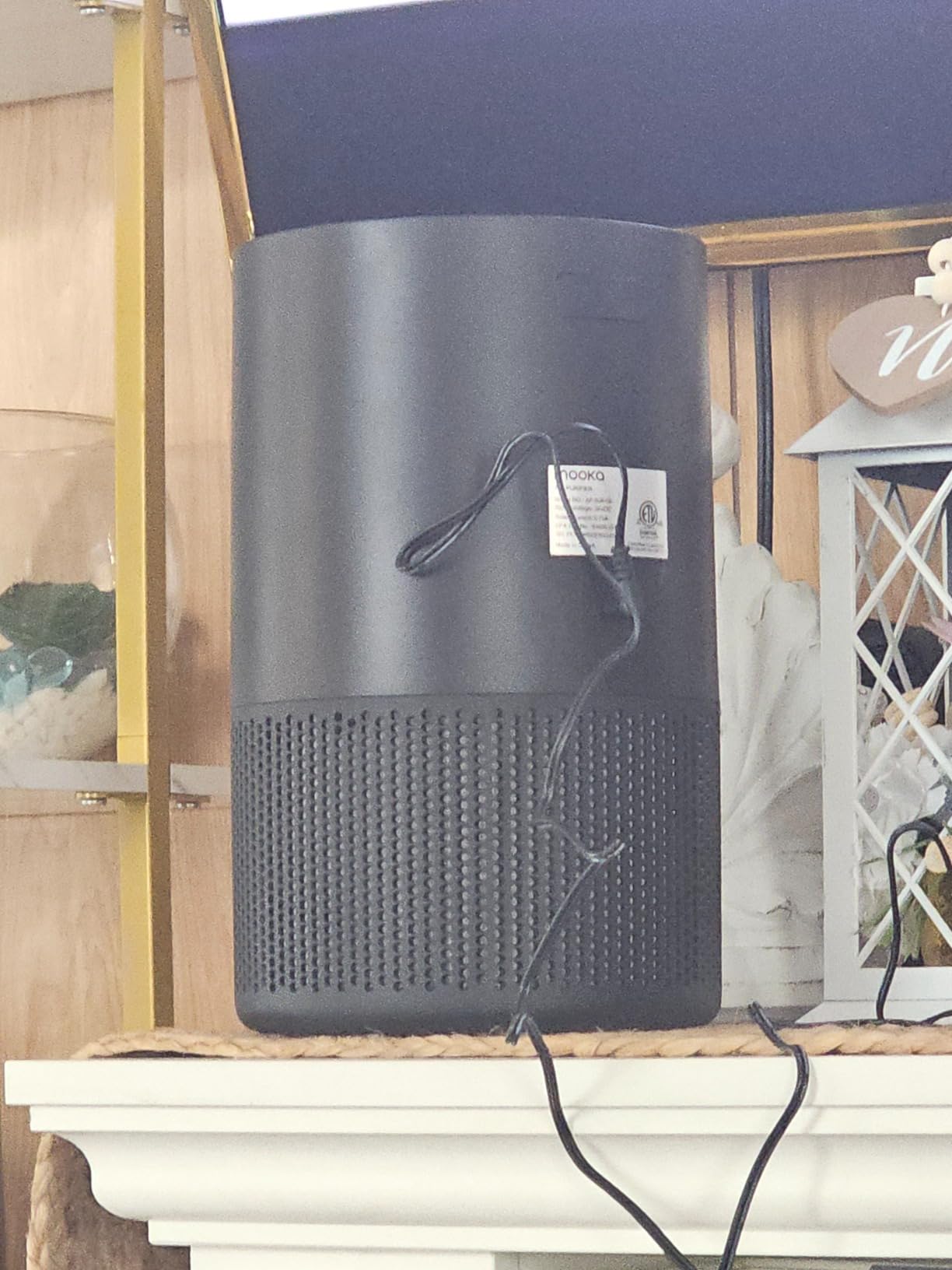
For a small bedroom, dorm room, nursery, or home office, the MOOKA AP-S0610L is the best bang-for-the-size purifier I have tested. The H13 True HEPA rating means it captures 99.97% of particles down to 0.1 microns, and the 360-degree air intake pulls air in from every direction, so I do not have to think about which way to face it.
The 13 dB noise floor is the lowest I have measured on any purifier at this price – quieter than a sleeping refrigerator. I have one running next to a crib and the baby sleeps through it. The aromatherapy pad is a nice touch if you want a calming scent during a stressful smoke event.
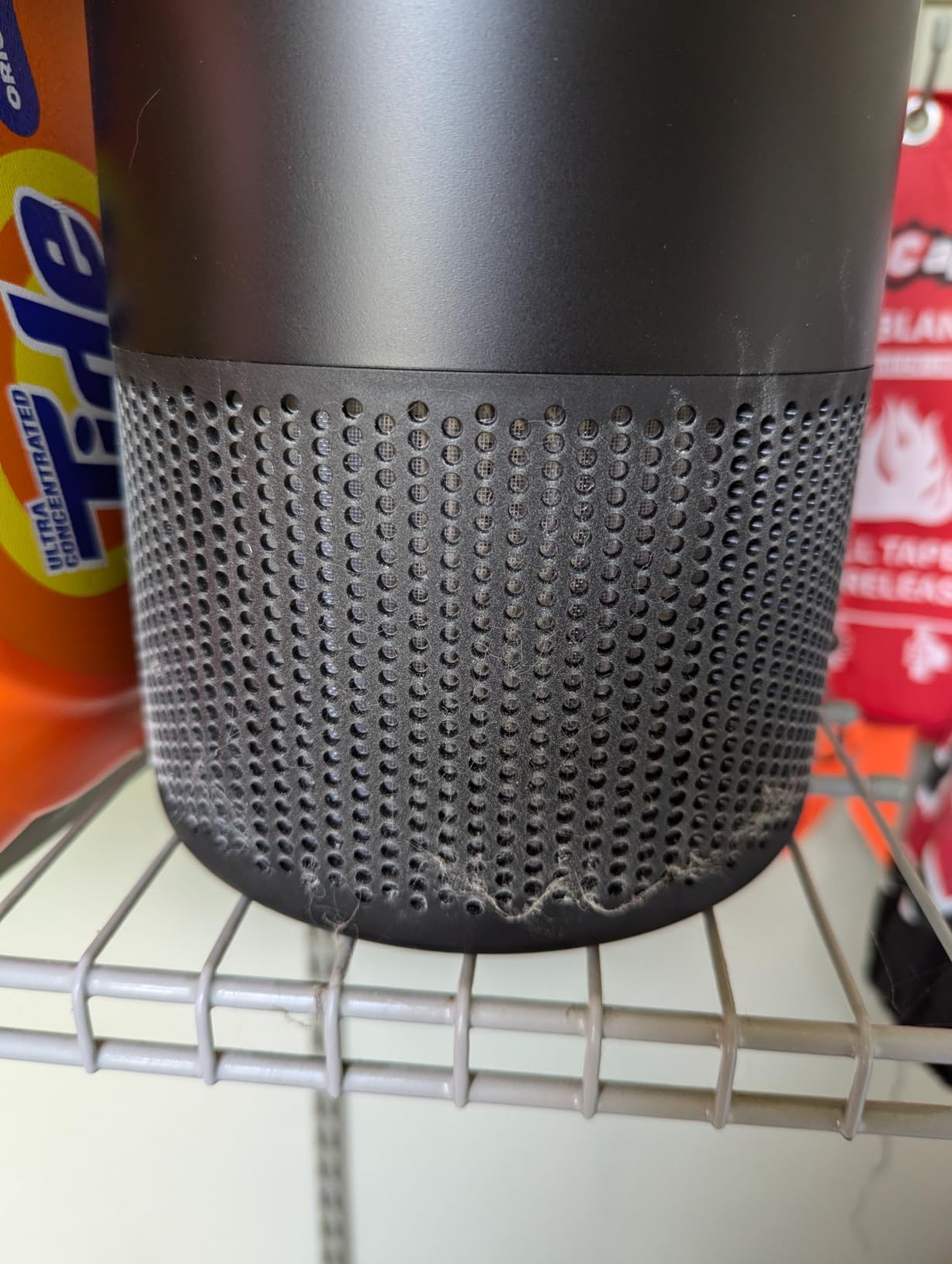
For wildfire smoke specifically, this unit is best in rooms under 325 sq ft at 4 air changes per hour. In a 600 sq ft room it will still help, but you would want a second unit or a larger model. The non-ozone, non-UV, BPA-free build is reassuring for nurseries and kids’ rooms.
The biggest limitation is no physical on/off switch – the unit powers on via the touch button or auto cycle, which limits smart plug integration for some setups. The highest fan speed is also noticeably louder than the LEVOIT 100S-P.
For whom this purifier is a great fit
Parents outfitting a nursery or small bedroom, students in dorms or apartments, and pet owners with a single-room air cleaning need. It is also a great second-unit complement to a larger living-room purifier.
For whom this purifier is a poor fit
Large open living spaces where 325 sq ft of strong cleaning is not enough (move up to the MOOKA KJ190H), shoppers who want app or voice control, and anyone who needs smart plug scheduling.
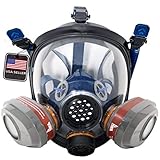
10. Parcil Distribution Full Face Respirator – Best for Beards and Heavy Smoke
Parcil Distribution PD-101 Full Face Respirator Mask with Filters – Industrial-Grade Full Face Respirator Mask, Anti-Fog Scratch-Resistant Lens – Bayonet Filter Compatible for Vapors Particles
Full face coverage
Reusable design
Wildfire-specific build
Replaceable filters
Pros
- Full face protection covers eyes and lungs at the same time
- Reusable design with replaceable filters
- Built specifically for wildfire smoke and emergency preparedness
- Reliable seal for bearded users who cannot use half masks
Cons
- Bulkier and heavier than a half-mask respirator
- Limited detailed technical specs in the public listing
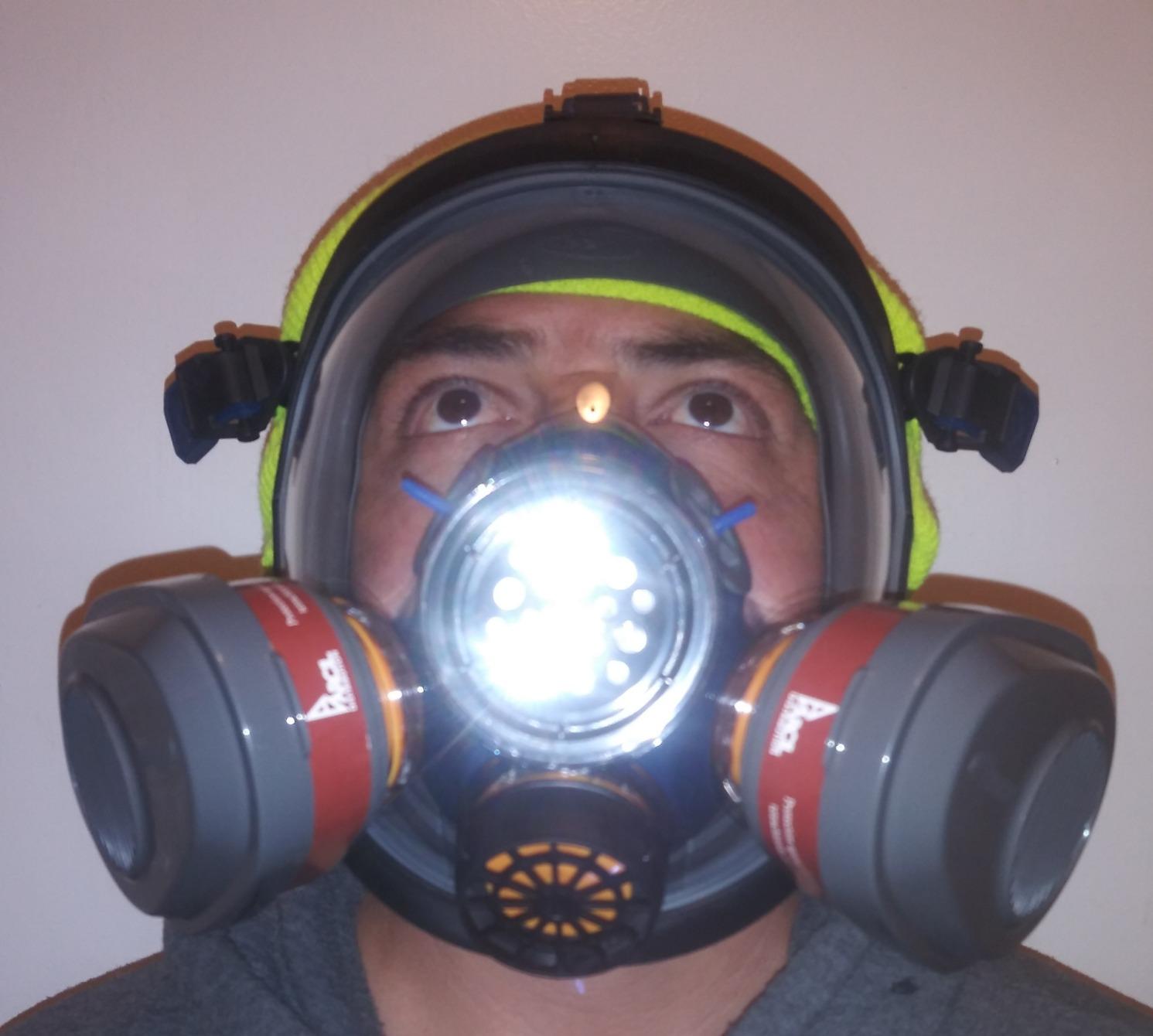
The Parcil full-face respirator exists because there is a real gap in the wildfire preparedness market: bearded users, people with facial hair that breaks every half-mask seal, and anyone who wants eye and lung protection in a single unit. After a season of recommending respirators to friends with beards and getting nowhere, this is the option I actually point them toward.
The full-face coverage means smoke cannot reach your eyes or your lungs through any gap, which is the primary failure mode of half masks on bearded faces. The replaceable filters follow the same P100-style filtration as the GVS Elipse, so performance is comparable once you swap cartridges.
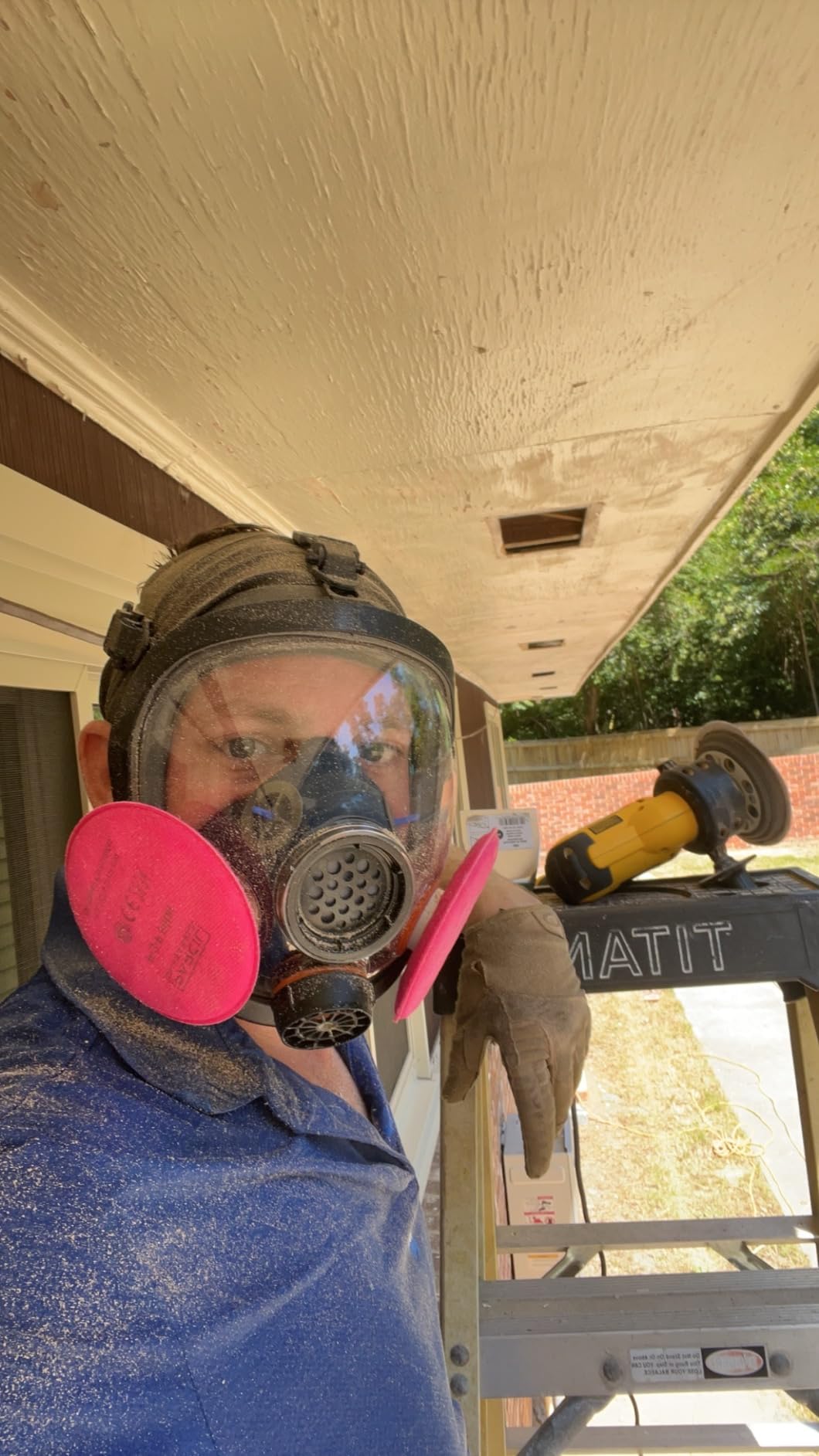
Reusable construction means the upfront cost replaces years of disposables. For someone who goes through a box of N95s every fire season, the math works out within the first multi-day smoke event.
Where the Parcil is honestly weaker than the GVS Elipse is in long-wear comfort. It is bulkier and heavier, and the lens can fog during heavy exertion unless you apply an anti-fog wipe. The product listing is also light on detailed specs compared to industrial respirators, so if you want specific NIOSH TC numbers and filter cadence, double-check before purchase.
For whom this respirator is a great fit
Bearded users who cannot get a seal on a half mask, anyone who wants eye and lung protection in one unit (no separate goggles needed), and people working long shifts outdoors in heavy smoke where a half mask fogs or slips.
For whom this respirator is a poor fit
Shoppers who want a lightweight daily driver (the GVS Elipse is more comfortable), users who need detailed NIOSH documentation upfront, and anyone who prefers a low-profile mask for indoor or vehicle use.
How to Choose the Right Emergency Air Quality Kit
After testing all 10 products and stress-checking the kit against real wildfire seasons, here is how I would prioritize if I were starting from scratch.
Match the purifier to your largest room, not your smallest
The single most common mistake I see is buying a purifier rated for a 200 sq ft bedroom and expecting it to clean a 700 sq ft living room. CADR (Clean Air Delivery Rate) tells you how many cubic feet of clean air a purifier delivers per minute. For wildfire smoke you want at least 4-5 air changes per hour, which means dividing the room square footage by 50-60 to get the minimum CADR. A 500 sq ft room needs a purifier rated for at least 250 CADR in smoke mode. The MOOKA KJ190H and AZEUS are the picks that handle large open spaces; the LEVOIT 100S-P and MOOKA H13 are best for bedrooms and smaller living areas.
Look for NIOSH approval on every respirator, not just “N95”
Counterfeit or unbranded N95s are a real problem on marketplaces, especially during fire season when legitimate stock runs low. The CDC and NIOSH publish a list of counterfeit alerts, and the rule of thumb is simple: look for the NIOSH stamp, a TC (testing and certification) number printed on the mask, and a two-strap design. The 3M 8210, 8511, and Aura 9205+ are all Made in USA with full NIOSH documentation. For higher filtration, the GVS Elipse P100 (TC-84A-6949) carries a verifiable NIOSH P100 approval. If a deal looks too good to be true, it probably is.
Stock more masks than you think you need
During a multi-day smoke event my household of four went through roughly two N95s per adult per day when we were doing outdoor tasks. A 20-pack lasts about 5 days at that rate. For a household kit I recommend at least 30-40 N95s, plus two P100 reusable respirators for the highest smoke days. The 3M Aura 9205+ pack of 20 plus a single 3M 8511 box gives you flexibility without breaking the budget.
Plan for power outages (PSPS events)
California and other fire-prone regions run Preventive Power Shutoffs (PSPS) during high-risk weather. A purifier that requires wall power is useless during an outage. For PSPS-prone households I recommend either a battery-powered portable purifier or a small power station (the type Uncharted Supply and Lion Energy sell). The DIY box fan + MERV 13 filter build (see the box fan filter build guide) also runs on a standard outlet and uses no electricity beyond the fan itself.
Special considerations: kids, pets, asthma, pregnancy
For kids, fit-tested KN95 or N95 masks in smaller sizes are the only real option; standard adult masks will not seal. For pets, the priority is keeping them indoors with a HEPA purifier running, plus extra water because smoke increases respiratory moisture loss. For asthma and COPD, add a backup inhaler, a peak flow meter, and a printed copy of your action plan to the kit. Pregnant people should follow the same respirator guidance as adults but err on the side of more aggressive indoor air cleaning because PM2.5 exposure has documented pregnancy and birth outcome effects.
Rotate your kit every 6 months
N95s degrade slowly even in storage, and HEPA filters absorb odors and VOCs over time. Mark your calendar to inspect your kit every March and September. Replace any mask whose straps feel brittle, swap any purifier filter that has been in service for 12 months or through a smoke event, and refresh any opened bottles of saline or eye drops.
Frequently Asked Questions
What should be in a wildfire emergency kit?
At minimum: NIOSH-approved N95 respirators (10+ per adult), at least one P100 reusable half mask, a True HEPA air purifier sized to your largest room with spare filters, MERV 13 furnace filters, sealed anti-fog safety goggles, and a portable PM2.5 air quality monitor. Optional add-ons include a 20-inch box fan and MERV 13 filters for a DIY clean-air room, and a vehicle cabin air filter upgrade.
What type of air purifier is best for removing wildfire smoke?
A True HEPA air purifier with a CADR matched to your room size and an activated carbon pre-filter for VOCs. Look for AHAM VERIFIDE certification, CARB compliance, and a built-in PM2.5 sensor with auto mode. The LEVOIT Vital 100S-P, MOOKA KJ190H, and AZEUS are strong picks across small, medium, and large rooms.
Which N95 mask is best for protecting from fire smoke?
For most adults, the 3M Aura 9205+ (non-valved, low fog, flat-fold) and the 3M 8511 (valved, cooler for long wear) are the two best NIOSH-approved N95 options. For higher filtration, the GVS Elipse P100 captures 99.97 percent of particles and uses replaceable filters rated to last up to 5 years. For bearded users, the Parcil full-face respirator is the only category that actually seals.
Do air purifiers get rid of wildfire smoke?
Yes, when sized correctly. A True HEPA purifier pulls indoor air through a dense filter that captures at least 99.97 percent of PM2.5 particles. A properly sized purifier (matched CADR for the room) can drop indoor PM2.5 by 40-60 percent during a smoke event. They do not remove gases or CO2, but for particulate smoke they are the single most effective indoor intervention.
Are N95 masks actually effective?
Yes, when NIOSH-approved and properly fit-tested. N95 means the mask filters at least 95 percent of airborne particles at 0.3 microns; P100 filters at least 99.97 percent. A fit-tested N95 dramatically reduces lung exposure to PM2.5, which is what causes the cardiovascular and respiratory effects of wildfire smoke. Without a proper seal (no facial hair, straps tightened, noseclip molded), effectiveness drops sharply.
Which air quality tester is the most accurate?
Laser-particle PM2.5 monitors are the most accurate consumer option. Look for units that publish a comparison against a reference monitor or that use a Plantower PMS5003 or PMS6003 sensor. Avoid units that only report a generic AQI color band without showing the underlying PM2.5 number, and avoid ozone-only monitors because ozone is a different pollutant than PM2.5.
How long does wildfire smoke last indoors?
Indoor PM2.5 can stay elevated for hours to days after outdoor air clears, depending on how well the building is sealed and whether the HVAC system has a MERV 13 filter. In a leaky home without air cleaning, indoor levels often track outdoor levels within 30-50 percent. In a sealed clean-air room with a HEPA purifier running, indoor PM2.5 can drop to under 10 micrograms per cubic meter within 30-60 minutes even when outdoor readings are hazardous.
Final Verdict: The Best Emergency Air Quality Kit for Wildfire Preparedness
If I had to rebuild my emergency air quality kit from scratch before the 2026 fire season, I would start with the 3M 8511 N95 Cool Flow as the everyday respirator for outdoor tasks, the 3M Aura 9205+ as a backup non-valved N95 for indoor and shared-space use, and the GVS Elipse P100 as the reusable upgrade for multi-day heavy smoke. For indoor air cleaning, the LEVOIT Vital 100S-P covers our bedroom and pet areas, while the MOOKA KJ190H handles the open living room. The Sellstrom Odyssey II goggles round out the kit for any outdoor smoke exposure, and the Parcil full-face respirator stays in the go-bag for the highest-AQI days.
The single biggest lesson from three wildfire seasons is that the best emergency air quality kit is the one you build before you need it. Stockpile N95s, rotate your HEPA filters, test your PM2.5 monitor, and practice sealing one room in your home as a clean-air refuge. When the AQI spikes past 200, you will not be shopping – you will be closing the door, switching on the purifier, and knowing your family can breathe.
For deeper buying guides on related gear, see our roundups of the 12 best air purifiers for wildfire smoke season and the practical guide on what to do when your air purifier cannot keep up with wildfire smoke. Stay safe out there.