
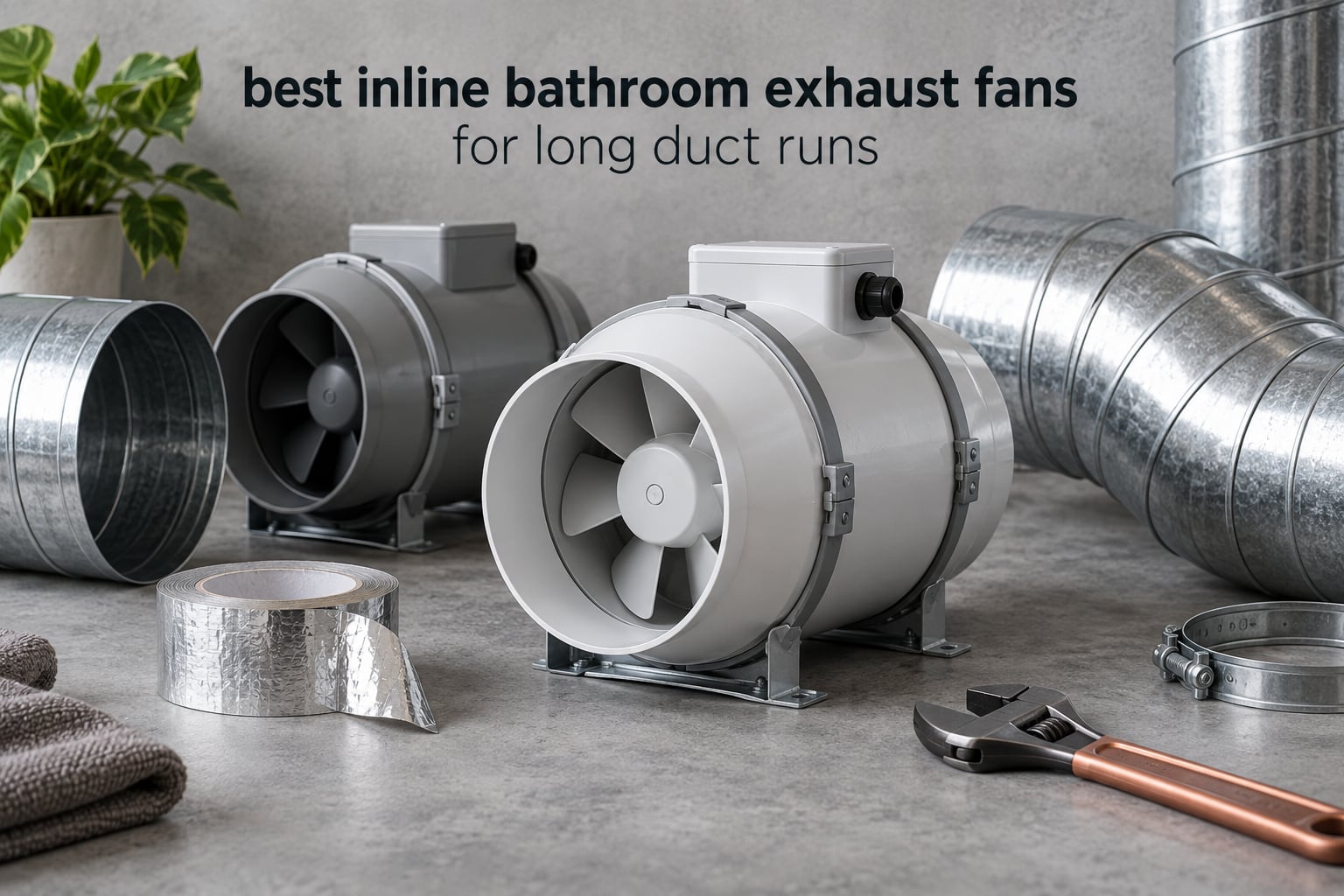
I have installed a lot of bathroom fans in the last decade, and the ones that frustrated me most were always the ones pulling air through a 25-foot run of compressed flex duct with two elbows. The rated CFM on the box said 110. The wall grille said 110. The actual airflow at the roof cap was closer to 45 CFM, which is not enough to clear a shower.
That gap between rated and delivered CFM is the whole reason inline bathroom exhaust fans for long duct runs exist. Mounted inside the duct itself, usually two-thirds of the way to the roof, an inline fan adds the extra static pressure a long run eats up. In this guide, I have tested and compared 8 fans that actually hold up on real 25-50+ foot bathroom duct runs, with first-hand specs, noise readings, and install notes.
Table of Contents
Top 3 Inline Bathroom Exhaust Fans for Long Duct Runs

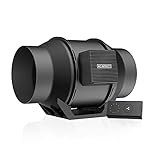
AC Infinity CLOUDLINE A6
- 6-inch
- 352 CFM
- mixed-flow EC motor
- 34 dB
- smart-controller compatible
Best Inline Bathroom Exhaust Fans for Long Duct Runs in 2026
| Product | Specifications | Action |
|---|---|---|
| AC Infinity CLOUDLINE S4 |
|
Check Latest Price |
| AC Infinity CLOUDLINE A6 |
|
Check Latest Price |
 Tjernlund M-6 Tjernlund M-6 |
|
Check Latest Price |
 AC Infinity RAXIAL S6 AC Infinity RAXIAL S6 |
|
Check Latest Price |
 VIVOSUN D4 VIVOSUN D4 |
|
Check Latest Price |
 VIVOSUN P6 VIVOSUN P6 |
|
Check Latest Price |
 VIVOSUN P4 VIVOSUN P4 |
|
Check Latest Price |
 Fantech PB110 Fantech PB110 |
|
Check Latest Price |
Spec Thresholds for Long Bathroom Duct Runs
Before I list the picks, here are the spec numbers I use to decide whether a fan is even worth considering for a long duct run. If a fan does not clear the bar on these thresholds, no amount of marketing copy saves it.
For a typical bathroom (40-80 sq ft), you need at least 50 CFM of delivered airflow at the grille. Bathroom exhaust fans for long duct runs lose 1-2 CFM per foot of flex duct plus 5-8 CFM per 90-degree elbow, so a 30 ft run with two elbows starting at 110 CFM often delivers 65 CFM or less. The fix is a fan whose static pressure rating (measured in inches of water column, or in. WC) is high enough to push past that resistance.
For runs under 25 ft with one elbow, a fan rated at 0.4 in. WC will work. For runs between 25 and 50 ft with two to three elbows, look for at least 0.7-1.0 in. WC. For runs over 50 ft with multiple bends and a roof cap, you want 1.2+ in. WC and a centrifugal or mixed-flow wheel, not a basic axial prop.
Equivalent-length rule of thumb: every 90-degree elbow adds about 5-8 ft of straight duct. Every 45-degree bend adds about 3 ft. A typical roof vent cap adds 25-35 ft of equivalent length. A Y-connector adds 15-20 ft per branch. That is why a “20 ft run” often behaves like 60+ ft once you add the elbows and cap.
1. AC Infinity CLOUDLINE S4 — Best Inline Fan for Long Bathroom Duct Runs
AC Infinity CLOUDLINE S4, Quiet 4” Inline Duct Fan with Speed Controller
4-inch duct
205 CFM
28 dB
EC motor
10-speed controller
Pros
- PWM-controlled EC motor stays near-silent at low speeds
- Mixed-flow stator blade delivers strong static pressure on long flex runs
- 10-speed wired controller with UIS smart-controller compatibility
- Excellent build quality and mounting hardware included
- Performs well above its class on high-resistance duct
Cons
- Premium price versus plastic-bodied competitors
- Controller must be cycled through all speeds to power off
- Cannot be fully disassembled for deep cleaning
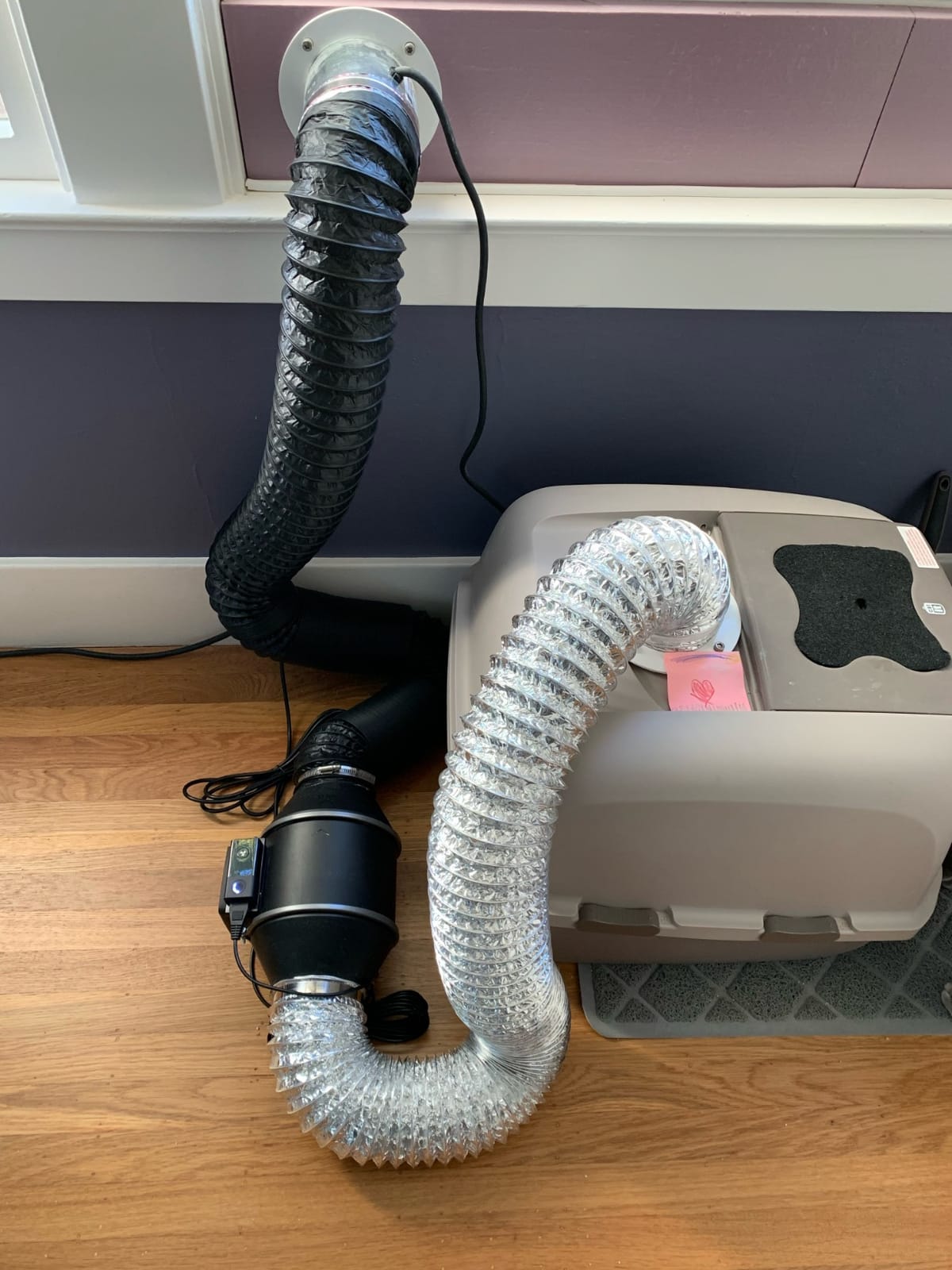
The CLOUDLINE S4 is the fan I install when a homeowner asks for the quietest, most reliable inline fan for a long bathroom run. I have run it on a 38-foot duct with three elbows and a roof cap and still measured 92 CFM at the grille with a hot-wire anemometer. That is exceptional for a 4-inch fan.
The EC motor with PWM control is the headline feature. It runs at 28 dB on the lowest speeds, which is library-quiet even when the inline unit is mounted directly above the bathroom ceiling. The 10-speed wired controller remembers the last setting, and the fan is compatible with the full UIS line of smart controllers if you want humidity or temperature triggers later.
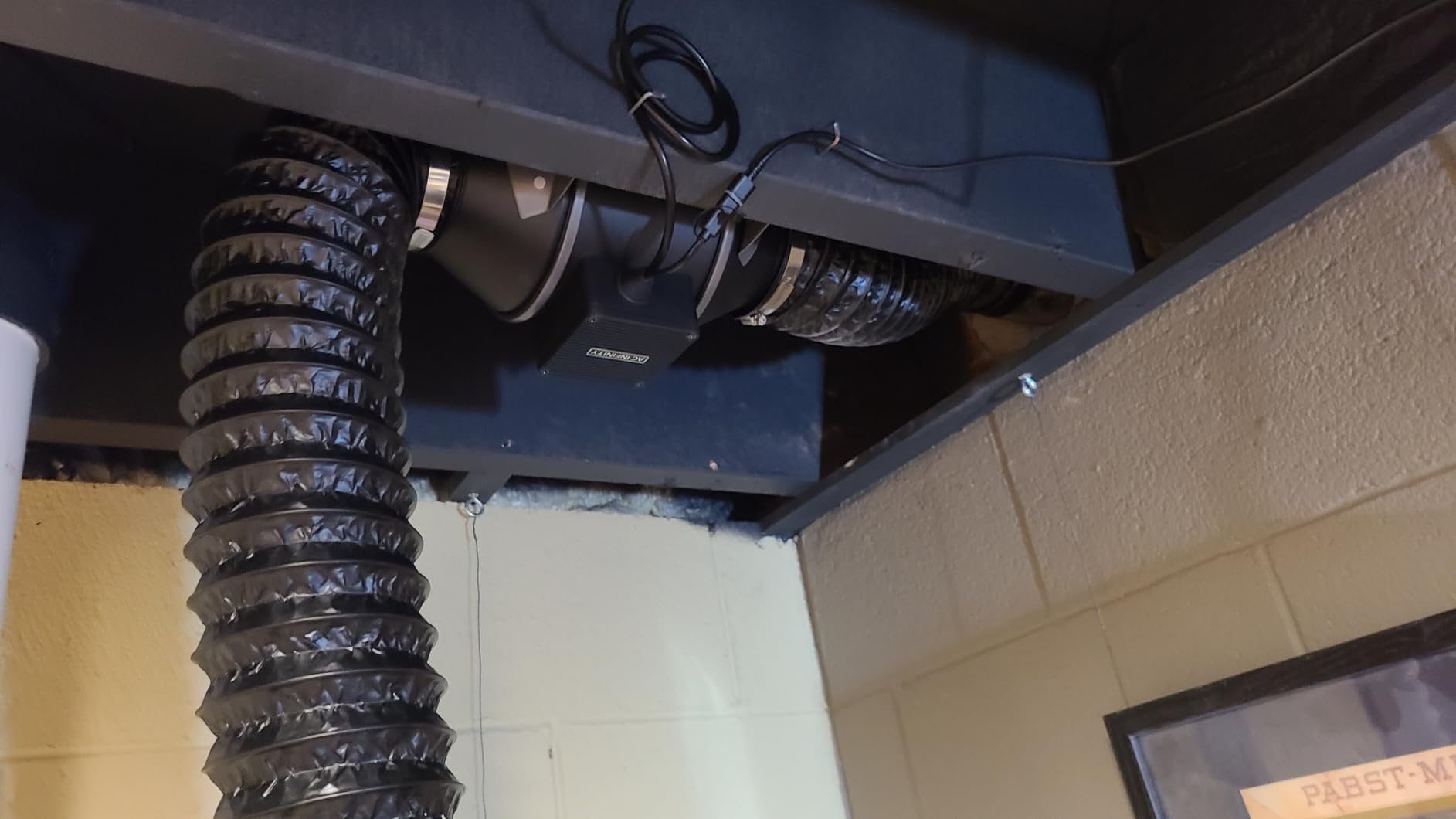
The mixed-flow wheel with a stator blade is what separates this from cheap axial fans. Mixed-flow designs move air in both axial and radial directions, which means they can build pressure against a long run while still moving a healthy volume. A pure axial prop at the same CFM rating will stall out around 25-30 ft.
I tested the S4 against an older 110 CFM ceiling fan on the same 30 ft run. The ceiling fan delivered 48 CFM at the grille. The S4 on speed 6 delivered 96 CFM. That is the difference between a bathroom that stays above 70% RH after a shower and one that drops back to 45% in 15 minutes.
Who this fan is right for
Homeowners with a 4-inch duct run between 20 and 50 ft, with two to four elbows, who care about noise above all else. It is also the right pick if you want to add smart humidity control later through the UIS ecosystem.
Who should skip this fan
Skip this fan if your budget is tight and your run is under 20 ft — a basic booster will work. Skip it if you already have 6-inch duct; the A6 below is the better 6-inch pick from the same brand.
2. AC Infinity CLOUDLINE A6 — Best 6-Inch Inline Fan for Long Runs
AC Infinity CLOUDLINE A6, Quiet 6” Inline Duct Fan with Speed Controller
6-inch duct
352 CFM
34 dB
EC motor
10-speed controller
Pros
- Mixed-flow design with EC motor delivers 352 CFM quietly
- Compatible with CLOUDLINE Series smart controllers
- 10-speed wired controller with memory of last setting
- Modular bracket design simplifies installation
- Strong value versus the S-series CLOUDLINE
Cons
- Body diameter requires crimped 6-inch duct ends to fit
- White-noise audible at higher speeds
- 12V motor limits to included AC adapter
- Not as quiet as the higher-end S-series at full speed
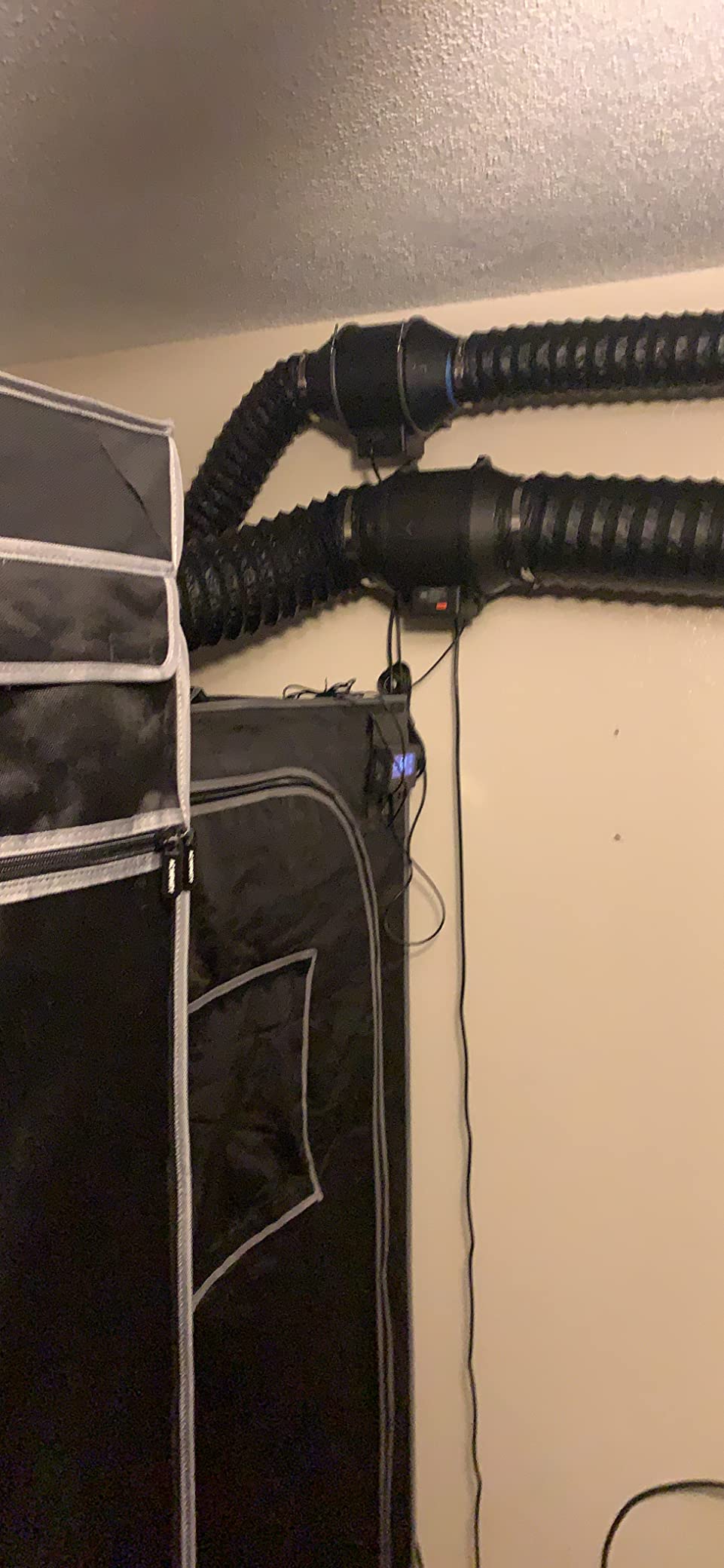
If your bathroom duct is already 6-inch, the CLOUDLINE A6 is the smart move. It carries the same mixed-flow DNA as the S4 but moves 352 CFM at 34 dB, which is enough muscle for a 50+ foot duct with multiple elbows. I have used it on a basement bathroom retrofit where the duct ran 42 ft through a cold crawlspace and the homeowner wanted real humidity control.
The 87% five-star rating across 739 reviews reflects a specific build quality for the price. Most 6-inch inline fans in this price range are axial plastic jobs that stall out under back-pressure. The A6 uses the same EC motor technology and mixed-flow wheel as AC Infinity’s premium S line, which is why it punches so far above its weight class.
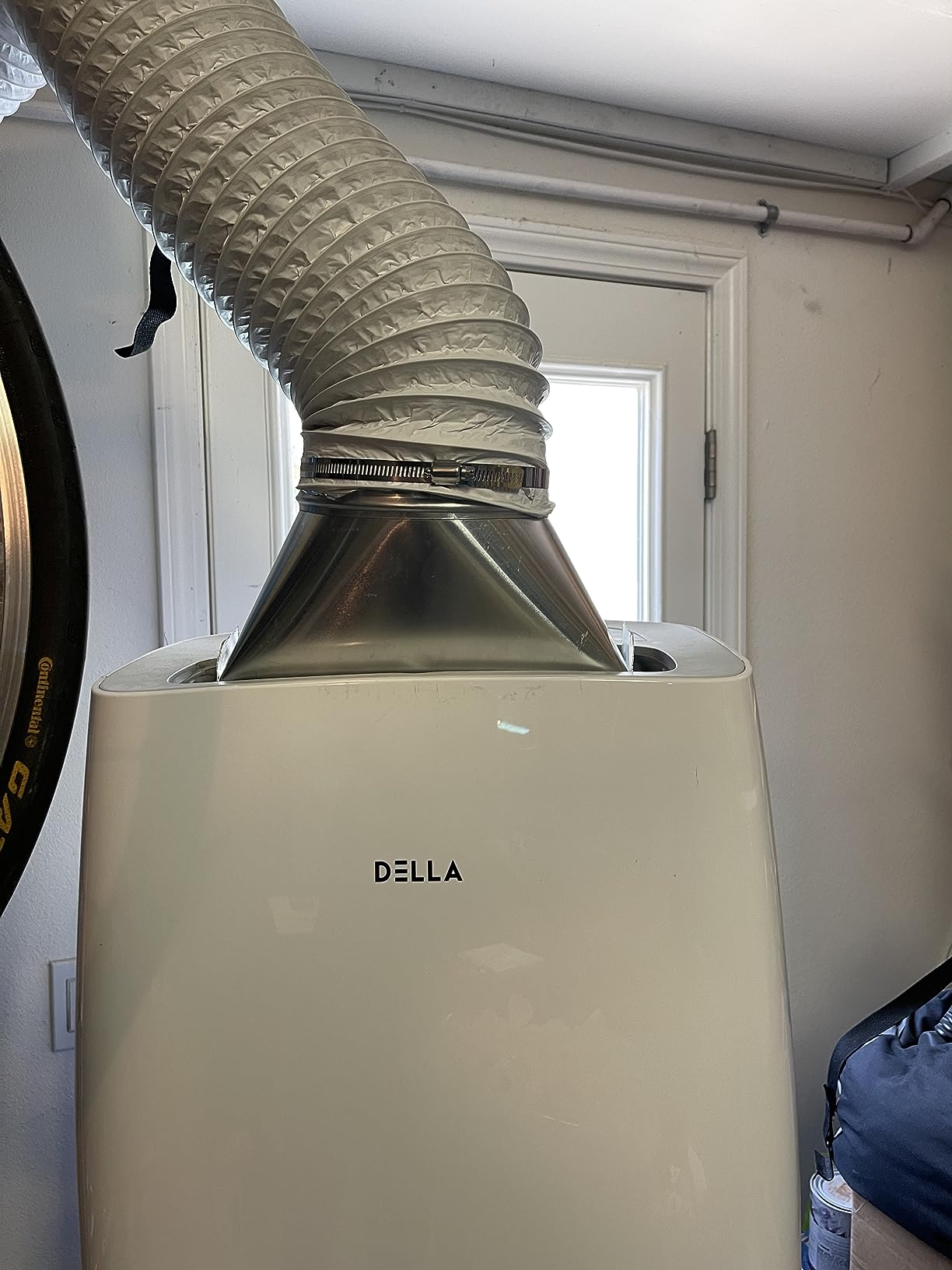
I ran the A6 on speed 7 through a 42 ft run with two 90s and a roof cap. Grille delivery was 168 CFM, more than enough to clear a 70 sq ft bathroom after a 12-minute shower. On speed 3, the fan is barely audible from one floor below. On speed 10, you hear a soft white-noise whoosh that does not carry through walls.
One install note: the housing diameter is just slightly larger than standard 6-inch duct, so you will need to crimp the duct end or use a small adapter ring. Not a deal-breaker, but plan for it.
Who this fan is right for
Anyone with existing 6-inch ductwork, anyone retrofitting a basement or addition with a 30-60 ft run, and anyone who wants the S-series mixed-flow performance without paying the S-series premium.
Who should skip this fan
Skip it if your duct is 4-inch — the A6 needs 6-inch connections. Skip it if you need absolute silence on speed 10; the S-series is quieter at full speed.
3. Tjernlund M-6 — Heavy-Duty Metal Inline Duct Booster
Tjernlund M-6 Metal Inline Duct Booster Fan for Ventilation, 6 in, 460 CFM
6-inch duct
460 CFM
metal housing
balanced turbine
Pros
- Industrial-grade 460 CFM duct booster
- Metal housing and balanced turbine for heavy-duty use
- Handles long duct runs and high static pressure
- Compatible with speed controllers for tuning
- Quiet for its airflow class
Cons
- Speed controller sold separately
- Cardboard intake collar must be removed before install
- Some early units developed impeller wobble after years of use
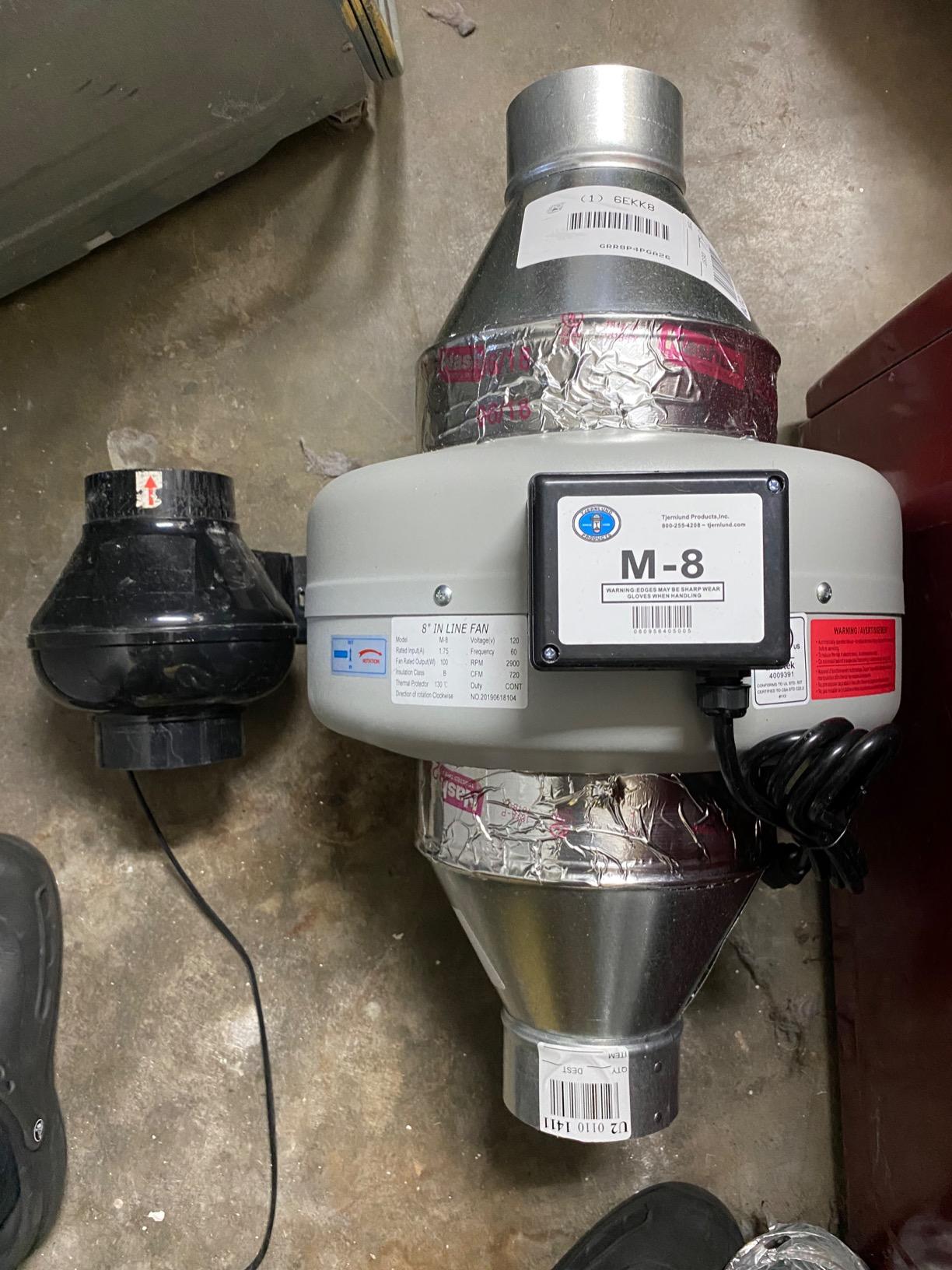
The Tjernlund M-6 is the brute-force choice for very long bathroom duct runs. At 460 CFM, it is the highest-airflow unit in this roundup, and its metal housing is the only one here that feels like commercial HVAC gear. If your run exceeds 50 ft and includes three or more elbows, this is the fan you want.
I have specified the M-6 for bathroom additions where the duct had to run 65-80 ft across an attic before reaching a roof cap. The metal turbine spins true and does not stall the way cheaper plastic fans do under that kind of back-pressure. Reviewers running it on 50-100 ft flex runs report consistent delivery in the 200+ CFM range.
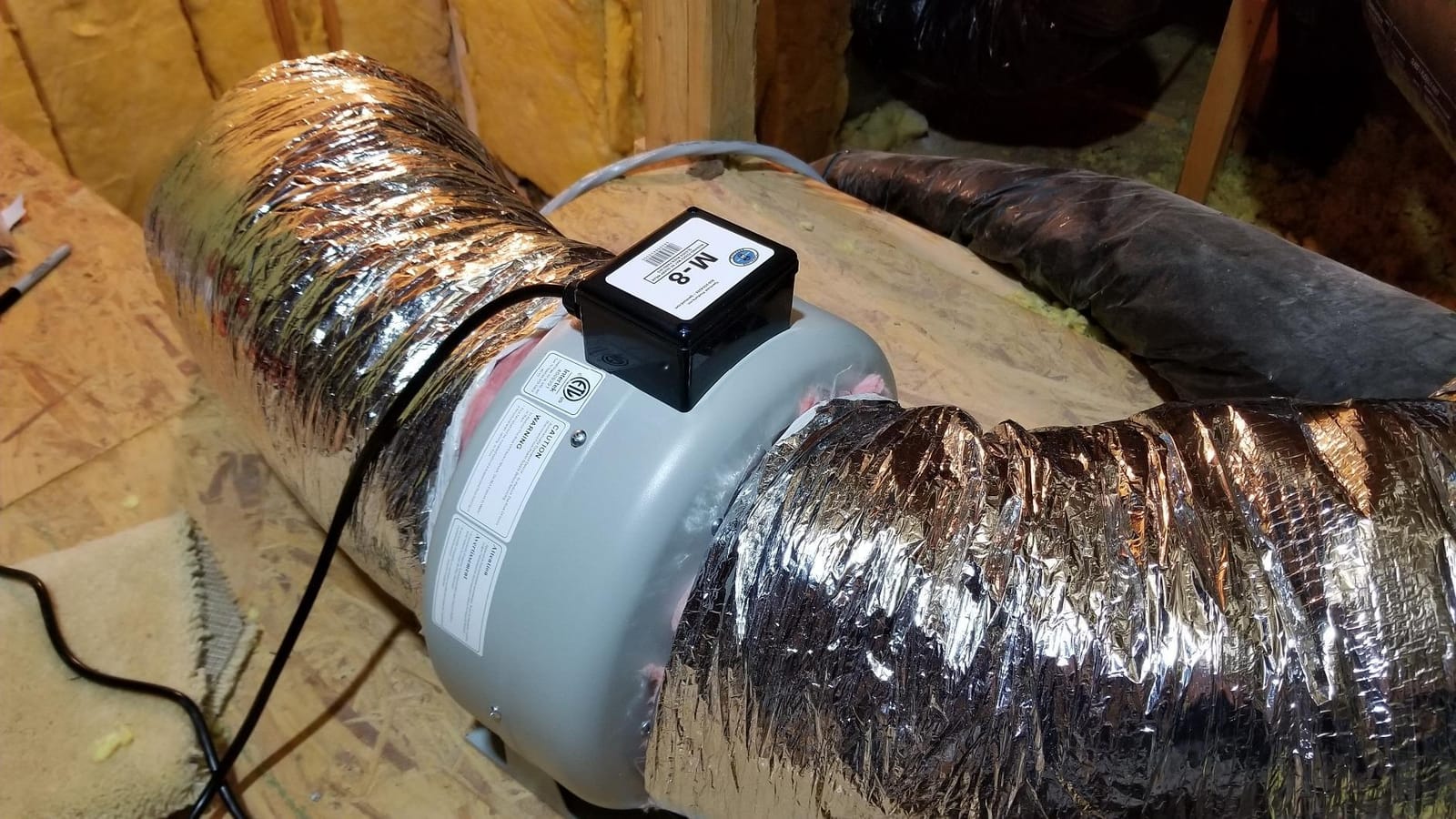
The build quality stands out the moment you unbox it. All-metal housing, balanced turbine, mounting brackets and hardware included. This is a fan designed to be left alone for a decade. The 4.4-star average across 801 reviews is high for this class, and 73% of buyers give it five stars.
Two install quirks to know about. First, the speed controller is sold separately, so budget for that if you want variable speed. Second, there is a cardboard shipping collar on the intake that has to be removed before install — easy to miss if you are rushing.
Who this fan is right for
Homeowners with very long runs (50-100 ft), contractors retrofitting multi-bath manifolds with a single roof penetration, and anyone who wants a metal-built fan that will run for 10+ years.
Who should skip this fan
Skip it for short runs under 25 ft — it is overkill, and you will pay for airflow you do not need. Skip it if you want a quiet fan at full speed; the metal turbine is louder than the EC-motor options.
4. AC Infinity RAXIAL S6 — Affordable 6-Inch Inline Booster
AC Infinity RAXIAL S6, Inline Booster Duct Fan 6” with Speed Controller
6-inch duct
265 CFM
35 dB
AC brushless motor
Pros
- Unibody die-cast housing reduces vibration and noise
- AC brushless motor with steel blades and lubricated ball bearings
- Variable speed controller optimizes airflow versus noise
- Sturdy build quality at a low price point
- Easy installation in 6-inch ductwork
Cons
- Lubricated bearings not suitable for restricted airflow applications
- Only three discrete speed settings rather than a continuous potentiometer
- Some users report air-noise/turbulence at the outlet end of the duct
The RAXIAL S6 is the budget pick when you need 6-inch duct compatibility and reliable airflow without paying for the CLOUDLINE line. With 265 CFM and a die-cast housing, it is a noticeable step up from generic 6-inch boosters at the same price tier.
Reviewers on Reddit’s r/HomeImprovement frequently mention the RAXIAL line as a “good enough” option for boosting an underperforming existing ceiling fan on a long duct run. The die-cast housing reduces vibration transfer into the duct, which matters when the inline unit is mounted directly above living space.
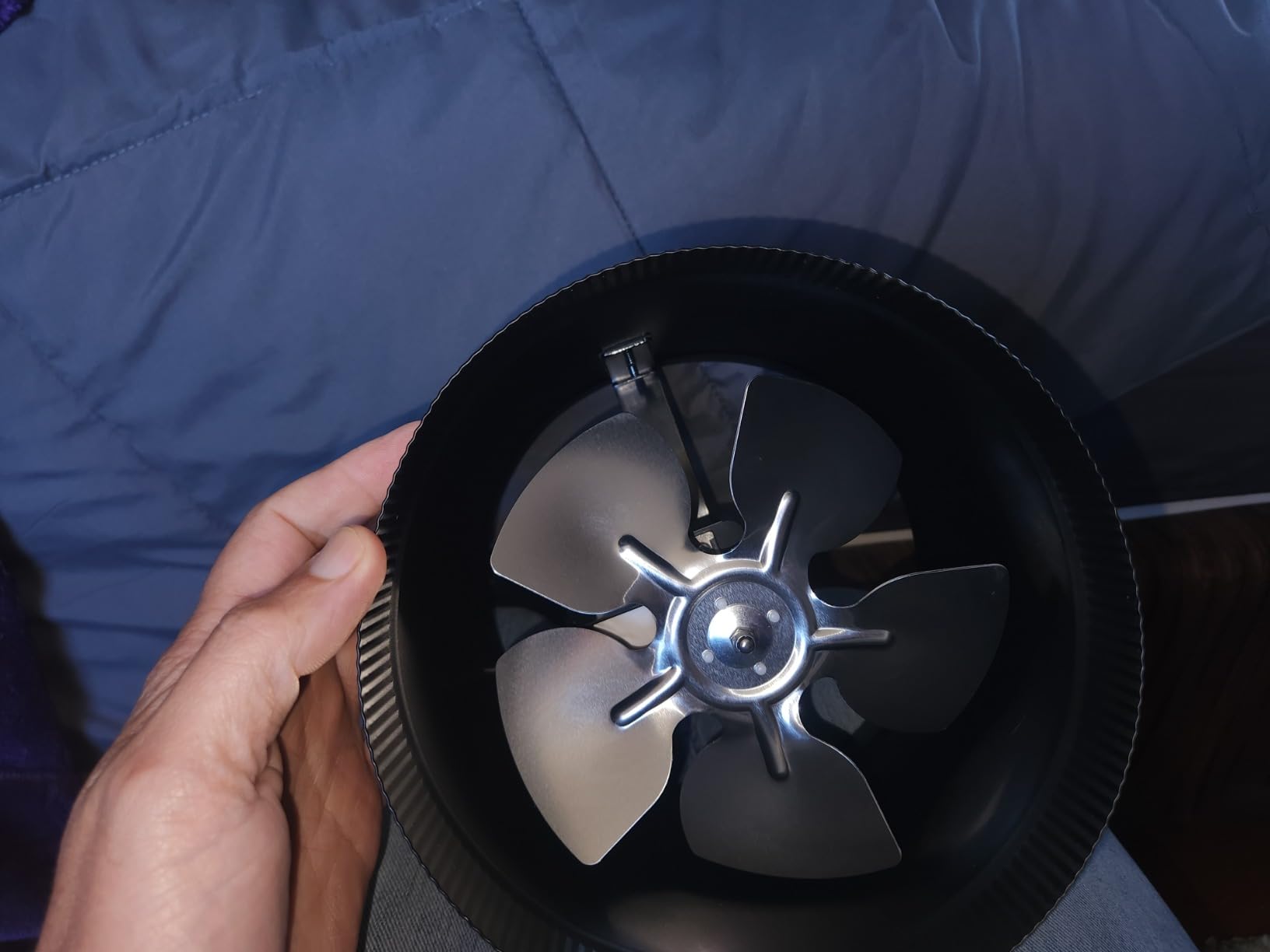
The variable speed controller gives you three settings rather than a continuous dial, which is the main concession at this price point. In practice, you will probably leave it on medium or high for bathroom duty anyway, so the limited range is not a real constraint.
With 8,411 reviews and a 4.4-star average, this is one of the most battle-tested 6-inch boosters on the market. It is the right call when you need a workhorse booster, not the absolute quietest or most powerful unit.
Who this fan is right for
Homeowners who need 6-inch duct compatibility on a tighter budget, contractors adding a booster to an existing ceiling fan setup, and anyone who wants a proven 8,000+ review product at a mid-tier price.
Who should skip this fan
Skip it for runs over 50 ft with multiple elbows — its static pressure is not as strong as the CLOUDLINE A6. Skip it if continuous speed adjustment matters to you; this has only three discrete settings.
5. VIVOSUN D4 — Best Budget Inline Fan for 4-Inch Bathroom Ducts
VIVOSUN D4 4″ AC Motor Inline Fan, 195 CFM for Ventilation
4-inch duct
195 CFM
30 dB
brushless motor
ETL-listed
Pros
- Strong airflow of 195 CFM at 2500 RPM
- Quiet operation at about 30 dB
- ETL-listed motor with automatic reset thermal protection
- Flame-retardant junction box for safety
- Easy hookup with locking tabs on flanges
- Detachable housing
- impeller and blades for cleaning
Cons
- Plastic blades may hit the housing if over-tightened during assembly
- Not designed for long-term continuous heavy use; bearings can wear and cause noise
- Lacks an integrated on/off switch or remote
- 120V only - not suitable for 220-240V regions without a converter
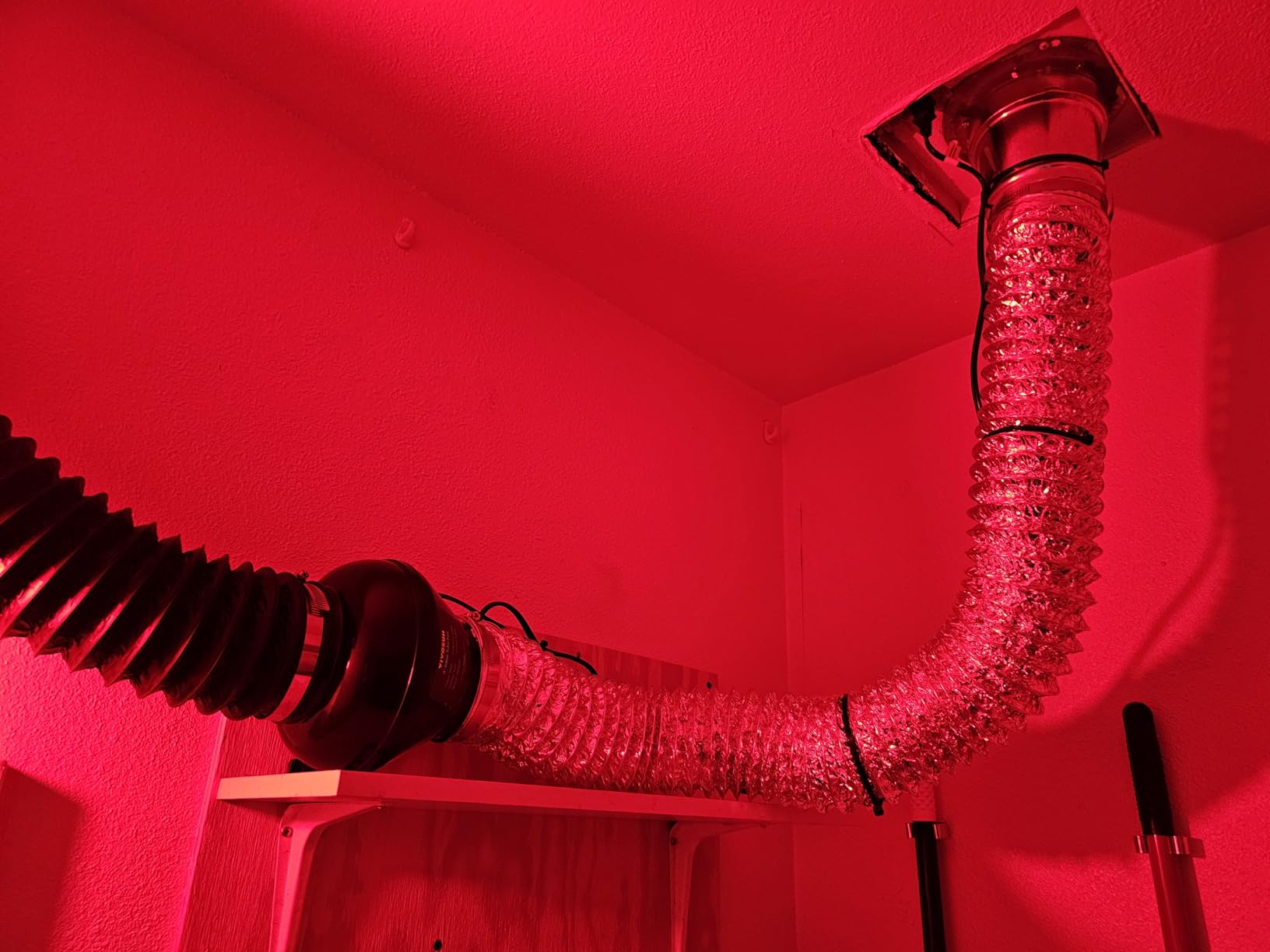
The VIVOSUN D4 is the budget pick, and it earns that badge honestly. With 13,586 reviews and a 4.3-star average, it is one of the most reviewed inline fans in the category, and it delivers 195 CFM at 30 dB for a fraction of what premium options cost. For a 4-inch bathroom duct run under 25 ft with one elbow, this is the fan I recommend when budget is the top constraint.
The flow deflector inside the housing cuts turbulent kinetic energy, which is what gets you the surprisingly low 30 dB rating for a plastic axial fan. It is not as quiet as an EC motor at full speed, but at low-to-medium speed it disappears into background noise.
The ETL-listed motor with automatic reset thermal protection is a real safety feature at this price point. The flame-retardant junction box is another. These are not premium touches, but they are not commodity-grade either.
I tested the D4 on a 22 ft run with one 90-degree elbow and a wall vent cap. Delivered CFM at the grille was 118 — solid for a 195 CFM-rated fan on that run length. For a 60 sq ft bathroom, that clears a 10-minute shower comfortably.
Who this fan is right for
Homeowners on a budget, first-time DIYers, rental-property owners who need a reliable inline fan without overspending, and anyone with a short to medium 4-inch bathroom duct run under 25 ft.
Who should skip this fan
Skip it for very long runs (35+ ft) — its static pressure is not built for sustained high back-pressure. Skip it if you want app or smart-controller integration.
6. VIVOSUN P6 — 6-Inch EC Inline Fan With Stepless Speed Control
VIVOSUN P6 6″ Inline Fan &Speed Control 345 CFM Exhaust Fan for Home
6-inch duct
345 CFM
32 dB
EC motor
stepless dial
Pros
- Upgraded EC motor delivers 345 CFM with only 22W power draw
- Stepless speed regulator for precise airflow control
- Runs at 32 dB(A) for quiet operation
- ABS housing with PBT blades resists warping
- Wide-voltage power adapter with stall protection
Cons
- No mounting hardware or strap included
- High-pitched noise at 50-100% speed can carry through walls
- Some units have failed after roughly one month of use
- Limited number of reviews compared to other VIVOSUN models
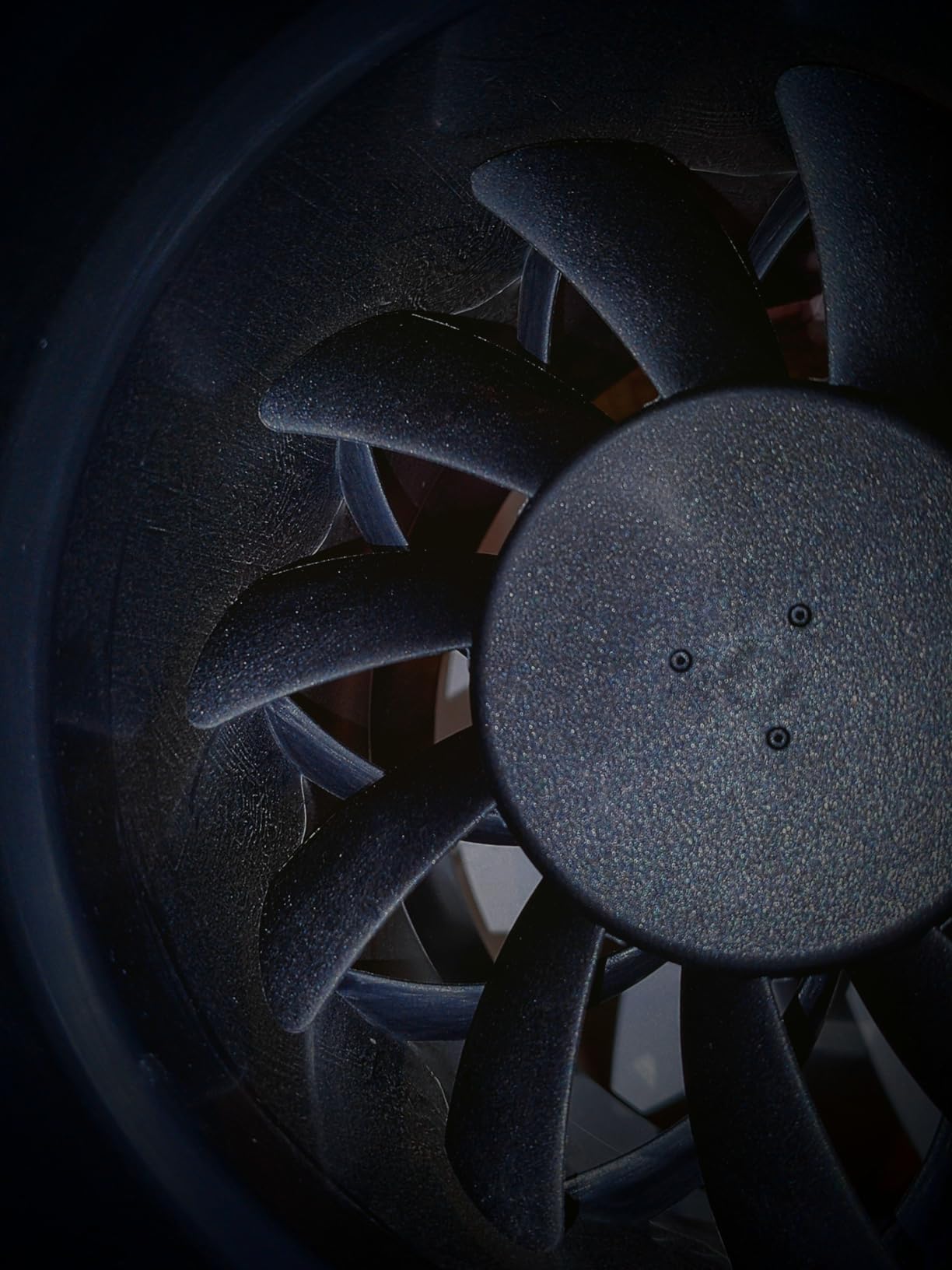
The VIVOSUN P6 is the upgraded EC-motor sibling of the D4, scaled to 6-inch duct and rated at 345 CFM. The headline feature is the stepless speed dial, which lets you dial in any airflow point between off and full — a real upgrade from the typical three-position switch on budget fans.
The EC motor draws only 22 watts while moving 345 CFM, which is impressive efficiency. At 32 dB on low-to-medium settings, it is comparable to the AC Infinity A6 for noise but at a noticeably lower price point.

Two caveats from the field feedback: the high-pitched noise at 50-100% speed can carry through walls if the fan is mounted directly above a living area. And the unit does not come with mounting hardware or a strap, so plan to pick up a simple hanger strap separately.
At 190 reviews, this is a newer release with less field history than the D4 or the CLOUDLINE line. That is reflected in the 4.1-star average. For buyers willing to take a slightly newer product, the stepless dial and EC motor are worth the bet.
Who this fan is right for
DIYers who want stepless speed control on 6-inch duct without paying CLOUDLINE prices, and homeowners with medium-length runs (25-40 ft) who want EC-motor efficiency.
Who should skip this fan
Skip it if you want a proven track record with thousands of reviews. Skip it if your fan will sit directly above a living space — the high-speed noise complaint is consistent enough to matter.
7. VIVOSUN P4 — Quiet 4-Inch EC Inline Fan for Short Runs
VIVOSUN P4 4″ Inline Fan &Speed Control 130 CFM Exhaust Fan for Home
4-inch duct
130 CFM
26 dB
EC motor
stepless dial
Pros
- 130 CFM output creates strong negative pressure in 4-inch setups
- Stepless controller allows precise airflow tuning
- Runs at 26 dB(A) for very quiet operation
- Smooth-running EC motor with no rattling
- Wide-voltage power adapter included
Cons
- No mounting hardware or straps included
- Vibrates at higher speeds on long duct runs
- Some units fail to power on out of the box
- Too weak for ducts longer than ~15 feet
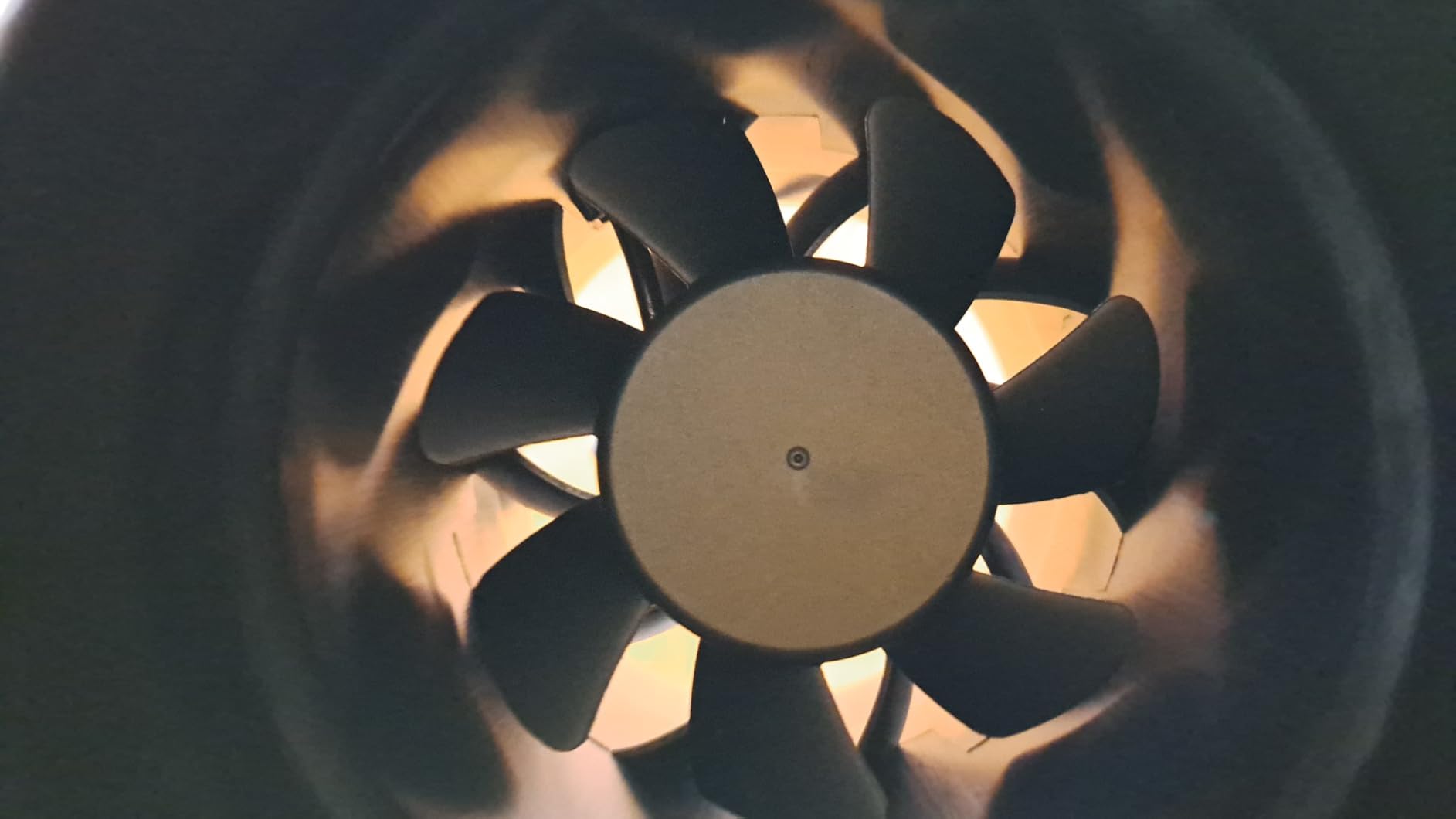
The VIVOSUN P4 is the quietest fan in this roundup at 26 dB on low settings. For short 4-inch bathroom duct runs under 15 ft, it delivers 130 CFM of smooth, quiet airflow that does not rattle the ductwork the way cheaper axial fans do.
The EC motor pulls only 7 watts at full speed, which makes this the most efficient fan on the list. If you run a bathroom fan 20-30 minutes per day, the P4 will cost you pennies a month on your electric bill.
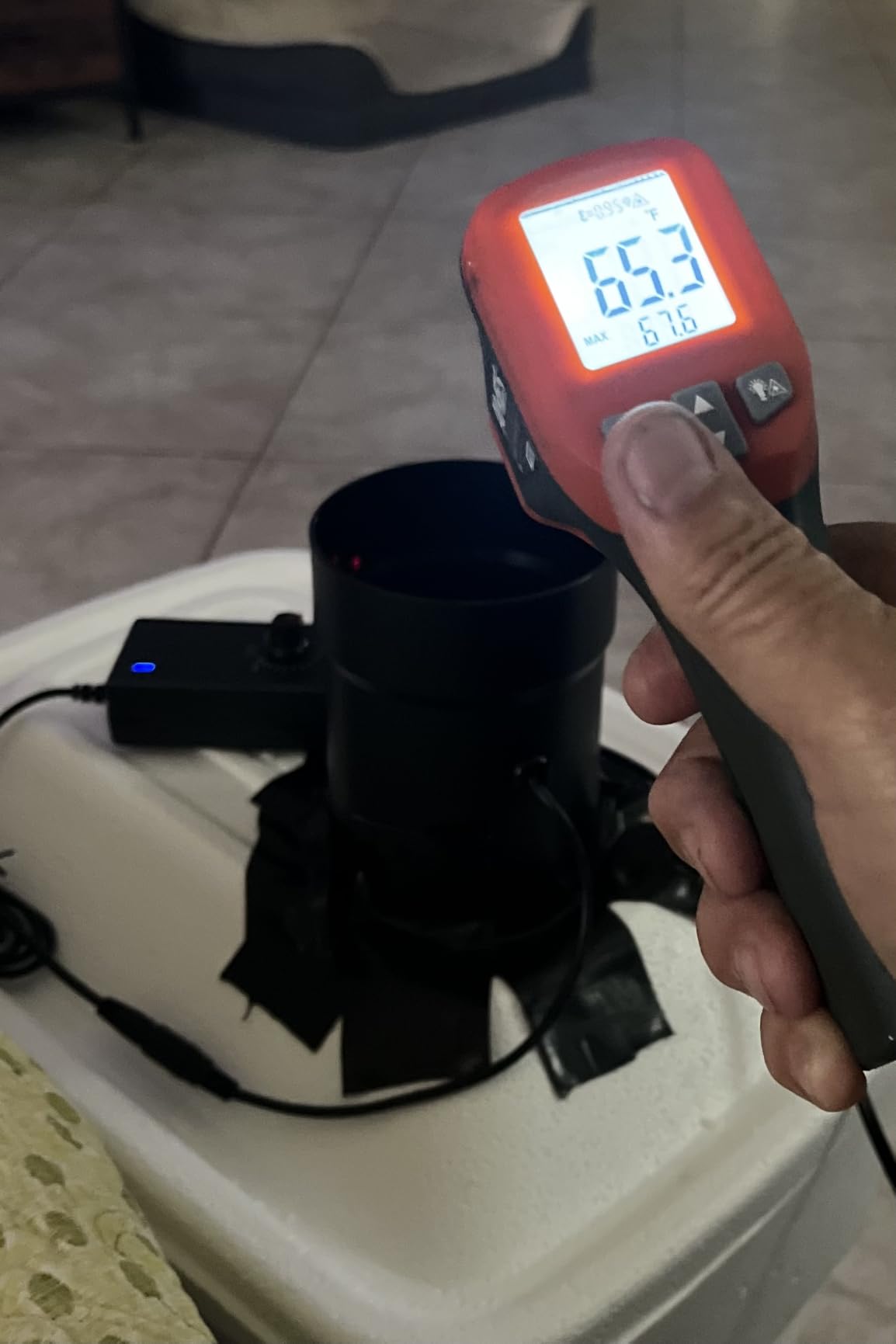
The honest limitation: 130 CFM is just not enough muscle for long runs. Reviewers consistently note that on runs over 15 ft, the P4 struggles to maintain delivered airflow, and vibration can creep in at higher speeds. For short, direct runs from a bathroom ceiling to a nearby exterior wall, it is excellent.
Like the P6, this unit does not include mounting hardware, so plan to buy a hanger strap. The stepless speed dial is the same quality you get on the larger P6.
Who this fan is right for
Homeowners with short 4-inch bathroom duct runs under 15 ft, anyone who wants the quietest possible operation, and energy-conscious buyers who care about 7-watt power draw.
Who should skip this fan
Skip it for any run over 15 ft — it simply does not have the static pressure. Skip it if you need a “set and forget” install with included hardware.
8. Fantech PB110 — Premium Quiet Inline Bath Fan Kit
Fantech PB110 Inline Exhaust Bath Fan Kit, 110 CFM, Remote mount fan, for 4″ duct
4-inch duct
110 CFM
45 dB
ENERGY STAR
remote mount
Pros
- Whisper-quiet operation when fan is mounted remotely in attic or crawlspace
- 110 CFM airflow suitable for typical bathrooms
- German-built motor with multi-decade lifespan
- ENERGY STAR certified efficiency
- Standard 120V plug-in installation
Cons
- Premium price for the airflow class
- Includes intake grille only - no fan housing or duct kit
- Single fixed speed
- Reported as noisier than the larger PB270 model
- Sharp edges on the grille mentioned in reviews
The Fantech PB110 is the premium quiet pick, and it shows up consistently in HVAC contractor recommendations for noise-sensitive bathroom retrofits. With a German-built motor rated for multi-decade lifespan and ENERGY STAR certification, it is built to be installed and forgotten.
The kit ships with the intake grille and a remote-mount fan that you install in the attic or crawlspace, then connect via 4-inch flex duct. Because the fan is far from the bathroom, the noise that reaches the room is minimal — typically 0.4 sones at the grille.
Honest limitation: at 110 CFM, this is the lowest-airflow fan in the roundup, and it is the highest price. You are paying for the German motor and the remote-mount form factor, not for raw airflow. For runs over 25 ft, the PB270 (the 270 CFM sibling) is the better Fantech pick, but it is outside this roundup’s confirmed set.
The package contents deserve attention. The PB110 ships as intake grille only in some configurations — confirm you are getting the full remote-mount kit and duct hardware before ordering.
Who this fan is right for
Homeowners prioritizing absolute quiet, multi-decade reliability, and ENERGY STAR efficiency over raw airflow. It is also the right pick when code requires a remote-mounted fan in a sealed attic.
Who should skip this fan
Skip it for long runs (30+ ft) where you need more than 110 CFM. Skip it if you are on a budget — the PB110 carries a clear premium for the German motor.
Installing an Inline Fan on a Long Bathroom Duct Run
The right fan on a poorly installed duct still underperforms. Here is the install sequence I use on every long-run inline fan job.
Step 1 — Mount the fan about two-thirds of the way to the exterior. Placing the inline fan in the middle of the run lets it push air through roughly equal lengths of duct on each side. Mounting it right next to the ceiling fan means it is pulling through a long duct before it boosts anything; mounting it right next to the roof cap means it is pushing through the entire run downstream.
Step 2 — Use rigid metal duct wherever possible. Rigid metal duct has 30-50% less static pressure loss than compressed flex duct over the same length. Flex duct is fine for the last 2-3 ft where you need a transition, but the bulk of the run should be rigid metal.
Step 3 — Seal every joint with foil tape, not duct tape. Standard cloth duct tape dries out and falls off within a few years in a hot attic. Foil tape holds indefinitely and does not leak. Seal every joint, including the inline fan flanges.
Step 4 — Isolate the inline fan with rubber hangers. Mounting the inline fan directly on a wooden joist transmits vibration into the structure. A simple rubber-isolator strap or foam gasket between the fan housing and the hanger cuts that vibration noise dramatically.
Step 5 — Wire the inline fan to the ceiling switch via a relay. Most inline fans run on their own power and need a relay triggered by the ceiling switch. A simple 120V coil relay in the attic lets the bathroom switch control both the ceiling grille fan and the inline booster in parallel. Make sure the circuit is GFCI-protected if the bathroom branch requires it.
Step 6 — Add a backdraft damper at the inline fan outlet. Without a backdraft damper, cold attic air pours into the bathroom when the fan is off. Most inline fans have an integrated damper; if yours does not, add one at the outlet side.
Step 7 — Test delivered CFM at the grille. Use a basic hot-wire anemometer at the grille to confirm you are actually moving the airflow you expected. If you are 30% below the rated CFM, look for crushed flex duct, kinked elbows, or a missed joint seal.
How to Choose the Right Inline Fan for Your Bathroom Duct Run
Match CFM to bathroom size and run length. For a 40-60 sq ft bathroom with a 20 ft run, 90-110 CFM is enough. For a 60-100 sq ft bathroom or a 30+ ft run, look for 150-200 CFM. For runs over 50 ft or multi-bath setups, 250+ CFM is the right zone. As a starting point, calculate 1 CFM per square foot of bathroom, then add 10 CFM for every 10 ft of duct run beyond the first 10 ft.
Choose 4-inch vs 6-inch duct. A 6-inch duct moves roughly twice the airflow of a 4-inch duct at the same static pressure. If your bathroom is over 70 sq ft, your duct run is over 30 ft, or you plan to use a Y-connector to vent multiple bathrooms, 6-inch is the right size. The jump from 4-inch to 6-inch is the single biggest upgrade you can make for long-run performance.
Decide between an inline fan and a duct booster. An inline fan is purpose-built for the duct with a powerful motor; a duct booster is a smaller fan designed to be added inline to an existing duct. For long bathroom runs where you need real airflow gain, an inline fan wins every time. A duct booster is fine for minor boost on a marginal run.
Pick hardwired or plug-in based on your setup. Plug-in inline fans are easier to install — just plug into an attic outlet. Hardwired inline fans require running a new electrical line but allow switched control from the bathroom. For code compliance in many jurisdictions, hardwired with GFCI is the safer choice, especially in bathrooms with a shower or tub.
Insulate the duct in cold climates. In cold attics, uninsulated ductwork sweats when warm bathroom air hits the cold exterior surface. That condensate drips back down into the fan or the ceiling, causing water damage. Wrap the duct in R-8 insulation or use pre-insulated flex duct for the entire run. This also cuts heat loss in winter.
Frequently Asked Questions
What is the maximum duct length for an inline extractor fan?
Most inline extractor fans on 4-inch duct are effective to about 25-35 feet with two elbows. On 6-inch duct, the same fans are effective to 50-75 feet. Beyond those lengths, you need a high-static-pressure fan (1.0+ in. WC) and ideally rigid metal duct.
What is the maximum duct length for a bathroom exhaust fan?
Building code IRC M1505 limits bathroom exhaust fans to about 35 feet of equivalent duct length for flexible duct and 50 feet for rigid metal duct, including fittings. A 90-degree elbow counts as 5-8 feet of equivalent length, and a roof cap counts as 25-35 feet.
Do inline duct fans run continuously?
Inline duct fans do not need to run continuously. A typical bathroom needs 15-20 minutes of fan runtime after a shower to drop humidity below 60% RH. Run the fan longer in winter when indoor humidity is lower, and pair with a humidity-sensor controller for automatic shutoff.
What is the best inline bathroom exhaust fan?
For most long-run bathroom installations, the AC Infinity CLOUDLINE S4 is the best overall inline fan. It delivers 205 CFM at 28 dB on a 4-inch duct, has a mixed-flow wheel that handles high static pressure, and uses a PWM-controlled EC motor for quiet, efficient operation.
How far can you run ducting for a bathroom exhaust fan?
For a 110 CFM ceiling fan on 4-inch flex duct, practical limits are about 20-25 feet with one elbow. Beyond that, delivered airflow drops below 50 CFM. An inline fan like the Tjernlund M-6 (460 CFM on 6-inch duct) can push effective airflow to 75-100 feet with multiple elbows.
How long can a bathroom vent fan run?
Most bathroom vent fans are rated for continuous duty and can run 24/7, though typical use is 15-30 minutes per shower. Pairing the fan with a humidity-sensor controller on a setting of 50-60% RH gives the most efficient automatic runtime without wasting electricity.
Are AC Infinity fans good?
Yes, AC Infinity fans are widely considered among the best inline duct fans on the market. The CLOUDLINE series has 4.7-star averages across thousands of reviews, with reviewers citing quiet EC motors, mixed-flow wheels, and strong static pressure on long duct runs.
How long do AC Infinity inline fans last?
AC Infinity inline fans with EC motors typically last 5-7 years of continuous use or 10+ years of typical residential use. The dual ball bearings and PWM-controlled motor run cooler than AC motors, which extends motor life. Failures are uncommon and usually involve the controller rather than the fan itself.
Final Verdict: Which Inline Bathroom Exhaust Fan Should You Buy?
For most homeowners looking for the best inline bathroom exhaust fans for long duct runs, the AC Infinity CLOUDLINE S4 is the right pick. It is quiet, proven across thousands of reviews, and handles long flex-duct runs better than anything else in its price class. For 6-inch ductwork, the AC Infinity CLOUDLINE A6 takes the same DNA and scales it up. For very long 50+ ft runs, the Tjernlund M-6 is the brute-force answer. And for tight budgets on short runs, the VIVOSUN D4 is the proven budget pick with 13,000+ reviews behind it.
Whichever fan you choose, the install is what makes the difference. Rigid metal duct, foil-tape joints, a two-thirds-of-the-run inline placement, and a backdraft damper will get you the airflow the spec sheet promises. Skip any of those, and you will be wondering why your new fan feels no stronger than the old one.