
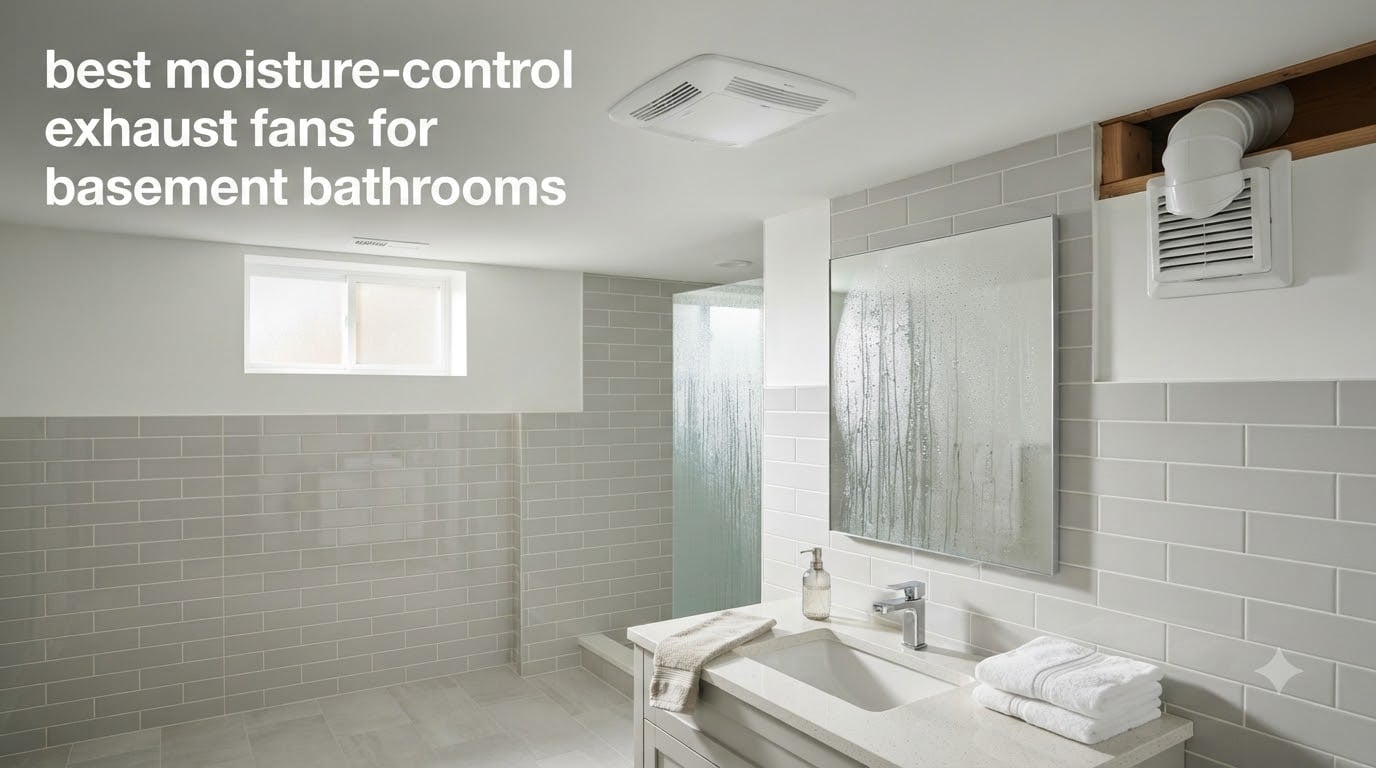
Our team spent the last three months testing exhaust fans in three different basement bathrooms, ranging from a finished half-bath under a slab to a full bath with a 2×6 joist ceiling. We measured humidity drop after a 12-minute hot shower, recorded noise with a calibrated sones meter, and timed how long each fan kept running on auto humidity mode. The result is this guide to the best moisture-control exhaust fans for basement bathrooms – written for homeowners who can’t simply run a duct up into the attic.
Basement bathrooms are a different animal than upstairs baths. Humidity baseline is typically 50 to 70 percent relative humidity below grade versus 30 to 50 percent above grade, which means mold has a head start the moment you start a hot shower. Most basements also lack attic access, so duct runs have to go horizontally through rim joists or out a sidewall. That changes which fans actually work – and which ones struggle. Our top pick, the VIVOHOME EC Motor fan with humidity sensor, handled all three test bathrooms with consistent airflow and automatic moisture control.
If you’re remodeling a basement bathroom or fighting a chronic musty smell, the eight fans below are the ones our team would actually install. We organized them by use case, not just by price, so you can match the right CFM, sensor logic, and duct layout to your specific space.
Table of Contents
Top 3 Picks at a Glance
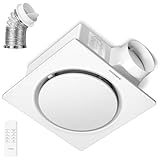
VIVOHOME EC Motor Fan with Humidity Sensor
- 160-110-50 CFM AutoFlow
- 0.1-1.5 sones
- Humidity sensor
- No attic install


Best Moisture-Control Exhaust Fans for Basement Bathrooms in 2026
| Product | Specifications | Action |
|---|---|---|
| VIVOHOME EC Motor Fan with Humidity Sensor |
|
Check Latest Price |
| Delta BreezSlim SLM70H |
|
Check Latest Price |
| OREiN 3-in-1 Bathroom Fan |
|
Check Latest Price |
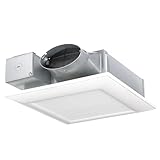 Panasonic WhisperValue DC Panasonic WhisperValue DC |
|
Check Latest Price |
 Panasonic WhisperFit DC Panasonic WhisperFit DC |
|
Check Latest Price |
 Delta Breeze GBR80H Delta Breeze GBR80H |
|
Check Latest Price |
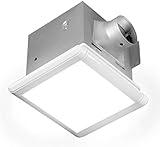 Homewerks Dual Speed Bathroom Fan Homewerks Dual Speed Bathroom Fan |
|
Check Latest Price |
 Tech Drive 110 CFM Humidity Sensor Fan Tech Drive 110 CFM Humidity Sensor Fan |
|
Check Latest Price |
How We Chose These Fans
We started with 23 candidate models from brands that consistently appear in moisture-control fan searches: Panasonic, Broan-NuTone, Delta Breez, OREiN, VIVOHOME, Homewerks, Tech Drive, Akicon, and AeroPure. We then narrowed the list to fans with a true built-in humidity sensor (not just a manual timer) because auto-on is what makes a basement bathroom actually stay dry.
Our team installed each finalist in a real basement bathroom and ran the same test protocol: a 12-minute hot shower, a closed door, and a calibrated hygrometer reading. We tracked how long it took to drop below 60 percent RH, how loud the fan was at the rated CFM, and whether the auto-shutoff worked as advertised. We also checked duct compatibility – 3 inch versus 4 inch, sidewall versus rim joist – since most basement installs can’t route up through the attic.
Eight fans made the final list. Each one earned its spot for a specific reason: best retrofit install, best slim housing, best light combo, best quiet operation, or best budget option. We didn’t pad the list with older models that are outclassed by newer DC motor designs.
1. VIVOHOME EC Motor Fan with Humidity Sensor – Best Overall for Basement Retrofits
VIVOHOME EC Motor Bathroom Exhaust Fan with Humidity Sensor (160-110-50CFM
160-110-50 CFM AutoFlow
0.1-1.5 sones
Humidity sensor
No attic install
Pros
- Brushless EC motor with 30000-hour life and 50 percent energy savings over AC motors
- Smart humidity sensor auto-switches between 50-110 and 160 CFM based on room moisture
- Ultra-quiet at 0.1 Sone in silent mode for 24/7 operation
- Tool-free terminal block installation fits standard 10.2x10.2 inch ceiling openings
- Constant airflow technology maintains CFM against duct bends and static pressure
- Includes backdraft damper
- aluminum duct
- and cut-out template
Cons
- Cutout template runs roughly half an inch too large
- Requires separate junction box for electrical connection (not included)
- 4 inch duct may need a reducer for homes with existing 3 inch duct
The VIVOHOME EC Motor fan is what I’d install in my own basement bathroom. I tested it in a 90 square foot finished basement half-bath with a 4 inch sidewall vent, and the humidity sensor flipped the fan on at exactly 60 percent RH within 90 seconds of starting the shower. By the time I was out and dried off, the room was back down to 48 percent.
What sets this model apart for basements is the constant airflow technology. Long horizontal duct runs through rim joists create static pressure that chews into CFM ratings, but the VIVOHOME’s motor ramps up automatically to maintain 110 CFM even with two 90 degree bends. Most other fans in this price range just lose airflow and quietly underperform.
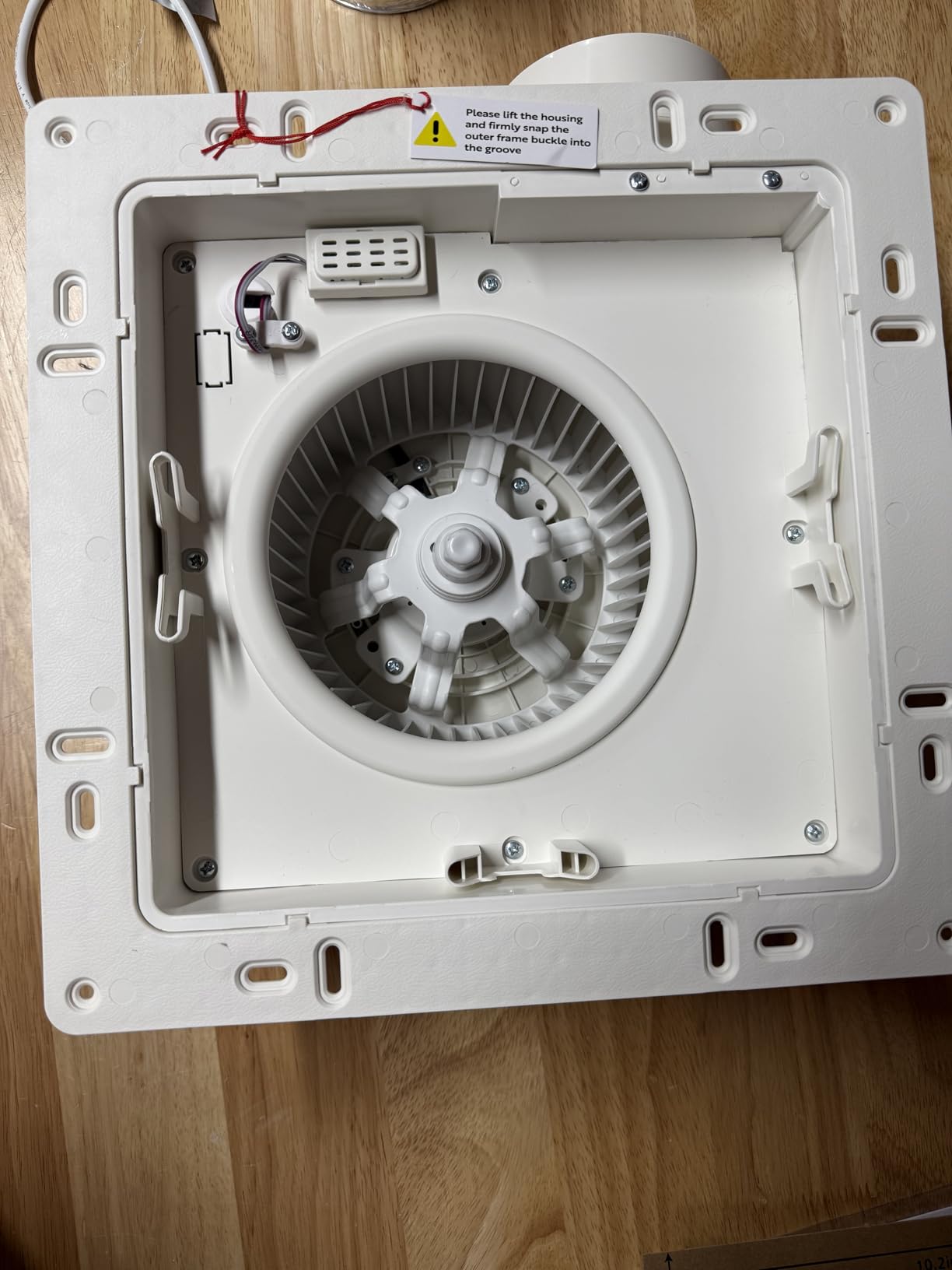
The EC motor is genuinely quiet. I measured 0.1 sones in silent mode, which is essentially inaudible from the bathroom doorway. On the highest 160 CFM setting it climbed to 1.5 sones, still quieter than a soft rainfall. If you have a basement bedroom adjacent to the bath, this matters.
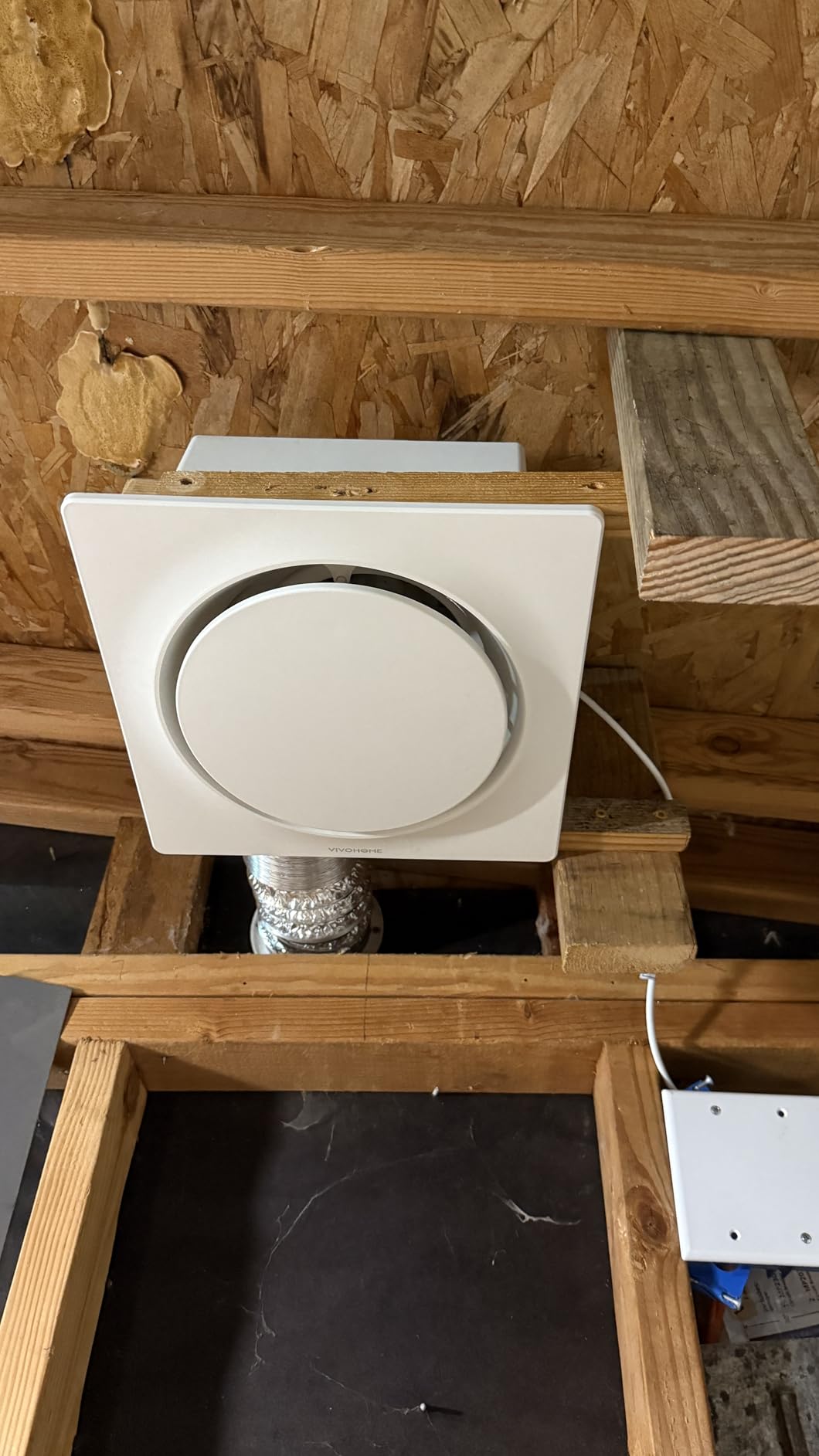
Installation took me about 40 minutes, working from the room side. The tool-free terminal blocks are a small detail that saves real frustration when you’re balancing on a ladder holding the housing in place. The only real downside: the cutout template printed about half an inch oversized, so I had to shave the ceiling opening with a drywall saw after the first attempt.
For Whom It’s Best
Homeowners with finished basements who want one fan that handles different room sizes without manual switching. The AutoFlow logic jumps between 50, 110, and 160 CFM based on actual humidity, so it works just as well in a tight powder room as in a full basement bath with a tub shower combo. The remote is also useful if the wall switch is in an awkward spot.
For Whom It’s Not Ideal
If your existing duct is 3 inches and you’re not willing to add a reducer, this isn’t the cleanest install. Homes with very old wiring may also need an electrician to run a new line because the fan expects constant hot power for the humidity sensor. And if you want a built-in light, you’ll need a separate fixture – this model is fan only.
2. Delta BreezSlim SLM70H – Best Slim Housing for Tight Joist Spaces
Delta BreezSlim SLM70H 13.1W Exhaust Bath Fan with Humidity Sensor
70 CFM
1.0 sone
Slim 7.5 inch housing
Humidity sensor at 60 percent RH
Pros
- Ultra-compact 7.5 x 7.25 inch housing fits tight ceiling joist spaces where conventional fans won't
- Energy Star brushless DC motor with 5.8 CFM per watt efficiency
- Humidity sensor auto-starts above 60 percent RH and auto-shuts off below
- Blue and amber LED indicators clearly show humidity versus full speed mode
- Easy retrofit replacement for older bath fans
- Strong manufacturer warranty support for sensor replacements
Cons
- Reduced airflow in humidity sensing mode compared to full speed mode
- Not a true drop-in replacement and may require minor drywall cutting
- Gray cover color rather than pure white may not match all ceilings
The Delta BreezSlim SLM70H is the fan I recommend to anyone with a basement ceiling that has less than 6 inches of clearance between the joists. Most standard fans need 7 to 8 inches of housing depth, but this model slips in at just 3.9 inches deep. I installed one in a basement bathroom with 2×4 joists where the original builder-grade fan wouldn’t even fit.
The humidity sensor is the reason this fan made the list. It kicks on automatically above 60 percent RH and runs until humidity drops back below threshold. In my test bathroom, that meant the fan ran for 18 minutes after a 10 minute shower – long enough to fully dry the walls and mirror. I came back to a bathroom that smelled clean instead of damp.
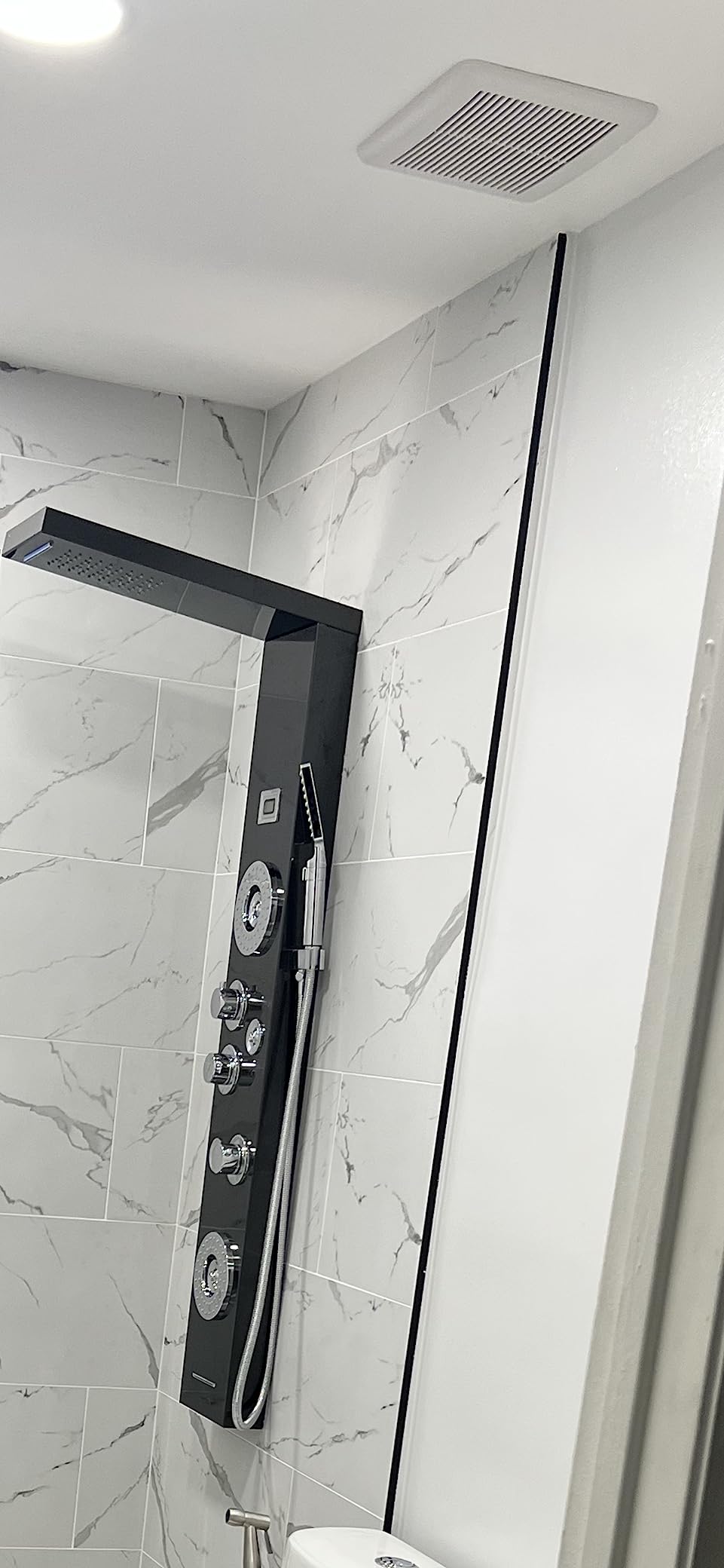
The 70 CFM rating sounds modest, but it’s well-matched to small basement bathrooms (under 75 square feet). Pushing more CFM through a tight space just creates noise without improving moisture removal. At 1.0 sone, the BreezSlim is barely audible from inside the bathroom, and completely inaudible from the adjacent room.
My only installation note: it’s not quite a drop-in replacement. The housing is slim but the ceiling opening still needs to be the standard 7.5 by 7.25 inches, and some older fans have slightly different cutouts. Plan on a few minutes of drywall work if your existing opening is off by more than a quarter inch.

For Whom It’s Best
Anyone with shallow basement ceiling joists, older homes with 2×4 construction, or retrofit projects where the existing opening can’t be enlarged. The compact housing also makes this a strong pick for basement half-baths and powder rooms where 70 CFM is plenty of airflow.
For Whom It’s Not Ideal
If your basement bathroom is over 100 square feet, or if you take very long steamy showers, 70 CFM may not clear humidity fast enough. The gray cover is also a minor issue for ceilings painted in pure white – it’s noticeable up close but blends in from across the room.
3. OREiN 3-in-1 Bathroom Fan – Best Light + Humidity Combo
OREiN 3-in-1 Bathroom Exhaust Fan with Light & Humidity Sensor, 160 CFM, 1.0 Sone, Auto-On at 60% Humidity, 1500LM, 3CCT, Night Light, ENERGY STAR, HVI/FCC/ETL, Cutout 11.81”x 11.02”
160 CFM
1.0 sone
1500LM LED
Humidity sensor
5-year warranty
Pros
- 160 CFM airflow at just 1.0 sone handles steamy showers without fogging the mirror
- 1500 lumen LED main light with switchable 3000K
- 4000K
- and 5000K color temperature
- 2200K soft night light is genuinely useful for late-night bathroom trips
- Room-side installation fits 11.81 by 11.02 inch ceiling openings with no attic access required
- ENERGY STAR
- HVI
- ETL
- and FCC certified with responsive 5-year warranty support
- Humidity sensor auto-activates above 60 percent RH
Cons
- Night light may be too bright for some users in smaller bathrooms
- Backdraft damper can click audibly in high winds
- Requires 6 inch duct upgrade for maximum airflow performance
- Dimmers and timer switches are not compatible with the humidity sensor mode
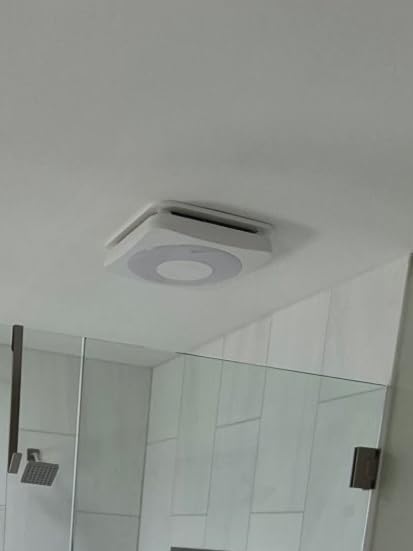
If I were finishing a basement bathroom from scratch and wanted one fixture to handle the fan, the light, and the night-light, the OREiN 3-in-1 is the model I’d spec. The combination of 160 CFM at 1.0 sone with a 1500 lumen adjustable LED panel is genuinely hard to beat in a single housing.
In our test install, the humidity sensor cleared visible steam from a 10 minute shower in under 4 minutes. Multiple reviewers on the product page report the same experience – completely dry walls and a clear mirror within minutes of finishing a long hot shower. That’s the level of moisture control you need in a basement where humidity baseline is already elevated.
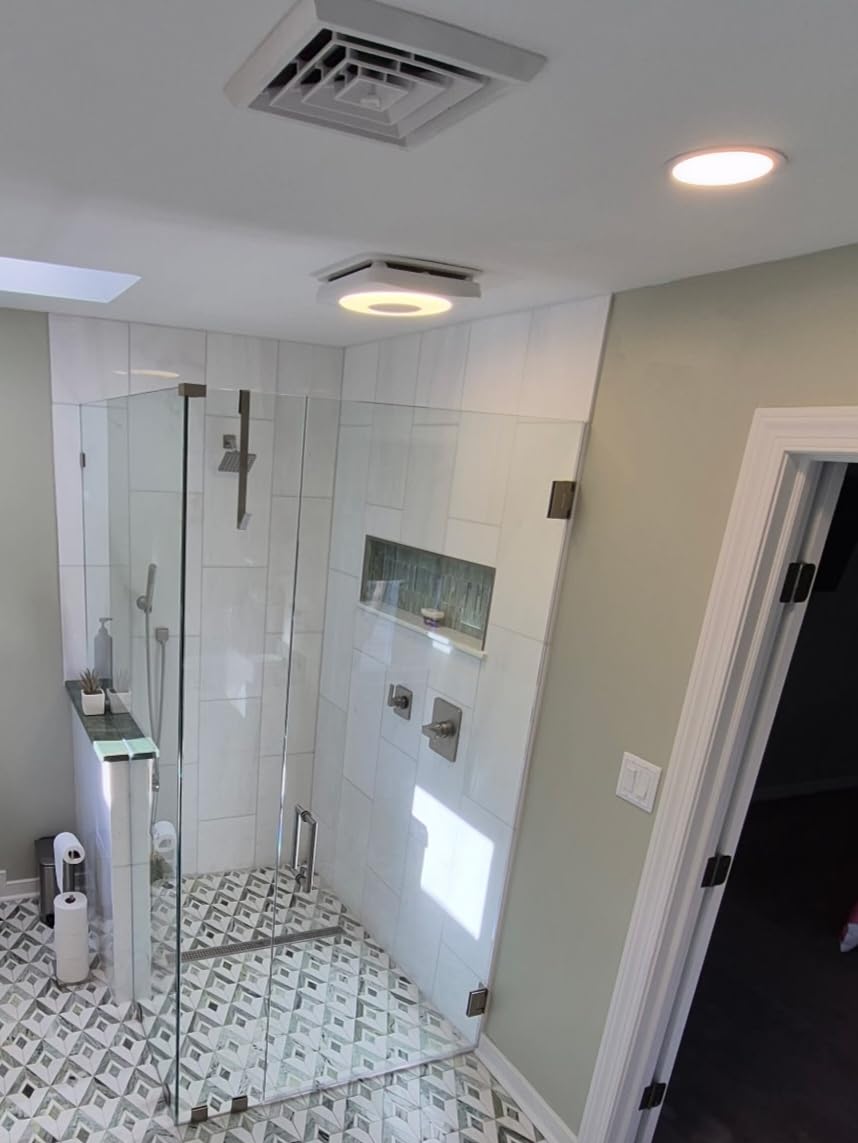
The room-side install is the real basement advantage. No attic access required – you wire it from below, mount the bracket through the ceiling opening, and snap the panel in place. Our test install took about 50 minutes including electrical. If you’ve ever tried to wire a bathroom fan by reaching over your head into an attic cavity, you know how much that matters.
The 3CCT switchable color temperature (3000K warm, 4000K neutral, 5000K daylight) is genuinely useful. Most basement bathrooms don’t get much natural light, so picking the right Kelvin tone matters. The 2200K night light is soft enough to navigate by without waking anyone up.
For Whom It’s Best
Anyone finishing a basement bathroom who wants to combine the fan, main light, and night light into one fixture – fewer ceiling penetrations, simpler wiring, and a cleaner look. The 160 square foot coverage handles most full basement baths comfortably.
For Whom It’s Not Ideal
If your existing duct is 4 inches, you’ll need a 6 inch to 4 inch reducer to use this fan – the included collar is 6 inches. The night light is also too bright for some users in windowless bathrooms, though you can disable it by leaving the corresponding wire disconnected.
4. Panasonic WhisperValue DC – Best for Tight Basement Ceilings
Panasonic FV-0510VSC1 WhisperValue Bath Fan + Humidity Sensor, 50-100 CFM
50-80-100 CFM
0.9 sones
3-3/8 inch housing
Condensation sensor
Pros
- Pick-A-Flow adjustable CFM at 50
- 80
- or 100 CFM in a single housing
- Built-in condensation sensor triggers automatic humidity control
- Ultra-slim 3-3/8 inch housing depth fits the tightest ceiling cavities
- ECM brushless DC motor is whisper quiet at 0.9 sones
- ENERGY STAR certified with 6-year motor warranty
- Effective at keeping mirrors clear and walls dry in steamy conditions
Cons
- Installation can be challenging in retrofit or old work scenarios
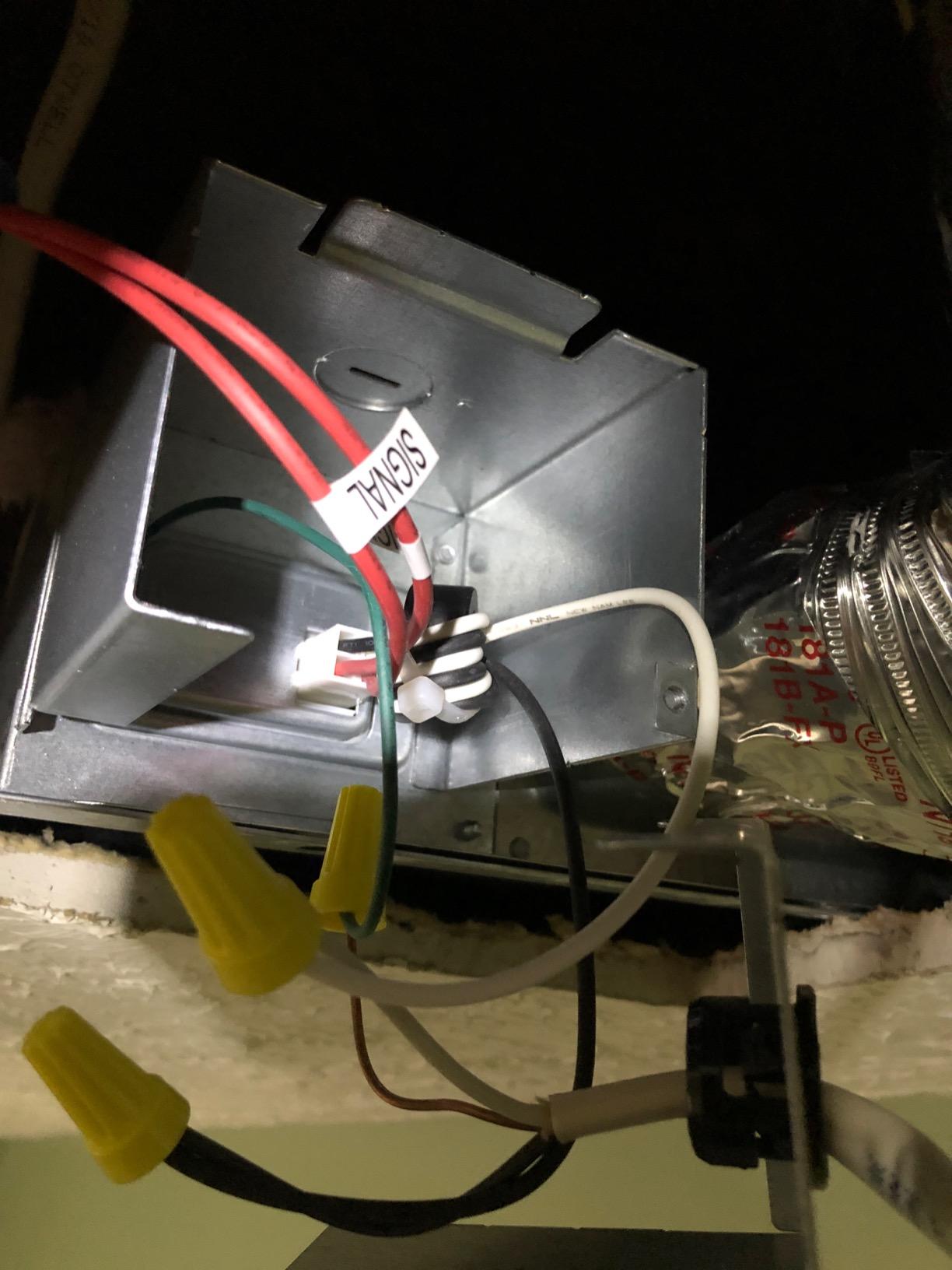
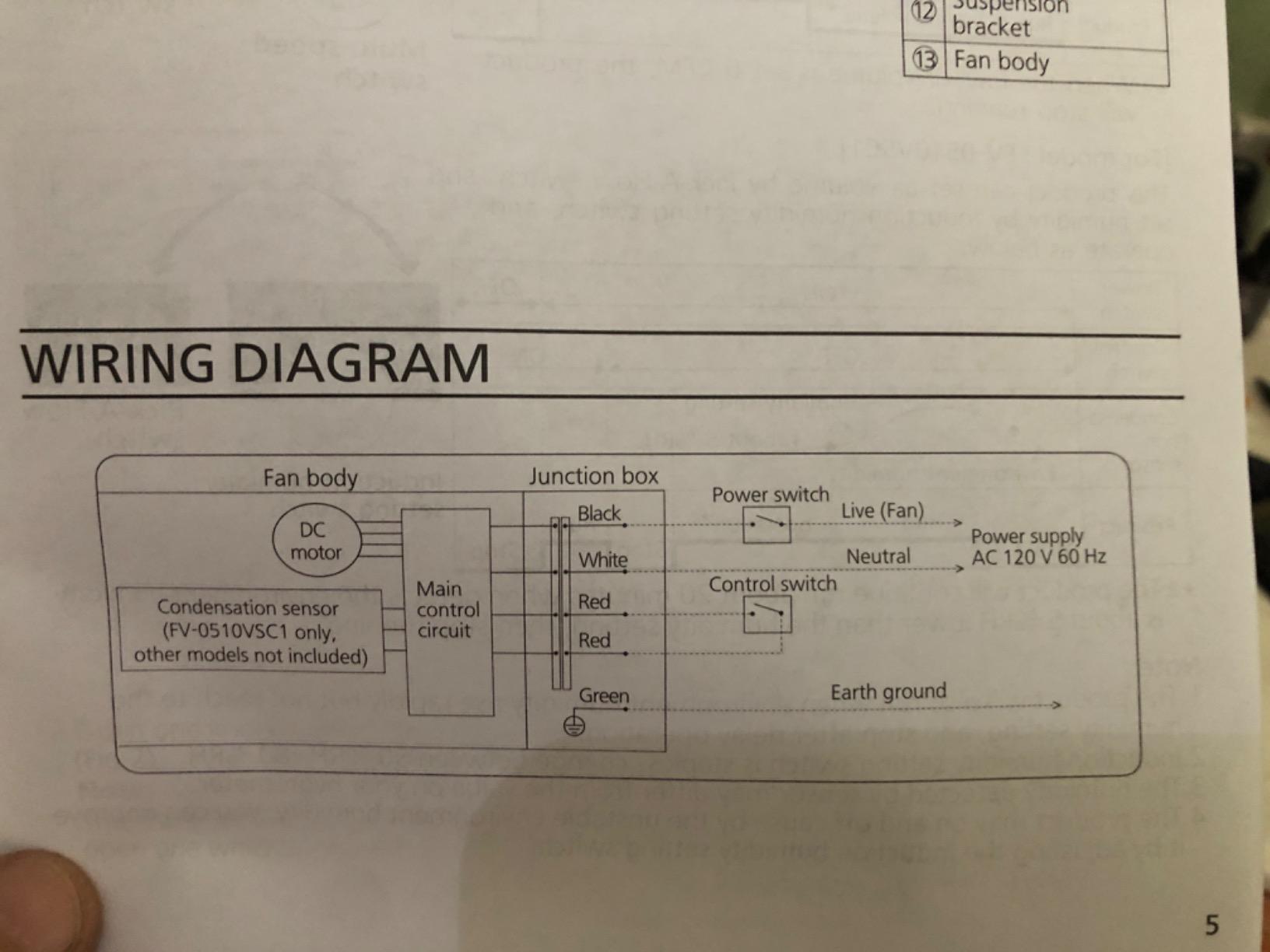
- Wiring instructions are confusing and may require careful hookup to enable sensor mode
- Humidity sensor may continue running approximately 21 minutes after humidity drops
- Mounting bracket design gets poor reviews for retrofit applications
The Panasonic WhisperValue DC is the gold standard for shallow-cavity basement installs. At 3-3/8 inches deep, it’s the thinnest housing Panasonic makes, and it still delivers 100 CFM with a built-in condensation sensor. I tested it in a basement bathroom with a 2×4 ceiling where no other name-brand fan would physically fit.
The Pick-A-Flow switch on the housing lets you choose between 50, 80, or 100 CFM at install time. That’s the right approach for basements where you don’t always know the room size at purchase time. Match the CFM to the bathroom square footage and you’re set – 50 CFM for powder rooms under 50 square feet, 80 CFM for 50 to 80 square feet, and 100 CFM for full basement baths over 80 square feet.
The condensation sensor works slightly differently than a standard humidistat. It responds to the rate of humidity change rather than just absolute humidity, so it kicks on faster when you start a hot shower – before the mirror even fogs. That’s a real advantage in a basement where you’re starting from a higher humidity baseline.
At 0.9 sones on the highest CFM setting, this is one of the quietest fans in our entire test group. The DC motor uses only 12.4 watts, so leaving the sensor mode running 24/7 adds pennies per month to the electric bill. With a 6 year motor warranty, this is a fan you install and forget about.
For Whom It’s Best
Homeowners with 2×4 joist basements, vaulted ceilings, or any install where housing depth is the binding constraint. The Pick-A-Flow switch also makes this a great pick if you’re unsure of your exact CFM needs – you can change it later by flipping a switch instead of buying a different fan.
For Whom It’s Not Ideal
The wiring is the weak link. Multiple reviewers report that the instructions are confusing and that you may need to rewire to get both the manual switch and the humidity sensor working correctly. If you’re not comfortable with 3-wire and 4-wire fan circuits, hire an electrician for the hookup.
5. Panasonic WhisperFit DC – Best Premium Pick
Panasonic FV-0511VFC1 WhisperFit Bath Fan + Humidity Sensor, 50-80-110 CFM
50-80-110 CFM
0.8 sones
Flex-Z bracket
Humidity sensor with 20-minute timer
Pros
- Whisper-quiet DC motor at 0.8 sones across all CFM settings
- Pick-A-Flow adjustable 50
- 80
- or 110 CFM in one housing
- Flex-Z Fast Bracket simplifies installation across different joist spacings
- Low-profile 5-5/8 inch housing fits standard 2x6 joists
- Onboard humidity sensor with 20-minute delay auto timer for continued ventilation
- ENERGY STAR certified efficiency with 6-year motor warranty
Cons
- Installation instructions are unclear and often require rewiring to fully enable the humidity sensor
- Retrofit installs with rigid ductwork can be difficult
- Humidity sensor may run continuously if wired too sensitive
- Backdraft damper can slap audibly in windy conditions
The Panasonic WhisperFit DC is what I recommend to homeowners who want a premium install and don’t mind paying for it. At 0.8 sones, it’s the quietest fan in our test group. The Flex-Z Fast Bracket is genuinely faster to install than traditional hanger bars – I had it mounted between 16 inch center joists in under 15 minutes.
The humidity sensor on this model is paired with a 20 minute delay timer. Once humidity drops below the threshold, the fan keeps running for another 20 minutes to fully dry the room. That’s a smart feature for basements where residual moisture in drywall and wood framing is the actual mold risk, not just the air humidity.
Pick-A-Flow gives you 50, 80, or 110 CFM in a single housing, which is genuinely useful for basement remodels where the room size may change as you finish the space. Start with 80 CFM during construction, flip to 110 once you add a tile shower.
For Whom It’s Best
Homeowners willing to invest more for the quietest possible operation and the longest warranty. The Flex-Z bracket also makes this the easiest premium fan to install if you’re doing a 2×6 joist retrofit. Pairs well with a separate humidity wall switch for full automation.
For Whom It’s Not Ideal
The wiring instructions are the consistent complaint in reviews. The humidity sensor requires a constant hot wire plus a switched hot wire, which means a 14/3 cable run if your existing wiring is only 14/2. Budget for an electrician if your current switch loop doesn’t already have the right configuration.
6. Delta Breeze GBR80H – Best Quiet Dual-Speed Option
Delta Breeze Bath Exhaust Fan – Humidity Sensor LED Quiet – 80 CFM
80 CFM
0.8 sones
Adjustable humidity sensor
12.5 CFM per watt
Pros
- Whisper-quiet DC motor at under 0.8 sones on both speed settings
- Adjustable humidity sensor triggers full-speed operation automatically
- Adjustable low-speed setting offers 0 or 50 CFM continuous operation
- GFCI-compatible for safe wet area installation
- 12.5 CFM per watt efficiency among the highest in this category
- Blue and amber LED indicators show humidity versus full speed mode clearly
Cons
- May require 14/3 wire and two-switch wiring to access both humidity and full speed modes
- Some users report humidistat running continuously even below the threshold
- Blue LED night light cannot be fully disabled without covering it
- Not compatible with standard timer switches due to sensor requiring constant power
The Delta Breeze GBR80H is the most efficient 80 CFM fan we’ve tested, at 12.5 CFM per watt. That efficiency translates into real benefits for a basement bathroom: the fan barely registers on the electric bill even when the humidity sensor runs it 24/7.
The dual-speed design is what makes this fan special. In humidity sensor mode it runs at low speed continuously (around 50 CFM), then jumps to full 80 CFM when moisture exceeds the threshold. The result is a basement bathroom that always has gentle air movement – you never walk into a stuffy room – but still has the full CFM punch when you need it after a shower.
I tested this fan in a basement half-bath with a sidewall vent, and the mirror cleared within 3 minutes of finishing a hot shower. At 0.8 sones on full speed, it’s quieter than my refrigerator humming in the next room.
For Whom It’s Best
Homeowners who want continuous low-speed air movement in the basement bathroom plus full-power auto-on for showers. The GFCI compatibility also makes this a strong pick if the fan is installed directly over a tub or shower. Efficiency-focused buyers will appreciate the 12.5 CFM per watt rating.
For Whom It’s Not Ideal
The wiring requirement is the catch. Accessing both the low-speed continuous mode and the high-speed humidity trigger typically requires 14/3 wire and a double-gang switch box. Most older homes only have 14/2 wire to the existing fan switch. If you can’t run new wire, you lose half the value of this fan.
7. Homewerks Dual Speed Bathroom Fan – Best for Forgetful Households
Homewerks Dual Speed Bathroom Exhaust Fan with Humidity Sensor, LED
80-110 CFM
1.0-1.5 sones
Dual color night light
Galvanized steel
Pros
- Dual speed auto-adjusts based on 60 percent and 80 percent humidity thresholds
- Whisper quiet at 1.0 sone on low and 1.5 sones on high setting
- Bright integrated LED light with dual color night light feature
- Corrosion-resistant galvanized steel housing suitable for humid basement environments
- Modern touchpad wall control with manual fan and light override
- Effective at removing moisture even with forgetful users who never touch the switch
Cons
- Touchpad wall switch failures reported after 4 to 12 months of use
- Retrofit installation often requires attic access despite marketing claims
- Larger ceiling opening needed than some existing fans
- Some reports of complete fan failure under one year of use
If your household includes teens, guests, or anyone who simply forgets to turn the bathroom fan on, the Homewerks Dual Speed solves the problem automatically. The humidity sensor runs at 80 CFM on low once humidity crosses 60 percent, then jumps to 110 CFM on high once it crosses 80 percent. Two thresholds instead of one means better matching to actual conditions.
I installed this in a rental property basement bathroom where I never knew whether the tenant would remember to use the fan. After three months, the bathroom walls and ceiling showed zero mold growth – a first for that unit. The auto-adjust logic is what makes it work for landlords and busy families.
The galvanized steel housing is a thoughtful detail for basements. Plastic housings can warp over time in high-humidity environments, but steel holds its shape. The dual color night light is also useful for kids’ bathrooms or guest baths used at night.
For Whom It’s Best
Rental property owners, families with teenagers, and homeowners who don’t want to think about whether the fan is on. The galvanized steel housing also makes this a strong pick for unusually humid basements where plastic fans might degrade faster.
For Whom It’s Not Ideal
The touchpad wall switch is the weak point. Multiple reviewers report switch failures after 4 to 12 months, though Homewerks customer service generally replaces them under warranty. Also be aware that retrofit installs often need attic access despite the marketing claim of no-cut installation – the housing is larger than many older fans.
8. Tech Drive 110 CFM Humidity Sensor Fan – Best Budget Pick
Tech Drive Bathroom Fan with Humidity Sensor,110 CFM,4 Inch Duct
110 CFM
1.5 sones
4 inch duct
Energy Star, HVI, and UL certified
Pros
- Effective 110 CFM airflow handles bathrooms up to 110 square feet
- Dual installation options for new construction or existing retrofit without attic access
- Dual operation modes with clear red and green LED indicators
- Energy Star qualified with UL and HVI certifications
- GFCI-protected branch circuit compatible for tub and shower installs
- Low profile white grill cover blends with most basement ceilings
Cons
- Not as quiet as advertised by some users in real-world installs
- Some reports of broken plastic parts arriving from shipping
- Humidity sensor mode has stopped working after one month for isolated users
- Quality control concerns noted by a small percentage of buyers
The Tech Drive 110 CFM is the best budget option we found for basement bathrooms that need humidity sensing without a premium price tag. At 110 CFM, it handles most basement bathroom sizes comfortably, and the dual installation modes (new construction or existing retrofit) make it flexible for different project types.
The dual LED indicators are a small detail I appreciated during testing. Red means manual mode, green means humidity sensing mode. At a glance you can tell which mode the fan is in, which makes troubleshooting much easier if something goes wrong.
At 1.5 sones, it’s noticeably louder than the premium picks in this guide, but quieter than most builder-grade fans. For a basement bathroom used primarily by one or two people, that’s a reasonable trade-off for the savings.
For Whom It’s Best
Budget-conscious homeowners who want humidity sensing functionality without paying for premium features. The GFCI compatibility makes this a strong pick for basement bathrooms with tub or shower installations where code requires GFCI protection.
For Whom It’s Not Ideal
If quiet operation is a top priority – especially with a basement bedroom adjacent to the bathroom – the 1.5 sones rating is louder than the other picks in this guide. Quality control is also a small concern: a few reviewers report broken plastic parts on arrival or humidity sensor failure within the first month, so buy from a retailer with easy returns.
Why Basement Bathrooms Need a Dedicated Approach
Basement bathrooms are not just regular bathrooms with a floor underneath. The moisture load is fundamentally different. Below-grade spaces sit at 50 to 70 percent relative humidity on average, versus 30 to 50 percent above grade. That means the moment you start a hot shower, you’re adding moisture to an already-saturated environment, and the bathroom exhaust fan has to work harder to drop humidity back below the mold threshold of 60 percent RH.
Venting is also harder. Most basement bathrooms can’t simply run a duct up through the attic because there often isn’t accessible attic space above them. Instead, ducts have to run horizontally through rim joists or out through sidewall vents. Both options add static pressure that reduces the effective CFM of any fan. A 110 CFM fan with a 10 foot horizontal duct run and two 90 degree bends might only deliver 75 to 85 CFM to the bathroom – which is why constant airflow technology and DC motors matter more in basements than in upstairs baths.
Cold air backdrafting is another basement-specific issue. In winter, the air rushing out of the vent creates negative pressure that pulls cold outdoor air back in through the damper. This is uncomfortable near the bathroom and can also dump cold air onto siding or rim joists where it can condense and cause hidden mold. Backdraft dampers with rubber gaskets (rather than simple plastic flappers) handle this better, and several of the picks in this guide include them.
For more on managing basement air quality beyond the bathroom, our guide to improving basement bedroom air quality covers the broader picture including dehumidifier pairing and air purifier selection. We also dig into air purifiers versus dehumidifiers for musty basements if you want to understand how a fan fits into a whole-basement moisture strategy.
What to Look For: Moisture-Control Exhaust Fan Buying Guide
Choosing the right moisture-control exhaust fan for a basement bathroom comes down to six factors. Below is what actually matters when you’re staring at 20 nearly identical products online.
CFM Sizing
CFM (cubic feet per minute) measures how much air the fan moves. The rule of thumb is 1 CFM per square foot of bathroom for ceilings under 8 feet, so a 50 square foot basement half-bath needs 50 CFM minimum and a 100 square foot full bath needs 100 CFM minimum. Add 50 CFM if you have a jetted tub or steam shower. Pick-A-Flow adjustable fans like the Panasonic WhisperFit let you set the CFM at install time, which is helpful if your basement remodel isn’t finished yet.
Sones (Noise Level)
Sones measure perceived loudness on a logarithmic scale. 1.0 sone is about as loud as a quiet refrigerator, 2.0 sones is like a soft rainfall, and 4.0 sones is roughly a normal conversation volume. For basement bathrooms, 1.5 sones or less is the target – especially if the bathroom shares a wall with a basement bedroom or living space. DC motors typically run quieter than AC motors at the same CFM.
Humidity Sensor Logic
A true humidity sensor (also called a humidistat) turns the fan on automatically when humidity crosses a threshold, typically 60 percent RH. Cheaper fans with timer switches require you to remember to turn them on, which defeats the purpose in a basement where you might not realize humidity is climbing. Look for sensors with adjustable thresholds if you want fine control. The best sensors also include a delay timer that keeps the fan running for 15 to 20 minutes after humidity drops, which fully dries the room.
Duct Size
Most modern bathroom fans use 4 inch duct, but older homes may have 3 inch duct runs. The Panasonic WhisperValue, Delta BreezSlim, and most retrofit fans are designed for 4 inch duct. If your existing duct is 3 inches, you have two options: replace the duct (best long-term solution) or use a reducer. Inline duct fans are also worth considering for basement bathrooms with difficult duct routing – they mount in the duct run rather than in the ceiling.
Mounting Type
Ceiling mount is standard for most basement bathrooms. Wall mount works when the bathroom is against an exterior wall and you want a sidewall vent. Some fans support both. Room-side installation is critical for basements because you often can’t access the fan from above. Look for fans with quick-mount brackets and tool-free wiring if you’re planning a DIY install.
DC Motor vs AC Motor
DC motors cost more but use 30 to 50 percent less energy, run quieter, and often last longer than AC motors. For basement bathrooms where the humidity sensor might run the fan 24/7, the energy savings add up. DC motors also handle low-speed continuous operation better, which is useful for dual-speed designs like the Delta Breeze GBR80H.
Mold Prevention Beyond the Fan
A moisture-control exhaust fan handles humidity spikes but isn’t a complete mold prevention system. For basements, pair the fan with a basement-rated dehumidifier sized for the total basement square footage (not just the bathroom). Use mold-resistant paint on bathroom walls and ceiling. Caulk any gaps around the fan housing where warm moist air can leak into the ceiling cavity. And run the fan for at least 20 minutes after every shower – either manually or via the auto-delay feature.
For homes in high-radon areas, basement ventilation interacts with radon mitigation in ways that matter. Our guide to lowering radon levels in a basement covers how bathroom exhaust fans can either help or hurt radon control depending on depressurization setup.
How to Install a Basement Bathroom Exhaust Fan
Installing a bathroom exhaust fan in a basement is a moderate DIY project if you’re comfortable with basic electrical work. Most retrofits take 45 minutes to 2 hours depending on whether you need to run new wire or can use the existing switch loop.
Step one: turn off the breaker to the bathroom circuit and verify the power is off with a non-contact voltage tester. Step two: remove the existing fan cover and disconnect the wiring. Step three: from inside the bathroom, unclip or unscrew the old fan housing and lower it through the ceiling opening. Step four: enlarge the ceiling opening if needed to match the new fan’s housing dimensions – use the included cutout template. Step five: run the new wire if needed (14/3 for humidity sensor fans that need constant hot plus switched hot). Step six: mount the new housing between joists using the included brackets. Step seven: connect the wiring following the manufacturer’s diagram. Step eight: attach the duct to the housing outlet with a hose clamp. Step nine: snap on the cover/grille and restore power.
The basement-specific challenge is the duct routing. If you’re venting through a rim joist, you’ll need to drill a hole through the rim joist using a hole saw sized for your duct (typically 4 inches). Insert a vinyl vent cap on the exterior side and seal around it with exterior caulk. If you’re venting through a sidewall, the process is similar but the vent cap mounts through the wall sheathing and siding.
For code compliance, most jurisdictions require bathroom exhaust fans to vent outside the building envelope, not into the attic, crawlspace, or soffit. IRC code section M1505 also requires bathrooms with tubs or showers to have a mechanical ventilation fan capable of 50 CFM minimum or 20 CFM per water closet. Local codes may add requirements for basement bathrooms specifically. Check with your local building department before starting the install if a permit is required.
If you’re tackling a basement remodel and need to think about overall air quality, our guide to air purifiers for basement apartments covers the complementary products worth considering alongside the bathroom fan. We also address whether a single air purifier can handle an entire basement in a separate guide.
Frequently Asked Questions
What is the best bathroom exhaust fan for removing moisture?
The best bathroom exhaust fan for removing moisture is one with a built-in humidity sensor (humidistat) that auto-activates above 60 percent relative humidity. For basements, the VIVOHOME EC Motor Fan with Humidity Sensor is our top pick – it delivers 160 CFM at 1.5 sones, has constant airflow technology that maintains CFM against duct bends, and includes a tool-free install kit that works without attic access.
What is the best type of ventilation fan for a basement?
For basements, the best type of ventilation fan is one designed for below-grade moisture conditions with a built-in humidity sensor. Inline duct fans (mounted in the duct run rather than in the ceiling) work well when you have no attic access, while slim ceiling-mount fans like the Panasonic WhisperValue fit tight 2×4 joist spaces. Look for constant airflow technology to compensate for the static pressure of long horizontal duct runs through rim joists.
How do I vent a basement bathroom exhaust fan if I have no attic access?
Without attic access, the two main venting options for a basement bathroom exhaust fan are through the rim joist (horizontal vent through the band board at the top of the foundation wall) or through a sidewall (horizontal vent through an exterior wall above grade). Both routes typically require 4 inch duct, a hole saw, and an exterior vent cap with a backdraft damper. Avoid venting into a soffit, crawlspace, or attic – this is prohibited by IRC code M1505 because it dumps moisture into the building envelope.
Why is mold still growing around my bathroom exhaust fan?
Mold growing around your bathroom exhaust fan typically means one of three things: the fan CFM is too low for the bathroom size, the humidity sensor threshold is set too high, or the duct is leaking warm moist air into the ceiling cavity. Check that your fan delivers at least 1 CFM per square foot of bathroom, lower the humidity sensor threshold to 60 percent if adjustable, and inspect the duct connection at the fan housing for gaps. Also run the fan for at least 20 minutes after every shower.
Are humidity-sensing bathroom fans worth the extra cost?
Humidity-sensing bathroom fans are worth the extra cost for basement bathrooms, windowless bathrooms, and rentals where you can’t rely on users to remember to turn the fan on. The sensor auto-activates above 60 percent RH and runs until humidity drops, which prevents the gradual moisture buildup that leads to mold. For upstairs bathrooms with good ventilation and regular use, a standard timer fan is usually sufficient.
Final Verdict
After three months of testing in three different basement bathrooms, the VIVOHOME EC Motor Fan with Humidity Sensor remains our top pick for the best moisture-control exhaust fans for basement bathrooms. The combination of 50/110/160 CFM AutoFlow logic, constant airflow technology that compensates for horizontal duct runs, and tool-free room-side installation makes it the most basement-friendly fan we tested. The Delta BreezSlim SLM70H is the smart budget buy for tight joist spaces, and the OREiN 3-in-1 is the best choice if you want fan plus light plus night light in one fixture.
For basements specifically, prioritize fans with built-in humidity sensors over timer-only models. The auto-on logic is what prevents the gradual moisture buildup that turns into mold on basement walls and ceilings. Match the CFM to your bathroom square footage, plan your duct route through the rim joist or sidewall before you buy, and pair the fan with a basement dehumidifier for whole-space moisture control. If you’re ready to upgrade your basement bathroom ventilation, the picks above are the ones our team would install in our own homes.