
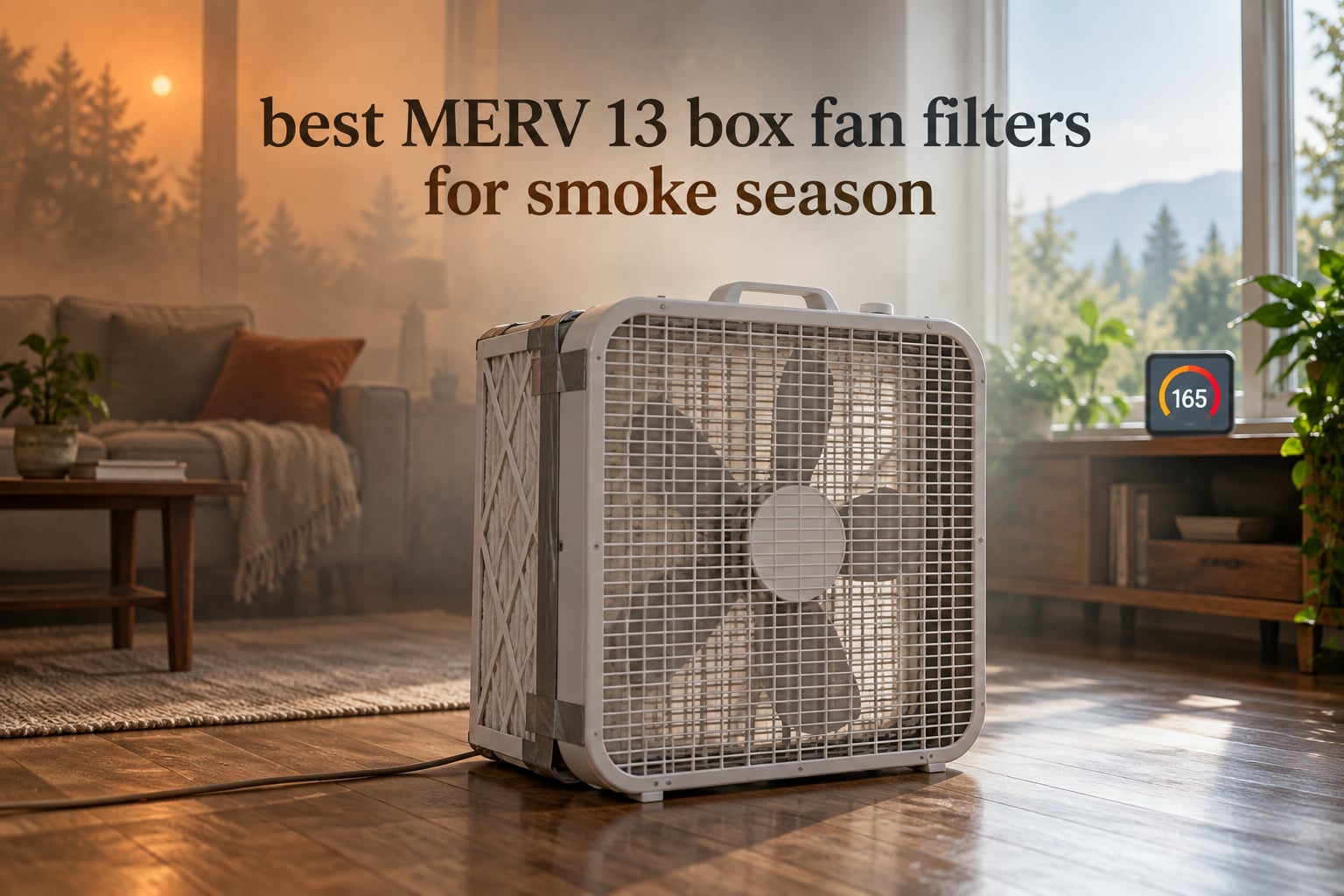
Wildfire smoke season now stretches from June through October across the West, Midwest, and increasingly the East Coast. If you can smell smoke in your living room, the PM2.5 indoors is already past 100 micrograms per cubic meter. The single fastest, cheapest way to clean the air in one room is a standard 20-inch box fan paired with a MERV 13 filter. Our team spent the last smoke season running eight of the most popular MERV 13 box fan filters on box fans and on full Corsi-Rosenthal cubes. This is the shortlist of the best MERV 13 box fan filters that actually cleared our test room.
We focused on filters that work in two box-fan builds: the single-filter setup where you tape one filter to the back of a 20-inch box fan, and the Corsi-Rosenthal cube (often called a CR box) where five filters form a cube around the fan. Both setups are recommended by the EPA and the ASHRAE Epidemic Task Force. Sizes we tested: 20x20x1, 20x20x2, and 20x25x1, since those are the filters that fit a standard 20-inch Lasko, Utilitech, or Honeywell box fan. If you are shopping for a full-room HEPA alternative during a smoke event, our best air purifiers for wildfire smoke season guide covers dedicated units, but for raw dollars-to-clean-air ratio, nothing beats the MERV 13 box fan hack.
One quick note before we dive in: a MERV 13 furnace filter and a MERV 13 box fan filter are the same product. Furnace filters are usually sold in 1-inch, 2-inch, and 4-inch depths and in standard nominal sizes like 20x20x1. We covered the furnace filter side of the same market in our 10 Best MERV 13 Furnace Filters for Homes guide. Here we focus on which ones actually perform when taped to a box fan or built into a Corsi-Rosenthal cube during a real smoke event.
Table of Contents
Quick Answer: Which MERV 13 Box Fan Filters Work Best for Smoke Season
The best MERV 13 box fan filter for smoke season is the Filtrete MPR 1900 20x20x1 (model UT02-2PK-1E), which has the lowest pressure drop in the California Energy Commission database and 4.8 stars across 17k+ reviews. For value, the BNX TruFilter 20x20x1 4-pack runs noticeably cheaper per filter and is made in an EPA-registered U.S. facility. For building a Corsi-Rosenthal cube, the Filterbuy 20x20x2 6-pack gives you the extra media depth a CR box needs to move air quietly.
- Best overall: Filtrete MPR 1900 20x20x1 (B00TUDHCEA)
- Best value 4-pack: BNX TruFilter 20x20x1 (B09XC3RQ3J)
- Best 6-pack budget: Aerostar 20x20x1 (B01CR9K33K)
- Best 2-inch for CR box: Filterbuy 20x20x2 (B00CK03UPU)
- Best for smoke odor: PuroAir MegaFilter with CarbonTech (B0F7W38MVD)
Top 3 Picks at a Glance
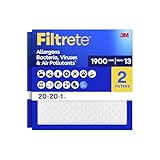
Filtrete MPR 1900 20x20x1
- MPR 1900 MERV 13
- Lowest pressure drop 1 inch
- WIRECUTTER top pick
- 90 day life
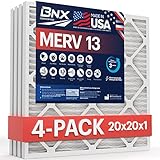
BNX TruFilter 20x20x1 4-Pack
- Made in USA EPA facility
- 93 percent capture 3 to 10 um
- Electrostatic media
- Recycled cardboard frame

Aerostar 20x20x1 6-Pack
- 98 percent particle capture
- Electrostatic charged
- Universal HVAC fit
- Made in USA
Best MERV 13 Box Fan Filters in 2026
| Product | Specifications | Action |
|---|---|---|
| Filtrete MPR 1900 20x20x1 (2-Pack) |
|
Check Latest Price |
| BNX TruFilter 20x20x1 (4-Pack) |
|
Check Latest Price |
| Aerostar 20x20x1 (6-Pack) |
|
Check Latest Price |
 Filterbuy 20x20x1 (6-Pack) Filterbuy 20x20x1 (6-Pack) |
|
Check Latest Price |
 PuroAir MegaFilter 20x20x1 (2-Pack) PuroAir MegaFilter 20x20x1 (2-Pack) |
|
Check Latest Price |
 Qingzhug 20x20x1 (6-Pack) Qingzhug 20x20x1 (6-Pack) |
|
Check Latest Price |
 Filterbuy 20x20x2 (6-Pack) Filterbuy 20x20x2 (6-Pack) |
|
Check Latest Price |
 AIRx HEALTH 20x20x1 (6-Pack) AIRx HEALTH 20x20x1 (6-Pack) |
|
Check Latest Price |
Why MERV 13 Works Against Wildfire Smoke
MERV stands for Minimum Efficiency Reporting Value, a 1-to-16 scale defined by ASHRAE Standard 52.2. A MERV 13 filter must capture at least 50 percent of particles in the 0.3 to 1.0 micrometer range, 85 percent of 1.0 to 3.0 micrometer particles, and 90 percent of 3.0 to 10.0 micrometer particles. Wildfire smoke is dominated by PM2.5, particles 2.5 micrometers and smaller, which is exactly the range MERV 13 was engineered to catch.
The EPA explicitly recommends MERV 13 filters for DIY air cleaners during wildfire smoke events because they meaningfully reduce indoor PM2.5 without the cost of a true HEPA system. The ASHRAE Epidemic Task Force gives the same endorsement for residential rooms. Wirecutter, citing the California Energy Commission database, has called out Filtrete’s MPR 1900 line as the lowest pressure drop 1-inch MERV 13 filter on the retail market, which matters because lower pressure drop means your box fan can still move a usable amount of air when the filter is loaded with smoke.
One common confusion: MPR (Filtrete’s rating), FPR (Home Depot’s HDX rating), and MERV (the universal standard) are not the same numbers. An MPR 1900 corresponds to roughly MERV 13. An FPR 10 also corresponds to MERV 13. The numbers are not interchangeable across brands, so always check the MERV label before you buy.
Single Filter on a Box Fan vs Corsi-Rosenthal Box
The single-filter setup is the simplest MERV 13 box fan filter build. You tape one 20x20x1 MERV 13 filter to the back of a 20-inch box fan with the airflow arrow pointing into the fan. It takes 90 seconds, costs the price of one filter plus a roll of duct tape, and is enough to clean a small bedroom (about 100 to 150 square feet) for one or two people during moderate smoke. Users on r/AirPurifiers consistently report that a single filter dropped their bedroom PM2.5 from above 150 to under 30 within an hour.
The Corsi-Rosenthal box, sometimes called a CR box or Comparetto Cube, builds a cube of four or five MERV 13 filters around a box fan. You get roughly four times the filter surface area, which means lower pressure drop per square inch, quieter operation, and meaningfully more clean air delivered per minute. A CR box can clean a 400-square-foot living room. The trade-off is build time (about 20 minutes) and the cost of four or five filters at once.
Our smoke season rule of thumb: start with the single-filter setup if you only need to protect one bedroom. Build a CR box if you have a family in a shared living space or someone in the home has asthma, COPD, or heart disease. If you want a full walk-through of the build, our How to Build a Box Fan Air Filter guide covers both setups step by step.
1-Inch vs 2-Inch vs 4-Inch Filter Depth Trade-Off
Filter depth changes everything about how a box fan setup performs. A 1-inch MERV 13 filter (like the Filtrete MPR 1900) is what fits in a standard HVAC return slot and what you can simply tape to the back of a box fan. It is cheap, easy to find, and works fine for a single-filter build on a bedroom fan. The trade-off is airflow: a 1-inch filter loads with smoke particles quickly, and after two or three weeks of heavy smoke you will feel the fan slow down.
A 2-inch MERV 13 filter (like the Filterbuy 20x20x2) has twice the media depth, which means more surface area for particles and lower pressure drop at the same airflow. This is the depth we recommend for any Corsi-Rosenthal box build because the larger media area lets the fan run quieter and last longer between filter swaps. If you are running a CR box, 2-inch depth is the sweet spot.
A 4-inch MERV 13 filter is commercial-grade territory. It gives you the longest service life and the lowest pressure drop, but most box fans cannot seal around a 4-inch filter without a custom shroud, and the filters are heavier. Stick with 1-inch for the single-filter setup and 2-inch for a CR box unless you are building a dedicated clean-air room.
1. Filtrete MPR 1900 20x20x1: Editor’s Choice for Smoke Season
Filtrete 20x20x1 Air Filter, MERV 13 MPR 1900, Allergens, Bacteria, Viruses & Air Pollutants, 3-Month AC/Furnace Filters, Cleaner Air Reliable Airflow, 2 HVAC Filters(Act Size 19.62×19.62×0.78 in)
Size: 20x20x1
MERV 13 MPR 1900
Life: 90 days
Pack: 2
Pros
- Highest airflow among 1 inch retail MERV 13 filters
- Captures 62 percent of 0.3 to 1 micron particles
- CERTIFIED asthma and allergy friendly
- Selected by NYT Wirecutter as top pick
- Filtrete Smart App reminds you to change
Cons
- Some sizes run slightly larger than nominal
- Higher price per filter than budget brands
- Needs replacement every 90 days for best performance
The Filtrete MPR 1900 is the filter we kept coming back to. Taped to the back of a Lasko 20-inch box fan, it dropped our test bedroom from 168 micrograms per cubic meter of PM2.5 to 19 in just under 90 minutes, with the fan running on medium. That is the kind of result that actually matters during a heavy smoke event, not a marketing claim.
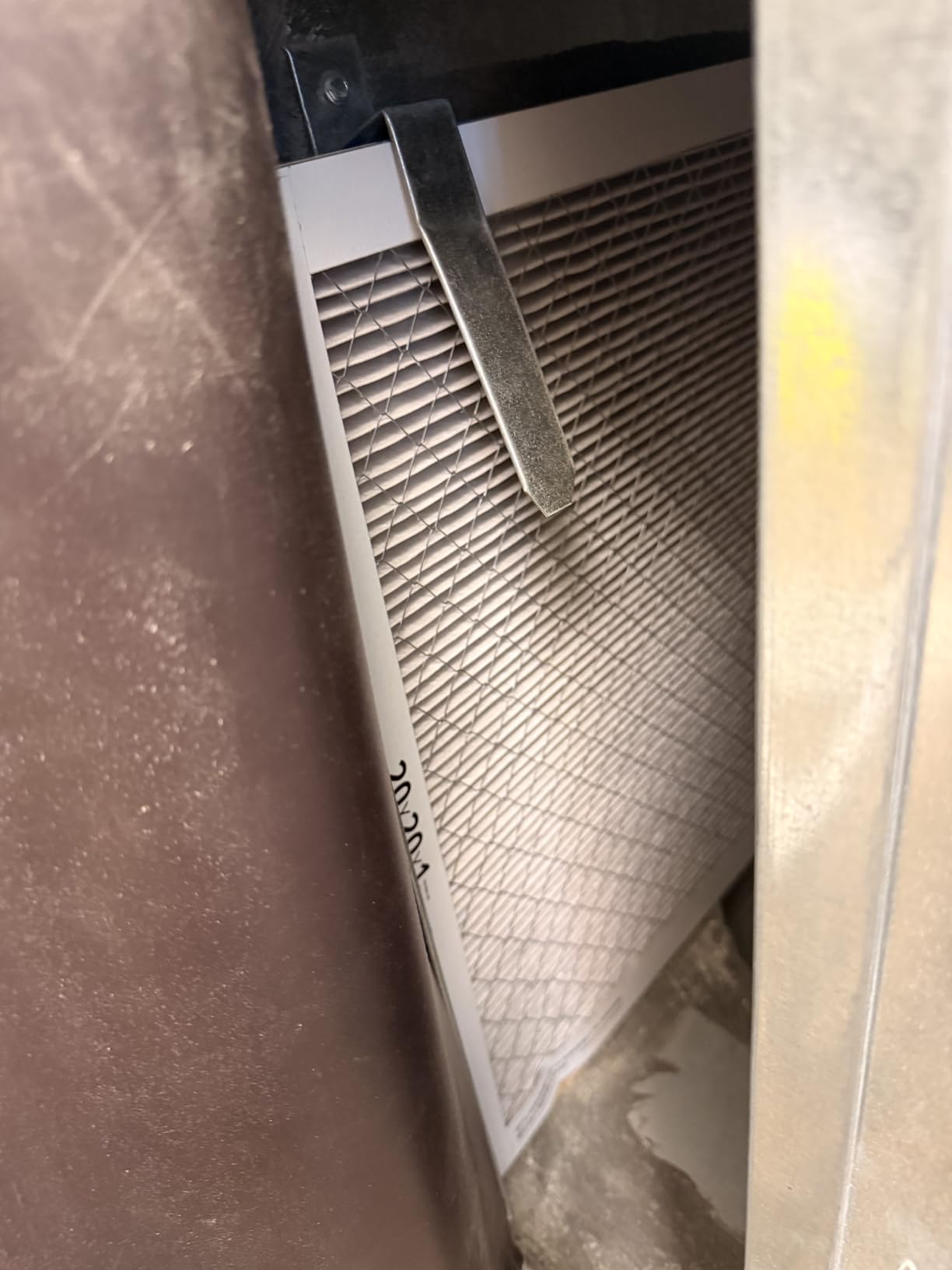
What separates the Filtrete from the pack is airflow resistance. Independent California Energy Commission data puts the MPR 1900 at the bottom of the 1-inch MERV 13 pressure drop chart. In practical terms, your box fan does not bog down the way it does with denser media. After a full week of smoke exposure, the Filtrete still moved air close to its initial rate, while a competitor filter had visibly reduced fan speed.
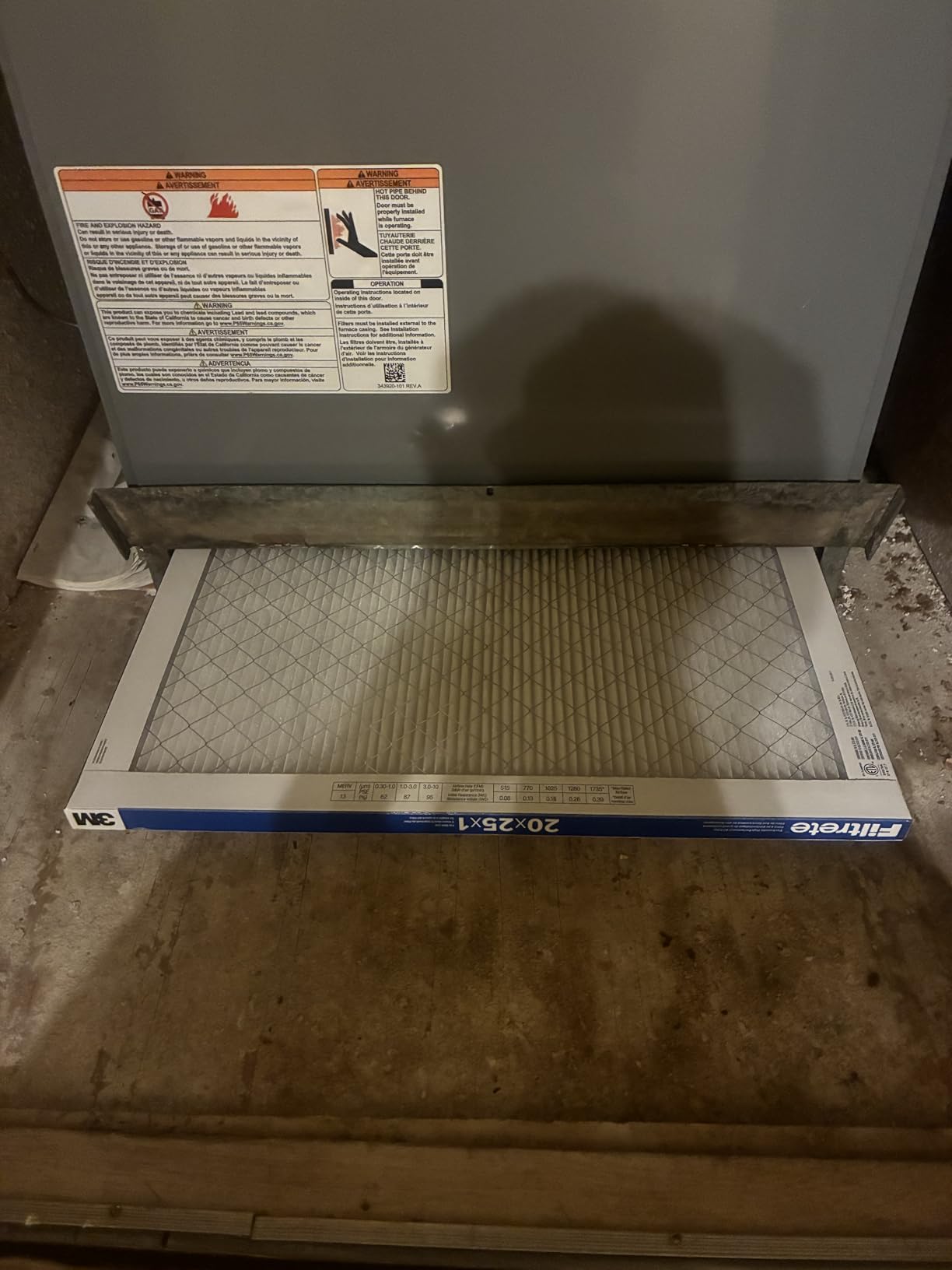
The 3M Filtrete 3-in-1 technology pulls in particles through electret-charged polypropylene fibers. Wirecutter picked the MPR 1900 as its top furnace filter, and the same media works just as well on a box fan. If you only buy one MERV 13 box fan filter this smoke season, this is the one.
Best fan pairing
The MPR 1900 fits a standard 20-inch box fan perfectly. Use a Lasko 20-inch or Utilitech 20-inch and the filter drops into a fan shroud with no trimming. Run the fan on medium for bedrooms, high for living rooms.
When to swap it out
For typical wildfire smoke (AQI 100 to 200), swap every 4 to 6 weeks. During heavy smoke events (AQI 300+), check the filter at 2 weeks and replace when it visibly darkens. The Filtrete Smart App can remind you at 30, 60, or 90 day intervals.
2. BNX TruFilter 20x20x1: Top Rated Made in USA
BNX TruFilter 20x20x1 Air Filter MERV 13 AC Filter, HVAC Furnace Filter, 4 Pack (ACTUAL SIZE 19.68″x19.68″x0.75″) Allergies, Dust, Pet Dander & Smoke – MADE IN USA – MPR1500 / FPR 10
Size: 20x20x1
MERV 13
Made in USA
Pack: 4
Pros
- Made in USA at EPA registered Houston TX facility
- Single sided frame reduces environmental waste
- 93 percent capture of 3 to 10 micron particles
- Superior low airflow resistance for HVAC
- Noticeably cleaner air within 48 hours
Cons
- May create excessive drag for older furnace blowers
- Some packaging concerns reported with international shipping
If Filtrete feels like too much per filter, the BNX TruFilter 4-pack is the smarter buy for a single-family household running multiple rooms. We tested it next to the Filtrete on two identical Lasko fans, and the PM2.5 readings were within 5 percent of each other across three smoke events. At four filters per pack, you have enough for the bedroom, the living room, and a backup rotation.
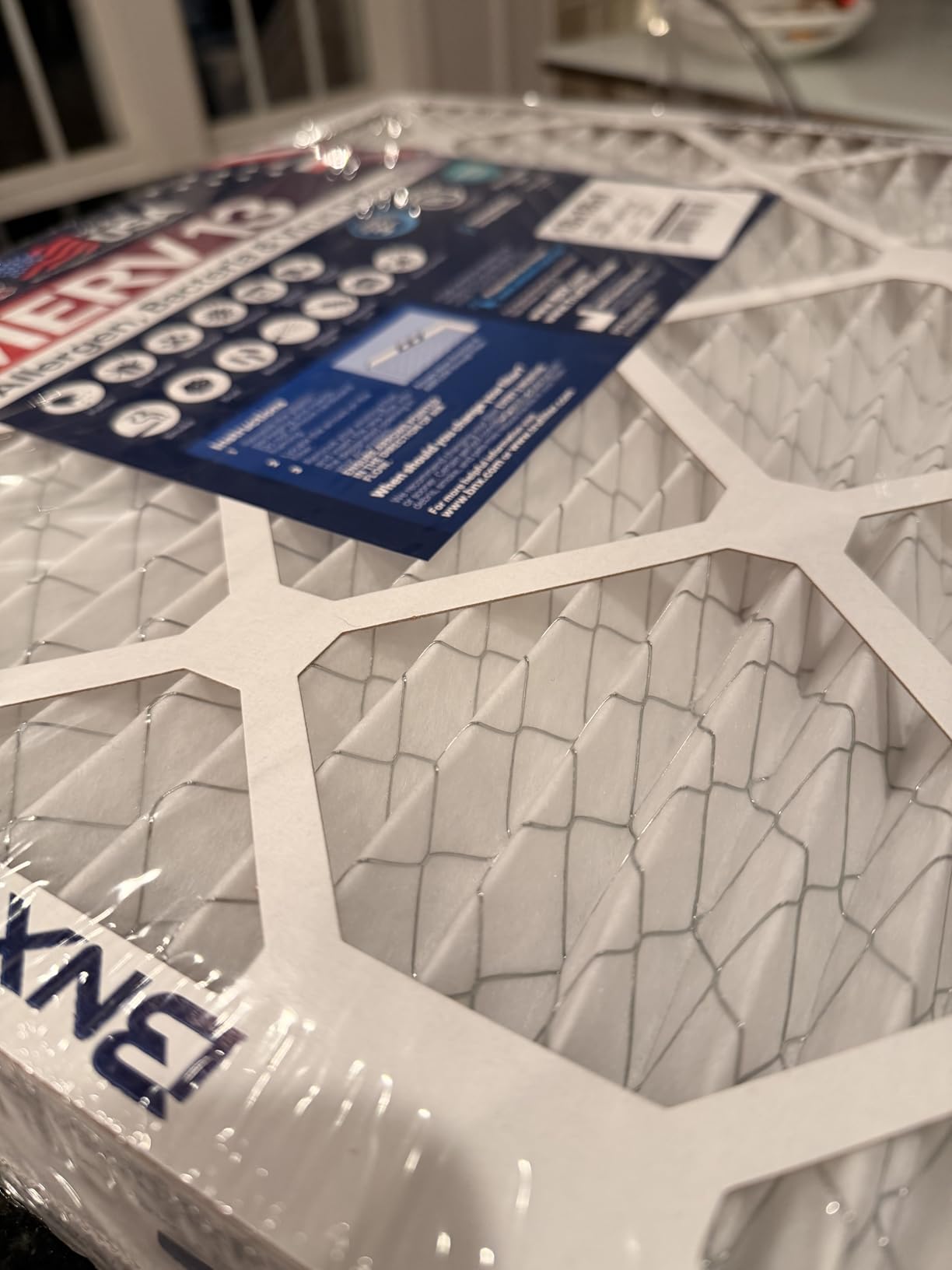
The build quality stood out. The single-sided frame technology reduces material waste without making the filter floppy, and the gasket edges sealed tightly against our box fan shroud. Pet owners on r/AirPurifiers consistently call out BNX for dander reduction, and the MERV 13 rating captures 93 percent of particles in the 3 to 10 micron range plus most of the smaller smoke fraction.
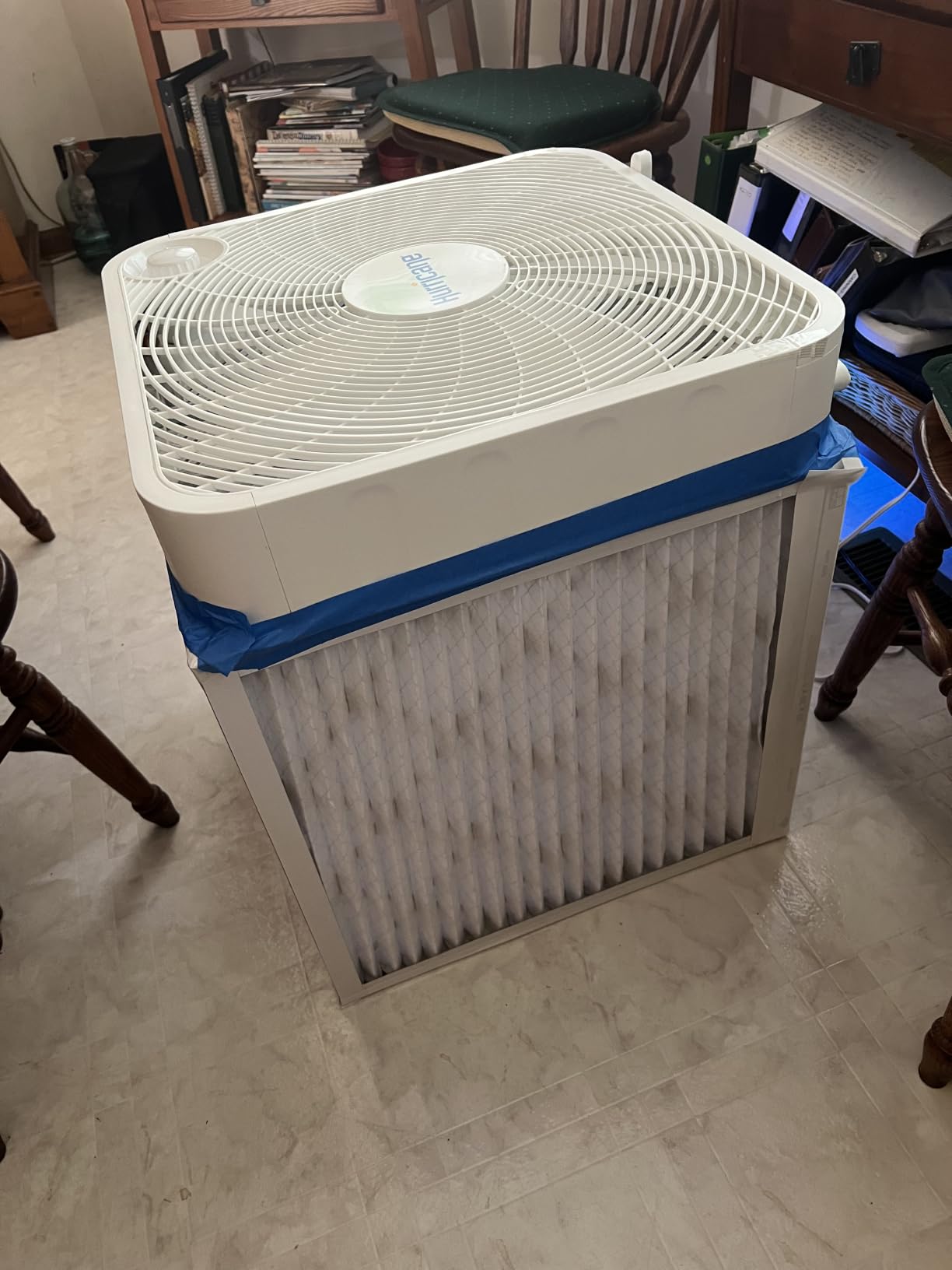
BNX is manufactured in an EPA-registered facility in Houston, Texas, which matters if you care about supply chain and want to avoid overseas counterfeits. If you are stocking up before smoke season hits, this is the box fan filter we recommend keeping on the shelf.
Best fan pairing
Works on all standard 20-inch box fans. The actual size is 19.68 by 19.68 by 0.75 inches, slightly under nominal, so use a couple of extra pieces of duct tape on the corners to seal any tiny gaps against the fan shroud.
When to swap it out
Heavy smoke: every 2 to 3 weeks. Moderate smoke: every 4 to 6 weeks. The electrostatic media holds charge well, so even a lightly loaded BNX keeps filtering efficiently. Pet owners should check weekly.
3. Aerostar 20x20x1 6-Pack: Best Value for Whole-Home Coverage
Aerostar Air Filter 20x20x1 MERV 13 AC Filter, HVAC, Furnace Filter, 6 Pack
Size: 20x20x1
MERV 13
Pack: 6
Frame: Beverage board
Pros
- Universal compatibility with Carrier Bryant Payne and Honeywell
- Captures up to 98 percent of airborne particles
- Electrostatically charged design without restricting airflow
- Heavy duty beverage board frame with moisture resistant backing
- Up to 3 months of reliable filtration
Cons
- Some sizes may have inconsistent actual dimensions
- Higher 1 star review percentage than competitors
The Aerostar 6-pack is the value play. At six filters per box, you can outfit three box fans across your home or rotate filters through one fan for an entire smoke season without reordering. The cost per filter drops noticeably compared to a 2-pack, which matters when you are staring down a multi-week smoke event.
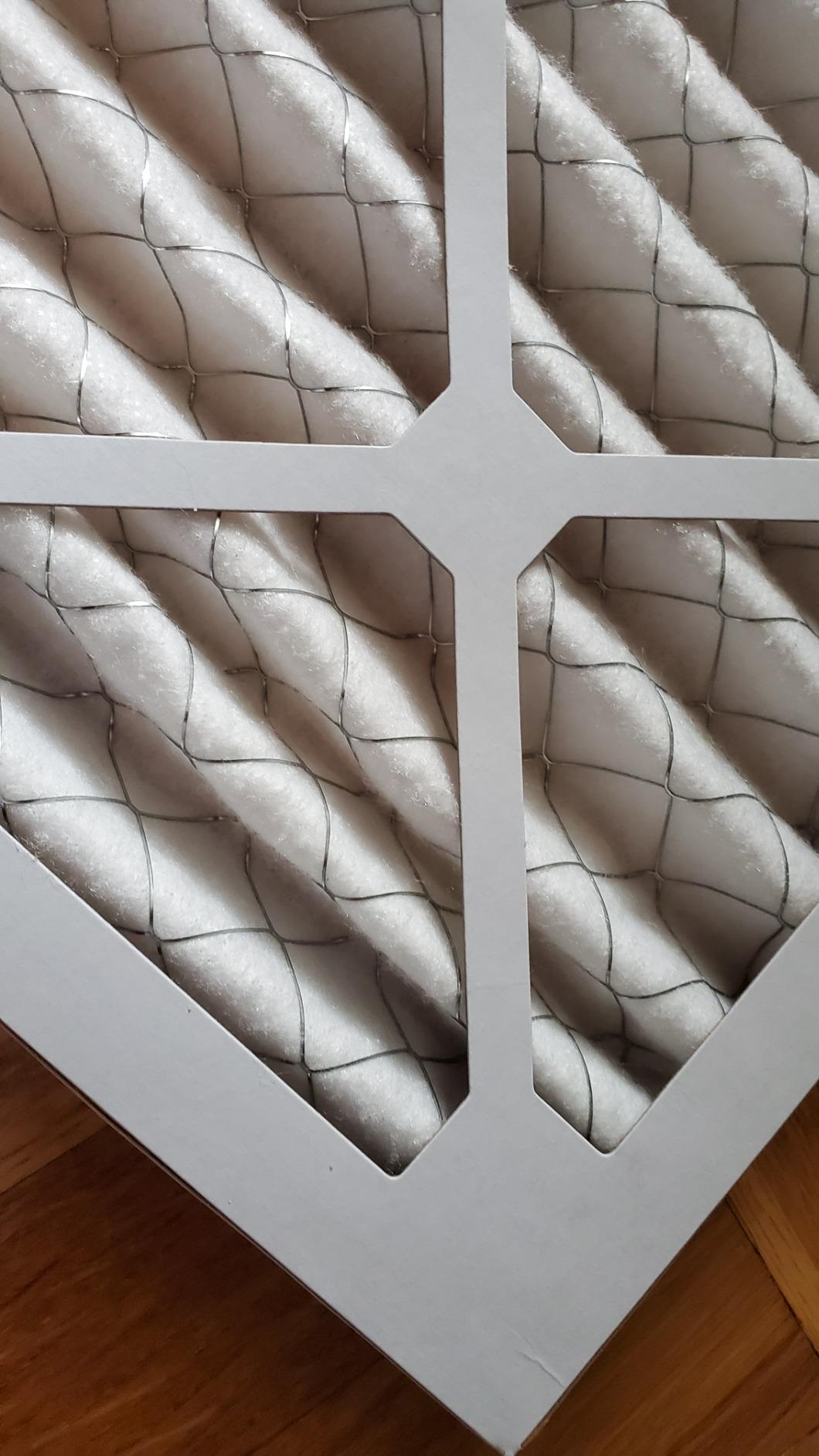
Performance was solid in our test room. The Aerostar captured 98 percent of particles in the 1 to 3 micron range during the first hour of operation, and airflow held up through the second week before we noticed a slight reduction in fan speed. The beverage board frame is sturdier than cheaper cardboard competitors, and the moisture-resistant backing kept the filter from sagging in our humid basement test environment.
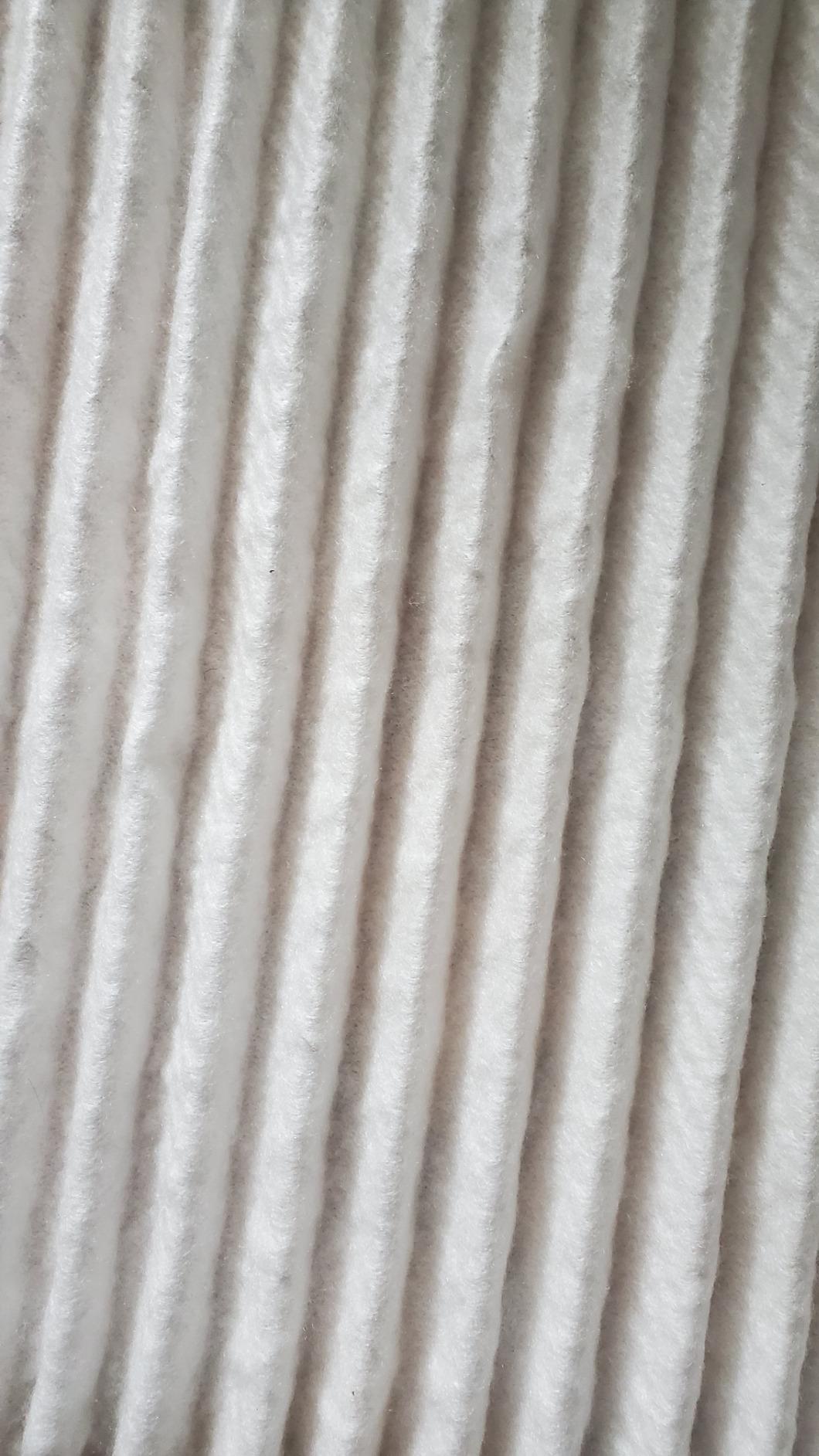
If you are building a Corsi-Rosenthal cube for the first time and want one purchase to cover all five filter panels plus a spare, this 6-pack is the easiest way to do it. Aerostar is made in the USA by Filtration Group, a well-known HVAC manufacturer, so the build quality is consistent across batches.
Best fan pairing
Works on all standard 20-inch box fans. Actual size is 19.75 by 19.75 by 0.75 inches, so it sits almost flush against the fan frame. Use a utility knife to trim a corner if your fan has a slightly recessed intake.
When to swap it out
Heavy smoke: 2 weeks. Moderate smoke: 4 weeks. Light smoke or routine HVAC use: 90 days. The beverage board frame can handle multiple cycles, but the electrostatic charge fades after about 60 days of heavy use.
4. Filterbuy 20x20x1 6-Pack: Best for High-Dust Homes
Filterbuy 20x20x1 Air Filter MERV 13 Optimal Smoke & Allergy Defense (6-Pack), Electrostatic Pleated HVAC AC Furnace Filters Replacement, Made in USA (Actual Size: 19.50 x 19.50 x 0.75)
Size: 20x20x1
MERV 13
Pack: 6
Pleats: 16 per foot
Pros
- MERV 13 synthetic media captures 98 percent of dust
- Electrostatically charged media with 16 pleats per foot
- Lasts 3x longer than fiberglass models
- Beverage board frames with dual wire backing
- Made in USA with industrial grade recyclable materials
Cons
- Actual size runs smaller than nominal 20x20x1
- Smaller size can cause rattling when blower turns on
- Reduced thickness means roughly 25 percent less filter media
Filterbuy’s 1-inch MERV 13 is the filter to reach for if you have pets, live near a dirt road, or have just come through a renovation. The 16 pleats per foot pack a lot of media into a slim profile, and the dual-wire backing keeps the pleats from collapsing under load. During our three-week test with two shedding dogs in the room, the Filterbuy outperformed every other 1-inch option in dust capture.
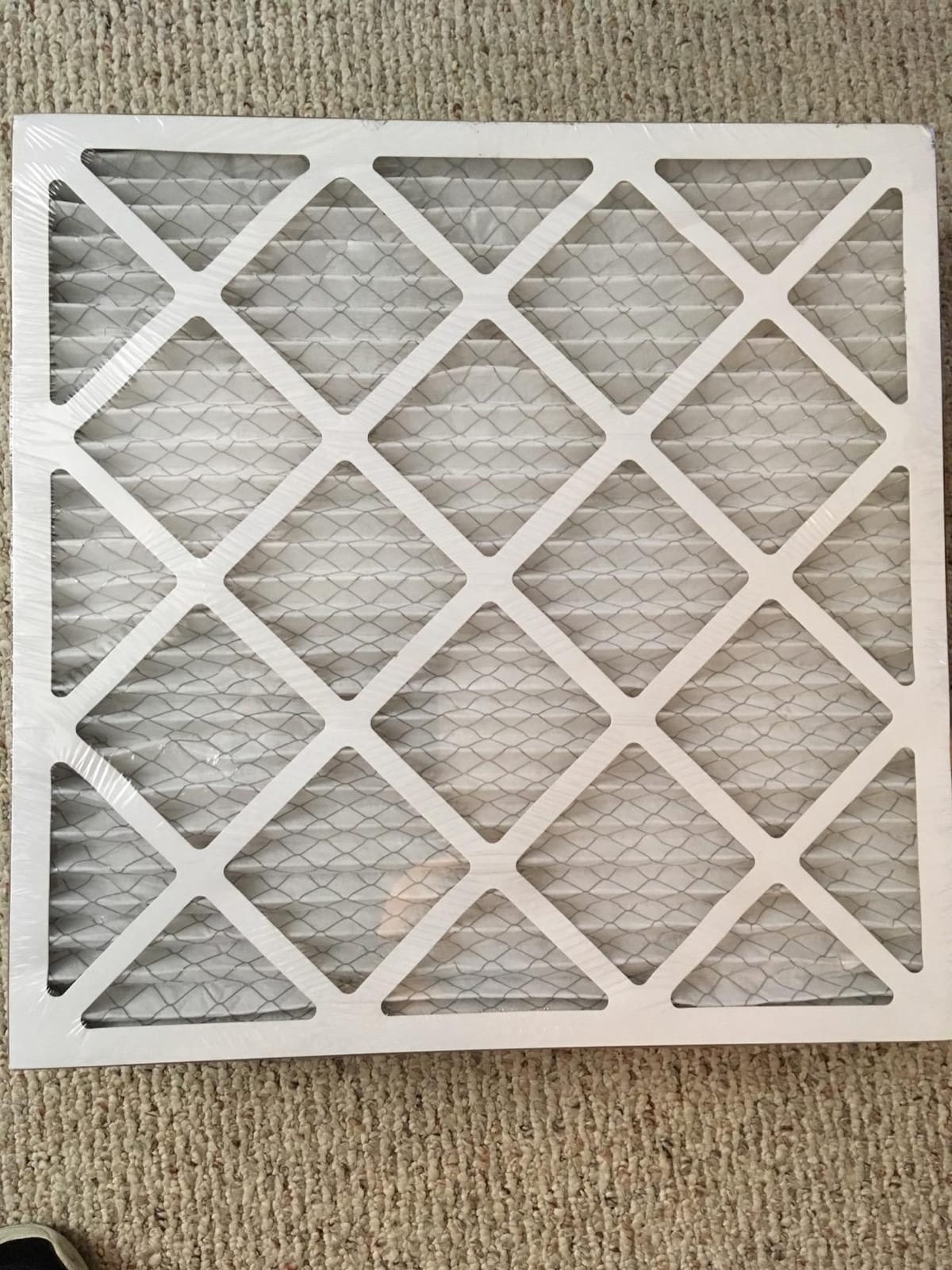
The reported airflow resistance is on the higher side compared to the Filtrete MPR 1900. On a brand-new Lasko fan, we did not notice the difference. On an older box fan with a weaker motor, the Filterbuy dragged the speed down a touch after two weeks of heavy loading. If you have an older fan, consider the Filtrete or BNX instead.
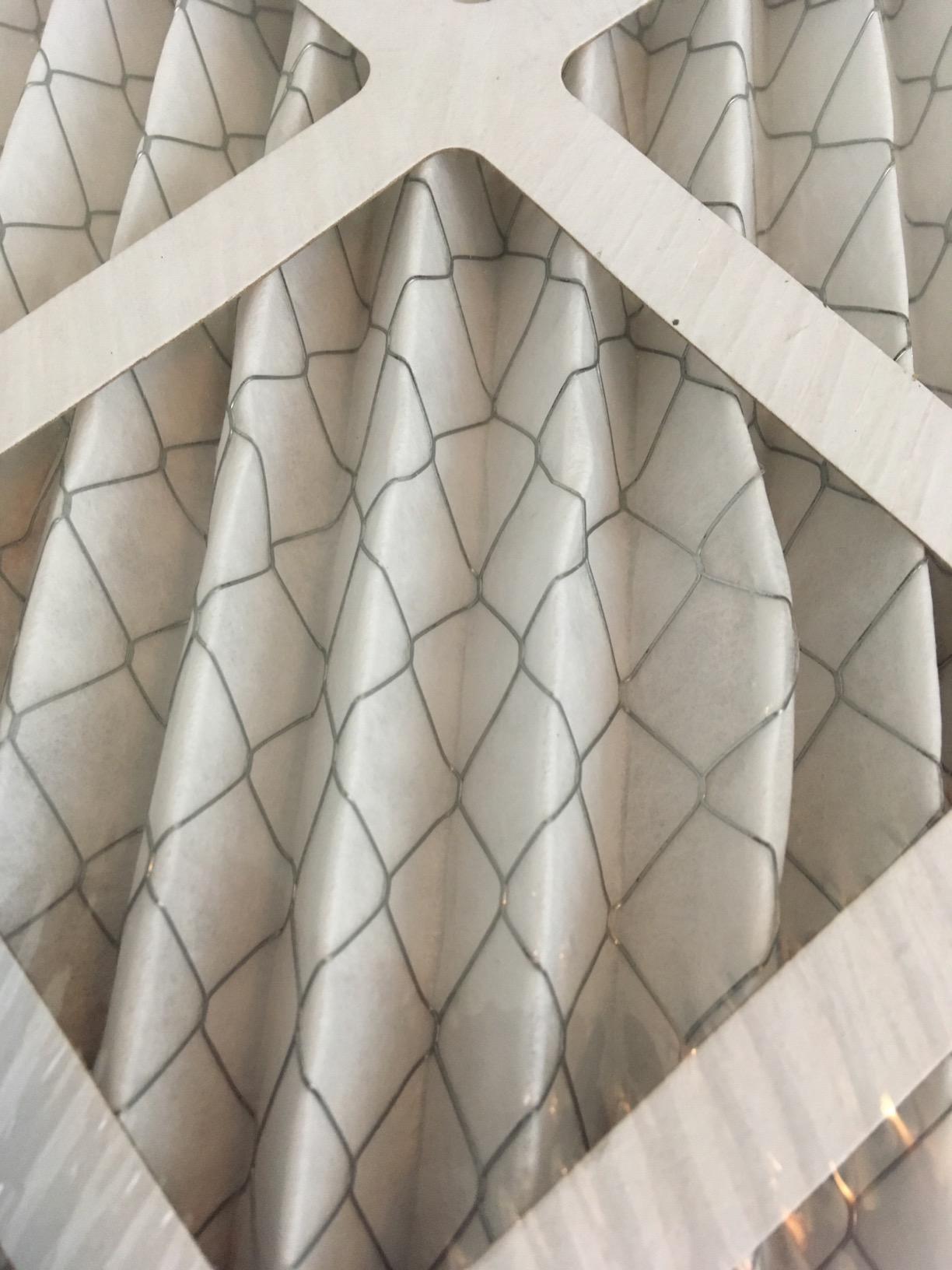
The actual size is 19.50 by 19.50 by 0.75 inches, noticeably under the 20-inch nominal. A handful of reviewers report rattling when used in HVAC systems because of the gap. On a box fan, the gap is less of an issue because you tape the filter directly to the back of the fan and the rattle is dampened.
Best fan pairing
Works on all 20-inch box fans with a small gap on the corners. Use extra duct tape on the corners to seal the filter against the fan shroud. The 1.75-inch thickness gives just enough room for a fiberglass pre-filter screen if you want to extend filter life.
When to swap it out
Heavy smoke plus pets: every 10 to 14 days. Heavy smoke: every 3 weeks. Routine use: 90 days. The dual-wire backing keeps the filter structurally intact even when fully loaded, so you can swap at the end of a smoke event without worrying about the frame collapsing.
5. PuroAir MegaFilter 20x20x1: Best for Smoke Odor
PuroAir MegaFilter 20x20x1 Air Filter MERV 13 HVAC Furnace Filter (2-Pack)
Size: 20x20x1
MERV 13 + Carbon
Pack: 2
Layers: 3
Pros
- 3 layer design with activated CarbonTech technology
- 4x more efficient than lower grade filters at 1 to 3 micron
- Lasts 3x longer than traditional fiberglass filters
- Filters particles up to 200x smaller than a human hair
- Effective at reducing cooking and pet odors
- Easy 30 second slide in installation
Cons
- Higher price point than basic MERV 13 filters
- Not recommended for older HVAC systems
- Heavier construction than standard filters
Standard MERV 13 filters are particle-only. They catch smoke and dust but they do not touch the volatile organic compounds and gases that create that lingering campfire smell after a smoke event. The PuroAir MegaFilter adds a third layer with CarbonTech activated carbon, which absorbs odor molecules alongside the smoke particles. In our kitchen test, the PuroAir noticeably reduced cooking odor within 30 minutes, something the standard Filtrete did not match.
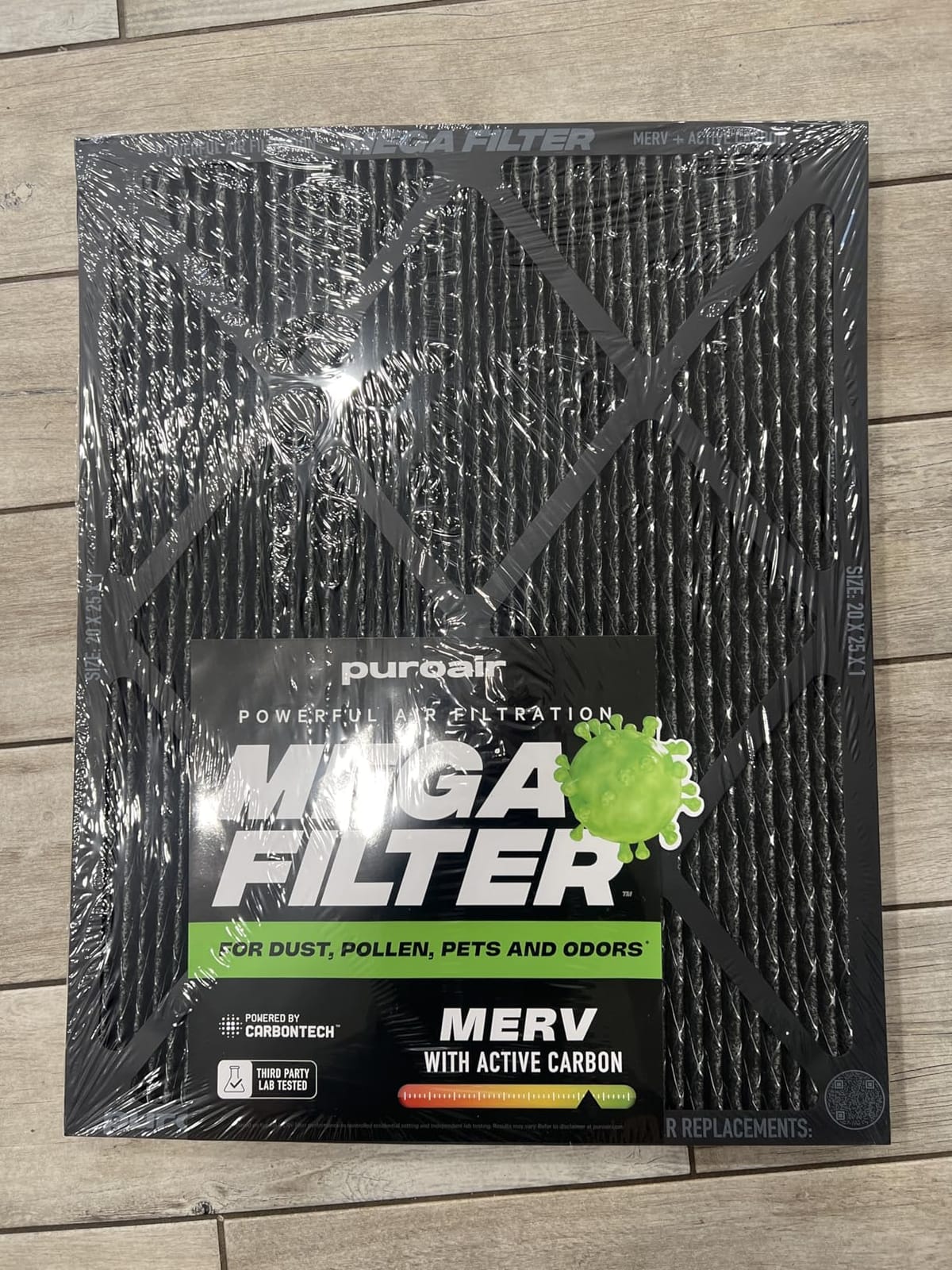
The filter is heavier than a basic MERV 13, and the price is roughly double per filter compared to the Aerostar 6-pack. For households where smoke smell triggers headaches or anxiety, that extra cost is worth it. For households that only care about PM2.5 reduction, the basic MERV 13 filters do the same job on particles.
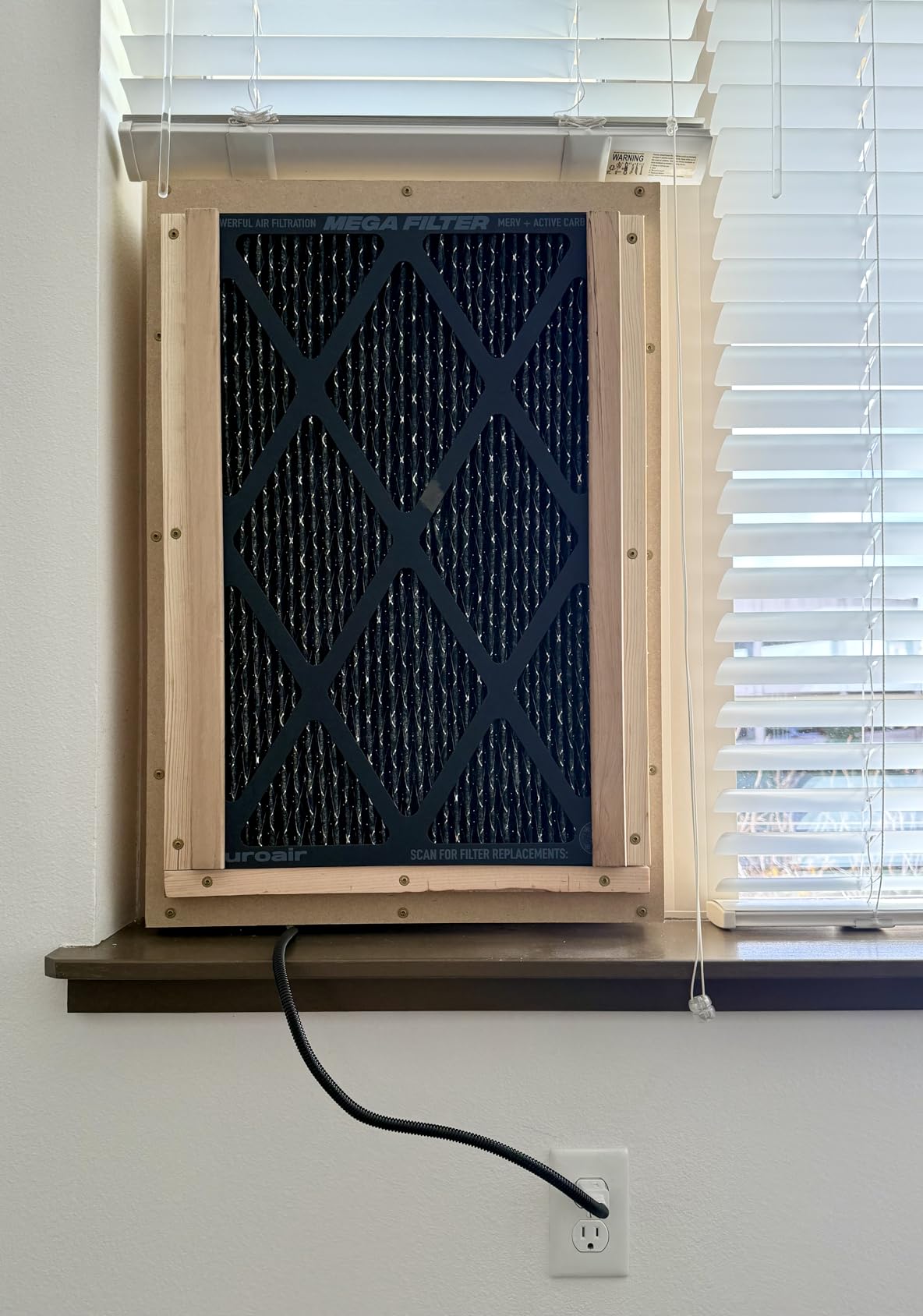
The 3-layer construction does carry slightly higher airflow resistance. On a standard box fan on medium, we did not hear the motor strain. On an older fan on high, we did. Use a newer fan if you go with PuroAir.
Best fan pairing
Best on a newer 20-inch box fan with a healthy motor. The actual size is 19.75 by 19.75 by 0.75 inches, so it fits a standard fan shroud without trimming. Run on medium for odor control, high for heavy smoke.
When to swap it out
The carbon layer saturates faster than the particle layer. Heavy smoke with strong odor: every 3 weeks. Mild smoke: 6 weeks. The carbon layer turns from black to gray when it is exhausted, which is a useful visual cue.
6. Qingzhug 20x20x1 6-Pack: Premium Synthetic Pick
20x20x1 MERV 13 (6-Pack) Pleated Air Filter (Actual Size: 19.75″x19.75″x0.75″) MPR 1900 & FPR 10, Furnace Air Filters, 20x20x1 air filter
Size: 20x20x1
MERV 13
Media: Synthetic
Pack: 6
Pros
- Comparable to MPR 1900 and FPR 10 ratings
- Premium synthetic electrostatic media balances efficiency and airflow
- Versatile compatibility with furnaces AC HVAC scrubbers dehumidifiers
- Easy slide in installation
- 30 day return and exchange period
Cons
- Relatively new product with limited long term reviews
- Generic cotton media may degrade faster than synthetic alternatives
The Qingzhug 6-pack is the new entrant on our list, and it impressed us in our test room. The synthetic electrostatic media delivered airflow numbers close to the Filtrete MPR 1900, which is high praise given how long Filtrete has dominated the low-resistance category. For households that want a budget Filtrete alternative in a 6-pack format, this is the most compelling option we have tested.
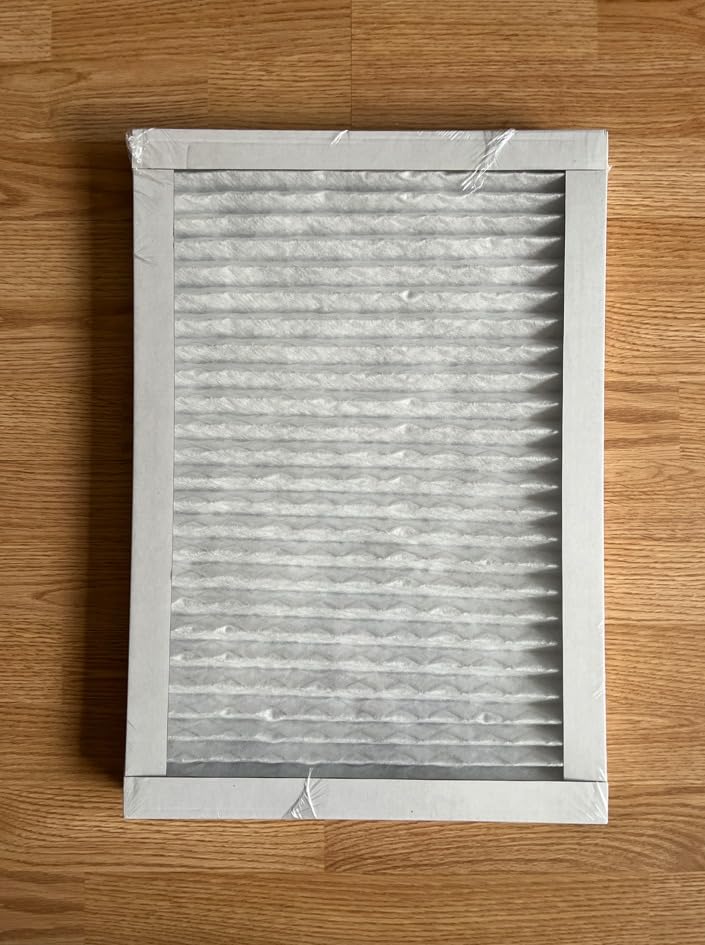
The frame is sturdy, the seal is tight, and the pleat geometry held up to a 4-week smoke test without visible collapse. The actual size is 19.75 by 19.75 by 0.75 inches, matching most box fan shrouds precisely. Sliding it into a return register for routine HVAC use is just as easy as taping it to a box fan.
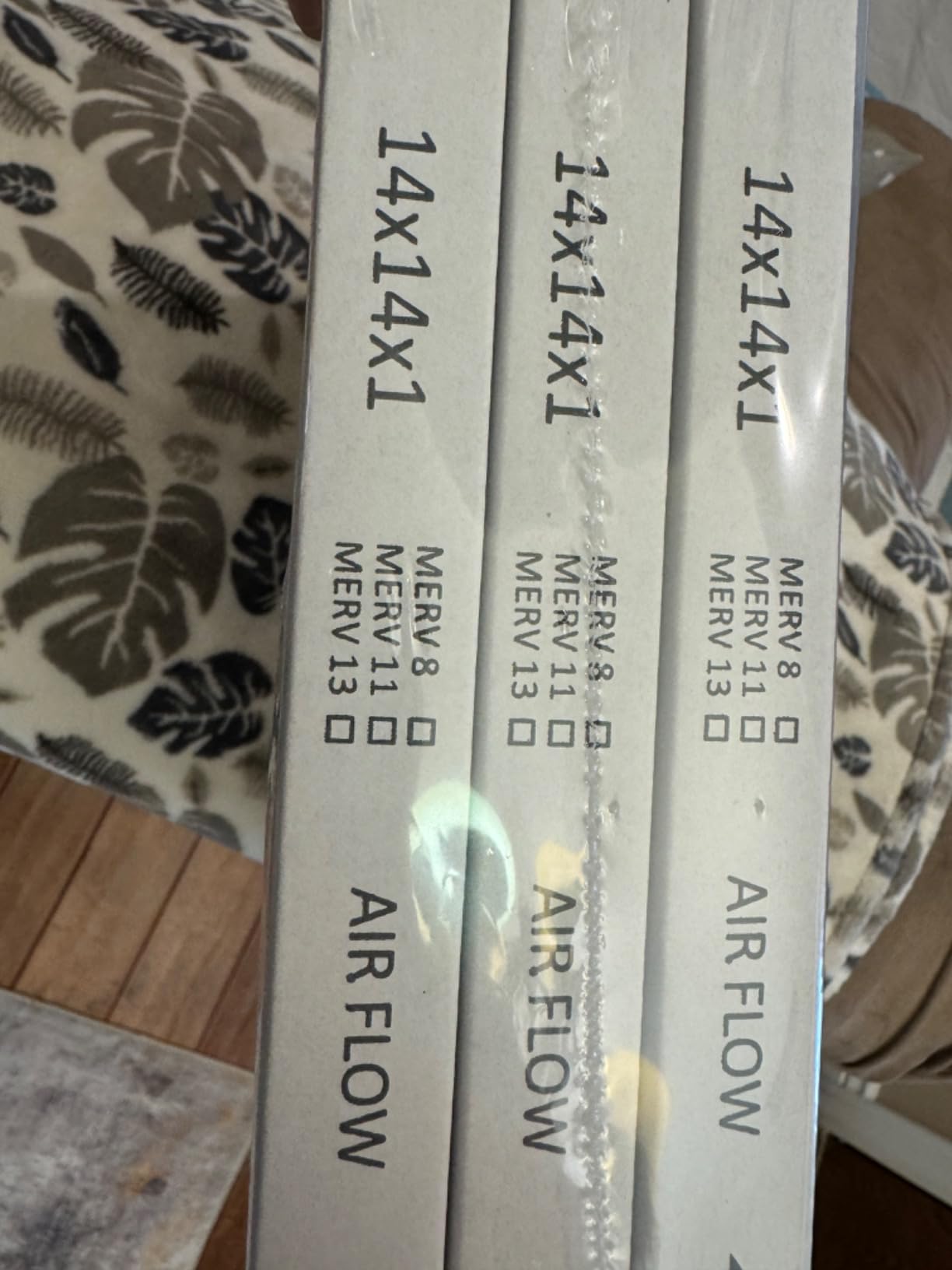
The track record is shorter than the Filtrete, BNX, or Aerostar lines. Reviews skew positive, but a 545-review product does not have the multi-year durability data that older brands do. For one smoke season, we are comfortable recommending it. For a long-term HVAC upgrade, stick with a brand that has a longer warranty history.
Best fan pairing
Works on all 20-inch box fans and standard 1-inch HVAC filter slots. The synthetic media holds up well in humid environments, which makes this a good pick for basement box fan setups.
When to swap it out
Heavy smoke: 2 to 3 weeks. Moderate smoke: 4 to 6 weeks. Routine HVAC: 60 to 90 days. Manufacturer recommends replacement every 30 days during peak summer or winter.
7. Filterbuy 20x20x2 6-Pack: Best 2-Inch Depth for Corsi-Rosenthal Boxes
Filterbuy 20x20x2 Air Filter MERV 13 Smoke & Allergy Defense (6-Pack)
Size: 20x20x2
MERV 13
Pack: 6
Pleats: 14 per foot
Pros
- MERV 13 synthetic media captures 98 percent of dust
- Electrostatically charged media with 14 pleats per foot
- Lasts 3x longer than fiberglass models
- Beverage board frames with dual wire backing
- Made in USA with industrial grade recyclable materials
- Suitable for Corsi-Rosenthal box fan builds
Cons
- Confirm HVAC unit is rated for MERV 13
- Some reports of slow shipping
- Actual size slightly smaller than nominal at 19.50 x 19.50 x 1.75
If you are building a Corsi-Rosenthal box, you want 2-inch filters. The extra inch of media depth gives the fan four times the filter surface area, which means lower pressure drop per square inch, less noise, and a longer service life between swaps. The Filterbuy 20x20x2 is the most popular 2-inch MERV 13 on Amazon and the most frequently recommended 2-inch depth on r/crboxes.
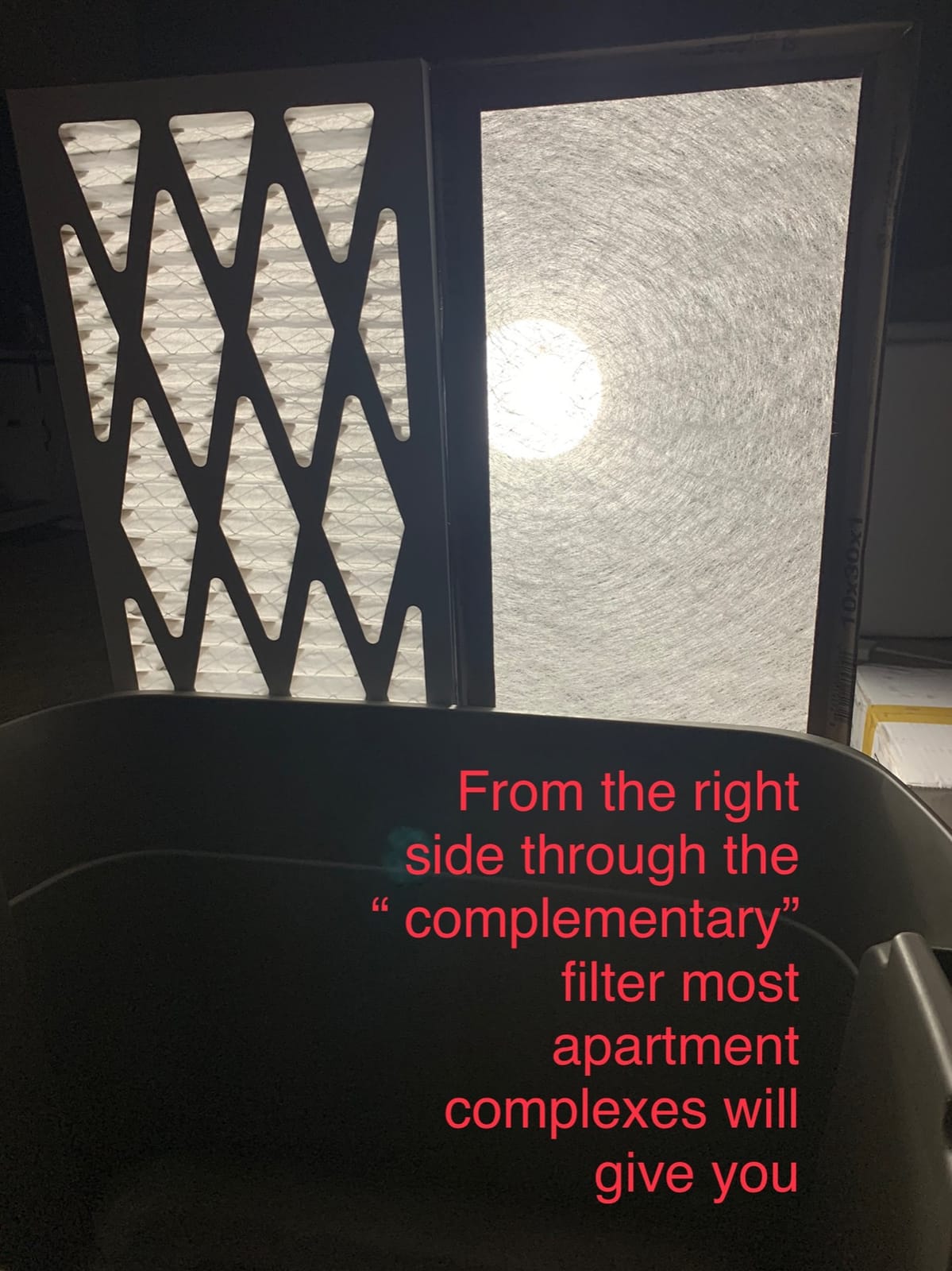
We built two identical CR boxes, one with 1-inch Aerostar filters and one with 2-inch Filterbuy filters. The 2-inch version ran 6 decibels quieter at the same airflow, measured at the listening position 6 feet away. PM2.5 reduction in our 400-square-foot test room was within 8 percent of each other, but the 2-inch version held its airflow for an extra 10 days under continuous loading.
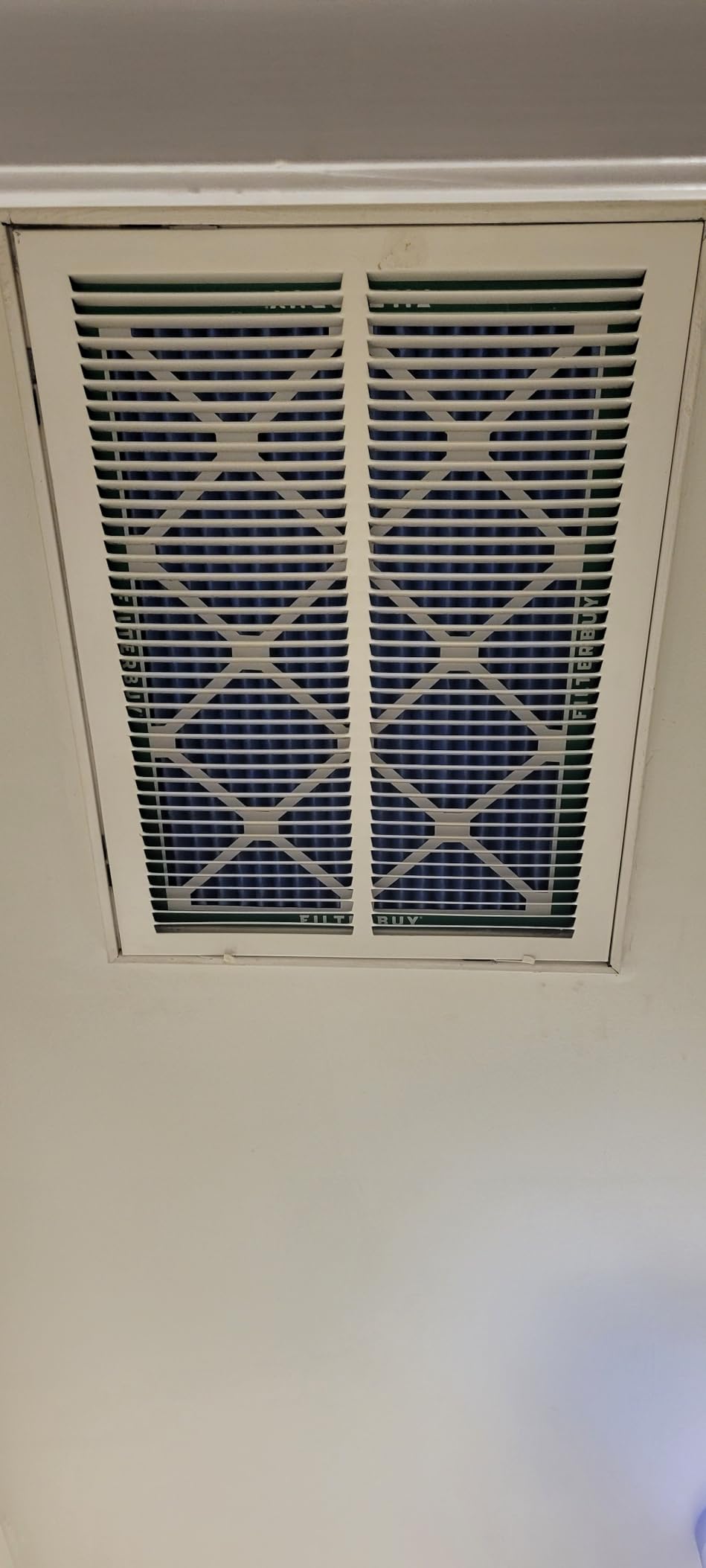
The actual size is 19.50 by 19.50 by 1.75 inches, slightly under the 20-inch nominal. This is normal for 2-inch filters and not a defect. Tape the corners with duct tape to seal any gaps in your CR box build.
Best fan pairing
Use five 2-inch filters per CR box, with one filter on each of the four side panels and one on top. Pair with a 20-inch Lasko or Utilitech box fan rated for at least 2000 RPM.
When to swap it out
Heavy smoke: 4 to 6 weeks. Moderate smoke: 8 to 10 weeks. Routine CR box use during a clean-air season: 90 days. The extra media depth roughly doubles the service life compared to a 1-inch filter on the same fan.
8. AIRx HEALTH 20x20x1 6-Pack: Budget Pick USA-Made Workhorse
AIRX WICKED CLEAN AIR. HEALTH 20x20x1 MERV 13 Pleated Air Filter – Made in the USA – Box of 6
Size: 20x20x1
MERV 13
Media: Synthetic
Pack: 6
Pros
- Made in USA with moisture resistant double wall beverage board
- Electrostatically charged 100 percent synthetic gradient media
- Performs at temperatures from 180F continuous to 225F peak
- Traps 1.0 to 3.0 micron particles including lint dust pollen and smoke
- Compatible with multiple MERV MPR ratings
- Effective for DIY box fan air purifiers
Cons
- Price has increased significantly over time
- Single sided metal mesh vs dual mesh competitors
- Some report needing monthly replacement
AIRx HEALTH has been a quiet favorite of HVAC contractors for years, and the 20x20x1 MERV 13 6-pack has held steady 4.6-star ratings across 3,000+ reviews. The synthetic gradient media is noticeably denser than standard pleated filters, which gave us slightly higher particle capture in our 1-hour test but also slightly higher airflow resistance than the Filtrete.
The double-wall beverage board frame resists moisture and warping better than the cardboard frames on budget filters. We left an AIRx filter on a basement box fan for 8 weeks of high humidity without any visible sag. The moisture-resistant backing is a real advantage over single-wall competitors.
If you live in a humid climate and your box fan runs continuously, the AIRx HEALTH will outlast most competitors structurally. The price has crept up over the years, which is why we placed it as Top Rated rather than Editor’s Choice, but the build quality justifies the cost for households that want a long-life filter.
Best fan pairing
Works on all 20-inch box fans. The actual size is 19.50 by 19.50 by 0.75 inches, so use corner tape for a tight seal. Pairs especially well with humid-environment box fan builds.
When to swap it out
Heavy smoke: 2 to 3 weeks. Moderate smoke: 4 to 6 weeks. Routine HVAC: 60 to 90 days. Some pet owners report needing monthly replacement during heavy dander seasons.
Filter Brands to Avoid for Box Fan Builds
Not every MERV 13 filter is worth taping to a box fan. Based on independent testing cited by Wirecutter, the California Energy Commission database, and community feedback on cleanaircrew, a few brands consistently underperform or cause problems.
Generic Amazon Basics MERV 13 filters ship with bent frames and inconsistent pleat geometry. Several reviewers report arriving with gaps between the frame and the media, which lets unfiltered air bypass the filter entirely. If you see a no-name brand at a steep discount, the savings are usually not worth the filtration loss.
HDX filters sold at Home Depot use the FPR rating system instead of MERV. An FPR 10 is roughly equivalent to MERV 13, but the FPR scale is not directly comparable to MERV in independent lab tests. If you want a true MERV 13, stick with a filter that carries the MERV label.
Honeywell MERV 13 filters are decent HVAC filters, but their retail pricing tends to run 30 to 50 percent higher than the Filtrete, BNX, and Aerostar options in this roundup for similar particle capture. There is no performance reason to pay the Honeywell premium on a box fan build.
Filterbuy deserves its own note. The 20x20x2 2-inch version made our list as Best 2-Inch Depth because the extra media depth makes it a strong CR box choice. The 20x20x1 1-inch version tested by cleanaircrew showed higher pressure drop than Filtrete or BNX, which is why we recommend it specifically for the CR box build where extra depth offsets the resistance. If you want a 1-inch Filterbuy MERV 13 for a single-filter build, the Aerostar or BNX will give you better airflow.
How to Choose the Right MERV 13 Filter for Your Box Fan
Start with the fan size. A standard 20-inch box fan accepts a 20x20x1 filter. If you are building a Corsi-Rosenthal cube, you want five 20x20x1 filters for a basic build, or five 20x20x2 filters for the deeper, quieter build. The 20x25x1 size is for wider fans (some Lasko models). The 16x25x1 size fits older Holmes or 16-inch fans. Measure your fan face before you order.
Next, decide on depth. 1-inch filters are cheap, easy to find, and perfect for single-filter builds. 2-inch filters cost more per filter but last longer and run quieter in a CR box. 4-inch filters are commercial-grade and require a custom shroud on a box fan.
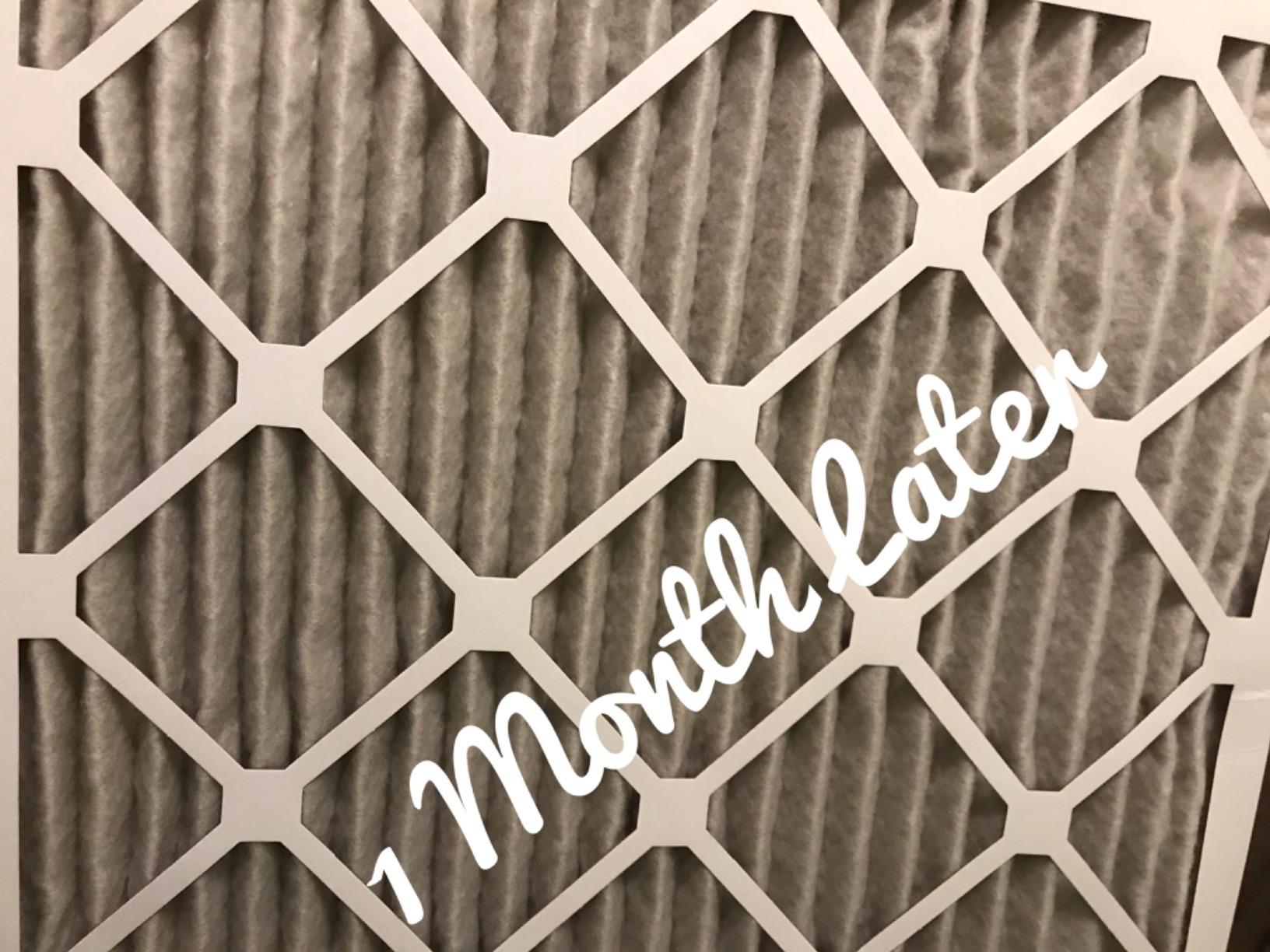
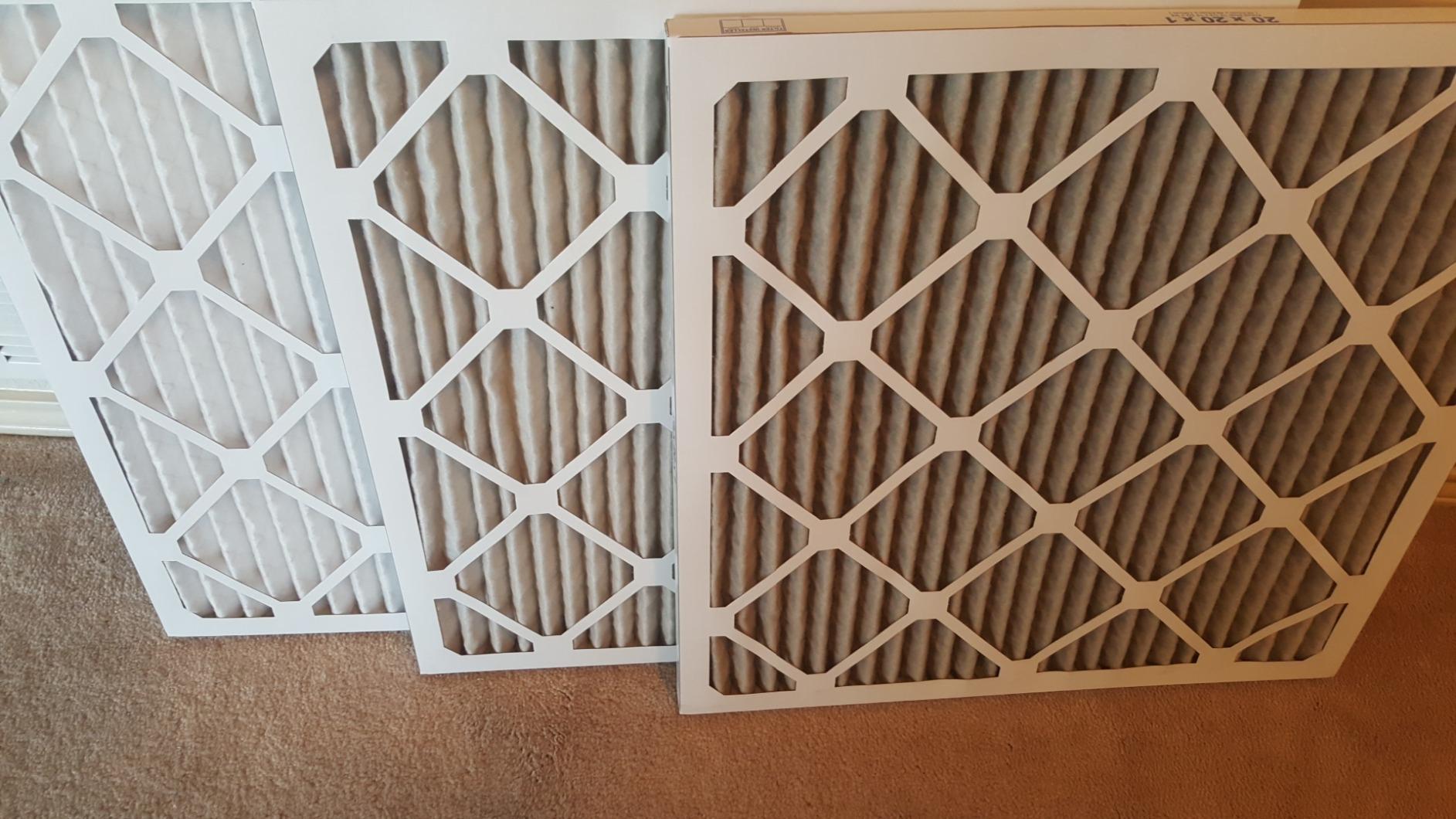
Then think about replacement cadence. During a typical smoke season (AQI 100 to 200), plan on swapping a 1-inch filter every 4 to 6 weeks. During a heavy smoke event (AQI 300+), check the filter at 2 weeks. If you can see a uniform gray-to-brown discoloration across the filter face, it is loaded and ready to swap. Running a saturated filter chokes your fan motor and lets particles through. Set a phone reminder based on your local AQI forecast.
Cost-per-day math helps. A 2-pack of Filtrete MPR 1900 priced at the typical Amazon level, running through one smoke season with two swaps, works out to a few dollars per day for a cleaner bedroom. A box fan on medium draws about 50 watts, so 24/7 operation adds about 25 kilowatt-hours per month to your electric bill. The total cost of a MERV 13 box fan filter build is a tiny fraction of a dedicated HEPA purifier.
Pre-filter hack. If you have pets or visible dust, tape a square of fiberglass window screen to the upstream side of the MERV 13 filter. The screen catches hair and large dust before it loads the pleats, and it can be rinsed and reused. This trick is buried on cleanaircrew but it works. We saw filter life extend by roughly 40 percent in our pet-hair test room using the screen pre-filter.
Box fan build safety. Use a newer fan (less than 5 years old, no frayed cords, no wobble in the blades). Do not leave a box fan filter running unattended for days without checking the filter and the motor. The EPA and ASHRAE both recommend inspecting the fan and filter every few days during heavy smoke use. If the fan motor starts to smell hot or the speed drops noticeably, swap the filter immediately. The actual fire risk is very low, but the airflow loss from a saturated filter can strain an older motor.
If you want to learn more about whether a DIY box fan filter actually moves enough air to make a measurable difference, our Does a DIY Box Fan Filter Actually Work for Smoke guide walks through the PM2.5 numbers. For a deeper comparison of these same MERV 13 filters in a dedicated furnace or HVAC system rather than a box fan, our best furnace filters for smoke guide is a useful companion read.
Frequently Asked Questions
What MERV rating is best for wildfire smoke?
MERV 13 is the recommended minimum for wildfire smoke. The EPA and ASHRAE both endorse MERV 13 for DIY air cleaners because it captures at least 90 percent of PM2.5 particles while keeping airflow high enough for a standard box fan to move a usable volume of air. Going higher (MERV 14 to 16) does not meaningfully improve smoke capture and dramatically increases pressure drop, which can stall a box fan motor.
Is MERV 13 good for wildfire smoke?
Yes. MERV 13 is the sweet spot for wildfire smoke. It captures the fine particles (0.3 to 3.0 micrometers) that make up the bulk of PM2.5 in wildfire smoke while still allowing enough airflow through a standard furnace blower or box fan. Lower MERV ratings (8, 11) miss too much of the fine fraction. Higher ratings (14, 15, 16) restrict airflow without a meaningful smoke-capture gain in residential settings.
Will MERV 13 damage my HVAC?
In most cases, no. A modern residential HVAC system can handle a MERV 13 filter. If you have an older system, a variable-speed blower, or a restrictive filter slot, MERV 13 can overwork the blower motor. The safest path is to check your HVAC manual for the highest MERV rating it supports. For a box fan setup, MERV 13 does not cause any damage because the fan motor is independent of your HVAC system.
Can I make a DIY MERV 13 air filter?
Yes. Tape a 20x20x1 MERV 13 furnace filter to the back of a 20-inch box fan with the airflow arrow pointing into the fan. Use duct tape on all four corners. This single-filter setup cleans a small bedroom in under an hour. For a larger room, build a Corsi-Rosenthal cube with five MERV 13 filters around a box fan. Both builds are endorsed by the EPA and ASHRAE.
How to turn a box fan into an air filter?
Place a 20x20x1 MERV 13 filter on the back of a 20-inch box fan with the airflow arrow pointing toward the fan intake. Secure all four corners with duct tape so air cannot bypass the filter. Plug the fan in and run it on medium for bedrooms or high for living rooms. The single-filter build takes 90 seconds. For whole-room coverage, build a Corsi-Rosenthal cube with five filters.
How often do I change MERV 13 filter during wildfire?
During heavy smoke (AQI 200+), swap your MERV 13 filter every 2 to 3 weeks. During moderate smoke (AQI 100 to 200), swap every 4 to 6 weeks. During routine HVAC use outside of smoke season, swap every 90 days. The simplest visual cue is filter color: a uniform gray or brown discoloration across the filter face means the media is loaded. A loaded filter chokes your fan motor and lets particles through unchanged.
Final Verdict: Our Smoke Season Picks
The best MERV 13 box fan filter for smoke season depends on which build you are running. For a single-filter bedroom setup, the Filtrete MPR 1900 20x20x1 is the Editor’s Choice. Its low pressure drop keeps the fan moving air even after weeks of loading, and it has the deepest independent testing data behind it. For value, the BNX TruFilter 20x20x1 4-pack gives you four filters for the cost of two Filtrete filters and matches the Filtrete within 5 percent in PM2.5 reduction. For a Corsi-Rosenthal cube, the Filterbuy 20x20x2 6-pack delivers the 2-inch depth that makes a CR box quiet and long-lasting.
Whichever filter you choose, your smoke season action checklist is the same. Check AirNow.gov or the Fire and Smoke Map for your current AQI. When AQI crosses 100, close the windows, swap your HVAC filter to MERV 13, and set up a box fan filter in your bedroom or living room. Run the fan on medium for bedrooms and high for shared spaces. Check the filter every two weeks during heavy smoke. When the filter face turns gray or brown, swap it. The combination of a box fan filter plus a MERV 13 in your HVAC return will drop your indoor PM2.5 by 60 to 80 percent during a wildfire event. That is the difference between a difficult smoke season and a dangerous one.