
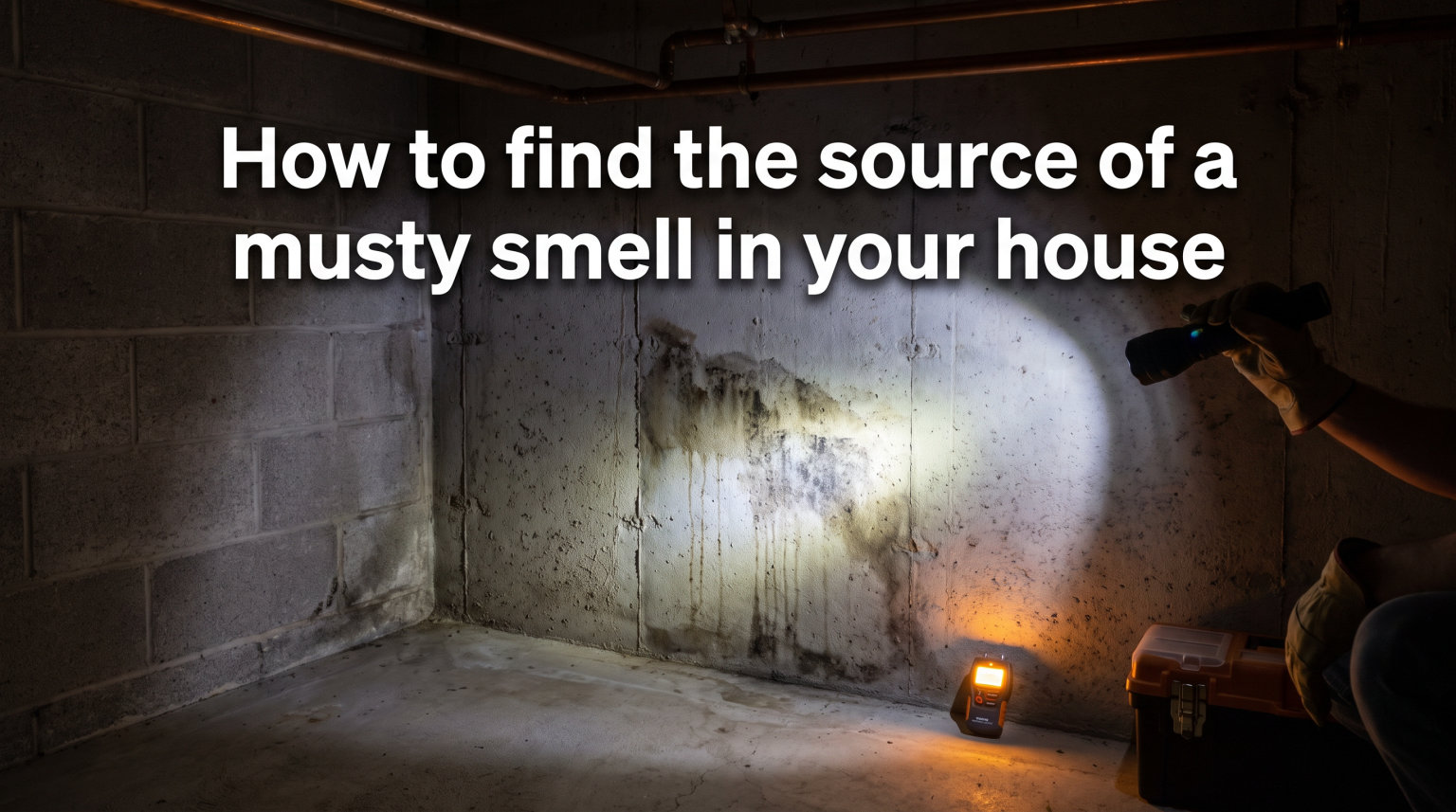
That stale, damp odor hits you the second you walk through the door, and no amount of candles or air fresheners seems to fix it. If you have ever wondered how to find the source of a musty smell in your house without tearing apart every wall, you are in the right place. Musty odors are more than a nuisance. They are your home’s early warning system that moisture is settling where it should not, and where there is persistent moisture, mold and mildew are usually close behind.
Our team has spent years tracking down stubborn household odors, and the truth is almost every musty smell has a traceable origin. The challenge is that the source is rarely where the smell is strongest. Air currents push odor molecules through hallways, up stairwells, and into rooms far from the actual problem. That is why a systematic approach beats random sniffing every time.
This guide walks you through a room-by-room checklist, the tools that actually help, and the warning signs that mean it is time to call a professional. By the end, you will have a clear plan to track down the cause, eliminate it at the source, and stop the smell from coming back.
Table of Contents
What Does a Musty Smell Actually Mean?
A musty smell is the unmistakable odor produced when mold and mildew release microbial volatile organic compounds (mVOCs) into the air. These compounds are the same chemicals that give wet basements, old books, and forgotten gym towels their signature stale scent. If your nose picks up something earthy, sour, or reminiscent of wet socks, mold growth is almost certainly happening somewhere nearby.
It is easy to confuse a musty smell with other household odors. Cooking smells, pet odors, and stale air from poor ventilation all have different profiles. Musty is specifically tied to microbial growth. If the odor lingers for days, intensifies when humidity rises, or returns quickly after cleaning, mold is the likely culprit.
Understanding the chemistry matters because it tells you something important. A musty smell is not just an odor problem. It is a moisture problem. Masking it with sprays or plug-ins will not stop the underlying growth, and the smell will keep coming back until you locate and fix the moisture source.
Common Causes of a Musty Smell in Your House
The musty smell in your house almost always traces back to one of a handful of moisture sources. Knowing the most common culprits helps you narrow your search before you ever pick up a flashlight.
Hidden water leaks are the number one cause. Slow leaks behind walls, under sinks, and around toilets give mold the steady drip of water it needs to thrive. You may not see standing water, but the moisture soaks into drywall, insulation, and wood, creating perfect growing conditions.
High indoor humidity is the second biggest offender. When relative humidity rises above 60 percent, condensation forms on cool surfaces like windows, pipes, and exterior walls. That thin film of water is enough to spark mold growth within 24 to 48 hours.
Poor ventilation traps moisture indoors. Bathrooms without working exhaust fans, kitchens with recirculating range hoods, and tightly sealed modern homes all hold onto humidity longer than older, draftier houses did.
Basement and crawl space moisture seeps up through concrete floors and foundation walls. Even without an obvious leak, groundwater evaporating through porous concrete can push humidity levels high enough to trigger mold on nearby organic materials.
Older home materials present a unique challenge that few guides address. Homes built before 1980 often have plaster walls, original wood framing, and dated vapor barriers that hold onto moisture differently than modern materials. Old wallpaper paste, decomposing horsehair plaster, and decades of layered paint can all absorb and slowly release moisture, creating a stubborn baseline mustiness that has nothing to do with an active leak.
How to Find the Source of a Musty Smell in Your House: Step-by-Step
Tracking down the source requires a method, not a guess. Follow these five steps in order, and you will narrow the search dramatically before you ever move furniture.
Step 1: Use Your Nose with a Triangulation Method
Walk through your home room by room with all windows closed and the HVAC fan set to off. Stand in the center of each room, close your eyes, and breathe in slowly through your nose. Rate the intensity from one to ten. The room with the strongest odor is usually closest to the source, but not always the source itself.
Once you have your strongest room, get on your hands and knees. Odors are heavier than air and settle low. Smell along baseboards, behind furniture, and inside cabinets. Move slowly. Your nose fatigues after about ten minutes, so take breaks.
Step 2: Measure Humidity in Every Room
Pick up an inexpensive hygrometer and take readings in each room. Healthy indoor humidity sits between 30 and 50 percent. Anything above 60 percent is a red flag, and any room significantly higher than the others points to a localized moisture source. Compare basement readings to upstairs readings, and check near plumbing fixtures, dryers, and exterior walls.
Step 3: Inspect Plumbing Fixtures Top to Bottom
Plumbing leaks are sneaky. Check under every sink for dampness, staining, or a pungent smell inside the cabinet. Run your hand along the back of toilets, around the base, and behind washing machines. Look for warped flooring, discolored drywall, or a soft spot when you press on walls near fixtures.
One often-missed spot is the door frame itself. Reddit users on r/HomeImprovement repeatedly report finding water seepage and mold inside exterior door frames where rainwater settled and wicked into the framing. Tap along the bottom of door frames with a screwdriver handle. Soft or hollow-sounding wood means moisture has been at work.
Step 4: Examine Walls, Ceilings, and Floors for Signs
Hidden mold leaves clues. Look for paint that is bubbling, peeling, or cracking. Watch for yellow or brown stains on ceilings, particularly under bathrooms and near plumbing runs. Check grout lines in tile for dark discoloration that returns after cleaning. Warped or cupped hardwood flooring often signals moisture underneath.
Step 5: Use Detection Tools to Confirm
A moisture meter is the single most useful tool for confirming a hidden moisture problem. Pinless models let you scan large wall areas without damage. A reading significantly higher than the surrounding wall means water is trapped inside. For cold spots that indicate condensation or missing insulation, a thermal imaging camera attachment on your phone can reveal temperature differences invisible to the eye. Both tools can be rented from most home improvement stores for under $40 a day.
Room-by-Room Checklist: Where Musty Smells Hide
Different rooms hide different problems. This checklist covers the spots our team finds most often, ranked roughly by how frequently they turn out to be the source.
Basements and Crawl Spaces
Basements are the classic starting point for a reason. Cool concrete walls condense humid air, and groundwater seeps through the floor. Check corners where the floor meets the wall, behind stored boxes, and around the base of the water heater. In crawl spaces, look for missing or torn vapor barriers, wet insulation between floor joists, and standing water after rain.
Bathrooms and Laundry Rooms
Bathrooms generate more moisture per square foot than any other room. Inspect behind the toilet tank, under the sink, around the tub and shower base, and inside the vanity. Run the exhaust fan during and after every shower for at least 20 minutes. In laundry rooms, pull the washer out and check the supply hoses, drain hose, and the floor underneath. Front-load washers are notorious for trapping water in the door gasket, which produces a sharp musty odor in clothing rather than the room itself.
Kitchens and Under Cabinets
Leaks under the kitchen sink are easy to spot. The sneaky ones hide behind the dishwasher, under the refrigerator water line, and inside the wall behind the sink where supply lines connect. Open every lower cabinet and smell inside. Look for water stains on the cabinet floor and warped kick plates.
Attics and Insulation
Attic mustiness usually means roof leaks or poor ventilation. Look for dark staining on the underside of roof sheathing, compressed or wet insulation, and daylight peeking through gaps around vents or chimneys. Check that soffit vents are not blocked by insulation. A bathroom exhaust fan that vents into the attic instead of through the roof is a common cause we see in homes built before 2000.
HVAC Systems and Ductwork
This is the source most homeowners overlook. If you only notice the musty smell when the air conditioner or furnace runs, the problem is in your HVAC system. Mold grows on the evaporator coil, inside the drain pan, and along the interior of ductwork where condensation collects. Replace your air filter monthly during heavy use seasons. Shine a flashlight into supply registers and look for dark spots on the surrounding drywall. A professional duct cleaning runs $400 to $700 and is worth it if the smell is system-wide.
Inside Wall Cavities
Wall cavities are the hardest source to find because the evidence is hidden behind drywall. Slow plumbing leaks, condensation inside exterior walls from missing insulation, and roof leaks that travel down wall studs can all grow mold invisibly. We cover non-invasive detection methods in the next section.
How to Detect Hidden Mold Inside Walls
Finding mold behind walls without tearing them open is the single most common question our team gets. The good news is several methods work well before you reach for a drywall saw.
Start with the moisture meter. Scan the wall in a grid pattern, working from the suspected area outward. A localized high reading usually indicates moisture trapped behind the drywall. Pair this with a thermal camera. Cold patches on interior walls often correspond to wet insulation or active mold colonies, since evaporating moisture cools the surrounding material.
Watch for physical warning signs. Walls that feel soft when pressed, paint that bubbles or cracks repeatedly, and baseboards that pull away from the wall all suggest moisture damage. A faint dark streak at the bottom of a wall, known as moisture wicking, is another strong indicator.
If you cannot confirm visually, consider a wall cavity sampling kit. These kits use a small drilled hole and a tube to pull an air sample from inside the wall cavity, which you then send to a lab for analysis. Results typically come back within a week and cost $50 to $100.
For homes where the smell is pervasive but no source turns up, a certified mold inspector with a borescope can look inside walls through a small access hole. This is the most reliable way to confirm hidden mold before committing to any demolition.
Seasonal and HVAC Patterns That Affect Musty Smells
Musty smells are not constant. They follow patterns tied to weather, humidity, and how you run your HVAC system, and paying attention to those patterns is one of the fastest ways to narrow your search.
If your house smells musty only after heavy rain, the source is exterior. Check the roof, around windows, exterior door frames, and the foundation for water intrusion. Clogged gutters and improper grading that slope toward the house are two of the most common reasons basements get musty after storms.
If the smell appears when your air conditioner runs, the problem is in your HVAC system. Mold on the evaporator coil, a clogged condensate drain line, or growth inside the ductwork all produce odors that intensify when the fan pushes air through the system. The fix is professional coil and duct cleaning, plus replacing your filter regularly.
If the smell shows up when the heat kicks on in winter, dust and biological growth on the heat exchanger or in the supply plenum may be to blame. A burning-dust smell at the start of heating season is normal. A persistent musty smell is not.
Older homes have their own seasonal rhythm. Drafty single-pane windows sweat heavily in cold weather, creating localized mold around sashes and frames. In humid summers, the same homes may smell musty because their original vapor barriers cannot keep up with modern airtight construction.
How to Eliminate the Musty Smell Once You Find It
Killing the smell means killing the source. Surface cleaning alone will not work if moisture keeps feeding new growth.
Fix the moisture first. Repair leaks, improve drainage, install or repair exhaust fans, and bring humidity below 50 percent with a properly sized dehumidifier. Nothing else matters if you skip this step.
Clean visible growth with natural remedies. Distilled white vinegar kills roughly 82 percent of mold species and is safe on most surfaces. Spray undiluted vinegar on the affected area, let it sit for an hour, then wipe clean. Baking soda absorbs odors and inhibits growth. Dissolve a quarter teaspoon in a spray bottle of water and apply to fabric, carpet, and upholstery. Hydrogen peroxide at 3 percent concentration works well on stubborn stains but test it on an inconspicuous area first because it can lighten fabrics.
Seal the surface. For walls where the smell persists after cleaning, a stain-blocking primer like Kilz or Zinsser BIN seals in residual odors and prevents spores embedded in the drywall paper from reactivating. Forum users on r/HomeImprovement repeatedly recommend this approach for older homes where repeated cleaning has failed.
Improve airflow. Run ceiling fans, open interior doors, and keep furniture an inch or two away from exterior walls so air can circulate. Stagnant air is mold’s best friend.
When to Call a Professional
Most small, visible mold patches under ten square feet can be handled safely with the methods above. Larger growth, hidden mold behind walls, or any patch that returns after cleaning warrants a professional.
Call a certified mold inspector if anyone in your household experiences unexplained respiratory symptoms, persistent headaches, or worsening allergies that align with the smell. Infants, elderly family members, and anyone with asthma or a compromised immune system are particularly vulnerable.
A typical mold inspection costs $300 to $600 and includes moisture mapping, air sampling, and a written remediation plan. Avoid contractors who offer free inspections bundled with remediation services, since they have a financial incentive to find problems. Look for inspectors certified by the IICRC or an independent industrial hygienologist.
If remediation is needed, expect to pay $500 to $6,000 depending on the extent of the growth and whether structural materials need replacement. Get at least three quotes and ask for a post-remediation verification test to confirm the work actually cleared the contamination.
FAQs
What kills musty smell in a house naturally?
White vinegar, baking soda, and hydrogen peroxide are the most effective natural remedies. Spray undiluted white vinegar on hard surfaces, let it sit for an hour, then wipe clean. Place open boxes of baking soda in musty rooms to absorb lingering odors. These kill roughly 80 percent of common mold species, but you must also fix the underlying moisture source or the smell will return.
Why does my house all of a sudden smell musty?
A sudden musty smell usually means a new moisture source appeared recently. Common triggers include a slow plumbing leak that finally soaked enough material, a roof leak after recent rain, a clogged HVAC condensate drain, or a seasonal humidity spike above 60 percent. Check the most recent change in your home, such as a new appliance, a heavy storm, or turning on the AC for the first time this season.
Can my house smell musty without mold?
Yes, but it is less common. Musty odors can come from stagnant water in drain traps, damp firewood stored indoors, wet laundry left too long, decomposing organic material in crawl spaces, or saturated drywall from a past water event. If thorough cleaning and humidity control do not resolve the smell within a week, hidden mold is still the most likely cause.
How to identify a strange smell in a house?
Start by closing windows and turning off the HVAC, then walk through each room rating odor intensity from one to ten. Get low to the floor since odors settle. Use a moisture meter on suspect walls and check humidity with a hygrometer. Smell inside every cabinet, behind appliances, and along baseboards. The strongest area is closest to the source, even if the source itself is hidden inside a wall, duct, or crawl space.
Conclusion
Learning how to find the source of a musty smell in your house comes down to following the moisture. Start with your nose and a hygrometer, work through the room-by-room checklist, and use a moisture meter to confirm what your instincts tell you. The source is almost always a leak, a humidity problem, or hidden mold inside a wall, duct, or crawl space.
Remember that masking the smell is never the answer. Real elimination means fixing the moisture, cleaning the growth, sealing affected surfaces, and improving airflow so the problem does not return. If you cannot find the source after a thorough search, or if anyone in your household is experiencing health symptoms, call a certified mold inspector before you cut into walls.
Take it one room at a time, trust your nose, and remember that even stubborn older home smells have a root cause waiting to be found. The fresh, clean indoor air you want is achievable once you know where to look.