
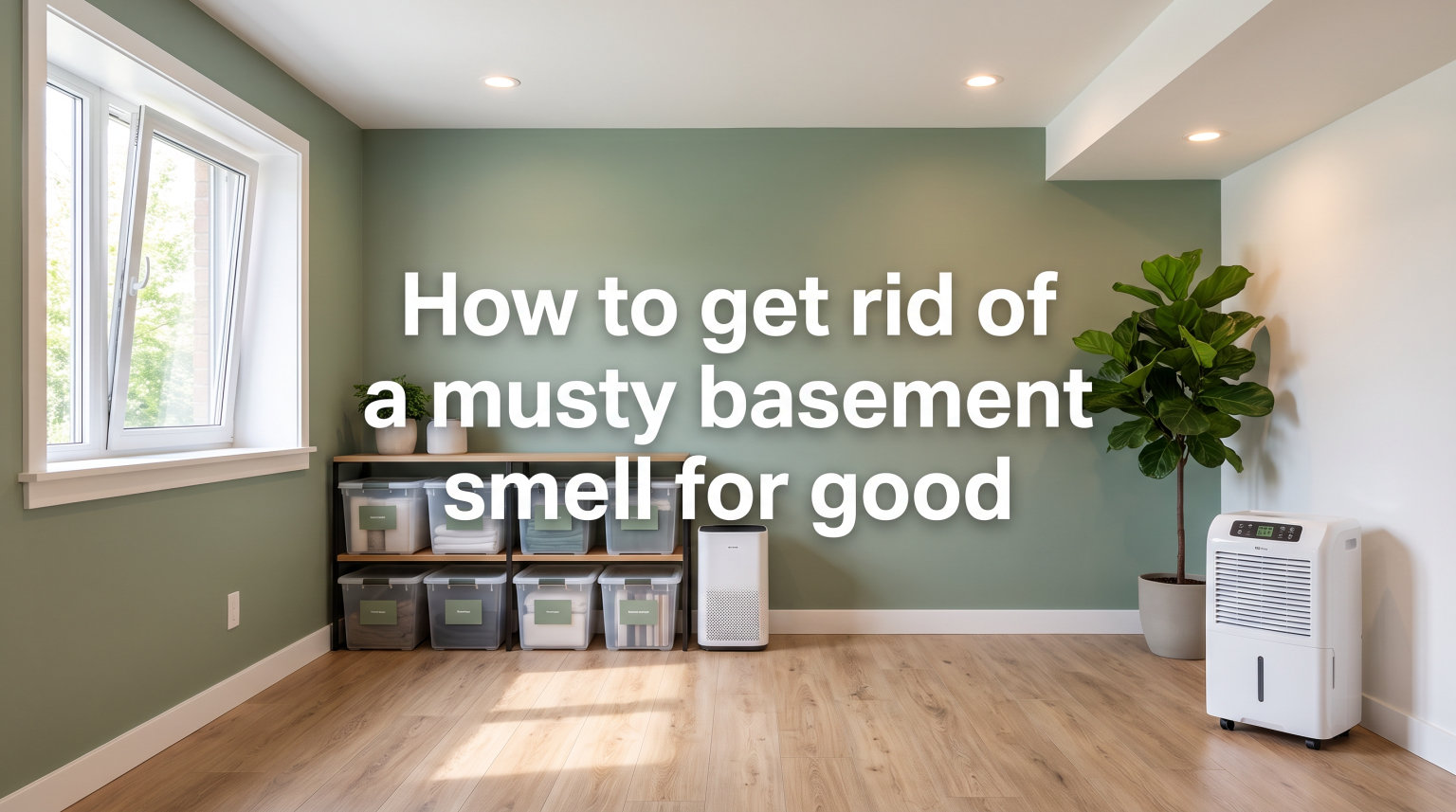
That unmistakable earthy, damp odor creeping up from below is more than just an annoyance. It is the signature of a musty basement smell, and according to the American Society of Home Inspectors, roughly 60% of houses deal with some form of basement moisture that feeds exactly this problem. The smell travels upstairs through what contractors call the stack effect, pulling basement air into every room you live in.
I have spent years helping homeowners track down and eliminate stubborn basement odors, and I can tell you the fix is rarely a single spray or candle. Getting rid of a musty basement smell for good means removing the moisture that feeds mold and mildew, then cleaning the surfaces the odor has clung to. A mild case clears in about one to three weeks of consistent dehumidifier use and cleaning, while a severe, long-standing problem in an older home can take a month or more.
In this guide, I will walk you through exactly how to get rid of a musty basement smell for good using a step-by-step process that works on concrete, cinder block, and even old stone foundations. You will learn how to find the hidden moisture source, deep clean without dangerous chemical mistakes, dial in your humidity, ventilate properly, and lock in the results with long-term prevention. I have also included a seasonal maintenance checklist that no other guide I have seen offers, plus answers to the questions homeowners ask most.
Table of Contents
Understanding What Causes a Musty Basement Smell
A musty basement smell is almost always the byproduct of mold and mildew growing in damp, poorly ventilated spaces. The odor itself comes from microbial volatile organic compounds (MVOCs) that these microbes release as they feed on organic material in drywall, wood, carpet, dust, and even the paper backing on insulation. If you can smell it, living microbes are producing it somewhere nearby, even if you cannot see them.
Basements are naturally prone to this because they sit below grade where temperatures stay cool and where moisture constantly pushes inward through concrete, stone, and cinder block. Cool surfaces cause condensation when warm humid air meets them, and porous foundation materials slowly wick groundwater inward through capillary action. Add limited airflow and you have the perfect incubator for the microbes that generate that earthy smell.
The Stack Effect Pulls Basement Air Upstairs
The stack effect is the reason a basement smell never stays in the basement. Warm air rises and exits through the upper levels of your home, creating negative pressure at the bottom that continuously draws basement air upward through floor joints, stairwells, and gaps around pipes. This is why you smell the basement in your living room even though you never opened the door.
Common Sources of Basement Moisture and Odor
Before you can fix the smell, you need to know where the moisture is coming from. The most common sources I find on inspections include the following.
- Foundation cracks and honeycomb concrete that let groundwater seep through walls and floors, often leaving a white powdery mineral deposit called efflorescence behind.
- Condensation on cold pipes, walls, and metal ductwork when humid air meets cool surfaces.
- Plumbing leaks from slow drips behind walls, under sinks, or at water heater connections.
- Dry P-traps on floor drains and unused sinks that let sewer gas, which carries its own musty edge, drift into the basement.
- Poor exterior drainage from clogged gutters, short downspouts, or grading that slopes toward the foundation instead of away.
- Indoor moisture sources like unvented dryers, drying clothes indoors, or a leaky washing machine.
Is it normal for a basement to smell a little musty? A faint earthy smell in an unfinished, unconditioned basement is fairly common, but it is never something to ignore. Even a mild odor means moisture and microbial growth are present, and those conditions tend to worsen over time unless you address the cause.
How to Get Rid of a Musty Basement Smell: Step-by-Step
The five-step process below is the same sequence I use, and it works whether you are dealing with a small storage area or a full finished basement. Skip a step and the smell usually comes back within weeks, so work through them in order.
Step 1: Identify and Eliminate the Moisture Source
Every lasting fix starts here, because no amount of cleaning or deodorizing will hold if water keeps entering. Grab a flashlight and inspect every wall, corner, and pipe connection for stains, dampness, or that white efflorescence powder that signals water movement through concrete.
Check the floor drains by pouring a quart of water into each one. If a drain gurgles or smells worse afterward, the P-trap has dried out and you are likely pulling sewer gas, which can mimic a musty odor. Refill P-traps every couple of months in unused drains.
Walk the exterior while you are at it. Clean the gutters, extend downspouts at least four to six feet from the foundation, and re-grade any soil that slopes toward the house. These outdoor fixes solve a surprising share of basement moisture problems before you ever touch a dehumidifier.
Buy a cheap hygrometer and record the basement humidity. Anything above 60% relative humidity is actively feeding mold and mildew, and your target range is between 30% and 50%. The number you get tells you immediately how aggressive your dehumidification strategy needs to be.
Step 2: Deep Clean and Disinfect the Basement
Once the moisture source is under control, you have to physically remove the mold, mildew, and the biofilm that holds the smell. Start by removing everything porous that has visible mold growth, especially old cardboard boxes, fabric, and carpet padding that has been wet. These items will keep off-gassing MVOCs long after you clean everything else.
For hard surfaces like concrete walls, cinder block, and sealed floors, scrub with a solution of one cup of white vinegar per gallon of water, or a dedicated mold-killing cleaner. Vinegar is my default because it actually penetrates porous surfaces and kills roughly 82% of mold species, where bleach only removes surface color and leaves roots intact. Work in small sections and rinse with clean water.
Important safety warning: never mix bleach with ammonia, vinegar, or other acid-based cleaners. The combination produces toxic chloramine gas that can cause serious respiratory injury within minutes. If you switch products between sections, rinse thoroughly with water first and ventilate the area.
For unfinished concrete and block walls in a basement that smells musty, this is also the right time to brush off efflorescence with a stiff wire brush and vacuum the dust. Efflorescence itself is not dangerous, but it is a roadmap showing exactly where water is pushing through the foundation.
Step 3: Control Humidity With a Dehumidifier
This is the single most effective tool for keeping a musty basement smell gone, and forum after forum of homeowners confirms it. A properly sized basement dehumidifier running in the 30 to 50% humidity range starves mold and mildew of the moisture they need to regrow, and it stops new MVOCs from forming.
Size the unit to your square footage and to how damp the space is. A 1,500 square foot basement with moderate dampness needs roughly a 30-pint dehumidifier, while a 2,500 square foot wet basement wants a 50 to 70-pint unit rated for those conditions. Undersizing is the most common mistake I see, so when in doubt, size up.
If your dehumidifier supports a hose connection, set it up to drain continuously into a floor drain or sump pump pit. This lets the unit run 24 hours a day without you having to empty a bucket, which is the difference between a dehumidifier that solves the problem and one that sits unused because it is annoying.
Check the humidity with your hygrometer every few days for the first two weeks, and adjust the unit until you hold steady in that 30 to 50% range. Once the air is consistently dry, the musty smell typically fades noticeably within a week and disappears within two to three.
Step 4: Improve Basement Ventilation and Air Circulation
A dehumidifier handles moisture, but you still need to move air to clear out the musty smell that has soaked into surfaces. Run an oscillating fan on low continuously to keep air from going stagnant in corners, around stored items, and along walls where condensation forms.
Open basement windows only when the outdoor humidity is lower than your indoor humidity, which usually means cool dry days in spring and fall. On humid summer days, opening windows actually pours more moisture into the basement and makes the problem worse, so check your hygrometer against a weather app before you crack a window.
An air purifier with a true HEPA filter and an activated carbon layer helps pull mold spores and odor molecules out of the air. The HEPA captures spores so they cannot settle and regrow, while the carbon adsorbs the MVOCs that produce the smell. This is a complement to, not a replacement for, the dehumidifier and cleaning steps.
Step 5: Seal and Waterproof for Long-Term Prevention
Cleaning and dehumidifying clears the current smell, but sealing keeps it from coming back. Apply a concrete or masonry sealer to bare walls and floors, which blocks the slow vapor transmission through porous materials that quietly raises basement humidity all year.
Fill any visible foundation cracks with a polyurethane caulk designed for masonry, or use a hydraulic cement for larger gaps and actively leaking cracks. For hairline cracks in older concrete, a silane-siloxane penetrating sealer soaks in and creates a water-repellent barrier without changing the surface appearance.
If you have recurring water intrusion after heavy rain, you are likely dealing with hydrostatic pressure pushing water through the foundation. The permanent fix in that case is a French drain and sump pump system installed along the interior footing, which captures water before it reaches the floor. This is a bigger investment, but it is the difference between managing a smell and actually solving it.
When to Call a Professional
Most mild to moderate musty basement smells respond well to the DIY process above. You should bring in a professional if you see black mold covering more than roughly 10 square feet, if the smell returns within weeks despite consistent dehumidification, or if you notice structural cracks, bowing walls, or standing water after storms. These are signs of a deeper moisture or structural problem that DIY methods will not solve.
Natural Remedies That Actually Neutralize Musty Smell
What neutralizes musty smell without harsh chemicals? Several household materials genuinely adsorb or break down the MVOCs that cause the odor, and I recommend using them as a complement to the cleaning and dehumidifying steps above. Here is what works, why it works, and how to use it.
- Baking soda is mildly alkaline and physically traps odor molecules in its crystalline structure. Set open boxes or shallow pans of baking soda in corners, closets, and near stored items, and replace them every two to three months. It is cheap, safe, and effective for low-level lingering odors.
- White vinegar is mildly acidic and breaks down the biofilm that mold leaves on surfaces, plus it kills most common mold species on contact. Mix equal parts vinegar and water in a spray bottle, mist problem areas, let it sit for an hour, then wipe clean. The vinegar smell itself fades within a day.
- Activated charcoal has a massive porous surface area that adsorbs MVOCs and humidity from the air. Place bags or dishes of activated charcoal around the basement, and recharge them every few months by setting them in direct sunlight for a few hours. This is the same material used in air purifier filters, just in bulk form.
- Coffee grounds absorb odors and add a mild pleasant scent. Spread dry used coffee grounds on a shallow tray and leave them in a corner, replacing weekly. They are not as strong as activated charcoal, but they are free if you already brew coffee.
- Cat litter (non-clumping, unscented) pulls moisture and odor out of the air. A few open containers placed around the basement can shave a few percentage points off humidity and absorb smells at the same time.
These natural absorbers are best viewed as polish on top of the core steps, not as the solution themselves. A bowl of baking soda cannot overcome a 70% humidity basement with mold growing up the walls, but once you have cleaned and dehumidified, these remedies help keep the air fresh between deep cleans.
Special Cases: Old Homes, Stone Foundations, and Carpeted Basements
Older homes bring challenges that newer construction does not, and forum after forum of century-home owners confirms the same patterns. Stone and rubble foundations from the late 1800s and early 1900s are extremely porous and wick moisture constantly, which means these basements almost always need a dehumidifier running year-round and rarely respond to cleaning alone.
Cinder block walls, common from the mid-1900s onward, have hollow cores that collect water and hold humidity even when the surface looks dry. If your cinder block basement smells musty but the walls appear fine, the moisture is likely hiding inside the blocks, and sealing the exterior surface with a masonry sealer plus running a dehumidifier is usually the answer.
Carpeted basements are the hardest case of all. Carpet and padding act like sponges for humidity, and once mold takes hold in the fibers or the backing, no amount of shampooing fully removes it. If a finished basement smells musty and has carpet that has ever been damp, the most reliable fix I have seen from homeowners is pulling the carpet and padding entirely, cleaning and sealing the concrete underneath, and choosing a flooring option designed for below-grade use.
Seasonal Maintenance Checklist to Keep the Smell Away
Use this checklist to stay ahead of basement moisture before the smell returns. I have organized it by season because the threats change throughout the year.
Spring: Test your sump pump by pouring water into the pit, clean gutters and downspout extensions, check the dehumidifier coil and filter, and refill any dry floor drain P-traps.
Summer: Run the dehumidifier continuously, keep basement windows closed on humid days, watch humidity with a hygrometer, and check for condensation on pipes and ductwork.
Fall: Re-grade soil away from the foundation, inspect for new foundation cracks, replace baking soda and charcoal absorbers, and store items on shelves instead of the floor.
Winter: Insulate cold water pipes to prevent condensation, vacuum dust from basement surfaces where mold can feed, and check that the dryer vents completely outside.
Frequently Asked Questions About Musty Basement Smells
How long does it take to get musty smell out of a basement?
A mild musty basement smell usually clears within one to three weeks after you fix the moisture source, deep clean the surfaces, and run a dehumidifier at 30 to 50% humidity. Severe odors in older homes with porous stone or cinder block foundations can take a month or longer because the smell has soaked deep into the materials.
Is it normal for a basement to smell a little musty?
A faint musty smell in an unfinished basement is common, but it is never something to ignore. Even a mild odor means moisture and microbial growth are present, and those conditions tend to worsen over time unless you address the cause with dehumidification and ventilation.
What neutralizes musty smell?
White vinegar kills most mold species on contact, baking soda and activated charcoal physically adsorb odor molecules from the air, and a dehumidifier removes the moisture that produces the smell in the first place. Used together, these methods neutralize both the source and the lingering odor.
How to get rid of musty smell in concrete basement?
To remove musty smell from a concrete basement, first fix the moisture source by sealing cracks and improving exterior drainage. Then scrub the walls and floor with a one-to-one vinegar and water solution, brush off any efflorescence, apply a masonry sealer to block vapor transmission, and run a dehumidifier to hold humidity at 30 to 50%.
Will a dehumidifier alone fix musty basement smell?
A dehumidifier is essential but usually not enough on its own. It stops new mold from growing, but you still need to clean the existing mold and biofilm that hold the smell, and you need to fix the moisture source that caused the problem. Homeowners on forums consistently report that a dehumidifier plus cleaning plus ventilation is what actually works.
Is musty basement smell dangerous to my health?
A musty basement smell indicates mold and mildew growth, which can trigger allergies, asthma, and respiratory irritation, especially in children, older adults, and people with compromised immune systems. The EPA recommends addressing visible mold and the moisture causing it promptly, and consulting a professional for areas larger than about 10 square feet.
Conclusion
Getting rid of a musty basement smell for good comes down to a simple principle: remove the moisture, clean the surfaces, and keep the air dry and moving. The five-step process in this guide, from finding the moisture source to sealing the foundation, works on everything from a small unfinished storage room to a finished basement in a century home. The seasonal checklist will help you catch problems before the smell ever returns.
Your next step is to grab a hygrometer, measure your basement humidity, and start at Step 1. Once you know where the moisture is coming from, the rest of the process follows naturally, and most homeowners see and smell a real difference within the first week. A dry, fresh-smelling basement is absolutely achievable with the right sequence of steps and a little consistency.