
I remember the panic when a friend texted me at 4 PM, desperate for sleep after cleaning her bedroom with bleach at 9 AM. She had been awake for 20 hours, the windows were open all day, but that sharp chemical smell still lingered. She was terrified to sleep in her own room. This scenario plays out in online forums constantly—and for good reason. Bleach fumes are no joke.
Learning how to safely air out a room after using bleach is essential for anyone who uses this powerful disinfectant at home. Bleach releases chlorine gas and other chemical compounds that can irritate your respiratory system, damage lung tissue with prolonged exposure, and create serious health risks in enclosed spaces. The good news? Proper ventilation techniques can clear these fumes quickly and keep your family safe.
In this guide, I will walk you through exactly how to ventilate a room after bleach cleaning, how long you should wait before re-entering, and what to do if you or someone else accidentally inhales bleach fumes.
Table of Contents
Why Bleach Fumes Are Dangerous
Understanding what you are dealing with helps explain why ventilation matters so much. Bleach contains sodium hypochlorite, typically at 3-8% concentration in household products. When bleach evaporates or mixes with organic matter, it releases several concerning compounds.
Chlorine gas is the primary concern. This same chemical was used as a weapon in World War I because it damages lung tissue so effectively. At lower concentrations found in household cleaning, chlorine gas irritates your eyes, throat, and lungs almost immediately.
Hypochlorous acid forms when bleach contacts moisture in the air or on surfaces. This compound penetrates deep into lung tissue and causes inflammation. You might not feel it right away, which makes it particularly dangerous.
Volatile organic compounds (VOCs) are released when bleach reacts with organic materials like dirt, food residue, or even the natural oils on your skin. These reactions can create secondary organic aerosols that linger in the air for hours.
Short-Term Health Effects
Even brief exposure to bleach fumes can cause immediate symptoms. Your eyes may water and burn. Your throat might feel scratchy or tight. Coughing, wheezing, and shortness of breath are common reactions. Some people experience headaches, nausea, or dizziness. These symptoms typically appear within minutes of exposure.
People with asthma or other respiratory conditions face heightened risks. What might cause mild irritation in a healthy person could trigger a serious asthma attack or breathing crisis in someone with underlying lung conditions.
Long-Term Health Consequences
Repeated exposure to bleach fumes without proper ventilation can lead to chronic respiratory problems. Studies have linked frequent bleach use to higher rates of chronic obstructive pulmonary disease (COPD) among cleaning professionals. Regular exposure can also increase sensitivity to other chemicals and allergens over time.
Children are especially vulnerable because their lungs are still developing. Pets breathe faster than humans and have smaller airways, making them more susceptible to chemical irritation. This is why learning the right ventilation techniques is so critical.
How to Safely Air Out a Room After Using Bleach: Step-by-Step
Following these steps systematically will help you remove bleach fumes quickly and effectively. I have refined this process through years of cleaning and consulting with professionals.
Step 1: Open All Windows and Doors Immediately
Do not wait until you finish cleaning. Open every window and exterior door in the room as soon as you start using bleach. If possible, open windows in adjacent rooms too. This creates the maximum possible airflow pathway from the start.
If the room has only one window, open it fully and keep the door to the hallway or other rooms propped open. This still helps, just not as effectively as cross-ventilation.
Step 2: Create Cross-Ventilation
Cross-ventilation is your most powerful tool. This means air enters through one opening and exits through another on the opposite side of the room or building. Open windows on opposite walls whenever possible. If you have windows on adjacent walls, opening both still creates decent airflow.
The goal is to create a tunnel effect where fresh air pushes contaminated air out. This works far better than just opening one window and hoping for the best.
Step 3: Use Fans Strategically
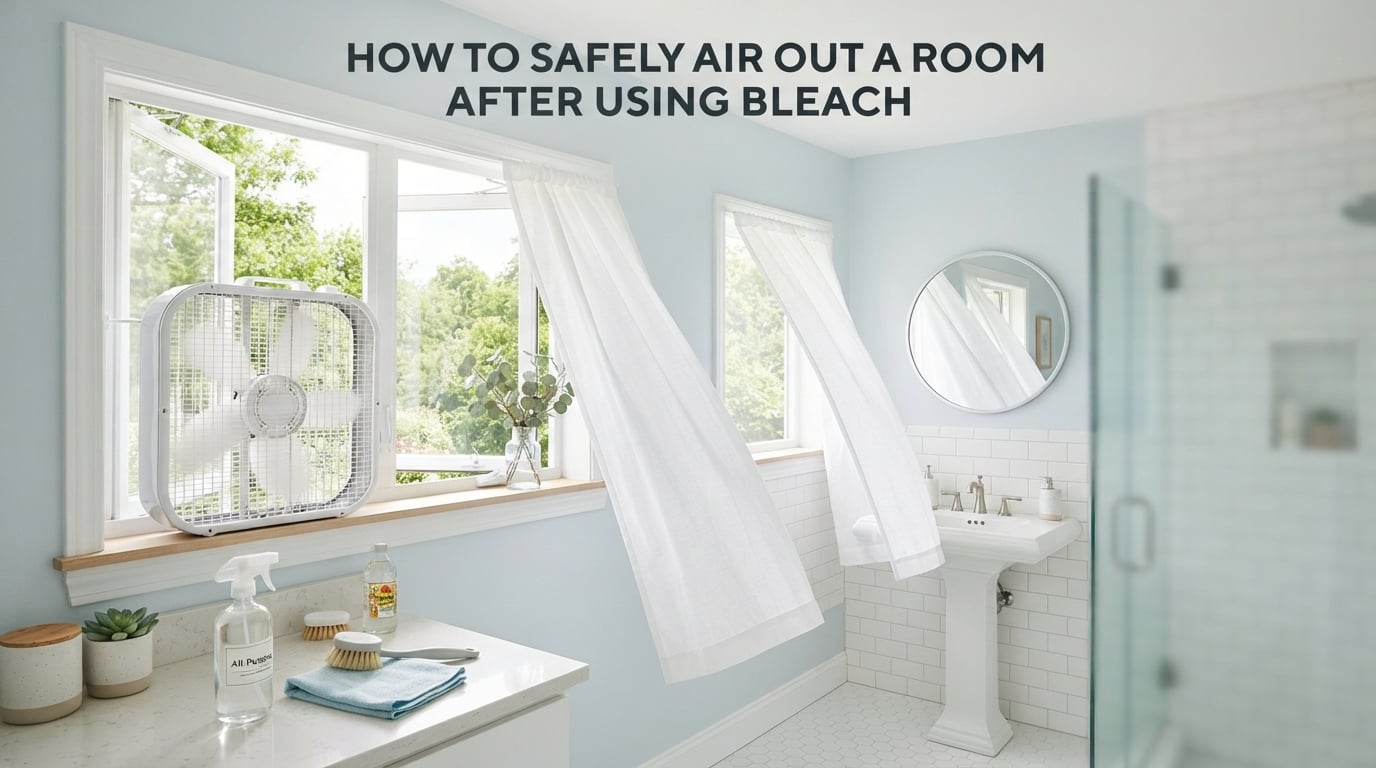
Fans dramatically speed up the ventilation process, but placement matters. The most effective technique is placing a box fan in a window facing outward, blowing air out of the room. This creates negative pressure that pulls fresh air in through other open windows.
If you have multiple fans, position one blowing out and another pointing toward the open windows to push air through the space. Ceiling fans can help circulate air but are not as effective as window fans for removing fumes.
Step 4: Turn On Exhaust Fans
Run bathroom exhaust fans and kitchen range hoods at maximum speed. These fans are designed specifically to remove air from enclosed spaces. If you cleaned a bathroom with bleach, the exhaust fan should be running during and after cleaning until the smell is completely gone.
Step 5: Run an Air Purifier with Activated Carbon
If you have an air purifier, use it—but only if it contains an activated carbon filter. HEPA filters capture particles but do not remove chemical vapors. Activated carbon absorbs volatile organic compounds including bleach fumes. Place the purifier in the center of the room or near where you used the most bleach.
Step 6: Wait the Recommended Time Before Re-Entering
After completing your cleaning and setting up ventilation, leave the room. How long you should wait depends on several factors, which I cover in the next section. At minimum, stay out for 30 minutes with windows open and fans running.
Before re-entering, stand at the doorway and take a careful breath. If you can smell bleach or feel any irritation, leave the door open and wait another 15-30 minutes. Repeat until the air feels completely normal.
How Long Do Bleach Fumes Last?
The duration depends heavily on your specific situation. In a well-ventilated room with multiple windows open and fans running, bleach fumes typically dissipate within 30 to 60 minutes. In poorly ventilated spaces, fumes can linger for several hours or even days.
Factors That Affect Dissipation Time
Room size makes a significant difference. A small bathroom holds less air volume than a large kitchen, meaning the same amount of bleach creates higher concentrations in smaller spaces. However, smaller rooms can also be ventilated more quickly.
Ventilation quality is the biggest factor. Cross-ventilation with fans can clear fumes in under an hour. A single partially open window might leave fumes lingering all day.
Amount of bleach used matters. A quick wipe-down with diluted bleach releases far less fume than deep cleaning with concentrated solution or spraying bleach directly on surfaces.
Temperature and humidity play roles too. Higher temperatures cause bleach to evaporate more quickly, releasing fumes faster. Humidity affects how bleach reacts with organic compounds in the air. Hot, humid conditions can actually increase the production of irritating compounds.
Surface residue continues releasing fumes even after the initial cleaning. Bleach that has not been fully rinsed from surfaces will continue evaporating, prolonging the problem.
General Timeline Guidelines
Here is what to expect based on different scenarios:
Well-ventilated room (cross-breeze, fans running): 30-60 minutes
Moderate ventilation (one window open, no fans): 2-4 hours
Poor ventilation (no windows, only exhaust fan): 4-8 hours or more
Bathroom with no window (exhaust fan only): 2-4 hours minimum
Heavy bleach use or undiluted application: Add 1-2 hours to any estimate
How to Speed Up the Ventilation Process
Sometimes you need the room cleared faster than the standard timeline allows. These techniques can significantly reduce wait times.
The Box Fan Technique
Place a box fan in a window facing outward so it blows air out of the room. Seal gaps around the fan with cardboard or towels so all the air being pushed out goes through the fan rather than around it. This creates strong negative pressure that pulls fresh air in through other windows.
Multiple Fan Setup
For larger rooms, use two or more fans. One blowing out creates negative pressure while another positioned inside circulates air toward the exit point. This prevents pockets of contaminated air from lingering in corners.
Rinse Surfaces with Water
After the bleach has done its disinfecting work, wipe down surfaces with clean water. This removes residual bleach solution before it can evaporate into the air. Focus on areas where bleach might pool, like grout lines, corners, and textured surfaces.
Avoid Mixing Chemicals
Never mix bleach with ammonia, vinegar, or other acids. This combination creates chloramine gas, which is far more dangerous than bleach fumes alone. If you accidentally create this mixture, evacuate the area immediately and call emergency services.
Signs the Room Is Safe to Re-Enter
Knowing when a room is truly safe requires checking multiple indicators. Do not rely on any single test.
The Smell Test
The most reliable indicator is your nose. Stand at the doorway and breathe carefully. You should not detect any bleach odor. If you smell anything chemical or sharp, the room is not ready. Trust your senses—if something feels off, wait longer.
Note that your nose can become desensitized to bleach smell after extended exposure. If you have been in the room during cleaning, ask someone else to do the smell test, or step outside for fresh air for 10 minutes before testing.
No Physical Irritation
When the air is safe, your eyes should not water or sting. Your throat should feel normal. Take a few breaths at the doorway. If you experience any coughing, eye irritation, or throat discomfort, back away and continue ventilation.
Minimum Time Has Passed
Even if the room smells fine, respect minimum waiting periods. For light cleaning with good ventilation, wait at least 30 minutes. For heavier use or moderate ventilation, wait at least 2 hours. For poor ventilation or concentrated bleach, wait 4 hours minimum.
Special Considerations for Vulnerable People
Children, elderly individuals, pregnant women, and anyone with respiratory conditions should stay out longer. What feels acceptable for a healthy adult might still irritate sensitive lungs. If someone in your household has asthma, wait until you would feel comfortable having them breathe the air for an extended period without any worry.
Is It Safe to Sleep in a Room After Using Bleach?
This question appears in forums constantly because the situation arises so often. Someone cleans their bedroom, then realizes bedtime is approaching and the room still smells faintly of bleach. The short answer: do not sleep in a room that still has any detectable bleach odor.
During sleep, your breathing continues for hours. Even low levels of bleach fumes can cause cumulative irritation over 6-8 hours. Your respiratory system needs to recover during sleep, not fight chemical irritation.
Minimum Wait Time Before Sleeping
For bedrooms cleaned with bleach, I recommend waiting at least 4 hours with windows open and fans running before sleeping. This assumes good ventilation. If the room has poor airflow, wait until the next day.
What If You Have No Choice?
If you absolutely must sleep in the room and cannot wait longer, maximize every ventilation option. Open all windows and keep fans running all night. Consider sleeping with your head near an open window. However, I strongly recommend finding an alternative sleeping arrangement if possible—a couch in another room, an air mattress in a well-ventilated area, or staying with a friend or family member.
The Morning-After Check
If you did sleep in the room, check yourself in the morning for any symptoms: coughing, throat irritation, headache, or unusual fatigue. These could indicate chemical exposure during the night. If symptoms persist, see a healthcare provider.
Safety Precautions When Cleaning with Bleach
The best way to deal with bleach fumes is preventing excessive exposure in the first place. These precautions protect you before, during, and after cleaning.
Wear Proper Protection
Always wear gloves when handling bleach—rubber or nitrile work best. For extended cleaning sessions or enclosed spaces, wear a mask (N95 or better) and safety goggles. These create barriers between you and the fumes.
Dilute Bleach Correctly
Most household disinfecting requires a ratio of 1/3 cup bleach per gallon of water, or 4 teaspoons per quart. Using more bleach than recommended does not clean better—it just creates more fumes. Never use bleach at full concentration for routine cleaning.
Ventilate During Cleaning, Not Just After
Open windows and turn on fans before you start cleaning, not after you finish. The majority of fume release happens while you are actively cleaning. Protecting yourself during this period is crucial.
Protect Children and Pets
Keep children and pets out of the room during cleaning and ventilation. Their smaller airways and faster breathing make them more susceptible to fume damage. Store bleach and cleaning solutions where children cannot access them.
What to Do If You Inhale Bleach Fumes
Accidental exposure happens even with precautions. Know how to respond quickly and correctly.
Step 1: Move to Fresh Air Immediately
Get out of the contaminated area right away. Go outside or to a well-ventilated room away from the bleach. Breathe deeply and slowly to help your lungs recover.
Step 2: Remove Contaminated Clothing
If bleach splashed on your clothes, remove them. Fabric holds bleach fumes close to your skin and airways. Place contaminated clothing in a sealed bag until you can wash it.
Step 3: Rinse Eyes and Mouth
If bleach got in your eyes, flush them with clean water for at least 15 minutes. Remove contact lenses if you wear them. Rinse your mouth with water if you tasted bleach.
Step 4: Monitor Your Symptoms
Mild symptoms—slight cough, watery eyes, mild throat irritation—typically resolve within an hour in fresh air. However, seek medical attention if you experience: difficulty breathing, severe coughing that will not stop, chest pain or tightness, wheezing, nausea or vomiting, or symptoms that worsen instead of improve.
Step 5: When to Call Emergency Services
Call 911 or Poison Control (1-800-222-1222 in the US) immediately if someone: loses consciousness, has trouble breathing, shows signs of severe distress, or if bleach was mixed with other chemicals before exposure. Professional medical help is essential in these situations.
Special Situations: Poor Ventilation, Winter, and Small Spaces
Sometimes you face cleaning challenges that do not allow for ideal ventilation. Here is how to handle them.
Bleach in Badly Ventilated Rooms
Rooms without windows present the biggest challenge. Run the exhaust fan continuously for several hours after cleaning. Consider using a portable fan to push air toward the door. In extreme cases, set up fans in hallways to create airflow through the space. You may need to wait significantly longer before using the room normally.
Cold Weather Ventilation
Opening windows in winter is uncomfortable but necessary. Even 10-15 minutes of open windows with fans running helps significantly. You can also use fans to move air through the house toward an exterior door. Wear warm clothing and consider cleaning on milder days when you can tolerate longer open-window periods.
Bathroom-Specific Guidance
Bathrooms combine small spaces with poor ventilation in many homes. Run the exhaust fan before, during, and after cleaning—ideally for at least an hour after you finish. Leave the bathroom door open to allow air exchange with the rest of the house. Consider using less bleach or more diluted solutions in bathrooms.
FAQs
How long should I air out a room after using bleach?
For most situations, airing out a room for 30 to 60 minutes with windows open and fans running is sufficient. In poorly ventilated spaces or when using larger amounts of bleach, wait 2 to 4 hours. Always check that no bleach smell remains before spending extended time in the room.
Is bleach still toxic after it dries?
Bleach residue can still release fumes after drying, especially in humid conditions or when moisture reactivates it. While dried bleach is less dangerous than liquid bleach, surfaces should be rinsed with water after cleaning to remove residue. The dried residue can still irritate skin and should be kept away from children and pets.
Can bleach fumes kill you?
While extremely rare in household settings, severe bleach exposure can be fatal. This typically only happens when bleach is mixed with ammonia or acids, creating chloramine gas, or in enclosed spaces with massive amounts of bleach and no ventilation. Standard household use with proper precautions is generally safe, but you should always ventilate well and never mix bleach with other chemicals.
How do you get the bleach smell out of your nose?
If bleach smell is stuck in your nose, step outside into fresh air immediately. Breathe through your nose slowly. Rinsing your nasal passages with saline solution can help. Some people find relief by smelling coffee grounds or fresh citrus, which can help reset your sense of smell. The sensation usually fades within 30 minutes to a few hours after leaving the contaminated area.
Can I speed up bleach fume removal with an air purifier?
Yes, but only air purifiers with activated carbon filters effectively remove bleach fumes. HEPA filters capture particles but do not absorb chemical vapors. Place the purifier in the center of the room and run it on the highest setting. Air purifiers work best as a supplement to open windows and fans, not as a replacement for proper ventilation.
Conclusion
Learning how to safely air out a room after using bleach comes down to three essentials: create maximum airflow through cross-ventilation, use fans to push contaminated air out, and wait until the air is completely clear before re-entering. The process takes as little as 30 minutes with good ventilation, or several hours in enclosed spaces.
Always prioritize safety over convenience. If you can still smell bleach or feel any irritation, the room is not ready. Keep children, pets, and anyone with respiratory conditions away until the air is completely clear. Never mix bleach with other chemicals, and always ventilate during cleaning rather than only afterward.
With these techniques, you can use bleach effectively for disinfecting while keeping your household safe from harmful fume exposure. The key is respecting the power of this chemical and giving your home the ventilation time it needs.