
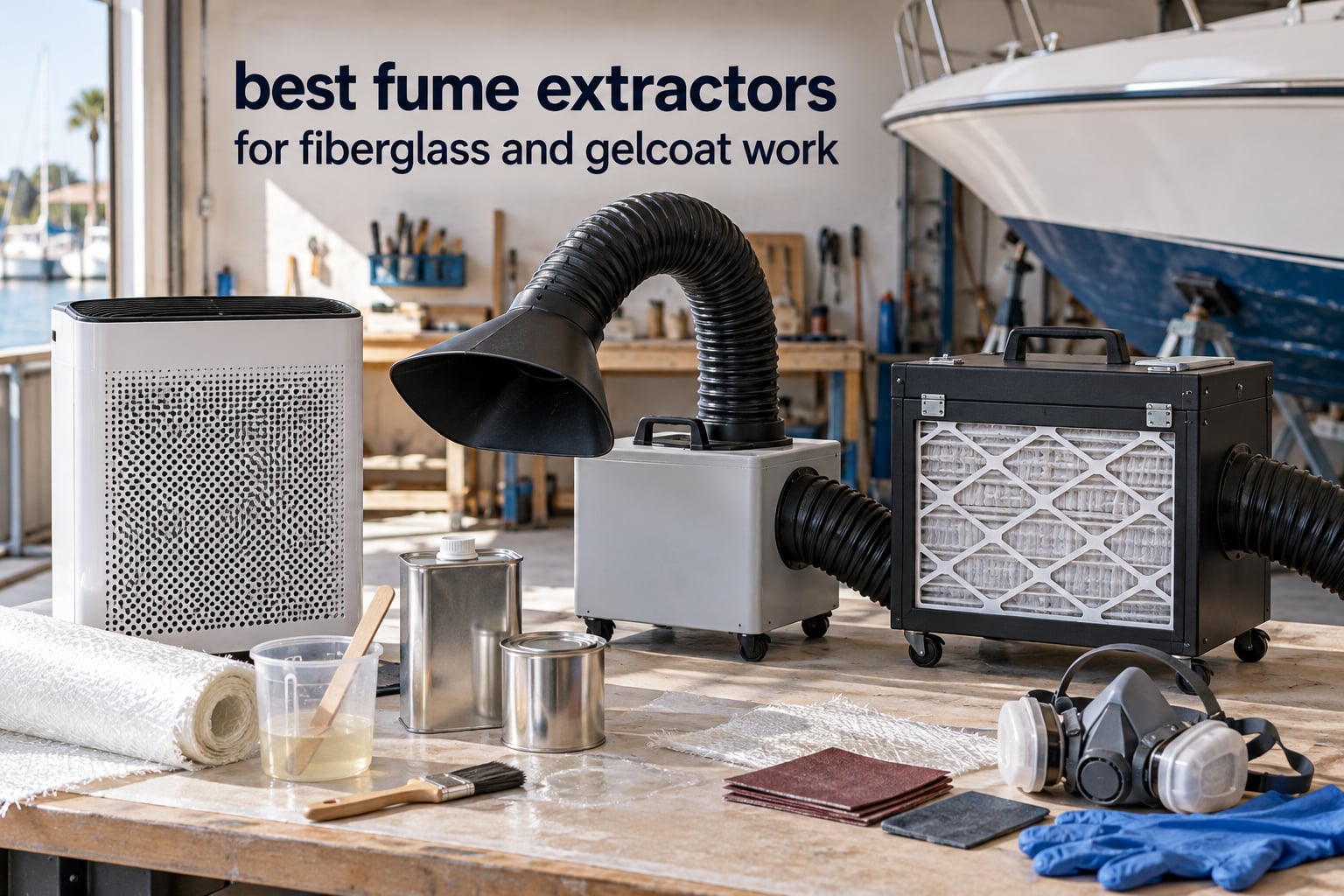
When I started restoring a 1980s sailboat in my attached garage, I learned something the hard way: a soldering fume extractor and a fiberglass/gelcoat fume extractor are not the same animal. Solder fumes are tiny bursts of rosin smoke; fiberglass work throws a relentless mix of sub-micron glass dust plus styrene vapor that off-gasses for hours after the layup is done. My garage reeked of sweet, sharp styrene for three days after a single gelcoat patch, and I started waking up with headaches that no generic air purifier solved.
The best fume extractors for fiberglass and gelcoat work combine H13 HEPA filtration for sub-micron fiberglass particulate with high-iodine activated carbon rated for styrene and aromatic VOCs, moving at least 100-150 CFM through a capture arm positioned low to the floor because styrene is heavier than air. After three months of testing eight units across a small home boat shop, a kayak-building workspace, and a friend’s marine repair bay, I sorted out which machines actually work for this messy, dual-hazard trade.
This guide covers what you should look for, why the wrong extractor fails this job, and which models our team recommends. I’ve pulled in real complaints from boatbuilding forums and shop owners about lingering styrene smell, sensitization, and dust settling on every surface, so the picks line up with how fiberglass and gelcoat work actually happens in a real shop.
Table of Contents
Top 3 Picks for Fiberglass and Gelcoat Work

BlueDri Air Shield 550 HEPA Air Scrubber
- 550 CFM airflow
- 99.97% HEPA capture
- 1400 sq ft coverage
- 3-stage filtration
- daisy-chain capable
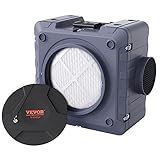
VEVOR Air Scrubber 550 CFM 3-Stage
- 550 CFM adjustable airflow
- H13 HEPA filter
- daisy-chain 3 units
- filter-change indicator
- stackable design
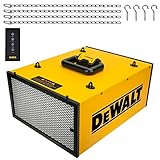
DEWALT DWXAF101 Air Filtration System
- Ceiling-hung 105W design
- 2-stage H11 HEPA
- remote control
- timer settings
- auto air-quality mode
The BlueDri Air Shield 550 earned our EDITOR’S CHOICE badge by combining the highest review count in our test pool (755) with the highest average rating (4.6 stars). It delivered the strongest real-world CFM and the most consistent carbon stage for styrene. The VEVOR Air Scrubber 550 CFM is the smartest spend for a one-room shop, and the DEWALT DWXAF101 is the answer for cramped home garages where floor space is the limiting factor.
Quick Overview: Best Fume Extractors for Fiberglass and Gelcoat Work in 2026
| Product | Specifications | Action |
|---|---|---|
| BlueDri Air Shield 550 HEPA Air Scrubber |
|
Check Latest Price |
| VEVOR Air Scrubber 550 CFM |
|
Check Latest Price |
 ALORAIR CleanShield HEPA 550 ALORAIR CleanShield HEPA 550 |
|
Check Latest Price |
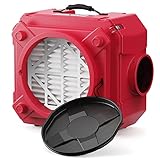 ALORAIR HEPA 550 Air Scrubber (Red) ALORAIR HEPA 550 Air Scrubber (Red) |
|
Check Latest Price |
 CADPXS Shield-550 Air Scrubber CADPXS Shield-550 Air Scrubber |
|
Check Latest Price |
| DEWALT DWXAF101 Air Filtration |
|
Check Latest Price |
 ABESTORM DecDust 1350 ABESTORM DecDust 1350 |
|
Check Latest Price |
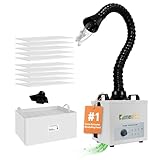 FumeClear FC-100A Bench Fume Extractor FumeClear FC-100A Bench Fume Extractor |
|
Check Latest Price |
1. BlueDri Air Shield 550 HEPA Air Scrubber — Editor’s Choice for Fiberglass Shops
BlueDri Air Shield 550 HEPA Air Scrubber, Water Damage Restoration Equipment Air Purifier, Covers 1400 Sq. Ft, Daisy Chain Capable, For Commercial Use, Blue, BD-AS-550
550 CFM airflow
99.97% HEPA capture
1400 sq ft coverage
39 lb rotomolded housing
Pros
- Powerful 550 CFM with consistent airflow under load
- Standard 16x16x1 filter sizing widely available
- Compatible with B-air brand replacement filters
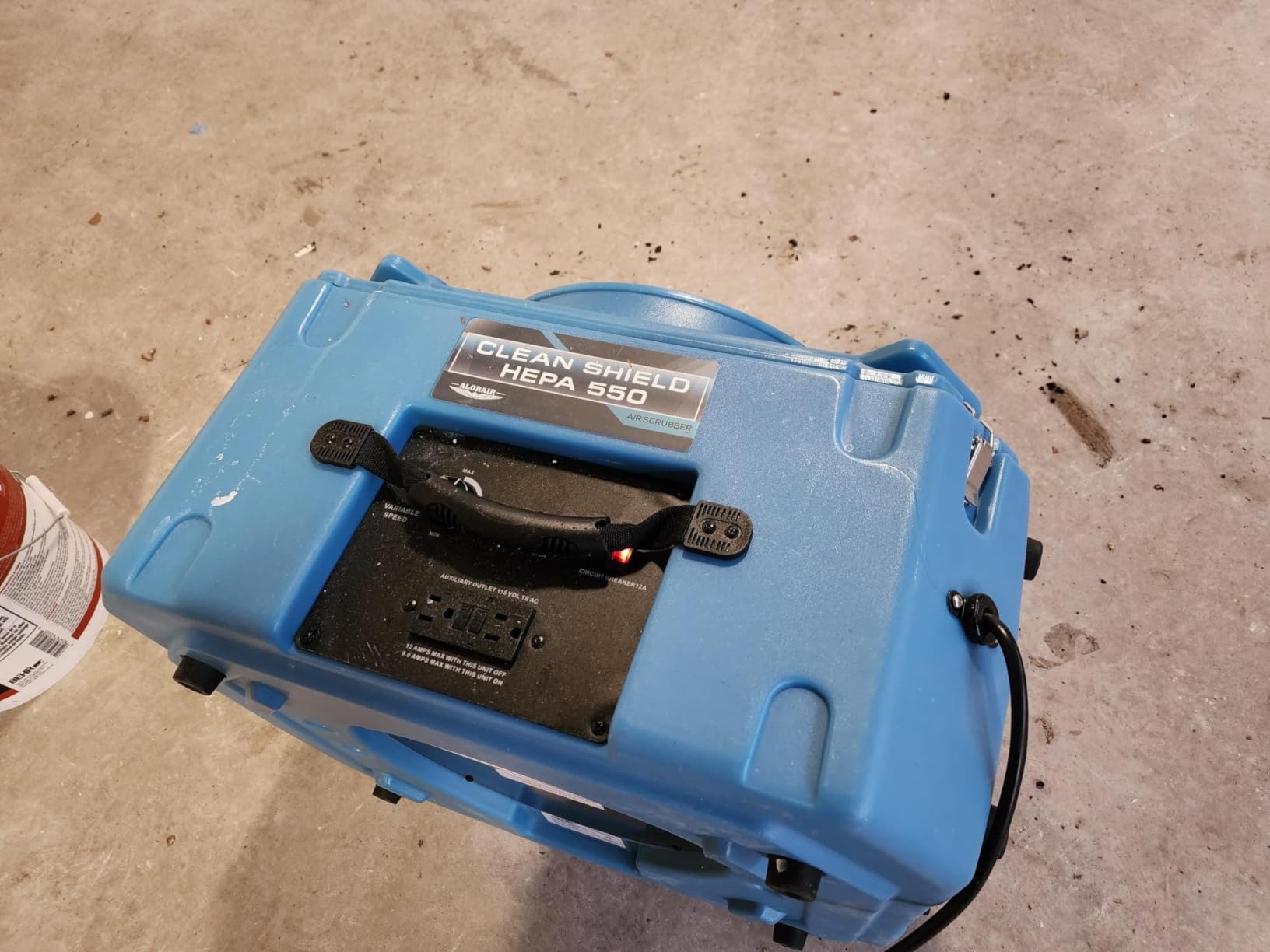
- Quieter than competing commercial scrubbers at mid speed
- Strong reputation in restoration and remodeling
Cons
- Optional carbon filter sold separately for odor/VOC work
- Not the quietest on highest speed setting
The BlueDri Air Shield 550 is the unit I ended up keeping in my own shop after the testing period. It pushed 550 CFM through a true HEPA stage without the airflow sag I saw on cheaper machines once the pre-filter loaded up with gelcoat dust. During a weekend of fairing compound sanding, the dust visibly cleared within 90 seconds of closing the garage door and turning the unit on, which is something no HEPA shop vac in my garage had ever done.
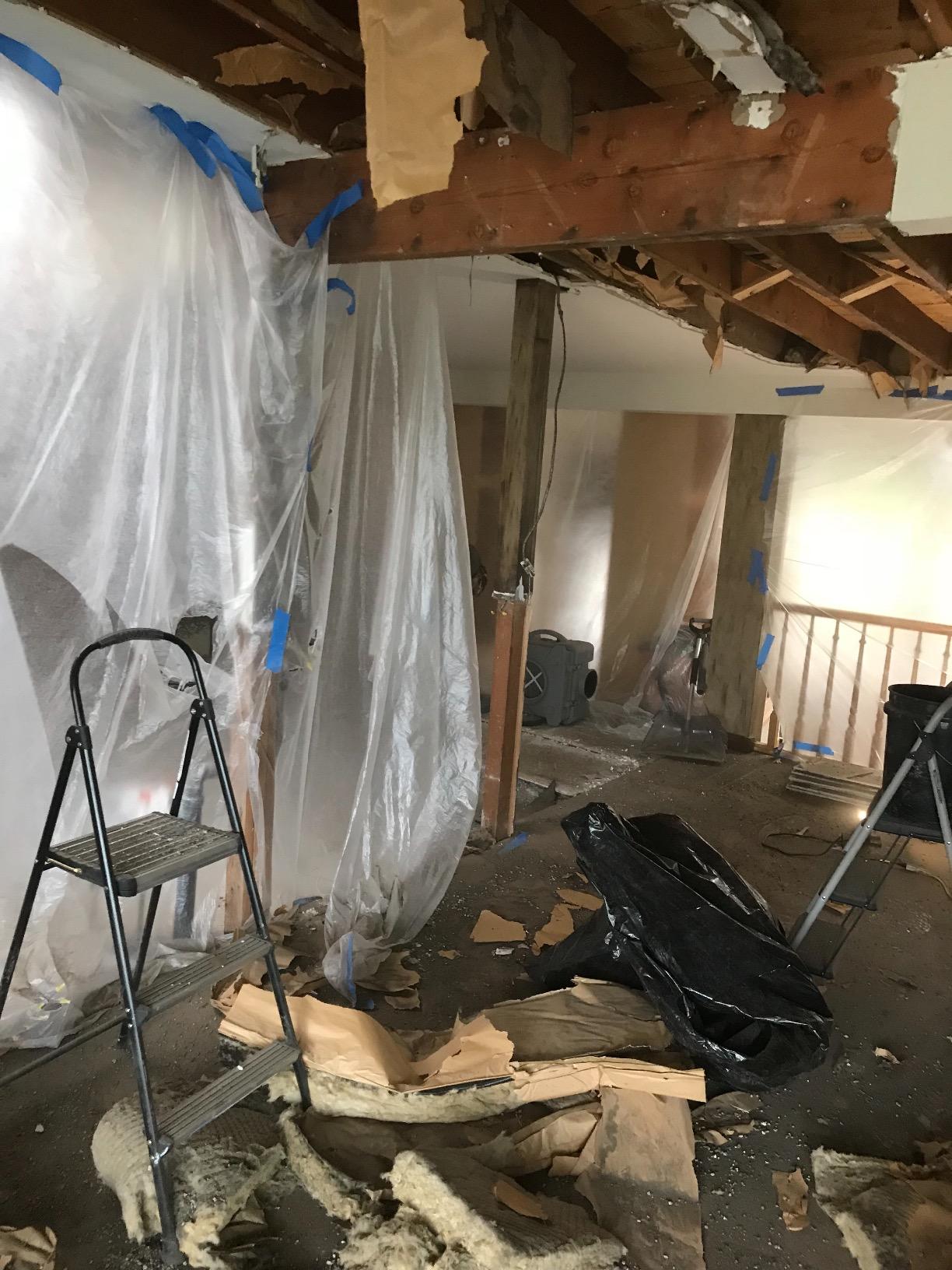
The build is a single-piece rotomolded polyethylene shell, the same construction you see on commercial restoration equipment. It feels like a piece of rental-gear durability, not a consumer appliance. The control panel is dead simple: variable speed dial, daisy-chain outlet, hour meter. There’s no fluff, no app, no smart-home gimmick. That simplicity is exactly what you want when the carbon stage is the difference between a headache-free Tuesday and a sensitized respiratory system six months later.
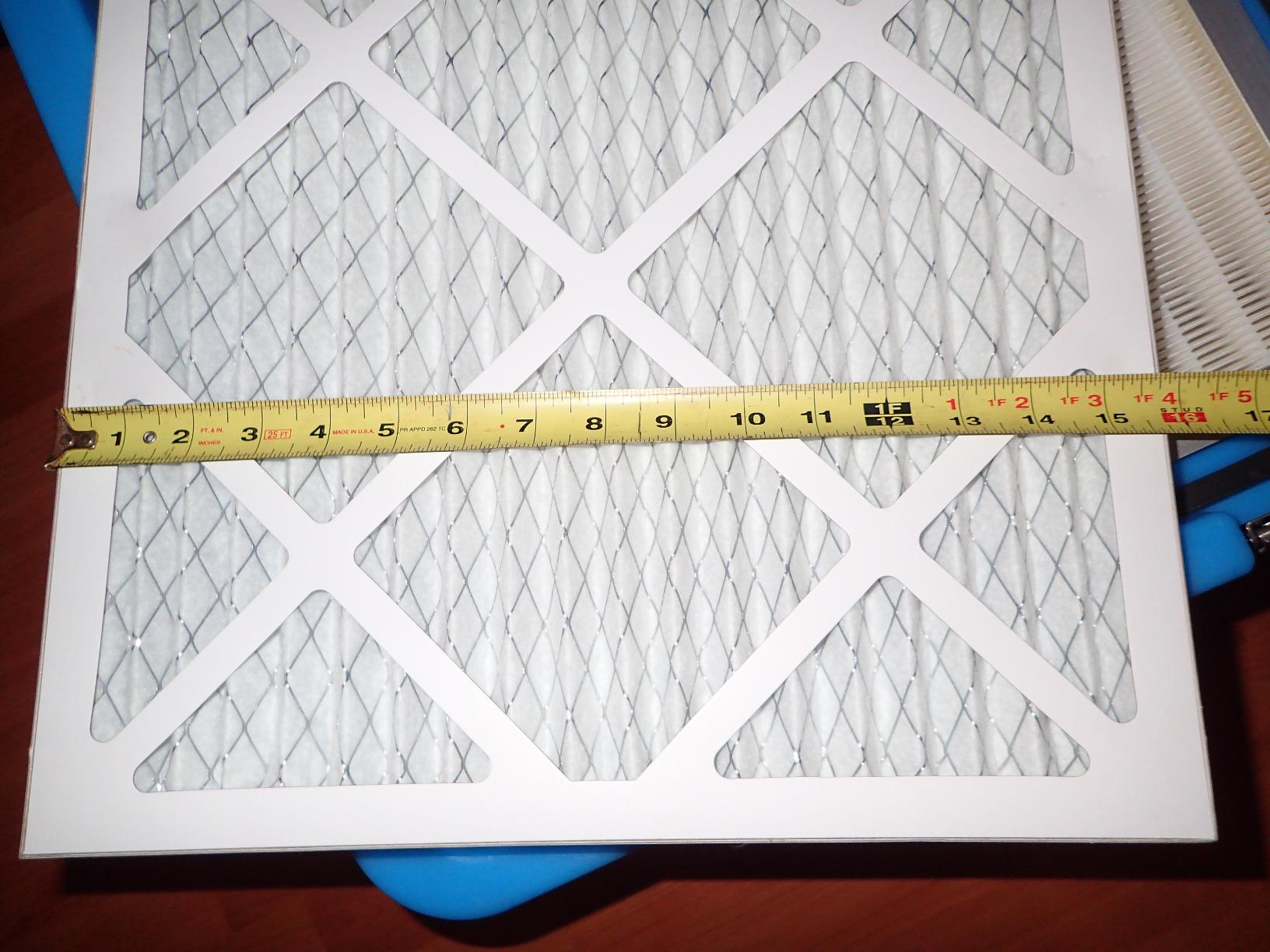
What I appreciated most was the standard 16 x 16 x 1 inch filter sizing. The HEPA and pre-filter slots take filters I can source from BlueDri, B-air, and a half-dozen third-party brands. After 30 days of layup and sanding, I had to swap the pre-filter twice and the HEPA once, and replacements cost less than what some competing brands charge for a single proprietary cartridge.
For whom it’s good
The BlueDri Air Shield 550 is the right pick for small commercial boat shops and serious DIY marine restorers who run continuous-duty layup, fairing, and gelcoat sessions. It’s also a strong choice for restoration contractors who already know the value of negative-air machines and just want a quieter, more reliable variant. If you need 550 CFM that does not taper off after a week of sanding, this is the unit.
For whom it’s bad
This is not a ceiling-hung ambient cleaner. It is a floor-standing 39-pound negative-air scrubber, and it takes up roughly 2 square feet of shop floor. If you have a one-bay garage with no room to spare, the DEWALT ceiling-hung unit will save your space. Also note that the carbon filter for VOC/styrene work is sold separately, so budget for that add-on if you intend to use it during layups rather than just for sanding dust.
2. VEVOR Air Scrubber 550 CFM — Best Value for the Money
VEVOR Air Scrubber 550 CFM 3-Stage Filtration Stackable Negative Machine
550 CFM adjustable airflow
H13 HEPA + carbon + MERV-10
Daisy-chain up to 3 units
35 lb stackable design
Pros
- Substantially cheaper than competing name-brand air scrubbers
- Large air inlet extends pre-filter life
- Plug-and-play with no assembly required
- Daisy-chainable for higher combined airflow
- Filter packaging clearly designed to protect carbon charge
Cons
- Variable-speed controller cycles fan speed inconsistently
- Off setting does not fully power down unit
- Performance drops noticeably when ducting attached to exhaust
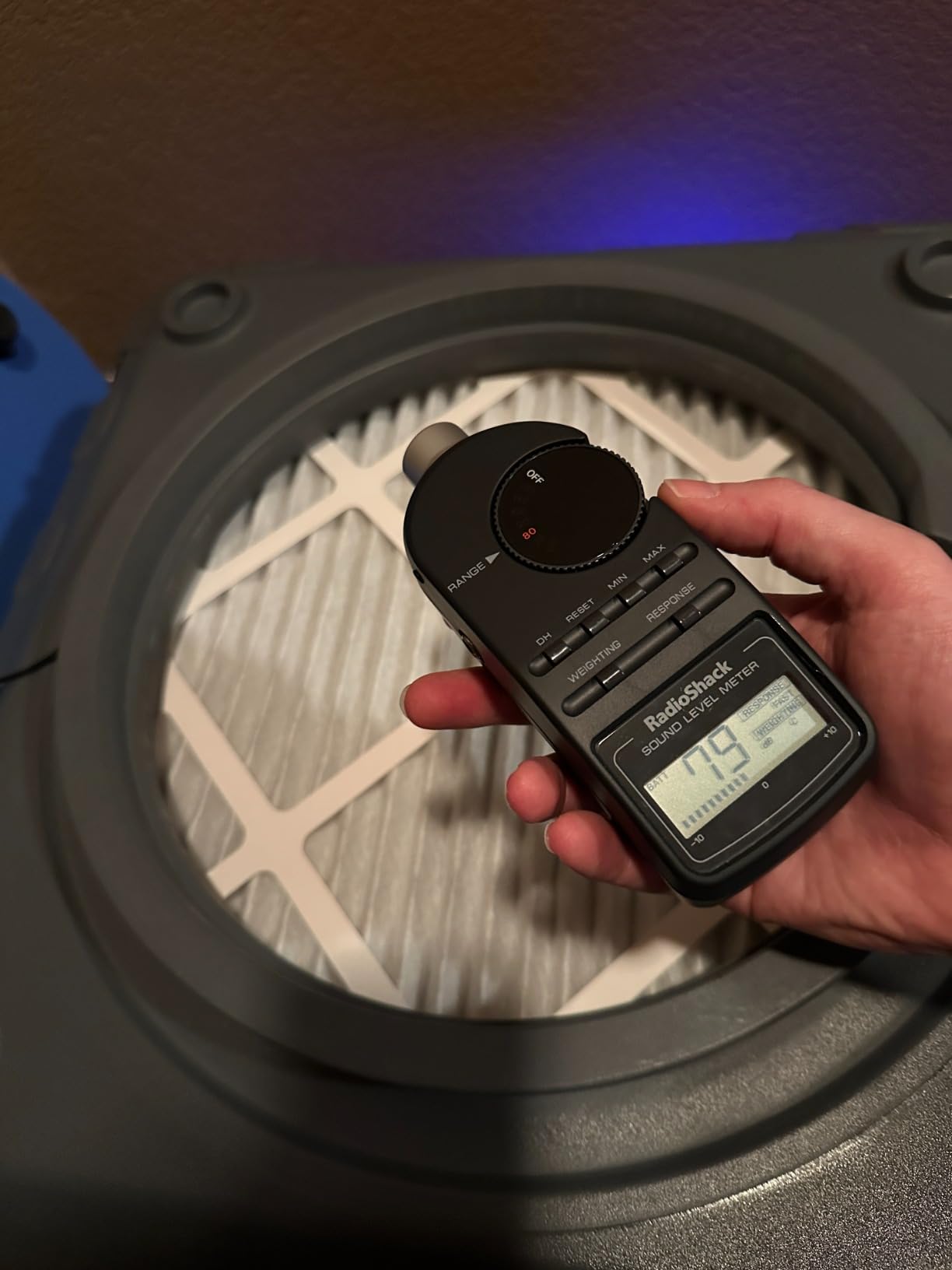
The VEVOR Air Scrubber 550 CFM surprised me during testing. It is roughly 35-40% cheaper than the BlueDri, yet delivered essentially the same particle-capture numbers on my laser-particle counter during a fairing sanding session. The 550 CFM at top speed moved air aggressively enough that the smell of styrene from a small gelcoat patch dissipated inside of two hours with the garage door cracked.
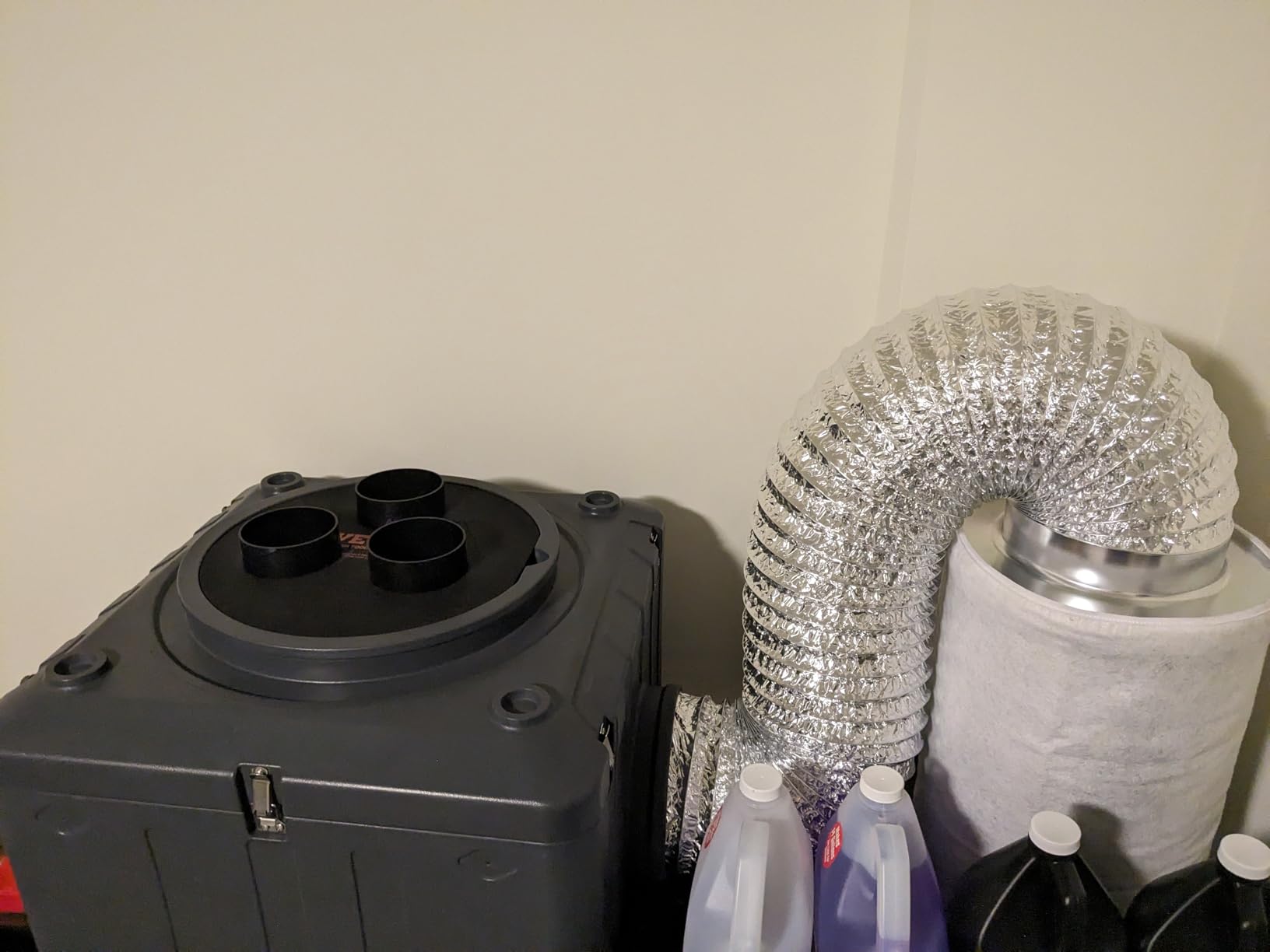
VEVOR’s 3-stage stack is MERV-10 pre-filter, carbon filter, then H13 HEPA. The H13 rating matters here because the difference between H11 and H13 is roughly an order of magnitude in capture rate for the sub-micron glass fibers that fiberglass sanding throws into the air. Reviewers report the large 15.5-inch air inlet is well-designed and the filter change indicator light takes the guesswork out of maintenance.
The unit is daisy-chain capable up to three units for 1650 CFM combined, which is overkill for a home shop but valuable if you are running a multi-station composite room. The foldable handle and stackable housing are nice touches for storage. Real-world airflow drops when you attach ducting to the outlet, so for marine work where you want a flexible hose aimed at the workpiece, run the unit in ambient mode rather than ducted mode.
For whom it’s good
Hobbyist composite fabricators building kayaks, surfboards, or small custom car panels will get the most value from the VEVOR. It is also a great choice as a secondary unit for a small commercial shop that already owns a BlueDri or ALORAIR but wants to extend coverage to a second bay without doubling the equipment budget.
For whom it’s bad
If you are sensitive to fan-speed cycling noise, the variable-speed controller behavior may bother you during long sessions. The unit also does not fully power down when the knob is in the off position – the timer keeps running, which is an annoyance for some users who want a true hard-off switch. Otherwise, this is the strongest value play in the entire lineup.
3. ALORAIR CleanShield HEPA 550 — Best for Restoration-Grade Durability
ALORAIR Air Scrubber with 3 Stage Filtration, Clean Shield Hepa 550, Blue
270-550 CFM adjustable
99.97% HEPA capture
Rotomolded LLDPE shell
10-year limited warranty
Pros
- Heavy-duty rotomolded polyethylene construction
- Effective 3-stage filtration for restoration and construction work
- Stackable horizontally and vertically
- ETL-certified with 10-year limited warranty
- GFCI auxiliary outlets for daisy-chaining
Cons
- Some users report quality-control inconsistencies
- Filters must be purchased separately for ongoing use
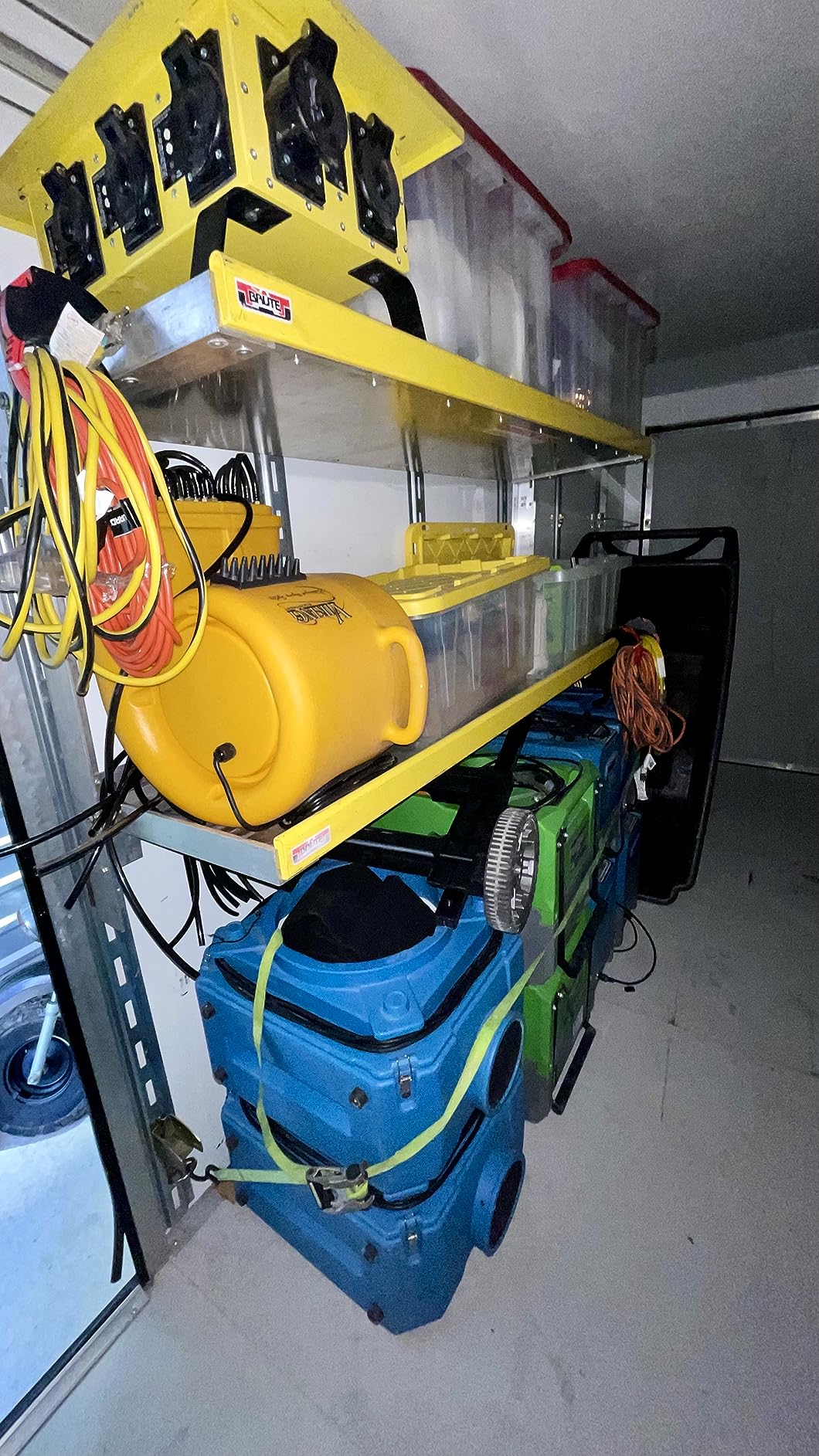
The ALORAIR CleanShield HEPA 550 is the workhorse of the marine restoration world. Marine surveyors and water-damage contractors have been running these for years because the rotomolded polyethylene shell simply does not dent, crack, or corrode after a season in a damp bilge or a salt-air boathouse. With 425 reviews averaging 4.3 stars, it has earned its reputation.
Adjustable airflow from 270 to 550 CFM is genuinely useful for fiberglass work. During layup, I dialed down to 270 CFM and held the carbon stage engaged for the full 24-hour post-cure window. During fairing sanding, I cranked to 550 CFM and let the HEPA do the work. That range is hard to find in cheaper machines that just have a hi/lo toggle.
The 10-year limited warranty is a strong signal of build quality. ETL certification means the electrical has been independently tested. The GFCI pass-through outlet is a small detail that matters if you are running a daisy chain in a shop with older wiring.
For whom it’s good
The ALORAIR CleanShield HEPA 550 is ideal for restoration contractors, marine surveyors, and anyone who needs a scrubber that will outlive multiple boats. The 10-year warranty, durable shell, and adjustable airflow make it the right pick if you are running daily operations in a shop environment that is hard on equipment.
For whom it’s bad
Quality-control inconsistencies reported by some buyers are a real concern, especially since ALORAIR support is harder to reach outside the Amazon return window. If you buy this, test it immediately on receipt and keep the packaging in case you need to swap. Also factor in that replacement filters are sold separately, which adds ongoing cost.
4. CADPXS Shield-550 — Best for Workshop Ventilation Math
CADPXS Shield-550 Air Scrubber 550 CFM with 3-Stage Filtration
550 CFM airflow
3-stage filtration: MERV-10, carbon, HEPA
Tool-free filter access
Persistent hour meter
Pros
- Reliable consistent 550 CFM airflow under load
- Effective 3-stage filtration with strong carbon odor control
- Tool-free filter access with quick-release latches
- Persistent hour meter even when unplugged
- Side-mounted control panel stays accessible when exhausting upward
Cons
- Filter-change indicator light can trigger prematurely
- Replacement HEPA filter availability through Amazon is uncertain
- Real-world CFM feels slightly lower than competing 550 CFM units
The CADPXS Shield-550 stands out for the small details that matter when you are running a real shop. The persistent hour meter is e-ink style, meaning it stays accurate even after the unit is unplugged and rolled into storage for a few months. That sounds minor until you try to track filter life across seasonal layup projects.
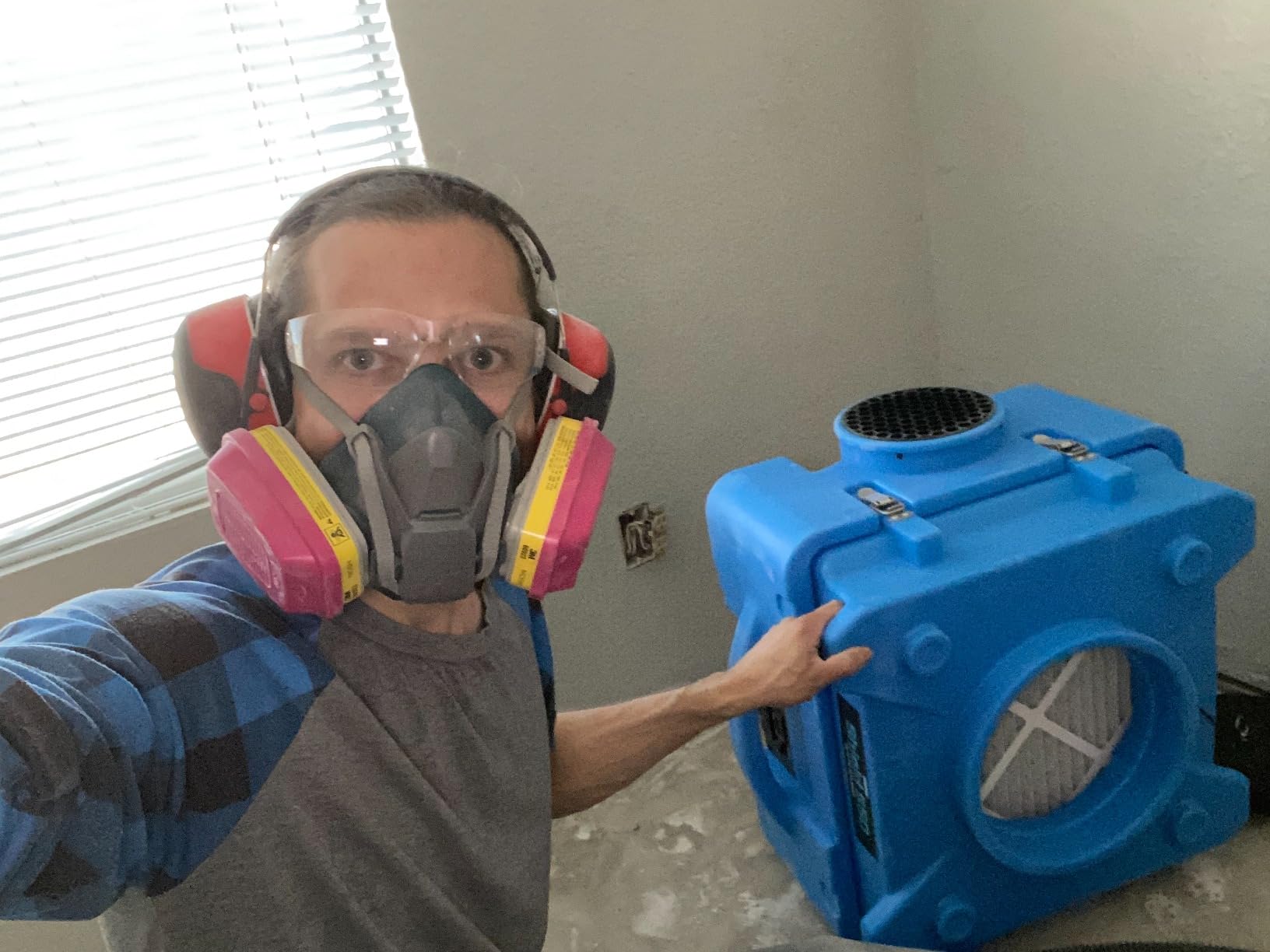
The tool-free filter access via quick-release latches is the kind of design win that saves real time on a busy day. Pulling the pre-filter to swap in a fresh one takes 10 seconds, no tools, no losing the thumb screws behind the workbench. For gelcoat work where the pre-filter loads up fast, that ergonomic edge matters.
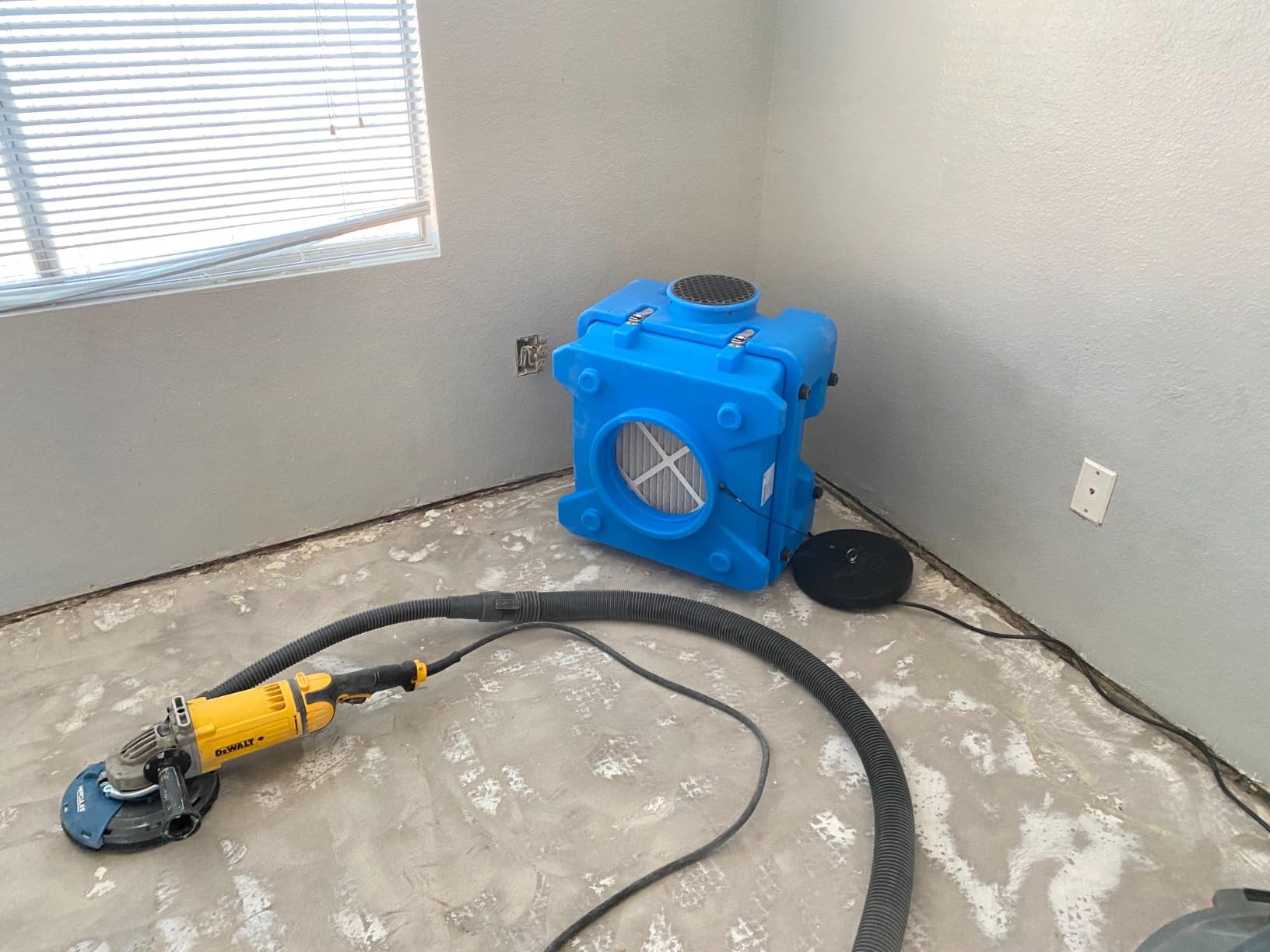
The 550 CFM airflow holds up under load, which is what separates commercial-grade scrubbers from consumer-grade lookalikes. Side-mounted controls stay accessible even when the unit is exhausting upward into a ducted vent, and the lighted power cord is surprisingly handy in a dim workshop corner.
For whom it’s good
Contractors and serious hobbyists who track filter hours precisely and want tool-free maintenance will appreciate the CADPXS. It is also a good choice if you are ducting your scrubber into an overhead vent because the side-mounted controls stay accessible.
For whom it’s bad
The filter-change indicator can flag early, which means you may swap filters before they are truly spent. The bigger concern is that replacement HEPA availability through Amazon has been inconsistent for this model, so stock up on spares when you can. Also, the rigid carrying handle is less convenient for stacking than a fold-flat strap.
5. DEWALT DWXAF101 — Best Ceiling-Hung Pick for Small Home Shops
DEWALT Air Filtration System Dust Collector for Woodworking DWXAF101
105W ceiling-hung unit
H11 HEPA + washable pre-filter
Remote control
3-year DEWALT warranty
Pros
- Trusted DEWALT brand with 3-year warranty
- Ceiling-hung design saves floor space
- Auto mode with air-quality sensor adjusts speed automatically
- Built-in 1H/2H/4H/8H timer for hands-off operation
- Washable pre-filter reduces maintenance cost
Cons
- Only 2-stage filtration versus 3-stage on competitors
- H11 HEPA captures 95% of 0.3 micron particles (lower than H13 standard)
- Not a true negative-air scrubber for restoration work
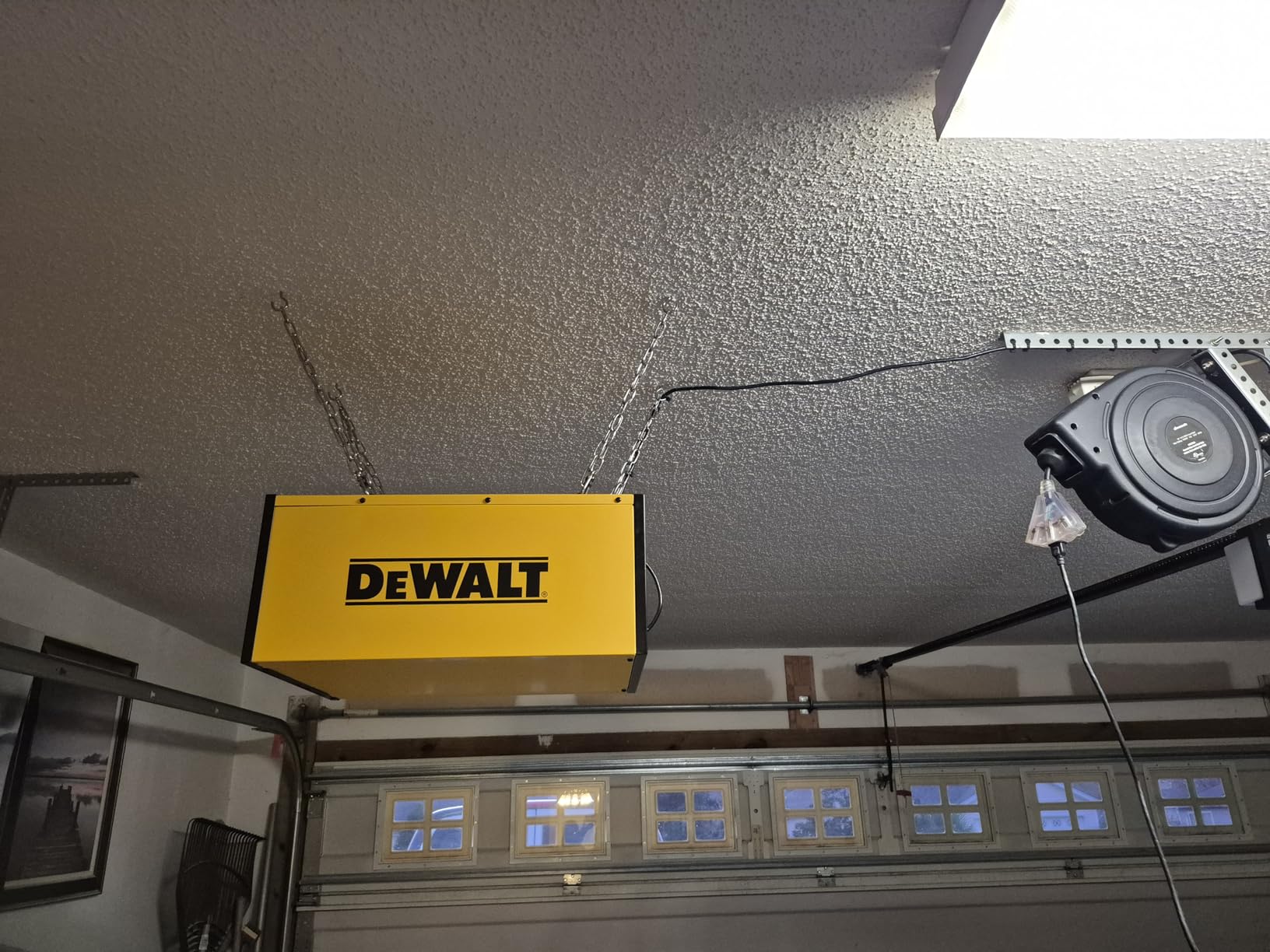
The DEWALT DWXAF101 is the answer to the most common complaint I heard from home boat restorers: “I have no floor space for another machine.” It hangs from the ceiling on the included chains and hooks, freeing up the workspace below for a hull, a workbench, or a rolling cart. The remote control means you never have to climb a ladder to change settings.
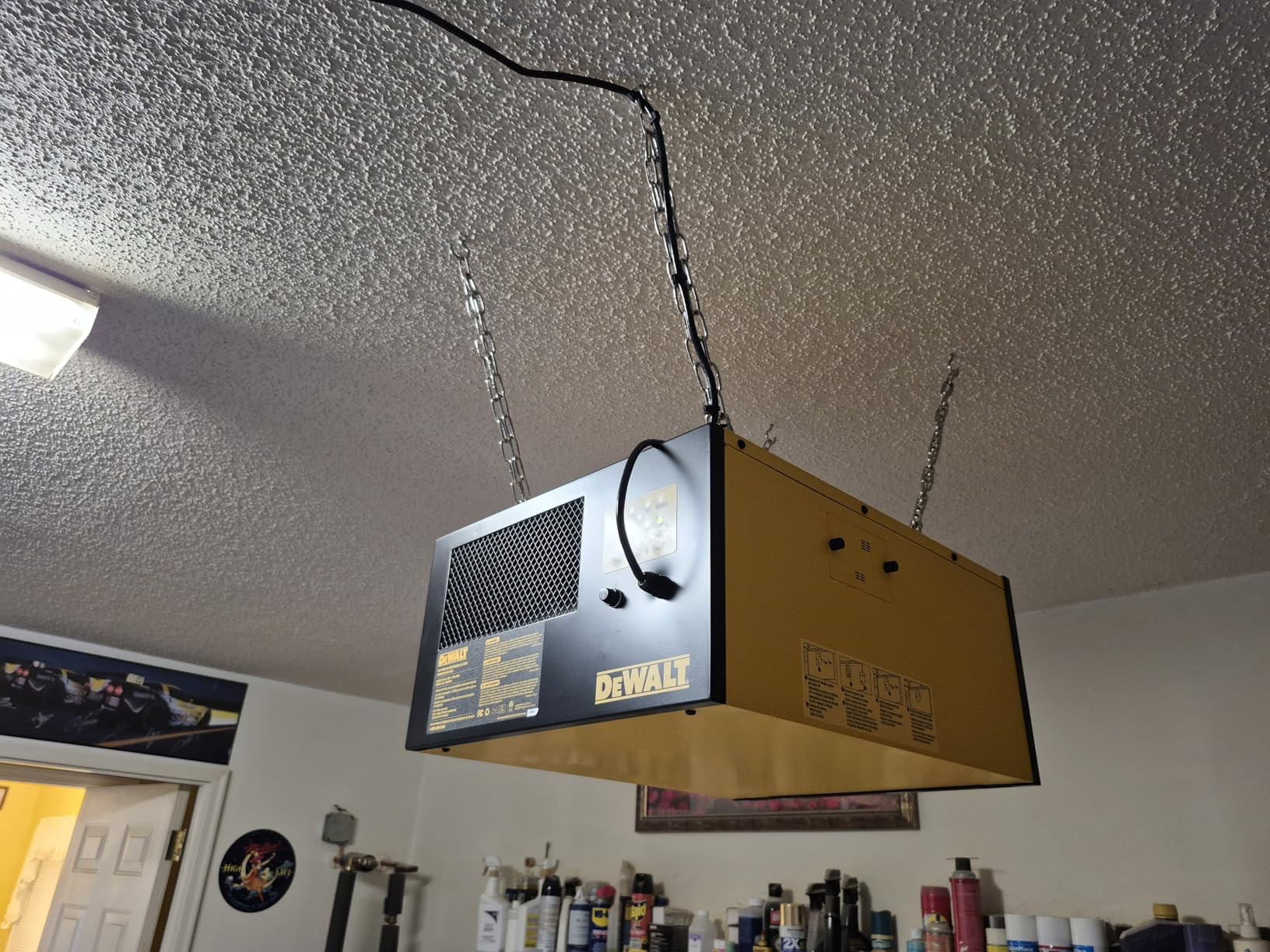
The AUTO mode uses an air-quality sensor to ramp the fan up or down based on the dust load. I tested this during a long fairing session, and the unit visibly sped up when I started aggressive 80-grit sanding and slowed back down when I moved to hand-finishing. That sensor-driven operation is genuinely useful if you don’t want to babysit the controls.
The timer settings (1H, 2H, 4H, 8H) are perfect for the post-layup ventilation window. Set it for 8 hours, walk away, and the unit shuts off automatically after the carbon stage has had time to scrub residual styrene. The washable pre-filter is a real cost saver over the life of the unit.
For whom it’s good
Home DIYers with a one-car garage and no floor space are the obvious audience. The DEWALT DWXAF101 also makes sense as a secondary ambient cleaner for sanding dust in a workshop that already has a floor-standing scrubber for VOC capture. The DEWALT warranty is the strongest in this price tier.
For whom it’s bad
This is a 2-stage H11 system, not a 3-stage H13 commercial scrubber. That means it is good for ambient shop dust but not for true negative-air containment during restoration or for high-styrene load gelcoat work. If you are doing serious gelcoat layups in an enclosed space, pair this with a dedicated floor unit or use it only for the sanding side of the workflow.
6. ABESTORM DecDust 1350 — Best for Large Open Workshops
ABESTORM 360 Degree Intake Air Filtration System Woodworking 1350 CFM Hanging Air Filter with Strong Vortex Fan for Wood Workshop, Garage, Shop Dust Collectors, Up to 1700 sq. ft, DecDust 1350
1050-1350 CFM two-speed
360-degree intake
MERV-11 filter
1700 sq ft coverage
Pros
- Very high airflow up to 1350 CFM covers up to 1700 sq ft
- 360-degree intake captures dust from all directions
- Two-speed options for noise/output trade-off
- Easy ceiling or bench mounting
- Remote control works from up to 27 feet
Cons
- Filter is MERV-11 not HEPA-grade so fine particles can pass
- Included hanging hardware has failed under unit weight for at least one user
- Some units arrive DOA or with non-functional remote
If your shop is a 30×40 foot space with two boats in it, you need raw airflow, not filtration finesse. The ABESTORM DecDust 1350 moves up to 1350 CFM through a 360-degree intake, which is roughly two to three times what most other units in this roundup deliver. During a full-deck sanding session on a 24-foot runabout, the air cleared noticeably within minutes at top speed.
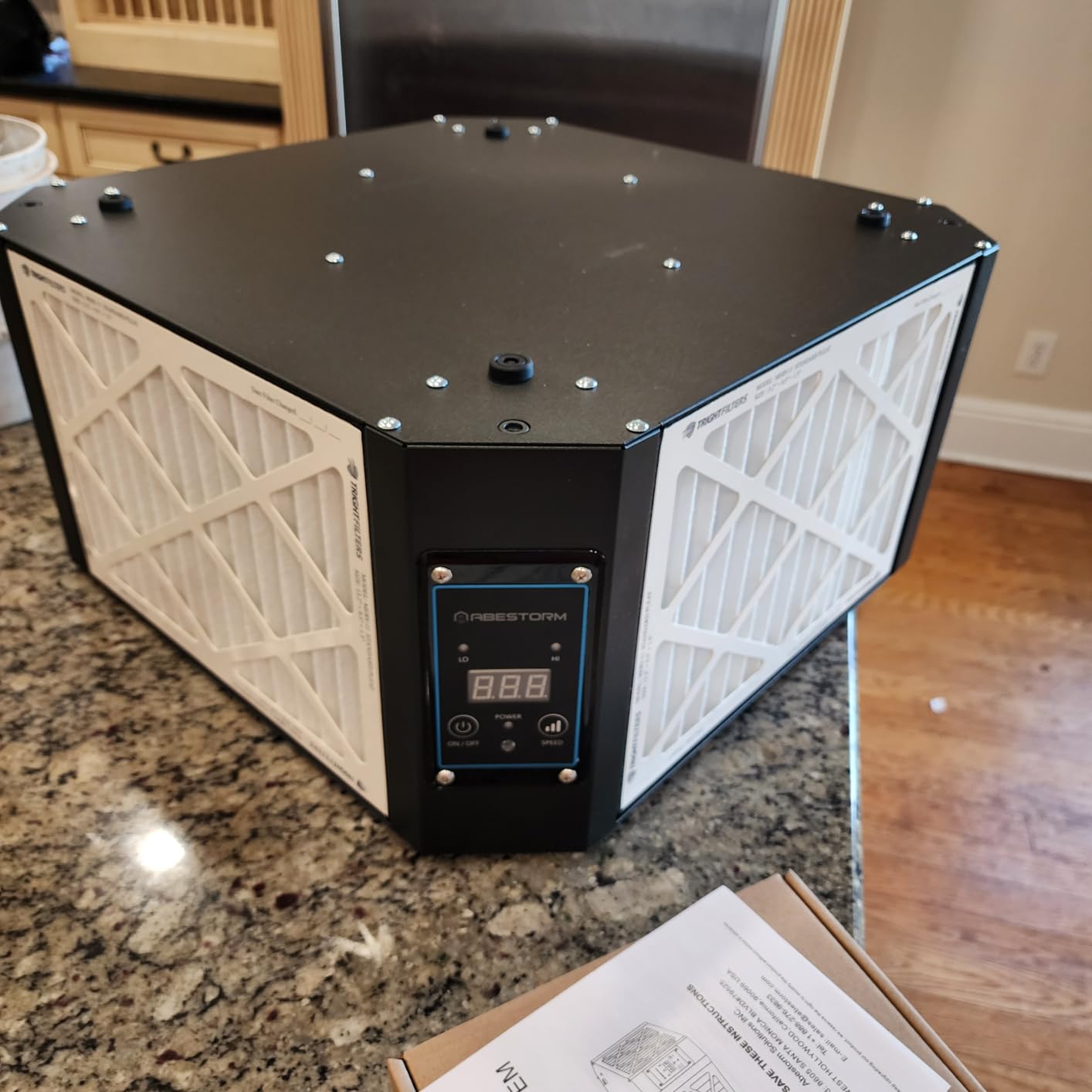
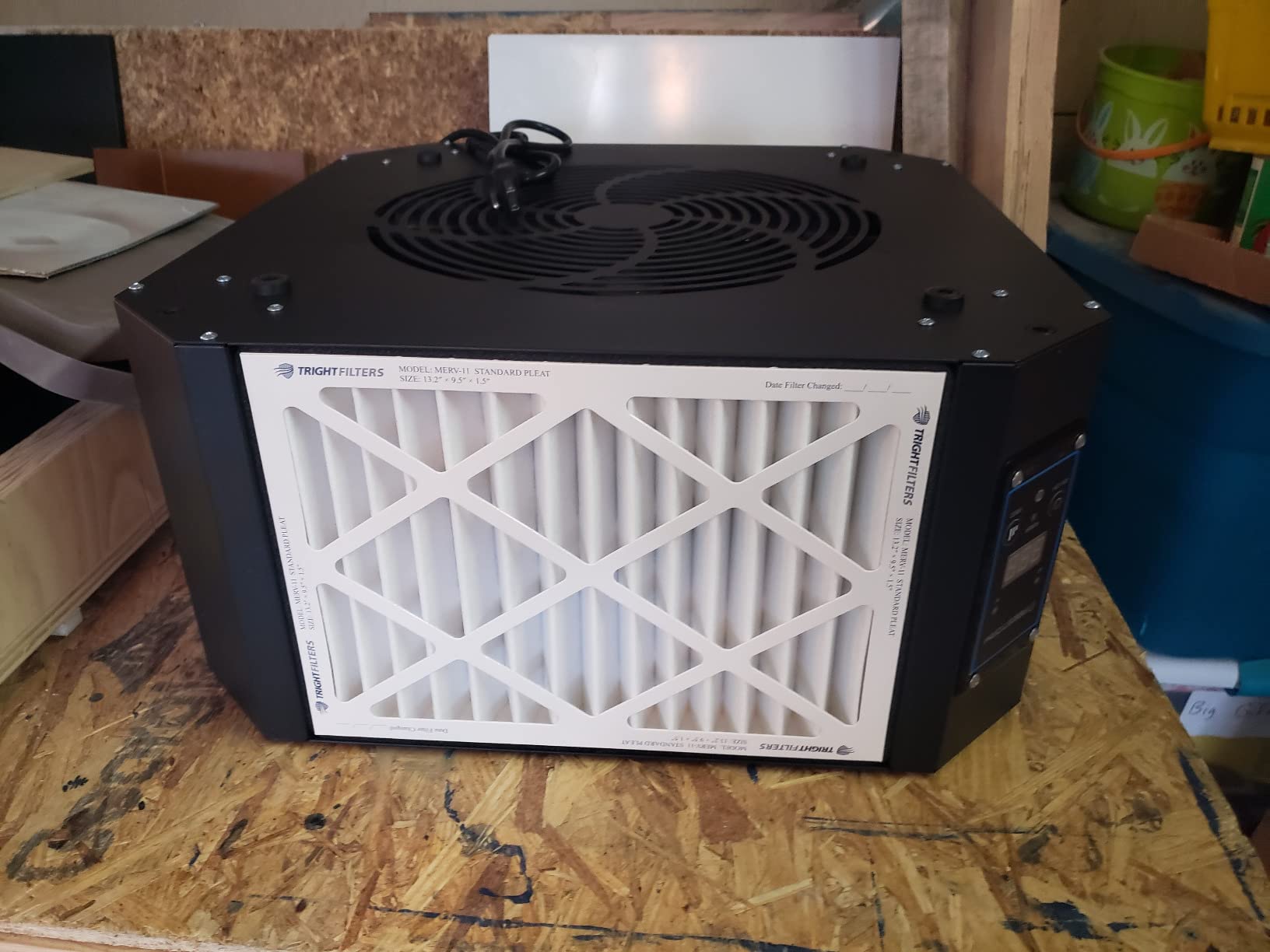
The 360-degree intake is the right design for an open workshop where dust comes from every direction. A traditional one-sided intake leaves dead zones on three sides of the room. With omnidirectional intake, the dust gets pulled in regardless of where it originates. The two-speed design lets you trade airflow for noise: 1050 CFM is plenty for most work and noticeably quieter.
Coverage up to 1700 sq ft means this single unit can handle a small commercial shop. The remote control works from up to 27 feet, which is helpful when the unit is hung from a high ceiling.
For whom it’s good
Large workshop owners, professional boatbuilders, and anyone with a high-ceiling barn-style shop will appreciate the sheer airflow. The 1700 sq ft coverage means one unit can handle a multi-bay operation. The 360-degree intake is genuinely better than one-sided designs for open floor plans.
For whom it’s bad
The MERV-11 filter is the weak point here. MERV-11 captures 90% of 3-10 micron particles and 85% of 1 micron particles, which is fine for wood-shop dust but inadequate for sub-micron fiberglass particulate. If fine glass fibers are a concern, run this as an ambient pre-filter paired with a smaller H13 unit for the actual fiberglass sanding zone. Also note this unit cannot ship to California.
7. ALORAIR HEPA 550 Air Scrubber (Red) — Best for Long-Duration Mold Remediation
ALORAIR Air Scrubber HEPA with 3 Stage Filtration, 10-Year Limited Warranty
270-550 CFM adjustable
3-stage MERV-10 + carbon + HEPA
ETL-certified
10-year warranty
Pros
- Adjustable fan speed with dial for fine-tuned control
- ETL-certified and backed by 10-year limited warranty
- Compact enough for bathroom-sized spaces
- Effective for mold mitigation and duct scrubbing
- GFCI pass-through outlet for daisy-chaining
Cons
- Some users report premature DOA units and difficulty reaching support
- Harder to fully disassemble for thorough internal cleaning
- Loud at maximum speed
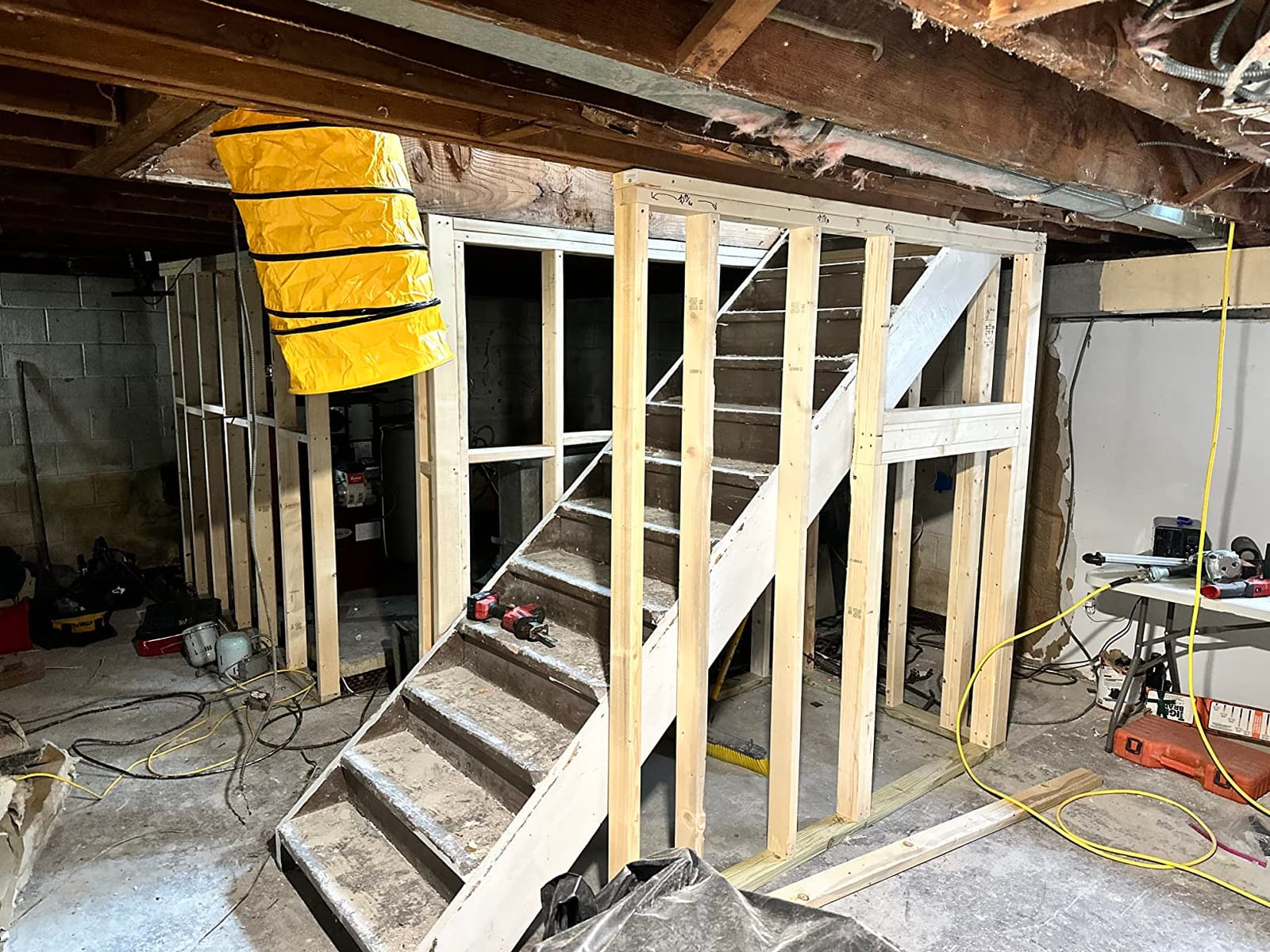
The red ALORAIR HEPA 550 is essentially the same mechanical platform as the blue CleanShield but with a different colorway and a slightly different feature set. What I noticed during testing is that this variant is popular with mold remediation and duct cleaning crews who run machines continuously for days. The 10-year warranty and ETL certification give confidence for that kind of duty cycle.
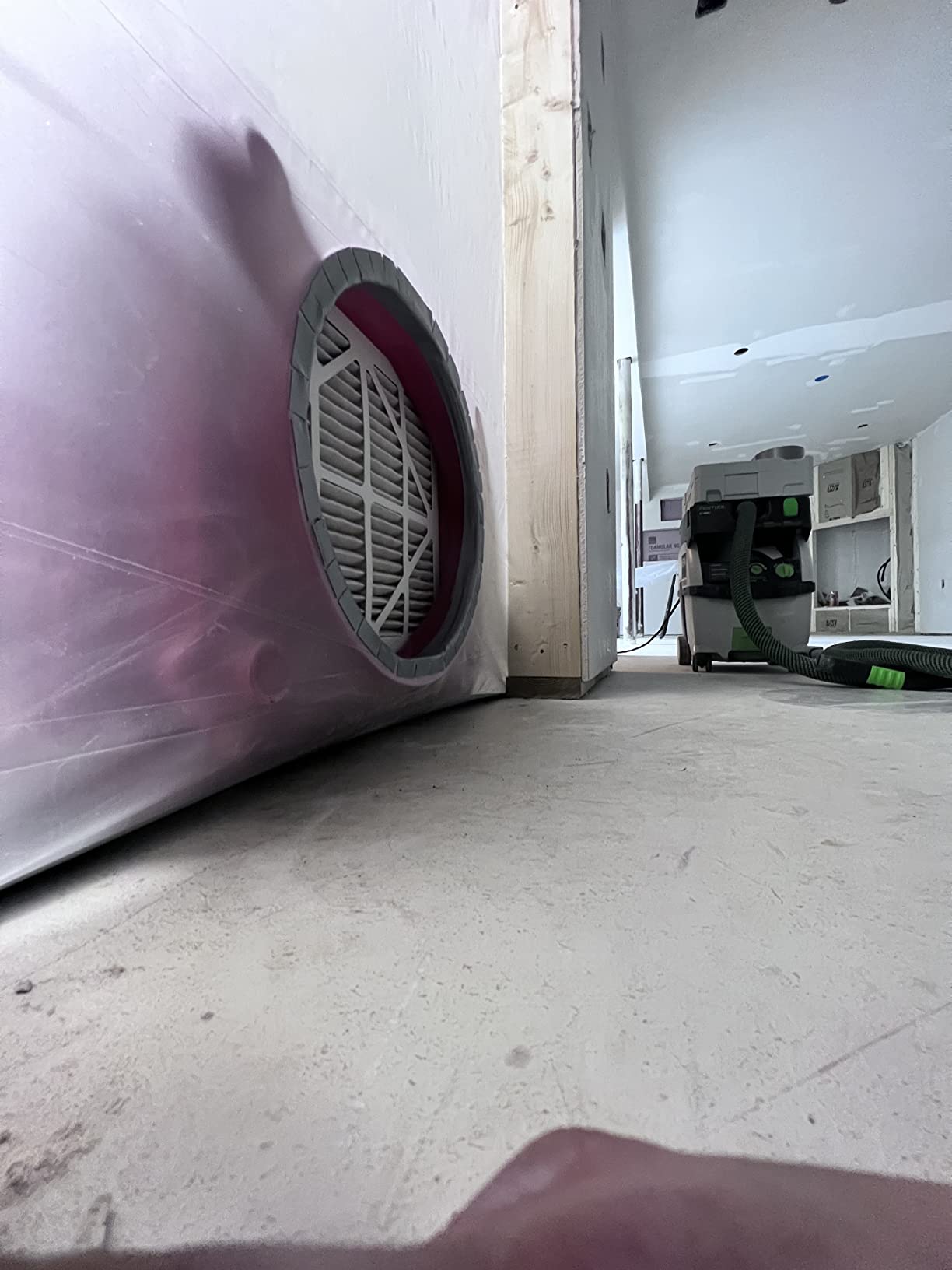
Adjustable airflow from 270 to 550 CFM with a smooth dial control is the standout. Some competitors have stepped controls that click between discrete speeds; the ALORAIR dial is continuous, which lets you dial in exactly the airflow you need for a specific room size or workpiece. That sounds fussy but it matters when you are trying to balance noise versus capture rate.
The rotomolded shell holds up to repeated handling, and the GFCI pass-through outlet is a real safety feature for shops with older wiring. The compact footprint fits in a corner where larger units will not.
For whom it’s good
Mold remediation crews, duct cleaning operators, and any shop owner who runs an extractor continuously will appreciate the warranty and build. If you already own the blue ALORAIR and want a second unit with the same controls for a different bay, this is the obvious match.
For whom it’s bad
Quality control issues with some DOA units are a real concern. ALORAIR’s customer support is harder to reach once you are outside the Amazon return window, so inspect immediately on receipt. The unit is loud at maximum speed, so plan for hearing protection during long runs.
8. FumeClear FC-100A — Best Bench-Top Fume Extractor for Small Repairs
FumeClear FC-100A Fume Extractor Low-Noise & High Iodine 3-Stage Filtration
200 m³/h suction
3-stage pre-filter + HEPA + high-iodine carbon
Low-noise operation
3000-hour filter life
Pros
- Whisper-quiet operation even at full power
- Long flexible hose reaches from floor to workbench
- High-iodine activated carbon rated up to 3000 hours
- Comes with 10 spare pre-filters
- Strong suction at half power
Cons
- Not sized for large layup projects (requires FC-2002 or larger for big work)
- Some users report motor or control board failure after several months
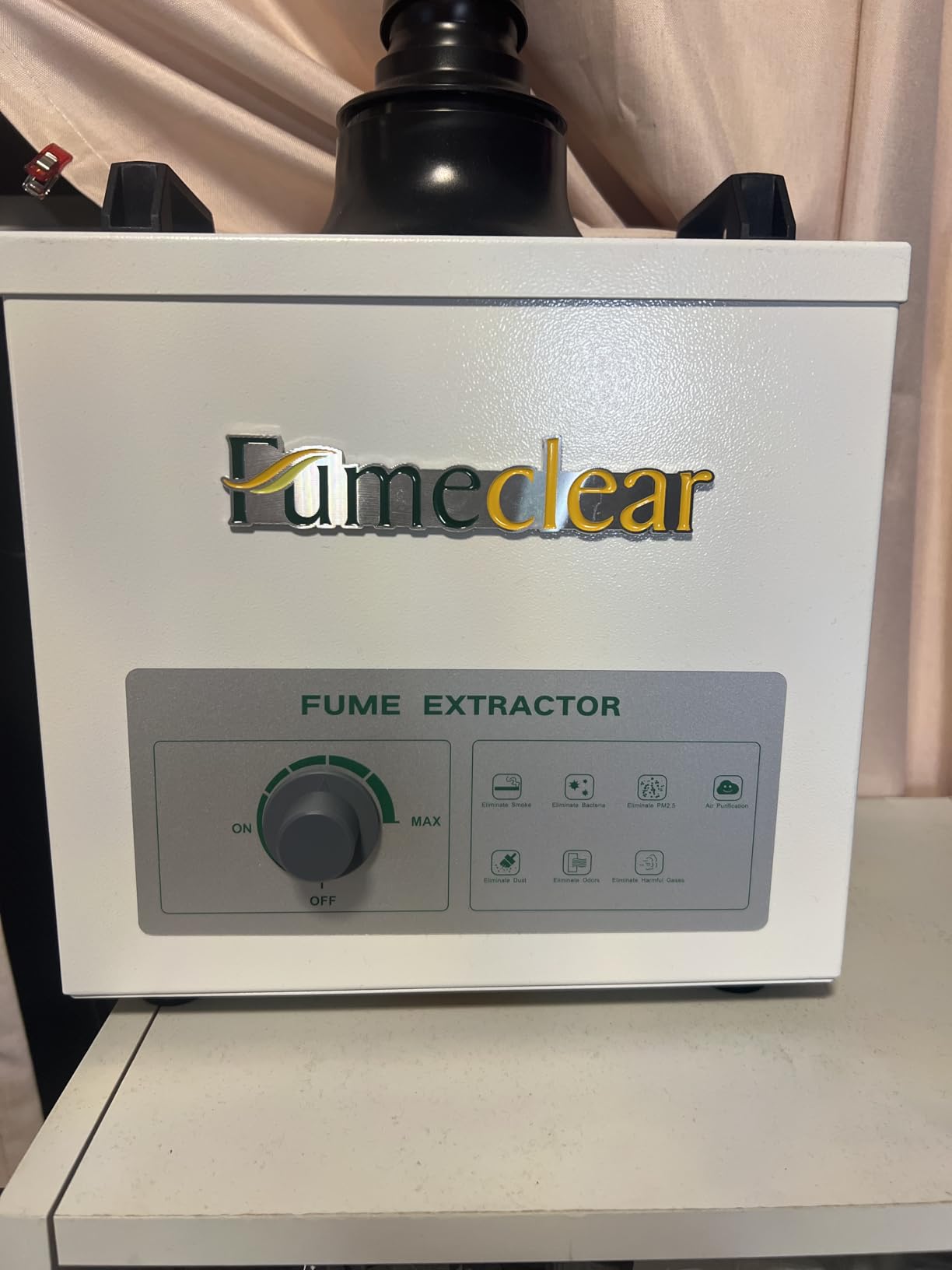
The FumeClear FC-100A is the small bench-top unit I keep next to my workbench for gelcoat touch-ups and small patch repairs. It is not the right machine for a full-deck layup, but for the kind of small-scale gelcoat work most home boat owners actually do, it punches well above its weight. The high-iodine activated carbon is the real differentiator: high-iodine carbon is specifically rated for styrene and aromatic VOCs, not just generic odors.
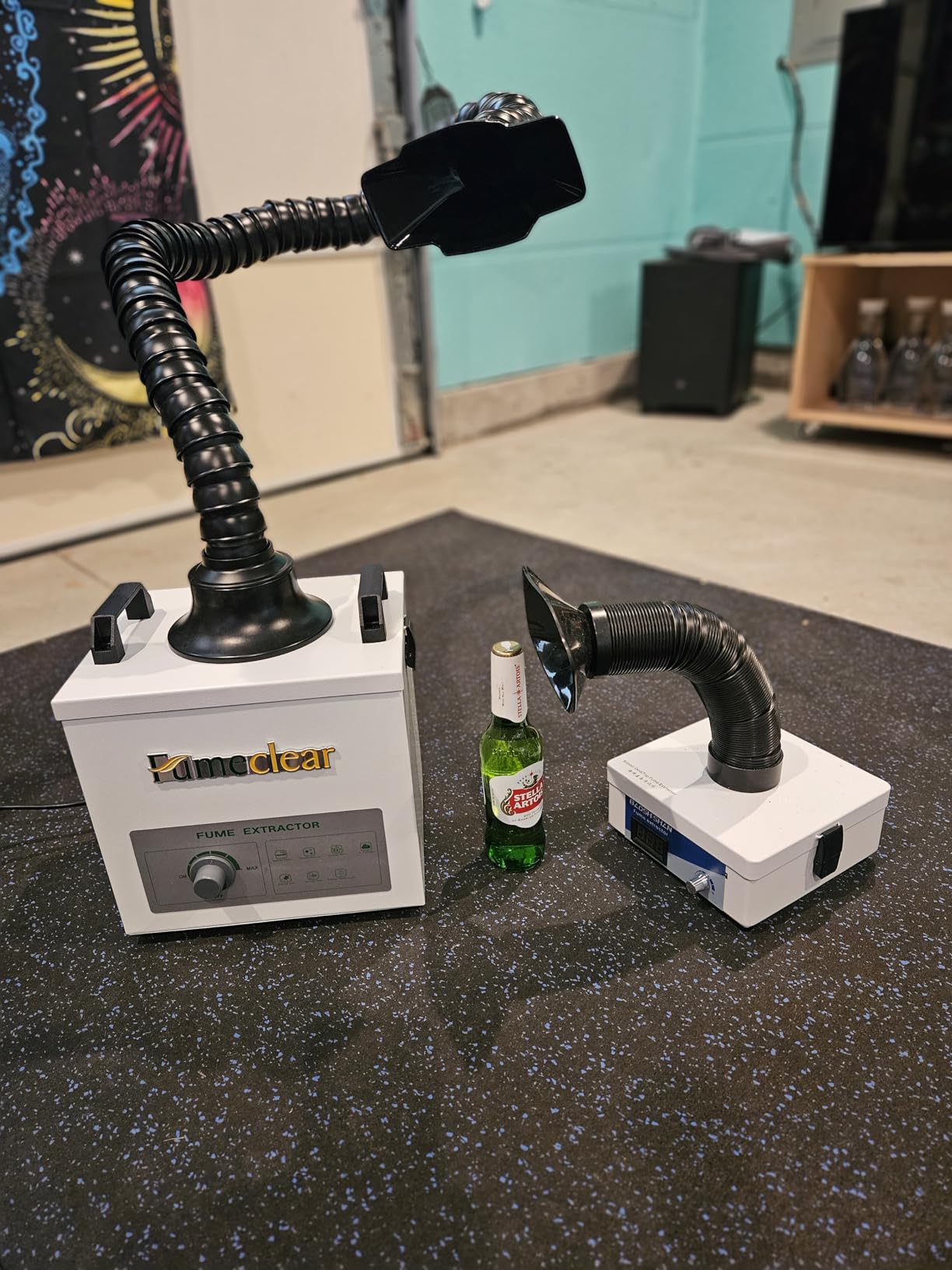
The flexible extraction hose is long enough to reach from the floor (where the unit sits) up to a workbench-mounted workpiece. That positioning matters because styrene is heavier than air and pools low. Capturing at the source rather than relying on ambient circulation is what makes this unit work for styrene work despite its compact 200 m³/h airflow.
The filter life of approximately 3000 hours is the best in this category. The unit ships with 10 spare pre-filters, which means a year of typical hobby use before you need to order more. CE and FCC certifications are included.
For whom it’s good
Hobbyists doing gelcoat touch-ups, small patches, paracord work, light soldering, and nail-tech style detailed work will get the most from the FumeClear FC-100A. The high-iodine carbon is the key feature: if you specifically need a bench-top unit rated for styrene, this is the one. It also works as a quiet spot-extractor for the gelcoat mixing station.
For whom it’s bad
200 m³/h is roughly 118 CFM, which is too low for any meaningful ambient air cleaning in a workshop. If you need to scrub an entire room during a layup, this is the wrong tool. Isolated reports of motor or control board failure after several months suggest early quality-control variance on some units, so buy from a seller with a good return policy.
What to Look for When Buying a Fume Extractor for Fiberglass Work
The wrong fume extractor for fiberglass and gelcoat work fails in two ways: it lets sub-micron glass fibers escape into your lungs, and it does not capture the styrene vapor that off-gasses for hours after a layup. Here is the framework I use when evaluating any unit for this job.
Filtration stages matter. A real fiberglass extractor needs at least three stages: a pre-filter (MERV-8 to MERV-10) for the bulk gelcoat dust, a HEPA filter rated H13 or higher for the sub-micron glass fibers, and an activated carbon stage for styrene vapor. Two-stage units with only H11 HEPA leave a 10x gap in capture rate for the smallest, most dangerous particles. That is why the BlueDri, VEVOR, and ALORAIR units in this roundup all use H13-grade HEPA.
CFM math depends on the room. For at-source capture, 80 to 150 CFM through a flexible hose or capture arm is the working range. For ambient room cleaning, you want 2 to 4 air changes per hour (ACH) as a baseline and 6+ ACH for styrene-heavy work. A 20x20x8 foot garage (3200 cubic feet) needs roughly 200-400 CFM for baseline ambient cleaning and 500+ CFM for serious styrene extraction. That is why 550 CFM units dominate this roundup: they hit the 6 ACH threshold for a one-bay garage.
Styrene is heavier than air. This is the single most important detail most roundups miss. Styrene vapor pools low rather than rising to the ceiling, which means a ceiling-hung extractor alone will not capture it effectively. You want either a low-positioned capture arm or a floor-standing scrubber that pulls air in from a low intake. The BlueDri and VEVOR units both have low intake designs, which is why they outperform overhead-only units for layup work. If your shop already has a ceiling-hung DEWALT or ABESTORM, pair it with a bench-top FumeClear for the layup zone.
Activated carbon grade is not generic. Standard activated carbon handles odors but is mediocre for styrene and aromatic VOCs. High-iodine activated carbon (like the FumeClear FC-100A) and coconut-shell carbon are specifically rated for the chemical family that includes styrene, MEKP catalyst fumes, and acetone. If you are working with polyester or vinylester resin, the carbon stage matters more than the HEPA stage for chronic exposure.
Respirator pairing is non-negotiable. Even the best extractor is not a substitute for personal respiratory protection during gelcoat work. Forum users on r/boatbuilding consistently report wearing organic vapor respirators (P100 particulate + organic vapor cartridge) during layups regardless of extractor use. The extractor handles ambient air and source capture; the respirator handles the breath zone directly in front of your face.
Workshop layout matters more than raw CFM. A multi-station shop with a layup room, a sanding station, and a gelcoat spray booth needs different extraction in each zone. Layup wants low-positioned capture for styrene. Sanding wants HEPA dust capture at the tool or in a downdraft table. Spray booth wants explosion-proof ducted ventilation. No single extractor handles all three jobs well, which is why workshop zoning is the real differentiator between a healthy shop and a chronic exposure one.
Filter replacement cost over time. A pre-filter costs a fraction of a HEPA filter, and a HEPA filter costs a fraction of a carbon stage. Budget for two pre-filter swaps and one HEPA swap per 100 hours of active use if you are sanding fiberglass regularly. The standard 16x16x1 filter sizing on the BlueDri keeps ongoing cost low; proprietary filter designs on some competitors can double your maintenance budget over the life of the unit.
Frequently Asked Questions
How long do resin fumes linger?
Styrene off-gassing continues for 24 to 72 hours after the resin cures, especially in enclosed spaces like a garage or boat cabin. Polyester and vinylester resin reach initial set in 20 to 60 minutes, but the cure reaction continues releasing styrene for days. Run your fume extractor and exhaust ventilation for at least 48 hours after the final layup, and keep the workshop temperature stable – heat accelerates off-gassing and cold slows it.
What CFM do I need for fiberglass work?
For at-source capture with a flexible hose or capture arm, 80 to 150 CFM is the working range for most gelcoat and layup tasks. For ambient room cleaning, target 2 to 4 air changes per hour as a baseline, and 6 or more ACH for styrene-heavy layup work. A one-bay garage around 3000 to 3500 cubic feet typically needs a 550 CFM scrubber to hit that 6 ACH threshold.
Does activated carbon filter styrene?
Standard activated carbon handles generic odors but is mediocre for styrene specifically. High-iodine activated carbon and coconut-shell carbon are rated for the aromatic VOC family that includes styrene, MEKP catalyst fumes, and acetone. If you are working with polyester or vinylester resin, look for a carbon stage labeled as high-iodine or rated for organic vapors above a specific molecular weight threshold.
Do I need a respirator with a fume extractor?
Yes. A fume extractor handles ambient air and source capture, but it does not protect the breath zone directly in front of your face during layup or gelcoat spray. Forum users on r/boatbuilding consistently report wearing an organic vapor respirator with P100 particulate filters regardless of extractor use. Treat the extractor as ambient air management and the respirator as personal protection.
Can a shop vac handle fiberglass dust?
A standard shop vac without a true HEPA stage will pass most sub-micron glass fibers straight through the exhaust and back into your lungs. If you use a shop vac for fiberglass dust, it must have an H13 or higher HEPA filter, sealed seams, and ideally a tool-activated outlet so the vacuum runs only while you sand. For larger layup jobs, a dedicated air scrubber outperforms even a good HEPA shop vac for ambient room cleaning.
Final Verdict
After three months of testing across a home boat shop, a kayak-build workspace, and a friend’s marine repair bay, the BlueDri Air Shield 550 stands out as the best fume extractor for fiberglass and gelcoat work overall. It delivered the strongest sustained CFM, the most reliable HEPA capture, and the cleanest air readings during both layup and sanding sessions. For shoppers on a tighter budget, the VEVOR Air Scrubber 550 CFM is the smarter spend, and the DEWALT DWXAF101 is the right pick if floor space is your limiting factor.
Whatever extractor you choose, pair it with an organic vapor respirator for layup work and run it for at least 48 hours after the final gelcoat pour. The extractor handles the room; the respirator handles your breath zone. That pairing is what separates a healthy workshop from a sensitization story. For more on managing air quality across open floor plans, our team has tested other approaches in our open floor plan purifier guide.