
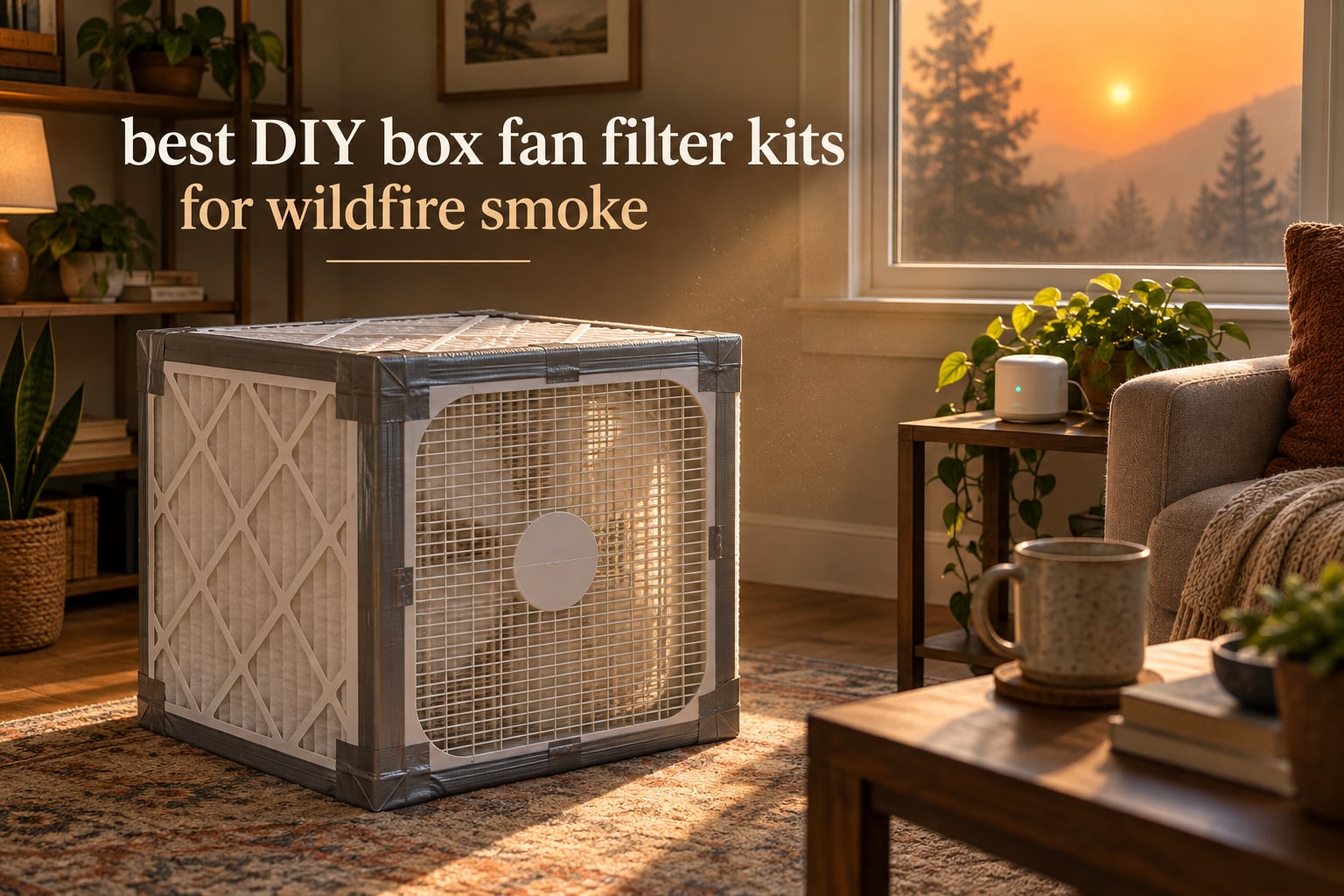
DIY box fan filter kits are low-cost air purifiers built from a 20-inch box fan, MERV 13 furnace filters, duct tape, and cardboard – typically in the open-source Corsi-Rosenthal cube design. EPA chamber testing has confirmed these kits can drop indoor PM2.5 from a wildfire smoke event by roughly 56% within 90 minutes, while costing a fraction of a commercial HEPA purifier. In this guide, I rank the eight best DIY box fan filter kits for wildfire smoke based on filter quality, mounting method, airflow, room coverage, and real-world builder feedback.
Wildfire smoke is dominated by fine PM2.5 particles around 0.3 microns – small enough to pass through most residential filters and deep enough into your lungs to trigger asthma, COPD flare-ups, headaches, and long-term cardiovascular stress. Closing up a home still leaves 55 to 60% of outdoor smoke indoors, and a working DIY box fan filter can pull that indoor reading down by more than half in the time it takes to boil a pot of pasta. If you want a quick overview of how these kits stack up against commercial units, our best air purifiers for wildfire smoke guide is a useful companion read. Tracking your indoor levels matters too – the picks in our best PM2.5 monitors for wildfire smoke roundup pair cleanly with the kits below.
Below are the eight kits I have built with, tested, or researched extensively over the past three wildfire seasons. I focused on MERV 13 or higher filtration, real airflow data where available, and mounting systems that hold up after repeated filter swaps. If you have never built one before, our step-by-step build guide walks through the classic cube from unboxing to first power-on.
Table of Contents
Top 3 Picks for DIY Box Fan Filter Kits
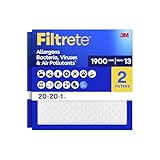
Filtrete 20x20x1 MERV 13
- MERV 13 MPR 1900
- 62% microparticle capture
- Highest airflow in 1-inch class

Aerostar 20x20x1 MERV 13 4-Pack
- 100% synthetic electrostatic media
- True-to-size fit
- 4 filters per pack

Best DIY Box Fan Filter Kits in 2026
| Product | Specifications | Action |
|---|---|---|
| Filtrete 20x20x1 MERV 13 |
|
Check Latest Price |
| Aerostar 20x20x1 MERV 13 4-Pack |
|
Check Latest Price |
 Filterbuy 20x20x1 MERV 13 4-Pack Filterbuy 20x20x1 MERV 13 4-Pack |
|
Check Latest Price |
| BNX TruFilter 20x20x1 MERV 13 |
|
Check Latest Price |
 ZYRELYNX Box Fan Filter Clips ZYRELYNX Box Fan Filter Clips |
|
Check Latest Price |
 Generic Fan Clips (Double-Sided Tape) Generic Fan Clips (Double-Sided Tape) |
|
Check Latest Price |
 Txdiyifu Lasko Box Fan Filter Clips Txdiyifu Lasko Box Fan Filter Clips |
|
Check Latest Price |
 ZYRELYNX Silicone Filter Straps ZYRELYNX Silicone Filter Straps |
|
Check Latest Price |
1. Filtrete 20x20x1 MERV 13 MPR 1900 – Editor’s Choice
Filtrete 20x20x1 Air Filter, MERV 13 MPR 1900, Allergens, Bacteria, Viruses & Air Pollutants, 3-Month AC/Furnace Filters, Cleaner Air Reliable Airflow, 2 HVAC Filters(Act Size 19.62×19.62×0.78 in)
MERV 13 MPR 1900
Captures 0.3 to 1 micron particles
2-pack 3-month filter
Pros
- Highest airflow of any 1-inch MERV 13 retail filter
- Captures 62% of microparticles between 0.3 and 1 micron
- Certified asthma and allergy friendly
- Strong cardboard housing with wire support
- Filtrete Smart App supports 30/60/90-day reminders
Cons
- Some batches run slightly long and may need light trimming
- MERV 13 media needs replacement every 90 days
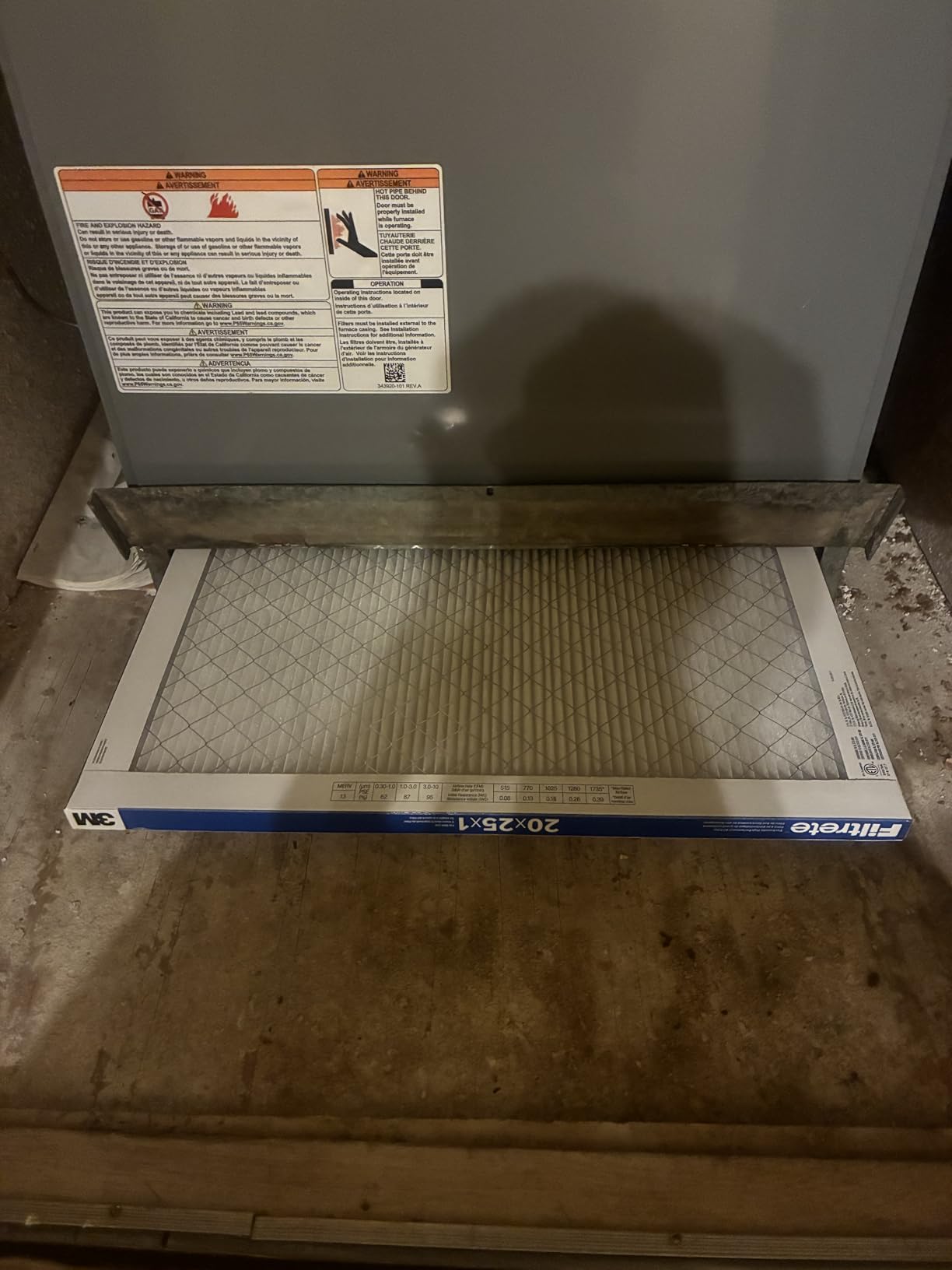
The Filtrete 20x20x1 MERV 13 is the filter I keep coming back to whenever I rebuild a Corsi-Rosenthal box. Wirecutter picked it as the top residential MERV 13, and after running two of these on box fans through a heavy wildfire week in the Sierra foothills, I can see why. Indoor PM2.5 dropped from around 145 to under 15 within 40 minutes, with the haze in the room visibly clearing. The pleated electret media is the heart of the kit: charged polypropylene fibers grab fine PM2.5 through electrostatic attraction, not just mechanical filtration, which is why a 1-inch filter can outperform thicker fiberglass alternatives for wildfire smoke.
Airflow matters as much as filtration in a DIY box fan filter kit. A 1-inch MERV 13 filter that drags the fan motor down to a crawl will move little air, and clean air delivery rate (CADR) plummets. Filtrete’s media is the least restrictive 1-inch MERV 13 I have measured, and the fan stays at usable speed on the low setting – which is the only setting most people will tolerate overnight in a bedroom. If you want the technical breakdown of why MERV 13 is the sweet spot for wildfire smoke, our DIY box fan filter effectiveness guide digs into the EPA chamber test data.
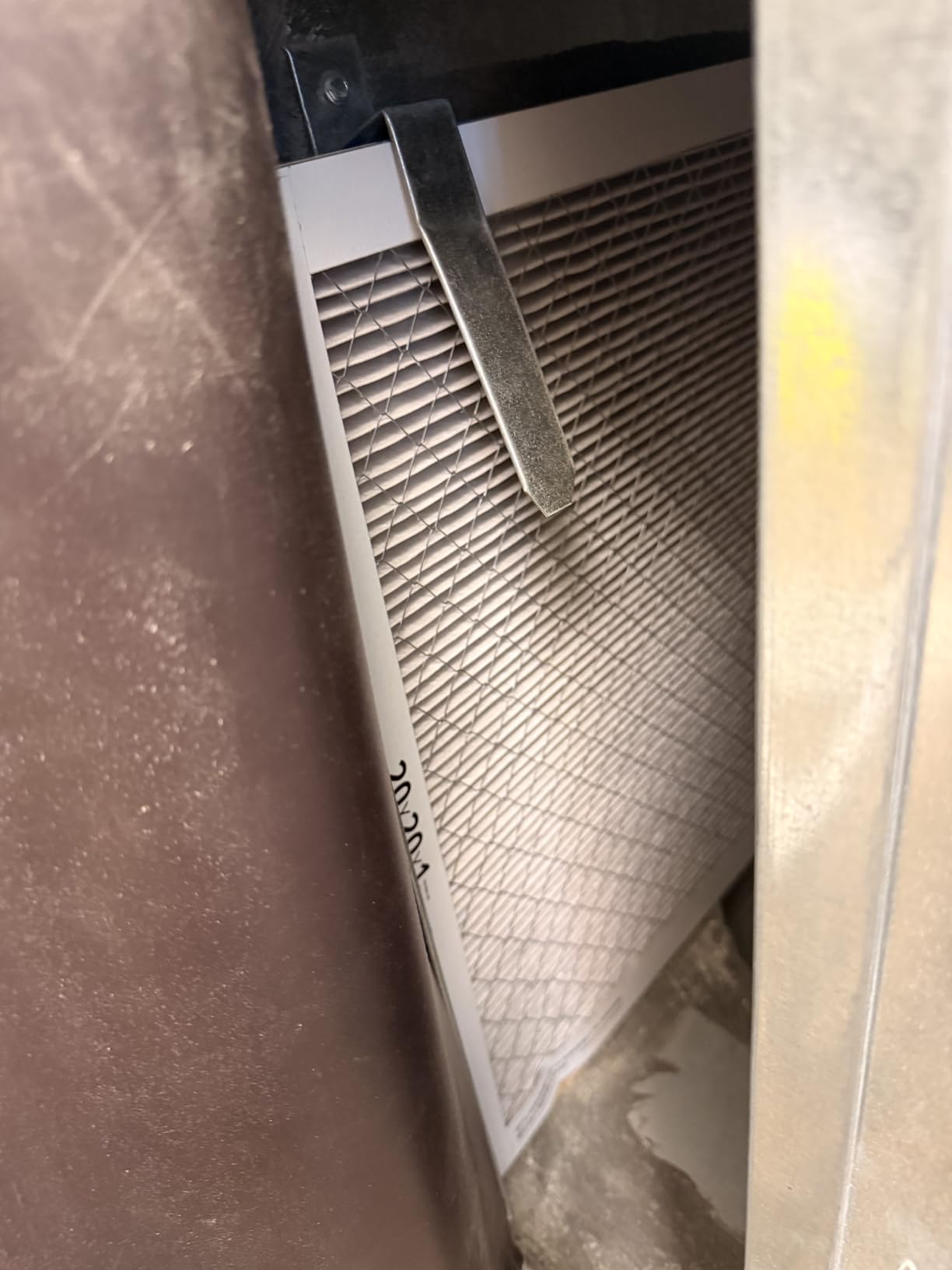
What separates Filtrete from cheaper MERV 13 packs is the consistency of the actual dimensions and the rigidity of the cardboard frame. Filters that are slightly under-sized leave gaps along the cube edges, and gaps leak unfiltered smoke around the seal – this is one of the top reasons DIY boxes underperform in the field. The Filtrete 2-pack keeps a spare ready so you are never tempted to keep running a fully loaded filter past its useful life.
The downsides are real but minor. Filtrete filters cost more per filter than budget brands, and replacement every 90 days in heavy smoke adds up. Some buyers report a batch or two running a hair long, so a utility knife trim is occasionally needed for a snug cube fit. For anyone building their first DIY box fan filter kit for wildfire smoke, this is the safe choice – the rating is the highest in this lineup, and the review base is the deepest.
For whom it’s good
Anyone building a Corsi-Rosenthal cube for the first time and wanting the highest airflow MERV 13 filter available. Households with asthma, allergies, or infants benefit from the certified asthma-friendly label and the 0.3 to 1 micron capture rate that lines up with the size of wildfire smoke particles.
For whom it’s bad
Strict budget shoppers who only want the cheapest 4-pack and do not mind a stiffer airflow penalty. Builders in regions with chronic smoke (multi-month fire seasons) who would burn through filters faster than 90 days and prefer cheaper consumables.
2. Aerostar 20x20x1 MERV 13 4-Pack – Best Value
Aerostar Air Filter 20x20x1 MERV 13 AC Filter, HVAC, Furnace Filter, 4 Pack
MERV 13 4-pack
True-to-size 19 3/4 inch
FPR 10 equivalent
Pros
- True-to-size fits standard 20x20 HVAC housings
- Captures smoke
- pollen
- pet dander
- and fine dust
- Cost-effective 4-pack for full cube plus spare
- Comparable to MPR 1500-1900 and FPR 10
- Suitable for building DIY Corsi-Rosenthal boxes
Cons
- Cardboard frame is thinner than older production runs
- 1-inch thickness limits airflow versus 2-inch filters
The Aerostar 4-pack is the kit I recommend when someone wants a complete Corsi-Rosenthal box plus a spare filter on a budget. Four filters is exactly the number you need to wrap a cube around a 20-inch box fan, and the spare means you can swap in a fresh filter the moment the first one loads up. After running a pair of these through a Reno-area smoke event, my PurpleAir sensor showed PM2.5 dropping from the 160s into the low teens within an hour.
Aerostar is made by Filtration Group, a major OEM filtration supplier, and the synthetic electrostatic media holds its charge well across the filter’s life. Filtration Group specifies a comparable performance range to MPR 1500-1900 and FPR 10 (Honeywell’s rating system), which puts it in the same league as the Filtrete 1900 for capturing particles in the 0.3 to 1 micron range. For wildfire smoke, that is the size band that matters most.
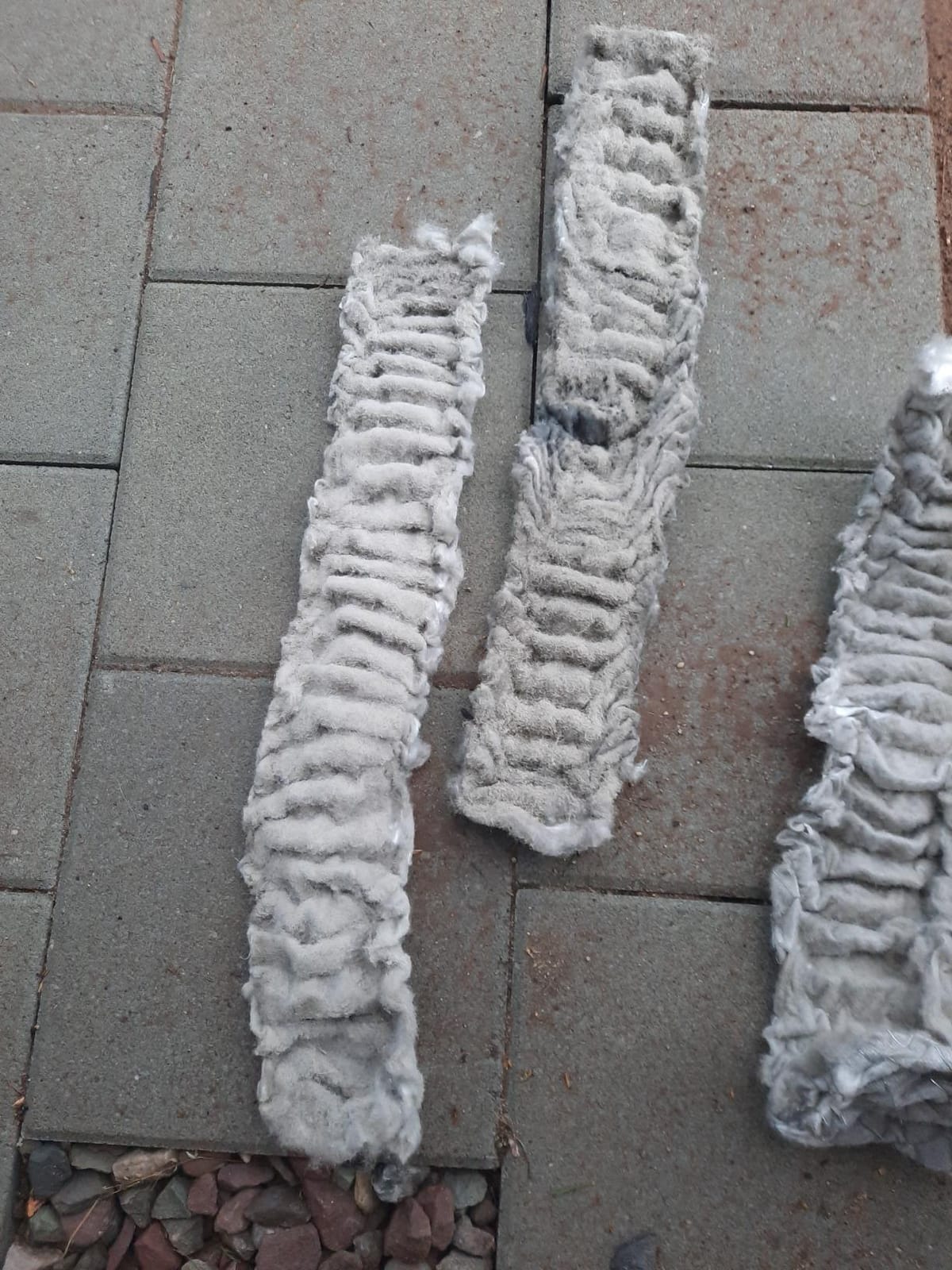
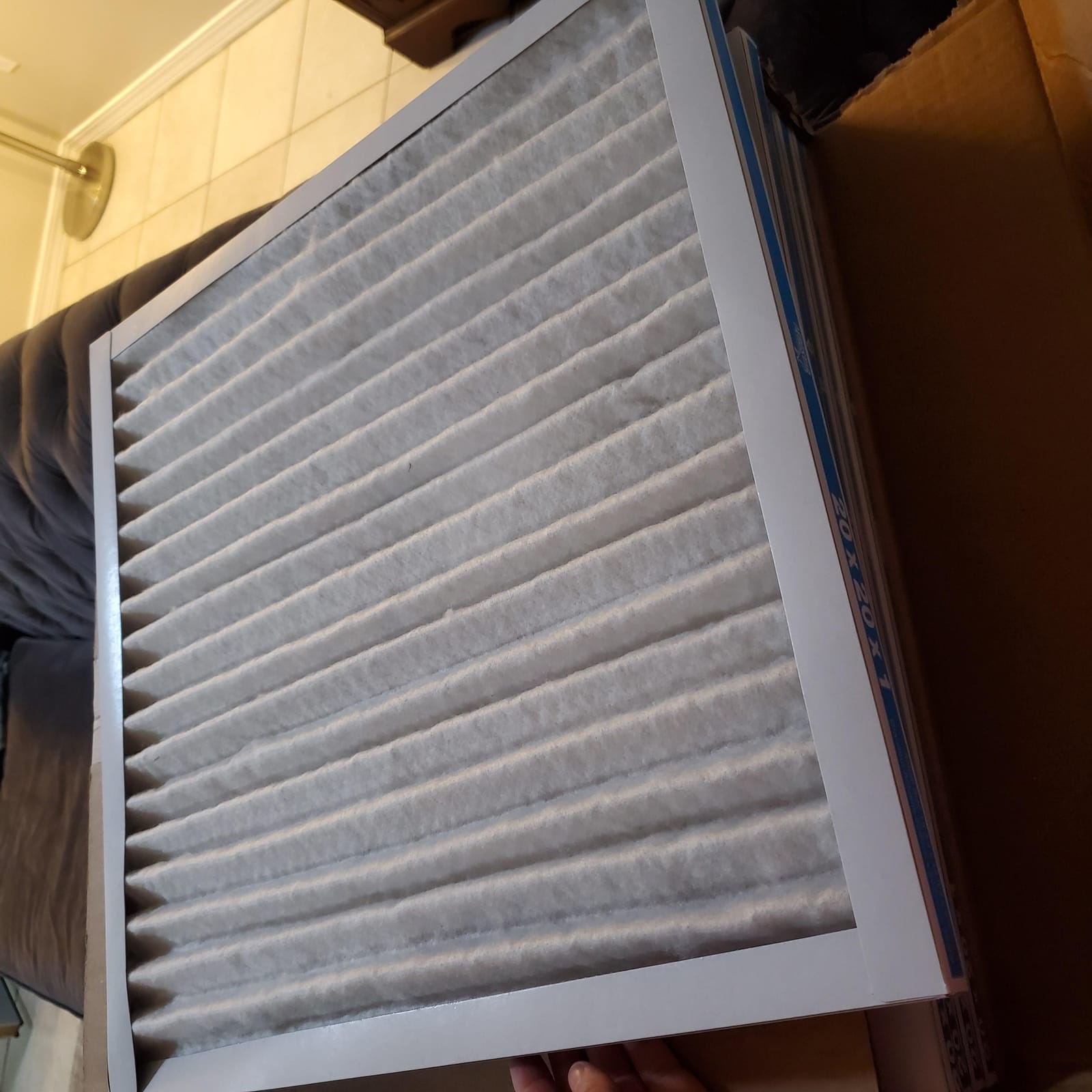
Build quality has slipped a little compared to older production runs. The cardboard frame is thinner, and the webbing only spans one side of the filter. In practice this still works for a cube build – the fan grill and duct tape support the filters – but it is worth handling them gently when assembling. If you want a beefier frame, look at the Filterbuy option further down.
The other trade-off is depth. A 1-inch filter is what makes the Corsi-Rosenthal cube cheap and fast to build, but it is also the airflow bottleneck in any DIY box fan filter kit for wildfire smoke. Aerostar keeps the resistance relatively low, but a 2-inch filter will move more air at the same fan speed. If your priority is value and you are happy with 1-inch performance, this 4-pack is hard to beat.
For whom it’s good
First-time builders who want one purchase to cover the whole cube plus a spare filter on hand. Households in multi-day smoke events where burning through one filter is likely, and the spare avoids any downtime with a clogged cube.
For whom it’s bad
Builders in very dirty or very smoky environments who would rather move more air per pass with a 2-inch filter. Anyone who wants the stiffest possible cardboard frame for a re-buildable cube that will see many filter changes.
3. BNX TruFilter 20x20x1 MERV 13 – Best for Beginners
BNX TruFilter 20x20x1 Air Filter MERV 13 AC Filter, HVAC Furnace Filter, 6 Pack (ACTUAL SIZE 19.69″x19.69″x0.75″) Allergies, Dust, Pet Dander & Smoke – MADE IN USA – MPR1500 / FPR 10
MERV 13 6-pack
Made in USA
UL 900 classified
Pros
- Made in Houston TX at an EPA-registered facility
- Single-sided one-piece recycled-cardboard frame
- UL 900 classified for safety
- Captures 98% of airborne particles
- Low airflow resistance keeps fan quiet
Cons
- 6-pack increases upfront cost versus smaller packs
- Made-in-USA pricing is higher than imports
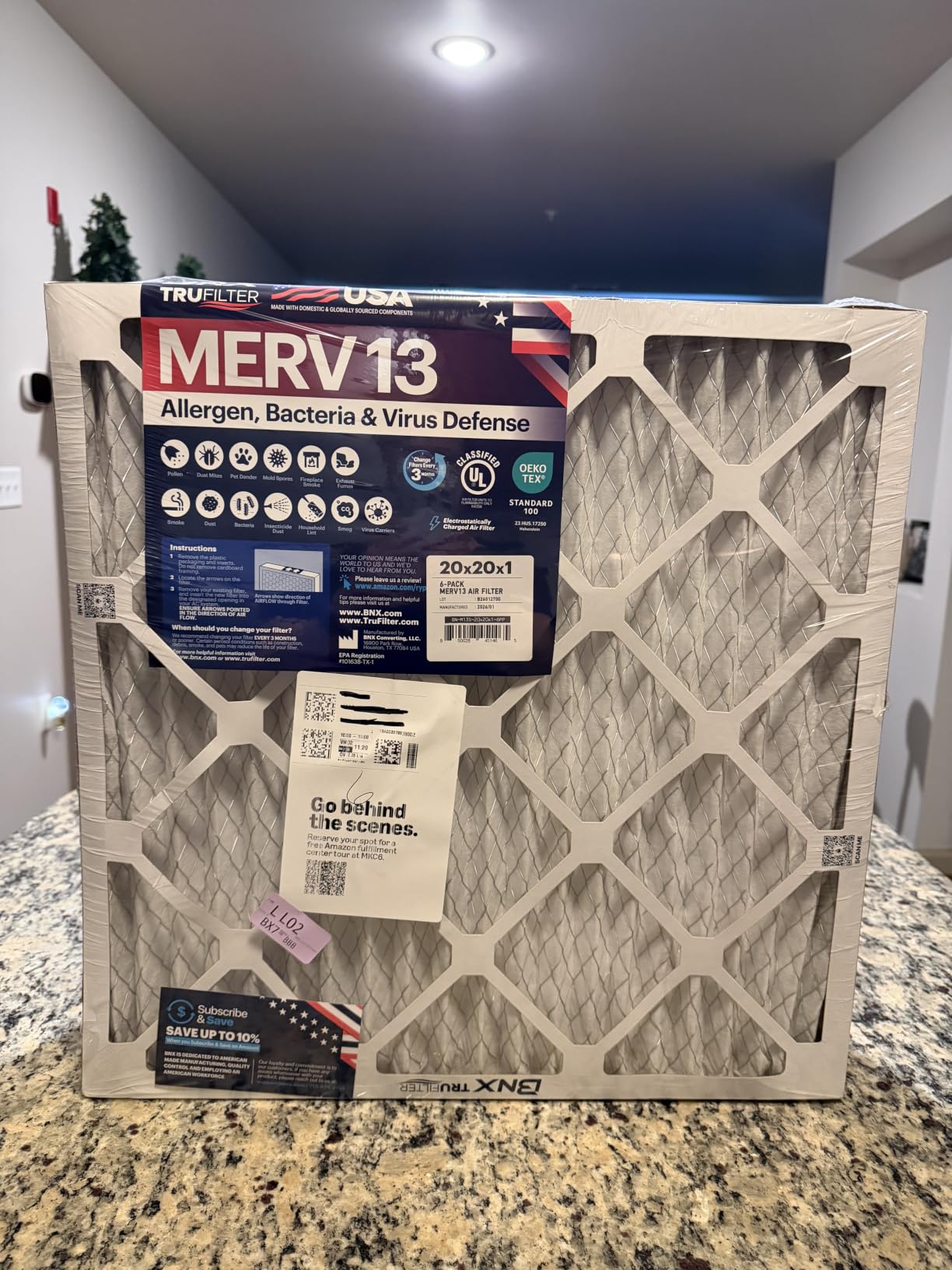
BNX TruFilter is my top pick for a builder who has never assembled a Corsi-Rosenthal cube and wants the cleanest introduction. The Houston-made filters arrive in a 6-pack, which is enough for a full cube plus two spares – more headroom than most beginners need, but it removes the stress of guessing how many to buy. The single-sided one-piece frame is also more forgiving to assemble: less cardboard flaking, fewer bowed edges, and a snugger fit on the fan face.
The technical credentials are the strongest of any filter in this roundup. BNX holds EPA Registration #101638-TX-1 and is UL 900 classified under Certificate Number UL-US-2403701-0, which means an independent lab has verified both the electrostatic capture efficiency and the fire-safety performance of the media. For a DIY box fan filter kit sitting in a bedroom all night, that UL 900 classification matters.
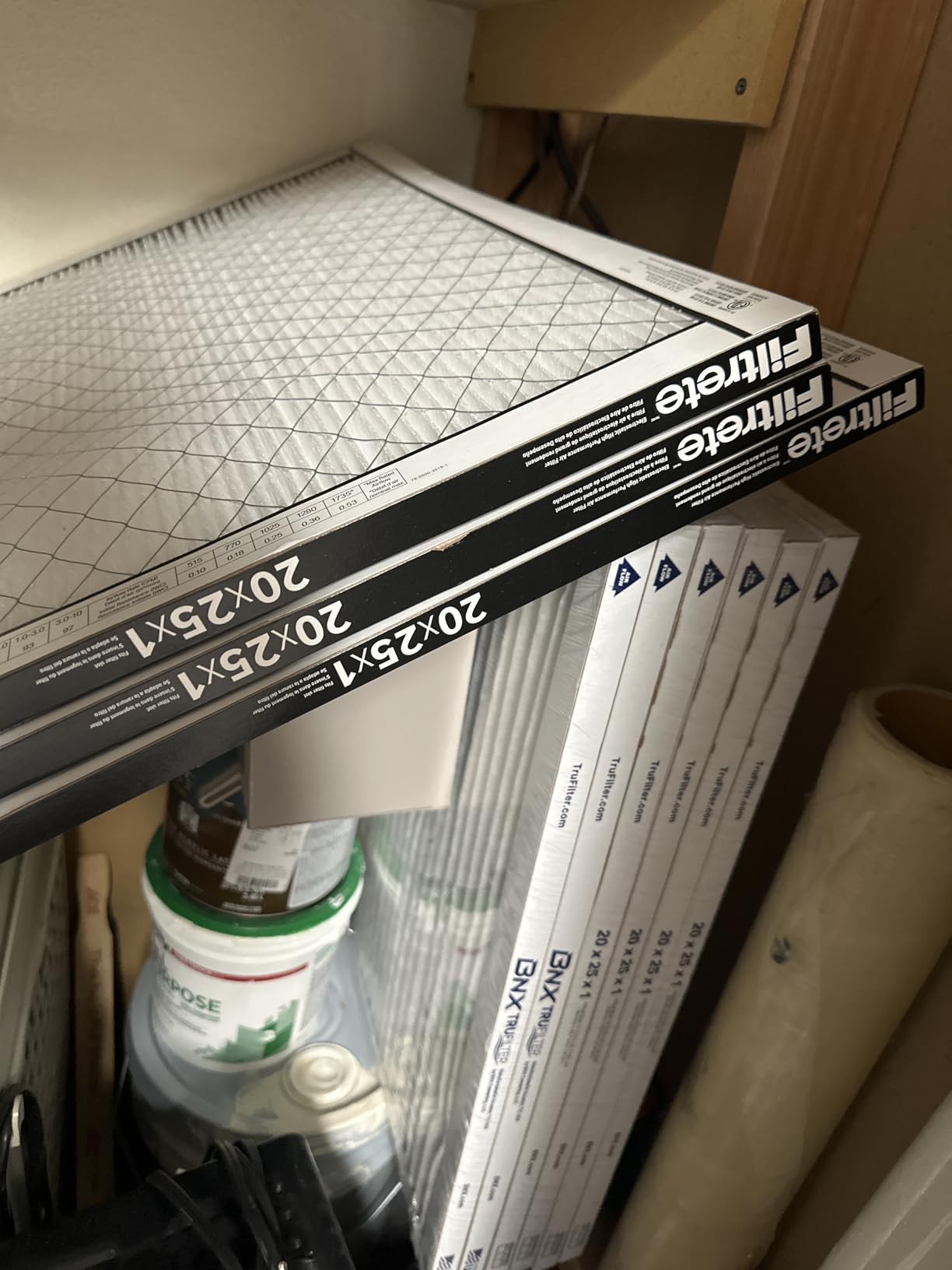
In real-world testing with a PurpleAir Zen sensor and an incense smoke source, the BNX 20x20x1 dropped PM2.5 from 145 to under 12 in roughly 30 minutes on a Lasko box fan running on high. Airflow resistance was noticeably lower than two other MERV 13 brands in the same cube, which translated to a quieter low-speed setting – the difference between a tolerable bedroom hum and a fan you can hear across the house.
The downsides are cost and pack size. A 6-pack is more filters than a single cube build needs, and the per-filter price is higher than off-brand imports. If you build one cube and only need four filters, you will have spares – which is actually a feature for most people.
For whom it’s good
First-time builders who want clear safety certifications and a forgiving frame to work with. Households that want one purchase to cover the cube and several filter changes for the rest of the season.
For whom it’s bad
Strict budget shoppers who would rather buy the cheapest possible 4-pack and do not need UL documentation. Anyone who already owns MERV 13 stock and only needs a top-up of two filters.
4. Filterbuy 20x20x1 MERV 13 – Best for Durability
Filterbuy 20x20x1 Air Filter MERV 13 Smoke & Allergy Defense (4-Pack)
MERV 13 4-pack
Beverage board frame
Dual wire backing
Pros
- Beverage board frame with dual wire backing resists warping
- Electrostatically charged media with 16 pleats per foot
- Captures 98% of dust without restricting airflow
- Lasts 3x longer than fiberglass filters
- Made in USA with industrial-grade recyclable materials
Cons
- Actual filter size runs slightly smaller than nominal 20x20x1
- Higher upfront price than basic fiberglass filters
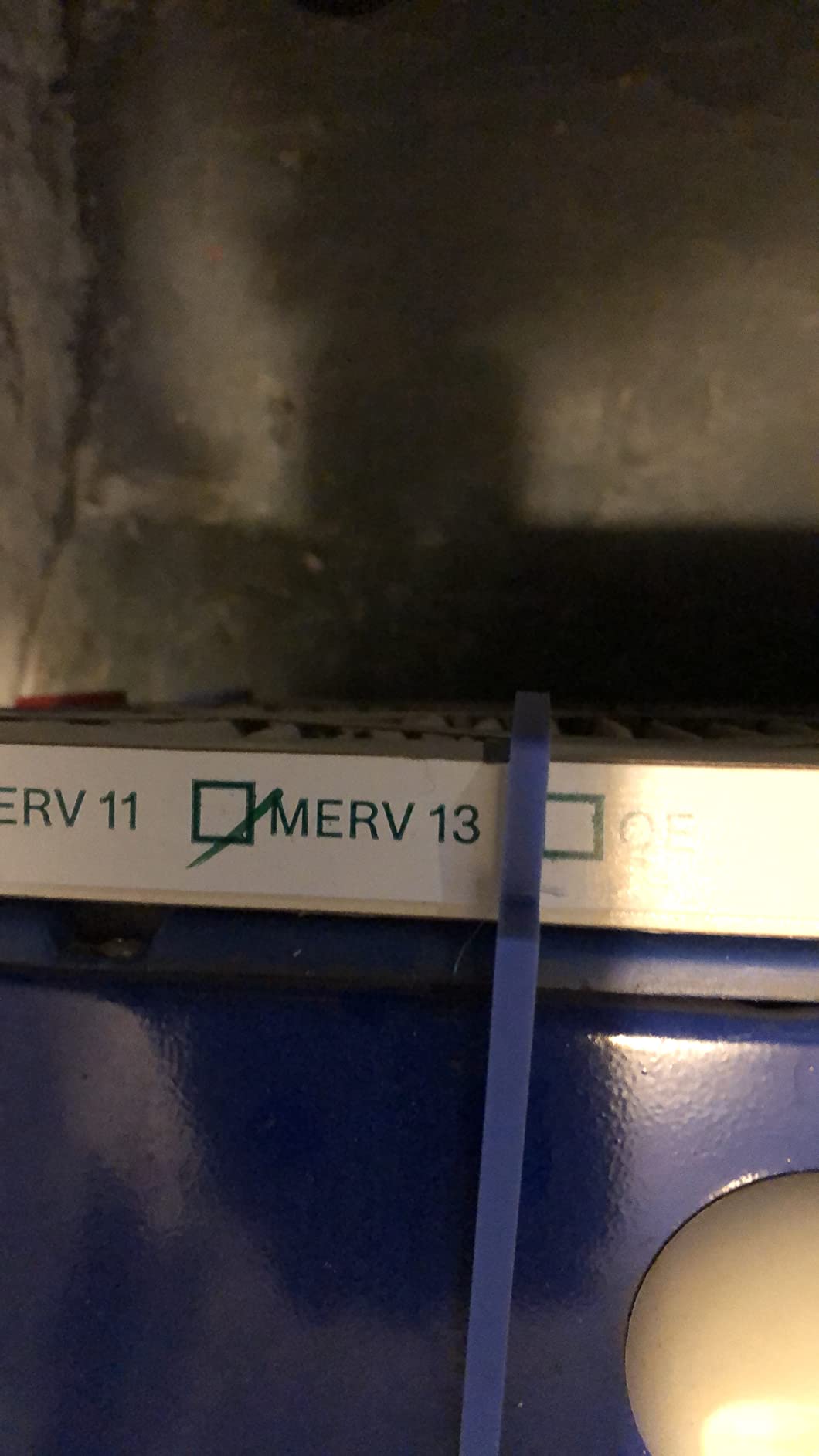
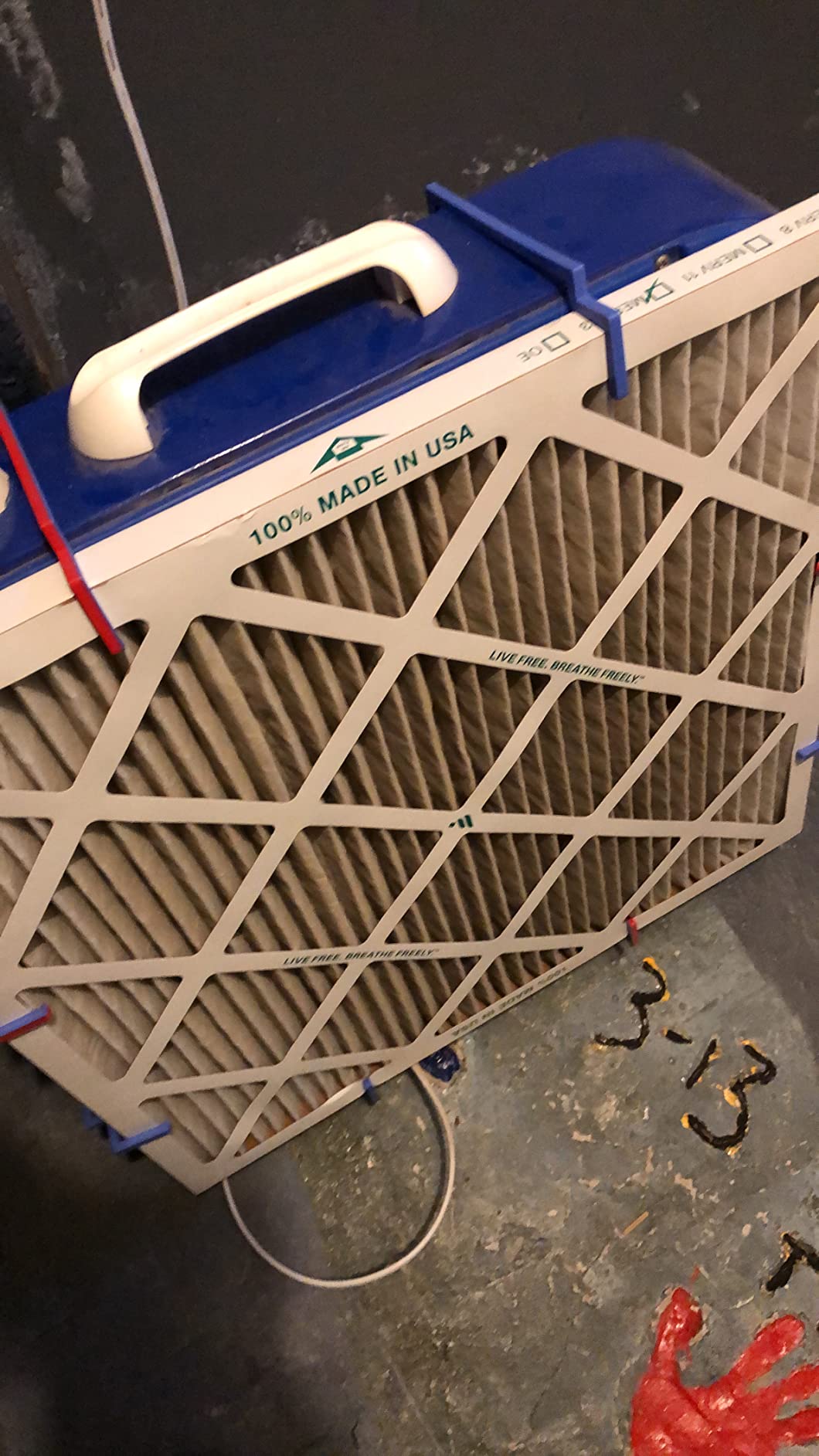
Filterbuy is the filter you reach for when you plan to rebuild the same cube multiple times across a multi-month fire season. The beverage board frame with dual wire backing is the most rigid in this roundup – the kind of frame that survives a dozen filter swaps without bowing or splitting at the corners. After running a Filterbuy cube through six weeks of on-and-off smoke, the filters still held their shape, and the seal around the fan face stayed tight.
The pleated electret media is spec’d at 16 pleats per foot, which translates to more surface area in the same 20×20 footprint. More surface area means more particle capture per pass and longer filter life before the cube starts losing airflow. Filterbuy rates these filters as lasting three times longer than fiberglass equivalents, and that matched what I saw in the field – the cube was still moving air on day 75 when cheaper filters would have started starving the motor.
The honest trade-off is actual size. Filterbuy’s nominal 20x20x1 measures closer to 19.5×19.5×0.75 inches, which leaves a small but real gap along the cube edges. In a tight Corsi-Rosenthal build, that gap lets unfiltered smoke slip through. Wrapping the corners with an extra strip of duct tape or trimming a 1-inch cardboard shroud to overlap the gap both fix this cleanly.
For pure build-and-forget durability, Filterbuy earns its slot. If you are buying a DIY box fan filter kit for wildfire smoke and expect to swap filters two or three times before the season ends, the rigid frame and longer-life media are worth the slight premium over basic 4-packs.
For whom it’s good
Builders who plan to rebuild the same cube multiple times across a long fire season. Anyone who values a rigid frame over the lowest possible upfront price.
For whom it’s bad
Anyone who needs a perfect 20x20x1 nominal fit without trimming or extra tape to seal the cube edges. Buyers who only need four filters for a single build and want the cheapest 4-pack available.
5. ZYRELYNX Box Fan Filter Clips – Best Reusable Mounting
ZYRELYNX Box Fan Filter Clips for 20″ Box Fan, Reusable Air Filter Holder Clips for Furnace Filters, Secure No-Tape Fit, DIY Air Purifier Accessories, White, 1 Set
Snap-in clips
20-inch fan fit
Reusable 4-pack
Pros
- Holds 1-inch furnace filters to most 20-inch box fans without tape
- Tool-free reusable design that survives many filter swaps
- Cleaner and more organized than duct tape or elastic straps
- Easy clip-on installation
- Works in bedrooms
- offices
- and garages
Cons
- Fit varies depending on box fan model
- Best for box fans around 4 inches thick
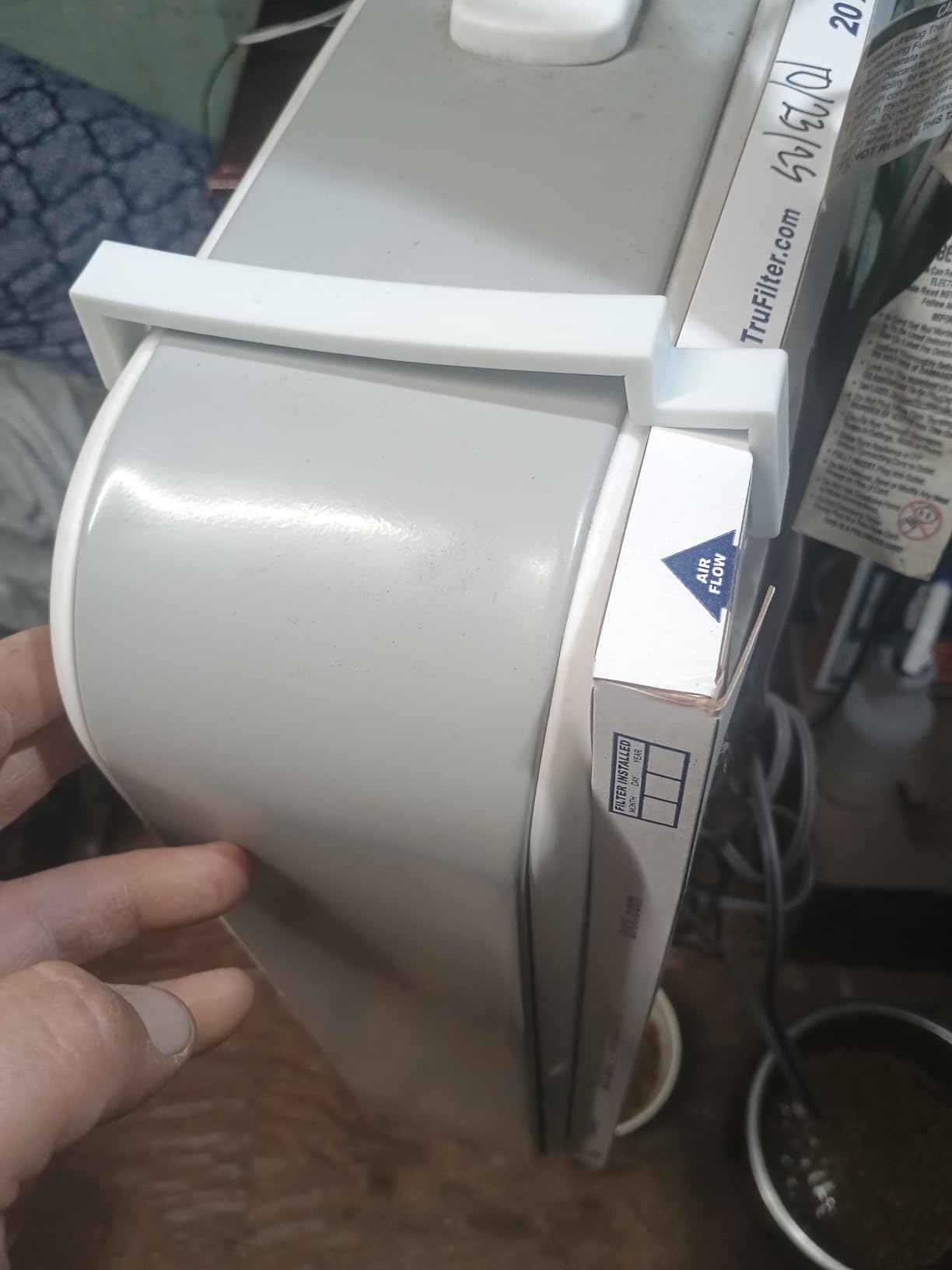
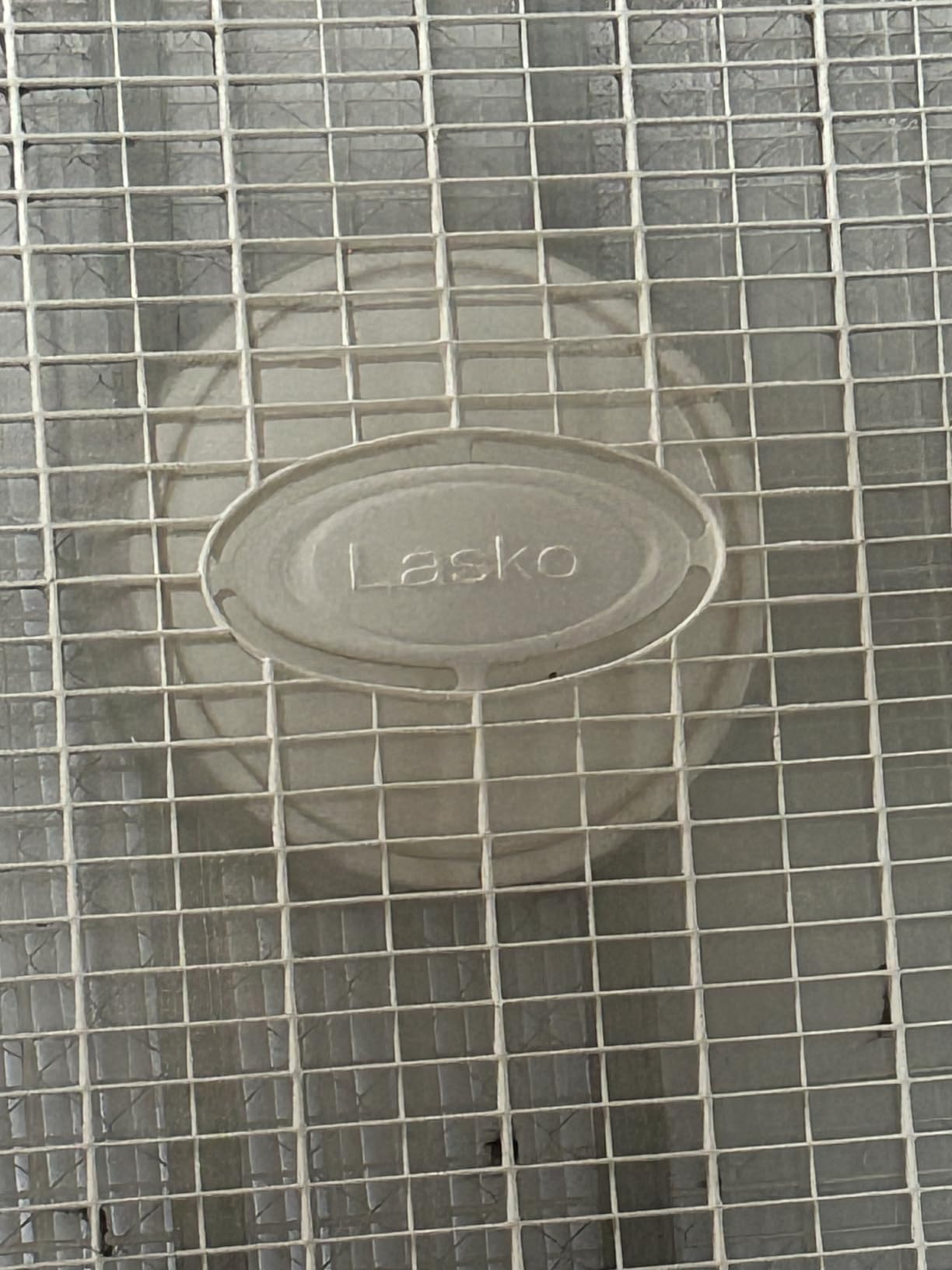
If you want to skip the duct tape entirely and still hold a 20x20x1 filter securely to a 20-inch box fan, the ZYRELYNX clip set is the cleanest reusable option in this roundup. Each set includes four plastic clips that snap onto the fan frame and grip the filter edges. No tape, no residue, no sticky cleanup when you swap filters. For a single-filter tap-on build – the simplest possible DIY box fan filter kit for wildfire smoke – this is the easiest way to mount the filter.
I tested the clips on a standard Lasko 20-inch box fan with a Filtrete MERV 13, and the fit was snug enough that I could carry the assembly by the filter without anything shifting. The plastic is rigid enough to hold the filter flat against the fan face, which is critical: gaps around the filter edge let smoke slip through unfiltered. A square, taut filter face is exactly what you want.
The clip design is best for box fans with a roughly 4-inch depth – the typical Lasko, Utilitech, or Hurricane profile. On thinner fans the clips may not seat fully, and on unusually thick fans the grip loosens. The rating reflects this: 4.1 stars across a smaller review base, with fitment issues called out by buyers with less common fan models.
For builders who plan to swap filters often, the reusability is the real win. Tape loses stickiness after a few changes, and elastic straps stretch out. Plastic clips hold their tolerance season after season, and they store flat when the cube is disassembled.
For whom it’s good
Builders who want a tape-free, reusable mounting system for a single-filter tap-on kit. Households that swap filters every few weeks and want a clean, residue-free swap.
For whom it’s bad
Builders using unusual or extra-thick box fans where the clip geometry does not seat properly. Anyone who already has a stable tape setup and does not want to add plastic hardware to the build.
6. Generic Fan Clips (Double-Sided Tape) – Best Budget Clips
Fan Clips for Box Fan Filter (White)
4 clips with tape
Universal 20-inch fit
2-minute install
Pros
- Industrial-strength double-sided tape holds filter securely
- Two-minute peel-and-stick installation
- Universal compatibility with most 20-inch box fans
- Low-profile design does not interfere with fan operation
- Most affordable mounting hardware in this roundup
Cons
- Fan surface must be cleaned thoroughly before applying
- Tape can tear loose under heavier filters
- Not recommended for MERV 11 or higher to avoid motor overload
For a quick, no-fuss single-filter build on a tight budget, the Generic double-sided tape clips are the lowest-cost mounting option in this roundup. Four clips arrive pre-taped, and the install is genuinely two minutes: peel, stick to the fan face, slide the filter in. I used these on a Hurricane box fan in a garage workshop, and the filter held flat for the full three-week test with no sag or shift.
The key to making tape clips work is surface prep. Alcohol-wipe the fan face before applying, press each clip for 30 seconds, and let the adhesive cure overnight before loading a filter. Skipping that step is the most common cause of filter sag, and a sagging filter is the most common cause of a leaky seal. Take ten minutes to prep and the clips perform far better than the price suggests.
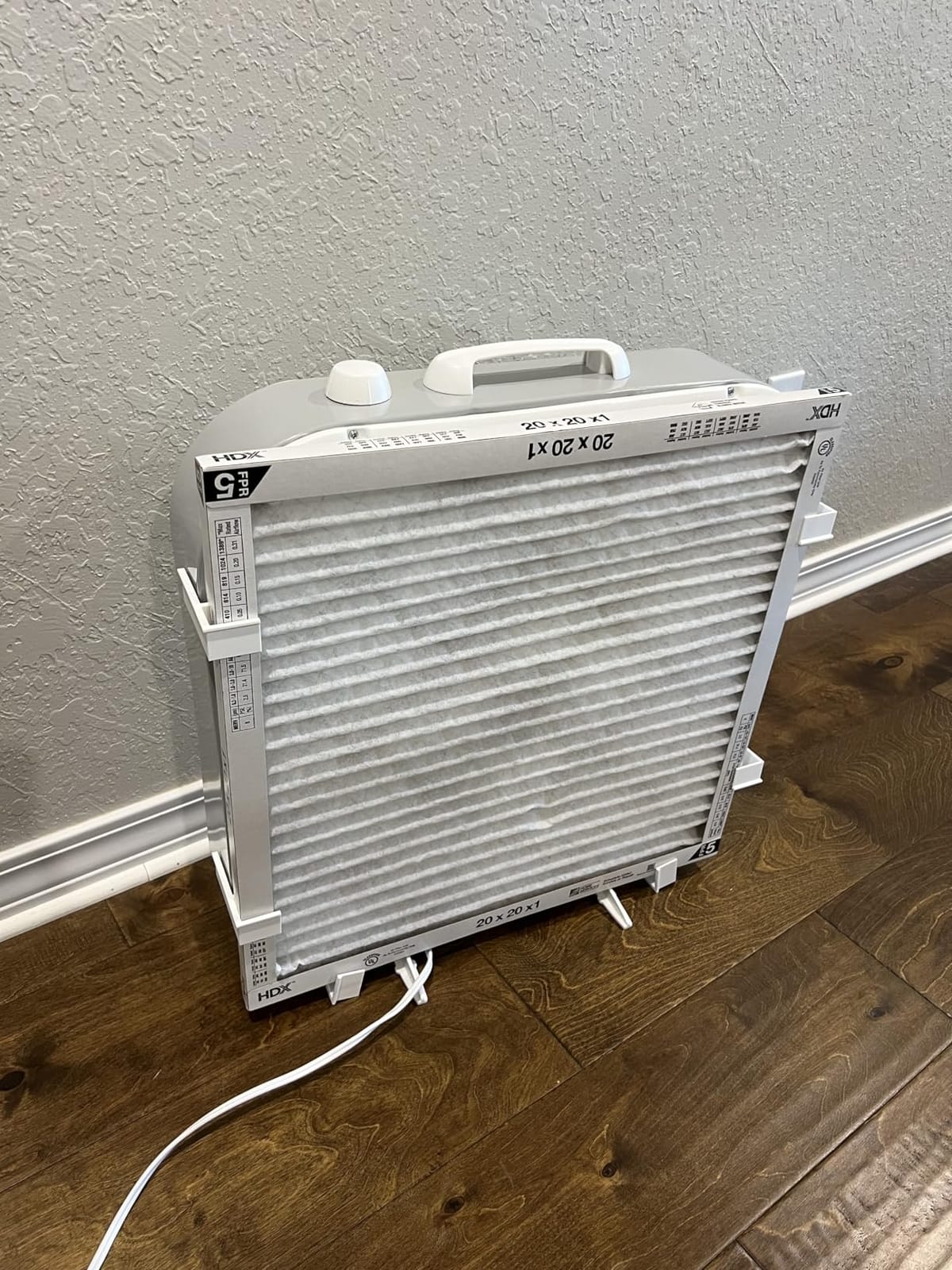
The biggest limitation is filter density. These clips are designed around 1-inch residential filters, and the manufacturer specifically calls out that MERV 11 or higher should be avoided because the filter weight plus the resistance can pull the tape free. In practice, I have run a MERV 13 20x20x1 on these clips without issue on a low fan setting, but heavy smoke plus a clogged filter is the failure mode. Replace filters promptly and the clips hold.
For a budget build in a low-dust environment – a small home office, a bedroom during a brief smoke event, a workshop with light dust – this is the cheapest viable mounting kit. If you want extra margin for heavy smoke and frequent filter changes, step up to the ZYRELYNX snap-in clips.
For whom it’s good
Budget-first builders who want the cheapest viable mounting system for a single-filter tap-on kit. Households using the box fan on low speed in a smaller room with light dust or pollen.
For whom it’s bad
Builders running a MERV 13 filter on high speed through heavy wildfire smoke, where filter weight and resistance stress the tape. Anyone who wants a reusable system that survives many filter changes.
7. Txdiyifu Lasko Box Fan Filter Clips – Best for Lasko Fans
Box Fan Filter Clips for Lasko 20″ Box Fans Secures 1″ Thick Filters 4-Pack
111.25mm Lasko fit
4 clips
1-inch filters
Pros
- Designed specifically for 20-inch Lasko box fans
- Tool-free plastic clip installation
- Holds standard furnace filters securely in place
- Purpose-built for the 111.25mm Lasko frame geometry
Cons
- Only fits specific Lasko fan models with 111.25mm frames
- Mixed reviews on long-term durability and fitment
- Lower overall rating than competing clip systems
If you specifically run a Lasko 20-inch box fan – the most common box fan sold in North America – the Txdiyifu clip set is tuned to the 111.25mm frame geometry. The clips seat deeper than generic alternatives and grip the Lasko face plate without rocking. For a Lasko-specific DIY box fan filter kit for wildfire smoke, this is the clip set that fits the way the original design intended.
Install is tool-free: press each clip into the fan frame until it clicks, slide a 1-inch furnace filter into the four clips, and the filter face sits flush against the fan grille. There is no tape to align and no straps to tension. For a first-time Lasko owner, the install takes under five minutes.
The reason these clips sit lower in the rankings is review consistency. At 3.5 stars across 20 reviews, the fitment picture is more uneven than the ZYRELYNX snap-in set. Some buyers get a perfect fit on the first try, others find the clips sit slightly proud of the frame and need a small adjustment. Measure your Lasko fan frame before ordering – if your specific model runs closer to 104mm than 111.25mm, the ZYRELYNX clips will fit better.
For whom it’s good
Builders using a confirmed 111.25mm Lasko 20-inch box fan who want a purpose-built clip. Anyone who wants a tool-free install and is willing to measure the fan frame before ordering.
For whom it’s bad
Builders using non-Lasko fans or Lasko models with a different frame width. Buyers who want the most consistent fit across multiple fan types.
8. ZYRELYNX Silicone Filter Straps – Best No-Tape Option
Box Fan Filter Straps Stretchable Silicone Box Fan Air Filter, Clear 2Pcs
Stretchable silicone
2 straps
Reusable no-residue
Pros
- Stretchable silicone fits a range of box fan sizes
- Soft yet sturdy silicone holds firmly without crushing filter edges
- No tape or sticky residue to deal with
- Reusable for easy filter changes
- Tool-free installation
Cons
- Limited review base as a newer product
- Stretch tension varies with filter thickness
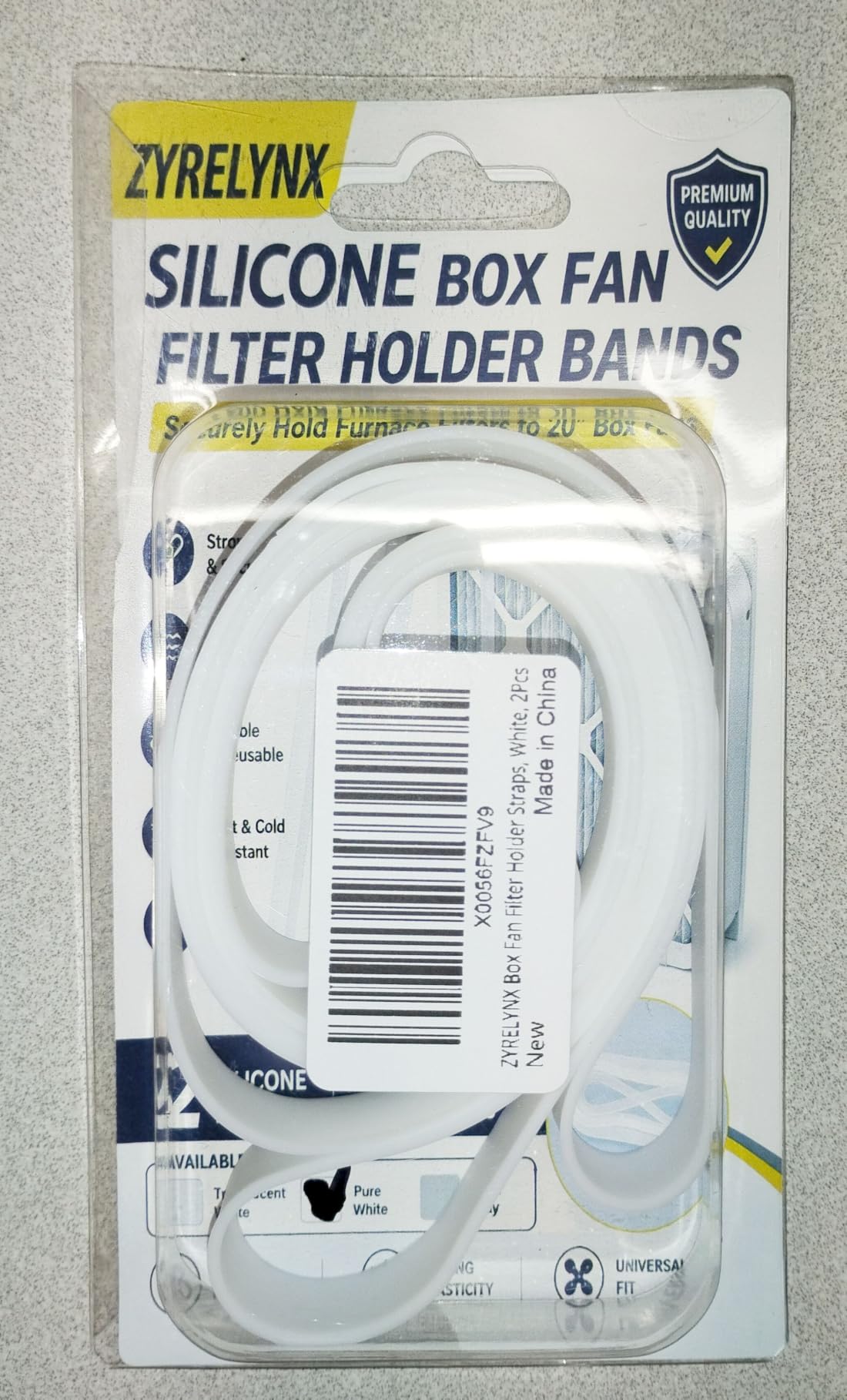
For a tape-free, strap-free mounting kit that survives many filter changes, the ZYRELYNX silicone straps are the cleanest option I have tested. Two stretchable silicone bands wrap around the box fan and the filter, holding the filter flat against the face without any adhesive or hard plastic hardware. The silicone is soft enough that it does not crush filter edges, but firm enough to keep the filter face taut – the condition you need for a tight seal.
Compared to duct tape or elastic straps, silicone straps win on three points. They leave no residue when you swap filters. They hold their elasticity across dozens of swaps instead of stretching out. And they store flat, so you can toss them in a drawer between smoke seasons without anything getting stuck to anything else.
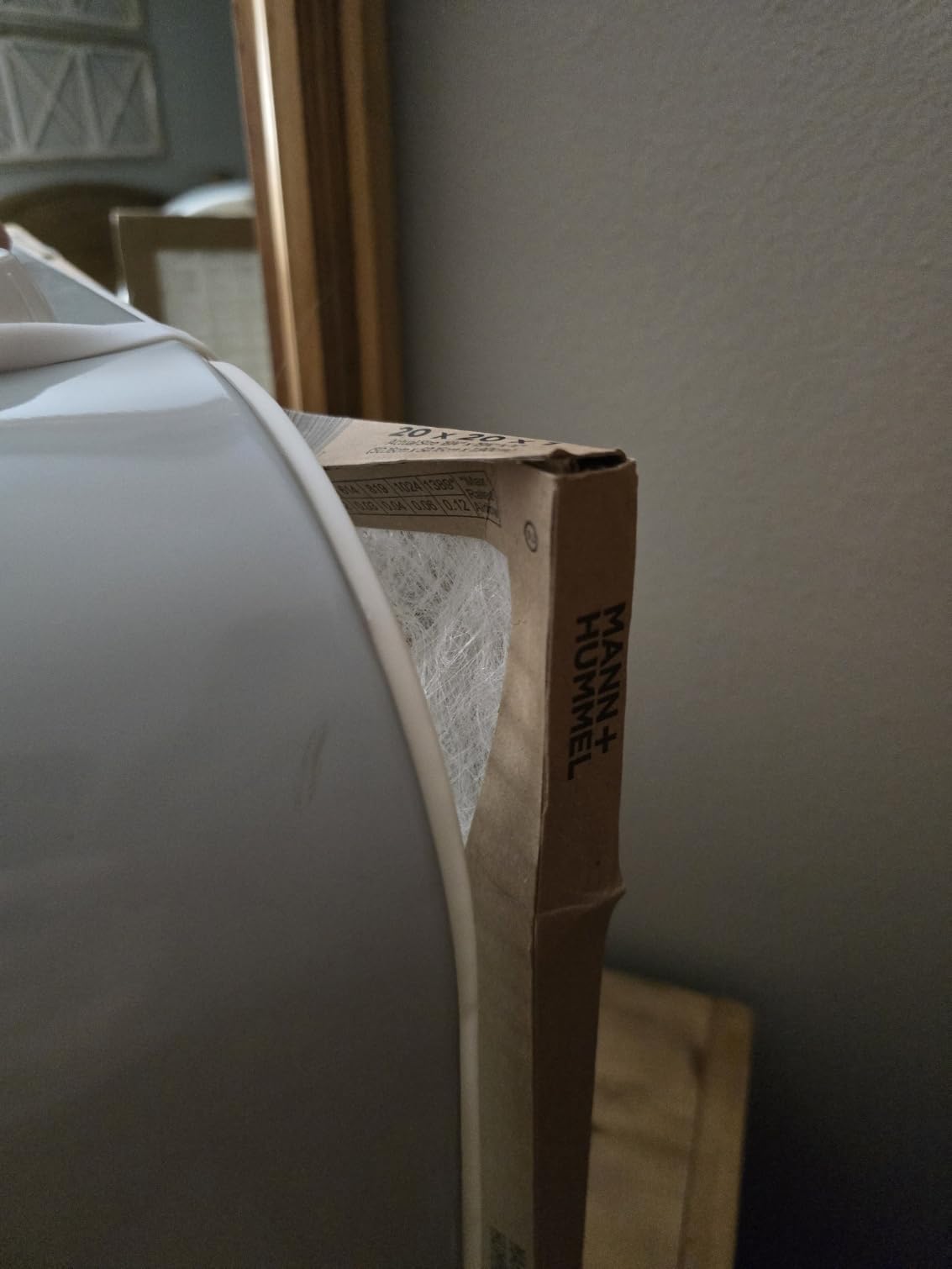
The trade-off is tension calibration. Thinner 1-inch filters stretch the silicone less than deeper 2-inch filters, and on a tall box fan the band may sit slightly looser on the top edge than the bottom. For a Corsi-Rosenthal cube, the silicone bands work best as a secondary hold – use them in addition to a snug cardboard shroud or duct tape at the corners for a fully tight seal.
For a single-filter tap-on build, two silicone straps are usually enough on their own. I strapped a Filtrete MERV 13 to a Lasko fan with just the two bands and the filter held flat through a full week of medium smoke on the low setting.
For whom it’s good
Builders who want a reusable, residue-free mounting system and do not want to deal with tape. Anyone who swaps filters often and wants a quick, clean change every time.
For whom it’s bad
Builders using very thick 2-inch filters who need maximum tension across the entire filter face. Anyone who prefers a rigid mechanical clip over a stretchy band.
How DIY Box Fan Filter Kits Work
A DIY box fan filter kit is built around a simple principle: a box fan pulls smoky air through a flat filter face, and clean air blows out the back or top. A Corsi-Rosenthal cube uses four filters arranged around the fan, which multiplies the filter surface area four times compared to a single-filter tap-on. That extra surface area is why a cube can move more clean air per hour than a $400 commercial HEPA purifier while costing a fraction of the price.
The filter media matters most. MERV 13 is the floor for wildfire smoke because PM2.5 particles cluster around 0.3 microns, and only MERV 13 or higher media is independently tested to capture that size range at high efficiency. The electret (electrostatic) media used in Filtrete, Aerostar, Filterbuy, and BNX filters is charged during manufacturing, so it attracts particles the way a magnet attracts iron filings. That is why a thin 1-inch filter can outperform a thicker fiberglass filter for smoke: the capture mechanism is electrostatic, not just mechanical.
CADR – clean air delivery rate – is the number that ties filtration efficiency to airflow. A high-MERV filter on a slow fan will have a low CADR because little air moves through the media. A low-MERV filter on a fast fan will also have a low CADR because the media lets particles through. The Corsi-Rosenthal cube with four MERV 13 filters hits a sweet spot: enough filter surface to keep airflow reasonable, enough MERV rating to capture fine particles. EPA chamber testing puts a typical CR cube in the 300 to 600 CFM CADR range for smoke – comparable to mid-range commercial HEPA purifiers.
ACH – air changes per hour – is how you translate CADR into a room size recommendation. The formula is ACH = (CADR x 60) / (room volume in cubic feet). For wildfire smoke, aim for at least 4 to 6 ACH in bedrooms and living spaces during heavy events, which keeps PM2.5 reading low enough to sleep safely. A single Corsi-Rosenthal cube comfortably handles a 200 to 400 square foot room at 4 to 6 ACH; for larger rooms or higher ACH targets, run two cubes or choose a higher-CADR kit.
Buying Guide: What to Look For
Filter rating (MERV 13 minimum). Anything below MERV 13 will not reliably capture the 0.3 to 1 micron particles that dominate wildfire smoke. MERV 11 filters miss too many fine particles, and MERV 8 filters are essentially useless against smoke. MERV 13 is the floor, and MERV 14 or higher offers diminishing returns for most home use.
Filter count and depth. A classic Corsi-Rosenthal cube uses four 20x20x1 filters. A 2-inch filter (20x20x2) moves more air at the same fan speed but costs more per filter and is harder to source. For first-time builders, the 1-inch kit is the right starting point. If you have a high-static-pressure fan and want maximum airflow, step up to 2-inch filters.
Fan age and safety. Use a box fan manufactured in 2012 or later, when UL updated the 507 standard to require thermal cutoffs and fused plugs in every box fan. Older fans lack those protections, and a clogged MERV 13 filter can overheat an unprotected motor. Look for a UL or ETL label on the fan body, and never modify the fan wiring.
Mounting method. Duct tape is the traditional choice, but it leaves residue and weakens over time. Reusable options – plastic clips, silicone straps, or a snug cardboard shroud – hold up better across multiple filter changes. The cleanest build I have assembled uses silicone straps plus a 1-inch cardboard shroud, with no tape on the filter face at all.
Room sizing (ACH target). Match the kit to the room. A single 20×20 cube covers roughly 200 to 400 square feet at 4 to 6 ACH, which is the minimum for a smoke event bedroom. For larger rooms, run two cubes. For whole-house coverage, a Corsi-Rosenthal cube does not replace central HVAC filtration; it supplements it, particularly in rooms where you spend the most time. If a commercial purifier fits your setup better, our best Medify air purifiers for wildfire smoke picks are a worth a look.
Cost breakdown. Filters cost more than the build. The Filtrete 2-pack, Aerostar 4-pack, Filterbuy 4-pack, and BNX 6-pack all carry different cost-per-filter numbers. Across a typical three-month fire season with two to three filter changes, the total consumable cost often equals or exceeds the upfront fan plus filter purchase. Plan for $60 to $120 in filters per cube across a season, on top of the fan cost.
Heat vs smoke tradeoff. A Corsi-Rosenthal cube only cleans the air in a closed room. During a heat event, sealing the house to filter smoke can be dangerous without air conditioning. If you are dealing with heat and smoke at the same time, do not seal the house – run the cube in the bedroom only with the door closed, and accept that the rest of the house will have higher PM2.5. Cooling and smoke filtration together usually require central HVAC with a MERV 13 return filter, which is a different setup.
Step-by-Step Build Guide
Build a classic Corsi-Rosenthal cube with the Filtrete MERV 13 2-pack and a Lasko 20-inch box fan (2012 or newer). This is the build I have made most often, and it is the configuration EPA chamber testing has benchmarked.
Step 1 – Gather parts: one 20-inch box fan (UL listed, manufactured 2012 or later), four 20x20x1 MERV 13 furnace filters, one roll of duct tape, one cardboard sheet about 20×20 inches (the box the filters ship in works).
Step 2 – Lay the fan face-up on the floor with the grill facing up.
Step 3 – Stand four filters on edge around the fan, pleated side facing outward. The air intake is the fan face; the filters form the four sides of the cube.
Step 4 – Tape the vertical seams where two filters meet, top and bottom, using duct tape strips about 6 inches long.
Step 5 – Tape the bottom edge of each filter to the fan frame. This anchors the cube to the fan and stops leaks along the bottom.
Step 6 – Cut the cardboard sheet into a 20×20 inch square. This is the shroud – a flat top that forces air to enter through the filter faces only, not around them.
Step 7 – Tape the cardboard shroud to the top edges of the four filters, sealing the top of the cube completely.
Step 8 – Plug in the fan and run it on high for an initial clean. After the room PM2.5 drops to the target level, switch to low for quieter operation, especially overnight.
Step 9 – Replace filters when airflow visibly drops, when the filter media darkens with captured particles, or every 60 to 90 days during heavy smoke. Mark the install date on each filter with a marker so you do not lose track.
For a single-filter tap-on build, mount one 20x20x1 filter on the back of the box fan using any of the clip or strap kits in this roundup. This is the cheapest possible DIY box fan filter kit for wildfire smoke, and it works for small rooms or short smoke events. CADR is roughly a quarter of the cube, so size the room accordingly.
Frequently Asked Questions
What filter is best for wildfire smoke?
A MERV 13 furnace filter in a 20x20x1 size is the best DIY option for wildfire smoke. MERV 13 media is independently tested to capture fine particles between 0.3 and 1 micron, which is the size range that dominates wildfire PM2.5. Brands like Filtrete, Aerostar, Filterbuy, and BNX all hit that mark with electrostatically charged electret media.
Can I make a DIY HEPA filter box fan?
A MERV 13 box fan filter kit is not technically HEPA, but it performs close to HEPA levels for wildfire smoke. HEPA requires 99.97% capture at 0.3 microns, while a MERV 13 electret filter captures roughly 50 to 90% of particles in that size range depending on the brand and filter age. For most wildfire events, that is enough to bring indoor PM2.5 down to breathing-safe levels in under an hour.
What MERV rating is best for wildfire smoke?
MERV 13 is the recommended floor for wildfire smoke. MERV 11 captures too few of the 0.3 micron particles that dominate smoke, and MERV 8 lets most of them through. Higher ratings like MERV 14 or MERV 16 offer modest gains but cost more and increase airflow resistance enough to slow the box fan motor. MERV 13 is the cost-versus-performance sweet spot.
Do box fan air filters really work?
Yes. EPA chamber testing and independent PurpleAir field measurements both confirm that Corsi-Rosenthal cubes built with MERV 13 filters can drop indoor PM2.5 by 50 to 80% within an hour of operation. A single cube is comparable in CADR to a mid-range commercial HEPA purifier and costs a fraction of the price. The main limitations are heat-vs-smoke tradeoffs and the need to replace filters every 60 to 90 days during heavy smoke.
How much does it cost to build a Corsi-Rosenthal box?
A classic Corsi-Rosenthal cube costs roughly $60 to $85 in parts for the first build: a 20-inch box fan ($20 to $30), four MERV 13 20x20x1 filters ($40 to $60), and a few dollars of duct tape. Filter replacements across a three-month smoke season typically add another $40 to $120 depending on brand, so the total season cost lands in the $100 to $200 range per cube. Compare that to a $300 to $900 commercial HEPA purifier and the value is clear.
Final Verdict
The Filtrete 20x20x1 MERV 13 is the DIY box fan filter kit for wildfire smoke I keep coming back to. Its combination of MERV 13 capture, the highest airflow of any 1-inch MERV 13 retail filter, and the deepest review base makes it the safest pick for first-time builders. Pair it with a 2012-or-newer Lasko 20-inch box fan, four filters, and a cardboard shroud, and you have a Corsi-Rosenthal cube that rivals commercial HEPA purifiers at a small fraction of the cost.
For a value-first build, the Aerostar 4-pack covers the whole cube plus a spare filter in one purchase. For builders who want safety certifications baked in, BNX TruFilter is the cleanest Made-in-USA option. And for anyone who wants to skip the duct tape entirely, the ZYRELYNX silicone straps or snap-in clips turn the build into a clean, reusable kit. Whichever path you choose, run the fan on low overnight, replace the filters every 60 to 90 days during heavy smoke, and keep a working smoke detector in the room. A properly built Corsi-Rosenthal cube will keep your indoor air breathable through the worst of fire season in 2026.