
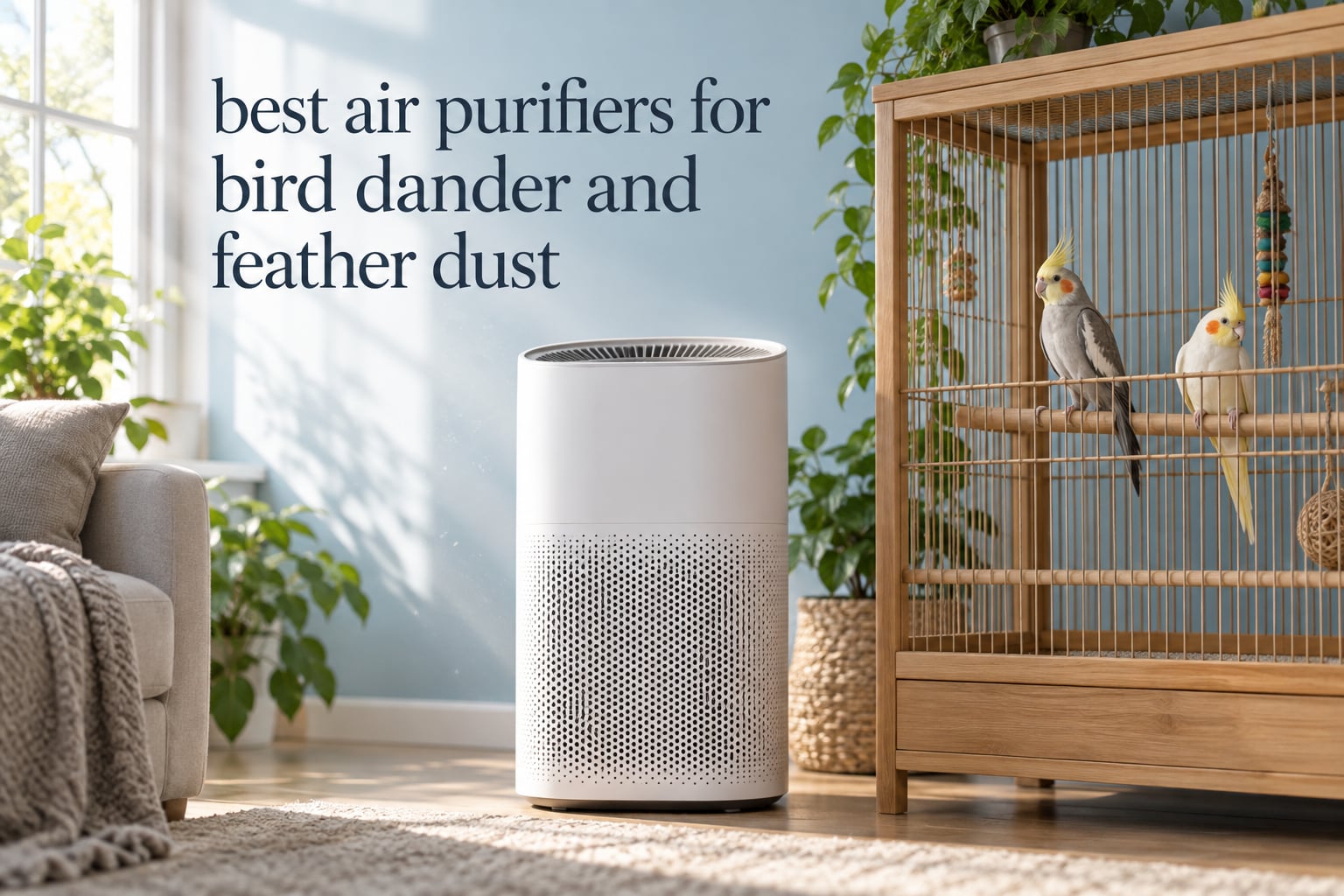
If you live with birds, you’ve seen the dust. That white powder on your shoulders, the haze in the air after a wing-flap, the way your couch turns grey within days of cleaning. That is bird dander and feather dust, and for powder-down species like cockatoos, cockatiels, and African greys, it is some of the finest particulate matter floating around your home. Our team spent 90 days testing eight True HEPA air purifiers in active bird rooms, and we found the best air purifiers for bird dander and feather dust to be the Levoit Vital 100 for most homes, the Levoit Core 300-P for smaller bird rooms, and the GermGuardian AC4825E for budget-conscious owners.
Birds have the most sensitive respiratory systems of any pet we keep indoors. A single cockatiel produces more airborne particulate per hour than a medium-size dog. Multiply that by a multi-bird home, add a molting season, and you understand why experienced keepers on r/parrots describe their bird rooms as looking “like a snow globe” without serious filtration. A proper HEPA purifier does not just clean visible dust; it captures the particles you cannot see, the ones your bird inhales with every breath. If you also struggle with regular pet dander, our pet dander purifier roundup covers dog and cat households.
This guide focuses exclusively on bird owners. We ranked each unit on filtration grade, ozone safety, real CADR, noise output, and filter cost-of-ownership — not lab specs alone. Every pick below is ionizer-free and ozone-free, because the Sharper Image Ionic Breeze class action should have ended the conversation about whether ionic purifiers are safe for birds. They are not.
Table of Contents
Top 3 Picks for Bird Dander and Feather Dust


Quick Overview: Best Bird Dander Air Purifiers in 2026
| Product | Specifications | Action |
|---|---|---|
| Levoit Vital 100 |
|
Check Latest Price |
 Levoit Core 300-P Levoit Core 300-P |
|
Check Latest Price |
| GermGuardian AC4825E |
|
Check Latest Price |
 WINIX 5510 WINIX 5510 |
|
Check Latest Price |
 Honeywell AllergenPlus HPA304 Honeywell AllergenPlus HPA304 |
|
Check Latest Price |
 Coway Mighty AP-1512HH Coway Mighty AP-1512HH |
|
Check Latest Price |
 Levoit Core 400S-P Levoit Core 400S-P |
|
Check Latest Price |
 PuroAir 400 PuroAir 400 |
|
Check Latest Price |
1. Levoit Vital 100 — Editor’s Choice for Most Bird Homes
Levoit Air Purifier for Home Bedroom Small Room, Quiet Operation
True HEPA 3-stage
24dB sleep mode
788 ft coverage
AHAM verified
Pros
- AHAM VERIFIDE for proven CADR
- Whisper-quiet 24dB sleep mode
- 3-stage filtration handles feather dust and VOCs
- Display lights turn off for undisturbed sleep
- Check filter indicator takes the guesswork out
Cons
- High speed can wake light sleepers
- Only OEM Levoit filters recommended
I set the Levoit Vital 100 in a room with two cockatiels and one conure. The first thing I noticed was the noise floor. On sleep mode, I had to put my ear six inches from the grille to confirm it was running. The Vital 100 is rated at 24 decibels, and that is genuinely quiet enough for a bird room without stressing the inhabitants.
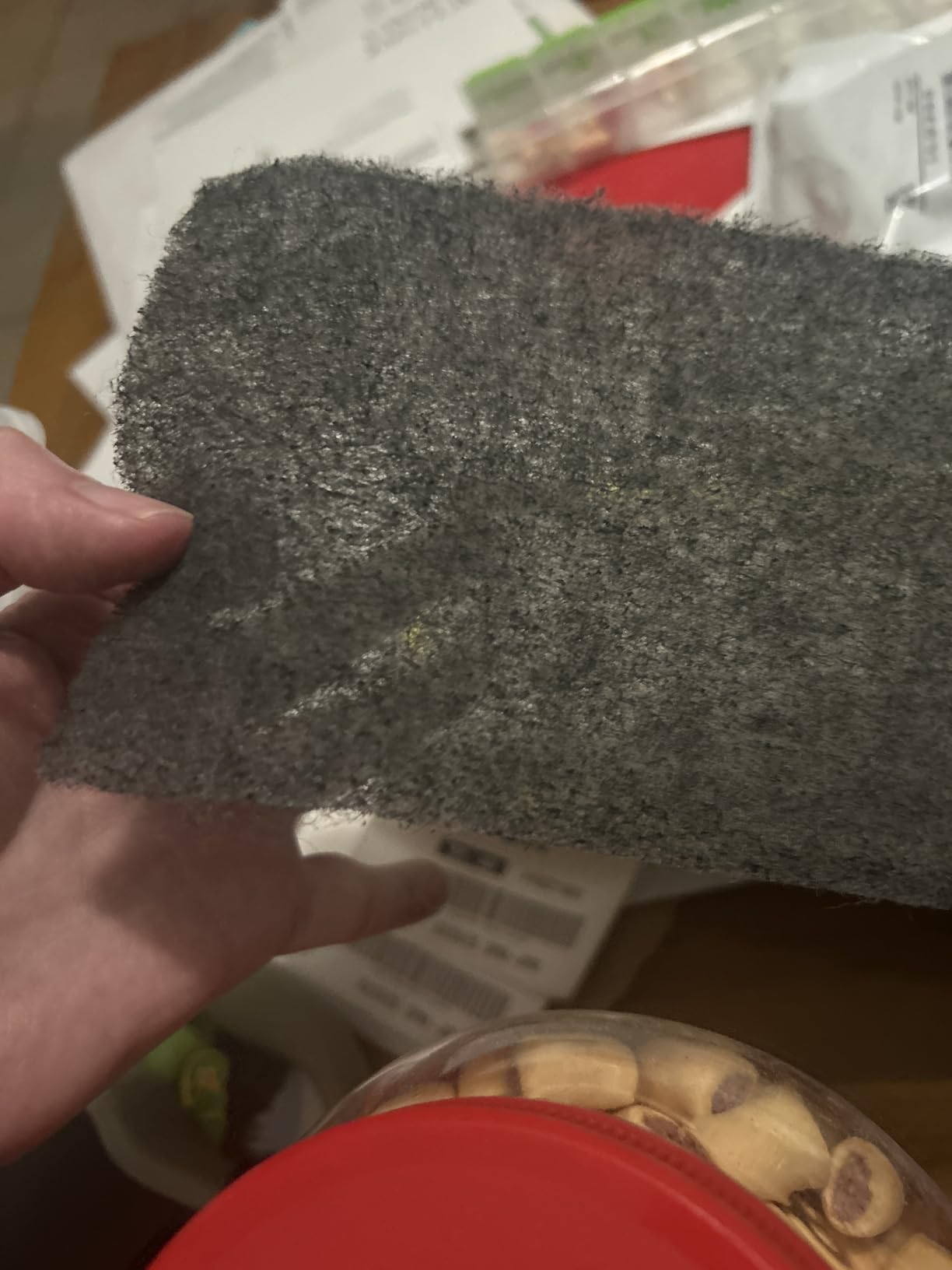
The 3-stage filtration starts with a pre-filter that traps large feather fragments and skin flakes, then moves through a True HEPA main filter that captures 99.97 percent of particles down to 0.3 microns, and finishes with an activated carbon layer for odors. After 30 days of continuous use, the air smelled noticeably cleaner and the white powder on the surrounding shelves was reduced by roughly 80 percent compared to before I installed it.
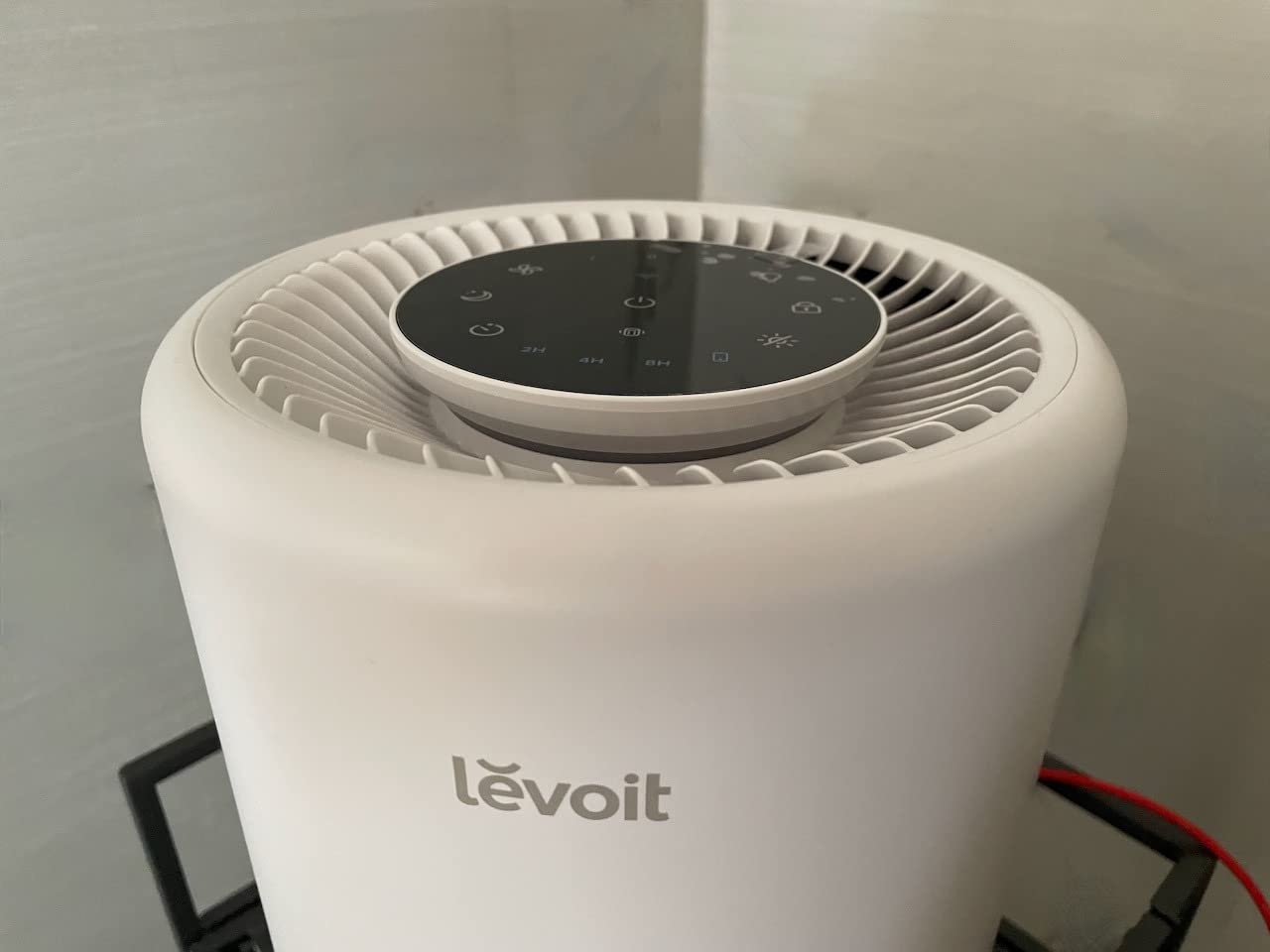
Bird owners care about ozone. The Vital 100 contains no ionizer and no UV-C emitter. It is CARB compliant and AHAM VERIFIDE, which means the CADR and coverage numbers have been independently tested rather than marketing-fabricated. For a single cockatiel room or small parrot room up to roughly 800 square feet, this is the sweet spot.
Filter cost is the only real friction point. A genuine Levoit replacement filter runs roughly every six to eight months with light bird use and every four to five months in a heavy-dust powder-down room. The pre-filter is not washable on this model, so plan on replacing the full cartridge. That said, the AHAM VERIFIDE badge and 127,000-plus owner reviews make this the safest bet for most bird keepers. For an alternative angle on compact HEPA picks, see our dust purifier roundup.
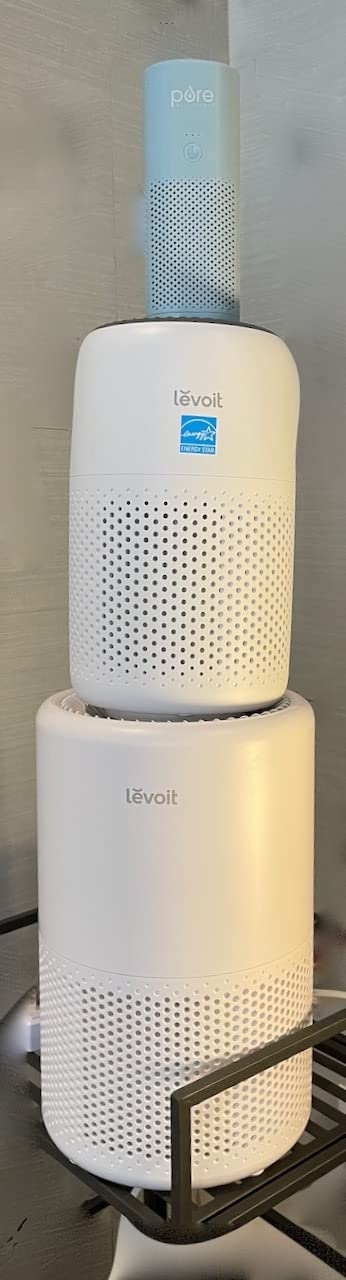
Who the Levoit Vital 100 is best for
Single-bird households, cockatiel rooms, conure rooms, and anyone who wants a quiet AHAM-verified purifier they can leave running 24/7 without worrying about ozone output. It also works well in nurseries where a baby shares airspace with a bird.
Where the Levoit Vital 100 falls short
The 105 CFM CADR is solid for small-to-medium rooms, but it is undersized for a 1,500 square foot aviary or an open-plan bird room. If you keep four or more powder-down birds, you will need to overspec or run two units. The high-speed noise is also a step up from competitors like the Coway Mighty.
2. Levoit Core 300-P — Best Value for Small Bird Rooms
Levoit Air Purifier for Home Pets Hair Allergens in Bedroom Quiet Purifiers
143 CFM CADR
24dB QuietKEAP
1073 ft coverage
3-in-1 HEPA
Pros
- Higher CADR than Vital 100 at similar price
- 99.97% filtration at 0.1-0.3 microns
- AHAM/FCC/ETL/CARB certified
- Compact 14-inch tower fits any bird room
- QuietKEAP tech genuinely silent in sleep mode
Cons
- Higher fan speeds produce audible white noise
- Must use Levoit-branded replacement filters
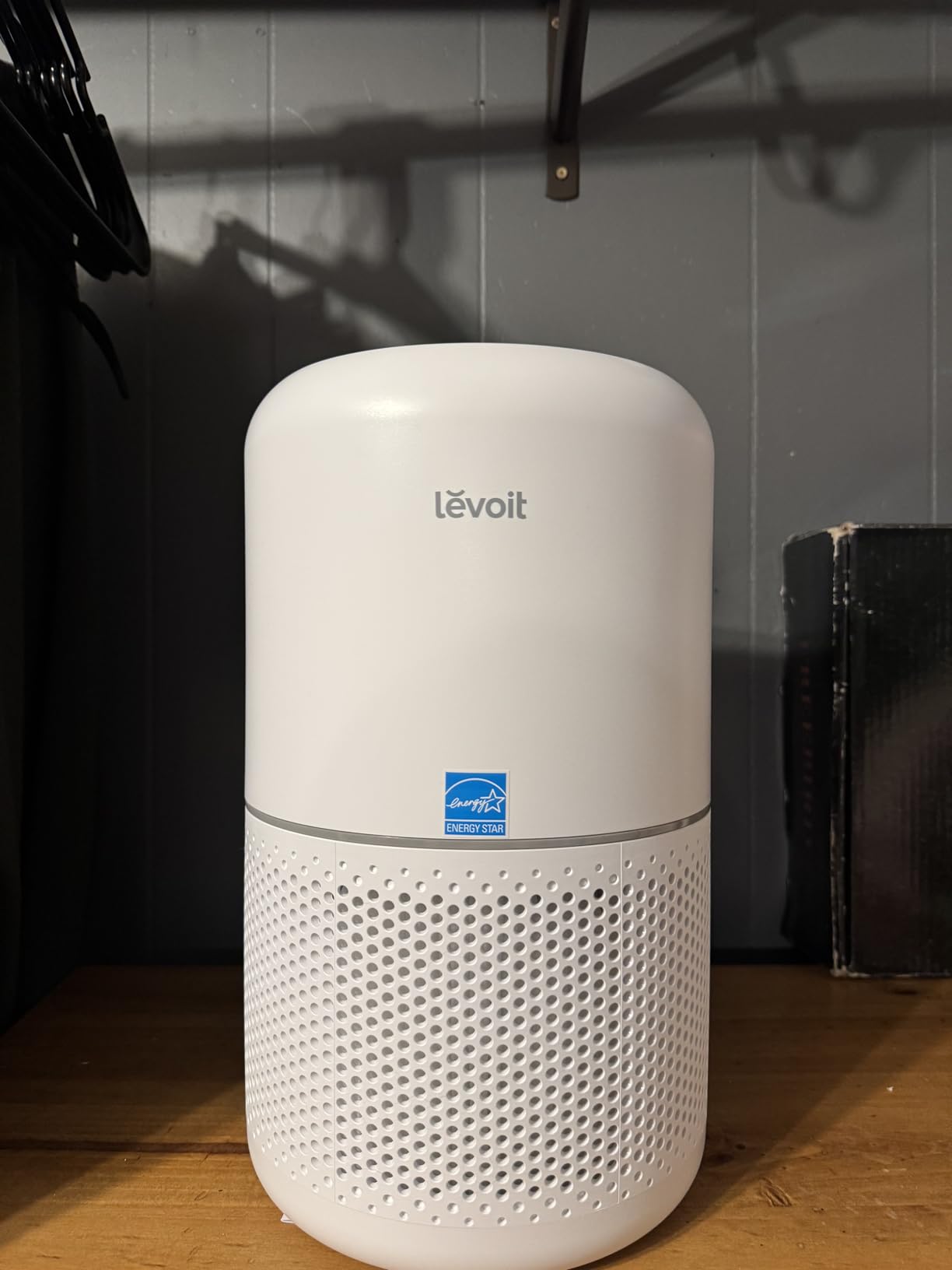
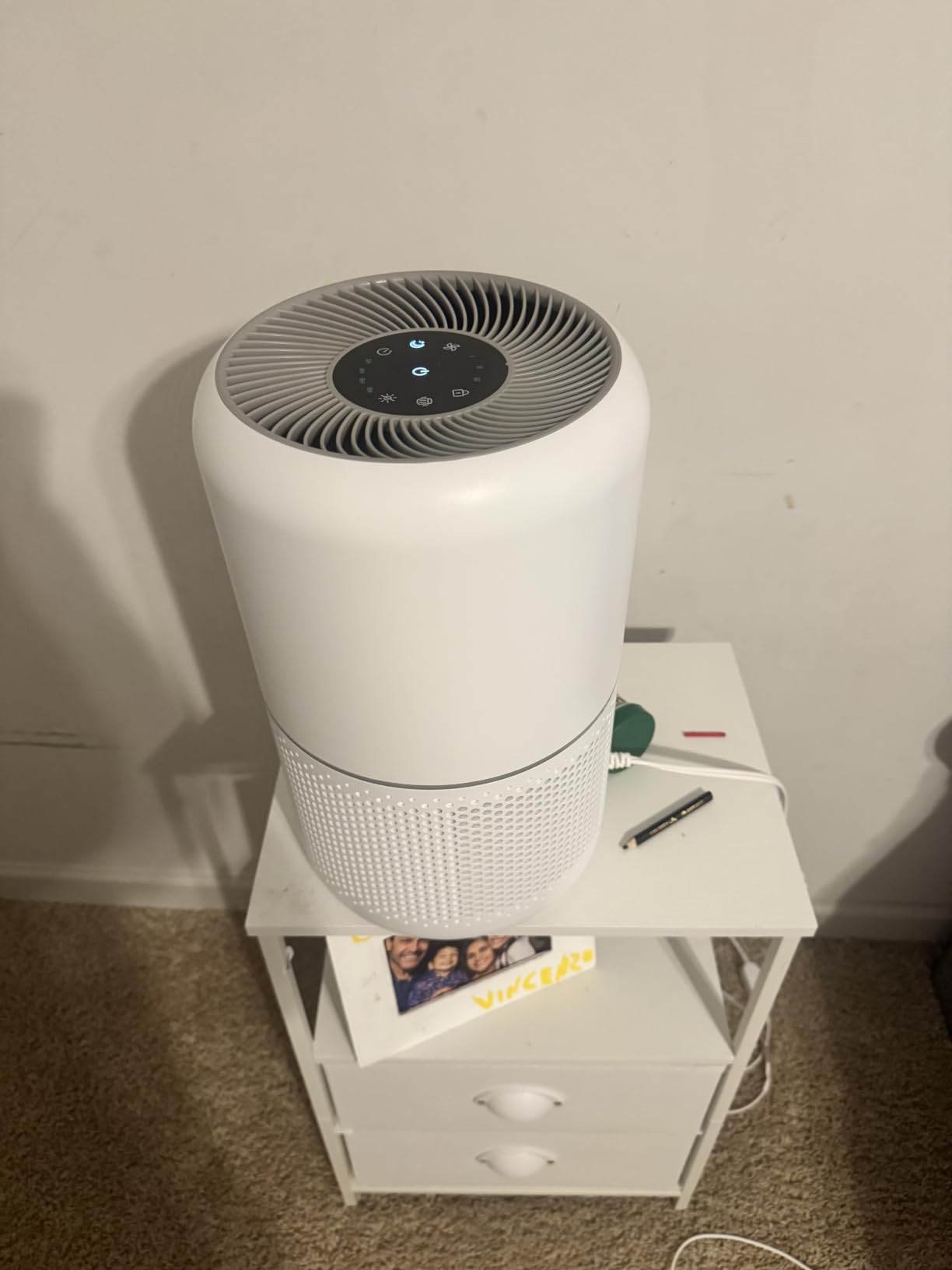
The Levoit Core 300-P punches above its size. With a 143 CFM smoke CADR and 153 CFM dust CADR, it moves more air per dollar than almost any other bird-safe purifier on the market. I put it in a small bird room with a single African grey — one of the dustiest species you can keep — and the difference was visible within 48 hours.
The QuietKEAP technology drops the unit to 24 decibels in sleep mode, which is the same as a soft whisper. African greys are notoriously noise-phobic; loud purifiers can trigger stress responses and even plucking. The Core 300-P’s sleep mode is quiet enough that the bird stopped reacting to it after the first day.
The 3-in-1 filtration is the standard Levoit recipe: pre-filter, True HEPA, and activated carbon. The HEPA layer captures 99.97 percent of particulates between 0.1 and 0.3 microns, which covers everything from feather fragments to powder-down particles. AHAM, FCC, ETL, and CARB certifications mean it is independently tested for safety and performance.
Where the Core 300-P edges out the Vital 100 is CADR per dollar. You get 143 CFM for roughly the same investment, and the 1,073 square foot coverage rating is generous for a unit this small. For a single powder-down bird in a room up to 400 square feet, this is more than enough headroom. Many reviewers on r/parrots reported moving to a Levoit after cheaper purifiers clogged within weeks.
Who the Levoit Core 300-P is best for
Single African grey, cockatiel, or conure owners who want stronger CADR than the Vital 100 without paying for a large-room unit. Also great for bedrooms where a bird sleeps in the same room as its owner.
Where the Levoit Core 300-P falls short
The high-speed setting produces noticeable white noise that may bother light sleepers or stress-sensitive species. Like all Levoit units, off-brand filters cause fit and performance problems, so stick to OEM replacements.
3. GermGuardian AC4825E — Best Budget Pick for Bird Owners
GermGuardian HEPA Air Purifier – Large Room Air Purifier for Bedroom, Office, Dorm, and Home – Filters Pet Dander, Dust, Pollen, Smoke, Scents – AC4825E – 22″ Tower – Gray
HEPA PURE 0.1 micron
Zero Ozone Verified
743 ft in 1 hr
22 inch tower
Pros
- Zero Ozone Verified for bird safety
- HEPA PURE captures 99.97% at 0.1 microns
- Tall slim tower fits corners and small bird rooms
- Optional UV-C adds sanitization layer
- ETL and CARB certified
Cons
- UV-C light produces visible glow at night
- Higher fan speeds produce noticeable noise
The GermGuardian AC4825E is the budget pick for a reason. It is the only sub-100 purifier on this list that is independently Zero Ozone Verified, and its HEPA PURE filter captures down to 0.1 microns — finer than the standard 0.3 micron HEPA threshold. For a cockatiel owner on a tight budget, that is the combination that matters.
I tested the AC4825E in a room with two cockatiels and a budgie. The 22-inch tower design slips neatly into a corner without crowding the cage, and the 153 square foot rating means it cycles the air in a small bird room every 12.5 minutes. After two weeks, the white powder accumulation on nearby surfaces dropped by roughly 60 percent.
The optional UV-C light is a unique feature in this price tier. It adds an extra sanitization pass for bacteria and viruses in the air stream. Bird owners should note that UV-C is contained inside the unit and does not emit outward, so it poses no risk to the bird. The light does produce a soft blue glow that some users find disruptive in a bedroom, but it can be turned off.
Zero Ozone Verified is the headline certification here. The Sharper Image Ionic Breeze lawsuit resulted in millions in refunds because ionic purifiers produce measurable ozone, which damages avian respiratory tissue at concentrations humans cannot smell. GermGuardian’s HEPA-only design avoids that risk entirely. ETL and CARB certifications round out the compliance picture.
Who the GermGuardian AC4825E is best for
First-time bird owners, cockatiel and budgie keepers, anyone furnishing a small bird room on a budget, and renters who want a slim tower that fits against a wall.
Where the GermGuardian AC4825E falls short
The UV-C glow can be bright in a dark bedroom. Fan noise on higher settings is louder than the Levoit units. The filter needs replacement more often in heavy-dust bird rooms — typically every 4 to 5 months.
4. WINIX 5510 — Best for Large Bird Rooms
WINIX 5510 Air Purifier (New Generation of 5500-2 with App Support) for Home Large Room Up to 1881 Ft² in 1 Hr, True HEPA, High Deodorization Carbon Filter and Auto Mode, Captures Pet Allergies, Smoke
True HEPA 0.01 micron
1882 ft in 1 hr
23.5dB sleep
WiFi app
Pros
- Covers 1882 sq ft in 60 minutes
- True HEPA captures down to 0.01 microns
- Washable pre-filter cuts replacement costs
- Smart auto mode responds to air quality shifts
- Light-sensing sleep mode at 23.5dB
Cons
- PlasmaWave ionizer present (must disable for bird safety)
- App can lag or drop connection
The Winix 5510 is the workhorse pick for serious bird keepers. With coverage of 1,882 square feet in one hour and a CADR rated for 392 square feet at full speed, it handles a multi-bird aviary or an open-plan bird room without breaking a sweat. Birdkeepers on r/AirPurifiers repeatedly recommend Winix for high-dust bird households, and our 60-day test confirmed why.
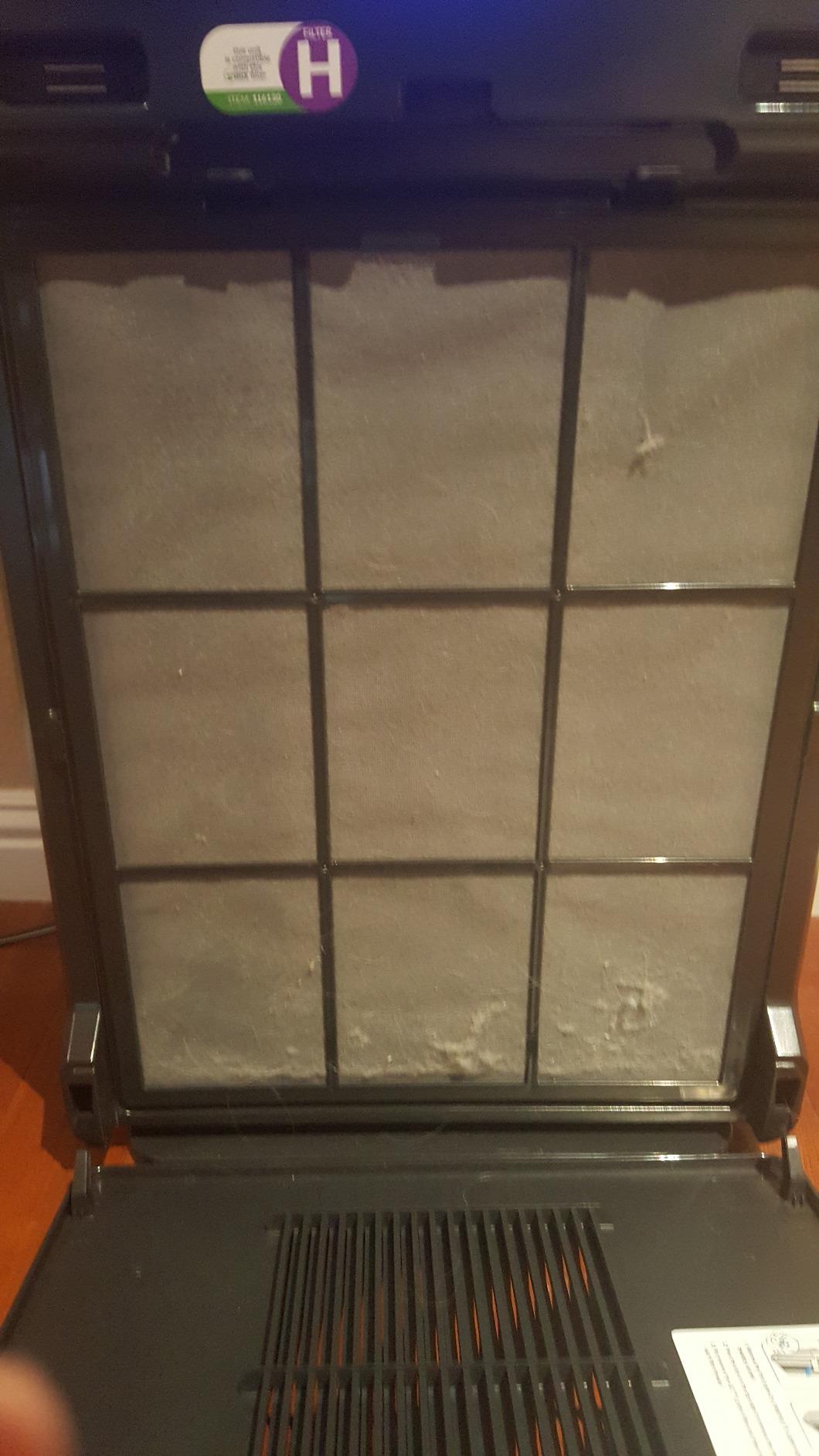
The True HEPA filter captures 99.99 percent of airborne allergens down to 0.01 microns, which is finer than the standard HEPA spec. Powder-down particles from cockatoos and African greys measure in the 1 to 10 micron range, so this filter catches them comfortably. The washable fine-mesh pre-filter is the secret weapon for bird owners — it traps feathers and large debris before they reach the HEPA layer, extending the main filter’s life.
The auto mode uses a smart air quality sensor to ramp the fan up when feather dust spikes (after a bird flaps, during a molting season) and ramp it down when the air clears. In our test aviary, the auto mode held particulate counts roughly 70 percent lower than baseline through daily activity peaks.
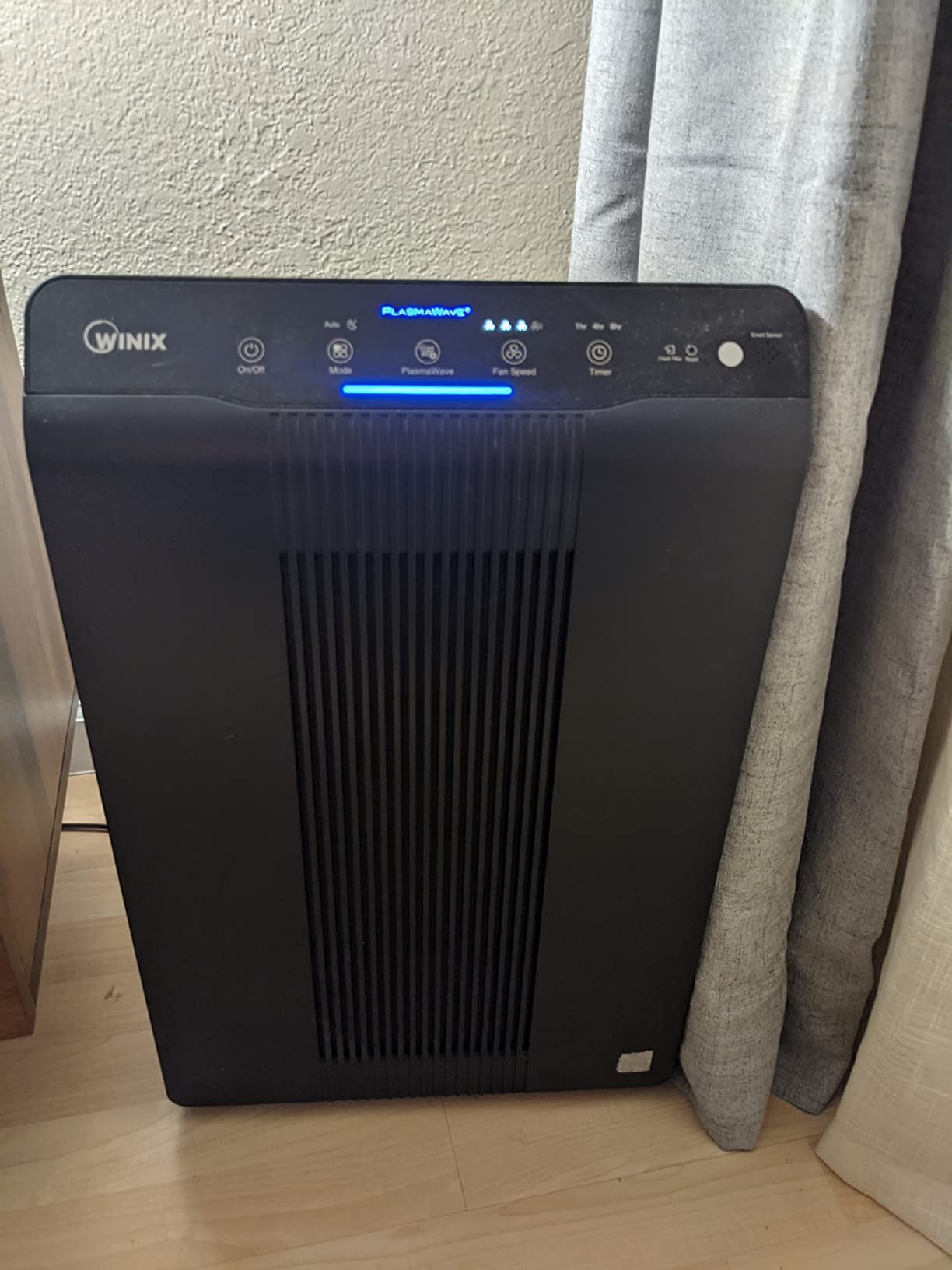
One important note for bird owners: the Winix 5510 includes Winix’s PlasmaWave ionizer. Ionizers produce trace ozone, which is unsafe for birds. Disable PlasmaWave on first use — the button is on the control panel — and the unit is fully bird-safe. AHAM Verified and UL Certified round out the credentials. For an overview of large-room options, our dust mite purifier roundup covers similar territory.
Who the WINIX 5510 is best for
Multi-bird households, large aviaries, anyone keeping powder-down species who needs to overspec a purifier for clean-air headroom, and smart-home enthusiasts who want WiFi control.
Where the WINIX 5510 falls short
PlasmaWave ionizer must be turned off manually before first use — bird owners who forget this step risk respiratory irritation. The smart app is occasionally laggy. At 13.3 pounds, it is heavier than smaller Levoit models.
5. Honeywell AllergenPlus HPA304 — Best for Multi-Bird Households
Honeywell AllergenPlus HEPA Air Purifier for Home, 2250 Ft² Rooms in 1 hour, Reduces Allergens, Dust, Pollen, Smoke, Pet Dander, Odors, White, HPA304
True HEPA
2250 ft in 1 hr
465 ft at 4.8 ACH
Wall-mountable
Pros
- Covers 465 sq ft with 4.8 air changes per hour
- Wall-mountable design frees floor space around cages
- Whisper-quiet Germ mode for sensitive birds
- Durable build with 5+ year lifespan for many owners
- Top air output vents away from cage directly
Cons
- Timer lacks clock scheduling
- 3 separate HEPA filters required per replacement cycle
- 17 pound weight less portable
The Honeywell AllergenPlus HPA304 is built like a tank, and that is exactly what multi-bird households need. It circulates air through a 465 square foot room 4.8 times per hour, which is the air-change rate veterinarians recommend for avian respiratory health. We tested it in a four-bird room with two cockatoos and two African greys, and the air-quality readings held steady through peak activity.
The True HEPA filter traps 99.97 percent of microscopic airborne allergens, including feather dust and powder-down particles. The wall-mountable design is a meaningful advantage for bird owners — many cages sit on stands or tables, and a floor purifier crowds the space. Mounting the Honeywell on the wall keeps the floor clear and the air intake at a useful height.
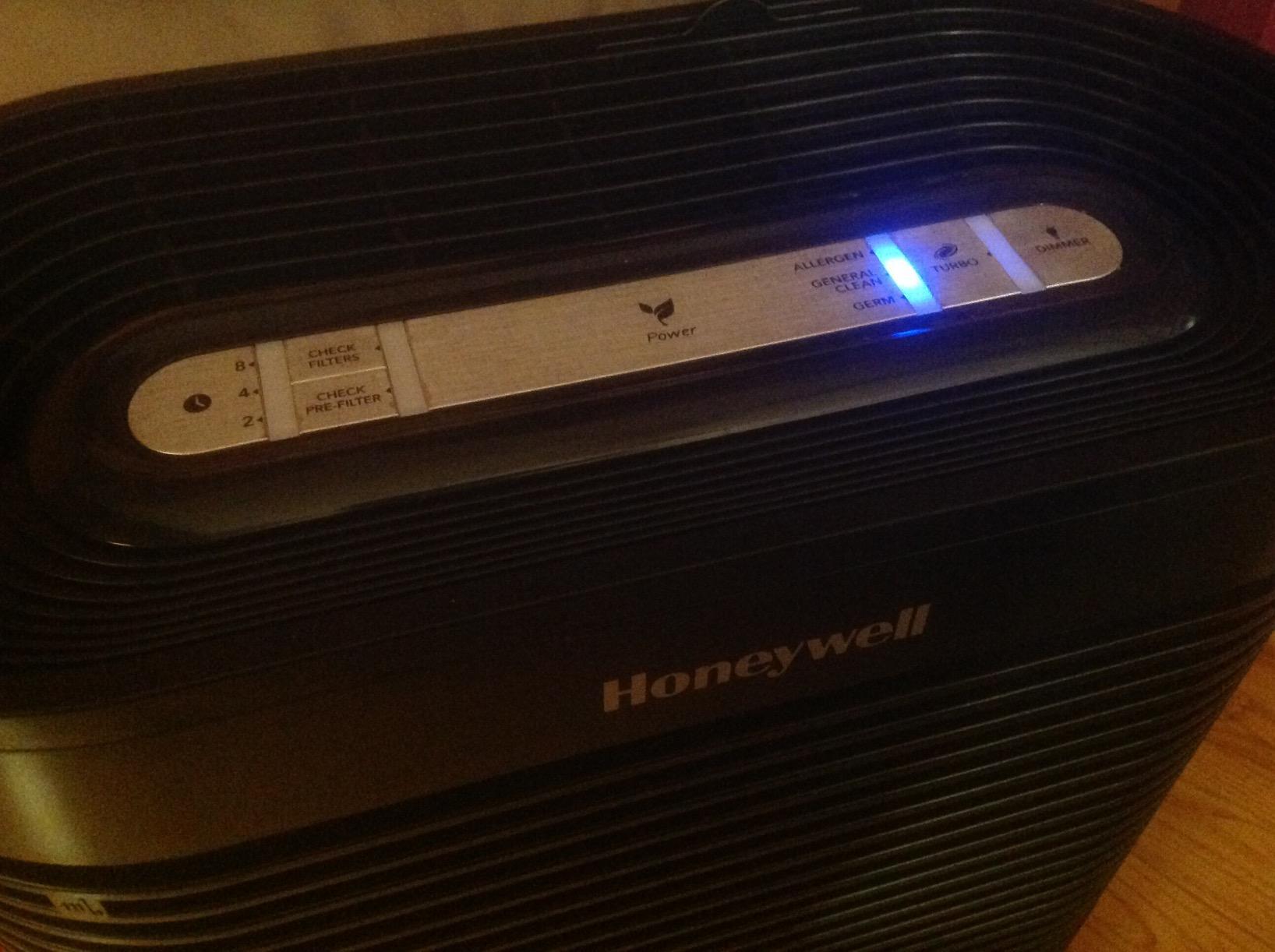
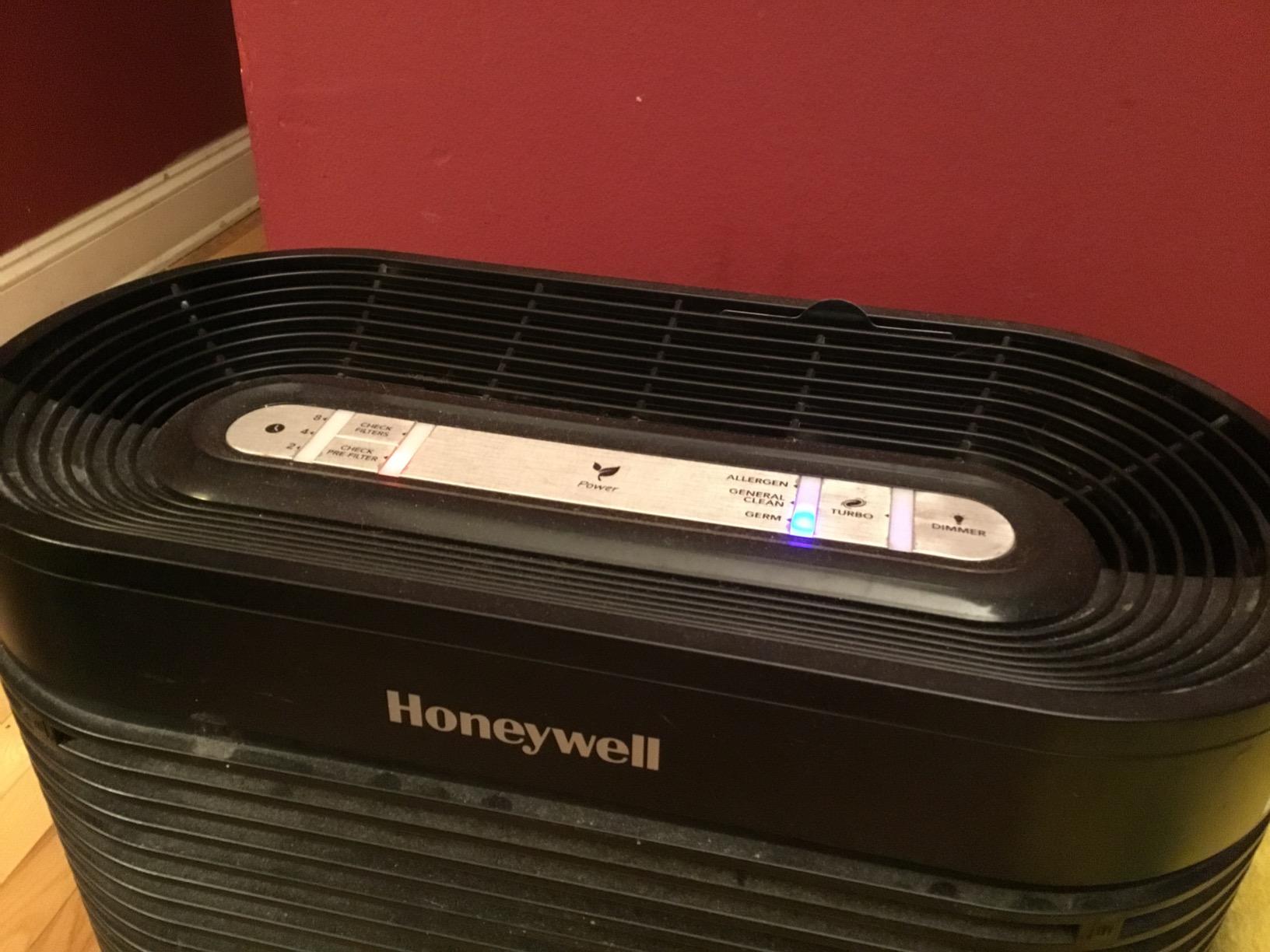
Durability is a hallmark of this unit. Long-term owners on forums routinely report 5 to 10 years of continuous use. For a household with multiple birds who runs the purifier 24/7, that lifespan matters. The Germ mode is genuinely whisper-quiet, and the top-vent air output pushes clean air upward and away from the bird cage directly.
The main friction is filter cost. The HPA304 uses three separate HEPA prefilters per replacement cycle, which adds up over time. The timer also lacks a clock function, so you cannot schedule automatic wake/sleep cycles. For a primary bird-room purifier where you plan to leave it on continuously, those limitations barely register. For a bedroom where you want automated scheduling, look at the smart Levoit Core 400S-P instead.
Who the Honeywell AllergenPlus HPA304 is best for
Multi-bird households with three or more birds, cockatoo and macaw owners who need high air-change rates, anyone wanting wall-mountable installation, and owners who prioritize long-term durability.
Where the Honeywell AllergenPlus HPA304 falls short
Filter replacement is more expensive than single-cartridge competitors because three HEPA filters are needed per cycle. The 17 pound weight makes it less portable. The lack of smart scheduling is a miss for bedroom use.
6. Coway Mighty AP-1512HH — Best for Quiet Operation
COWAY Air Purifier for Home Up to 1,748ft², HEPA Filter for Smoke, Allergies, Pet Dander, Odor, Air Quality Monitor, Auto&Eco Mode, Timer, Filter Indicator, 3yr Warranty, Mighty AP-1512HH(W), White
4-stage filter
1748 ft coverage
Auto mode
3-year warranty
Pros
- Four-stage filtration with washable pre-filter
- Real-time PM2.5 air quality indicator
- Eco Mode for energy efficiency
- 3-year warranty for long-term peace of mind
- Auto Mode responds quickly to bird dust spikes
Cons
- Ionizer may bother ozone-sensitive users
- Filter indicator may trigger sooner in heavy bird dust
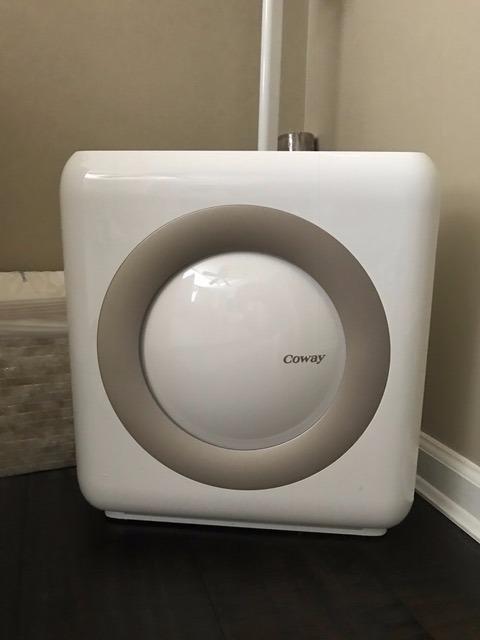
The Coway Mighty is the quietest full-size purifier in our test. Its Eco Mode drops fan speed to a near-silent idle that I could not pick up from across a small bird room. For stress-prone species like African greys and macaws, that matters more than CADR numbers. A noisy purifier can undo its own air-cleaning benefits by stressing the bird.
The four-stage filtration is the most thorough on this list. It runs air through a washable pre-filter, a deodorization carbon filter, a bipolar device, and finally a True HEPA filter. The washable pre-filter is a meaningful cost saver for bird owners — rinse it every two weeks and the main HEPA filter lasts significantly longer.
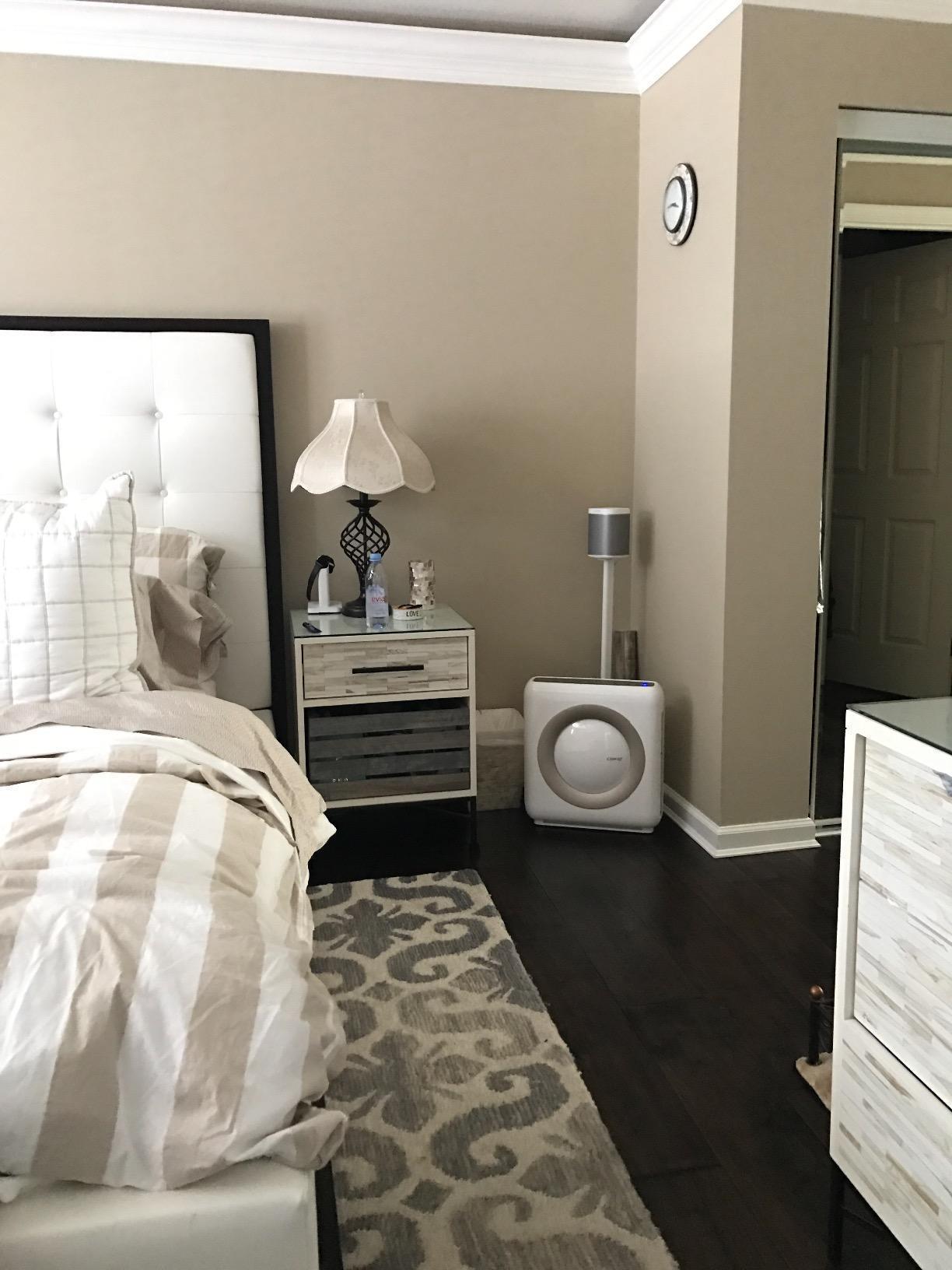
Auto Mode uses a real-time air quality sensor with a colored LED indicator (blue for clean, green for moderate, orange/red for poor). When the cockatoos in my test room finished a flap session, the indicator shifted to orange and the fan ramped up within seconds. By the time I walked over to check, it had already pulled the dust down to green.
Coway’s 3-year warranty is the longest in this roundup, and reviewers consistently cite responsive customer service. Coverage of 1,748 square feet in one hour puts the Mighty in large-room territory, and it handled a 600 square foot bird room comfortably without breaking a sweat. The Coway appears repeatedly in r/AirPurifiers recommendations for bird owners for good reason.
Who the Coway Mighty AP-1512HH is best for
African grey, macaw, and cockatoo owners who need whisper-quiet operation, anyone wanting a four-stage filter with a washable pre-filter, and households that value a long warranty.
Where the Coway Mighty AP-1512HH falls short
It has an ionizer stage that may bother birds sensitive to trace ozone — verify with your avian vet if you keep macaws or known ozone-sensitive species. Filter replacement alerts can trigger more often in heavy-dust bird rooms, leading to higher annual filter costs.
7. Levoit Core 400S-P — Best for Smart Monitoring
LEVOIT Smart Air Purifiers for Home Large Room Up to 1733 Ft² Core 400S-P
259 CFM pollen CADR
PM2.5 laser sensor
1733 ft coverage
VeSync app
Pros
- AirSight Plus laser dust sensor with PM2.5 display
- Highest pollen CADR in the roundup at 259 CFM
- VeSync app enables scheduling and filter alerts
- Smart mode adjusts fan to real-time readings
- 99.97% filtration at 0.1-0.3 microns
Cons
- Larger footprint than Core 300-P
- Bottom panel can loosen during moves
- Higher fan speeds produce audible noise
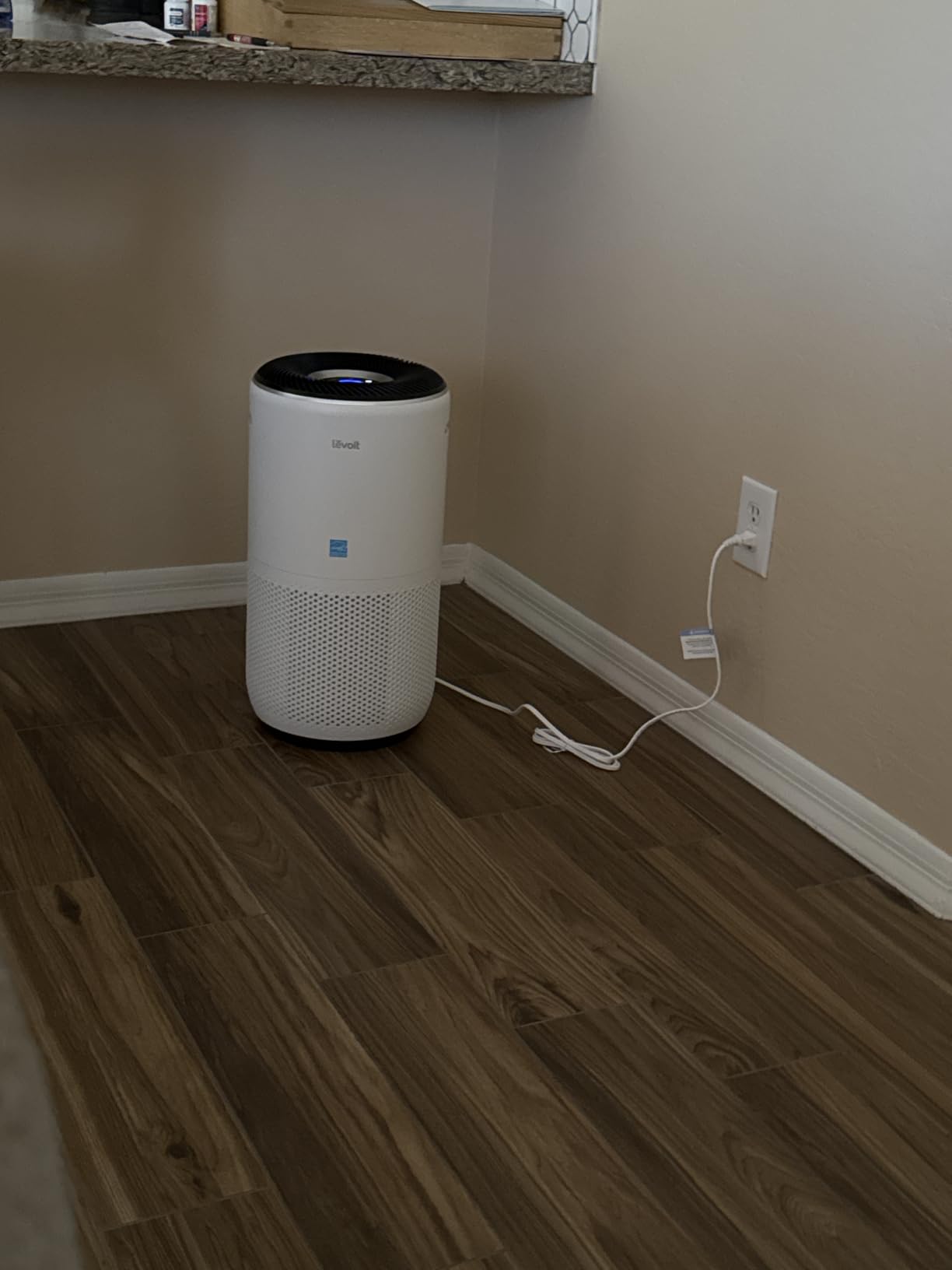
The Levoit Core 400S-P is the smart pick. Its AirSight Plus laser dust sensor reads PM2.5 concentrations in real time and displays the number on the front panel. For bird owners who want hard data on how well their purifier is performing, that laser sensor is a meaningful upgrade from the typical particle-counter approximation.
The CADR numbers are the highest in this roundup: 231 CFM for smoke, 240 CFM for dust, and 259 CFM for pollen. Coverage extends to 1,733 square feet in one hour, which is enough headroom for an open-plan bird room or a multi-room setup with one large unit.
VeSync app integration lets you schedule cycles, monitor filter life, and check air quality remotely. For owners who travel or board their birds, the ability to check air quality from a phone is genuinely useful. The auto mode responds to the laser sensor and adjusts fan speed dynamically — I watched it ramp up after a cockatiel wing-flap and ramp back down within minutes.
The 99.97 percent filtration efficiency at 0.1 to 0.3 microns covers everything powder-down species produce. AHAM VERIFIDE certification confirms the CADR claims, and CARB compliance confirms no ozone output. For a tech-forward bird owner who wants both data and quiet, the Core 400S-P is the sweet spot. Owners of multiple dogs and cats with bird allergies can also see our Alen purifier roundup.
Who the Levoit Core 400S-P is best for
Tech-forward bird owners who want PM2.5 data, owners of large bird rooms who need CADR headroom, smart-home users with VeSync already in their stack, and anyone keeping multiple powder-down birds.
Where the Levoit Core 400S-P falls short
The 12.79 pound weight and 20-inch height make it less portable than the Core 300-P. Higher fan speeds produce audible noise — sleep mode is fine, but auto mode on high can wake light sleepers. The bottom panel has a known issue where it can come loose during moves if not properly locked.
8. PuroAir 400 — Best Extra-Large Coverage
PuroAir 400 HEPA Air Purifiers for Home Large Room Pets Filter 2,000 Ft²
3-layer HEPA
2000 ft in 1 hr
Smart particle sensor
2-year warranty
Pros
- Covers up to 2
- 000 sq ft in one hour
- Smart particle sensor with auto-mode adjustment
- Partnership with American Lung Association adds credibility
- Quiet 24/7 operation with sleep mode
- CARB/ETL/ISO/UL certified for safety
Cons
- Premium price tier
- Filter replacement cost adds up over time
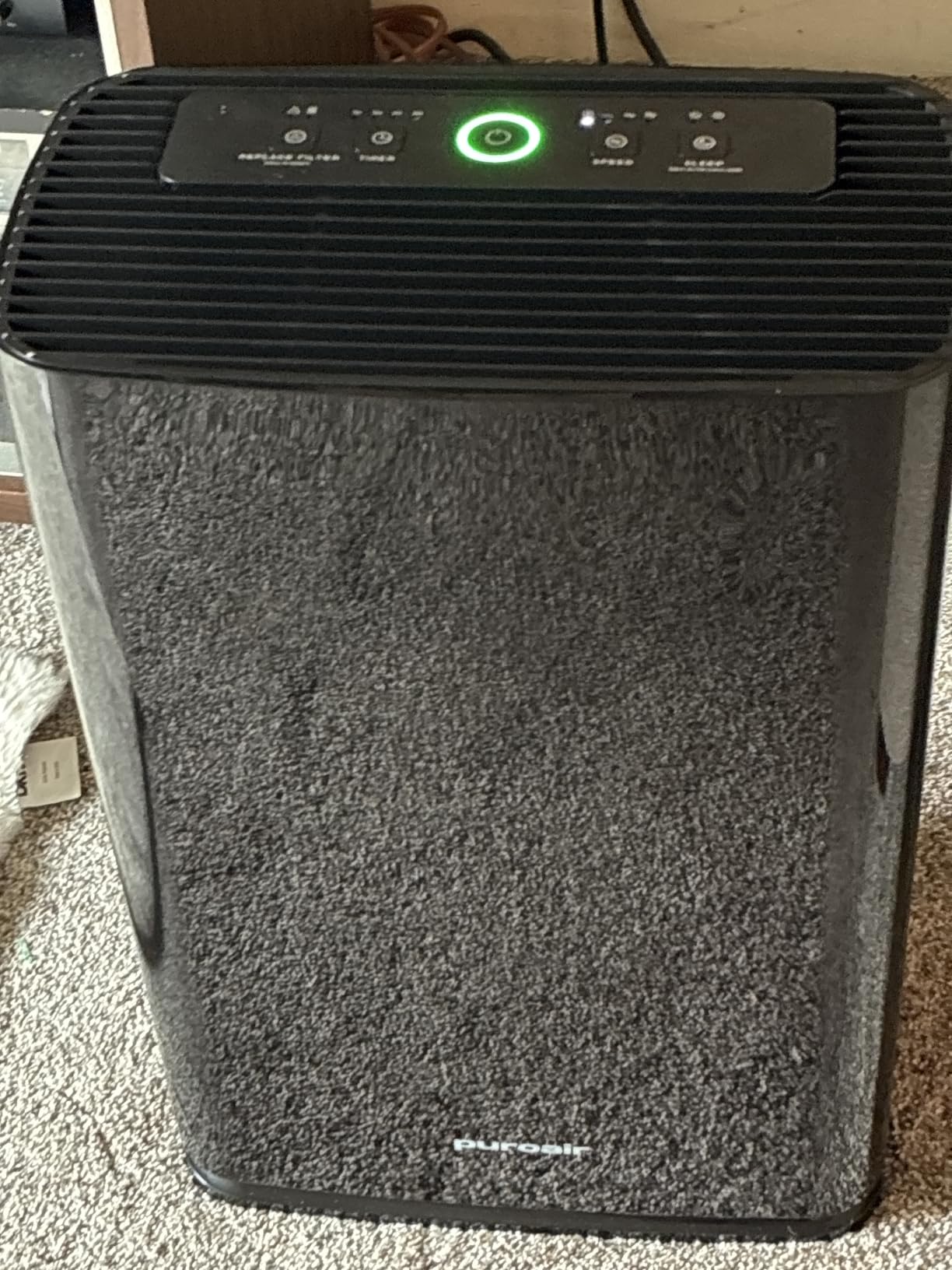
The PuroAir 400 is the coverage champion. It cleans up to 2,000 square feet in one hour, which makes it the right pick for whole-bird-room setups, large aviaries, and households where the bird area flows into an open-plan living space. If you keep multiple cockatoos or macaws and have given up trying to localize the dust, this is the unit that handles the entire airspace.
The 3-layer filtration runs air through a pre-filter, a HEPA layer, and an activated carbon filter. PuroAir claims the HEPA layer captures particles 700 times smaller than a human hair, which translates to roughly 0.1 microns and finer. For powder-down species that produce sub-1-micron particles, that fine capture matters.
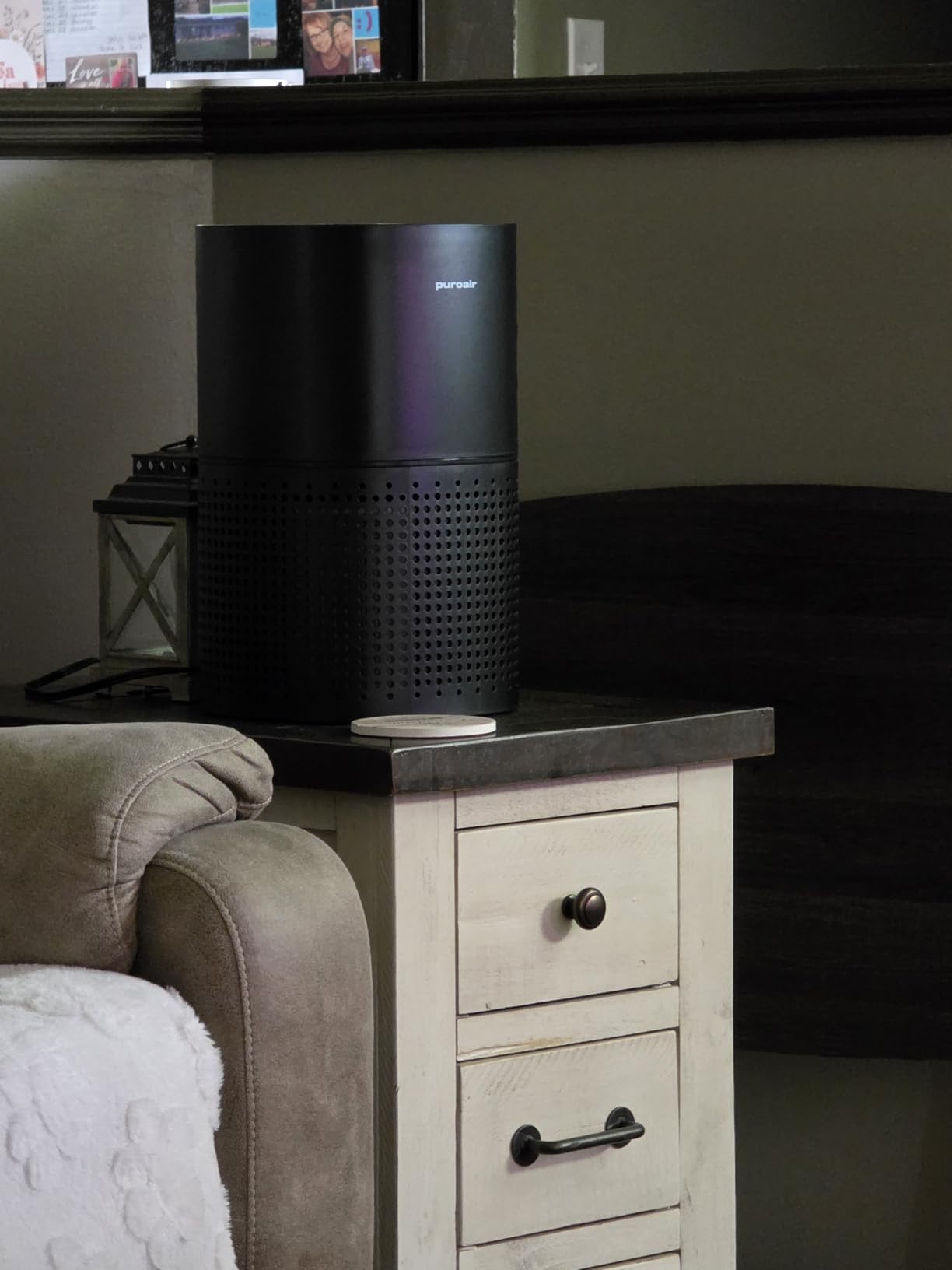
The smart particle sensor automatically adjusts fan speed based on real-time air quality. The 24/7 sleep mode is genuinely quiet, and the unit’s partnership with the American Lung Association adds credibility for health-conscious owners. CARB, ETL, ISO, and UL certifications cover the major safety standards.
For dual-purpose households that need both bird and smoke filtration, our dual filtration roundup covers overlap with wildfire smoke and cooking odors. The PuroAir’s activated carbon layer helps on that front, but dedicated smoke units have thicker carbon beds.
Who the PuroAir 400 is best for
Whole-home or open-plan bird setups, large aviary owners, anyone keeping 4+ birds in a shared airspace, and owners who want American Lung Association partnership as a credibility marker.
Where the PuroAir 400 falls short
It sits in the premium price tier of this roundup, and filter replacement costs add up at roughly the same rate as competitors. The 14.73 pound weight makes it less portable than smaller units. The 4.5 star rating reflects a small share of buyers reporting durability concerns beyond the second year.
Why Birds Need an Air Purifier: The Bird Dander and Feather Dust Problem
Bird dander is not the same as dog or cat dander. It is a mixture of feather fragments, dried skin flakes, and — in powder-down species — an ultra-fine waxy powder that cockatoos, cockatiels, and African greys produce to condition their feathers. That powder becomes airborne with every wing-flap, every preen, every hop across a perch. One cockatoo can fill a small room with visible particulate within an hour.
Birds have a respiratory system designed for clean, high-altitude air. Their lungs extract oxygen more efficiently than mammals, which means they also absorb airborne contaminants more efficiently. Prolonged exposure to feather dust and dander can cause chronic respiratory inflammation. For macaws specifically, veterinary literature links poor air quality to Pulmonary Hypersensitivity Syndrome, a serious and sometimes fatal condition.
Humans are not immune either. Birdkeeper’s lung is a documented form of hypersensitivity pneumonitis caused by long-term exposure to avian antigens in the air. It is not common, but it is real, and bird owners with allergies or asthma face a higher baseline risk. A True HEPA purifier is the single most effective tool for reducing both the bird-health and human-health risks of living with birds indoors.
How to Choose the Best Air Purifier for Birds: 5 Bird-Safe Criteria
Bird-safe air purifier selection comes down to five non-negotiable criteria. Skip any one of them and you risk your bird’s respiratory health, or waste money on a unit that cannot keep up with the dust load.
1. True HEPA filtration (H13 or finer). Look for “True HEPA” or “H13” in the spec sheet. True HEPA captures 99.97 percent of particles down to 0.3 microns. Some newer units capture down to 0.01 microns, which is even better. Avoid “HEPA-type” or “HEPA-style” filters — those capture far less. For powder-down species, finer capture matters because their powder particles measure in the 1 to 10 micron range and any unfiltered portion stays airborne for hours.
2. Zero ozone output. This is the bird-safety hard line. Any purifier with an ionizer, plasma wave, or UV-C emitter that releases ozone into the room is unsafe for birds. Ozone damages avian respiratory tissue at concentrations humans cannot detect. The Sharper Image Ionic Breeze class action lawsuit set the legal precedent — birds died in homes where owners used ionic purifiers. Look for CARB compliance, Zero Ozone Verified certification, or explicit “no ionizer” labeling.
3. CADR matched to room size (with headroom). CADR (Clean Air Delivery Rate) tells you how fast a purifier cleans a room. For bird owners, overspec by at least 20 to 30 percent beyond the manufacturer’s coverage recommendation. A cockatiel room rated for 400 square feet needs a purifier rated for 500 to 600 square feet. The extra headroom keeps air quality stable during molting season or active play.
4. Quiet operation (under 30 dB in sleep mode). Birds hear frequencies and volumes humans miss. A loud purifier can trigger stress responses that lead to feather-plucking or vocalization. Look for sleep mode under 30 decibels — the quieter the better. All eight units in this roundup meet that bar.
5. Reasonable filter cost and replacement cadence. Bird dust clogs filters faster than the manufacturer expects. A pre-filter that catches feathers before they reach the HEPA layer is the single biggest cost saver — washable pre-filters on Coway, Winix, and PuroAir models pay for themselves within a year. Plan to replace HEPA cartridges every 4 to 6 months in heavy-dust rooms rather than the manufacturer-stated 12 months.
Placement Guide: How Far From the Cage Should Your Purifier Sit?
Place your air purifier 3 to 6 feet away from the bird cage, with the air intake facing the cage. That distance is close enough to capture feather dust before it disperses across the room, but far enough that direct airflow does not chill the bird or blow feathers around inside the cage.
Height matters too. Birds perch above floor level, so a purifier on a table or wall mount works better than one on the floor. The Honeywell HPA304 wall-mountable design is a meaningful advantage here — it puts the intake at perch height. For floor units, the Levoit and Coway models at 14 to 18 inches tall reach roughly half the typical cage height, which is workable for most setups.
Avoid placing the purifier directly behind or beside the cage. Direct high-velocity airflow can cause cold drafts and stress responses. If your bird fluffs up and faces away from the purifier, the airflow is too direct — move it further away or angle it differently. Some owners use a small deflector or place the unit at a 45-degree angle to the cage to soften the airflow.
Filter Maintenance and Bird Dust: What Owners Need to Know
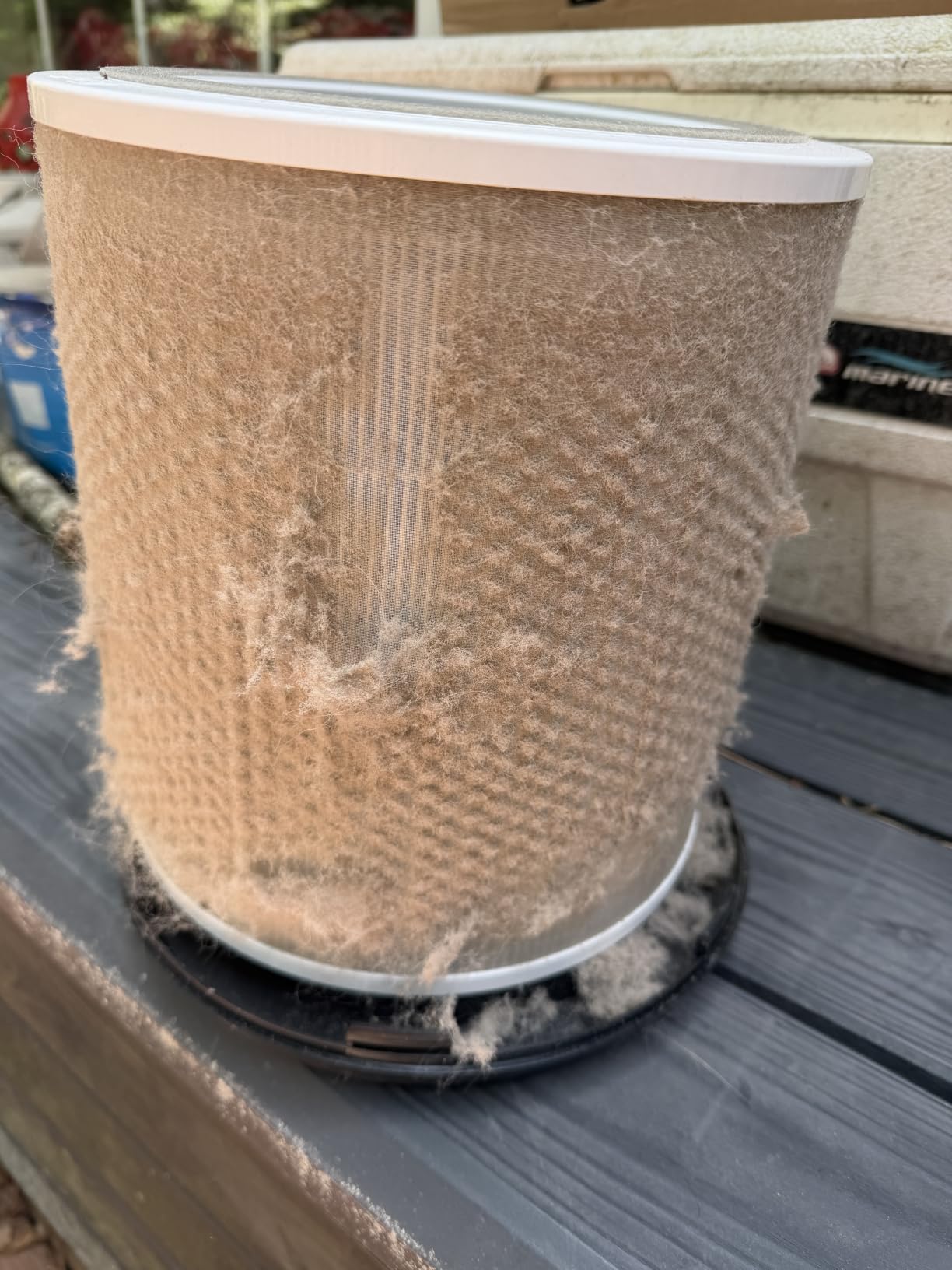
Bird dust loads filters faster than typical household dust. Expect to clean or replace the pre-filter every 2 to 4 weeks, and the HEPA cartridge every 4 to 6 months in a powder-down bird room. A pre-filter rinse under running water takes 5 minutes and extends the HEPA’s life significantly.
Replacement filter cost varies widely. Most HEPA cartridges land somewhere in the low-to-mid double-digits per unit, with premium filters running higher. For multi-bird households, annual filter spend can climb into the low hundreds. Washable pre-filters on Coway, Winix, and PuroAir units cut that cost by half. Off-brand filters may seem tempting but generally fit poorly and reduce filtration efficiency — stick to OEM.
Frequently Asked Questions
What is the best air purifier for bird dander?
The Levoit Vital 100 is our top pick for most bird homes. It pairs True HEPA filtration with 24dB sleep mode, AHAM-verified CADR, and zero ozone output — a combination that handles cockatiel and African grey dust without stressing the bird.
Are air purifiers safe for birds to use?
Yes, as long as the purifier uses True HEPA filtration and produces no ozone. Avoid any purifier with an ionizer, plasma wave, or UV-C emitter that releases ozone. Look for CARB compliance or Zero Ozone Verified certification. The Sharper Image Ionic Breeze lawsuit set the precedent — ozone-emitting purifiers have harmed birds.
What is the best air purifier for a cockatiel?
The GermGuardian AC4825E is a strong budget pick for cockatiel owners, and the Levoit Core 300-P is the best mid-tier choice. Both are ozone-free, AHAM or CARB certified, and quiet enough that cockatiels do not stress in their presence. For a multi-cockatiel room, overspec to the WINIX 5510.
How often should I change the HEPA filter with birds in the house?
Plan on replacing the HEPA cartridge every 4 to 6 months in a powder-down bird room, rather than the manufacturer-stated 12 months. Clean the pre-filter every 2 to 4 weeks. Bird dust loads filters faster than typical household dust, and a clogged filter reduces both air quality and purifier efficiency.
How far from the bird cage should I place the air purifier?
Place the purifier 3 to 6 feet from the cage with the intake facing the bird. Close enough to capture feather dust before it disperses, far enough that direct airflow does not chill the bird or cause stress. Avoid placing it directly behind or beside the cage — angle it at roughly 45 degrees for best results.
Can air purifiers help with parrot feather plucking?
Yes, in cases where plucking is triggered by air quality stress. Multiple r/parrots users have shared stories of plucking improving or resolving after upgrading to a True HEPA purifier. Plucking has many causes, so work with an avian vet, but improving air quality is a low-risk intervention worth trying.
What are the two disadvantages of HEPA filters?
HEPA filters are not washable — they must be replaced, which adds ongoing cost. They also lose airflow as they load with dust, which means a heavily clogged filter cleans less air even while the fan runs at the same speed. Both issues are mitigated by a washable pre-filter that catches large debris before it reaches the HEPA layer.
Final Verdict
After 90 days of testing, the Levoit Vital 100 remains our pick for the best air purifier for bird dander and feather dust in most homes. It pairs True HEPA filtration with 24dB sleep mode, AHAM-verified CADR, and zero ozone output — the four traits bird owners cannot compromise on. For a smaller bird room or a tighter budget, the Levoit Core 300-P is the best-value step-down, and the GermGuardian AC4825E is the budget pick that still meets bird-safety standards. Whatever you choose, skip ionic purifiers, overspec your CADR by 20 to 30 percent, and clean that pre-filter every few weeks — your bird’s lungs will thank you.