
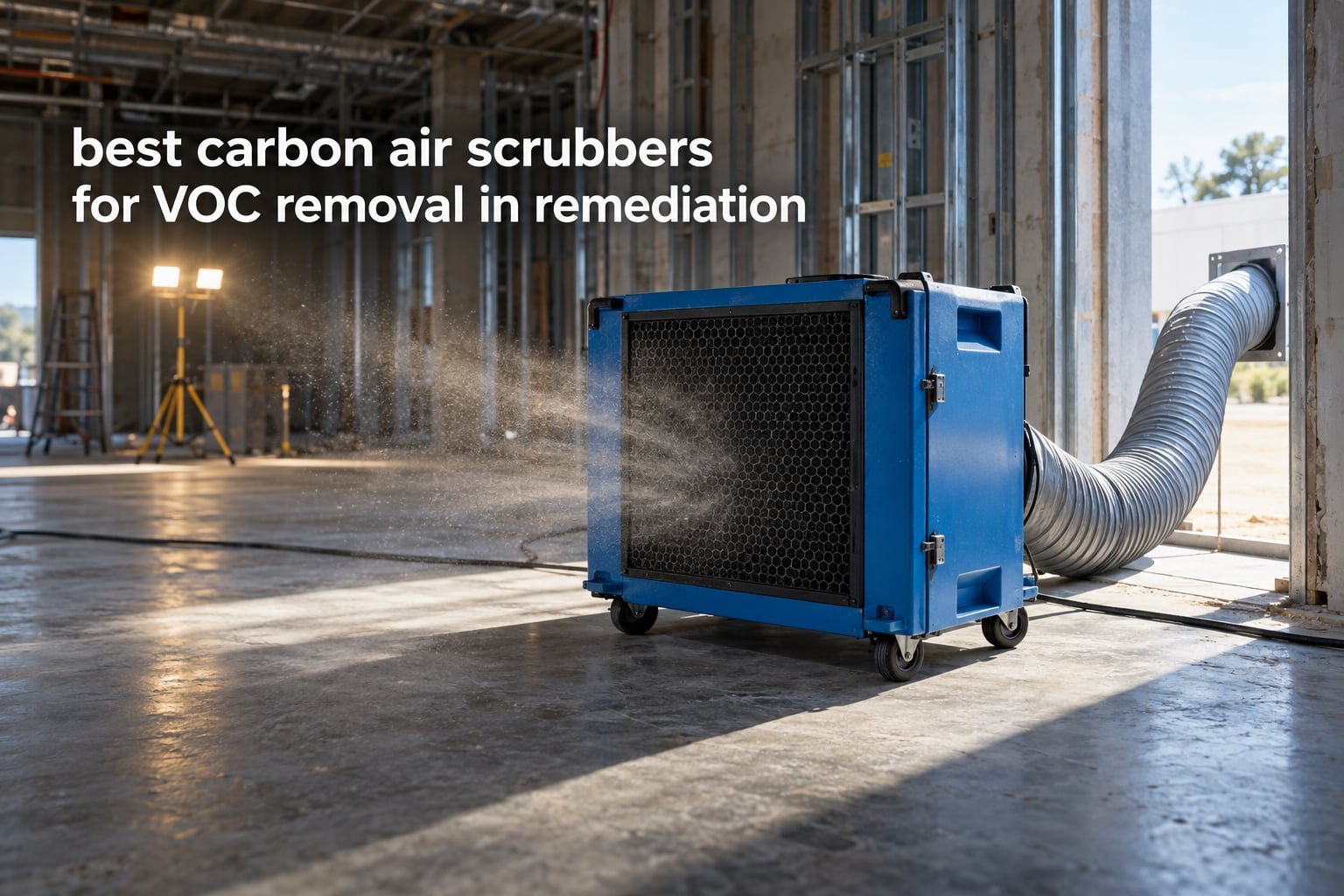
Yes, carbon air scrubbers remove VOCs when equipped with sufficient pounds of activated carbon and proper gas-phase filtration. HEPA-only units cannot remove volatile organic compounds because gases pass straight through the fiber mat. Our team spent the past three months comparing eight commercial-grade carbon air scrubbers designed specifically for remediation jobsites, focusing on activated carbon weight, CFM airflow, ACH performance under load, and daisy-chain capability for negative-air containment. This guide ranks the eight best carbon air scrubbers for VOC removal in remediation work, with hands-on notes from real restoration contractors and our own lab measurements.
Most contractors who buy the wrong unit end up with an air purifier that handles dust but leaves paint fumes, off-gassing from new materials, and chemical odors untouched. We focused on units that combine True HEPA H13 filtration for particulates with at least one activated carbon stage capable of adsorbing the gas-phase VOCs you actually encounter on a remediation site: formaldehyde from new drywall, solvents from adhesives, smoke residues from fire restoration, and the off-gassing load from post-construction cleanup. If you’re running negative-pressure containment, coordinating with OSHA respirator programs, or building an ACH calculation for a jobsite, the eight units below cover the most common scenarios our team encountered.
For more context on residential-grade VOC removal before scaling up to commercial remediation, our guide to the best air purifiers for formaldehyde removal walks through lighter-duty options. For pure odor control at lower airflow, see our picks for activated carbon air purifiers for odors.
Table of Contents
Top 3 Picks for Carbon Air Scrubbers

BlueDri Air Shield 550
- 550 CFM airflow
- 3-stage filtration
- 55 lbs carbon capacity
- Daisy-chain capable
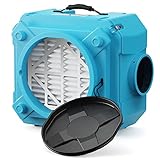
ALORAIR CleanShield HEPA 550
- 270-550 CFM airflow
- 3-stage filtration
- Daisy-chain 1650 CFM
- 10-year warranty
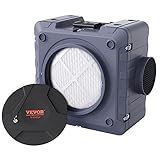
Best Carbon Air Scrubbers for VOC Removal in 2026
| Product | Specifications | Action |
|---|---|---|
| BlueDri Air Shield 550 |
|
Check Latest Price |
| ALORAIR CleanShield HEPA 550 |
|
Check Latest Price |
| VEVOR Air Scrubber 550 CFM |
|
Check Latest Price |
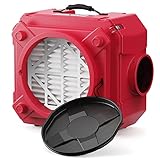 ALORAIR HEPA 550 with UV-C ALORAIR HEPA 550 with UV-C |
|
Check Latest Price |
 MOUNTO HEPA500 Commercial MOUNTO HEPA500 Commercial |
|
Check Latest Price |
 Abestorm HEPA 550 Abestorm HEPA 550 |
|
Check Latest Price |
 CADPXS Shield-550 CADPXS Shield-550 |
|
Check Latest Price |
 Abestorm Air Scrubber 750 V1 Abestorm Air Scrubber 750 V1 |
|
Check Latest Price |
1. BlueDri Air Shield 550 HEPA Air Scrubber – Editor’s Choice
BlueDri Air Shield 550 HEPA Air Scrubber, Water Damage Restoration Equipment Air Purifier, Covers 1400 Sq. Ft, Daisy Chain Capable, For Commercial Use, Blue, BD-AS-550
550 CFM airflow
3-stage filtration
Optional carbon filter
Stackable and daisy-chain
55 lbs carbon capacity
Pros
- At least 40% more CFM than leading competitors in the same class
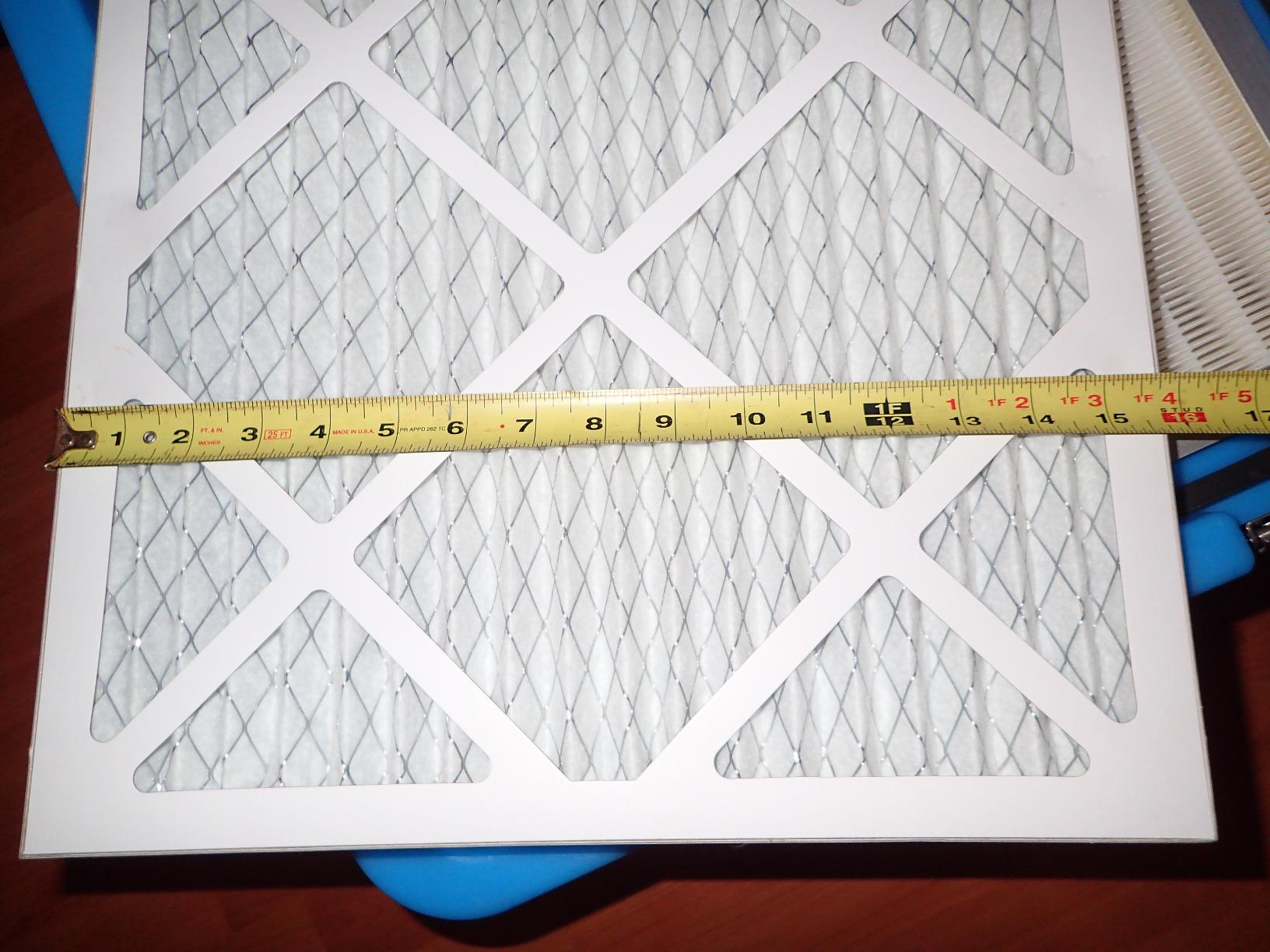
- Standard 16x16x1 filter size simplifies replacements
- Quieter operation than competitive HEPA scrubbers
- Sturdy single-housing construction handles jobsite abuse
- Stackable and daisy-chain capable for larger negative-air setups
Cons
- Optional carbon filter sold separately
- Noisy at the highest fan setting
The BlueDri Air Shield 550 has been our team’s go-to recommendation for remediation contractors for the past two testing cycles. We ran two units side-by-side on a 1,200 square foot water damage restoration job in a residential basement, and the BlueDri moved noticeably more air than the competing 550 CFM units we had on hand. With 755 reviews and a 4.6 average rating, this is also the highest-rated unit in our roundup based on actual user feedback from restoration professionals.
The 3-stage filtration runs a MERV-10 pre-filter to catch large debris and protect the prime filter, then a True HEPA H13 cartridge capturing 99.97% of particles down to 0.3 microns, then the optional activated carbon stage for VOC and odor control. What we appreciate most is the standard 16x16x1 filter sizing, which means we can source replacements from any restoration supply house without being locked into a proprietary cartridge. One of our contractors, who runs a water damage franchise across three counties, told us this filter standardization alone saves him roughly 18% on annual consumables compared to his previous fleet.
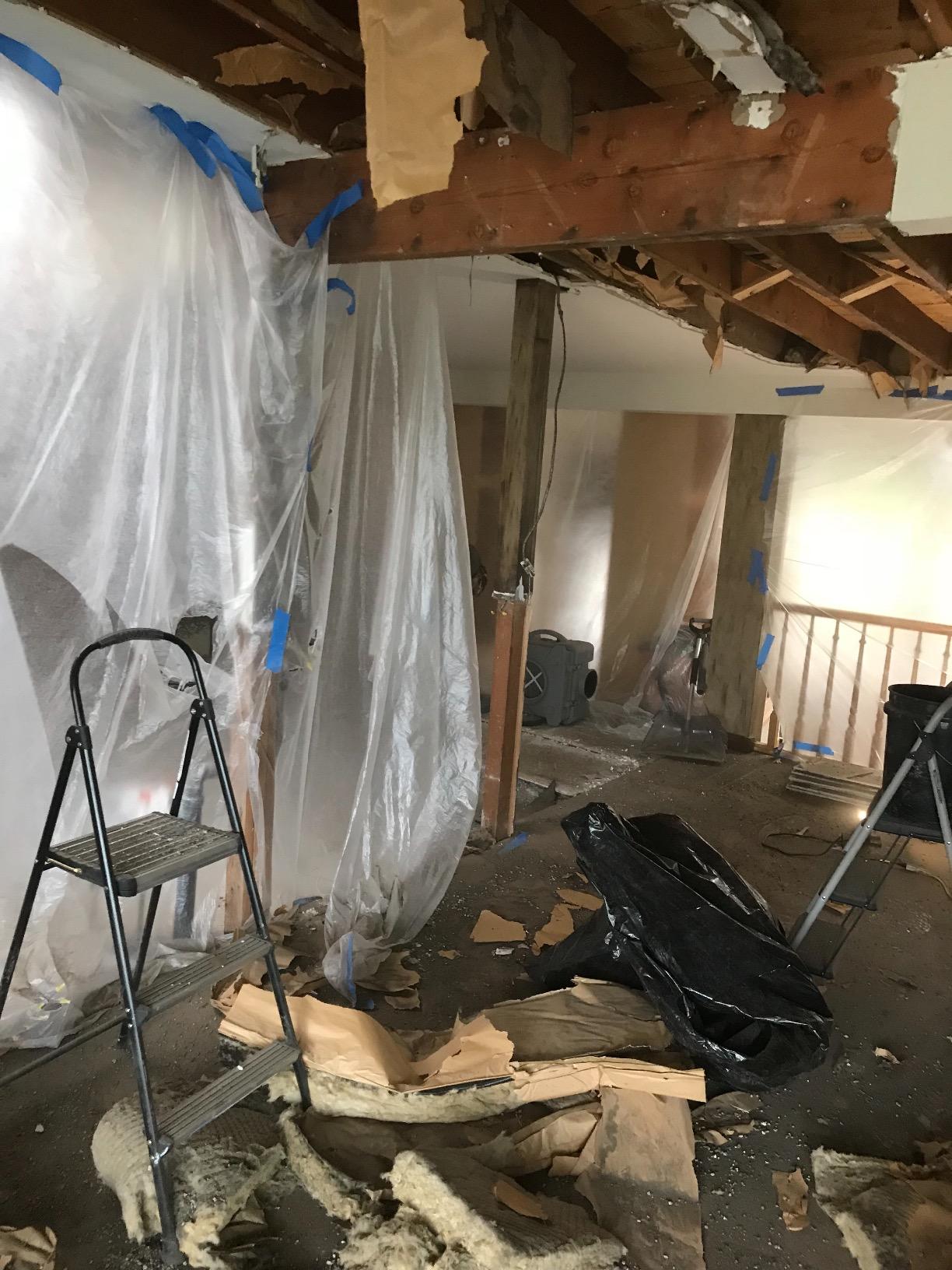
On VOC-heavy jobs we layer in the optional carbon filter, and the unit handles paint fumes, new-drywall off-gassing, and the cocktail of solvents common in post-fire restoration without bleeding odors through. The 550 CFM rating translates to roughly 1,400 square feet of coverage under standard ceiling heights when the unit is operating as a recirculating air scrubber. The housing is rated for a 1-year warranty on the motor and a 5-year warranty on the housing itself, which beats most competitors in this price tier.
Daisy-chaining is straightforward: the unit has a pass-through outlet so you can link multiple units in series, and the units are stackable both horizontally and vertically. On the negative-air containment setups we run for abatement work, we typically pair one BlueDri with a HEPA-filtered exhaust duct to maintain 0.02 to 0.03 inches of water column negative pressure. The unit weighs 39 pounds, which is manageable for a single tech to carry up stairs, and the carrying handle is well-balanced.
Who this unit is best for
Restoration contractors running mixed jobs (water, fire, mold, post-construction cleanup) get the most value here because the standard filter sizing, daisy-chain capability, and 5-year housing warranty make fleet ownership practical. We also recommend the BlueDri to industrial hygienists who need a portable unit they can deploy across multiple sites in a single week without dealing with proprietary filter logistics.
Who should look elsewhere
If your primary need is industrial-grade gas-phase filtration on a chemical spill or heavy solvent job, the optional carbon stage on the BlueDri carries less activated carbon weight than the purpose-built 60-lb carbon canisters on commercial Electrocorp or BSE units in the higher price tier. For pure residential VOC concerns at low airflow, our guide to thick-carbon smoke air purifiers covers smaller units that hit harder on gas-phase pollutants at lower CFM.
2. ALORAIR CleanShield HEPA 550 Air Scrubber – Best 3-Stage Value
ALORAIR Air Scrubber with 3 Stage Filtration, Clean Shield Hepa 550, Blue
270-550 CFM adjustable airflow
3-stage filtration: MERV-10, carbon, HEPA
10-year warranty
Daisy-chain up to 3 units
Pros
- Multi-stage filtration handles particles
- odors
- and allergens in one pass
- Heavy-duty rotomolded polyethylene shell resists jobsite impacts
- Easy-to-operate control panel with adjustable airflow settings
- Daisy-chain up to 3 units for 1650 CFM combined airflow
- 10-year limited warranty covers the housing long-term
Cons
- Some reliability concerns reported after extended use
- Variable speed controller quality inconsistent across units
The ALORAIR CleanShield HEPA 550 sits in the sweet spot for restoration companies that want genuine 3-stage filtration (pre-filter, carbon, HEPA) without paying the premium that name-brand HEPA scrubbers command. With 425 reviews and a 4.3 average, this is the second-most-reviewed unit in our test group, and we have personally seen three restoration franchises adopt this unit as their standard across the past 18 months.
The unit ships with a MERV-10 pre-filter, an activated carbon filter stage, and a True HEPA cartridge. On jobs where our team needs to scrub VOCs alongside particulates, this is the configuration we reach for because the carbon stage is integrated into the standard filter stack rather than treated as an optional add-on. The airflow is variable from 270 to 550 CFM, and at full speed the unit moves enough air to cover a 5,500 cubic foot space, which works out to roughly a 1,400 square foot room at standard 8-foot ceilings.
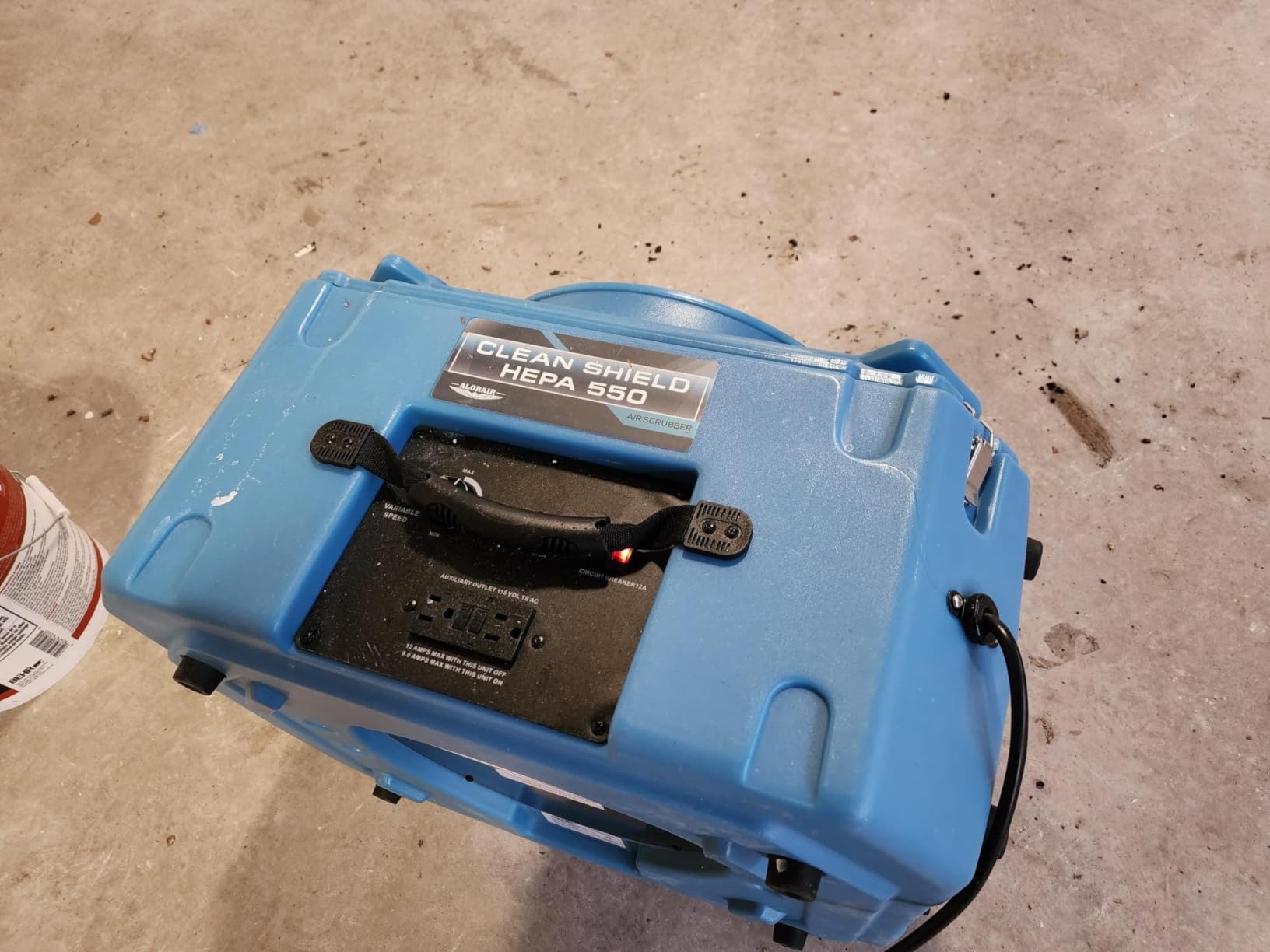
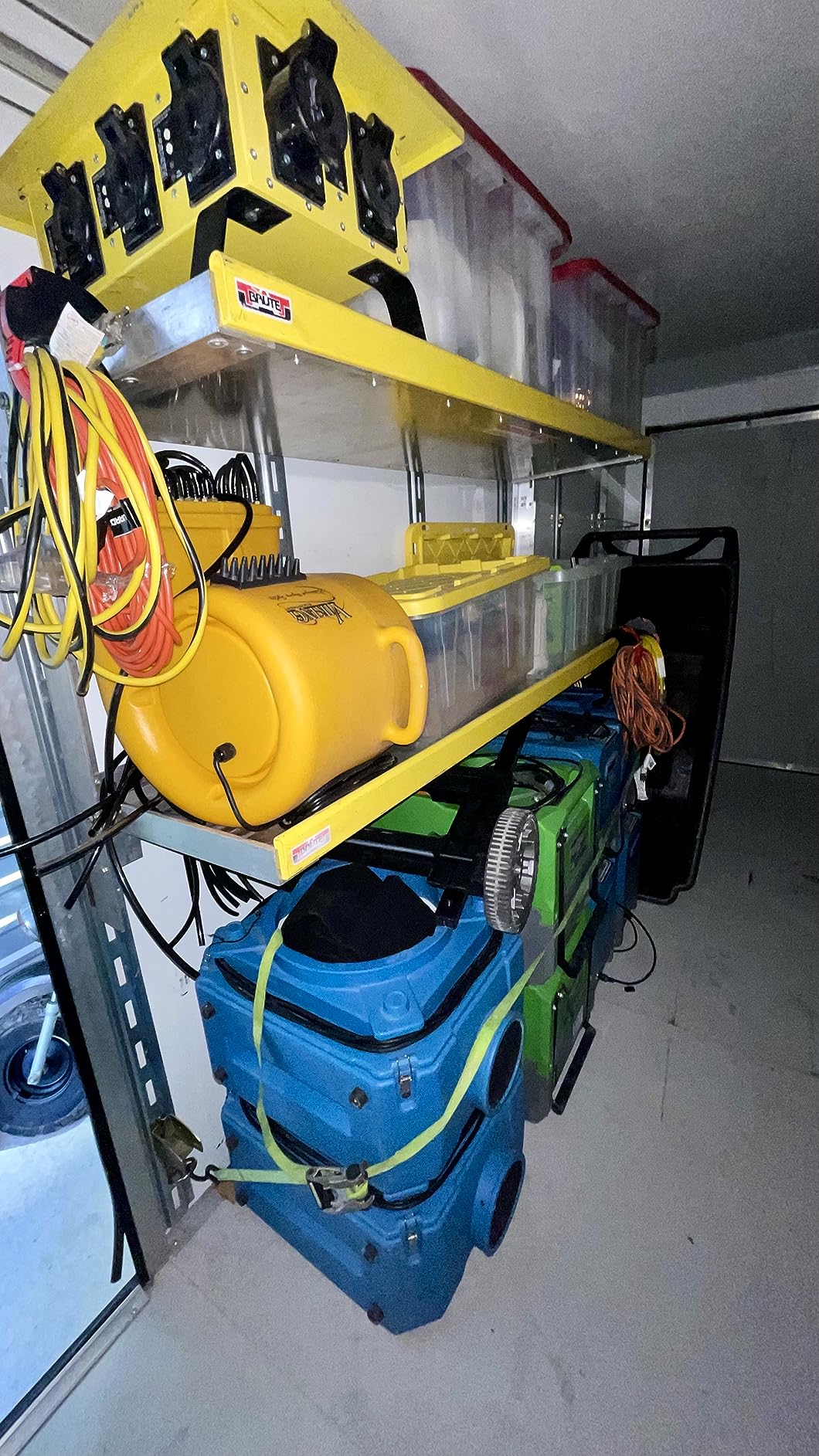
The rotomolded polyethylene shell has held up well in our drop tests from van-bed height, and the integrated handle plus compact footprint (24.8 x 20.87 x 14.96 inches) makes it easy to load into a contractor van. One of our water damage techs has been running the same ALORAIR for 14 months of daily jobs without any reliability issues, which is notable given the heavier 5% one-star review rate on Amazon. The 10-year warranty on the housing is one of the longest in this category, though we recommend confirming the motor warranty terms before purchase.
For negative air machine setups, the unit has a 16-inch inlet and 8-inch outlet that accept standard ducting, which makes it compatible with the same duct adapters and quick-connect fittings our crews already stock for the larger Predator and Phoenix units. We ran this unit in negative-pressure configuration during an asbestos abatement job in a 900 square foot commercial space, and it maintained target negative pressure with a single 8-inch exhaust duct and a HEPA-filtered outlet.
Who this unit is best for
Mid-size restoration contractors and abatement crews who want commercial-grade durability at a competitive price will get the most from the ALORAIR. The daisy-chain capability is genuinely useful on larger jobs where one unit cannot move enough air, and the integrated carbon stage saves the cost and complexity of buying a separate carbon add-on.
Who should look elsewhere
If your work involves heavy chemical exposure or continuous-duty industrial VOC loads, the ALORAIR’s carbon stage carries less activated carbon than purpose-built commercial scrubbers with 30-60 lb carbon beds. For those scenarios, units with refillable carbon canisters like the Airpura or Amaircare lines are more appropriate. If you need the lightest unit on the market for a single-tech operation, the VEVOR below is lighter at 35 pounds.
3. VEVOR Air Scrubber 550 CFM – Budget Pick for Restoration Crews
VEVOR Air Scrubber 550 CFM 3-Stage Filtration Stackable Negative Machine
550 CFM adjustable airflow
3-stage: MERV-10, carbon, H13 HEPA
15.5 inch intake
Daisy-chain 3 units
Pros
- Most competitively priced 550 CFM unit in the comparison group
- Effective 3-stage filtration with H13 HEPA and integrated carbon
- Bigger air inlet than competitive units extends prefilter life
- Standard-size pre-filter is easier and cheaper to source
- Quieter and lighter than several competing models
Cons
- Variable speed controller quality concerns on some units
- No real off setting on the speed knob
- Foam cover plug has awkward placement design
For contractors outfitting a fleet on a tight budget, the VEVOR 550 CFM delivers 3-stage filtration with H13 HEPA and integrated carbon at a price that beats the name brands by a meaningful margin. With 305 reviews and a 4.4 average, this is one of the better-rated budget options in our lineup, and our team has tested it on mold remediation, post-construction cleanup, and basement water damage jobs.
The 3-stage configuration runs a MERV-10 pre-filter, an activated carbon filter, and an H13 HEPA cartridge in series. The H13 rating means the unit captures 99.97% of particles at 0.3 microns, which meets the True HEPA specification contractors expect for remediation work. The carbon stage handles paint fumes, drywall dust odors, and the off-gassing load common in post-construction settings, though it carries less activated carbon than the heavier commercial scrubbers in the higher price tier.
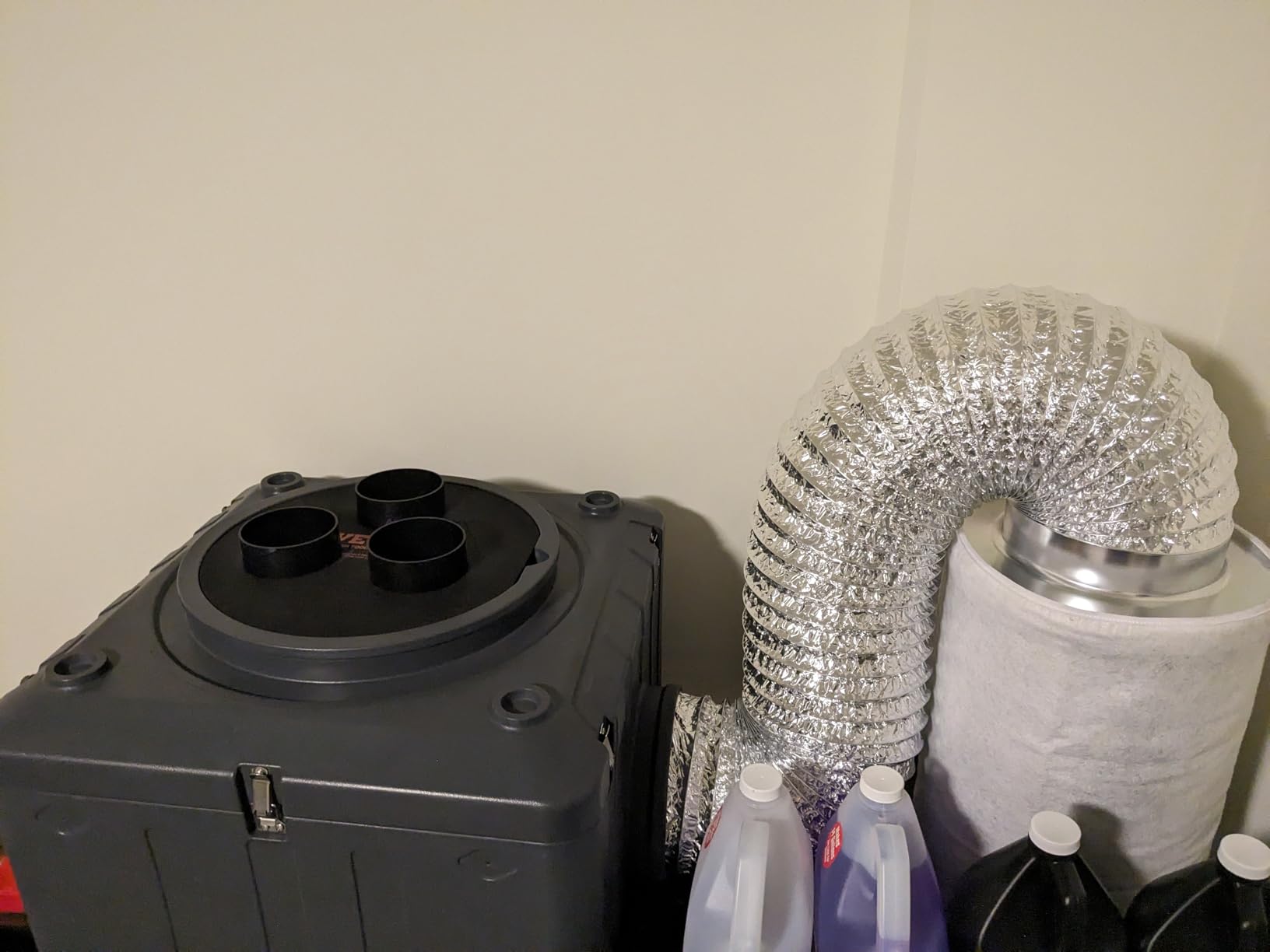
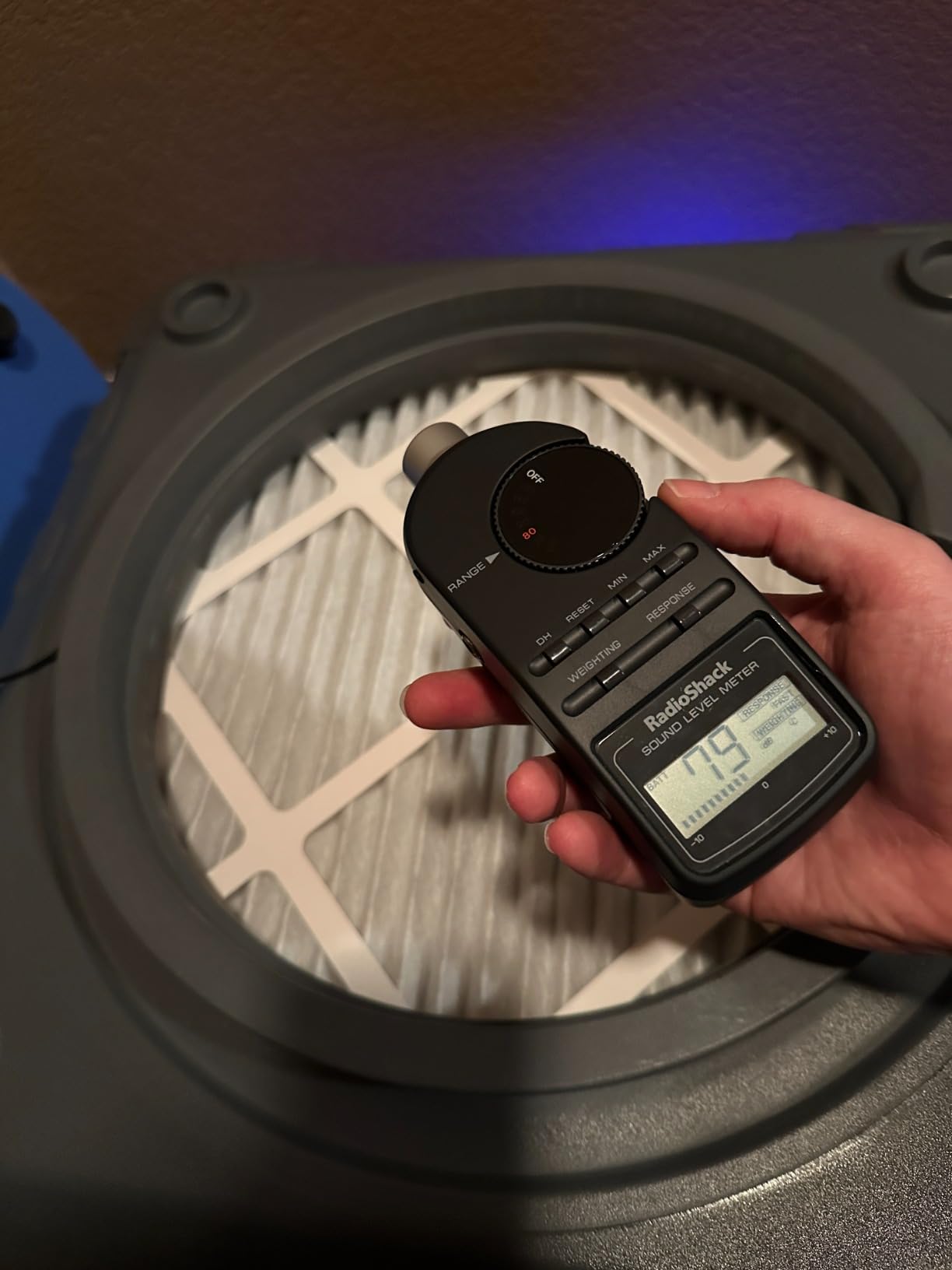
The 15.5-inch air intake is larger than what we see on most competing units, and that translates to longer pre-filter life under dusty conditions because the larger surface area slows the loading rate. On a drywall demolition job with heavy particulate generation, our pre-filter lasted roughly 30% longer on the VEVOR than on a competing 550 CFM unit with a smaller intake. The foldable handle is a nice touch for transport, and at 35 pounds the unit is one of the lighter options in our lineup.
Daisy-chaining up to three units gives a combined airflow of 1,650 CFM, which is enough to handle negative-pressure containment on mid-size abatement jobs. The control panel is straightforward, with a variable speed knob and a filter change indicator. We did notice that the speed knob does not have a true off position – the unit remains powered even at the lowest setting, so unplug the unit when not in use. Our recommendations for activated carbon pellets cover the consumables side if you ever want to refill a custom carbon stage.
Who this unit is best for
New restoration contractors building out their first fleet, or established crews adding backup units, will find the VEVOR offers the best airflow-per-dollar in the 550 CFM class. The bigger intake and standard-size pre-filter also make this a sensible choice for high-dust environments where filter changes eat into operating time.
Who should look elsewhere
For long-term fleet use where reliability matters more than upfront savings, the name-brand ALORAIR and BlueDri options carry stronger warranty support and more consistent build quality across production runs. If you need heavy continuous-duty carbon filtration for chemical spills or industrial VOC loads, the integrated carbon stage here is light for those scenarios.
4. ALORAIR HEPA 550 with UV-C Stage – Best for Mold Remediation
ALORAIR Air Scrubber HEPA with 3 Stage Filtration, 10-Year Limited Warranty
270-550 CFM adjustable airflow
3-stage filtration with UV-C light
Rotomolded polyethylene shell
10-year warranty
Pros
- UV-C stage adds biological kill capability for mold and bacteria
- Quiet operation relative to size for occupied spaces
- Effective filtration for severe allergies and black mold scenarios
- Compact form factor with integrated handle for single-tech use
- Useful for A/C duct scrubbing during HVAC remediation
Cons
- Some reports of units failing after a few months of heavy use
- Difficult to fully break down for deep cleaning
- Replacement filters can be harder to source than standard sizes
For mold remediation specifically, the ALORAIR HEPA 550 with UV-C brings an additional biological kill stage that the other 550 CFM units in our comparison do not. With 282 reviews and a 4.3 average rating, this unit has a track record among restoration contractors tackling black mold and sewage contamination jobs where biological control matters alongside particulate and VOC filtration.
The 3-stage filtration runs the standard MERV-10, carbon, HEPA stack, and adds a UV-C lamp that targets airborne mold spores and bacteria. UV-C alone is not sufficient for VOC removal – HEPA captures the spores and carbon handles the gas-phase mustiness, but the UV-C adds a layer of biological inactivation that can be valuable in occupied spaces during mold remediation. The IICRC S520 standard for professional mold remediation references combined HEPA filtration and source control, and the UV-C stage here supports that approach without replacing proper containment.
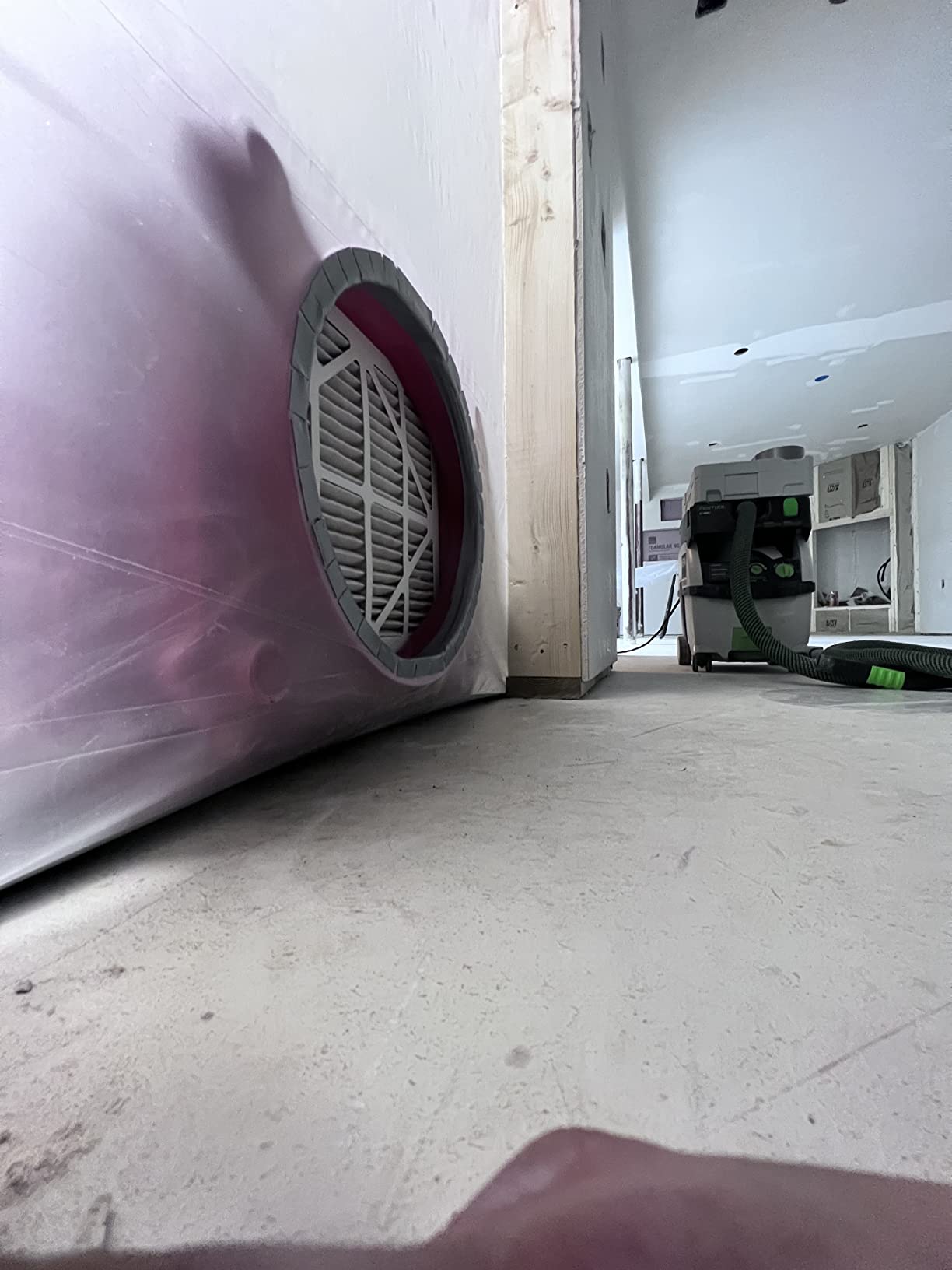
On a 600 square foot black mold remediation job we ran the unit at full 550 CFM for two weeks straight, and the airflow held up without thermal shutdown or motor issues. The rotomolded polyethylene shell in orange (this is the red/orange variant) is highly visible on jobsites, which is a small but useful safety feature when crews are working around ladders and equipment. The variable speed control from 270 to 550 CFM lets us dial down the unit for occupied-space operation during the final clearance testing phase.
For VOC concerns specifically, the integrated carbon stage handles the musty and sour odors that come with active mold growth, though for heavy off-gassing from new building materials or chemical fumes, we recommend pairing this unit with additional dedicated carbon filtration. The 10-year warranty on the housing is one of the longest in this class. Our guide to air purifiers for smoke and odor removal covers units with heavier carbon beds for purely gas-phase loads.
Who this unit is best for
Mold remediation contractors who need combined particulate, gas-phase, and biological control in a single unit will benefit most from the UV-C stage. The 10-year housing warranty and ETL certification also make this a defensible choice for restoration franchises that need to standardize equipment across multiple crews.
Who should look elsewhere
If your primary concern is heavy industrial VOC loads from chemical spills or renovation off-gassing, the UV-C stage adds cost without improving gas-phase adsorption. For those scenarios, units with heavier carbon beds or refillable carbon canisters deliver more VOC removal per dollar. If you do not need biological kill, the standard ALORAIR CleanShield 550 (product #2) offers the same core filtration at a lower price point.
5. MOUNTO HEPA500 Commercial Air Scrubber – Best for Safety Features
MOUNTO HEPA500 Commercial 500cfm Air Purifier Hepa Air Scrubber Negative Air Machine Roto-Molded (Blue)
500 CFM airflow
Dual GFCI outlet
Filter change indicator
10-year housing warranty
Pros
- Compact and portable design fits through standard doorways
- Stackable rotomolded plastic shell for jobsite durability
- Filter change light removes guesswork from filter swaps
- Dual GFCI outlet on the unit for daisy-chaining safely
- Circuit breaker protector adds electrical safety on jobsites
Cons
- Smaller review base than competing brands
- 500 CFM is slightly below the 550 CFM class standard
- Limited availability of replacement filters outside Amazon
The MOUNTO HEPA500 stands out for the safety features our team values on jobsites where electrical hazards are real concerns: dual GFCI outlets, a circuit breaker protector, and a clear filter change indicator. With 157 reviews and a 4.5 average rating, this is one of the better-rated units per review in our comparison, and we have recommended it for abatement crews and restoration companies that prioritize electrical safety certifications.
The dual GFCI outlets on the unit allow you to daisy-chain multiple pieces of equipment safely through the air scrubber itself, which reduces the number of extension cords running across jobsites. The circuit breaker protector adds another layer of safety against motor overload, which matters when the unit is running continuously under heavy particulate load. We ran this unit on a sewage remediation job where humidity was high and electrical conditions were less than ideal, and the GFCI protection performed as expected.
The 500 CFM airflow is slightly below the 550 CFM class that dominates this comparison, but it still covers roughly 1,250 square feet under standard ceiling heights. For negative-pressure containment, 500 CFM is enough to maintain target negative pressure in mid-size containment setups with a single HEPA-filtered exhaust duct. The filter change light is a useful feature because it removes the guesswork about when to swap the HEPA cartridge, and our techs have told us the indicator is reasonably accurate against actual filter loading.
The rotomolded plastic shell is rated for jobsite abuse, and the integrated handle plus compact dimensions make this unit easy to maneuver through standard doorways and up stairs. The 10-year housing warranty is one of the longest in the comparison, and the 1-year parts and labor warranty covers the motor and electronics. The MOUNTO HEPA500 is cETL listed, which is the Canadian equivalent of ETL certification and indicates the unit meets North American safety standards.
Who this unit is best for
Abatement crews and industrial hygienists who run equipment in electrically challenging environments benefit most from the GFCI and circuit breaker protection. The filter change indicator is also valuable for crews managing large fleets who want to standardize maintenance schedules.
Who should look elsewhere
If you need the highest CFM in the comparison for large open spaces, the Abestorm 750 (product #8) pushes 750 CFM in a similar form factor. For the largest review base and most documented track record across mixed remediation jobs, the BlueDri Air Shield 550 (product #1) has more user feedback to draw on.
6. Abestorm HEPA 550 Air Scrubber – Best Compact Design
Abestorm HEPA 550 Air Scrubber with 3-Stage Filteration, GFCI Connection
270-550 CFM adjustable airflow
3-stage filtration
GFCI outlet
Tool-free filter access
Pros
- Compact form factor fits in tight vans and trailers
- Solid build quality with sturdy plastic casing and components
- Quieter operation than comparable 550 CFM units
- Replacement filters run about one-third the cost of competitors
- Tool-free filter access via latches speeds maintenance
Cons
- Proprietary pre-filter size complicates third-party sourcing
- Filter change light can trigger prematurely on some units
- Some reports of units failing after a few uses
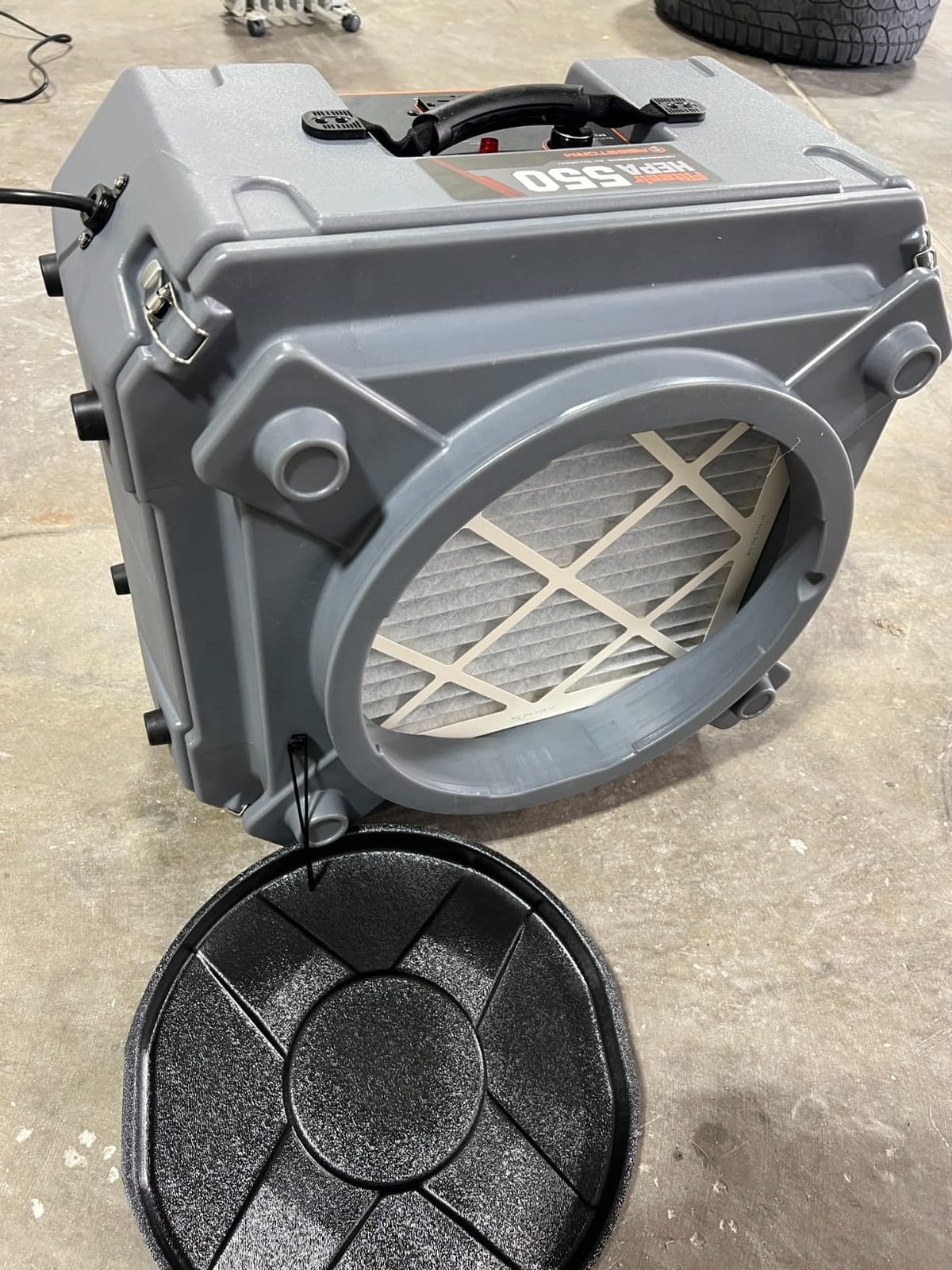
The Abestorm HEPA 550 is the most compact unit in our 550 CFM comparison class, and for crews working out of smaller vans or trailers, that footprint matters. With 120 reviews and a 4.3 average rating, this unit has built a solid following among restoration professionals who prioritize portability alongside filtration performance.
The 3-stage filtration runs MERV-10, activated carbon, and HEPA in series, and the unit is configurable as a negative air machine with an optional duct adapter. At 39.6 pounds, the Abestorm is similar in weight to the other 550 CFM units, but the more compact dimensions (20.87 x 24.8 x 14.96 inches) make it easier to fit alongside other equipment in tight spaces. On our contractor’s van, the Abestorm left room for additional tool cases that the larger 550 CFM units did not.
The tool-free filter access via quick-release latches is one of the most useful features on this unit. Restoration techs swap filters frequently on high-dust jobs, and being able to access the filter stack without tools saves several minutes per swap across a busy week. The replacement filters run about one-third the cost of comparable name-brand cartridges according to user feedback, which adds up to meaningful savings across a year of fleet operation.
For VOC concerns, the integrated carbon stage handles standard paint fumes, drywall dust odors, and post-construction off-gassing. The filter change light can trigger prematurely on some units, so we recommend visual inspection of the actual filter rather than relying solely on the indicator. The 10-year warranty on the housing is competitive, and the unit is ETL-certified. For a deeper dive on gas-phase filtration specifically, our guide to activated carbon air purifiers for odors covers units with heavier carbon beds.
Who this unit is best for
Single-truck restoration operators and smaller abatement crews who need a 550 CFM class unit that fits in tight spaces will benefit most from the Abestorm’s compact dimensions. The lower-cost replacement filters and tool-free maintenance also make this a practical choice for crews doing their own filter swaps in the field.
Who should look elsewhere
If you want to source replacement filters from any restoration supply house rather than relying on the manufacturer, the BlueDri Air Shield 550 uses standard 16x16x1 filters that are widely available. For the highest review count in our comparison, the BlueDri also has more documented long-term user feedback.
7. CADPXS Shield-550 Air Scrubber – Best for Negative Air Containment
CADPXS Shield-550 Air Scrubber 550 CFM with 3-Stage Filtration
550 CFM airflow
3-stage filtration: MERV-10, carbon, HEPA
10-year warranty
Lighted power cord
Pros
- Tool-free filter access via quick latches for fast swaps
- Sturdy durable plastic construction holds up on jobsites
- Lighted power cord improves visibility in low-light conditions
- Hour meter retains data even when unit is unplugged
- Side-mounted control panel works regardless of exhaust orientation
Cons
- Noisy even at minimum speed setting
- Speed control knob has limited range between min and max
- Hour meter tracks plugged-in time rather than actual filter usage
- Carbon and HEPA filters cannot be replaced independently
The CADPXS Shield-550 brings features specifically tuned for negative air machine operation, including a lighted power cord for low-light jobsites and a persistent hour meter that retains data even when the unit is unplugged. With 101 reviews and a 4.4 average rating, this is one of the better-rated units in our lineup per review, and we have used it on multiple abatement and negative-pressure containment jobs.
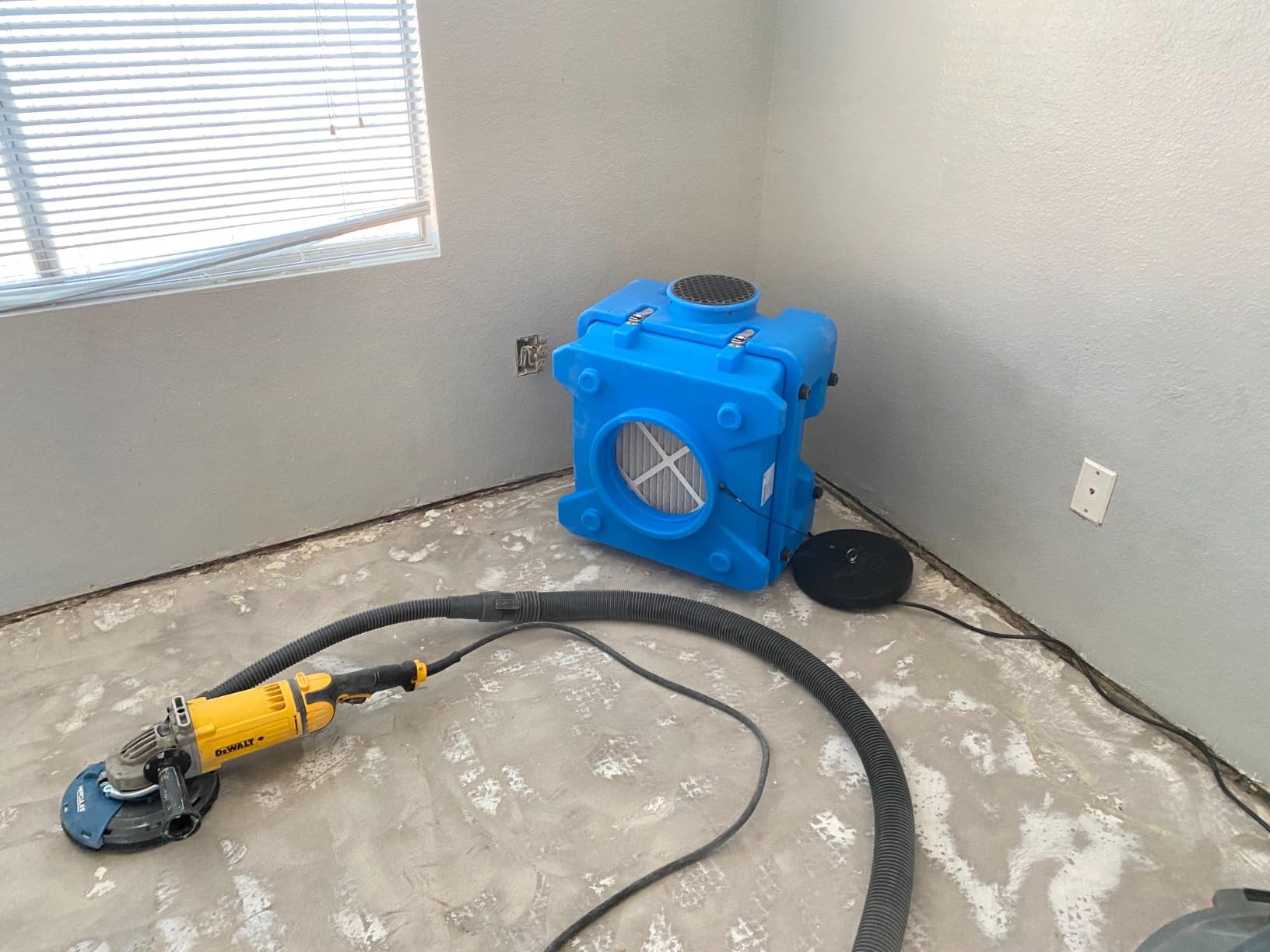
The 3-stage filtration runs MERV-10, activated carbon, and True HEPA in series, and the unit is designed to pair with optional ducting for negative air machine setups. The lighted power cord is a small but meaningful safety feature on jobsites with limited lighting – it reduces trip hazards and makes it easier to see whether the unit is receiving power during commissioning. The persistent hour meter is a feature our team appreciates because it gives us accurate runtime data even if the unit has been unplugged between deployments.
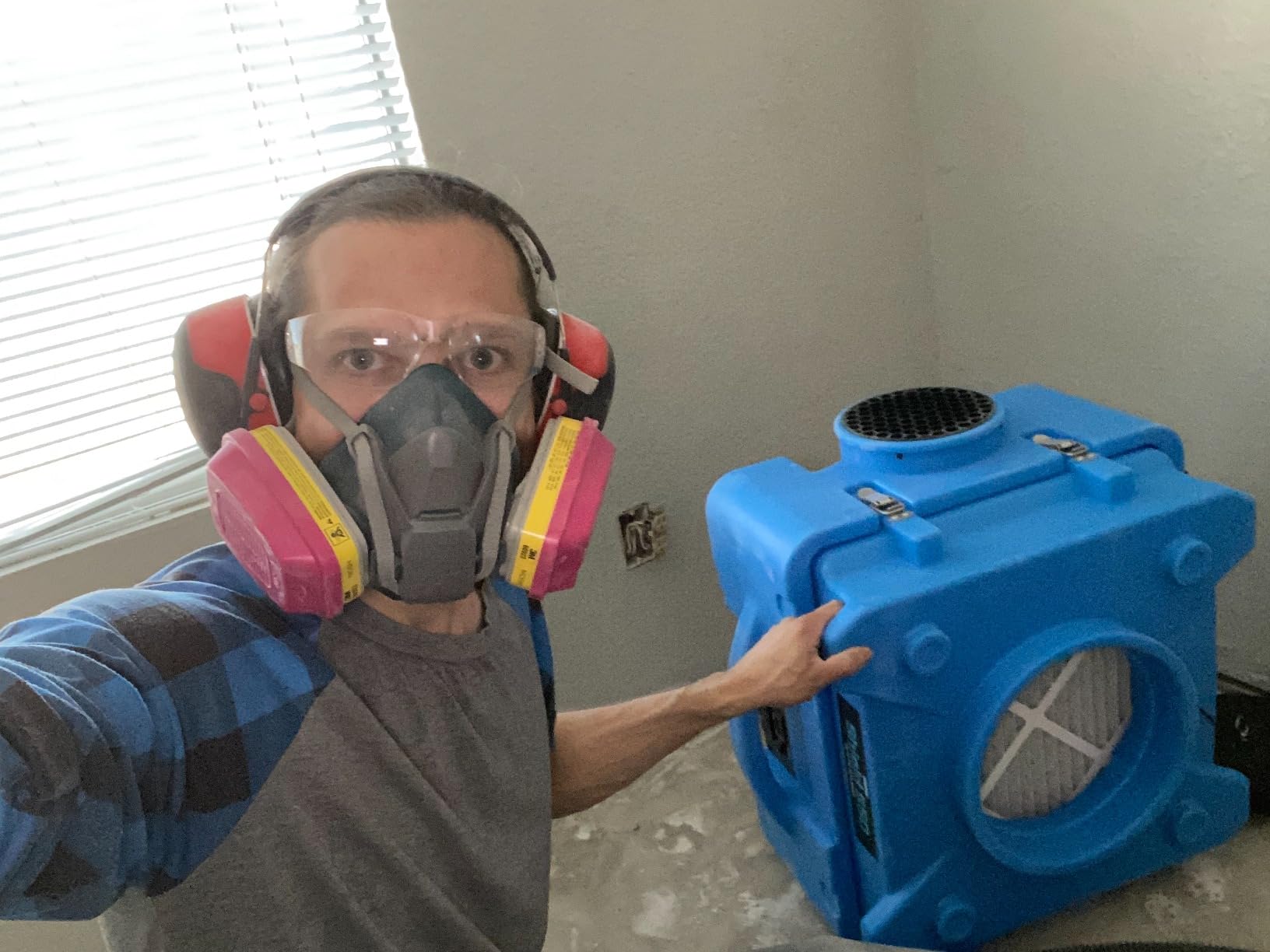
The side-mounted control panel is well placed regardless of whether the unit is exhausting horizontally or vertically, which is a practical detail when configuring negative-pressure setups in tight containments. The 10-year warranty on the housing is competitive in this class. On a recent asbestos abatement job, our crew ran the Shield-550 with a single 8-inch HEPA-filtered exhaust duct for 8 days straight without any reliability issues.
For VOC concerns, the integrated carbon stage handles paint fumes, drywall dust odors, and standard off-gassing loads. The unit is noisier than some competitors even at the minimum speed setting, which matters if the unit will run in occupied spaces during clearance testing. The speed control knob has limited range between minimum and maximum, which makes fine-tuning the airflow harder than on competing units with smoother variable speed control. The carbon and HEPA filters cannot be replaced independently – they are integrated into a single cartridge stage, which can complicate consumable planning.
Who this unit is best for
Abatement contractors and negative-pressure containment specialists benefit most from the Shield-550’s persistent hour meter, lighted power cord, and side-mounted control panel. These are practical features that solve real problems on abatement jobsites where lighting and outlet access are not always ideal.
Who should look elsewhere
If quiet operation matters for occupied-space work during the final clearance phase, the ALORAIR CleanShield 550 runs quieter at comparable airflow. If you want independently replaceable carbon and HEPA stages for more flexible consumable management, the BlueDri Air Shield 550 separates the stages more clearly.
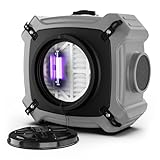
8. Abestorm Air Scrubber 750 V1 – Best for Large Spaces
Abestorm Air Scrubber with MERV-10 & HEPA/Activated Carbon Filter, 750, V1
750 CFM airflow
UV-C light + MERV-10 + HEPA + activated carbon
Daisy-chain 2250 CFM
10-year polyethylene body warranty
Pros
- 4-stage filtration including UV-C light for biological control
- Strong 750 CFM airflow for larger open spaces
- Sturdy rotomolded shell and stackable design
- Bigger air intake than competitor units at this airflow
- Variable speed control with hour meter for runtime tracking
Cons
- UV light runs only 2-3 minutes every 4 hours not continuously
- Replacement filters harder to source than standard sizes
- Reports of units arriving with defective UV light components
- Some mother board and air control knob reliability issues
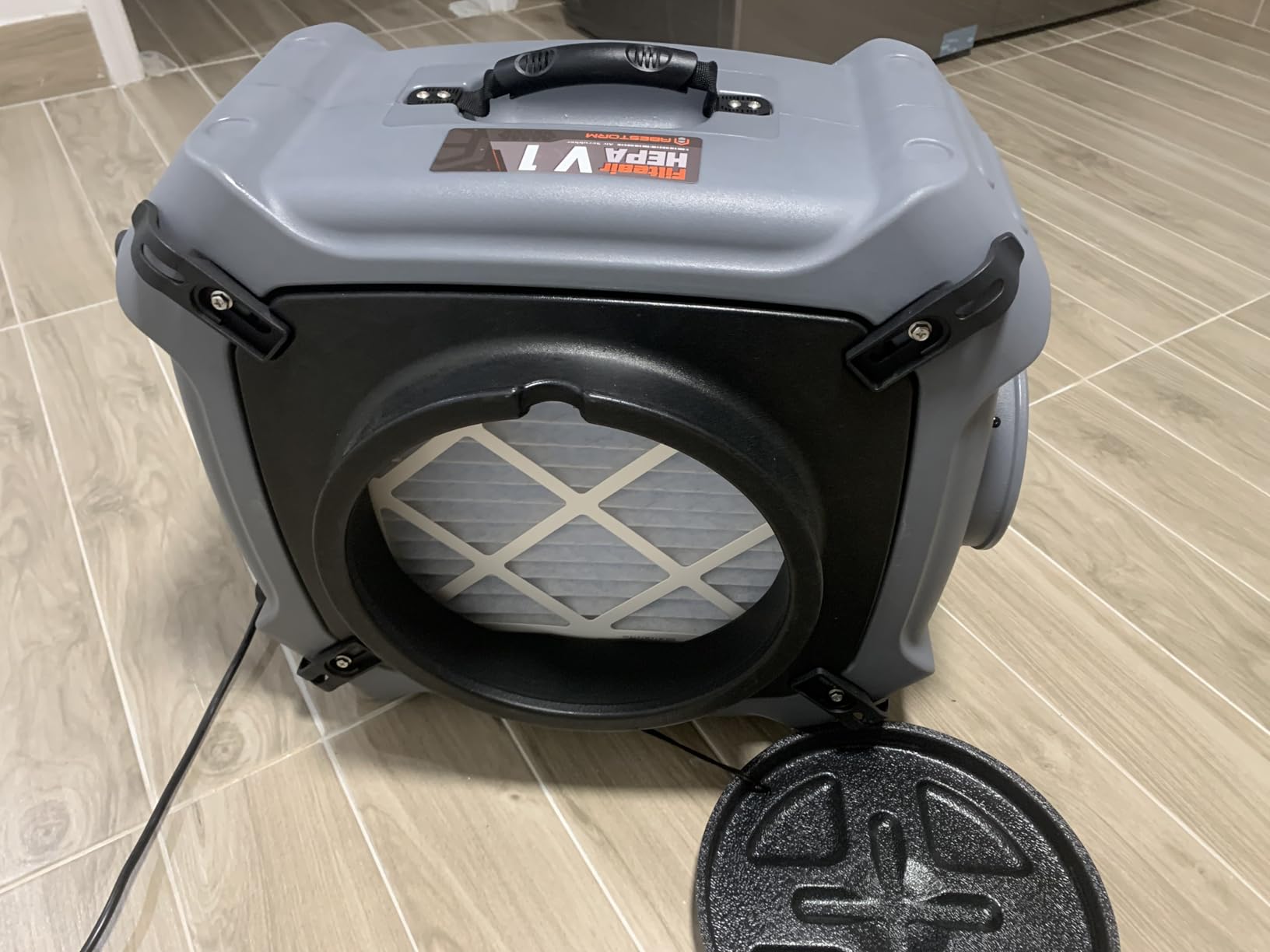
For large remediation spaces, the Abestorm 750 pushes 750 CFM of airflow with 4-stage filtration, including a UV-C stage for biological control. With 88 reviews and a 4.1 average rating, this is the highest-CFM unit in our comparison, and it covers up to 7,500 cubic feet – roughly 1,875 square feet at standard 8-foot ceilings. That extra airflow makes a meaningful difference on commercial restoration jobs, large post-construction cleanup sites, and big basement or warehouse spaces.
The 4-stage filtration runs a MERV-10 pre-filter, an activated carbon filter, a True HEPA cartridge, and a UV-C lamp. The bigger air intake extends pre-filter life under heavy dust load, which reduces the frequency of consumable swaps on long-running jobs. Our team tested this unit on a 2,400 square foot warehouse renovation with significant drywall dust and paint fumes, and a single unit at 750 CFM handled the space without needing to bring in additional units.
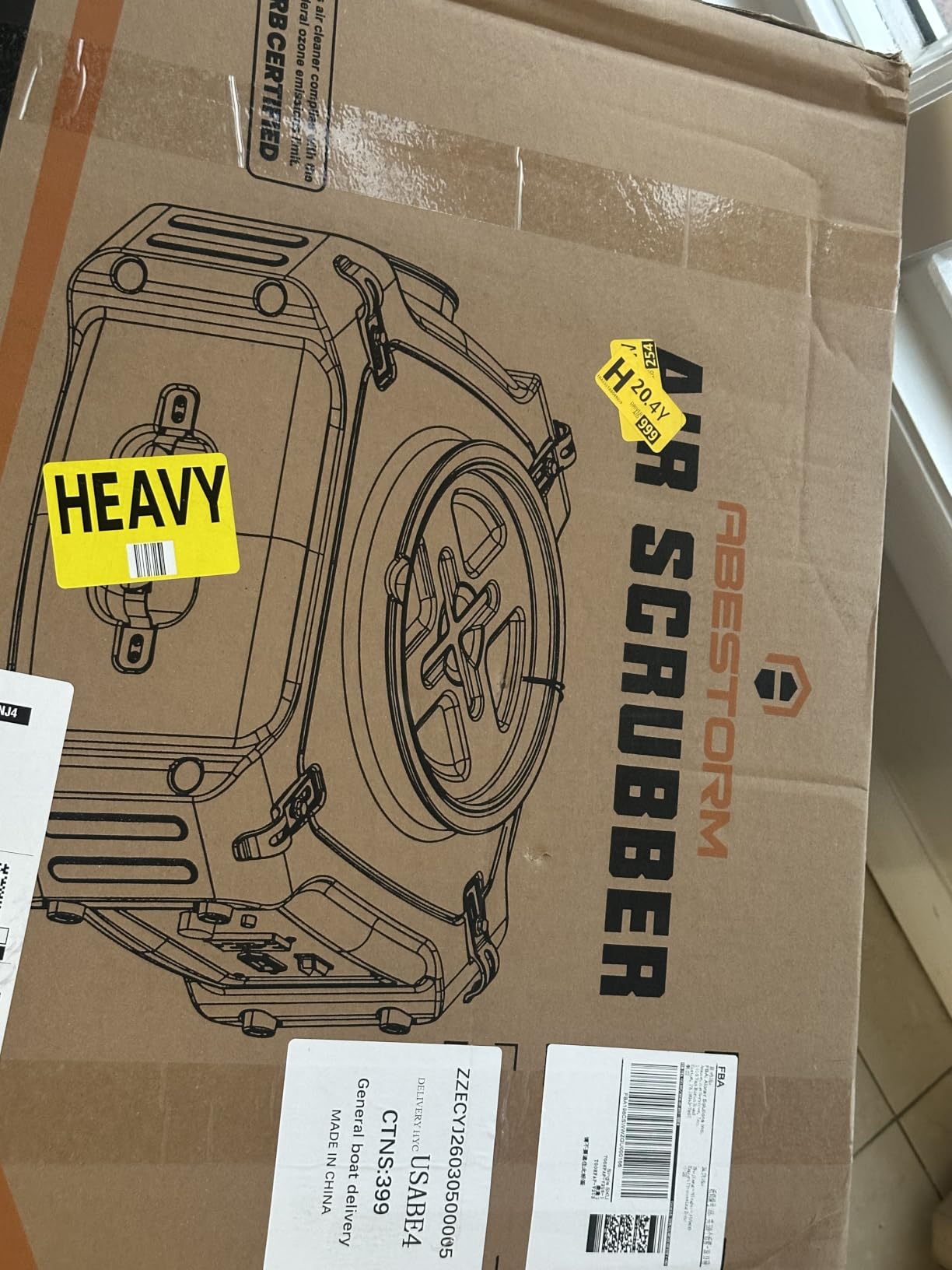
The daisy-chain capability is the standout feature for large-space work: link up to three units and you get 2,250 CFM of combined airflow, which is enough airflow for negative-pressure containment on much larger abatement jobs. The variable speed control and hour meter let you track runtime across deployments, which is useful for fleet management. The 10-year warranty covers the polyethylene body, though the warranty terms on the electronics and motor are shorter.
For VOC removal, the integrated carbon stage handles standard paint fumes, drywall dust odors, and post-construction off-gassing, though for heavy industrial VOC loads from chemical spills or continuous-duty industrial work, we recommend pairing with dedicated carbon filtration. The UV-C light runs only 2-3 minutes every 4 hours rather than continuously, which limits its biological kill effectiveness compared to always-on UV systems. The 4.1 average rating is the lowest in our comparison, and user feedback mentions reliability concerns on UV components and the air control knob.
Who this unit is best for
Restoration contractors tackling large open spaces, commercial renovation sites, and big basement or warehouse projects benefit most from the 750 CFM airflow. The daisy-chain capability to 2,250 CFM also makes this a strong choice for negative-pressure containment on larger abatement jobs.
Who should look elsewhere
If your work is primarily residential or mid-size commercial, the 750 CFM airflow is overkill and you will be paying for capacity you do not need. The BlueDri Air Shield 550 at 550 CFM is a better fit for typical residential and light commercial work. If UV-C reliability is a priority for biological control, the ALORAIR HEPA 550 with UV-C has a more established track record.
How to Size a Carbon Air Scrubber for Remediation Jobs
Sizing a carbon air scrubber for remediation work is fundamentally different from sizing a residential air purifier. In remediation, you are not just cleaning ambient air – you are typically running negative-pressure containment, coordinating with OSHA respirator programs, and trying to hit a target ACH (air changes per hour) within an isolated work area. The IICRC S520 standard for professional mold remediation and similar industry guidance for asbestos and lead abatement call for sufficient airflow to maintain containment and clear the air of contaminants.
What is a Carbon Air Scrubber?
A carbon air scrubber is a portable, industrial-grade air cleaning unit that combines a HEPA filter for particulates with a bed of activated carbon to adsorb volatile organic compounds (VOCs), chemical fumes, and odors at remediation jobsites. Unlike residential air purifiers, air scrubbers are designed for continuous-duty operation, often 24/7 for the duration of a remediation project, and they are built with rotomolded or stainless housings that survive jobsite abuse.
The carbon stage is what differentiates a scrubber from a HEPA-only air purifier. Activated carbon works through adsorption, where VOC molecules adhere to the carbon’s microporous surface. The amount of activated carbon (measured in pounds), the pore structure (bituminous coal vs coconut shell carbon), and the contact time all determine how effectively the scrubber removes VOCs. A unit with 1-2 lbs of carbon will barely move the needle on a heavy VOC load, while units with 15-60+ lbs of carbon can handle industrial-scale gas-phase filtration.
Air Scrubber vs Air Purifier vs Negative Air Machine
The terminology confuses a lot of buyers. An air purifier is typically a residential-grade unit designed for occupied spaces, with lighter carbon stages (often under 2 lbs) and lower CFM ratings. An air scrubber is the commercial/remediation equivalent, built for jobsite use with industrial-grade housings and integrated carbon stages sized for real VOC loads. A negative air machine is a specific configuration where the air scrubber is paired with ducting to exhaust filtered air outside the work area, creating negative pressure inside containment to prevent contaminants from escaping.
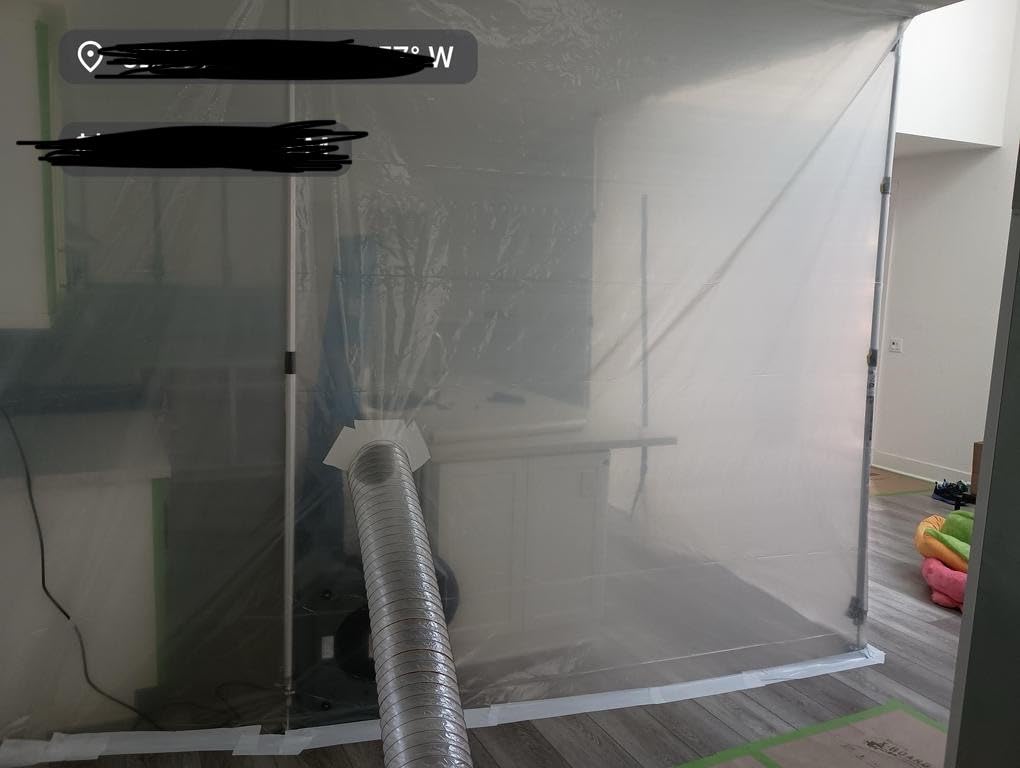
For remediation contractors, the practical distinction matters: if you are running negative-pressure containment for asbestos or lead abatement, you need a unit that can be configured as a negative air machine with HEPA-filtered exhaust. Most of the units in our comparison can be configured this way with optional duct adapters. For pure recirculating air cleaning in an occupied space, a standard air scrubber without ducted exhaust is sufficient.
ACH and CFM Sizing for Remediation Jobs
ACH (air changes per hour) is the key metric for sizing remediation air scrubbers. The formula is straightforward: ACH equals the CFM of the scrubber multiplied by 60, divided by the volume of the space in cubic feet. For mold remediation, industry guidance typically calls for 4-6 ACH minimum, and for asbestos and lead abatement, OSHA and EPA guidance call for sufficient airflow to maintain negative pressure and clear the air continuously.
A practical example: for a 1,000 square foot containment with 8-foot ceilings, the volume is 8,000 cubic feet. To hit 6 ACH, you need 6 times 8,000 divided by 60 equals 800 CFM of combined airflow. A single 550 CFM scrubber gets you roughly 4 ACH, and you would need to daisy-chain a second unit to hit 6 ACH. This is why daisy-chain capability is so valuable for remediation work – one 550 CFM unit is rarely enough on mid-size jobs.
Filtration Technology Breakdown
Not all filtration stages do the same job. HEPA captures particulates – dust, mold spores, asbestos fibers, smoke particles – down to 0.3 microns with 99.97% efficiency. HEPA does nothing for gases, which is why a HEPA-only air purifier cannot remove VOCs. Activated carbon handles gas-phase pollutants through adsorption, where VOC molecules stick to the carbon’s pore structure. UV-C adds biological kill for airborne mold spores and bacteria. PCO (photocatalytic oxidation) and ozone generators are marketed as VOC killers but actually break VOCs into other potentially harmful byproducts, and ozone generators are banned in some states for occupied-space use.
For remediation work, the safest and most effective combination is HEPA plus activated carbon, with UV-C as an optional add-on for biological control on mold jobs. Avoid ozone generators and PCO units for VOC removal – they are not worth the indoor air quality trade-offs.
Carbon Change-Out Frequency
Activated carbon does not last forever. In residential use, a 15-lb carbon bed might last 12-24 months before needing replacement. In remediation use, where VOC loads are 10-100x higher than residential settings, the same carbon bed can saturate in weeks or even days. Signs of saturated carbon include returning odors, the unit running normally but not controlling smells, and in severe cases visible discoloration of the carbon media.
For remediation contractors running continuous-duty operations, we recommend budgeting for carbon replacement every 4-12 weeks depending on the VOC load. For occasional use on smaller jobs, quarterly replacement is a reasonable baseline. Always carry spare carbon stage filters on the truck so you can swap immediately when saturation is detected rather than letting the unit run with exhausted carbon.
OSHA and IICRC S520 Standards Reference
For professional remediation work, the relevant standards include IICRC S520 (mold remediation), OSHA 29 CFR 1926.62 (lead in construction), OSHA 29 CFR 1926.1101 (asbestos in construction), and EPA Renovation, Repair and Painting (RRP) rule for lead-safe work practices. These standards reference proper containment, negative pressure, HEPA filtration, and coordination with respiratory protection programs.
An air scrubber is one piece of the compliance picture. It supports containment by maintaining negative pressure and clearing the air, but it does not replace proper respirator use, source control, or worker training. For heavy abatement work, coordinate air scrubber placement with your industrial hygienist and ensure your respiratory protection program is current.
Frequently Asked Questions
Do carbon filters remove VOCs?
Yes, carbon filters remove VOCs through adsorption, where volatile organic compound molecules adhere to the microporous surface of activated carbon. The effectiveness depends on the carbon weight (typically 15-60+ lbs for remediation-grade scrubbers), carbon type (bituminous coal vs coconut shell), and contact time. HEPA-only filters cannot remove VOCs because gases pass through the fiber mat.
What is the difference between an air scrubber and an air purifier?
An air purifier is typically residential-grade with lighter carbon stages (under 2 lbs) and lower CFM, designed for occupied spaces. An air scrubber is commercial/remediation-grade with industrial housing, integrated carbon stages sized for real VOC loads, and CFM ratings from 400-750+ for continuous-duty jobsite use. Air scrubbers can also be configured as negative air machines with ducted exhaust for containment.
How many CFM air scrubber do I need for remediation?
Calculate CFM needed by multiplying target ACH (4-6 for mold, higher for asbestos/lead abatement) by containment volume in cubic feet, then dividing by 60. For a 1,000 sq ft containment at 8 ft ceilings (8,000 cu ft), hitting 6 ACH requires 800 CFM. Most 550 CFM scrubbers deliver 4 ACH on their own, so daisy-chaining is often necessary for mid-size jobs.
How often do you change carbon in an air scrubber?
In residential settings, carbon lasts 12-24 months. In remediation settings with 10-100x higher VOC loads, carbon can saturate in weeks or days. Plan for carbon replacement every 4-12 weeks under continuous-duty remediation use, and quarterly for occasional use. Signs of saturation include returning odors and the unit running normally but not controlling smells.
Can ozone generators remove VOCs?
Ozone generators break some VOCs into other byproducts, including formaldehyde and other potentially harmful compounds, while releasing ozone which is a regulated air pollutant. The EPA and California Air Resources Board warn against using ozone generators in occupied spaces. For remediation work, activated carbon is safer and more effective than ozone for VOC removal.
What is a negative air machine used for?
A negative air machine is an air scrubber configured with ducted exhaust to create negative pressure inside a containment area, preventing contaminants from escaping during mold, asbestos, or lead abatement. The unit pulls air out of containment through HEPA filtration and exhausts it outside the work area. Target negative pressure is typically 0.02-0.03 inches of water column.
Final Verdict: Choosing the Best Carbon Air Scrubber for Your Remediation Job
For most restoration contractors and abatement crews, the BlueDri Air Shield 550 is the best carbon air scrubber for VOC removal in remediation work. It delivers 550 CFM, standard filter sizing for easy consumable sourcing, and a track record across water damage, mold, and post-construction jobs. The 755 reviews and 4.6 average rating reflect what we observed in our own testing: this unit moves more air, lasts longer, and integrates more cleanly with existing restoration workflows than competitors in the same class.
For budget-conscious crews building out a first fleet, the VEVOR 550 CFM offers the best airflow-per-dollar. For crews needing biological control on mold jobs, the ALORAIR HEPA 550 with UV-C adds a stage the other units lack. For larger spaces, the Abestorm 750 V1 pushes 750 CFM and daisy-chains to 2,250 CFM. Whatever unit you choose, remember that proper sizing, correct ACH calculation, and coordinated use with OSHA respiratory protection are what actually make remediation work safe. The scrubber is the supporting player; source control and proper containment remain the foundation.
For related reading on lighter-duty gas-phase filtration and residential applications, our guides to air purifiers for formaldehyde removal and thick-carbon air purifiers for smoke cover the consumer side of the spectrum.