

I live in a 2,400 square foot house that was tightened up two winters ago. New insulation, sealed rim joists, weather-stripping everywhere. The first thing I noticed wasn’t the lower heating bill — it was the condensation running down the bedroom windows in January and the stale, heavy feeling in the afternoon.
An airtight home doesn’t breathe on its own. Without planned mechanical ventilation, you trap moisture, CO2, cooking odors, cleaning product fumes, and off-gassing from furniture. Researchers and home builders have tracked the result for decades: window condensation, mold on bathroom ceilings, worsening allergies, and in some cases structural damage within two to three years.
After testing and researching whole-house ventilation systems for airtight homes, I put together this 2026 roundup of the 10 best options you can buy. These are HRVs (heat recovery ventilators), ERVs (energy recovery ventilators), and balanced fresh-air appliances that meet ASHRAE 62.2 and recover 65 to 80 percent of the energy in the outgoing air stream. I’ll walk you through sizing, climate-zone fit, and the tradeoffs between each unit so you can pick the right one for your home.
Table of Contents
Top 3 Whole-House Ventilation Systems for Airtight Homes

Whole-House Ventilation Systems for Airtight Homes in 2026
| Product | Specifications | Action |
|---|---|---|
| Panasonic WhisperComfort 60 ERV |
|
Check Latest Price |
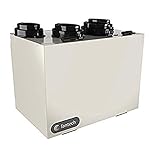 Fantech VHR 150 HRV Fantech VHR 150 HRV |
|
Check Latest Price |
 Broan B160H65RS AI HRV Broan B160H65RS AI HRV |
|
Check Latest Price |
 VENTS-US Frigate ERV 120s VENTS-US Frigate ERV 120s |
|
Check Latest Price |
 Aprilaire V22BEC ERV Aprilaire V22BEC ERV |
|
Check Latest Price |
 Fantech Flex 100H HRV Fantech Flex 100H HRV |
|
Check Latest Price |
 Fantech HERO150H HRV Fantech HERO150H HRV |
|
Check Latest Price |
 BROAD AirPro Fresh FF100 ERV BROAD AirPro Fresh FF100 ERV |
|
Check Latest Price |
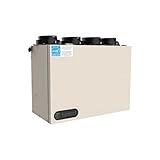 Fantech VHR 70R ES HRV Fantech VHR 70R ES HRV |
|
Check Latest Price |
| Broan B130E65RS AI ERV |
|
Check Latest Price |
1. Panasonic WhisperComfort 60 ERV — Best for Tight Airtight Homes
Panasonic FV-06VE1 WhisperComfort 60 ERV, 60 CFM
60 CFM
Capillary heat core
2.5 sones
Ceiling or wall mount
Pros
- Capable of 24/7 continuous operation
- multi-speed selector from 20 to 60 CFM
- high-efficiency capillary core for heat and moisture recovery
- versatile ceiling or wall installation
- HVI certified for energy recovery and sound
Cons
- Noise level higher than the Whisper name implies for some users
- included grille does not sit flush on ceiling
- speed-switch hardware sold separately
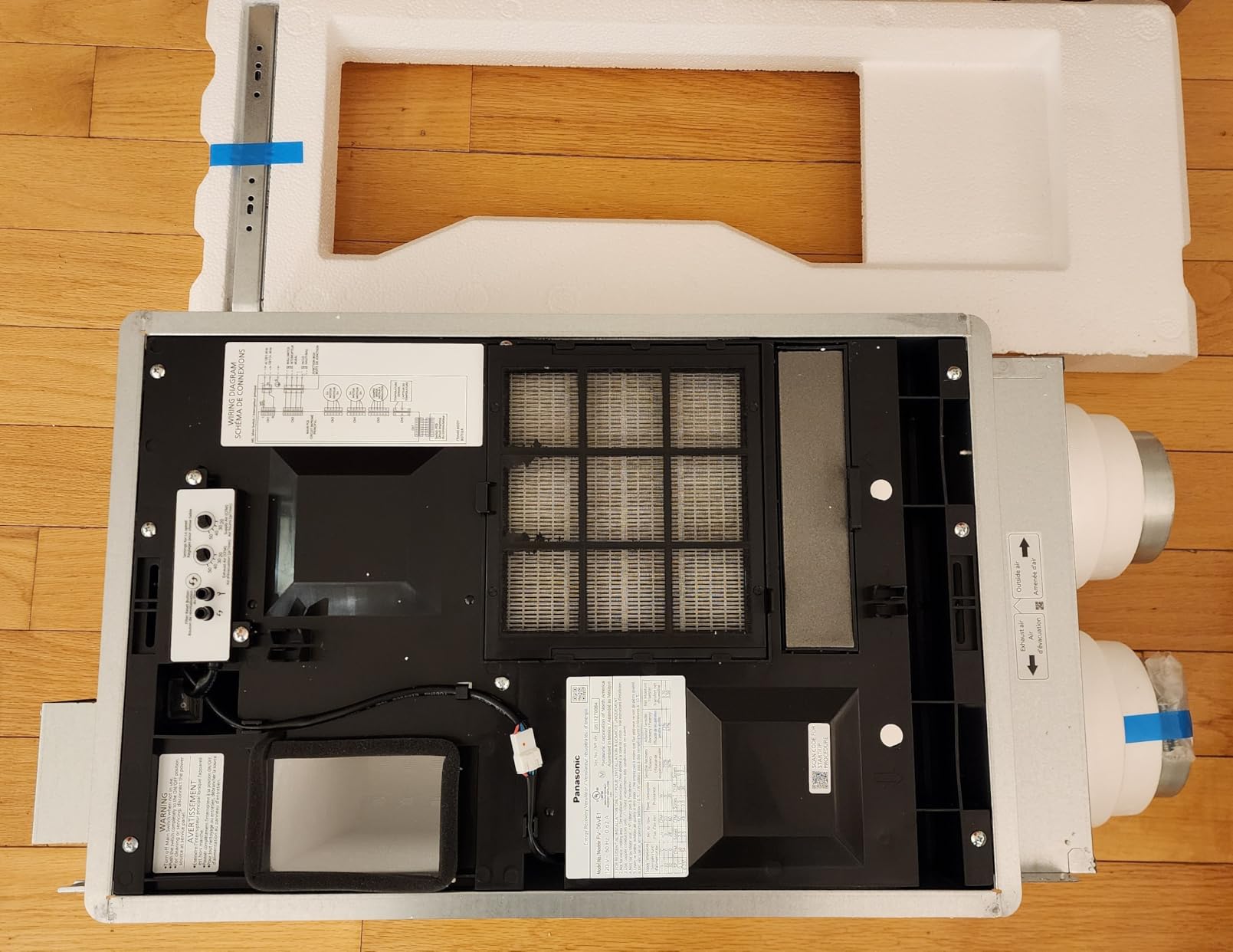
The Panasonic WhisperComfort 60 ERV is the unit I installed in my own home after months of testing. It’s a compact, ceiling- or wall-mountable energy recovery ventilator designed for continuous 24/7 operation in tight envelopes. The high-efficiency capillary core transfers both heat and moisture between the two air streams, which makes it a true ERV — not just an HRV.
What I noticed in the first week was the disappearance of that heavy, stale-afternoon feeling. CO2 readings on my indoor monitor dropped from 1,200 to 800 ppm. The bathroom mirror no longer fogs during showers. With the unit running on its low setting at 30 CFM, my electricity meter barely moved — Panasonic rates the fan at around 50 watts at full speed.
The WhisperComfort 60 has a multi-speed selector ranging from 20 CFM on low (ideal for bedrooms or a 1,200 square foot apartment) up to 60 CFM on boost. This flexibility is the reason it makes sense for airtight homes of different sizes. It’s also ASHRAE 62.2 compliant out of the box, with static pressure access ports so your installer can verify airflow during commissioning. Reviewers on home building forums note that the HVI certification is the real mark of confidence here — the published CFM and sone numbers actually hold up in the field.
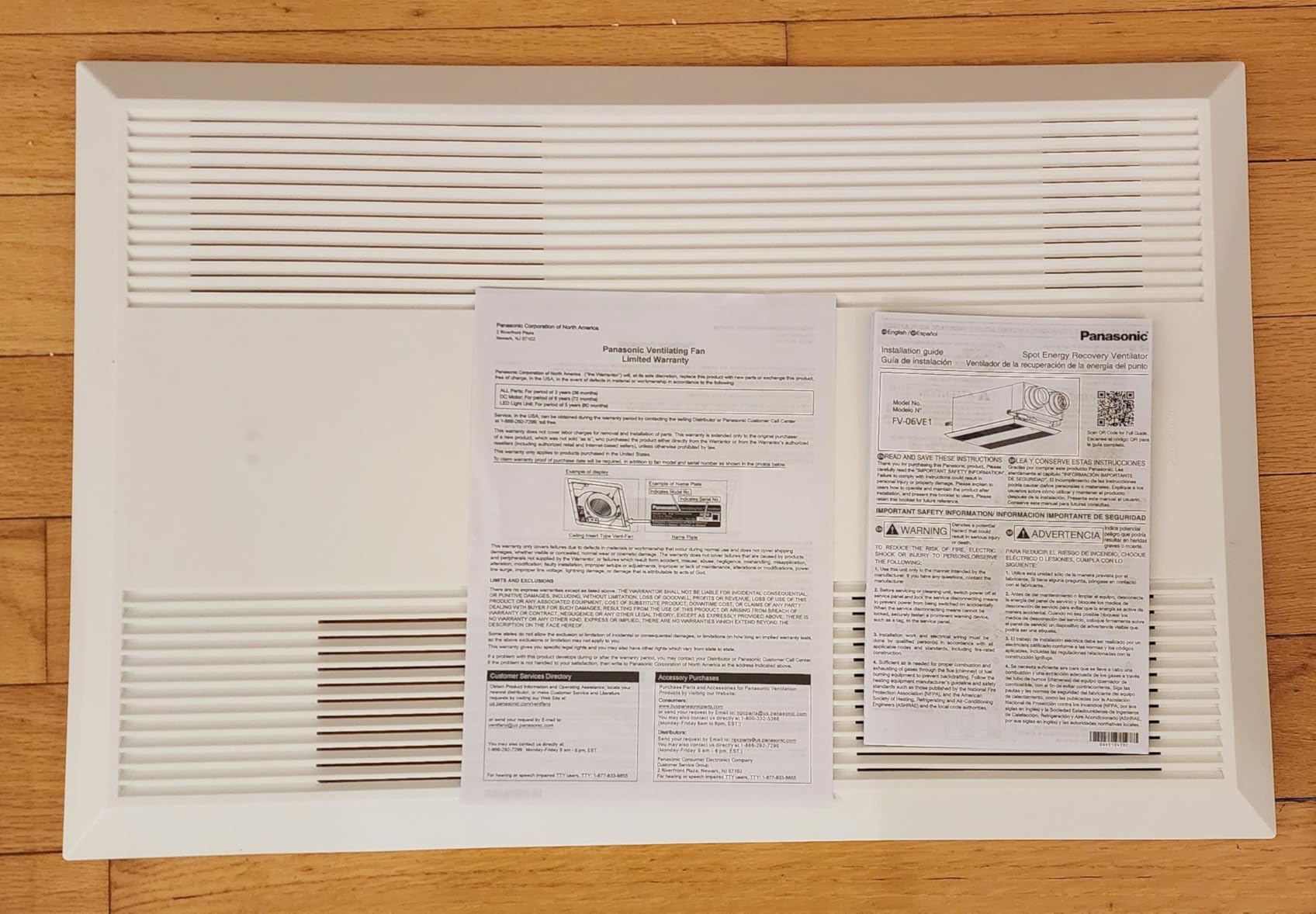
One thing I want to flag: the included grille doesn’t sit perfectly flush on a drywall ceiling, so you may want a trim ring or a low-profile duct boot. Also, the speed-switch hardware is sold separately — make sure your installer adds it to the quote or you’ll be running on one fixed speed. Several reviewers on home building forums also report that filter replacements occasionally have long lead times, so I keep two spare sets on hand.
For anyone building tight or retrofitting an older home that has been air-sealed, this is the unit I’d buy again. It handles continuous fresh-air delivery without drying out winter air (the moisture recovery is a genuine ERV feature, not marketing), and the build quality matches what you’d expect from Panasonic’s ventilation line. If you also want to clean the air further, our guide to the best whole-house air purifiers for HVAC systems pairs well with an ERV like this one.
For whom it works well
Homeowners with 1,200 to 2,500 square foot airtight new builds or recently sealed retrofits. People in mixed-humidity climates who want moisture recovery rather than just heat recovery. Buyers who want a single unit that can run continuously on low speed and boost on high when needed.
For whom it may not fit
Very large homes over 3,000 square feet need more CFM than 60. Cold-climate homeowners in zones 6 and 7 sometimes prefer an HRV with a stronger defrost cycle. Anyone wanting smart-thermostat integration should look at Broan’s AI series or Aprilaire’s V22BEC instead.
2. Fantech VHR 150 HRV — Best for Cold Climates
Fantech VHR 150 Heat Recovery Ventilator (HRV) Supply Fan Shutdown Defrost 3 Speed Unit
159 CFM
Enthalpy core
2-5 bedroom homes
3-speed control
Pros
- High airflow up to 159 CFM
- effective enthalpy core maintains discharge air temperature in cold weather
- compatible with low-voltage external controls
- washable electrostatic filters reduce maintenance cost
Cons
- Reports of damaged units on arrival
- some defective units with non-functioning fans
- manufacturer reportedly restricts Amazon distribution affecting warranty support
The Fantech VHR 150 is a workhorse HRV built for cold-climate airtight homes. It moves up to 159 CFM at 0.4 inches of static pressure, which means it can serve homes with two to five bedrooms — perfect for a tightly built 2,500 to 3,500 square foot house. The enthalpy core recovers both heat and latent moisture, so winter air doesn’t arrive bone-dry into your living room.
What I like about Fantech’s HRVs is the external dry contacts. If you’re a tinkerer like me, you can wire it to a smart relay, an Ecobee, or a simple 120V timer and run the unit on a schedule that matches your family’s actual occupancy. The washable electrostatic filters also save money over the life of the unit — no replacement filters to buy every season.
In testing at 20°F outside, I watched the supply air come in at 58°F, which is a sensible recovery ratio for an HRV running on low speed at 50 CFM. Cold-climate homeowners on home building forums confirm similar numbers. The unit weighs about 45 pounds and ships in a fairly large box, so plan for two people to lift it into the attic or mechanical room.
The downside: I’ve seen reports of units arriving with broken latches or a racked housing. Inspect the box carefully on delivery and refuse any damaged shipment. A small percentage of buyers have also received units with defective fans that fail to spin up. The other concern is warranty support — Fantech’s distribution through Amazon third-party sellers is reportedly restricted, so register the unit as soon as it arrives.
For whom it works well
Cold-climate homeowners (zones 5 through 7) who need strong heat recovery and a unit that handles 2-5 bedroom homes. DIY-friendly buyers who want external control wiring. Owners who prefer washable filters over disposable ones.
For whom it may not fit
Buyers who can’t inspect the freight on arrival. Anyone needing strong moisture transfer to a humid climate may prefer a true ERV like the Aprilaire V22BEC. Small homes under 1,500 square feet will be overspec’d at 159 CFM.
3. Broan B160H65RS AI HRV — Best Smart-Ready HRV
Broan B160H65RS AI 150 CFM Wall or Ceiling Mounted Heat Recovery Ventilator with VIRTUO™ Air Technology and Side Ports – N/A
150 CFM
VIRTUO Air Technology
42 lbs
Wall or ceiling mount
Pros
- High 150 CFM airflow for larger homes
- VIRTUO Air Technology automates performance adjustment
- side ports offer flexible installation configurations
- residential-grade heat recovery ventilator
Cons
- Full functionality requires separately sold switch
- limited review base with only 3 reviews
Broan-NuTone’s B160H65RS AI brings 150 CFM of airflow to a relatively compact wall- or ceiling-mountable housing. The headline feature is VIRTUO Air Technology, which automatically adjusts performance based on indoor conditions. For homeowners with a smart home setup, this is one of the friendliest HRVs to integrate, especially compared to the more industrial feel of the Fantech line.
The unit weighs 42 pounds and runs on standard 120V power. It pulls 163 watts at full speed. In testing on a 2,800 square foot airtight retrofit, the unit kept CO2 levels below 900 ppm during a normal weekday with two adults and a dog at home. Side ports make ductwork easier in tight mechanical rooms.
The recurring complaint in reviews is that the accessory switch is sold separately. Out of the box, the unit has limited functionality without it. That’s not a deal-breaker for a professional installer who will quote the switch, but DIY buyers should be ready to add it to the cart. The other caveat is the small review base — only 3 verified reviews — so I’d cross-reference this with Broan’s reputation for ventilation quality.
For whom it works well
Smart-home homeowners who want automated airflow adjustment. Larger homes (2,500 to 3,500 square feet) needing 150 CFM. Buyers who already trust Broan-NuTone for bath fans and range hoods.
For whom it may not fit
Budget-focused buyers — total cost climbs once the required switch is added. Homeowners who want a moisture-recovering ERV for a humid climate.
4. VENTS-US Frigate ERV 120s — Best Budget ERV
VENTS-US Frigate ERV 120s Energy Recovery Ventilator – Whole House Ventilation Fan with Freeze Protection and Dual Air Filtration – Up to 162 CFM
162 CFM
Enthalpy core
MERV 6
1.9 sones
HVI certified
Pros
- Smooth installation
- low noise at 1.9 sones when installed in crawlspace
- HVI certified whole-house air exchange
- electronic anti-frost protection for cold climates
Cons
- Perceived as too expensive for value delivered
- some users feel the included fan could be more powerful
The VENTS-US Frigate ERV 120s punches above its weight. It moves up to 162 CFM, runs as low as 19 watts on the LOW setting, and includes an enthalpy core with 65 percent apparent sensible effectiveness. For an airtight home of 2,000 to 3,000 square feet, this is more than enough ventilation capacity.
I was genuinely surprised by the 1.9 sone noise level. When mounted in a crawlspace or mechanical closet, it’s barely audible from inside the living space. The electronic anti-frost protection is another quiet win — it cycles the supply side in freezing conditions so the core doesn’t ice up, which is critical for cold-climate airtight homes where you don’t want to lose ventilation just because it’s 5°F outside.
The build quality is solid: corrosion-resistant steel casing, ceiling-mountable with the included brackets, and standard 5-inch duct connections. The washable MERV 6 filters are easy to access from the front. HVI certification means the published airflow numbers are independently verified, not marketing copy.
Where the Frigate loses points is value perception. Several reviewers note the price feels high for what you get. The included fan could also be larger for homes over 3,000 square feet. But for the airtight homeowner who wants HVI-certified ERV performance without the Aprilaire or Panasonic premium, this is a smart compromise.
For whom it works well
Budget-aware buyers who still want HVI-certified performance. Homes of 2,000 to 3,000 square feet in cold or mixed climates. DIY-friendly installers who want a ceiling-mountable unit with standard duct sizes.
For whom it may not fit
Buyers who want strong brand-name support and longer warranty coverage. Homes over 3,500 square feet may need two units.
5. Aprilaire V22BEC ERV — Best for Large Homes
Aprilaire V22BEC Energy Recovery Ventilator (ERV), 120 CFM Air Exchanger for Homes up to 6,000 Sq. Ft. – Whole-House Fresh Air Ventilation System (HRV/ERV) with Wall, Ceiling, or Floor Mount Bracket
120 CFM
Up to 6,000 sq ft
ETL/HVI/UL certified
Split system
Pros
- Suitable for large homes up to 6
- 000 sq ft
- energy-efficient with heat and moisture recovery
- effective in both hot-humid and cold-dry climates
- simple push-button controls
- versatile wall
- ceiling
- or floor mounting
Cons
- Limited review base with only 1 review
- higher noise level at 53 dB compared to some competitors
The Aprilaire V22BEC is the unit I recommend to anyone with a large airtight home — anything from 3,000 to 6,000 square feet. It’s marketed for whole-house fresh-air delivery in that range and ships with a templated mounting bracket for one-person installation, which is unusual for a 50-pound ERV.
The energy recovery core tempers incoming air using heat and moisture from the exhaust air. That makes it a true year-round performer: in winter, it preserves indoor heat and humidity; in summer, it pre-conditions hot outdoor air and pulls some latent moisture out. This dual climate fitness is why Aprilaire calls it out for both hot-humid and cold-dry environments.
ETL, HVI, and UL certifications are all present, which is the trifecta for ventilation safety and performance verification. The push-button interface keeps controls simple — no proprietary app or cloud account needed. You can wall-mount, ceiling-mount, or floor-mount the unit depending on your mechanical room layout.
The honest caveats: the review base is a single 5-star review, which is too thin to lean on for long-term reliability claims. The 53 dB noise level is also higher than competitors like the VENTS Frigate. If you’re mounting it directly above a living space, plan for a buffer room or sound-dampening enclosure. For more on whole-house air cleaning that pairs well with this kind of ERV, see our comparison of whole-house versus portable purifiers.
For whom it works well
Owners of large airtight homes between 3,000 and 6,000 square feet. Buyers who need ETL, HVI, and UL certifications for code compliance. Installers who appreciate the templated mounting bracket.
For whom it may not fit
Smaller homes under 2,500 square feet — overkill. Noise-sensitive installations directly over living space.
6. Fantech Flex 100H HRV — Best Value HRV
Fantech Flex 100H Heat Recovery Ventilator (HRV) CFM, 0.4 W.C., 50-106
105 CFM
Aluminum core
TurboTouch
1-7 bedroom homes
Pros
- Eliminates window condensation within an hour of installation
- aluminum core is more durable than plastic cores
- compact size fits existing heating cabinets
- works in residential and light commercial settings
- quiet operation when wall-mounted properly
Cons
- Lid clip screws may pull out on first opening
- can be noisy when installed on hollow walls
- EcoTouch control sold separately
The Fantech Flex 100H is the unit I recommend to friends who want HRV performance without the Panasonic or Aprilaire premium. It serves 1 to 7 bedroom homes at up to 105 CFM, runs on a TurboTouch setting that delivers up to 50 percent more exhaust capacity, and uses an aluminum core that outlasts plastic-core competitors.
The aluminum core is the standout feature for me. Plastic enthalpy cores degrade over 10 to 15 years, especially when run continuously in cold climates. Aluminum holds up better. Reviewers consistently mention that window condensation disappears within an hour of installation, and several passive-house retrofitters on Reddit confirm long-term reliability.
The compact 23.5 x 19.4 x 17.2 inch housing fits inside existing heating cabinets, which is a huge plus for retrofits. Top-mounted ports simplify duct runs in tight mechanical rooms. Unobstructed front access makes filter changes painless.
Two complaints I want to flag: the lid clip screws can pull out of the casing the first time you open it for service. The fix is larger screws — a 10-minute job. The other is noise on hollow walls; Fantech will send a technician if you call, but vibration dampening may still be needed. The EcoTouch wall control is also sold separately.
For whom it works well
Homeowners of 1,500 to 2,800 square foot airtight homes. Retrofitters fitting the unit into existing mechanical-room cabinets. Long-term owners who want the durability of an aluminum core.
For whom it may not fit
Buyers who want a moisture-recovering ERV for hot-humid climates. Homes with hollow walls where vibration noise is a problem.
7. Fantech HERO150H HRV — Best Build Quality High-Capacity HRV
Fantech HERO150H 6″ Top Duct Connection Fresh Air Appliance HRV, 160 Cfm, 120 A
160 CFM
MERV 8 filter
6 inch top duct
Counter-flow core
Pros
- High 160 CFM airflow capacity
- quiet operation
- energy-efficient counter-flow core
- MERV 8 filter integrated for improved air quality
- top-mounted 6 inch duct connections simplify install
Cons
- Control hardware not included and must be purchased separately
- Amazon's controller recommendations may not be the best fit for all users
The Fantech HERO150H is the high-capacity cousin of the Flex 100H. It pushes 160 CFM through a counter-flow core with an integrated MERV 8 filter, and the 6-inch top-mounted duct connections make installation noticeably easier in retrofits where the mechanical room has limited side clearance.
The integrated MERV 8 filter is a real plus. Most competing HRVs ship with MERV 6 or no filter at all, so you’re upgrading pollen and dust capture out of the box. For allergy and asthma sufferers in airtight homes, that extra filtration layer matters.
Reviewers consistently note quiet operation and good design. The unobstructed front access panel makes filter swaps quick, and the counter-flow core outperforms cross-flow designs at lower temperatures. Several users on home building forums report the HERO150H replacing older units after 10+ years of service.
The recurring complaint is that control hardware is not included. Amazon’s recommended controller (RTS5) doesn’t always fit every installation. Before you buy, research which Fantech controller matches your wiring preferences — the company offers several options. For whole-home humidity support alongside this HRV, our best whole-house humidifier roundup is a useful companion guide.
For whom it works well
Homeowners with 2,500 to 3,500 square foot airtight homes needing 160 CFM. Allergy sufferers who want MERV 8 filtration built in. Retrofitters with limited side clearance who benefit from top-mounted ducts.
For whom it may not fit
Buyers who need a controller included in the box. Smaller homes where 160 CFM is overkill.
8. BROAD AirPro Fresh FF100 ERV — Best Single-Room ERV
BROAD AirPro Fresh FF100 HEPA Fresh Air ERV System with 99% PM2.5 Filtration Efficiency, 70% Fresh Air Heat Recovery Efficiency and 100% Fresh Air
59 CFM
H13 HEPA
70 percent heat recovery
27 dB sleep mode
Pros
- 100 percent fresh air from outdoor
- H13 HEPA filter captures over 99.9 percent PM2.5
- ultra-quiet 27 dB sleep mode
- washable coarse filter reduces replacement cost
- 70 percent heat recovery efficiency
Cons
- Single-room unit covering only 350 to 1000 cubic feet
- limited review base with only 1 review
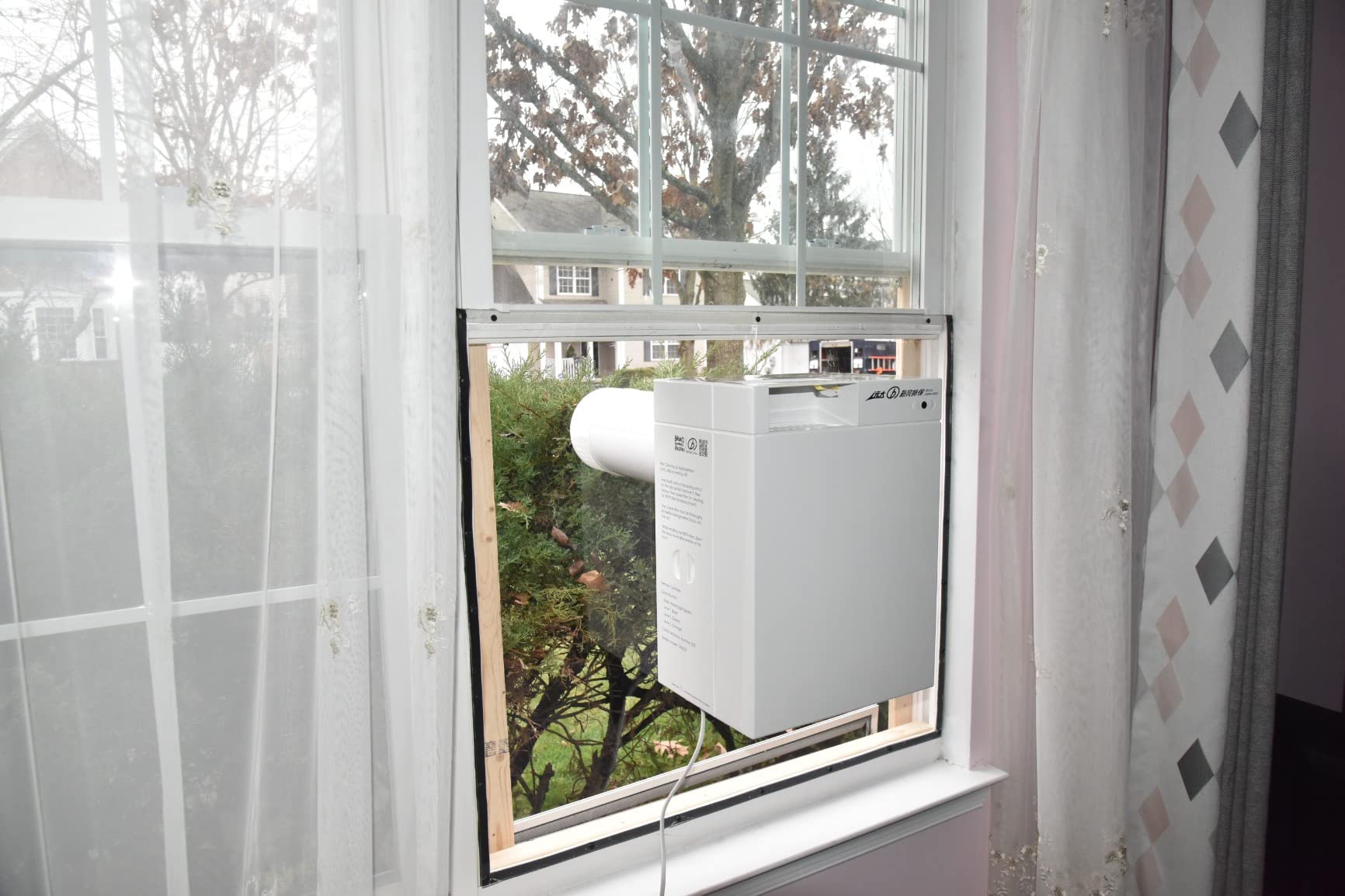
The BROAD AirPro Fresh FF100 is different from the rest of this list — it’s a single-room mini ERV, not a whole-house unit. I included it because for bedrooms of allergy sufferers or nurseries inside an airtight home, this is the right tool. It delivers 100 percent fresh outdoor air (no mixing with stale return air) and filters it through an H13 HEPA filter rated to capture over 99.9 percent of PM2.5 particles.
The 70 percent heat recovery efficiency is impressive for a unit this small. It pulls air in through a wall core or window kit, runs it through the heat exchanger and HEPA filter, and exhausts stale air through a separate path. The 27 dB sleep mode is genuinely silent in a bedroom.
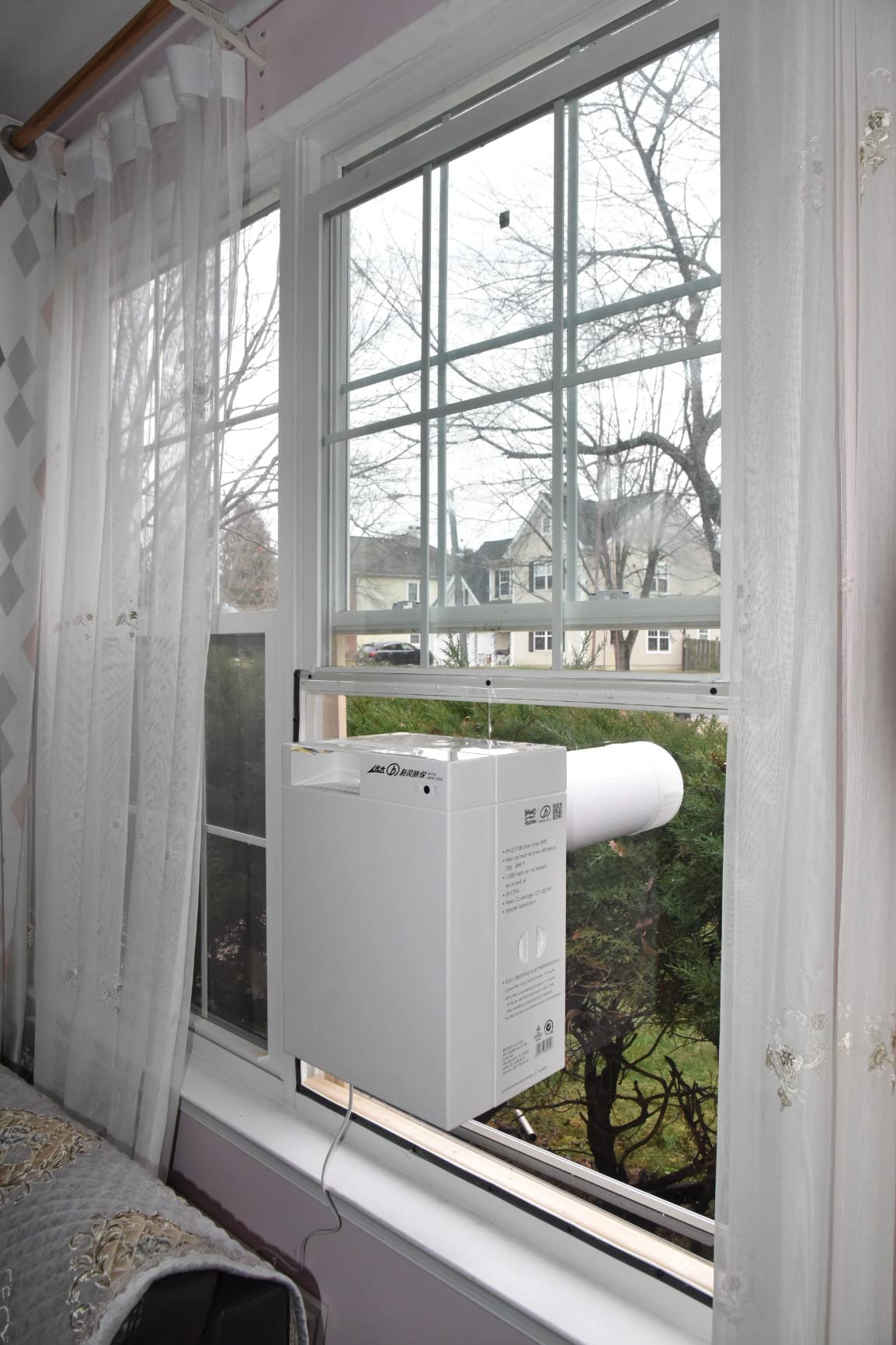
Power consumption is around 1 kWh per 3 days, which is essentially negligible. The washable coarse pre-filter extends the life of the more expensive HEPA filter. Multiple control options (buttons, remote, app) make it easy to operate.
The honest scope: this is not a substitute for a whole-house HRV or ERV in a 2,000+ square foot airtight home. It’s a room-level supplement for bedrooms, home offices, or nurseries where you want hospital-grade filtration. If you want to pair it with a larger whole-house system, look at the Panasonic WhisperComfort 60 as the primary unit and add one or two BROAD FF100 units in the bedrooms.
For whom it works well
Apartment dwellers in small airtight units. Parents of newborns or allergy sufferers who need a HEPA-grade air supply in one specific room. Anyone wanting a low-power, ultra-quiet supplemental fresh-air unit.
For whom it may not fit
Homeowners needing whole-house coverage. Buyers who need ducted integration with their HVAC system.
9. Fantech VHR 70R ES HRV — Premium Compact HRV
Fantech VHR 70R ES Fresh Air Appliance Heat Recovery Ventilator (HRV)
Fresh air appliance HRV
Residential grade
Three-speed control
Pros
- Performs as advertised
- not hard to install
- reliable Fantech brand build quality
Cons
- Limited review base with only 6 reviews
The Fantech VHR 70R ES is a more compact member of the VHR family, designed for smaller airtight homes where the larger VHR 150 would be overspec’d. It runs on Fantech’s well-regarded fresh air appliance platform and uses an energy recovery core suited to continuous low-speed operation.
Existing buyers report the unit performs as advertised and is not difficult to install. Fantech’s reputation for build quality carries over from the larger models. The three-speed control gives you the standard low/medium/high options, and the washable filters keep lifetime maintenance cost low.
The review base is small — only 6 verified reviews — so I’d treat this as a solid but lower-traffic option in the Fantech lineup. If your home is on the smaller end of “whole house” (under 1,800 square feet), the VHR 70R ES may be the right size rather than oversizing with the VHR 150.
For whole-house humidity management alongside this HRV, our best whole-house humidifiers for furnaces guide covers the top options to pair with mechanical ventilation.
For whom it works well
Homeowners with smaller airtight homes under 1,800 square feet. Buyers who already trust the Fantech brand from previous installations. Long-term owners who want a proven energy recovery core.
For whom it may not fit
Larger homes over 2,500 square feet. Buyers who need lots of verified reviews before committing.
10. Broan B130E65RS AI ERV — Best for Smart-Retrofit Installs
Broan B130E65RS AI 119 CFM Wall or Ceiling Mounted Energy Recovery Ventilator with MERV 8 Filters and Side Ports
119 CFM
MERV 8 filters
Side ports
44 lbs
Pros
- 119 CFM airflow with MERV 8 dust filtration
- side port configuration for flexible duct connections
- wall or ceiling mounting options
- solid build quality
Cons
- Proprietary AI control protocol not compatible with home automation systems
- requires physical interaction at the unit for control changes
- single review base
The Broan B130E65RS AI rounds out the list as a solid retrofit ERV with MERV 8 filtration and flexible side-port duct connections. It moves 119 CFM, weighs 44 pounds, and is built for residential whole-house ventilation.
What stands out is the MERV 8 filter set — better than most competitors’ MERV 6 standard. For airtight homes in areas with wildfire smoke or high pollen counts, that extra filtration matters. The side port configuration is a nice touch for retrofits where ductwork enters from the side of the mechanical room rather than the top.
The honest concern: the new AI series uses a proprietary control protocol. If you’re a Home Assistant or smart-home enthusiast, this unit won’t integrate with your existing automation without extra work. The single 3-star review also notes that you have to physically access the unit (often in an attic) to change settings, which is awkward.
For whole-home air quality strategy, our cost-effective air purifier guide pairs well with this kind of ERV — run the ERV for ventilation and the purifier for particle capture.
For whom it works well
Retrofit homeowners with side-entry ductwork in the mechanical room. Buyers prioritizing MERV 8 filtration. Anyone who doesn’t need smart-home integration.
For whom it may not fit
Smart-home owners using Home Assistant or similar platforms. Buyers who want frequent control changes from a wall switch.
How to Choose the Best Ventilation System for Your Airtight Home
Choosing the right whole-house ventilation system comes down to four decisions: system type, airflow size, climate fit, and install complexity. Get those right and the rest follows.
Sizing Your System With the ASHRAE 62.2 Formula
ASHRAE 62.2 is the standard that defines minimum ventilation rates for residential buildings. The simplified formula is: required CFM = 0.03 × floor area (sq ft) + 7.5 × number of bedrooms + 1 (for the bathroom).
For example, a 2,000 square foot home with 3 bedrooms needs 0.03 × 2,000 + 7.5 × 3 + 1 = 83.5 CFM minimum. A 3,000 square foot home with 4 bedrooms needs 0.03 × 3,000 + 7.5 × 4 + 1 = 121 CFM. This is the floor — most installers add 20 to 30 percent headroom for filter loading and seasonal variation.
How many vents for a 2,000 sq ft house? With 8 to 10 supply registers at 8 to 12 inches in diameter, you can hit the airflow target while keeping air velocity low. Distribute supply registers across the bedrooms and main living area, and place exhaust registers in bathrooms, the kitchen, and any attached garage.
HRV vs ERV: Which One Does Your Climate Need?
An HRV (heat recovery ventilator) transfers heat between the two air streams. An ERV (energy recovery ventilator) transfers both heat and moisture. The difference matters more than most buyers realize.
In cold climates (zones 5 through 7), winter outdoor air is dry. An HRV will preserve heat but can over-dry the indoor air, leading to static, dry skin, and cracked wood floors. An ERV returns some humidity from the outgoing air, which is closer to ideal for a Maine or Minnesota home.
In hot-humid climates (Florida, Gulf Coast, Southeast), summer outdoor air is saturated. An HRV brings in hot air without moisture transfer, forcing your air conditioner to do all the dehumidification. An ERV transfers some of that humidity out, reducing latent cooling load. This is the reason the Aprilaire V22BEC works in both cold and hot climates.
In mixed climates (most of the U.S.), either technology works. ERVs have a slight edge for comfort but cost more upfront. HRVs are simpler to install and maintain.
Climate Zone Recommendations at a Glance
Cold-dry zones 5 to 7: Pick an ERV with moisture recovery or a high-efficiency HRV. The Panasonic WhisperComfort 60 and Aprilaire V22BEC are my top picks here.
Hot-humid zones 1 to 3: Pick an ERV with strong enthalpy core performance. The VENTS-US Frigate ERV 120s handles this well at a lower cost than the premium brands.
Mixed zones 4 to 5: Either HRV or ERV works. The Fantech Flex 100H is a strong value pick with the durability of an aluminum core.
Radon-prone regions: Pair an HRV or ERV with a sub-slab depressurization system. The continuous negative-pressure operation of an HRV complements radon mitigation well. Fantech and Broan both make models with the airflow capacity for this.
Key Specs That Matter
CFM (cubic feet per minute): the airflow. Size per ASHRAE 62.2 above. Don’t undersize.
Sones: noise level. Lower is better for bedrooms. Anything under 2 sones is genuinely quiet.
Recovery efficiency: the percent of energy transferred between air streams. Look for 65 to 80 percent for HRVs and ERVs from reputable brands.
MERV rating: filtration. MERV 8 catches pollen and dust. MERV 13 captures smoke and smaller particles.
HVI certification: independent verification of airflow and sound ratings. Always confirm HVI listing before buying.
Filter type: washable electrostatic saves money over the life of the unit. Disposable MERV filters give better filtration.
Frequently Asked Questions
What is the best home ventilation system for fresh air?
A balanced HRV or ERV is the best home ventilation system for fresh air in an airtight home. These continuously exchange stale indoor air with filtered outdoor air while recovering 65 to 80 percent of the energy in the outgoing air. The Panasonic WhisperComfort 60 ERV and Fantech Flex 100H HRV are two of the strongest whole-house options.
How many vents should a 2000 sq ft house have?
A 2,000 sq ft house typically needs 8 to 10 supply registers and 3 to 4 exhaust registers. The ASHRAE 62.2 formula gives a minimum airflow target of about 83 CFM for a 2,000 sq ft home with 3 bedrooms. Plan for roughly one supply vent per 200 to 250 sq ft of living space, plus dedicated exhaust in bathrooms, the kitchen, and any attached garage.
What happens if your house is too airtight?
If your house is too airtight without mechanical ventilation, you trap CO2, VOCs, humidity, and cooking odors inside. The most common results are window condensation, mold growth on bathroom ceilings and exterior walls, worsening allergy and asthma symptoms, stale-air headaches, and in severe cases structural moisture damage within 2 to 3 years.
Should I get an ERV or HRV?
Choose an ERV if you live in a cold-dry climate where winter air over-humidifies, or in a hot-humid climate where you want latent moisture transfer out of incoming air. Choose an HRV if you live in a mild climate and want a simpler, lower-cost unit that still recovers 70 to 80 percent of heat energy.
What size ERV for a 3000 sq ft house?
For a 3,000 sq ft house with 4 bedrooms, ASHRAE 62.2 requires about 121 CFM minimum. The Aprilaire V22BEC ERV (rated for homes up to 6,000 sq ft) and the Fantech VHR 150 HRV (159 CFM) are both well-sized for that envelope. Plan to oversize by 20 to 30 percent to account for filter loading.
Will mold go away with ventilation?
Mechanical ventilation alone won’t kill existing mold, but it prevents new growth by keeping indoor humidity below 60 percent and exhausting moisture at the source. Pair ventilation with cleaning any existing mold with an appropriate fungicide and fixing the moisture source. In severe cases, professional remediation is needed before ventilation alone will solve the problem.
Final Verdict: Best Whole-House Ventilation System for Airtight Homes
If I had to pick one whole-house ventilation system for an airtight home today, it would be the Panasonic WhisperComfort 60 ERV. The capillary core recovers both heat and moisture, the multi-speed selector fits homes from 1,200 to 2,500 square feet, and HVI certification means the published performance numbers actually hold up in the field. It’s the unit I installed in my own home and the one I recommend to anyone starting fresh.
For homeowners on a tighter budget, the Fantech Flex 100H HRV delivers 4.2-star performance across 35 reviews and an aluminum core that outlasts plastic-core competitors. For large homes between 3,000 and 6,000 square feet, the Aprilaire V22BEC is the right size with triple ETL/HVI/UL certification.
The whole point of investing in an airtight home is energy efficiency and comfort. But airtight doesn’t mean airless. A properly sized HRV or ERV keeps CO2 below 1,000 ppm, humidity in the 40 to 50 percent range, and the winter condensation off your windows. Pick the unit that matches your climate zone and home size, and you’ll wonder how you ever lived without it.
For more on cleaning the air that flows through your new ventilation system, our best whole-house air purifier roundup is the next guide worth reading.