
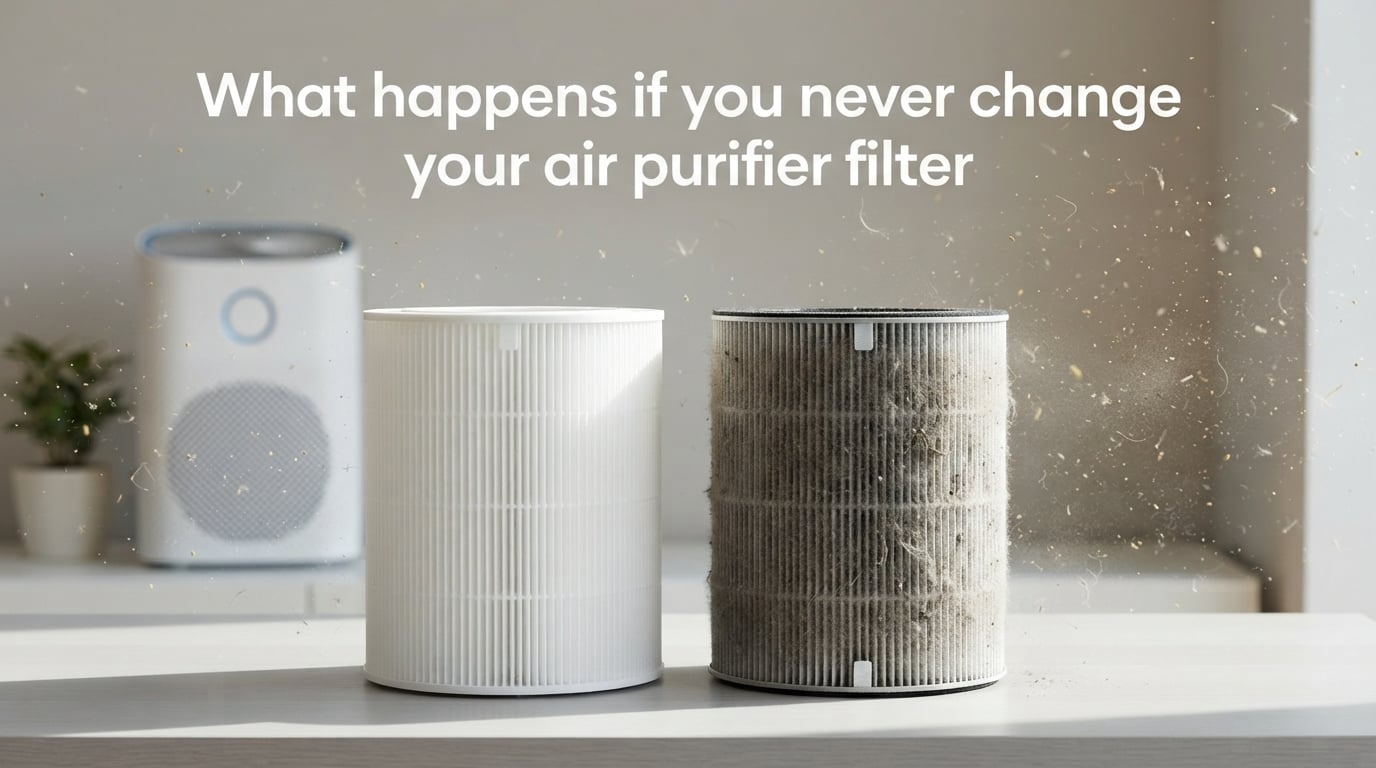
If you have ever wondered what happens if you never change your air purifier filter, the short answer is that your unit slowly stops being an air purifier and starts being a fan blowing dirty air around your room. A clogged filter restricts airflow, lets trapped dust, pollen, and mold spores blow back into your living space, and forces the motor to work harder than it was designed to. Within months you lose the health benefits you bought the purifier for in the first place.
Our team has spent the past 2026 reviewing air purifier setups, talking to owners on Reddit and home maintenance forums, and digging into EPA and ASHRAE guidance on indoor air quality. The pattern we keep seeing is the same: people buy a quality purifier, run it for a year or two, then forget the one piece of maintenance that actually keeps it working. Here is a full breakdown of what really happens, when it happens, and how to fix it before the damage adds up.
Table of Contents
What Happens If You Never Change Your Air Purifier Filter: Quick Overview
A neglected air purifier filter causes four main problems: reduced air purification performance, returning health symptoms, rising energy bills, and a shorter lifespan for the unit itself. The longer you wait, the worse each problem gets, and after about two to three years most units either fail outright or run so poorly that you would have been better off without one.
The core issues include:
Airflow drops as the filter gets clogged with dust, pollen, and pet dander
Trapped particles can break loose and re-enter your air
Mold, bacteria, and viruses begin colonizing the damp filter material
The motor works harder, drawing more power and overheating
The lifespan of the air purifier is decreased by roughly 50 percent according to LifeSupply USA
What Happens Over Time Without Changing Your Filter
The consequences of skipping filter changes do not hit all at once. They build in stages, and each stage brings new problems. Here is the timeline we have seen line up with both manufacturer data and reports from real owners.
After 3 Months: Reduced Air Purification Performance
Most HEPA filters are rated for 6 to 12 months of use, but their effective capture rate starts dropping within the first 90 days. By the three month mark, a filter in a busy household (pets, kids, an open kitchen) is already showing visible dust buildup and reduced airflow.
You may not notice the change yet because the air still feels clean. But the CADR, or Clean Air Delivery Rate, has already started to fall. The purifier is still spinning, but it is moving less clean air per minute than it did when the filter was new.
This is also the point where PuroAir and several other manufacturers recommend your first filter swap, especially in homes with pets, smokers, or anyone with respiratory issues. A clean filter at 90 days keeps the unit running at its rated efficiency.
After 6 Months: Noticeable Air Quality Drop
Six months in, a neglected filter is genuinely restricting airflow. You will likely notice the room feels stuffier, dust collects faster on surfaces, and the purifier is louder as the fan works to push air through a partially blocked filter.
Pet owners on r/AirPurifiers regularly report this stage. The filter gets a thick gray-brown layer of dander and fur, and the room starts smelling like the litter box or the dog again. Odor removal is usually the first feature to fail because the activated carbon layer saturates faster than the HEPA material.
At six months, allergy sufferers in the household often start noticing their symptoms creeping back. Sneezing, itchy eyes, and morning congestion return because the unit is no longer pulling pollen and dust mite debris out of the air the way it used to.
After 1 Year: Health Symptoms Return in Full
By the one year mark, a filter that has never been changed is running at a fraction of its original capacity. The HEPA media is packed with particles, the carbon is fully saturated, and the air coming out of the unit may actually be dirtier than the air going in.
This is the stage where it starts getting genuinely harmful to keep using the unit. People with asthma, seasonal allergies, or sensitivity to mold begin experiencing full symptom relapses. The purifier they bought to help them is now circulating the same allergens it was supposed to trap.
Several Reddit users describe this exact moment of realization. They finally pull the filter out and find it black, heavy with dust, and in some cases streaked with what looks like mold. The smell alone is enough to convince them that running the unit has been a mistake.
After 2 to 3 Years: Equipment Failure Risk
Run an air purifier for two to three years on the original filter and you are in full equipment-failure territory. The motor has been straining against a blocked filter the entire time, drawing extra current, running hotter, and wearing out its bearings much faster than normal.
LifeSupply USA reports that neglecting filter changes can cut the average lifespan of an air purifier by 50 percent. A unit that should last five to seven years might die in two and a half. The fan burns out, the motor overheats, or the circuit board fries because it has been running above spec for so long.
Users on home maintenance forums describe the warning signs: clicking noises, a burning smell, the fan randomly stopping, or the unit shutting itself off to prevent overheating. By the time you hear those sounds, the damage is usually done.
Health Risks of Running an Air Purifier With a Dirty Filter
The equipment damage is expensive, but the health risks are the bigger reason to stay on top of filter changes. A dirty filter does not just stop cleaning your air. It can actively make your indoor air worse than it would be with no purifier running at all.
Mold and Bacteria Growth on the Filter
An air purifier filter is a perfect environment for biological growth. It is dark, warm from the motor, packed with organic material like dead skin and pet dander, and in many homes it picks up moisture from humid air, cooking steam, or bathroom proximity.
Aura Air and other sources note that an unchanged HEPA filter can become a breeding ground for bacteria, viruses, and mold spores. Once that growth takes hold, the fan can blow those contaminants straight back into your room, turning the purifier into a distribution system instead of a filter.
If anyone in your home has a compromised immune system, this is the most dangerous stage. Mold exposure from a contaminated filter can trigger respiratory infections, worsen asthma, and cause flu-like symptoms that are hard to trace back to the source.
Allergy and Asthma Symptom Return
People who bought an air purifier for allergies or asthma are usually the first to feel the impact of a neglected filter. The unit was originally removing pollen, dust mites, pet dander, and fine particulates from the air. Once the filter saturates, those particles stay in the air you breathe.
The EPA identifies poor indoor air quality as a top environmental health risk, particularly for children, older adults, and people with respiratory conditions. Running a dirty filter essentially undoes the protection you set up. Symptoms return gradually, so it is easy to blame seasonal changes or stress rather than the purifier sitting in the corner.
Reduced Protection From Wildfire Smoke and Outdoor Pollution
In wildfire-prone areas and dense urban environments, an air purifier with a fresh HEPA filter is one of the best defenses against fine particulate pollution (PM2.5). A clogged filter offers almost no protection during a smoke event, exactly when you need it most.
If you live somewhere that gets wildfire smoke, smog, or construction dust, the filter has to work much harder and will clog faster than the manufacturer’s standard timeline suggests. Replacing filters more often during smoke season is the only way to keep that protection in place.
Sleep Quality Impact
This is the consequence most articles overlook, but it is one of the first things users notice. A noisy, overworked fan disturbs sleep, and poor air quality in the bedroom has been linked to worse sleep efficiency, more nighttime wake-ups, and groggier mornings.
Intellipure specifically calls out the sleep connection. Clean air at night helps with deeper breathing and fewer allergy-related wake-ups. A dirty filter compromises both the air and the noise level, which is why we put fresh filters on the bedroom unit first when budgeting for replacements.
How a Dirty Filter Damages Your Air Purifier
Beyond health, a neglected filter actively destroys the hardware it sits inside. The damage happens slowly and silently, which is why so many people do not connect the eventual breakdown to the filter they never changed.
Motor Strain and Higher Energy Bills
When the filter clogs, the fan has to push harder to move the same volume of air. The motor draws more current, runs hotter, and consumes noticeably more electricity. Intellipure notes that running a clogged filter can add a measurable amount to your monthly power bill.
The extra energy use is small on a daily basis but compounds over months and years. A clean filter keeps the motor running at spec. A blocked filter turns the unit into an energy hog that is also doing a worse job at cleaning the air.
Reduced Lifespan (Up to 50 Percent Shorter)
The most expensive consequence of all is early failure. According to LifeSupply USA, the average lifespan of an air purifier can be cut by 50 percent if filters are not changed on schedule. A unit that should run for five to seven years might fail at the two and a half year mark.
The math gets brutal fast. A replacement filter costs roughly 20 to 40 dollars every six months. A replacement air purifier costs 150 to 600 dollars. Skipping filter changes to save money actually costs more than staying on schedule.
Warranty Implications
Most air purifier warranties include language about proper maintenance, and filter replacement is part of that. If your unit fails and the manufacturer asks for proof of filter changes, an obvious three year old filter in the unit is usually enough to void the claim.
This is rarely advertised, but it is in the fine print of nearly every major brand. Intellipure specifically highlights warranty protection as one of the reasons to keep up with filter swaps. If you have already paid for a quality unit, the warranty is worth preserving.
When and How to Replace Your Air Purifier Filter
The good news is that all of these problems are preventable with a simple schedule. Here is what the manufacturers, the EPA, and experienced owners recommend for 2026.
HEPA Filter Replacement Schedule
A true HEPA filter generally lasts 6 to 12 months under normal use. In a household with pets, smokers, or allergy sufferers, expect closer to 6 months. In a quieter single-occupant room with good overall air quality, you may stretch it to 12 months.
PuroAir recommends a 90 day replacement cycle for optimal performance, especially in homes with pets or respiratory concerns. That is more aggressive than most manufacturers, but if air quality matters more than the cost of filters, it is a reasonable standard.
Activated Carbon Filter Replacement Schedule
The carbon pre-filter, which handles odors and gases, saturates faster than the HEPA media. Most carbon filters need replacing every 3 to 6 months. Once carbon is full of volatile organic compounds and odors, it stops absorbing anything new and smells start to linger.
If you notice cooking smells, pet odors, or smoke lingering longer than usual, the carbon filter is the first place to look. Swapping it out often fixes the problem without touching the HEPA layer.
Warning Signs Your Filter Needs Changing
Even without a strict schedule, your unit will tell you when the filter is overdue. Look for these signs:
Reduced airflow coming out of the unit
Louder than normal fan noise or rattling sounds
The filter change indicator light turning on (do not ignore it)
A visible gray or brown buildup on the filter when you pull it out
Returning allergy symptoms in the household
Lingering odors that used to disappear quickly
Higher than normal electricity bills during the same usage period
If you notice two or more of these at once, replace the filter that week. The unit is already working harder than it should and the air quality is already compromised.
Can You Vacuum or Wash a HEPA Filter Instead of Replacing It?
This is one of the most common questions on r/AirPurifiers and r/Frugal. The honest answer is that light vacuuming of the pre-filter can extend its life a little, but a true HEPA filter cannot be effectively washed or fully cleaned at home.
Vacuuming the outside of a HEPA filter removes surface dust but does nothing for the particles trapped deep in the pleated media. Washing a HEPA filter can damage the fibers, ruin the seal, and void the warranty. Some users report success vacuuming to stretch a filter an extra month or two, but it is not a substitute for replacement.
Carbon filters cannot be regenerated at home either. Once the activated carbon is saturated, it is done. Trying to bake or sun-dry it does not work and can release trapped chemicals back into your air.
Pet Owners: Why You Need to Change Filters More Often
If you have cats or dogs, your filters clog significantly faster. Pet dander, hair, and the oils from their skin coat the filter media and the carbon layer, cutting effective lifespan by 30 to 50 percent in many homes.
Pet owners on forums consistently report needing filter changes every 3 to 4 months instead of every 6. If you have multiple pets or a long-haired breed, plan for the shorter cycle from the start. Skipping it means the unit stops handling the dander it was bought to control.
The Real Cost of Skipping Filter Changes
Forum users on r/Frugal often debate whether filter replacement is worth the money. The math is more straightforward than it looks once you factor in the full picture.
Over five years, regular filter replacement for a mid-range unit runs about 200 to 400 dollars total. Skipping those changes might save that amount in filters, but you will likely pay it back in higher energy bills, a replacement unit bought two to four years early, and the health costs of worse indoor air.
The cheapest option, by a wide margin, is staying on schedule. Set a recurring phone reminder, sign up for a manufacturer subscription if your brand offers one, and treat filter replacement like changing smoke detector batteries. It is routine maintenance, not an optional upgrade.
FAQs
What happens if you never change your air purifier filter?
The filter becomes clogged with dust, allergens, and moisture, which reduces airflow, allows trapped particles to blow back into your room, encourages mold and bacteria growth, strains the motor, and can cut the lifespan of your air purifier by up to 50 percent.
What happens if you haven’t changed your air filter in 3 years?
After 3 years on the same filter, the unit is barely functioning as an air purifier. The HEPA media is fully saturated, the carbon layer no longer absorbs odors, mold and bacteria may be growing on the filter, and the motor has been running overworked for years. The unit either fails outright or produces air dirtier than the surrounding room.
How long should an air purifier filter last?
A true HEPA filter typically lasts 6 to 12 months under normal use. Activated carbon pre-filters last 3 to 6 months. Homes with pets, smokers, or respiratory concerns usually need replacement at the shorter end of each range.
Can I clean my air purifier filter instead of replacing it?
Light vacuuming of the pre-filter can extend its life slightly, but a true HEPA filter cannot be effectively cleaned at home. Washing damages the fibers and the seal. Carbon filters cannot be regenerated either. Replacement is the only reliable option.
What happens if you run an air purifier with a dirty filter?
Running a dirty filter reduces air purification, raises energy consumption, can blow trapped dust and mold back into your room, triggers returning allergy and asthma symptoms, and shortens the life of the unit. The longer it runs dirty, the worse each problem gets.
Are you supposed to leave an air purifier on all night?
Yes, running an air purifier overnight is generally safe and recommended for bedroom air quality, as long as the filter is clean. A clogged filter makes the unit louder, less effective, and more expensive to run.
Bottom Line
Understanding what happens if you never change your air purifier filter comes down to one simple truth: the filter is the only part of the unit that actually cleans the air. Everything else is just a fan and a housing. Neglect that single consumable and you lose the health protection, the energy efficiency, the warranty, and eventually the machine itself.
Our recommendation for 2026 is to set a recurring reminder for filter changes based on your household. Every 6 months for typical homes, every 3 to 4 months for pet owners, and every 90 days for anyone with allergies, asthma, or wildfire smoke exposure. Treat it like any other routine home maintenance. The filters are cheap, the consequences of skipping them are not, and the air you breathe every night is worth the small effort.