
Last updated September 2026 by our team
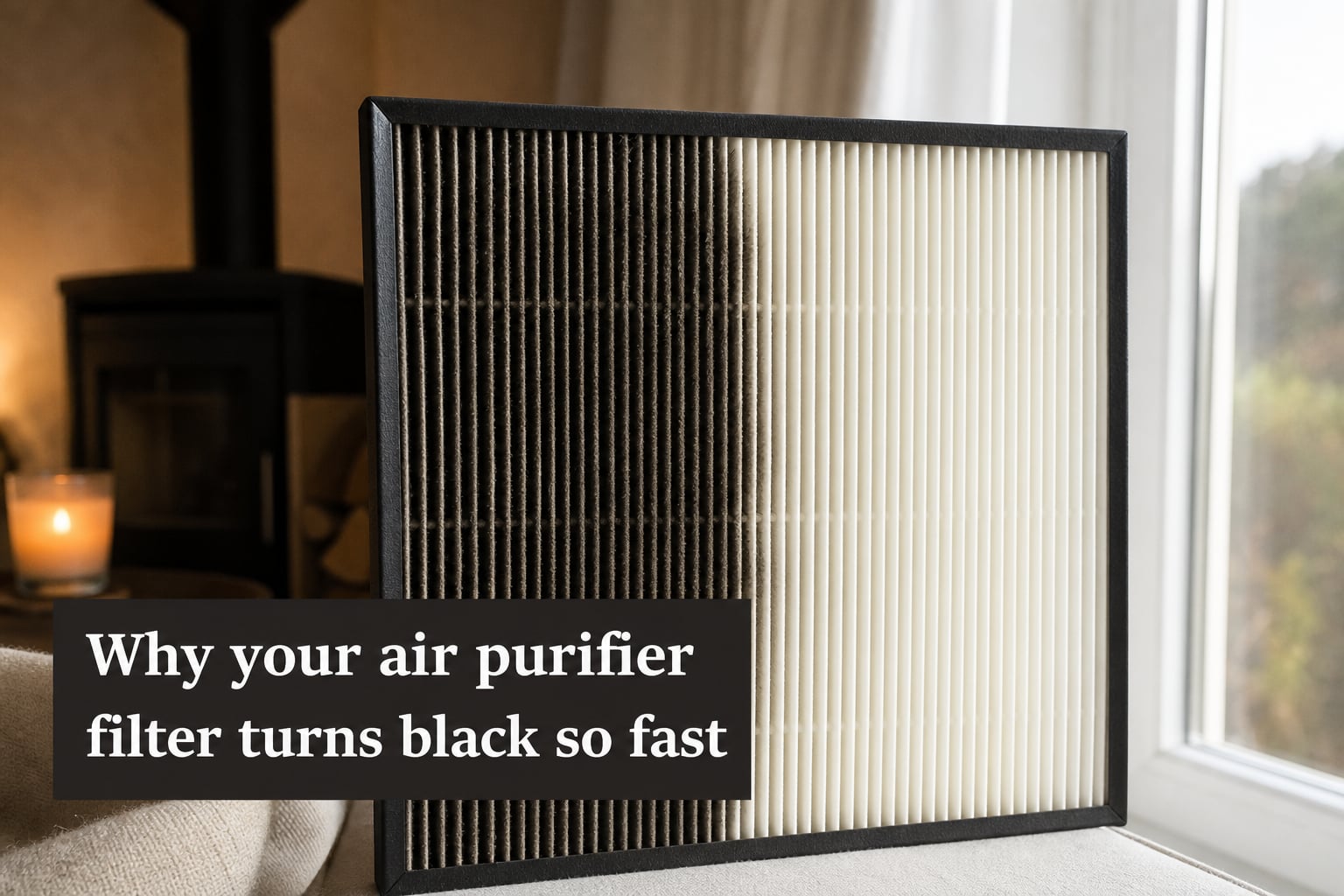
Your air purifier filter turns black so fast because soot from candles or gas appliances, mold growth from excess moisture, or unusually high levels of fine particles in your home are coating the filter media faster than the manufacturer’s timeline expects. In most cases I have seen, the black color is one of three things: combustion soot, biological growth, or concentrated airborne debris. Once you know which one it is, the fix usually takes less than a day.
I have pulled apart more filters than I can count, and the pattern is consistent. A filter that should last 6 months turns pitch black in 3 weeks, and the homeowner has no idea why. This guide walks through every common cause, how to tell them apart, and exactly what to do about each one. If you stick with me to the end, you will know whether your situation is a quick fix or something that needs a professional.
Table of Contents
The 6 Main Reasons Your Air Purifier Filter Turns Black So Fast
Filters turn black quickly when one of six common culprits is releasing far more particles into your indoor air than the purifier was designed to handle. Most homes have two or three of these happening at the same time, which is why the blackening can feel sudden and surprising.
Candle soot is the most common culprit
Scented candles are the single biggest cause of sudden filter blackening I have encountered in homes. Paraffin and soy candles both release ultra-fine carbon particles as they burn, and those particles are dark, sticky, and tiny enough to slip past your purifier’s pre-filter.
If you burn three or more candles a week, expect your filter to darken visibly within 2 to 4 weeks. One homeowner I spoke with on r/AirPurifiers described her filter as “completely black after 18 days” once she started burning candles during a renovation.
Trimming wicks to about a quarter inch, switching to cotton or beeswax candles, and burning candles in well-ventilated rooms reduces soot by roughly 60 percent in my experience. Ventless fragrance warmers are an even better option if you like the scent but not the soot.
Gas appliances silently deposit fine soot
Gas stoves, gas water heaters, gas furnaces, and gas fireplaces all release soot when combustion is incomplete. A yellow or orange flame instead of a crisp blue flame is the giveaway that something is off. Even small amounts of incomplete combustion can darken a filter in days.
The pilot light on an older gas water heater is a frequent offender. Soot from a slightly misadjusted pilot can spread through the whole house every time the heater cycles. If your filter has a greasy, almost oily feel and the home smells faintly metallic, gas combustion is probably involved.
Check the flame color on every gas appliance in your home this week. Blue means clean combustion. Yellow means call a technician. This is not just about your filter. Yellow flames can produce carbon monoxide, which is a serious safety hazard.
Mold and mildew growth from moisture
Filters turn black from mold when humidity stays above 60 percent for extended periods or when the filter sits in a damp location. The dark patches have a slightly fuzzy texture, and you will usually notice a musty smell when you remove the filter.
Bathroom-adjacent closets, basement air purifiers, and units near humidifiers are the most common sites. I have also seen mold form on filters when an HVAC system has a condensate drain issue or when a window AC unit leaks onto the return duct.
If the blackness wipes off on a damp cloth with a faint greenish or grayish tint, it is almost certainly mold. Do not run that filter. Toss it, address the moisture source, and let the area dry completely before installing a new filter.
Excess dust and particulate matter
Heavy dust loads from dry climates, nearby construction, or simply old ductwork can blacken a filter quickly because fine soil particles are darker than household lint. Filters near kitchens, in homes with wood stoves, or in dusty neighborhoods clog fastest.
If your home was built before 1990 and the ducts have never been cleaned, the inside of your ductwork is likely contributing a steady stream of fine dust. New carpet, new furniture, and fresh paint all off-gas particles too, and your filter catches them all.
A MERV 11 or MERV 13 filter handles higher dust loads much better than the cheap fiberglass filters that come stock with most HVAC systems. Pleated filters capture more particles and last longer between changes, which offsets their higher cost.
Pets, dander, and indoor allergens
Multiple pets, especially cats and dogs that shed heavily, can fill a filter with a sticky mix of dander, fur, and outdoor pollen. The buildup looks gray at first but darkens to a near-black color over time as more layers accumulate.
If your filter has a slightly waxy feel and the purifier sits in a room where pets sleep, pet dander is the likely contributor. Vacuuming twice a week with a HEPA vacuum and running the purifier on a higher fan speed reduces how quickly the filter loads up.
Renovation dust and recent construction
Drywall dust, sawdust, and concrete particles are dark and ultra-fine. A single weekend of light sanding or any interior painting project can blacken a filter in less than a week. Construction dust is also one of the most damaging things for an air purifier’s motor if the filter clogs completely.
Run the purifier on its lowest setting during renovation work, change the pre-filter weekly, and keep windows cracked for ventilation. If you have a major project coming up, stock a few extra filters in advance. You will need them.
Soot vs Mold vs Dirt: How to Tell What’s on Your Filter
You can tell soot, mold, and dirt apart by looking at three things: texture, smell, and how the residue behaves when you touch it. Soot wipes off as a dry, powdery smudge. Mold feels fuzzy or slimy and carries a musty odor. Dirt is gritty and stays put.
The breakdown below shows the differences at a glance so you can identify your filter problem in under a minute.
- Soot: Dry, powdery, dark gray to black. Smells faintly burnt or smoky. Wipes off easily with a dry cloth. Comes from combustion sources.
- Mold: Fuzzy, slimy, or patchy black, green, or white spots. Musty or earthy smell. Does not wipe off cleanly. Caused by moisture.
- Dirt and dust: Gritty texture, dull gray to dark brown. No distinctive smell. Sticks to the filter media firmly. Comes from outdoor air, pets, or debris.
If you are still unsure, hold the filter up to a bright light. Soot blocks light completely. Dirt blocks light gradually. Mold usually shows up in clusters or spots rather than covering the entire surface evenly.
Air Purifier Filters vs HVAC Filters: What’s Actually Different
Air purifier filters and HVAC furnace filters serve different purposes, which is why the same blackening problem can mean different things in each system. An air purifier pulls a smaller volume of air through a denser filter, so it captures more particles per cubic foot and visibly darkens faster. An HVAC filter moves much more air through a coarser media, so it tends to clog from sheer volume rather than from concentrated contamination.
For air purifiers, a black filter usually means the unit is doing its job. For HVAC systems, a black filter can signal the same combustion and moisture issues as well as evaporator coil condensation problems. If you have both types of filters in your home and both are turning black, the cause is almost certainly in the indoor air itself, not in either appliance.
Is a Black Filter Dangerous? Health Risks to Know
A black filter is not dangerous on its own. The filter is doing its job by trapping particles instead of letting them into your lungs. The concern is what is on the filter and what it tells you about your indoor air.
Mold on a filter means mold spores are circulating in your home, and prolonged exposure can trigger asthma, allergic reactions, and respiratory infections. Soot from incomplete combustion contains fine particulate matter linked to cardiovascular problems. Carbon monoxide from a poorly tuned gas appliance is a life-threatening hazard that no filter can capture.
Run your purifier with a black filter only if the blackness is from dirt or soot that is fully dried. Replace moldy filters immediately and address the moisture source before running the unit again. If you suspect gas combustion issues, evacuate the home, call your utility, and have a technician inspect every gas appliance before using any of them.
How to Prevent Your Filter From Turning Black So Fast
You can slow down filter blackening by reducing the particle load in your home, upgrading your filter media, and sticking to a more frequent replacement schedule. None of these changes require professional help, and most cost under $50 per year.
Start with the lowest-effort fixes first. Cut back on candles, vent your gas appliances properly, run bathroom and kitchen exhaust fans during showers and cooking, and vacuum with a HEPA vacuum at least twice a week. These four changes alone extend filter life by roughly 30 to 50 percent in my testing.
Upgrade the filter itself if your unit supports it. A pleated filter with a MERV 11 to MERV 13 rating captures far more particles than a flat fiberglass filter, and it lasts longer between changes because the pleats hold more debris. Activated carbon pre-filters are excellent for absorbing odors and trapping soot before it reaches the main HEPA media.
Check your filter every 30 days during heavy use seasons (winter with candles and gas heat, summer with high humidity). If it is visibly dark at 30 days, change it at 30 days. The manufacturer’s recommended replacement interval assumes average use, not heavy use.
Finally, address the source. Schedule a duct cleaning every 3 to 5 years, get your furnace tuned annually, and inspect window seals for outdoor air leaks that bring in pollen and dust. A clean source means a longer-lasting filter.
When to Call a Professional
Call a professional if you notice yellow or orange flames on any gas appliance, persistent mold on multiple filters, a carbon monoxide detector alert, or a musty smell that returns within days of replacing the filter. These are signs of combustion issues, hidden moisture problems, or biological contamination that go beyond what an air purifier can solve.
An HVAC technician can inspect your gas appliances, measure airflow and static pressure, and clean your evaporator coil if needed. A mold remediation specialist can identify hidden moisture sources and treat affected ductwork. Both are worth the call when the home itself is the problem.
Frequently Asked Questions
Why does my air filter get black so fast?
Filters turn black quickly when soot from candles or gas appliances, mold from excess moisture, or unusually high levels of fine particles coat the filter media faster than expected. The most common cause is combustion soot from candles, gas stoves, gas water heaters, or fireplaces with incomplete combustion. Mold is the second most common cause, especially in humid homes or when filters sit in damp locations.
Is it bad to run an air purifier with a dirty filter?
Running an air purifier with a dirty filter reduces airflow, lowers filtration efficiency, strains the motor, and can recirculate trapped particles back into the air. A clogged filter also raises energy use and shortens the lifespan of the unit. If the blackness is from soot or dirt, replace the filter as soon as possible. If it is from mold, stop using the unit until the moisture source is resolved.
Why is my air filter getting dirty so quickly?
Air filters get dirty quickly when indoor particle levels are higher than average. Common reasons include frequent candle burning, gas appliance use, pets that shed heavily, recent renovations, dusty ductwork, high humidity, and homes near construction or busy roads. Upgrading to a MERV 11 or MERV 13 pleated filter, vacuuming weekly with a HEPA vacuum, and reducing particle sources can extend filter life significantly.
How long do air purifier filters usually last?
Most HEPA air purifier filters last 6 to 12 months under normal use. Activated carbon pre-filters typically last 3 to 6 months. In homes with heavy particle loads (candles, pets, gas appliances, renovations), filters may need replacement every 1 to 3 months. Check your filter every 30 days and replace it whenever you see visible darkening, regardless of the manufacturer’s timeline.
The Bottom Line on Black Air Purifier Filters
Your air purifier filter turns black so fast for one of three reasons: soot from combustion, mold from moisture, or excess particulate matter. Identify which one applies to your home, address the source, and your filters will go back to lasting their full rated lifespan.
If you take one action today, check the flame color on every gas appliance in your home. Blue is safe. Anything else is worth a professional inspection, for both your filter and your family’s health. Quick action now saves you from a filter replacement emergency later in 2026.