
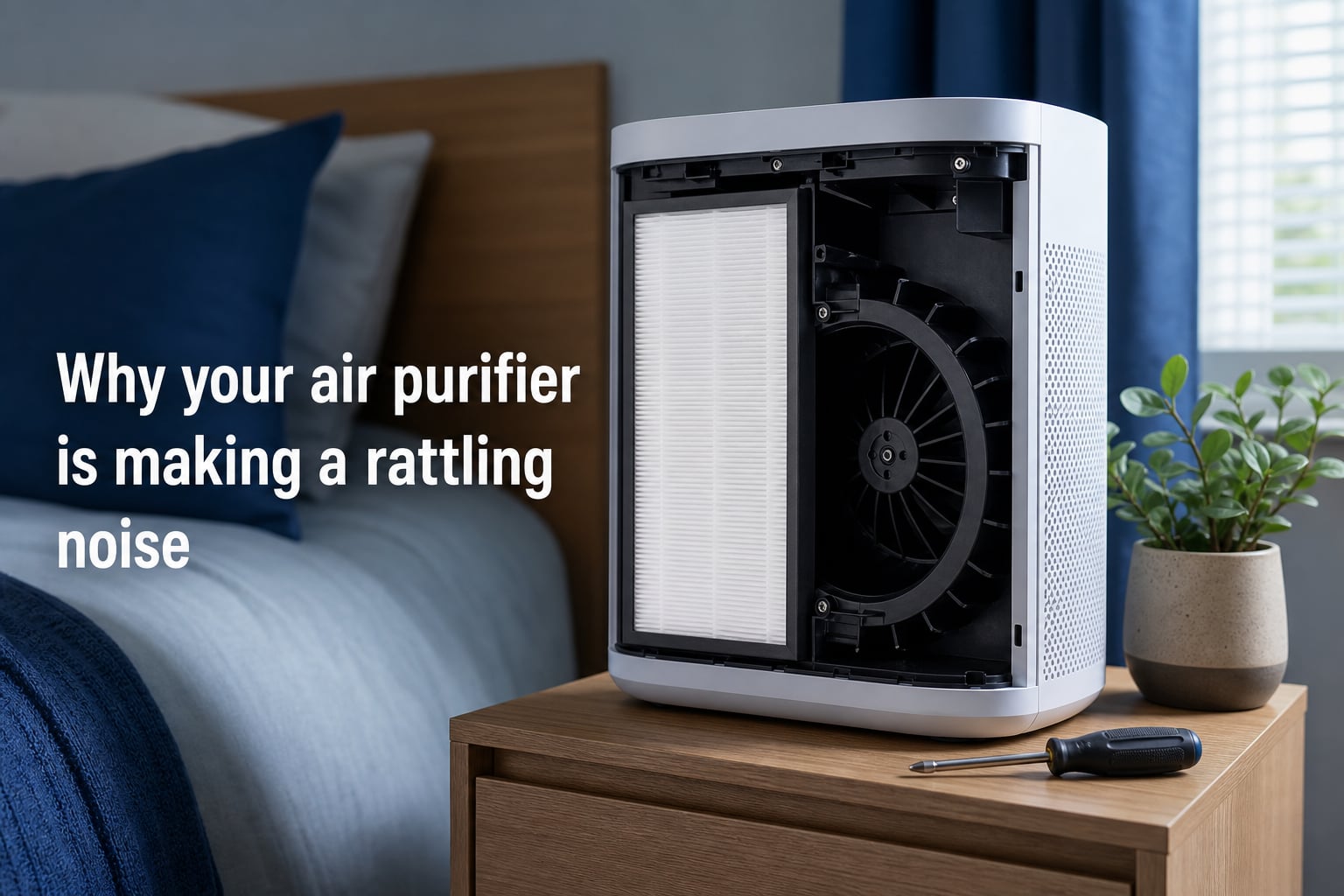
That sudden rattling from your air purifier can be alarming, especially when it starts in the middle of the night. An air purifier rattling noise usually points to a fixable problem like loose debris, a clogged filter, or a component that shifted out of place. The good news is that most rattling sounds can be diagnosed and silenced in under 15 minutes without any special tools.
I have spent years testing and troubleshooting air purifiers across multiple brands, and I have heard every strange sound these machines can make. From the slight low-speed rattle that one Reddit user described as “just annoying enough to keep me awake” to loud grinding that signals real mechanical trouble, the noise your unit makes tells a story about what is happening inside.
This guide walks you through identifying the type of noise, finding the root cause, and applying the right fix. You will also learn when a rattling sound is harmless, when it signals a serious problem, and how to prevent noise issues before they start.
Table of Contents
Quick Troubleshooting Checklist for Air Purifier Rattling Noise
If you want to diagnose the problem fast, work through this checklist in order. Each step takes about two minutes and rules out the most common causes of rattling.
Turn off and unplug the unit before touching anything inside.
Remove the filter and check for loose debris, pet hair, or foreign objects.
Inspect the filter cover for proper seating and loose clips.
Look at the fan blades for dust buildup, warping, or obstruction.
Check the surface the purifier sits on for levelness and stability.
Reseat the filter firmly and reassemble all components snugly.
Power on and listen at low, medium, and high fan speeds.
Most rattling issues are resolved by steps one through six. If the noise persists after a thorough cleaning and reassembly, move on to the detailed diagnosis below.
Identifying the Sound: What Different Noises Mean
Not every unusual sound is a rattle, and each type of noise points to a different underlying cause. Learning to identify what you are hearing narrows down the problem immediately. Competitors rarely explain this difference, but it is the single most useful diagnostic skill for air purifier owners.
Rattling: Loose Parts or Debris
A rattling noise sounds like something is shaking, bouncing, or vibrating loosely inside the unit. This is the most common complaint and usually means a component is not seated properly, a screw has worked loose, or a small object is tumbling around near the fan. Rattling is almost always fixable at home.
Grinding: Motor or Bearing Wear
A grinding noise is deeper and harsher, like metal rubbing against metal. This sound typically indicates worn motor bearings or a fan shaft that has lost lubrication. One Dyson owner on a forum shared that a service technician traced their grinding to a seal issue rather than the bearings, which shows how tricky this diagnosis can be. Grinding usually requires professional service or replacement.
Buzzing: Electrical or Vibration Issue
A buzzing noise is steady and electrical in character. It often comes from a loose coil, vibrating housing panel, or an electrical component resonating at a specific frequency. Buzzing on high fan speed can also mean the motor is straining against restricted airflow from a dirty filter.
Humming: Normal or Overworked Motor
A low humming sound is normal for most air purifiers, especially on higher speeds. If the humming gets louder than usual, the motor may be working harder than it should due to a clogged filter or obstructed intake. A humming air purifier is not necessarily broken, but a change in volume signals that something has shifted.
Clicking: Switching Gears or Obstruction
A clicking sound can come from the internal relay switching speeds or modes, which is harmless. However, repetitive clicking during operation often means the fan blade is hitting a small obstruction. One Medify owner fixed a persistent ticking noise by wrapping tape around the motor bolt to tighten the clearance.
Whistling: Airflow Restriction
A whistling noise means air is being forced through a tight space. This almost always points to a clogged or incorrectly installed filter. Replace the filter or reseat it properly, and the whistling should stop immediately.
Why Your Air Purifier Is Making a Rattling Noise: Common Causes
Now let us look at the six most common reasons your air purifier develops a rattle. Understanding the cause makes the fix straightforward.
1. Debris Caught in the Fan or Filter Area
Small objects, pet hair clumps, dust bunnies, and even insects can find their way into the intake and settle near the fan blades. As the fan spins, the debris bounces around and creates a rattling or ticking sound. This is especially common in homes with pets or in units placed near the floor where debris accumulates. One Reddit user solved their rattling by simply taking the top off the unit and gently knocking the housing to dislodge what was stuck.
The fix is simple. Unplug the unit, remove the filter, and use a flashlight to inspect the fan area. Pull out any visible debris with tweezers or a soft brush. Vacuum the intake vents from the outside to clear anything trapped near the opening.
2. Clogged or Worn HEPA Filter
A dirty HEPA filter is one of the most overlooked causes of unusual noises. When a filter becomes clogged with dust, pollen, and particles, airflow gets restricted. The motor has to work harder to pull air through, which increases vibration and can cause the filter housing to rattle against the frame. A badly clogged filter can even warp slightly, creating gaps where air and vibration leak through.
HEPA filters typically need replacement every 6 to 12 months depending on usage and air quality. If your filter looks gray and dense rather than white and airy, it is overdue. A Honeywell owner reported that their unit made strange noises for weeks until they changed the prefilter, which instantly resolved the issue.
3. Loose Internal Components or Screws
Air purifiers contain multiple internal components held together by screws, clips, and brackets. Over months of vibration from the motor, these fasteners can gradually work loose. A loose screw rattling inside the housing creates exactly the sound you would expect from a small metal piece bouncing around a plastic shell.
This cause becomes more likely if your unit has been running for long hours daily, transported between rooms frequently, or bumped against furniture. Check all visible screws and clips after removing the outer cover. Tighten anything that has loosened, but be careful not to overtighten plastic screws.
4. Uneven Surface or Placement Vibration
Where you place your air purifier matters more than most people realize. If the unit sits on an uneven floor, a wobbly table, or a surface that resonates like a hollow nightstand, the vibration from normal operation amplifies dramatically. What sounds like a rattling purifier might actually be a rattling surface.
This is a common issue in bedrooms where purifiers sit on wooden dressers or shelves. The hollow space underneath acts like a speaker cabinet, magnifying every vibration. Test this by picking up the unit and holding it in your hands while it runs. If the noise disappears, the surface is your problem, not the machine. Move it to a flat, solid surface or place a rubber mat underneath to absorb vibration.
5. Worn Motor Bearings
The fan motor inside your air purifier uses bearings to spin smoothly and quietly. After thousands of hours of operation, these bearings can wear down, lose lubrication, or develop play. Worn bearings produce a rattling or grinding sound that gets progressively worse over time.
This is the most serious cause on this list because it signals real mechanical wear. A BlueAir 511i owner reported that their unit developed rattling at speeds above 1.5, which is a classic sign of bearing wear under load. Unfortunately, motor bearing issues usually require professional repair or full unit replacement.
6. Improperly Seated Filter After Replacement
If your air purifier started rattling right after you changed the filter, the new filter is probably not seated correctly. Many models require the filter to snap or click into a specific alignment. A filter that is slightly off-center or tilted creates a gap where air leaks and components vibrate against each other.
Remove the filter, check the alignment marks or arrows printed on the side, and reinsert it firmly until you feel it lock into place. Make sure the cover closes completely without forcing it. This simple step resolves a surprising number of post-replacement rattling complaints.
Step-by-Step Troubleshooting Guide
Follow these steps in order to systematically diagnose and fix your air purifier rattling noise. Each step builds on the previous one, so do not skip ahead.
Step 1: Power Down and Disassemble
Unplug the air purifier completely. Remove the front or rear cover according to your model’s manual. Take out the HEPA filter and any pre-filters or carbon layers. Lay each component on a clean surface so you can inspect them individually.
Step 2: Inspect the Filter
Hold the filter up to a light source. If you cannot see light passing through, the filter is clogged and needs replacement. Check the frame for cracks, warping, or damage. A damaged filter will not seat properly and can cause ongoing rattling even after reinstallation.
Step 3: Check the Fan Blades
Use a flashlight to examine the fan blades inside the unit. Look for dust buildup, hair wrapped around the shaft, bent blades, or foreign objects lodged between the blades. Gently spin the fan by hand and listen for any scraping or resistance. If the fan wobbles, the shaft or bearings may be worn.
Step 4: Clean the Interior
Use a soft brush or a can of compressed air to remove dust from the fan blades, motor housing, and interior walls. Vacuum the intake and exhaust vents from outside. A clean interior reduces motor strain and eliminates debris-related rattling.
Step 5: Reassemble Carefully
Reinstall the filter following the alignment marks exactly. Make sure each layer sits flush and the cover closes without gaps. Tighten any accessible screws. Double-check that all clips are fully engaged before powering on.
Step 6: Test at Every Speed
Plug in the unit and turn it on at the lowest speed. Listen carefully. Increase to medium, then high, pausing at each level. If the rattling only occurs at high speed, the motor is likely straining against airflow resistance, pointing to a filter issue. If it rattles at all speeds, a loose component or bearing wear is more probable.
Step 7: Test on a Different Surface
Move the unit to a solid, flat surface like a tile floor or concrete pad. Run it again. If the noise disappears or significantly reduces, your original placement was amplifying vibration through a resonant surface.
Quick Fixes You Can Try Without Any Tools
Sometimes you need a fast solution and do not have a screwdriver or compressed air handy. These no-tool fixes have worked for real air purifier owners and take under five minutes each.
The tap and dislodge method: Turn off the unit, remove the filter, and gently tap the housing on all sides with your palm. This dislodges debris stuck near the fan without opening anything. One forum user recommended taking the top off and running the unit briefly to see if the rattle source is visible, then knocking the housing gently.
The rubber mat trick: Fold a towel or place a rubber mouse pad under the purifier. This absorbs vibration transmitted to the surface beneath and can silence rattling caused by placement resonance instantly.
The reseating reset: Pull the filter out and push it back in firmly, making sure it clicks into place. Repeat for the cover. A surprising number of rattling noises come from components that shifted a fraction of an inch during normal use.
The vacuum sweep: Run a vacuum hose over the exterior intake vents with the unit off. This pulls out dust and pet hair trapped near the fan without disassembling anything. Do this monthly as preventive maintenance.
Repair or Replace: Making the Right Call
One thing no competitor addresses clearly is when a rattling air purifier is worth fixing versus when you should cut your losses. Here is a practical framework to help you decide.
When to Repair
Repair makes sense if the unit is under two years old, the rattling started suddenly rather than gradually, and the noise goes away after cleaning or reseating components. If your air purifier is still under warranty, contact the manufacturer before attempting any internal repairs. Most brands cover motor and component defects for one to two years.
Simple fixes like filter replacement, debris removal, and reseating cost little to nothing. Even professional cleaning at a service center is affordable compared to buying a new unit.
When to Replace
Replacement becomes the smarter choice when the motor bearings are worn and the unit is past its warranty period. Bearing replacement requires specialized tools and often costs nearly as much as a new budget-friendly purifier. If your unit rattles or grinds at all speeds, has been running daily for three or more years, and cleaning does not help, the motor is likely failing.
The life expectancy of an air purifier typically ranges from 3 to 5 years for the motor and mechanical components, though HEPA filters need replacement every 6 to 12 months regardless. If your unit is approaching that age range and developing new noises, investing in a replacement often delivers better long-term value and quieter operation.
The Decision Checklist
Ask yourself these questions in order. If you answer yes to most of them, replacement is your best path forward.
Is the unit more than three years old?
Does the noise persist after cleaning and filter replacement?
Does it rattle or grind at every fan speed?
Is the unit out of warranty?
Would a professional repair cost more than half the price of a new unit?
Maintenance Tips to Prevent Rattling Noise
Preventing noise issues is far easier than fixing them. A simple maintenance routine keeps your air purifier running quietly and extends its lifespan significantly.
Replace filters on schedule. HEPA filters need changing every 6 to 12 months. Carbon pre-filters may need attention every 3 months. Set a calendar reminder so you do not forget. A clogged filter is the number one cause of unusual motor noise.
Vacuum the exterior monthly. Run a vacuum over the intake and exhaust vents once a month to prevent dust and pet hair from building up inside. This takes two minutes and dramatically reduces debris-related rattling.
Place on a stable, flat surface. Avoid hollow furniture, wobbly shelves, or carpeted areas that amplify vibration. Solid surfaces like tile, hardwood, or stone work best. A rubber mat adds extra dampening.
Keep the area around the unit clear. Maintain at least 15 inches of clearance on all sides. Items leaning against the purifier can cause vibration transfer and rattling against the housing.
Check screws and clips quarterly. Every three months, remove the cover and hand-tighten any accessible screws. Vibration loosens fasteners over time, and a quick check prevents rattling before it starts.
Avoid running at maximum speed constantly. High fan speed puts maximum strain on the motor and bearings. Use medium speed for daily operation and reserve high speed for when you need rapid air cleaning after cooking or during allergy season.
FAQs
Why does my air filter rattle?
Your air filter or its housing rattles when the filter is not seated properly, when debris is trapped near the fan blades, or when internal screws have loosened from vibration. Remove the filter, clear any debris, realign it using the guide arrows, and reinstall it firmly until it clicks into place.
Should an air purifier make noise?
Yes, a low humming sound is normal for air purifiers, especially on higher fan speeds. However, rattling, grinding, buzzing, or clicking sounds are not normal and indicate a problem that needs attention. A properly functioning air purifier on low speed should be barely audible.
What does a bad air filter sound like?
A bad or clogged air filter causes whistling from restricted airflow, louder than normal humming from a strained motor, and sometimes rattling if the filter has warped and is not seating flush. If you hear these sounds, check whether light passes through the filter. If it does not, the filter needs replacement.
Is it bad to have an air purifier on all night?
Running an air purifier overnight is safe and beneficial for air quality, as long as the unit is functioning properly and quietly. However, if your purifier is rattling or making unusual noises, running it all night accelerates wear on loose components and worn bearings. Fix the noise first before relying on overnight operation.
How to fix a rattly fan in an air purifier?
Turn off and unplug the unit, remove the filter, and inspect the fan blades for debris or dust buildup. Clean the blades with a soft brush or compressed air, remove any obstructions with tweezers, check that all screws are tight, reseat the filter properly, and test at each speed. If the rattle persists, the motor bearings may be worn and require professional service.
What is the life expectancy of an air purifier?
Most air purifiers last 3 to 5 years with proper maintenance, though the motor and mechanical components can wear sooner with heavy use. HEPA filters need replacement every 6 to 12 months regardless of the unit’s overall age. If your purifier develops persistent grinding or rattling after three years, replacement is often more cost-effective than repair.
Silencing Your Air Purifier for Good
An air purifier rattling noise is almost always a signal that something inside needs attention, whether that is a clogged HEPA filter, trapped debris, a loose component, or a worn motor bearing. By working through the troubleshooting steps in this guide, you can identify the cause and apply the right fix in minutes.
Start with the simplest solutions first. Reseat the filter, clean the fan area, check your placement surface, and tighten any loose screws. These steps resolve the vast majority of rattling complaints without professional help or replacement cost.
If the noise persists after thorough cleaning and filter replacement, use the repair-or-replace decision checklist to determine your next move. A well-maintained air purifier should run quietly for years, and addressing small noises early prevents bigger problems down the road.