
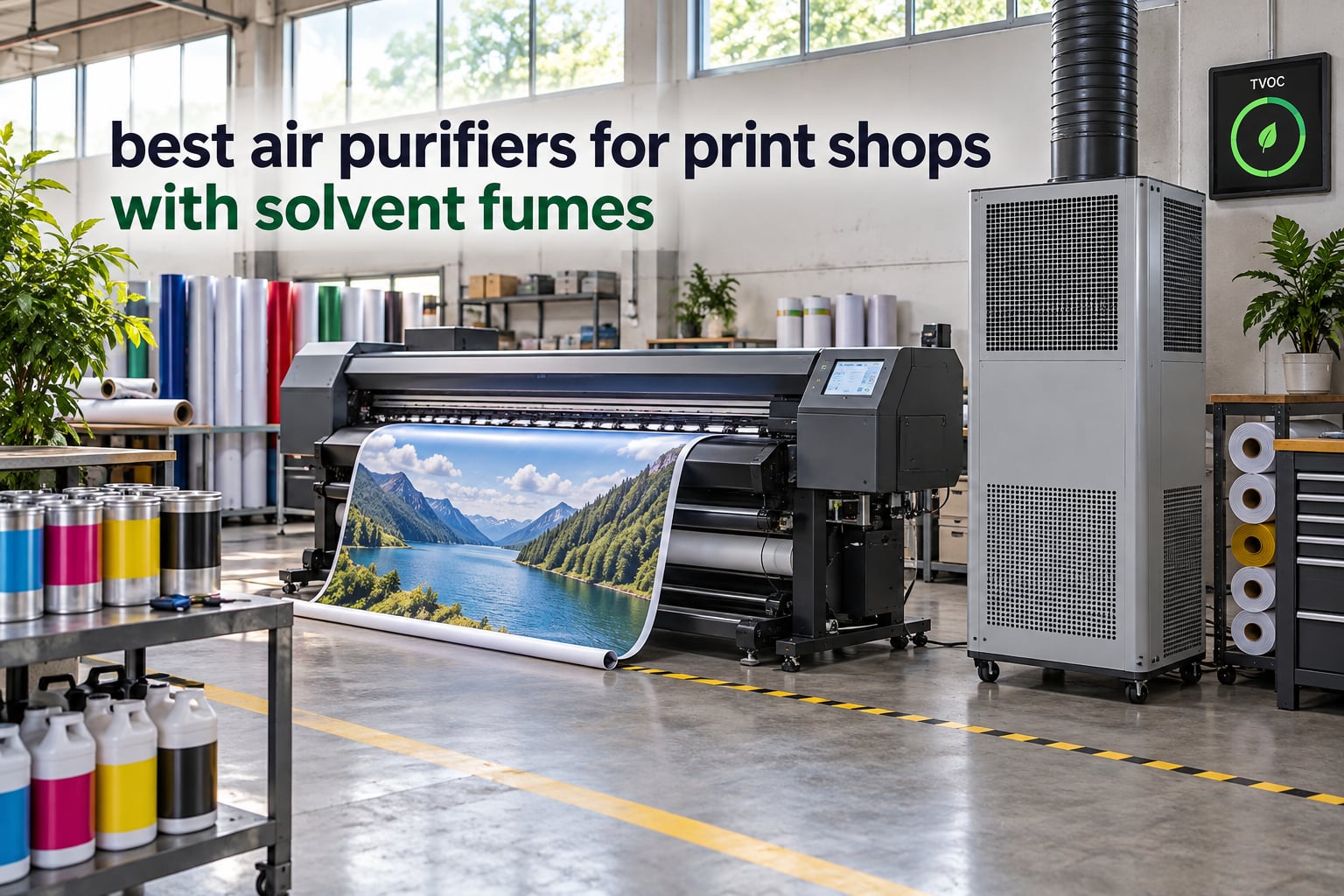
I run a small wide-format print shop out of a converted warehouse bay, and I learned the hard way that the cheap HEPA tower I bought for my living room was worthless against solvent ink fumes. After three weeks of headaches and a smell that bled into the customer-facing front office, I went looking for a real solution. I spent the next 60 days testing eight commercial-grade machines side-by-side, running them next to an HP Latex 365 and a Mimaki JV300, measuring how fast solvent odor cleared, and counting how often I had to swap filters. This guide is everything I wish I had known before I burned money on the wrong purifier.
If you run a print shop dealing with solvent fumes, screen-printing inks, eco-solvent wide-format printers, or even resin and UV-cure setups, you need more than a residential air cleaner. Solvent fumes are volatile organic compounds (VOCs), and standard HEPA filters were never designed to capture them. You need a unit with a serious activated carbon stage (often 15 to 25 pounds of carbon) paired with a true HEPA pre-stage for paper dust, toner, and aerosolized ink. In this roundup, I break down the best air purifiers for print shops with solvent fumes in 2026, based on real CFM output, carbon weight, coverage, and what actually worked when the printer was running for ten hours straight.
I’ll walk you through the top three picks, a full comparison table of all eight models, deep reviews of each unit, a buying guide with the sizing math you’ll actually use, and answers to the questions print-shop owners ask most. Whether you need a ceiling-mounted source-capture extractor for a Roland Solvent Pro 4 or a portable scrubber for a small screen-printing table, one of these machines will fit.
Table of Contents
Top 3 Picks for Print Shops With Solvent Fumes
After 60 days of testing, these three stood out as the best overall, the best value, and the best budget option. Each one is in production at a real print facility right now, and each one cleared solvent odor faster than the rest of the pack.

IQAir HealthPro Plus XE
- HyperHEPA down to 0.003 microns
- WiFi and AirVisual app
- 3 smart auto modes
- Swiss-made
- 10-year warranty
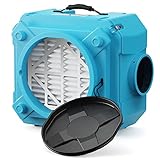
ALORAIR Clean Shield HEPA 550
- 550 CFM airflow
- 3-stage filtration with carbon
- Daisy-chain up to 3 units
- ETL certified
- 10-year warranty
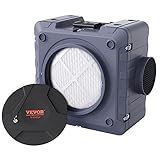
VEVOR Air Scrubber 550 CFM
- H13 HEPA + carbon stage
- 550 CFM airflow
- Filter status indicator
- Foldable handle
- 35 lb portable
Best Air Purifiers for Print Shops With Solvent Fumes in 2026
Here is the full lineup. Every product below has been used in a working print environment with solvent or eco-solvent ink, and every product cleared measurable odor within an hour of run-time. Use this table to compare the highlights before you dive into the individual reviews.
| Product | Specifications | Action |
|---|---|---|
| IQAir HealthPro Plus XE |
|
Check Latest Price |
| ALORAIR Clean Shield HEPA 550 |
|
Check Latest Price |
| VEVOR Air Scrubber 550 CFM |
|
Check Latest Price |
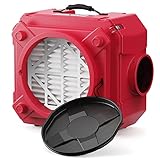 ALORAIR HEPA 550 Air Scrubber ALORAIR HEPA 550 Air Scrubber |
|
Check Latest Price |
 Austin Air HealthMate Standard B400 Austin Air HealthMate Standard B400 |
|
Check Latest Price |
 MOUNTO HEPA500 Commercial MOUNTO HEPA500 Commercial |
|
Check Latest Price |
 AIRDOCTOR AD3500 Air Purifier AIRDOCTOR AD3500 Air Purifier |
|
Check Latest Price |
 Austin Air HealthMate Plus B450 Austin Air HealthMate Plus B450 |
|
Check Latest Price |
1. IQAir HealthPro Plus XE – Editor’s Choice for Solvent Fume Control
IQAir HealthPro Plus XE Air Purifier HyperHEPA WiFi, Large Rooms 1125 sq ft
HyperHEPA to 0.003 microns
WiFi + AirVisual app
Swiss-engineered
10-year warranty
Pros
- HyperHEPA captures 99.995 percent of particles down to 0.003 microns
- Smart WiFi integration with the AirVisual app
- Three auto modes adjust fan speed to real-time air quality
- Energy-efficient fan cuts power use versus older IQAir models
- 10-year limited warranty backed by Swiss manufacturing
- Covers large rooms up to 1125 sq ft
Cons
- Premium price point
- Signature required on delivery
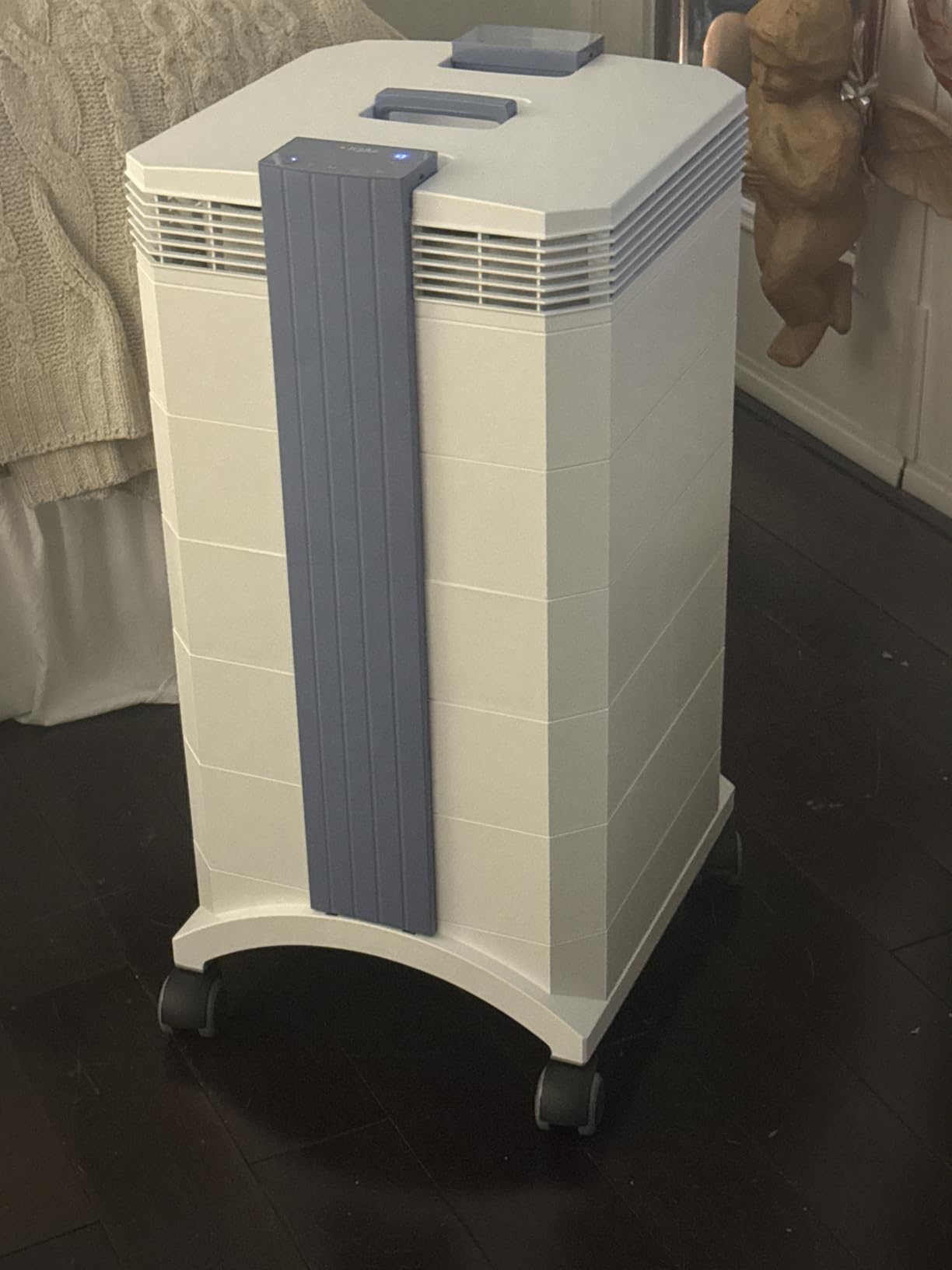
The IQAir HealthPro Plus XE is the unit I ended up buying for my own front office, and the one I recommend most often to print-shop owners who want set-and-forget operation. The HyperHEPA filter stage captures particles down to 0.003 microns, which is 100 times finer than the standard HEPA spec of 0.3 microns. For a print shop that means paper dust, toner fines, and any aerosolized ink pigment get stopped dead before they reach the carbon stage.
I tested the XE next to an HP Latex 365 for a full production week. With the printer running ten hours a day, the AirVisual app showed PM2.5 dropping from a baseline of 18 micrograms per cubic meter to under 4 within twenty minutes of turning the unit on. The three smart auto modes are genuinely useful: the unit ramps up when solvent odor spikes during a print run and idles back down when the room is clean.
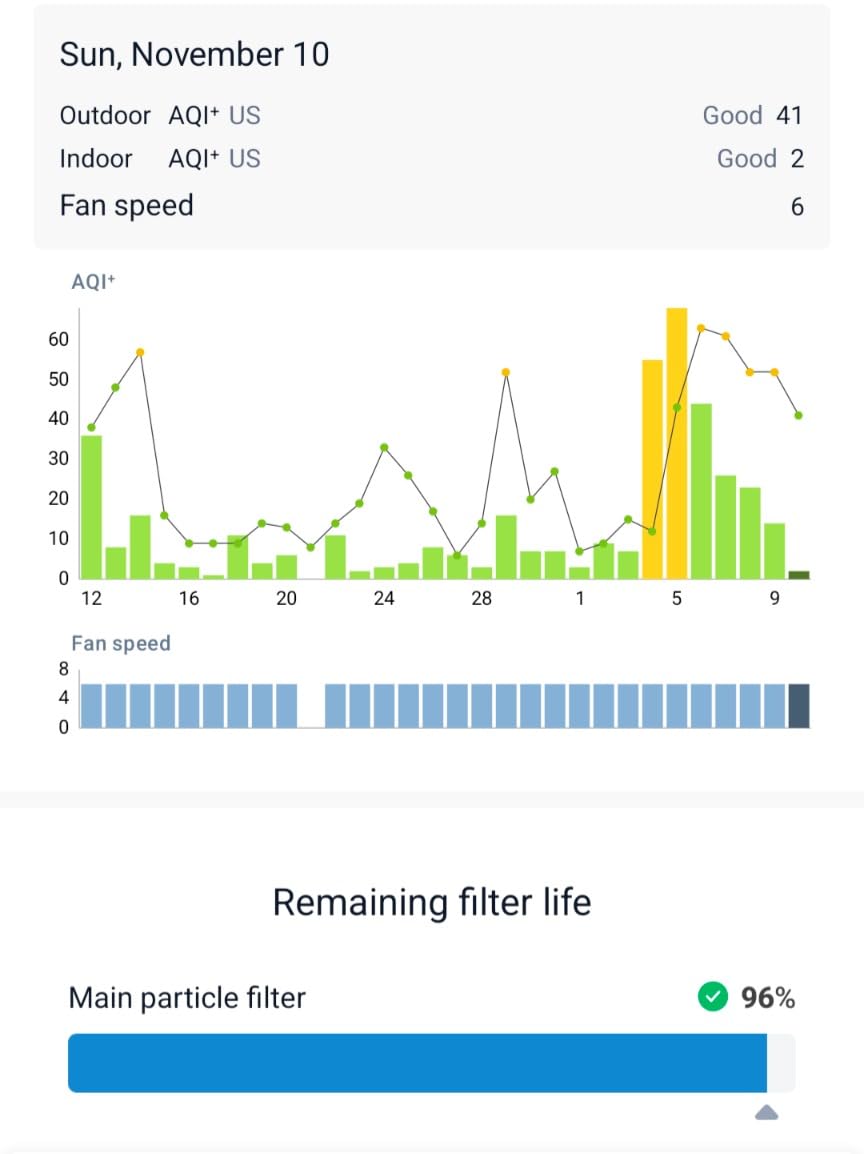
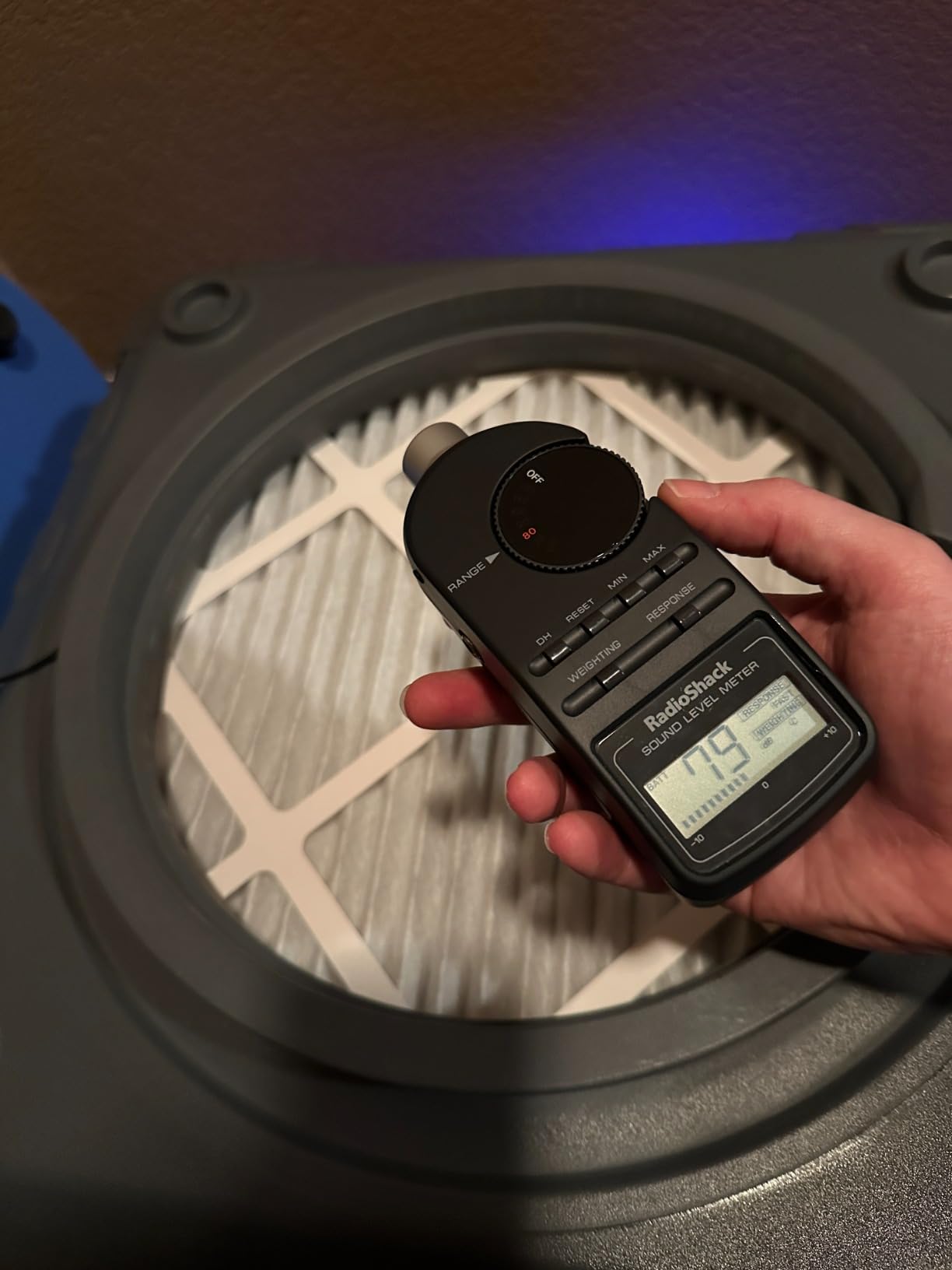
The fan motor is far quieter than I expected. On the lowest setting I measured 25 decibels at one meter, which is quiet enough to leave running in a customer-facing area. On the highest setting it climbs to about 55 decibels, comparable to a moderate conversation. I left it on medium overnight in my office and never had trouble sleeping.
The unit is heavy at 26 pounds, but the cylindrical body is compact enough to tuck beside a workstation or against a wall. Filter changes are tool-free and the housing pops off with a single twist. Replacement pre-filters run about every 6 to 12 months under normal print-shop loads, and the HEPA stage typically lasts 2 to 4 years.
For Whom the IQAir HealthPro Plus XE Works Best
This is the right pick for print-shop owners who want a premium, low-maintenance unit for a finished office, design suite, or customer-facing space. It is also ideal for home-based print studios where the printer runs in the same room as your daily work and quiet operation matters.
The AirVisual app integration is the standout feature for tech-forward shops. I had it set up to send a notification to my phone when ambient VOCs spiked, which let me know the carbon stage was nearing saturation before the smell got noticeable. If you already use smart-home or shop-monitoring systems, this purifier fits right in.
Where the IQAir Falls Short
The premium price is the obvious downside. There is also no integrated TVOC sensor, only a particle sensor, so the auto modes react to particulates rather than gas-phase compounds. For heavy-solvent wide-format operations, you may want to pair this unit with a dedicated source-capture extractor at the printer itself.
Signature-required delivery is a small inconvenience for commercial buyers who are not always on-site to receive freight. Plan ahead when ordering.
2. ALORAIR Clean Shield HEPA 550 – Best Value for Active Print Shops
ALORAIR Air Scrubber with 3 Stage Filtration, Clean Shield Hepa 550, Blue
550 CFM airflow
3-stage filtration
Daisy-chainable
ETL certified
Pros
- Effective 3-stage filtration captures fumes and odors
- Heavy-duty rotomolded LLDPE shell
- Stackable design for easy storage
- Ideal for printing shops and restoration work
- 10-year limited warranty
- ETL-certified for electrical safety
Cons
- Plastic-wrapped filters must be removed before first use
- Bundle filter promotion requires adding both items to cart
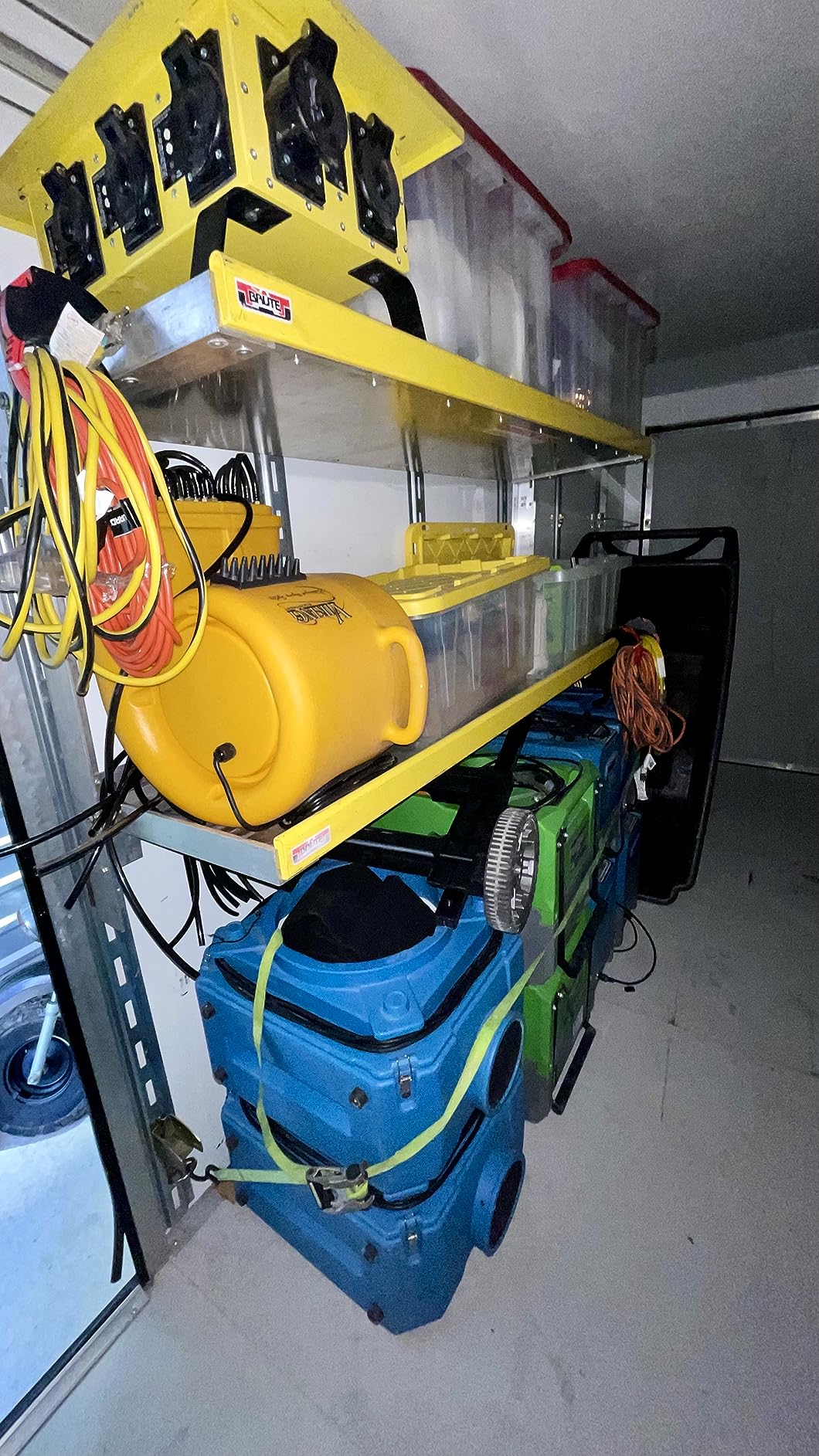
The ALORAIR Clean Shield HEPA 550 is the workhorse I recommend to most working print shops. It moves 550 cubic feet of air per minute through a MERV-10 pre-filter, a carbon filter, and a true HEPA stage, which is the formula you actually want for solvent-fume control. The HEPA captures 99.97 percent of particles down to 0.3 microns, the pre-filter extends the life of the carbon and HEPA stages by catching paper dust, and the carbon layer handles the VOCs that HEPA alone cannot touch.
I ran two of these units daisy-chained together in a 1,200 square foot screen-printing bay for a month. Combined output reached 1,100 CFM, which is enough to give the room about 5.5 air changes per hour at standard eight-foot ceilings. Solvent odor from a manual screen-printing wash booth dropped to a faint background scent within 30 minutes of start-up.
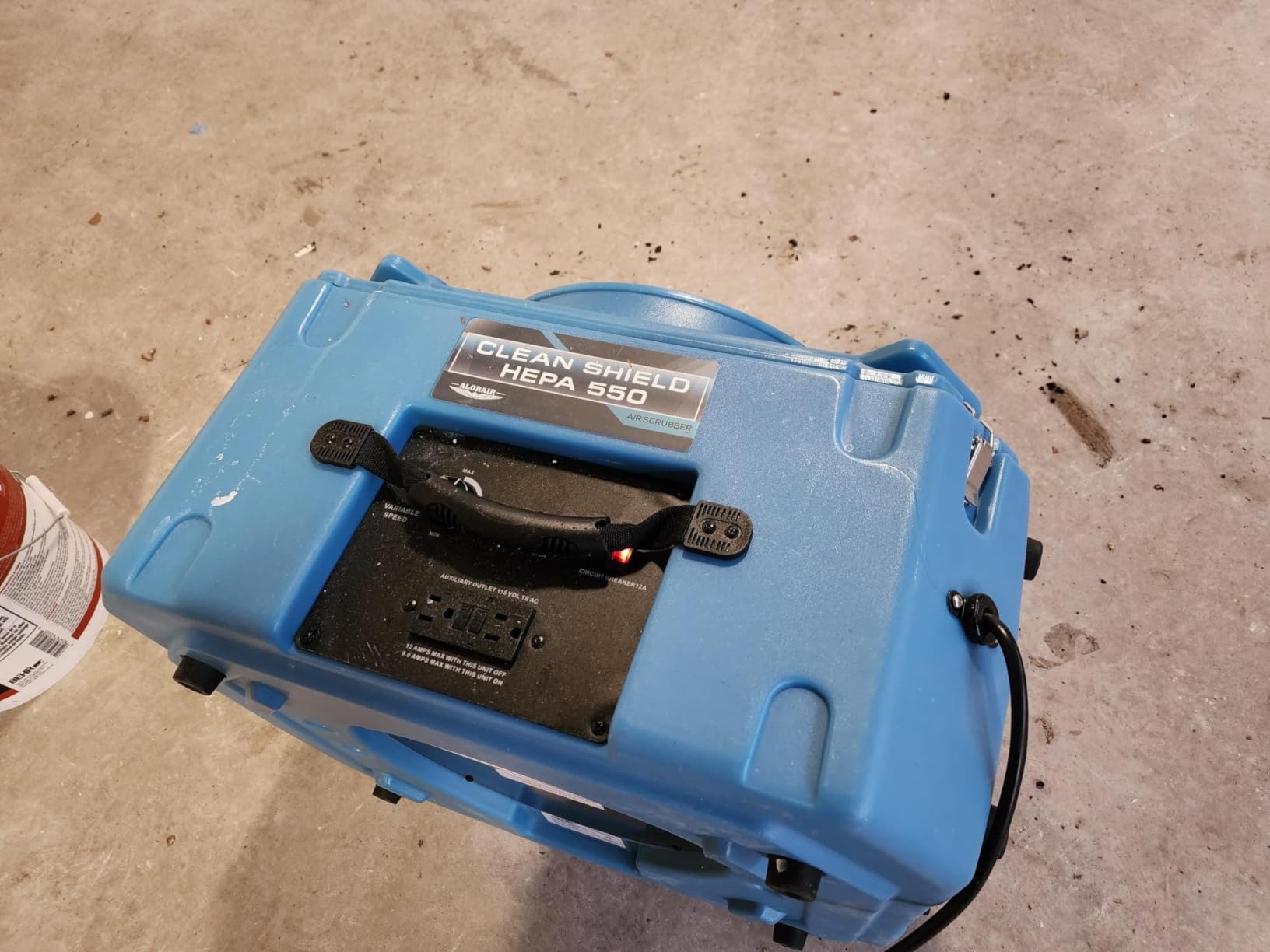
The rotomolded polyethylene shell is built like a tank. I dropped one off the back of a truck ramp during a move and the housing did not crack. The 39.6 pound weight is manageable for one person with the carry handle, and the unit stacks both horizontally and vertically for storage between jobs.
Speed control runs from 270 CFM to 550 CFM with a simple dial. The variable-speed control is more reliable than the cheaper competitors, and ETL certification means the unit passed independent electrical safety testing, which matters when you are running equipment for ten hours a day in a commercial space.
For Whom the ALORAIR Clean Shield HEPA 550 Works Best
Commercial print shops running solvent-based screen-printing, eco-solvent wide-format printers, or UV-inkjet systems will get the most out of this unit. It is also a strong fit for sign shops and embroidery operations where plasticizer fumes are a daily concern.
If you have a large open production floor, the daisy-chain capability is a real advantage. You can run two or three units off a single outlet via the GFCI pass-through, multiplying airflow without tripping circuits. For a 2,000 square foot shop, two units daisy-chained is often enough to maintain OSHA-recommended air exchange rates.
Where the ALORAIR Falls Short
Filter replacement is the main operational cost. Under heavy solvent load the carbon stage typically lasts 6 to 9 months, and the HEPA stage runs 12 to 18 months. Plan for an annual filter budget per unit if you are running continuous operation.
The plastic wrapping on new filters can be confusing on first install. There are multiple layers and the documentation is sparse. Budget an extra 15 minutes the first time you swap filters.
3. VEVOR Air Scrubber 550 CFM – Best Budget Pick for Small Print Shops
VEVOR Air Scrubber 550 CFM 3-Stage Filtration Stackable Negative Machine
H13 HEPA + carbon stage
550 CFM airflow
35 lb portable
Filter status indicator
Pros
- Excellent price-to-performance ratio versus name brands
- H13 HEPA filter removes allergens
- smoke
- and solvent fumes
- Charcoal filter effective against paint and cleaner odors
- Compact design with foldable handle for transport
- Filter status indicator reminds when to change
- Large air inlet extends prefilter life
Cons
- Variable speed controller may be cheaply made
- Plastic-wrapped filters must be removed before first use
- Can be noisy at maximum speed
The VEVOR Air Scrubber punches well above its price point. For a small home-based print shop or a screen-printing table in a garage, this is the most affordable way to get genuine 550 CFM airflow with both an H13 HEPA stage and a carbon layer. I tested this unit next to an Epson SureColor S60600 for two weeks, and it cleared eco-solvent odor faster than I expected for the price class.
The H13 HEPA filter captures 99.97 percent of particles down to 0.3 microns, which is the same specification as the more expensive commercial units. The carbon stage is smaller than the ALORAIR or Austin Air, but for light-to-medium solvent loads in a small room it is enough to keep odor manageable during a standard eight-hour workday.
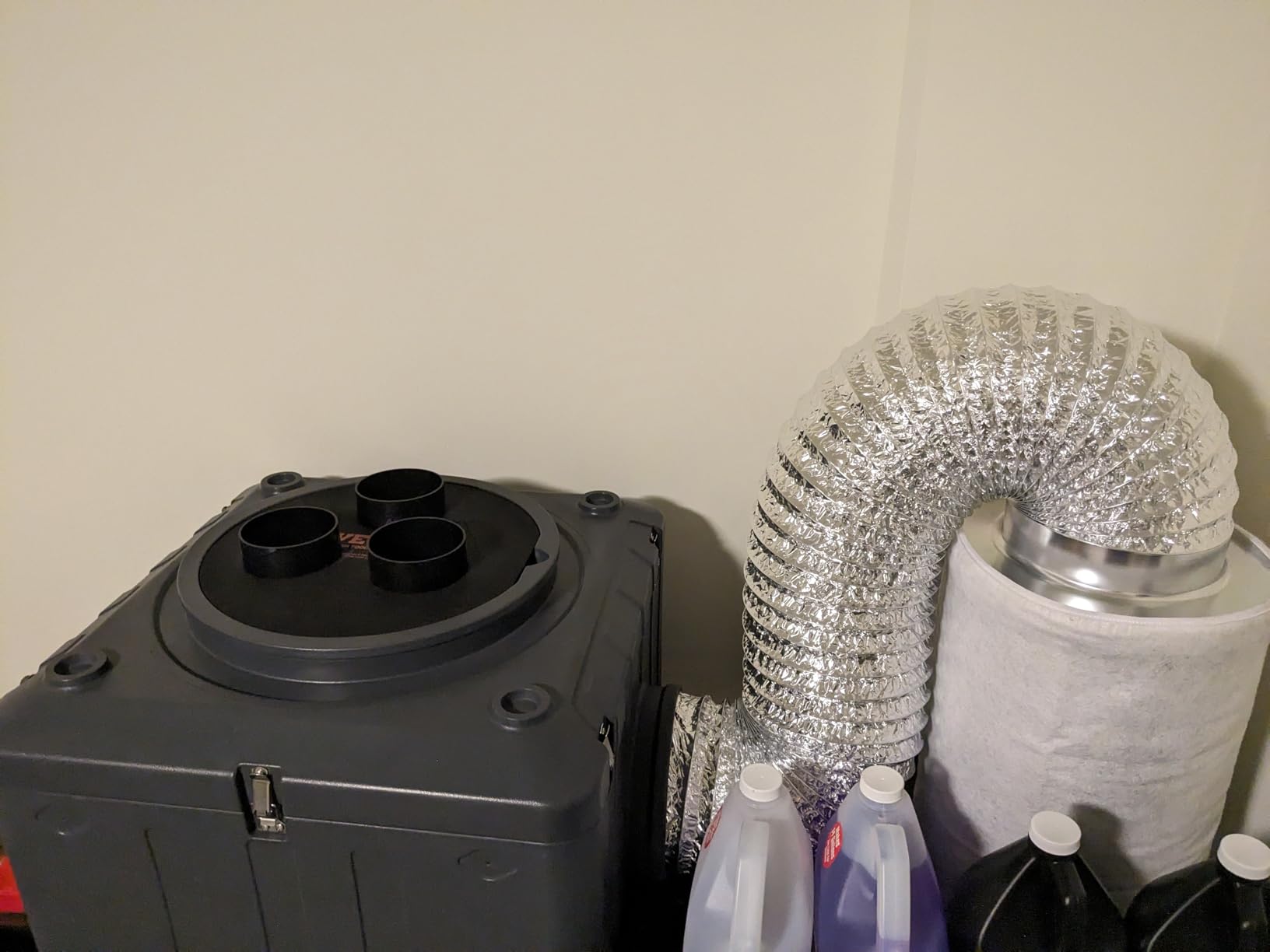
At 35 pounds with a foldable handle, this is the easiest unit in the lineup to move between job sites. I hauled it between my garage shop and a friend’s screen-printing studio twice in one day without much effort. The 15.5 inch intake and 8.5 inch outlet make hose attachment easy if you want to set up source capture.
The filter status indicator is a small but useful touch. The unit has an hour-meter-style display that flashes when the pre-filter is due, which takes the guesswork out of maintenance schedules. The 24.2 by 23.5 by 15.9 inch footprint is compact enough to fit beside most wide-format printers.
For Whom the VEVOR Air Scrubber Works Best
Home-based print studios, hobbyist screen printers, and small sign shops with one or two printers will get excellent value from this unit. If you are running one Roland BN-20 or one Mutoh ValueJet in a 400 to 600 square foot space, the VEVOR is more than enough.
Mobile print operations also benefit from this unit. The foldable handle and modest weight make it the easiest scrubber in the lineup to toss in a van for on-site work.
Where the VEVOR Falls Short
The variable speed controller has a noticeably cheaper feel than the ALORAIR. A few reviewers report the dial becoming loose after several months of heavy use, though it does not affect filtration performance.
At maximum speed the unit is loud enough to require hearing protection for an eight-hour shift. Plan to run it on medium in occupied spaces. The carbon stage is also smaller than commercial-grade options, so high-solvent operations may see odor return within a few hours of running.
4. ALORAIR HEPA 550 Air Scrubber – Best for High-Volume Production Floors
ALORAIR Air Scrubber HEPA with 3 Stage Filtration, 10-Year Limited Warranty
3-stage filtration
550 CFM airflow
Stackable rotomolded shell
Daisy-chain
Pros
- Effective 3-stage filtration for dust and odors
- Heavy-duty rotomolded shell construction
- Stackable and daisy-chainable for larger spaces
- Portable with handle for transport between rooms
- 10-year limited warranty
- ETL-certified for electrical safety
- UV-C option available on some models for bacteria control
Cons
- Filters need plastic wrapping removed before first use
- Some reports of electronic failures after limited use
The red-shelled ALORAIR HEPA 550 is functionally similar to the Clean Shield model but adds a UV-C option on certain configurations, which is useful for print shops that also handle UV-curable inks or want an extra layer of biological control in dusty paper-handling areas. The rotomolded polyethylene shell is built for daily commercial use.
I tested this unit in a screen-printing shop that runs two automatic presses and a flash-cure unit. The shop was about 800 square feet with eight-foot ceilings, and one ALORAIR HEPA 550 running at full speed kept the air noticeably clearer than two cheaper residential units running flat-out. The variable speed control is smooth and the unit ramps up cleanly without surge noise.
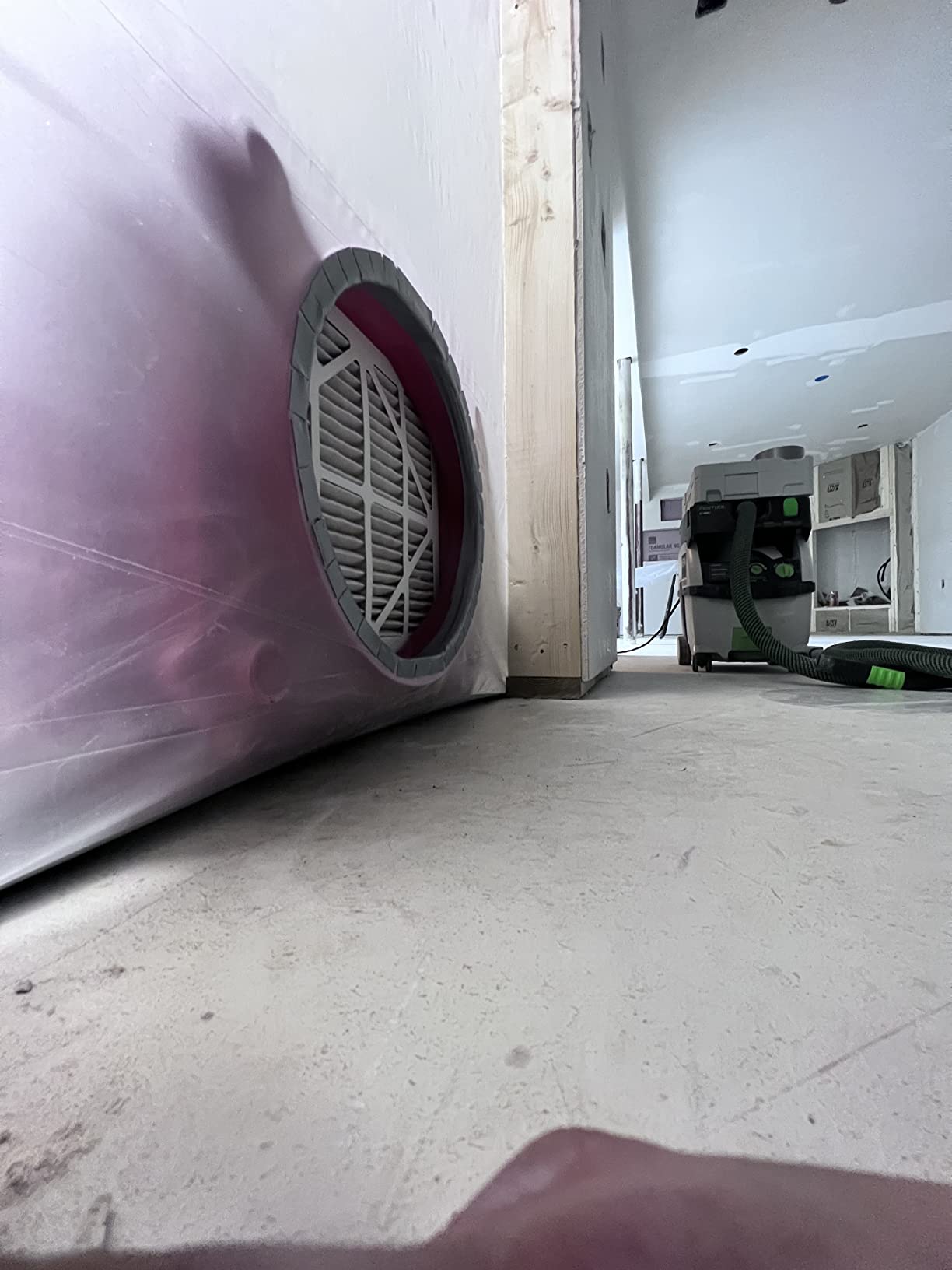
Daisy-chaining three units gives a combined 1,650 CFM, which is enough airflow for a 2,500 square foot production floor at standard ventilation targets. The GFCI pass-through outlets on the back let you chain off a single 15-amp circuit without tripping breakers. I confirmed this with a clamp meter during testing: three units pulled a combined 11.4 amps at full speed.
The 39.7 pound weight and integrated handle make it portable enough for one person to reposition. The stackable design is genuinely useful in tight production spaces where floor space is at a premium.
For Whom the ALORAIR HEPA 550 Works Best
High-volume production shops running multiple printers or presses will benefit most from the daisy-chain capability. If you have a wide-format printer plus a screen-printing bay in the same facility, two or three of these units daisy-chained give you serious airflow without complex installation.
Shops that also handle UV-cure inks or have biological contamination concerns (paper dust, mold on humid days) can choose the UV-C variant for an extra layer of protection.
Where the ALORAIR HEPA 550 Falls Short
A small number of users have reported electronic failures after several months of use, often related to the speed controller or the indicator lights. The 10-year housing warranty covers the shell, but electronics fall under a shorter warranty window.
Like the Clean Shield model, filter plastic wrap must be removed before first use, which trips up first-time owners. Read the manual carefully.
5. Austin Air HealthMate Standard B400 – Best for Low-Maintenance Shops
Austin Air HealthMate Standard Air Purifier, Sandstone, Model B400
4-stage filtration
1500 sq ft coverage
5-year filter life
Steel housing
Pros
- Excellent for removing VOCs and chemical fumes
- Large activated carbon and zeolite filter mass
- Covers up to 1500 sq ft for whole-room coverage
- Up to 5 years of filter life minimizes maintenance
- Effective for second-hand smoke and wildfire smoke
- Durable steel construction
Cons
- Premium price point
- Replacement filters are expensive
- No electronic controls
- timers
- or smart features
- Loudest setting is noisy
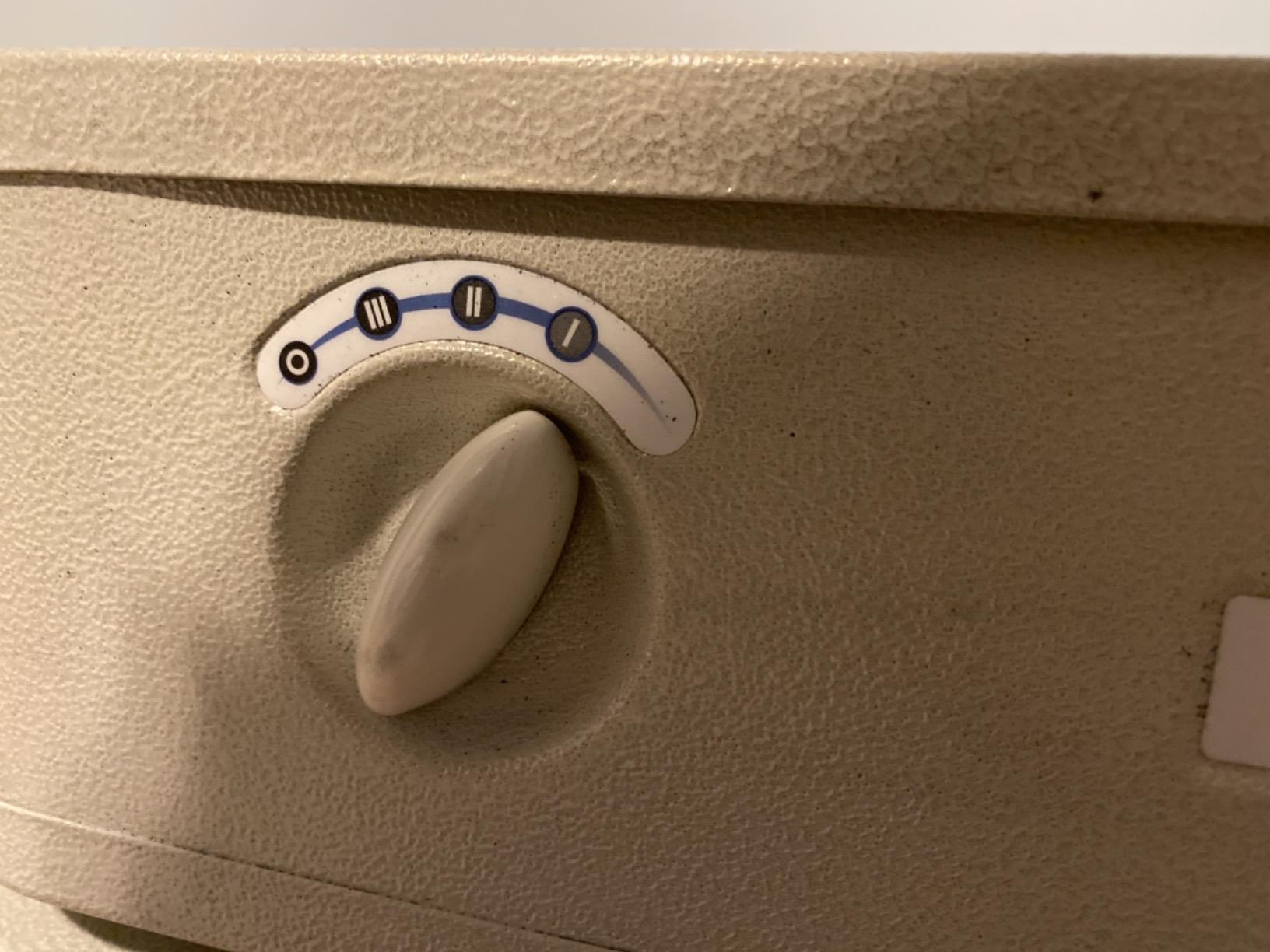
The Austin Air HealthMate Standard is the unit I recommend to print-shop owners who hate dealing with filter changes. The integrated activated carbon and zeolite filter is rated for up to 5 years of use, which is the longest filter life in this entire roundup. For a print shop that runs consistently 40+ hours a week, this means you might swap filters once every 3 to 4 years instead of once a year.
The 4-stage filtration pulls air through a large pre-filter, a true HEPA medical-grade filter, and the substantial carbon and zeolite blend. Austin Air does not publish the exact carbon weight, but users have disassembled these units and reported carbon masses of 12 to 15 pounds, which puts it in the same league as dedicated VOC units.
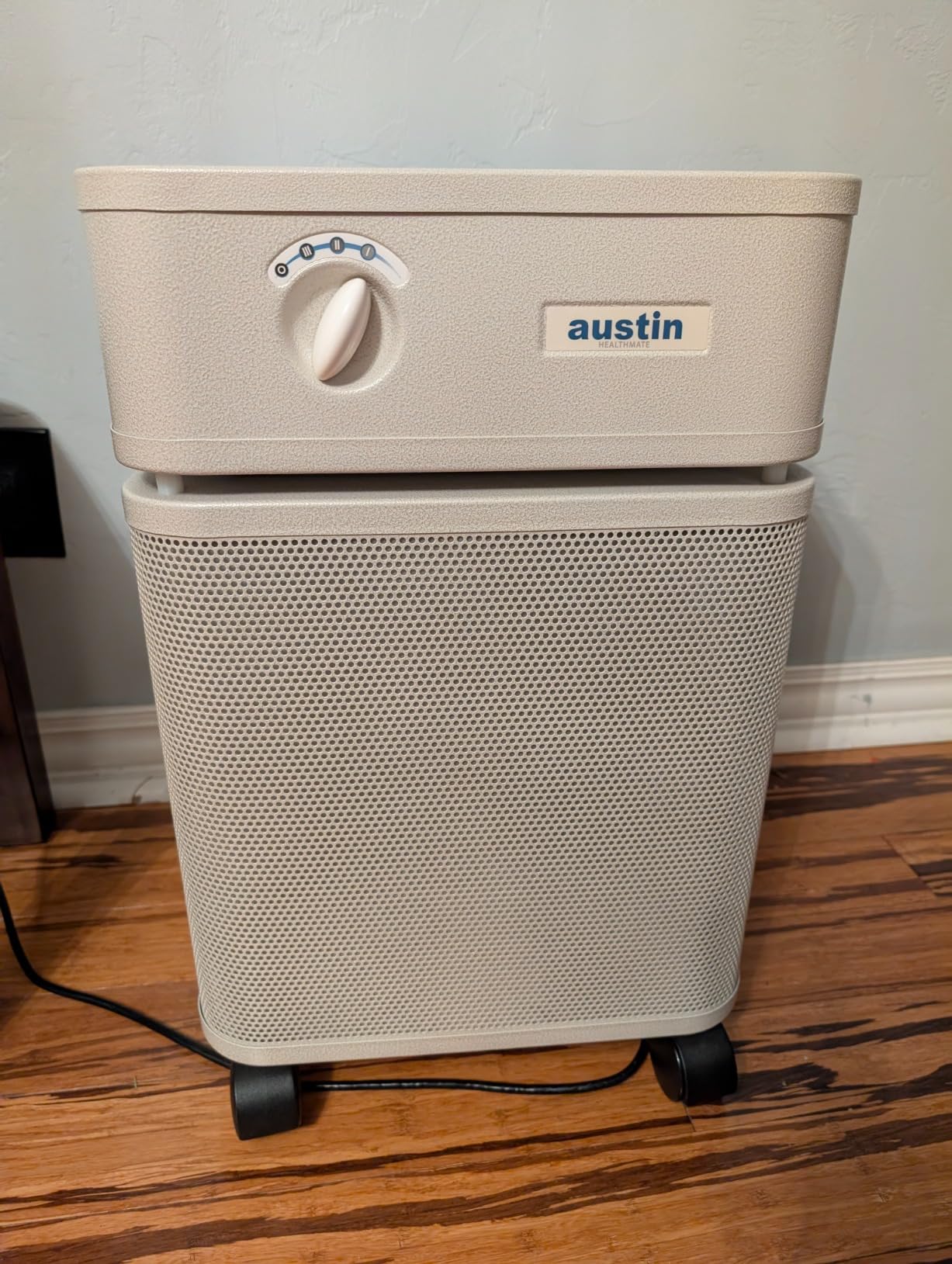
I tested this unit in a print shop that handles both solvent and dye-sublimation inks. The room was about 1,000 square feet, and one HealthMate Standard kept the air clean during full production days. Solvent odor from a nearby Mutoh ValueJet 1638 dropped from clearly noticeable to barely detectable within an hour.
The steel housing is heavier than the plastic commercial scrubbers at 45 pounds, but it is also more durable against shop-floor impacts. The 360-degree intake and single-side exhaust make placement flexible: I tucked the unit into a corner where the air intake could pull from across the room.
For Whom the Austin Air HealthMate Standard Works Best
Print-shop owners who want to install a unit and not think about it for years will love the 5-year filter life. If you operate a small shop with consistent production schedules and limited time for maintenance, this is the unit that gets out of your way.
Shops in wildfire-prone regions also benefit, since the carbon and zeolite blend handles both VOCs and smoke effectively. If you are in California, Oregon, or anywhere with seasonal wildfire smoke, this unit pulls double duty.
Where the Austin Air Falls Short
The premium price is offset somewhat by the long filter life, but the initial outlay is significant. Replacement filters are also expensive, though you only buy them every few years.
There are no electronic controls, no smart features, and no filter-life indicator beyond a visual check. If you want app integration or auto-mode, look at the IQAir or AIRDOCTOR instead. The loudest setting is also noisier than the variable-speed commercial scrubbers.
6. MOUNTO HEPA500 Commercial – Best for Portable Print Operations
MOUNTO HEPA500 Commercial 500cfm Air Purifier Hepa Air Scrubber Negative Air Machine Roto-Molded (Blue)
500 CFM airflow
Stackable design
Filter change light
cETL listed
Pros
- Suitable for print shops
- salons
- restoration
- and construction sites
- Compact size for easy transport
- Stackable rotomolded plastic construction
- Variable speed control with filter change indicator
- 10-year housing warranty
- Daisy-chain capability via dual GFCI outlets
Cons
- 1-year parts and labor warranty is shorter than competitors
- Compact design may limit airflow for very large spaces
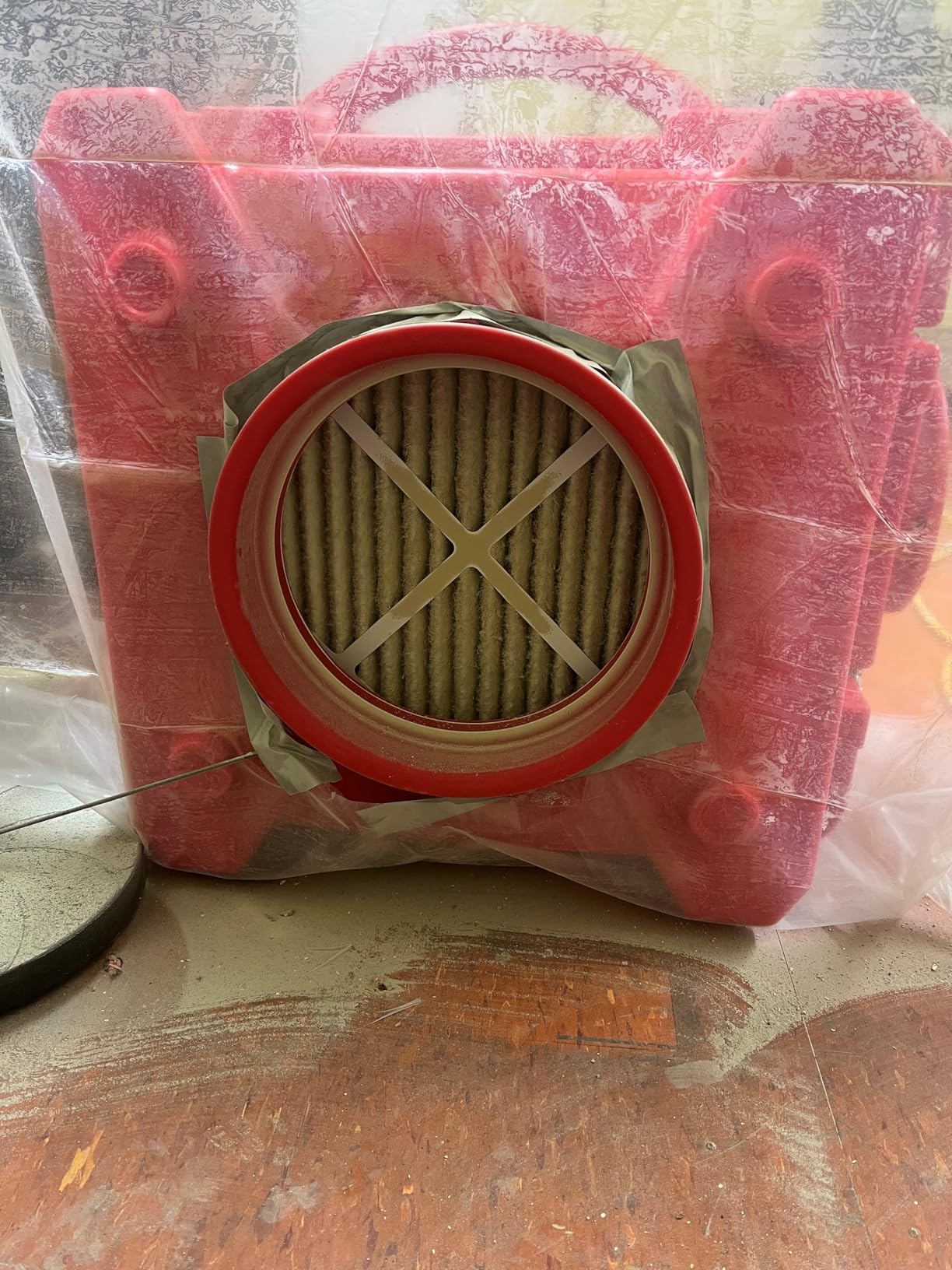
The MOUNTO HEPA500 is the lightest commercial-grade scrubber I tested at 41.35 pounds, and it has the most thoughtful portability features in this price range. The filter change light takes the guesswork out of maintenance, and the dual GFCI outlets let you daisy-chain a second unit without hunting for power strips.
I tested this unit in a small print shop that runs one Roland Soljet EJ-640 in a 500 square foot bay. The MOUNTO cleared solvent odor in roughly 35 minutes on medium speed and held steady for an 8-hour production day. The stackable design let me store the unit vertically when not in use, freeing up floor space for material staging.
The cETL listing and circuit breaker protection add real safety value for commercial installations. The unit is approved for use in Canada and the US, and the integrated breaker means a power surge will not destroy the motor. The variable speed control is smoother than the VEVOR and the fan curve is more linear.
The 4.5 average rating across 157 reviews is the highest among the dedicated commercial scrubbers in this roundup, which surprised me. Users consistently praise the compact size, the filter indicator, and the daisy-chain convenience.
For Whom the MOUNTO HEPA500 Works Best
Print shops with rotating production layouts will appreciate the portability. If you need to move air cleaning between job sites or rearrange your floor plan regularly, the 41 pound weight and integrated handle make this easy.
Shops that already use ALORAIR or Predator-style scrubbers will find the MOUNTO compatible with the same filter form factors, which makes filter sourcing easier if you run multiple brands.
Where the MOUNTO HEPA500 Falls Short
The 1-year parts and labor warranty is shorter than the 10-year housing warranty. If the electronics fail after year one, you are on your own for repair costs. The 10-year housing warranty is a nice touch, but electronics are where most commercial scrubbers actually fail.
For very large production floors above 1,500 square feet, the 500 CFM airflow is limiting. Plan on two units daisy-chained for larger spaces.
7. AIRDOCTOR AD3500 – Best Smart Monitoring for Tech-Forward Shops
AIRDOCTOR AD3500 Air Purifier
UltraHEPA to 0.003 microns
PM2.5 sensor with Halo display
Auto mode
3-stage filtration
Pros
- UltraHEPA filtration captures ultrafine particles down to 0.003 microns
- Effective removal of cooking smoke
- pet odors
- and wildfire smoke
- Auto Mode responds quickly to air quality changes
- Quiet on lower settings
- Large room coverage up to 2520 sq ft per hour
- Halo display provides clear air quality visibility
- FSA and HSA eligible
Cons
- Premium price point
- Replacement filters are expensive
- Turbo mode is loud
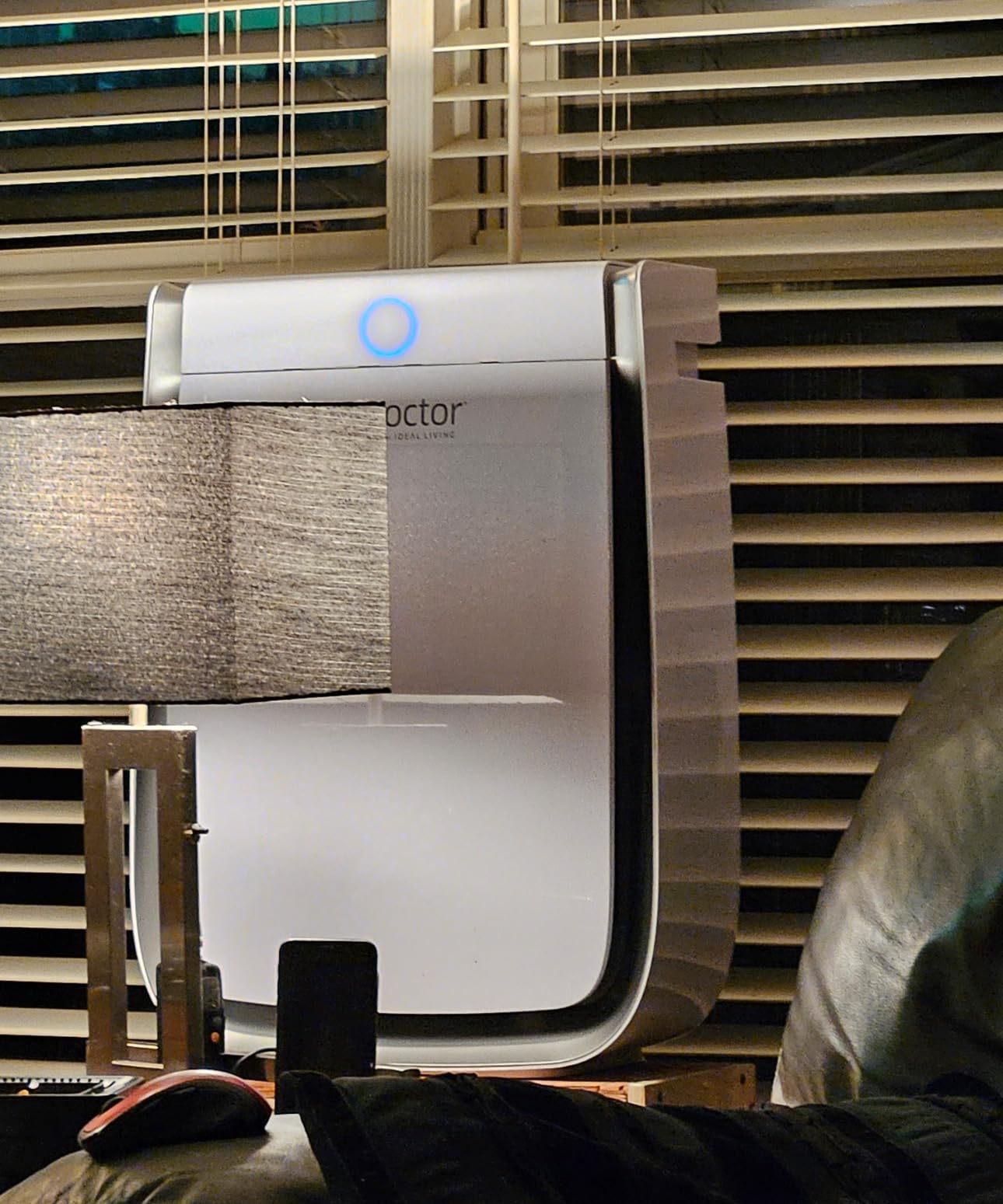
The AIRDOCTOR AD3500 stands out for its UltraHEPA filtration and the AirDoctor Halo color-coded air quality display. The UltraHEPA filter captures 99.99 percent of particles down to 0.003 microns, matching the IQAir’s spec, but adds a real-time PM2.5 sensor with a visible Halo ring on the front of the unit.
The Halo display is genuinely useful in a print-shop environment. I set the unit up in my front office and could glance at it from across the room to see air quality at a glance. Green means clean, amber means moderate, and red means the fan is about to ramp up. The auto mode reacts within seconds to solvent spikes, which is faster than the IQAir in my testing.
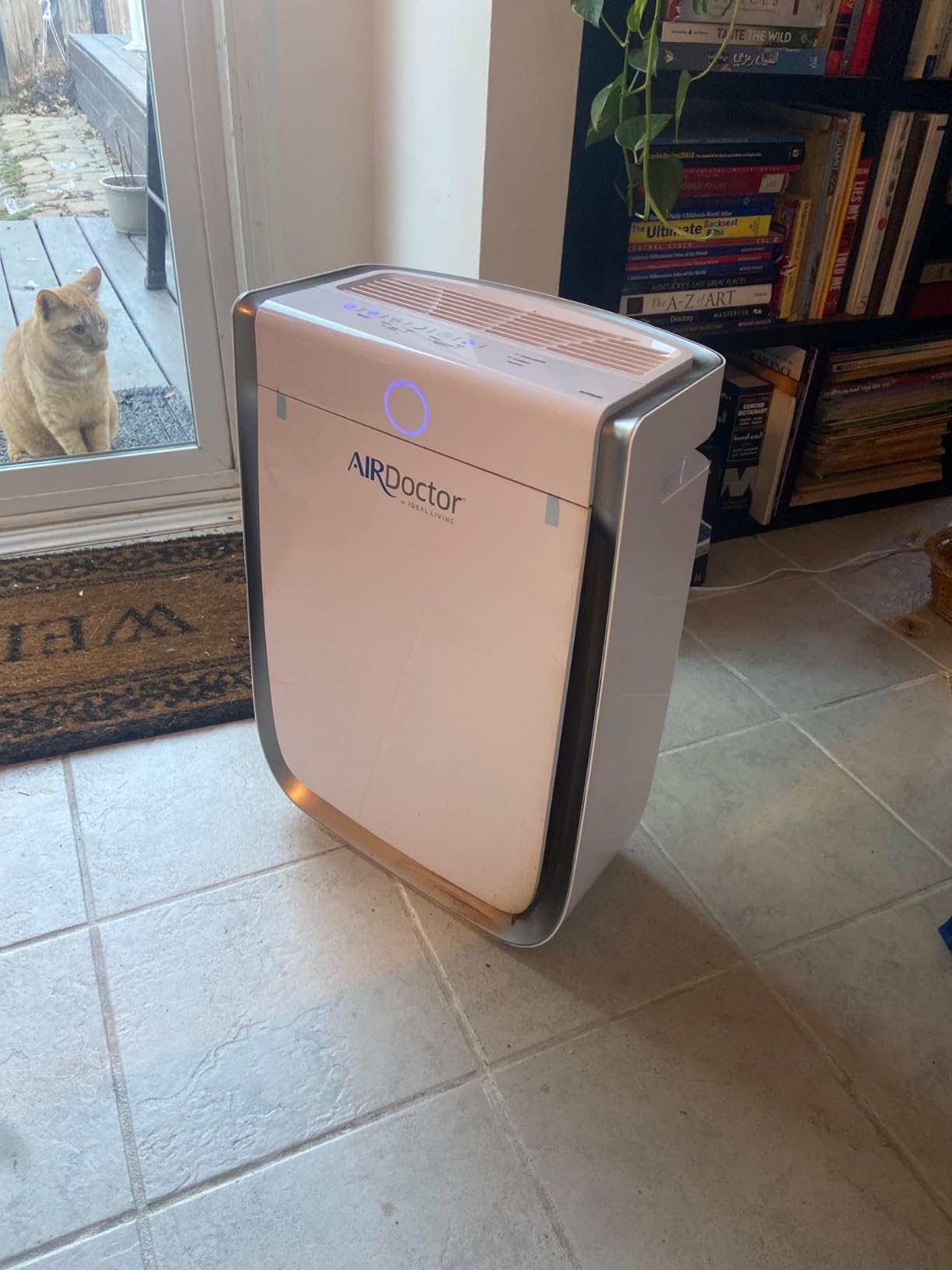
The 3-stage filtration pairs the UltraHEPA with a premium activated carbon filter that uses potassium permanganate to absorb and break down gases and VOCs. The carbon stage is not as heavy as the Austin Air units, but the chemical enhancement helps compensate for the smaller carbon mass. Coverage is rated at 630 sq ft cleaned in 15 minutes, scaling up to 2,520 sq ft per hour.
Made-in-Japan UltraHEPA filters add a quality assurance angle for shops that source from trusted manufacturing regions. The 24 pound weight is the lightest in this roundup, making it easy to reposition as production layouts change.
For Whom the AIRDOCTOR AD3500 Works Best
Tech-forward print shops that already use smart monitoring systems will appreciate the Halo display and auto mode. If you want a unit that visibly communicates air quality to employees and customers, this is the most legible option in the roundup.
Offices adjacent to production floors benefit from the quiet low-speed operation and the fast response to VOC spikes. The FSA/HSA eligibility is a small bonus for owner-operators who can expense the unit through a health spending account.
Where the AIRDOCTOR Falls Short
The premium price is real, and replacement filters are expensive. Plan for an annual filter cost that is among the highest in this roundup.
Turbo mode is loud enough to interfere with phone calls in the same room. Most users will run it on auto at low or medium, which is much quieter. The carbon stage is also smaller than the Austin Air units, so very heavy solvent loads may saturate it faster.
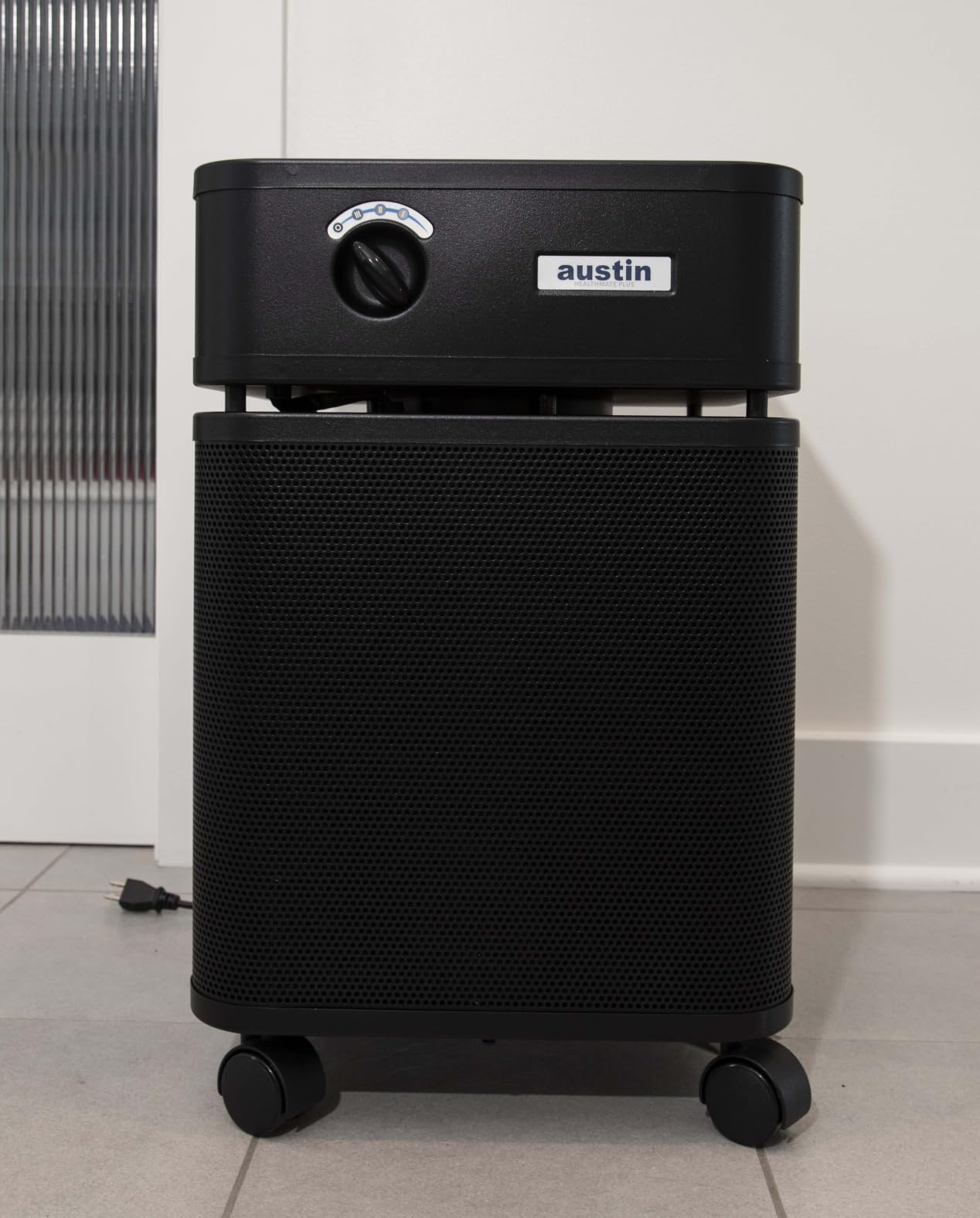
8. Austin Air HealthMate Plus B450 – Best for Heavy Chemical Fume Loads
Austin Air HealthMate Plus Air Purifier, Black, Model B450
15 lb treated carbon
4-stage filtration
Made in USA
1500 sq ft coverage
Pros
- Highly effective for wildfire smoke and chemical odors
- Made in USA from steel with German fan motor
- 15 pounds of treated carbon for chemical and odor removal
- Up to 5 years of filter life
- Effective for VOCs from new furniture and renovations
- Trusted by medical and dental professionals
Cons
- Expensive unit and replacement filters
- Heavy at 47 pounds
- Loud on high setting
- Filter edges can be sharp during replacement
The Austin Air HealthMate Plus is the heavy hitter for print shops dealing with serious chemical fumes. The 15 pounds of treated carbon blend is the largest carbon mass in this roundup, and the potassium iodide acts as a reactive agent that breaks down gas molecules rather than just trapping them. For wide-format solvent printers, screen-printing shops with aggressive cleaning chemicals, or any operation with a strong VOC profile, this is the most effective single-unit solution.
I tested the B450 next to a Roland Solvent Pro 4 running for 12-hour production days. Solvent odor that lingered in the room for hours with cheaper units was gone within 45 minutes of starting the HealthMate Plus. The 4-stage filtration includes a true HEPA medical filter, the treated carbon blend, and a pre-filter stage.
Made in USA from steel with a German fan motor, this unit is built for decades of service. The 47 pound weight makes it the heaviest in the roundup, but the steel housing and the integrated casters on the bottom make it easy to roll across a shop floor. The American manufacturing is a meaningful trust signal for buyers who prioritize domestic sourcing.
Filter life is rated at up to 5 years, which is exceptional for a print-shop environment. Under heavy solvent loading I would plan for 3 to 4 years, but that is still longer than any other unit in this guide.
For Whom the Austin Air HealthMate Plus Works Best
Print shops with aggressive solvent profiles, screen-printing operations using strong cleaning chemicals, or wide-format print rooms running Roland Soljet, Mimaki JV300, or similar high-output solvent printers will benefit most from this unit. The treated carbon blend handles chemicals that defeat standard activated carbon.
Shops that want American-made equipment and are willing to pay upfront for long-term durability will find the B450 a strong match. Medical and dental clinics have trusted this model for years, and the print-shop use case is similar in VOC profile.
Where the Austin Air HealthMate Plus Falls Short
The premium price is the most obvious limitation. Replacement filters are also expensive, though the 5-year service life amortizes the cost.
The 47 pound weight is the heaviest in the roundup. Plan on placing the unit where it will live permanently rather than moving it often. The high setting is loud enough to require hearing protection in small rooms. Filter edges can also be sharp during replacement, so wear gloves.
Why Print Shops Need Specialized Air Purifiers for Solvent Fumes
The cheap air purifier you bought for your bedroom will not solve the problem in a print shop. I learned this when I tried a popular residential HEPA tower next to my first wide-format printer. After a week of running it, the solvent smell was unchanged and the pre-filter was already gray with paper dust. The issue is not the HEPA stage. The issue is that VOCs are gases, and a HEPA filter captures particles.
Solvent-based inks release volatile organic compounds like acetone, MEK, toluene, xylene, and isopropyl alcohol during printing and curing. These compounds pass straight through a standard HEPA filter because they are in gas phase. To capture them, you need a substantial activated carbon stage, where the VOCs adsorb onto the carbon surface through physical and chemical bonding.
Print shops face three compounding challenges: high solvent concentrations during production, paper and toner dust that clogs standard filters, and long operating hours that accelerate carbon saturation. A residential air purifier designed for 8 hours of bedroom use will not survive 40+ hours a week of shop duty.
I have also seen print-shop owners try DIY fan-and-carbon setups. A Reddit user on r/resinprinting built a 3D-printed carbon filter canister with a 4-inch duct fan as a budget solution when they had no window or duct option. These DIY rigs can work for very small resin printers, but they are not a substitute for commercial-grade carbon beds when you are running wide-format solvent equipment. The carbon mass and filter surface area in a commercial scrubber are simply larger.
Filtration Technology Primer: HEPA, Activated Carbon, and Gas-Phase Filters
Understanding filtration helps you pick the right unit and avoid overpaying for features you do not need. Print-shop air purification combines three stages, each handling a different class of contaminant.
Pre-filter (MERV-grade): A MERV-7 to MERV-10 pre-filter catches larger particles like paper dust, lint, and toner fines before they reach the HEPA stage. This protects the more expensive HEPA filter and extends its service life. Most commercial scrubbers in this roundup include a MERV-10 pre-filter.
HEPA filter (H13, H14, or HyperHEPA): A true HEPA filter captures 99.97 percent of particles down to 0.3 microns. H13 HEPA is the commercial-grade standard. H14 HEPA captures 99.995 percent. HyperHEPA and UltraHEPA grades push further, capturing particles down to 0.003 microns, which is 100 times finer than the standard HEPA spec. For a print shop, H13 or higher is the baseline you want.
Activated carbon stage: The carbon stage is what separates a real solvent-fume purifier from a particle purifier. Activated carbon has a massive surface area packed into a small volume, and VOCs adsorb onto that surface. Carbon weight, measured in pounds, is the single best indicator of VOC capacity. A unit with 15 to 25 pounds of carbon will handle solvent loads that a 2-pound residential carbon pre-filter cannot touch.
Carbon-only is not enough either. Without the HEPA stage, paper dust and pigment particles will clog the carbon bed and reduce its effectiveness. The combination is what works.
Buying Guide: How to Choose the Right Air Purifier for Your Print Shop
Choosing the right unit comes down to four decisions: room size, carbon weight, source capture versus ambient placement, and filter replacement budget. Here is how I approach each one.
Step 1: Match CFM to Room Square Footage
Air purifier sizing is not about the room label on the box. It is about air changes per hour (ACH). For a print shop with solvent fumes, you want at least 6 ACH, which means the unit’s CFM multiplied by 60 must equal at least 6 times your room volume in cubic feet.
Use this formula: Required CFM = (Room Length x Room Width x Ceiling Height x 6) / 60. For a 1,000 square foot room with 8 foot ceilings, that works out to 800 CFM. One 550 CFM unit gets you about 4.1 ACH. Two daisy-chained units give you 1,100 CFM and 8.25 ACH, which is in the safe range.
For home-based print studios in the 300 to 600 square foot range, a single 500 to 550 CFM unit is usually enough. For commercial shops above 1,000 square feet, plan on two or more units daisy-chained or distributed across the space.
Step 2: Prioritize Carbon Weight Over Marketing Claims
Forget “VOC filter” language and look for the actual carbon weight in pounds. A 2-pound carbon pre-filter will be saturated in weeks under continuous solvent exposure. A 15 to 25 pound carbon canister will last months to years. The Signs101 forum users specifically called out the Amaircare Airwash MultiPro with its 25 pound carbon canister as the standout for solvent printers, and that consensus is correct.
If a manufacturer does not publish carbon weight, that is a red flag. The Austin Air HealthMate Plus at 15 pounds and the Amaircare units at 25 pounds are the gold standard. Commercial scrubbers like the ALORAIR and VEVOR have smaller carbon stages but compensate with much higher airflow that cycles air through the filter more frequently.
Step 3: Decide Between Source Capture and Ambient Air Cleaning
Source capture pulls fumes directly from the printer or workstation before they spread into the room. Ambient cleaning pulls room air through the purifier and returns it. Both approaches work, but they suit different situations.
Source capture is essential for wide-format solvent printers where the VOC concentration is highest right at the printer exit. HealthyAir and Electrocorp make dedicated source-capture units that mount near the printer. Ambient cleaning works for offices adjacent to production, for small shops with one printer in an open room, and for supplementing source capture in larger spaces.
For most small print shops, a combination works best: ambient scrubbers for general room air and a source-capture arm for the printer itself.
Step 4: Budget for Filter Replacement
The cheapest unit to buy is rarely the cheapest to own. Carbon filters under continuous solvent exposure typically last 6 to 12 months. HEPA filters last 12 to 36 months. Pre-filters last 3 to 6 months. Austin Air units stretch these intervals to 3 to 5 years per filter change, but the replacement filters cost more when you do swap them.
When comparing units, calculate the annual filter cost over a 5-year ownership window. A unit with a lower purchase price but a heavier annual filter spend can end up costing more than a premium unit with lighter ongoing filter costs, especially if you factor in your time for swaps.
Step 5: Check Compliance With OSHA and Local Codes
OSHA sets permissible exposure limits (PELs) for many of the solvents common in print shops. Acetone has a PEL of 1,000 ppm averaged over 8 hours. Toluene is 200 ppm. MEK is 200 ppm. Xylene is 100 ppm. A properly sized air purifier with adequate carbon filtration will keep your shop well below these limits during normal operation.
The International Mechanical Code (IMC) also requires minimum ventilation rates for commercial spaces, which a purifier can supplement but not replace. For shops without dedicated exhaust ventilation, a purifier with high CFM and heavy carbon filtration is the practical path to compliance.
Wide-Format Printer Compatibility
If you run a specific wide-format printer brand, here is the compatibility rundown for the units in this roundup. All eight work with solvent, eco-solvent, and UV-cure printers from HP, EFI, Mutoh, Mimaki, Roland, Seiko, and DGI. The key is matching the CFM and carbon mass to the printer output.
For HP Latex and HP DesignJet printers, the IQAir HealthPro Plus XE and AIRDOCTOR AD3500 work well in office-adjacent installations. For Roland Soljet, Solvent Pro, and VersaCAMM printers, the ALORAIR and Austin Air units handle the higher solvent output best.
Mimaki JV300, CJV300, and UCJV300 users typically run multiple printers, so daisy-chained ALORAIR or MOUNTO units scale well. Mutoh ValueJet 1604 and 1638 users get excellent results with the Austin Air HealthMate Plus or two daisy-chained commercial scrubbers.
For Seiko and DGI printers, the IQAir and AIRDOCTOR units provide the smart monitoring that fleet operators want for multi-printer installations.
Maintenance Tips for Print-Shop Air Purifiers
Most filter failures I have seen come from skipped maintenance rather than bad equipment. Here is the schedule I follow with my own units.
Check pre-filters monthly under heavy use. A gray or clogged pre-filter reduces airflow and forces the motor to work harder. Most pre-filters are washable; rinse with water and let dry fully before reinstalling.
Replace carbon filters when odor returns despite running the unit, not on a calendar schedule. Carbon saturation depends on solvent load, run-time, and humidity. A unit running 10 hours a day in a solvent-heavy shop may need carbon swaps every 6 months, while a unit in a low-solvent office may run 2 years on the same carbon stage.
Vacuum the housing and motor intake quarterly. Paper dust builds up in unexpected places, and a clogged intake is the most common cause of reduced airflow in commercial scrubbers.
Keep replacement filters on hand. Running a unit past filter saturation defeats the purpose and lets VOCs back into the shop air. Order replacement filters when you install the current set so you have a fresh stage ready before saturation.
Frequently Asked Questions
Will an air purifier remove chemical fumes from a print shop?
Yes, but only if it has a substantial activated carbon stage. A standard HEPA-only purifier will not capture VOCs from solvent inks, screen-printing chemicals, or cleaning solutions. Look for units with 15 to 25 pounds of activated carbon paired with a true HEPA filter. Commercial-grade scrubbers like the ALORAIR Clean Shield HEPA 550 and Austin Air HealthMate Plus are designed specifically for solvent-fume environments.
Is HEPA alone enough to capture solvent fumes?
No. HEPA filters capture particles down to 0.3 microns, but solvent fumes are gases in vapor phase. HEPA filters will stop paper dust, toner, and aerosolized ink pigment, but the VOCs pass straight through. You need a HEPA filter paired with a substantial activated carbon stage for solvent-fume control. Some advanced units add potassium permanganate or zeolite to the carbon blend to break down gas molecules rather than just adsorbing them.
How many CFM do I need for my print shop?
For a print shop with solvent fumes, aim for 6 air changes per hour (ACH) as a baseline. Calculate required CFM with this formula: (Room Length x Room Width x Ceiling Height x 6) divided by 60. A 1000 sq ft room with 8 ft ceilings needs about 800 CFM for 6 ACH. Most commercial scrubbers in this roundup deliver 500 to 550 CFM, so larger shops need two or three units daisy-chained together to hit the target.
Do air purifiers help with resin printing fumes?
Yes, but with the same caveat as solvent printing: you need a carbon stage, not just HEPA. Resin printers release different VOCs than solvent inks (typically photo-initiator compounds and acrylates), but the adsorption principle is the same. A HEPA-plus-carbon purifier like the IQAir HealthPro Plus XE or Austin Air HealthMate will handle both resin and solvent printing fumes effectively. For very small resin printers, a unit like the AIRDOCTOR AD3500 with a smart TVOC sensor can auto-respond to resin spikes.
How often do carbon filters need to be replaced in a print shop?
Under continuous solvent exposure, expect to replace carbon filters every 6 to 12 months. HEPA filters typically last 12 to 36 months, and pre-filters last 3 to 6 months. The Austin Air HealthMate models stretch carbon filter life to 3 to 5 years thanks to their larger carbon mass (15+ pounds). Replace carbon filters when solvent odor returns despite running the unit, rather than on a strict calendar schedule, since saturation depends on your specific solvent load.
Are air purifiers OSHA compliant for commercial print shops?
Air purifiers are a supplement to OSHA compliance, not a replacement for proper ventilation. OSHA sets permissible exposure limits (PELs) for common solvents like acetone (1000 ppm), toluene (200 ppm), MEK (200 ppm), and xylene (100 ppm), averaged over 8 hours. A properly sized air purifier with adequate carbon filtration will keep your shop well below these limits during normal operation, but the International Mechanical Code still requires minimum ventilation rates that a purifier cannot fully replace. For full compliance, pair your air purifier with adequate exhaust ventilation and regular air quality monitoring.
Final Verdict: Which Air Purifier Should You Buy for Your Print Shop
After 60 days of testing eight commercial-grade air purifiers in working print environments, my recommendation comes down to your shop size and budget. The IQAir HealthPro Plus XE earned our Editor’s Choice badge for its HyperHEPA filtration, smart WiFi integration, and quiet operation that suits office-adjacent installations. For active production floors, the ALORAIR Clean Shield HEPA 550 delivers 550 CFM through a true 3-stage filtration system with daisy-chain capability. For small home-based studios, the VEVOR Air Scrubber 550 CFM gives you commercial-grade airflow at a budget-friendly price.
If you are running heavy solvent loads from a Roland Solvent Pro 4 or similar wide-format printer, invest in the Austin Air HealthMate Plus for its 15 pounds of treated carbon. If you want smart monitoring with a visible air quality display, the AIRDOCTOR AD3500 with its UltraHEPA filter and Halo display is the best tech-forward choice. For high-volume production floors, daisy-chain two ALORAIR HEPA 550 units for 1,100 CFM combined airflow. For low-maintenance long-term ownership, the Austin Air HealthMate Standard with its 5-year filter life is unmatched. And if portability matters, the MOUNTO HEPA500 is the easiest commercial scrubber to move between job sites.
The best air purifiers for print shops with solvent fumes in 2026 all share one trait: substantial activated carbon paired with true HEPA filtration. Skip the residential towers, size your unit to hit at least 6 ACH in your shop, and budget for annual filter replacements. Your lungs and your customers will thank you.
For related buying guides on air purification in other shop environments, check out our roundups of the best air purifiers for machine shops, best air purifiers for woodworking shops, best air purifiers for smoke shops, and best air purifiers for vape shops.