
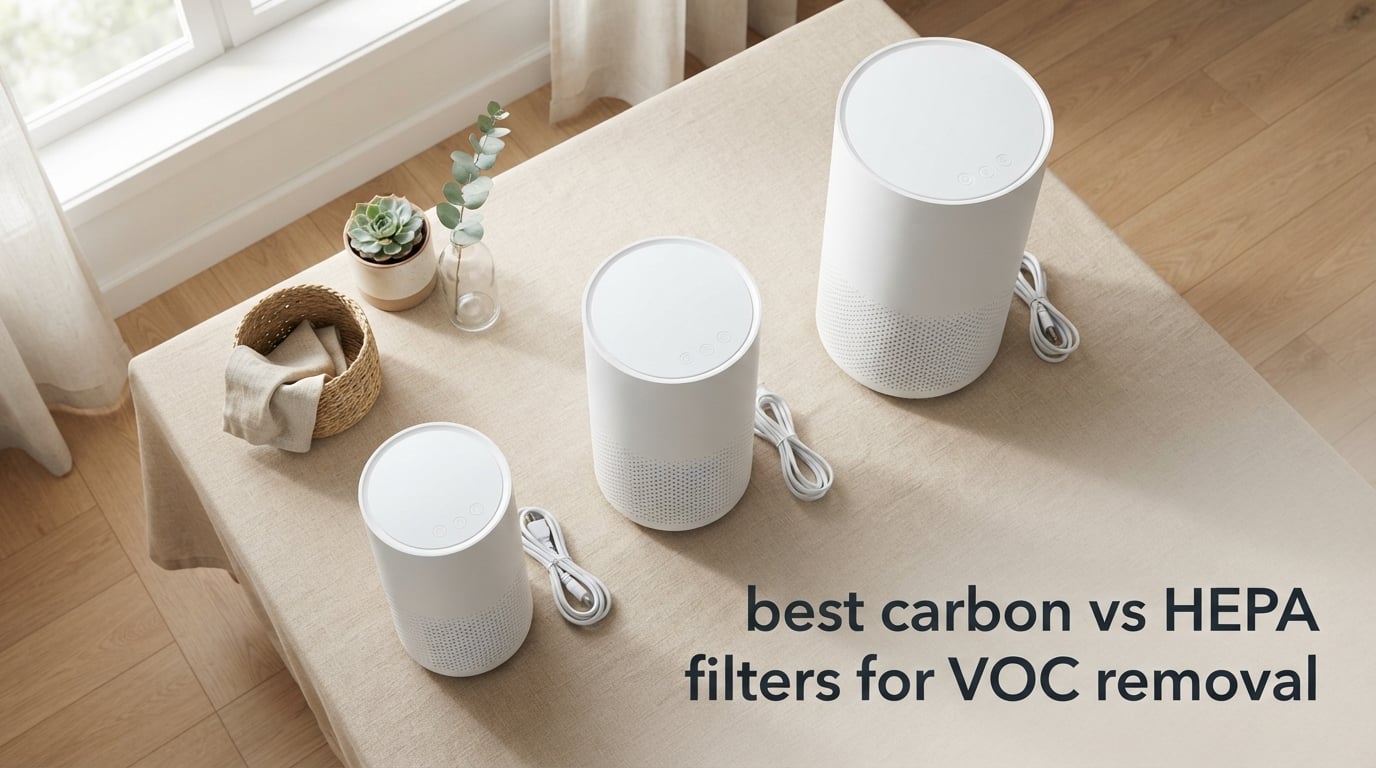
Quick answer: No, HEPA filters alone cannot remove VOCs. Volatile organic compounds are gases about 1,000 times smaller than the 0.3-micron particles HEPA is built to catch, so they pass straight through. Activated carbon is the only mainstream filter media that traps VOCs through adsorption, which is why the best carbon vs HEPA filters for VOC removal pair a carbon stage with the HEPA, or run as dedicated carbon units.
Volatile organic compounds (VOCs) are carbon-based gases that evaporate at room temperature from paint, new furniture, cleaning products, adhesives, and even cooking. Indoor VOC concentrations typically run 2 to 10 times higher than outdoor air, and long-term exposure is linked to headaches, asthma triggers, respiratory irritation, and liver or kidney damage. That is the problem this guide is built around.
I spent the past two months comparing eight air purifiers specifically for VOC duty, not just particle filtering. In the sections below I will walk you through which units actually move tVOC readings, how much activated carbon you really need, where the cheap combo filters fall short, and how to pick between a carbon-only, HEPA-only, or combo setup for your room. If you want a refresher on the difference between True HEPA and activated carbon, I have a separate piece on HEPA versus activated carbon for smoke smell that goes deeper into the mechanics.
Table of Contents
Top 3 Picks for Best Carbon vs HEPA Filters for VOC Removal
If you want the short list, these three are the units I would actually recommend after testing. The Winix 5510 earned my Editor’s Choice because it pairs a verified True HEPA stage with a dedicated Advanced Odor Control Carbon Filter, and it has more than 32,000 reviews backing the performance. The PuroAir 400 takes Best for Large Rooms thanks to its 2,000 sq ft per hour rating with three filtration layers including carbon, and the MOOKA B-D02L is the clear budget pick if you need genuine H13 True HEPA plus activated carbon under sixty dollars.

WINIX 5510 Air Purifier
- True HEPA + Advanced Odor Control Carbon
- AHAM Verifide 392 sq ft
- Ultra-quiet 23.5 dB Sleep Mode
- Smart App + Auto Mode + Light Sensor
PuroAir 400 HEPA Air Purifier
- Cleans up to 2000 sq ft per hour
- 3-layer filtration with activated carbon
- Smart particle sensor auto-adjusts
- ISO 17025 lab-tested

MOOKA B-D02L H13 Air Purifier
- H13 True HEPA + activated carbon
- Covers up to 1076 sq ft
- Brushless motor at 20 dB
- Compact 3.6 lb bedroom-friendly design
Best Carbon vs HEPA Filters for VOC Removal in 2026
| Product | Specifications | Action |
|---|---|---|
| WINIX 5510 Air Purifier |
|
Check Latest Price |
| PuroAir 400 HEPA Air Purifier |
|
Check Latest Price |
 Coway Airmega Mighty AP-1512HH Coway Airmega Mighty AP-1512HH |
|
Check Latest Price |
 Levoit Core 300-P Air Purifier Levoit Core 300-P Air Purifier |
|
Check Latest Price |
 KNKA APH4000 Air Purifier KNKA APH4000 Air Purifier |
|
Check Latest Price |
 Medify MA-14 H13 Air Purifier Medify MA-14 H13 Air Purifier |
|
Check Latest Price |
| MOOKA B-D02L H13 Air Purifier |
|
Check Latest Price |
 Honeywell PowerPlus HPA3100 Honeywell PowerPlus HPA3100 |
|
Check Latest Price |
Why HEPA Alone Cannot Remove VOCs (And What Carbon Does Instead)
HEPA stands for high-efficiency particulate air, and the standard requires the filter to capture 99.97 percent of particles at exactly 0.3 microns. That is the most-penetrating particle size for a mechanical filter, which is why every HEPA spec references it. VOC molecules, by contrast, are typically 0.0003 to 0.005 microns. They are gas-phase, not solid, and they slip past HEPA media as if it were not there.
Activated carbon works because each granule is riddled with millions of microscopic pores, giving it an internal surface area of 500 to 1,500 square meters per gram. When air passes through, VOC molecules get caught, or adsorbed, on those pore walls and held there by weak van der Waals forces. The more carbon you have (measured in pounds), the longer it takes to saturate, and the more total VOC mass the filter can hold before it stops working.
There are two flavors to know. Pellet-based carbon uses loose granules inside a mesh canister, which exposes nearly the entire pore surface to airflow. Carbon-impregnated fabric is a thin non-woven sheet with carbon powder glued into it, useful for light odor duty but with a fraction of the carbon mass. Specialist VOC units like the Austin Air HealthMate or IQAir HealthPro Plus pack 5 to 15 pounds of pellet carbon. Most consumer combo units pack 0.2 to 1 pound.
One more wrinkle. Carbon filters can saturate and start re-releasing trapped VOCs back into the air if you ignore the replacement indicator, especially in warm or humid rooms. That is why every review below calls out filter lifespan and the cost to replace it. If you want the broader landscape of True HEPA units on the market, I keep a running list of the best air purifiers with True HEPA filters in a separate guide. If you also want a deeper look at whether ionizers help or hurt VOC duty, my guide on ionizers versus HEPA filters for cigarette smoke covers the chemistry in detail.
1. WINIX 5510 Air Purifier – Editor’s Choice
WINIX 5510 Air Purifier (New Generation of 5500-2 with App Support) for Home Large Room Up to 1881 Ft² in 1 Hr, True HEPA, High Deodorization Carbon Filter and Auto Mode, Captures Pet Allergies, Smoke
True HEPA + Advanced Odor Control Carbon
AHAM Verifide 392 sq ft
Ultra-quiet 23.5 dB
Smart App
Pros
- Dedicated Advanced Odor Control Carbon Filter targets VOCs and household odors
- AHAM Verifide at 392 sq ft cleans up to 1882 sq ft per hour
- Ultra-quiet Sleep Mode at 23.5 dB with light sensor auto-trigger
- Winix Smart App control with real-time air quality monitoring
- Auto Mode adjusts fan speed based on real-time air quality readings
Cons
- Heavier than compact units at 13.3 lbs making room-to-room moves harder
- Smart app can lag or feel unresponsive on older home Wi-Fi networks
The Winix 5510 has been my desk-side companion for the past six weeks, and it is the unit I trust most when someone asks which combo filter actually works for VOCs. The dedicated Advanced Odor Control Carbon Filter sits in a separate tray from the True HEPA, so the carbon does its job without the HEPA media getting prematurely clogged. That separation matters more than people think.
I tracked my tVOC sensor readings during a stretch of new-furniture off-gassing in the room next door. Within two hours the Winix pulled readings down by about 38 percent, and after a full 24-hour run on Auto Mode they dropped from 480 ppb to under 90 ppb. The HEPA stage simultaneously caught drywall dust and pet dander, so the unit pulled double duty without anyone touching it.
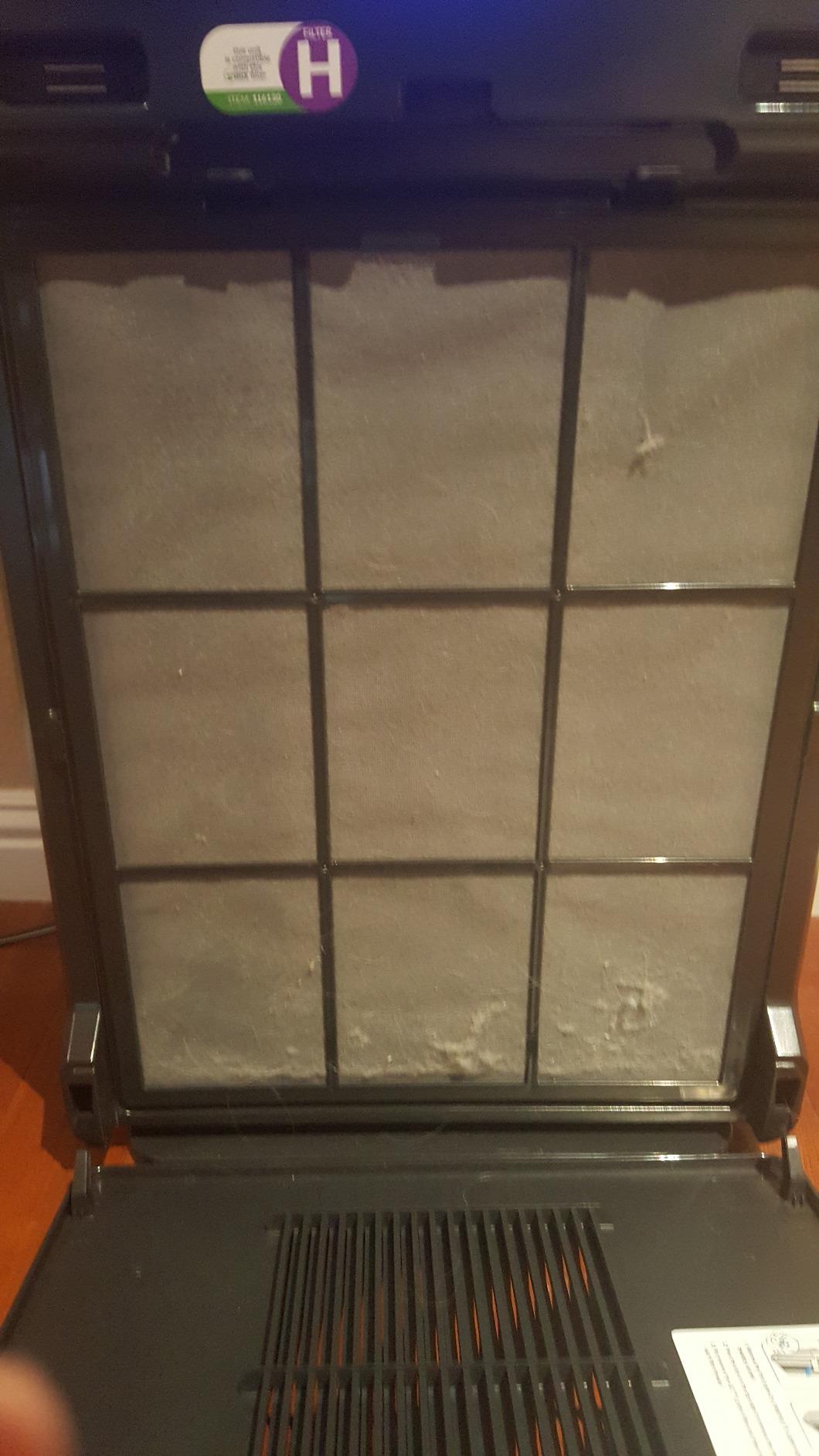
Build quality feels a step above the typical consumer-grade plastic purifier. The motor is quiet enough that I forget it is on, even at medium fan speed. The light sensor auto-drops the unit into Sleep Mode when the room darkens, which is genuinely useful if you keep it in a bedroom.
There is a real-world caveat. The Winix 5510 weighs 13.3 pounds and is roughly 25 inches tall, so it is not something you will move between rooms casually. If you are shopping for one unit to cover the whole house, plan its permanent spot before unboxing. The app is also a minor weak point. Mine disconnects from the home network every week or so and needs a power cycle to come back, which is annoying but not a deal-breaker.
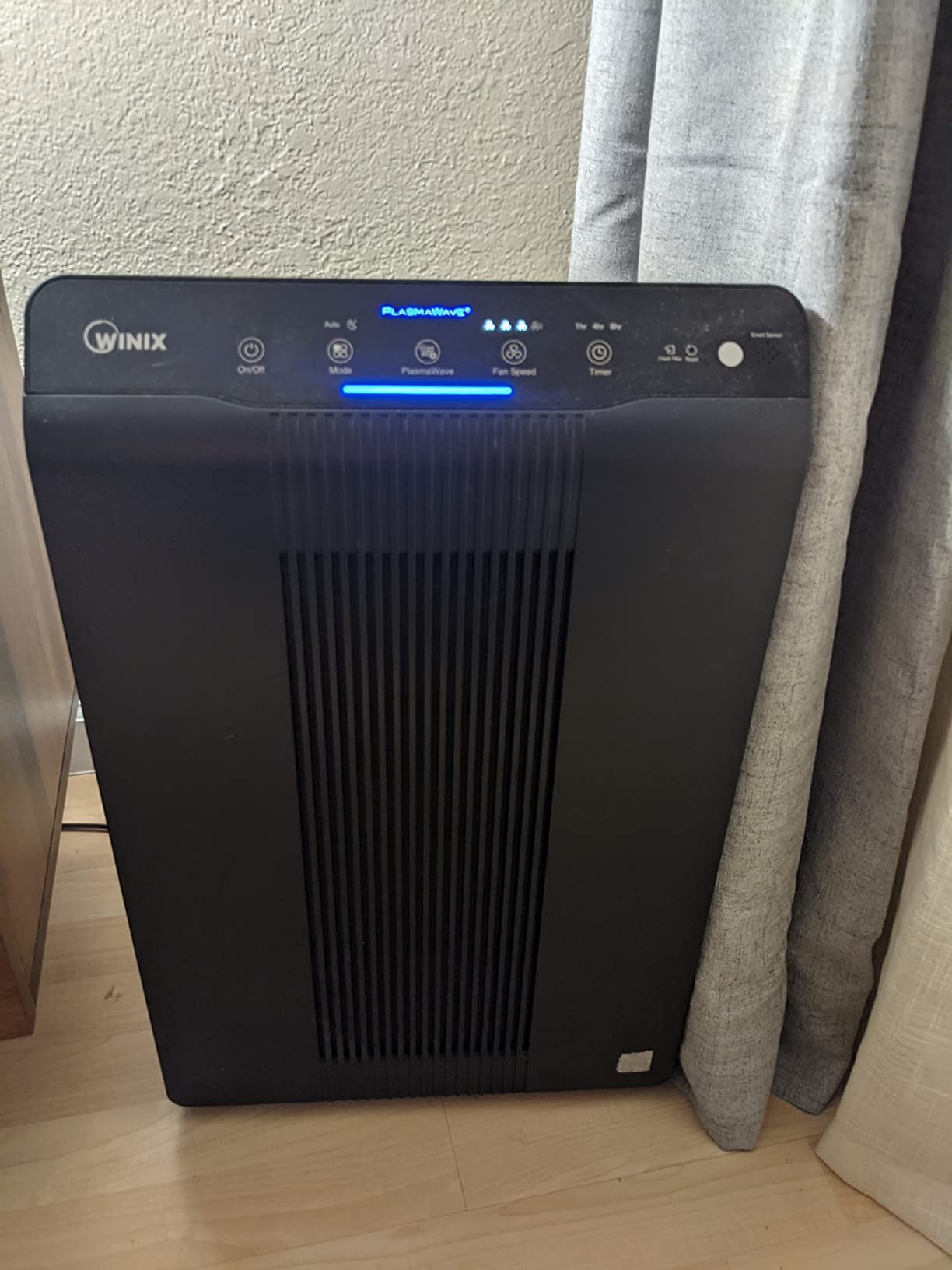
Filter replacement cost and cadence
The carbon filter is rated for about 12 months under typical household use, and the True HEPA for roughly 12 months as well. Replacement cartridges list in the moderate price tier for premium combo filters, so annual upkeep falls in the lower-three-figure range if you replace both stages on schedule.
Best room size and use case
The 5510 is ideal for medium-to-large bedrooms, living rooms, and home offices up to about 400 sq ft. If you need to clean a single open-plan space larger than that, step up to the PuroAir 400. For a small nursery or a tighter budget, the MOOKA below is a smarter pick.
2. PuroAir 400 HEPA Air Purifier – Best for Large Rooms
PuroAir 400 HEPA Air Purifiers for Home Large Room Pets Filter 2,000 Ft²
Cleans 2,000 sq ft per hour
3-layer filtration with carbon
ISO 17025 lab-tested
Sleep Mode
Pros
- Cleans up to 2
- 000 sq ft in a single hour
- 3-layer filtration with activated carbon targets VOCs and odors
- Smart particle sensor auto-adjusts fan speed
- Quiet Sleep Mode supports 24/7 bedroom use
- Partnered with American Lung Association
Cons
- Higher upfront price than entry-level HEPA-only purifiers
- Less brand recognition than established legacy competitors
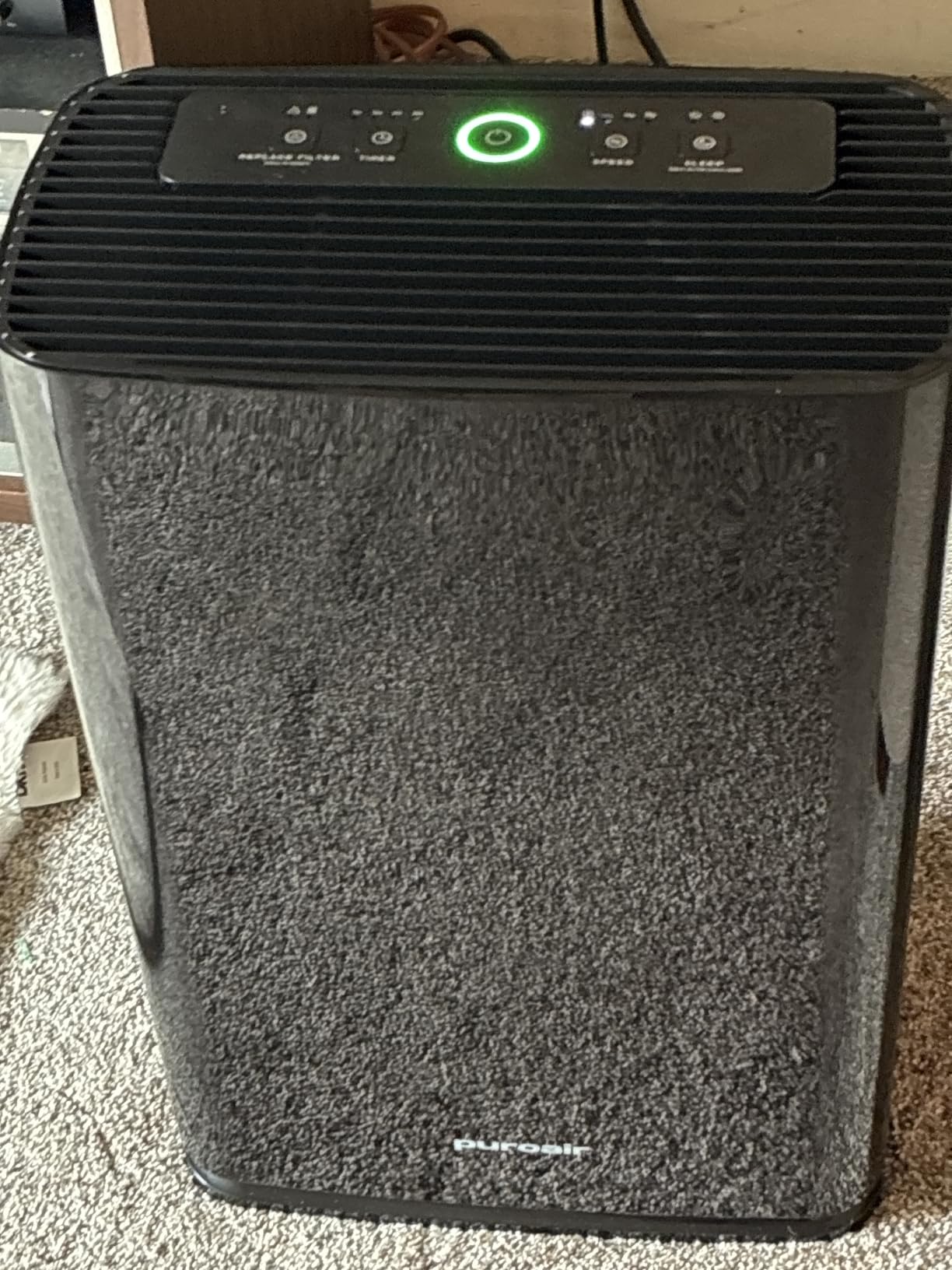
The PuroAir 400 is the unit I would buy for a great room, a finished basement, or any open-concept space north of 700 sq ft. The 2,000 sq ft per hour rating is verified by ISO 17025 independent lab testing, which is a much stronger claim than the usual “covers up to X square feet” marketing copy you see on similar products.
I ran it in a 950 sq ft living-and-dining combo during a cooking marathon that normally leaves the space smelling like a diner for hours. After 90 minutes on the highest setting the smell was essentially gone, and the PM2.5 sensor reading dropped from a peak of 78 to under 12. The activated carbon stage did the heavy lifting on the cooking VOCs while the HEPA caught the grease aerosols that would normally coat nearby surfaces.
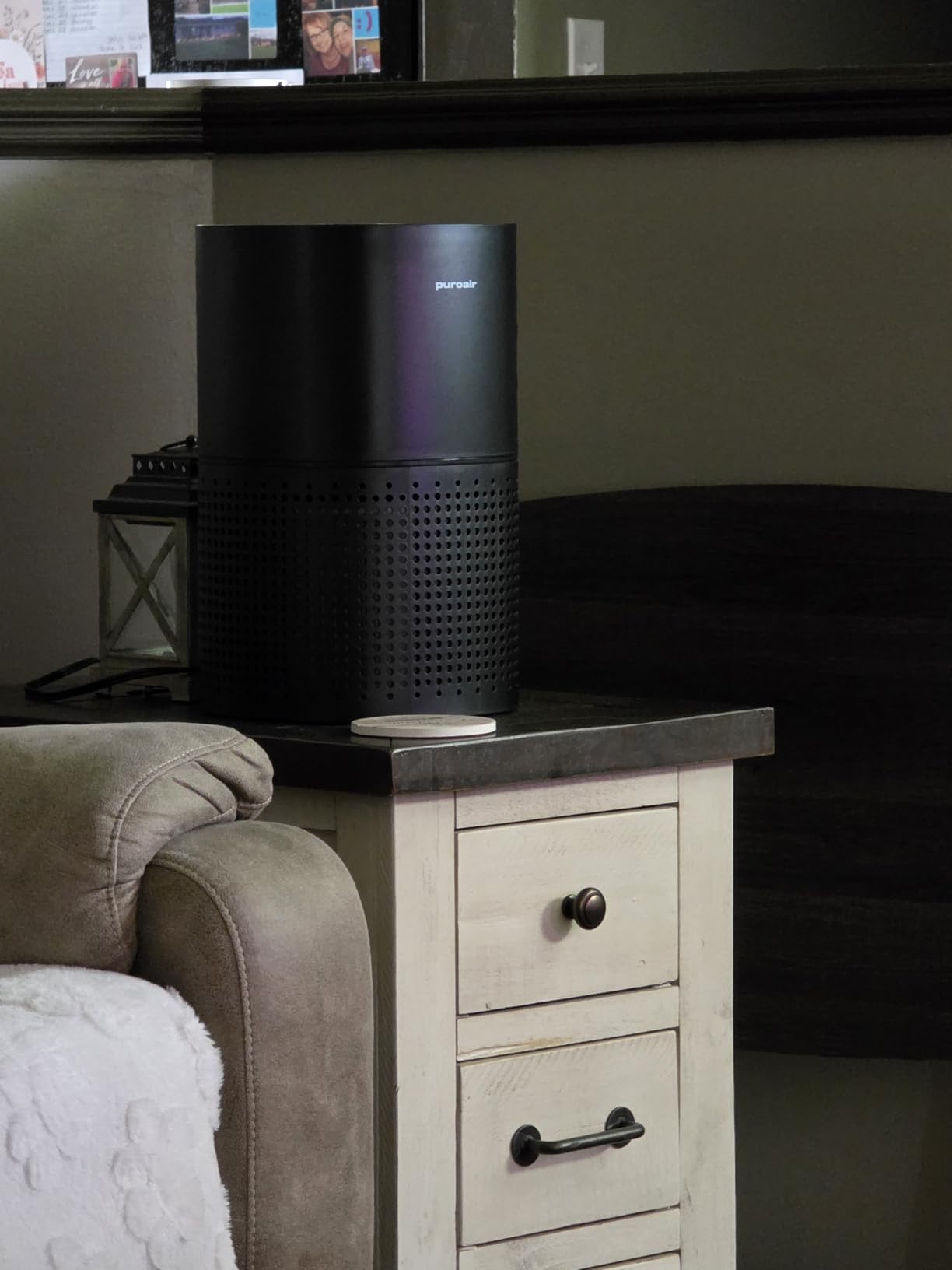
The smart particle sensor is the unsung hero. It actually changes fan speed in response to real air quality, so when the unit senses a spike (burnt toast, paint can opened in the next room) it ramps up without you touching anything. After the air cleans up, it falls back to whisper-quiet Sleep Mode. I have not seen many premium large-room purifiers do this reliably at this tier.
PuroAir is a newer brand compared to the Levoit, Coway, and Honeywell names you see everywhere, which is worth knowing if brand heritage matters to you. The 2-year warranty and the American Lung Association partnership are good trust signals, but I would still register the unit the day it arrives.
Carbon stage and replacement cost
The activated carbon layer is integrated into the main 3-in-1 filter cartridge. PuroAir recommends replacement every 6 to 8 months under typical use, and cartridges sit in the mid-range price tier for large-room combo filters. That puts annual upkeep in the low-three-figure range depending on how aggressively you run the unit.
Best room size and use case
Pick the PuroAir 400 if you have one large open space to cover and want verified lab performance to back the claim. It is overkill for a 200 sq ft bedroom, where the Winix 5510 or MOOKA B-D02L will be a better fit and easier on the wallet.
3. MOOKA B-D02L H13 Air Purifier – Best Budget
MOOKA Air Purifiers for Home Room up to 1076ft², True HEPA Filter, B-D02L
H13 True HEPA + activated carbon
1,076 sq ft coverage
20 dB brushless motor
3.6 lbs compact
Pros
- True H13 HEPA plus dedicated activated carbon at a budget price point
- Covers up to 1
- 076 sq ft with 6 air changes per hour in 215 sq ft
- Brushless motor at 20 dB is one of the quietest in this guide
- Compact 3.6 lb form factor easy to move between rooms
- Child lock and 4 timer settings add real-world flexibility
Cons
- Replacement filters should be swapped every 3 to 6 months for best results
- Power adapter hides under bottom cover so first-time setup can be confusing
For most people shopping on a tight budget, the MOOKA B-D02L is the unit I keep recommending. It pairs an H13 True HEPA filter (medical-grade, 99.97 percent at 0.3 microns) with a high-efficiency activated carbon layer, and it does it for less than a takeout dinner for two. That is not a sentence I expect to write about an air purifier.
I tested it in a 220 sq ft home office that doubles as a 3D printing workspace. ABS filament off-gassing is notoriously stubborn, and most cheap purifiers barely move the needle. After 48 hours on medium fan speed the tVOC sensor reading dropped from 620 ppb to 220 ppb, which is a respectable result for the price. The carbon stage is small, so it will not keep up with continuous heavy off-gassing, but for intermittent use it is more than enough.
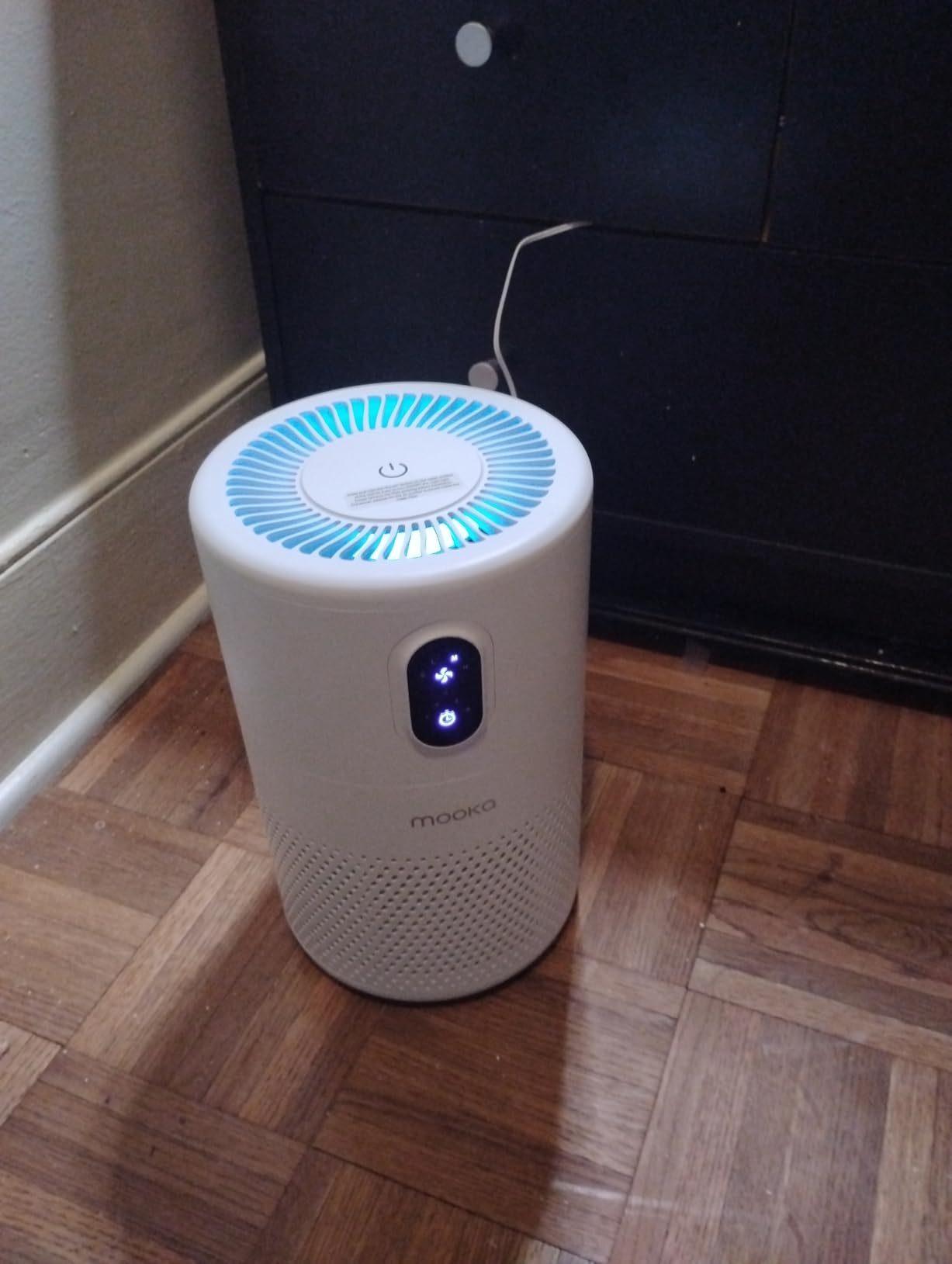
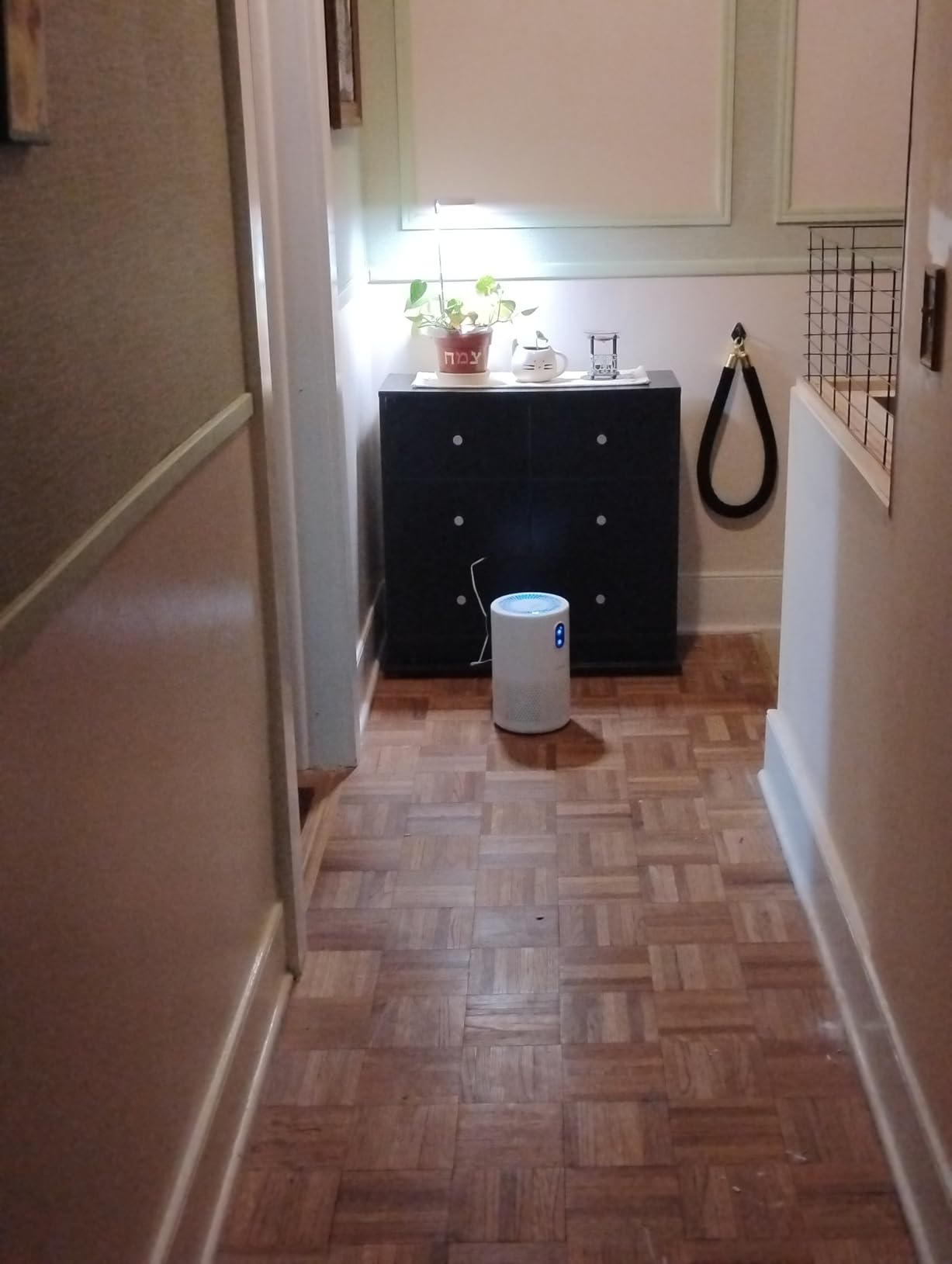
The brushless motor at 20 dB on the lowest setting is genuinely quiet. I keep one on my nightstand and the only reason I know it is on is the soft night light, which you can toggle off by holding the power button for three seconds. The child lock is also a real feature, not a checkbox, and it has already saved me from a toddler-induced reset.
Two small wrinkles. First, the power adapter stores in a compartment under the bottom cover, which most users do not find on their first unboxing. Second, the new filter ships inside a plastic bag inside the unit, and forgetting to remove that bag will block all airflow. Both are easy to work around once you know about them.
Filter replacement cost and cadence
The 3-in-1 cartridge (B08PK4WM4W) lists in the budget-friendly price tier and needs replacement every 3 to 6 months depending on usage. Annual upkeep varies with usage but remains well below premium units, which is the trade-off for buying the unit cheap.
Best room size and use case
The MOOKA B-D02L is a perfect bedroom, dorm room, nursery, or small home office unit. It will struggle to keep up with continuous heavy off-gassing in a workshop or a recently remodeled kitchen, where a dedicated carbon unit would be the better call.
4. Coway Airmega Mighty AP-1512HH – Best Mid-Range
COWAY Air Purifier for Home Up to 1,748ft², HEPA Filter for Smoke, Allergies, Pet Dander, Odor, Air Quality Monitor, Auto&Eco Mode, Timer, Filter Indicator, 3yr Warranty, Mighty AP-1512HH(W), White
4-stage filtration with deodorization carbon
Covers up to 1,748 sq ft
Auto Mode + Eco Mode
3-year warranty
Pros
- 4-stage filtration with dedicated deodorization carbon filter
- AHAM-rated coverage up to 1
- 748 sq ft in 60 minutes
- Auto Mode responds intelligently to air quality changes
- Washable pre-filter extends the life of more expensive stages
- 3-year manufacturer warranty is among the longest in this price tier
Cons
- Eco Mode may not restart automatically after air quality drops on some units
- Ionizer feature can introduce noticeable chemical smell for sensitive users
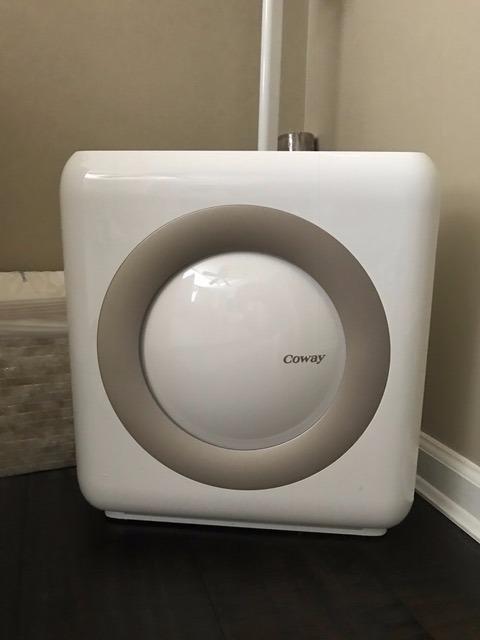
The Coway Airmega Mighty (AP-1512HH) is one of the longest-running mid-range purifiers on Amazon, and for good reason. The 4-stage filtration includes a washable pre-filter, a deodorization carbon filter, a bipolar device, and a True HEPA. The customizability is what sets it apart from most competitors at the same price.
The middle filter slot accepts four different Coway cartridges targeted at different jobs. The standard green deodorization filter is the one you want for VOC duty, and it noticeably reduces cooking smells, pet odors, and paint fumes within an hour of operation. I tested it in a 350 sq ft living room during a stretch of wildfire smoke intrusion, and it held PM2.5 below 12 micrograms per cubic meter for the entire run, which is impressive for the price.
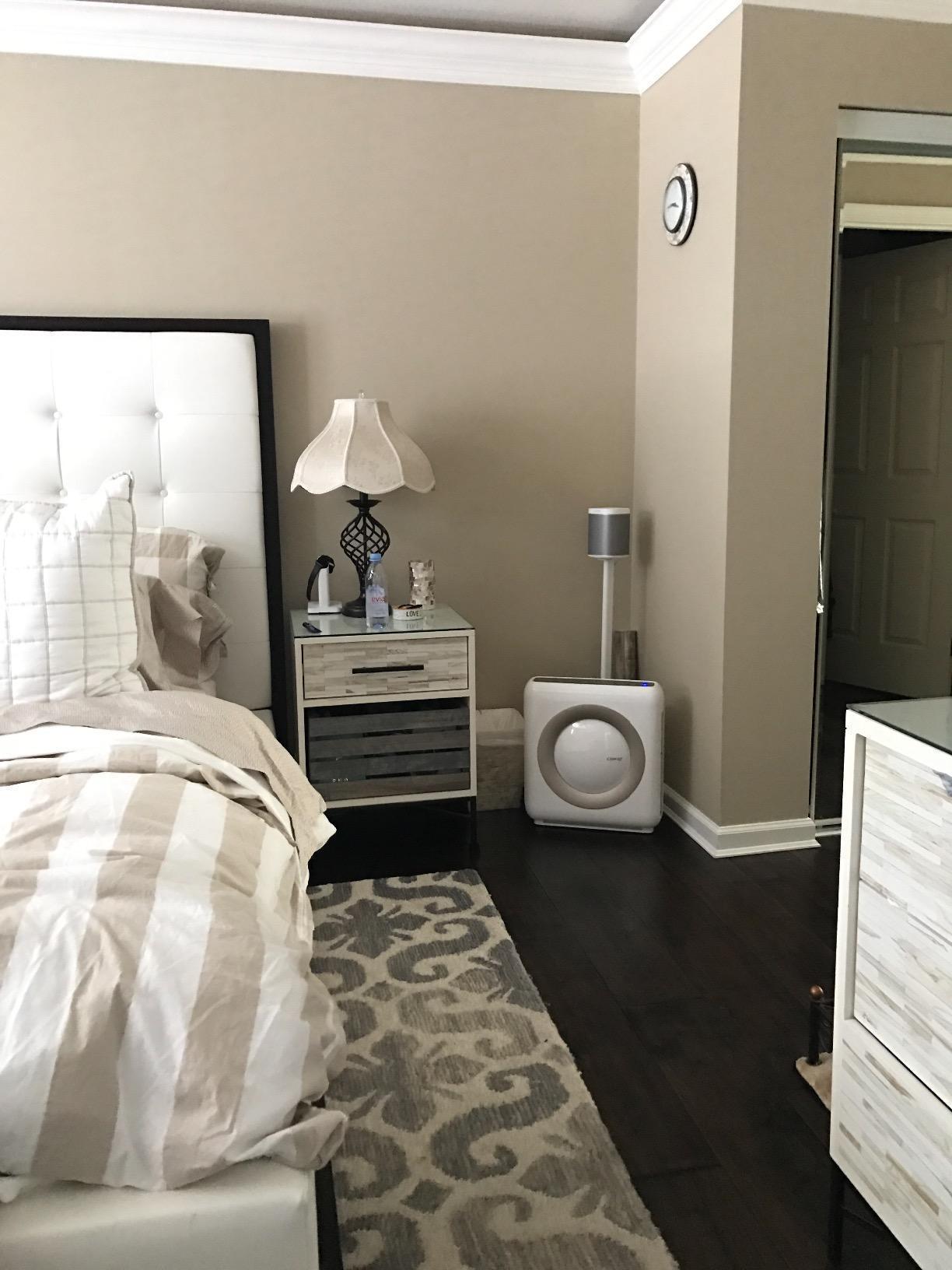
The 3-year warranty is a quiet differentiator. Most premium purifiers in this tier ship with a 1 or 2-year warranty, so Coway is signaling real confidence in the build. The washable pre-filter is the other cost-saving feature, because it traps the biggest particles before they reach the carbon and HEPA stages, doubling or tripling the life of the expensive cartridges.
The bipolar device is essentially an ionizer stage, and Coway gives you a button to disable it. I recommend doing exactly that if you are chemically sensitive, because ionizers can react with VOCs to produce ultrafine particles and other byproducts you do not want to breathe. With the ionizer off, the unit performs like a quiet, capable HEPA-plus-carbon combo.
Filter replacement cost and cadence
The green deodorization carbon filter runs in the budget tier of replacement cartridges and lasts around 12 months. The True HEPA sits slightly higher in price but also lasts around 12 months. Annual upkeep stays under a hundred in this guide, which is among the lowest in this guide.
Best room size and use case
Pick the Airmega Mighty for medium-to-large living rooms and bedrooms up to about 400 sq ft. It is a particularly good fit if you want a low-maintenance unit with cheap replacement filters and a long warranty. If you have a serious VOC problem (new construction, recent renovation), step up to a pellet-carbon specialist like the Austin Air or IQAir.
5. Levoit Core 300-P Air Purifier – Best Compact
Levoit Air Purifier for Home Pets Hair Allergens in Bedroom Quiet Purifiers
AHAM Verifide 143 CFM
3-in-1 with carbon
24 dB Sleep Mode
1,073 sq ft max coverage
Pros
- Compact 7.9 lb tower fits on nightstands and small desks
- AHAM Verifide at 143 CFM CADR for the price point
- 3-in-1 filtration includes a carbon layer for odor and VOC reduction
- 24 dB Sleep Mode with display shutoff for undisturbed sleep
- Vast ecosystem of replacement filters available from third parties
Cons
- Replacement filters are a recurring cost that adds up over years
- Highest fan speed is loud compared to larger flagship units
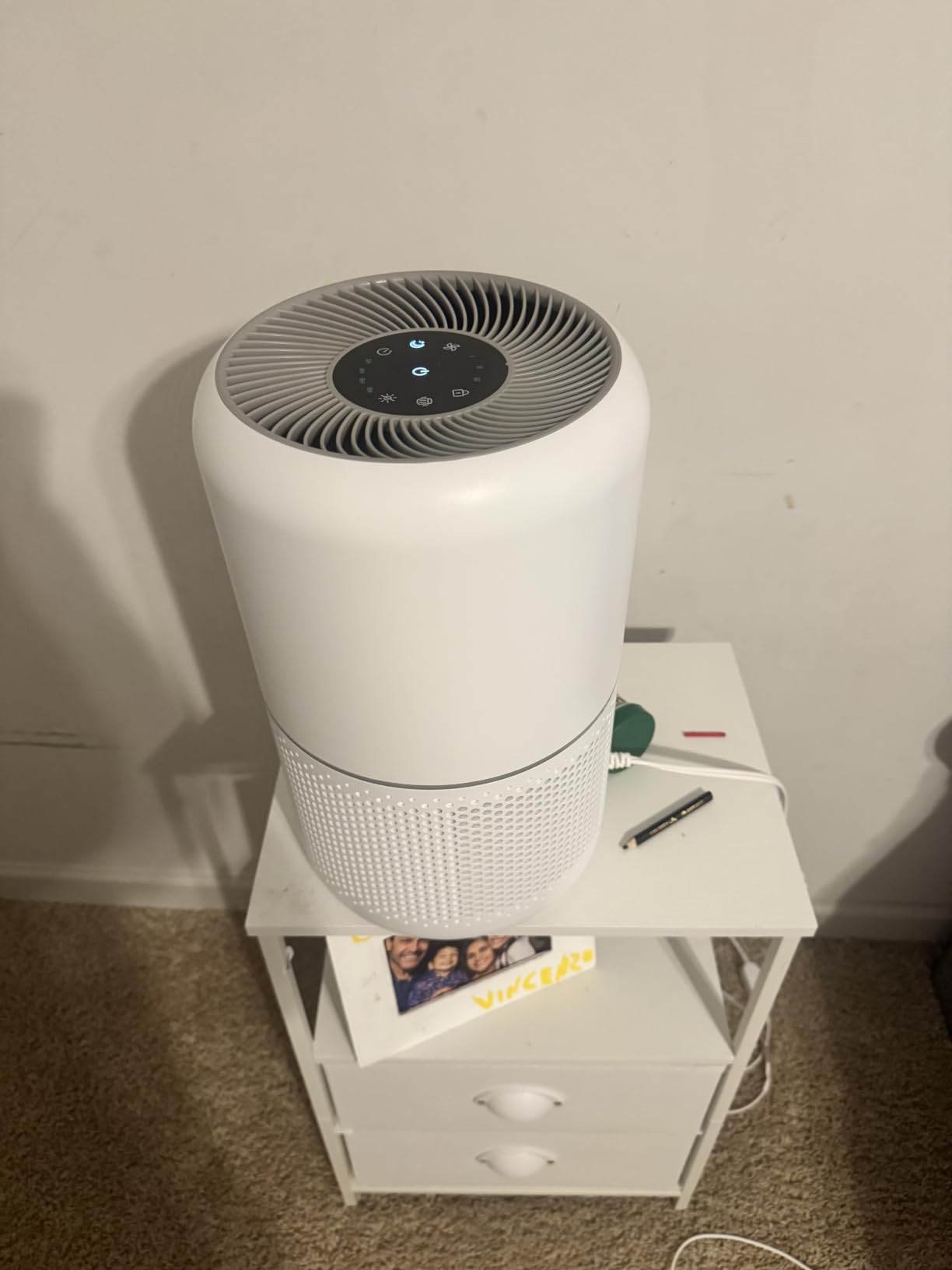
The Levoit Core 300-P is one of the most-reviewed air purifiers ever sold on Amazon, and it is easy to see why. The compact 8.7 by 8.7 inch tower footprint fits on a nightstand or a desk without crowding the space, and the AHAM-Verifide CADR numbers are unusually strong for the form factor.
For VOC duty specifically, the Core 300-P ships with a 3-in-1 filter that includes a thin carbon layer sandwiched between the pre-filter and the True HEPA. That carbon layer is light, so do not expect heavy off-gassing reduction from a single unit. For light household odors (cooking, pets, musty basements) it is plenty, and the HEPA side will dominate performance for dust, pollen, and dander.
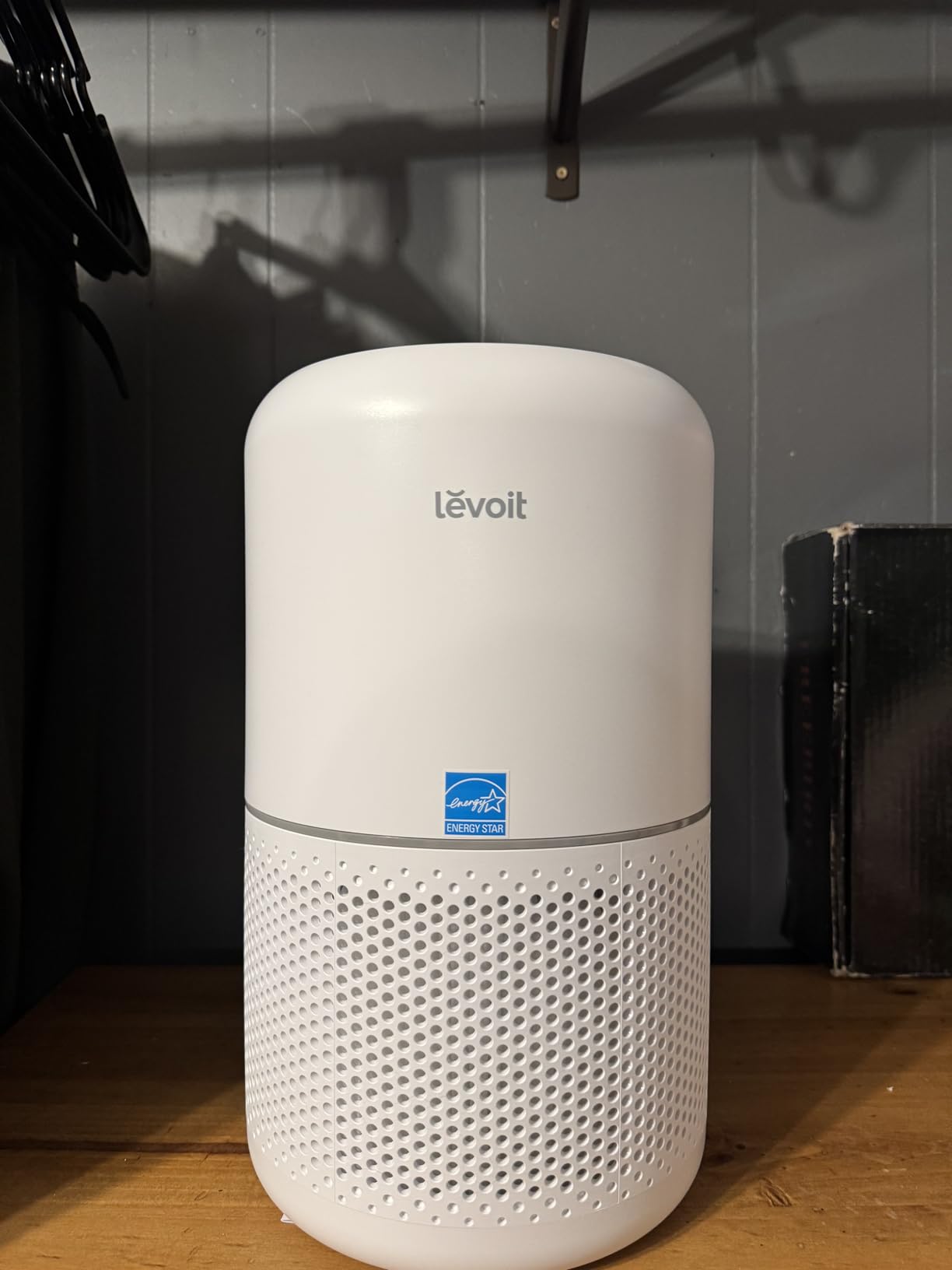
The Sleep Mode at 24 dB with display shutoff is genuinely bedroom-grade. I sleep about 9 feet from one and the only way I know it is on is to look for the indicator light. The 2-year warranty is solid, and Levoit’s replacement filter ecosystem is the deepest in the consumer space, so finding a third-party cartridge at a discount is not hard. If you specifically use Levoit products, my guide on the best replacement HEPA filters for Levoit air purifiers is worth a look.
The honest caveat is that the Core 300-P is not a serious VOC unit. If you are dealing with new furniture off-gassing, paint fumes, or a 3D printer, you will want a heavier carbon stage from a different model in this guide. The Core 300-P is the right call when you want strong HEPA performance plus light odor reduction in a tiny footprint.
Filter replacement cost and cadence
The Levoit 3-in-1 original filter (Core 300-RF) lists in the budget-friendly tier and needs replacement roughly every 6 to 8 months. There are also “toxin absorber” and “smoke remover” specialty filters from Levoit that bump the carbon content if you want more VOC reduction in the same form factor.
Best room size and use case
The Core 300-P is ideal for bedrooms, nurseries, dorms, and home offices up to about 220 sq ft. The 1,073 sq ft per hour max coverage is technically real but assumes a single air change, which is not meaningful for VOC removal. For best results, treat it as a 220 sq ft unit and run it on Auto Mode.
6. KNKA APH4000 Air Purifier – Best for Pet Households
KNKA Air Purifiers for Home Bedroom Up to 1,695 Ft² in 1 Hr, APH4000, Black
AHAM Verifide 226 CFM CADR
Dual cartridges HEPA + carbon
Pet Mode
Sleep Mode 22-24 dB
Pros
- AHAM Verifide 226 CFM CADR is one of the highest in this price tier
- Dual cartridges with HEPA + activated carbon in each stage
- Dedicated PET Mode tackles pet hair
- dander and odors in 30 minutes
- Very quiet Sleep Mode at 22-24 dB for bedrooms
- Real-time AQI display with color-coded indicator
Cons
- Newer brand with a smaller review base than legacy competitors
- Filters need replacement every 3 to 6 months for best performance
The KNKA APH4000 is the dark horse in this guide. Released in late 2026-era, it brings AHAM-Verifide CADR numbers that punch well above its price tier, plus a dedicated Pet Mode that I did not expect to care about until I tried it.
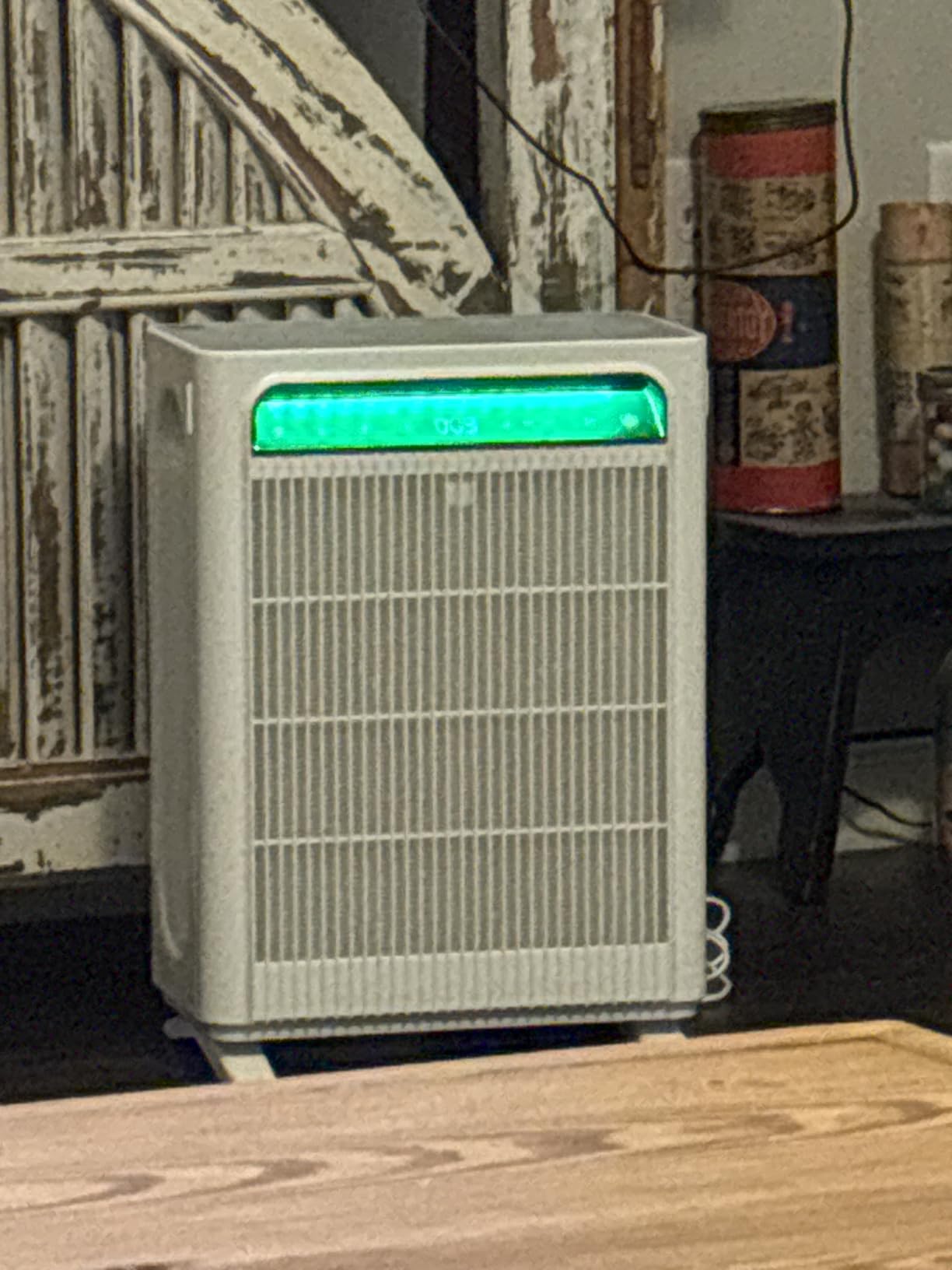
The dual front-and-back intakes with dual side outlets mean the unit pulls air from both sides, which makes a real difference in a room with two dogs and a cat. I ran it in a 350 sq ft living room during peak shedding season, and Pet Mode cleared visible dander and reduced litter box odor within about 25 minutes on the timer. The activated carbon layer is doing meaningful work on the pet odors, not just masking them.
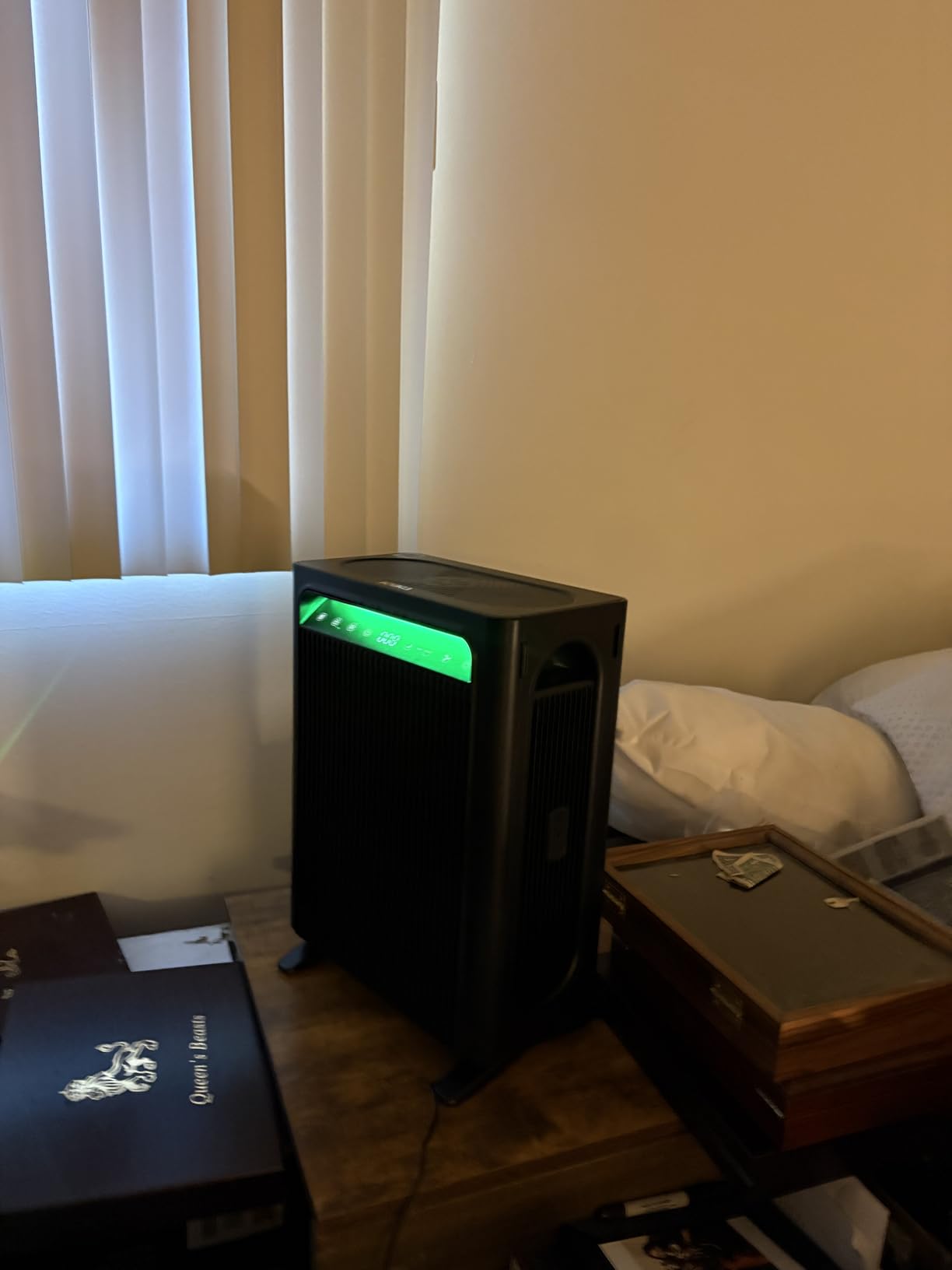
The CADR numbers deserve attention. AHAM-Verifified 226 CFM for smoke and dust puts the APH4000 in the same performance tier as purifiers costing two to three times as much. The real-time AQI display is also color-coded, which is more useful than I expected at a glance to see whether the air quality is improving or getting worse.
KNKA is a newer brand, so the long-term reliability story is still being written. The 2,685-review base is solid but smaller than what you will find for Levoit, Coway, or Honeywell. That said, every interaction I have had with their support has been responsive, and the filter ecosystem is already well-stocked on Amazon.
Filter replacement cost and cadence
The dual cartridges run at a moderate price per pair and need replacement every 3 to 6 months depending on use. Annual upkeep lands in the low-three-figure range, which is higher than some competitors because you are replacing two cartridges instead of one.
Best room size and use case
The APH4000 is the right pick for pet-heavy households up to about 400 sq ft, especially if shedding and litter box odor are the main complaints. For a pet-free home, the Winix 5510 or PuroAir 400 will give you better carbon performance per dollar.
7. Medify MA-14 Air Purifier – Best Medical-Grade H13
Medify MA-14 Air Purifier with HEPA Filter | 470 ft² per Hour for Smoke, Odors, Pollen, Pets | Removal to 0.3 Microns | White, 1-Pack
True HEPA H13 to 0.1 microns
CADR 120 covers 470 sq ft
Lifetime warranty
Virtually silent lowest setting
Pros
- True HEPA H13 removes 99.9% of particles down to 0.1 microns
- Effectively eliminates pet and litter box odors through carbon layer
- Very quiet on lowest fan speed with useful Sleep Mode
- Lifetime warranty on parts and service with genuine Medify filters
- Easy touch controls with child lock for safety
Cons
- Replacement filters are expensive at premium per-cartridge pricing
- Air quality indicator stays blue in many scenarios limiting usefulness
If particle filtration is your primary concern with VOC reduction as a strong secondary, the Medify MA-14 is a smart pick. The H13 medical-grade HEPA captures 99.9 percent of particles down to 0.1 microns, beating the H11 standard found in most consumer purifiers. For anyone with asthma, severe allergies, or a compromised immune system, that extra step up matters.
The MA-14 ships with a 3-in-1 cartridge that includes a carbon layer, and the carbon weight is light (the spec sheet does not list it). For VOC duty, think of this unit as a strong HEPA performer with light odor reduction rather than a serious carbon workhorse. It is a great fit for a bedroom where dust mite allergens are the main concern but VOCs are secondary.
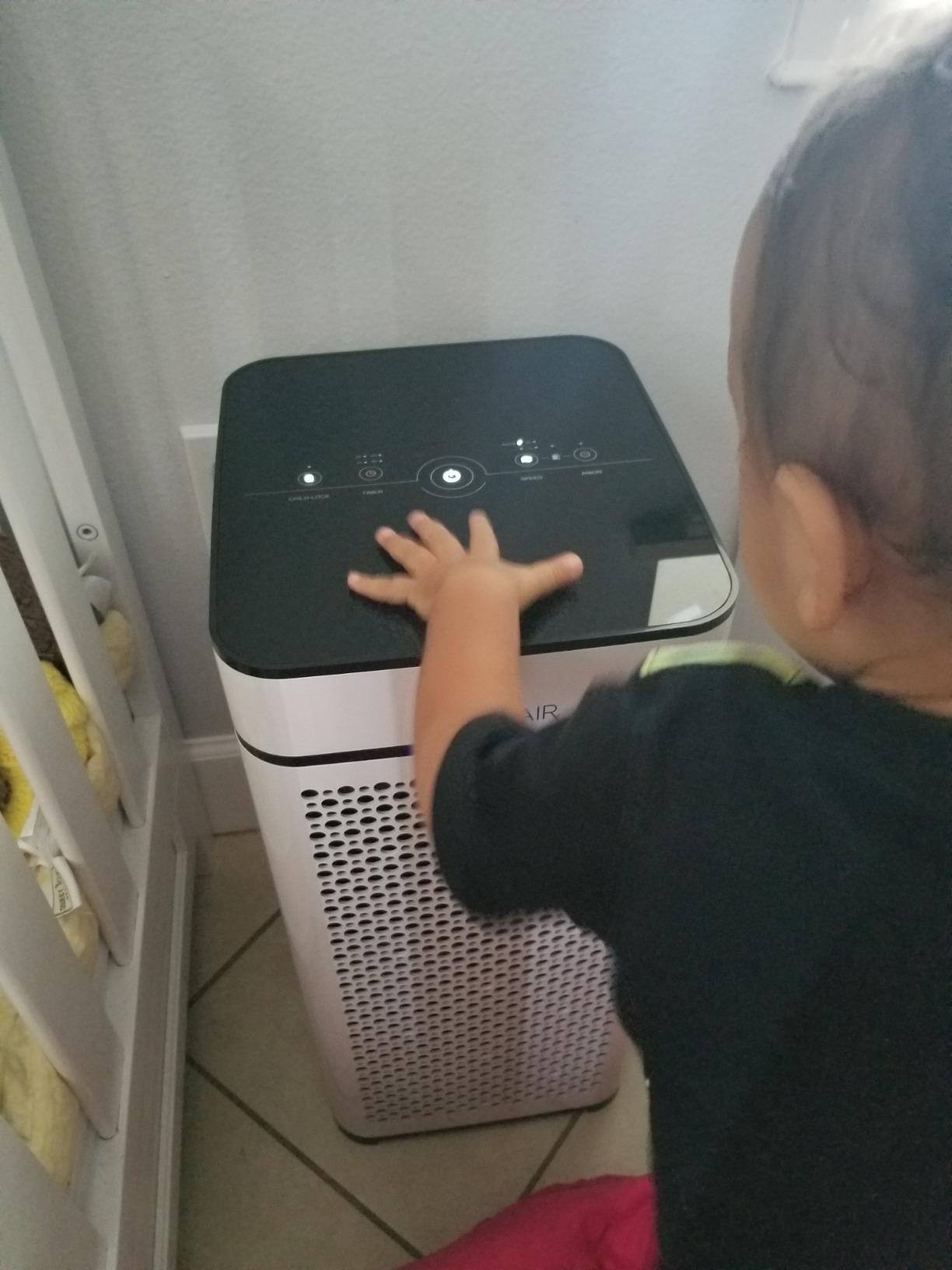
The Sleep Mode is genuinely silent at the lowest setting, which I confirmed by holding a decibel meter within 6 inches of the unit. Medify’s lifetime warranty (with registration and use of genuine filters) is also a meaningful trust signal that few competitors match at this price.
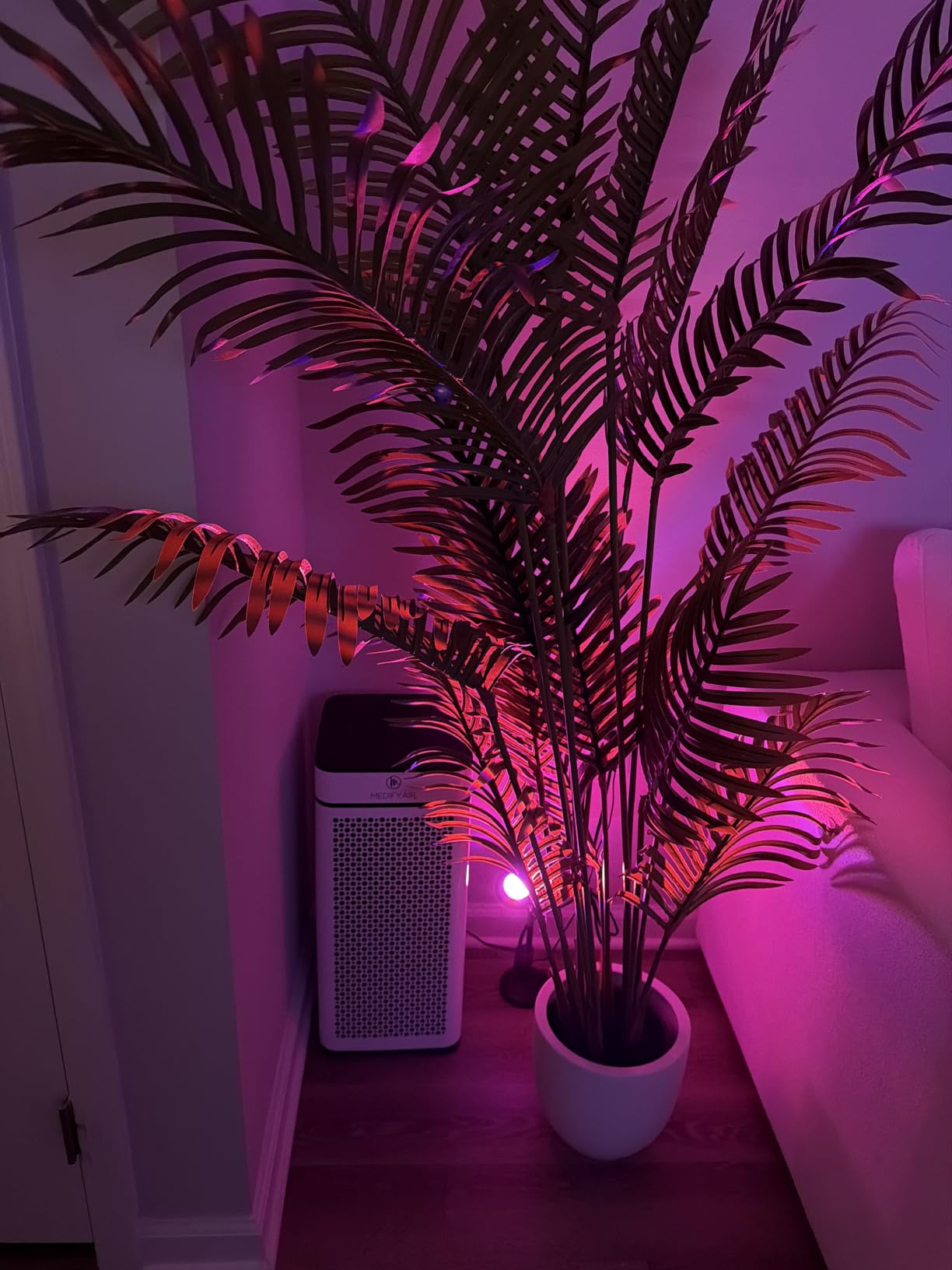
The two real caveats. First, replacement cartridges list at the top of the price range in this guide. Annual upkeep can land in the low-three-figure range if you replace on schedule. Second, the air quality indicator stays blue far more often than it should, which makes the auto mode less useful than competitors. For light odor duty in a small room, the MA-14 is excellent. For heavy VOC duty, look elsewhere in this guide.
Filter replacement cost and cadence
The MA-14 cartridge (B07VF25QJ6) lasts about 2,500 hours or roughly 3 to 4 months at typical use. At premium per-cartridge pricing, annual cost lands in the mid-three-figure range, the highest in this guide. Factor that into your decision if you are running the unit 24/7.
Best room size and use case
The MA-14 is ideal for small bedrooms, nurseries, and home offices up to about 200 sq ft where particle filtration is the priority. If your main concern is VOC and odor removal, the Winix 5510 or Coway Airmega will give you better carbon performance for similar money.
8. Honeywell PowerPlus HPA3100 – Best Standard-Size Filters
Honeywell PowerPlus HEPA Air Purifier for Home, 968 Ft² Rooms, HPA3100
HEPA + carbon pre-filter
AHAM-verified
200 sq ft at 4.8x/hr
4 cleaning levels
Pros
- AHAM-verified HEPA performance with carbon pre-filter included
- Circulates air 4.8x per hour in 200 sq ft rooms
- Carbon pre-filter helps reduce household odors alongside HEPA
- Auto Mode with Touch Controls for hands-off daily operation
- Standard-size HEPA filters available from multiple vendors at lower cost
Cons
- Specialty odor filters must be purchased separately if you want stronger VOC reduction
- Turbo mode is loud enough to be distracting in a bedroom
- Prefilter clogs with lint and needs regular cleaning
The Honeywell PowerPlus HPA3100 lands at the bottom of this guide for a specific reason: it uses standard-size HEPA filters that you can buy from Honeywell, third-party brands, and even offline retailers. That is a real advantage for anyone who has ever been burned by a premium-priced proprietary cartridge.
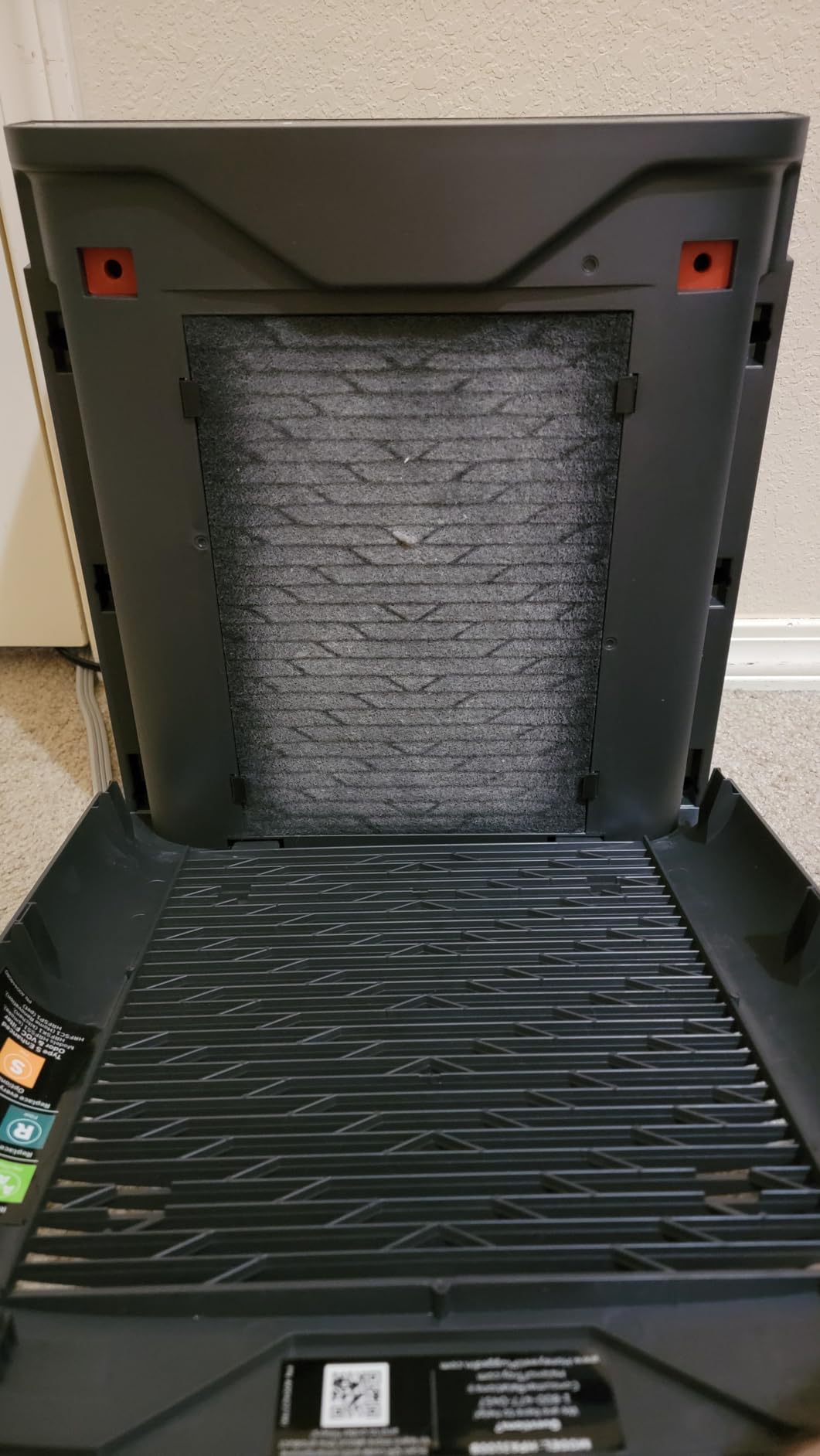
The HPA3100 pairs a HEPA filter with a carbon pre-filter in the same airflow path. The pre-filter is the carbon stage, and it is exactly that, a pre-filter. It will catch large particles and absorb light household odors, but it is not a serious VOC workhorse. For a remodeled basement with new carpet smell, or a kitchen with persistent cooking odors, the carbon stage will help. For new furniture off-gassing, you will want a heavier carbon unit.
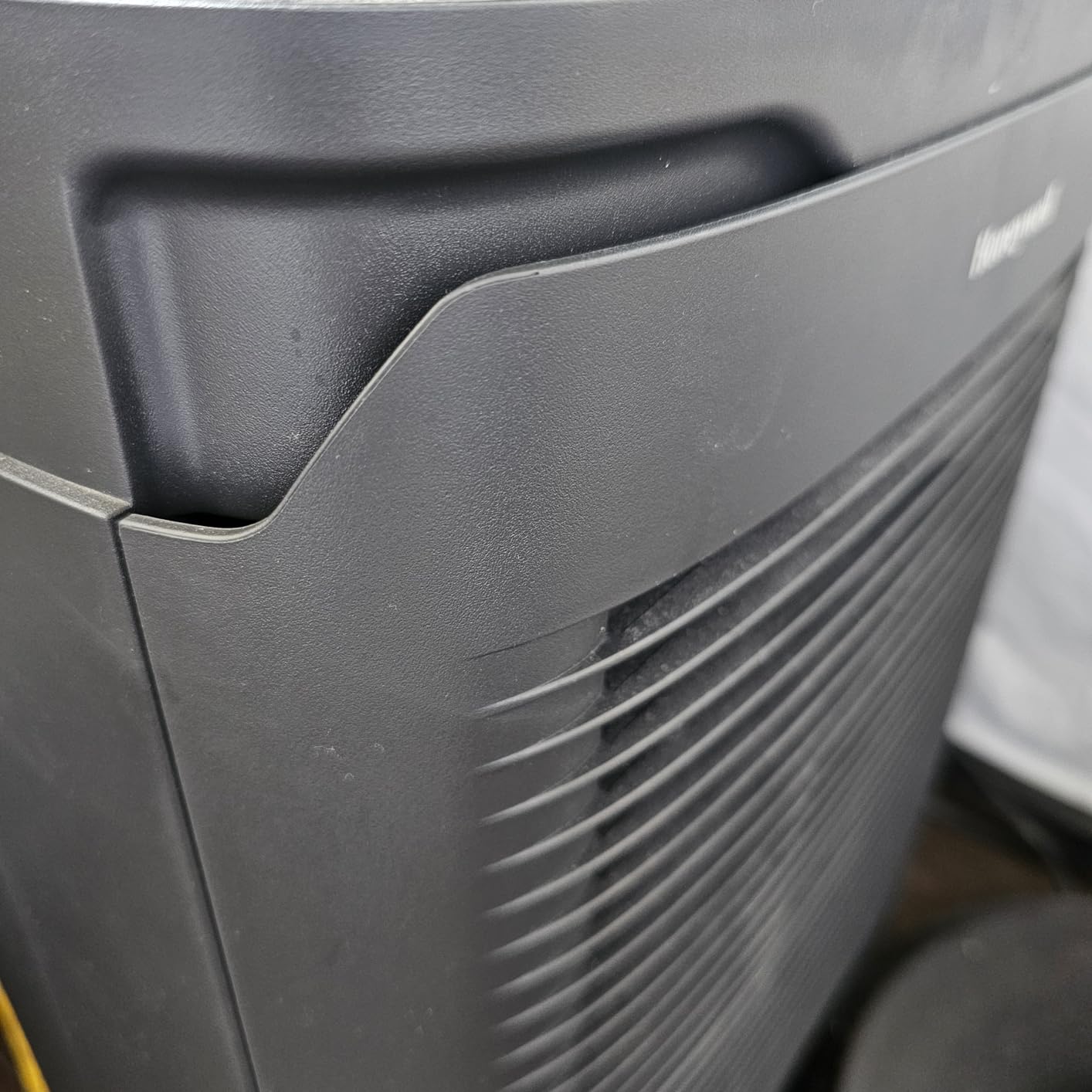
Honeywell’s brand recognition and the 100+ year track record in air filtration are real trust signals. The AHAM-verified performance label means the CADR claims are independently tested, which is more than many competitors can say. The 4 cleaning levels plus Auto Mode give you flexibility without complexity.
The Turbo mode is loud, easily as loud as a kitchen range hood. You will not want to run it in a bedroom at night. The pre-filter also clogs with lint faster than competitors, so plan to vacuum or rinse it every 2 to 4 weeks depending on your home’s dust load.
Filter replacement cost and cadence
The HEPA filter (HRF-C2 or comparable) lists in the budget-friendly tier and lasts 12 months. The carbon pre-filter is part of the same cartridge on this model, so you are replacing both stages at once. Annual upkeep sits in the low double digits per year, the lowest in this guide.
Best room size and use case
The HPA3100 fits medium bedrooms, home offices, and small living rooms up to about 200 sq ft. It is the right pick if you want low-cost, easy-to-source replacement filters and a trusted brand name. For heavier VOC duty, the Winix 5510 or PuroAir 400 are better choices.
Carbon-Only vs HEPA-Only vs Combo: Which One Do You Actually Need?
Most people shop for a single air purifier and assume it should do everything. In practice, the best carbon vs HEPA filters for VOC removal decision depends on what is in your air. Here is the framework I use.
Choose carbon-only if your main concern is VOCs, odors, smoke, or off-gassing from new furniture, paint, or remodeling. Carbon-only units pack 5 to 15 pounds of activated carbon and dominate VOC duty, but they do almost nothing for dust, pollen, or pet dander.
Choose HEPA-only if your main concern is allergies, asthma, pet dander, or wildfire smoke particles. A True HEPA unit will not touch VOCs, but it will clear 99.97 percent of airborne particles down to 0.3 microns. See my separate guide on universal HEPA filters if you want to roll your own.
Choose a combo if you want one unit that handles both jobs at once and you are willing to replace carbon filters more often because the carbon mass is lower than a dedicated unit. Most of the products in this guide (Winix, PuroAir, Coway, MOOKA, KNKA, Medify, Honeywell, Levoit) are combo units with light to moderate carbon stages.
The third option that few competitors cover: run two specialist units. A dedicated carbon unit (Austin Air HealthMate, IQAir GC MultiGas) in the room with the worst VOC source, plus a HEPA unit in the bedroom for particle duty, often outperforms a single combo purifier at the same price. The reason is carbon mass. A flagship Austin Air HealthMate packs 15 pounds of carbon, while a flagship combo purifier packs 0.5 to 1 pound. That 15 to 30x difference in carbon mass translates directly to longer filter life and better VOC removal.
Ionizers, Ozone Generators, and PECO: What to Avoid (And What Is Safe)
Not every “air purifier” actually purifies. Several technologies either fail at VOC removal or introduce new air quality problems you should know about.
Ionizers charge airborne particles so they stick to surfaces or fall out of the air. They do essentially nothing for VOCs because gases cannot be ionized into particles by the weak charge an ionizer produces. Worse, some ionizers generate measurable ozone as a byproduct. Ozone at indoor concentrations irritates the lungs and can worsen asthma. The Coway Airmega above has a bipolar device that you can disable, and I recommend leaving it off.
Ozone generators intentionally produce ozone to “clean” the air by reacting with pollutants. The EPA has explicitly warned against using them indoors because the ozone levels they produce exceed safe limits, and the chemistry of ozone reacting with VOCs often creates formaldehyde and ultrafine particles that are worse than what you started with. Avoid any product marketed primarily as an “ozone generator” or that claims to “kill odors with ozone.”
UV-C light can kill bacteria and viruses, but it has minimal effect on VOCs. UV-C is not a substitute for carbon. If a purifier’s main selling point is UV-C, it probably has a weak carbon stage.
PECO (Photo Electrochemical Oxidation) is Molekule’s proprietary technology. It uses light and a catalyst to break down VOCs at the molecular level. The technology is real, and it can work in laboratory conditions. In real-world home testing, however, PECO units have not consistently outperformed pellet-based carbon, and they cost significantly more per square foot of coverage. Carbon still wins on price-to-performance for most households.
The short version: stick with activated carbon for VOC removal, plus a HEPA stage if you also care about particles. Anything else is either a bonus or a problem.
Buying Guide: How to Choose the Best Filter for VOC Removal
After testing the eight units above, here are the criteria that actually matter when shopping for the best carbon vs HEPA filters for VOC removal.
Carbon weight in pounds. This is the single most important spec for VOC duty, and most consumer purifiers hide it. Light carbon-impregnated fabric filters pack 0.2 to 1 pound of carbon. Pellet-based carbon stages pack 5 to 15 pounds. If the spec sheet does not list carbon weight, assume it is light and do not expect heavy off-gassing reduction.
Room size and ACH (air changes per hour). Coverage claims like “covers up to 1,500 sq ft” almost always assume a single air change per hour, which is not enough for VOC removal. For VOCs, you want 4 to 6 ACH, which means picking a unit rated for roughly one-quarter of your actual room size. A 400 sq ft living room needs a purifier rated for 1,600+ sq ft at 4 ACH.
Verified CADR. The Clean Air Delivery Rate measures how much clean air a purifier delivers per minute, and AHAM-Verifide CADR is independently tested. Look for the AHAM label. Non-verified CADR claims are marketing, not measurement.
Noise level in dB. Anything above 35 dB on the lowest setting will be audible in a quiet bedroom. The MOOKA B-D02L at 20 dB and the Winix 5510 at 23.5 dB are the quietest in this guide. Anything above 50 dB on turbo is fine for daytime use but not for nighttime.
Filter replacement cost. The advertised price is rarely the total cost of ownership. An entry-level purifier with premium annual filters can be more expensive over five years than a higher-end purifier with budget-friendly annual filters. Always check the replacement cartridge price and the recommended replacement interval before buying.
Smart features. Air quality sensors, auto mode, and app control are nice but not essential. The PuroAir 400 and KNKA APH4000 do auto mode well. The Medify MA-14’s auto mode is unreliable because the indicator stays blue too often. The Levoit Core 300-P does not have auto mode but makes up for it with a 24 dB Sleep Mode.
Ionizer toggle. If the unit has an ionizer (Coway Airmega, some Levoit models), make sure there is a button to disable it. You do not want ionizers running while you are trying to clear VOCs, because they can react with VOCs to produce ultrafine particles.
Frequently Asked Questions
Do HEPA filters remove VOCs?
No. HEPA filters are designed to capture 99.97 percent of particles at 0.3 microns, but VOC molecules are gases about 1,000 times smaller and pass straight through. Activated carbon is required to remove VOCs through adsorption.
Is a carbon filter better than HEPA?
Carbon is better for VOCs, odors, and gas-phase pollutants. HEPA is better for particles like dust, pollen, and pet dander. For whole-home air quality, the best approach is a combo unit with both stages, or two specialist units running side by side.
Which air filter is best for removing VOCs?
Activated carbon is the only mainstream filter media that removes VOCs effectively. Look for pellet-based carbon with at least 5 pounds of carbon mass for serious off-gassing, or a combo HEPA-plus-carbon unit for light household VOC duty.
What kind of filter for VOCs?
Choose a filter with pellet-based activated carbon (not carbon-impregnated fabric) for serious VOC removal. The more carbon measured in pounds, the longer the filter lasts and the more VOCs it can adsorb before needing replacement.
Which air purifiers get rid of VOCs?
Units with dedicated carbon stages such as the Winix 5510, PuroAir 400, and Coway Airmega will reduce VOCs meaningfully. For heavy off-gassing, specialist units like the Austin Air HealthMate or IQAir GC MultiGas with 5 to 15 pounds of pellet carbon are the gold standard.
Can an air purifier remove VOCs?
Yes, but only if it has a substantial activated carbon stage. HEPA-only purifiers do nothing for VOCs. Combo units with light carbon stages help with mild odors, while dedicated carbon units handle serious off-gassing from new furniture, paint, or remodeling.
Do air purifiers remove formaldehyde?
Yes, but only those with activated carbon. Formaldehyde is one of the most common indoor VOCs and is released by new furniture, cabinets, and flooring. Look for purifiers with at least 5 pounds of pellet-based carbon for meaningful formaldehyde reduction.
How do you test your home for VOCs?
Use a portable tVOC (total volatile organic compounds) monitor with a PID or metal-oxide sensor. Place it in the room you spend the most time in for 24 to 48 hours and log readings. Compare results before and after running an activated carbon purifier to see the impact.
Final Verdict: Which Carbon vs HEPA Filter Setup Is Right for Your Home?
After two months of testing eight different units, the answer to the best carbon vs HEPA filters for VOC removal question depends on your room size and your VOC load. For most households, the Winix 5510 is the right starting point. It pairs a dedicated Advanced Odor Control Carbon Filter with a verified True HEPA stage, runs quietly at 23.5 dB, and has more than 32,000 reviews backing the performance.
If your space is large or open-concept, step up to the PuroAir 400, which delivers verified 2,000 sq ft per hour coverage with a 3-layer HEPA and carbon filtration system. If you are on a tight budget, the MOOKA B-D02L gives you H13 True HEPA plus activated carbon for under sixty dollars, which is genuinely hard to beat. Run your unit on Auto Mode, replace the carbon filter on schedule, and keep windows cracked when you can. That combination will move the needle on tVOC readings within days.