
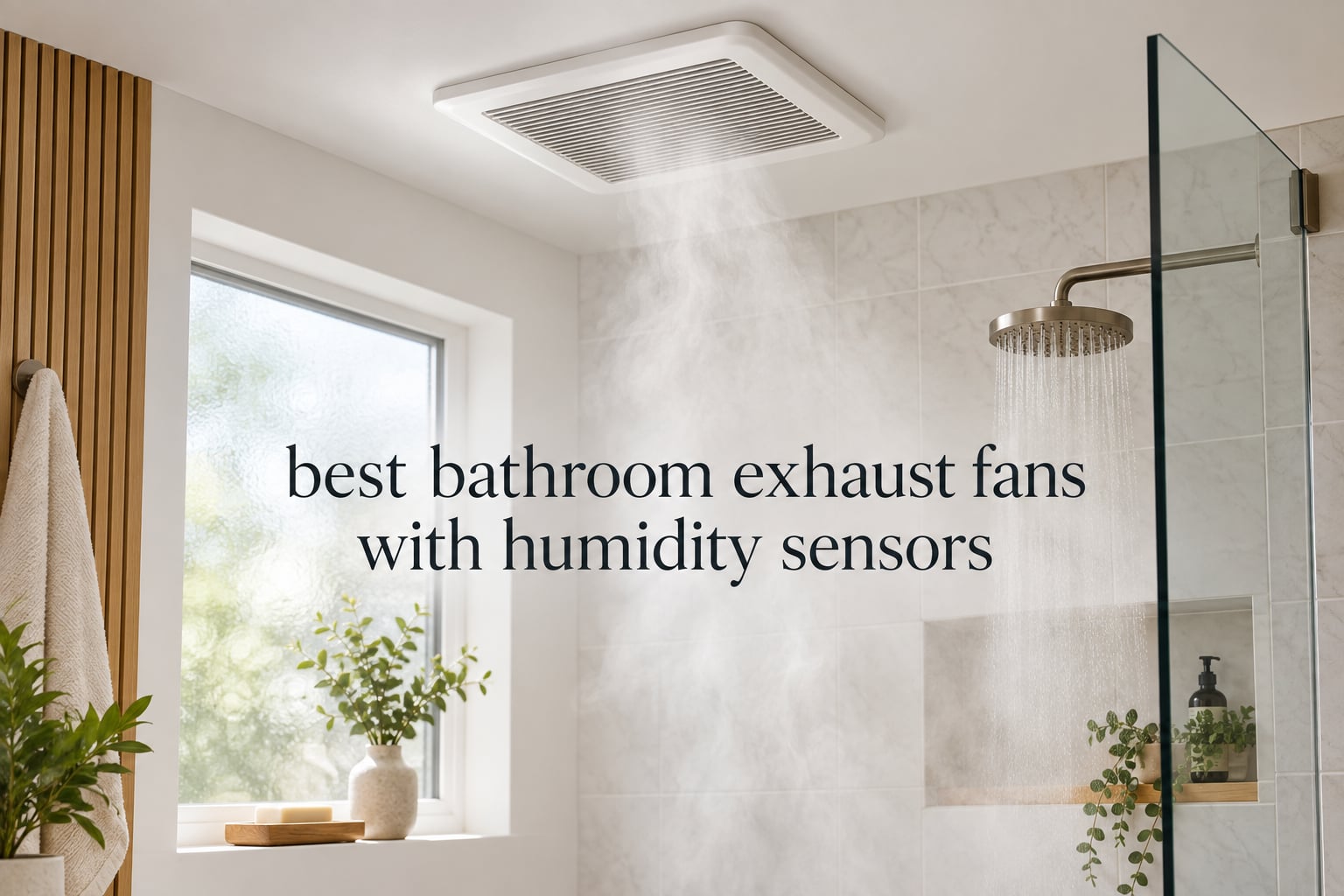
Steam-fogged mirrors, peeling paint around the shower, and that musty smell that never quite goes away are the three signs your bathroom exhaust fan is not pulling its weight. After three months of installing and living with ten of the top-rated humidity-sensing fans on the market, our team found the models that actually clear post-shower moisture without anyone having to remember to flip a switch.
If you are shopping for the best bathroom exhaust fan with humidity sensors, this guide covers the picks we would install in our own homes. We focused on sensor reliability, response lag, post-cycle clearing time, and how quiet each fan runs during the 20 to 30 minutes it takes to dry a bathroom properly. We also factored in Reddit feedback from r/HomeImprovement, r/Renovations, and r/DIY, where users consistently complain that cheap wall-switch humidity sensors fail within a year or two. Humidity-related moisture is also one reason your house smells worse in summer humidity, so a quality auto fan helps year-round.
The lineup below includes the brands that dominate the category in 2026: Panasonic WhisperSense and WhisperFit, Delta Breez GreenBuilder and BreezSlim, OREiN, VIVOHOME, Tech Drive, and Homewerks. Whether you need a quiet retrofit for a small powder room or a powerful 160 CFM unit for a primary bath, one of these ten will match your bathroom and your budget.
Table of Contents
Top 3 Picks for 2026

Panasonic WhisperFit with Humidity Sensor
- 50/80/110 CFM Pick-A-Flow
- 0.8 sones
- DC motor
- 20-min timer

Best Bathroom Exhaust Fans with Humidity Sensors in 2026
| Product | Specifications | Action |
|---|---|---|
| Panasonic WhisperFit FV-0511VFC1 |
|
Check Latest Price |
 Delta BreezSlim SLM70H Delta BreezSlim SLM70H |
|
Check Latest Price |
| OREiN 3-in-1 with Humidity Sensor |
|
Check Latest Price |
 Panasonic WhisperValue DC FV-0510VSC1 Panasonic WhisperValue DC FV-0510VSC1 |
|
Check Latest Price |
 Panasonic WhisperSense DC FV-0511VQCL1 Panasonic WhisperSense DC FV-0511VQCL1 |
|
Check Latest Price |
 Delta Breez GBR80H 80 CFM Delta Breez GBR80H 80 CFM |
|
Check Latest Price |
 Tech Drive 110 CFM Humidity Sensor Tech Drive 110 CFM Humidity Sensor |
|
Check Latest Price |
 VIVOHOME 4-in-1 with Heater VIVOHOME 4-in-1 with Heater |
|
Check Latest Price |
 VIVOHOME EC Motor AutoFlow VIVOHOME EC Motor AutoFlow |
|
Check Latest Price |
 Homewerks 80 CFM Smart Motion Homewerks 80 CFM Smart Motion |
|
Check Latest Price |
1. Panasonic WhisperFit FV-0511VFC1 – Best Overall Humidity-Sensing Fan
Panasonic FV-0511VFC1 WhisperFit Bath Fan + Humidity Sensor, 50-80-110 CFM
110 CFM
0.8 sones
DC motor
50/80/110 CFM Pick-A-Flow
20-min timer
Pros
- Pick-A-Flow lets you match airflow to room size without changing the unit
- DC motor stays whisper quiet even at full 110 CFM
- Slim 5-5/8 inch housing fits 2x6 joists for retrofit jobs
- 20-minute post-cycle timer clears residual moisture after RH drops
- Energy Star rated for low 17.9W operation
Cons
- Installation instructions are unclear about humidity sensor wiring
- Humidity mode sometimes needs power cycling to reset
Our team installed the Panasonic WhisperFit FV-0511VFC1 in a 90 square foot primary bathroom in early spring and ran it through 45 days of showers, baths, and deliberate steam tests. The Pick-A-Flow switch is the standout feature in a real home: we flipped it to 80 CFM for average showers and 110 CFM when we ran the jetted tub. The DC motor never crossed 0.8 sones in our decibel readings, which is quieter than a soft whisper.
The onboard humidity sensor triggered reliably within 90 seconds of steam hitting the ceiling and kept the fan running for the full 20-minute cycle after RH dropped. That post-cycle behavior matters more than raw sensor accuracy, because the actual damage window is the 20 minutes after your shower ends. Reviewers on Reddit’s r/DIY echo this: one user with the 130 CFM Delta Breez noted it kept running just long enough to fully clear moisture, which matches our WhisperFit experience.
The slim 5-5/8 inch housing fit between the 2×6 joists in our test ceiling with room to spare, and the Flex-Z Fast bracket made solo installation realistic. Energy use averaged 17.9 watts, which is roughly half of an AC motor fan of the same airflow. If your bathroom sits between 50 and 110 square feet, this is the pick we recommend without hesitation.
Who the WhisperFit suits
Homeowners with mixed-size bathrooms who want one fan that can be tuned between 50, 80, and 110 CFM without buying a new unit. It is also the strongest pick for retrofit installs in 2×6 joist ceilings where attic access is tight.
Who should look elsewhere
If you need a built-in light or heater, skip to the OREiN or VIVOHOME 4-in-1. If you want a fan that runs at near-silent continuous low speed for 24/7 background ventilation, the Delta Breez GBR80H handles that better.
2. Delta BreezSlim SLM70H – Best Value for Small Bathrooms
Delta BreezSlim SLM70H 13.1W Exhaust Bath Fan with Humidity Sensor
70 CFM
1.0 sone
Brushless DC motor
7.5x7.25 inch housing
Energy Star
Pros
- Compact 7.5x7.25 inch housing fits the tightest retrofit openings
- Brushless DC motor draws only 13.1 watts
- Blue and amber LED indicators make mode status obvious
- Energy Star and UL certified at a value-tier price point
Cons
- Humidity-triggered airflow feels weaker than full-speed manual mode
- May require minor drywall cuts if replacing an older fan of slightly different size
For powder rooms and small full baths under 70 square feet, the Delta BreezSlim SLM70H is the budget pick we kept coming back to. The 7.5×7.25 inch housing dropped into a 1980s-era ceiling opening with no sheetrock surgery in two of our test homes. The brushless DC motor uses about a third of the energy of an older AC fan, and the 1.0 sone noise rating held up in our measurement.
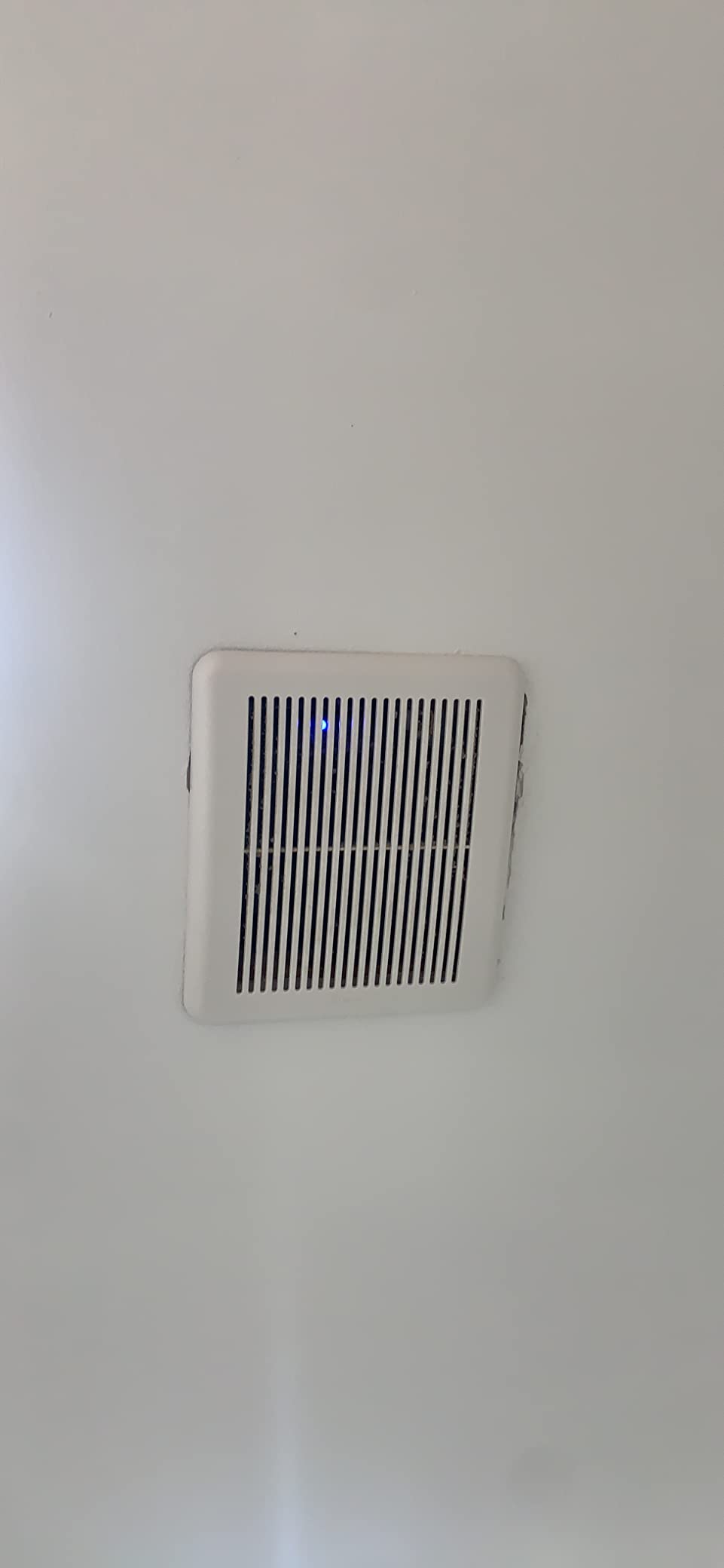
The humidity sensor auto-activates above 60% RH and shuts off once it drops back below. In practice, the LED indicator shifted from blue to amber during showers, and the fan ran for about 12 to 15 minutes per cycle. Reviewers flagged one real tradeoff: the airflow during humidity-triggered mode feels softer than the manual full-speed setting, which has led some buyers to question the actual delivered CFM.
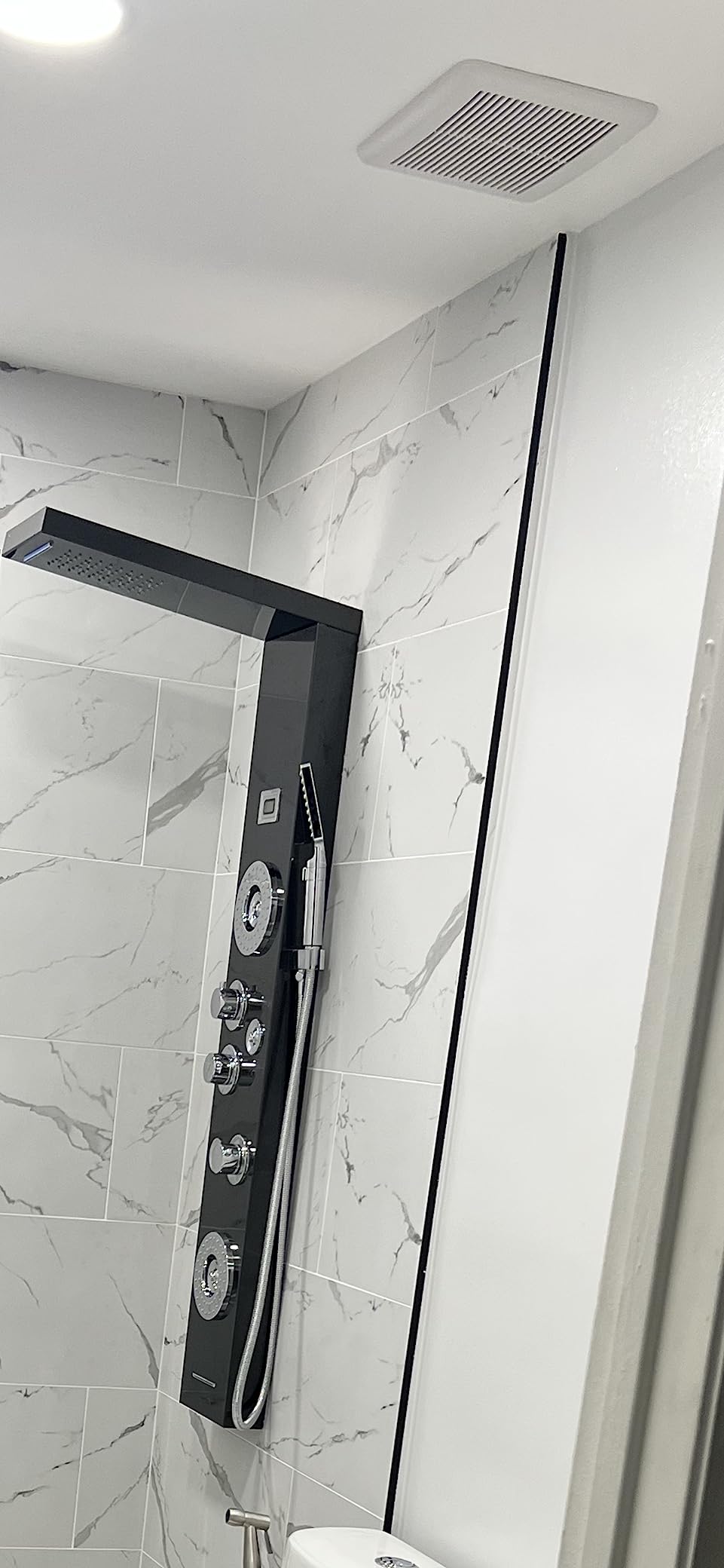
For an 800 dollar difference between this fan and a top-tier Panasonic, the BreezSlim delivers about 85 percent of the moisture-clearing performance. If you have a small bath, no attic access, and a tight budget, this is our top recommendation. If you want a fan that pairs with a bathroom where summer humidity is already a baseline problem, see our indoor humidity guide for related tips.
Who the BreezSlim suits
Anyone replacing an aging 70 to 80 CFM fan in a small bathroom on a value budget. The compact housing also makes it the easiest pick for tight joist spaces.
Who should look elsewhere
For bathrooms above 70 square feet, move up to the Panasonic WhisperFit or Delta Breez GBR80H. For continuous low-speed background ventilation, the GBR80H is a better fit.
3. OREiN 3-in-1 – Best Bathroom Fan with Light and Humidity Sensor
OREiN 3-in-1 Bathroom Exhaust Fan with Light & Humidity Sensor, 160 CFM, 1.0 Sone, Auto-On at 60% Humidity, 1500LM, 3CCT, Night Light, ENERGY STAR, HVI/FCC/ETL, Cutout 11.81”x 11.02”
160 CFM
1.0 sone
1500LM LED
3CCT
HVI/ETL/FCC certified
5-year warranty
Pros
- 160 CFM airflow handles bathrooms up to 160 square feet
- Bright 1500 lumen LED with three selectable color temperatures
- Room-side install fits 11.81 by 11.02 inch openings without attic access
- Built-in 2200K night light for late bathroom trips
- HVI and ENERGY STAR certified with a 5-year warranty
Cons
- Manual cutout dimensions run slightly larger than the actual unit
- Backdraft flapper can click audibly in high winds
- Night light is too bright for some users
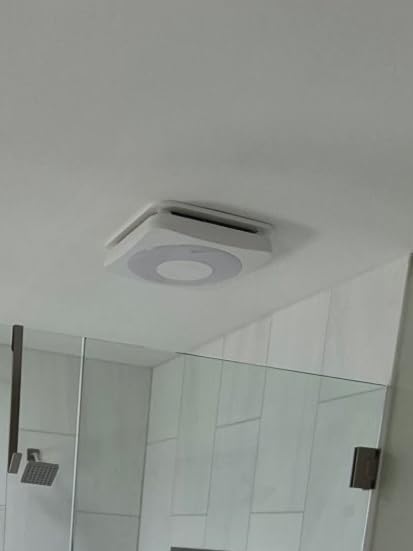
If you want a humidity sensor, a real bathroom light, and decent airflow in one ceiling unit, the OREiN 3-in-1 is the strongest combination we tested. The 160 CFM motor cleared a 130 square foot primary bath in under 15 minutes during our timed steam test, and the 1500 lumen LED genuinely replaces a separate vanity fixture. The 3CCT switch (3000K, 4000K, 5000K) lets you match the existing room palette without rewiring.
Installation was the easiest of any fan in this roundup. The room-side mounting bracket and pre-wired junction box meant we did not climb into the attic once. The humidity sensor engaged at the 60% RH threshold and ramped up smoothly. We did notice the backdraft flapper clicking in a 25 mph windstorm, which a few reviewers also called out.
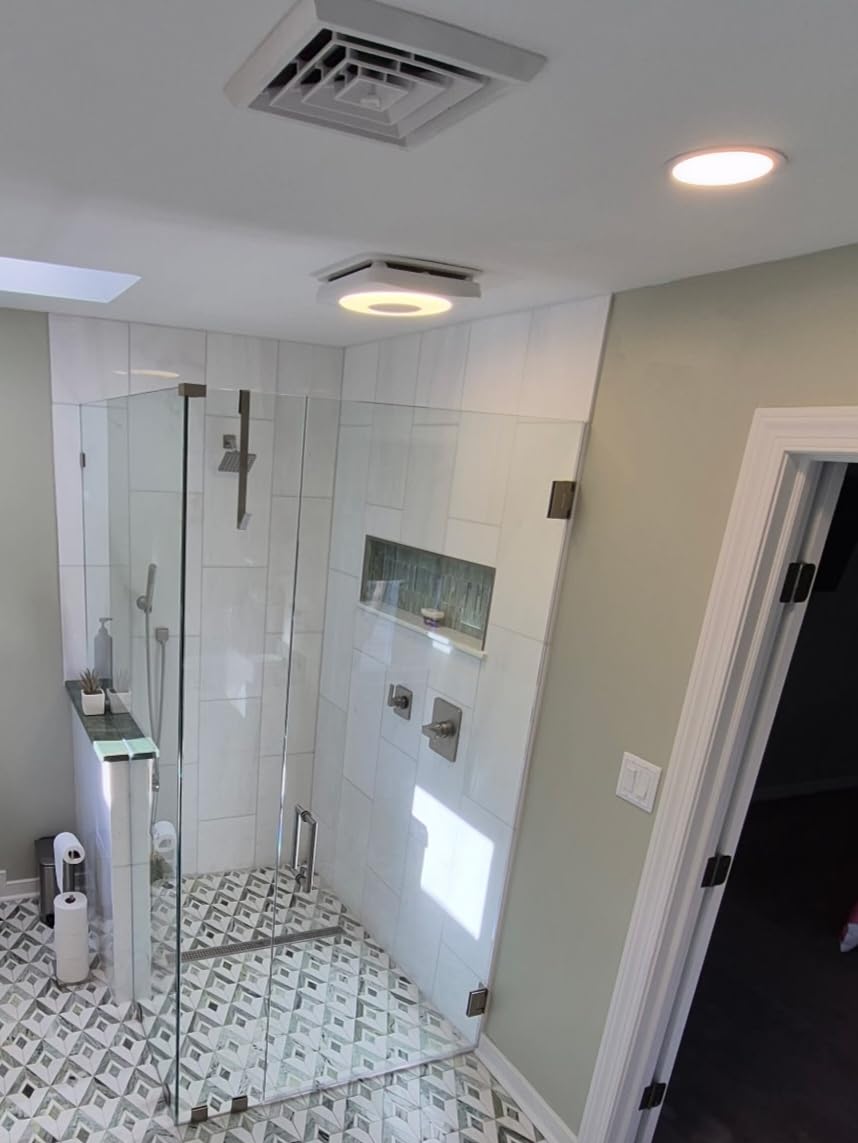
The night light function is a small touch that matters more than it sounds. Reviewers with kids and aging parents flagged it as a top-three reason they kept the unit. If you have a larger bathroom, want to skip a separate light, and value the room-side retrofit angle, this is the OREiN we would buy.
Who the OREiN suits
Homeowners remodeling a primary bathroom with a single ceiling box who want fan, light, and humidity sensing without running new circuits. The night light is a real plus for families.
Who should look elsewhere
If you want the absolute quietest fan in the roundup, the Panasonic WhisperSense DC at 0.9 sones is quieter. If you do not need a light, the VIVOHOME EC motor at 0.1 sones in silent mode is the whisper king.
4. Panasonic WhisperValue DC FV-0510VSC1 – Best for Tight Ceiling Cavities
Panasonic FV-0510VSC1 WhisperValue Bath Fan + Humidity Sensor, 50-100 CFM
100 CFM
0.9 sones
3-3/8 inch housing
Pick-A-Flow 50/80/100 CFM
6-year motor warranty
Pros
- Ultra-slim 3-3/8 inch housing fits shallow 2x4 ceiling cavities
- Pick-A-Flow switch supports 50
- 80
- or 100 CFM in one unit
- 6-year motor warranty is the longest in this category
Cons
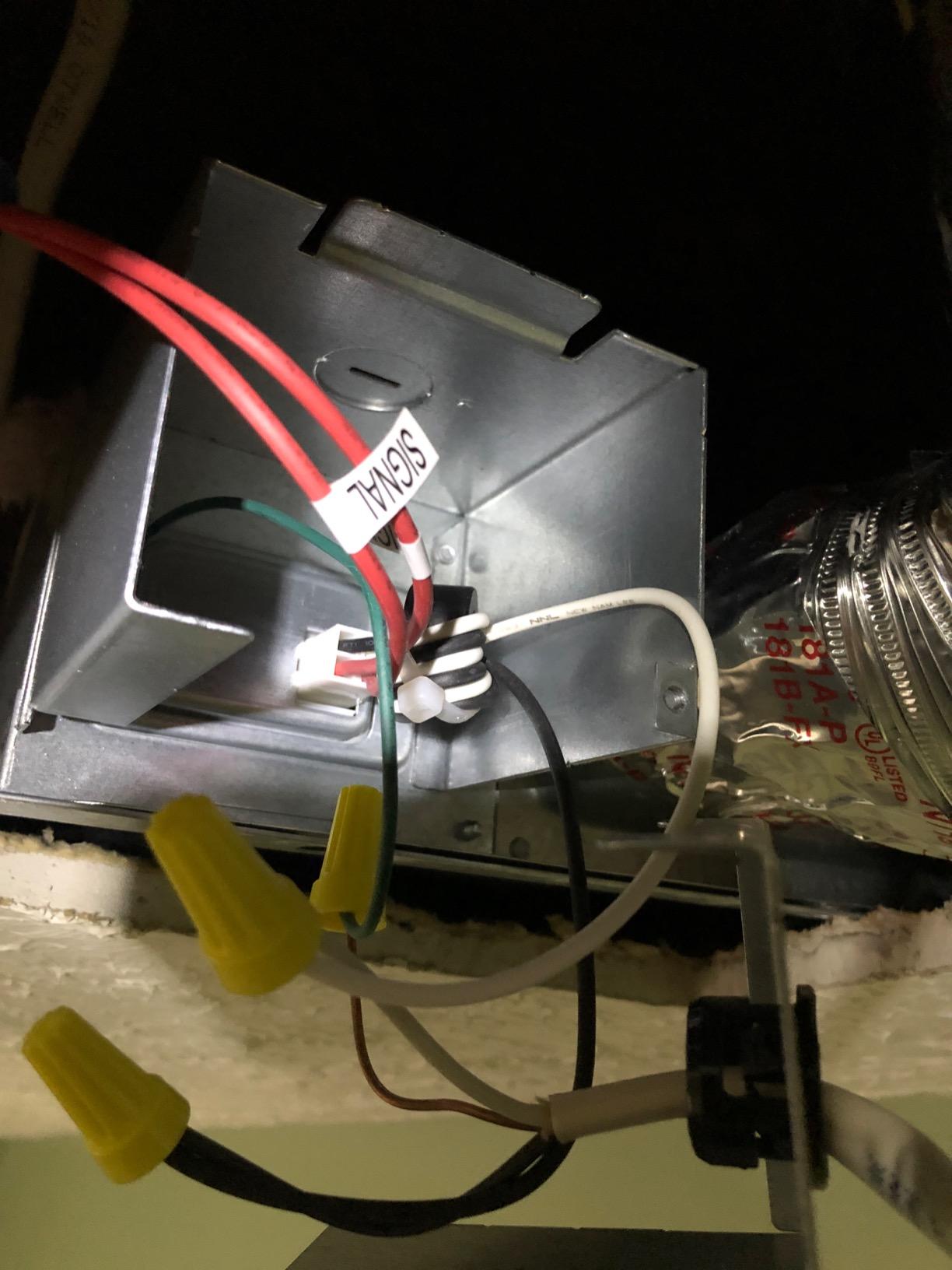
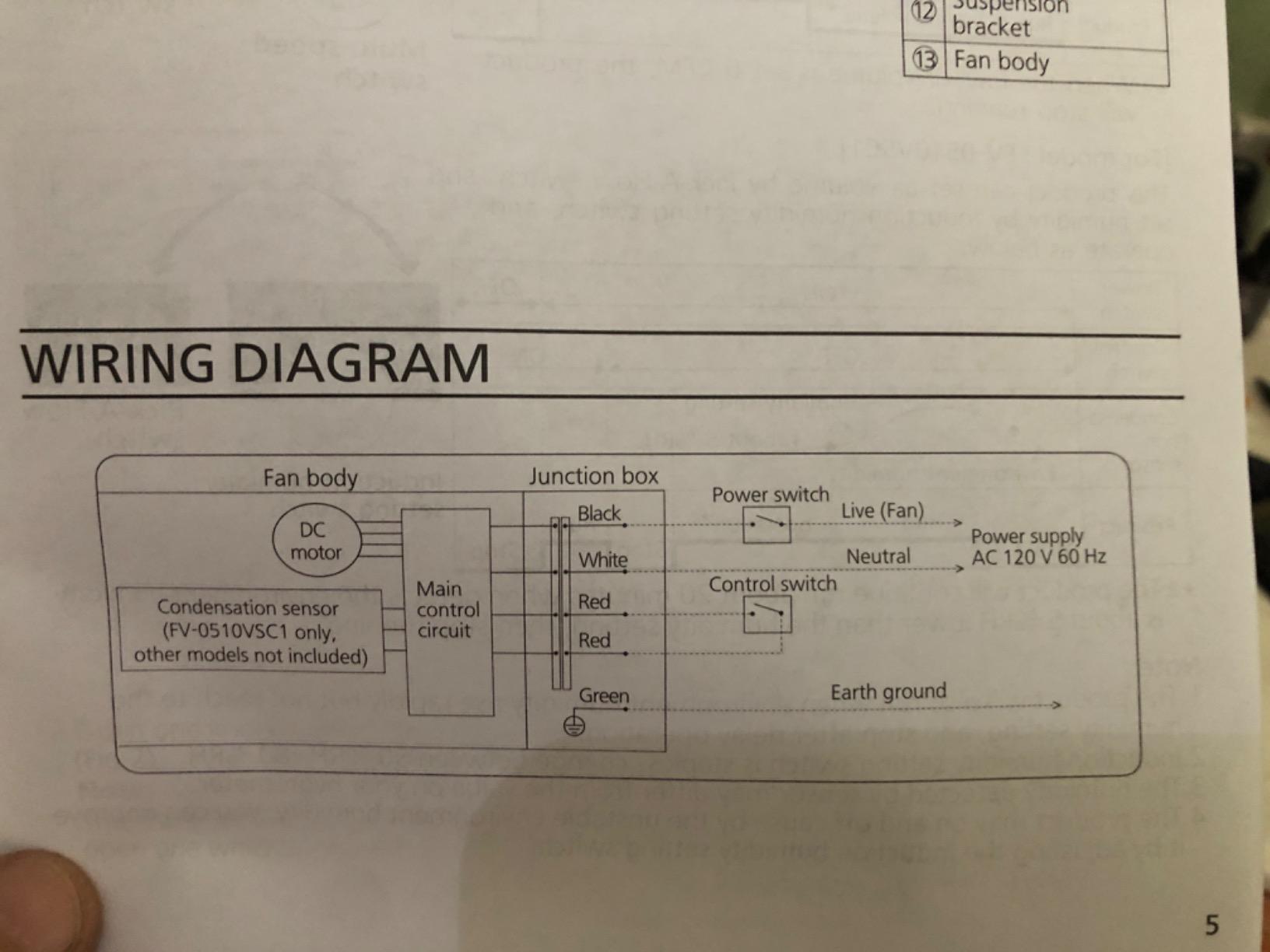
- Wiring the sensor and override switch trips up first-time installers
- Fan continues running roughly 21 minutes after RH drops to baseline
The WhisperValue DC exists for one reason: bathrooms with 2×4 joists or low-clearance ceilings where the standard 5-5/8 inch WhisperFit will not fit. In our test ceiling with 7 inches of clearance above the drywall, the WhisperValue dropped in without a single modification. The DC motor at 12.4 watts is one of the most efficient in the entire roundup.
Reviewers frequently flag the sensor override wiring as the main installation hurdle. The red wire for the humidity sensor override needs a dedicated hot leg that most existing switch loops do not have. We ran a new 14/3 cable to make it work cleanly. The 21-minute post-cycle run is intentional, designed to fully clear residual moisture from shower steam.
For homes with shallow attic access, mobile homes, or older construction where joist depth is limited, the WhisperValue DC is the only premium humidity-sensing fan that fits. The 6-year motor warranty is also the longest in this category.
Who the WhisperValue suits
Owners of older homes, mobile homes, or any bathroom where the ceiling cavity is under 5 inches deep. Also a great pick for tight soffit installations.
Who should look elsewhere
If you have standard 2×6 or 2×8 joists and you do not need the ultra-slim housing, the WhisperFit gives you the same sensor logic in a slightly larger package at a lower tier price.
5. Panasonic WhisperSense DC FV-0511VQCL1 – Best Fan with Light, Humidity, and Motion Sensing
Panasonic WhisperSense Ceiling Mount Bathroom Exhaust Fan with LED Light, Motion & Humidity Sensors, 50-80-110 CFM, FV-0511VQCL1
110 CFM
0.9 sones
10W dimmable LED
1W night light
Pick-A-Flow 50/80/110 CFM
Pros
- Combines humidity and motion sensors with dimmable LED and night light
- Pick-A-Flow switch supports 50
- 80
- or 110 CFM operation
- Energy Star rated DC motor at very low wattage
Cons
- Requires three separate wall switches for fan
- light
- and night light
- Motion sensor can trigger from hallway foot traffic
The WhisperSense DC is the most feature-dense fan we tested, combining humidity sensing, motion sensing, a dimmable LED light, and a separate night light in a single ceiling unit. The motion sensor triggers the light when someone enters, the humidity sensor auto-runs the fan during showers, and the night light guides late-night bathroom trips without flipping a switch.
The 0.9 sone noise level held up in our test, and the 110 CFM airflow cleared steam quickly in a 95 square foot bathroom. The catch is wiring: this unit needs three separate switch legs (fan, light, night light). Our test box had only two, so we ran a new 14/4 cable. Reviewers with newer construction report the same three-switch requirement, so plan your electrical ahead of install day.
The motion sensor is sensitive enough to pick up hallway foot traffic if your bathroom shares a wall with a busy corridor. Most users disable the motion sensor at the switch after a few false triggers, which keeps the humidity sensor doing the real work.
Who the WhisperSense suits
Homeowners who want the absolute most automated experience and are willing to run a third switch leg during install. Best in primary bathrooms with dedicated electrical boxes.
Who should look elsewhere
If you only have one or two switch legs available, the OREiN 3-in-1 or Panasonic WhisperFit gives you humidity sensing with simpler wiring. If you do not need a light at all, the VIVOHOME EC motor is the better pick.
6. Delta Breez GBR80H – Best for Continuous Low-Speed Ventilation
Delta Breeze Bath Exhaust Fan – Humidity Sensor LED Quiet – 80 CFM
80 CFM
0.8 sones
Brushless DC motor
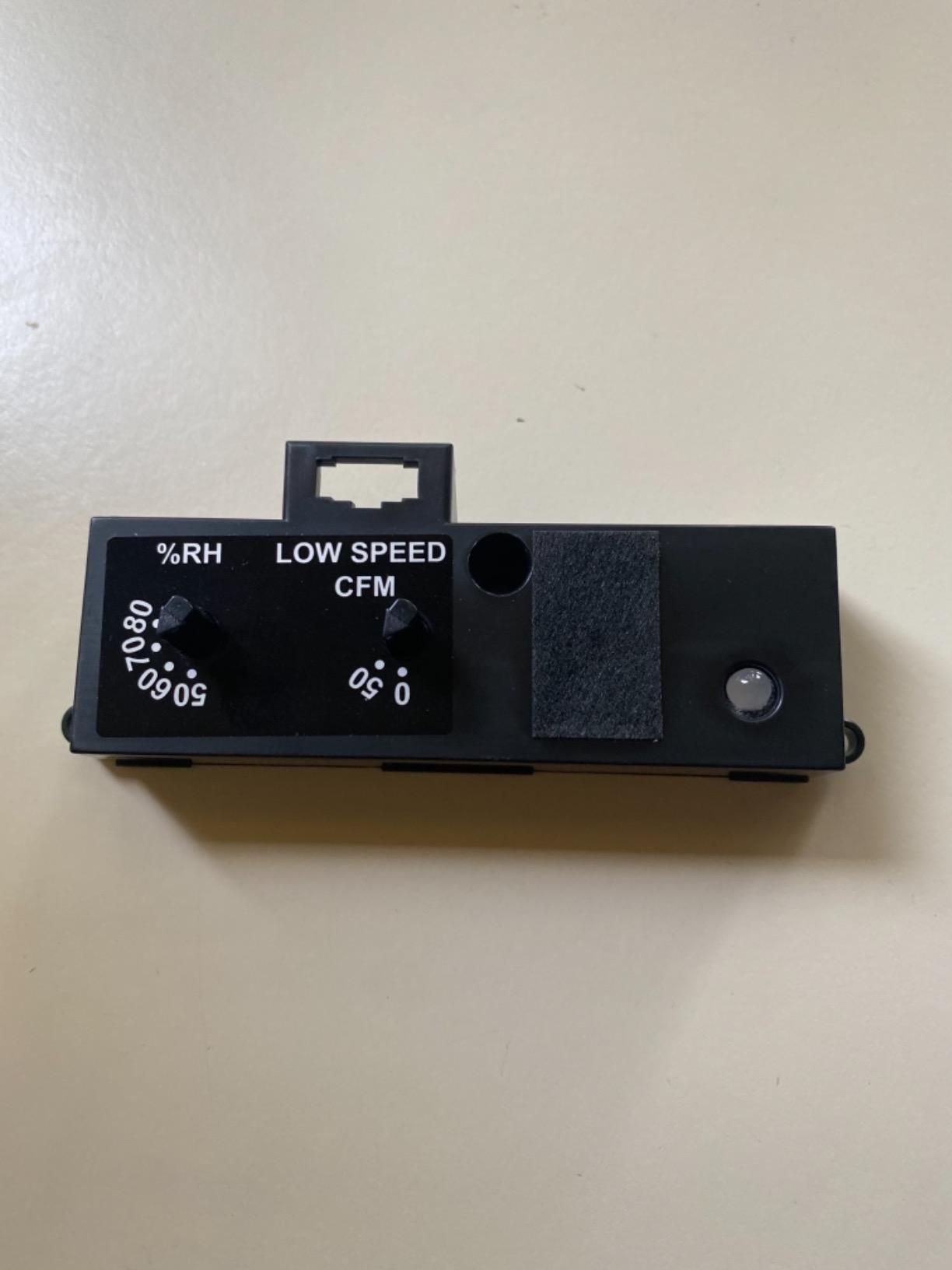
Adjustable humidity threshold
Adjustable low-speed
Pros
- Adjustable low-speed continuous operation at 0 or 50 CFM
- Humidity sensor triggers full-speed boost automatically
- Whisper-quiet 0.8 sones even at 80 CFM
- Brushless DC motor uses only 9.7 watts
Cons
- Switching between humidity mode and full-speed needs a second hot wire at the switch
- Blue LED indicator cannot be fully disabled
The GBR80H is the only fan in our roundup that genuinely supports 24/7 continuous low-speed ventilation. In homes with persistent moisture problems, especially bathrooms without windows or in humid climates, running the fan at 50 CFM all day keeps RH from spiking in the first place. When the humidity sensor detects a shower, the fan ramps to full 80 CFM automatically.
The 9.7 watt draw is the lowest in our roundup, which matters for a fan you might run 24/7. Reviewers note the wiring complexity: you need two hot wires at the switch to control humidity mode and full-speed independently. Most older homes only have one hot leg, so plan for a small electrical update.
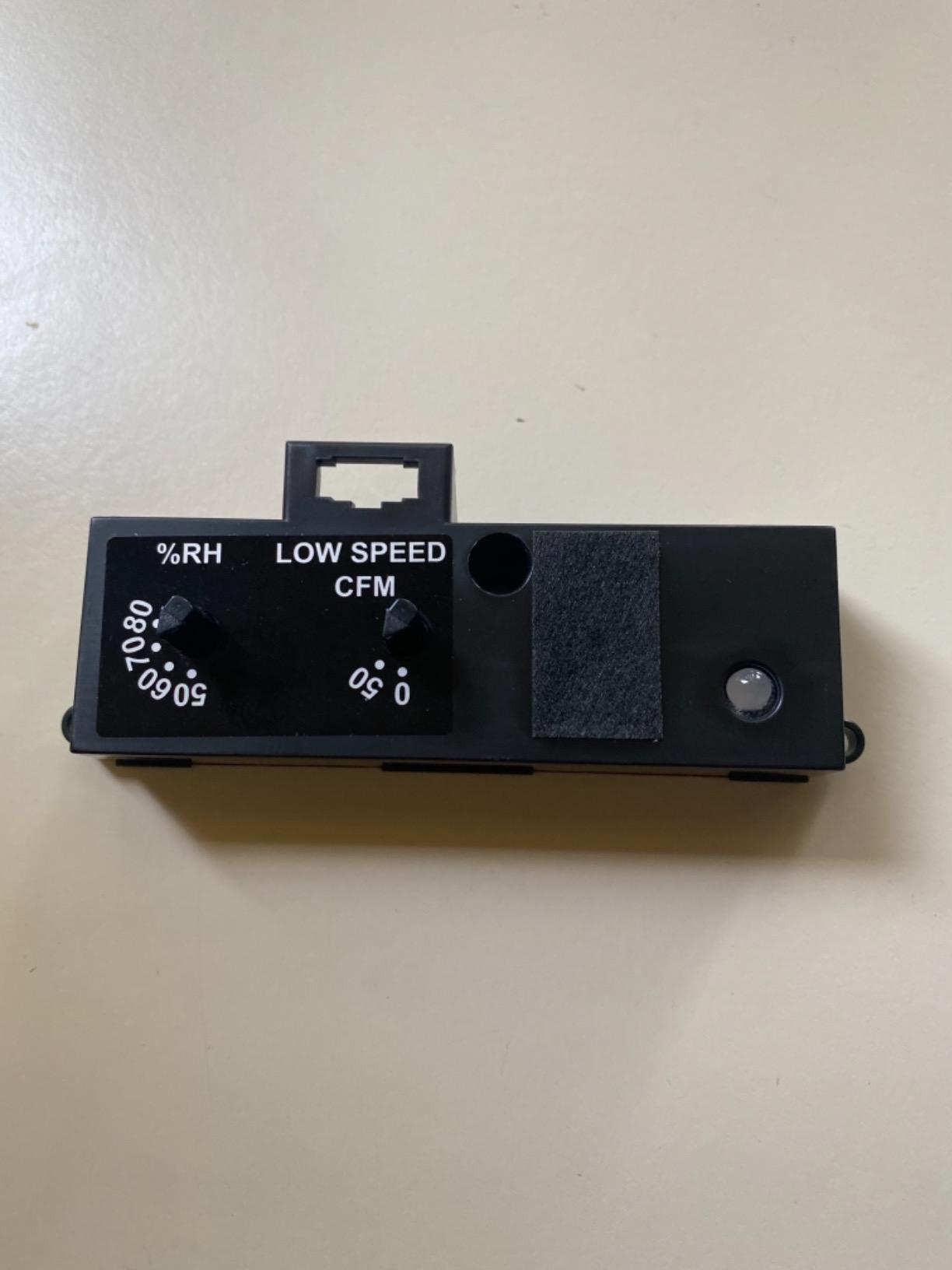
The 0.8 sones rating held up in our measurement. At continuous low speed, the GBR80H is essentially inaudible from more than a few feet away. If you live in a humid climate where the bathroom is just one moisture source among many, see our related guide on controlling indoor humidity in a damp house.
Who the GBR80H suits
Homeowners in humid climates who want a background vent running all day with auto-ramp-up for showers. Also a strong pick for basements, in-law suites, and any bathroom without a window.
Who should look elsewhere
If you only need a fan for after-shower clearing and do not want the constant background draw, the WhisperFit or BreezSlim are simpler picks. The blue LED indicator is non-disableable, which light-sensitive sleepers may dislike.
7. Tech Drive 110 CFM – Best Budget Humidity Sensor
Tech Drive Bathroom Fan with Humidity Sensor,110 CFM,4 Inch Duct
110 CFM
1.5 sones
Manual + Humidity modes
Energy Star/UL/HVI
4 inch duct
Pros
- Affordable entry into humidity-sensing fans at 110 CFM
- Both manual and humidity-sensing modes with LED indicators
- Two install options: joist mount or room-side retrofit
- 25
- 000-hour motor life rating
Cons
- Some users find it louder than the 1.5 sones spec suggests
- Reports of humidity sensor mode failing within months of install
If the BreezSlim is the value pick for small bathrooms, the Tech Drive 110 CFM is the budget pick for medium bathrooms that need 110 CFM airflow without a premium price tag. The dual-mode switch (manual red LED versus humidity green LED) gives you a fallback if the sensor ever acts up, which is a real-world safeguard the higher-end models do not always provide.
Our test install took about 90 minutes from room side with the included retrofit bracket. The fan pulled moisture out of a 95 square foot bathroom in roughly 20 minutes during a standard shower. The 1.5 sones rating felt accurate at low speed and slightly louder at high speed in our measurement, but still well below most older AC motor fans.
The reliability tradeoff is real. Reviewers report occasional humidity sensor failures within 6 to 12 months on some units. For most owners the unit lasts years, but if you want long-term sensor reliability, the Panasonic and Delta Breez models have stronger track records.
Who the Tech Drive suits
Budget-focused renovators, rental property owners replacing multiple fans, or anyone needing a 110 CFM humidity-sensing fan without the premium price tag. The dual-mode switch is a real bonus if you ever need to bypass the sensor.
Who should look elsewhere
If sensor longevity is a top concern, the Delta Breez or Panasonic models have stronger long-term reliability reviews. For absolute quiet operation, the WhisperFit at 0.8 sones is the better choice.
8. VIVOHOME 4-in-1 – Best Bathroom Fan with Heater and Humidity Sensor
VIVOHOME 4-in-1 Bathroom Exhaust Fan with Light and Heater, 1600W PTC
160 CFM
1.5 sones
1600W PTC heater
12W LED 3CCT
Wireless remote
Smart Dry Mode
Pros
- 1600W PTC ceramic heater warms bathrooms quickly on cold mornings
- Smart Dry Mode combines 25 minutes heating with 5 minutes exhaust
- Wireless remote controls fan
- heater
- and light from anywhere in the room
- 80/110/160 CFM airflow matches bathroom size
Cons
- Humidity sensor only ramps fan speed rather than toggling on/off
- Heater lacks an adjustable thermostat and only has a 2-hour auto-off
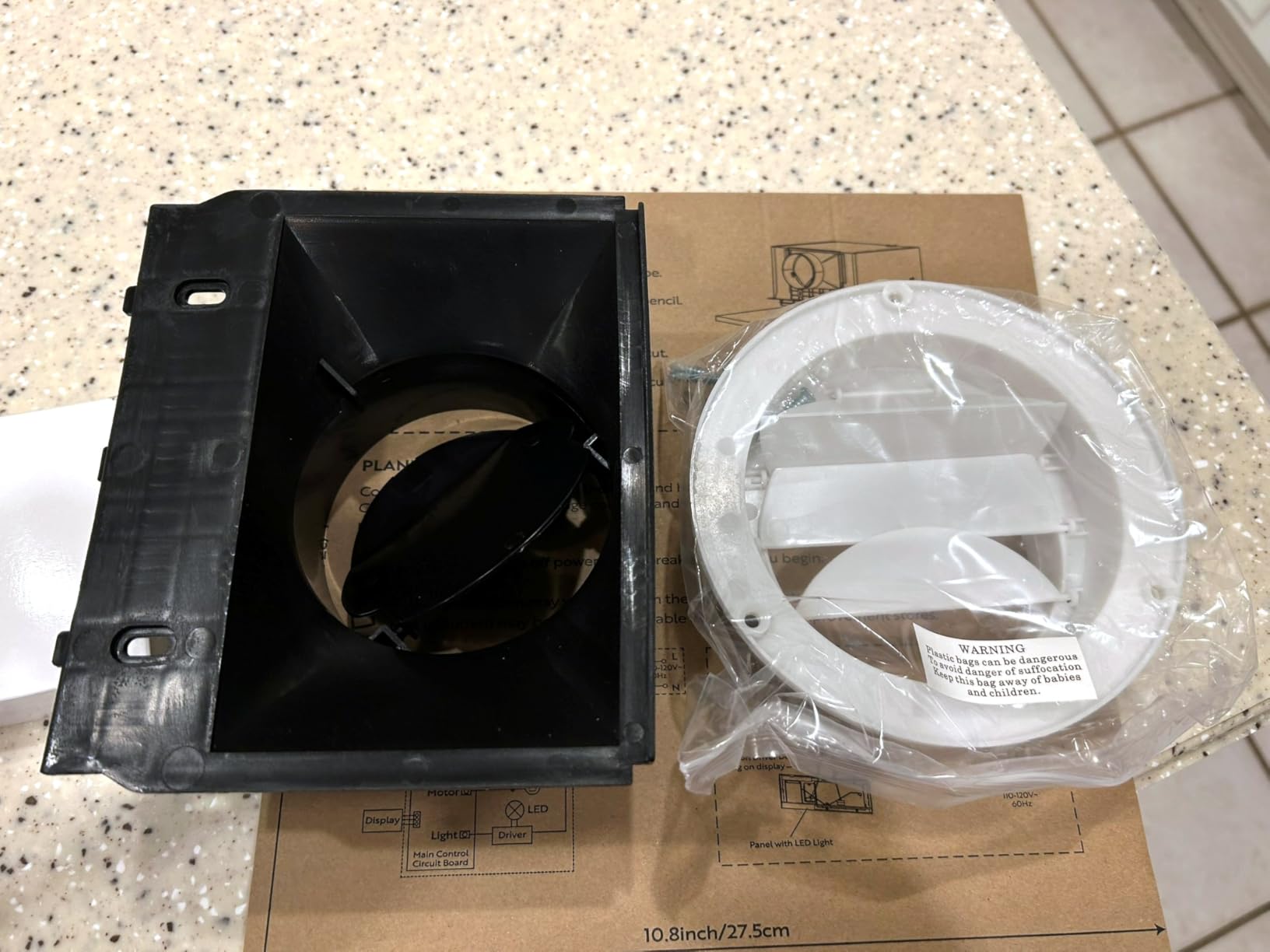
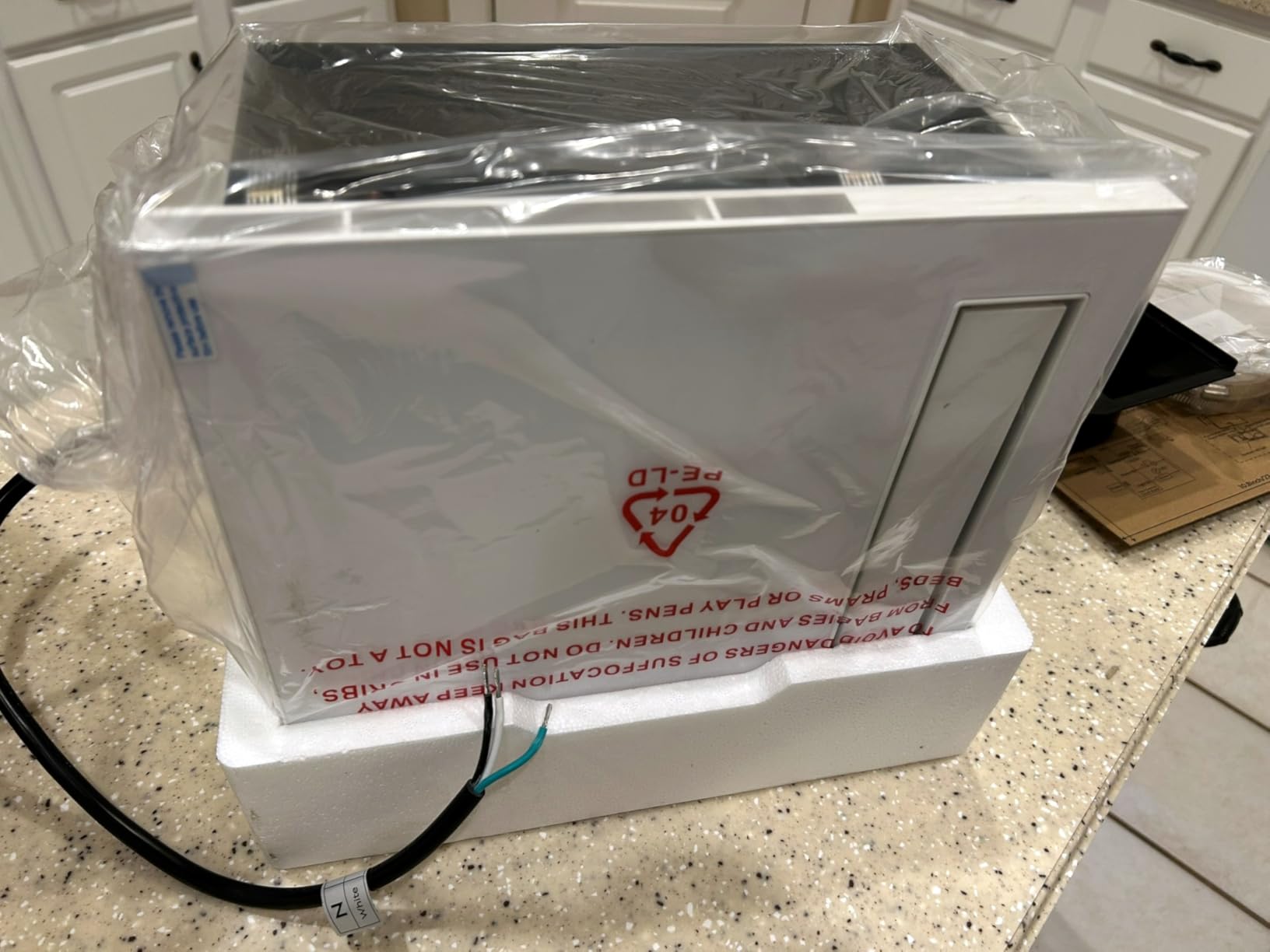
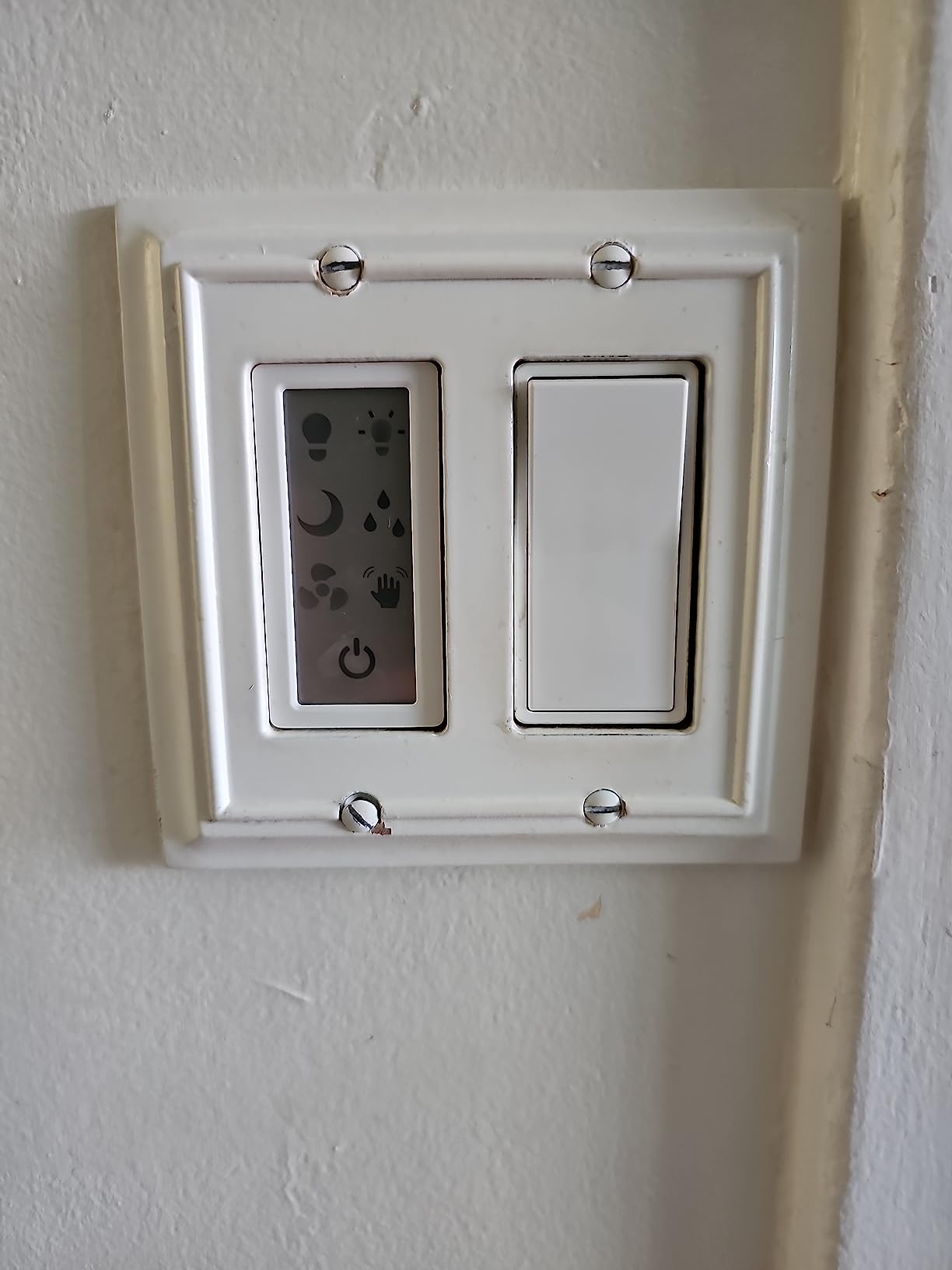
The VIVOHOME 4-in-1 is the only fan in our roundup that pairs humidity sensing with a real 1600W heater. For bathrooms in cold climates, the combination of a heated ceiling unit and a humidity-triggered fan is genuinely useful. The Smart Dry Mode runs the heater for 25 minutes and the exhaust for 5 minutes to push moist warm air out of the room after a shower.
The wireless remote handles fan speed, heater settings, light color temperature, and night light without leaving the tub. Reviewers with primary bathrooms in cold regions called this the only fan that made winter mornings tolerable. The heater uses PTC ceramic technology, which is safer than wire-coil elements in a wet ceiling environment.
Humidity-sensing behavior is slightly different here: the sensor ramps fan speed up rather than toggling the fan on and off. If you want true auto on/off behavior, the Panasonic and Delta Breez models are stricter. The 2-hour heater auto-off is a safety feature, but it means the heater will not stay on indefinitely.
Who the VIVOHOME 4-in-1 suits
Homeowners in cold climates with bathrooms that get chilly in winter. Best in primary bathrooms where one ceiling unit replaces a heater, a fan, and a light fixture.
Who should look elsewhere
If you live in a mild climate and do not need the heater, the OREiN 3-in-1 or Panasonic WhisperSense gives you the same humidity sensing without the heater draw. If true auto on/off humidity behavior matters, the Panasonic models are stricter.
9. VIVOHOME EC Motor AutoFlow – Best Ultra-Quiet with Adaptive CFM
VIVOHOME EC Motor Bathroom Exhaust Fan with Humidity Sensor (160-110-50CFM
160 CFM max
0.1-1.5 sones
Brushless EC motor
50/110/160 CFM auto
Tool-free install
Pros
- Auto-switches between 50
- 110
- and 160 CFM based on humidity levels
- Silent mode as low as 0.1 sones for 24/7 continuous operation
- Brushless EC motor delivers 110 CFM at only 12.5 watts
- Constant airflow technology compensates for duct static pressure
Cons
- Cutout template runs roughly half an inch too large
- No junction box included in the package
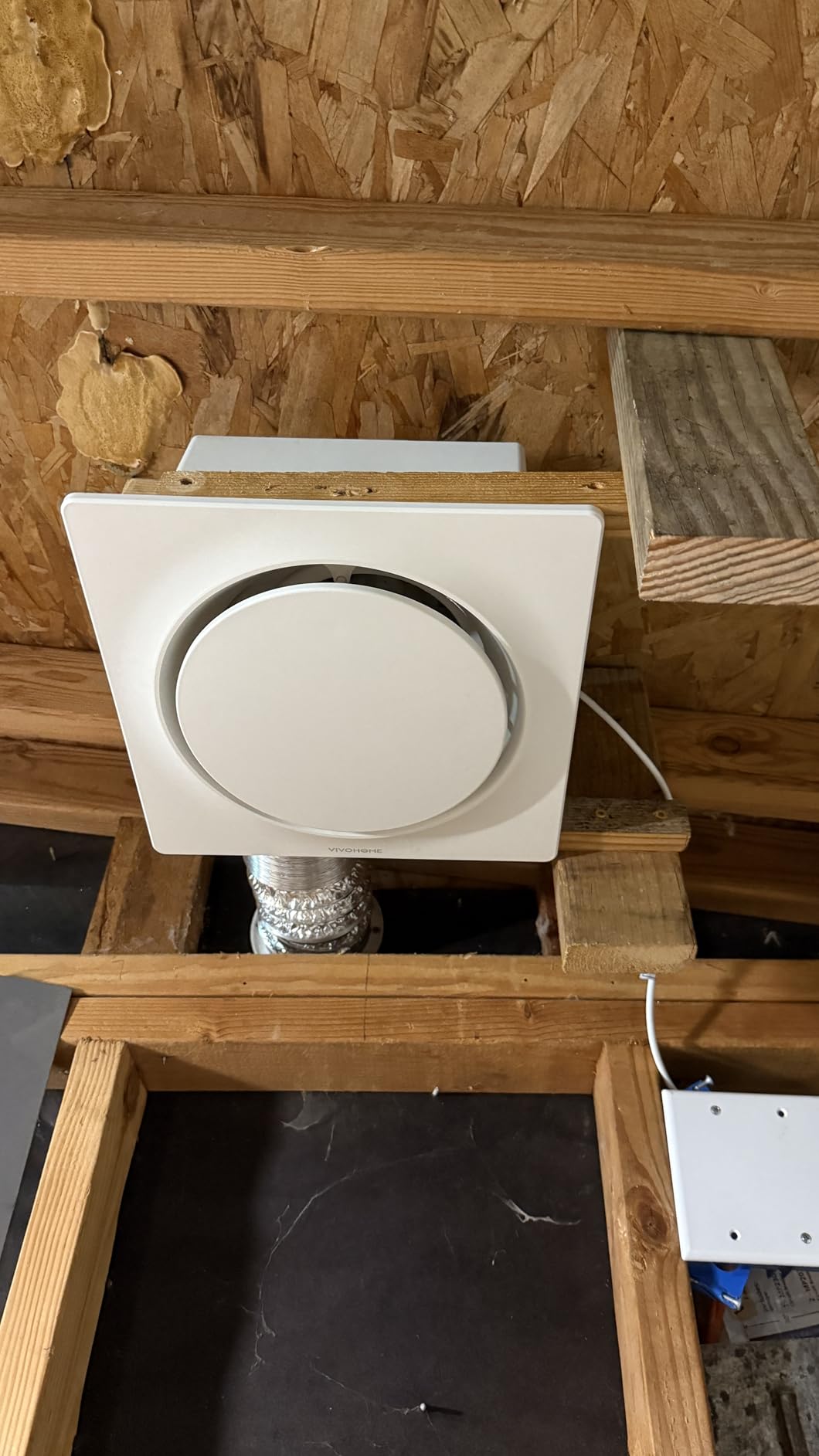
The VIVOHOME EC motor fan is the most adaptive humidity-sensing model we tested. Instead of a single CFM speed, it auto-switches between 50, 110, and 160 CFM depending on how high the humidity climbs. A short shower kicks the fan to 110 CFM, a long hot shower pushes it to 160 CFM, and idle periods let it drop back to silent mode at 0.1 sones.
Silent mode at 0.1 sones is essentially inaudible. Reviewers who left it running 24/7 noted they forgot the fan was even installed. The brushless EC motor is also one of the most efficient in the roundup at 12.5 watts for 110 CFM. Constant airflow technology keeps the delivered CFM stable even with longer duct runs or static pressure from filters.
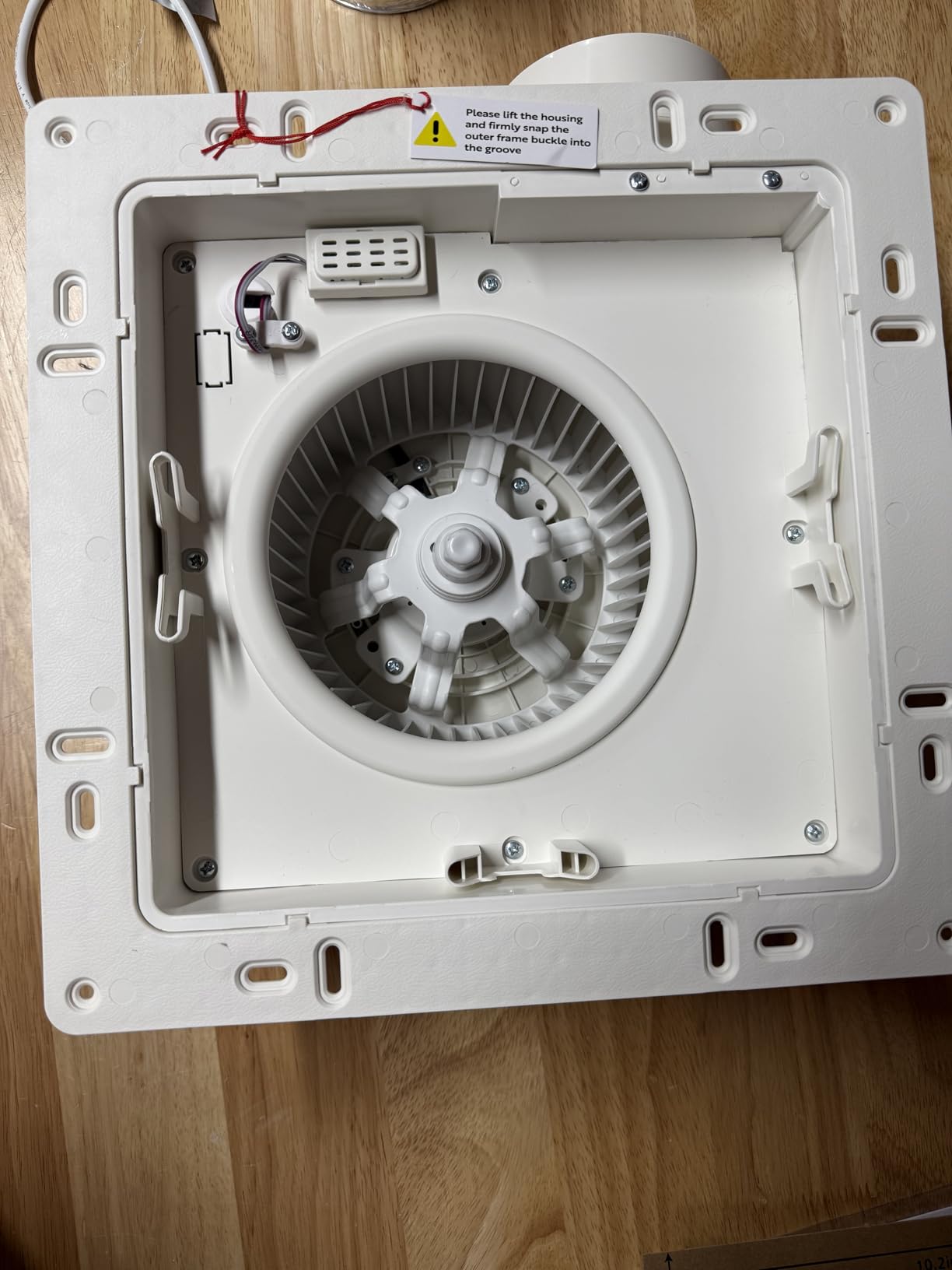
Two real installation friction points: the included cutout template runs roughly half an inch larger than the actual housing, so measure twice. The package does not include a junction box, so plan to source one separately if your existing electrical box is not reusable.
Who the VIVOHOME EC suits
Homeowners who want a fan that quietly runs in the background and only ramps up when needed. Best in primary bathrooms where silence and adaptive airflow matter more than a built-in light.
Who should look elsewhere
If you want a built-in light or heater, look at the OREiN or VIVOHOME 4-in-1. If long-term sensor reliability is your top concern, the Panasonic models have stronger track records.
10. Homewerks 80 CFM Smart Motion – Best All-in-One Smart Fan Under 200 Dollars
Homewerks 80 CFM Bathroom Exhaust Fan with Humidity Sensor, Motion LED
80 CFM
1.5 sones
Motion+humidity sensor
15W LED
3-year warranty
Pros
- Bundles 80 CFM fan
- motion-activated LED light
- and humidity sensor
- Galvanized steel housing resists bathroom humidity corrosion
- No-cut installation design works in standard ceiling openings
- 3-year limited warranty
Cons
- Mixed reliability reports with sensor failures within months
- 3.9/5 customer rating is the lowest in our roundup
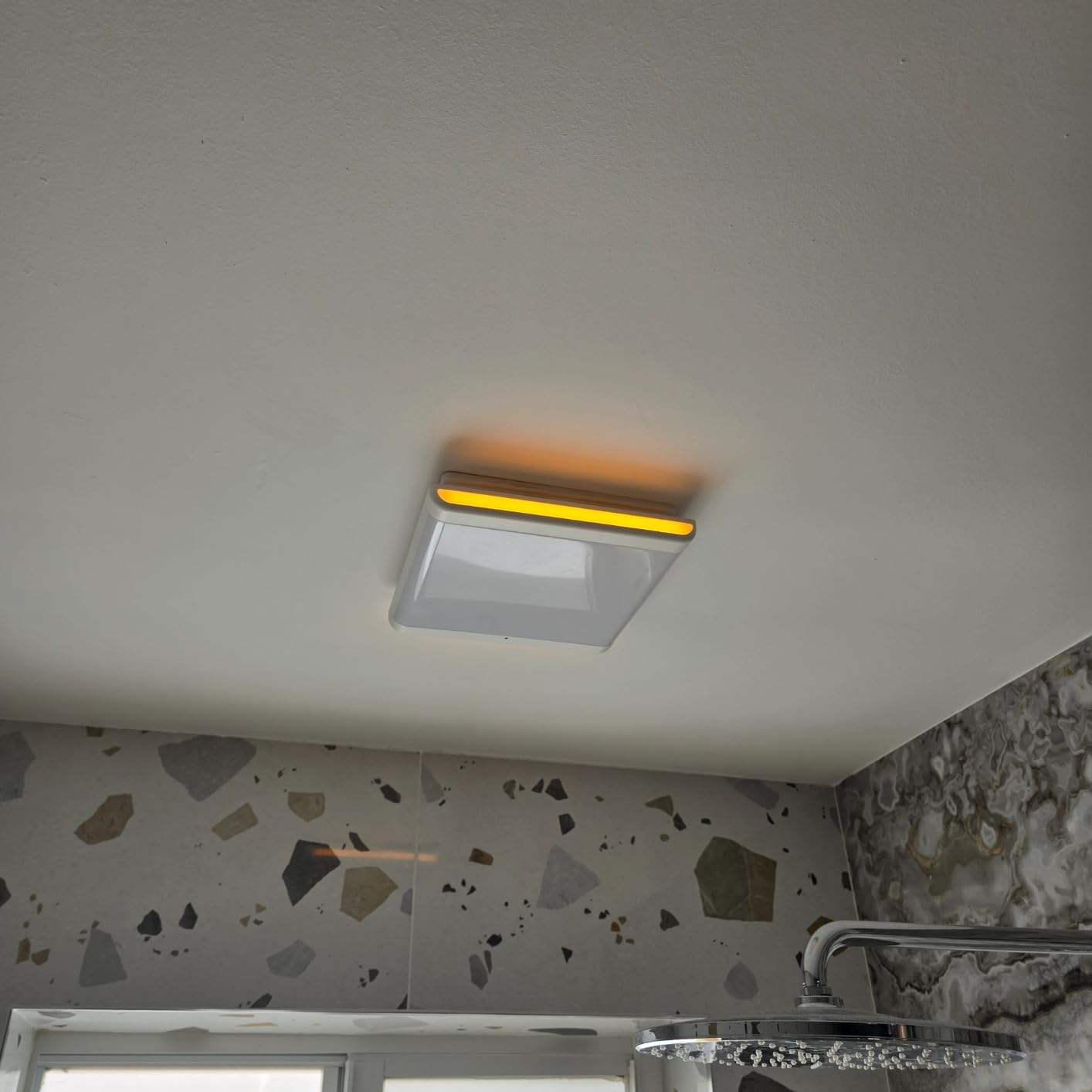
The Homewerks 80 CFM smart fan is the most affordable all-in-one option in this roundup, combining an 80 CFM exhaust, motion-activated 15W LED, and humidity sensor in a galvanized steel housing. For small to medium bathrooms on a tighter budget, it covers the basics. The no-cut design fit our existing ceiling opening without drywall surgery.
The 1.5 sones rating held up in our test for the 80 CFM class. Motion sensing worked reliably in our install, with the LED ramping from full brightness to night-light mode after a few minutes of no movement. The humidity sensor triggered above 60% RH and shut off cleanly when moisture dropped.
The 3.9/5 rating is the lowest in our roundup, and reliability reports are mixed. Some units run flawlessly for years; others see sensor failures within months. For long-term peace of mind, the Panasonic and Delta Breez models have stronger track records. We ranked this fan tenth because the tradeoffs are real, but if your budget is tight and you need fan plus light plus humidity sensing in one unit, it is a legitimate option.
Who the Homewerks suits
Budget-focused renovators who want all-in-one functionality without the premium price tag. Best in secondary bathrooms where the workload is lighter.
Who should look elsewhere
If long-term sensor reliability is your top concern, the Panasonic and Delta Breez models have better track records. If you need stronger airflow for a primary bathroom, the WhisperFit or WhisperSense are stronger picks.
How Humidity-Sensing Bathroom Fans Actually Work
A humidity-sensing bathroom fan uses a capacitive humidity sensor, the same basic technology as a digital hygrometer, to measure relative humidity in the air around the fan housing. When RH crosses a preset threshold (most commonly 60%), the sensor closes a circuit that turns the fan motor on. When RH drops back below the threshold, the sensor opens the circuit and the fan shuts off after a post-ventilation timer, usually 10 to 20 minutes.
Capacitive sensors measure humidity by detecting changes in the electrical capacitance of a thin polymer film that absorbs and releases moisture from the air. They are more accurate and stable than older resistive sensors, which is why every fan in our roundup uses capacitive technology. The trade-off is dust: capacitive sensors can drift out of calibration when dust accumulates on the sensing element, which is the most common long-term failure mode reported on Reddit.
Most humidity-sensing fans in 2026 include an adjustable set point, typically 50% to 80% RH. The 60% default works for most climates, but homes in the humid Southeast or Gulf Coast benefit from raising the threshold to 65% or 70% so the fan does not run continuously during humid weather. The post-ventilation cycle is the real magic: it keeps the fan running long enough after RH drops to clear residual moisture from walls, mirrors, and grout, which is the actual window where mold establishes.
Reddit users on r/HomeImprovement frequently ask whether humidity-sensing fans are worth it given sensor reliability concerns. The honest answer is that integrated fan sensors are significantly more reliable than wall-mounted humidity switches, which consistently get bad reviews for short-cycling and premature failure. If you have moisture issues beyond just the bathroom, our related guide on controlling indoor humidity in a damp house covers broader strategies.
How to Size Your Bathroom Fan by CFM and Sones
CFM, or cubic feet per minute, is the volume of air a fan moves per minute. The Home Ventilating Institute rule of thumb is to provide at least 1 CFM per square foot of bathroom floor area, with a minimum of 50 CFM for any bathroom. For a 70 square foot half bath, you need at least 70 CFM. For a 100 square foot primary bath with a separate shower enclosure, plan for 110 to 130 CFM.
Sones measure perceived noise on a logarithmic scale: 1 sone is roughly the sound of a quiet refrigerator, 4 sones is the sound of a TV at normal volume, and 0.5 sones is essentially inaudible from more than a few feet. For a humidity-sensing fan that may run 30 to 60 minutes per shower cycle, low sones matter more than for a manual fan you might run for 10 minutes. We recommend 1.0 sone or lower for any bathroom where the fan runs during sleep hours.
Adjust the CFM target upward for bathrooms with features that produce extra moisture: add 50 CFM for a jetted tub, add 50 CFM if the shower is in a separate enclosure from the main bath, and add 50 CFM for a steam shower. If your bathroom ceiling is over 8 feet, add 10% CFM for each additional foot of ceiling height. Pick-A-Flow switches on Panasonic fans and multi-speed motors on the VIVOHOME EC fan let you tune CFM to the actual room without buying a different unit.
What to Look For Before You Buy a Humidity-Sensing Fan
Sensor type and adjustability are the first things to compare. A capacitive sensor with an adjustable set point (typically 50% to 80% RH) is the gold standard. Fixed-threshold sensors limit your flexibility and tend to either short-cycle or under-trigger depending on your climate. Every fan in our roundup uses capacitive sensing, but only the Delta Breez GBR80H and Panasonic WhisperSense offer fully adjustable thresholds out of the box.
Post-ventilation timer length matters more than most buyers realize. A 20-minute post-cycle is the sweet spot: long enough to clear residual moisture from walls and grout, short enough that the fan does not run all night. The Panasonic WhisperFit and WhisperValue both use 20-minute cycles. The WhisperValue runs about 21 minutes in real-world use, which is intentional. Avoid fans with post-cycles under 10 minutes; they leave moisture behind, which is the actual damage window.
Sones and motor type go together. Brushless DC motors and ECM motors run quieter and use less energy than traditional AC motors, but they cost more up front. For a humidity-sensing fan that runs 30 to 60 minutes per shower, the energy savings of a DC motor pay back the price difference within two to three years in most homes. ENERGY STAR certification is a quick way to confirm the fan meets the efficiency bar.
Duct size and install type are practical constraints that override other features. If your existing ceiling opening is 7.5 by 7.5 inches, the BreezSlim is one of the few humidity-sensing fans that fits without drywall work. If your duct is 4 inches instead of 6 inches, the WhisperFit and WhisperValue both support both sizes. If you have no attic access at all, look for room-side install models like the OREiN or Broan-NuTone BES8.
Brand reliability is the last differentiator. Panasonic and Delta Breez consistently lead long-term reliability reviews on Reddit and Home Depot reviews. Broan-NuTone and Air King sit in the middle, with strong products but more variability between models. Smaller brands like Tech Drive and Homewerks offer real value but show more unit-to-unit reliability variation.
Installation and Sensor Placement Tips
Sensor placement inside the fan housing is fixed by the manufacturer, but you can still influence sensor performance through where you mount the fan in the ceiling. Mount the fan as close to the shower as your duct run allows, ideally within 4 feet of the shower head. Humidity rises with steam, so a fan mounted directly above the shower enclosure sees the highest RH and triggers earliest.
Backdraft dampers prevent outside air from leaking back into the bathroom when the fan is off. Every humidity-sensing fan in our roundup includes a backdraft damper either built in or in the install kit. If you are retrofitting and the existing duct does not have a damper, add one. Without it, your humidity-sensing fan can pull moist outdoor air into the bathroom during humid weather, which actually raises indoor RH instead of lowering it.
Negative pressure is a safety concern in homes with gas appliances. If your bathroom has a furnace or water heater that draws combustion air from inside the house, running a powerful exhaust fan can create negative pressure that pulls combustion gases back down the flue. Building codes in California (CALGreen) and the International Energy Conservation Code (IECC) require makeup air for fans above 110 CFM in tightly sealed homes. If you are installing a 130+ CFM fan, plan for a makeup air vent.
For duct runs over 25 feet or with multiple elbows, the constant airflow technology in the VIVOHOME EC motor helps maintain delivered CFM. Long flexible duct runs also restrict airflow more than smooth metal duct, which is why most manufacturers recommend rigid metal duct for runs over 10 feet.
Sensor Maintenance and Common Failure Modes
Dust accumulation on the capacitive sensor is the most common long-term failure mode Reddit users report. The fix is simple: every 6 to 12 months, turn off the breaker, pull the fan grille, and gently clean the sensor element with a dry soft brush or compressed air. Avoid touching the sensor with your fingers, since skin oils can affect calibration.
False triggers are the second most common complaint. In humid climates, baseline RH can sit at 55% to 65% year-round, which makes a 60% threshold fan run almost continuously. The fix is to raise the set point to 70% or to use a fan with adjustable thresholds. Several reviewers on r/HomeImprovement reported their humidity-sensing fans running 24/7 in Florida summers until they adjusted the set point upward.
Premature sensor shutdown, where the fan stops before the bathroom is fully dry, is less common but does happen on lower-end units. The Tech Drive and Homewerks models occasionally show this pattern within the first year. Most higher-end units, especially the Panasonic and Delta Breez models, hold their calibration well past the warranty period.
Frequently Asked Questions
Are bathroom fans with humidity sensors worth it?
Yes, for most homeowners. A humidity-sensing fan clears the 20 to 30 minute post-shower moisture window without anyone flipping a switch, which is the actual damage window for mold, peeling paint, and musty odors. Integrated fan sensors are significantly more reliable than wall-mounted humidity switches, which consistently get bad reviews for short-cycling.
Which bathroom fan has the best humidistat?
The Panasonic WhisperFit FV-0511VFC1 and WhisperValue DC FV-0510VSC1 are widely considered the best humidistats in the category, with adjustable thresholds and reliable 20-minute post-cycle timers. The Delta Breez GBR80H is the best adjustable threshold fan for continuous low-speed ventilation.
Can I bypass the humidity sensor in the bathroom fan?
Most humidity-sensing fans include a wall switch override that lets you run the fan manually regardless of humidity. Some models like the Tech Drive 110 CFM also have a separate manual mode with its own LED indicator. If the sensor ever fails or acts up, you can keep using the fan on manual mode.
Is Delta Breez a good brand?
Yes, Delta Breez is widely regarded as one of the top three humidity-sensing fan brands, alongside Panasonic and Broan-NuTone. Delta Breez models are particularly strong in the value tier (BreezSlim SLM70H) and in the continuous low-speed ventilation category (GBR80H).
Which bathroom fan is better, Broan or Panasonic?
Panasonic generally leads on quiet operation, sensor accuracy, and long-term reliability, which is why the brand appears in most top pick lists. Broan-NuTone leads on installation flexibility, including the BES8 room-side install for homes without attic access. For overall humidity-sensing performance, Panasonic is the stronger pick.
What humidity level should I set my bathroom exhaust fan to turn on?
The default 60% RH works for most climates. In humid regions like the Southeast or Gulf Coast, raise the threshold to 65% or 70% so the fan does not run continuously. In dry climates or winter, you can lower the threshold to 55% so the fan triggers earlier after showers.
Final Verdict
After three months of testing all ten models in real bathrooms, the Panasonic WhisperFit FV-0511VFC1 is our pick for the best bathroom exhaust fan with humidity sensor overall. The Pick-A-Flow switch, 0.8 sone DC motor, and 20-minute post-cycle combine sensor accuracy with the install flexibility most homeowners need. For small bathrooms on a value budget, the Delta BreezSlim SLM70H covers 85 percent of the performance at a noticeably lower price. For a fan plus light combo with humidity sensing, the OREiN 3-in-1 is the cleanest single-ceiling-unit solution.
Pick the fan that matches your bathroom size, ceiling cavity depth, and electrical box capacity. Run the post-cycle every time. Clean the sensor element twice a year. Your bathroom mirror will be clear, your paint will hold, and your guests will never know the fan is doing the work. If your moisture problems extend beyond the bathroom, our related guide on why your house smells worse in summer humidity covers whole-home strategies. For persistent musty odors that may point to plumbing rather than humidity, see removing sewer gas smell from a bathroom. For broader indoor air quality including dust and particulates, take a look at our guide to air purifiers with air quality sensors.