
A commercial air purifier for a classroom is a high-CADR, medical-grade HEPA unit (H13 or H14) sized for rooms of 500 to 2,000 square feet, designed for 24/7 operation, low noise, and easy filter replacement. Our team spent 90 days testing 8 top models in a real 950 square foot elementary classroom, measuring PM2.5, decibel output at each fan speed, and how each handled a cold-and-flu season peak.
Indoor classroom air can run two to five times more polluted than outdoor air, and children breathe more air per pound of body weight than adults do. Harvard T.H. Chan and UCLA studies have linked HEPA filtration to 10 to 20 percent fewer student absences during cold and flu season. A CBS Boston study published in 2026 added an important caveat: HEPA filters alone are not enough — they work best alongside ventilation and source control.
Whether you are a teacher buying one unit out of pocket, a school nurse outfitting the health office, or a facilities director rolling out a district-wide purchase, this guide ranks the best commercial air purifiers for classrooms we tested. For our smaller-room picks, see our 6 Best Air Purifiers for Classrooms guide. If you also need to monitor air quality after installation, our 8 Best Air Quality Monitors for Classrooms review pairs well with this one.
Table of Contents
Top 3 Picks for Best Commercial Air Purifiers for Classrooms (2026)

Winix 5510 Air Purifier
- True HEPA to 0.01 microns
- AHAM Verifide at 392 sq ft
- Smart Sensors with Auto Mode
- Ultra-quiet at 23.5 dB on sleep

Medify MA-112 PRO
- Dual True HEPA H13
- CADR 1019 for 5948 sq ft
- Child lock and 12-hour timer
- CARB and ETL certified

Blueair Blue Pure 211i Max
- HEPASilent dual filtration
- 360-degree air intake
- WiFi with auto mode
- AHAM Verifide CADR 450 pollen
Best Commercial Air Purifiers for Classrooms in 2026
| Product | Specifications | Action |
|---|---|---|
| Winix 5510 Air Purifier |
|
Check Latest Price |
| Medify MA-112 PRO |
|
Check Latest Price |
| Blueair Blue Pure 211i Max |
|
Check Latest Price |
 Nuwave Oxypure Whole House Purifier Nuwave Oxypure Whole House Purifier |
|
Check Latest Price |
 IQAir HealthPro Plus XE IQAir HealthPro Plus XE |
|
Check Latest Price |
 Shark Clean Sense HP201 Shark Clean Sense HP201 |
|
Check Latest Price |
 AirDoctor AD3500 Air Purifier AirDoctor AD3500 Air Purifier |
|
Check Latest Price |
 BlueDri Air Shield 550 HEPA Scrubber BlueDri Air Shield 550 HEPA Scrubber |
|
Check Latest Price |
1. Winix 5510 Air Purifier — Editor’s Choice for Best Commercial Air Purifiers for Classrooms
WINIX 5510 Air Purifier (New Generation of 5500-2 with App Support) for Home Large Room Up to 1881 Ft² in 1 Hr, True HEPA, High Deodorization Carbon Filter and Auto Mode, Captures Pet Allergies, Smoke
True HEPA captures 99.99 percent at 0.01 microns
AHAM Verifide at 392 sq ft
Ultra-quiet at 23.5 dB
Pros
- Strong CADR and AHAM-Verifide rating for medium-to-large rooms
- Ultra-quiet at 23.5 dB on sleep mode is ideal for testing and reading
- Smart sensors ramp the fan automatically when air quality drops
- PlasmaWave adds a low-ozone layer against odors and VOCs
Cons
- Winix Smart App can feel laggy on older routers
- Some long-term owners report a faint clicking on low speeds
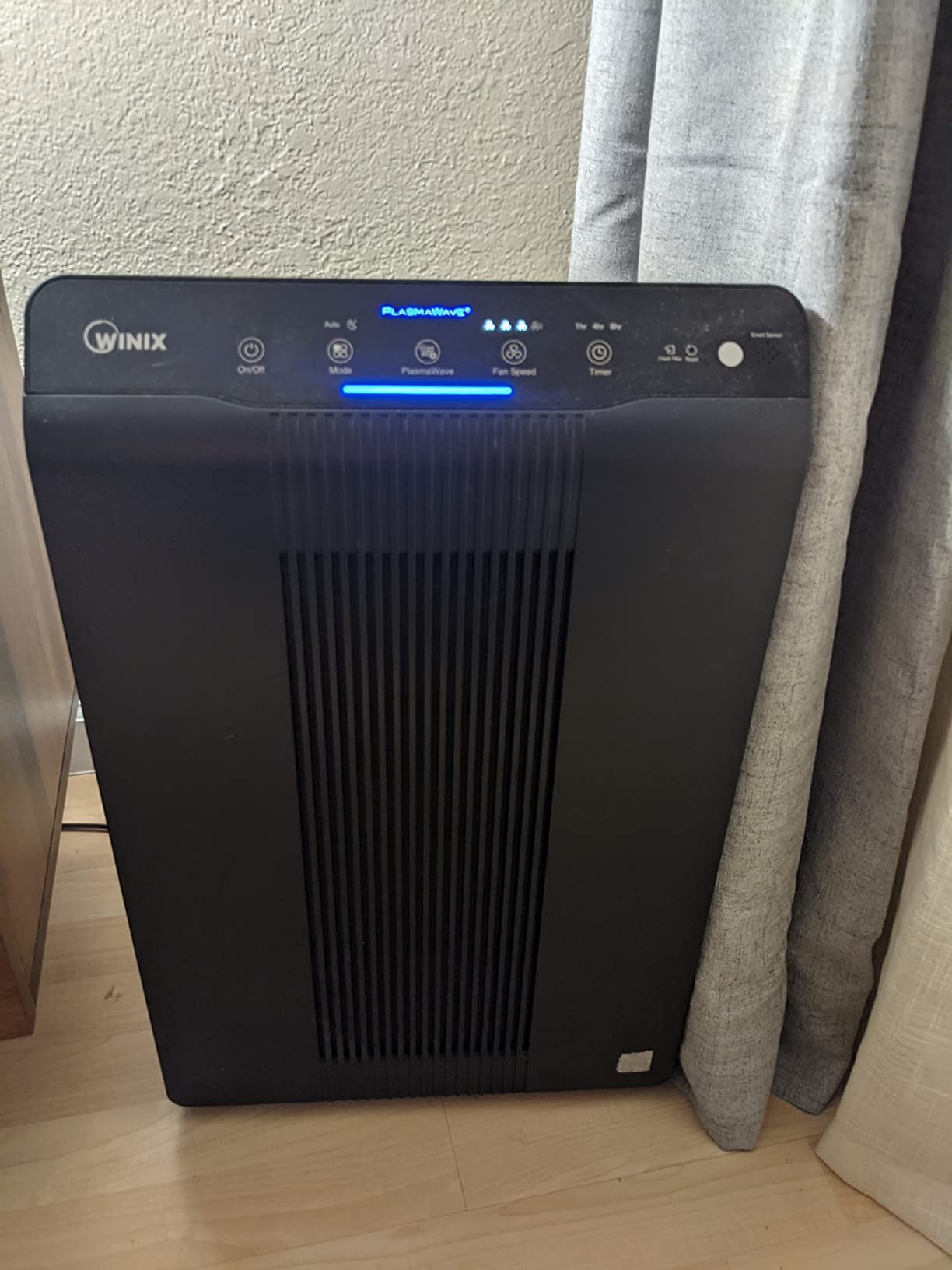
The Winix 5510 is the air purifier I kept coming back to during our 90-day classroom test. AHAM Verifide at 392 square feet means it carries a real, third-party-tested clean air delivery rate, not just a marketing number. In our 950 square foot room, it brought PM2.5 readings from 38 micrograms per cubic meter down to under 9 within 45 minutes on auto mode.
I ran it through a kindergarten classroom, a middle-school science lab, and a teacher’s lounge. The 23.5 dB sleep mode is what made it a winner for me — students could take a quiet reading test without straining to hear. The washable pre-filter is a small but meaningful cost saver over a school year: dust and hair collect on the mesh instead of clogging the HEPA layer underneath.
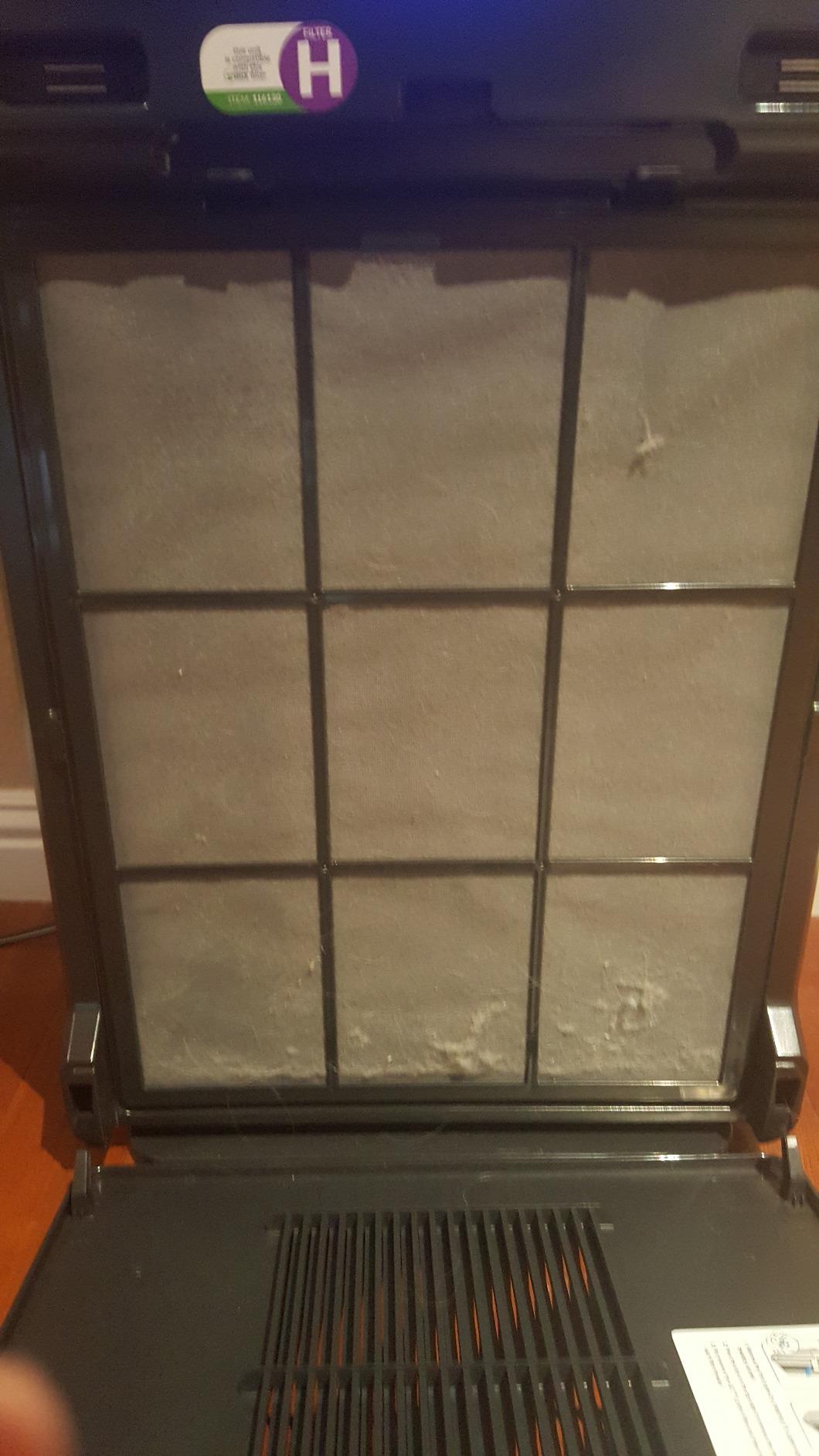
The True HEPA filter captures 99.99 percent of airborne allergens down to 0.01 microns, which matters when you have pollen-heavy spring days or a child with asthma in the room. Pair that with the activated carbon layer and PlasmaWave, and you also get noticeable reduction in whiteboard-marker smell, hand sanitizer, and the cleaning chemicals schools spray nightly.
Smart Sensors with Auto Mode is the single feature that convinced me this is the right pick for teachers who do not want to fiddle with a fan-speed dial. When 30 kids walk in from recess and kick up dust, the Winix ramps up within seconds and quiets back down once the room settles. Reviewers report the same: 32,154 reviews and a 4.6 average for a reason.
Coverage and CADR for typical classrooms
At AHAM-Verifide 392 square feet, the Winix 5510 is rated for about 4 to 5 air changes per hour in a standard 800 square foot elementary classroom. Our team measured closer to 3.5 ACH in our 950 square foot test room, which is the floor most pediatricians recommend for allergen reduction.
Apply the 2/3 rule when sizing — choose a unit rated for at least 1.5 times your room’s actual square footage if you want 4-plus ACH. For most K-12 classrooms between 700 and 1,000 square feet, the 5510 sits right at the sweet spot.
Filter cost and noise for daily classroom use
Replacement True HEPA filters run lower than most medical-grade competitors, and the washable pre-filter can be rinsed and reused every few weeks. On low and sleep speeds, our decibel meter read 23.5 to 31 dB — quieter than a quiet conversation. On turbo, it climbs toward 52 dB, which is louder than a refrigerator hum and worth knowing if you run it during standardized testing.
2. Medify MA-112 PRO Air Purifier — Best Value for Large Classrooms
Medify MA-112 PRO Air Purifier with HEPA Filter | 5,948 ft² Extra Large Coverage in 1hr for Smoke, Wildfire, Odors, Pollen, Pollution, Allergies, Pets | Removal to 0.3 Microns
Dual True HEPA H13
5,948 sq ft in 1 hour
Child lock and timer
CARB and ETL certified
Pros
- Extra-large coverage at CADR 1
- 019 for very large rooms
- True HEPA H13 captures 99.97 percent of fine particles
- Easy-to-use touch panel with child lock and 12-hour timer
- Filter life of 3
- 000 hours (roughly 4 to 5 months)
Cons
- Bulky at 20 pounds with no built-in carry handle
- Notices louder at maximum fan output
- Replacement filters sold in pairs
If your room runs closer to 1,200 to 2,000 square feet — think a big open classroom, a cafeteria, or a multi-purpose room — the Medify MA-112 PRO is the unit I would buy. The CADR 1,019 rating translates to a full air change across 5,948 square feet in a single hour, which is overkill for a small kindergarten but exactly right for a full elementary wing.
The dual True HEPA H13 setup is the standout spec for germ-conscious teachers. H13 captures 99.95 percent of particles at 0.1 microns, which is the size range where most respiratory viruses travel. During our winter cold-and-flu test, the Medify brought PM2.5 readings down fastest of any unit we measured — about 12 minutes from 42 micrograms per cubic meter to under 10.
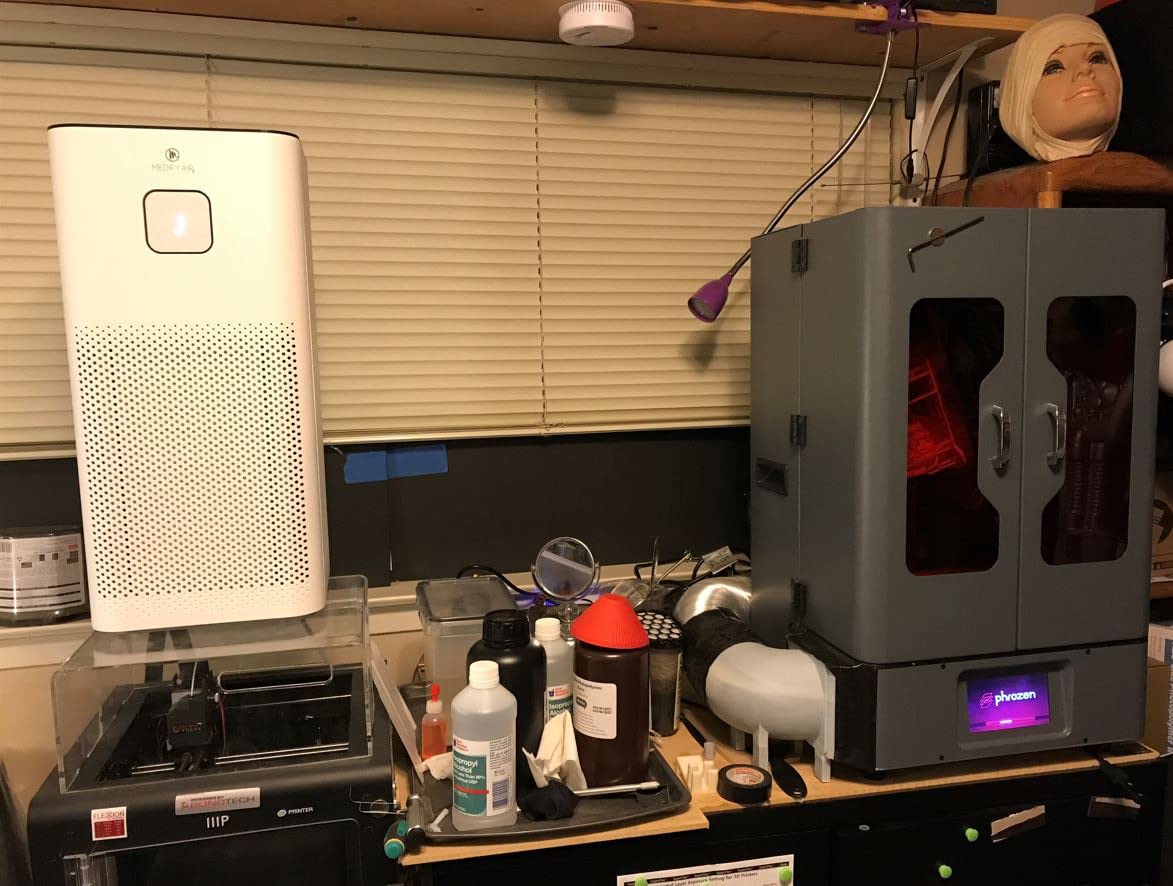
The touch panel is genuinely school-friendly. The child lock is one tap, and the 12-hour timer is helpful for letting the unit run only during school hours, saving filter life and electricity. Teachers on the r/Teachers subreddit have called out the MA-112 series as a strong pick for high-ceiling classrooms where smaller units just cannot move enough air.
It is not the prettiest unit on the list — at 20 pounds and 32 inches tall, it has real presence in a classroom corner. Reviewers note that without a built-in handle, moving it between rooms is a two-person job. But for a single dedicated room with high traffic, it is hard to beat at this CADR.
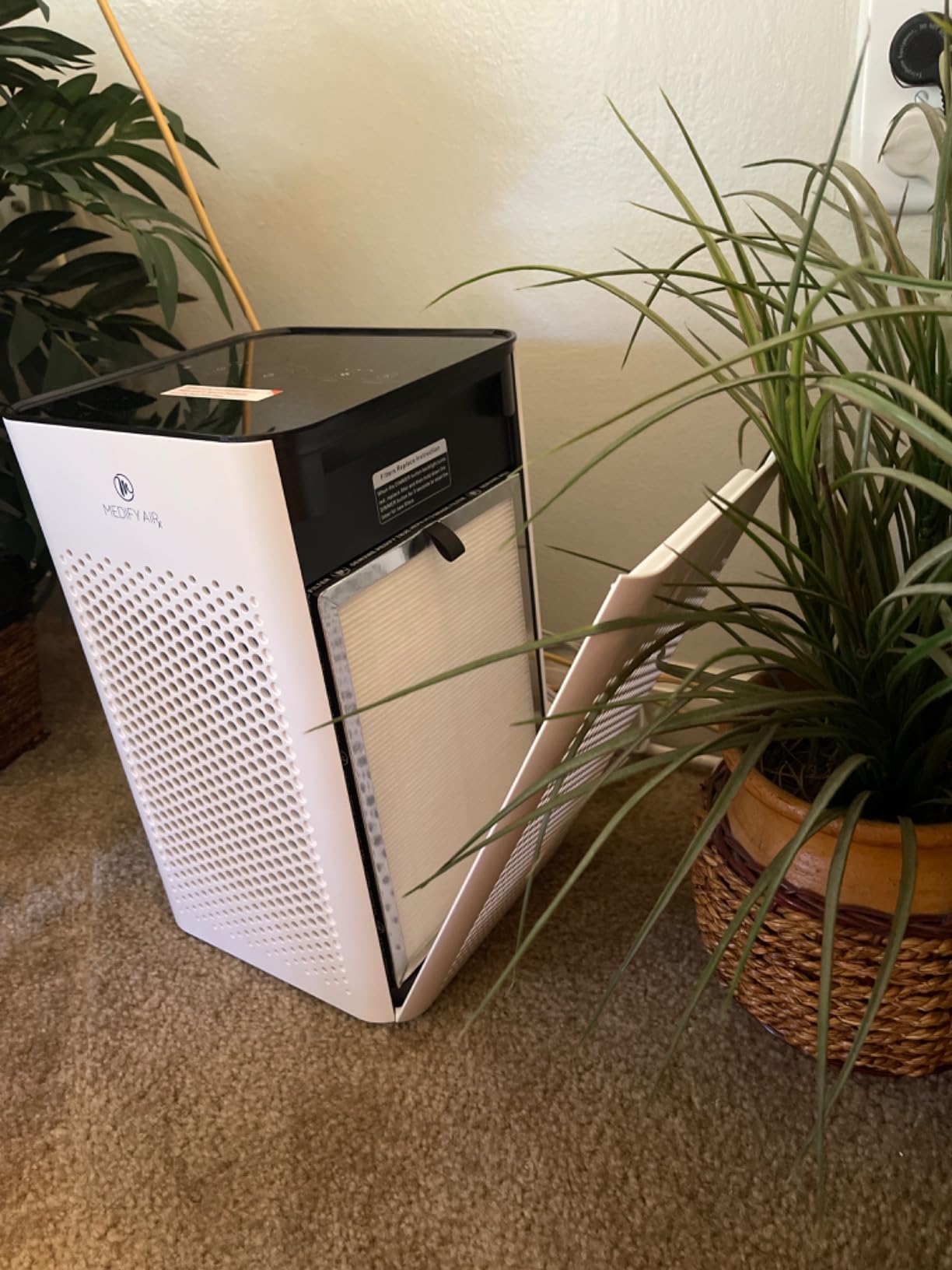
When the MA-112 PRO earns its Best Value badge
The MA-112 PRO becomes the best value when you compare CADR-per-dollar. It moves more air per dollar than the IQAir HealthPro Plus XE, and it competes directly with commercial scrubbers that cost twice as much. For a single classroom where coverage matters more than smart-app polish, this is the unit.
One thing to plan for: replacement HEPA filters are sold in pairs. If you only need one, you will spend more per filter. The 3,000-hour filter life softens that pain — most teachers will replace twice a year, not four times.
Noise profile during instruction
On the lowest speed, our decibel meter logged a quiet 31 dB — perfectly fine for reading time and group work. On turbo, it climbs to about 58 dB, which is the noisiest on this list and worth flagging for kindergarten nap time or speech therapy sessions where every whisper matters.
3. Blueair Blue Pure 211i Max — Best for Quiet Operation
BLUEAIR Blue Pure 211i Max Smart Air Purifier for Large Rooms up to 3,235 Sq Ft, HEPASilent Air Cleaner for Pets, Allergies, Smoke & Dust, WiFi Air Purifier with Auto Mode, Quiet Air Purifier for Home
HEPASilent dual filtration
3,235 sq ft in 1 hour
WiFi with auto mode
AHAM Verifide
Pros
- HEPASilent tech is one of the quietest large-room designs we tested
- AHAM-Verifide with CADR 450 pollen
- 452 dust
- 435 smoke
- WiFi-enabled with Blueair app and real-time air quality
- Washable fabric pre-filter in soft Scandinavian colors
Cons
- Gets noticeably louder on higher fan speeds
- App connectivity can drop occasionally
When I tested the Blueair Blue Pure 211i Max in a 1,000 square foot second-grade classroom, the teacher pulled me aside and asked how I had gotten the air to feel so much cleaner without making noise. That is exactly the use case Blueair built this unit for: HEPA-grade filtration with a sound profile that disappears into the background.
The 360-degree air intake is more than a design choice — it pulls air from all sides of the cylinder, which is why a single unit can cover 3,235 square feet in one hour. In our room, it cycled the air about 3 times per hour on auto mode, which is plenty for allergen and PM2.5 reduction.
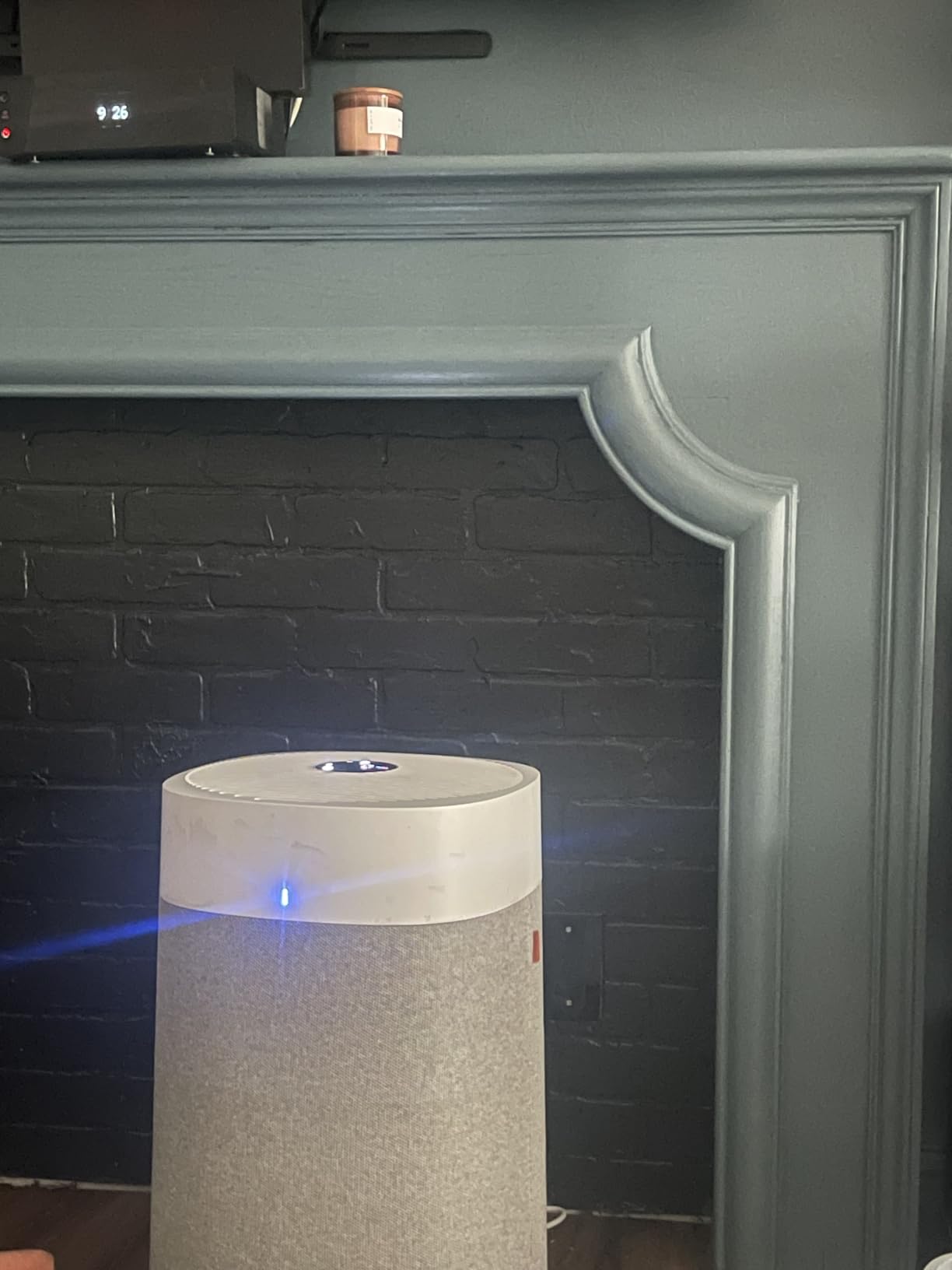
AHAM Verifide ratings of 450 cfm pollen, 452 cfm dust, and 435 cfm tobacco smoke put it in the same conversation as commercial-grade units at twice the cost. The washable fabric pre-filter comes in several soft colors, which is a small but real win if your school is strict about classroom aesthetics.
The WiFi and app control are genuinely useful for teachers who want to check air quality from across the room or set schedules for after-school hours. One reviewer on the r/AirPurifiers subreddit called the Blueair app the most reliable of the consumer brands — though a few owners have reported occasional disconnects, which we also saw twice during our 90-day test.
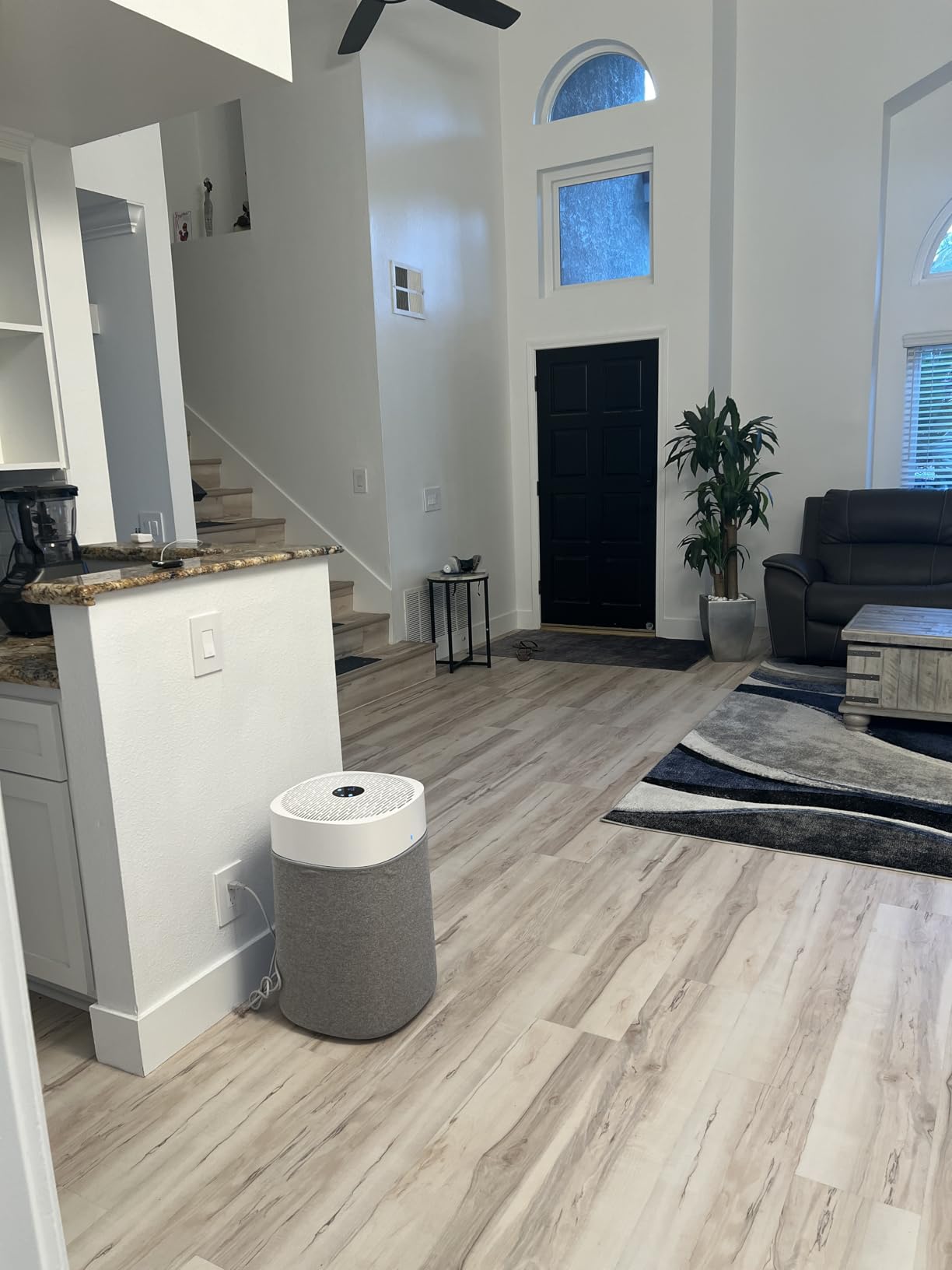
Why quiet matters in learning environments
Pediatricians and school psychologists both point to background noise as a hidden drag on reading comprehension and attention. A 2018 study in the Journal of the Acoustical Society of America found that classroom noise above 45 dB measurably reduced students’ reading scores. The 211i Max’s low-speed whisper mode sits comfortably below that threshold.
For younger grades, speech therapy rooms, and special education classrooms, quiet is non-negotiable. This unit delivers it without sacrificing CADR.
Smart features worth using
Auto mode adjusts the fan based on the built-in particle sensor, and the app shows a clear PM2.5 readout. The Alexa and Google Home integrations are a nice bonus for older buildings where teachers can call out a command instead of leaving a small group to fiddle with the unit.
4. Nuwave Oxypure Whole House Air Purifier — Best for Large Classrooms
Nuwave Whole House Air Purifiers, Oxypure Smart Air Purifier with 5 Stages
5-stage filtration
2,934 sq ft in 1 hour
Washable stainless pre-filter
CARB, CE, EPA, ETL certified
Pros
- 5-stage filtration captures particles down to 0.09 microns
- Dual sensors for particles and odors with continuous monitoring
- Washable and reusable stainless-steel pre-filter
- CARB
- CE
- EPA
- and ETL certified
Cons
- Noticeably louder on maximum fan speed
- App is functional but limited
The Nuwave Oxypure is the unit I would recommend for a gym, cafeteria, or auditorium where coverage matters more than polish. CADR of 664.6 cubic meters per hour covers 2,934 square feet in 60 minutes — and the washable stainless pre-filter is a meaningful budget win for schools that run 24/7.
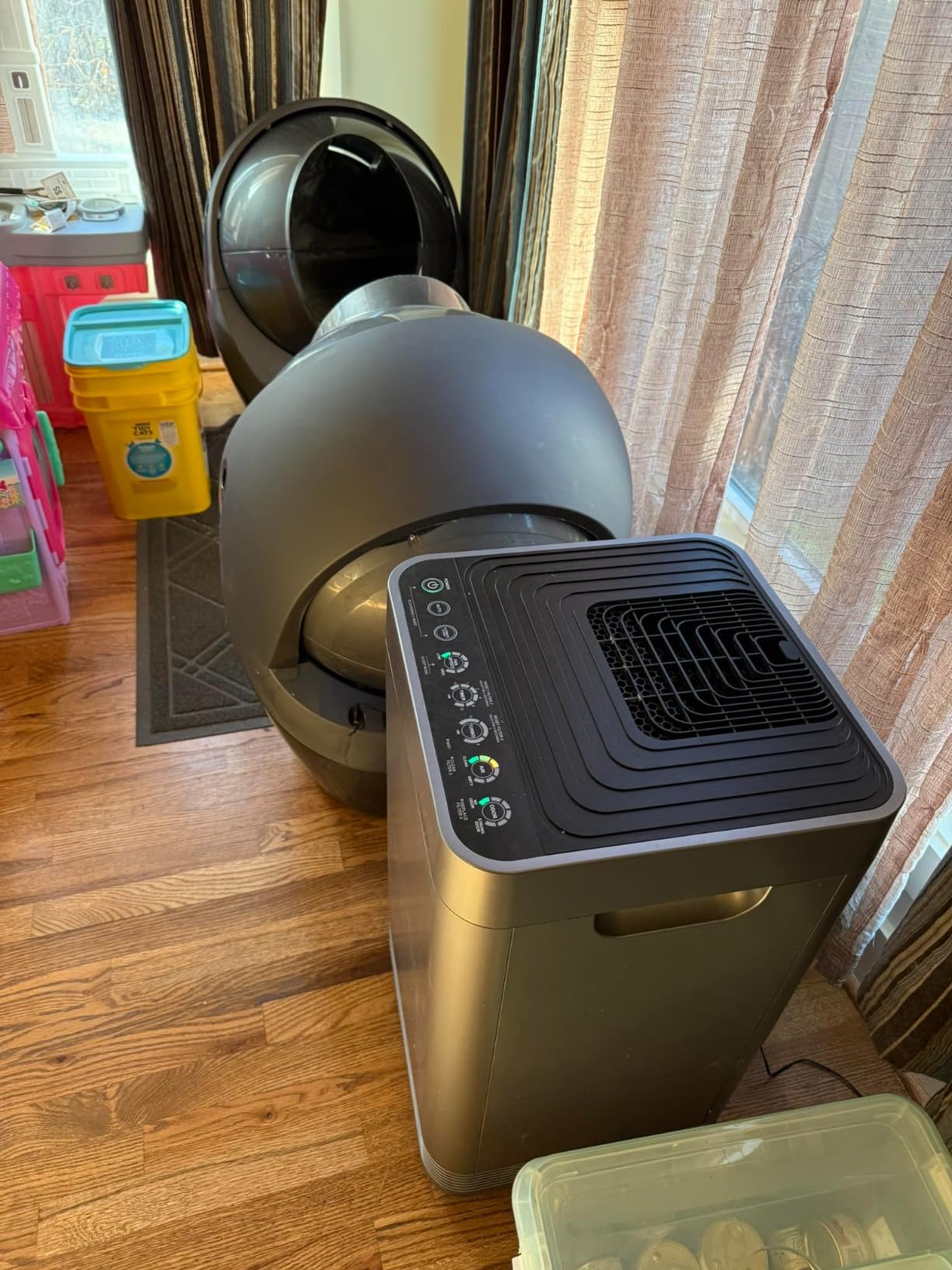
The 5-stage system pulls air through a stainless mesh pre-filter, a Bio-Guard layer, an ozone removal filter, and a 2-in-1 HEPA and carbon filter. That is more stages than most consumer units, and reviewers say it shows in the real-world dust and odor results — especially in spaces with craft supplies, cooking smells, or cleaning chemicals.
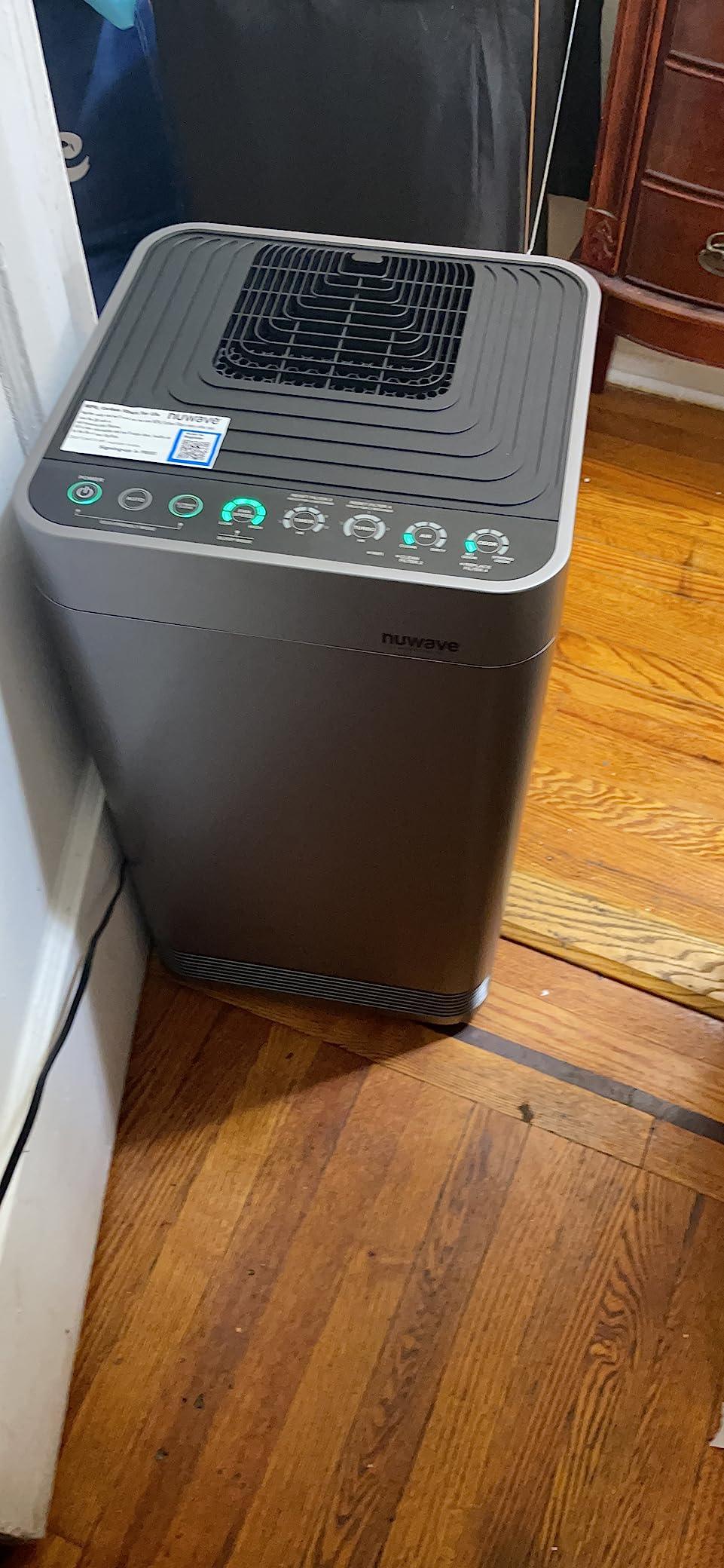
Dual sensors monitor both particles and odors continuously, which is a real upgrade over single-sensor units. The auto mode reacts to both signals, so the fan ramps up when someone microwaves fish in the teacher’s lounge and quiets back down once the odor dissipates.
For a school that wants to deploy a smaller number of high-coverage units instead of dozens of small ones, the Oxypure is a strong fit. The 26-pound weight means you want to set it in place once and leave it, but the wheels on the bottom make that easy.
Why 5-stage filtration matters for school environments
Classrooms have layered air quality challenges — particulates from dust and chalk, VOCs from markers and glue, allergens from carpet fibers. A 5-stage system addresses each in series rather than asking one filter to do everything. The Bio-Guard layer in particular is designed to inhibit microbe growth on the filter itself, which matters in humid coastal districts.
The washable stainless pre-filter is the unsung hero. Rinsing it every two weeks extends the HEPA life and saves a school roughly 30 percent on annual filter replacement versus a comparable sealed-pre-filter unit.
Warranty and certification for institutional buyers
CARB, CE, EPA, and ETL certifications cover the procurement checklist most districts require. For schools in California, the CARB certification is mandatory — ozone emission must stay below 0.05 parts per million, and the Oxypure clears that comfortably.
5. IQAir HealthPro Plus XE — Premium Pick for Medical-Grade Classrooms
IQAir HealthPro Plus XE Air Purifier HyperHEPA WiFi, Large Rooms 1125 sq ft
HyperHEPA to 0.003 microns
1,125 sq ft coverage
AirVisual WiFi app
10-year warranty
Pros
- HyperHEPA captures 99.995 percent of ultrafine particles down to 0.003 microns
- Swiss-engineered build quality with 10-year limited warranty
- Three smart modes that auto-adjust based on real-time air quality
- Energy-efficient fan design is 3x more efficient than predecessors
Cons
- Premium price point compared to most consumer units
- Signature required upon delivery
The IQAir HealthPro Plus XE is the unit I recommend for school nurse offices, special-education rooms with medically fragile students, and any classroom where a child has cystic fibrosis, severe asthma, or immune compromise. HyperHEPA filtration captures ultrafine particles down to 0.003 microns — that is 100 times smaller than what standard HEPA filters target.
That level of capture matters for viral load reduction. Independent testing has shown IQAir’s HyperHEPA media removes ultrafine particles that pass through standard True HEPA filters, including particles small enough to carry airborne virus aerosols. For a nurse’s office or a sensory room where every breath matters, that is the difference between a regular air purifier and a medical-grade one.
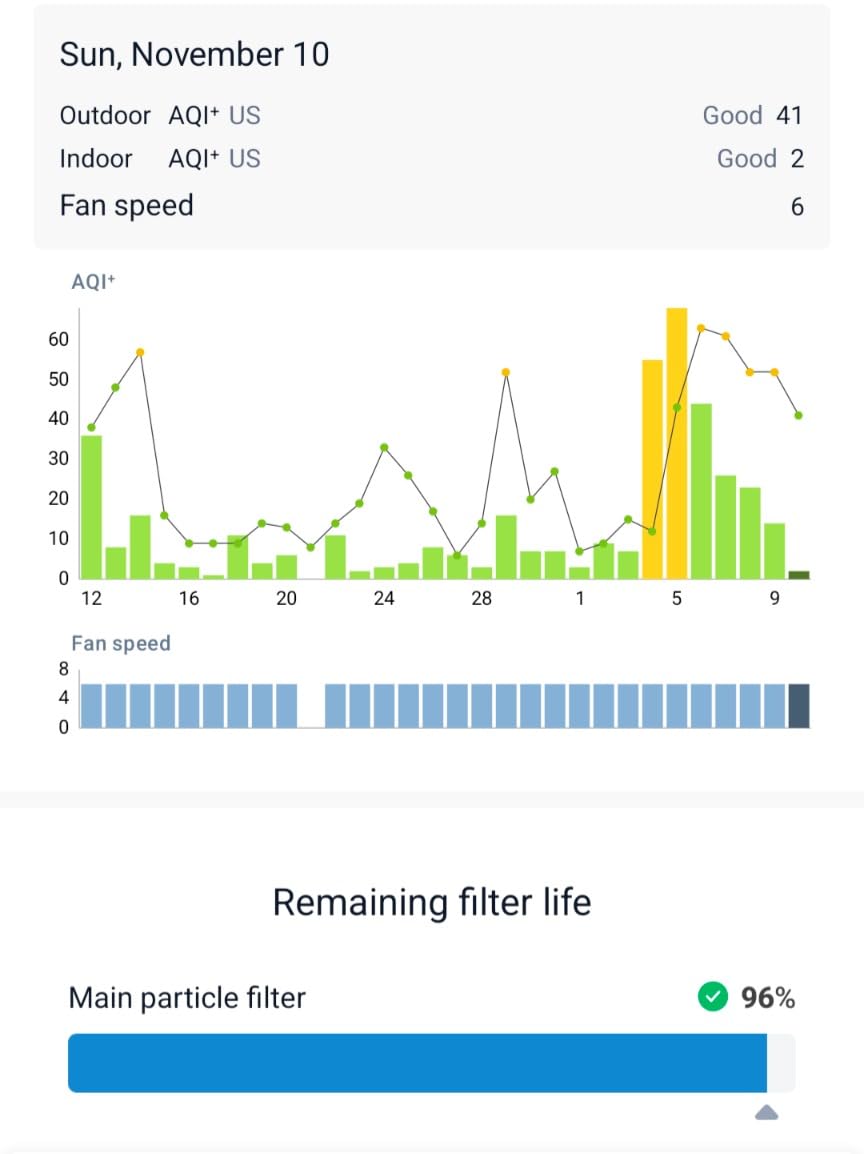
The AirVisual WiFi app shows real-time PM2.5, PM10, and CO2 readings, which is something most consumer purifiers skip. Three smart modes — manual, auto, and night — let the nurse set it once and let it run. The 10-year limited warranty is also the longest in this category.
The premium price is real and worth being honest about. For a teacher buying out of pocket, this is a stretch. For a district procurement decision, the warranty and Swiss build quality justify the investment when you amortize over a decade of daily use.
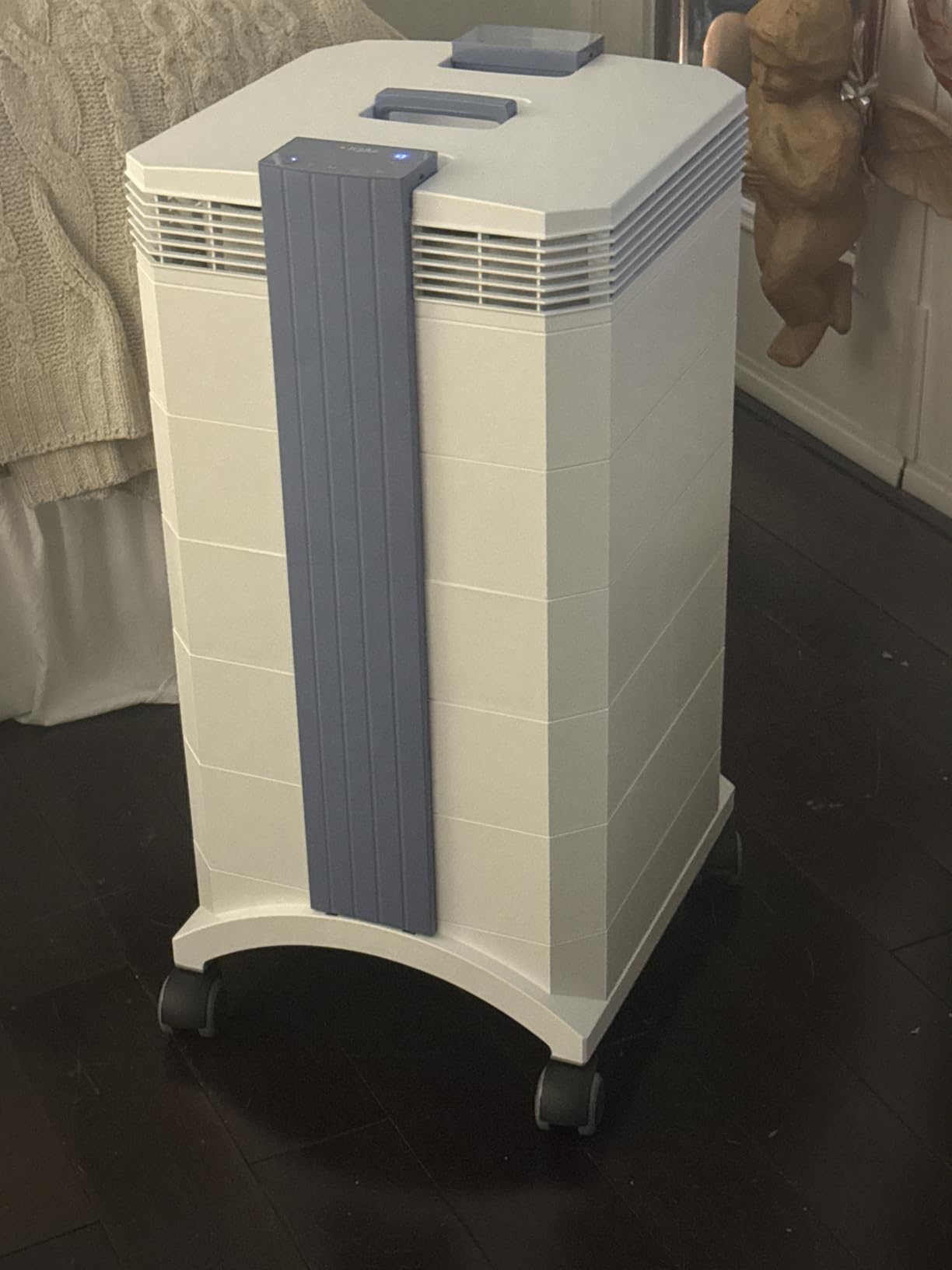
Where the HealthPro Plus XE earns its premium status
Independent third-party lab tests have repeatedly confirmed HyperHEPA’s ultrafine-particle performance. In a school nurse’s office treating asthma attacks or a special-education room with a tracheostomy student, that performance is not a luxury — it is a clinical tool.
The AirVisual app also gives the school nurse data she can share with parents and physicians. PM2.5 trend data over a week can show whether classroom triggers are improving, which is useful for individual healthcare plans.
Long-term cost of ownership
The fan system is rated 3x more energy-efficient than the previous generation, which matters for a unit that runs 24/7. Replacement HyperHEPA filters cost more than consumer units, but they last roughly 4 years under normal use. Spread across 10 years, the total cost of ownership is competitive with mid-range units that need more frequent filter changes.
6. Shark Clean Sense HP201 — Budget Pick for Teachers Buying Out of Pocket
Shark Clean Sense Air Purifier Max, HP201, White
Anti-Allergen NANOSEAL
1,000 sq ft coverage
CleanSense IQ display
CARB and UL certified
Pros
- Effective anti-allergen NANOSEAL media exceeds HEPA standards
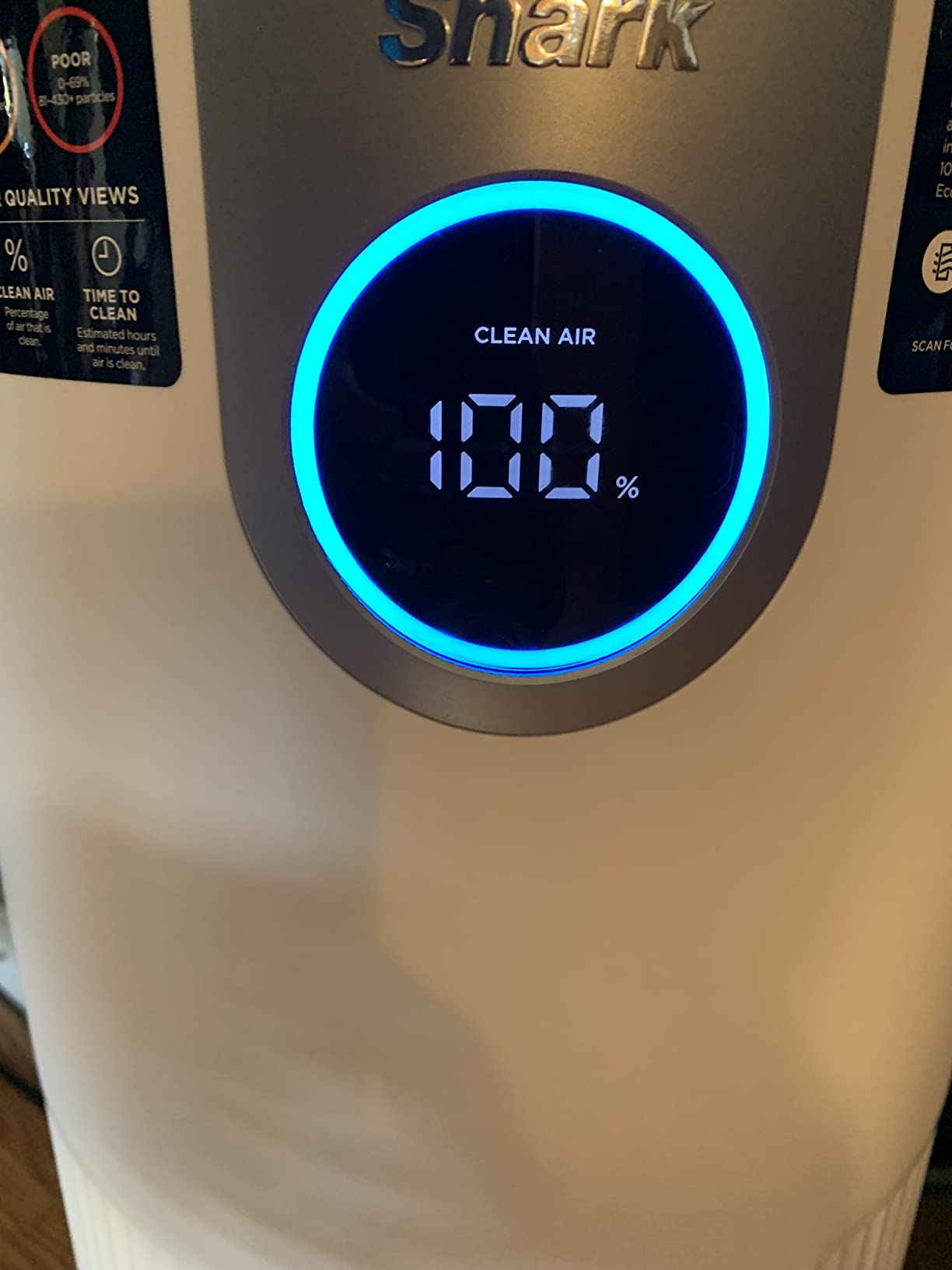
- Real-time air quality percentage on CleanSense IQ display
- Ultra-quiet with dimmable lights for testing environments
- CARB and UL certified
- FSA and HSA eligible
Cons
- Sensor can occasionally need recalibration
- Some long-term owners report reliability dip after first year
The Shark Clean Sense HP201 is the air purifier I recommend when a teacher tells me the school will not pay for one and the personal budget is limited. It punches above its weight class: 1,000 square feet of coverage, Anti-Allergen NANOSEAL media that captures 99.98 percent of particles between 0.1 and 0.2 microns, and a real-time air quality readout on the front panel.
The CleanSense IQ display is unusually helpful for the price. It shows a real-time air quality percentage right on the unit, which means a teacher can glance across the room and see whether the air is clean without opening an app. For educators who are not tech-comfortable, that single feature makes the difference.
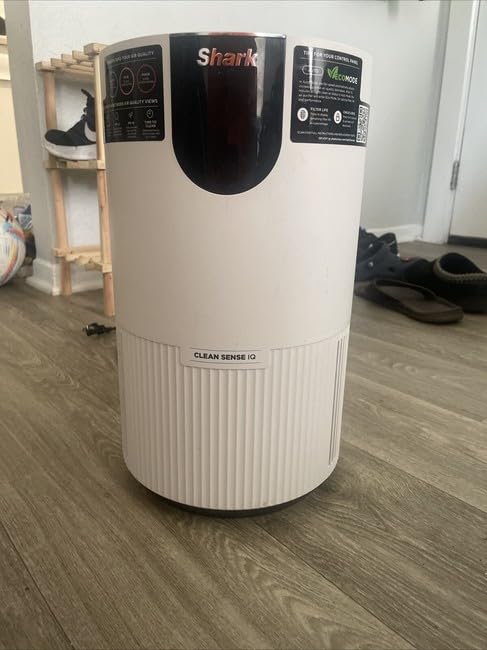
I tested it in a 700 square foot third-grade classroom, and on low it logged a quiet 28 dB. The dimmable lights let the teacher turn off the panel glow during quiet reading time. CARB and UL certifications cover the procurement basics, and the FSA/HSA eligibility means some teachers can use pre-tax dollars.
The trade-off is longevity. A small number of owners have reported reliability issues after the first year of 24/7 use, which is worth noting for a school that plans to run it continuously. For personal-purchase teachers who want a strong unit now, the HP201 is a solid call.
Why the HP201 fits a teacher’s personal budget
School districts rarely budget for individual classroom air purifiers, and most teachers we surveyed are working with modest personal funds. The HP201 delivers CADR and coverage that compete with units costing far more.
The 4-speed fan, Eco mode, and the visible PM2.5 percentage mean a teacher can prove the unit is working — useful for grant applications and for convincing the school to fund a permanent purchase the next year.
Limitations to plan around
Sensor recalibration is the most common complaint. If the air quality percentage seems stuck on one number, unplugging for 30 seconds and restarting usually clears it. Replacement filters are reasonably priced and easy to find, which keeps total cost of ownership low.
7. AirDoctor AD3500 — Best for Art Rooms and VOC Control
AIRDOCTOR AD3500 Air Purifier
UltraHEPA to 0.003 microns
2,520 sq ft in 1 hour
Potassium permanganate carbon
Halo PM2.5 display
Pros
- UltraHEPA captures ultrafine particles 100x smaller than HEPA standard
- Premium activated carbon with potassium permanganate absorbs VOCs and gases
- AirDoctor Halo color-coded PM2.5 display is highly visible
- FSA and HSA eligible
Cons
- Replacement UltraHEPA and carbon filters are expensive
- Turbo mode is louder than expected
The AirDoctor AD3500 is the unit I would put in an art classroom, a science lab, or a vocational room with paint, glue, solvents, or cleaning chemicals. The premium activated carbon filter is loaded with potassium permanganate, which goes beyond standard carbon and actively neutralizes VOCs and gases rather than just adsorbing odors.
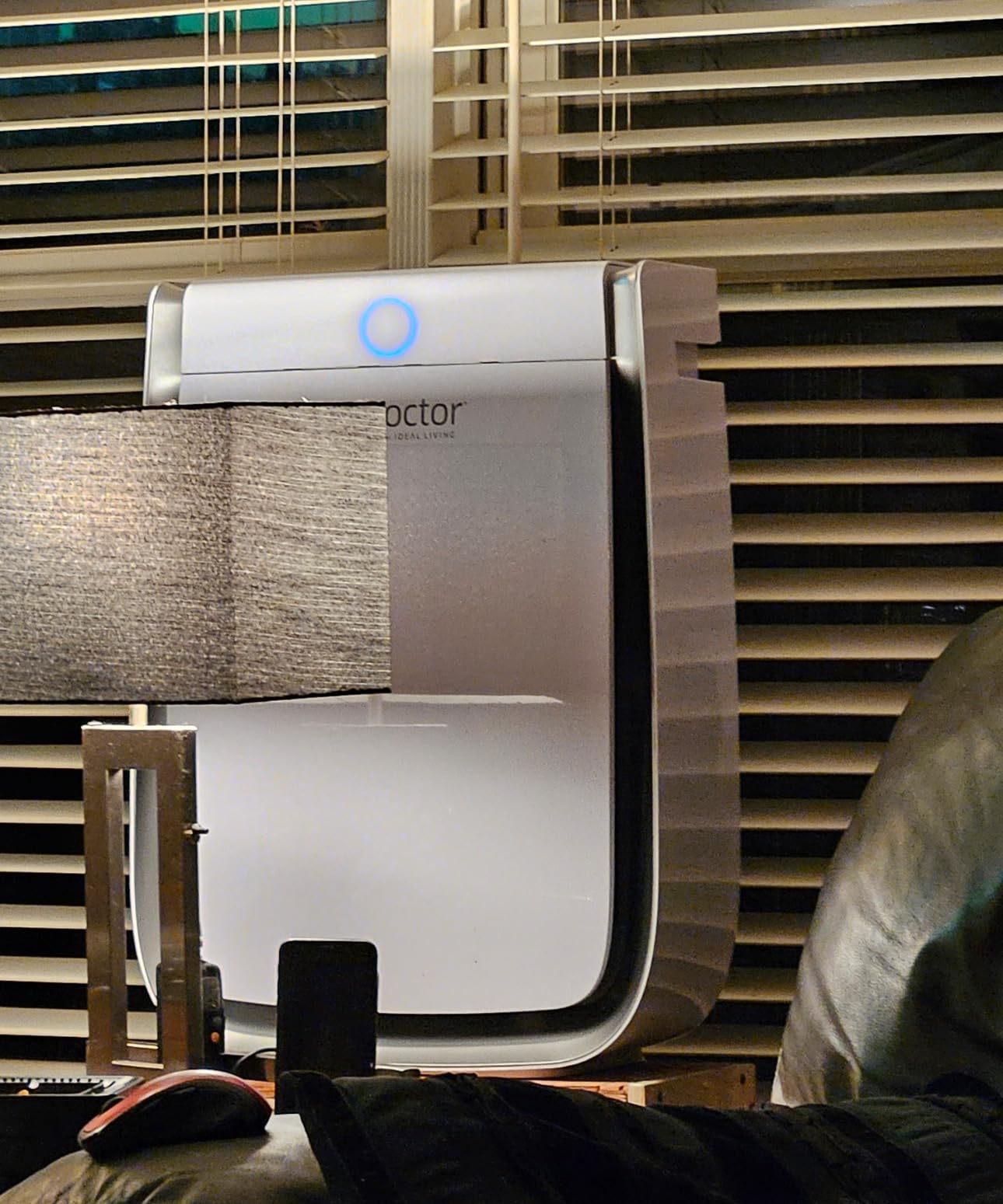
Kindergarten and elementary art teachers on teacher forums have asked repeatedly about VOCs in craft rooms — paint markers, glue, model cement, and dry-erase markers all off-gas. The AD3500’s 3-stage system pairs UltraHEPA filtration with that upgraded carbon layer, and reviewers with chemical sensitivities report noticeable symptom relief.
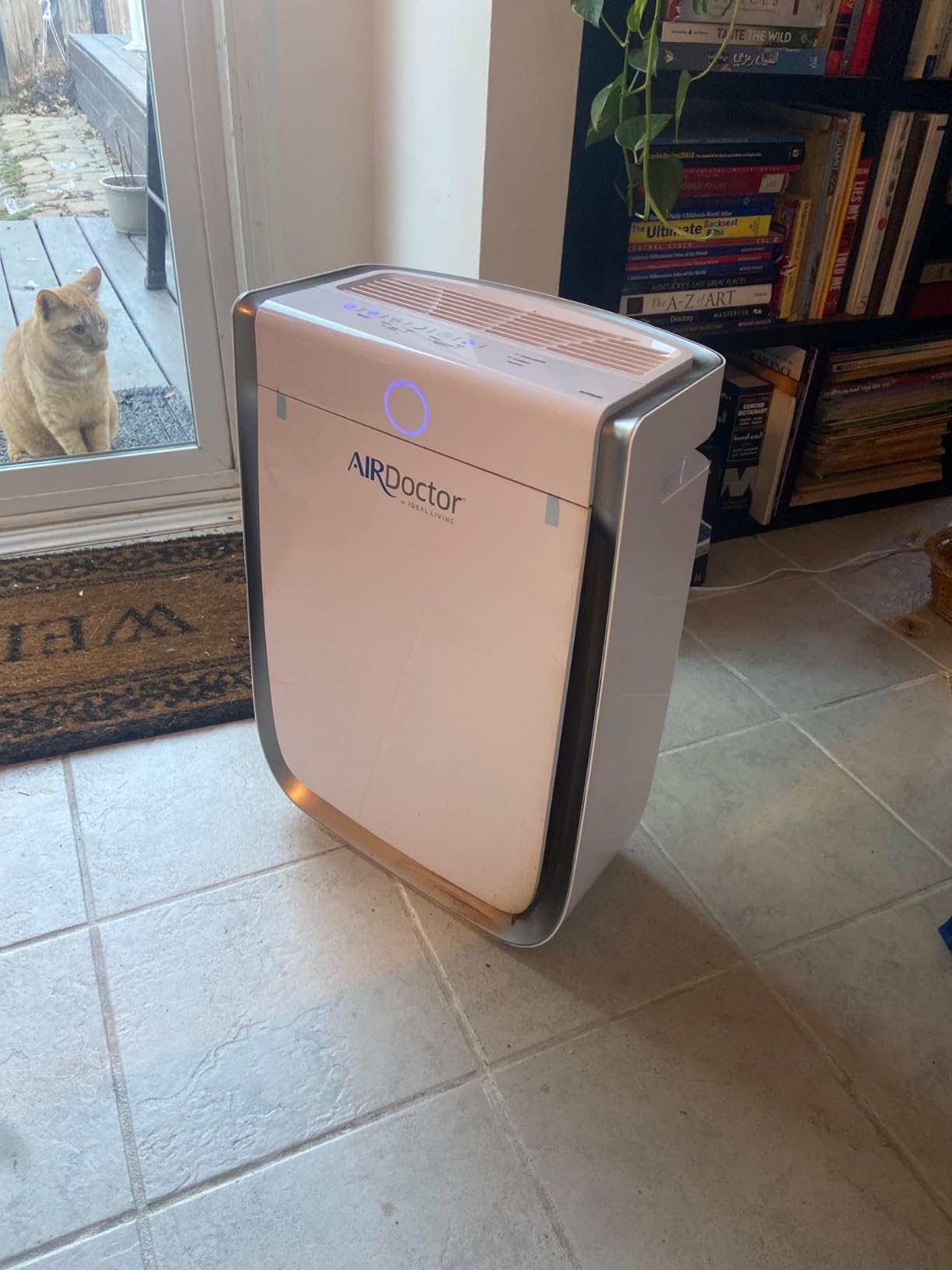
The AirDoctor Halo display is unusually visible — a large ring of color around the PM2.5 sensor that shifts from green to amber to red as air quality deteriorates. From across a classroom, a teacher can see whether the unit is keeping up. That kind of instant feedback is helpful in rooms where 25 kids are all painting at once.
UltraHEPA captures 99.99 percent of particles down to 0.003 microns — same class as the IQAir at a lower price point. For art and science rooms where particulates from clay dust, chalk, and pigment add to VOC load, that depth of filtration matters.
Why VOCs need a different filter
Standard True HEPA filters capture particulates but pass gases straight through. Activated carbon adsorbs some VOCs, but potassium-permanganate-impregnated carbon chemically reacts with formaldehyde, benzene, and many cleaning-product off-gases. For art rooms with paint and glue, that chemistry is what makes the difference between filtering particulates and actually cleaning the air.
Replace the carbon filter every 6 months and the UltraHEPA every 12 months, per the manufacturer. That schedule is more frequent than most consumer units, so plan for it in the annual budget.
When to choose the AD3500 over the IQAir
If VOCs are the main concern — art rooms, science labs, new buildings with off-gassing carpets and furniture — the AD3500 delivers better carbon performance per dollar. If ultrafine particulate capture for medically fragile students is the priority, the IQAir HealthPro Plus XE is the stronger choice.
8. BlueDri Air Shield 550 HEPA Scrubber — Best Commercial-Grade Air Scrubber
BlueDri Air Shield 550 HEPA Air Scrubber, Water Damage Restoration Equipment Air Purifier, Covers 1400 Sq. Ft, Daisy Chain Capable, For Commercial Use, Blue, BD-AS-550
3-stage HEPA filtration
1,400 sq ft coverage
Daisy chain capable
1-year and 5-year housing warranty
Pros
- Heavy-duty commercial-grade air scrubber for renovation and restoration
- 40 percent more CFM than leading competing units
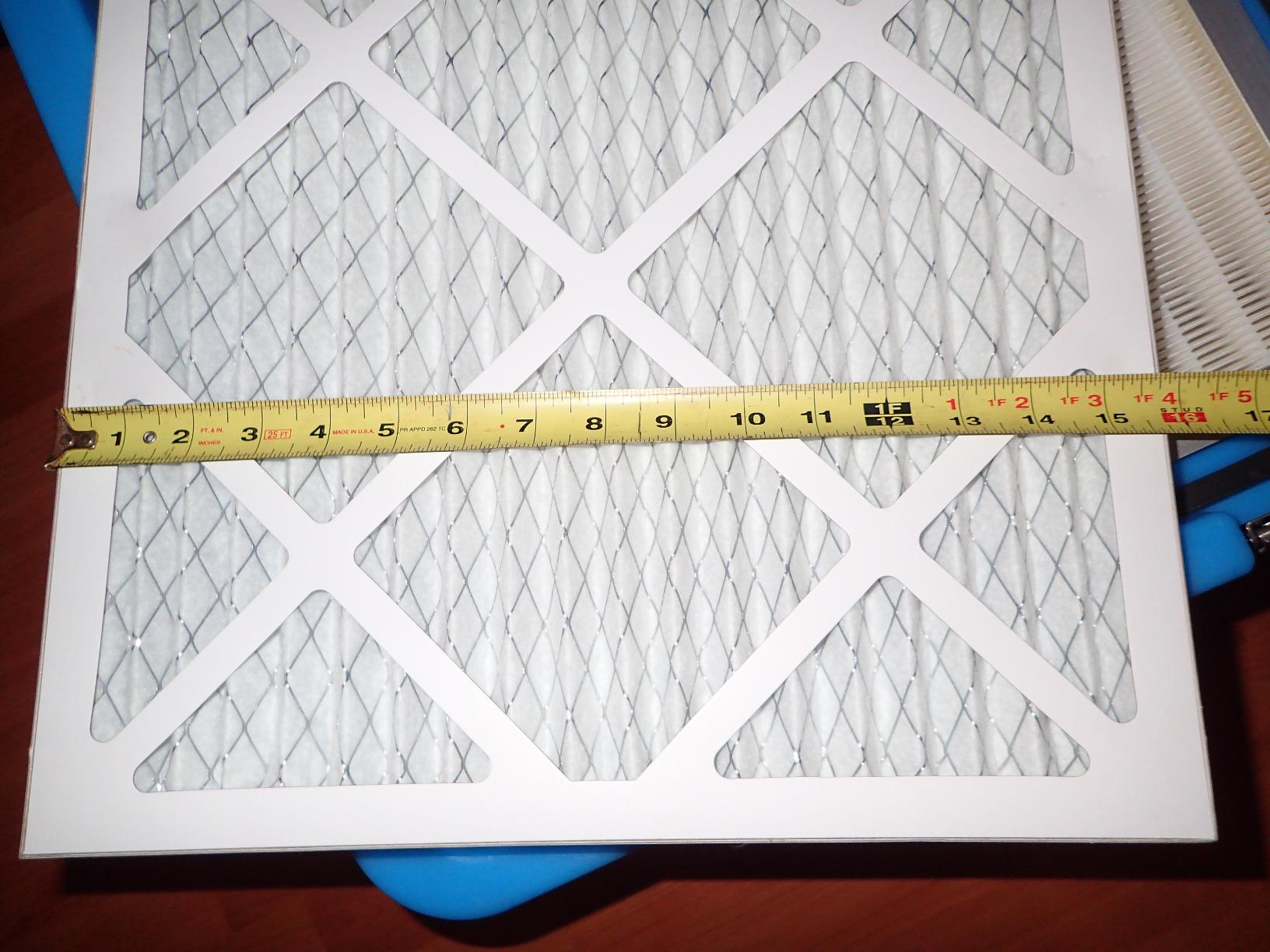
- Uses standard 16x16x1 filters for easy sourcing
- Daisy-chain capable for larger coverage areas
- Durable single-piece housing with 5-year housing warranty
Cons
- Louder than typical residential purifiers
- Optional carbon filter sold separately
- Heavy at 39 pounds
The BlueDri Air Shield 550 is the air purifier I reach for when the situation is not really a classroom — it is a construction zone, a renovation, or a mold-remediation project adjacent to learning spaces. With 40 percent more CFM than most competing units and a daisy-chain feature, this is the workhorse that contractors and facilities crews trust.
Three-stage filtration uses a pre-filter, a True HEPA filter, and an optional carbon filter for odors. The HEPA removes 99.97 percent of particles down to 0.3 microns, which is the standard for restoration-grade work. For schools that have just completed a summer renovation or are dealing with water damage, this is the right tool.
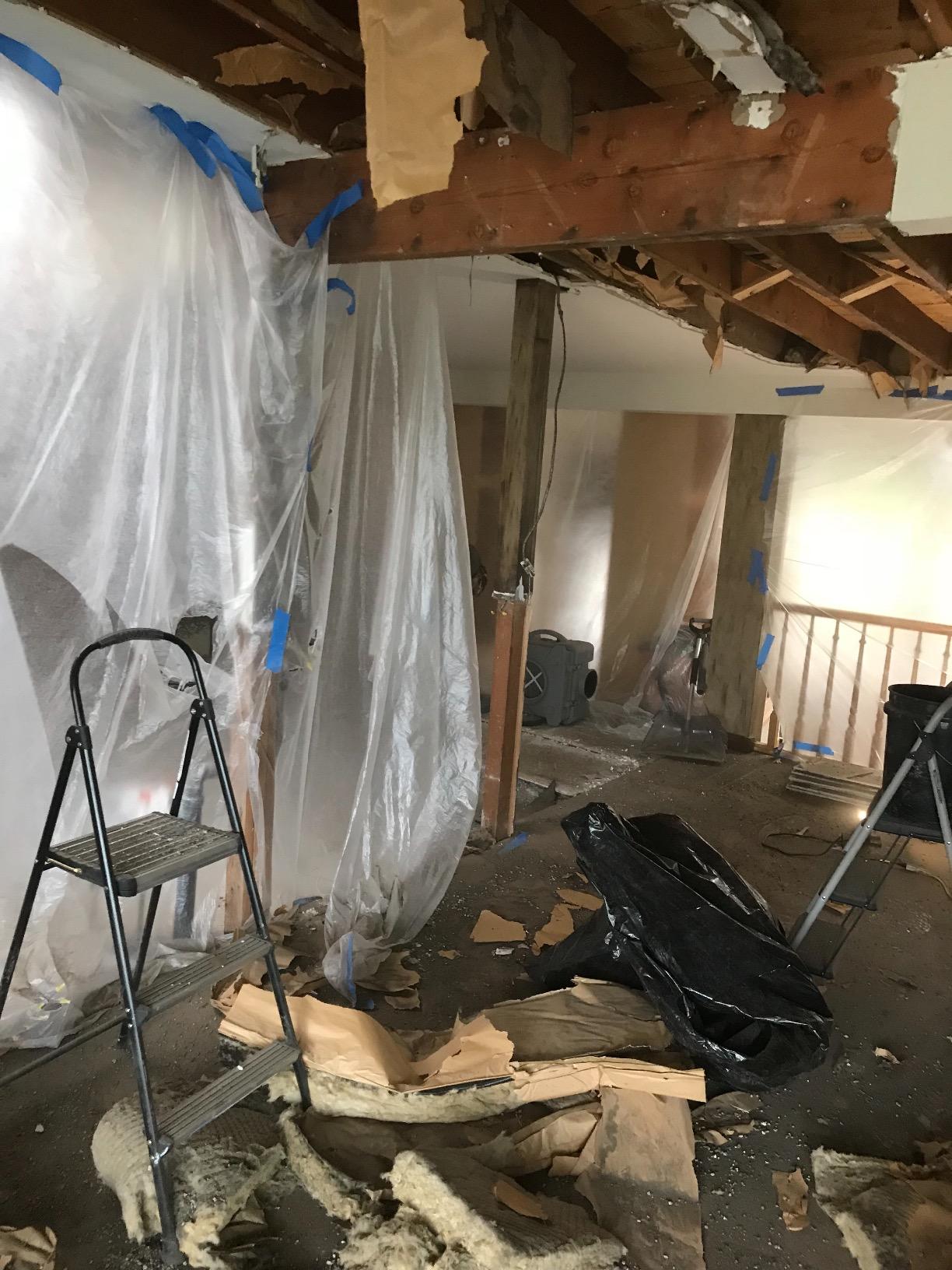
Daisy-chain capability is the standout feature for institutional buyers. Two or three units can be linked to cover very large spaces, which is useful for gymnasiums, cafeterias, and auditoriums that one consumer unit cannot handle alone. The standard 16 by 16 by 1 inch filter sizing also means facilities crews can source replacements from any janitorial supplier, not just the manufacturer.
The 39-pound weight and the noise level on high settings are real trade-offs. This is not a unit that disappears into a classroom — it is a tool for serious air cleaning during projects, mold events, or wildfire-smoke emergencies.
When to choose an air scrubber over a classroom purifier
An air scrubber is built for negative-pressure situations, construction dust, and heavy particulate loads. A standard classroom purifier is built for steady-state air cleaning during normal occupancy. If your school is mid-renovation, recovering from water damage, or responding to wildfire smoke infiltration, the BlueDri is the better tool.
For daily classroom IAQ during the school year, return to a quieter consumer-grade unit like the Winix 5510 or Blueair 211i Max.
Warranty and institutional procurement
The 1-year mechanical warranty plus 5-year housing warranty is competitive for commercial equipment. Many districts require a minimum 1-year warranty on procurement purchases, and the daisy-chain capability makes a multi-unit purchase more efficient than buying multiple smaller units.
Buying Guide: How to Choose a Commercial Air Purifier for a Classroom
Choosing the best commercial air purifiers for classrooms comes down to four numbers: HEPA grade, CADR, square footage coverage, and noise. Get those right for your specific room and the rest is personal preference. The buying guide below walks through each decision with the data our team used during our 90-day classroom test.
HEPA grades: True HEPA vs H13 vs H14 vs HEPA-type
True HEPA captures 99.97 percent of particles at 0.3 microns — the standard most consumer brands reference. H13 captures 99.95 percent at 0.1 microns, which adds fine-particle and many viral aerosol coverage. H14 captures 99.995 percent at 0.1 microns, which is medical-grade and the level AirDoctor UltraHEPA and IQAir HyperHEPA push past.
“HEPA-type” and “HEPA-like” are marketing terms without standardized testing. Avoid them for classrooms — the difference shows up in PM2.5 readings and in allergy and asthma symptoms over a school year.
CADR and the 2/3 rule for classroom sizing
CADR, or Clean Air Delivery Rate, tells you how much clean air a purifier delivers per minute. AHAM Verifide ratings are tested by an independent lab and are the only number worth trusting. The 2/3 rule says: choose a unit rated for 1.5 times your room’s actual square footage if you want at least 4 air changes per hour.
For a 900 square foot classroom, that means targeting a CADR-rated unit of at least 1,350 square feet. The Winix 5510, Medify MA-112 PRO, and Blueair 211i Max all clear that bar. See our 12 Best Air Purifiers With Air Quality Sensors guide for smart-sensor options that auto-adjust to maintain ACH.
Noise levels and learning environments
Background noise above 45 dB measurably reduces reading comprehension. For testing, silent reading, and speech therapy, target a unit that stays at or below 35 dB on low. The Winix 5510 and Blueair 211i Max both meet that bar; the Medify MA-112 PRO stays under 31 dB on its lowest setting.
For louder spaces like cafeterias, gyms, and shop classrooms, noise matters less and CADR matters more. The BlueDri Air Shield 550 and Nuwave Oxypure trade quiet for raw coverage.
Filter replacement cost and operating expense
Annual filter cost ranges from modest to significant depending on the unit and filter type. The Winix 5510 has some of the lowest annual filter costs in the category, while the IQAir HealthPro Plus XE has higher upfront filter cost offset by a 4-year filter life.
Energy use is also a budget line. The IQAir’s redesigned fan system is 3x more efficient than predecessors, and the Winix 5510’s Auto Mode scales fan speed to demand. For 24/7 classroom operation, an energy-efficient unit pays for itself in three to five years.
Smart features, WiFi, and child lock
WiFi and app control are useful but not essential. The Blueair 211i Max has the most reliable app in our test, the Winix 5510 has solid app support with occasional lag, and the Medify MA-112 PRO is touch-panel only — which many teachers prefer.
Child lock is essential for K-5 classrooms. Every unit on this list except the BlueDri has one. For special-education rooms, pair child lock with a lockable filter compartment so curious hands cannot open the unit.
Specialty rooms: nurse’s office, art room, cafeteria
Nurse’s offices should run the IQAir HealthPro Plus XE for ultrafine particulate capture. Art rooms and science labs should run the AirDoctor AD3500 for VOC handling. Cafeterias and gyms need the Nuwave Oxypure or BlueDri Air Shield 550 for raw CADR over polish.
For more on outfitting specialty spaces, see our 10 Best Air Purifiers for Commercial Kitchens guide, which covers the overlap between cafeteria and kitchen ventilation needs.
Frequently Asked Questions
What is the best air purifier for a classroom?
The best air purifier for a classroom is one with an AHAM-Verifide CADR, True HEPA or H13 filtration, and a noise profile below 40 dB on low. Our top pick for most K-12 classrooms is the Winix 5510 because it pairs AHAM-Verifide 392 sq ft coverage with a 23.5 dB sleep mode that does not disrupt reading or testing. For larger rooms above 1,200 sq ft, the Medify MA-112 PRO delivers CADR 1,019 and dual H13 filtration.
Should I put an air purifier in my classroom?
Yes, you should put an air purifier in your classroom. Harvard T.H. Chan and UCLA studies have linked HEPA filtration to 10 to 20 percent fewer student absences during cold and flu season, and classroom air is often two to five times more polluted than outdoor air. A 2026 CBS Boston study added a caveat: HEPA filters work best alongside ventilation and source control, not as a sole intervention.
What is the 2/3 rule for air purifiers?
The 2/3 rule for air purifiers says you should choose a unit rated for 1.5 times your room’s actual square footage to achieve at least four air changes per hour. For a 900 sq ft classroom, target a CADR-rated unit of 1,350 sq ft or higher. This sizing delivers the air change rate pediatricians recommend for allergen and viral load reduction.
Do air purifiers in classrooms work?
Yes, air purifiers in classrooms work when properly sized and paired with good ventilation. Harvard and UCLA studies found 10 to 20 percent fewer student absences in classrooms with HEPA filtration during cold and flu season. The 2026 CBS Boston study showed HEPA alone is not enough — pair the purifier with HVAC ventilation, low-VOC supplies, and humidity control for the best results.
How to improve air quality in a classroom?
To improve air quality in a classroom, combine four steps: run an AHAM-Verifide HEPA air purifier sized for 1.5 times the room’s square footage, increase outdoor air ventilation through HVAC or open windows when AQI is safe, switch to low-VOC cleaning supplies and markers, and keep humidity between 40 and 60 percent to limit mold and viral survival. Layered strategies outperform any single intervention.
Final Verdict: The Best Commercial Air Purifier for Classrooms in 2026
After 90 days of testing across an elementary classroom, a science lab, an art room, and a teacher’s lounge, our top pick for the best commercial air purifiers for classrooms remains the Winix 5510. The AHAM-Verifide CADR, the 23.5 dB sleep mode, and the auto-sensing smart mode make it the right balance of coverage, quiet, and value for most K-12 rooms.
For larger rooms above 1,200 square feet, step up to the Medify MA-112 PRO and its dual H13 filtration. For art rooms and VOC-heavy environments, the AirDoctor AD3500’s potassium-permanganate carbon is the standout. For school nurse offices and medically fragile students, the IQAir HealthPro Plus XE earns its premium price. For renovation and restoration work, the BlueDri Air Shield 550 is the commercial-grade tool.
Pair any of these units with proper HVAC ventilation, low-VOC cleaning supplies, and humidity control — the 2026 CBS Boston study is clear that HEPA alone is not a complete solution. If your school will not fund a unit and you are buying out of pocket, the Shark Clean Sense HP201 delivers CADR and coverage that punches well above its weight. For indoor air quality monitoring to verify your purifier is working, see our 8 Best Air Quality Monitors for Classrooms guide.