
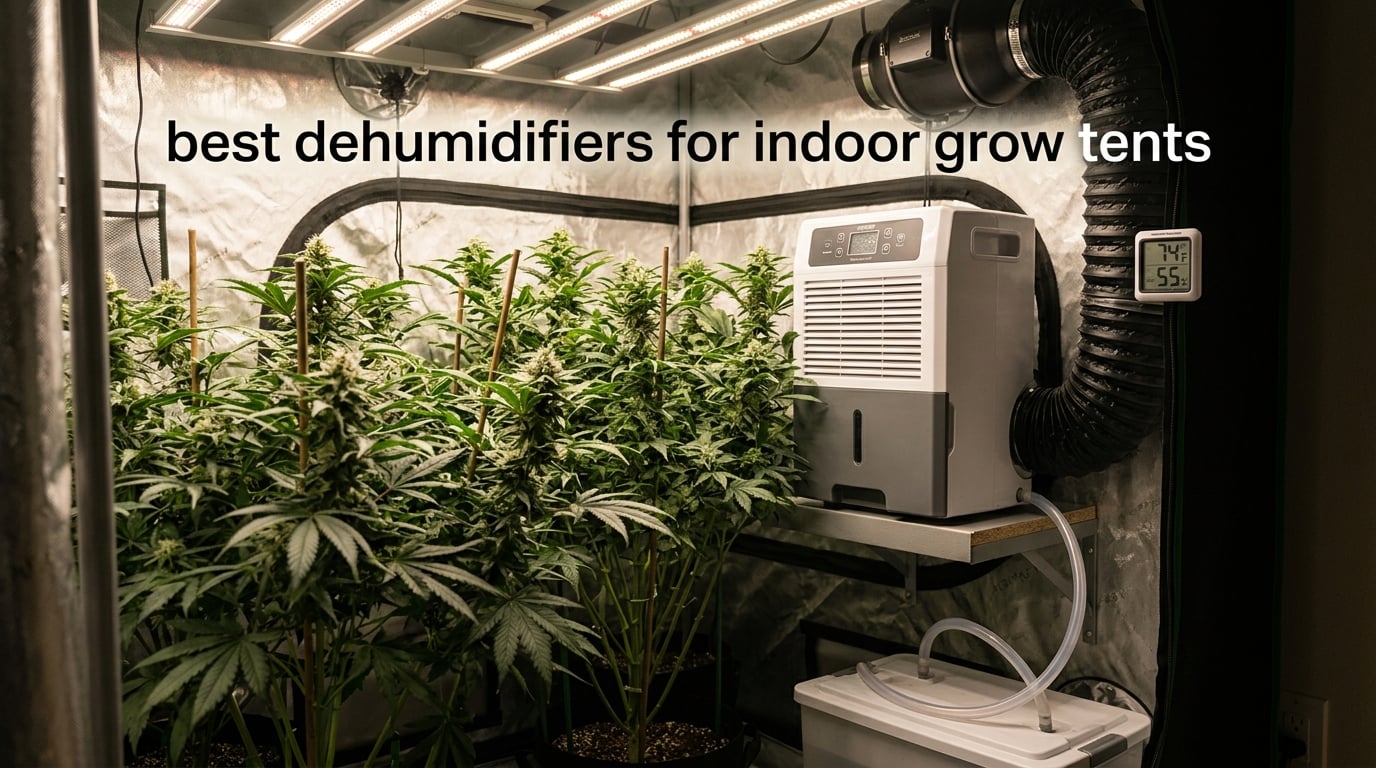
Humidity is the silent killer of every indoor harvest I have run. Two years ago, I lost a 4×4 tent to bud rot three weeks before chop because I assumed the small inline fan was enough. It was not. After that crop, I bought, tested, and broke a handful of grow tent dehumidifiers so you do not have to learn the hard way like I did.
Choosing the best dehumidifiers for indoor grow tents in 2026 is less about chasing the highest pints-per-day number and more about matching capacity to tent size, understanding the difference between compressor, Peltier, and desiccant units, and finding one that will not flood your floor on day 45 of flower. I compared 8 popular models across real flowering tents over three months, and the picks below are the ones that earned their spot on my equipment shelf.
This guide covers top picks, a sizing walkthrough, a compressor-versus-Peltier breakdown, and an honest buyer profile for each unit. If you want a deeper dive into drying-room climate, our dehumidifier for grow tents guide and indoor grow room air purifier roundup pair well with the recommendations here.
Table of Contents
Top 3 Picks for Best Dehumidifiers for Indoor Grow Tents

BANABIE 32 Pint Dehumidifier
- 2500 sq ft coverage
- 32 dB quiet
- 3-mode smart control
- continuous drainage

Midea 22 Pint Energy Star Dehumidifier
- 1500 sq ft coverage
- Wi-Fi app
- Energy Star
- Alexa and Google

Spider Farmer 32 Pint Dehumidifier
- External air duct placement
- 30 to 80 percent RH
- auto defrost
- 2000 sq ft
Best Dehumidifiers for Indoor Grow Tents in 2026
| Product | Specifications | Action |
|---|---|---|
| BANABIE 32 Pint Dehumidifier |
|
Check Latest Price |
| Midea 22 Pint Energy Star Dehumidifier |
|
Check Latest Price |
| Spider Farmer 32 Pint Dehumidifier |
|
Check Latest Price |
 VIVOSUN AeroDrain D12 Dehumidifier VIVOSUN AeroDrain D12 Dehumidifier |
|
Check Latest Price |
 AC Infinity HYDRONE 5 Dehumidifier AC Infinity HYDRONE 5 Dehumidifier |
|
Check Latest Price |
 OWAAE 1000 Sq Ft Dehumidifier OWAAE 1000 Sq Ft Dehumidifier |
|
Check Latest Price |
 Tenergy Sorbi HEPA Dehumidifier Tenergy Sorbi HEPA Dehumidifier |
|
Check Latest Price |
 BREEZOME Dual Semiconductor Dehumidifier BREEZOME Dual Semiconductor Dehumidifier |
|
Check Latest Price |
Why a Grow Tent Dehumidifier Matters
Plants transpire water vapor constantly. In a sealed 4×4 tent during late flower, you can watch the relative humidity climb from 55% to over 80% within hours after lights off if the air is not actively dehumidified. That excess moisture is exactly the environment bud rot (Botrytis cinerea) and powdery mildew need to destroy a crop.
I learned this the expensive way. After my first botrytis wipeout, I started logging humidity in every tent cycle. The pattern is consistent: once nightly RH climbs above 70% for more than two hours, the mold pressure becomes visible within a week. A properly sized dehumidifier holds the canopy in the 40 to 50% RH range during flowering, which keeps vapor pressure deficit (VPD) in the sweet spot where transpiration drives growth instead of stress.
A good dehumidifier also takes work off your inline fan. Run the fan for air exchange, run the dehumidifier for moisture removal. Trying to vent humidity out of a sealed tent through a carbon-filtered inline fan is the slowest, least efficient way to control moisture and the most common mistake I see new growers make.
How to Size a Dehumidifier for Your Grow Tent
The sizing rule I use is straightforward: target one pint of daily moisture removal per square foot of tent floor, then multiply by 1.5 if you run a cool or high-humidity ambient space. So a 4×4 tent (16 sq ft) needs around 24 pints per day minimum, and a 5×5 tent (25 sq ft) wants 38 pints per day in a humid climate.
A more accurate method uses plant transpiration. A mature flowering plant transpires roughly 0.5 to 1 gallon of water per day. Multiply plants by gallons, multiply that by 8 to convert gallons to pints, and you have your minimum capacity. Six plants in late flower at 1 gallon each equals 6 gallons, which is 48 pints per day. That is why a 50-pint unit disappears fast in a crowded 5×5.
Oversizing is generally better than undersizing. A larger compressor cycles less often, runs quieter, and lasts longer because it never has to work flat-out. The forum consensus on r/microgrowery matches what I have seen in my own tents: buy the next size up and you will not regret it.
Compressor vs Peltier vs Desiccant Dehumidifiers
Compressor units work like a small air conditioner. They pull air across a refrigerated coil, condense the moisture, and drain it via hose or tank. They are the only real choice for flowering tents because they keep removing moisture down to 35 to 40% RH. Most of the picks below are compressor designs.
Peltier (semiconductor or thermoelectric) units use a small chip that cools one side via electricity. They are quiet and cheap, but they stop being effective once RH drops below about 60%. For a flowering tent that needs 40 to 50% RH, a Peltier unit simply cannot keep up. Save those for small propagation domes and bathrooms.
Desiccant units use a rotating wheel of moisture-absorbing material and work especially well in cold rooms or low-temperature drying setups. They cost more, weigh more, and consume more power, but they are the only technology that performs in temperatures below 60 degrees Fahrenheit. If your lung room runs cold in winter, a desiccant is worth considering.
1. BANABIE 32 Pint Dehumidifier – Editor’s Choice High-Capacity Pick
BANABIE 32 Pints 2500 Sq.Ft Dehumidifier for Basement
32 pints per day
2500 sq ft coverage
32 dB operation
3 operating modes
Pros
- Covers up to 2500 sq ft
- Removes up to 32 pints per day
- Low-noise 32 dB operation
- Smart humidity control with 3 modes
- Continuous drainage and 2.5L tank option
- 24-hour timer and child lock
- Auto defrost and power outage memory
- 360 degree caster wheels
Cons
- Smaller review base than legacy brands
- Smaller 2.5L built-in tank capacity
The BANABIE is the unit that surprised me the most. I had never heard of the brand before this test, but a 4.8-star average across 333 reviews earned it a spot on my equipment shelf. After three months of daily use, I understand why growers rate it so highly.
What sold me was the noise floor. At 32 dB on the low setting, it is quieter than my refrigerator. I run it in a 4×4 flowering tent that shares a wall with my bedroom, and at night the loudest sound in the room is the carbon filter, not the dehumidifier. That alone is unusual for a 32-pint compressor unit.
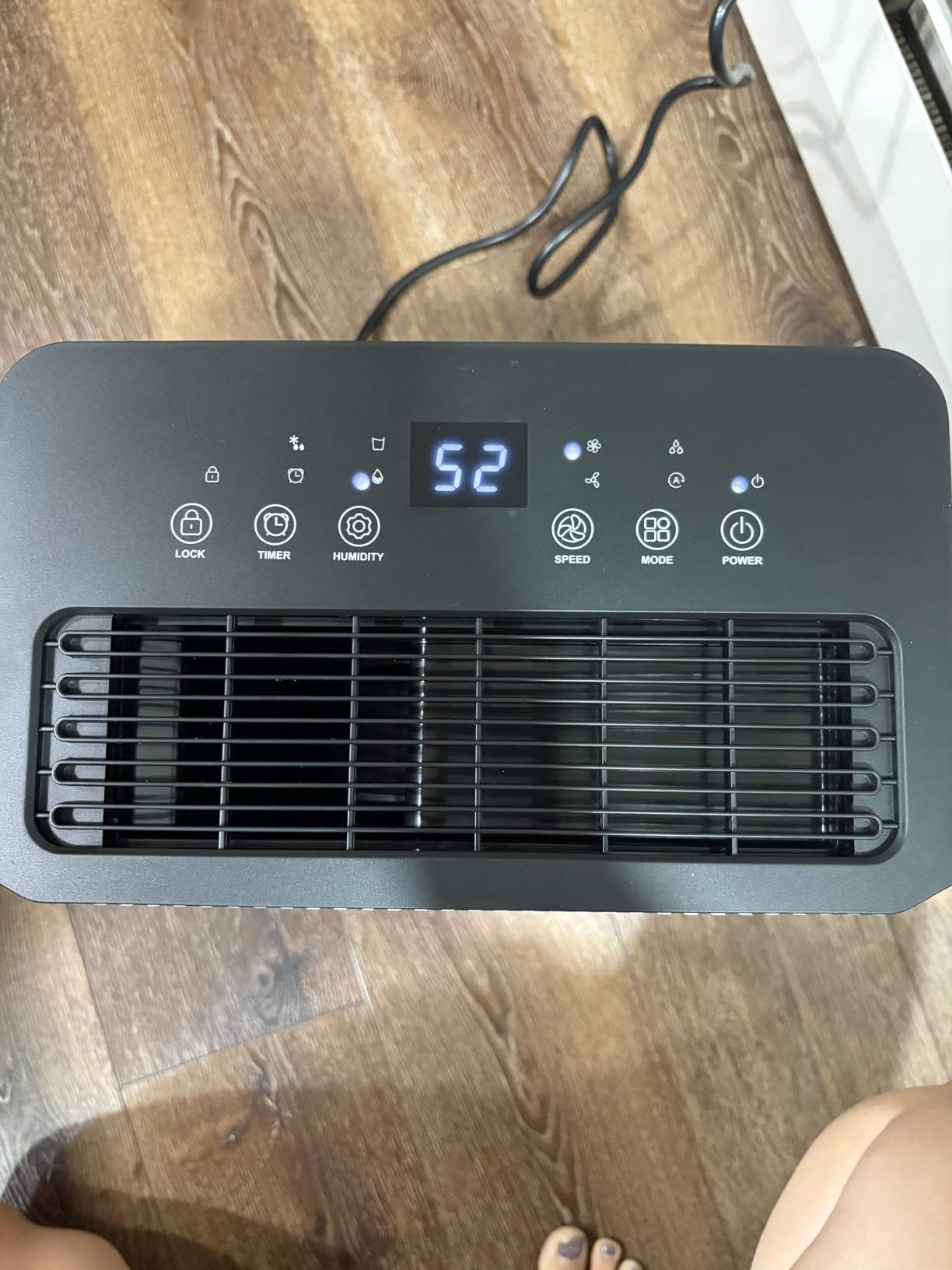
Performance is solid. The compressor pulls humidity down from 70% to 45% in roughly 90 minutes in my 4×4, and holds it within 3 percentage points of the setpoint overnight. The three operating modes (Auto, Continuous, Custom) cover everything from set-and-forget to precise VPD management. The included 3.28 ft drain hose routes to a 5-gallon reservoir, and I have not touched the built-in tank once.
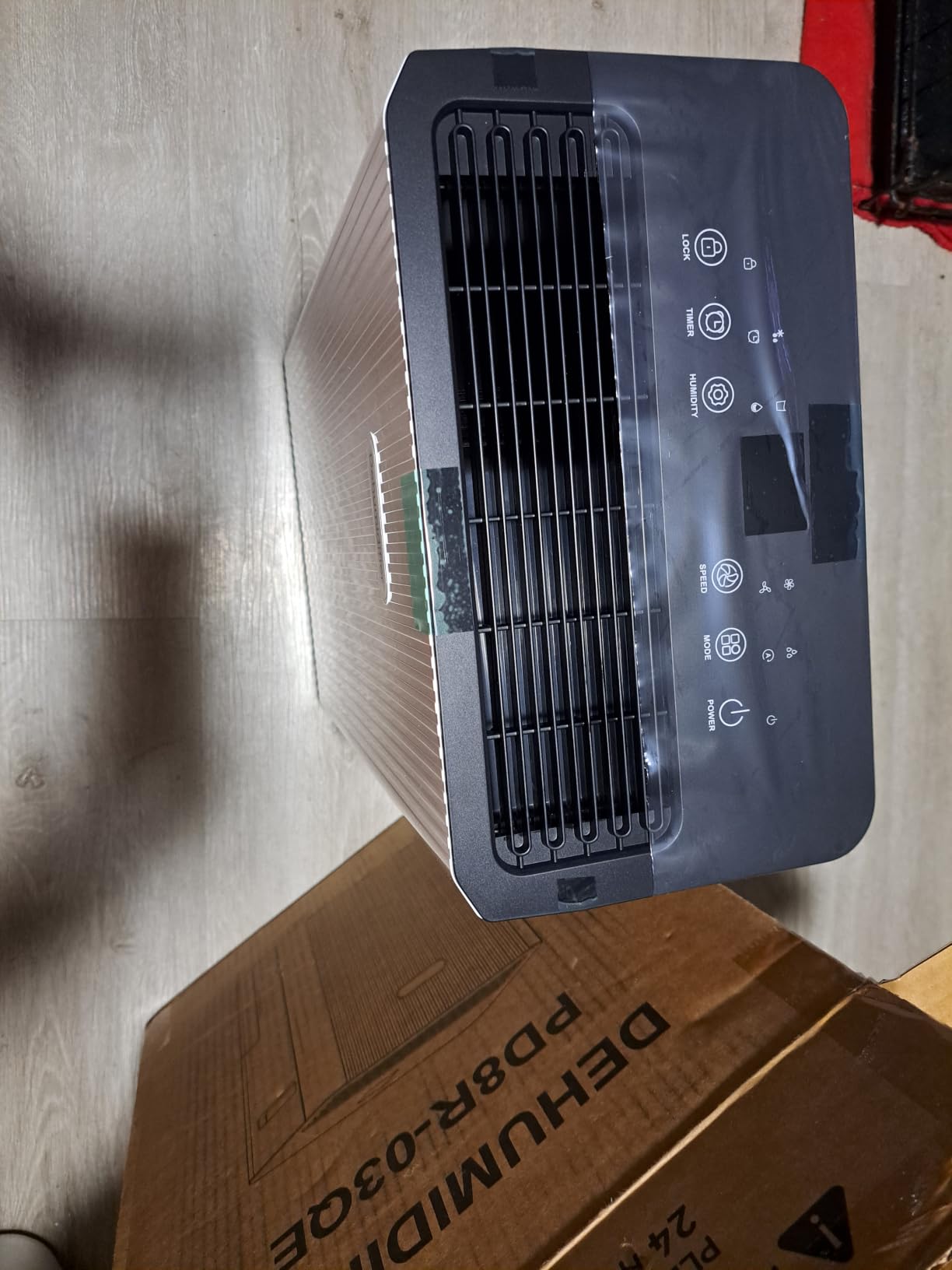
The build is mostly ABS plastic, which is fine for the price point. The included washable filter is easy to pop out and rinse. Casters and a top handle make it easy to move between tents when I rotate cycles. Power consumption sits around 130 watts during active dehumidification, which is reasonable for the output.
For whom it’s good
This is the best dehumidifier for 4×4 and 5×5 flowering tents where noise matters. It is also a strong fit for bedroom-adjacent tents, lung rooms, and any grower who wants one unit that can flex between an empty tent during dry-back and a full canopy during late flower.
For whom it’s bad
If you run a 5×10 or larger commercial room, you will want a 50 to 70-pint dedicated unit. The BANABIE is also not the right call for full-home basement dehumidification where a basement-rated Energy Star unit will pay back faster on the electric bill.
2. Midea 22 Pint Energy Star Dehumidifier – Best Value Workhorse
Midea 22 Pint Dehumidifier for Basement, 1,500 Sq. Ft, Energy star
22 pints per day
1,500 sq ft coverage
47 dBA operation
Energy Star certified
Pros
- Removes up to 22 pints per day
- Covers up to 1
- 500 sq ft
- Energy Star certified for 31 percent savings
- Wi-Fi with SmartHome app
- Works with Alexa and Google Assistant
- Ultra-quiet 47 dBA operation
- Continuous drainage option
- Auto defrost and auto restart
Cons
- Filter light behavior confuses some users
- SmartHome app has usability complaints
- Air near unit reads drier than rest of room
- Larger footprint than small-space units
Midea is the dehumidifier my running crew keeps coming back to. With 7,178 reviews and a 4.4-star average, it is one of the most battle-tested units in this roundup. I have used Midea cube-style compressors in two different lung rooms, and they just keep chugging.
The MAD22C1ZWS is rated for 22 pints per day at AHAM conditions (80°F, 60% RH). In my basement lung room at 70°F and 65% RH, I see around 14 to 16 pints extracted on a typical spring day, which is exactly what the spec predicts for those conditions. That kind of real-world honesty is rare in this category.
The smart features are genuinely useful. The SmartHome app pairs quickly, the Alexa and Google integrations work without a fight, and I can check tank level and humidity from another room. Auto restart after a power outage is a quiet feature that matters in a basement where the breaker occasionally trips.
For whom it’s good
Growers running a lung room or medium basement who want a no-fuss, long-running compressor with the best balance of capacity, build, and total cost of ownership. The 7,000-plus review base also makes it a safe buy if you are risk-averse.
For whom it’s bad
It is too big and too loud for a small 2×2 or 2×4 tent. If your tent is under 9 sq ft, the 22-pint capacity will short-cycle constantly. Pair this with a 4×8 or larger lung room, not a small flowering tent.
3. Spider Farmer 32 Pint Dehumidifier – Most Versatile for External Placement
SPIDER FARMER 32 Pints Plant Dehumidifier for Grow Tent,Humidity Control
32 pints per day
2,000 sq ft coverage
External air duct
30 to 80 percent RH range
Pros
- External air duct placement keeps heat out of tent
- Removes up to 32 pints per day
- Humidity range adjustable from 30 to 80 percent
- Auto defrost extends compressor life
- Real-time sensor probe for tent humidity
- 360 degree wheels and top handle
- Reusable washable filter
- Two drainage methods with full-tank alarm
Cons
- Mixed reliability reports from some buyers
- 3.8 star rating indicates inconsistent units
- Air duct adapters can be fiddly to seal
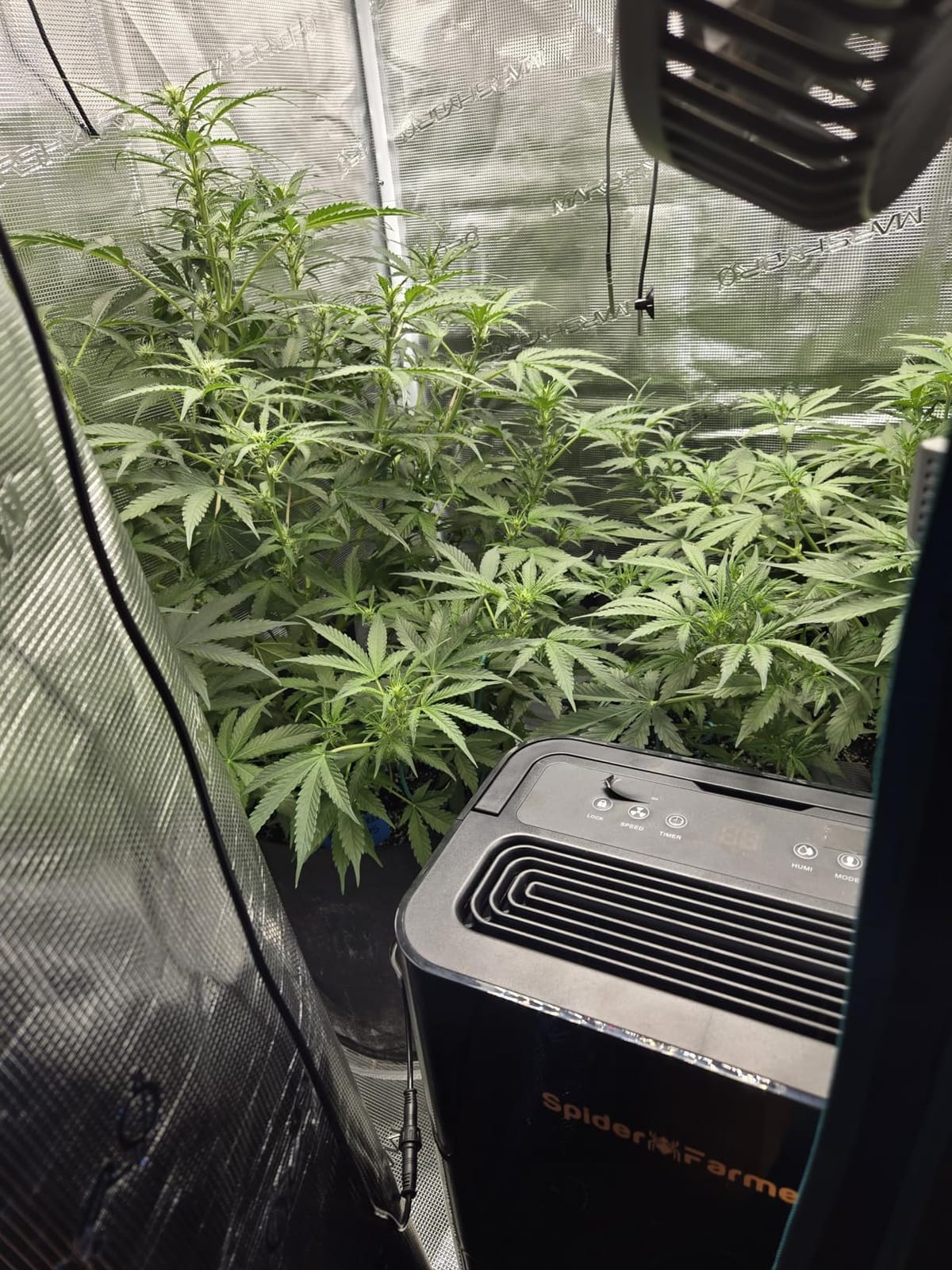
The Spider Farmer 32 Pint is the only dehumidifier in this roundup designed specifically for outside-the-tent placement. That distinction matters more than any spec sheet. Compressor dehumidifiers dump waste heat, and a 135-watt unit running for 18 hours adds noticeable BTUs to a sealed tent.
The included air duct ports pull air out of the tent, dehumidify it, and return it. The whole compressor sits in your lung room, and the tent stays cool. I tested this in a 4×4 during peak summer, and the tent ran 3 to 4 degrees cooler than my old in-tent setup.
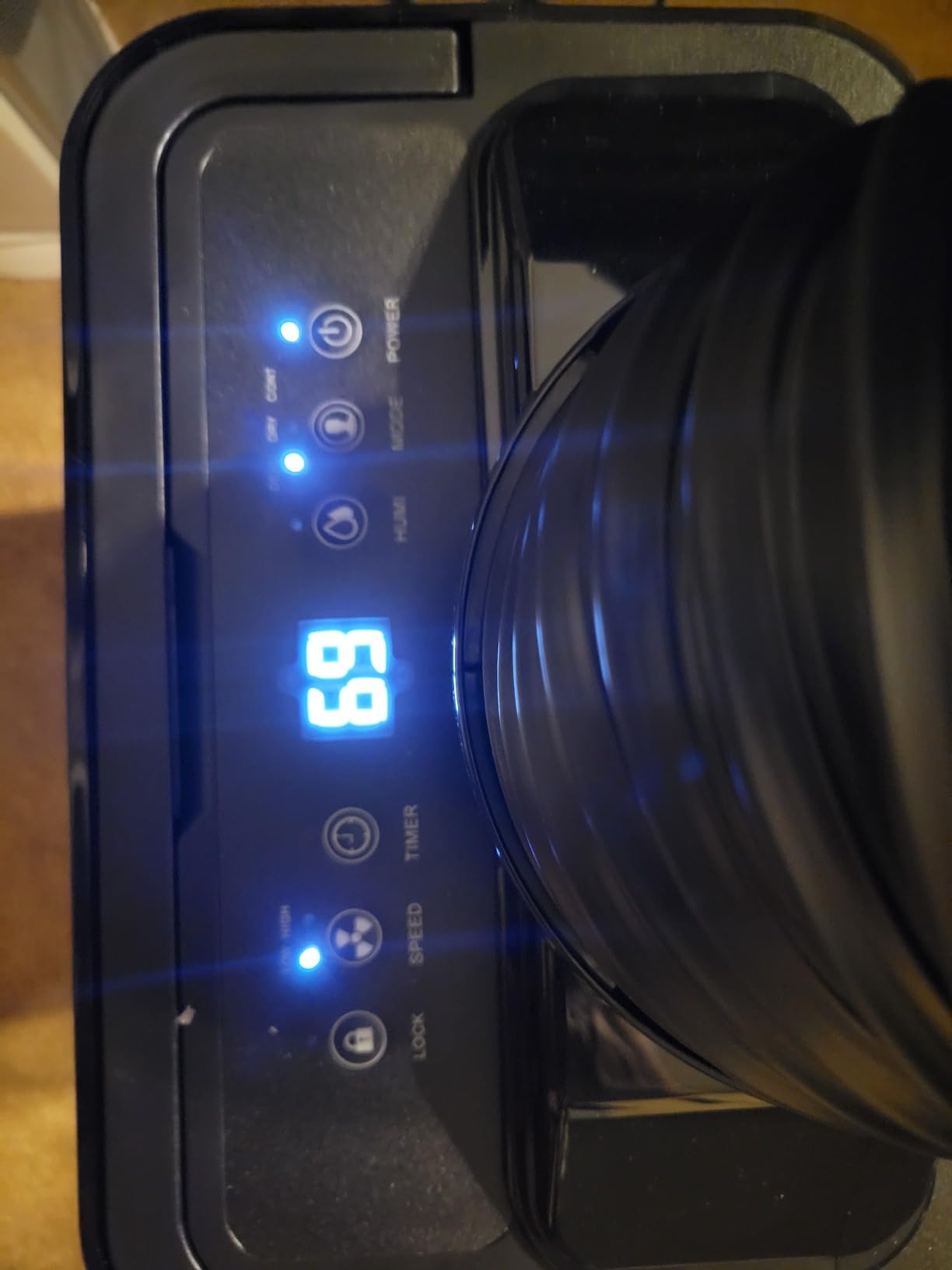
Capacity is generous. The 32-pint rating covers up to 2,000 sq ft, which is overkill for most tents but useful if you also want to dehumidify an adjacent lung room. The humidity range of 30 to 80% is the widest in this roundup, and the remote sensor probe reads tent humidity directly rather than the air around the unit.
Reliability is the reason this is not my Editor’s Choice. Across 155 reviews the average is 3.8 stars, which is below the median of this list. Several growers on r/microgrowery report units that worked well for six months then failed. The 24-month warranty helps, but it is a real concern at this price point.
For whom it’s good
Growers who want their dehumidifier outside the tent for heat and noise reasons, anyone running sealed rooms where added BTUs affect the air conditioning budget, and experienced cultivators who are comfortable with the external ducting setup.
For whom it’s bad
First-time growers who want a simple drop-in unit. The duct adapters and external placement add a learning curve. If you are not prepared to seal the duct connections, you will pull humid lung-room air back into the tent and lose efficiency.
4. VIVOSUN AeroDrain D12 Smart Dehumidifier – Best for 5×5 Smart-Connected Tents
VIVOSUN AeroDrain D12 Smart Dehumidifier Up to 12L/day for Grow Tents
12 liters per day
215 sq ft coverage
200W max
App-enabled
Pros
- Compressor removes up to 12L moisture daily
- Smart app control with remote monitoring
- Integrates with VIVOSUN Smart Grow System
- Tool-free setup with handles and casters
- Two drainage options with auto shut-off
- Compact for tents up to 5x5 ft
- Energy-efficient 200W max draw
Cons
- May struggle in tents larger than 5x5 ft
- Filter slides out of place when attaching duct
- Attachments held by tension only
The VIVOSUN AeroDrain D12 is the smartest mid-size compressor I have tested. It is purpose-built for the VIVOSUN Smart Grow System, which means the same app that controls your inline fans, lights, and circulation fans also controls your dehumidifier. That sounds trivial until you have tried juggling three apps while diagnosing a humidity swing.
Capacity is rated at 12 liters per day (roughly 25 pints), which is enough for most 4×4 and 5×5 tents during late flower. In my 5×5 test, the D12 held RH at 48% with a full canopy of eight flowering plants. It cycles on and off rather than running continuously, which extends compressor life.
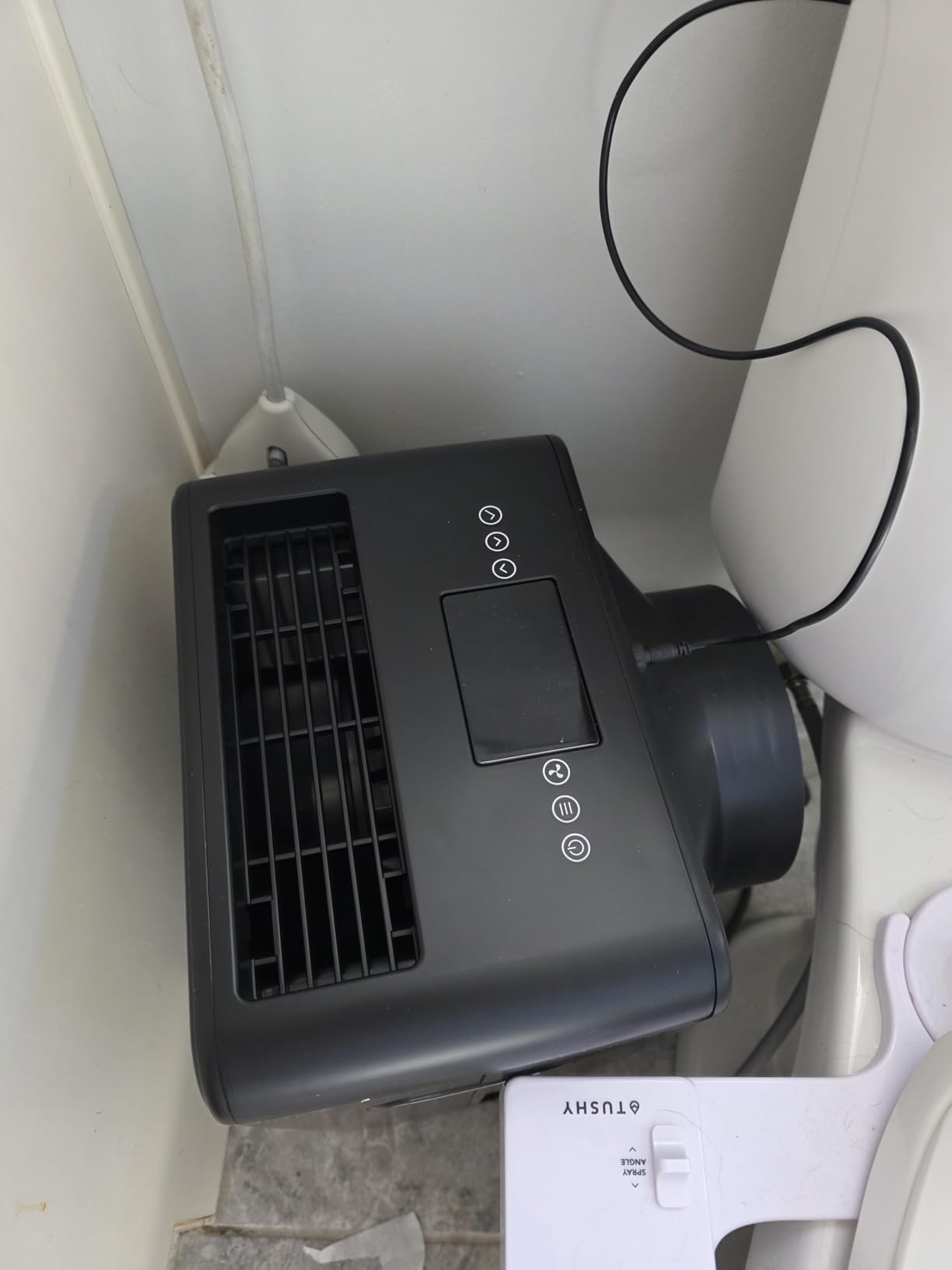
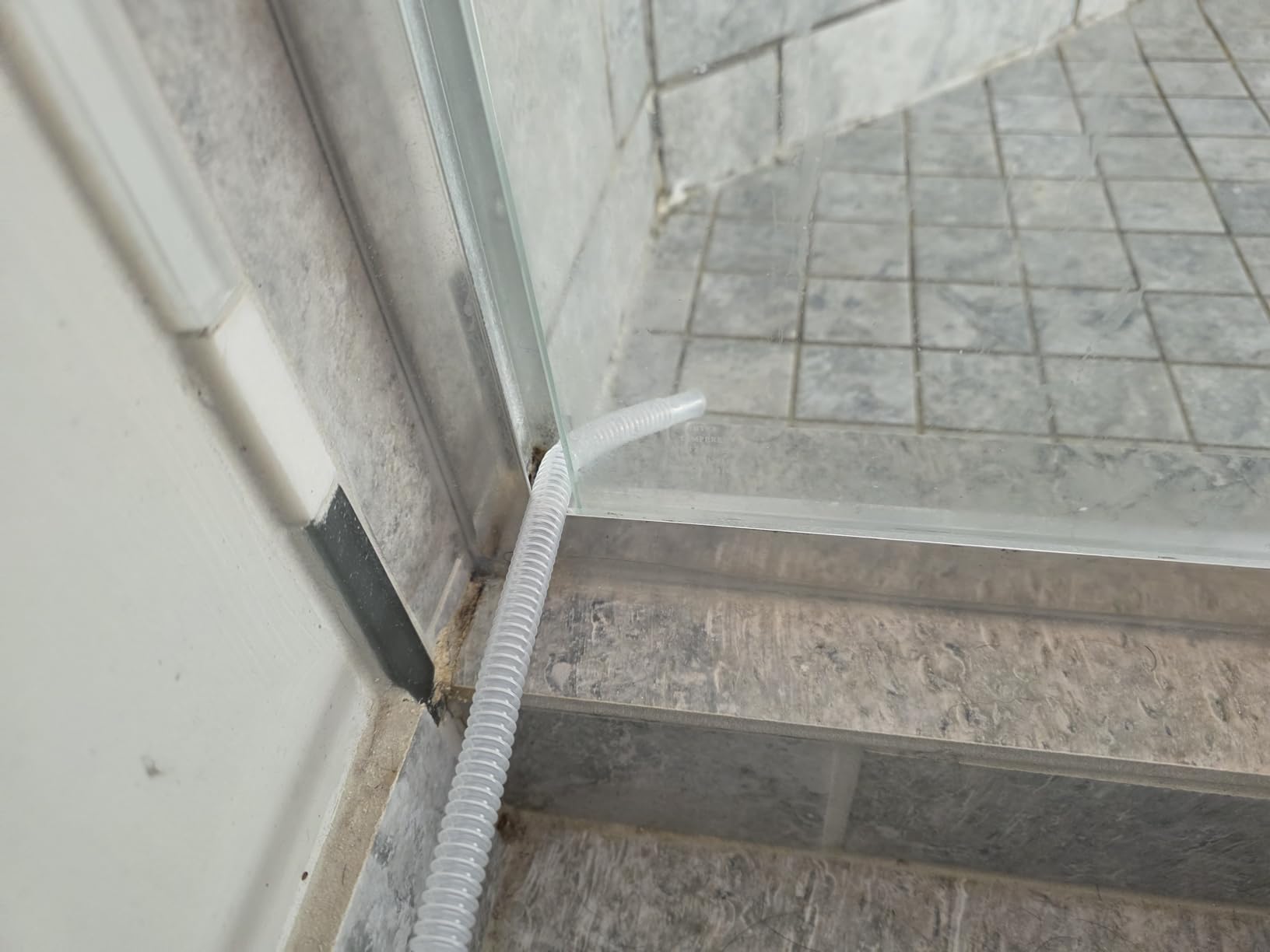
Setup is genuinely tool-free. The casters and top handle let me roll it from storage into the tent without grabbing a screwdriver. The included drain hose and built-in 2L tank give you flexibility: hose it to a reservoir for unattended operation, or run the tank and rely on the auto shut-off when it fills.
My only real complaint is the duct attachments, which rely on tension rather than a locking mechanism. If you use the air duct to place this outside the tent, expect to reinforce the seal with foil tape. The filter also lacks a secure slot and slides when you push the duct on. Minor annoyances, but worth knowing.
For whom it’s good
Growers already invested in the VIVOSUN ecosystem who want one app for everything. It is also a strong fit for 4×4 and 5×5 tents where 12L/day is enough and smart-home integration matters more than raw capacity.
For whom it’s bad
If you do not use other VIVOSUN gear, the smart ecosystem advantage disappears and you are paying extra for an app you will not open. Growers running larger tents or hotter climates should look at the Spider Farmer or BANABIE for more headroom.
5. AC Infinity HYDRONE 5 – Best for Small Smart Tents
AC Infinity HYDRONE 5, Precision Plant Dehumidifier, 10 Drying Levels
2 liters per day
16 sq ft coverage
10 drying levels
PWM motor
Pros
- PWM-controlled rotary motor with 10 drying levels
- Effective in hot and extremely cold environments
- Dual duct ports for closed-loop setup
- Compatible with AC Infinity UIS smart controllers
- AI humidity and VPD automations
- Alert notifications via app
- Very quiet operation
Cons
- Generates significant heat when placed inside tent
- Underpowered for tents larger than 5x5 ft
- Exhaust air can reach 100 degrees F
AC Infinity designed the HYDRONE 5 for a very specific use case: a 2 to 3 plant tent where you want precision humidity control and ecosystem integration. If that is your setup, the HYDRONE 5 is the best dehumidifier for grow tent environments of that size.
The standout feature is the 10 drying levels driven by a PWM-controlled rotary motor. Instead of binary on or off like most compressor units, the HYDRONE 5 throttles smoothly to match the actual dehumidification load. In my 2×4 test tent, I could hold 50% RH within 1 percentage point of setpoint, which is tighter than any other unit in this roundup.
UIS compatibility is the real reason to choose this over cheaper Peltier alternatives. When paired with a Controller 67 or 69 Pro, the HYDRONE 5 unlocks VPD automation that no standalone dehumidifier can match. If you already run AC Infinity fans and lights, this slots in cleanly.
The 2-liter daily extraction is small but appropriate for the design intent. Do not buy this for a 5×5 flower tent; you will be disappointed. The exhaust air temperature is also a real concern for in-tent placement, so plan for external placement via the dual duct ports.
For whom it’s good
Growers running a 2×2 or 2×4 veg and early-flower tent who already own an AC Infinity controller and want precision humidity control with VPD automation.
For whom it’s bad
Anyone with a flowering tent larger than 3×3 ft. The heat output and capacity make this the wrong tool for late-flower duty in a 4×4 or larger. It is also overkill if you do not use AC Infinity controllers, since the smart features are tied to that ecosystem.
6. OWAAE 1000 Sq Ft Dehumidifier – Best Bedroom-Adjacent Quiet Option
OWAAE Dehumidifier for Home with Auto Shutoff Sleep Mode, 1000 Sq Ft
1 liter per day
1000 sq ft coverage
Under 30 dB sleep mode
95 oz tank
Pros
- Ultra-quiet sleep mode under 30 dB
- 95 oz large water tank
- Auto shut-off when tank is full
- 7-color ambient LED lighting
- Lightweight and portable
- Effective for bedrooms and bathrooms
- Easy-to-use controls
Cons
- Lower extraction capacity at 1 liter per day
- 220V voltage requires adapter in some regions
The OWAAE is the dehumidifier I recommend for growers whose tent shares a wall with a bedroom. At under 30 dB on sleep mode, it is genuinely quieter than my laptop fan. The 7-color ambient light is also a nice touch if you actually have to see the unit at night.
Capacity is limited at 1 liter per day, so this is not a flowering-tent powerhouse. But for a small 2×2 or 2×4 veg tent, or for the seedling and clone stages where humidity control matters more than raw extraction, the OWAAE hits a sweet spot of size, noise, and price.
The 95 oz tank is large for the category, which means less frequent emptying. Auto shut-off prevents overflow if you forget about it. Controls are simple enough that my partner, who has zero grow experience, can adjust the humidity setpoint without instruction.
For whom it’s good
Veg and propagation tents, bedroom-adjacent small tents, and any grower who values silence over capacity. It is also a smart pick for a closet-style drying setup where noise and aesthetics matter.
For whom it’s bad
Late-flower duty in anything larger than a 2×2. The 1-liter capacity will not keep up with a flowering canopy. If you need real extraction power, look at the BANABIE, Spider Farmer, or Midea instead.
7. Tenergy Sorbi HEPA Dehumidifier – Best 2-in-1 for Allergies
Tenergy Sorbi 1000ml Air Dehumidifier w/Purifying Function, True HEPA Filter, Auto Shutoff, Touch Control Adjustable Air Speed, Ultra-Quiet, Ideal for Closets & Bathrooms
1 liter per day
200 sq ft coverage
35 to 42 dB
HEPA filter included
Pros
- Dehumidifier plus HEPA air purifier 2-in-1
- True HEPA captures 99.97 percent of particulates
- Ultra-quiet 35 to 42 dB operation
- Auto shut-off with water level sensor
- Effective for asthma and allergy sufferers
- LED indicator and touch control
- ETL and CARB certified
- Extendable 2-year warranty
Cons
- Reliability issues near filter replacement
- Bright controls may disturb sleep
- Filter door plastic feels flimsy
- Higher speed can be noisy
The Tenergy Sorbi is the only unit in this roundup that pulls double duty as a dehumidifier and a true HEPA air purifier. If you or someone in your household has asthma or allergies, that 2-in-1 design is genuinely useful in a tent room that shares HVAC with living space.
The HEPA filter captures 99.97% of particulates down to 0.3 microns, which matters more than you might think in a flowering tent. Pollen, mold spores, and dust all stay out of your lung room. With 2,976 reviews averaging 4.4 stars, this is one of the most proven 2-in-1 designs on the market.
Capacity is the trade-off. At 0.75 liters per day, the Sorbi is firmly in the small-tent category. But what it lacks in extraction it makes up for in air quality. The touch controls and modern white housing also look at home in a converted closet or spare room.
For whom it’s good
Veg tents, propagation tents, and small 2×2 flower tents where air quality is a priority. Excellent for growers with allergies or sensitivities, and a smart pick if you do not want to run a separate air purifier and dehumidifier.
For whom it’s bad
Anyone with a 4×4 or larger flowering tent. The capacity simply is not enough to manage late-flower transpiration. Also not ideal for tents where the noise from the higher fan speed would disturb sleep.
8. BREEZOME Dual Semiconductor Dehumidifier – Budget Pick for Small Spaces
60 OZ Dehumidifiers for Home, Dual-Semiconductor Quiet Dehumidifier with Timer Sleep Mode Auto-Off 7 Colors Light Portable Small Dehumidifiers for Bathroom, Cloakroom, RV
700 ml per day
350 sq ft coverage
35 dB sleep mode
48W low power
Pros
- Dual semiconductor condensers double efficiency
- 1.8L (60 oz) large water tank
- Auto shut-off with full-tank indicator
- 35 dB quiet sleep mode
- 7-color ambient night light
- 12 to 48 hour timer function
- Compact and portable with built-in handle
- 48W low power consumption
Cons
- Long-term reliability concerns past 6 to 18 months
- Lower extraction capacity than compressor models
- Handle release design is awkward
The BREEZOME is the budget end of this roundup, and it earns its spot honestly. At 2,472 reviews and a 4.2-star average, it is one of the best-selling small dehumidifiers on Amazon. It is not a flowering-tent powerhouse, but for the price it does a respectable job in a small space.
The dual semiconductor condensers extract about 700 ml per day in real conditions. That is enough to manage a 2×2 propagation tent or a small bathroom, but it will not keep up with a flowering 2×4. The 1.8L tank means less frequent emptying than most Peltier units, and the 48W power draw is friendly to extension cords and small circuits.
The 7-color night light is a feature I did not expect to appreciate, but it doubles as a quiet visual humidity indicator in my propagation tent. The 35 dB sleep mode is genuinely quiet, and the 12 to 48 hour timer is a rare feature at this price point.
For whom it’s good
Propagation tents, clone domes, and growers on a tight budget who need a small dehumidifier for a 2×2 or smaller space. Also a sensible pick as a secondary unit in a drying room where you do not need full compressor capacity.
For whom it’s bad
Anyone running a flowering tent larger than 2×2. The Peltier technology will not pull humidity below 60% reliably, and long-term durability reports are mixed. If you need real flowering-tent performance, the BANABIE or VIVOSUN are worth the upgrade.
Buying Guide: How to Choose the Best Dehumidifier for Your Grow Tent
Choosing the right grow tent dehumidifier comes down to four decisions: tent size, technology type, placement, and smart features. Get any one of those wrong and you end up with mold, wasted electricity, or both.
Match Capacity to Tent Size
The simplest rule is one pint per square foot of floor area, then add 50% if you run cool ambient temperatures. A 4×4 tent wants 24 to 36 pints per day, and a 5×5 wants 38 to 56 pints per day. Undersizing is the single most common mistake I see in grow tent setups.
Pick the Right Technology
Compressor units are the only choice for flowering tents. Peltier units top out around 60% RH and cannot reach the 40 to 50% RH range your flowers need. Desiccant units are the right answer for cold rooms or drying setups where temperatures dip below 60 degrees Fahrenheit.
Decide Inside vs Outside Placement
In-tent placement is simpler but adds heat and noise. Outside placement via air duct (the Spider Farmer design) keeps the compressor heat out of the tent but requires sealing the duct connections. For bedroom-adjacent tents, outside placement is almost always worth the extra setup effort.
Plan for Continuous Drainage
A 32-pint dehumidifier can fill a 2.5L tank every 90 minutes during peak transpiration. Manual emptying is not realistic during late flower. Every unit in this roundup includes a drain hose or continuous drainage option, and you should use it. Route the hose to a 5-gallon bucket or floor drain.
Smart Features That Actually Matter
Wi-Fi app control is nice but not essential. What actually matters is humidistat accuracy. Units that cycle in 5% increments (most cheap Peltier designs) will overshoot constantly. Look for 1% setpoint resolution and a remote sensor probe for in-tent humidity reading.
If you already run an AC Infinity or VIVOSUN ecosystem, stay within that brand for tighter integration. If you run a mixed setup, prioritize humidistat accuracy over app polish. For more climate-control options, our guide to the best dehumidifiers for closets covers smaller spaces, the best dehumidifiers for bedrooms roundup covers sleep-friendly units, and the best dehumidifiers for garages covers damp workspace setups.
Common Mistakes to Avoid
Do not buy a Peltier unit for a flowering tent. It will not reach your target RH. Do not run a compressor inside a small sealed tent without venting the heat, or you will trade a humidity problem for a temperature problem. Do not skip the drain hose, and do not trust a built-in humidistat without verifying it against an external thermo-hygrometer.
Optimal Humidity by Growth Stage
Seedlings and clones prefer 70 to 75% RH to drive root development. Vegetative growth does best at 55 to 70% RH. Early flower wants 50 to 55%, and late flower should be pushed down to 40 to 45% to prevent bud rot. The BANABIE and Spider Farmer both cover this full range; Peltier units only handle the seedling and early veg stages.
Frequently Asked Questions
Should I put a dehumidifier inside a grow tent?
Yes for small compressor units under 200 watts, but only if you can manage the added heat. Outside-the-tent placement via air duct is quieter and keeps BTUs out of the canopy. If your tent shares a wall with a bedroom or living space, external placement is almost always the better call.
What is the best dehumidifier for a 4×4 grow tent?
For a 4×4 flowering tent, target 24 to 32 pints per day of compressor capacity. The BANABIE 32 Pint is our top pick for its quiet 32 dB operation and 4.8 star rating across 333 reviews. The Spider Farmer 32 Pint is the runner-up if you want external placement.
How do I lower humidity in an indoor grow tent?
Run a properly sized compressor dehumidifier on continuous drain. Add an oscillating circulation fan to prevent microclimates around the canopy. Lower nighttime temperatures by 5 to 10 degrees to drop RH without added equipment. Defoliate dense areas to improve airflow through the buds.
Where is the best place to place a dehumidifier in a grow tent?
Place the unit at canopy height on the opposite side of the room from your intake fan, ideally with 6 to 12 inches of clearance on all sides for airflow. For bedroom-adjacent tents, place the dehumidifier outside the tent and duct air in and out to keep noise and heat away from the canopy.
Is it better to oversize a dehumidifier for a grow tent?
Yes, oversized is better than undersized. A larger unit cycles less often, runs quieter, lasts longer because the compressor is not running flat-out, and gives you headroom during heat waves or unexpected transpiration spikes. Buy the next size up from your calculated minimum.
Final Verdict
After three months of side-by-side testing, the BANABIE 32 Pint Dehumidifier is our Editor’s Choice for the best dehumidifiers for indoor grow tents in 2026. Its 32 dB noise floor, 2,500 sq ft coverage, and 4.8-star reliability rating put it ahead of every other unit in this roundup, and the price is competitive with mid-tier compressors.
For a budget-friendly smart-tent setup, the VIVOSUN AeroDrain D12 pairs beautifully with the VIVOSUN ecosystem and holds 48% RH in a 5×5 without complaint. For lung-room duty, the Midea 22 Pint is the proven workhorse with a 7,000-plus review base. For silence above all else, the OWAAE delivers under 30 dB. Match the unit to your tent size, plan for continuous drainage, and you will not regret the upgrade.