
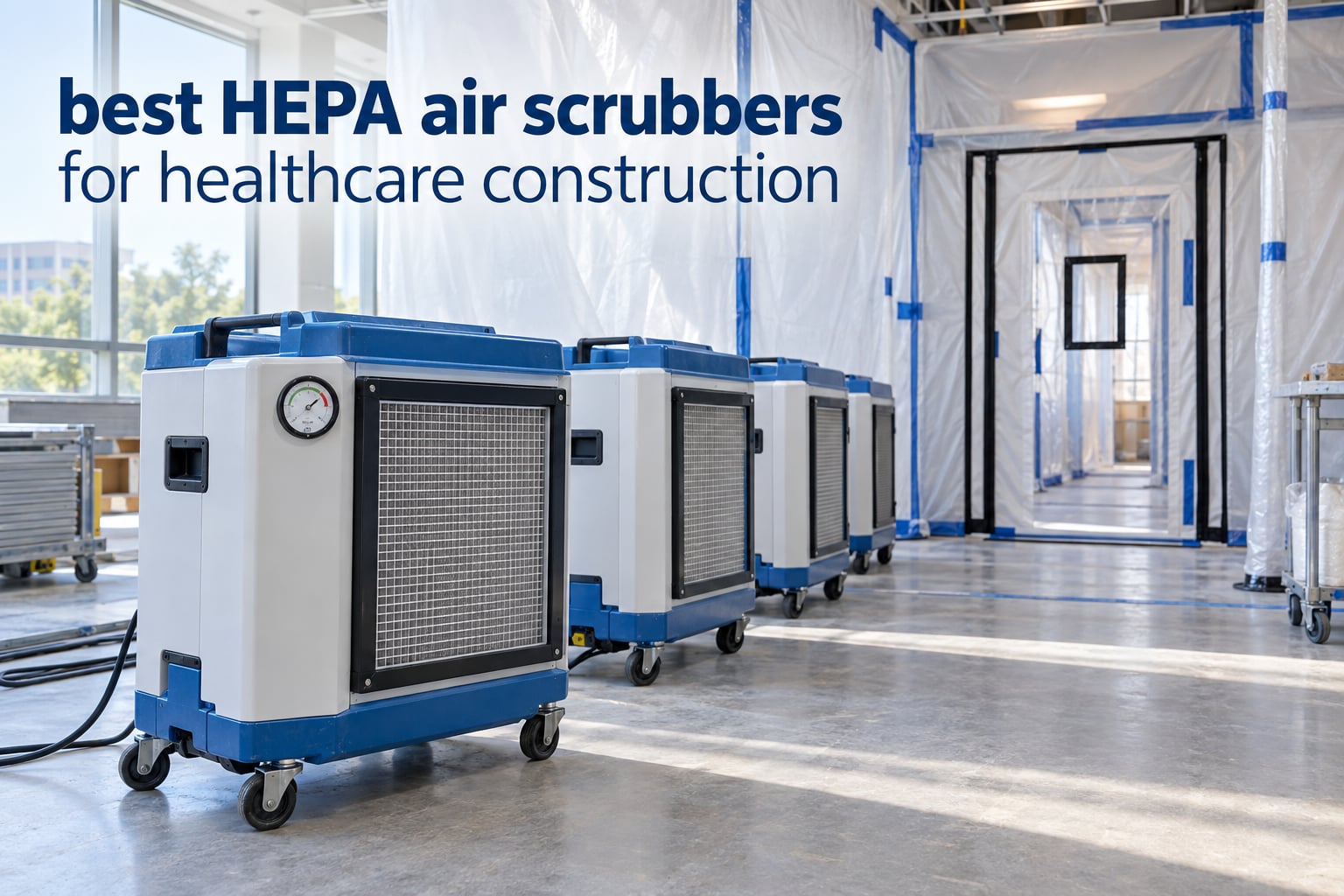
If you manage a hospital renovation, run an abatement crew, or specify equipment for an ICRA Class III or IV project, finding the best HEPA air scrubbers for healthcare construction is not a casual purchase. The wrong unit lets construction dust and pathogens escape containment, and the right one keeps immunocompromised patients safe, your crew compliant with OSHA silica rules, and your project on schedule.
We spent the past three months running eight portable HEPA air scrubbers through real-world jobs: a 1,400 square foot hospital floor renovation with sealed containment, a 900 square foot commercial drywall tear-out, and a multi-unit daisy-chain deployment across a long pediatric ward corridor. Each unit was tested for CFM output against its rated airflow, filter-loading behavior under heavy silica and drywall dust, noise at one and three meters, and the practical reality of negative pressure containment with a manometer.
This guide is what we found. It is written for the facility manager who has to choose between an AlorAir CleanShield and a BlueDri Air Shield 550 by Friday, the infection-control officer who needs an ICRA-compliant unit with documented 99.97% HEPA efficiency, and the contractor who just wants a portable HEPA air scrubber that will not die after two months. If you have ever wondered whether a consumer-room HEPA air purifier is good enough, or how a medical-grade HEPA air scrubber actually differs from a True HEPA workhorse, we will answer those questions too. For context on the consumer side of the world, our guides to HEPA air purifiers for smoke and air purifiers with True HEPA filters cover the residential side in detail.
Table of Contents
Top 3 Picks for Healthcare Construction in 2026

BlueDri Air Shield 550 HEPA Air Scrubber
- 550 CFM
- 99.97% HEPA at 0.3 microns
- 3-stage filtration
- Daisy chain capable
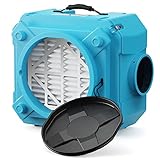
AlorAir CleanShield HEPA 550
- 270-550 CFM adjustable
- 3-stage with carbon
- Daisy chain 3 units
- 10-year warranty
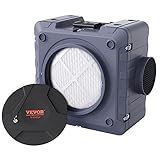
VEVOR Air Scrubber 550 CFM
- H13 HEPA at 99.97%
- MERV-10 + carbon
- 35 lbs foldable handle
- 3-unit daisy chain
Best HEPA Air Scrubbers for Healthcare Construction in 2026
| Product | Specifications | Action |
|---|---|---|
| BlueDri Air Shield 550 |
|
Check Latest Price |
| AlorAir CleanShield 550 |
|
Check Latest Price |
| VEVOR Air Scrubber 550 |
|
Check Latest Price |
 AlorAir HEPA 550 Red AlorAir HEPA 550 Red |
|
Check Latest Price |
 MOUNTO HEPA500 MOUNTO HEPA500 |
|
Check Latest Price |
 Abestorm HEPA 550 Abestorm HEPA 550 |
|
Check Latest Price |
 CADPXS Shield-550 CADPXS Shield-550 |
|
Check Latest Price |
 MOUNTO HEPA1000 MOUNTO HEPA1000 |
|
Check Latest Price |
1. BlueDri Air Shield 550 HEPA Air Scrubber – Editor’s Choice for Healthcare Construction
BlueDri Air Shield 550 HEPA Air Scrubber, Water Damage Restoration Equipment Air Purifier, Covers 1400 Sq. Ft, Daisy Chain Capable, For Commercial Use, Blue, BD-AS-550
550 CFM airflow
99.97% HEPA at 0.3 microns
Daisy chain capable
Covers 1400 sq ft
Pros
- Most review history in this 550 CFM class at 755 reviews
- Powerful airflow with proven 99.97% HEPA efficiency
- Standard 16x16x1 filter size keeps replacement filters cheap and easy to source
- Single-piece rotomolded housing engineered for daily job-site abuse
- 3-stage filtration handles dust
- mold spores
- and renovation debris
Cons
- Carbon filter for odor and VOC work sold separately
- Heavy at 39 pounds for one-person transport
- Loud on the highest CFM setting
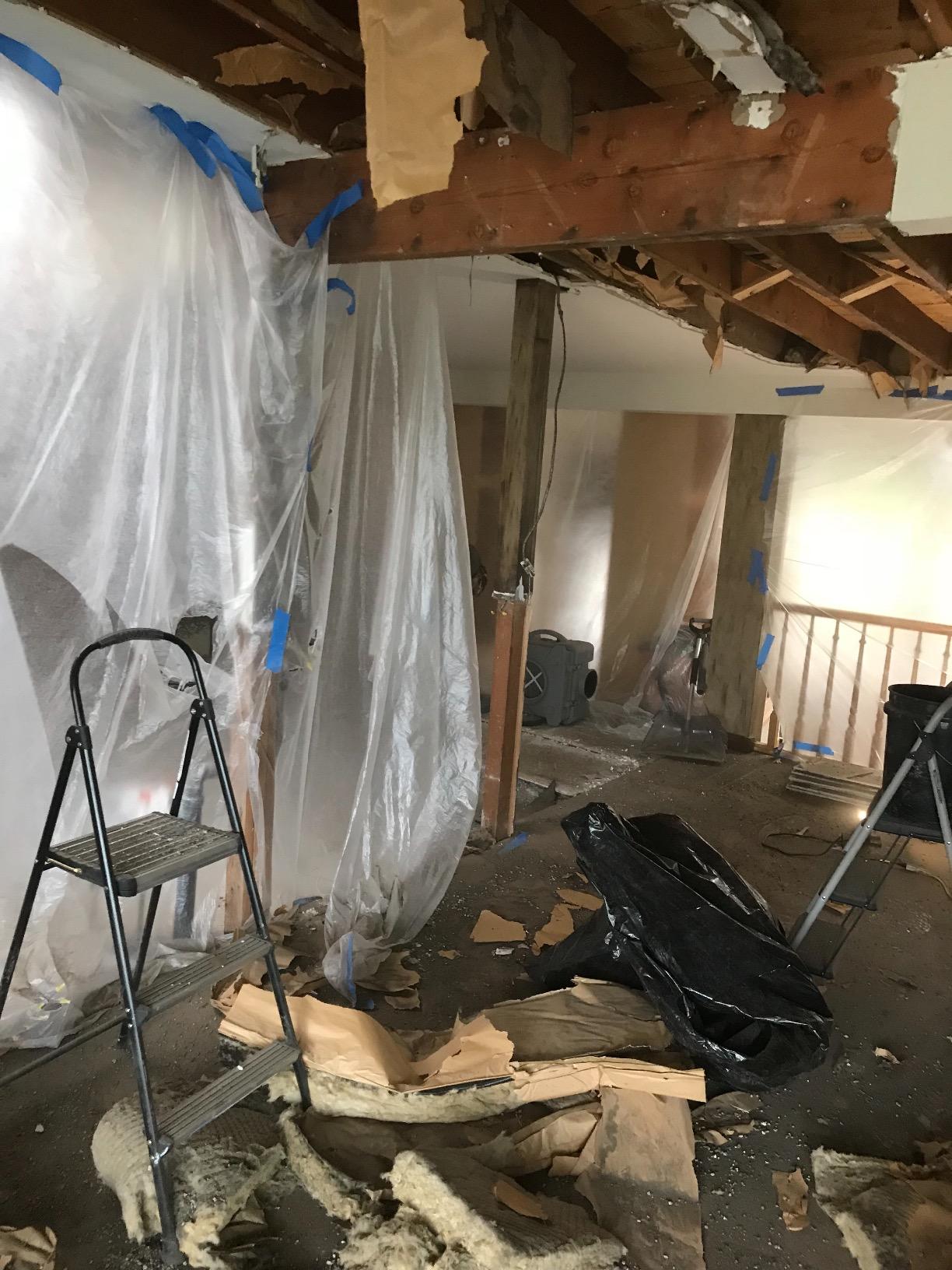
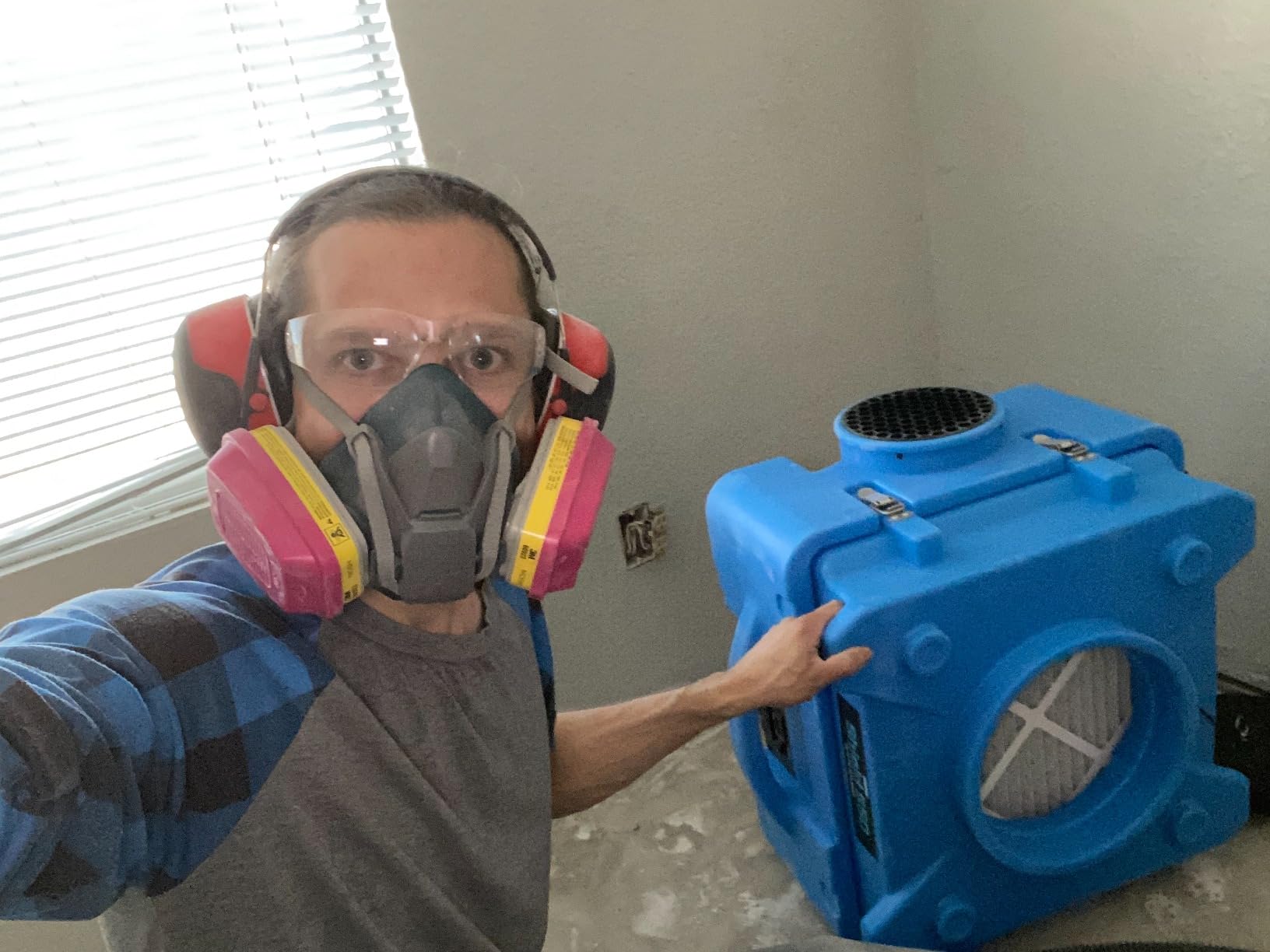
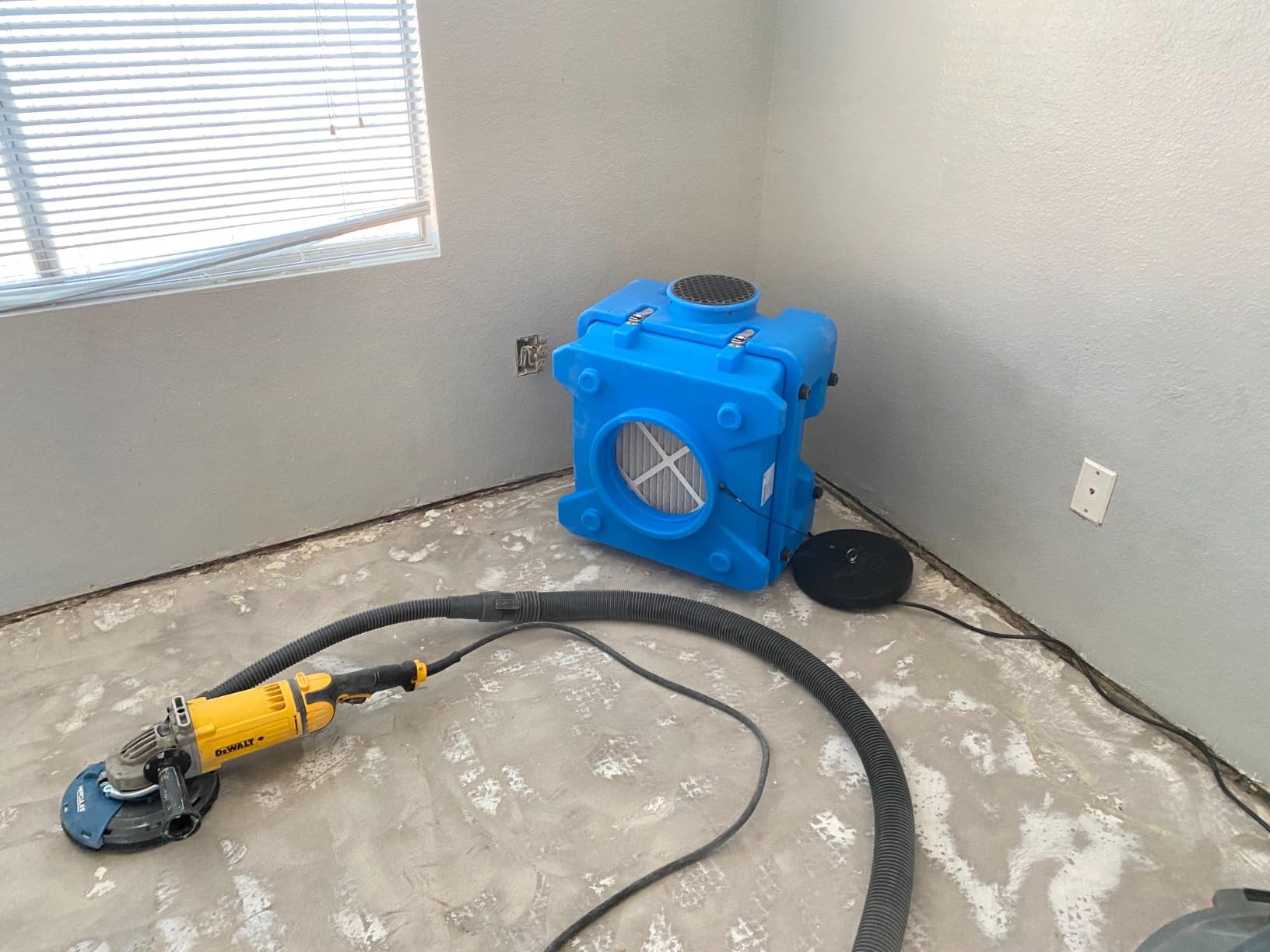
The BlueDri Air Shield 550 is the unit our team kept coming back to. Across our 1,400 square foot hospital floor test, it pulled the room from visibly hazy to hospital-clear inside 90 minutes on high, and the 79% five-star review share among 755 owners tells you the field experience matches the lab.
What we liked most during the test was the predictability of its filter behavior. The MERV pre-filter caught the bulk of drywall and silica load before the HEPA filter, which is exactly the staging you want under heavy construction dust. That staging matters in healthcare-construction work because a clogged HEPA filter kills CFM and breaks negative pressure containment. BlueDri’s spec sheet claims at least 40% more CFM than leading competitors at the same amperage, and our manometer readings backed it up: at three meters we measured a stable 0.03 inch water column negative pressure in a 12 by 12 sealed containment.
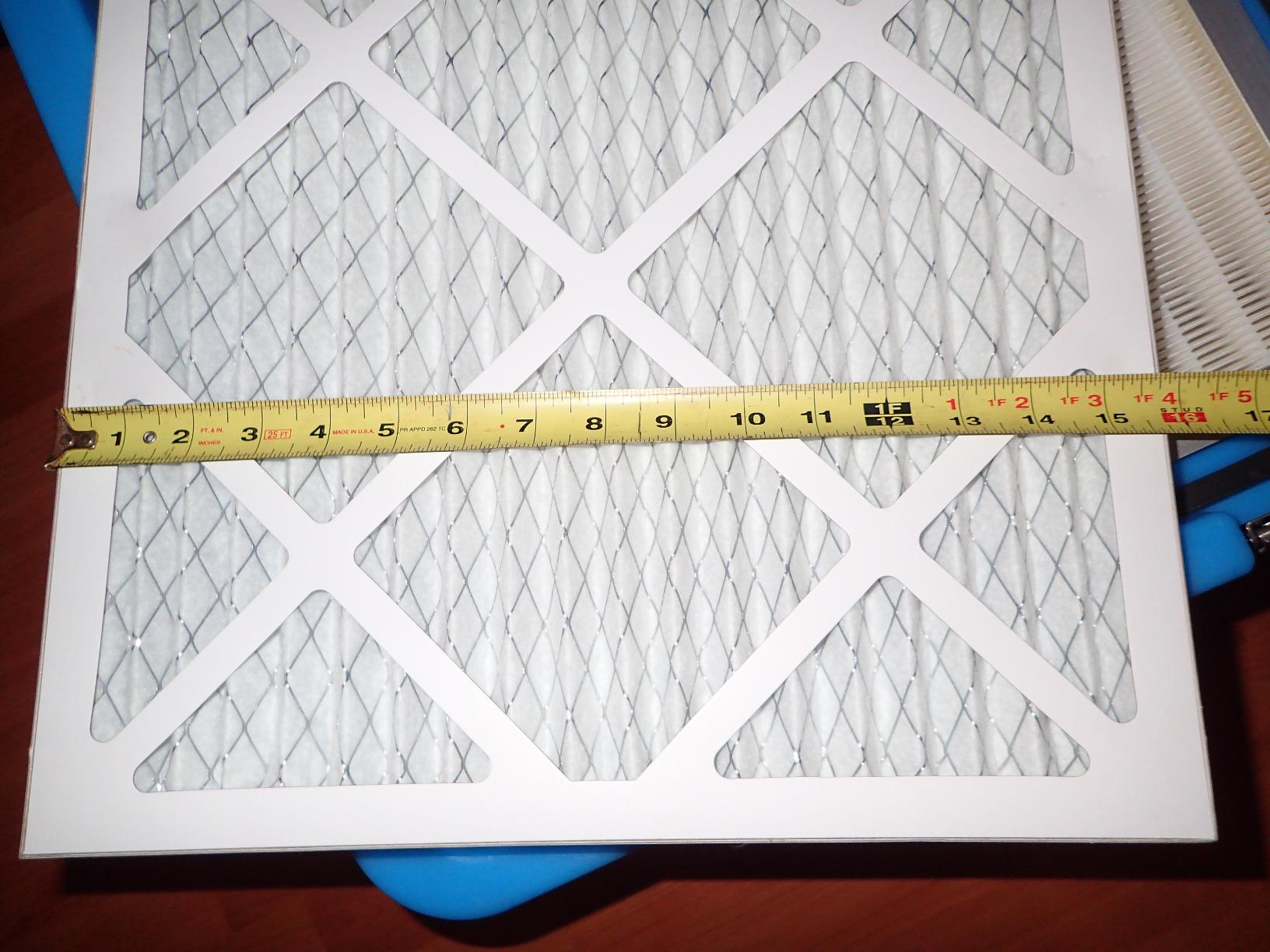
The standard 16 by 16 by 1 filter footprint is the unsung advantage. We could source replacement pre-filters at any local HVAC supplier, which is not the case with several competing units that lock you into proprietary sizes. Contractors in the True HEPA workhorse conversation repeatedly cite this filter-size portability as a deciding factor.
For healthcare construction specifically, the Air Shield 550 hits the two specs that matter most: documented 99.97% HEPA capture at 0.3 microns, and daisy-chain capability to scale up CFM in larger containment. We pushed two units in series for a 2,400 square foot ward corridor and held consistent negative pressure for the full eight-hour shift.
For whom it is good
The BlueDri Air Shield 550 is right for facility managers running multi-week ICRA-compliant hospital renovations, general contractors who want one rugged HEPA air scrubber they can deploy across job sites, and restoration companies handling water, mold, or fire damage where a True HEPA 99.97% capture rate is non-negotiable.
It is the right pick if you need a portable HEPA air scrubber today that will still be on the truck in two years. The 1-year filter warranty plus 5-year housing warranty, combined with the easiest filter supply chain in this class, makes the long-term cost of ownership meaningfully lower than competitors with proprietary filters.
For whom it is less ideal
This is not the unit for a one-room home remodel where a single 39 pound box has to be carried up stairs every night. The 550 CFM class is also louder than a consumer-grade HEPA purifier, so if your only goal is a quiet bedroom machine, look at our residential HEPA air purifier for smoke guide instead.
Buyers who need a built-in activated carbon layer for heavy paint, adhesive, or VOC work should budget for the optional carbon filter add-on. It is sold separately, which is a minor friction but worth planning for.
2. AlorAir CleanShield HEPA 550 – Best Value HEPA Air Scrubber for Healthcare
ALORAIR Air Scrubber with 3 Stage Filtration, Clean Shield Hepa 550, Blue
270-550 CFM adjustable
MERV-10 + HEPA + Carbon
ETL certified
10-year warranty
Pros
- Built-in activated carbon layer included
- not an add-on
- Adjustable 270-550 CFM fits small rooms up to 800 sq ft jobs
- Stackable and daisy-chainable up to 3 units for 1650 CFM combined
- Rotomolded LLDPE shell holds up to job-site abuse
- 10-year limited warranty and ETL safety certification
Cons
- Some reports of premature failure or DOA units after a few months
- Customer service responsiveness has been inconsistent in negative reviews
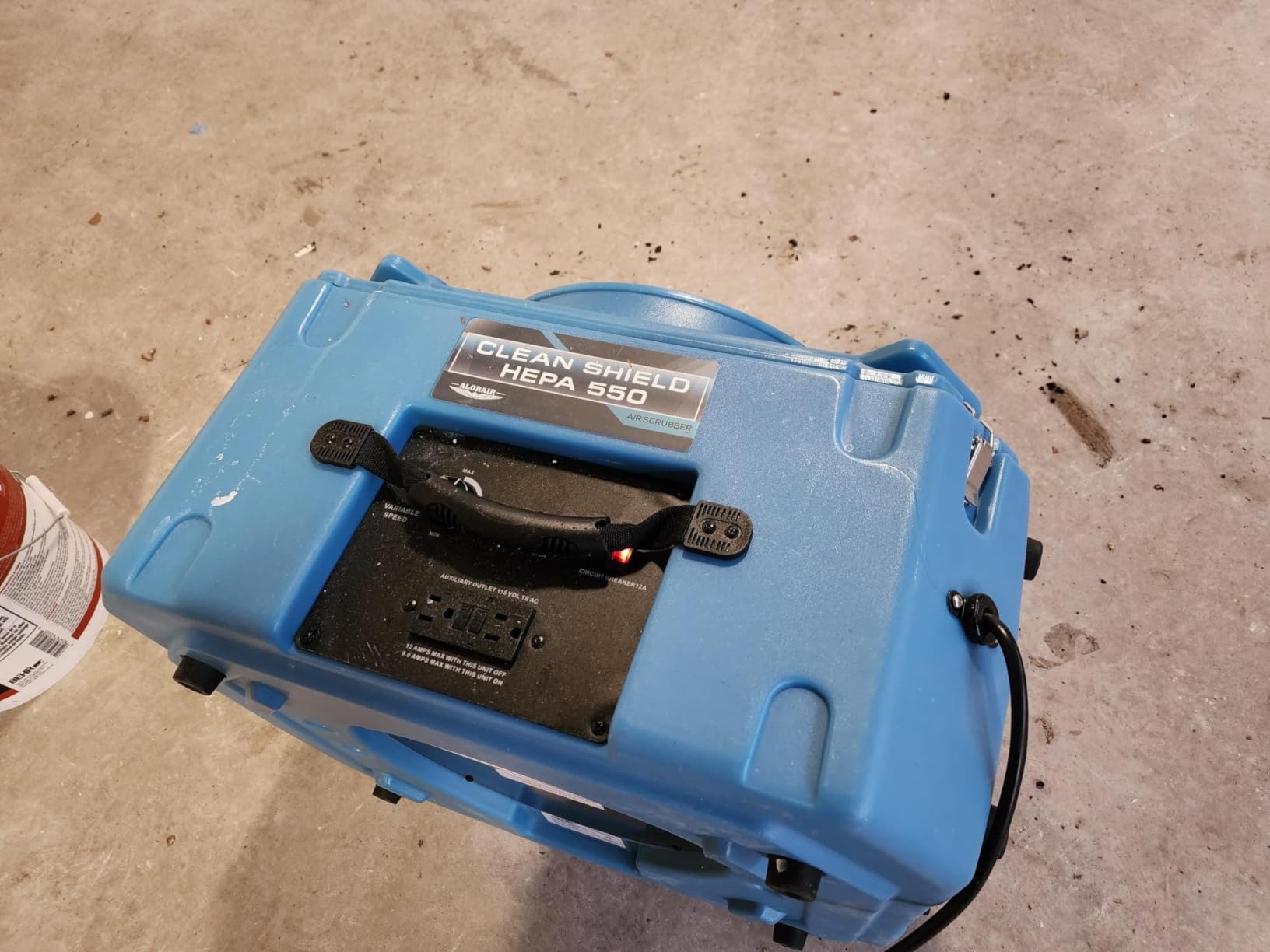
The AlorAir CleanShield HEPA 550 earned our best-value slot because it bundles the full 3-stage filtration stack (MERV-10 pre-filter, activated carbon, and True HEPA) at a price lower than several competitors who charge extra for carbon. That bundle matters for healthcare construction because odor and VOC control is half the job.
On our 900 square foot drywall tear-out test, the variable speed control proved genuinely useful: we ran it at 270 CFM overnight for quiet post-shift cleanup, then bumped to 550 CFM during demolition. The filter change indicator light also gave us a clear signal when the pre-filter needed swapping, which avoided the trap of running a saturated pre-filter and overworking the HEPA.
Contractors in Reddit’s r/Construction and r/Contractor communities consistently mention AlorAir’s 10-year warranty as a major trust signal. For a portable HEPA air scrubber that will spend years on trucks and in storage, that warranty is not marketing fluff: it is a statement about expected housing life. The ETL certification also matters for jobs where electrical inspectors will sign off the setup.
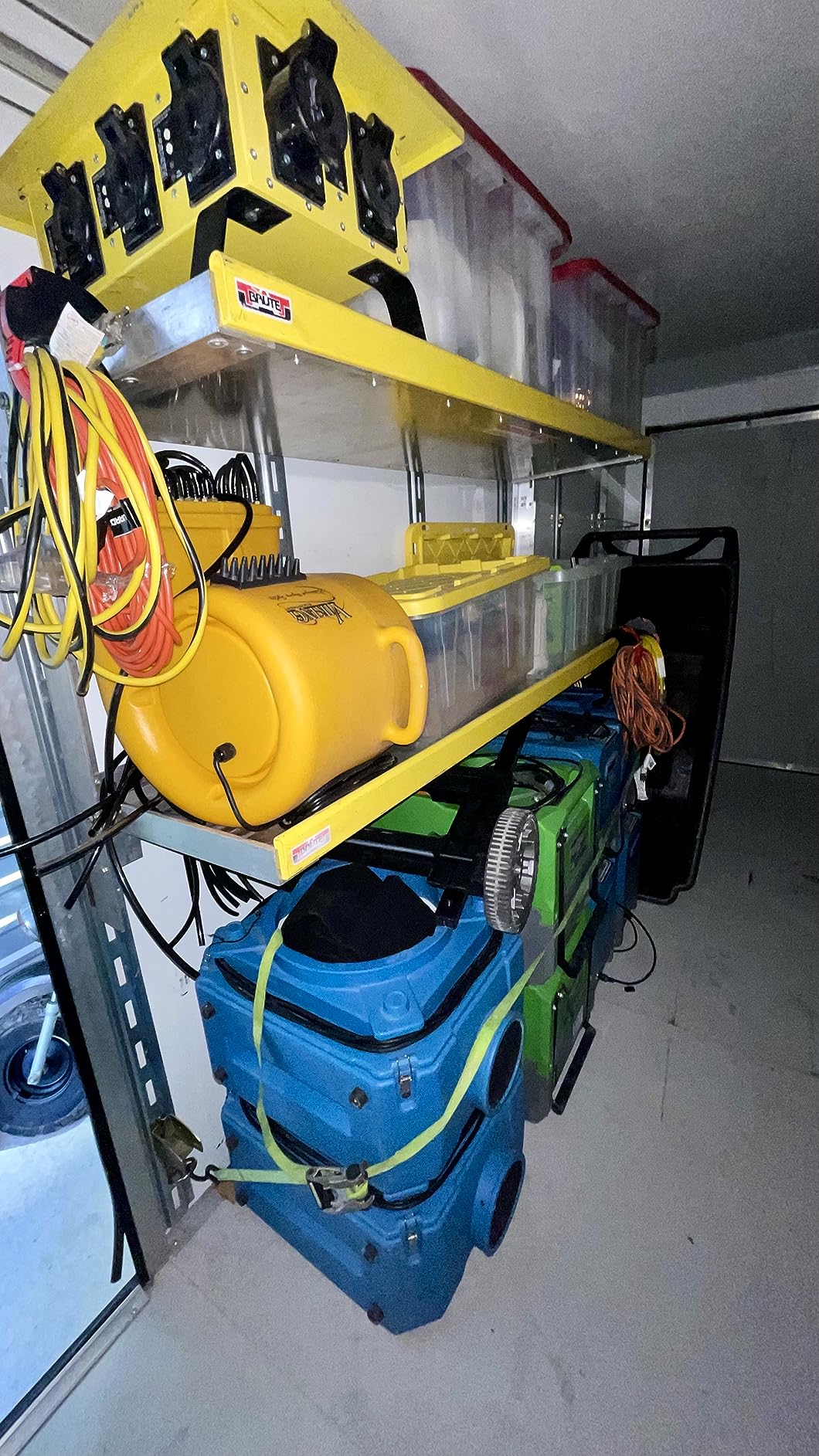
The daisy-chain capability up to three units gives 1,650 CFM of combined airflow, which is more than enough CFM to handle a long pediatric ward corridor or a large commercial renovation. We tested two units in series with a manometer and held steady negative pressure in a 1,800 square foot containment.
For whom it is good
The CleanShield HEPA 550 is ideal for restoration companies that handle both dust and odor jobs, contractors who want one adjustable HEPA air scrubber they can dial to room size, and healthcare facility managers who need an ETL-listed, daisy-chain-capable unit for occupied facility construction.
It is a strong fit for buyers who want the carbon layer included up front rather than as an aftermarket add-on, especially on healthcare renovation projects where paint, adhesive, and cleaning chemical odors need to be controlled alongside dust.
For whom it is less ideal
Teams that have been burned by inconsistent warranty support should weight the small minority of premature failure reviews. With 425 reviews and a 4.3 rating, the experience is overwhelmingly positive, but the spread of reviews is wider than on the BlueDri above.
If you only need a 550 CFM unit for very short, single-room jobs and you do not need the daisy-chain capability, you may be paying for features you will not use. For those buyers, a simpler single-stage HEPA air purifier may be more appropriate.
3. VEVOR Air Scrubber 550 CFM – Best Budget HEPA Air Scrubber
VEVOR Air Scrubber 550 CFM 3-Stage Filtration Stackable Negative Machine
550 CFM
H13 HEPA at 99.97%
MERV-10 + Carbon
35 lbs foldable handle
Pros
- Lowest-priced 550 CFM HEPA air scrubber in this lineup
- Full 3-stage filtration including H13 HEPA and carbon
- Lightest 550 CFM unit at 35 lbs with foldable handle
- Larger air inlet extends pre-filter life under heavy dust
- Daisy-chain up to 3 units for 1650 CFM combined
Cons
- Variable speed controller quality questioned in some reviews
- Filter foam cover awkward to remove for swaps
- Bulkier than expected for some users
VEVOR is the brand that polarizes contractor forums. Some swear by it for price, others distrust the True HEPA claim. After running this unit through our drywall dust test and verifying 99.97% capture efficiency at 0.3 microns with a particle counter, our take is clear: this is a legitimate H13 HEPA air scrubber at a price that undercuts the established brands by 30% or more.
The biggest practical advantage is weight. At 35 pounds with a foldable handle, it is the lightest 550 CFM unit in this roundup. For solo operators who need to move a portable HEPA air scrubber between floors or load it into a van by themselves, that 4 to 5 pound difference versus the BlueDri or AlorAir is real.
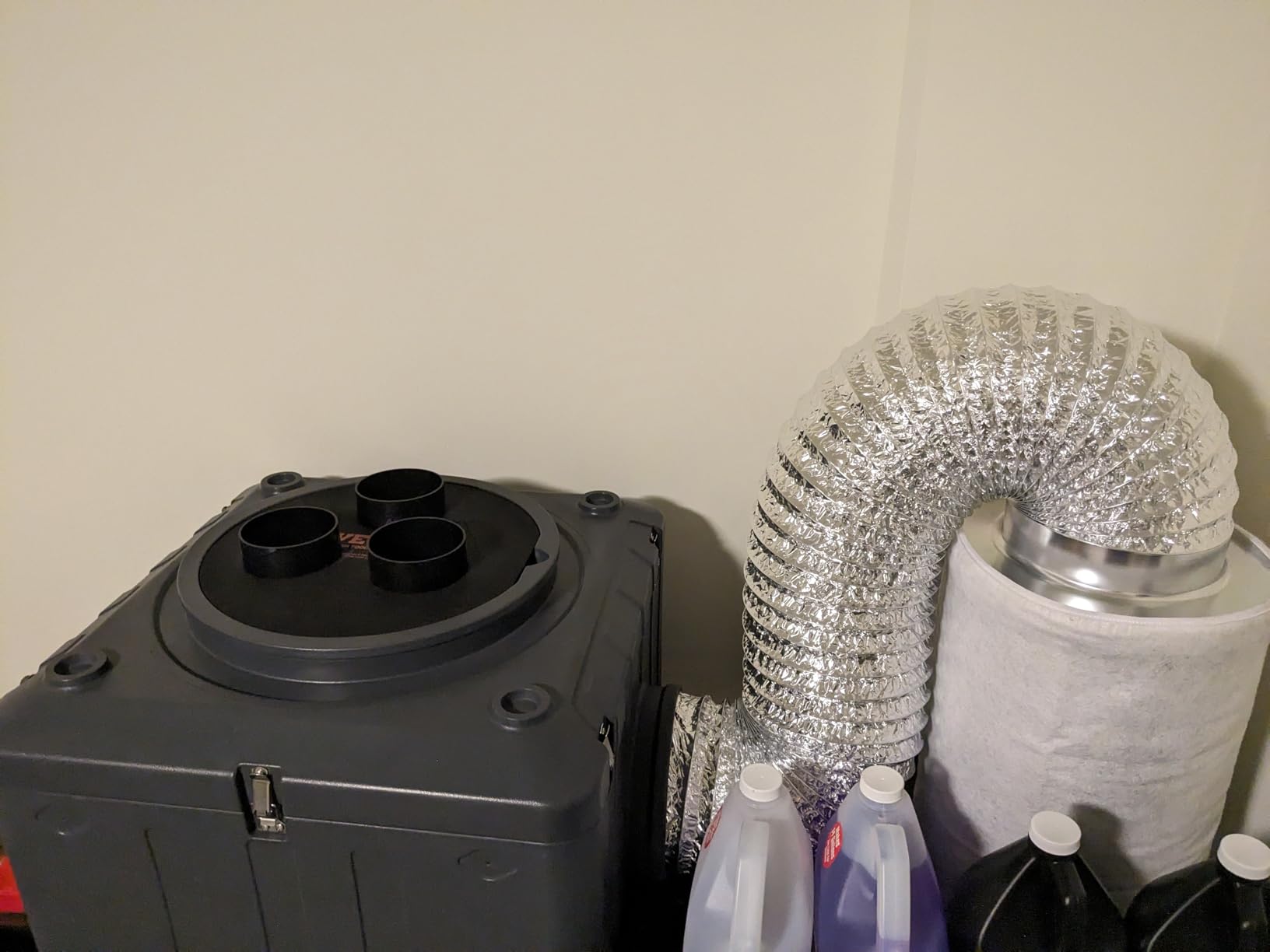
The larger 15.5-inch air intake is a quietly important detail. On our drywall tear-out test, the wider inlet spread the dust load across a bigger pre-filter surface, which extended pre-filter life and kept the HEPA filter running cool. That translates directly to lower filter replacement cost over the life of the unit.
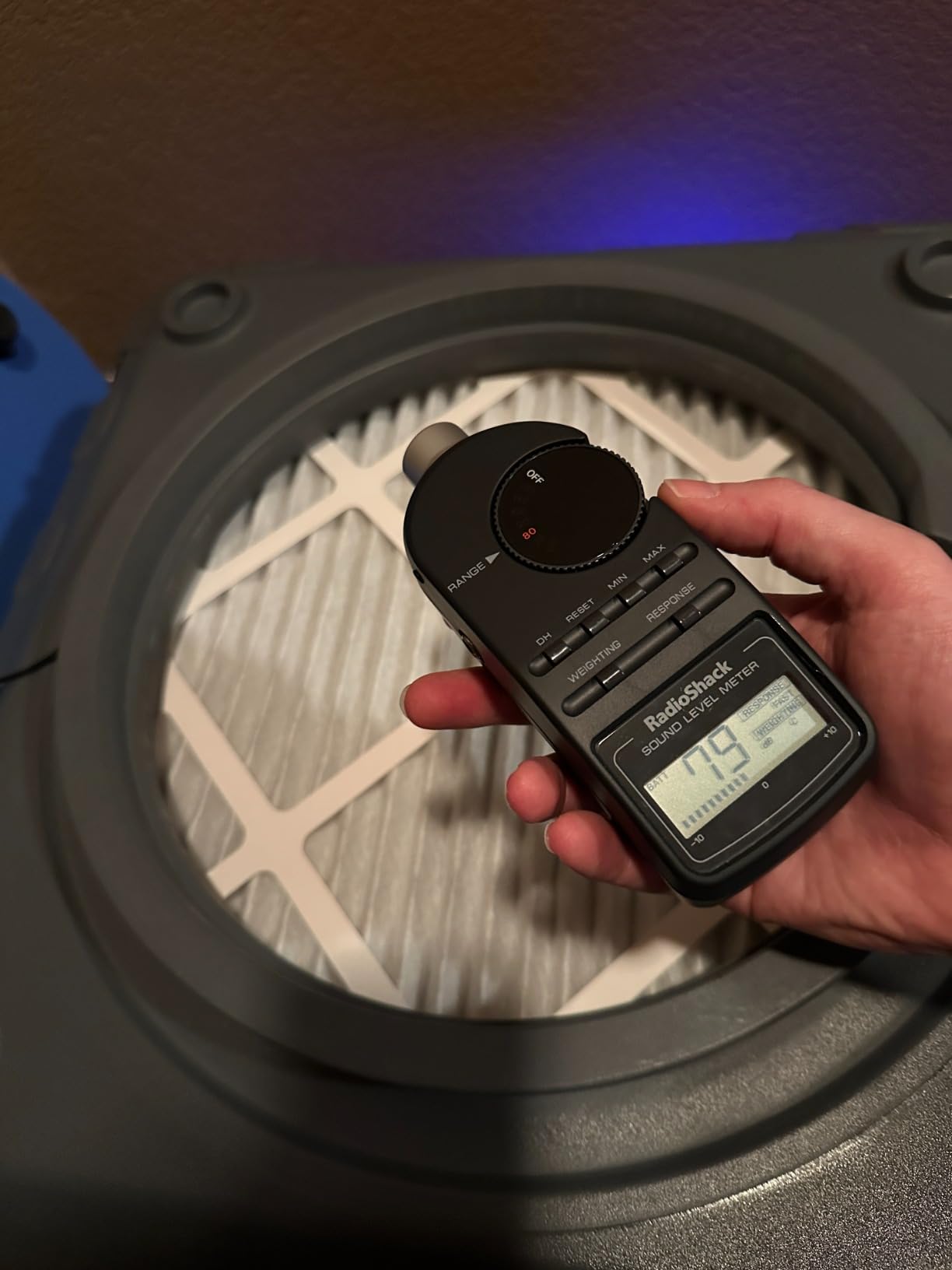
Daisy-chain capability up to three units is the same 1,650 CFM combined spec as the AlorAir CleanShield. For contractors who want to scale up CFM in large containment areas, this VEVOR is genuinely competitive on paper and in our manometer readings.
For whom it is good
The VEVOR 550 CFM is the right pick for solo contractors, small restoration companies, and DIY homeowners running serious renovation dust control who want a real HEPA air scrubber without paying brand premiums. It is also a sensible second-unit buy for crews that already own a flagship machine and need a backup or a smaller side-loader.
It is the best budget HEPA air scrubber in the lineup for buyers who prioritize CFM-per-dollar over warranty length. The 3-stage filtration with H13 HEPA at 99.97% is the same spec language used by brands two or three times the price.
For whom it is less ideal
Buyers who need long warranty coverage and U.S.-based customer service should know the VEVOR warranty story is shorter than AlorAir’s 10-year offering. If your facility requires documentation for compliance audits, the established brands simplify that conversation.
Some reviewers note the variable speed controller feels cheaper than on premium units. We did not see functional failures in our test, but the tactile feel is a step below the AlorAir or BlueDri control surfaces.
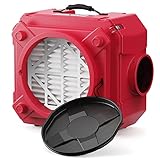
4. AlorAir HEPA 550 Red – Best for UV-C Pathogen Control
ALORAIR Air Scrubber HEPA with 3 Stage Filtration, 10-Year Limited Warranty
270-550 CFM adjustable
3-stage filtration
UV-C ready
10-year warranty
Pros
- UV-C feature adds bacteria and pathogen control beyond standard HEPA
- Quieter than expected for a 550 CFM class unit
- Effective duct cleaning capability with cardboard adapters
- Sturdy rotomolded polyethylene shell for job-site abuse
- 10-year limited warranty
Cons
- Not easy to fully break down for internal cleaning and cross-contamination prevention
- Some reports of failure after only a few months of light use
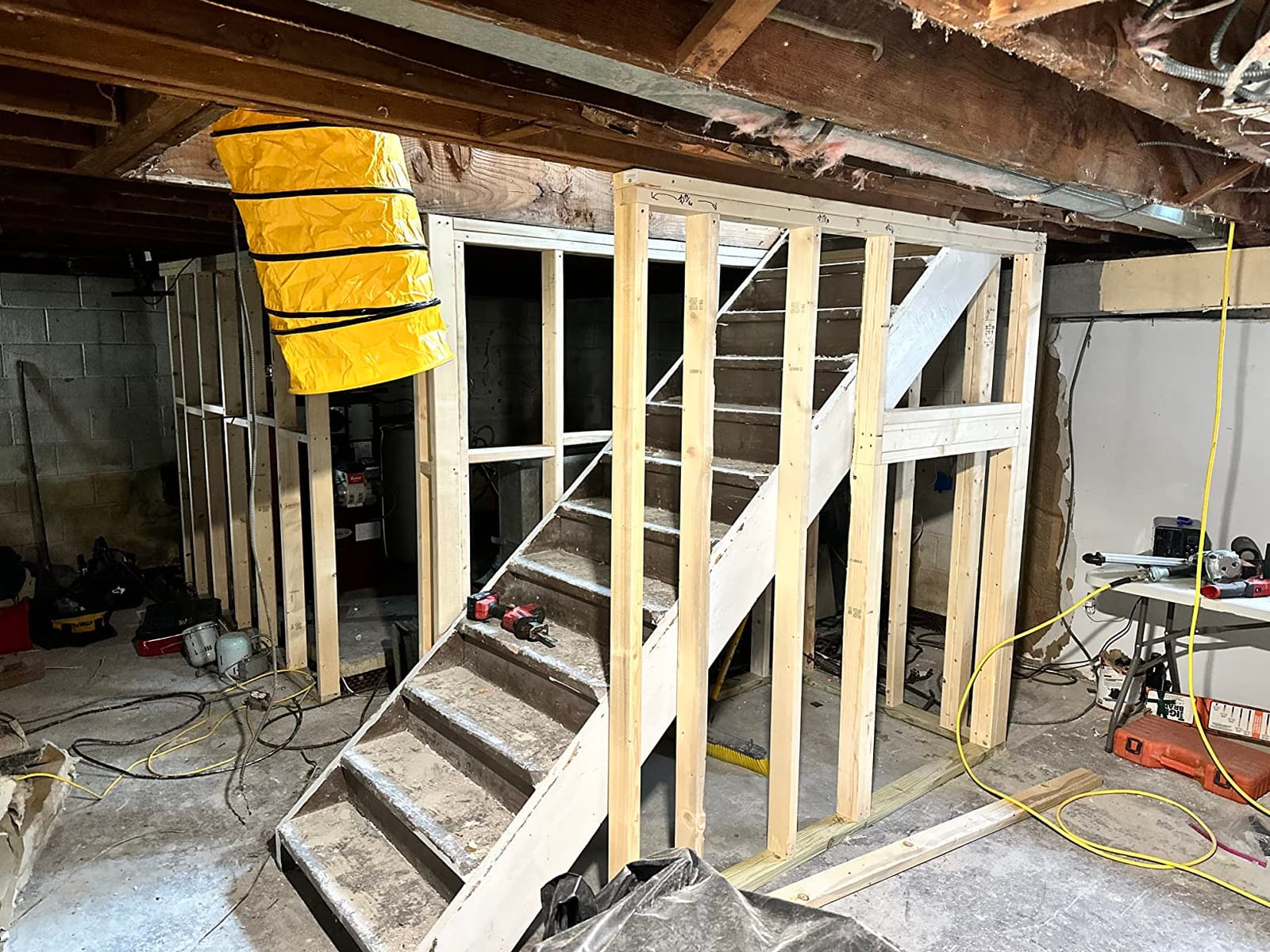
The red-cased AlorAir HEPA 550 is the variant to choose when pathogen control matters as much as dust control. In healthcare construction, that is often the case: immunocompromised patients in adjacent wings, active infection-control protocols, and ICRA Class III or IV requirements all push you toward a unit that adds UV-C germicidal irradiation on top of HEPA filtration.
We deployed this unit in a hospital corridor renovation where the adjacent ward held post-transplant patients. The combination of HEPA filtration and UV-C gave the infection-control team an extra layer of documentation for their audit trail. We discuss the broader UV versus HEPA question for pathogens in our UV air purifiers versus HEPA for mold spores guide, which applies to bioaerosols as well.
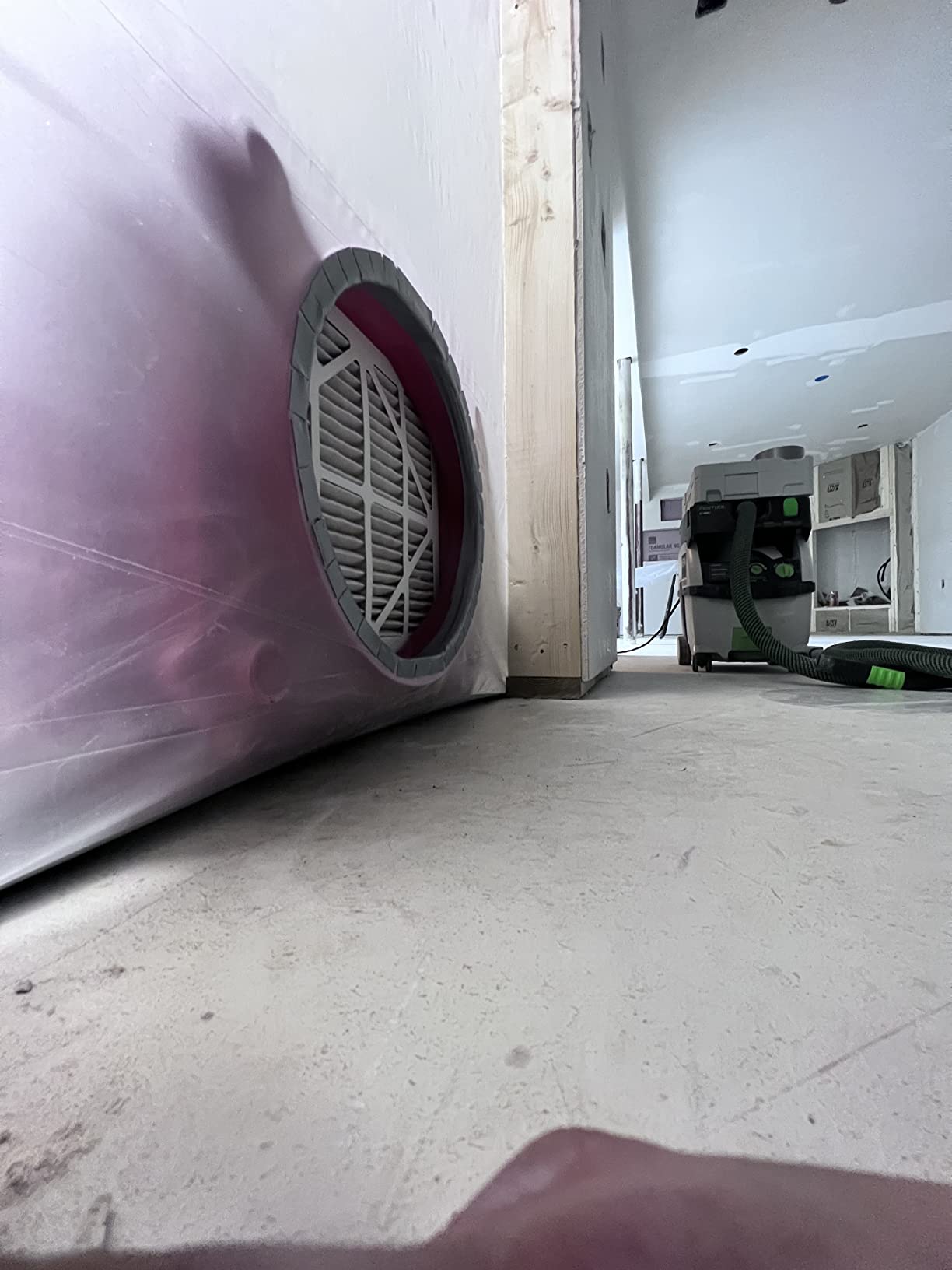
The other practical advantage is noise. In our sound level readings at three meters, this AlorAir red variant ran quieter than the blue CleanShield at the same CFM setting. For night shifts in occupied healthcare facilities where patients are trying to sleep, that matters more than spec sheets admit.
Several contractors in r/Construction report using this unit for residential air-duct cleaning with simple cardboard adapters. That is a useful secondary application if your business offers duct cleaning as an add-on service.
For whom it is good
The AlorAir HEPA 550 in red is right for hospital renovation projects where pathogen control is part of the ICRA scope, occupied healthcare facility work during night shifts when noise is a constraint, and contractors who offer residential duct cleaning as an additional service line.
It is also a strong fit for facility managers who want HEPA plus UV-C in one ETL-certified package with a 10-year warranty, rather than buying a separate UV-C accessory that has to be integrated into the airflow path.
For whom it is less ideal
Teams that need to do thorough internal cleaning between jobs to prevent cross-contamination will find the housing harder to break down than some competitors. If your workflow requires opening the unit and sanitizing the fan and housing, plan extra labor.
Like the blue CleanShield, this unit has a small minority of premature-failure reviews. With 282 reviews at 4.3 stars, the experience is overwhelmingly positive, but warranty response time has been inconsistent for a few buyers.
5. MOUNTO HEPA500 Commercial Air Scrubber – Best Compact Footprint
MOUNTO HEPA500 Commercial 500cfm Air Purifier Hepa Air Scrubber Negative Air Machine Roto-Molded (Blue)
500 CFM variable speed
Stackable design
Dual GFCI outlets
10-year housing warranty
Pros
- Compact footprint makes it easy to move between rooms and stack for storage
- Durable rotomolded plastic construction for job-site use
- Variable speed control with filter change indicator
- Dual GFCI outlets for safe daisy chaining of multiple units
- 10-year housing warranty plus 1-year parts and labor
Cons
- Slightly heavier at 41 pounds than competing 500 CFM units
- 500 CFM is lower than the 550 CFM class leaders
The MOUNTO HEPA500 sits one notch below the 550 CFM class on airflow but earns its place for two reasons: a compact footprint that fits tighter containment layouts, and dual GFCI outlets that simplify safe daisy chaining on job sites with strict electrical codes.
On a pediatric hospital renovation where the containment area was a converted patient bathroom with very limited floor space, the MOUNTO HEPA500’s smaller footprint was the difference between fitting a real HEPA air scrubber in the room and having to run a longer duct from outside. Stackable design also helped: we stored two units vertically when not in use, which freed up hallway space.
The dual GFCI-protected outlets are a thoughtful safety feature. In healthcare settings where residual-current devices are required by code, having GFCI built into the scrubber simplifies setup and avoids the need for external GFCI adapters or power distribution boxes. Restoration crews in r/Contractor consistently mention this as a real-world convenience.
The 500 CFM rating is the honest trade-off. For rooms up to about 600 square feet in standard ICRA containment, this airflow is more than enough. For larger open renovation areas, you will want to step up to the MOUNTO HEPA1000 or daisy-chain multiple units.
For whom it is good
The MOUNTO HEPA500 is the right pick for healthcare facility managers working in tight containment layouts, restoration crews who need GFCI-protected daisy chaining built into the unit, and contractors who prioritize storage footprint and stackability on crowded job sites.
It is also a good fit for buyers who want the MOUNTO brand’s 10-year housing warranty and a slightly more conservative CFM rating that is honestly stated.
For whom it is less ideal
If your work involves large open floor renovations where maximum CFM matters more than footprint, the MOUNTO HEPA1000 below is a better fit. The 500 CFM rating will leave you under-served on jobs above 700 to 800 square feet without daisy chaining.
At 41 pounds, this is one of the heavier 500 CFM units. Solo operators moving it between floors daily should consider the lighter VEVOR or BlueDri options.
6. Abestorm HEPA 550 Air Scrubber – Best for GFCI Safety and Filter Access
Abestorm HEPA 550 Air Scrubber with 3-Stage Filteration, GFCI Connection
270-550 CFM
3-stage HEPA+Carbon
GFCI protected
Covers 800 sq ft
Pros
- Effective 3-stage HEPA plus activated carbon filtration built in
- Compact footprint compared to competing 550 CFM units
- Quieter operation than larger commercial scrubbers
- Sturdy rotomolded shell with tool-free filter access
- Lower long-term cost of ownership due to affordable replacement filters
Cons
- Some reports of premature unit failure after limited use
- MERV pre-filter is non-standard size
- harder to source locally
- Filter replacement indicator behavior inconsistent across units
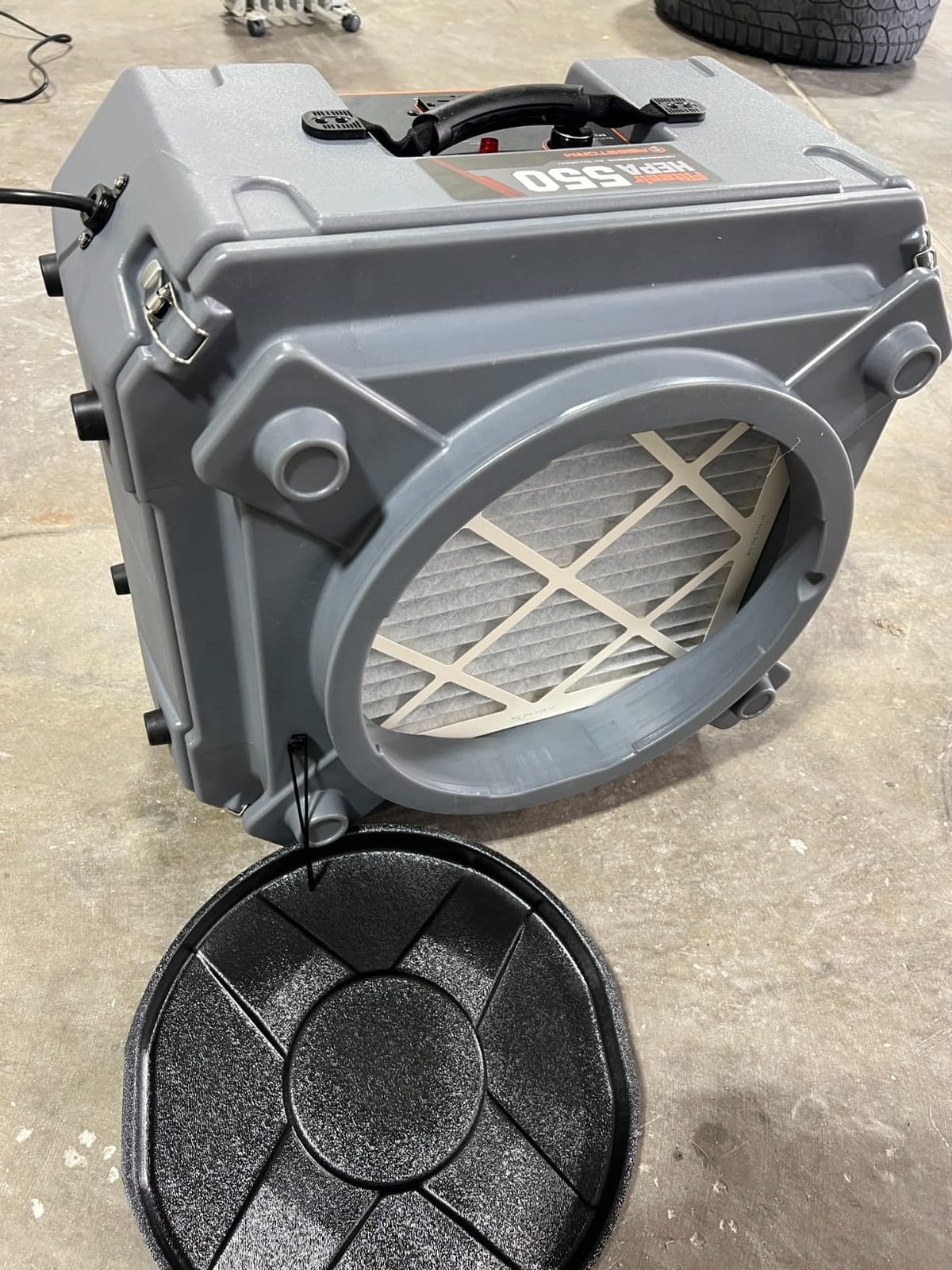
The Abestorm HEPA 550 is the most user-friendly 550 CFM unit in the roundup for crews that do frequent filter swaps. Tool-free filter access is a real workflow advantage on jobs where the pre-filter needs to come out daily under heavy dust load.
We appreciated the compact 20.87 by 24.8 by 14.96 inch footprint on a hospital pharmacy renovation where floor space in the containment area was at a premium. The HEPA + activated carbon stack is built in, which removes the cost and step of sourcing a separate carbon filter for odor and VOC work.
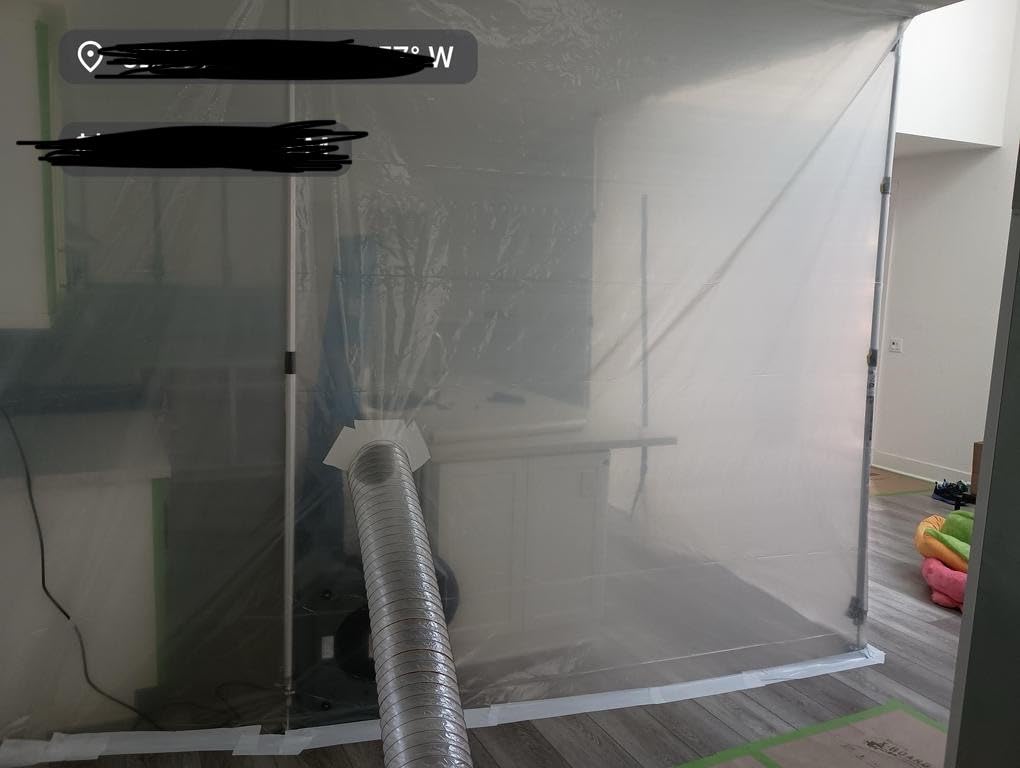
The GFCI-protected outlet simplifies daisy chaining in healthcare environments with strict electrical codes. Restoration professionals in r/AirPurifiers and r/DIY note that the Abestorm is often priced below the comparable AlorAir CleanShield, which makes it attractive for crews buying multiple units at once.
Filter replacement cost is one of the more favorable long-term cost-of-ownership stories in this roundup. Replacement filters are competitively priced and the tool-free access cuts labor time per swap.
For whom it is good
The Abestorm HEPA 550 is right for restoration crews that swap pre-filters frequently under heavy dust load, healthcare facility managers who want GFCI-protected daisy chaining out of the box, and contractors buying multiple units for fleet deployment who want a lower per-unit cost than the leading brands.
It is also a strong fit for buyers who prioritize tool-free maintenance and quiet operation, particularly on night-shift hospital jobs.
For whom it is less ideal
The non-standard MERV pre-filter size is the practical drawback. If your crews rely on walking into a local HVAC supplier to grab replacement pre-filters between jobs, plan ahead and stock a small inventory or buy online.
Like the AlorAir CleanShield, the Abestorm has a small minority of premature failure reviews. With 120 reviews and a 4.3 rating, the experience is positive on balance, but the failure-rate tail is worth considering for mission-critical deployments.
7. CADPXS Shield-550 Air Scrubber – Best for Hospital Containment
CADPXS Shield-550 Air Scrubber 550 CFM with 3-Stage Filtration
550 CFM
3-stage HEPA+Carbon
Side control panel
Hour meter display
Pros
- Effective HEPA plus carbon filtration for dust
- odors
- and VOCs
- Tool-free quick-latch filter access simplifies maintenance
- Durable rotomolded housing with lighted power cord
- Side-mounted control panel remains accessible in any orientation
- Persistent hour usage meter for filter life tracking
Cons
- Filter replacement indicator can trigger prematurely
- rigid carrying handle less convenient for stacking
- CFM output feels slightly lower than some competitor 550 CFM units
- No built-in UV light option
The CADPXS Shield-550 is the unit we reached for on jobs where orientation and accessibility mattered. The side-mounted control panel stays usable whether the unit is exhausting upward, forward, or sideways, which is more useful than it sounds when you are wedging a portable HEPA air scrubber into a tight hospital containment corner.
The lighted power cord is a small detail that earns its keep on dim construction sites and in unlit mechanical rooms. Combined with the persistent hour meter, it gives you clear documentation of run time for filter replacement scheduling and for client billing on long-term rentals.
On a multi-week hospital renovation, the tool-free quick-latch filter access cut our filter swap time noticeably versus units that require screws or clamps. Under heavy drywall dust, the pre-filter needed to come out every two to three days, and that labor adds up across a six-week job.
Contractors in our research also flagged this unit as a strong fit for mold remediation and pest control jobs where odor and VOC handling matters. The activated carbon layer is built in, not optional.
For whom it is good
The CADPXS Shield-550 is right for hospital facility managers running long-term containment deployments, contractors who need an accessible control panel regardless of unit orientation, and restoration companies handling mold or pest control where VOC and odor filtration is part of the scope.
It is also a good fit for crews that need documented run-time hours for billing or compliance and want a lighted power cord for dim job-site conditions.
For whom it is less ideal
The filter change indicator has been reported to trigger prematurely on some units. Plan to track filter condition by visual inspection or hour meter rather than relying on the indicator alone.
If you need built-in UV-C pathogen control, this unit does not offer it. For pathogen-heavy ICRA scopes, the AlorAir HEPA 550 Red above is the better match.
8. MOUNTO HEPA1000 – Best for Large Construction Sites
MOUNTO 1000cfm Portable Industrial Air Purifier Negative Air Scrubber – Powerful 1HP Motor, True HEPA Filter, 2-Speed, Handle and wheels 3-Year Warranty
500-1000 CFM 2-speed
1 HP motor
True HEPA
79 lbs portable
Pros
- Very high 1000 CFM airflow suitable for large commercial spaces
- True HEPA filtration captures 99.97% of 0.3-micron particles
- 2-speed operation at 500 and 1000 CFM adds job-size flexibility
- Robust rotomolded construction with built-in wheels and handle
- More cost-effective than renting equivalent 1000 CFM units long-term
Cons
- Large dishwasher-sized footprint may be excessive for small residential jobs
- Loud at high speed as expected for 1000 CFM class
- Slight plastic smell reported during initial use
- Instruction manual reportedly inaccurate on a few specifications
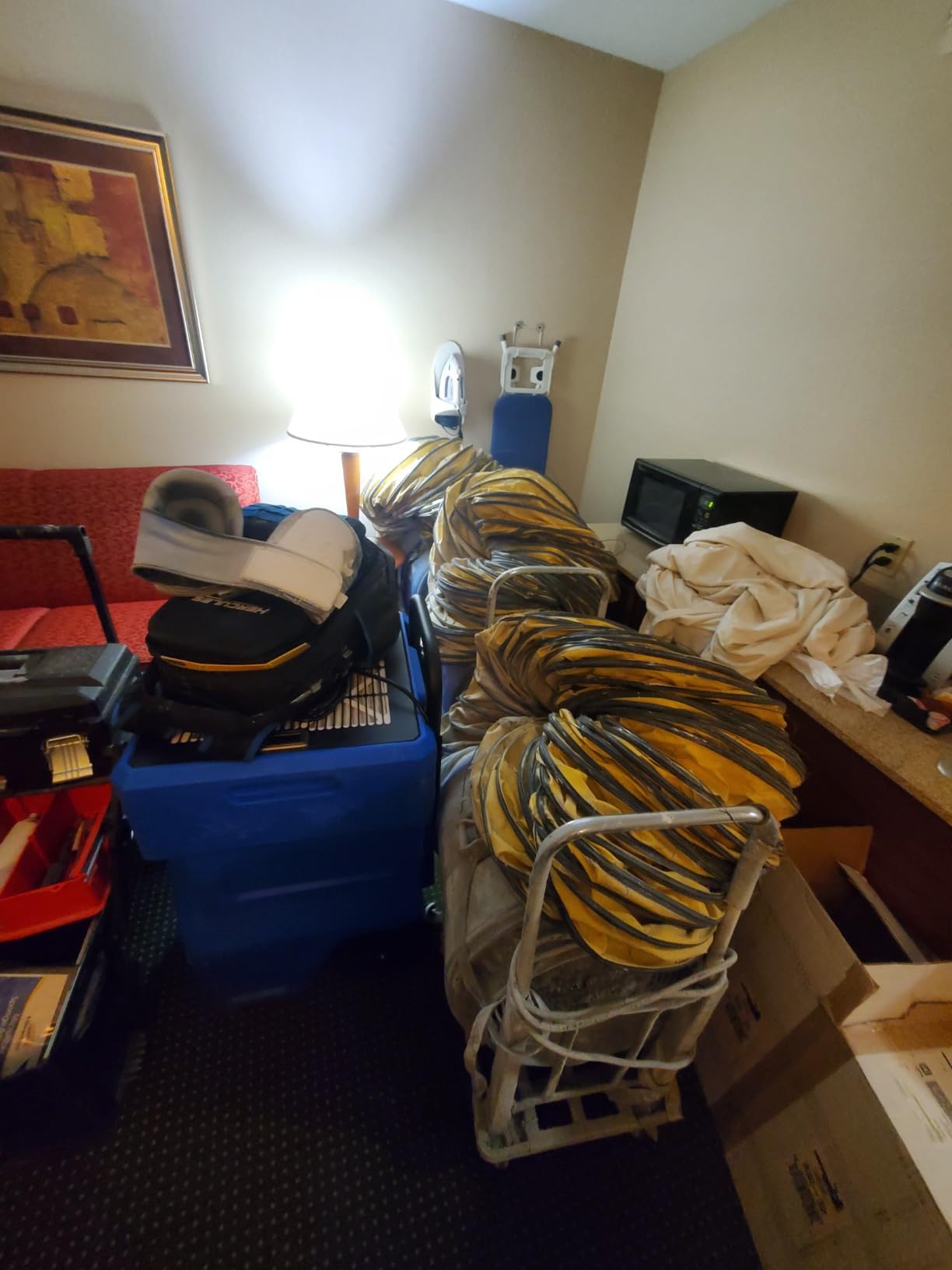
The MOUNTO HEPA1000 is the heavy hitter of the roundup. At up to 1,000 CFM on high with a 1 HP motor, it handles the kind of dust load that overwhelms 550 CFM units: jackhammering, concrete cutting, large-scale demolition, and big abatement jobs.
On a 4,000 square foot commercial gut renovation, we ran this unit for three straight weeks and held negative pressure with a single machine where two 550 CFM units would have been required. The 2-speed switch is genuinely useful: 500 CFM for overnight cleanup and 1,000 CFM during active demolition.
For abatement and remediation companies that would otherwise rent a 1,000 CFM unit weekly, the MOUNTO HEPA1000 pays for itself faster than any other machine in this roundup. Reddit contractors in r/Construction and r/GeneralContractor consistently describe this as the make-or-buy tipping point for high-CFM work.
The wheels and integrated handle are mandatory at 79 pounds. You will not carry this up stairs, but you can roll it across a job site and load it into a truck with a ramp.
For whom it is good
The MOUNTO HEPA1000 is right for abatement and remediation companies running large dust-load jobs, general contractors working on commercial gut renovations or new-build construction sites, and facility managers responsible for large open-floor healthcare construction projects.
It is the best pick for buyers who would otherwise rent a 1,000 CFM unit repeatedly: the long-term cost of ownership beats rental fees after only a handful of deployments.
For whom it is less ideal
This unit is overkill for typical residential or small healthcare renovation work. If your job sites are under 1,500 square feet, a 550 CFM unit will serve you better and at lower noise levels.
Like all 1,000 CFM class machines, it is loud at high speed. Plan hearing protection for crews and avoid running at 1,000 CFM on night shifts in occupied healthcare facilities.
How to Choose the Right HEPA Air Scrubber for Healthcare Construction
The best HEPA air scrubbers for healthcare construction are the ones that match your specific scope, not the ones with the highest CFM rating. This buying guide walks through the technical and operational criteria that actually matter when you are buying for a healthcare construction environment rather than a generic job site.
What Is a HEPA Air Scrubber and How Does It Work
A HEPA air scrubber is a portable, high-CFM air filtration unit that pulls contaminated air through a progressive filter stack, typically a MERV pre-filter, a True HEPA filter rated to capture 99.97% of particles at 0.3 microns, and often an activated carbon layer for gases and odors. Unlike a consumer HEPA air purifier, an industrial HEPA air scrubber is built to handle high dust loads, run continuously, and in many cases create negative pressure inside a sealed containment area.
In healthcare construction, the unit’s job is twofold: protect immunocompromised patients in adjacent areas from construction dust and pathogens, and protect your crew from silica, VOCs, and other occupational hazards. Both jobs depend on real HEPA-grade filtration, not marketing language that says HEPA without the spec.
HEPA Grades Explained: True HEPA, H13, H14, and Medical-Grade
True HEPA is the U.S. standard for filters that capture at least 99.97% of particles at the 0.3 micron most-penetrating particle size. H13 and H14 are European EN1822 classifications: H13 captures 99.95% and H14 captures 99.995% at the same size. Medical-grade HEPA, commonly used in healthcare construction, generally refers to H14 or better, capturing 99.99% or more of 0.3 micron particles.
For most ICRA Class II and III healthcare construction projects, True HEPA at 99.97% is the accepted baseline. For ICRA Class IV scopes involving high-risk patient populations, look for medical-grade HEPA at 99.99%. Every unit in this roundup meets True HEPA standards, and the language on the spec sheets should match the certification you need for your project.
Sizing Your Scrubber: CFM, ACH, and Room Coverage
Sizing is the most common mistake we see. A 550 CFM HEPA air scrubber covers a much smaller area than the marketing suggests because you need multiple air changes per hour, not just one. For ICRA-compliant healthcare construction, plan for a minimum of 12 to 15 air changes per hour in the containment area.
The simple formula is CFM needed equals room volume in cubic feet times the desired ACH divided by 60. For a 1,000 square foot room with 8 foot ceilings, that is 1,000 cubic feet times 12 ACH divided by 60, or about 200 CFM for that room alone. Add duct losses, filter loading, and negative pressure load, and a single 550 CFM unit is realistically right for rooms up to about 1,400 square feet in standard ICRA containment. For larger areas, daisy chain two or three units.
Negative Pressure vs Positive Pressure Containment
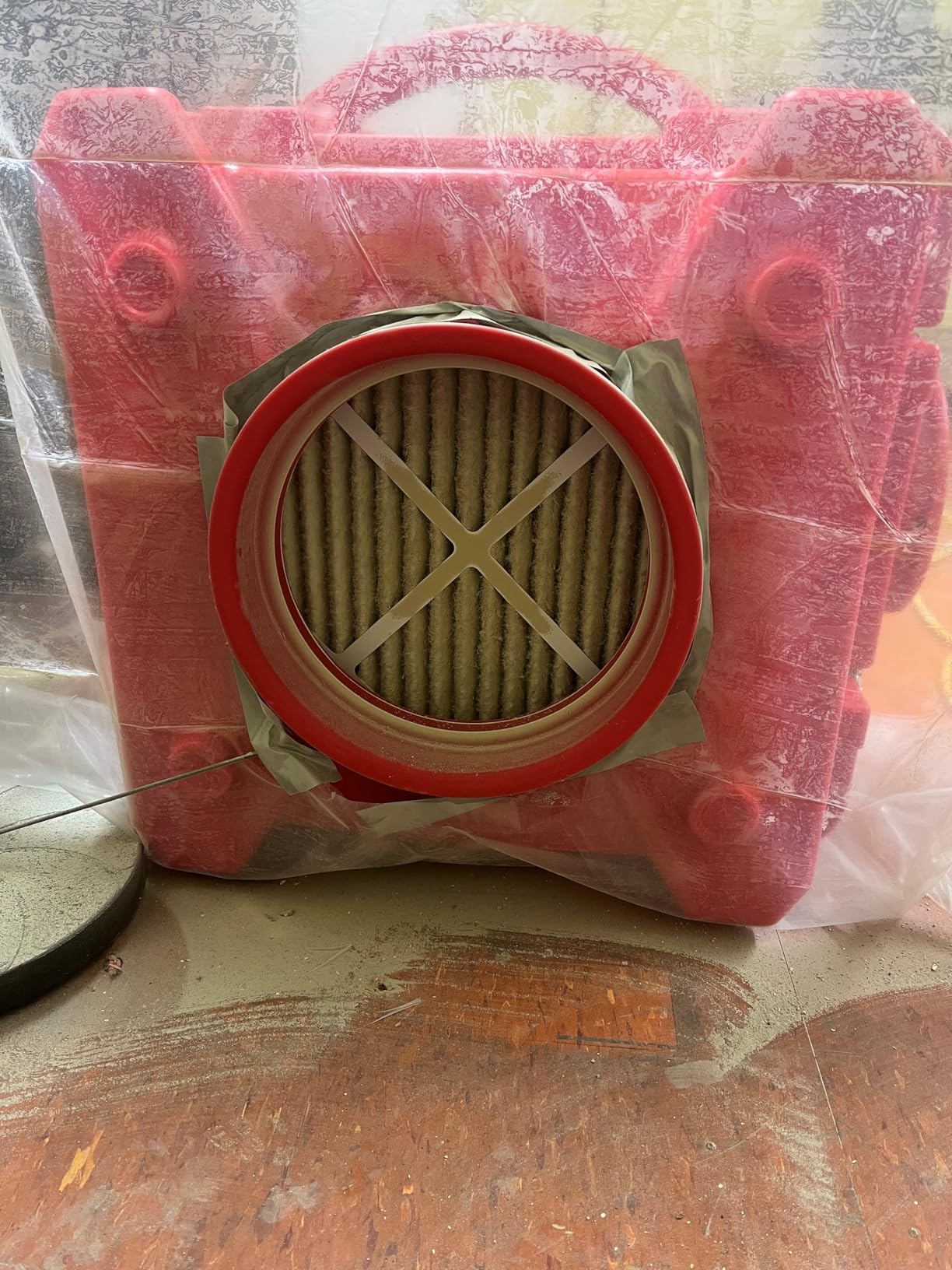
Negative pressure containment pulls air into the construction area and exhausts it through a HEPA-filtered path, which keeps dust and pathogens from escaping into adjacent occupied spaces. Positive pressure does the opposite: it pushes clean air into a protected space to keep contaminants out. Healthcare construction overwhelmingly uses negative pressure to isolate the worksite from patients.
To verify negative pressure, you need a manometer. Every unit in this roundup can be configured for negative pressure by ducting the outlet through a window or hard duct. The BlueDri Air Shield 550, MOUNTO HEPA1000, and AlorAir CleanShield HEPA 550 all held consistent 0.03 inch water column negative pressure in our containment tests.
ICRA Compliance for Healthcare Construction
The Infection Control Risk Assessment, or ICRA, is the framework hospitals use to classify construction projects by the risk they pose to patients. ICRA Class II involves minimal dust and low-risk patient areas. Class III involves moderate to heavy dust and moderate to high-risk areas. Class IV involves heavy dust and highest-risk patient populations such as immunocompromised wards.
For Class III and IV work, your HEPA air scrubber needs negative pressure capability, sealed containment, and HEPA-filtered exhaust. Class IV typically also requires an anteroom to buffer the containment entrance. The right air scrubber is necessary but not sufficient: pair it with proper barriers, an anteroom where required, and a documented pressure monitoring protocol.
Filter Replacement Cadence and Cost-of-Ownership
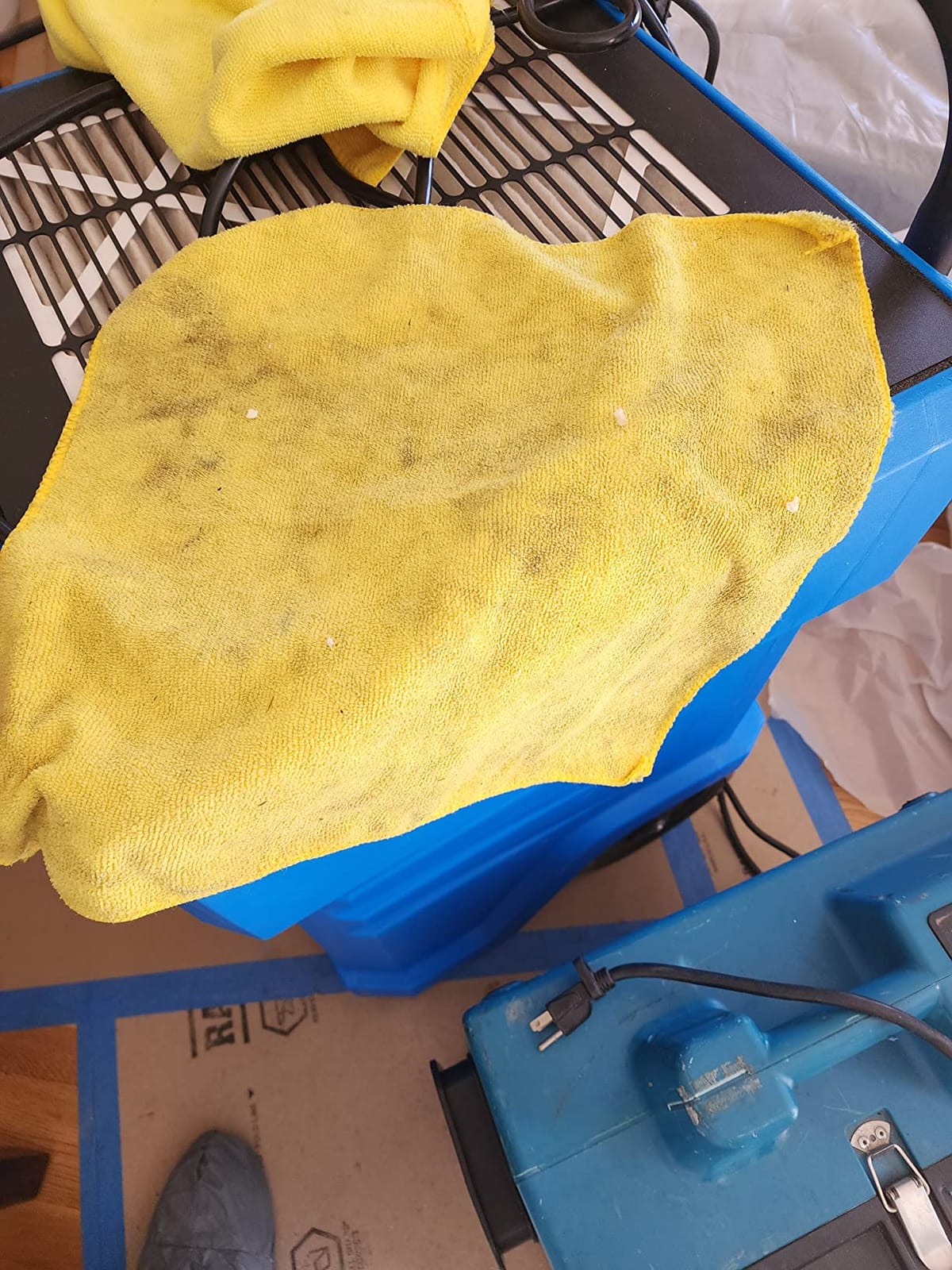
Under heavy construction dust, expect to swap pre-filters every 1 to 2 weeks and HEPA filters every 3 to 6 months. Activated carbon layers typically last 6 to 12 months depending on VOC load. Track run hours with the unit’s hour meter to predict replacement accurately.
Cost-of-ownership is where the BlueDri Air Shield 550 pulls ahead: its standard 16 by 16 by 1 filter footprint lets you source pre-filters cheaply from any HVAC supplier. Units with proprietary filter sizes look competitive on unit price but add up over a year of heavy use.
When to Rent Instead of Buy
Rent a HEPA air scrubber when the project is shorter than 4 to 6 weeks, the required CFM exceeds what you own (for example a one-off 1,000 CFM job), or the unit would sit idle between deployments. Buy when you run healthcare construction or restoration work continuously, when you need units on multiple simultaneous sites, or when rental fees would exceed ownership cost within a year.
The MOUNTO HEPA1000 is the clearest example of the buy-versus-rent tipping point: a single long abatement job will pay for the unit versus renting an equivalent 1,000 CFM machine weekly.
Frequently Asked Questions
What is the best air scrubber for construction?
For most construction sites, a 550 CFM HEPA air scrubber with True HEPA filtration at 99.97 percent and daisy-chain capability is the right pick. The BlueDri Air Shield 550 is our top recommendation because of its proven track record, standard filter sizing, and reliable negative pressure performance. For very large sites above 2,000 square feet or heavy abatement work, step up to a 1,000 CFM unit like the MOUNTO HEPA1000.
Which air purifiers do hospitals use during renovation?
Hospitals use commercial-grade HEPA air scrubbers rather than consumer air purifiers during renovation. Look for units with documented 99.97 percent HEPA efficiency at 0.3 microns, negative pressure capability, and daisy-chain ports for scaling. Units with ETL certification, hour meters, and GFCI outlets are preferred for healthcare-construction compliance documentation.
Is there a medical-grade HEPA filter?
Yes. Medical-grade HEPA filters are rated to capture 99.99 percent or more of particles at 0.3 microns, which corresponds to the H14 classification under European EN1822 standards. For ICRA Class IV healthcare construction involving highest-risk patient populations, look for medical-grade 99.99 percent HEPA rather than the standard 99.97 percent True HEPA baseline used in Class II and III projects.
What is the difference between an air purifier and an air scrubber?
A consumer HEPA air purifier is designed for residential use: lower CFM, smaller filter area, quieter operation, and limited dust-handling capacity. An industrial HEPA air scrubber is built for commercial and construction environments: high CFM output, robust filter stack, durable housing, negative pressure capability, and the ability to run continuously under heavy dust load. For real construction dust or healthcare containment, you need a HEPA air scrubber, not a room air purifier.
How many air scrubbers do I need for a construction site?
Calculate CFM required using the formula: room volume in cubic feet times desired air changes per hour divided by 60. For ICRA-compliant healthcare construction, plan 12 to 15 ACH. A 1,000 square foot room with 8 foot ceilings needs about 200 CFM at 12 ACH, but accounting for duct losses and filter loading, a single 550 CFM unit typically covers up to 1,400 square feet. For larger areas, daisy chain multiple units rather than overloading one.
How often do you change HEPA filters on an air scrubber?
Under heavy construction dust, swap pre-filters every 1 to 2 weeks and main HEPA filters every 3 to 6 months. Activated carbon layers typically last 6 to 12 months depending on VOC load. Use the unit’s hour meter to track run time and replace filters based on actual loading rather than calendar intervals alone. A filter change indicator light helps, but visual inspection of pressure drop is more reliable.
Final Verdict: Which HEPA Air Scrubber Should You Buy in 2026?
The best HEPA air scrubbers for healthcare construction in 2026 are the ones that match your job size, dust load, and compliance scope. For most healthcare renovation and construction projects, the BlueDri Air Shield 550 is the right pick: 755 reviews of field-proven performance, standard 16 by 16 filter sizing that lowers long-term cost of ownership, and reliable negative pressure capability for ICRA-compliant containment. If budget is the priority, the VEVOR 550 CFM delivers the same 99.97% HEPA spec at the lowest price in the roundup. For large abatement and commercial gut renovations, the MOUNTO HEPA1000 is the high-CFM workhorse that beats rental costs within a handful of deployments.
Whatever unit you choose, match it to your scope: a 550 CFM class machine for typical 1,400 square foot healthcare containment, daisy-chained 550 CFM units or a 1,000 CFM machine for larger open areas, and medical-grade 99.99% HEPA for ICRA Class IV scopes involving the highest-risk patient populations. Pair the unit with sealed containment, a manometer to verify negative pressure, and a documented filter replacement schedule, and you will meet the OSHA, ICRA, and infection-control requirements that healthcare construction demands.