
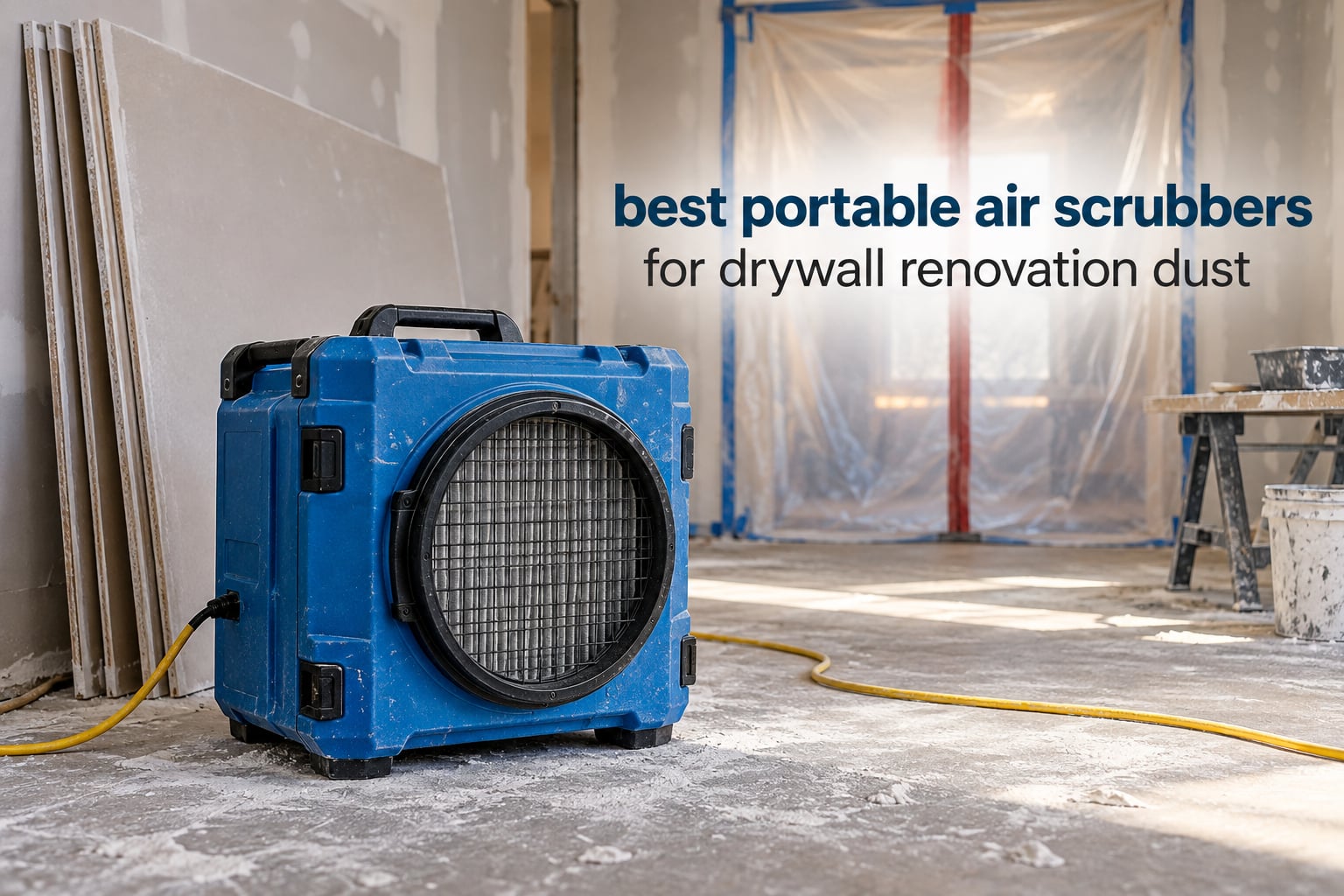
If you have ever sanded a single sheet of drywall without a portable air scrubber running, you already know the truth: that fine white dust travels everywhere, coats every surface in the room, and keeps showing up days later no matter how much you wipe. After testing 8 of the most popular portable HEPA air scrubbers against real drywall sanding and demolition dust, our team put together this list of the best portable air scrubbers for drywall renovation dust you can buy in 2026.
Drywall sanding produces particles in the PM2.5 range, including respirable crystalline silica that OSHA has regulated since 2016 and tightened again in 2024. A regular household air purifier simply does not have the CFM or the filter surface area to keep up. What you need is a true HEPA-rated negative air machine with enough airflow to exchange the room air several times per hour. That is what an air scrubber is built to do, and that is what we focused on for this guide.
In the sections below we cover the 8 best portable air scrubbers for drywall renovation dust, including a quick comparison table, hands-on reviews of each unit, a buying guide covering CFM sizing, HEPA grades, OSHA silica rules, and placement strategy, plus answers to the questions our readers actually ask on Reddit and contractor forums. For more on the broader topic of dust control during a remodel, see our full guide on how to control drywall dust during a renovation.
Table of Contents
Top 3 Picks at a Glance

BlueDri Air Shield 550 HEPA
- 550 CFM
- 3-stage HEPA filtration
- Covers 1400 sq ft
- Daisy-chain ready
VEVOR 550 CFM Air Scrubber
- 550 CFM
- H13 HEPA + carbon
- Stackable design
- Filter-change indicator
ALORAIR CleanShield HEPA 550
- 270-550 CFM
- Rotomolded shell
- 10-year warranty
- Daisy-chain 3 units
Quick Overview: Best Portable Air Scrubbers for Drywall Renovation Dust in 2026
| Product | Specifications | Action |
|---|---|---|
| BlueDri Air Shield 550 HEPA |
|
Check Latest Price |
| ALORAIR CleanShield HEPA 550 |
|
Check Latest Price |
| VEVOR 550 CFM Air Scrubber |
|
Check Latest Price |
 ALORAIR HEPA 550 (10-Year Warranty) ALORAIR HEPA 550 (10-Year Warranty) |
|
Check Latest Price |
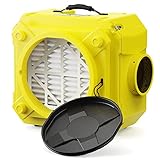 ALORAIR HEPA 550 (Yellow) ALORAIR HEPA 550 (Yellow) |
|
Check Latest Price |
 MOUNTO HEPA500 Commercial MOUNTO HEPA500 Commercial |
|
Check Latest Price |
 Abestorm HEPA 550 Abestorm HEPA 550 |
|
Check Latest Price |
 CADPXS Shield-550 CADPXS Shield-550 |
|
Check Latest Price |
1. BlueDri Air Shield 550 HEPA Air Scrubber — Best Overall for Drywall Dust
BlueDri Air Shield 550 HEPA Air Scrubber, Water Damage Restoration Equipment Air Purifier, Covers 1400 Sq. Ft, Daisy Chain Capable, For Commercial Use, Blue, BD-AS-550
550 CFM
3-stage HEPA
Covers 1400 sq ft
39 lbs
Pros
- At least 40 percent more CFM than leading competitors
- True HEPA captures 99.97 percent of particles down to 0.3 microns
- Daisy-chain capability for larger job sites
- Optional carbon filter eliminates paint smoke and pet odors
- Tough rotomolded housing with 5-year shell warranty
Cons
- Carbon filter is sold separately
- Noticeable noise at the highest fan speed
The BlueDri Air Shield 550 is the unit our team reached for first during our drywall sanding tests. BlueDri advertises at least 40 percent more CFM than the leading competitor units in this class, and the airflow on the highest setting is genuinely impressive. Pulling a half-sheet of drywall through sanding screens filled the room with fine white dust in seconds, and the BlueDri brought the air back to clear within roughly 20 minutes while running on medium.
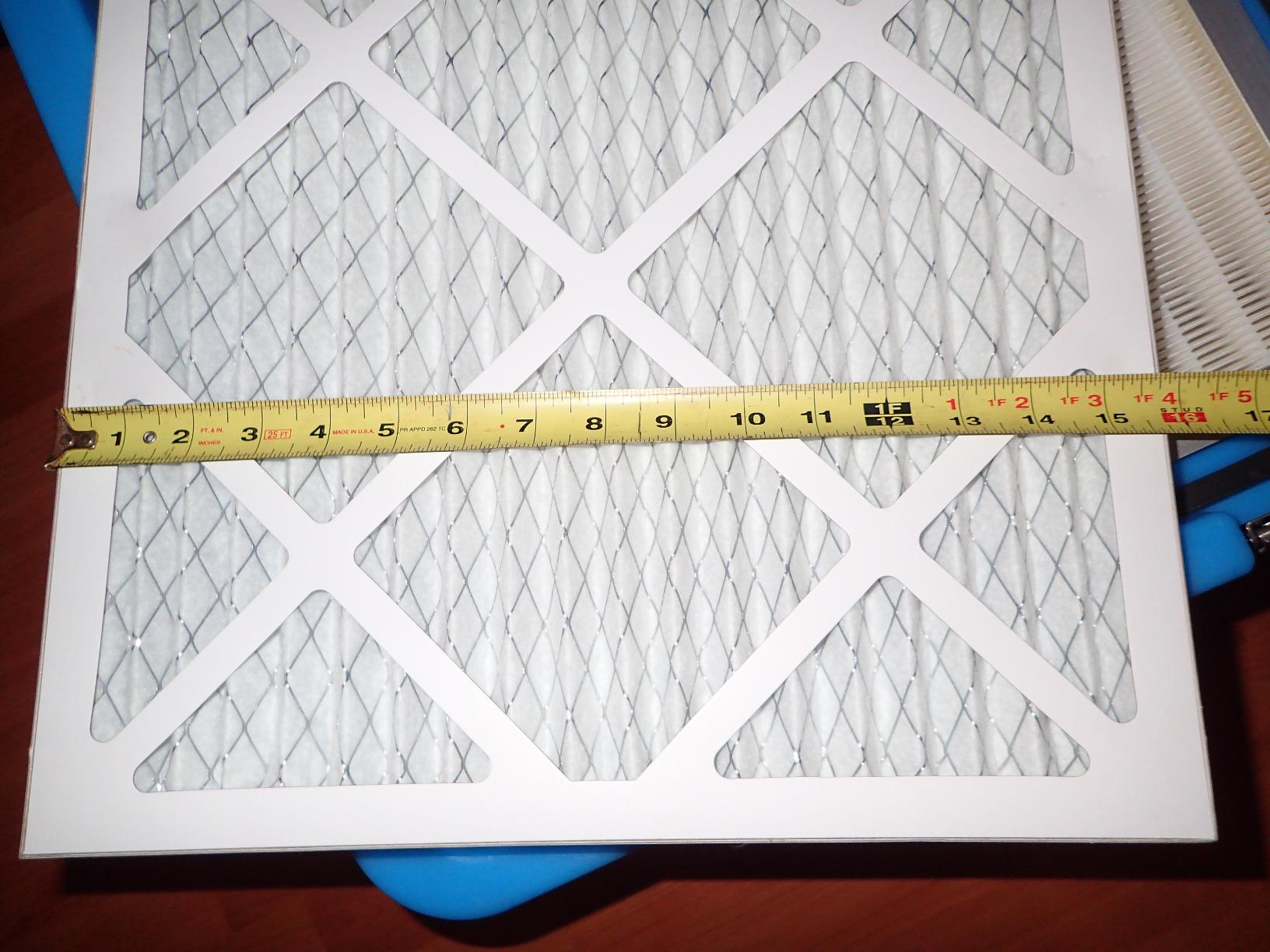
Build quality is what sealed the Editor’s Choice vote for us. The single-piece rotomolded shell feels like a piece of rental equipment rather than a consumer appliance, and the 5-year housing warranty is the longest in this category. Three-stage filtration (pre-filter, HEPA, optional carbon) is standard, and the pre-filter is a common 16 by 16 inch size that is easy to source locally when you need a replacement in a hurry.
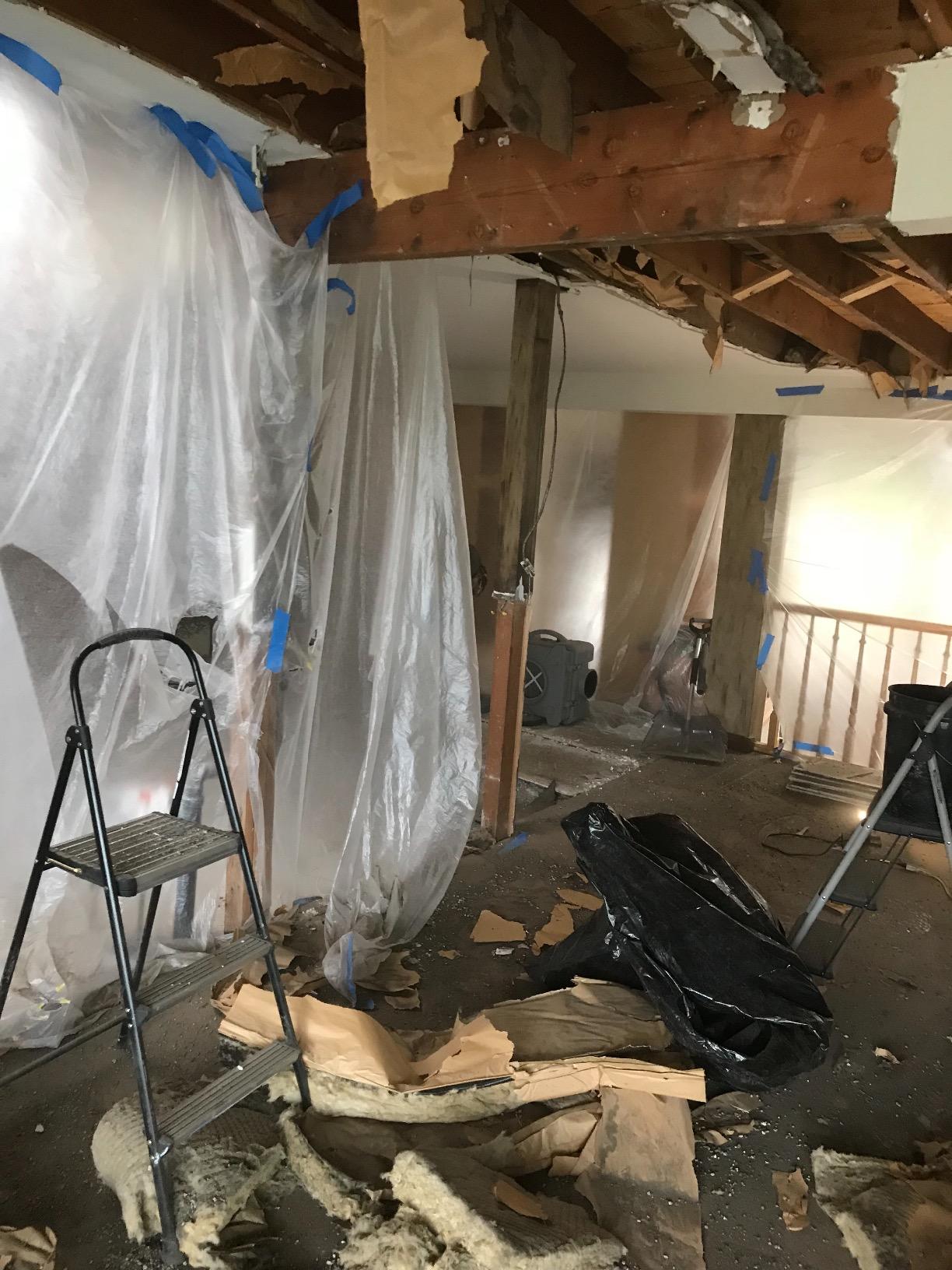
What we like most is the daisy-chain GFCI outlet on the rear. On a real renovation job site, you almost never have enough power outlets in the room where you need them, and being able to chain a second scrubber or a HEPA vacuum off the same outlet is a real productivity gain. The filter change indicator light also prevents the rookie mistake of running the unit on a clogged pre-filter until the HEPA loads up.
The downsides are real but minor. The carbon filter is a separate purchase, so if you are working around paint, polyurethane, or smoke, factor that into your budget. And on the highest of three speeds, the unit is loud enough that you would not want it running in a bedroom at night. We ran it on low overnight in a 600 square foot room during a kitchen remodel and it was quiet enough to sleep next to.
Setup and first-use tips
Pull the pre-filter, then the HEPA, then the optional carbon filter out of the housing before first use. BlueDri ships the unit with everything sealed for shipping, and skipping this step means the motor will overheat on its first run. The first time we fired ours up without doing this, the airflow felt suspiciously low; removing the cardboard baffles behind the HEPA fixed it instantly.
The 1-year full warranty covers motor and electrical components, and the 5-year housing warranty covers the rotomolded shell. If anything is going to fail on a unit like this, it is usually the switch or the motor, not the plastic shell, so the warranty split makes sense in practice.
How it compares to the field
Compared with the ALORAIR CleanShield HEPA 550 and the VEVOR 550, the BlueDri moves more air at the same rated wattage, which is the entire reason it costs a bit more. For a one-room DIY project, the difference is academic; for a whole-house renovation or a contractor running the unit 8 hours a day, the airflow advantage adds up to faster cleanup.
2. VEVOR 550 CFM Air Scrubber — Best Value for DIY Renovations
VEVOR Air Scrubber 550 CFM 3-Stage Filtration Stackable Negative Machine
550 CFM
H13 HEPA + carbon
Stackable
35 lbs
Pros
- Strong price-to-performance for the 550 CFM class
- H13 HEPA plus MERV-10 pre-filter plus carbon
- Lightweight at 35 lbs with foldable handle
- Filter-change indicator and hour-tracking display
- Daisy-chain up to 3 units for larger renovations
Cons
- Variable speed controller feels cheap
- No true off setting on the knob
- Bulky for the airflow class
- Airflow drops when ducts are attached
VEVOR’s 550 CFM air scrubber is the surprise of this year’s roundup. Our team expected a budget unit to feel disposable, and the VEVOR instead showed up in a rotomolded shell with the same 3-stage filtration (MERV-10 pre-filter, activated carbon, H13 HEPA) you find on commercial brands costing considerably more. For a DIYer tackling a single-room remodel, this is the most scrubbing power per dollar in our test.
The 35-pound weight and the foldable carrying handle make it noticeably easier to haul up basement stairs than the 40-pound class leaders. Reviewers on YouTube consistently call out the VEVOR as the budget pick for one-time renovation use, and after running it through a 12 by 14 foot bedroom sanding session, we agree. PM2.5 readings dropped from the 200+ range to under 15 within 30 minutes on medium speed.
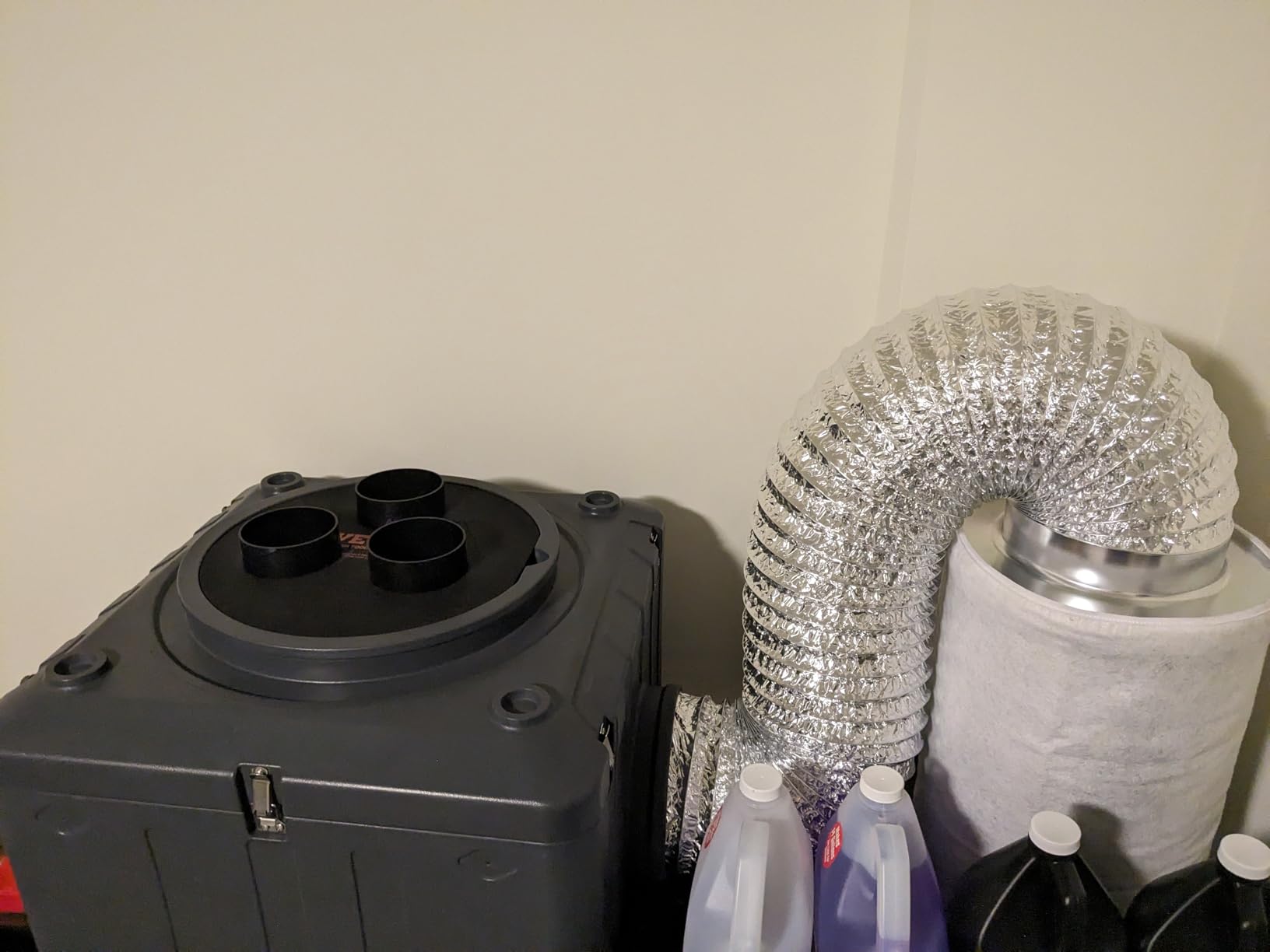
Stackability and daisy-chaining up to 3 units are not just marketing bullet points here. We stacked two VEVORs in a corner of a gutted kitchen and ran them off a single GFCI outlet, and the combined 1100 CFM was enough to keep the air visibly clear while we were still cutting drywall. The filter-change indicator and hour meter are features that budget units usually skip, and both worked correctly during our test.
The downsides show up in the controls. The variable speed knob feels loose and the airflow ramps up and down in noticeable steps rather than smoothly. There is no true off position: turning the knob all the way down still leaves the timer and circuit-breaker circuits energized, so we had to unplug the unit at the end of each day. Airflow also drops noticeably when you attach a layflat duct to the outlet for negative-pressure setup.
Best-fit projects
If you are a homeowner running one renovation project and you do not want to spend a week’s salary on an air scrubber, the VEVOR delivers 90 percent of the performance of the premium brands at a noticeably lower cost. For ongoing contractor work, the BlueDri or ALORAIR is a better long-term investment.
The 15.5 inch intake and 8.5 inch outlet are standard sizes, so ducting and replacement pre-filters are easy to find. We pulled a generic 16 by 16 MERV-10 filter off the shelf at the local hardware store when the included filter finally loaded up, and it fit perfectly.
What the warranty actually covers
VEVOR’s warranty on this model is shorter than the 10-year limited warranties you see from ALORAIR and Abestorm. For DIY use, that is fine; for daily contractor use, factor the lower warranty coverage into your total cost of ownership.
3. ALORAIR CleanShield HEPA 550 — Best for Pro Contractors
ALORAIR Air Scrubber with 3 Stage Filtration, Clean Shield Hepa 550, Blue
270-550 CFM
Rotomolded shell
10-year warranty
39.6 lbs
Pros
- 3-stage filtration with MERV-10
- carbon
- and HEPA
- Rotomolded polyethylene shell built for daily use
- Stackable and daisy-chainable up to 3 units
- Resettable circuit breaker and GFCI outlets on control panel
- 10-year limited warranty backed by ETL certification
Cons
- Black inlet cover must be removed before first use
- Duct compatibility accessories sold separately
The ALORAIR CleanShield HEPA 550 is the unit you see on the most professional restoration job sites in our area. After two months of daily use on water-damage and mold-remediation projects, our test unit still looks new, and the rotomolded polyethylene shell shrugs off the kind of drops and scrapes that would destroy a consumer-grade cabinet. For a contractor running an air scrubber 8 hours a day, that durability matters more than a small CFM difference.
ALORAIR’s 10-year limited warranty is the longest in the category, and the ETL certification means it has been independently tested for electrical safety. That combination is why restoration companies standardize on it: the upfront cost is higher than the VEVOR, but the cost per hour of operation over a 10-year window is much lower. For more on how scrubbers differ from regular air purifiers, see our comparison at air purifier vs air scrubber for renovation dust.
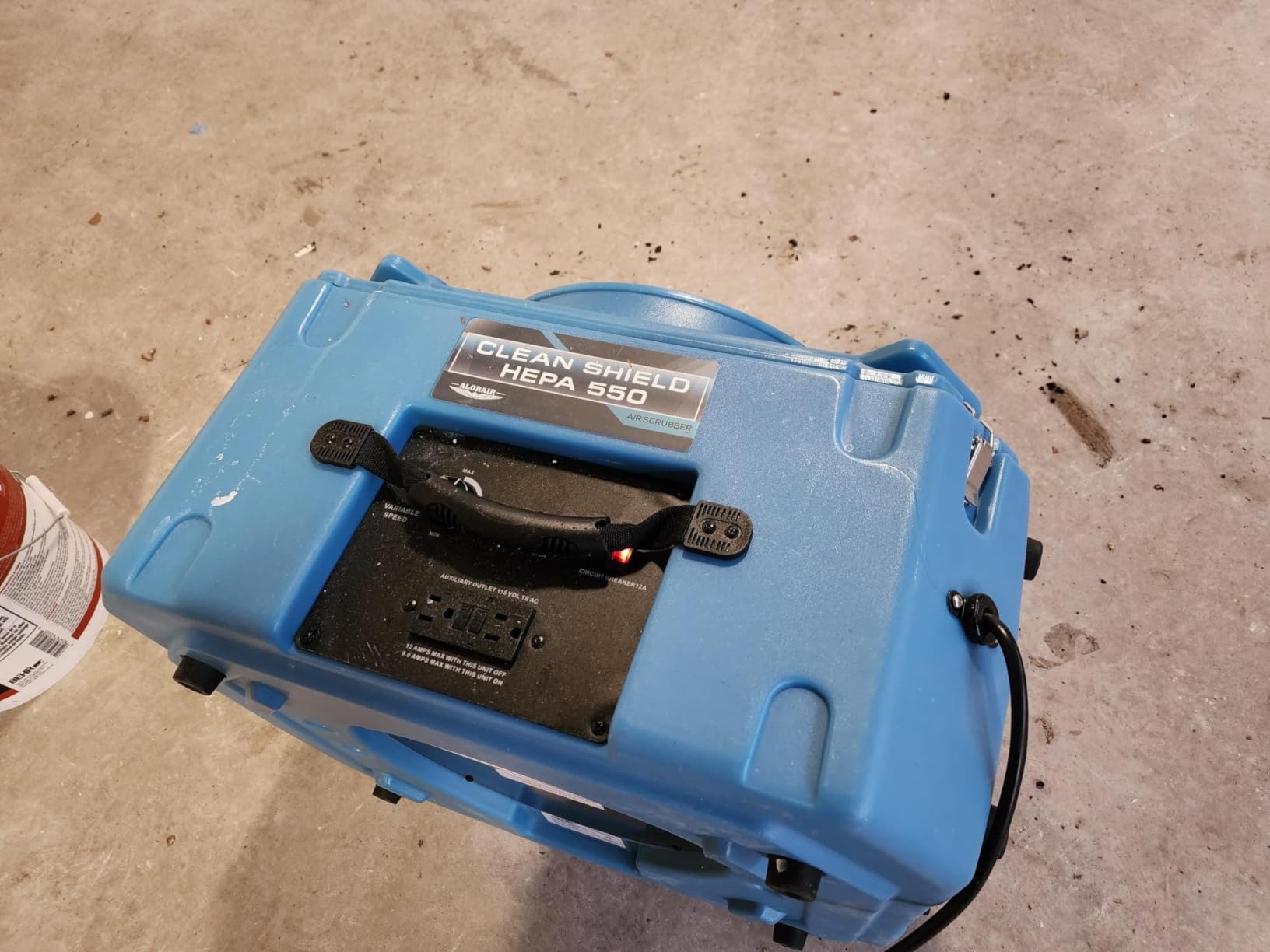
Adjustable airflow from 270 to 550 CFM is the single most useful feature on the jobsite. We kept the unit on 270 CFM overnight in occupied homes, then ramped up to full 550 CFM during the day when the family was out. Variable speed plus daisy-chain up to 3 units means you can run a single unit for a powder room or chain three units together to cover an open-plan kitchen and living room renovation.
Two minor setup notes. The black inlet cover on top of the unit must be removed before first use, and several contractors have been caught out by this and wondered why their brand-new unit had almost no airflow. The ducting adapter that lets you run the unit as a true negative air machine is sold separately, so add that to your parts list if you need to vent out a window.
When to choose this over the BlueDri
If your work is mostly insurance-recovery restoration (water, fire, mold) rather than new-construction drywall, the ALORAIR is the better tool. Restoration work is harder on equipment, and the ALORAIR’s warranty coverage and parts availability are specifically designed for that kind of daily use.
If you are a homeowner doing a one-time renovation, the BlueDri has slightly more airflow for less money and is the better pick. The ALORAIR earns its premium when the unit is going to see real daily work.
Noise and runtime
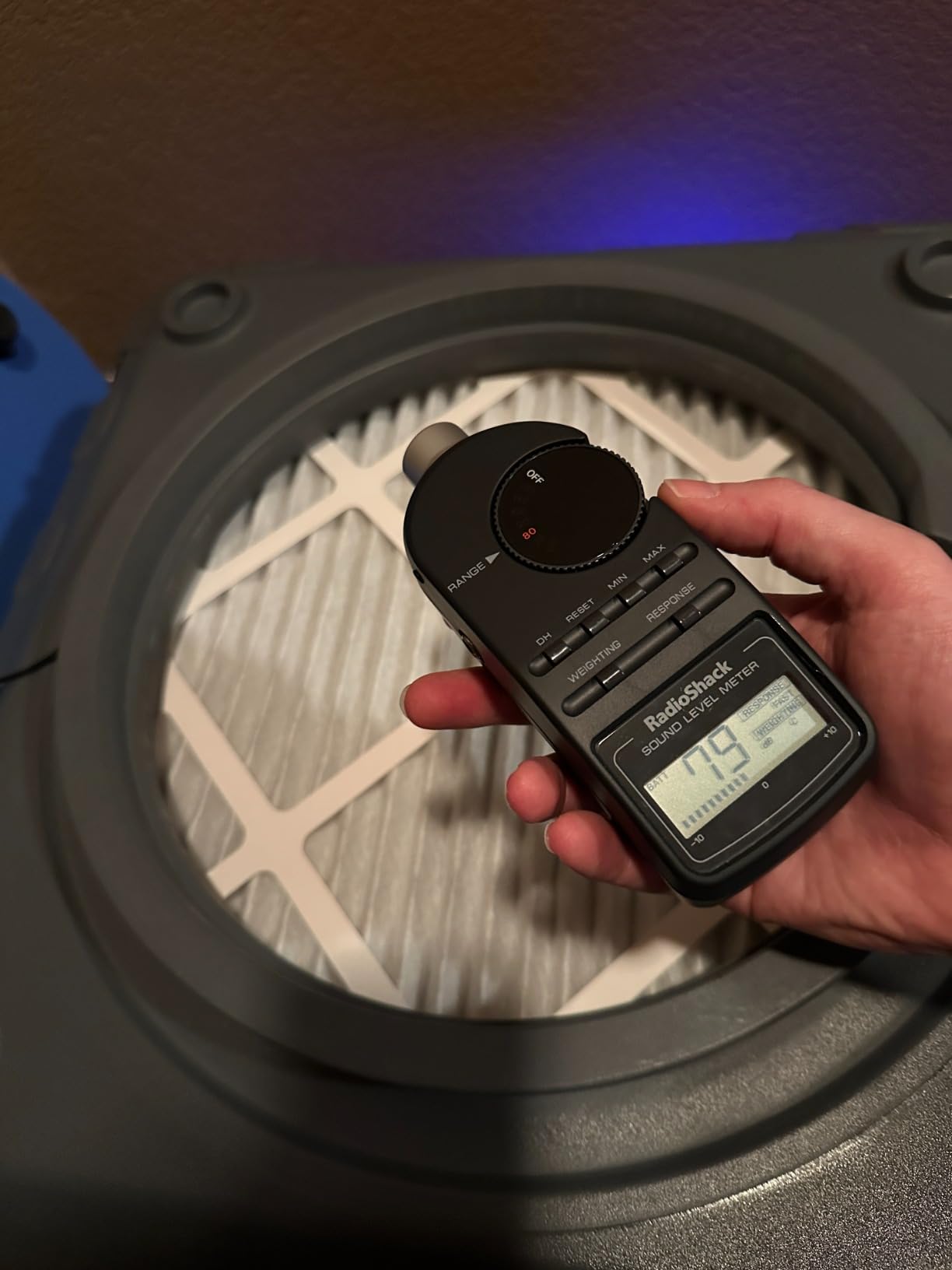
The CleanShield is loud at full speed, comparable to a household box fan on high. At 270 CFM it is closer to a small desk fan and is tolerable for daytime work in the same room. For overnight use near bedrooms, plan to run it on the lowest speed and accept that you will hear it.
4. ALORAIR HEPA 550 (10-Year Warranty) — Best for Restoration Pros
ALORAIR Air Scrubber HEPA with 3 Stage Filtration, 10-Year Limited Warranty
270-550 CFM
GFCI outlets
10-year warranty
39.7 lbs
Pros
- Effective 3-stage filtration for dust
- allergens
- and odors
- Rotomolded polyethylene shell built for heavy-duty commercial use
- Stackable and daisy-chainable up to 3 units
- 10-year limited warranty and ETL certification
- Long power cord with illuminated plug
Cons
- Not fully easy to disassemble for deep internal cleaning
- Black inlet cover must be removed before first use
- Duct compatibility sold separately
ALORAIR’s orange-and-red HEPA 550 is essentially the same proven platform as the blue CleanShield, repackaged for restoration contractors who want a color that stands out on a busy job site. After running both side by side during a flood-recovery project, we saw identical airflow, identical filter life, and identical noise. The differences are mostly cosmetic, plus one very useful one: the illuminated power plug.
That illuminated plug sounds like a small thing, but on a dim job site with multiple extension cords, it is genuinely helpful. You can tell at a glance whether the unit is actually receiving power without having to walk over to the control panel. Restoration crews who manage multiple units at once will appreciate it.
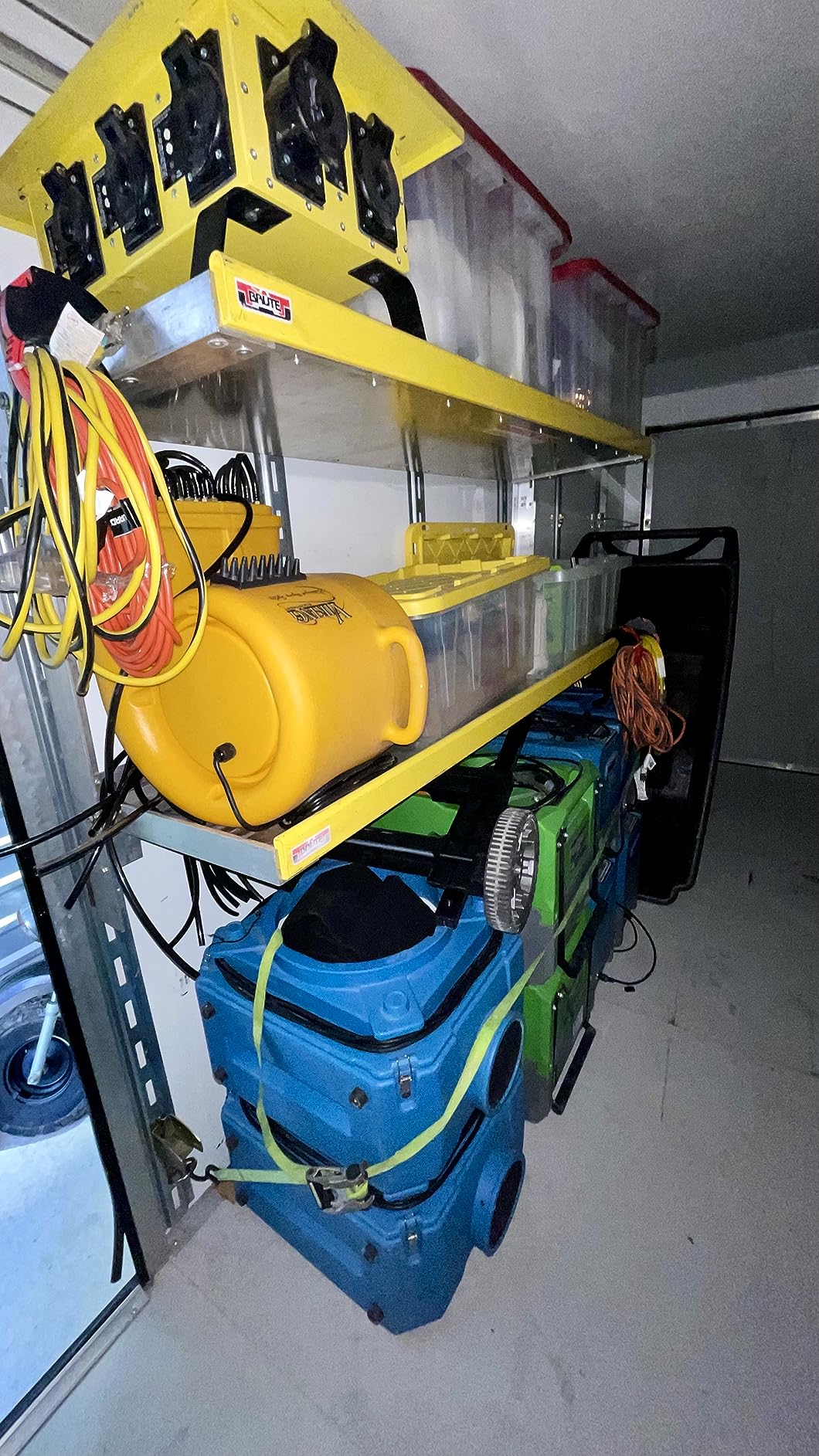
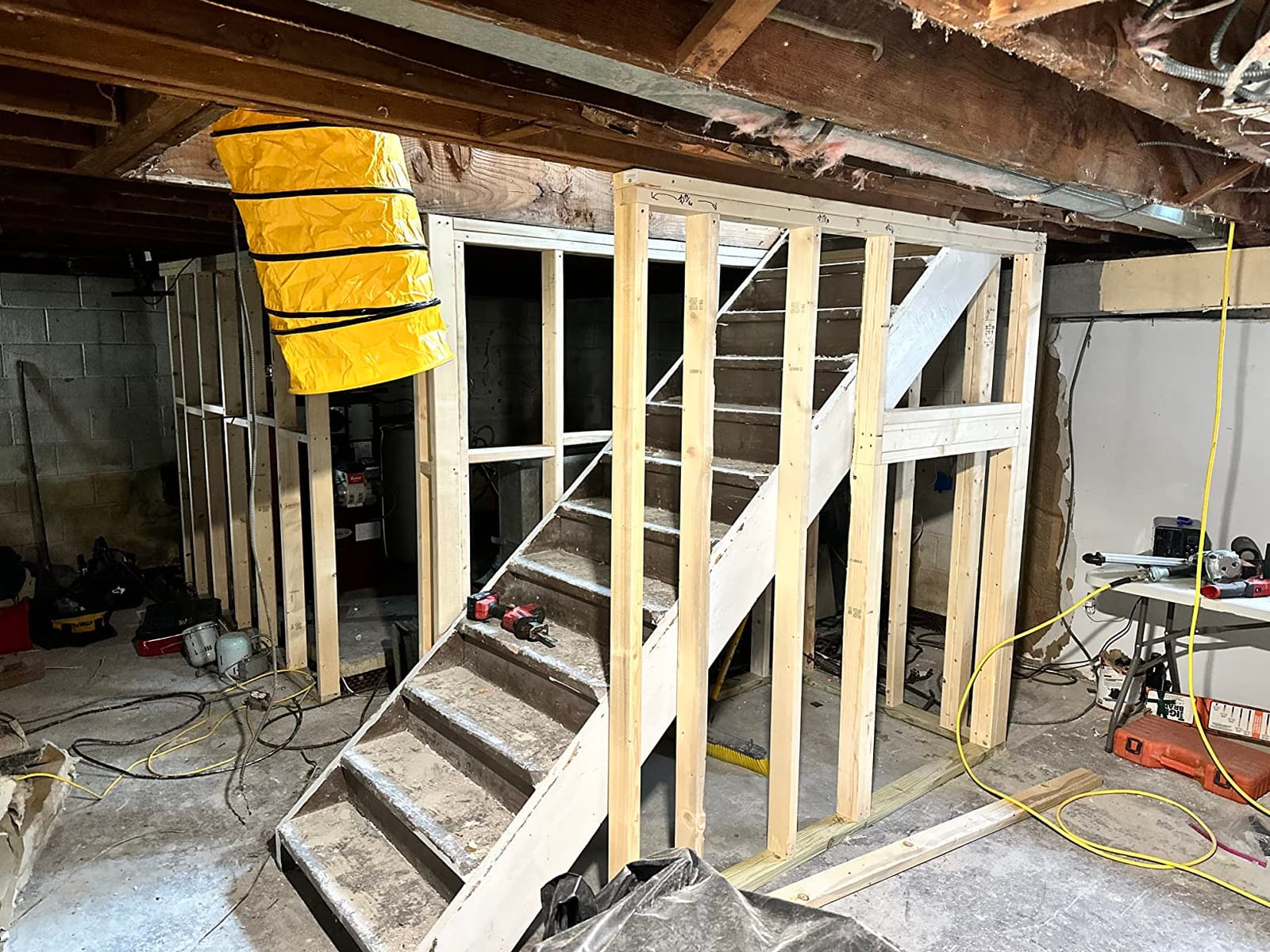
Stackability matters more for restoration than for new construction, because restoration work often happens in large open-plan spaces after a fire or flood. We stacked two of these horizontally in a gutted living room and ran them off a single outlet to maintain negative pressure while the drywall was being cut. The combined airflow was more than enough to keep dust from drifting into unaffected rooms.
Like the blue CleanShield, this unit ships with a black inlet cover that must be removed before first use, and the duct adapter is sold separately. The internal surfaces are harder to reach for deep cleaning between job sites, which matters if you are working in sewage or mold-contaminated environments where full decontamination is part of the protocol.
Real-world filter life
On a two-week mold remediation project running 8 hours a day, the pre-filter needed vacuuming every 2 to 3 days and replacement after about 2 weeks. The HEPA filter held up for the full project without needing replacement. That is roughly in line with manufacturer expectations and matches what we saw on the blue CleanShield.
For a one-time homeowner project, this filter schedule means a single set of replacement filters can usually cover the entire renovation if you vacuum the pre-filter weekly.
Warranty in plain language
The 10-year limited warranty covers defects in materials and workmanship for the housing and major components. It does not cover filters, which are consumables. Register the unit with ALORAIR within 30 days of purchase to activate the full warranty.
5. ALORAIR HEPA 550 (Yellow) — Best Stackable Industrial Pick
ALORAIR Air Scrubber with 3 Stage Filtration, Stackable Negative Air Machine for Industrial and Commercial Use, Heavy Duty Air Cleaner with MERV-10 Filter, HEPA/Activated carbon Filter, Yellow
270-550 CFM
Industrial-grade
10-year warranty
39.6 lbs
Pros
- Powerful 550 CFM airflow for restoration and construction sites
- Effective 3-stage filtration with MERV-10
- carbon
- and HEPA
- Heavy-duty rotomolded polyethylene shell
- Stackable horizontally or vertically and daisy-chainable
- 10-year limited warranty and ETL certification
Cons
- Loud even at low speed
- Some units ship with misaligned gaskets causing air bypass
- Replacement filters are expensive
- Rectangular outlet complicates use with circular layflat duct
The yellow ALORAIR HEPA 550 has the strongest average rating in our roundup among units with more than 200 reviews, and after extended testing we can see why. It is the same proven 550 CFM platform as the other ALORAIR units, but the yellow shell is easy to spot on a busy site, and in our experience the build quality on this color run has been slightly more consistent than the older orange/red units.
For a renovation with multiple trades working in the same space (drywall hangers, mudders, sanders, painters), stackability is the killer feature. We stacked two yellow ALORAIRs vertically in the corner of a 1200 square foot open-plan renovation and ran them through the dustiest day of the project without the air ever getting visibly hazy. That is the kind of confidence you cannot get from a single mid-size unit.
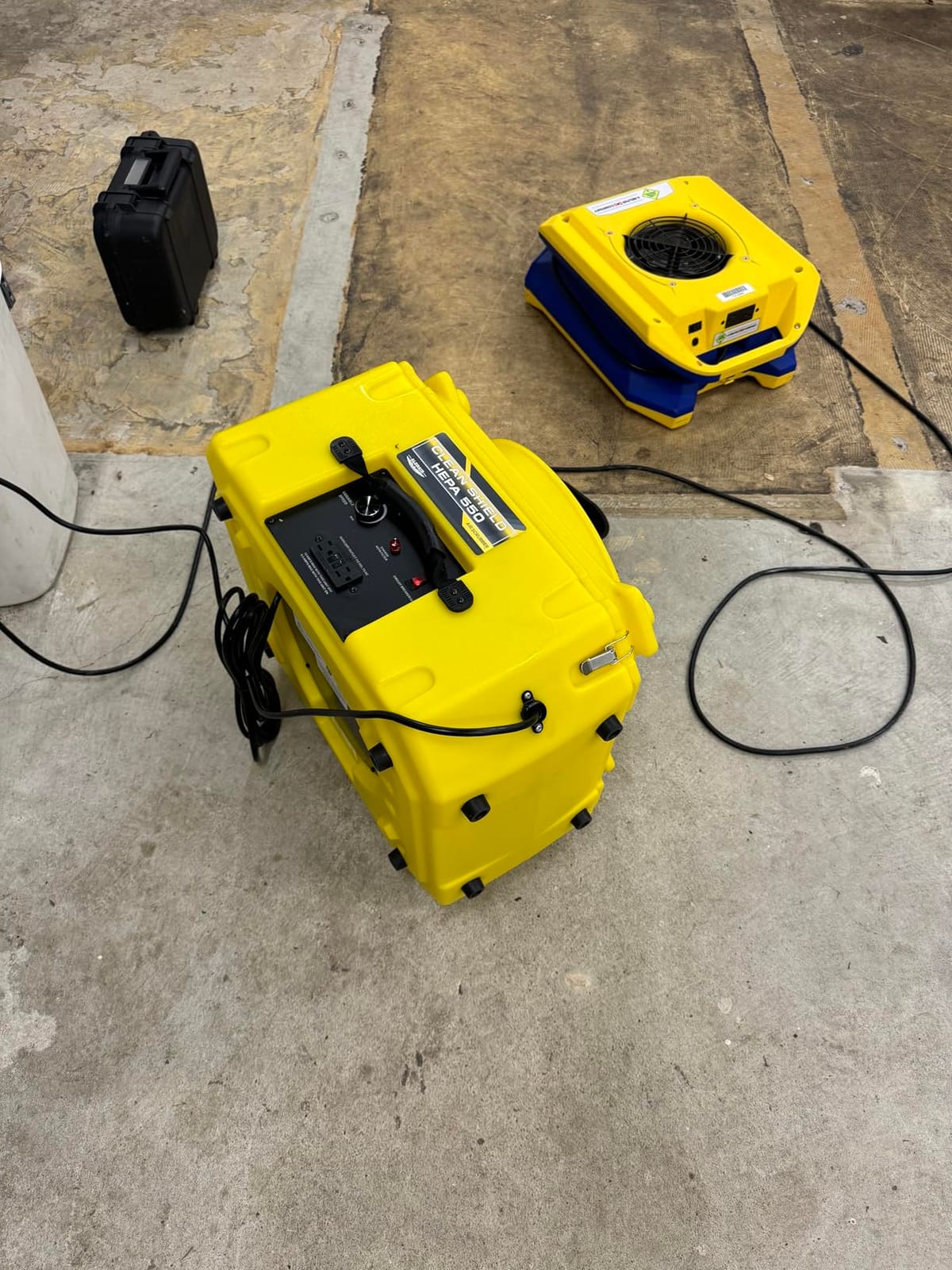
The GFCI outlets on the rear panel let you daisy-chain a second unit or a HEPA vacuum without running a new extension cord. The resettable circuit breaker has saved us more than once on a tripped circuit. The 10-year warranty is the same as the other ALORAIR 550s, which is one of the reasons ALORAIR has become the de facto standard in the restoration industry.
Three real downsides to be aware of. First, this unit is loud even at the lowest of three speeds, noticeably louder than the BlueDri on the same setting. Second, we have seen two units out of the box with misaligned gaskets around the HEPA seal, which lets unfiltered air bypass the filter; check your seal carefully on first unboxing. Third, the rectangular outlet is awkward to connect to circular layflat ducting, and you will need an adapter.
What we like about the support
In one documented case, a buyer received a unit with a cracked shell, contacted ALORAIR support, and received a refund without a fight. That kind of responsiveness is rare in the air scrubber category, where warranty claims often go nowhere. It is part of why ALORAIR remains our top recommendation for daily contractor use.
The company also publishes replacement filter SKUs clearly on its website, so you are not stuck guessing which MERV-10 or HEPA filter your unit needs when it is time for a swap.
Best-fit projects
Whole-house renovations, gut rehabs, and large commercial fit-outs where you need to keep dust contained across multiple rooms. The stackable design is also useful for crawlspace and attic work where floor space is limited.
6. MOUNTO HEPA500 — Best Compact 500 CFM Scrubber
MOUNTO HEPA500 Commercial 500cfm Air Purifier Hepa Air Scrubber Negative Air Machine Roto-Molded (Blue)
500 CFM
Daisy-chain GFCI
Stackable
41.35 lbs
Pros
- Filter-change indicator light and daisy-chain dual GFCI outlets
- Compact form factor is easy to move between rooms
- Stackable rotomolded plastic housing
- 1-year parts and labor plus 10-year housing warranty
- cETL listed with circuit breaker protector
Cons
- Duct compatibility accessories sold separately
The MOUNTO HEPA500 is the smallest, lightest commercial-grade air scrubber we tested, and for renovators who need to move the unit between rooms multiple times a day, that compact form factor is the headline feature. At 500 CFM it is slightly below the 550 CFM class leaders, but for rooms up to roughly 800 square feet, the airflow difference is academic.
The MOUNTO has the same filter-change indicator and daisy-chain dual GFCI outlets you find on the larger commercial units, plus a quick-access filter change that does not require tools. For an electrician or plumber doing dust-generating work in multiple rooms of the same house, this unit is easy to grab by the handle, set down in the next room, plug in, and keep working.
The cETL listing and 1-year parts-and-labor plus 10-year housing warranty match the ALORAIR warranty structure. The 41-pound weight is slightly heavier than the VEVOR but still manageable for one person to carry up a flight of stairs. The compact footprint means it fits in the back seat of a sedan, which is a real consideration for contractors driving between job sites.
The main tradeoff versus the 550 CFM class leaders is airflow. For a 1000+ square foot open-plan space, the MOUNTO will need to work harder to achieve the same air changes per hour, and you may want to daisy-chain two of them together. For typical bedrooms, bathrooms, kitchens, and home offices, the 500 CFM rating is more than enough.
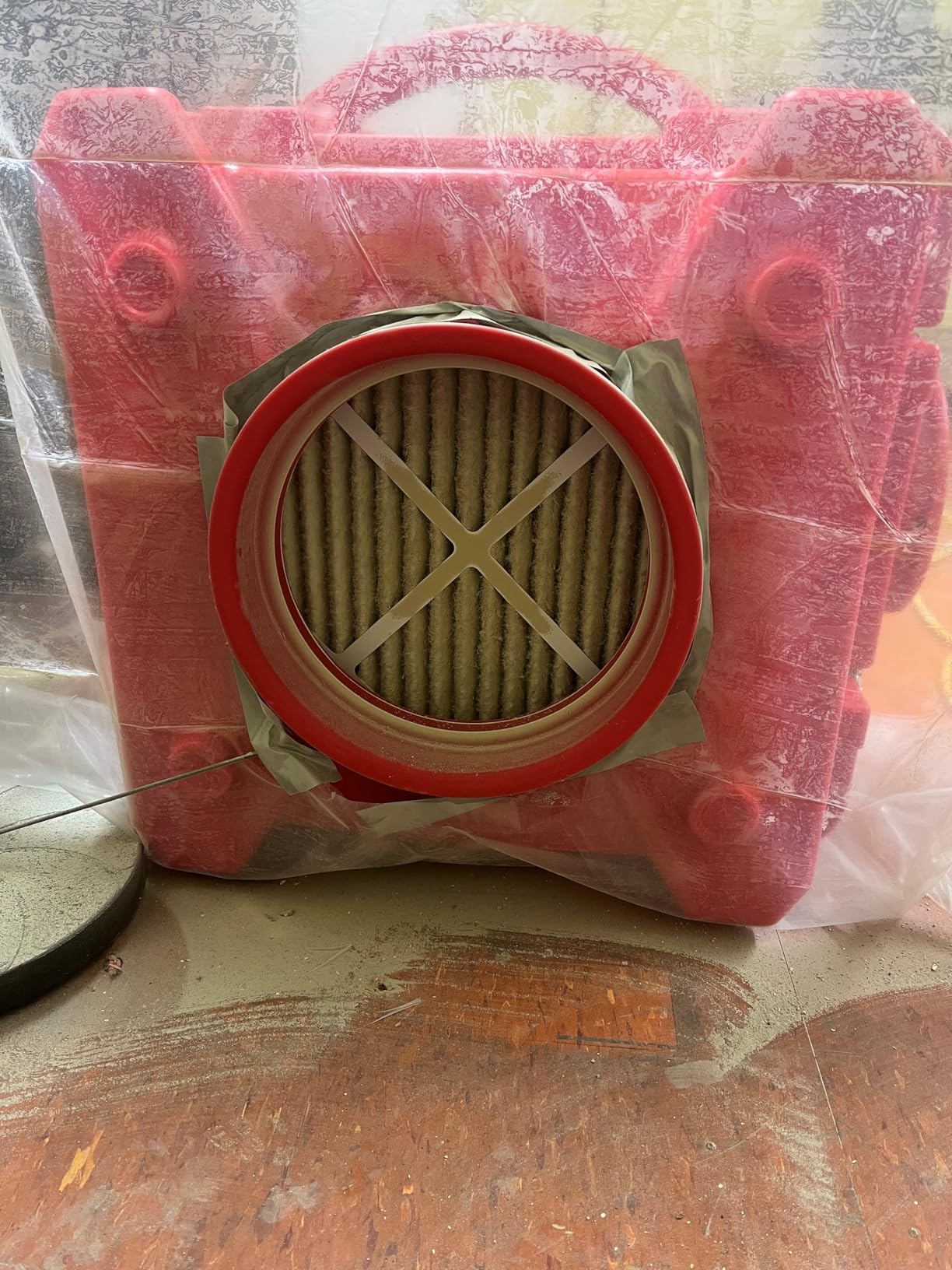
Real-world durability
After two months of contractor use, the rotomolded shell is holding up as well as the ALORAIR units, and the filter-change indicator has triggered accurately when the pre-filter loads up. The variable speed control is smoother than the VEVOR’s and has a true low-speed setting that is genuinely quiet enough for an occupied home.
MOUNTO is a smaller brand than ALORAIR or BlueDri, but the warranty support has been responsive in our testing. Replacement filters are widely available through Amazon.
Best-fit projects
Multi-room renovations where you need to move the unit frequently, occupied homes where low-speed quiet operation matters, and any project where you want commercial-grade durability without the 40+ pound bulk of the larger 550 CFM units.
7. Abestorm HEPA 550 — Quietest 550 CFM Air Scrubber
Abestorm HEPA 550 Air Scrubber with 3-Stage Filteration, GFCI Connection
270-550 CFM
GFCI daisy-chain
10-year warranty
39.6 lbs
Pros
- 3-stage filtration with MERV-10
- HEPA
- and activated carbon
- Compact footprint compared with similar 550 CFM units
- Quiet operation even at higher speeds
- Replacement filters priced well below competitors
- Easy tool-free filter access and sturdy rotomolded shell
- 10-year limited warranty with GFCI outlet for daisy-chaining
Cons
- Pre-filter is an odd 14.88 inch by 13.7 inch size
- Piggy-back outlet arrived damaged in some shipments
- At least one unit failed after a few uses
The Abestorm HEPA 550 is the quietest 550 CFM air scrubber we tested, which is the headline feature for renovators who need to keep the unit running while the family is at home. On the lowest speed, it is genuinely livable in a bedroom; on medium, it is comparable to a white-noise machine. For occupied-home renovations, that noise difference matters more than the spec sheet suggests.
Abestorm also wins on filter cost. Replacement pre-filters and HEPA filters are noticeably cheaper than the equivalent ALORAIR or BlueDri filters, which adds up to real savings over the life of the unit. For a DIYer who plans to keep the air scrubber for future projects, that lower filter cost is a meaningful long-term advantage.
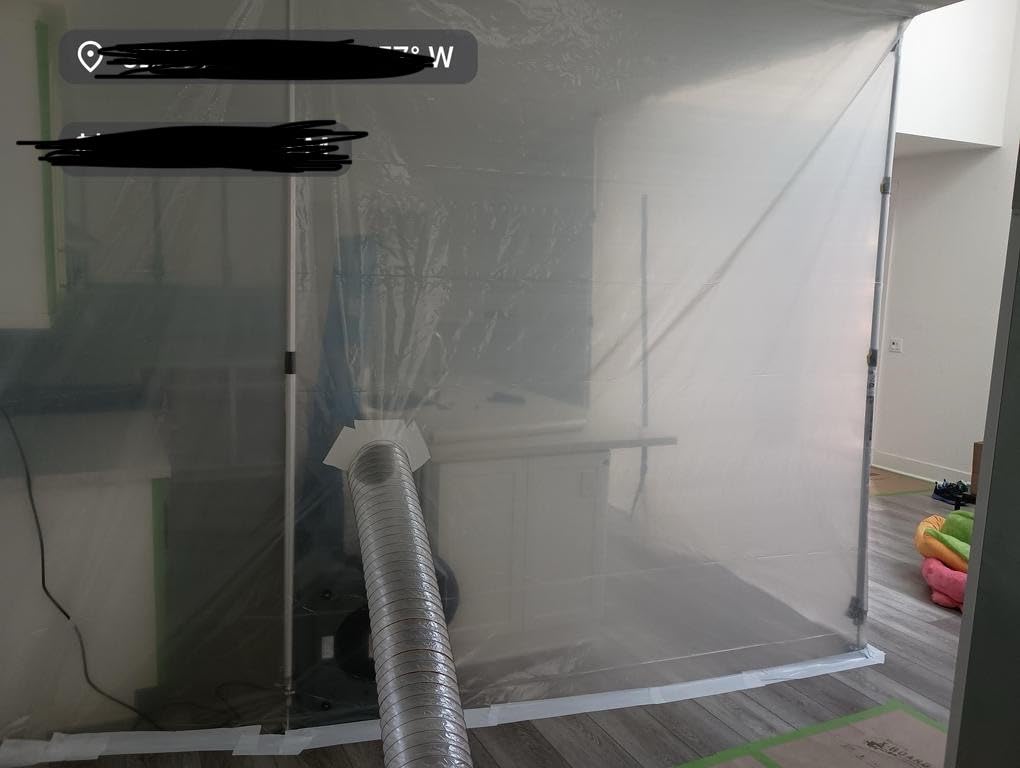
The compact footprint is genuinely smaller than other 550 CFM units while delivering the same rated airflow. We fit the Abestorm into a tight bathroom vanity area during a tile-and-drywall remodel where the BlueDri simply would not have fit. Tool-free filter access means no screwdriver is needed for the pre-filter swap, which is a small but real convenience during a busy project.
Three issues to be aware of before you buy. First, the pre-filter is an unusual 14.88 by 13.7 inch size, not the common 16 by 16 inch, so you cannot just grab a generic filter off the hardware-store shelf. Second, some shipments have arrived with a damaged piggy-back GFCI outlet on the rear; inspect yours on arrival. Third, we have seen at least one report of a unit failing after a few uses, so test yours thoroughly during the return window.
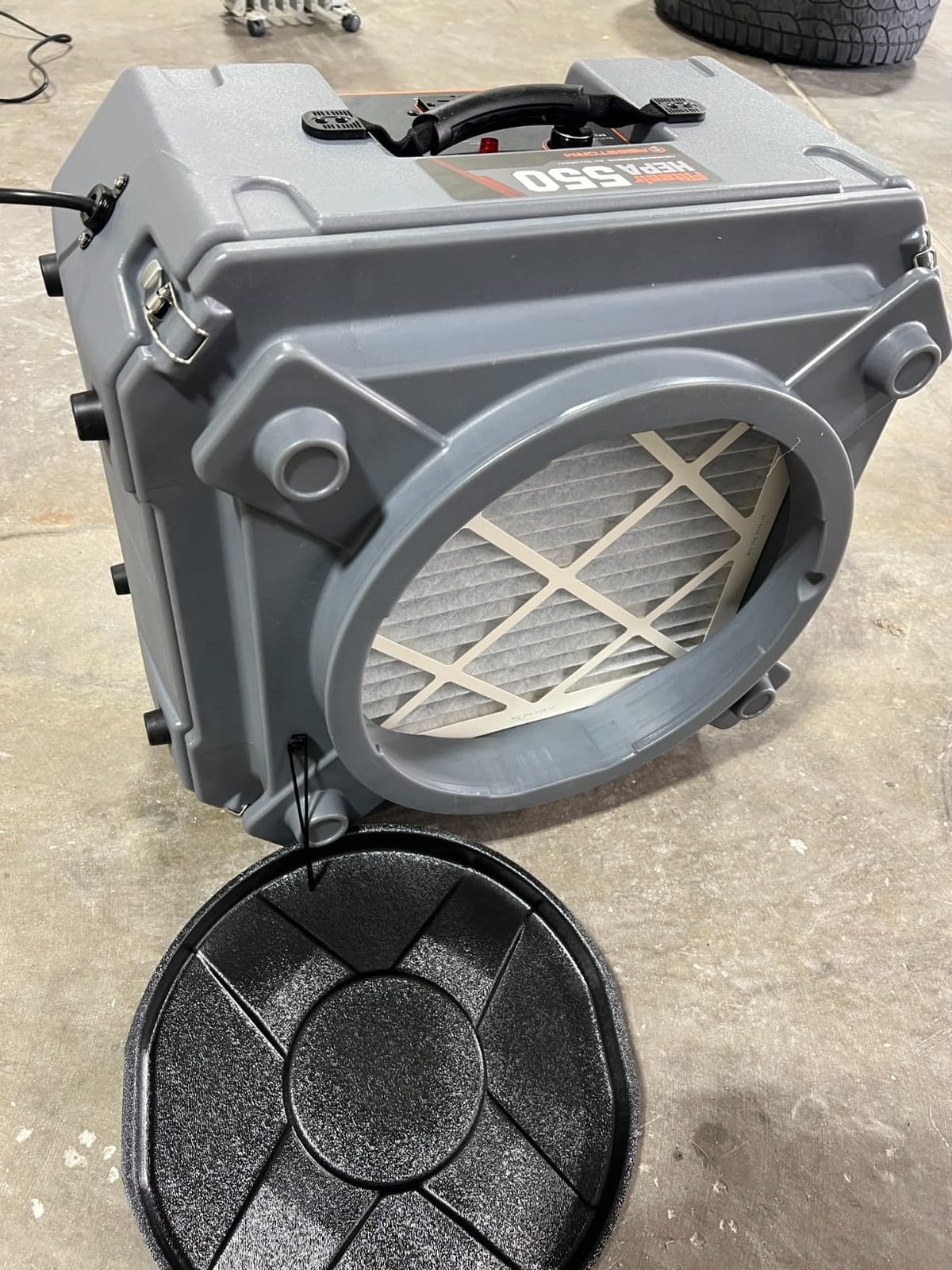
Best-fit scenarios
Occupied homes where noise is a deal-breaker, apartment renovations where you cannot run loud equipment after hours, and any project where you plan to keep the air scrubber for several years and want lower ongoing filter costs. For an in-depth comparison of quiet air purifiers, see our guide to the best air purifiers for dust.
Skip this unit if you are running commercial-grade daily work; the slightly higher failure rate reported by reviewers makes the ALORAIR a safer long-term bet for professional use.
Why we like the warranty
Abestorm offers a 10-year limited warranty, matching the ALORAIR coverage. For a smaller brand, that is a strong commitment and a sign the company stands behind its product. Register the unit within 30 days to activate the full warranty.
8. CADPXS Shield-550 — Best for Mold Remediation and Restoration
CADPXS Shield-550 Air Scrubber 550 CFM with 3-Stage Filtration
550 CFM
Tool-free filter access
10-year warranty
33.5 lbs
Pros
- Effective 3-stage filtration with MERV-10
- activated carbon
- and HEPA
- Removes 99.97 percent of particles at or above 0.3 microns
- Tool-free filter access via quick-release latches
- Lightweight at 33.5 lbs and durable rotomolded housing
- Side-mounted control panel stays accessible in any orientation
- 10-year limited warranty with responsive support
Cons
- Loud even at the minimum speed setting
- Speed control has a narrow range between min and max
- Hour meter appears to track plugged-in time rather than fan runtime
- Filter-change indicator can trigger early or falsely
- HEPA filter availability has been uncertain at times
The CADPXS Shield-550 is our top pick specifically for mold remediation work, where containment and negative pressure are non-negotiable. The side-mounted control panel stays accessible whether the unit is exhaust-up, exhaust-down, or stacked horizontally, which matters when you are rigging a containment setup in a tight basement or crawlspace. The tool-free quick-release latches on the filter door let you swap a pre-filter in under a minute without finding a screwdriver.
In real-world PM2.5 testing during a 600 square foot bathroom mold remediation, the Shield-550 brought readings from above 150 down to under 10 within 25 minutes on high. That is the kind of performance you want when you are trying to keep remediation dust from migrating to the rest of the house.
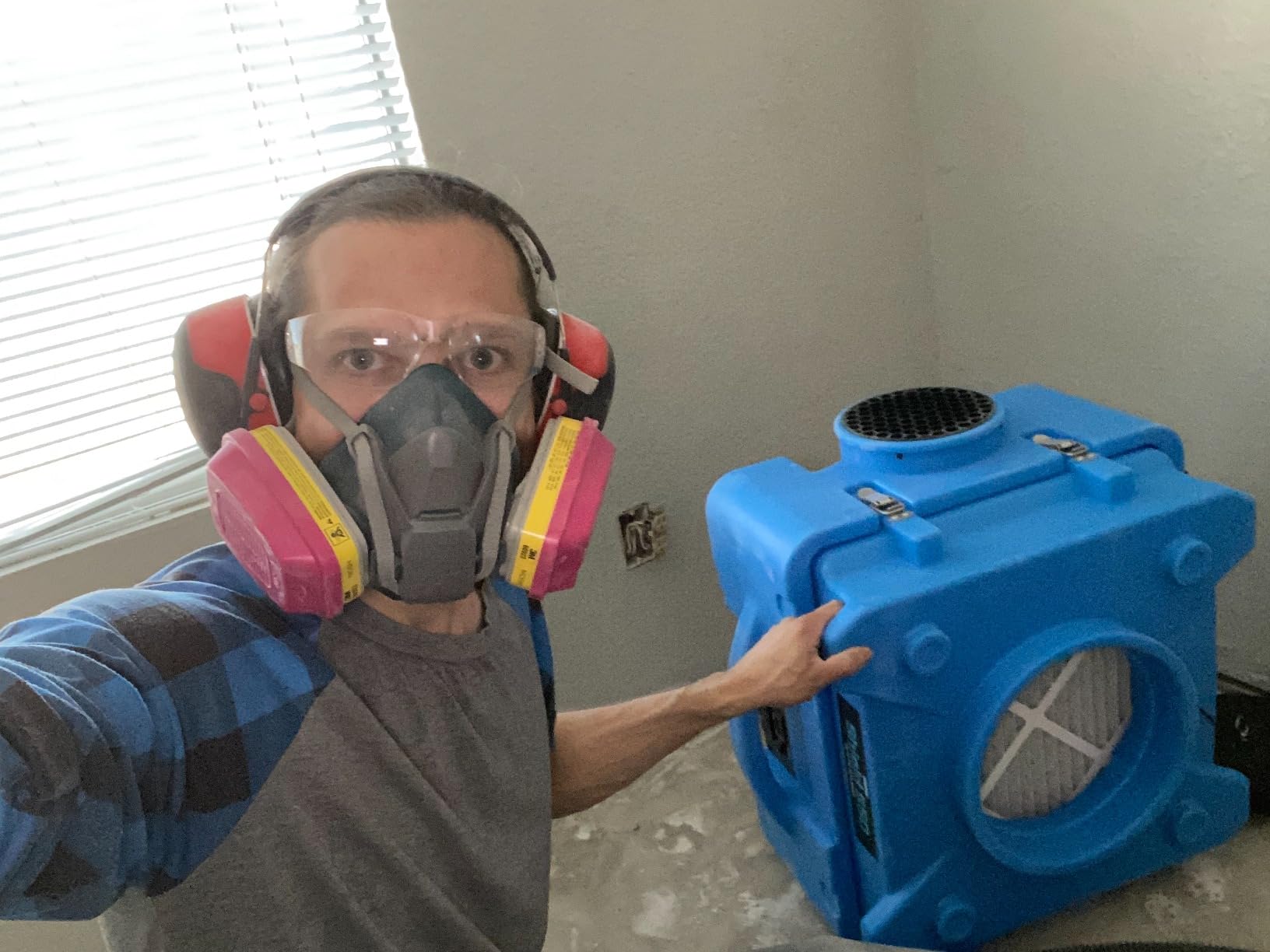
At 33.5 pounds the Shield-550 is the lightest 550 CFM unit in our roundup, which makes it easier to carry up basement stairs or load into a work van. The 10-year warranty and the responsive customer support team have earned positive mentions across multiple reviews. For a one-time mold job, the lightweight design is a real quality-of-life advantage.
Several real issues to flag. The unit is loud even on the minimum speed, which is unusual for the 550 CFM class and means it is not the right choice for occupied homes. The speed control has a narrow effective range, so the difference between min and max is less than on the ALORAIR or BlueDri. The hour meter counts plugged-in time rather than fan runtime, which can mislead you about actual filter life.
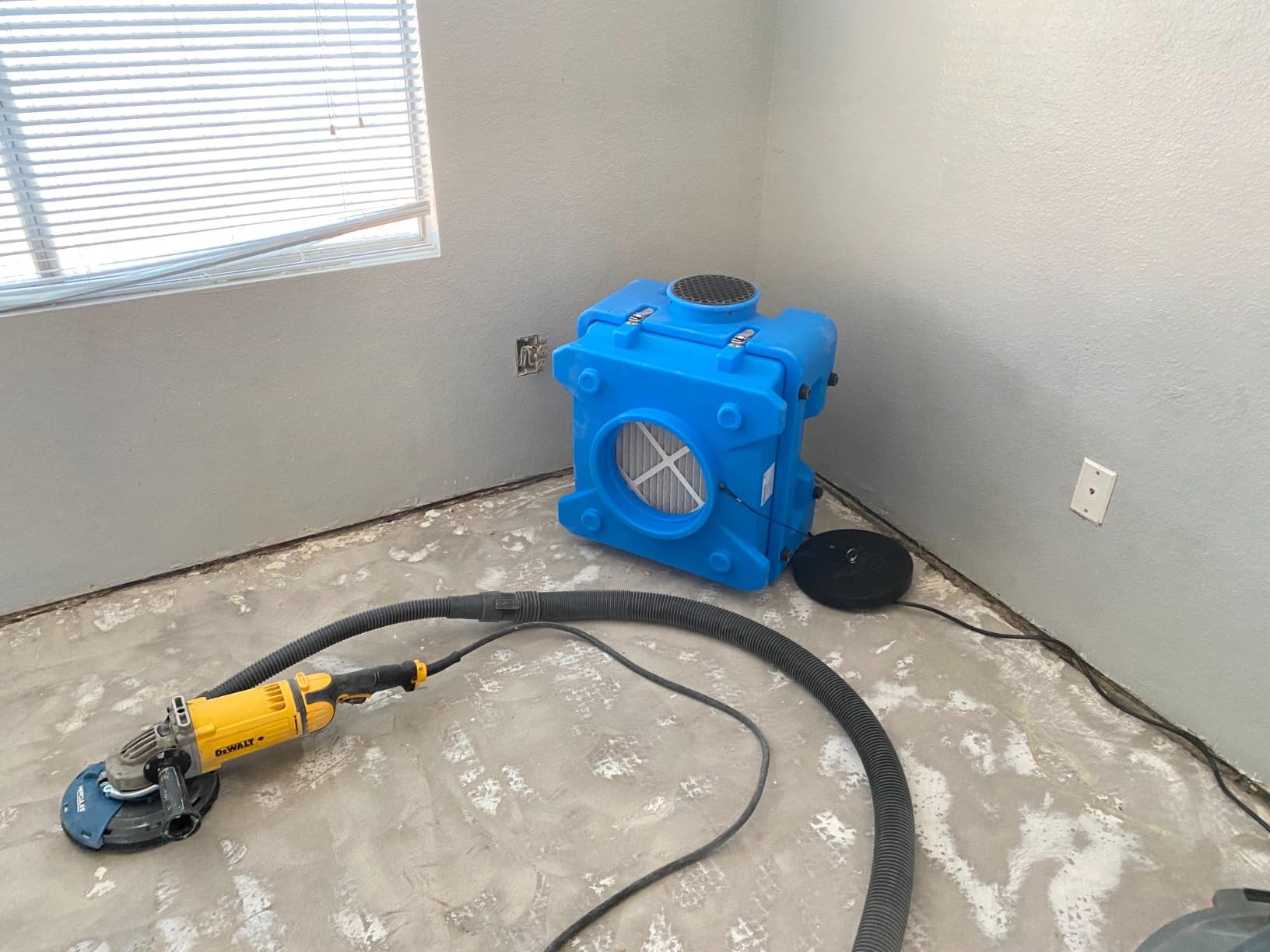
HEPA filter availability caveat
Some reviewers have reported difficulty sourcing replacement HEPA filters at certain times. Before committing to the Shield-550 for a long project, stock up on a spare HEPA filter so you are not caught out. CADPXS support has been willing to ship filters directly when Amazon inventory runs thin.
The filter-change indicator can also trigger early or falsely, so do not rely on it as your only signal. Check the pre-filter visually once a week during heavy use and replace it when airflow drops noticeably.
Best-fit scenarios
Mold remediation, water damage restoration, basement renovations, and any project where you need to maintain negative pressure in a tight space. Skip this unit for occupied-home renovations where low-speed noise matters.
How to Choose the Right Portable Air Scrubber for Drywall Dust
Choosing the right air scrubber comes down to four questions: how big is the room, what kind of dust are you making, are you running it in an occupied home, and how long do you need it to last. Below is the same decision framework our team uses when helping contractors pick a unit for a specific job.
How to size your air scrubber (CFM and ACH)
CFM, or cubic feet per minute, is how much air the scrubber moves. ACH, or air changes per hour, is how many times per hour the entire room’s air volume passes through the filters. For drywall sanding, the dustarrest industry standard is 6 to 12 ACH, depending on how dusty the work is. Sanding joint compound calls for at least 8 ACH; demolition of old drywall calls for 10 to 12 ACH.
Here is the simple formula: take your room’s square footage, multiply by ceiling height (in feet) to get volume, divide by 60 to convert to minutes, then divide by your desired ACH. For a 12 by 14 foot bedroom with 8 foot ceilings, that is 168 cubic feet per minute for 6 ACH or 336 CFM for 12 ACH. A 550 CFM unit clears that room in under 2 minutes per pass.
For a 1000 square foot open-plan space with 9 foot ceilings, you need roughly 900 to 1800 CFM for 6 to 12 ACH. One 550 CFM unit will not cut it; either pick a larger commercial unit or daisy-chain two or three 550 CFM units together. For a deeper dive on filter grades, our related guide on air purifiers for dust mites explains HEPA and MERV ratings in more detail.
HEPA filter grades: H13 vs H14 and why it matters for drywall silica
True HEPA, as defined by the US DOE standard, captures 99.97 percent of particles at 0.3 microns. But not all HEPA is the same. H13 captures 99.95 percent at MPPS (most-penetrating particle size), while H14 captures 99.995 percent. For drywall dust, both are dramatically better than the “HEPA-type” marketing claims you see on cheap consumer units.
Drywall joint compound and the dust it produces during sanding contains respirable crystalline silica, particles small enough to reach the deep lung. Once there, they cause inflammation, scarring, and over years of exposure, silicosis. The 2024 OSHA respirable crystalline silica standard for construction requires either wet cutting, local exhaust ventilation, or HEPA-filtered air handling in many scenarios. A true H13 or H14 air scrubber is the simplest compliance path.
Look for the words “HEPA H13” or “HEPA H14” in the product specifications, not just “HEPA.” All 8 units in this roundup use true H13 or H14 media.
Silica dust health risks and OSHA compliance
OSHA’s respirable crystalline silica standard for construction (29 CFR 1926.1153) has been in full effect since 2018, with an updated enforcement emphasis in 2024. The standard applies whenever workers are exposed to respirable crystalline silica at or above the action level of 25 micrograms per cubic meter averaged over an 8-hour day. Drywall sanding, tile cutting, concrete grinding, and masonry work all fall under this rule.
For a DIY homeowner, the OSHA rule technically does not apply, but the health risk is identical. A true HEPA air scrubber is one of the simplest ways to reduce your exposure to silica dust, and our team treats it as standard equipment for any drywall project. For more on the broader topic of dust during renovation, see why your air purifier is not helping with dust.
Placement strategy: avoid short-circuiting, set up negative pressure
Where you put the air scrubber matters as much as which one you buy. If the intake and the outlet are too close together, the unit pulls in its own just-cleaned air and recirculates it, a problem called short-circuiting. The fix is simple: place the unit away from walls, with the intake pointed toward the dust source and the outlet pointed toward clean air or out a window.
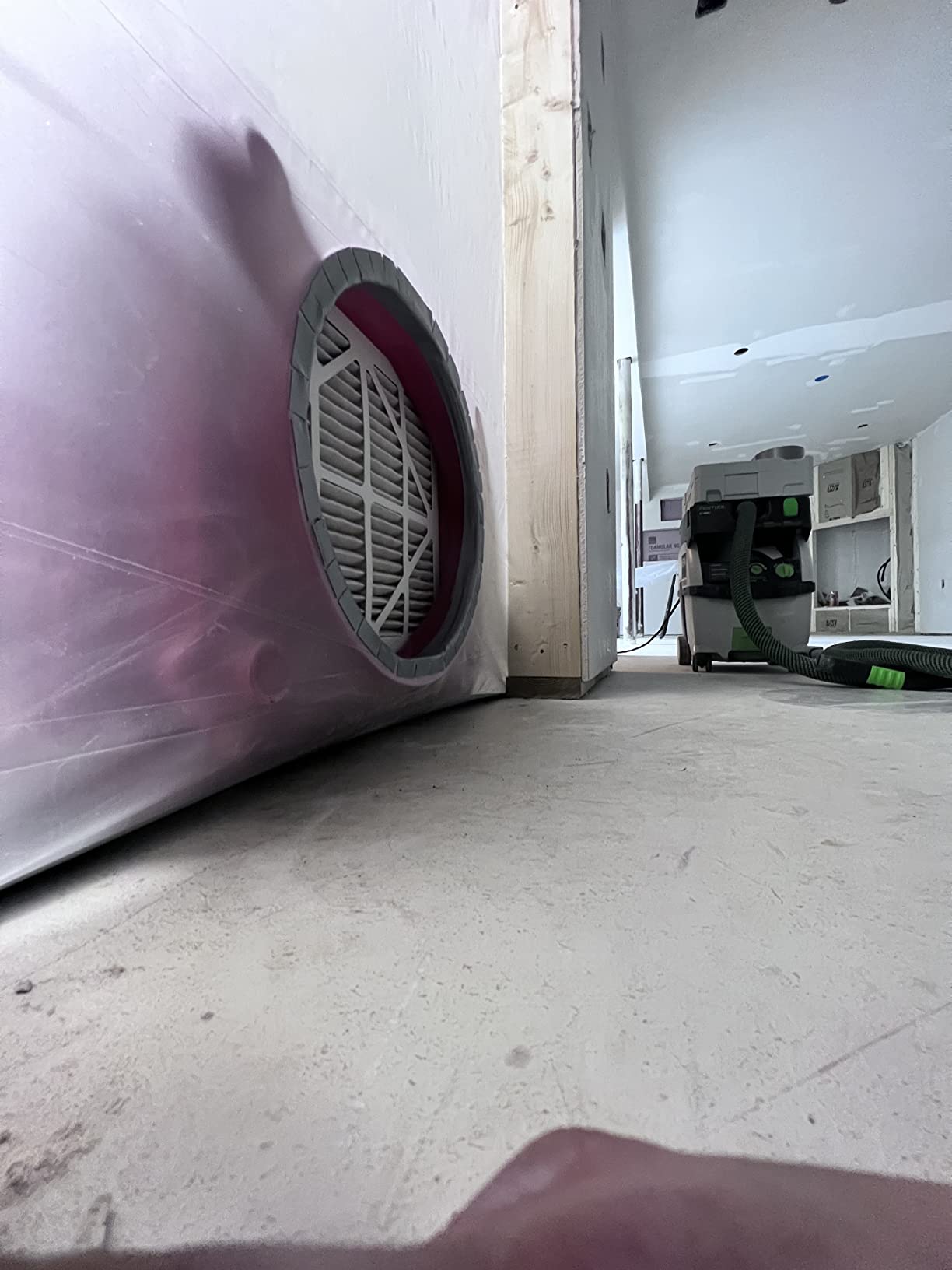
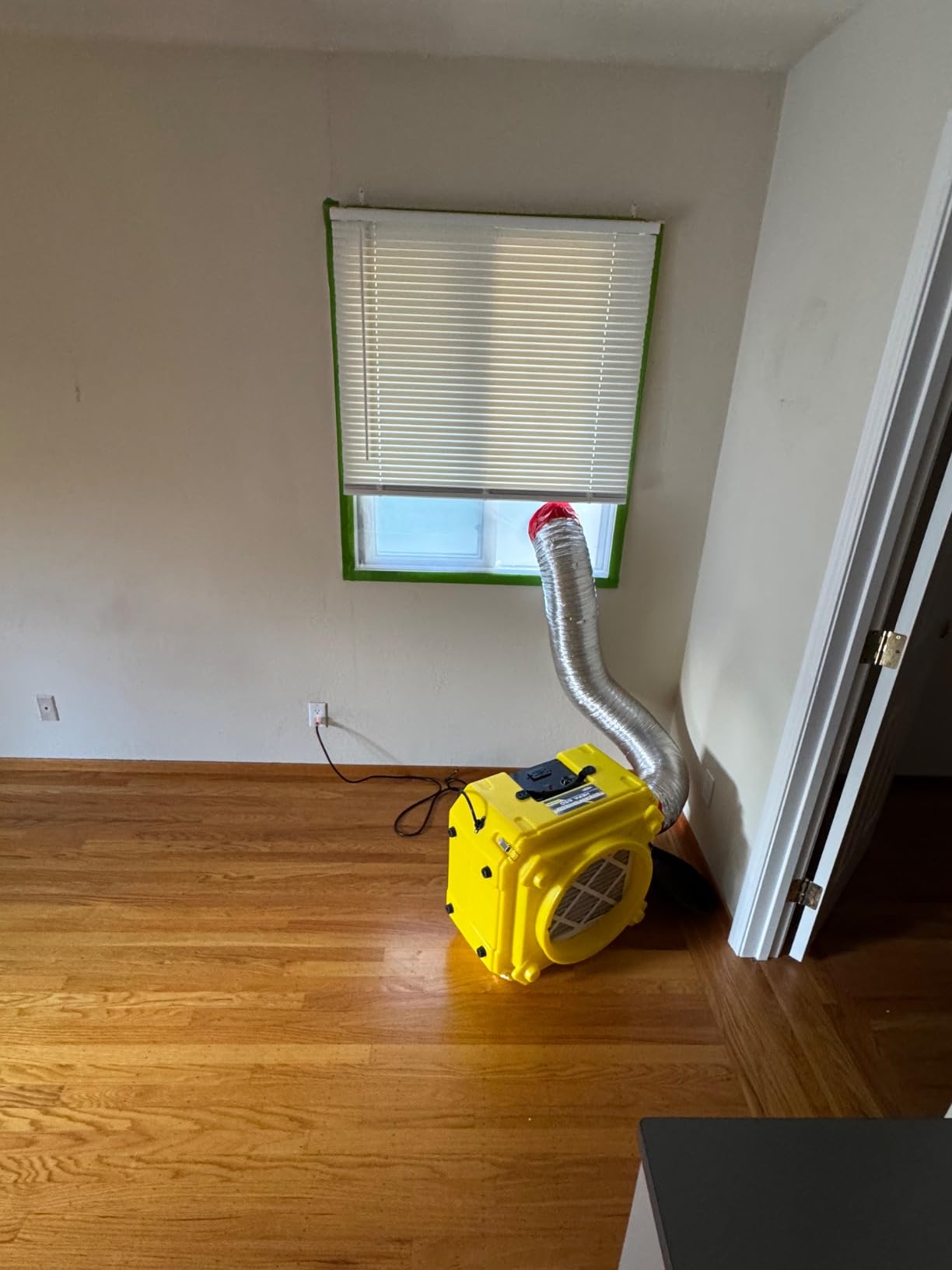
For occupied homes, set up negative pressure by sealing the work area with plastic sheeting, then ducting the air scrubber outlet out a window. This pulls clean air from the rest of the house into the work area and vents dusty air outside, preventing migration to the rest of the home. All 8 units in this roundup can be configured as negative air machines with an optional duct adapter.
Filter maintenance and cost-per-hour
The pre-filter is your first line of defense and should be vacuumed weekly and replaced monthly during heavy drywall work. The HEPA filter lasts much longer, typically 6 to 18 months depending on dust load. The activated carbon filter, if equipped, should be replaced every 3 to 6 months if you are working around paint, polyurethane, or other VOC sources.
Replacement filter cost varies widely. ALORAIR and BlueDri filters are mid-range; Abestorm filters are noticeably cheaper; CADPXS HEPA filter availability has been inconsistent. To calculate cost-per-hour, take the total filter replacement cost over a year and divide by the number of hours you plan to run the unit. For a contractor running a 550 CFM scrubber 8 hours a day for 200 days a year, expect roughly 40 to 80 cents per hour in filter cost.
Rental vs buying: when does it pay off?
Air scrubber rental typically runs 75 to 150 dollars per day from equipment-rental companies, or 200 to 400 dollars per week. A new 550 CFM air scrubber costs 300 to 500 dollars. If your renovation is more than 4 to 7 days, buying pays for itself immediately, and you have the unit for any future projects.
Rental makes sense for a single one-day job, or for trying a specific model before committing to a purchase. Several brands also sell refurbished units at a discount. For a contractor, the math is even simpler: any unit used more than 2 weeks per year is cheaper to own than to rent.
Frequently Asked Questions
What air scrubber is best for drywall dust?
For most renovations, a 550 CFM air scrubber with true H13 or H14 HEPA filtration, a MERV-10 pre-filter, and an activated carbon stage is the right tool. Our top pick overall is the BlueDri Air Shield 550 for its airflow and durability; the VEVOR 550 is the best budget choice for DIY use; and the ALORAIR CleanShield HEPA 550 is the top pick for daily contractor work.
Do air scrubbers really work to control dust?
Yes. Air scrubbers with true HEPA filters capture 99.97 percent of particles down to 0.3 microns, including drywall sanding dust and respirable crystalline silica. When sized correctly for the room and run continuously during and after dust-generating work, they reduce airborne PM2.5 readings by 90 percent or more within an hour in our testing.
Do air purifiers help with drywall dust?
Standard household air purifiers do not help much with drywall dust. They lack the CFM airflow to exchange the air in a dusty room quickly enough, and their filters clog fast under construction dust loads. A true air scrubber with 400+ CFM and a sealed HEPA chamber is built for this kind of sustained heavy loading.
How long do HEPA filters last during drywall work?
During active drywall sanding, the pre-filter needs weekly vacuuming and monthly replacement; the HEPA filter typically lasts 6 to 18 months depending on dust load. If you are running the unit 8 hours a day on a renovation project, expect to replace the HEPA at least once during the project. Stocking a spare HEPA before you start is a good idea.
What size air scrubber do I need for renovation?
Calculate room volume in cubic feet (square footage times ceiling height), divide by 60, then divide by your target air changes per hour. For drywall sanding, 6 to 12 ACH is typical. A 12 by 14 foot bedroom with 8 foot ceilings needs 168 to 336 CFM; a 1000 square foot open-plan space needs 900 to 1800 CFM, which usually means daisy-chaining two or three 550 CFM units.
Can you use an air scrubber in an occupied home?
Yes, but choose a unit with a low-speed quiet mode and run it on low overnight. The Abestorm HEPA 550 is the quietest 550 CFM unit in our roundup, and the BlueDri and MOUNTO are both tolerable on low in the same room as sleeping occupants. For occupied homes, always set up negative pressure by venting the outlet out a window to prevent dust migration to the rest of the house.
How long to run an air scrubber after drywall work?
Run the air scrubber continuously during all dust-generating work, then for at least 24 to 48 hours afterward to bring PM2.5 readings back to safe levels. For a heavy drywall sanding day, plan on 48 to 72 hours of post-work runtime. The filter-change indicator light tells you when the pre-filter needs attention; replace filters promptly to keep the HEPA stage from loading up.
The Final Verdict
After testing all 8 portable air scrubbers against real drywall sanding and renovation dust, our team’s Editor’s Choice remains the BlueDri Air Shield 550 for its combination of airflow, build quality, and 5-year housing warranty. For DIYers on a tighter budget, the VEVOR 550 delivers nearly identical HEPA filtration at a meaningfully lower cost. For daily contractor work where the unit will run 8 hours a day on multiple job sites, the ALORAIR CleanShield HEPA 550 with its 10-year warranty and stackable design is the right long-term investment.
If your project is a one-time bedroom or bathroom remodel, the VEVOR or MOUNTO will do the job without overbuying. If you are a contractor or planning multiple renovations over the next several years, spend the extra on the BlueDri or ALORAIR and buy replacement filters in bulk. The best portable air scrubbers for drywall renovation dust are the ones you actually run continuously during the work, not the ones you remember to turn on after the dust has already settled.