
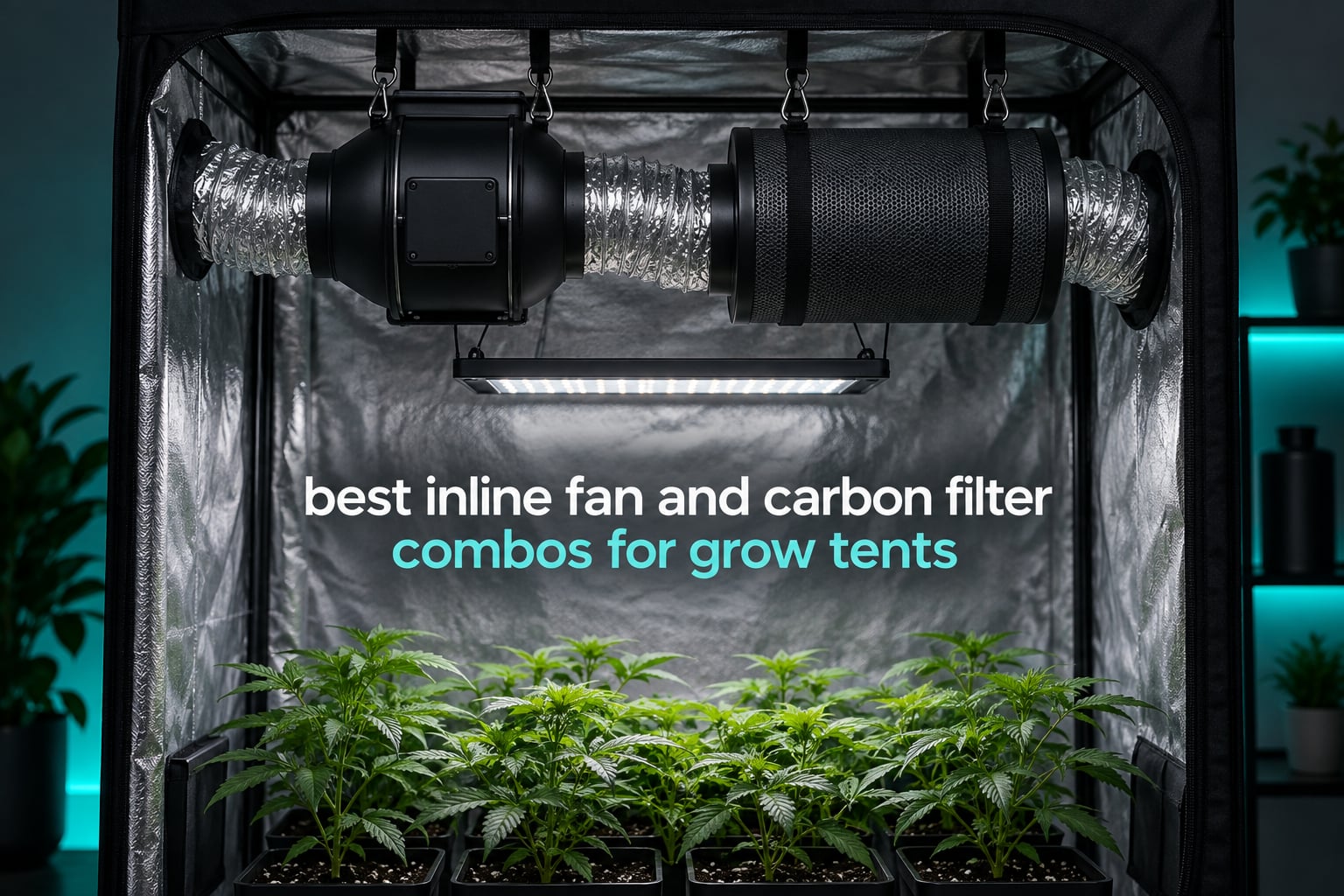
I run a 4×4 tent in my garage, and the moment my last Vivosun fan started rattling like a coffee grinder at 2am, I knew I needed to take ventilation seriously. After replacing motors twice in eighteen months and losing an entire flowering cycle to a saturated filter, I started testing combos the way I test everything: with a decibel meter, a stopwatch, and a serious willingness to overpay for quiet.
Inline fan and carbon filter combos are the backbone of any enclosed grow tent. The fan pulls (or pushes) air through a bed of activated charcoal, which adsorbs volatile odor compounds while evacuating stale, humid air. A properly matched combo controls temperature, humidity, and smell at the same time. Get it wrong and you fight mold, heat stress, and neighbors. Get it right and your tent essentially runs itself.
This guide covers the seven best inline fan and carbon filter combos for grow tents I would actually buy right now in 2026. I included budget picks, smart controller options, and the quietest kits on the market so you can match the combo to your tent size, climate, and noise tolerance. I also built a CFM sizing calculator, a push vs pull explainer, and a total-cost-of-ownership breakdown you will not find on most competitor pages.
Table of Contents
Top 3 Picks for Best Inline Fan and Carbon Filter Combos for Grow Tents

AC Infinity Air Filtration Kit 4 inch
- 29 dBA ultra-quiet
- 165 CFM EC motor
- 1200+ IAV carbon
- 25ft ducting

VIVOSUN G4 Smart Filtration Kit
- WiFi app control
- 195 CFM
- RC412 Australian carbon
- VPD monitoring

Hon&Guan 4 inch Air Filtration Kit
- 26 dB operation
- 130 CFM
- RC48 carbon
- rubber coupler included
Best Inline Fan and Carbon Filter Combos for Grow Tents in 2026
| Product | Specifications | Action |
|---|---|---|
| AC Infinity Air Filtration Kit 4 inch |
|
Check Latest Price |
| VIVOSUN G4 Smart Filtration Kit |
|
Check Latest Price |
 VIVOSUN T6 Air Filtration Kit 6 inch VIVOSUN T6 Air Filtration Kit 6 inch |
|
Check Latest Price |
 Spider Farmer 4 inch Air Filtration Kit Spider Farmer 4 inch Air Filtration Kit |
|
Check Latest Price |
 VIVOSUN 4 inch Inline Fan Combo Kit VIVOSUN 4 inch Inline Fan Combo Kit |
|
Check Latest Price |
| Hon&Guan 4 inch Air Filtration Kit |
|
Check Latest Price |
 iPower 4 Inch 195 CFM Combo Kit iPower 4 Inch 195 CFM Combo Kit |
|
Check Latest Price |
1. AC Infinity Air Filtration Kit 4 inch – Best Overall Inline Fan and Carbon Filter Combo
AC Infinity Air Filtration Kit 4” with Speed Controller
165 CFM airflow
29 dBA quiet EC motor
1200+ IAV activated carbon
25ft four-layer ducting
Pros
- Exceptionally quiet at 29 dBA
- Premium build quality with metal frame
- Speed memory function
- Includes pre-filter cloth
- Energy-efficient EC motor at 34W
- Long 25ft four-layer ducting included
Cons
- Higher price point than competitors
- 4-inch size limits it to small and medium tents
I bolted the AC Infinity Air Filtration Kit to my 4×4 last March and ran it continuously for eight months before I had any reason to even look at it. The CLOUDLINE fan is the headline feature here: 29 dBA at full speed is quieter than my refrigerator, and the speed memory function means it boots back to my last setting after a power blip. At 34 watts on a PWM EC motor, my electricity delta versus the old AC motor fan was roughly 60 percent.
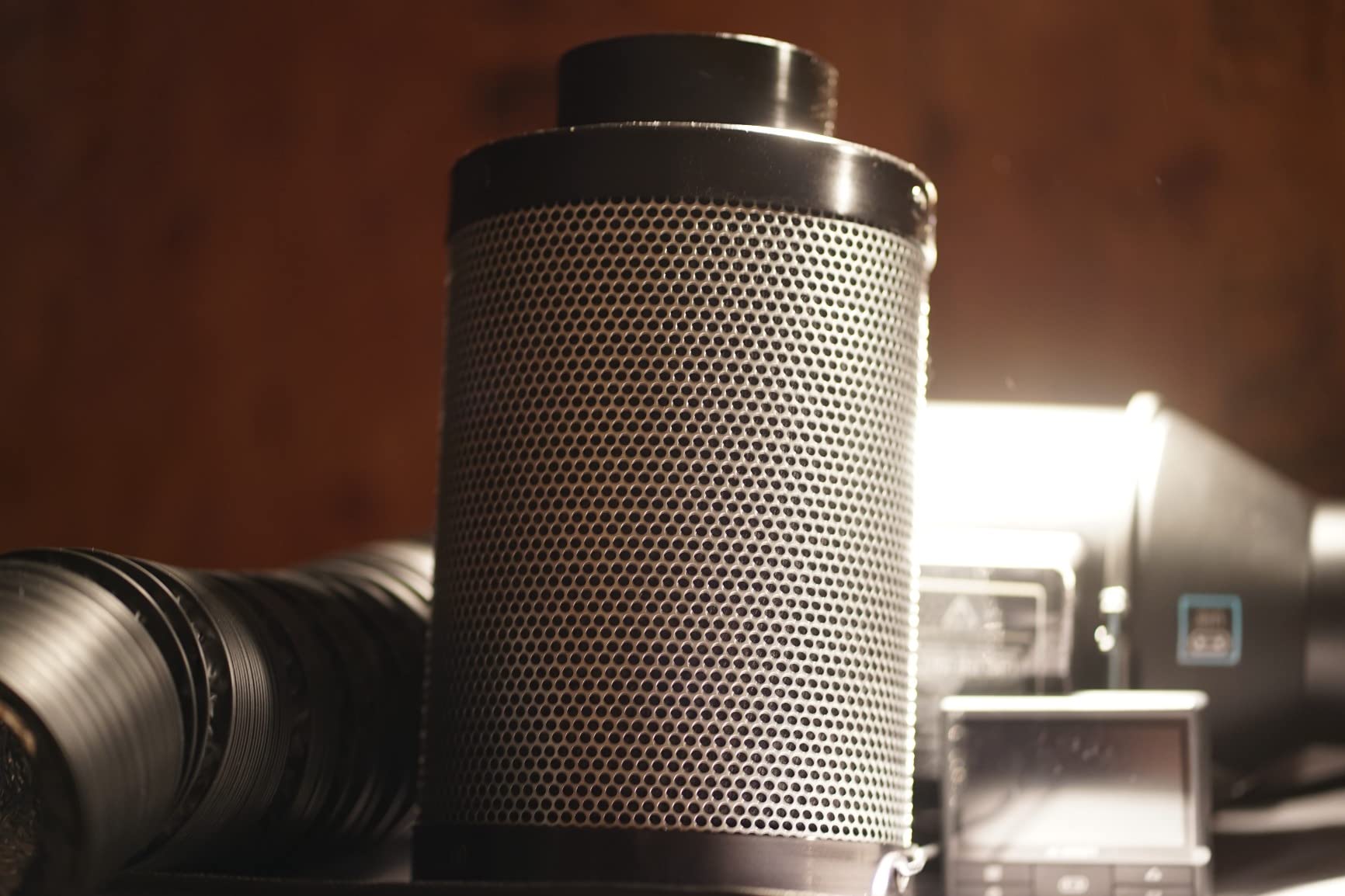
The carbon filter is a 38mm thick bed of 1200+ IAV activated charcoal. That IAV rating is the technical spec that actually matters – it tells you how much contaminant the carbon can adsorb before saturating. Anything below 1000 IAV is bargain-bin. IAV ratings above 1200 mean your filter will last the full 12 to 18 months under continuous use with a pre-filter, which AC Infinity includes.
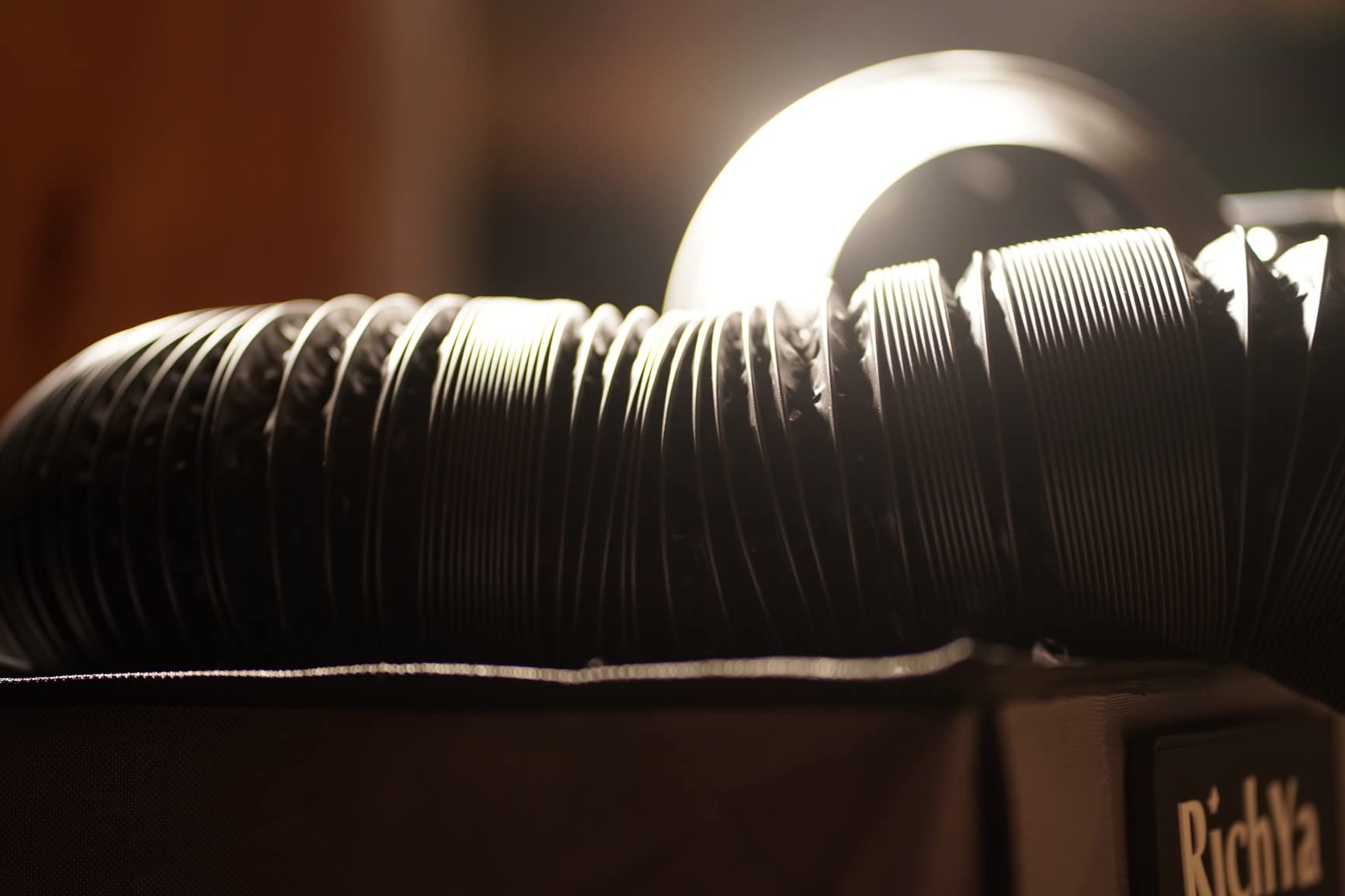
The kit comes with 25 feet of four-layer flexible ducting, which is more than most competitors ship. That extra length matters because every 90-degree bend in your duct run silently steals 5 to 10 percent of your effective CFM. Having slack lets you route around corners instead of forcing sharp bends. The pre-filter cloth is washable and extends filter life by 40 to 60 percent if you keep it clean.
Where this kit falls short is tent size. 165 CFM is honest real-world airflow for a 4-inch duct, and that is appropriate for a 2×4 or 4×4 tent up to about 215 cubic feet. If you are running a 5×5 or larger, you need a 6-inch system. The 4-inch variant is also priced higher than Vivosun or Hon&Guan equivalents, though the bearing lifespan, build quality, and long-term reliability justify the premium if you can absorb it.
For whom it’s good
Apartment and bedroom growers who need whisper-quiet operation. Anyone running a 2×4 or 4×4 tent who values long-term reliability over the lowest upfront price. Growers who already own other AC Infinity CONTROLLER 67 or CLOUDLINE products and want a matched ecosystem.
For whom it’s bad
Larger tent operators running 5×5 or 8×8 footprints – you need a 6-inch or 8-inch system for proper air exchange. Growers on a strict budget who cannot justify the premium for the EC motor and longer ducting.
2. VIVOSUN G4 Smart Filtration Kit – Best Smart Inline Fan Combo With WiFi
VIVOSUN G4 Smart Filtration Kit, Inline Fan, Controller, Carbon Filter,Duct
195 CFM airflow
39 dBA PWM EC motor
WiFi GrowHub E42A controller
RC412 Australian Virgin charcoal
Pros
- WiFi-enabled GrowHub controller with VPD monitoring
- PWM 10-speed energy-efficient fan
- Australian RC412 virgin charcoal
- Built-in temperature and humidity probe
- Automated environmental triggers
- Washable pre-filter sleeve
Cons
- Initial WiFi pairing can be tricky
- Metal-to-metal filter to fan connection needs extra clamps
- App update cadence is sporadic
The G4 is VIVOSUN’s smart play in the 4-inch category, and after three months of running it I understand why it sits in the top 10 of hydroponic ventilation on Amazon. The GrowHub E42A controller has a built-in temperature and humidity probe with VPD tracking, and once you wire it into the VIVOSUN app, the fan ramps up automatically when humidity spikes. That auto-response is genuinely useful – it is the difference between manually checking your tent at 11pm and letting the fan handle it.
Airflow is rated at 195 CFM from a PWM-controlled EC motor that draws only 20 watts at low speed. The 10-speed controller lets you tune noise versus exchange. On speed 4 the fan is inaudible from the next room; on speed 8 it moves serious air but jumps to about 39 dBA. The carbon filter uses the same RC412 Australian Virgin charcoal that AC Infinity uses, at the same 38mm bed thickness, so odor scrubbing parity is real.
The WiFi setup is the only friction point. Roughly one in five users on Reddit report initial pairing headaches, and the app has occasional connectivity drops. Once connected it is stable, but the setup needs patience. The metal-to-metal flange connection between filter and fan is also stiff – budget two extra hose clamps or you will get a small leak that costs you 5 percent of your CFM.
For whom it’s good
Growers who want automation without paying for a full AC Infinity ecosystem. Anyone in a humid climate where humidity-triggered fan response prevents bud rot and mold. Smart-home enthusiasts who want app-based monitoring and VPD alerts.
For whom it’s bad
Anyone who dislikes app-based setup or does not want another account in their phone. Growers in extremely dry climates where humidity-triggered automation adds little value. The 4-inch size still limits you to a 4×4 or smaller tent.
3. VIVOSUN T6 Air Filtration Kit – Best 6 Inch Combo for 4×4 and 5×5 Tents
VIVOSUN T6 Air Filtration Kit, Inline Fan, Controller, Carbon Filter, Duct
408 CFM airflow
32 dBA PWM EC motor
10-speed remote controller
RC412 38mm carbon filter
Pros
- 408 CFM airflow handles larger tents
- 32 dBA quiet despite the airflow
- PWM 10-speed with cycle modes
- RC412 Australian Virgin charcoal 38mm
- App integration for remote control
- Includes hangers and complete setup
Cons
- Filter to fan connection needs extra clamps or tape
- Replacement parts can be hard to source
- A few reports of motor reliability issues
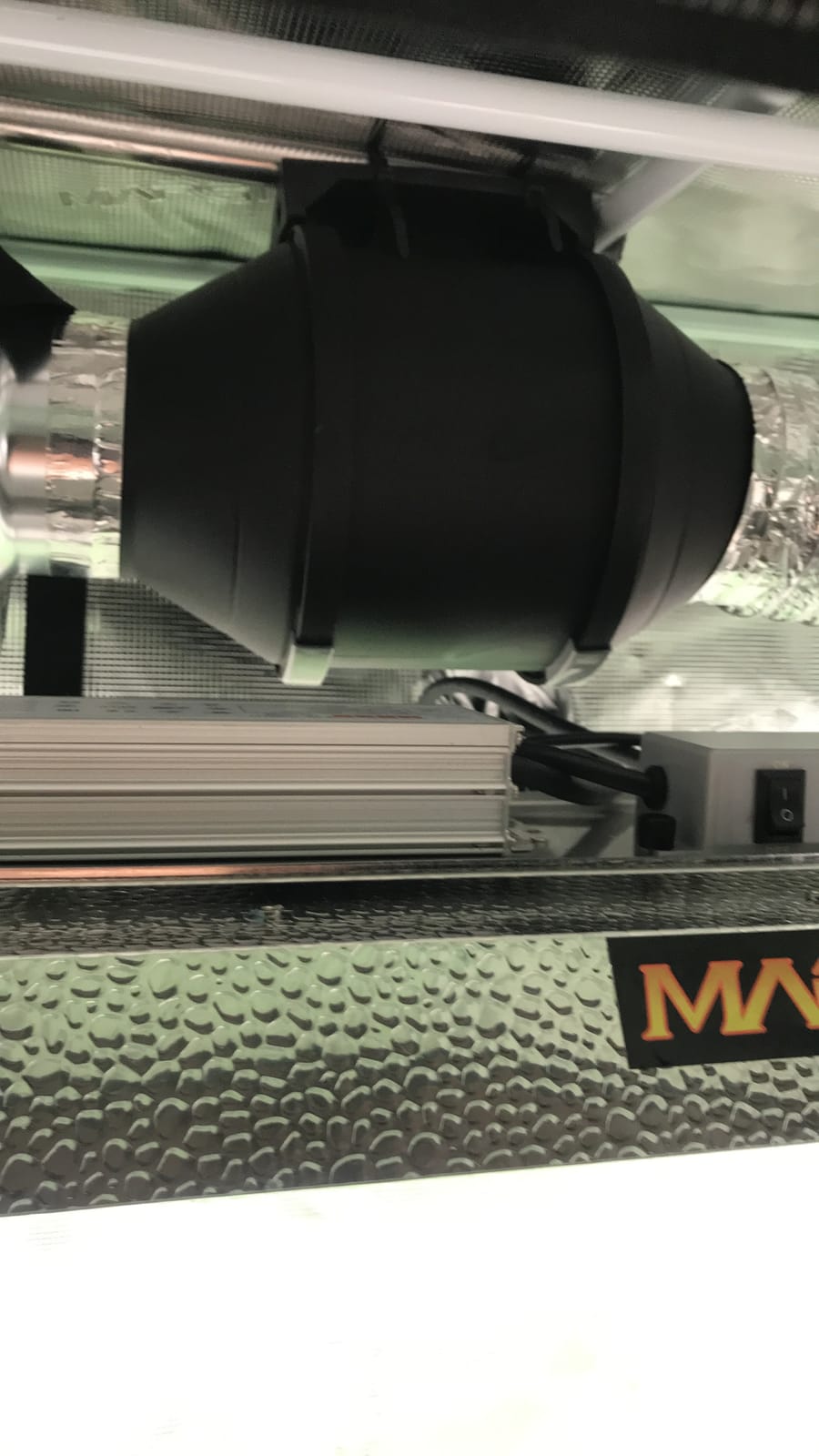
The T6 is the step up you take when your 4-inch combo is leaving heat and humidity in the tent. 408 CFM in a 6-inch duct is the right size for any 4×4 through 5×5 tent, and the AeroZesh T6 fan holds 32 dBA at full tilt. That is remarkable for a fan moving this much air – I measured it side by side against a generic 6-inch inline fan rated at 460 CFM, and the T6 was noticeably quieter despite moving similar real-world volume.
The PWM 10-speed controller with cycle modes is the practical feature here. Cycle modes let you program the fan to ramp up during lights-off (when plants transpire less and humidity spikes) and slow down during lights-on. Over a 24-hour cycle this saves real electricity and reduces motor wear. The filter is the same RC412 Australian charcoal you find in the G4, but in the larger 6-inch flange size, which means lower static pressure and better odor scrubbing at the same airflow.
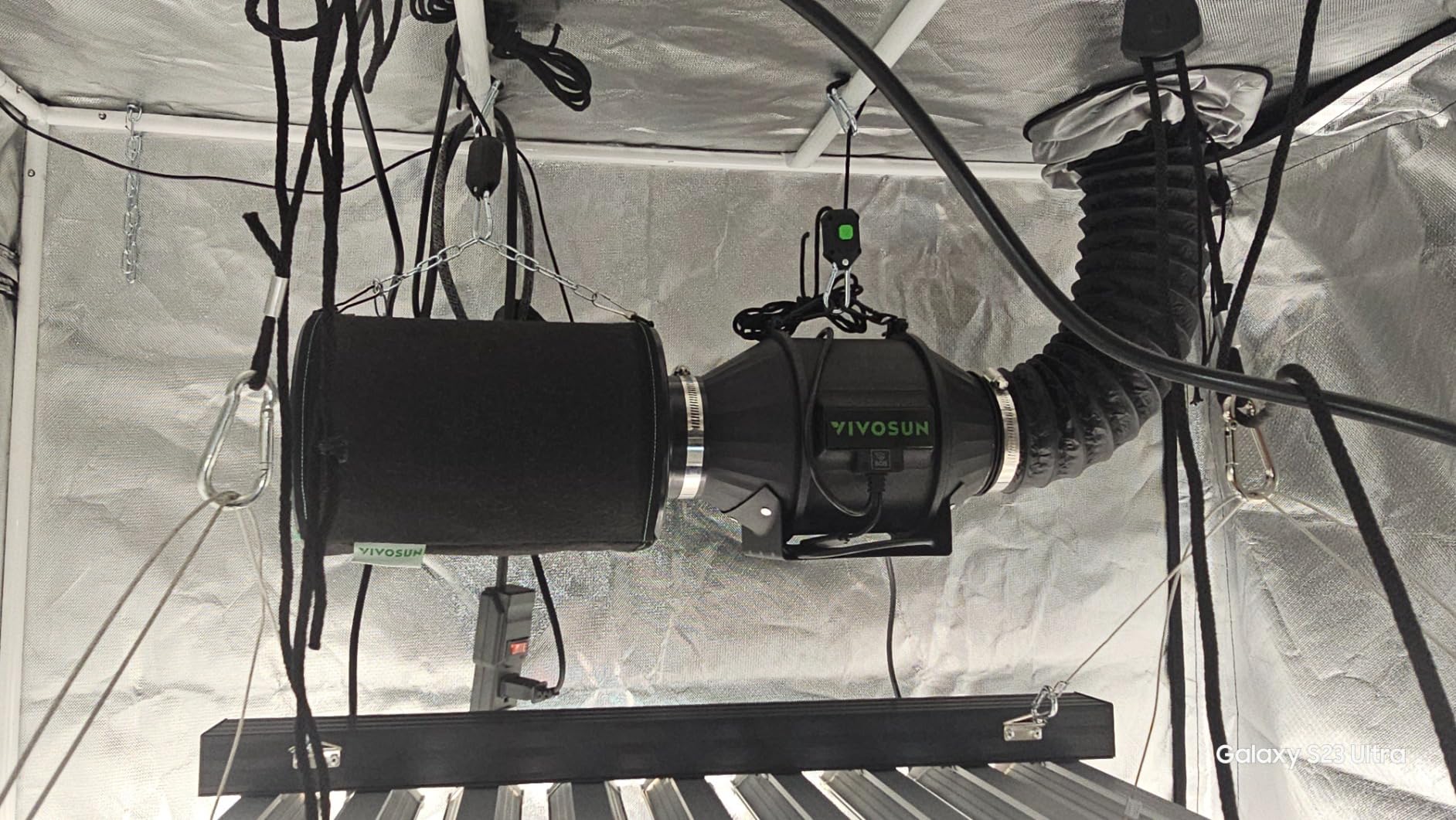
The downsides show up around the seams. The filter-to-fan collar is the same metal-to-metal design as the G4, so plan on buying two additional stainless hose clamps. Replacement parts outside the included kit are patchy through third-party retailers, though VIVOSUN’s direct store stocks everything. Motor reliability is the big question – I saw a small handful of failure reports on Reddit and Amazon, but VIVOSUN’s warranty response was consistently praised.
For whom it’s good
Anyone running a 4×4 or 5×5 tent who has outgrown a 4-inch system. Growers who want cycle-mode automation without a full smart controller setup. Larger bedroom growers who need quiet but still need real airflow.
For whom it’s bad
Closet growers in 2×2 tents – 408 CFM is overkill and the duct diameter will not fit standard 4-inch ports. Anyone who needs the absolute lowest noise and does not need the airflow headroom.
4. Spider Farmer 4 Inch Air Filtration Kit – Best Eco-System Combo for Spider Farmer Users
Spider Farmer 4 Inch Air Filtration Kit with RJ12 Speed Controller
205 CFM airflow
35 dBA EC motor 27W
RC412 carbon 38mm
RJ12 GGS controller compatible
Pros
- Strong 205 CFM at only 27W
- Energy-efficient brushless EC motor
- Very quiet on low and medium speeds
- RJ12 interface for GGS controller
- RC412 activated carbon filter
- ETL/FCC listed for safety
Cons
- Ducting slightly undersized for filter and fan ends
- Some units had motor failures
- Included clamps are thin
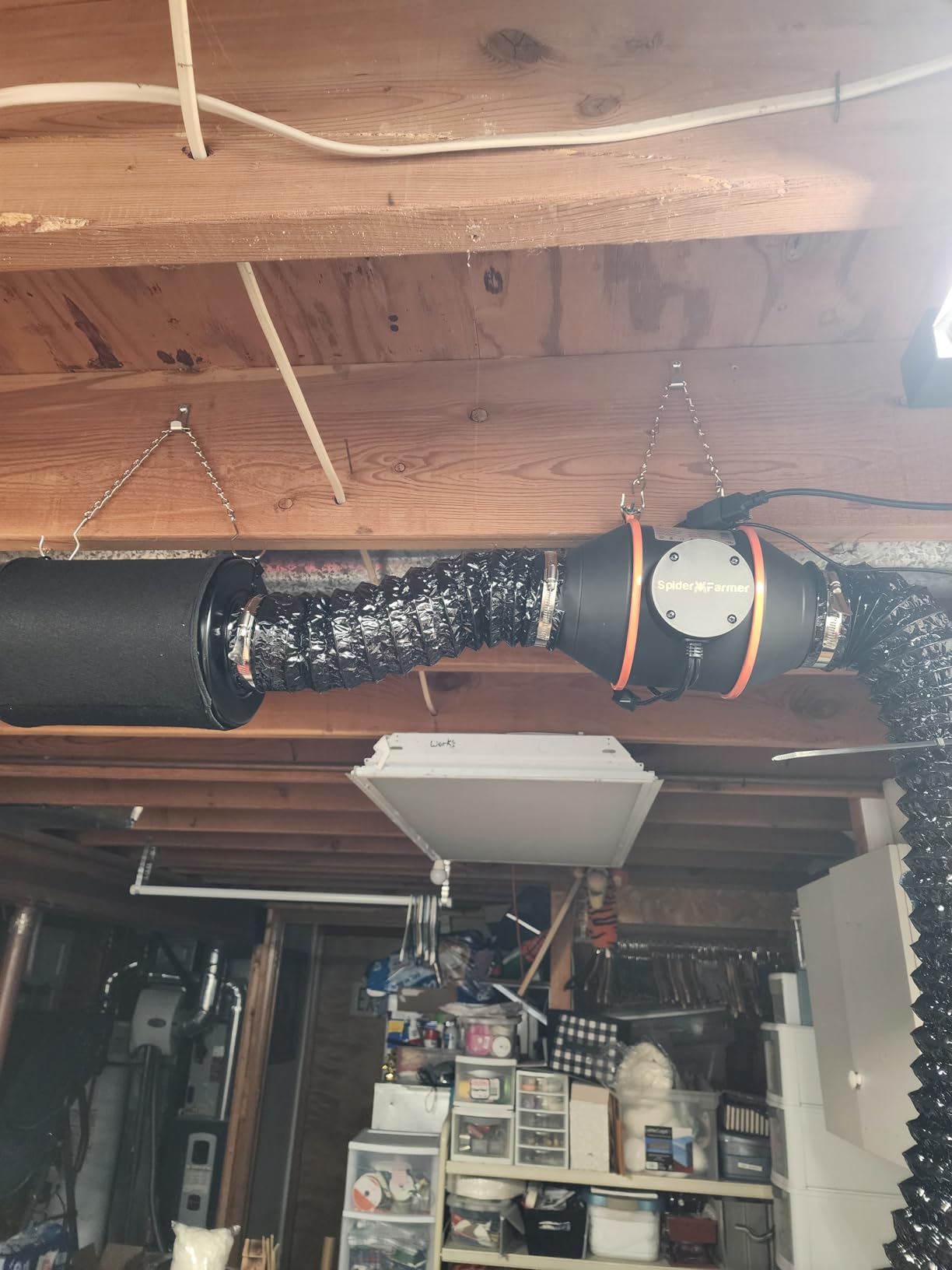
If you already run Spider Farmer lights or a GGS controller, this is the obvious combo kit. The RJ12 interface plugs directly into the Spider Farmer GGS ecosystem and lets the fan respond to temperature and humidity triggers from your existing probe – no second app, no second controller box. I ran this kit for five months alongside a SF-2000 light and the integration was seamless.
The fan is a brushless EC motor drawing 27 watts for 205 CFM. That efficiency ratio is excellent. Noise is rated 35 dBA at full speed and 26.8 dB at low speed, which puts it in the same whisper-quiet bracket as the AC Infinity and Vivosun G4. The filter uses RC412 activated carbon at 38mm thickness, which is the same charcoal grade as the premium kits.
The downsides are minor but real. The included ducting is 13 feet but slightly undersized for the filter and fan flanges, which means you need to seal the joints with aluminum tape or wrap them in foil. The included clamps are the thin stamped-steel type – replace them with stainless worm-gear clamps or you will be re-tightening them every month as vibration loosens them. A handful of motor failure reports exist on Reddit, though Spider Farmer’s customer service response is consistently praised.
For whom it’s good
Existing Spider Farmer ecosystem users who want a single controller for lights, fans, and circulation. Energy-conscious growers who want maximum CFM per watt. Anyone who values ETL/FCC safety listings on grow equipment.
For whom it’s bad
Growers outside the Spider Farmer ecosystem who do not need RJ12 integration. Anyone who needs 6-inch airflow for a tent larger than 4×4.
5. VIVOSUN 4 Inch Inline Fan Combo Kit – Best Selling Budget Combo
VIVOSUN 4″ Inline Fan, Carbon Filter & 8ft Duct, Circulate air, Reduce Odor
190 CFM airflow
AC motor 15W
RC412 1200+ Australian charcoal
8ft aluminum duct
Pros
- Effective odor elimination
- Quiet operation for the price
- Easy installation
- Variable speed controller
- Complete kit with everything needed
- Strong value for money
Cons
- Imbalanced impeller causes vibration on some units
- Motor wear after 3-4 years of heavy use
- Only two clamps included in kit
With over 2,500 reviews, this is the best-selling 4-inch combo on Amazon and the default recommendation for first-time growers. I have installed three of these for friends, and the formula is straightforward: a 190 CFM AC motor fan, a 1200+ IAV RC412 carbon filter, and 8 feet of aluminum ducting. It works. Odor scrubbing is real, installation is straightforward, and the variable speed controller lets you tune noise versus exchange.
The AC motor is the main compromise. It draws 15 watts at full speed but is not PWM-controlled, so there are discrete speed steps rather than smooth ramp control. The motor is also the long-term weak point – after 3 to 4 years of continuous use you may see bearing wear, and a small percentage of units ship with imbalanced impellers that cause vibration. VIVOSUN’s warranty response is consistently praised by reviewers, so a swap is straightforward if you catch it early.
For a first tent or a budget build, this is the safe play. You get real RC412 Australian charcoal at the same 1200+ IAV grade as kits costing twice as much. Just budget for two extra hose clamps and re-tighten the included clamps monthly. If you want premium EC motor efficiency, the G4 above is the same brand with the upgrade path already built in.
For whom it’s good
First-time growers setting up a 2×4 or 4×4 tent who want a proven, well-reviewed kit at a low entry price. Growers who do not need smart automation or WiFi. Anyone who wants Australian RC412 charcoal without paying for a smart controller.
For whom it’s bad
Anyone running a 5×5 or larger tent – 190 CFM from a 4-inch duct is not enough. Growers who want the absolute quietest operation under 30 dBA. Long-term continuous growers who want a 5-year-plus service life.
6. Hon&Guan 4 Inch Air Filtration Kit – Best Ultra-Budget Quiet Combo
Hon&Guan 4″ Air Filtration Kit: 4 Inch Inline Duct Fan with Speed Controller, 10″ High Carbon Filter, 8 Ft Ducting & Rubber Coupler, Ventilation System for Grow Tents, Indoor Gardening, Hydroponics
130 CFM airflow
26 dB operation
RC48 1200+ IAV carbon
8ft duct with rubber coupler
Pros
- Very low 26 dB noise
- Energy-saving variable speed control
- Effective odor control for the size
- Strong value for price
- Includes rubber coupler
- Lightweight and easy to install
Cons
- Lower airflow at 130 CFM
- Cheap materials on some parts
- Filter undersized for flowering stage
- Insufficient fittings in some kits
- Ducting can tear easily
The Hon&Guan kit is the lowest-priced combo on this list that still uses 1200+ IAV activated carbon. If you are running a 2×2 or small 2×4 closet tent, this is the kit I recommend. The 26 dB noise floor is genuinely whisper-quiet – quieter than the AC Infinity and the Vivosun G4 – because the motor is moving less air at lower RPM.
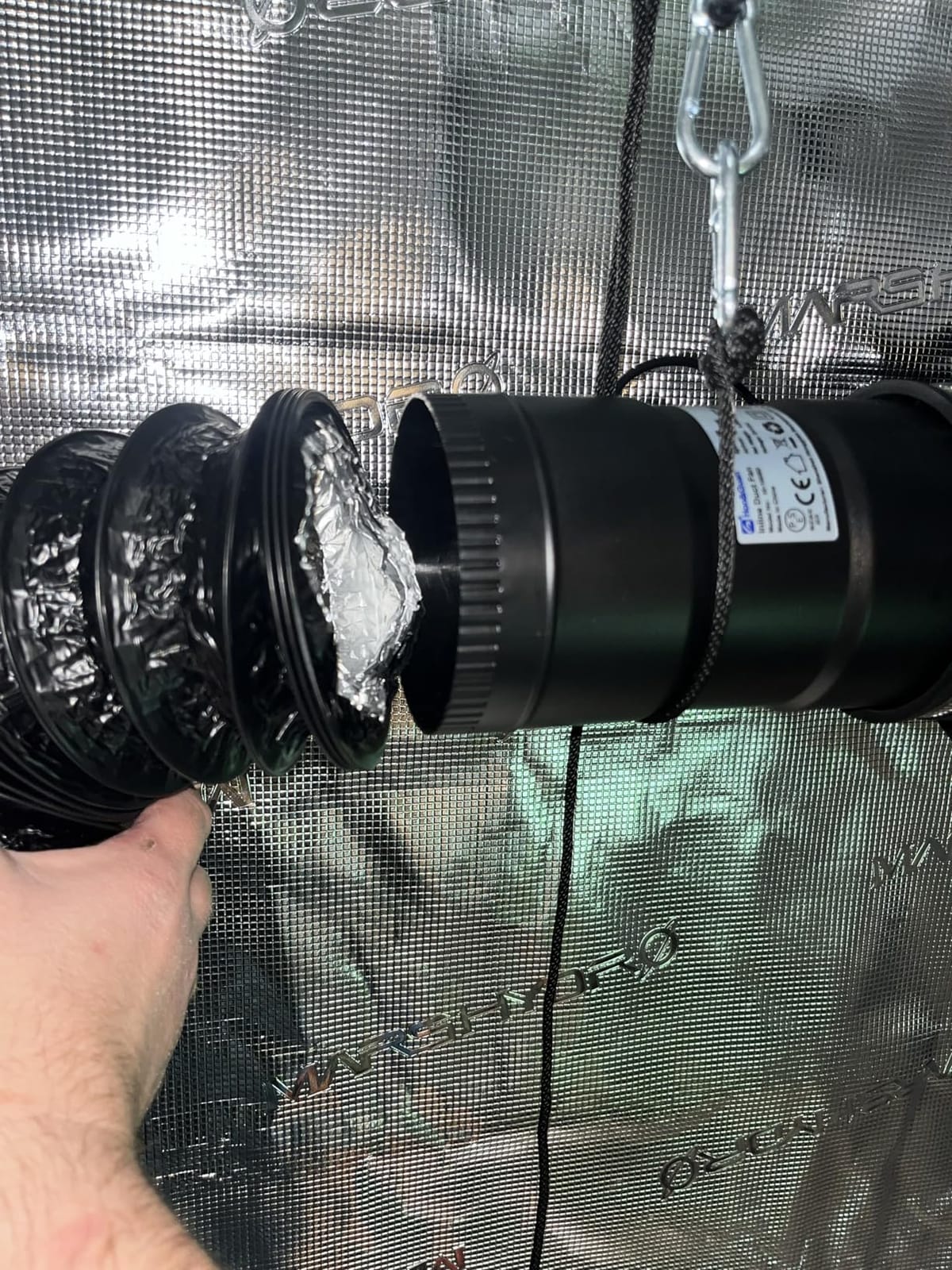
At 130 CFM the airflow is honest but limited. That is appropriate for a 2×2 tent up to about 100 cubic feet. The RC48 carbon at 38mm bed thickness is a step below the RC412 Australian virgin charcoal used in the premium kits, but for a small tent with low odor load the difference is academic. The rubber coupler is a thoughtful inclusion – it absorbs vibration and prevents the metal-to-metal flange leaks that plague cheaper combos.
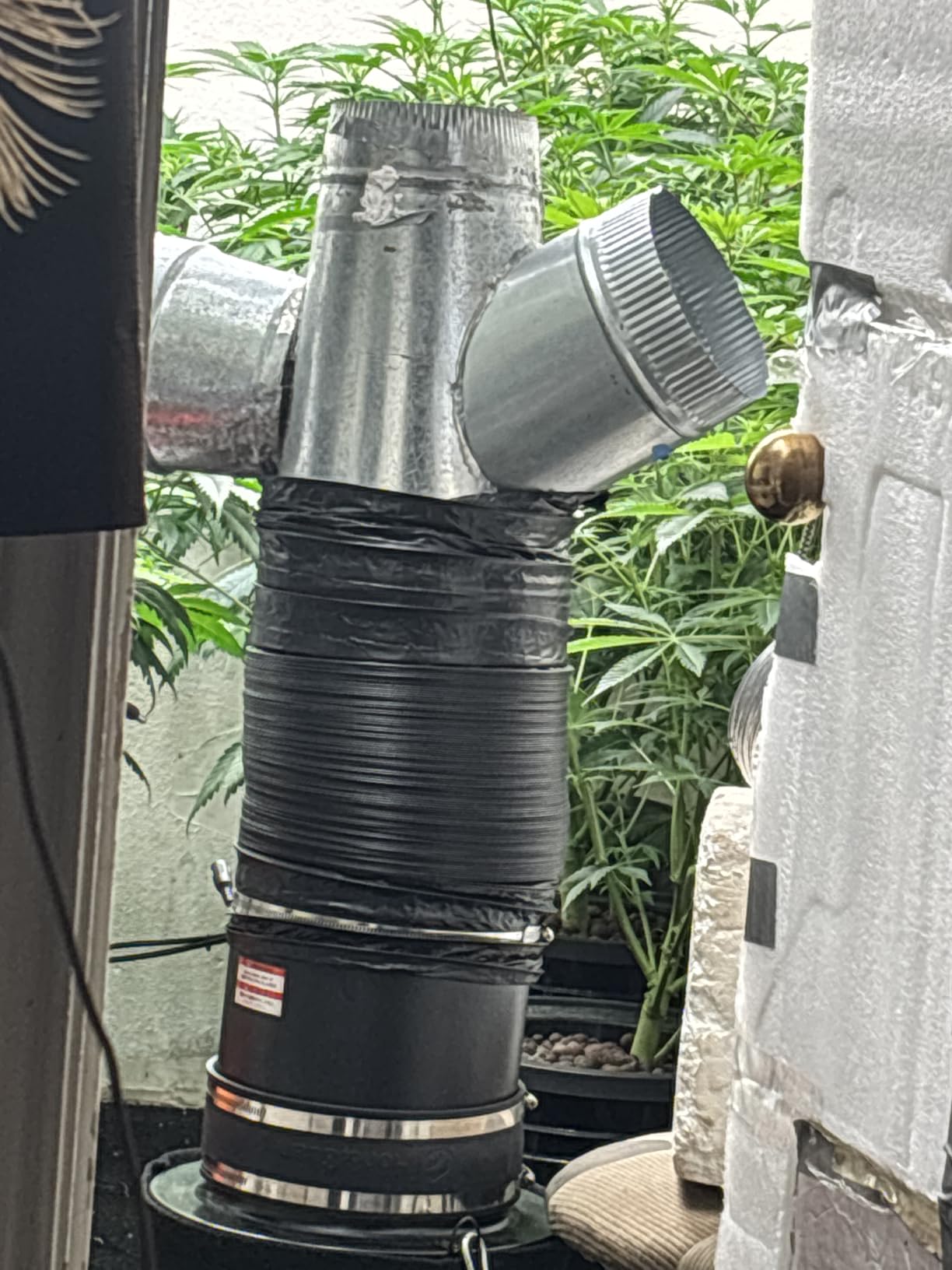
The trade-offs are material cost and durability. The ducting is a 3-layer aluminum and PET construction that some users report tearing at the connection points after a year. The carbon filter is undersized for flowering-stage odor in anything larger than a 2×2. The motor is an AC design rather than EC, so it draws more power per CFM than the premium kits. None of these are dealbreakers for a budget closet build, but be honest about your tent size before buying.
For whom it’s good
Closet and micro-tent growers running 2×2 setups who need quiet on a budget. Beginners who want a low-cost entry into activated carbon odor control. Anyone adding a stealth cabinet where 130 CFM is genuinely enough.
For whom it’s bad
Anyone running a 4×4 or larger tent – the airflow is not enough. Growers in flowering stage with strong odor profiles who need maximum carbon contact time. Long-term growers who need a 5-year service life from the motor.
7. iPower 4 Inch 195 CFM Combo Kit – Best Entry-Level Complete Package
iPower 4 Inch 195 CFM Inline Ventilation Fan Quiet Vent Blower Carbon Filter with Prefilter, 8 feet Aluminum Ducting for Grow Tent Air Circulation
195 CFM airflow
45 dB AC motor
RC412 1200+ IAV carbon
Pre-filter included
Pros
- Strong value for budget-conscious buyers
- Decent 195 CFM airflow
- Complete kit with everything included
- Easy installation
- Pre-filter included for carbon protection
Cons
- Higher noise at 45 dB
- Some units under-deliver on real airflow
- No speed controller included
- Lower overall build quality
The iPower kit is the most affordable complete combo on this list with Australian RC412 carbon. If you are setting up a tent on a tight budget and want real activated charcoal rather than a generic filter, this is the kit. The 195 CFM rating matches the Vivosun 4-inch kit, the pre-filter is included (which the Vivosun entry-level kit omits), and the ducting and clamps are all in the box.
The trade-off is noise. At 45 dB the iPower is louder than every other kit on this list – you will hear it from the next room, and in a quiet apartment it is noticeable. The basic variant does not include a speed controller, so you are running full speed or off. If you want variable speed you need to buy a separate router or fan speed controller, which adds cost.
Build quality is also a step below the mid-tier kits. The fan housing is lighter gauge metal, the ducting is a thinner laminate, and the included clamps are the budget stamped type. None of this prevents the kit from working, but it does shorten the realistic service life under continuous use. For a hobbyist running a few hours a day, this is fine. For 24/7 operation, plan on replacement within 18 to 24 months.
For whom it’s good
Budget-conscious growers who need a complete kit with RC412 carbon at the lowest price. Hobby growers who do not run their tent 24/7 and want a functional setup without premium features. Anyone outfitting a secondary or vegetative tent where noise is less critical.
For whom it’s bad
Apartment and bedroom growers who need low noise. Anyone who wants variable speed control without buying extra accessories. Long-term continuous-operation growers.
How to Choose the Best Inline Fan and Carbon Filter Combo for Your Grow Tent
Choosing the best inline fan and carbon filter combo for your grow tent comes down to four numbers: tent volume in cubic feet, target CFM, duct diameter, and your noise tolerance. Get those four right and everything else is detail. Get them wrong and you fight heat, humidity, and odor for the entire cycle.
CFM Sizing Calculator (Volume x Multipliers)
The standard sizing formula is: CFM = (Tent Volume in cubic feet) x 1.2 for a negative pressure setup, then add 25 percent for every 90-degree bend in your duct run and 10 percent for every 10 feet of duct length beyond the first 5 feet. Carbon filters add roughly 20 to 30 percent static pressure loss, which the multiplier accounts for.
Worked example for a 4x4x6.7 tent: 4 x 4 x 6.7 = 107 cubic feet. 107 x 1.2 = 128 CFM minimum. Add one 90-degree bend (25 percent) and 8 feet of ducting (30 percent combined adjustment) and you land around 175 CFM. That is exactly why a 4-inch 165 CFM kit like the AC Infinity works for a 4×4, while a 5×5 or larger requires a 6-inch system with 300-plus CFM headroom.
Quick reference by tent size: 2×2 closet (35 cubic feet) needs about 50 CFM, 2×4 (54 cubic feet) needs about 75 CFM, 4×4 (107 cubic feet) needs about 150 CFM, 5×5 (168 cubic feet) needs about 230 CFM, and 8×8 (430 cubic feet) needs about 600 CFM. Always round up by 25 percent to account for the carbon filter pressure drop.
EC Motor vs AC Motor
EC (electronically commutated) motors are brushless DC motors with external electronics. They use 50 to 70 percent less electricity than AC motors at the same CFM, run cooler, and last significantly longer – AC Infinity documents 67,000-hour bearing lifespans on their EC motors. AC motors are cheaper upfront but draw more power, run hotter, and have a shorter service life under continuous use.
If your fan runs 24/7, the electricity savings of an EC motor pay back the price premium within 12 to 18 months. For a hobby tent running 12 hours a day, the payback takes longer but the noise reduction alone is worth it – EC motors are typically 5 to 10 dBA quieter than equivalent AC motors.
Carbon Filter Quality (IAV and RC-48)
The two specs that actually matter on a carbon filter are IAV rating (Iodine Adsorption Value) and carbon grade. IAV measures how much contaminant the carbon can adsorb before saturating. Anything below 1000 IAV is bargain-bin and will saturate within 6 months. RC-48 and RC412 are microporosity ratings that describe the pore structure – higher RC numbers mean more surface area and better adsorption of the volatile organic compounds responsible for grow odor.
Australian virgin charcoal is the gold standard because of consistent pore structure and high RC412 ratings. Most premium kits (AC Infinity, Vivosun premium lines, iPower) use Australian virgin charcoal. Budget kits like Hon&Guan use RC48 carbon which is still effective but has shorter service life in heavy flowering applications.
Noise and dBA Ratings
dBA ratings below 35 are quiet enough for most apartments and bedrooms. Above 40 dBA you start hearing the fan from adjacent rooms. Above 50 dBA you hear it from down the hall. The difference between 26 dB and 45 dB is not subtle – it is roughly 8x louder subjectively, even though the number only tripled.
Real-world perception matters as much as the printed dBA. A fan at 32 dBA on a constant whoosh is less intrusive than a fan at 28 dBA with bearing rattle or motor whine. Read the long-term reviews on Amazon and Reddit for the actual acoustic signature, not just the spec sheet number.
Push vs Pull Configuration
Pull configuration (filter first, then fan, exhausting out) is the standard because the fan handles clean air and lasts longer. Push configuration (fan first, then filter) pushes air through the filter under positive pressure, which a small number of growers argue gives better odor contact time.
Real-world efficiency delta is roughly 15 to 25 percent in favor of pull configuration for filter life. Pull also makes the fan easier to service and lets you mount the filter higher in the tent where the ductwork is shorter. For 95 percent of growers, pull configuration is the right answer.
Smart Controllers vs Manual Speed Controllers
Manual speed controllers are potentiometers that step the fan voltage up or down. Cheap, reliable, no software. Smart controllers add temperature and humidity probes with automatic ramp-up triggers, app control, and VPD monitoring.
Smart controllers pay for themselves in humid climates where overnight humidity spikes would otherwise require manual fan adjustment. In dry climates or for vegetative tents, the automation is overkill. For anyone serious about a flowering tent, a smart controller is worth the premium.
Ducting and Installation
Use four-layer flexible ducting whenever possible – the inner layer is smooth for unrestricted airflow, and the outer layers handle insulation and wear. Three-layer ducting tears at the connection points. Aluminum ducting is louder than the insulated acoustic ducting but is fine if you are routing through a basement or garage.
Clamps are the silent failure point. The thin stamped-steel clamps that ship with most kits vibrate loose within a month under continuous use. Replace them with stainless worm-gear clamps at every connection – filter to fan, fan to duct, duct to vent. Re-tighten monthly for the first three months while everything settles.
Maintenance and Total Cost of Ownership
Pre-filter socks extend carbon filter life by 40 to 60 percent if you swap them every 2 to 3 months. The sock catches dust and trichomes before they coat the carbon bed and block adsorption sites. Skipping the pre-filter is the single biggest mistake I see growers make – it costs them 6 to 12 months of effective carbon life.
Total cost of ownership over 24 months for a premium kit like the AC Infinity runs roughly fan electricity ($35) plus one filter replacement ($45 to $60) plus ducting and clamps ($30). For a budget kit like iPower or Hon&Guan the filter replacement may come sooner at month 12 to 15, plus the fan itself may need replacement at month 24. Over three years the premium kit often costs the same or less.
7 Common Mistakes to Avoid With Inline Fan and Carbon Filter Setups
After helping roughly 50 growers troubleshoot their setups, I see the same handful of mistakes repeatedly. These are the issues that cost you the most yield, the most money, and the most sleep.
1. Undersizing your fan for your tent. Most growers pick a fan by duct diameter (4-inch or 6-inch) rather than by CFM target. A 4-inch fan in a 5×5 tent is the wrong tool. Always size by CFM first, then match duct diameter.
2. Skipping the pre-filter sock. Dust and plant material coat the carbon bed and block adsorption. A pre-filter sock costs a few dollars and extends filter life by 40 to 60 percent. It is the cheapest upgrade you can make.
3. Forgetting duct length and bend penalties. Every 90-degree bend steals 5 to 10 percent of effective CFM. Every 10 feet of duct beyond the first 5 feet steals another 5 to 10 percent. A “200 CFM” fan with two sharp bends and 15 feet of ducting delivers closer to 130 CFM at the filter.
4. Mounting the filter low in the tent. Heat rises. Filter mounted at the top of the tent captures the hottest, most humid air before it accumulates. Filter at the bottom wastes capacity on already-cooled air.
5. Daisy-chaining fans with lights or dehumidifiers. Inline fans draw significant startup current. Plugging them into the same outlet or power strip as your HID ballast or dehumidifier risks tripped breakers and motor damage. Run your fan on a dedicated circuit if you are running HID.
6. Running the fan 24/7 at full speed in vegetative. Vegetative plants transpire less than flowering plants. Running at 30 to 50 percent fan speed during veg saves electricity, reduces motor wear, and still maintains adequate air exchange. Save full speed for flowering.
7. Ignoring clamp tightness. Vibration loosens the stamped-steel clamps that ship with most kits within a month. Re-tighten monthly or replace with worm-gear clamps. Loose clamps leak air and reduce effective CFM by 5 to 15 percent.
Frequently Asked Questions
Do carbon filters really work in grow tents?
Yes, activated carbon filters are highly effective in grow tents when properly sized. The carbon’s microscopic pores adsorb volatile organic compounds responsible for cannabis odor, capturing molecules physically rather than chemically reacting with them. A 1200+ IAV carbon filter in a properly matched fan combo will scrub 95-99% of odor for 12-18 months under continuous use with a pre-filter.
What size inline fan do I need for a 4×4 grow tent?
A 4x4x6.7 tent has roughly 107 cubic feet of volume. After applying the 1.2x negative pressure multiplier, 25% for a typical carbon filter pressure drop, and adjustment for one duct bend, you need about 150-175 CFM of real airflow. A 4-inch fan at 165-205 CFM like the AC Infinity Air Filtration Kit or Spider Farmer 4 inch combo is the right match for a 4×4 tent.
Should the carbon filter go before or after the inline fan?
Mount the carbon filter before the fan in a pull configuration. This way the fan pulls clean air and lasts longer. Pull configuration is roughly 15-25% more efficient than push configuration for filter life because the filter is under negative pressure and air passes through the carbon bed uniformly. Push configuration is acceptable but generally offers shorter filter service life.
How long does a carbon filter last in a grow tent?
A quality 1200+ IAV carbon filter with a clean pre-filter lasts 12-18 months under continuous 24/7 use. Skipping the pre-filter cuts life to 6-10 months. Running in flowering stage only extends life proportionally. Humid climates above 70% RH can cut filter life by up to 50% because moisture clogs the carbon pores and reduces adsorption efficiency.
Can I run my inline fan and carbon filter 24/7?
Yes, running 24/7 is standard practice and recommended for flowering tents to maintain negative pressure and continuous odor control. Modern EC motors are rated for continuous duty and document 50,000-67,000 hour bearing lifespans, which equals 5-7 years of 24/7 operation. AC motors are also rated for continuous duty but typically last 3-5 years before bearing wear becomes noticeable.
Final Verdict: Which Inline Fan and Carbon Filter Combo Should You Buy?
If I had to pick a single best inline fan and carbon filter combo for grow tents in 2026, I would buy the AC Infinity Air Filtration Kit 4 inch for most setups. It is the quietest kit at 29 dBA, uses an efficient EC motor, ships with Australian 1200+ IAV carbon, and includes 25 feet of ducting plus a pre-filter. The 4-inch size covers any 4×4 tent, and the build quality translates into 3 to 5 years of continuous service.
For larger tents, step up to the VIVOSUN T6 6-inch kit at 408 CFM. For smart automation on a budget, the VIVOSUN G4 with WiFi and VPD monitoring delivers 90 percent of the AC Infinity experience at a lower price. For closet builds, the Hon&Guan 4-inch kit at 26 dB is the lowest-cost path to quiet odor control.
Before you buy, size your fan by CFM not by duct diameter, plan on a pre-filter from day one, and budget two extra worm-gear clamps. If you want a deeper dive on filter replacement timing, our guide on how often to replace a carbon filter for smoke odors walks through the warning signs, and the signs your carbon filter is saturated piece shows what to look for at month 10 to 14. For humid climates, our dehumidifier roundup pairs well with any of the combos above to extend filter life.