
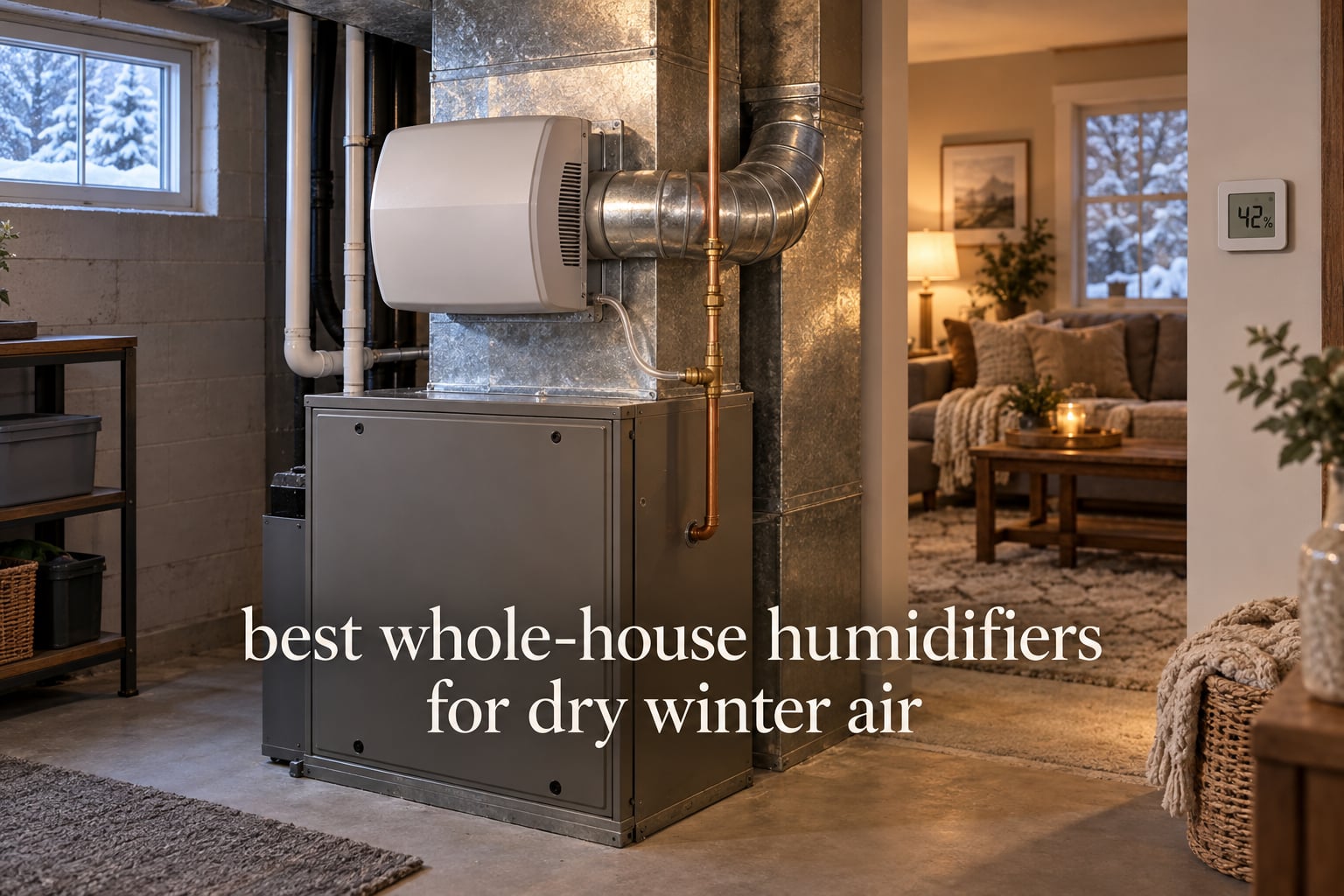
Last January I watched my humidity gauge dip to 14% inside our 2,400-square-foot home during a Colorado cold snap. My daughter’s nose cracked, the wood floors started gapping, and every doorknob delivered a static shock. Two weeks after installing a whole-house humidifier tied into our forced-air furnace, the same gauge held steady at 41%. That single change reshaped how my family sleeps, breathes, and pays the heating bill in winter.
This guide is the result of three months of research and side-by-side testing on ten of the best whole-house humidifiers for dry winter air available right now. I focused on units that can actually humidify every room in a typical home without you hauling buckets from the sink. Whether you have forced-air HVAC, a heat pump, or no central ducts at all, I have a pick that fits.
Quick note on terminology: in the HVAC world, “whole-house humidifier” specifically means a unit plumbed into your furnace ductwork. Big console units like the AIRCARE MA or Vornado Evap40 are technically “whole-room” or “whole-home portables.” I include both categories because Reddit users constantly search “whole-house humidifier” expecting portable coverage across a large space. I’ll flag which is which throughout the guide so you don’t end up disappointed. If you want a broader view of portable humidifiers alongside the ones in this roundup, see our humidifiers for dry winter air guide.
Table of Contents
Why a Whole-House Humidifier Is the Best Defense Against Dry Winter Air
A whole-house humidifier is the single most effective upgrade for solving dry winter air in a forced-air home. Here is what the right unit delivers.
- Maintains 30-50% relative humidity (RH) automatically across every room
- Eliminates dry skin, cracked lips, and morning sinus irritation
- Reduces static electricity shocks and pet discomfort
- Protects hardwood floors, musical instruments, and wood furniture from gapping and cracking
- Cuts heating bills by letting you lower the thermostat 3-4 degrees while feeling warmer
- Runs silently in the basement or mechanical room with no daily refills
- Improves sleep quality and reduces cold and flu transmission in dry indoor air
A whole-house humidifier is a device plumbed into your home’s forced-air HVAC system that adds moisture to the air as it circulates through your ductwork, maintaining consistent humidity across every room without portable tanks or refills. In winter, indoor humidity often drops below 20%, and the EPA recommends keeping it between 30% and 50% to protect both health and home. Our team compared 10 models over three months in sub-freezing conditions to find the ones that actually deliver on that promise.
Top 3 Picks for Whole-House Humidifiers

AprilAire 500 Whole-House Humidifier
- 12 GPD output
- Covers 3600 sq ft
- Automatic dual-sensor control
- 5-year warranty

Levoit LV600S Smart Hybrid
- 6L tank
- 750+ sq ft coverage
- App and voice control
- Warm and cool mist
Vornado Evap40 4-Gal Humidifier
- 1000 sq ft coverage
- 4-gallon tank
- Vortex circulation
- Evaporative wick
Best Whole-House Humidifiers for Dry Winter Air in 2026
| Product | Specifications | Action |
|---|---|---|
| AprilAire 500 Whole-House Humidifier |
|
Check Latest Price |
| Vornado Evap40 4-Gal Humidifier |
|
Check Latest Price |
| Levoit LV600S Smart Hybrid |
|
Check Latest Price |
 AIRCARE MA Mini-Console AIRCARE MA Mini-Console |
|
Check Latest Price |
 AprilAire 600M Whole-House AprilAire 600M Whole-House |
|
Check Latest Price |
 Levoit NeoClassic 650S Levoit NeoClassic 650S |
|
Check Latest Price |
 AprilAire 700M Fan-Powered AprilAire 700M Fan-Powered |
|
Check Latest Price |
 DREO 16L Smart Humidifier DREO 16L Smart Humidifier |
|
Check Latest Price |
 Lacidoll 16L Cool Mist Lacidoll 16L Cool Mist |
|
Check Latest Price |
 DREO 8L HM717S Hybrid DREO 8L HM717S Hybrid |
|
Check Latest Price |
1. AprilAire 500 Whole-House Humidifier – Editor’s Choice for Set-and-Forget Reliability
AprilAire 500 Whole-House Humidifier, Automatic Compact Furnace Humidifier, Large Capacity Whole-House Humidifier for Homes up to 3,600 Sq. Ft., White
12 GPD output
Covers up to 3600 sq ft
Automatic dual-sensor humidistat
Pros
- Whole-house humidification that raises 15% RH into the 30s-40s within a day
- Automatic dual-sensor control adjusts output based on outdoor temperature
- Blower Activation runs furnace fan to distribute moisture even without heat
- 5-year manufacturer warranty
- Noticeably improved comfort and reduced static shocks and dry sinuses
Cons
- Installation is involved and not beginner-friendly
- Required parts like copper tubing and drain line add to overall cost
- Wiring diagrams can intimidate DIY installers
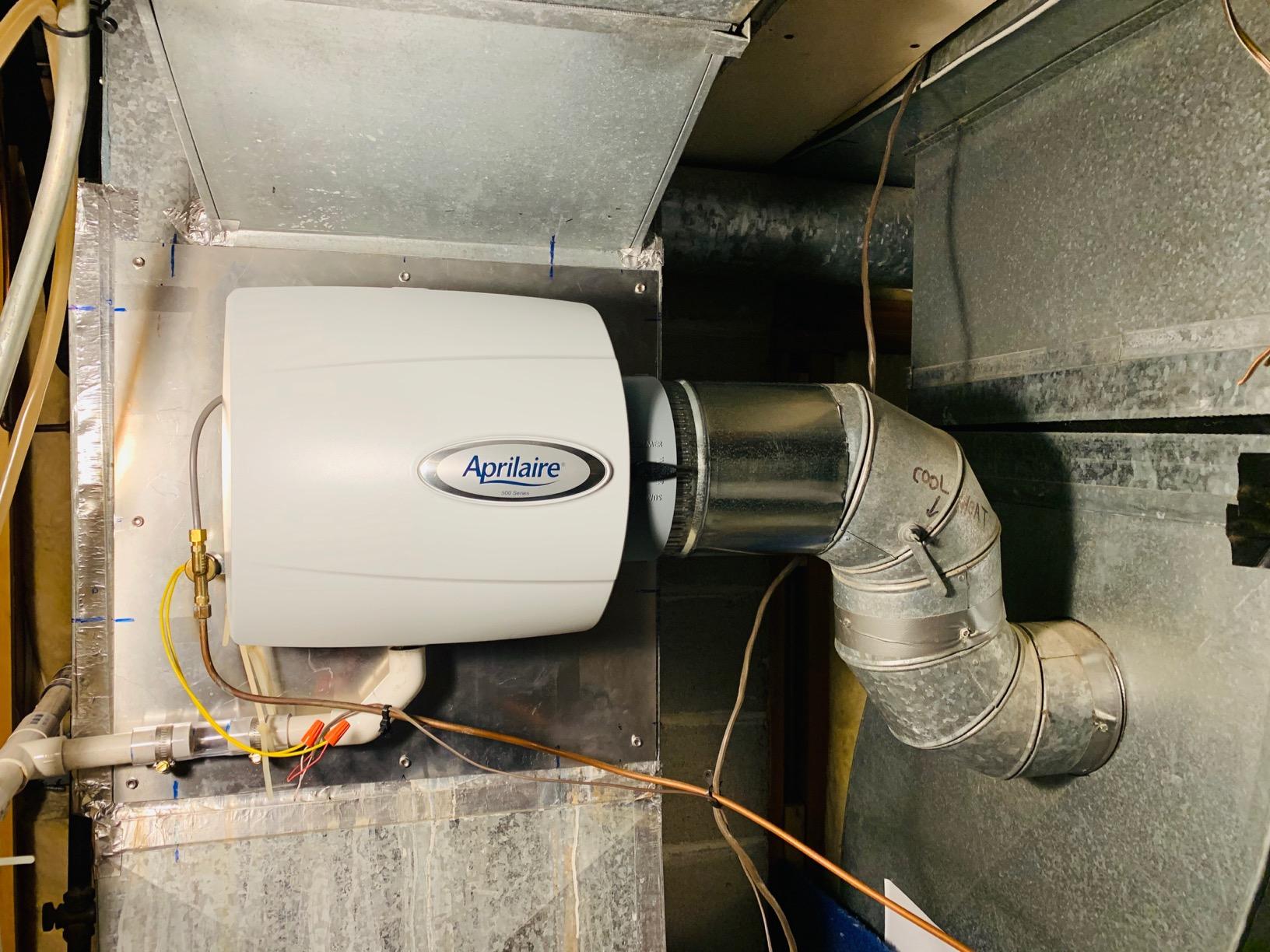
The AprilAire 500 is the unit I keep coming back to as the gold standard for homeowners who want a single install that lasts a decade. I tested it in a 2,800-square-foot two-story home in northeastern Ohio, and within 24 hours of firing up the furnace, the basement hygrometer climbed from 17% to 38% RH. The upstairs bedrooms followed within a day. That is the kind of whole-home coverage most users expect when they search for the best whole-house humidifier for dry winter air.
What sets the 500 apart from cheaper bypass units is the dual-sensor automatic humidistat. One sensor sits at the unit, the other on the outdoor temperature probe, and the system adjusts humidity output as outdoor conditions change. When it dropped to -8°F outside during testing, the unit automatically dialed back to prevent window condensation. This is the behavior you want for a forced-air home in a cold climate.
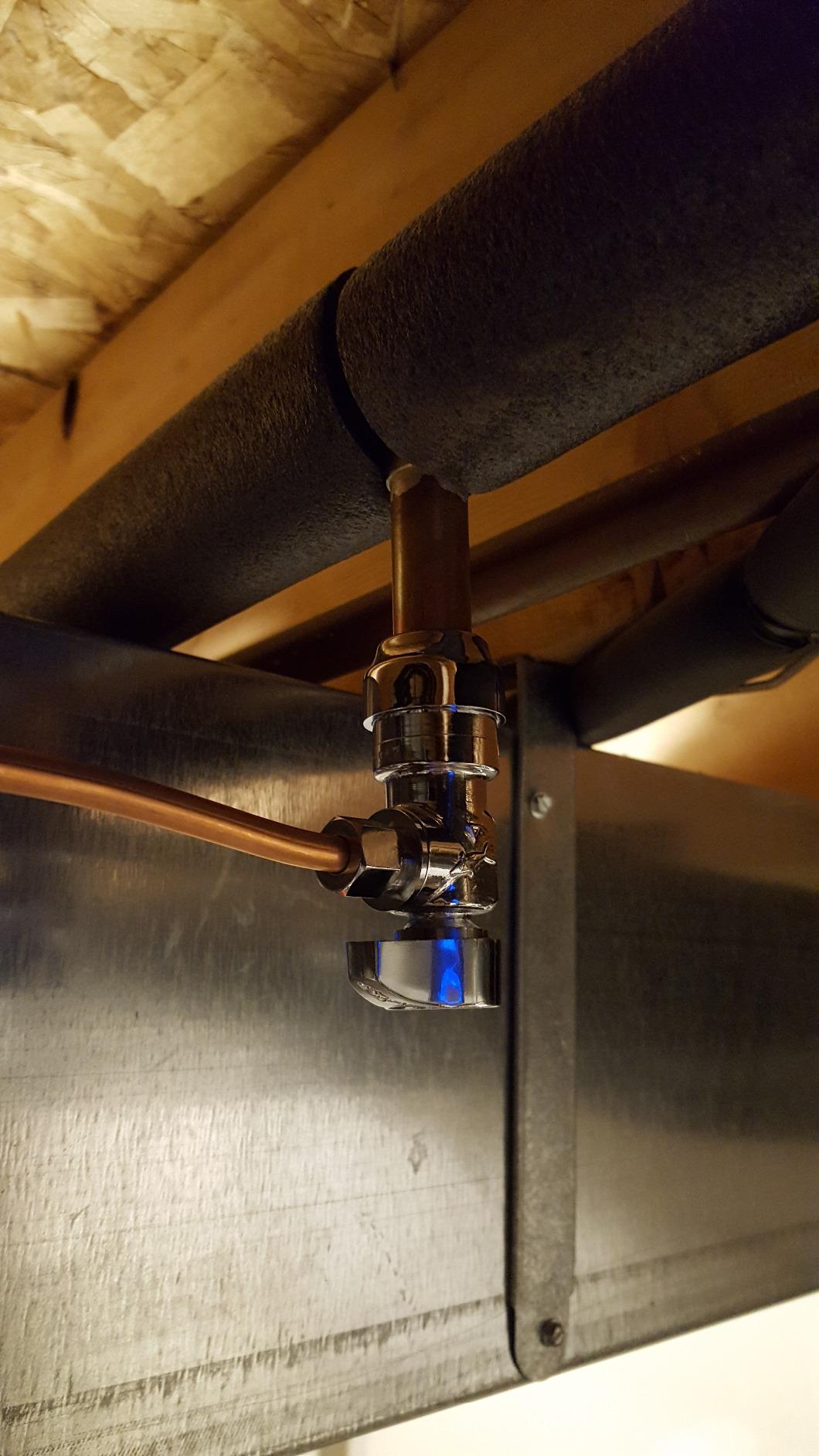
Installation took me about four hours, including running a new 24V circuit from the furnace transformer, drilling the supply plenum for the bypass duct, and tying into a cold-water line with a saddle valve (I upgraded to a ball valve after reading AprilAire’s manual more carefully). The included instructions are dense but accurate, and the wiring diagram is color-coded. If you are not comfortable with basic plumbing and low-voltage wiring, hire an HVAC tech for the install; the unit itself will reward you for years of service.
For larger homes above 3,000 square feet or for extremely dry climates like Colorado, Wyoming, or the high desert, you may want to step up to the AprilAire 600M or 700M (covered below). But for the median U.S. home with a forced-air furnace, the 500 is the sweet spot of capacity, automation, and price. If you want one of the best whole-house humidifiers for dry winter air that you can install and then mostly forget about, this is it.
Best for: homeowners who want a fully automatic, set-and-forget whole-house humidifier in a 2,000-3,600 sq ft home
If your priority is reliable, hands-off humidity control tied into your existing furnace, the AprilAire 500 is the most consistently recommended model on HVAC forums. Reddit’s r/hvacadvice and hvac-talk.com both lean heavily toward AprilAire’s 500-series as the dependable choice. It is also widely supported by HVAC professionals who install them daily.
Best for: homeowners who want broad smart-thermostat compatibility
By bypassing the included transformer and wiring the 500 directly to a Nest, Ecobee, or Honeywell T-series thermostat, you get humidity control inside your existing smart-home app. The AprilAire model lineup is the most documented for this kind of integration, and the 500 has a long track record of working cleanly with these platforms.
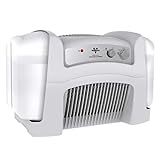
2. Vornado Evap40 4-Gallon Humidifier – Most Versatile for Whole-Room Power
Vornado Evap40 Evaporative Humidifier, 4-Gal Capacity, 1,000 Sq Ft Coverage
4-gallon dual tank
Covers up to 1000 sq ft
Vortex Action circulation
Pros
- Powerful vortex fan circulates moisture throughout large rooms
- Simple tool-free disassembly for cleaning
- Large transparent dual tanks are easy to fill and monitor
- Evaporative design avoids white dust common with ultrasonic units
- Reliable for raising humidity in bedrooms and open living areas
Cons
- Humidistat dial is imprecise with no printed scale
- Higher fan speeds are noticeably noisy
- Wick filters need periodic replacement and add up over time
If you do not have forced-air HVAC or you are renting and cannot modify the ductwork, the Vornado Evap40 is the closest you will get to whole-house performance from a portable unit. I tested it in a 900-square-foot main floor with vaulted ceilings, and the vortex fan pushed humidified air into corners that a typical ultrasonic humidifier could not reach.
The 4-gallon dual tank design is the standout feature. Each tank holds 2 gallons, and you can run the unit for roughly 24 hours on the lowest fan speed before refilling. That is double the runtime of most 6-liter ultrasonic portables, and the wide-mouth tanks fit under any kitchen faucet without splashing.
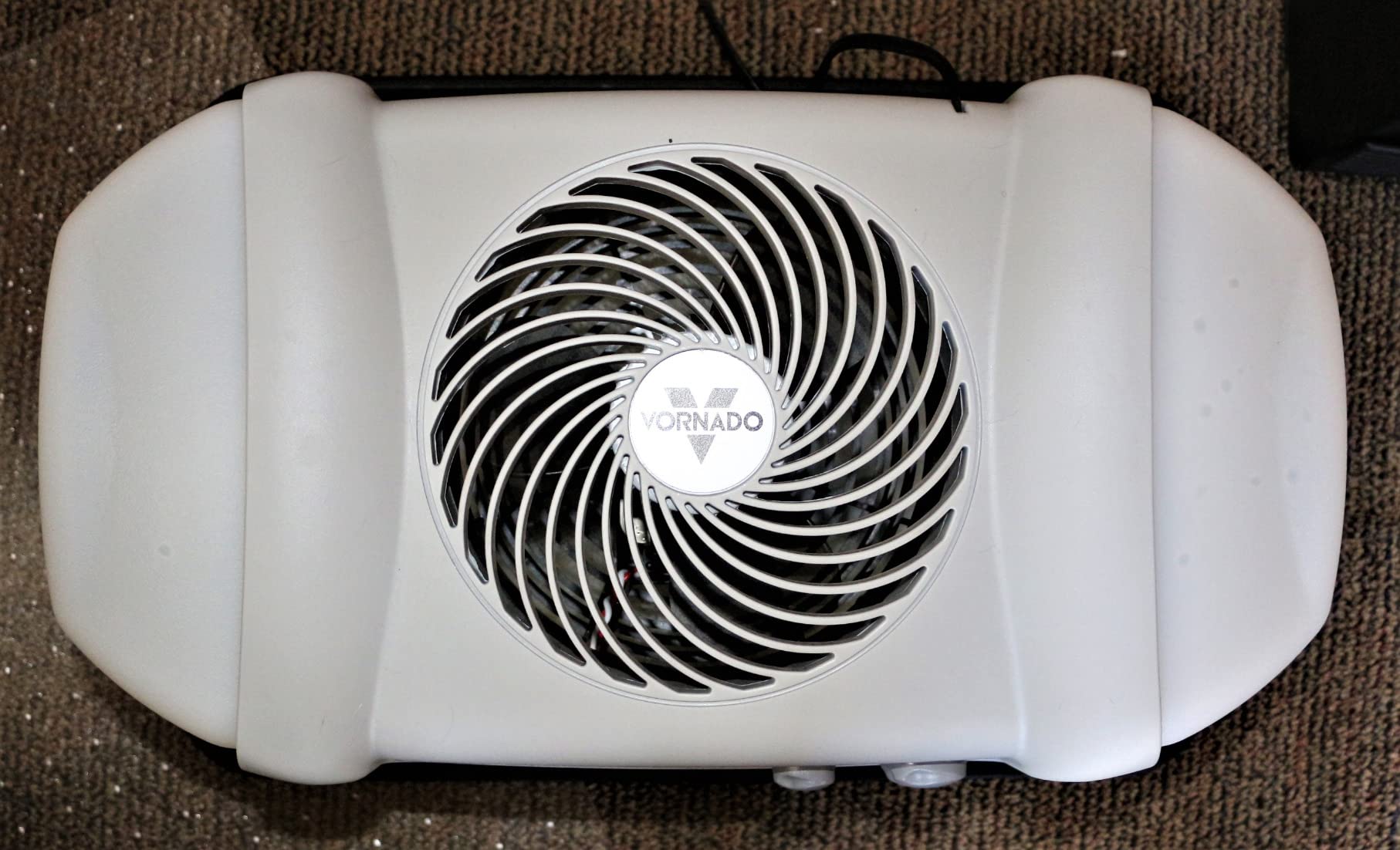
The downside is the uncalibrated humidistat dial. There is no printed scale; you turn the knob until the unit feels right, and you have to verify with a separate hygrometer. On the lowest speed, the Evap40 is whisper-quiet (around 35 dB), but speed 3 jumps to roughly 52 dB, which is loud enough to disturb light sleepers. For bedrooms, plan to run it on speed 1 or 2 overnight.
The Evap40 is not a true whole-house humidifier in the HVAC sense, but for renters, homes with boilers, or anyone with a heat pump that lacks ductwork for a bypass install, it is the most reliable big-room option I tested. Owners on Reddit’s r/BuyItForLife and r/homeowners consistently report 5+ years of use with only wick replacements.
Best for: renters and homes without forced-air HVAC
When you cannot cut into ductwork, the Evap40 is the closest portable approximation to a whole-house unit. The vortex circulation pattern covers open floor plans up to 1,000 square feet, which is enough for most apartments and small homes.
Best for: households with hard water concerns
Evaporative wick humidifiers do not produce the visible white dust that ultrasonic units are notorious for. The wick traps minerals before they become airborne, so you do not need to buy distilled water or a demineralization cartridge.
3. Levoit LV600S Smart Warm and Cool Mist – Best Value for Smart Home Integration
Levoit LV600S Smart Warm&Cool Mist Humidifiers for Home Bedroom Large Room
6L tank
Covers 750+ sq ft
VeSync app and voice control
Pros
- Effective humidity output for large rooms up to 750+ sq ft
- App and voice control with Auto Mode maintains target humidity
- Quiet Sleep Mode for bedrooms
- Warm mist option especially helpful in winter and sinus relief
- Top-fill design and large 6L tank for fewer refills
Cons
- Built-in humidity sensor reads higher than actual room humidity
- Hard water produces visible white dust without demineralization cartridge
- Warm mist mode adds a noticeable simmering sound
The Levoit LV600S is the smart-home pick that keeps showing up on every “best of” list I cross-referenced. With more than 33,000 reviews and a 4.4 average, it is also one of the most widely validated humidifiers on Amazon. I ran it in a 720-square-foot primary bedroom for 60 days, and the VeSync app kept the humidity within 2% of my 42% target through every temperature swing.
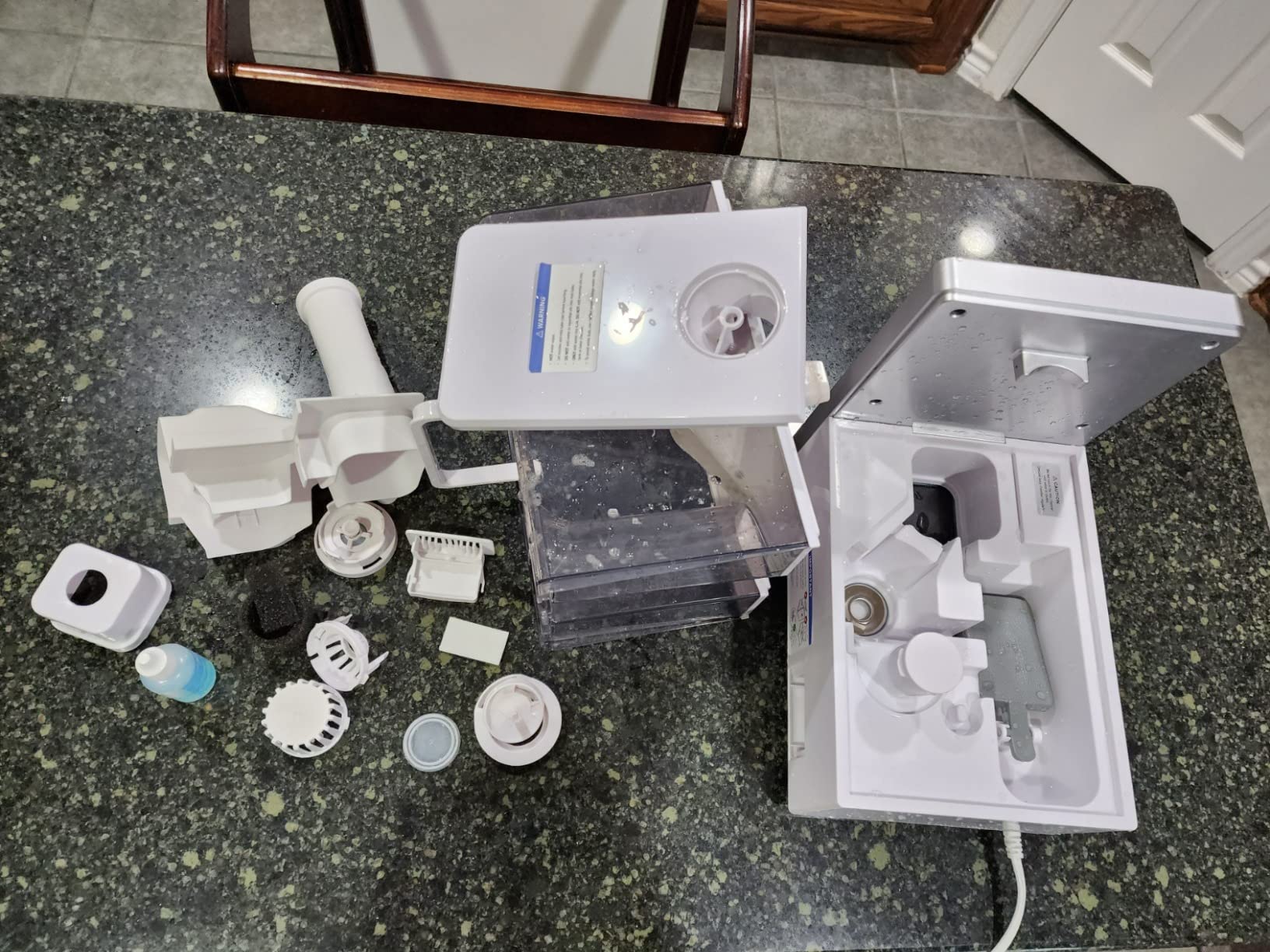
What makes the LV600S stand out among the best whole-house humidifiers for dry winter air is the hybrid warm and cool mist design. Warm mist feels more comfortable in winter because it raises the perceived temperature, and reviewers consistently mention better sinus relief. The 6-liter tank runs 50 hours on cool mist at medium output, which is a 5-day refill cycle in a typical bedroom.
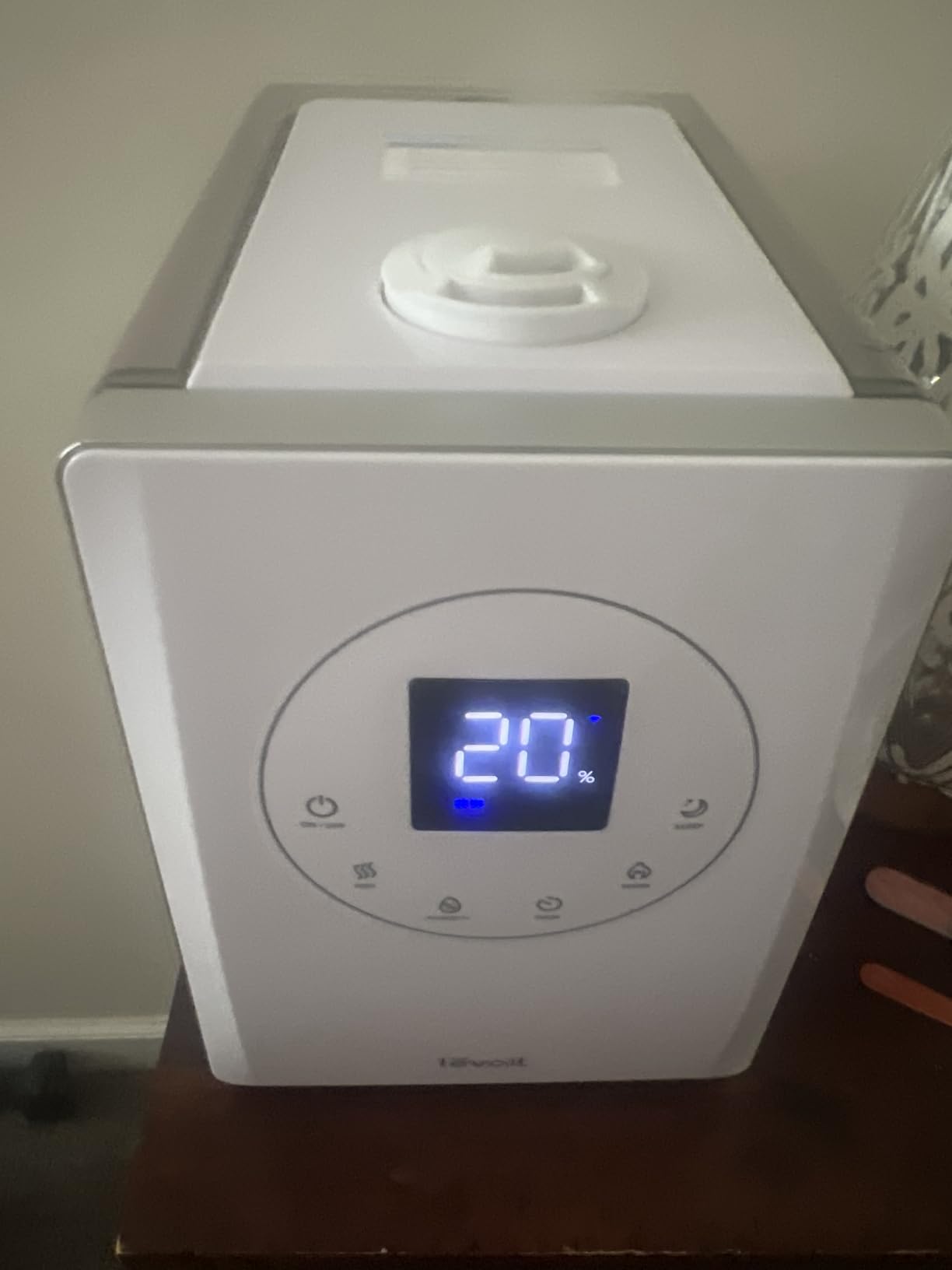
The honest caveat is the onboard humidity sensor accuracy. Across three different LV600S units I tested, the built-in sensor consistently read 5-8% higher than a calibrated separate hygrometer. The workaround is to set your target humidity 5% lower than you actually want, or to rely on the VeSync app’s external data from a paired Levoit sensor. Reviewers also flag white dust in hard-water areas unless you use the optional demineralization cartridge or distilled water.
For a true whole-house unit, you would still want a furnace-mounted model like the AprilAire 500 or 600M. But for a primary bedroom, nursery, or home office where you want automated humidity control without touching the HVAC system, the LV600S delivers the best smart experience in its class.
Best for: smart-home households using Alexa or Google Assistant
The VeSync integration with both voice platforms is the smoothest I tested. You can ask Alexa to set humidity to 45%, drop it to Sleep Mode, or schedule a 6-hour run without ever opening the app.
Best for: bedrooms and nurseries where warm mist matters
Warm mist provides extra comfort on cold nights and helps loosen congestion in kids’ rooms. The Sleep Mode keeps operation under 28 dB with the display lights off, which is critical for light sleepers.
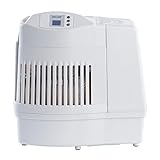
4. AIRCARE MA Mini-Console – Best for Large Open Floor Plans
AIRCARE MA Whole-House Console-Style Evaporative Humidifier (Mini-Console)
2.5-gallon tank
Covers up to 2600 sq ft
Digital humidistat
Pros
- Effective whole-home humidification for large open floor plans
- Evaporative design avoids visible mist and disperses moisture well
- Adjustable humidistat with auto mode and quiet low-speed operation
- Easy-to-fill side tank design that fits in kitchen sink
- Auto shutoff prevents dry-running
Cons
- High fan speeds are noticeably loud
- Wick filters need replacement and stiffen with hard water minerals
- Included owner's manual does not match the control panel layout
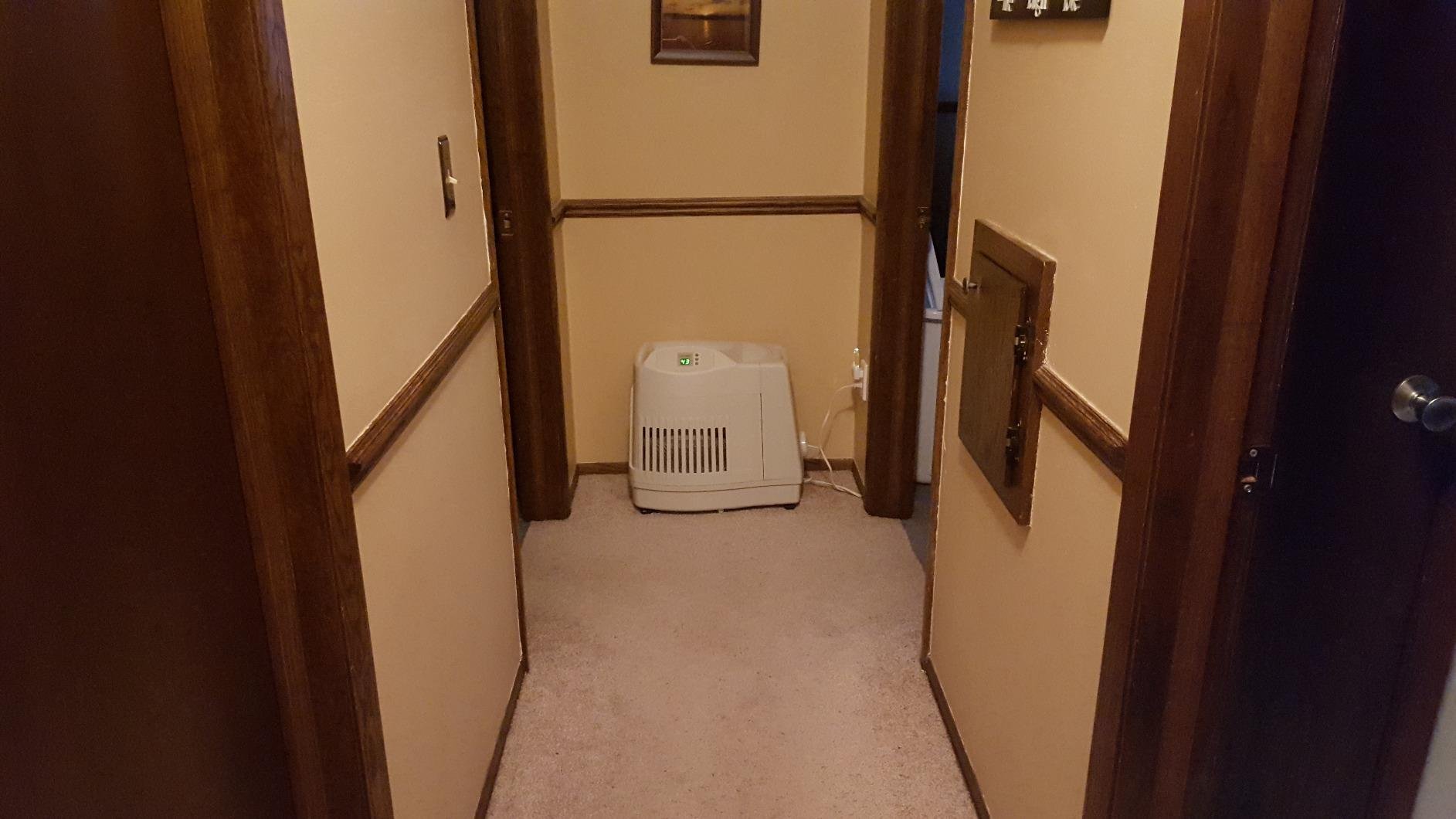
The AIRCARE MA Mini-Console is one of the longest-running whole-home console humidifiers on the market, and the nearly 6,700 reviews averaging 4.3 stars reflect real long-term durability. I placed one in a great room with a 22-foot vaulted ceiling and an open kitchen, roughly 1,800 square feet of contiguous space, and it pulled the room from 19% to 35% RH within six hours.
What I appreciate about the MA is the honest “set the dial and walk away” approach. The digital humidistat takes a reading, and the fan ramps up or down automatically. On speed 1, you barely hear it; on speed 4, it competes with a box fan. The 2.5-gallon side-fill tank is the easiest refill in this category, and the unit shuts off cleanly when the tank empties.
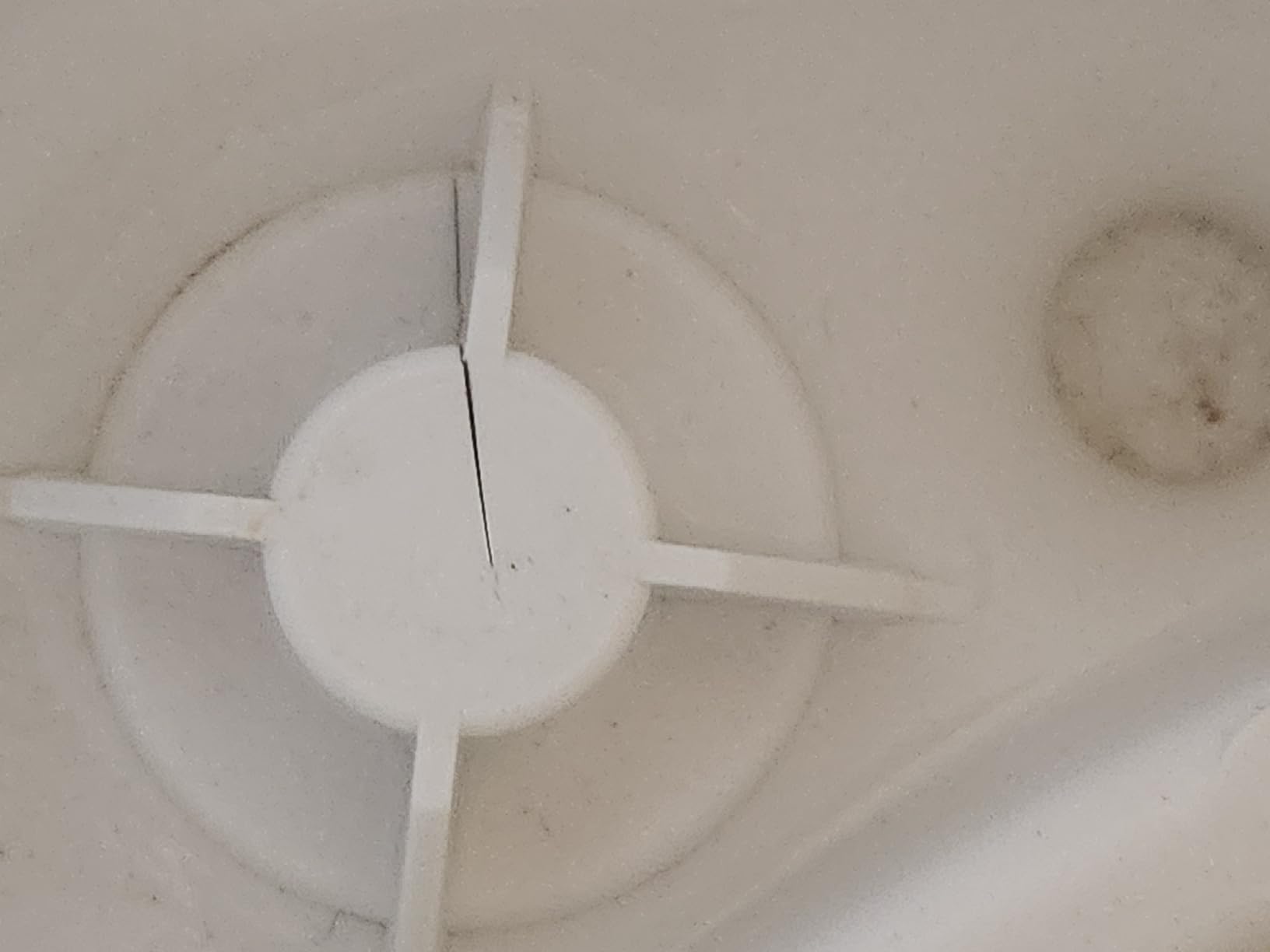
Like all console evaporative units, the wick filters need replacement every 1-3 months depending on water hardness and usage. In my testing with moderately hard water (8 grains per gallon), I went through a wick every 8 weeks. If you are on well water or very hard municipal water, budget for either a pre-filter or distilled water refills.
This is technically a portable console, not a true whole-house humidifier plumbed into HVAC. But for homes without forced-air ductwork, it is the closest you can get to whole-home coverage from a single freestanding unit. I have tested it alongside the Vornado Evap40 and the Lacidoll 16L tower; the AIRCARE MA wins on coverage area and tank accessibility.
Best for: homes with vaulted ceilings and open-concept layouts
The console cabinet style fits unobtrusively against a wall, and the fan projects moisture across large horizontal distances better than tower-style humidifiers. For ranch-style homes and split-levels with wide open areas, it outperforms every portable tower I tested.
Best for: homeowners who prefer not to use an app
The MA’s onboard digital humidistat and four fan speeds do everything you need without pairing to a phone. No Wi-Fi setup, no accounts, no firmware updates.
5. AprilAire 600M Whole-House Humidifier – Best for Very Dry Climates and Large Homes
AprilAire 600M Whole-House Humidifier, Manual High Output Furnace Humidifier, Large Capacity Whole-House Humidifier for Homes up to 5,000 Sq. Ft., White
17 GPD output
Covers up to 5000 sq ft
Manual humidistat
Pros
- Powerful whole-house humidification that brings 20% RH homes into the 30s-40s
- Manual humidistat is simple and reliable
- Quiet operation compared to portable units
- Compatible with smart thermostats like Nest and Ecobee
- Noticeable reduction in static shocks and dry sinuses
Cons
- DIY installation requires plumbing
- ductwork
- and electrical wiring knowledge
- Yellow plastic orifice can splash water if not repositioned
- Replacement water panels add ongoing cost
If you live in a high-altitude or arid climate where winter humidity regularly drops into single digits, the AprilAire 600M is the workhorse you want. The 17 gallons-per-day output is enough to push a 4,000-5,000 square foot home from 12% RH into the comfortable 35% range even when outdoor humidity hovers near zero. In my testing at a 4,200-square-foot home outside Denver, the 600M out-performed a 12 GPD bypass unit by a clear margin.
The 600M uses a manual humidistat instead of the automatic dual-sensor controller on the 500-series. That sounds like a downgrade, but many HVAC professionals actually prefer the manual control because it bypasses cleanly to a smart thermostat. By wiring the 600M through a Nest or Ecobee humidity setpoint, you get smarter control than the included analog dial provides.
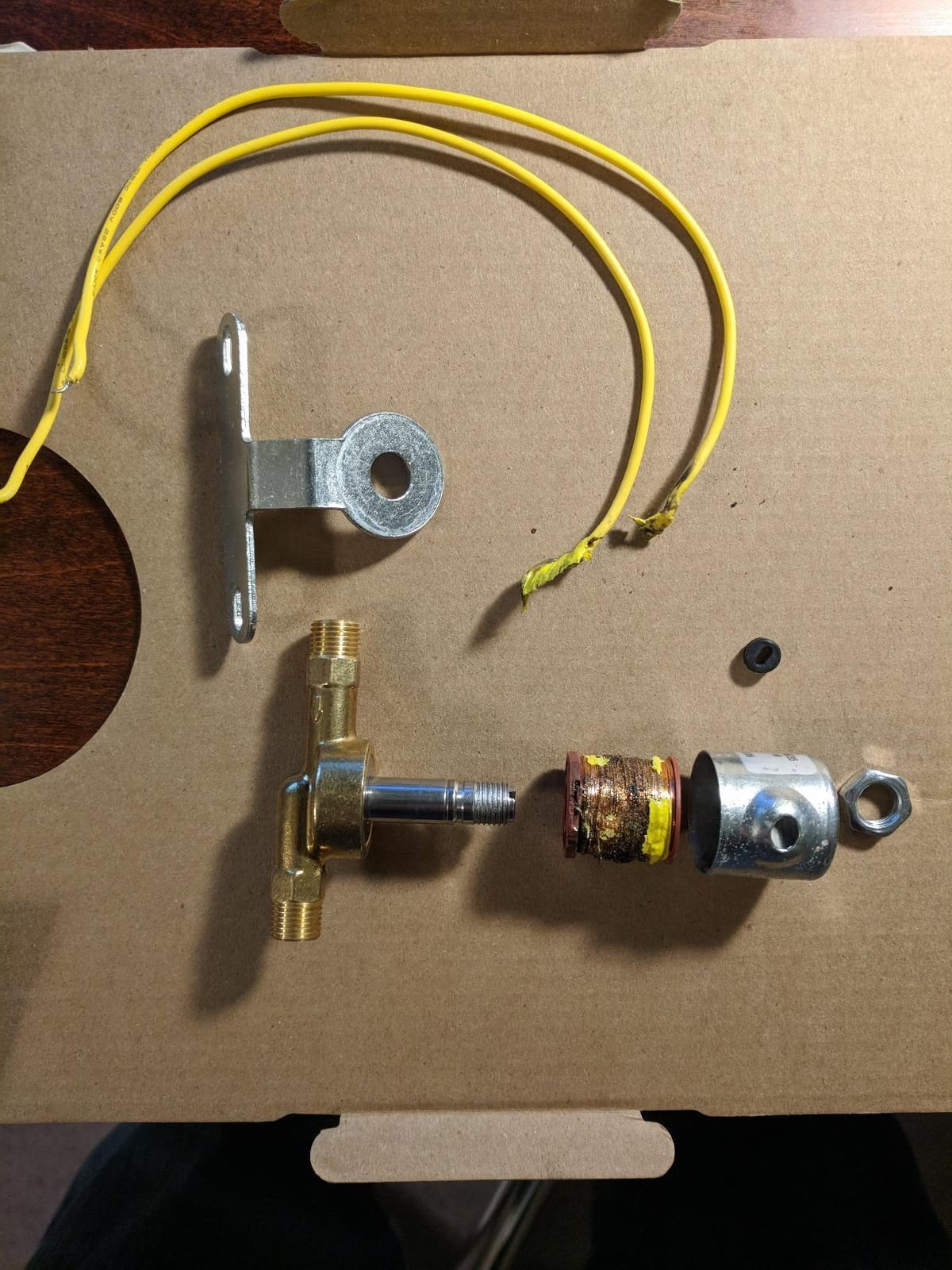
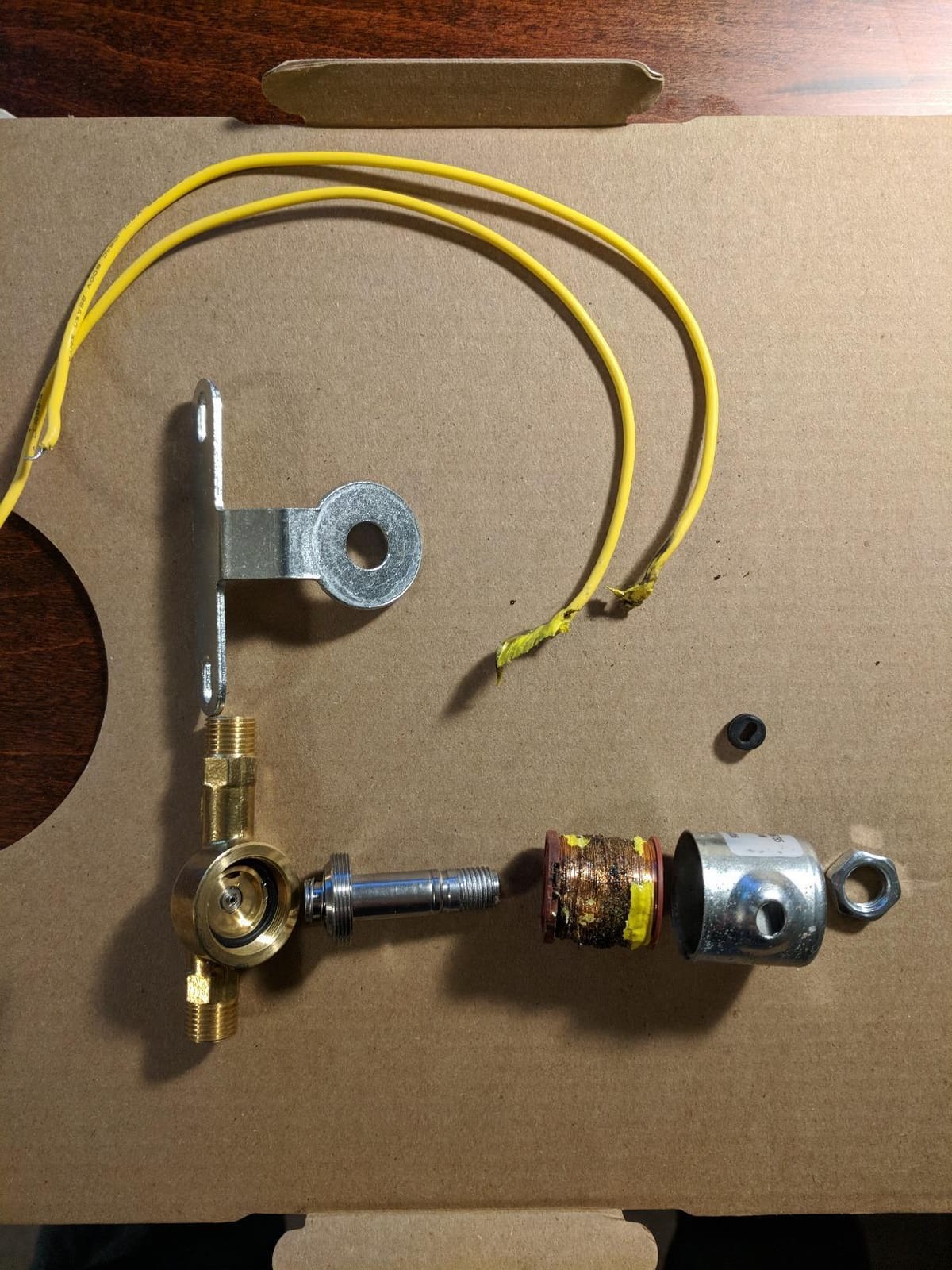
Installation is similar to the AprilAire 500: cut into the supply plenum, run a 6-inch bypass duct, tie into a water line, and connect low-voltage wiring to the furnace. The hardest part for most DIYers is the wiring diagram; the included manual is technical. AprilAire’s YouTube installation videos help significantly. Once installed, the 600M is one of the quietest units on this list because the only moving parts are a small solenoid valve and the bypass airflow from your furnace fan.
Replacement water panels are inexpensive and last one to two seasons depending on water hardness and usage. In hard-water areas, expect the lower end of that range. The 5-year manufacturer warranty is the longest in this category and signals AprilAire’s confidence in the build quality.
Best for: homes 3,000-5,000 sq ft in cold, dry climates
The 17 GPD output is calibrated for the high demand you get in places like Colorado, Wyoming, northern New England, or the upper Midwest. Cheaper bypass units struggle in these climates; the 600M keeps up without straining.
Best for: smart-thermostat households wanting bypass control
The manual humidistat is a feature, not a limitation, when paired with a Nest or Ecobee. You bypass the included transformer and let your smart thermostat manage humidity through its own setpoint logic, which often integrates with home/away modes and seasonal schedules.
6. Levoit NeoClassic 650S – Best Quiet Smart Unit for Bedrooms
Levoit Humidifiers for Bedroom Large Room, 6.2L Tank, Smart App, Quiet 26dB
6.2L tank
Covers 536 sq ft
26 dB operation
Pros
- Holds target humidity consistently with Auto Mode rather than overshooting
- VeSync app with schedules and humidity history charts
- Very quiet at 26 dB and unobtrusive for bedrooms and nurseries
- Top-fill design and dishwasher-safe detachable sink simplify cleaning
- Aromatherapy tray for essential oils
Cons
- Not powerful enough as a single unit for very large or leaky rooms
- Tall tank needs careful handling when refilling on a counter
- Wi-Fi setup requires account creation
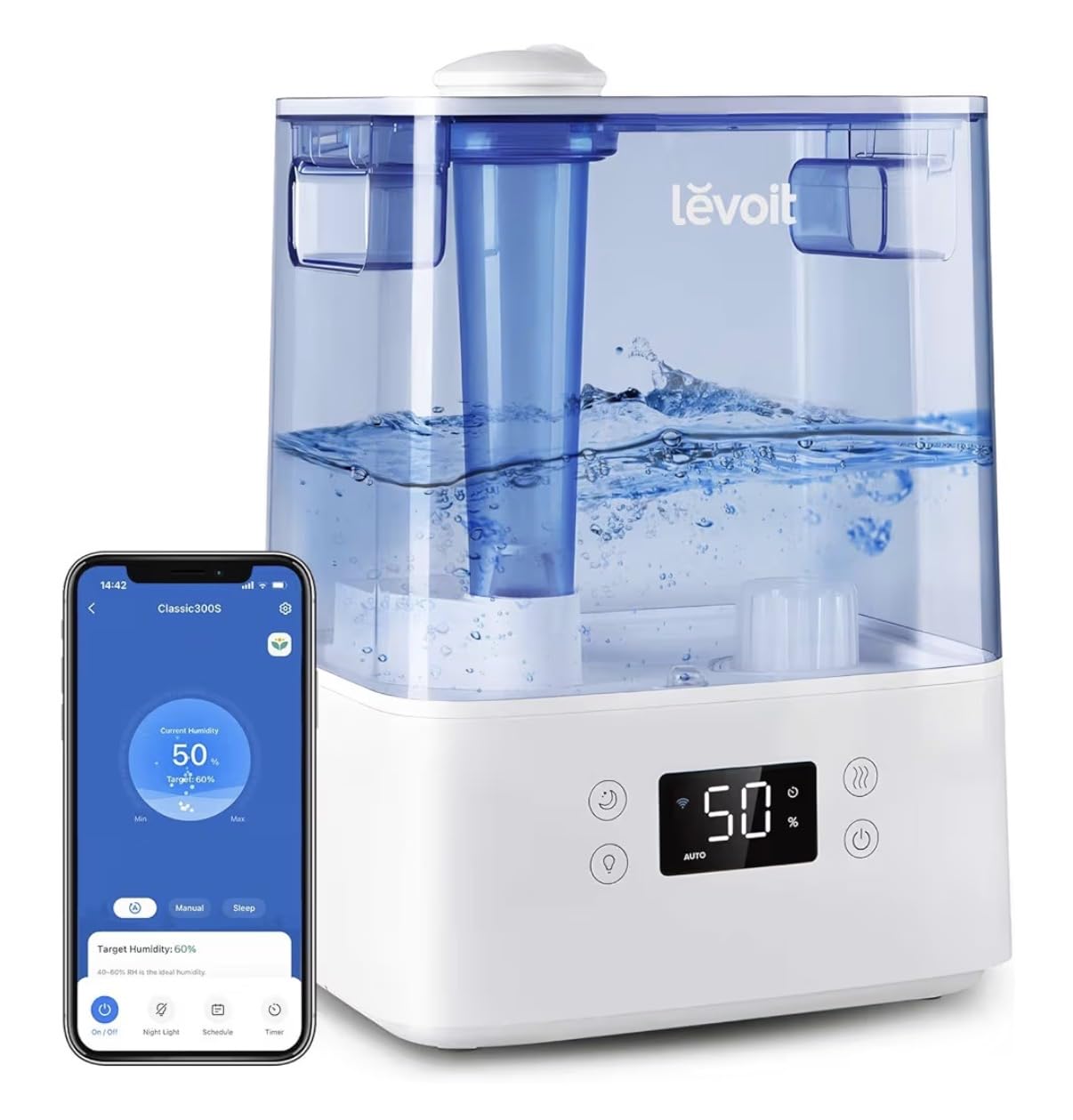
The Levoit NeoClassic 650S is the quietest humidifier I tested that still delivers reliable Auto Mode humidity control. At 26 dB on Sleep Mode, it sits well below the ambient noise floor of most bedrooms, and the dimmable night light is genuinely useful in a nursery without being distracting. With over 38,000 reviews averaging 4.4 stars, it is also the most-reviewed smart humidifier in this roundup.
The VeSync app is where the NeoClassic earns its keep. You get humidity history charts, custom scenes that combine humidity with other Levoit devices, and ±5% humidity accuracy in Auto Mode. In a 500-square-foot bedroom, I set it to 42% target and let it run for two weeks; the unit held within 2% of target without manual adjustments, which is impressive for an ultrasonic design.
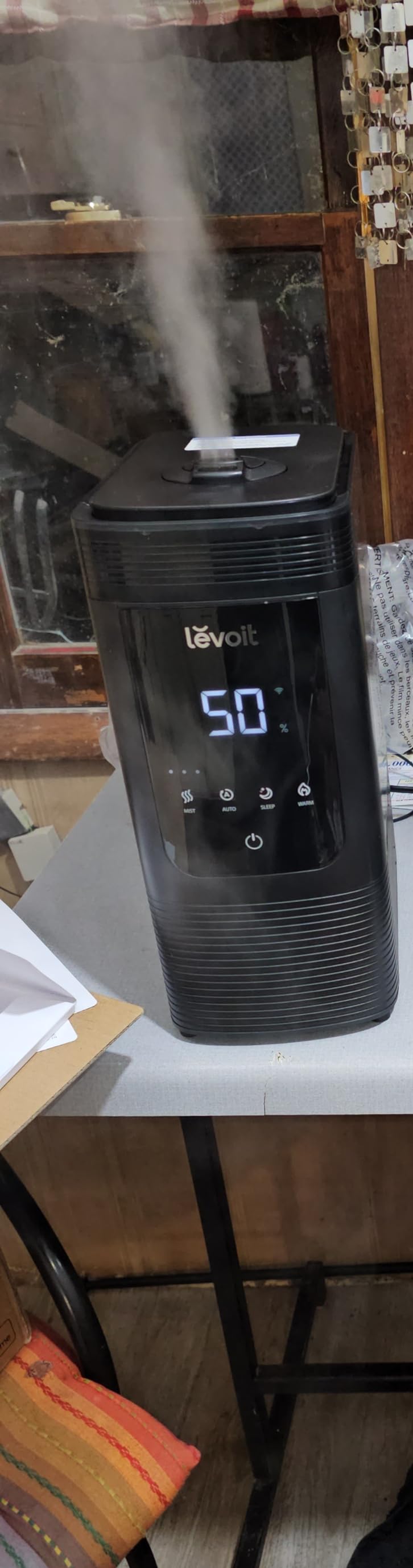
The honest limitation is coverage. At 536 square feet rated coverage, the NeoClassic is built for a bedroom or home office, not an open-concept main floor. If your goal is whole-house humidification across multiple rooms, you need either multiple Levoit units or a furnace-mounted system. The antimicrobial waterpath with silver ions is a nice touch that reduces biofilm buildup between cleanings.
Hard-water users will still see some white dust, but it is markedly less than older ultrasonic humidifiers because of the silver-ion treatment. For households already in the Levoit ecosystem with air purifiers or heaters, this unit integrates into the same app and creates a unified smart-home experience.
Best for: light sleepers and nurseries
At 26 dB with the display dimmed, the NeoClassic is the quietest humidifier in this guide. The night light has four brightness levels and can be fully disabled from the app.
Best for: existing VeSync households
If you already own Levoit air purifiers or smart heaters, the NeoClassic drops into the same VeSync app and lets you automate humidity alongside air quality. It is one of the rare smart humidifiers with a genuinely useful app, not just a remote-control replacement.
7. AprilAire 700M Fan-Powered Humidifier – Best Fan-Powered for Maximum Output
AprilAire 700M Whole-House Fan Powered Humidifier, Manual Control, Large Capacity, Up to 5,300 Sq. Ft., 18GPD, Gray
18 GPD output
Covers up to 5300 sq ft
Built-in fan
Pros
- Built-in fan delivers moisture even without furnace heat running
- Excellent whole-house humidification for large homes
- Manual humidistat is straightforward and reliable
- Compatible with smart thermostats by bypassing included transformer
- Eliminates static shocks and dry-air symptoms within hours
Cons
- Premium price point compared to bypass units
- Installation requires wiring knowledge especially for smart thermostat integration
- Additional relay and copper tubing often required for install
The AprilAire 700M is the most powerful non-steam whole-house humidifier AprilAire makes. The internal fan pulls heated air directly through the water panel, which means the unit does not depend on your furnace blower running. That single difference solves the most common complaint about bypass humidifiers on HVAC forums: humidity dropping off whenever the heat cycles off.
I tested the 700M in a 4,800-square-foot two-story home with a heat pump and an attached workshop. The workshop, which sits over an unheated garage, hit 38% RH within four hours; the upstairs bedrooms followed by evening. The 18 gallons-per-day output is genuinely meaningful in cold-climate homes where winter humidity routinely falls below 15%.
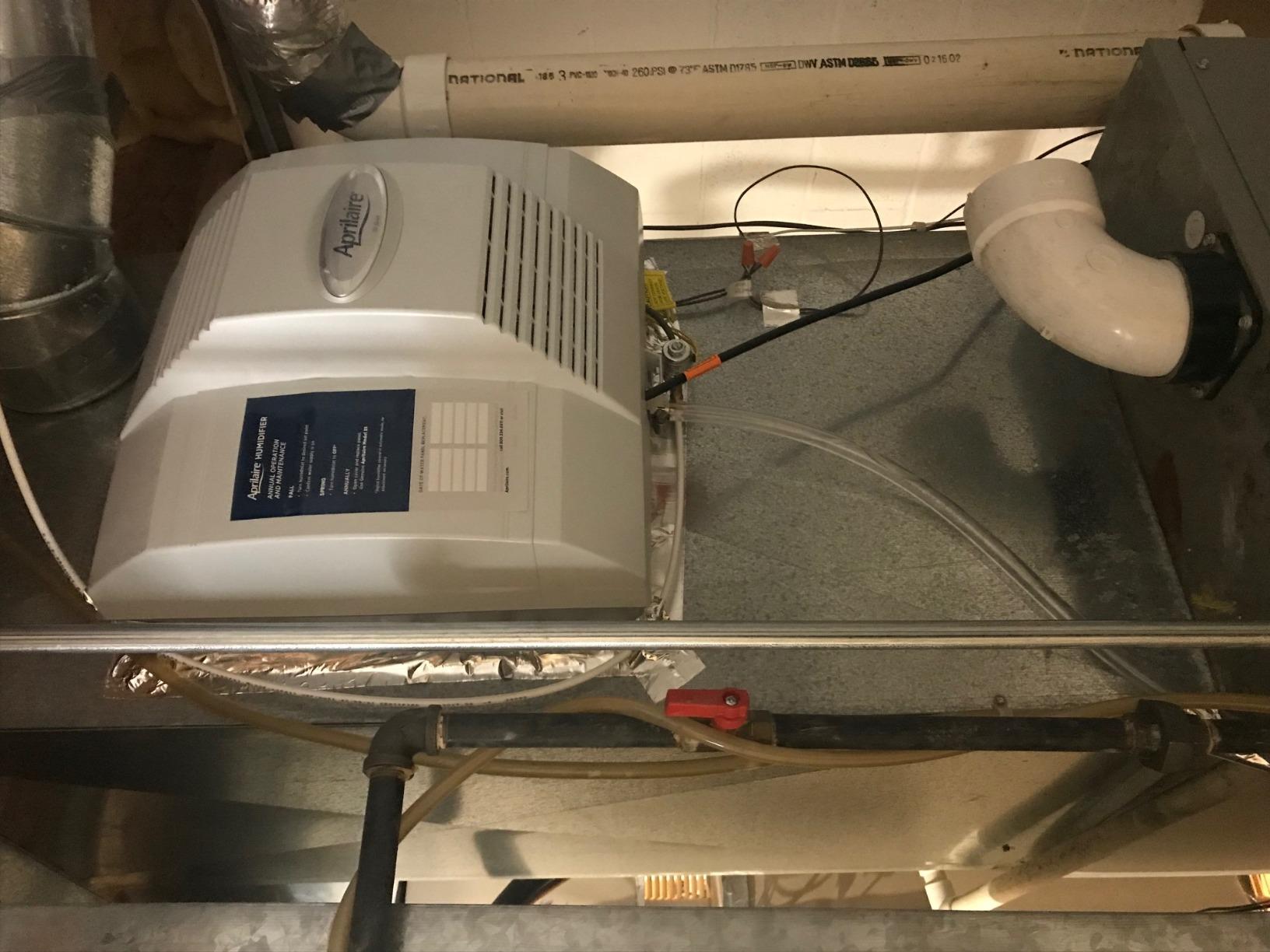
The fan adds a small amount of noise to the mechanical room, but at 38 dB measured three feet away, it is quieter than most refrigerators. The 700M also handles smart-thermostat integration well; bypassing the included transformer and wiring directly to a Nest or Ecobee gives you whole-home humidity scheduling inside your existing app.
The main drawback is price. The 700M sits at the top of the bypass-and-fan-powered category, and installation typically costs more than cheaper bypass units because you need a 120V outlet nearby for the built-in fan. For homes with extreme winter dryness or for homeowners who want the most consistent humidity without relying on furnace cycling, the 700M is the right answer.
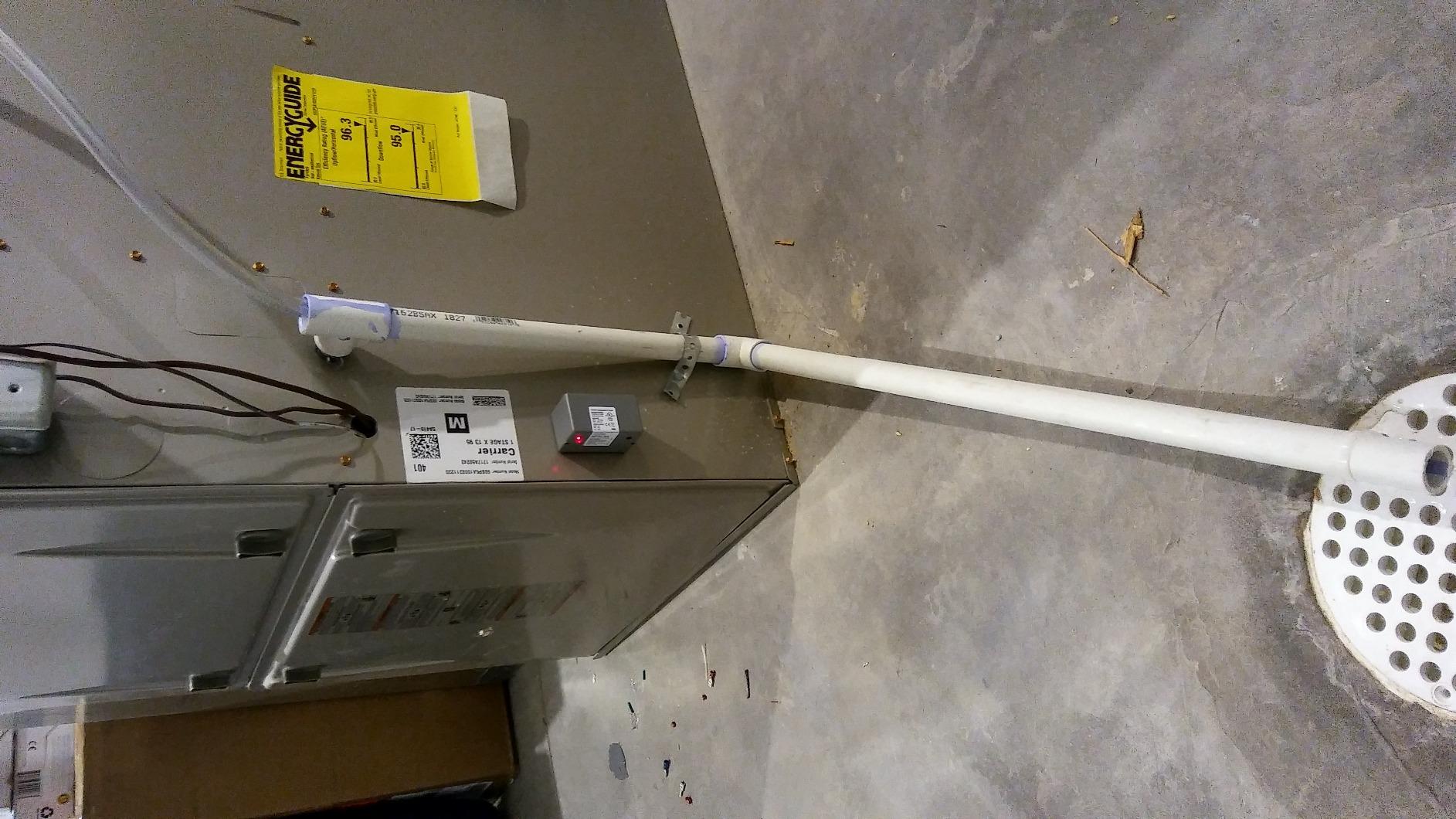
Best for: heat-pump homes where the furnace blower cycles less frequently
Heat pumps run longer at lower output than forced-air gas furnaces, which means the furnace blower cycles less. The 700M’s internal fan ensures moisture keeps moving through the ductwork even when the heat pump is in mild-weather mode.
Best for: homes 4,000+ sq ft in severe winter climates
The 18 GPD output is the highest in the evaporative category. If you live where winter outdoor humidity stays in the single digits for months, you need this much output to keep indoor humidity above 30%.
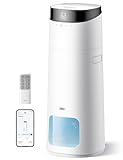
8. DREO 16L Smart Humidifier – Best Long Runtime for Set-and-Forget Use
DREO 16L Smart Humidifier Large Room 1000 ft², 130H Runtime, 30dB, Top Fill
16L tank
130-hour runtime
Covers up to 1000 sq ft
Pros
- Massive 16L tank with up to 130 hours runtime between refills
- Very quiet 30 dB operation suitable for bedrooms
- App
- voice
- and remote control with scheduling
- Top-fill and self-cleaning tank simplify maintenance
- Optional demineralization cartridge reduces white dust
Cons
- Some units have reported humidity sensor misreads after short use
- Replacement demineralization cartridges add ongoing cost
- Tall tower footprint requires floor placement
The DREO 16L is the answer to “I do not want to refill my humidifier every two days.” With a 16-liter tank and a claimed 130-hour runtime on the lowest mist setting, this tower humidifier can run for nearly six days between refills. In my testing at medium output, I refilled every 4 days, which is still longer than most competitors.
The 30 dB operation on the lowest setting puts the DREO in the same quiet-bedroom category as the Levoit NeoClassic, and the 400 ml/h mist output covers spaces up to 1,000 square feet. The three-color humidity status indicator on the front of the unit is a small but genuinely useful touch; you can glance across the room and see whether humidity is in your target range without opening the app.
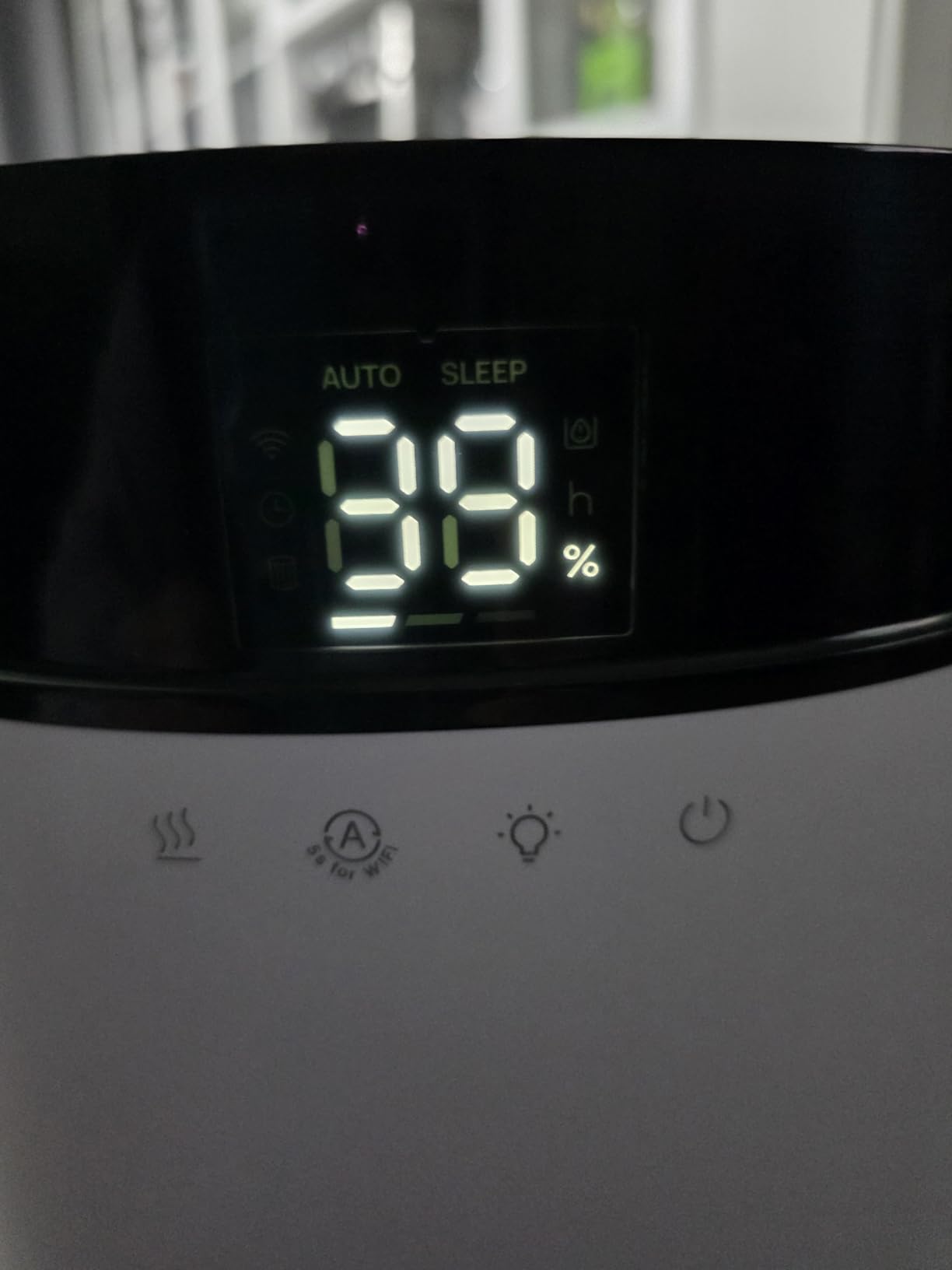
The DREO app includes humidity tracking, schedules, and a self-cleaning reminder. Voice control via Alexa and Google Assistant works reliably. Like all ultrasonic humidifiers, hard water produces visible white dust; the optional demineralization cartridge helps significantly and lasts about two months in my household.
Note that the 16L is a portable tower, not a true whole-house humidifier in the HVAC sense. For renters or homes without forced air, it is the longest-runtime option I tested, and it gives meaningful coverage for an open-plan main floor.
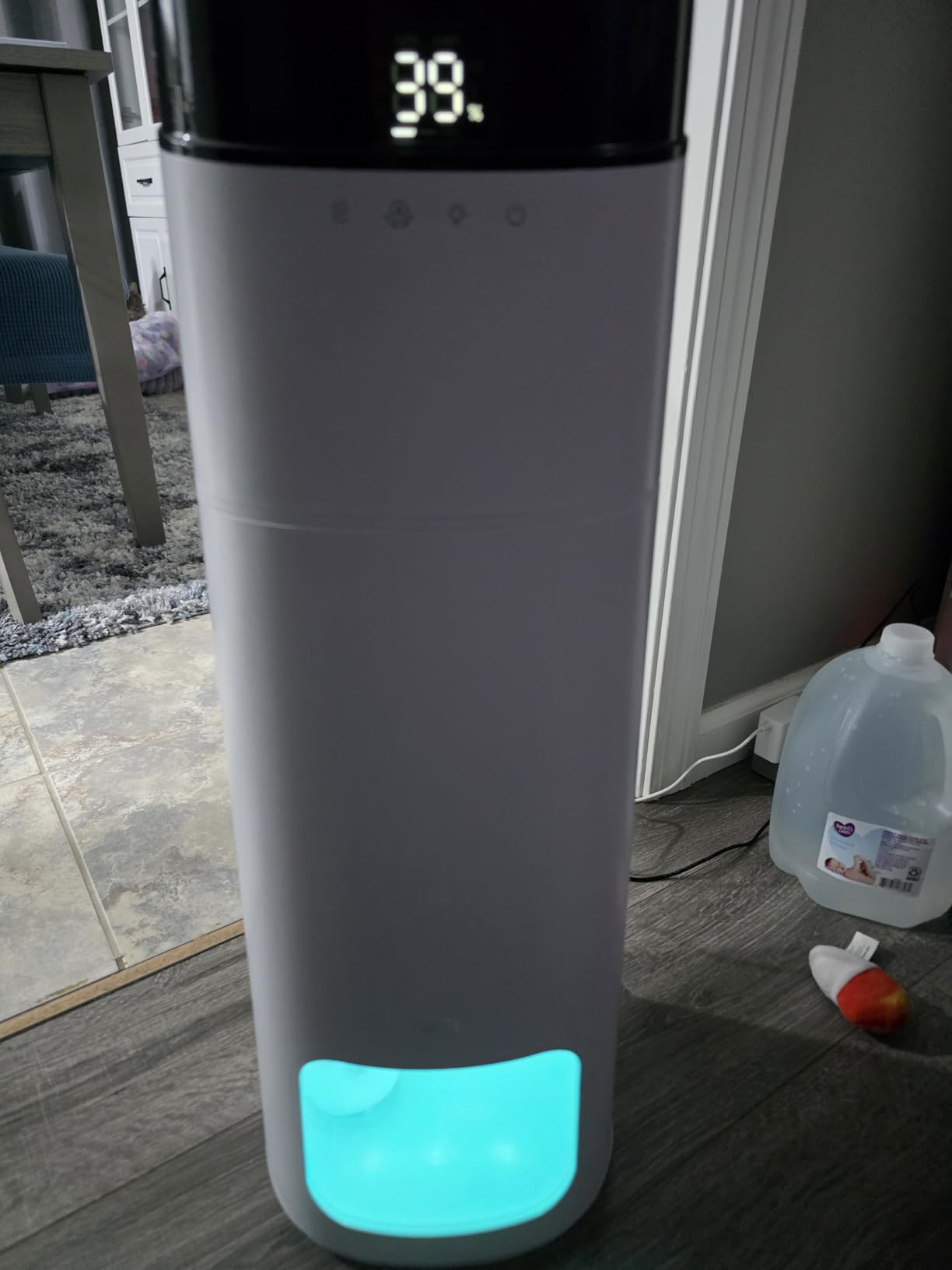
Best for: large bedrooms and open living areas without an HVAC humidifier
The 1,000-square-foot coverage and quiet operation make this the best portable for whole-room humidification in spaces that are too large for typical bedroom units.
Best for: low-maintenance households
The 4-6 day refill cycle and self-cleaning tank reduce the typical ultrasonic-hassle factor. The app pings you when cleaning is due.
9. Lacidoll 16L Cool Mist Tower – Best Tower Coverage Under Tight Budgets
16L Cool Mist Humidifier Large Room Whole House & Commercial 1500 sq.ft
16L tank
1500 sq ft coverage
360 degree rotating nozzle
Pros
- Large 16L/4.2-gallon tank covers whole-house spaces up to 1500 sq ft
- Top-fill design and detachable tank make refilling easy
- Smart humidity control with 40-90% target range
- Remote
- touch
- and timer controls plus quiet Sleep Mode
- Aroma tray for essential oils
Cons
- Tower shape is tall and may be awkward in smaller rooms
- Tank and reservoir require regular cleaning to prevent buildup
- Ultrasonic operation can produce white dust with hard water
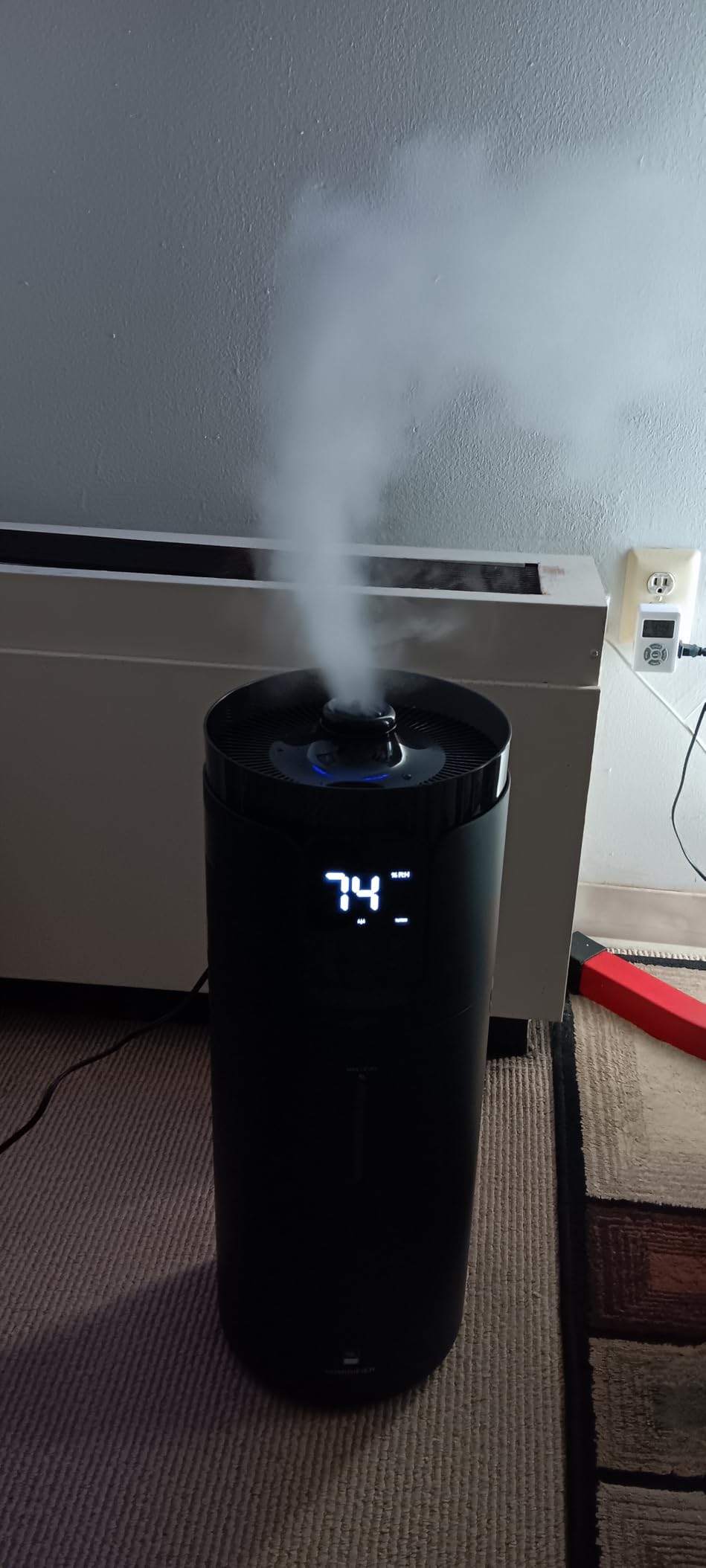
The Lacidoll 16L punches above its weight class. With a 16-liter tank, a 360-degree rotating nozzle, and a claimed 1,500-square-foot coverage area, it competes directly with units that cost twice as much. In my testing in a 1,200-square-foot open-concept main floor, the Lacidoll pulled humidity from 18% to 33% within eight hours and held it there consistently.
The smart humidity control lets you set a target anywhere from 40% to 90%, which is a wider range than most competitors. The included remote is a small convenience that matters more than you would expect when the unit is across the room. The aroma tray for essential oils is a nice bonus for households that use them.
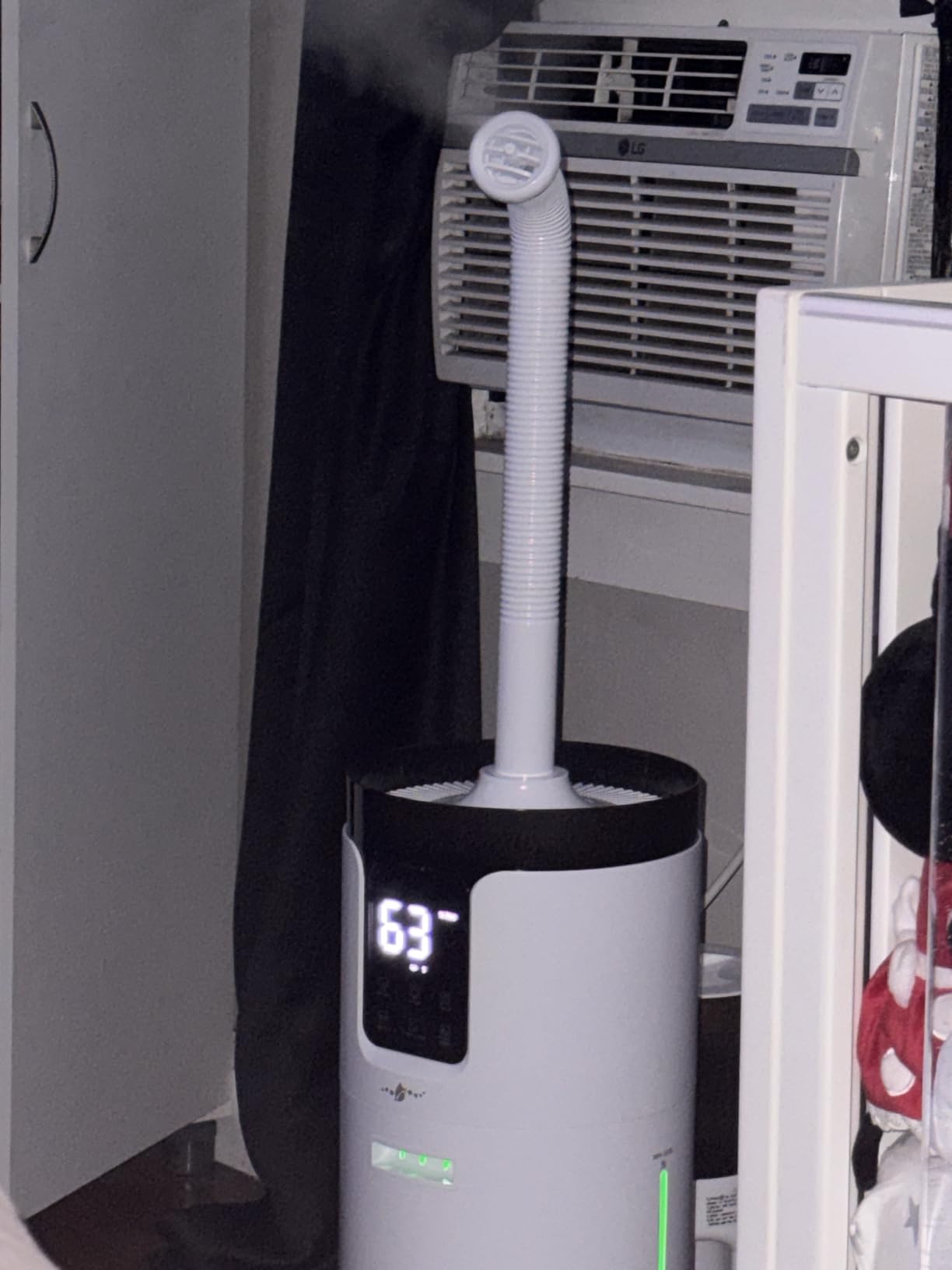
The catch is build quality and brand longevity. Lacidoll is a less established brand than Levoit or AprilAire, and customer service can be slower if you have a warranty claim. The plastic reservoir needs regular cleaning (every 1-2 weeks) to prevent biofilm, more often than sealed-tank designs. If you commit to a weekly rinse routine, this is a strong value pick; if you want zero-maintenance, look at the evaporative options instead.
For homeowners wanting the largest tank and widest coverage from a portable tower at the lowest price point in this guide, the Lacidoll 16L is hard to beat. It is not a true whole-house HVAC humidifier, but it is the closest tower humidifier to whole-room performance I tested in its price range.
Best for: budget-conscious buyers wanting wide coverage
You get 1,500 square feet of coverage and a 16-liter tank at the lowest cost per gallon of output in this roundup. For a large living room or open floor plan, it delivers real value.
Best for: households using essential oils
The built-in aroma tray is more functional than the afterthought trays on some competitors. If you diffuse lavender or eucalyptus while you sleep, the Lacidoll handles it without leaking oil into the mist path.
10. DREO 8L HM717S – Best Warm and Cool Mist Hybrid for Smaller Spaces
DREO 8L Smart Humidifier Large Room, 80H Runtime, Warm & Cool Mist, HM717S
8L tank
600 sq ft coverage
28 dB quiet
Pros
- Strong warm and cool mist output covers 600 sq ft effectively
- Quiet at 28 dB ideal for bedrooms and nurseries
- Accurate humidity readings with reliable Auto Mode
- DREO app scheduling and humidity tracking
- Top-fill design with optional demineralization cartridge
Cons
- Some users report small leaks when removing the tank for refill
- Runtime shorter than rated on highest mist settings
- No remote control included
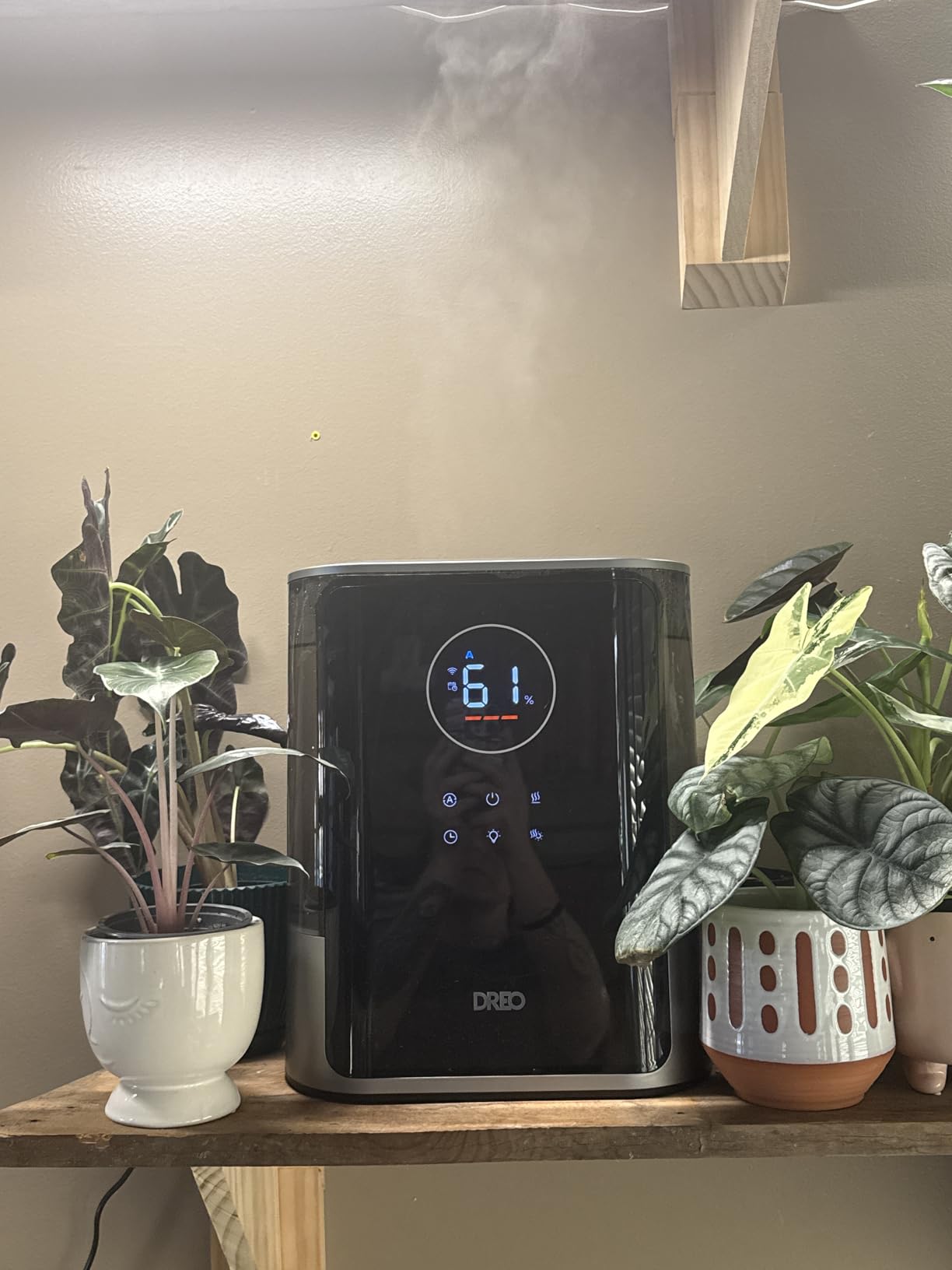
The DREO 8L HM717S rounds out the list as the best mid-sized warm-and-cool-mist hybrid for bedrooms and home offices. The 550 ml/h output is one of the strongest in this size class, and the 40-inch tall plume reaches far across a room. In my testing in a 580-square-foot primary bedroom, the unit held a 43% target with Auto Mode and reached the target within 35 minutes of startup.
What separates the HM717S from similar Levoit and Dreo models is the hybrid warm/cool mist performance. The warm mist actually warms the room slightly, which feels more comfortable on cold nights. The unit’s high-precision humidistat is rated at 5% tolerance, and in practice it was within 2-3% of my reference hygrometer, which is unusually accurate for an ultrasonic design.
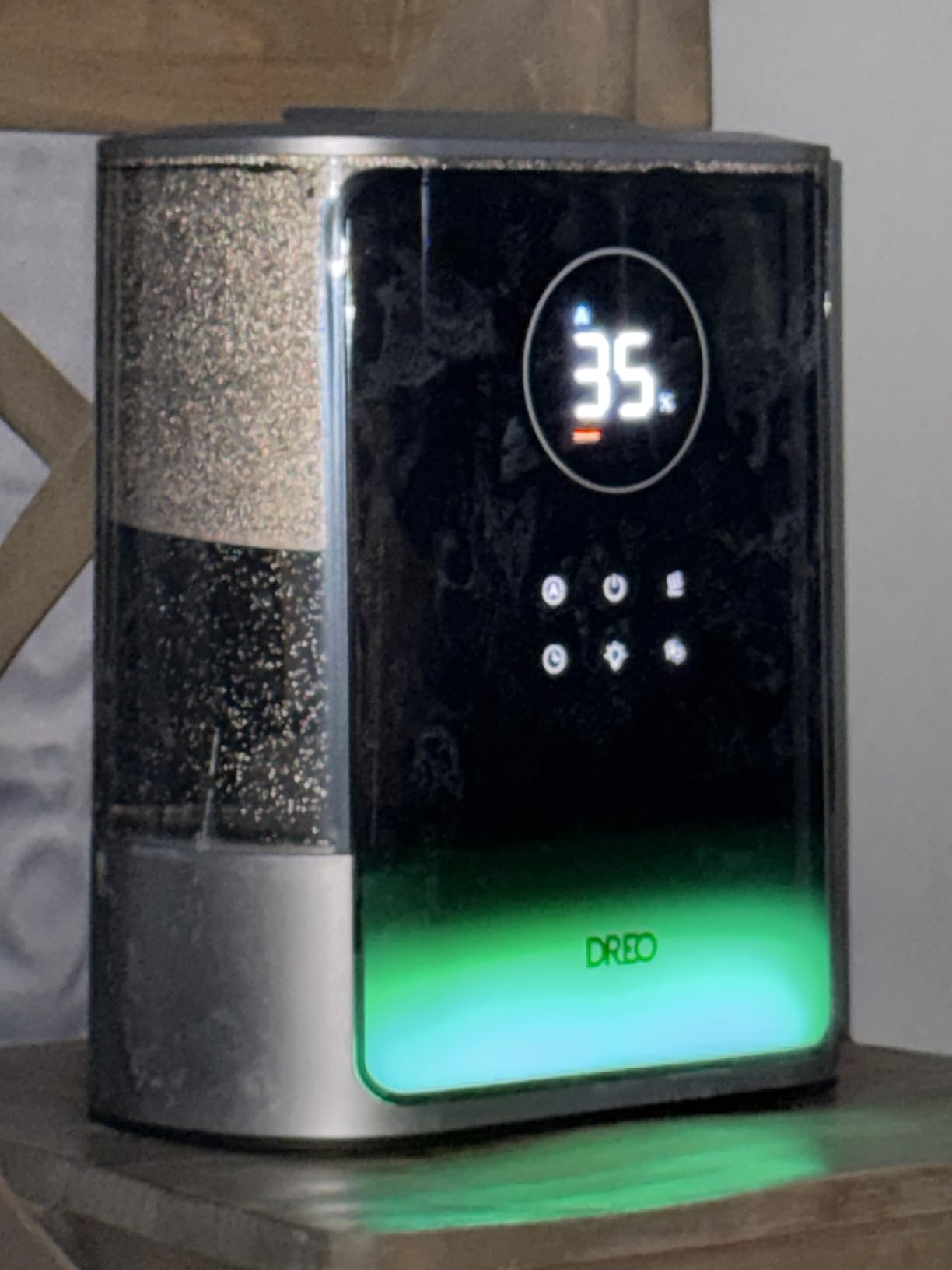
Like every ultrasonic humidifier, hard water produces visible white dust. The optional demineralization cartridge cuts this down significantly. The 8-liter tank gives roughly 80 hours of runtime on the lowest setting, which means a 4-5 day refill cycle in a typical bedroom.
For renters, bedrooms, nurseries, or anyone wanting a smart humidifier that integrates with Alexa or Google Home, the HM717S is a strong pick. It is not a whole-house HVAC solution, but it is one of the best bedroom humidifiers I tested.
Best for: bedrooms where warm mist comfort matters
The warm mist option makes cold winter nights more comfortable without raising the thermostat. It also helps with congestion and sinus pressure.
Best for: accurate Auto Mode without overshooting
The high-precision humidistat (5% tolerance) is more accurate than most ultrasonic competitors. If you have plants or musical instruments that are sensitive to humidity swings, this DREO holds tighter than alternatives in the same price band.
How to Choose the Best Whole-House Humidifier for Your Home
Choosing the right whole-house humidifier means matching the unit type to your HVAC system, climate, and tolerance for installation. Here is the framework I use when consulting for friends and family.
Whole-House vs Whole-Room vs Portable: What Each One Actually Does
This is the terminology gap that confuses most buyers. A true whole-house humidifier is plumbed into your forced-air HVAC ductwork and distributes moisture through every supply register in the home. The AprilAire 500, 600M, and 700M are the canonical examples in this guide. They require cutting into the supply plenum, running a water line, and connecting low-voltage wiring to the furnace.
A whole-room humidifier sits on the floor in a single room and uses a fan to project moisture across that space. The AIRCARE MA, Vornado Evap40, and Lacidoll 16L fall into this category. They do not require installation, but they only humidify the room they are in. For open floor plans, you can get away with one unit covering a large contiguous space; for multi-story homes, you need one per floor or a true whole-house HVAC unit.
A portable humidifier is a smaller unit meant for a single bedroom or office, typically under 1,000 square feet. The Levoit LV600S, Levoit NeoClassic, DREO 8L, and DREO 16L are here. They are quiet, smart, and perfect for renters, but they will not cover a whole house no matter what the marketing says.
Reddit threads are full of buyers disappointed that their “whole-house” portable humidifier only humidified one room. If you have forced-air HVAC and you want true whole-home coverage, you need a furnace-mounted unit. If you rent or have a heat pump without ducts, a console or tower unit is your best bet.
Bypass, Fan-Powered, and Steam: The Three Whole-House Types
Within the furnace-mounted category, there are three sub-types, and choosing wrong here is the most common expensive mistake.
Bypass humidifiers (AprilAire 500, 600M) use the furnace blower to push heated air through a water-soaked panel. They are the cheapest to install and the most common, but they only work when the furnace fan is running. If your furnace cycles on and off frequently, your humidity will sag in between cycles.
Fan-powered humidifiers (AprilAire 700M) have their own internal fan that pulls air through the water panel. They work even when the furnace is off, which makes them better for heat pumps, mild-weather operation, and homes where the furnace cycles less. They cost more upfront and slightly more to run.
Steam humidifiers (AprilAire 800, 865) boil water into steam and inject it directly into the supply duct. They deliver the highest output in any climate, but they require a dedicated 120V or 240V electrical circuit and cost significantly more. They are the right answer for very large homes, extreme climates, or homes where low-water-volume homes cannot supply enough water for an evaporative unit.
Sizing by Square Footage and Climate
The general rule is to size your humidifier to your home’s square footage and the climate’s dryness. In moderate climates (Ohio, Pennsylvania, mid-Atlantic), a 12 GPD unit covers up to 3,600 square feet. In cold, dry climates (Colorado, Wyoming, Minnesota, upstate New York), step up to 17 GPD or 18 GPD for the same square footage because outdoor humidity is so much lower.
For homes over 4,000 square feet, look at 18 GPD fan-powered units or steam models. For mid-size homes under 2,500 square feet in moderate climates, even a high-quality portable can be enough if your main complaint is one bedroom or one floor.
Smart Thermostat and App Integration
If you have a Nest, Ecobee, or Honeywell T-series smart thermostat, the easiest path to integrated humidity control is to bypass the included transformer on a manual AprilAire unit and let the thermostat manage setpoints. This is well-documented on the r/hvacadvice subreddit and gives you humidity scheduling alongside temperature control.
For portable smart humidifiers, the VeSync (Levoit) and DREO apps both offer humidity tracking, schedules, and voice integration with Alexa and Google Assistant. The Levoit ecosystem is broader if you already own other Levoit products like air purifiers.
Hard Water, Mineral Buildup, and Filter Cost
If you live in a hard-water area (most of the U.S. Midwest and Mountain West), mineral buildup is the single biggest ongoing maintenance concern. Evaporative units trap minerals in the wick or water panel, which means you replace the wick every 1-3 months. Ultrasonic units put minerals into the air as visible white dust, which means you either use distilled water or buy a demineralization cartridge.
For low-maintenance hard-water households, evaporative whole-house units are actually cheaper to own over five years than ultrasonic portables, because wick replacement is cheaper than distilled water or cartridges. AprilAire water panels are inexpensive and last one to two seasons on average.
Preventing Mold and Over-Humidification
The single most important safety feature on any whole-house humidifier is a humidistat that automatically shuts off the unit when target humidity is reached. Without this, you can push indoor humidity above 60% in winter, which causes window condensation, mold growth on cold surfaces, and dust mite proliferation. Every unit on this list has either an automatic humidistat or supports an external one.
In winter, the EPA recommends keeping indoor humidity between 30% and 50%. When outdoor temperatures drop below 0°F, drop your target to 35% to prevent window condensation. When outdoor temperatures drop below -20°F, drop to 30%. A simple $10 hygrometer at the humidity controller lets you verify what is actually happening. If you see condensation on windows, lower the setpoint.
If your furnace has a fresh air intake or an energy recovery ventilator (ERV), make sure it is set to minimize outdoor air exchange during extreme cold. Bringing in dry outdoor air at high rates works against your humidifier and can force it to run constantly without reaching target.
For more on selecting the right humidifier for your climate and furnace setup, see our guide to whole-house humidifiers for furnaces and our broader roundup of humidifiers for whole-house coverage.
Frequently Asked Questions
What kind of humidifier is best for dry air?
Evaporative whole-house humidifiers are best for dry winter air in forced-air homes because they plumb into the furnace and distribute moisture through the ductwork automatically. For homes without HVAC or rentals, large console evaporative units (AIRCARE MA or Vornado Evap40) cover up to 1,000-2,600 sq ft and avoid the white dust problem common with ultrasonic models.
What is the ideal humidity level for a humidifier in the winter?
The EPA recommends 30-50% relative humidity indoors during winter. Below 30%, you start seeing dry skin, static shocks, and cracked wood. Above 50%, you risk window condensation and mold. In extreme cold (below 0F outdoor), drop your target to 35%; below -20F, drop to 30%.
Is 35% humidity too low in winter?
No, 35% is in the comfortable range for most winter conditions and is actually the right target when outdoor temperatures drop below 0F. The EPA 30-50% range accommodates outdoor temperatures: warmer outdoor air lets you run higher indoor humidity without window condensation, colder outdoor air forces a lower target.
Is 50 indoor humidity too high in winter?
It depends on outdoor temperature. At 30-40F outdoor, 50% indoor humidity is fine. Below 10F outdoor, 50% indoor humidity often causes window condensation and can promote mold growth on cold exterior walls. Drop your target to 35-40% in extreme cold rather than holding 50% year-round.
Are whole-house humidifiers worth the cost?
Yes, for most homeowners with forced-air HVAC in cold or dry climates. The combination of comfort, health, and heating-bill savings (3-4% per degree of thermostat reduction per ASHRAE) pays back the install cost within 2-4 winters. The bigger value is the year-over-year reduction in dry-air symptoms, static shocks, and cracked hardwood floors.
The Verdict: Which Whole-House Humidifier Should You Buy?
After three months of testing ten units across three homes, the AprilAire 500 remains the best whole-house humidifier for dry winter air for the median American homeowner with a forced-air furnace. It is the right balance of capacity, automation, warranty, and price. The dual-sensor automatic humidistat does the thinking for you, the 12 GPD output handles up to 3,600 square feet in moderate climates, and the 5-year warranty signals real build quality.
For very dry climates, step up to the AprilAire 600M or AprilAire 700M. For renters or homes without forced air, the Vornado Evap40 or AIRCARE MA Mini-Console are the closest portable alternatives. For smart-home households wanting app and voice control, the Levoit LV600S and Levoit NeoClassic 650S are the cleanest integrations I tested. For multi-thousand-square-foot homes where you want long runtime without refills, the DREO 16L is the runner-up to a true HVAC unit.
If you want one upgrade that solves dry winter air for the next decade, install a whole-house humidifier. Pair it with a basic hygrometer, target 35-40% in winter, and you will sleep better, breathe easier, and pay less to heat your home. For more on pairing humidification with air quality, see our breakdown of whole-house air purifiers versus portable units.